
Project PRINCIPLES OF FAME FAMOUS PEOPLE OF MY
- Slides: 48
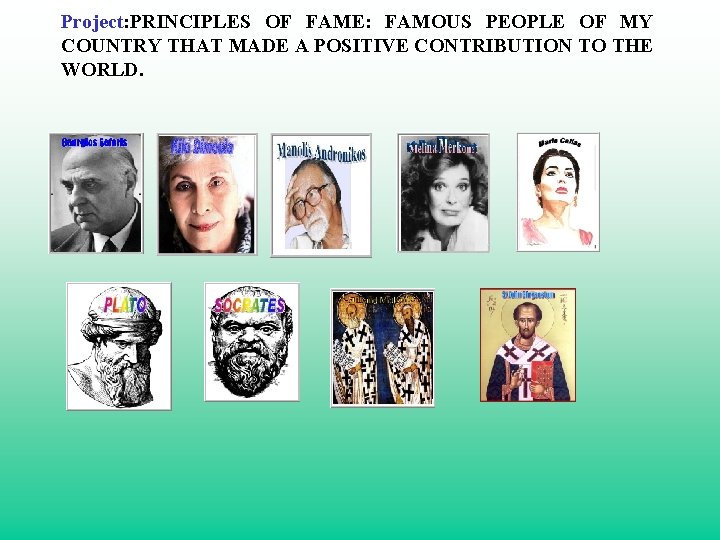
Project: PRINCIPLES OF FAME: FAMOUS PEOPLE OF MY COUNTRY THAT MADE A POSITIVE CONTRIBUTION TO THE WORLD.
Founding Schools: 7 th Primary School of Agii Anargiri, Greece (Ms Thalia Hadzigiannoglou) Scoala cu clasele I-VIII Nr. 4 Nr. 5 Gheorghe Magheru, Caracal, Romania (Mr Dan Nicolaita) Partner Schools: OSNOVNA ŠKOLA BARTULA KAŠIĆA, ZADAR, CROATIA (Ms KSENIJA VIDMARNINCEVIC "Demetrion" B Primary School of Pafos, Paphos, Cyprus (Mr Nikolaos Lekkos) ZEspół Szkół nr 3 Dąbrowa Górnicza, Poland (Magdalena Kucharczyk) Battonyai Szent István Általános Iskola, Battonya, Hungary (Ms Orsolya Lengyel) Szko³a Podstawowa nr 24 im. Jana Marcina Szancera, Czκstochowa, Poland (Ms Beata Janus-Lewczyρska) Ojāra Vācieša Gaujienas vidusskola, Gaujiena, Latvia (Ms Ingrida Tāraude-Šakova) Agrupamento Vertical Fernando Casimiro Pereira da Silva, Portugal (Ms Anabela Brígida) School no. 29 \"Mihai Viteazul\" Constanta, Romania (Ms Corina Ghita) Szkola Podstawowa w Mstowie, Mstów, Poland (Ms Małgorzata Porębińska)
Class: 5 th Grade (E 1) Duration: 4 -7 months Working Language: English Course: EFL (English as a Foreign Language)
Aim: It is important for our culture that children mature into altruistic adults who are able and willing to contribute their share and beyond for the common good. Thus, using EFL and ICT, we will attempt to make our students realise that in all areas of human endevour, famous people have shaped our understanding and practice of the field. Objectives (Bloom’s taxonomy): • Cognitive Students will: ü Improve their native as well as foreign language skills. ü Learn about famous people in other European countries. ü Identify the principles of fame for people who contributed positively to the society. • Affective Students will: ü Develop a positive stance towards ICT, native as well as EFL language. ü Value personality traits that contribute to the common good. ü Be open to the introduction of the European dimension within the school setting. • Psychomotor Students will: ü Develop their ICT and artistic skills.
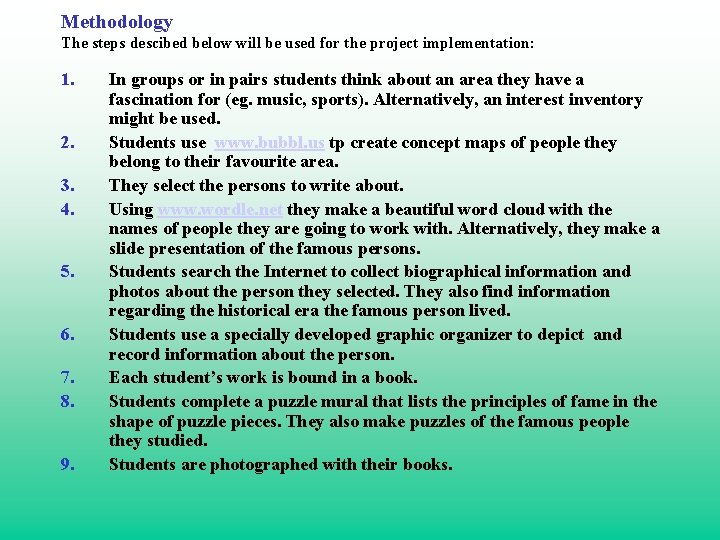
Methodology The steps descibed below will be used for the project implementation: 1. 2. 3. 4. 5. 6. 7. 8. 9. In groups or in pairs students think about an area they have a fascination for (eg. music, sports). Alternatively, an interest inventory might be used. Students use www. bubbl. us tp create concept maps of people they belong to their favourite area. They select the persons to write about. Using www. wordle. net they make a beautiful word cloud with the names of people they are going to work with. Alternatively, they make a slide presentation of the famous persons. Students search the Internet to collect biographical information and photos about the person they selected. They also find information regarding the historical era the famous person lived. Students use a specially developed graphic organizer to depict and record information about the person. Each student’s work is bound in a book. Students complete a puzzle mural that lists the principles of fame in the shape of puzzle pieces. They also make puzzles of the famous people they studied. Students are photographed with their books.
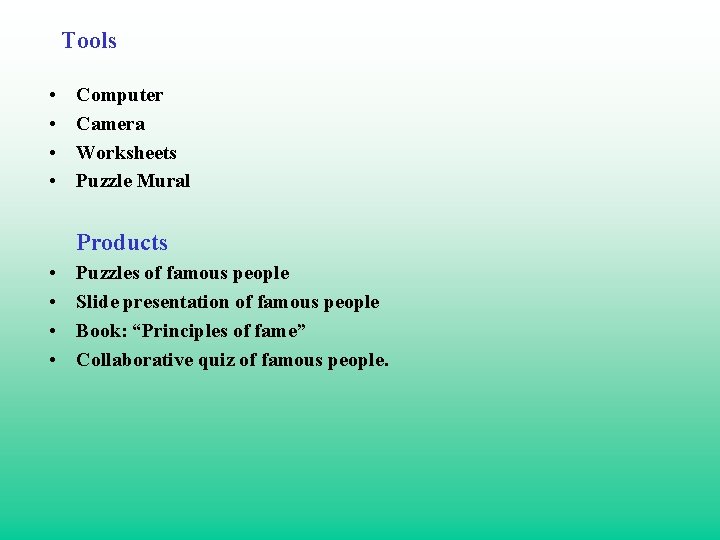
Tools • • Computer Camera Worksheets Puzzle Mural Products • • Puzzles of famous people Slide presentation of famous people Book: “Principles of fame” Collaborative quiz of famous people.
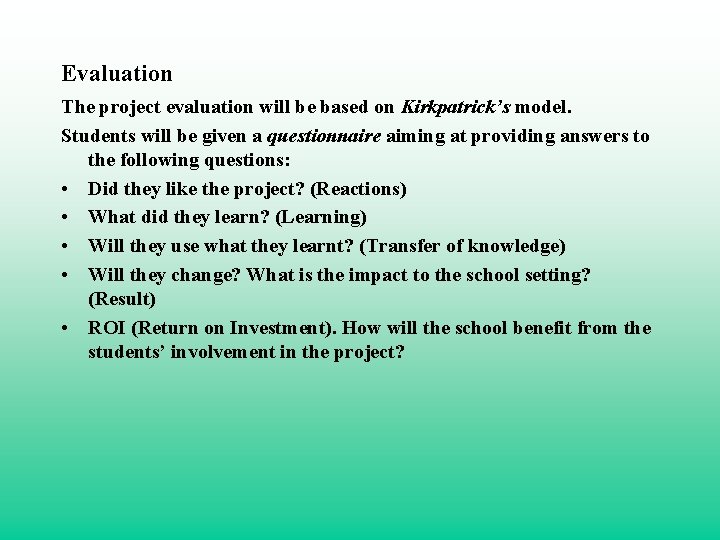
Evaluation The project evaluation will be based on Kirkpatrick’s model. Students will be given a questionnaire aiming at providing answers to the following questions: • Did they like the project? (Reactions) • What did they learn? (Learning) • Will they use what they learnt? (Transfer of knowledge) • Will they change? What is the impact to the school setting? (Result) • ROI (Return on Investment). How will the school benefit from the students’ involvement in the project?
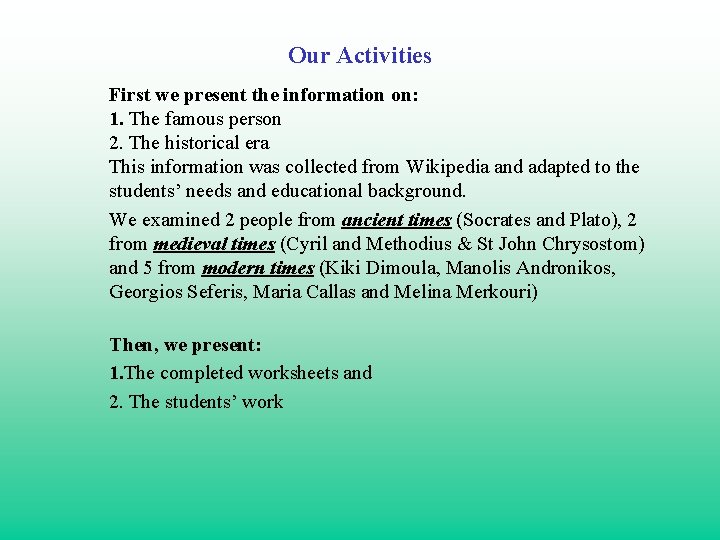
Our Activities First we present the information on: 1. The famous person 2. The historical era This information was collected from Wikipedia and adapted to the students’ needs and educational background. We examined 2 people from ancient times (Socrates and Plato), 2 from medieval times (Cyril and Methodius & St John Chrysostom) and 5 from modern times (Kiki Dimoula, Manolis Andronikos, Georgios Seferis, Maria Callas and Melina Merkouri) Then, we present: 1. The completed worksheets and 2. The students’ work
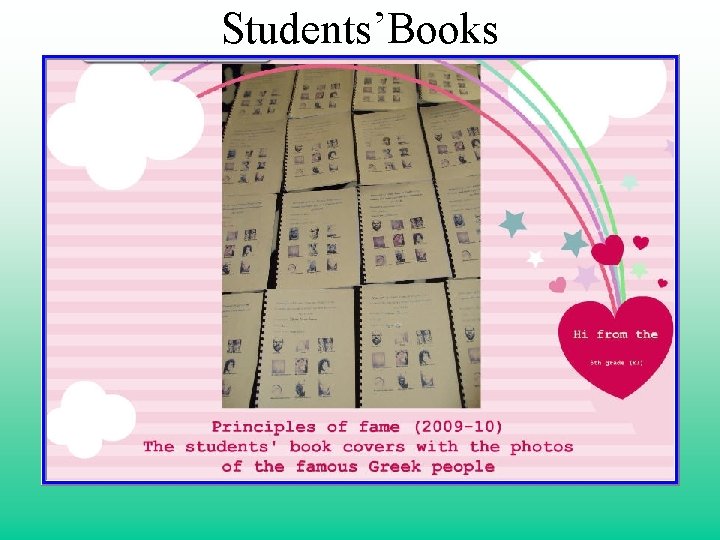
Students’Books
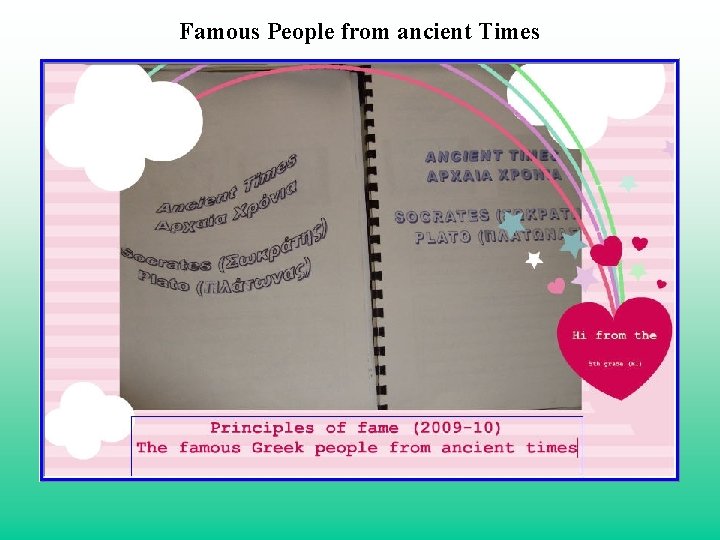
Famous People from ancient Times
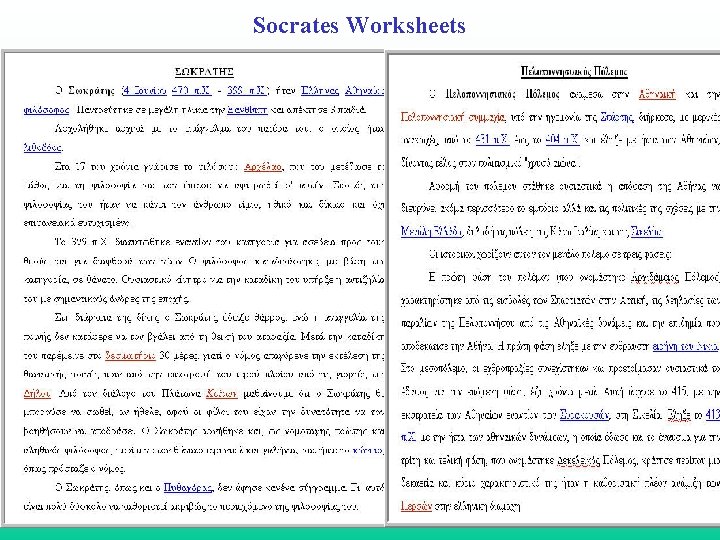
Socrates Worksheets
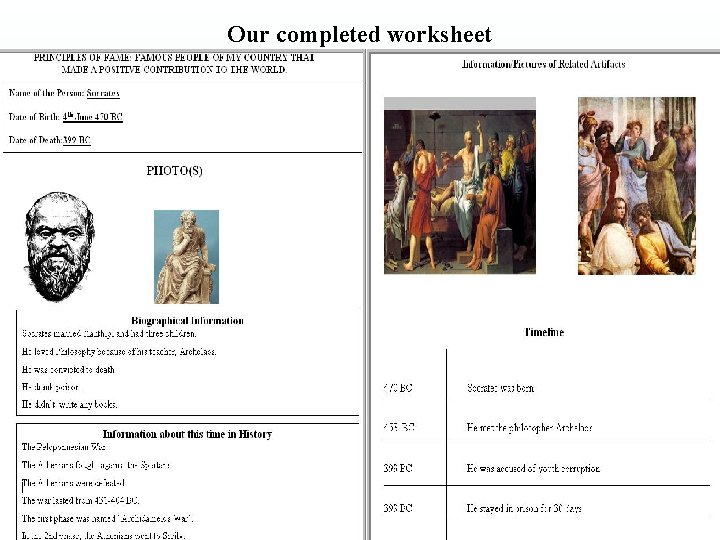
Our completed worksheet
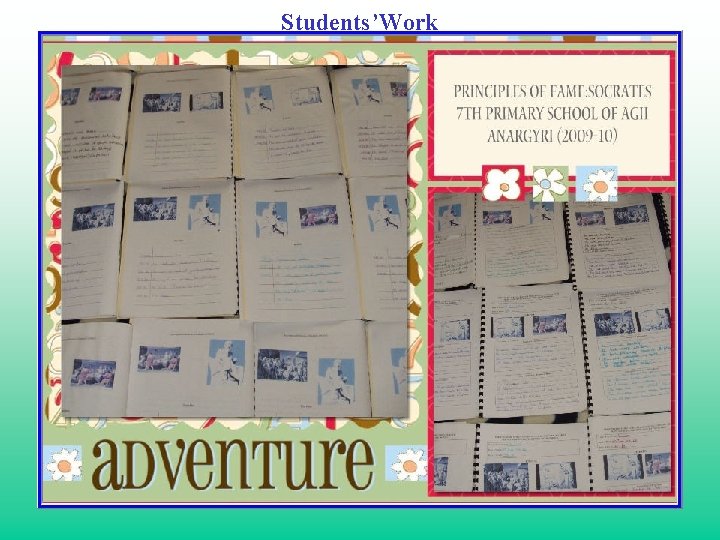
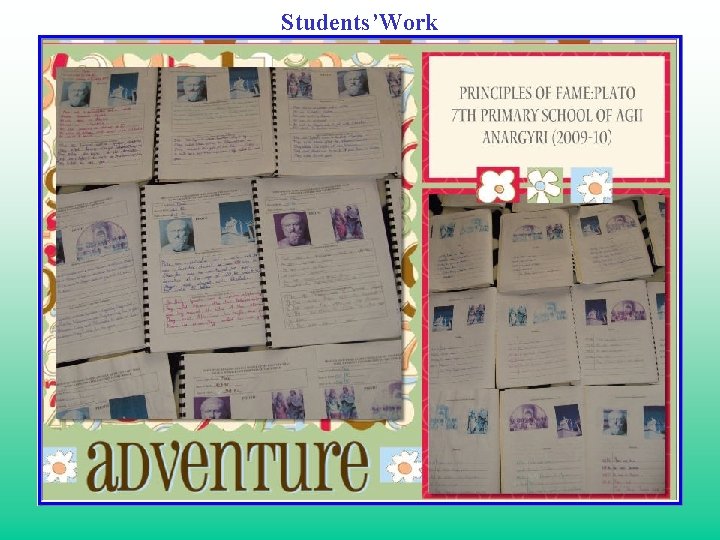
Students’Work
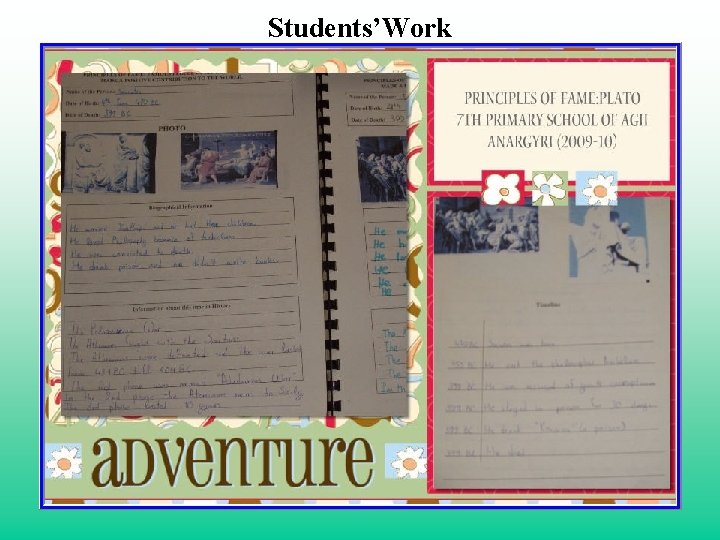
Students’Work
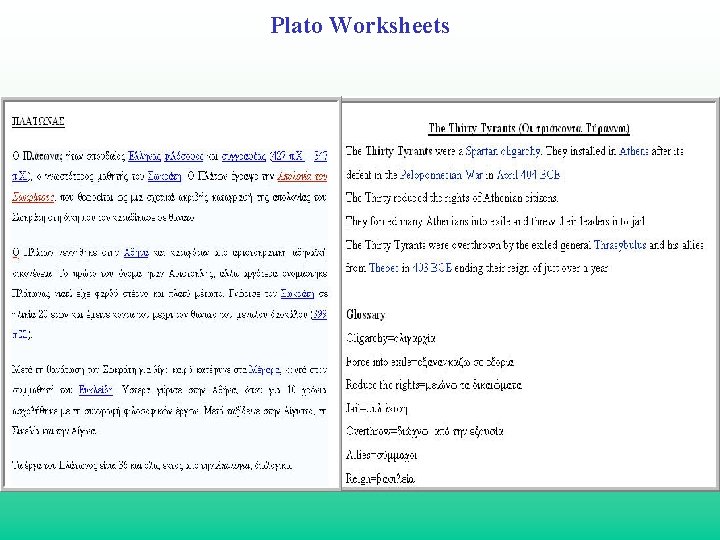
Plato Worksheets
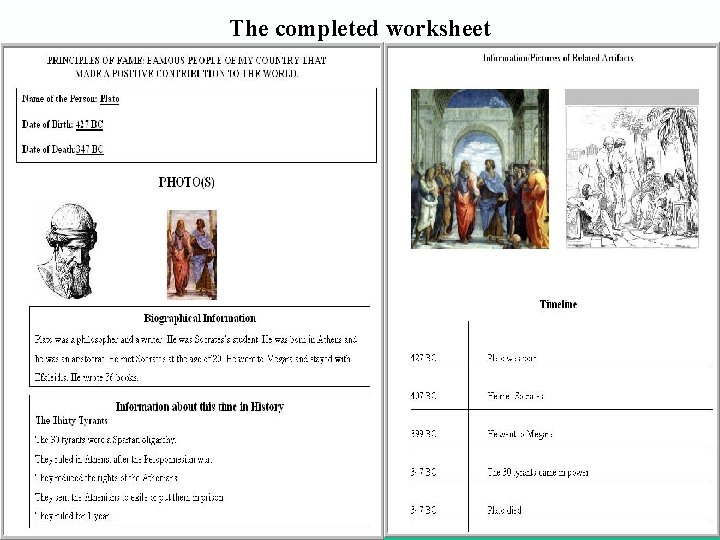
The completed worksheet
Students’Work
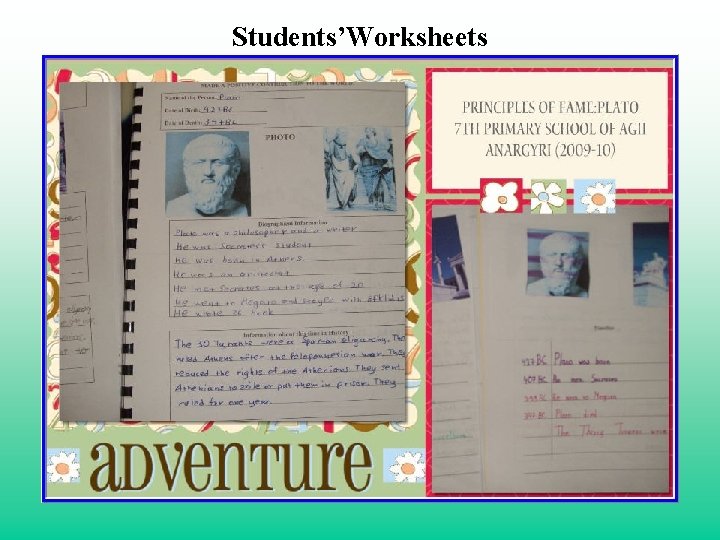
Students’Worksheets
Famous Greek People from Medieval Times
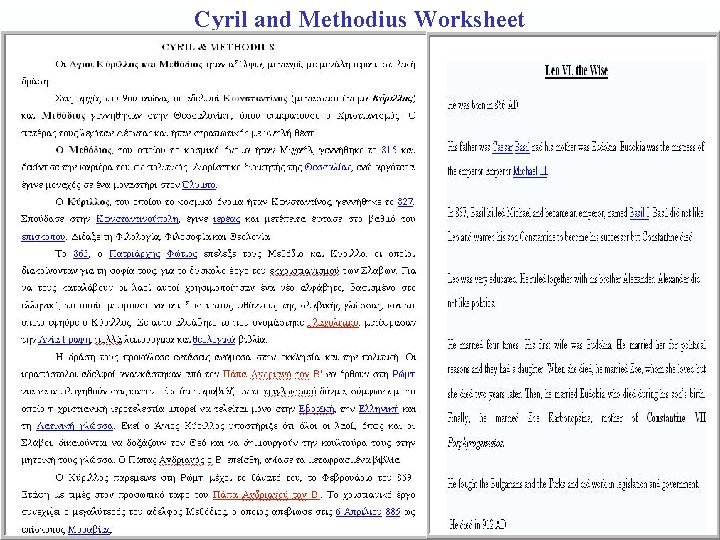
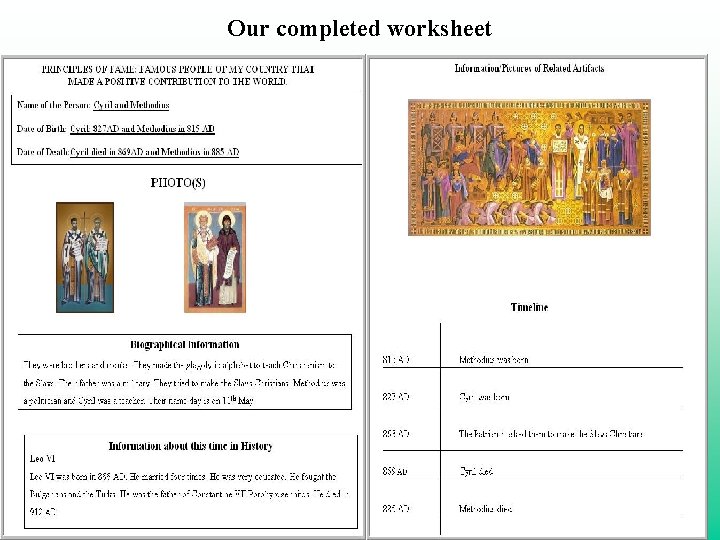
Cyril and Methodius Worksheet
Our completed worksheet
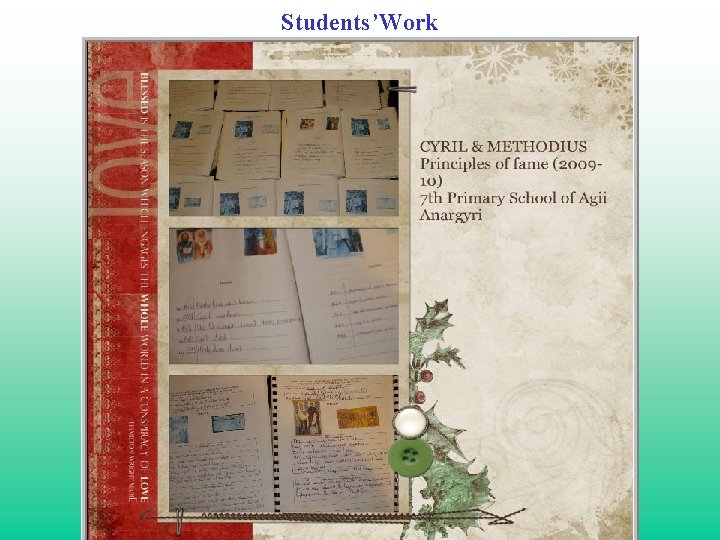
Students’Work
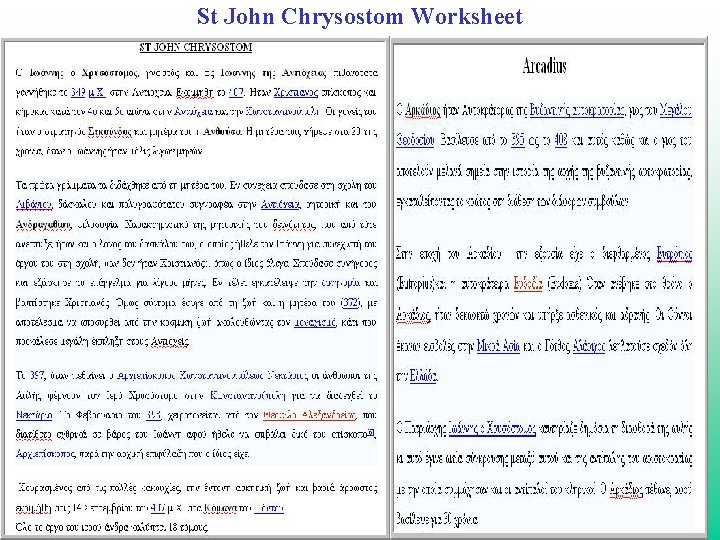
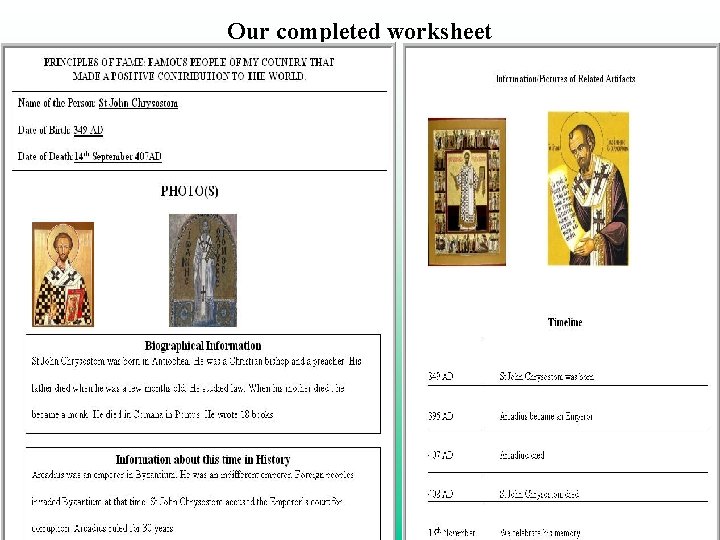
St John Chrysostom Worksheet
Our completed worksheet
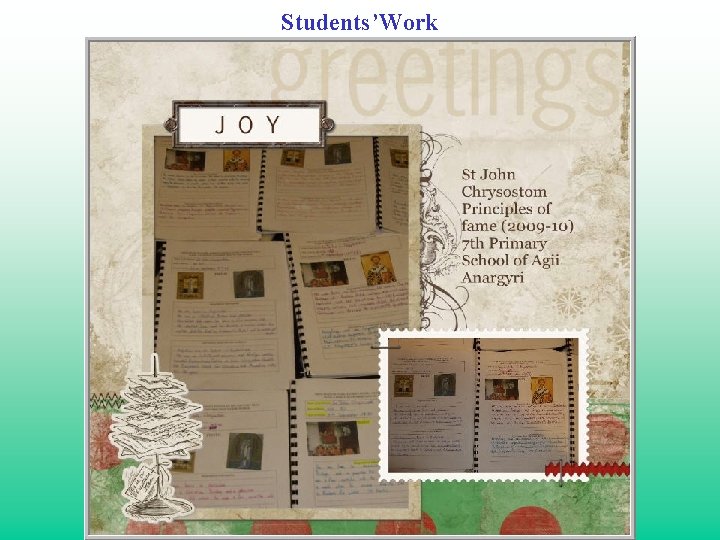
Students’Work
Famous Greek People from Modern Times
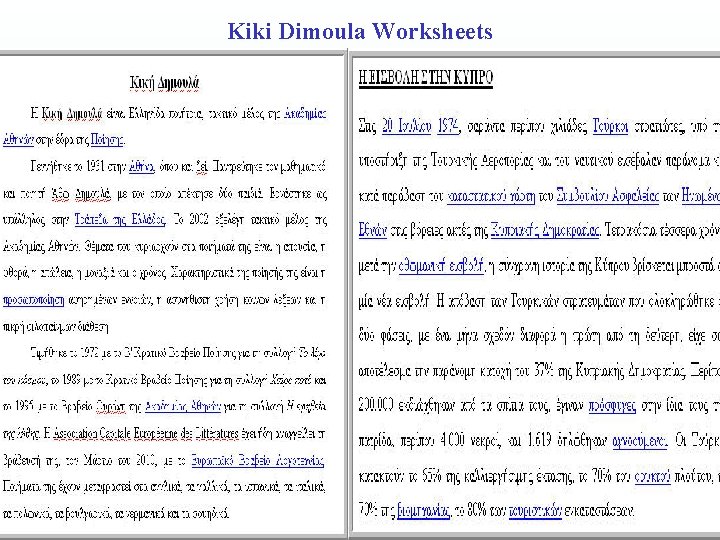
Kiki Dimoula Worksheets
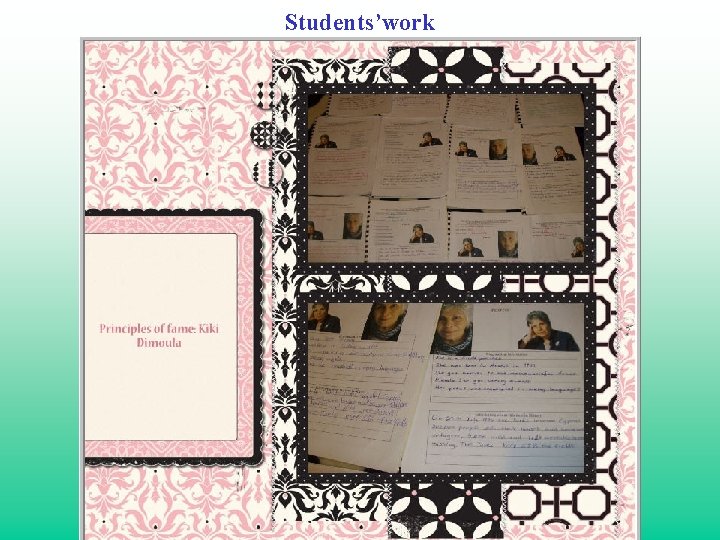
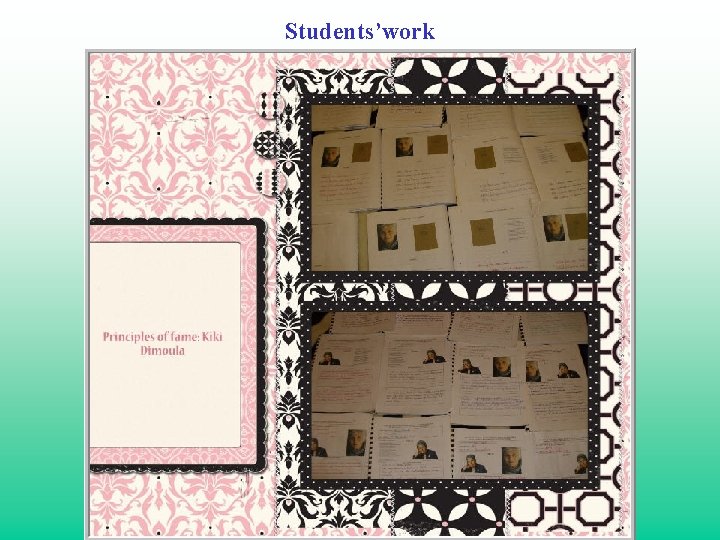
Students’work
Students’work
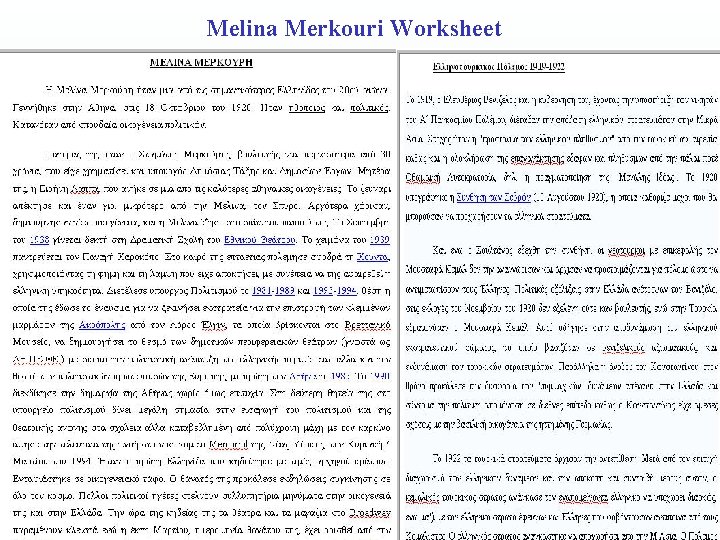
Melina Merkouri Worksheet
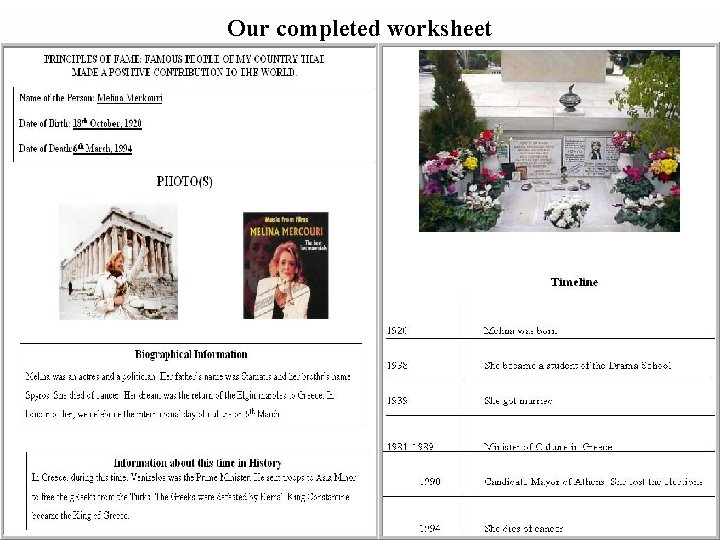
Our completed worksheet
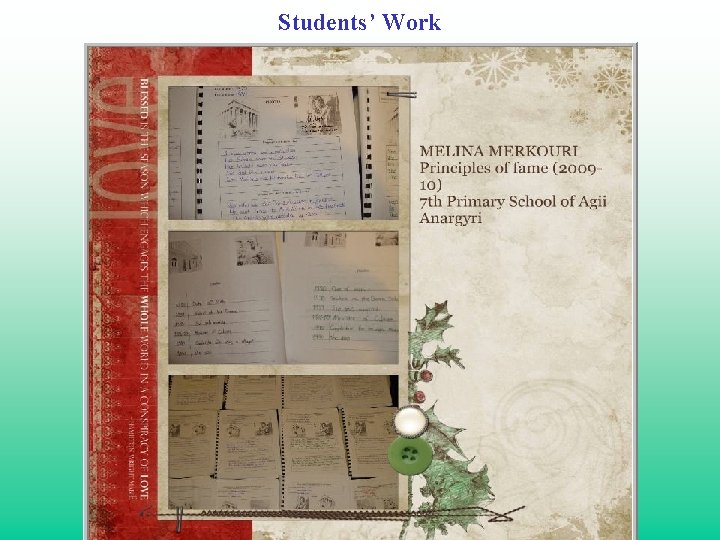
Students’ Work
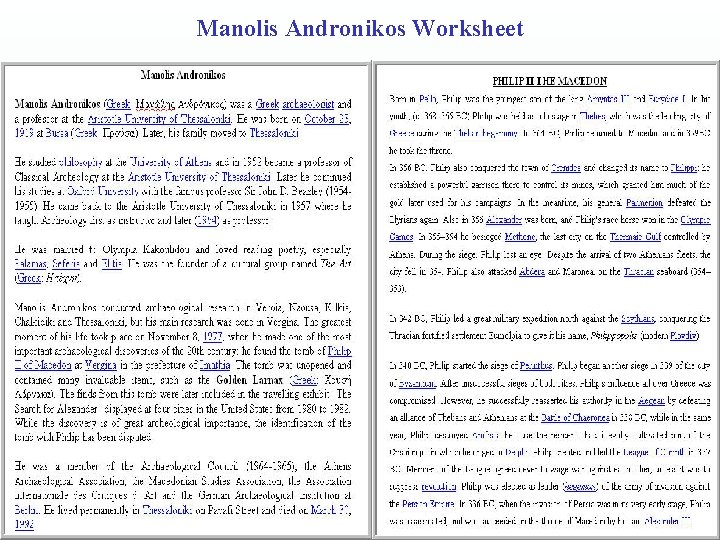
Manolis Andronikos Worksheet
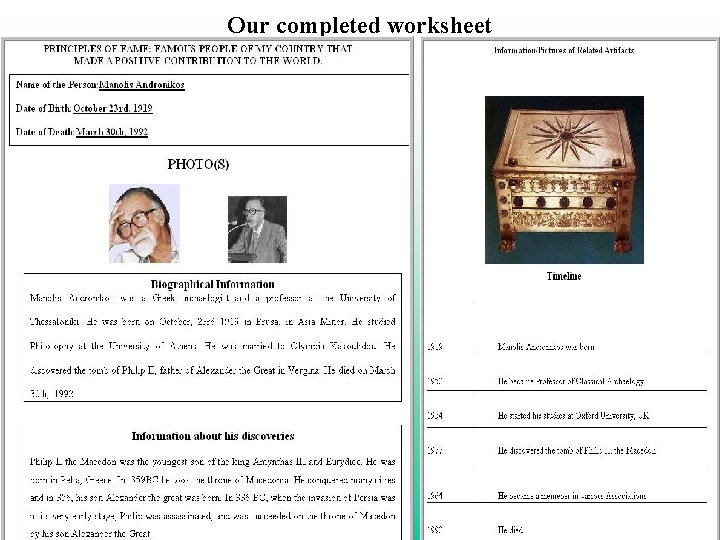
Our completed worksheet
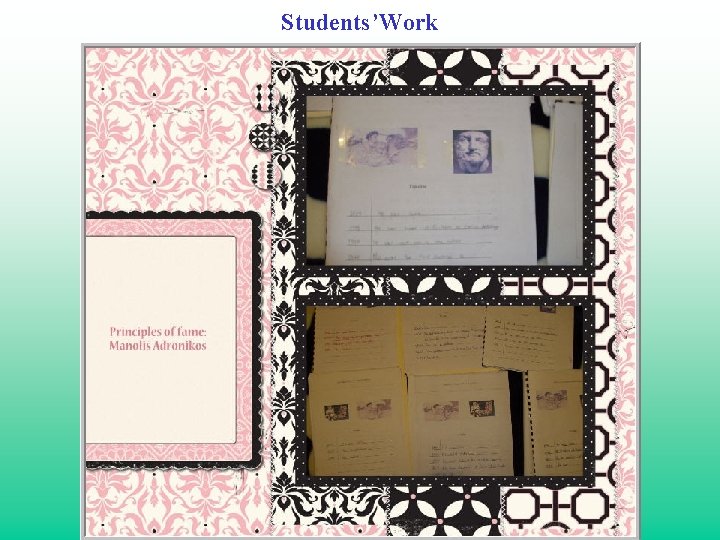
Students’Work
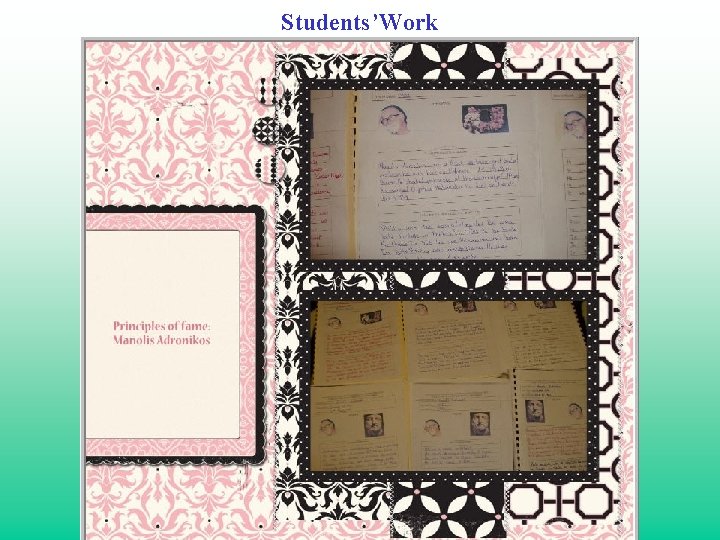
Students’Work
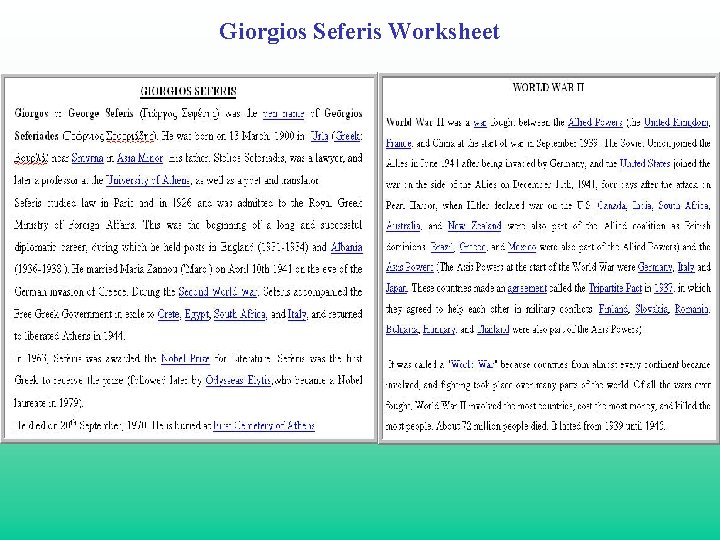
Giorgios Seferis Worksheet
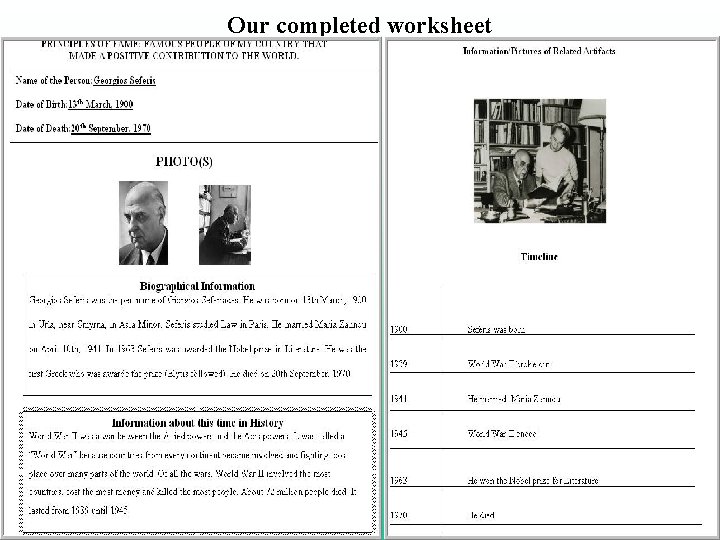
Our completed worksheet
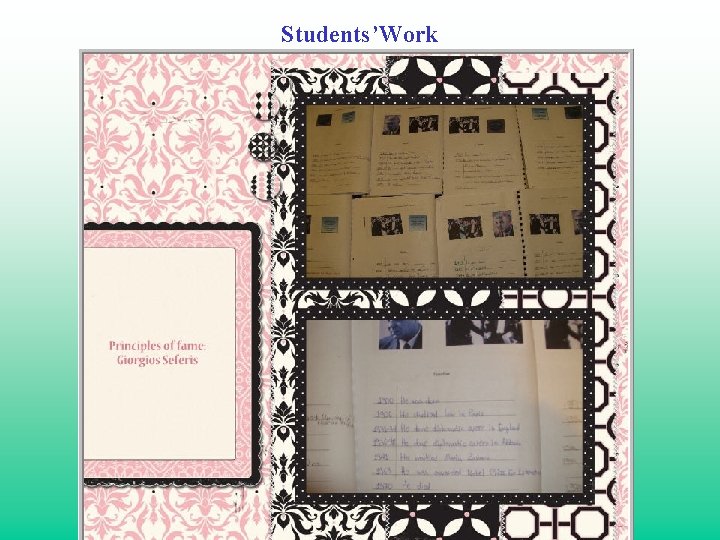
Students’Work
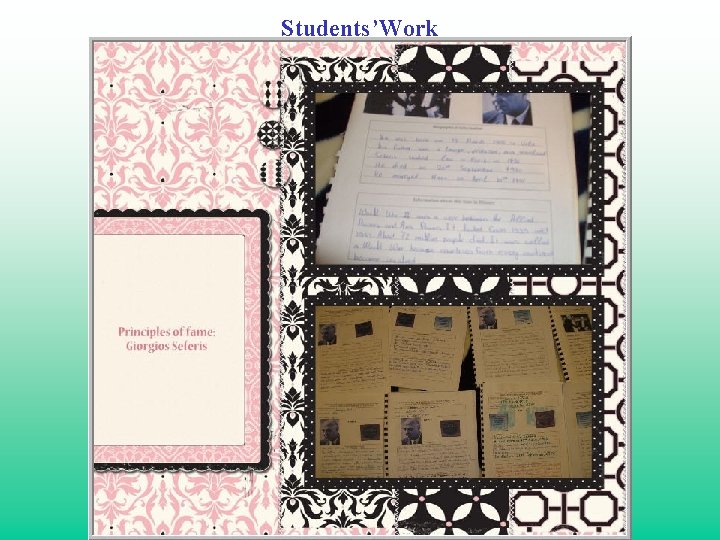
Students’Work
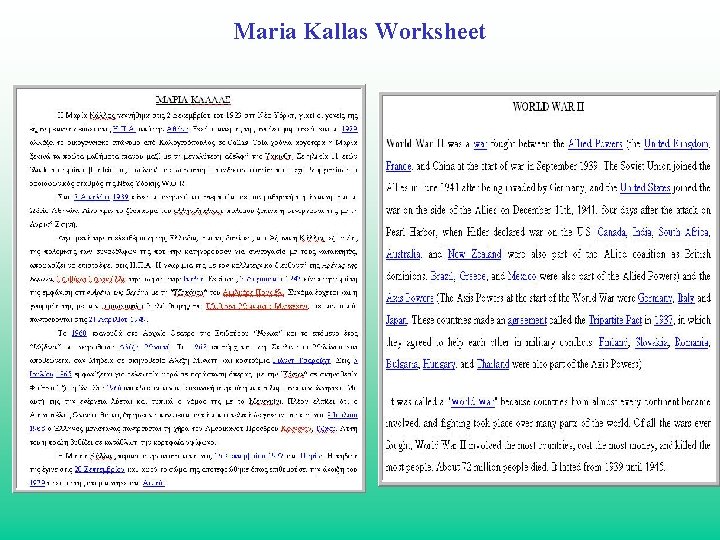
Maria Kallas Worksheet
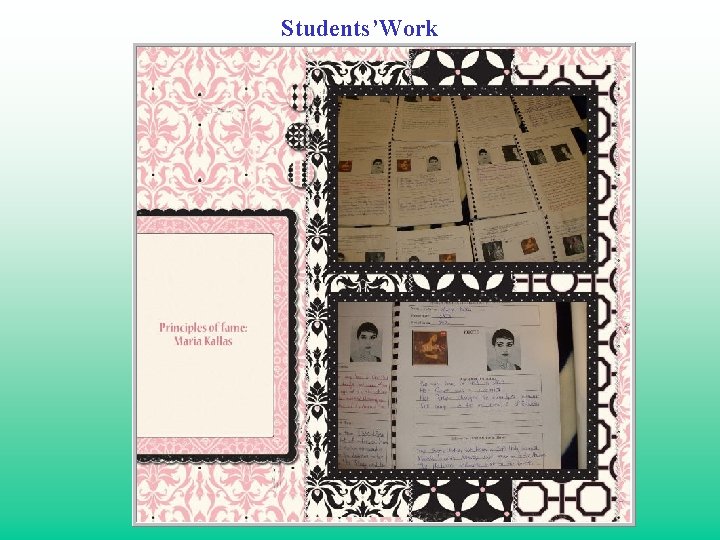
Students’Work
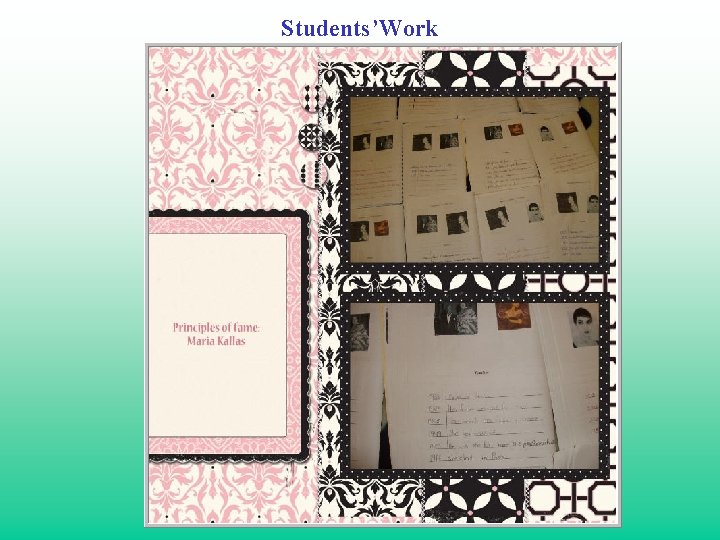
Students’Work
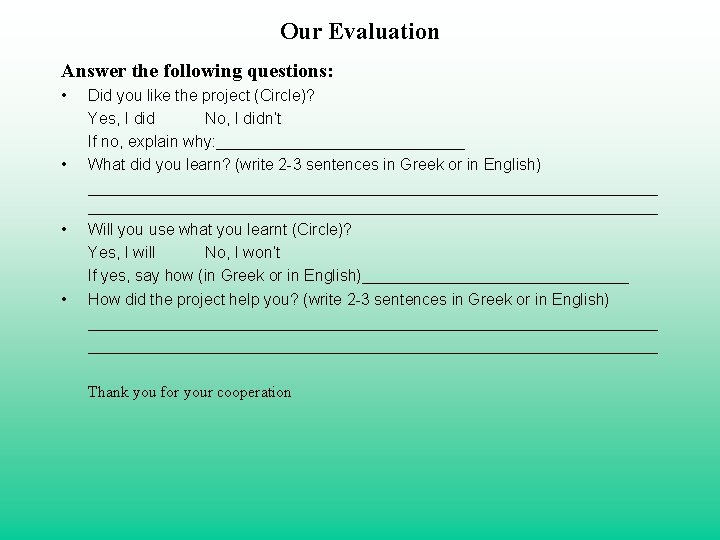
Our Evaluation Answer the following questions: • • Did you like the project (Circle)? Yes, I did No, I didn’t If no, explain why: ______________ What did you learn? (write 2 -3 sentences in Greek or in English) ________________________________________________________________ Will you use what you learnt (Circle)? Yes, I will No, I won’t If yes, say how (in Greek or in English)_______________ How did the project help you? (write 2 -3 sentences in Greek or in English) ________________________________________________________________ Thank you for your cooperation
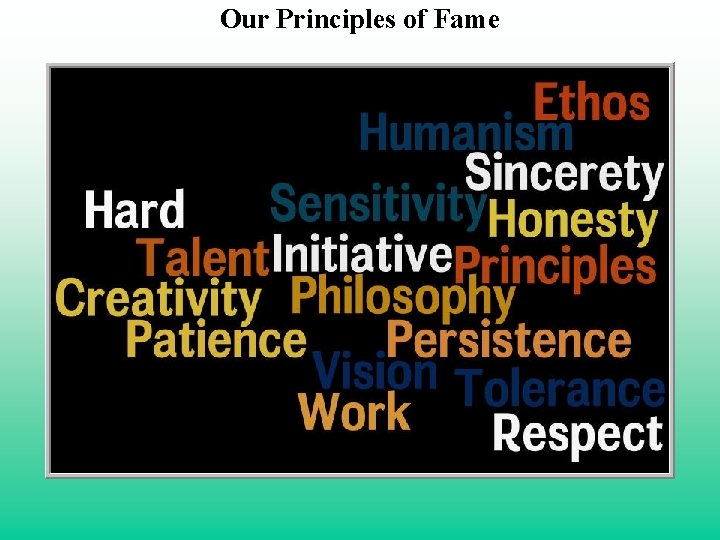
Our Principles of Fame
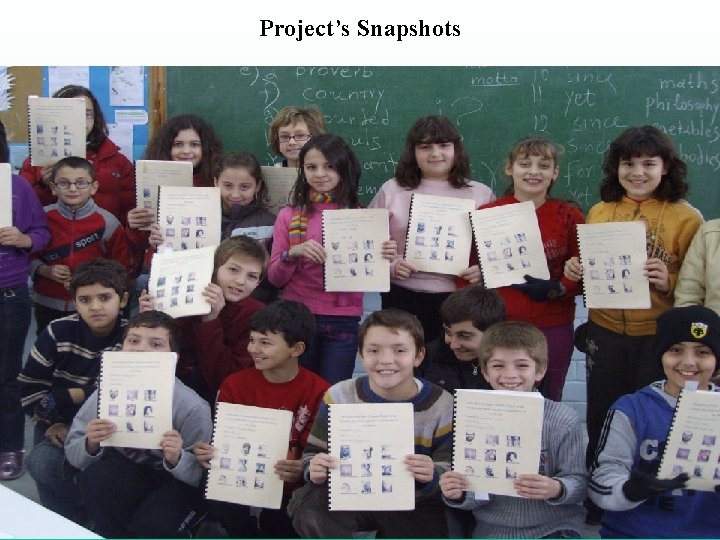
Project’s Snapshots
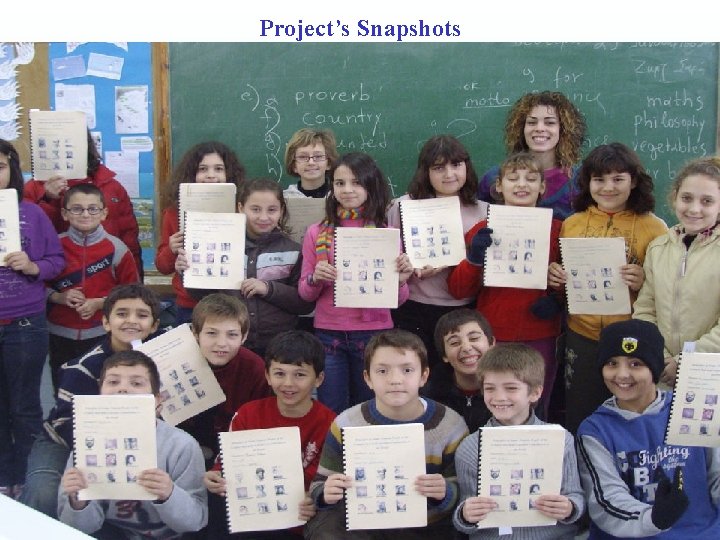
Project’s Snapshots
See our joint quiz and our on-line puzzles on “Principles of fame: People of my country that made a positive contribution to the world” in the project’s twinspace http: //newtwinspace. etwinning. net/web/p 16582 Thank you