
Project Modeling a Microvascular Network on a Chip


- Slides: 21
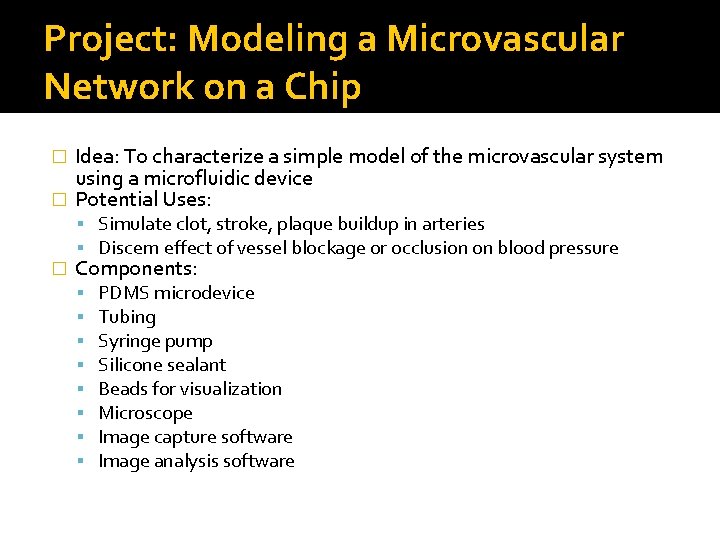
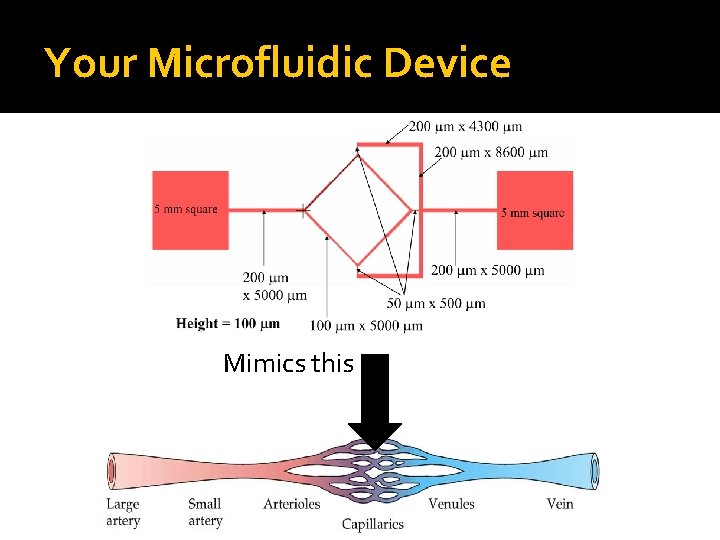
Project: Modeling a Microvascular Network on a Chip Idea: To characterize a simple model of the microvascular system using a microfluidic device � Potential Uses: � � Simulate clot, stroke, plaque buildup in arteries Discern effect of vessel blockage or occlusion on blood pressure Components: PDMS microdevice Tubing Syringe pump Silicone sealant Beads for visualization Microscope Image capture software Image analysis software
Overview Measure flow velocities within model network before and after a blockage (mimicking an occlusion of a blood vessel or clot like during a stroke) and track the redistribution of flow when a channel is occluded. Lab will be followed by a session where you will theoretically calculate the pressure and velocity in each channel before and after blockage using MATLAB. You will then compare your calculated pressure and velocities with your measured velocities.
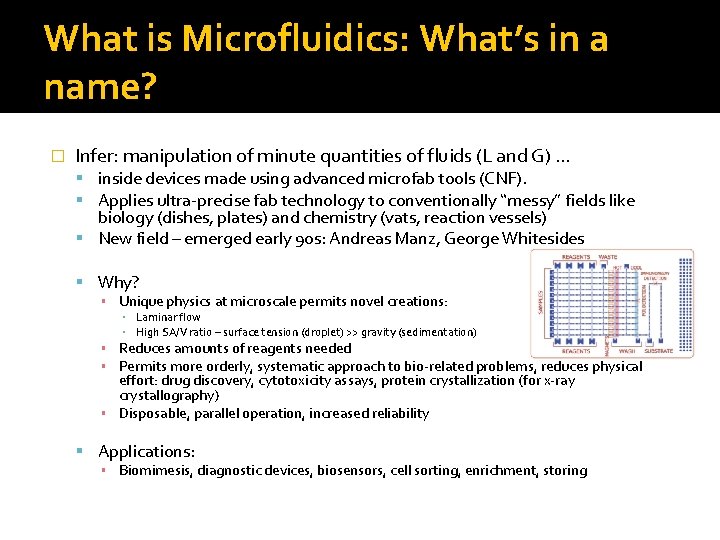
What is Microfluidics: What’s in a name? � Infer: manipulation of minute quantities of fluids (L and G) … inside devices made using advanced microfab tools (CNF). Applies ultra-precise fab technology to conventionally “messy” fields like biology (dishes, plates) and chemistry (vats, reaction vessels) New field – emerged early 90 s: Andreas Manz, George Whitesides Why? ▪ Unique physics at microscale permits novel creations: ▪ Laminar flow ▪ High SA/V ratio – surface tension (droplet) >> gravity (sedimentation) ▪ Reduces amounts of reagents needed ▪ Permits more orderly, systematic approach to bio-related problems, reduces physical effort: drug discovery, cytotoxicity assays, protein crystallization (for x-ray crystallography) ▪ Disposable, parallel operation, increased reliability Applications: ▪ Biomimesis, diagnostic devices, biosensors, cell sorting, enrichment, storing
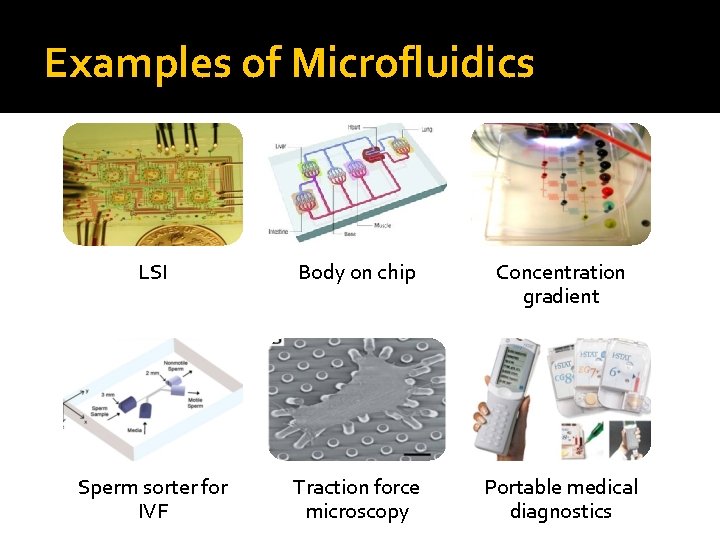
Examples of Microfluidics LSI Body on chip Concentration gradient Sperm sorter for IVF Traction force microscopy Portable medical diagnostics
Your Microfluidic Device Mimics this
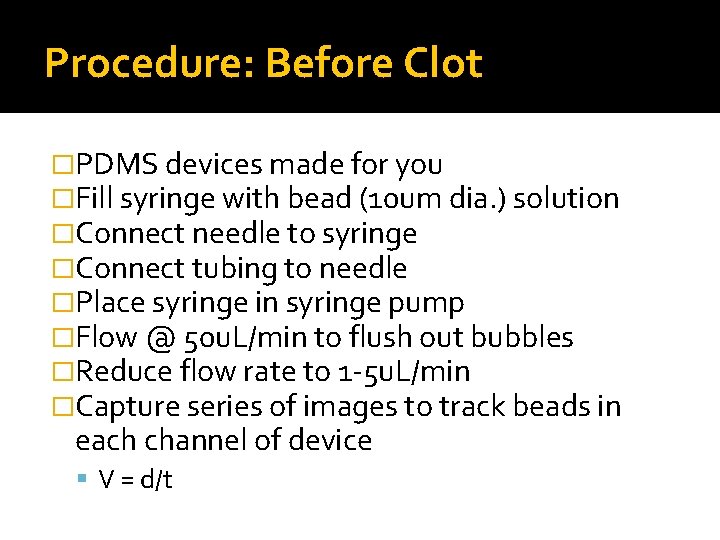
Procedure: Before Clot �PDMS devices made for you �Fill syringe with bead (10 um dia. ) solution �Connect needle to syringe �Connect tubing to needle �Place syringe in syringe pump �Flow @ 50 u. L/min to flush out bubbles �Reduce flow rate to 1 -5 u. L/min �Capture series of images to track beads in each channel of device V = d/t
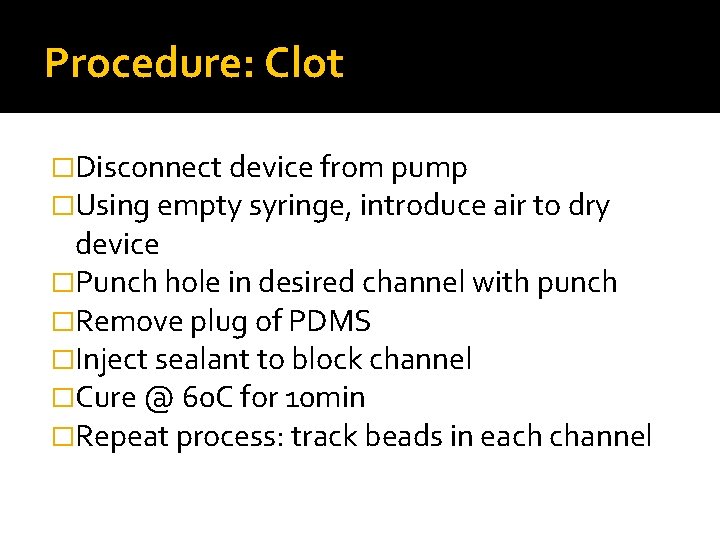
Procedure: Clot �Disconnect device from pump �Using empty syringe, introduce air to dry device �Punch hole in desired channel with punch �Remove plug of PDMS �Inject sealant to block channel �Cure @ 60 C for 10 min �Repeat process: track beads in each channel
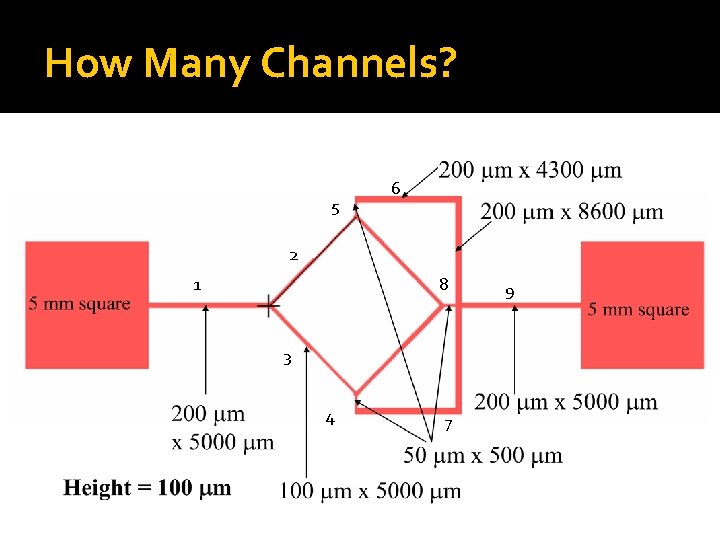
How Many Channels? 5 6 2 1 8 3 4 7 9
Results and Data Analysis Expected � Average velocity for each channel before blockage � Average velocity for each channel after blockage � Prediction of flow pattern after channel blockage � Bead Motion Analysis: Want to track at least 10 beads in each channel Track beads in each channel over several frames Not interested in instantaneous velocity of beads (changes from frame to frame) Interested in average velocity (total distance traveled / time observed) Bin data to generate histogram (data partitioned into intervals and frequency of occurrence plotted)
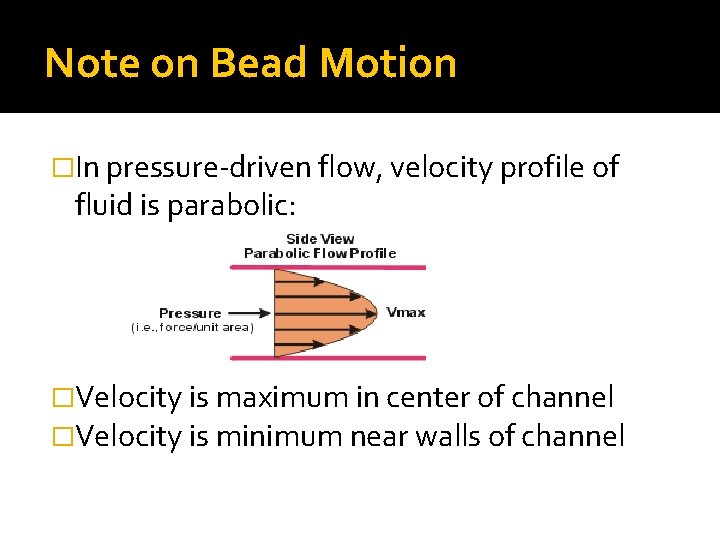
Note on Bead Motion �In pressure-driven flow, velocity profile of fluid is parabolic: �Velocity is maximum in center of channel �Velocity is minimum near walls of channel
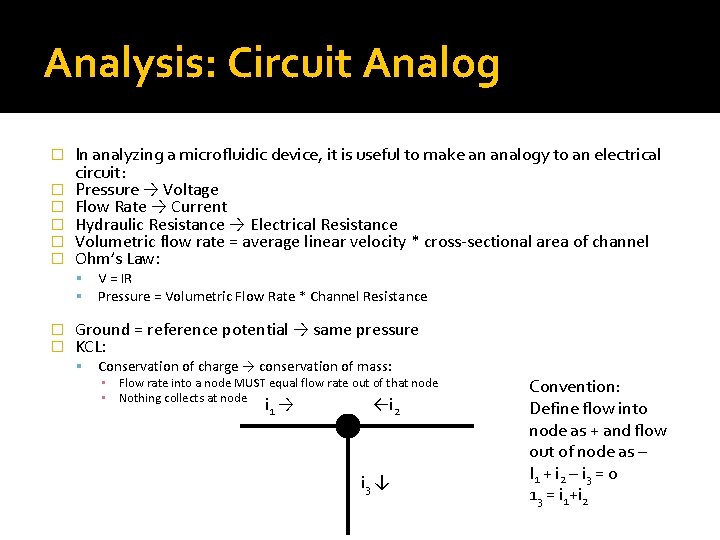
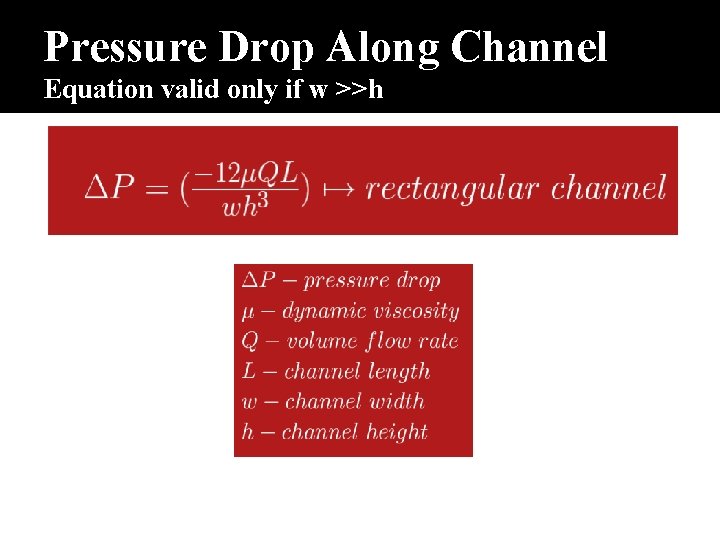
Analysis: Circuit Analog � � � In analyzing a microfluidic device, it is useful to make an analogy to an electrical circuit: Pressure → Voltage Flow Rate → Current Hydraulic Resistance → Electrical Resistance Volumetric flow rate = average linear velocity * cross-sectional area of channel Ohm’s Law: � � V = IR Pressure = Volumetric Flow Rate * Channel Resistance Ground = reference potential → same pressure KCL: Conservation of charge → conservation of mass: ▪ Flow rate into a node MUST equal flow rate out of that node ▪ Nothing collects at node i 1 → ←i 2 i 3 ↓ Convention: Define flow into node as + and flow out of node as – I 1 + i 2 – i 3 = 0 13 = i 1+i 2
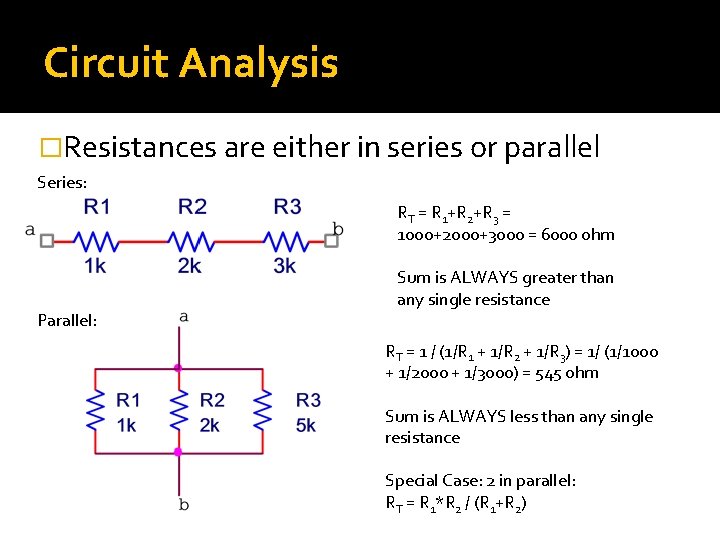
Circuit Analysis �Resistances are either in series or parallel Series: RT = R 1+R 2+R 3 = 1000+2000+3000 = 6000 ohm Parallel: Sum is ALWAYS greater than any single resistance RT = 1 / (1/R 1 + 1/R 2 + 1/R 3) = 1/ (1/1000 + 1/2000 + 1/3000) = 545 ohm Sum is ALWAYS less than any single resistance Special Case: 2 in parallel: RT = R 1*R 2 / (R 1+R 2)
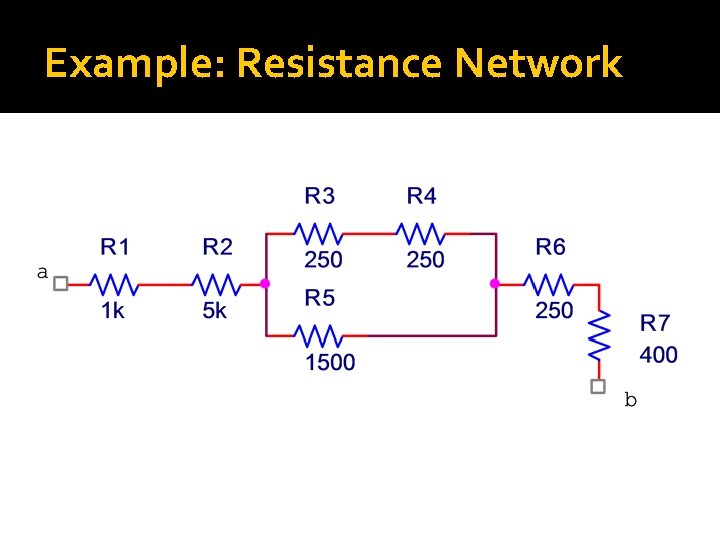
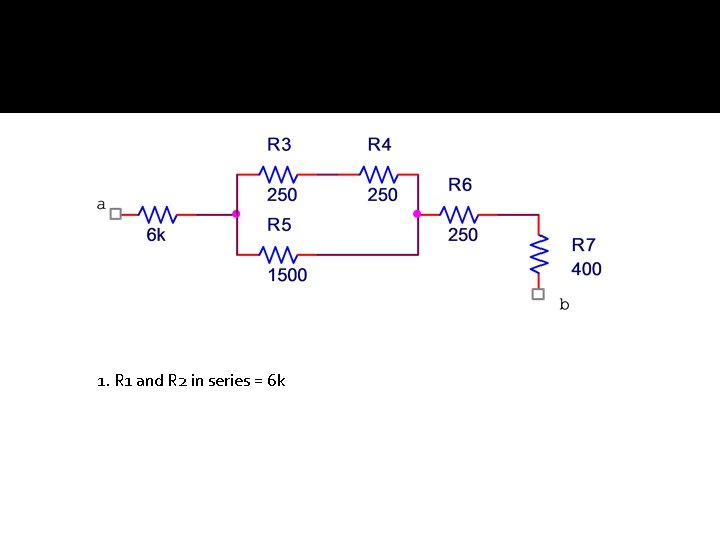
Example: Resistance Network
1. R 1 and R 2 in series = 6 k
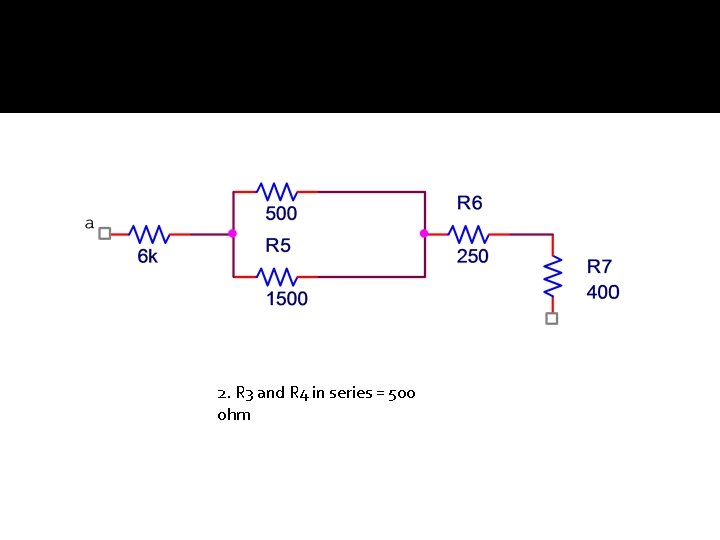
2. R 3 and R 4 in series = 500 ohm
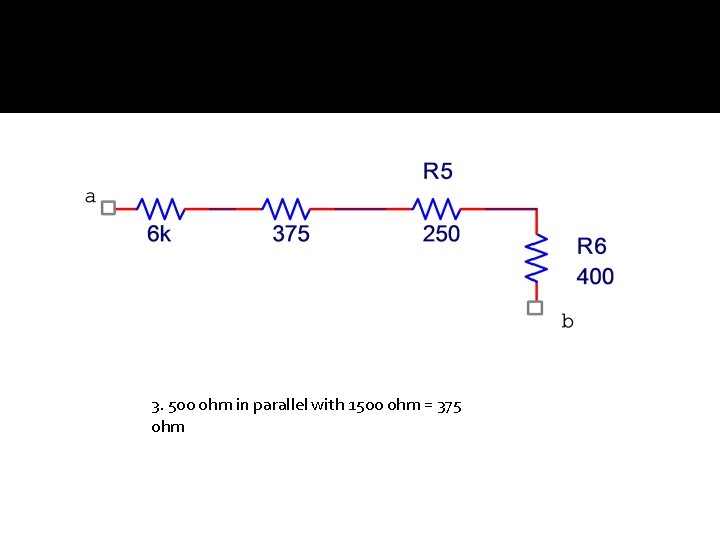
3. 500 ohm in parallel with 1500 ohm = 375 ohm
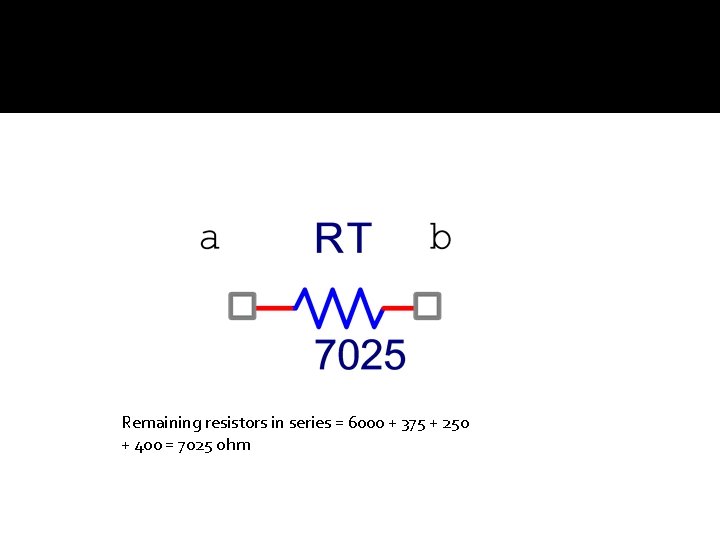
Remaining resistors in series = 6000 + 375 + 250 + 400 = 7025 ohm
Pressure Drop Along Channel Equation valid only if w >>h
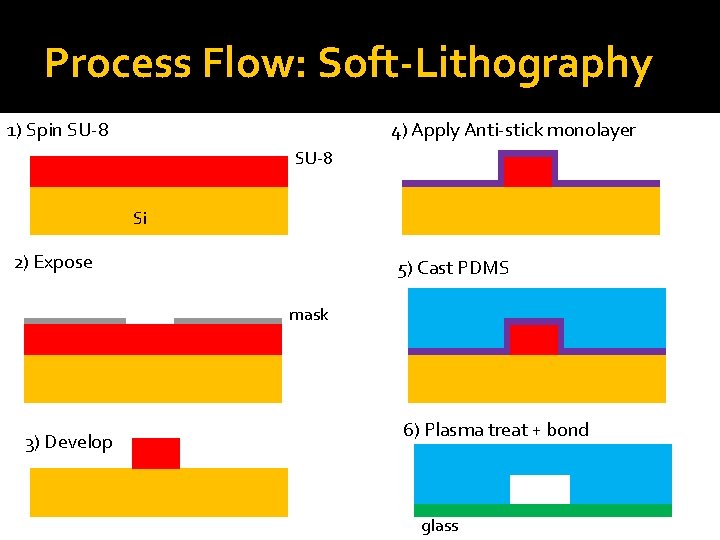
Fabrication: How Are Microfluidic Devices Made? �Pattern is defined on surface (2 D) and then transferred into vertical plane �Process flow – depicted as a cross-sectional view, each step showing execution of one step (addition of layer, exposure, removal of layer, etc. )
Process Flow: Soft-Lithography 1) Spin SU-8 4) Apply Anti-stick monolayer SU-8 Si 2) Expose 3) Develop 5) Cast PDMS Mask mask 6) Plasma treat + bond glass
END