
Project Management Process Risk Management From Keep Your
- Slides: 10
Project Management Process Risk Management From “Keep Your Projects On Track” http: //www. drdobbs. com/184414727 Other Processes 1
Risk Management Usually performed 1. at the start of a project, 2. at the beginning of major project phases (such as requirements, design, coding and deployment), and 3. when there are significant changes (for example, feature changes, target platform changes and technology changes). Other Processes 2
Risk Management Four steps to risk management are 1. risk identification, 2. risk analysis, 3. risk management planning and 4. risk review Other Processes 3
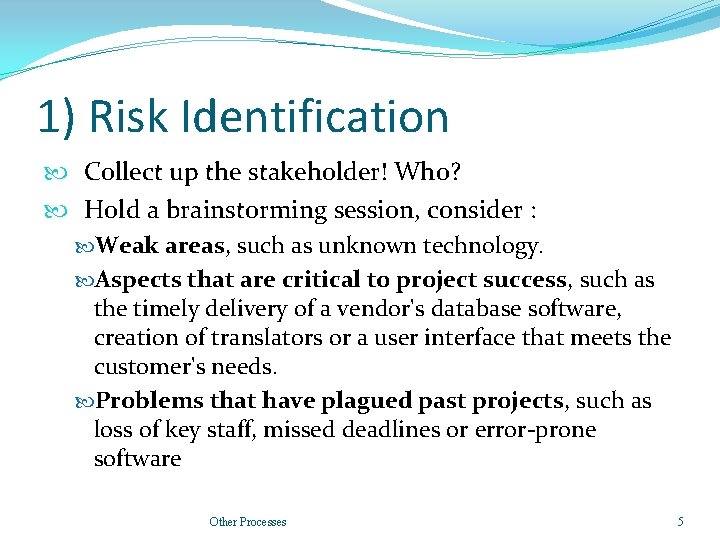
1) Risk Identification the brainstorming session, consider : Weak areas, such as unknown technology. Aspects that are critical to project success, such as the timely delivery of a vendor's database software, creation of translators or a user interface that meets the customer's needs. Problems that have plagued past projects, such as loss of key staff, missed deadlines or error-prone software Other Processes 4
1) Risk Identification Collect up the stakeholder! Who? Hold a brainstorming session, consider : Weak areas, such as unknown technology. Aspects that are critical to project success, such as the timely delivery of a vendor's database software, creation of translators or a user interface that meets the customer's needs. Problems that have plagued past projects, such as loss of key staff, missed deadlines or error-prone software Other Processes 5
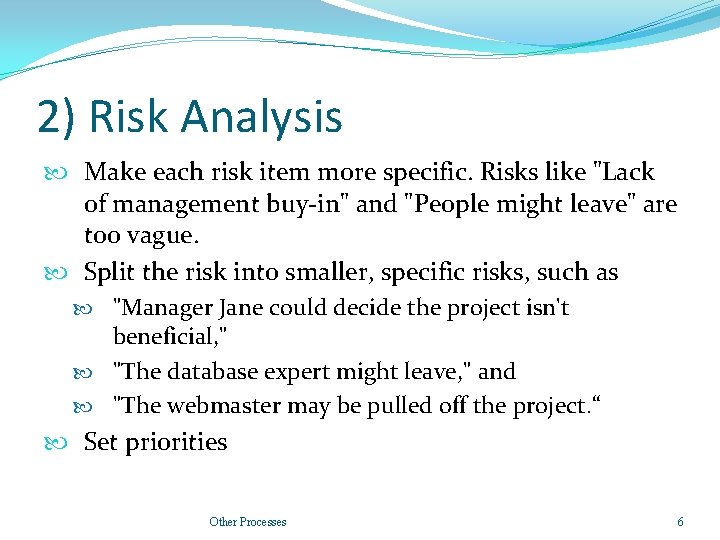
2) Risk Analysis Make each risk item more specific. Risks like "Lack of management buy-in" and "People might leave" are too vague. Split the risk into smaller, specific risks, such as "Manager Jane could decide the project isn't beneficial, " "The database expert might leave, " and "The webmaster may be pulled off the project. “ Set priorities Other Processes 6
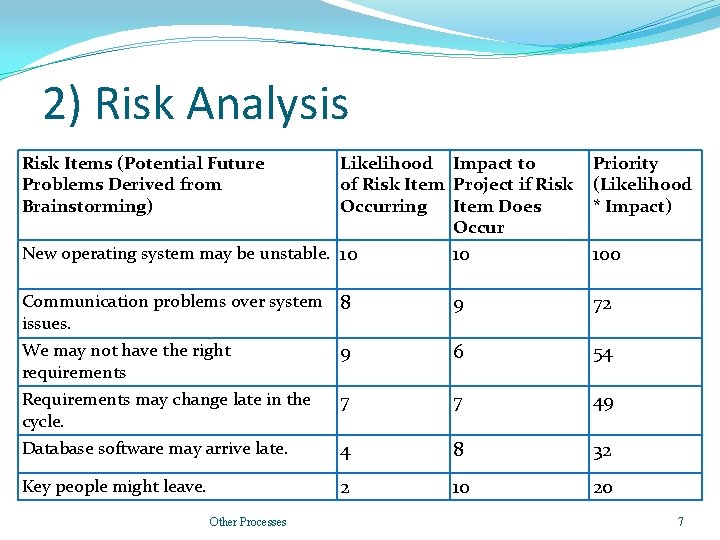
2) Risk Analysis Risk Items (Potential Future Problems Derived from Brainstorming) Likelihood Impact to of Risk Item Project if Risk Occurring Item Does Occur Priority (Likelihood * Impact) New operating system may be unstable. 10 10 100 Communication problems over system 8 issues. 9 72 We may not have the right requirements 9 6 54 Requirements may change late in the cycle. 7 7 49 Database software may arrive late. 4 8 32 Key people might leave. 2 10 20 Other Processes 7
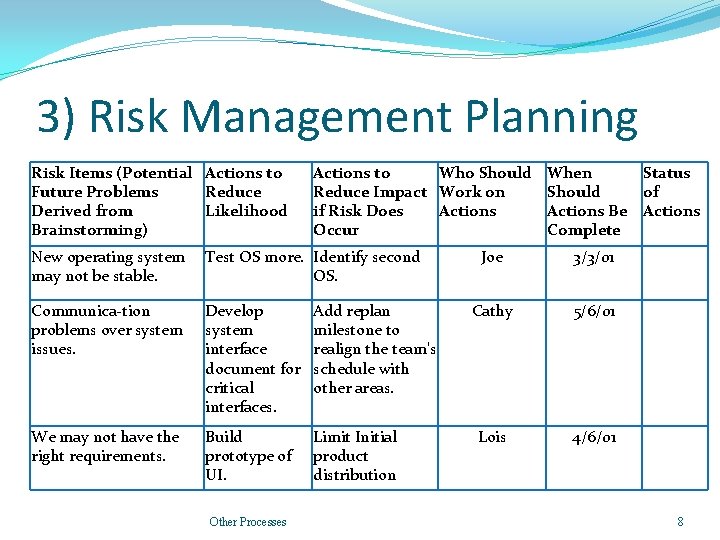
3) Risk Management Planning Risk Items (Potential Actions to Future Problems Reduce Derived from Likelihood Brainstorming) Actions to Who Should Reduce Impact Work on if Risk Does Actions Occur New operating system may not be stable. Test OS more. Identify second OS. Communica-tion problems over system issues. Develop system interface document for critical interfaces. Add replan milestone to realign the team's schedule with other areas. We may not have the right requirements. Build prototype of UI. Limit Initial product distribution Other Processes When Status Should of Actions Be Actions Complete Joe 3/3/01 Cathy 5/6/01 Lois 4/6/01 8
4) Risk Review review your risks periodically, check how well mitigation is progressing. change risk priorities, as required Identify new risks. rerun the complete risk process if the project has experienced significant changes. incorporate risk review into other regularly scheduled project reviews Other Processes 9
Risk Management Time Effective! 90 to 120 minutes for projects that are 12 to 60 personmonths Control the length of the session by controlling the scope you choose, most sessions usually take less than two hours Other Processes 10