
Project Management Overview How Project Management Principles can






- Slides: 40
Project Management Overview How Project Management Principles can support researchers to manage research projects Andrew Kelso, Head, Portfolio Management Office (PMO) March 2019.
Purpose of Today Provide an overview of project management philosophies and how they can be applied to research projects. Outline the benefits of project management and the key to setting up successful. Provide an overview of key roles and responsibilities in the project management world.
* What is a Project?
* What is a Project? “ A Project is a temporary organisation that is created for the purposes of delivering one of more business products according to an agreed business case” PRINCE 2 “ A Project is a temporary endeavour undertaken to create a unique product, service or result” PMBOK
Project Characteristics Unique Drives change Temporary Cross functional Has inherent uncertainty Drives business value creation
“Project Management is the planning, delegating, monitoring and control of all aspects of the projects, and the motivation of those involved to achieve project objectives within the expected performance targets for time, cost, quality, scope, benefits and risks. PRINCE 2 Project Management is the application of skills, tools and techniques to project activities to meet the project requirements. Project Management is accomplished through the appropriate application and integration of the Project Management processes identified for the project. Project management enables organisations to execute projects effectively and efficiently” PMBOK TAILORING Project Management
Advantages of Project Management Principles in supporting researchers Project management delivers an outcome that both sets and meets expectations of key stakeholders in a way that is predictable, and bound in scope q Creates better predictability q Provides for better control of resources needed for the project – financial, physical and human resources q Creates informed outcomes aligned with stakeholders and end users q Better chance of meeting expectations q Better internal collaboration q Improved worker morale – everyone should know what their role is q Better coordination q More cost effective with enhanced benefit outcomes q Numerous Agile approaches that will work well in a research environment.
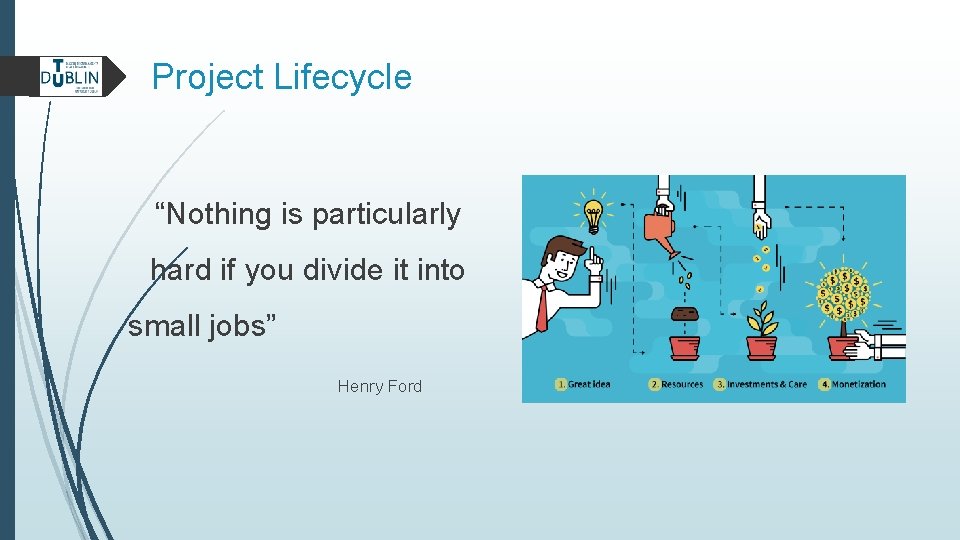
Project Lifecycle “Nothing is particularly hard if you divide it into small jobs” Henry Ford
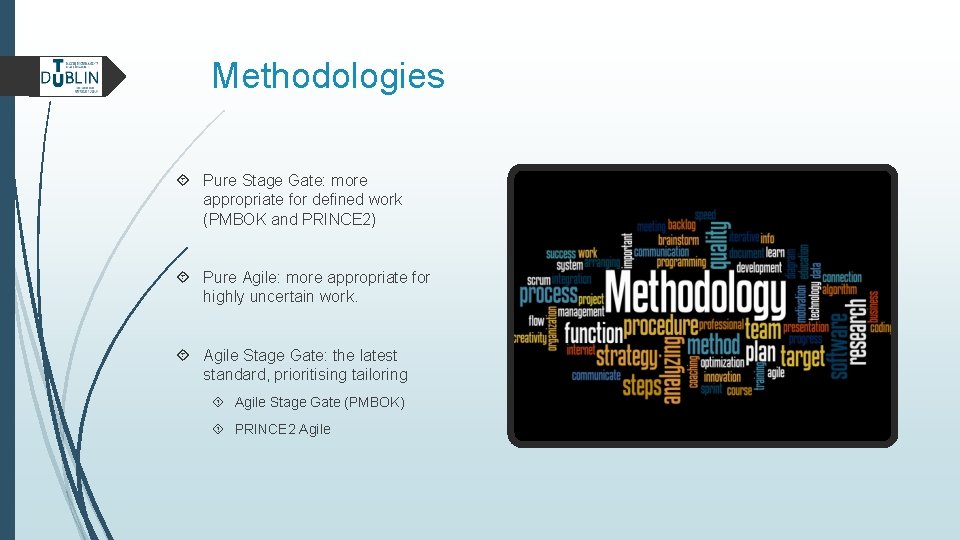
Methodologies Pure Stage Gate: more appropriate for defined work (PMBOK and PRINCE 2) Pure Agile: more appropriate for highly uncertain work. Agile Stage Gate: the latest standard, prioritising tailoring Agile Stage Gate (PMBOK) PRINCE 2 Agile
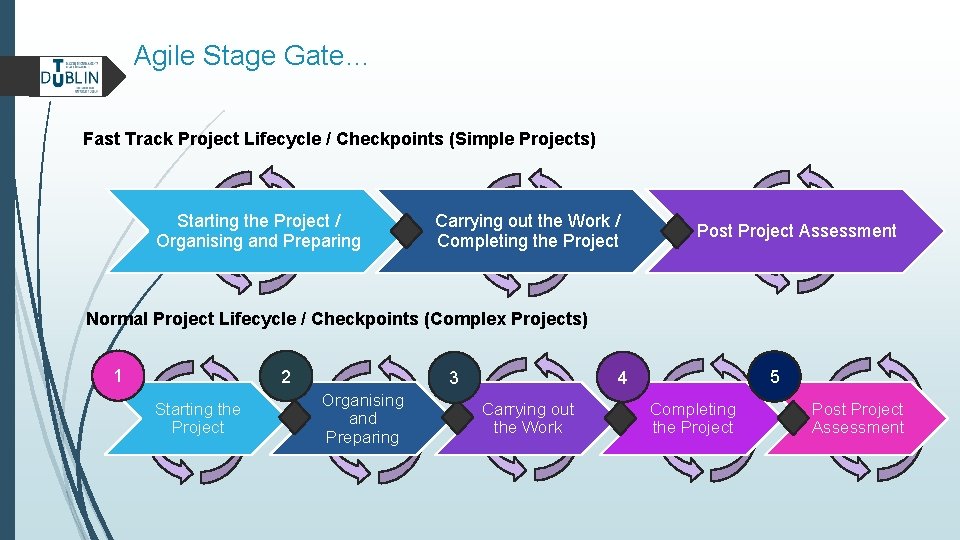
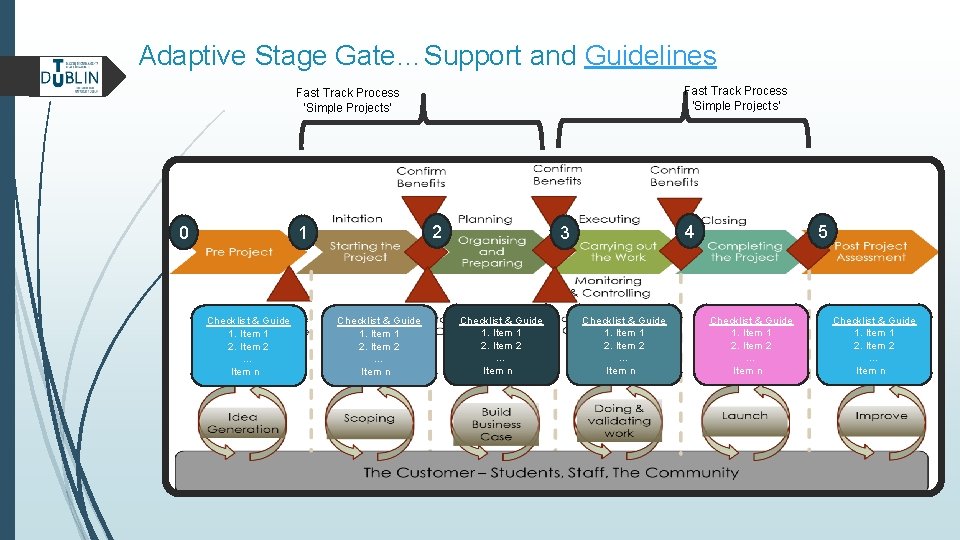
Agile Stage Gate… Fast Track Project Lifecycle / Checkpoints (Simple Projects) Starting the Project / Organising and Preparing Carrying out the Work / Completing the Project Post Project Assessment Normal Project Lifecycle / Checkpoints (Complex Projects) 1 2 Starting the Project Organising and Preparing 5 4 3 Carrying out the Work Completing the Project Post Project Assessment
Benefits of Agile Stage Gate * q A Hybrid of Agile and Stage Gate q TAILORING is a big component – what’s right for the situation q Gets the product or solution right: iterative development q Deals with uncertainty: allows for ‘understanding of the problem’ q Accelerates development: can impose time bound phases q Focuses teams: requires dedicated focused resources q Improves within team communication * Agile Stage Gate – The Next Generation Idea-to-Launch Process: Robert Cooper
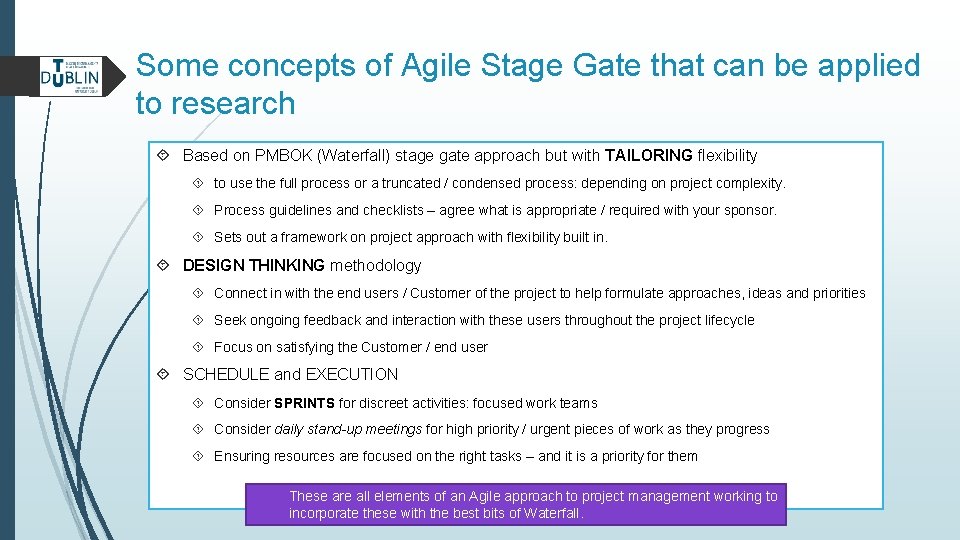
Some concepts of Agile Stage Gate that can be applied to research Based on PMBOK (Waterfall) stage gate approach but with TAILORING flexibility to use the full process or a truncated / condensed process: depending on project complexity. Process guidelines and checklists – agree what is appropriate / required with your sponsor. Sets out a framework on project approach with flexibility built in. DESIGN THINKING methodology Connect in with the end users / Customer of the project to help formulate approaches, ideas and priorities Seek ongoing feedback and interaction with these users throughout the project lifecycle Focus on satisfying the Customer / end user SCHEDULE and EXECUTION Consider SPRINTS for discreet activities: focused work teams Consider daily stand-up meetings for high priority / urgent pieces of work as they progress Ensuring resources are focused on the right tasks – and it is a priority for them These are all elements of an Agile approach to project management working to incorporate these with the best bits of Waterfall.
Common Project Pitfalls
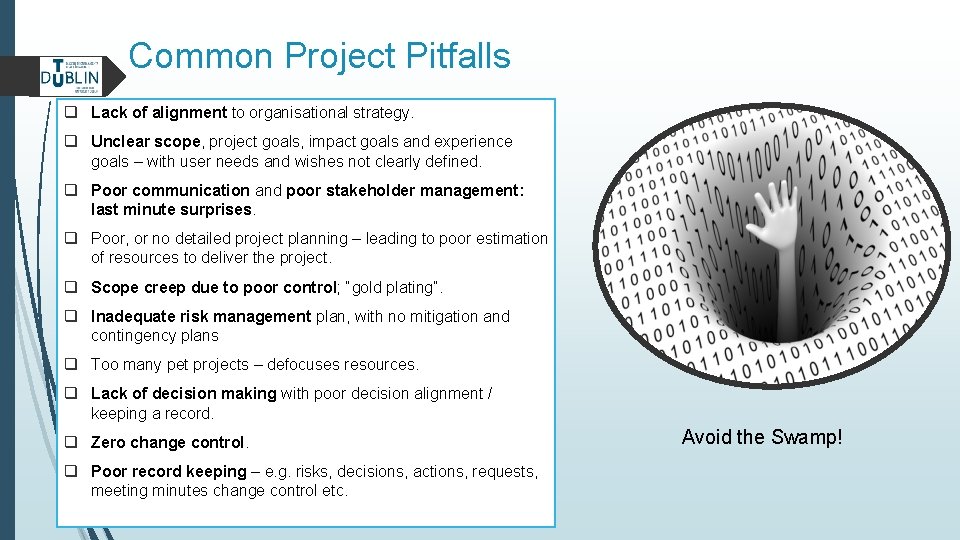
Common Project Pitfalls q Lack of alignment to organisational strategy. q Unclear scope, project goals, impact goals and experience goals – with user needs and wishes not clearly defined. q Poor communication and poor stakeholder management: last minute surprises. q Poor, or no detailed project planning – leading to poor estimation of resources to deliver the project. q Scope creep due to poor control; “gold plating”. q Inadequate risk management plan, with no mitigation and contingency plans q Too many pet projects – defocuses resources. q Lack of decision making with poor decision alignment / keeping a record. q Zero change control. q Poor record keeping – e. g. risks, decisions, actions, requests, meeting minutes change control etc. Avoid the Swamp!
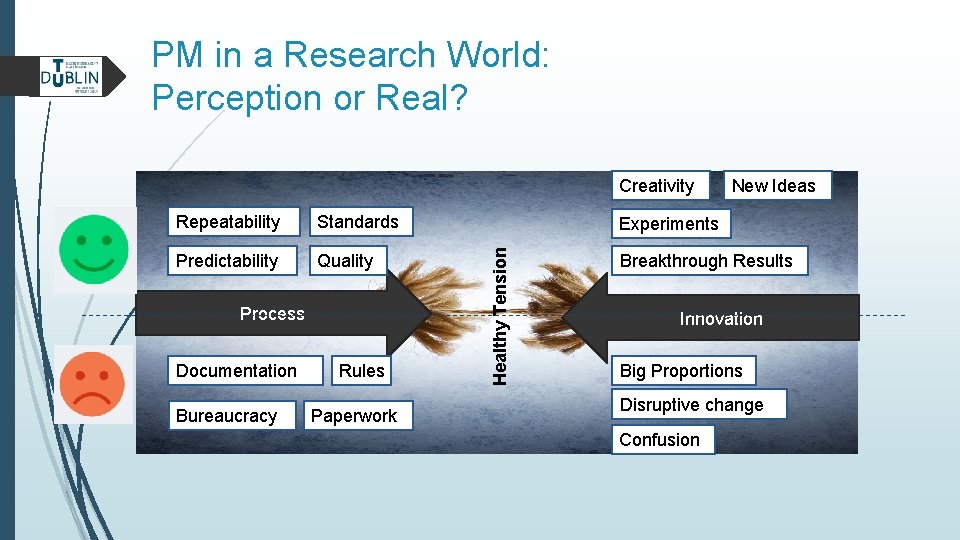
PM in a Research World: Perception or Real? Creativity Standards Predictability Quality Process Documentation Bureaucracy Rules Paperwork Experiments Healthy Tension Repeatability New Ideas Breakthrough Results Innovation Big Proportions Disruptive change Confusion
Project Team Roles and Responsibilities q Sponsor q Project Manager / PI for Research Projects q Project Team Members
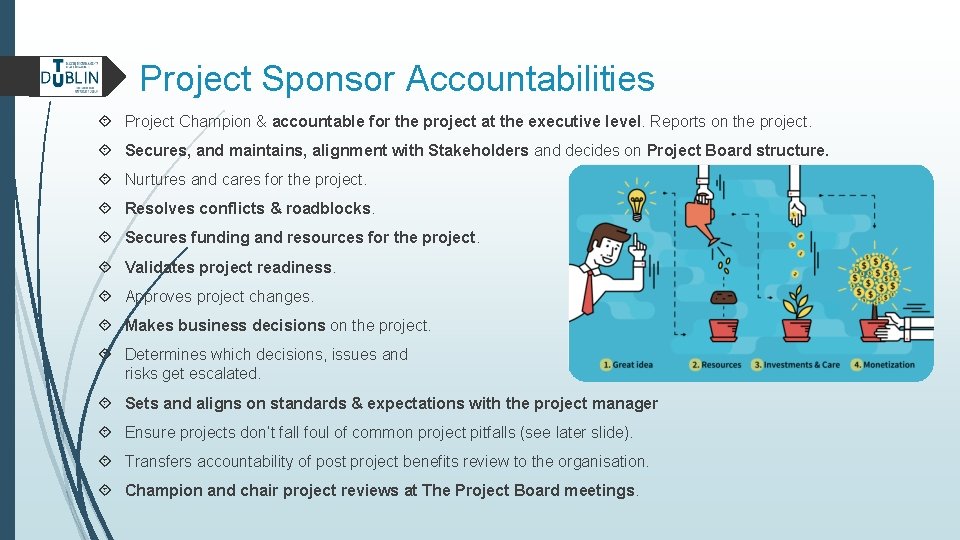
Project Sponsor Accountabilities Project Champion & accountable for the project at the executive level. Reports on the project. Secures, and maintains, alignment with Stakeholders and decides on Project Board structure. Nurtures and cares for the project. Resolves conflicts & roadblocks. Secures funding and resources for the project. Validates project readiness. Approves project changes. Makes business decisions on the project. Determines which decisions, issues and risks get escalated. Sets and aligns on standards & expectations with the project manager Ensure projects don’t fall foul of common project pitfalls (see later slide). Transfers accountability of post project benefits review to the organisation. Champion and chair project reviews at The Project Board meetings.
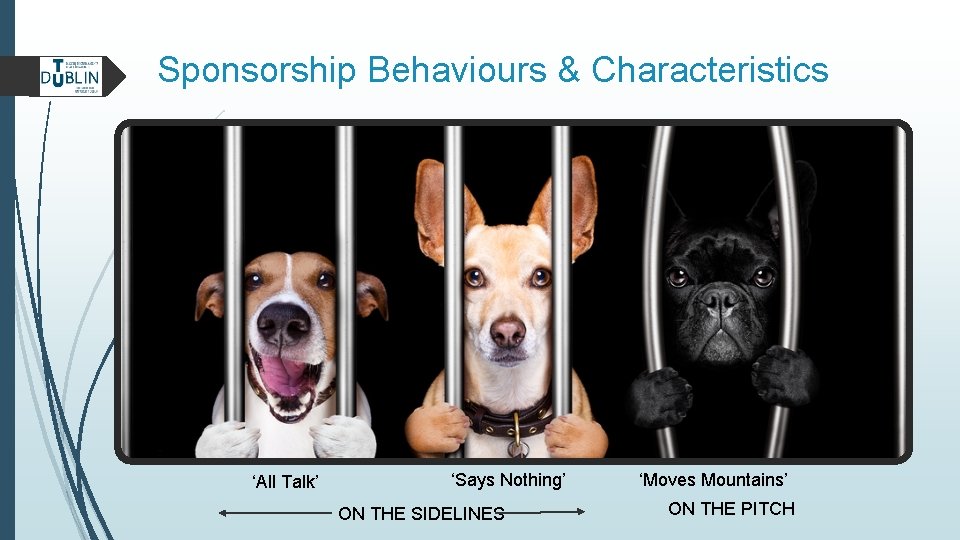
Sponsorship Behaviours & Characteristics ‘All Talk’ ‘Says Nothing’ ON THE SIDELINES ‘Moves Mountains’ ON THE PITCH
Positive Sponsor Behaviours and Characteristics Sets and manages expectations clearly. Delivers on commitments / follows through. Open dialogue / Open door with PM. Results focused mind set. Clear on what success look like. Understands their strengths and weaknesses – and addresses them Resources and funds a project appropriately – focused resources. Proactive in behaviour Meets PM regularly for project updates – through a Project Board meeting if needed Uses their position to develop others Provides positive and constructive feedback. Actively removes roadblocks, particularly at a business / TU level Visible champion Appoints the right Project Manager/PI to the right project based on their strengths Active listening Parks ego Can do, and can I help attitude. Strong stakeholder engagement – ask how are my stakeholders better off because of me? Strong influencer – but being flexible and adaptable to new approaches Does not micro manage – allows the PM space to manage the project. Act in an ethical manner & with integrity
Negative Sponsor Behaviours and Characteristics No follow up. Does not deliver on actions or Does not respond to the PM. No belief in the project. commitments. Negative and bio-reactionary. No communication / not contactable. Adds PM work on top of the PMs ‘day’ job with no resource impact assessment No stakeholder engagement Ignores the PM and the team No active engagement Micromanages the PM
Identifying the Project Manager/ PI: Their Role THE PROJECT MANAGER needs to have a ‘systems thinking’ approach Define the project management process to be used for the project and define the project plan Manage the deliverables according to the plan & Analyse the actual performance against the plan Identify project resource needs and secure these resources (including funding) for the project Triggers effective change management when needed Ensures all team members are clear on their roles and responsibilities – delegate tasks Prepare and obtain management approval for the project plan Manage scope and prevent scope creep / ensure no gold plating Establishes priorities among project activities, and develop the work plan with these priorities in mind Resolve conflict and addresses / actions issue and risks to ensure the project is successful and reduces risk to the organisation. Hold the Sponsor to account! Engage with Stakeholders and ensure their needs are met (NO SURPRISES). Market the project and network with partners. Develop and provide regular project progress reports and present project progress at the relevant forums in line with your funding agreements.
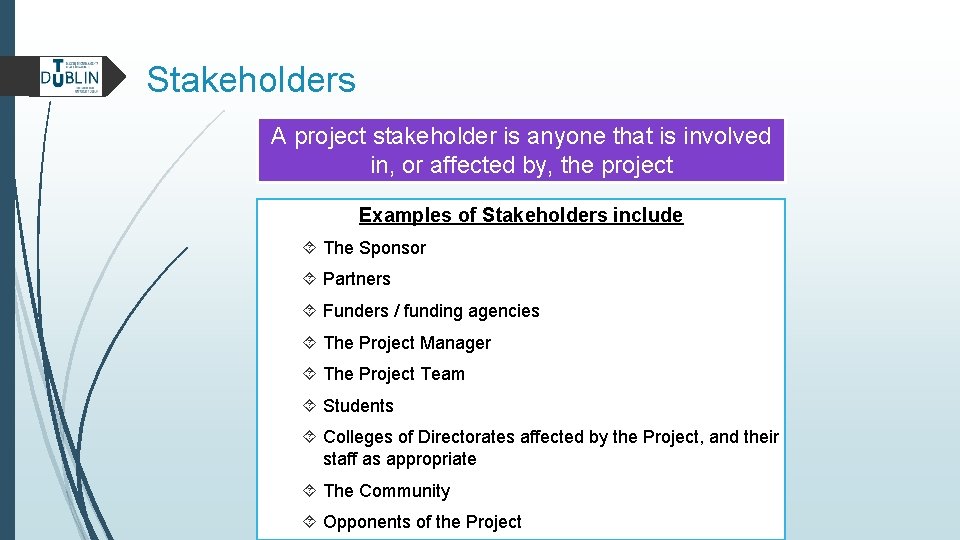
Stakeholders A project stakeholder is anyone that is involved in, or affected by, the project Examples of Stakeholders include The Sponsor Partners Funders / funding agencies The Project Manager The Project Team Students Colleges of Directorates affected by the Project, and their staff as appropriate The Community Opponents of the Project
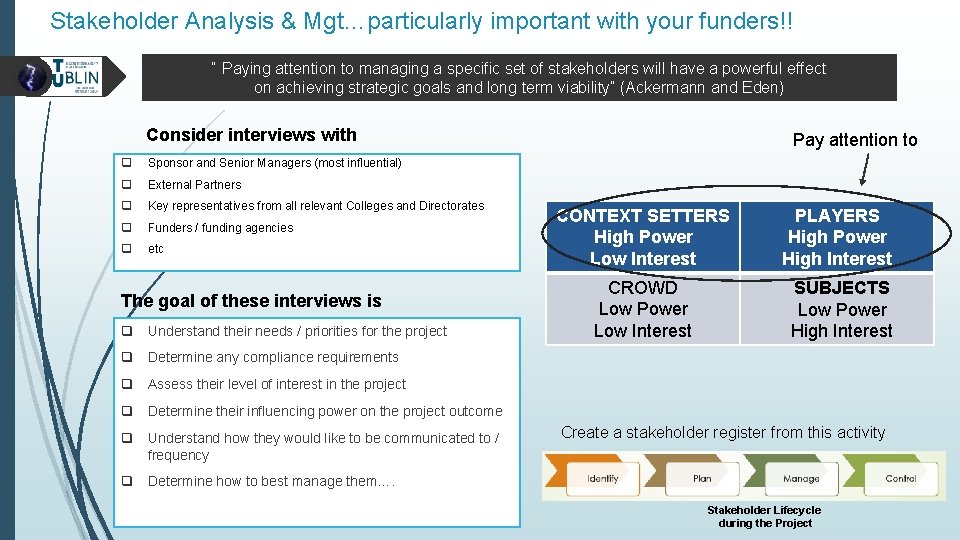
Stakeholder Analysis & Mgt…particularly important with your funders!! “ Paying attention to managing a specific set of stakeholders will have a powerful effect on achieving strategic goals and long term viability” (Ackermann and Eden) Consider interviews with q Sponsor and Senior Managers (most influential) q External Partners q Key representatives from all relevant Colleges and Directorates q Funders / funding agencies q etc The goal of these interviews is q Understand their needs / priorities for the project Pay attention to CONTEXT SETTERS High Power Low Interest PLAYERS High Power High Interest CROWD Low Power Low Interest SUBJECTS Low Power High Interest q Determine any compliance requirements q Assess their level of interest in the project q Determine their influencing power on the project outcome q Understand how they would like to be communicated to / frequency Create a stakeholder register from this activity q Determine how to best manage them…. Stakeholder Lifecycle during the Project
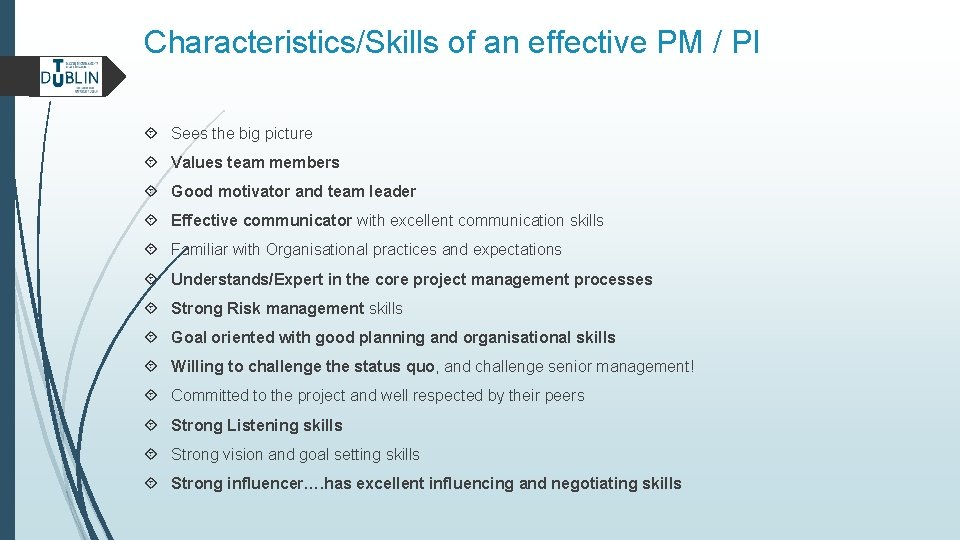
Characteristics/Skills of an effective PM / PI Sees the big picture Values team members Good motivator and team leader Effective communicator with excellent communication skills Familiar with Organisational practices and expectations Understands/Expert in the core project management processes Strong Risk management skills Goal oriented with good planning and organisational skills Willing to challenge the status quo, and challenge senior management! Committed to the project and well respected by their peers Strong Listening skills Strong vision and goal setting skills Strong influencer…. has excellent influencing and negotiating skills
A Harvard Business Review article this month found 5 key behaviours from a database of 5, 000 managers: 1. A focus on achieving results 2. Being a trusted collaborator 3. Strong professional expertise, up to date 4. Link strategy to meaningful goals 5. Marketing their work well Ref: https: //hbr. org/2017/05/how-to-improve-at-work-when-youre-not-getting-feedback - May 9 th 2017 5 behaviours of high performance managers
Six Unspoken Habits of Highly Effective Project Managers Tie your project to the business – all the time Know your audience Use Situational Thinking Take time to build talent Know the numbers Be the catalyst Haddad, R. S. (2009). The six unspoken habits of highly effective program managers. Paper presented at PMI® Global Congress 2009 —Asia Pacific, Kuala Lumpur, Malaysia. Newtown Square, PA: Project Management Institute. • Projects are more likely to succeed when project managers influence with - expertise - work challenge • Projects are more likely to fail when project managers rely too heavily on - authority - money - penalty Kathy Schwalbe
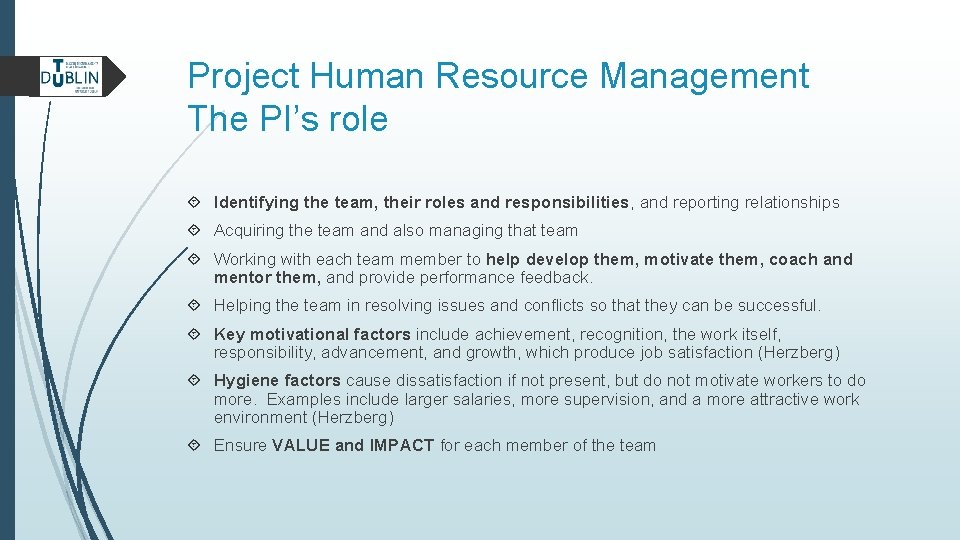
Project Human Resource Management The PI’s role Identifying the team, their roles and responsibilities, and reporting relationships Acquiring the team and also managing that team Working with each team member to help develop them, motivate them, coach and mentor them, and provide performance feedback. Helping the team in resolving issues and conflicts so that they can be successful. Key motivational factors include achievement, recognition, the work itself, responsibility, advancement, and growth, which produce job satisfaction (Herzberg) Hygiene factors cause dissatisfaction if not present, but do not motivate workers to do more. Examples include larger salaries, more supervision, and a more attractive work environment (Herzberg) Ensure VALUE and IMPACT for each member of the team
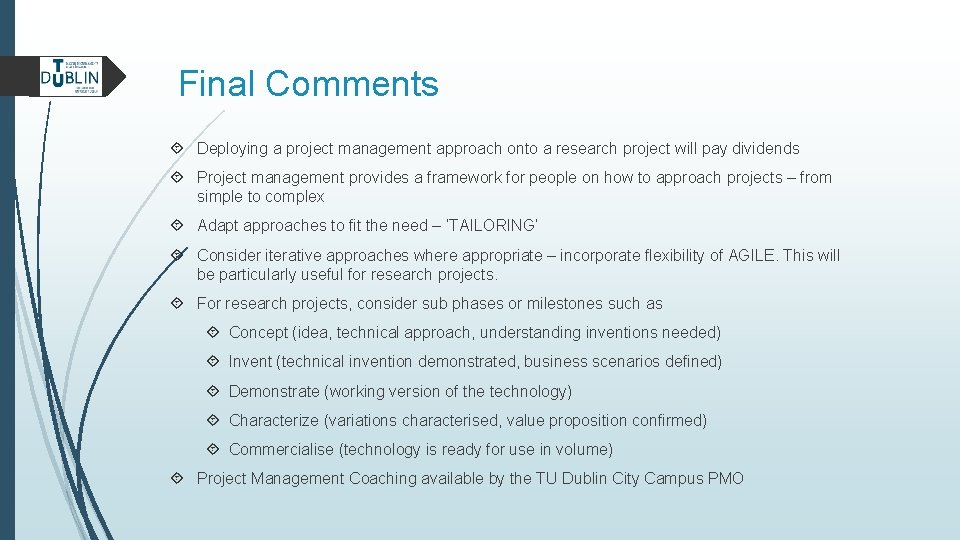
Final Comments Deploying a project management approach onto a research project will pay dividends Project management provides a framework for people on how to approach projects – from simple to complex Adapt approaches to fit the need – ‘TAILORING’ Consider iterative approaches where appropriate – incorporate flexibility of AGILE. This will be particularly useful for research projects. For research projects, consider sub phases or milestones such as Concept (idea, technical approach, understanding inventions needed) Invent (technical invention demonstrated, business scenarios defined) Demonstrate (working version of the technology) Characterize (variations characterised, value proposition confirmed) Commercialise (technology is ready for use in volume) Project Management Coaching available by the TU Dublin City Campus PMO
Back Up Slides TU Dublin – Dublin City Campus
Adaptive Stage Gate…Support and Guidelines Fast Track Process ‘Simple Projects’ 0 2 1 Checklist & Guide 1. Item 1 2. Item 2 … Item n 4 3 Checklist & Guide 1. Item 1 2. Item 2 … Item n 5 Checklist & Guide 1. Item 1 2. Item 2 … Item n
Templates Available to Support PMs
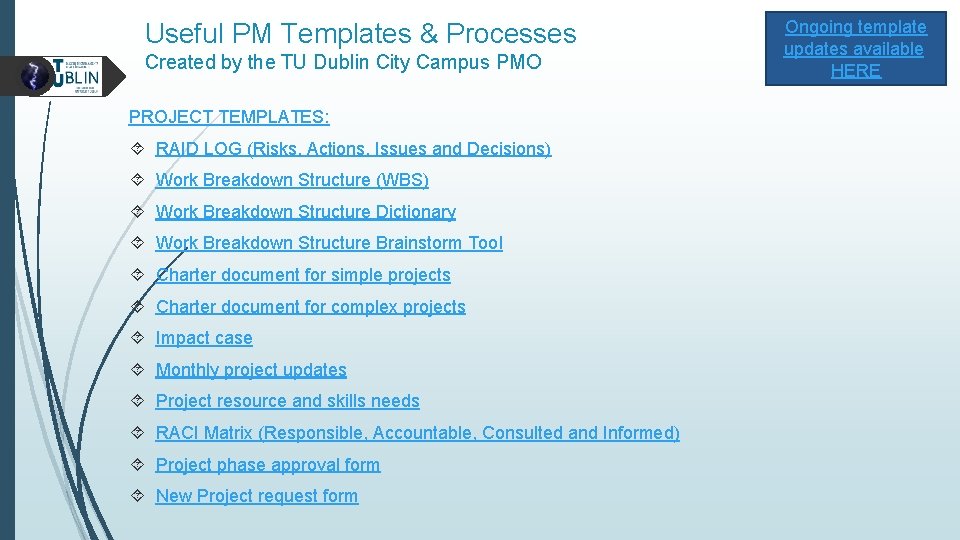
Useful PM Templates & Processes Created by the TU Dublin City Campus PMO PROJECT TEMPLATES: RAID LOG (Risks, Actions, Issues and Decisions) Work Breakdown Structure (WBS) Work Breakdown Structure Dictionary Work Breakdown Structure Brainstorm Tool Charter document for simple projects Charter document for complex projects Impact case Monthly project updates Project resource and skills needs RACI Matrix (Responsible, Accountable, Consulted and Informed) Project phase approval form New Project request form Ongoing template updates available HERE
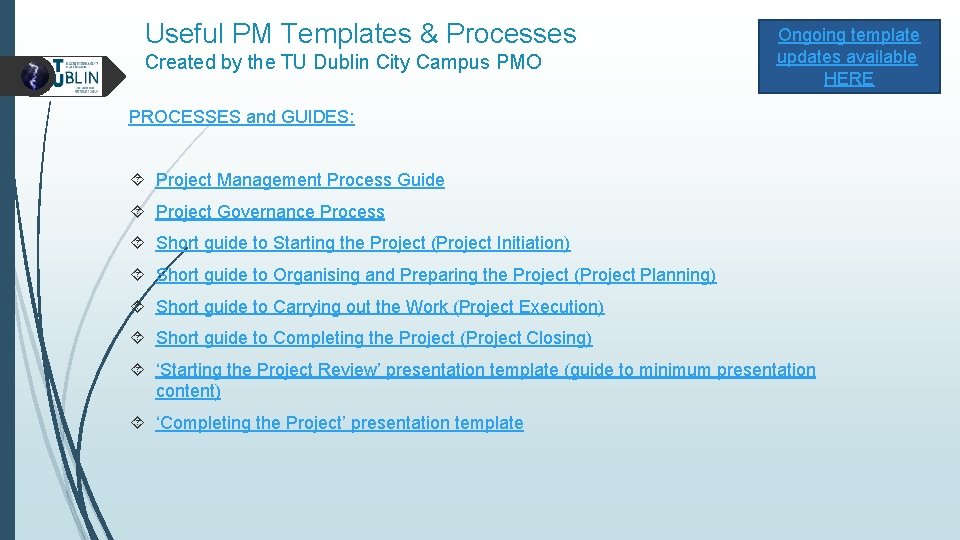
Useful PM Templates & Processes Created by the TU Dublin City Campus PMO Ongoing template updates available HERE PROCESSES and GUIDES: Project Management Process Guide Project Governance Process Short guide to Starting the Project (Project Initiation) Short guide to Organising and Preparing the Project (Project Planning) Short guide to Carrying out the Work (Project Execution) Short guide to Completing the Project (Project Closing) ‘Starting the Project Review’ presentation template (guide to minimum presentation content) ‘Completing the Project’ presentation template
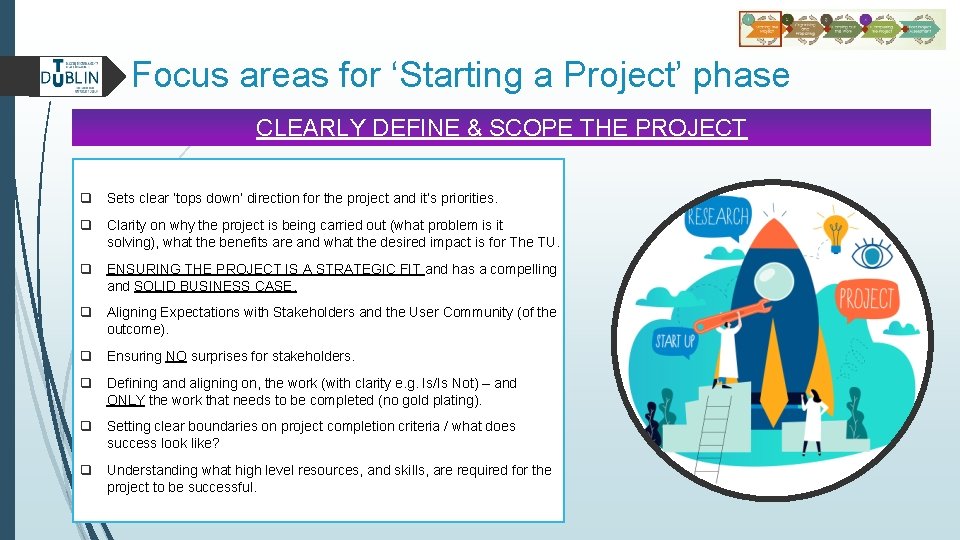
Focus areas for ‘Starting a Project’ phase CLEARLY DEFINE & SCOPE THE PROJECT q Sets clear ‘tops down’ direction for the project and it’s priorities. q Clarity on why the project is being carried out (what problem is it solving), what the benefits are and what the desired impact is for The TU. q ENSURING THE PROJECT IS A STRATEGIC FIT and has a compelling and SOLID BUSINESS CASE. q Aligning Expectations with Stakeholders and the User Community (of the outcome). q Ensuring NO surprises for stakeholders. q Defining and aligning on, the work (with clarity e. g. Is/Is Not) – and ONLY the work that needs to be completed (no gold plating). q Setting clear boundaries on project completion criteria / what does success look like? q Understanding what high level resources, and skills, are required for the project to be successful.
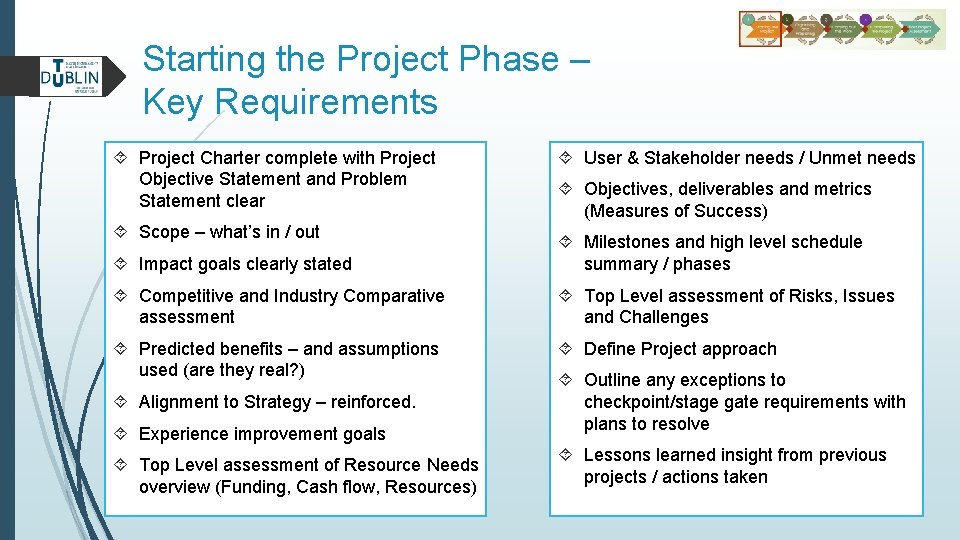
Starting the Project Phase – Key Requirements Project Charter complete with Project Objective Statement and Problem Statement clear Scope – what’s in / out User & Stakeholder needs / Unmet needs Objectives, deliverables and metrics (Measures of Success) Impact goals clearly stated Milestones and high level schedule summary / phases Competitive and Industry Comparative assessment Top Level assessment of Risks, Issues and Challenges Predicted benefits – and assumptions used (are they real? ) Define Project approach Alignment to Strategy – reinforced. Experience improvement goals Top Level assessment of Resource Needs overview (Funding, Cash flow, Resources) Outline any exceptions to checkpoint/stage gate requirements with plans to resolve Lessons learned insight from previous projects / actions taken
‘Organising & Preparing the Project: Focus Areas THE FOCUS OF THIS PHASE IS TO CLEARLY DEFINE, IN DETAIL, WHAT NEEDS TO HAPPEN , WHEN AND BY WHOM q Review key items from the starting the project phase for remaining validity ü Risks, issues, scope, business case, budget and resource needs q Divide deliverables into smaller, more manageable chunks of work and validate detailed scope – and who is doing the work (work breakdown structure assessment) q Create a detailed schedule along with an accurate critical path assessment q Confirm project baseline scope and change management approach q Identify external procurement and contract needs for the project – what is being ‘bought in’ q The output of this phase is the project management plan.
‘Organising and Preparing’ the Project Phase – Key Requirements Project Charter updated. Business case check Project structure and approach Project scope statement - What is all the work Detailed Schedule Procurement identified, vendors identified & e-tenders ready Milestones / Project Phases & critical path Work Breakdown Structure (WBS) Resource, budget and cash flow Roles and Responsibilities Risks updated Issues updated with clear path forward Change Management plan Phase exceptions and path forward Lessons Learned
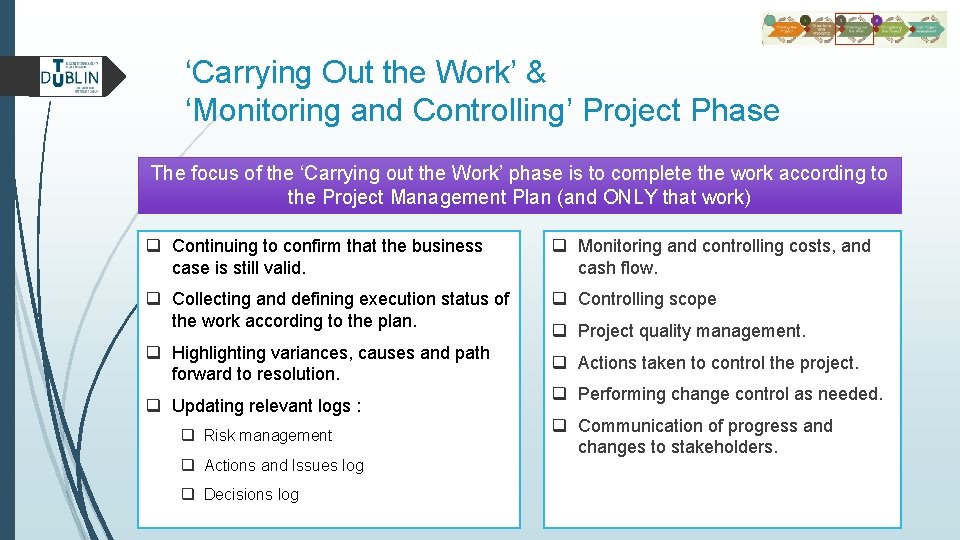
‘Carrying Out the Work’ & ‘Monitoring and Controlling’ Project Phase The focus of the ‘Carrying out the Work’ phase is to complete the work according to the Project Management Plan (and ONLY that work) q Continuing to confirm that the business case is still valid. q Monitoring and controlling costs, and cash flow. q Collecting and defining execution status of the work according to the plan. q Controlling scope q Highlighting variances, causes and path forward to resolution. q Updating relevant logs : q Risk management q Actions and Issues log q Decisions log q Project quality management. q Actions taken to control the project. q Performing change control as needed. q Communication of progress and changes to stakeholders.
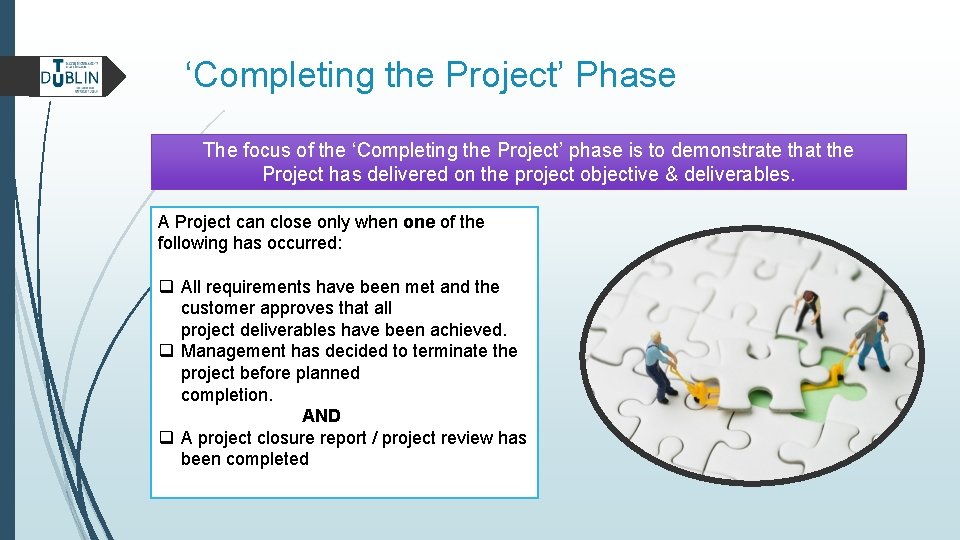
‘Completing the Project’ Phase The focus of the ‘Completing the Project’ phase is to demonstrate that the Project has delivered on the project objective & deliverables. A Project can close only when one of the following has occurred: q All requirements have been met and the customer approves that all project deliverables have been achieved. q Management has decided to terminate the project before planned completion. AND q A project closure report / project review has been completed
‘Completing the Project’ Phase: Main The focus of the ‘Completing the Project’ phase is to demonstrate that the Project has delivered on the project objective & deliverables. Demonstrate that the project has achieved its deliverables and that the Customer has accepted the outcome (e. g. product, process, solution). Ensure that all user needs agreed have been met. Illustrate how the success of the project will be tracked in an operational environment (i. e. how we measure long term success versus the planned outcome). Ensure that any phase exceptions have been highlighted with path forward defined. Ensure financial acceptance of the project outcome. Procurement contracts are closed out. Gather lessons learned for the entire project and develop recommendations for future projects. Project Documents are appropriately archived and meet document retention guidelines. Resources freed up from the project to move on to other priorities. Complete project close out report / presentation