
PROJECT MANAGEMENT CHAPTER 2 WHAT IS TRADITIONAL PROJECT


- Slides: 21
PROJECT MANAGEMENT
CHAPTER 2 WHAT IS TRADITIONAL PROJECT MANAGEMENT?
PRINCIPLES OF TRADITIONAL PROJECT MANAGEMENT Defining Planning Executing Controlling Closing
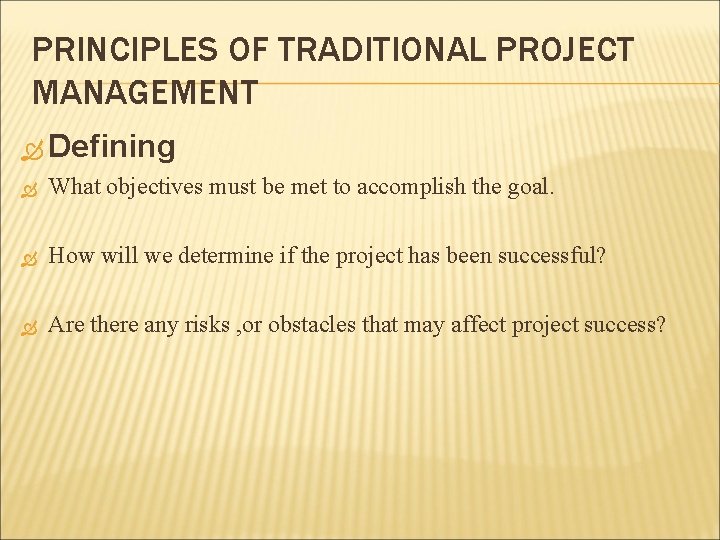
PRINCIPLES OF TRADITIONAL PROJECT MANAGEMENT Defining The first task for project managers is to define the work that needs to be done in their area of responsibility. In this phase , requestor and project manager come to an agreement. Defining phase sets the scope of the project. Every good defining phase answers five basic questions: What is the problem or opportunity to be addressed? What is the goal of the project?
PRINCIPLES OF TRADITIONAL PROJECT MANAGEMENT Defining What objectives must be met to accomplish the goal. How will we determine if the project has been successful? Are there any risks , or obstacles that may affect project success?
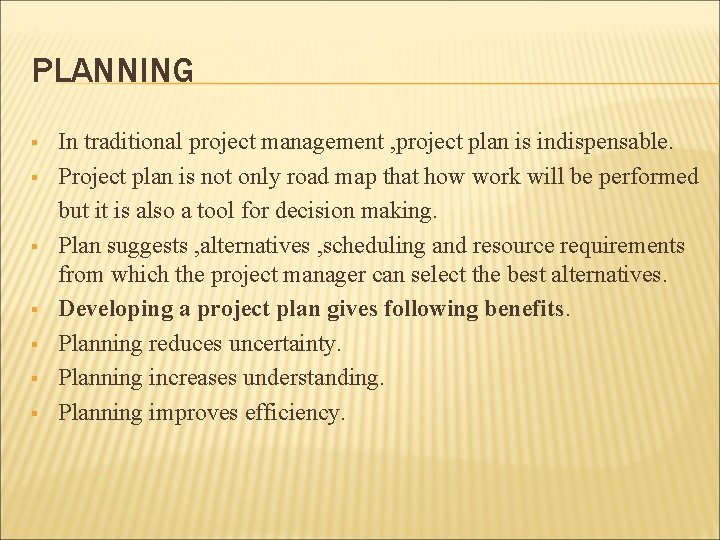
PLANNING § § § § In traditional project management , project plan is indispensable. Project plan is not only road map that how work will be performed but it is also a tool for decision making. Plan suggests , alternatives , scheduling and resource requirements from which the project manager can select the best alternatives. Developing a project plan gives following benefits. Planning reduces uncertainty. Planning increases understanding. Planning improves efficiency.
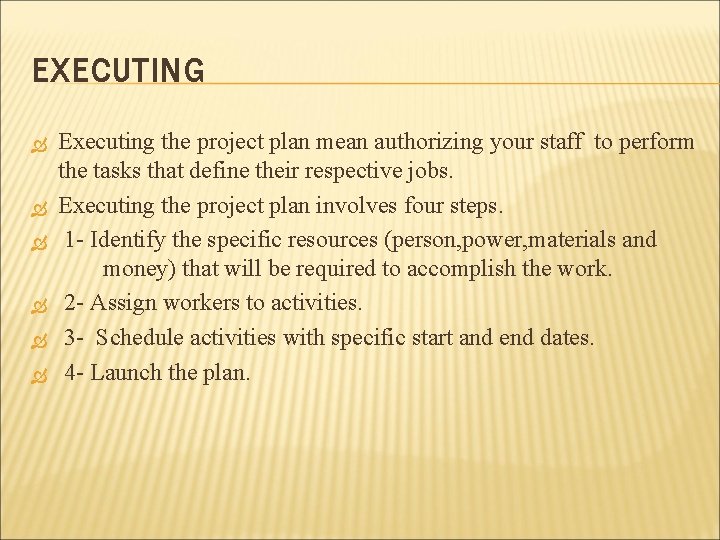
EXECUTING Executing the project plan mean authorizing your staff to perform the tasks that define their respective jobs. Executing the project plan involves four steps. 1 - Identify the specific resources (person, power, materials and money) that will be required to accomplish the work. 2 - Assign workers to activities. 3 - Schedule activities with specific start and end dates. 4 - Launch the plan.
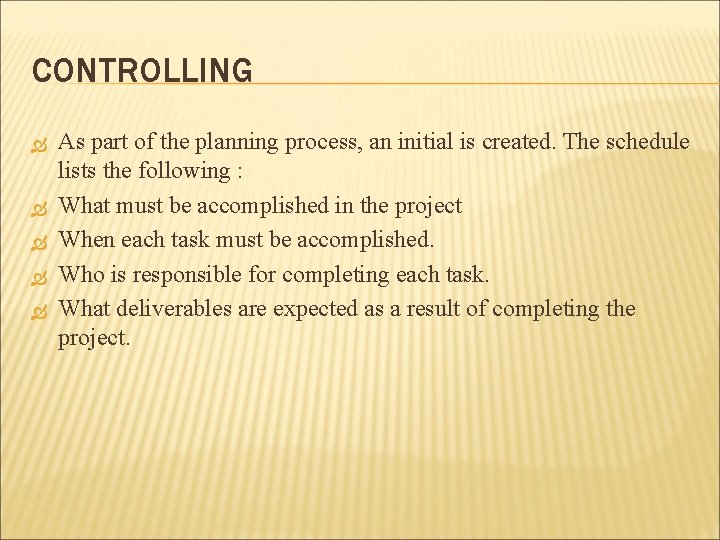
CONTROLLING As part of the planning process, an initial is created. The schedule lists the following : What must be accomplished in the project When each task must be accomplished. Who is responsible for completing each task. What deliverables are expected as a result of completing the project.
CLOSING Closing a project is a formal means of signaling the completion of the project work and the delivery of the results to the customer. Every good closing provide answers to the following questions: Do the project deliverables meet the expectations of the requestor . Do the project deliverables meet the expectations of the project manager?
CLOSING Did the project team complete the project according to plan? What information was collected that will help with latter projects. How well did the project management methodology work and how well did the project team follow it? What lessons have we learned from this project?
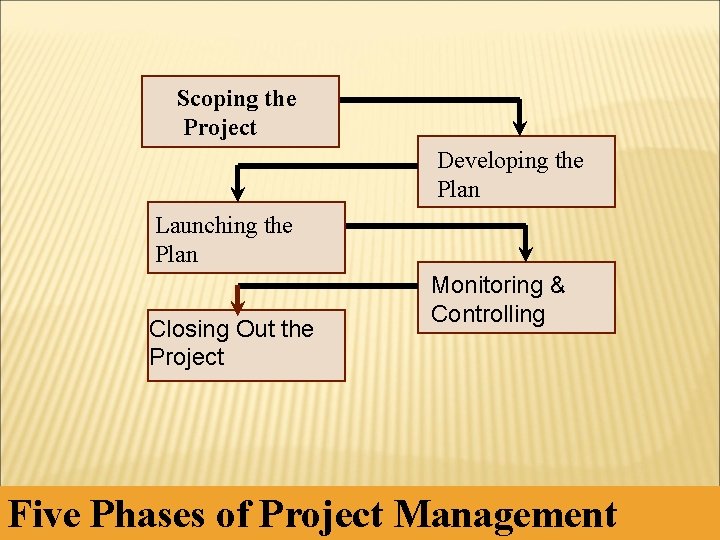
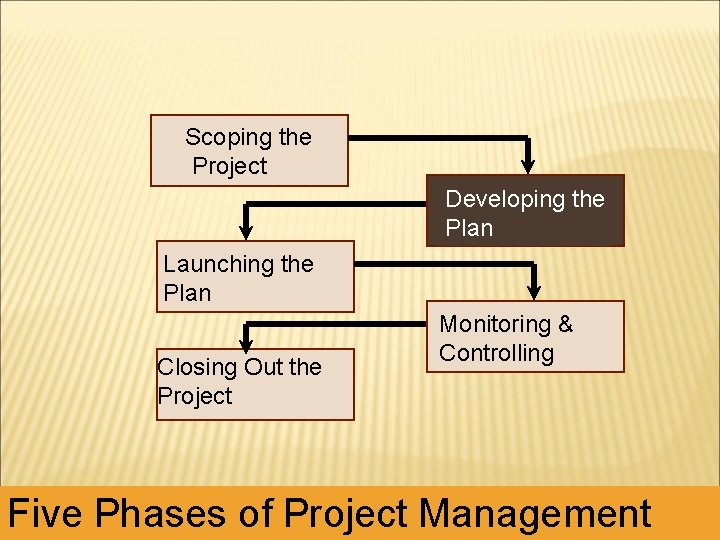
Scopingthe Project Developing the Plan Launching the Plan Closing Out the Project Monitoring & Controlling Five Phases of Project Management
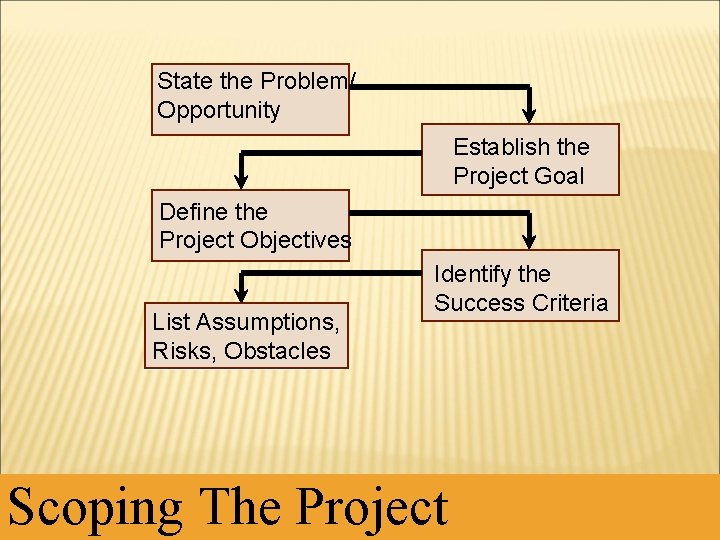
State the Problem/ Opportunity Establish the Project Goal Define the Project Objectives List Assumptions, Risks, Obstacles Identify the Success Criteria Scoping The Project
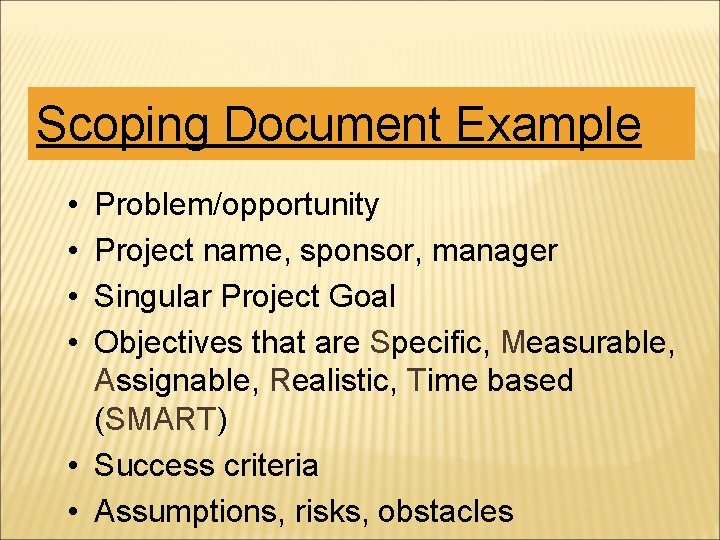
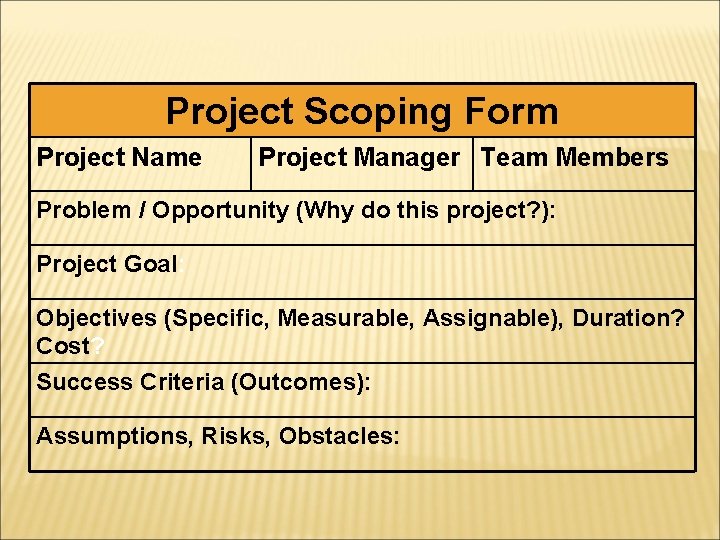
Scoping Document Example • • Problem/opportunity Project name, sponsor, manager Singular Project Goal Objectives that are Specific, Measurable, Assignable, Realistic, Time based (SMART) • Success criteria • Assumptions, risks, obstacles
Project Scoping Form Project Name Project Manager Team Members Problem / Opportunity (Why do this project? ): Project Goal: Objectives (Specific, Measurable, Assignable), Duration? Cost? Success Criteria (Outcomes): Assumptions, Risks, Obstacles:
Scoping the Project Developing the Plan Launching the Plan Closing Out the Project Monitoring & Controlling Five Phases of Project Management
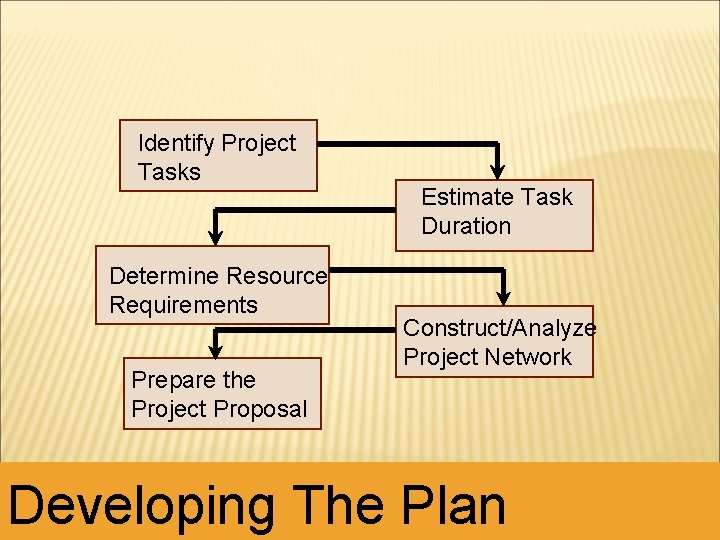
Identify Project Tasks Determine Resource Requirements Prepare the Project Proposal Estimate Task Duration Construct/Analyze Project Network Developing The Plan
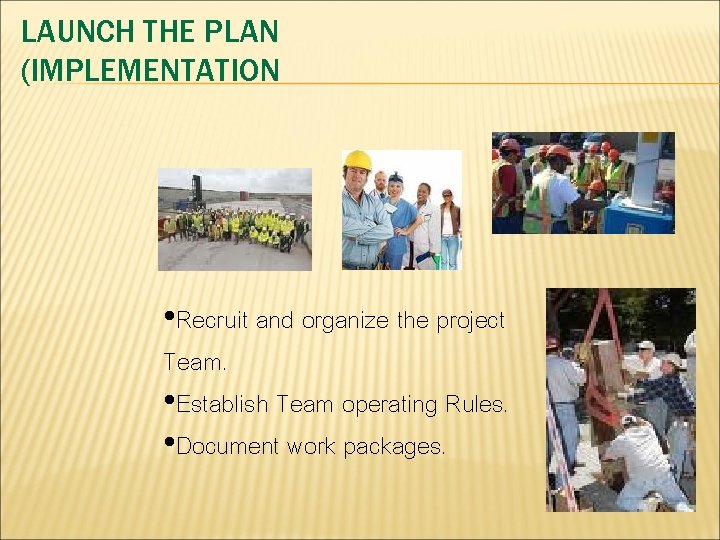
LAUNCH THE PLAN (IMPLEMENTATION • Recruit and organize the project Team. • Establish Team operating Rules. • Document work packages.
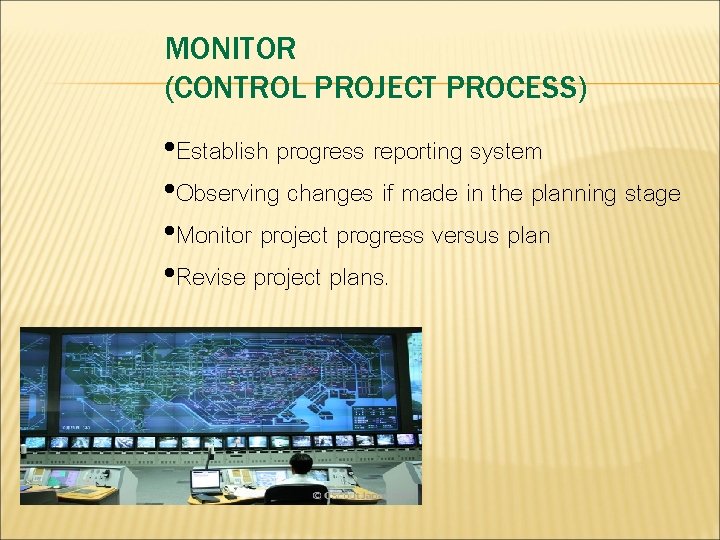
MONITOR (CONTROL PROJECT PROCESS) • Establish progress reporting system • Observing changes if made in the planning stage • Monitor project progress versus plan • Revise project plans.
CLOSE-OUT THE PROJECT • • Obtain client acceptance. Complete project documentation. Complete post-implementation audit. Issue Final project Report.
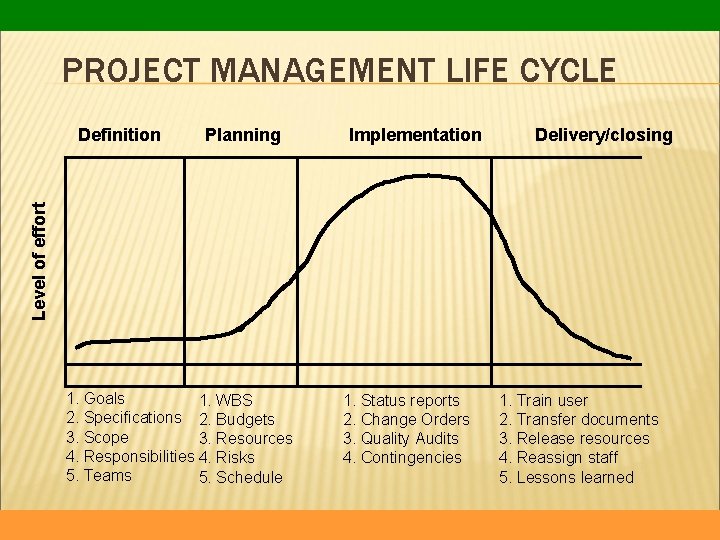
© 2006 John Wiley and Sons, Inc. PROJECT MANAGEMENT LIFE CYCLE Planning Implementation Delivery/closing Level of effort Definition 1. Goals 1. WBS 2. Specifications 2. Budgets 3. Scope 3. Resources 4. Responsibilities 4. Risks 5. Teams 5. Schedule 1. Status reports 2. Change Orders 3. Quality Audits 4. Contingencies 1. Train user 2. Transfer documents 3. Release resources 4. Reassign staff 5. Lessons learned
THANK YOU