
Project Management 1 Review Your Status What you


- Slides: 40
Project Management 1
Review: Your Status • What you should have so far: • A project, a team • Defined team roles, communication channels etc. • A SMART objective + a short description of your project • 1 st Tool: stakeholder map, participation table, action profile • 2 nd Tool: WBS • 3 rd Tool: time plan (Gantt chart w/ dependencies + Network plan w/ critical path) • 4 th Tool: budget plan • 5 th Tool: risk management 2
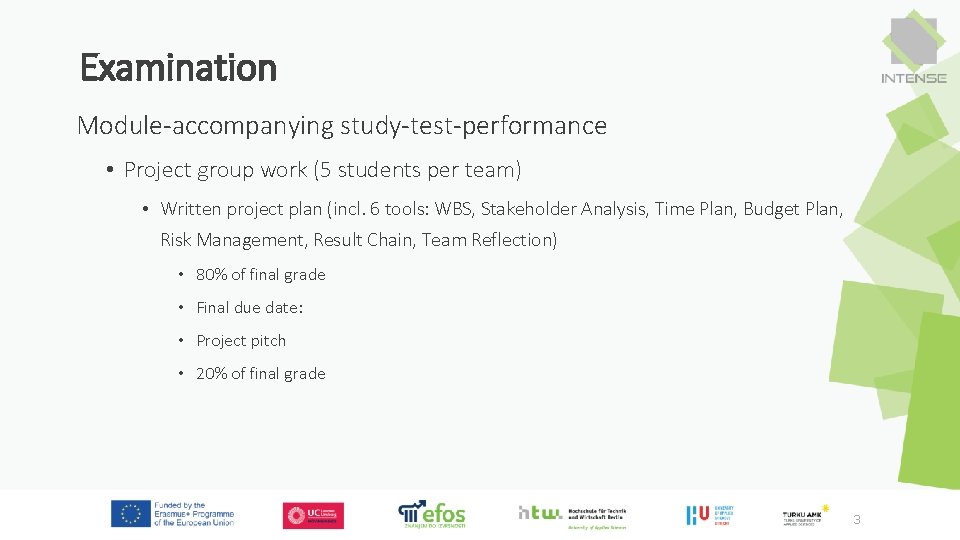
Examination Module-accompanying study-test-performance • Project group work (5 students per team) • Written project plan (incl. 6 tools: WBS, Stakeholder Analysis, Time Plan, Budget Plan, Risk Management, Result Chain, Team Reflection) • 80% of final grade • Final due date: • Project pitch • 20% of final grade 3
Project Group Work: Written Project Plan • Submission: • Via e-mail to professor • 1 PDF • Including title page with team members’ full names • Evaluation criteria: • Completeness • Clarity • Logical consistency • Academic standards 4
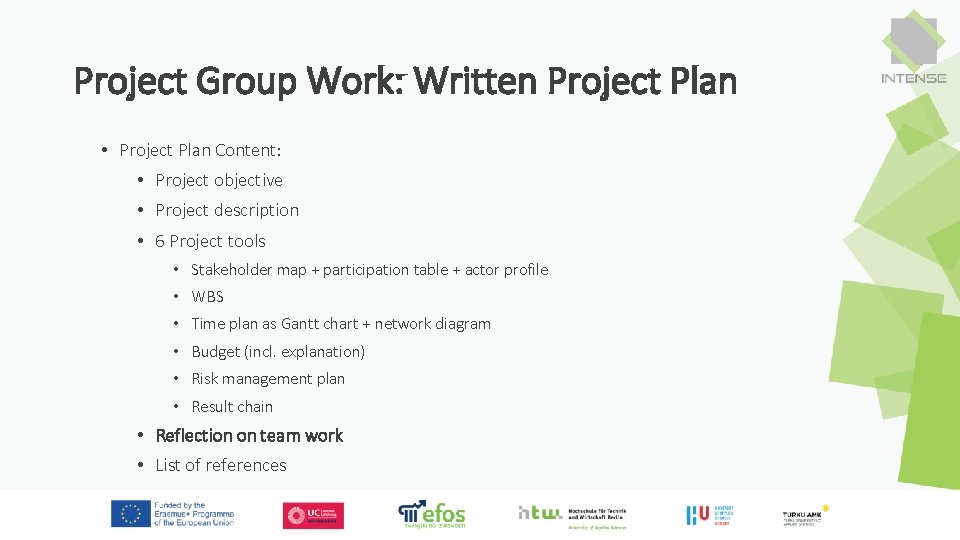
Project Group Work: Written Project Plan • Project Plan Content: • Project objective • Project description • 6 Project tools • Stakeholder map + participation table + actor profile • WBS • Time plan as Gantt chart + network diagram • Budget (incl. explanation) • Risk management plan • Result chain • Reflection on team work • List of references 5
5. Monitoring and Project Closure 1. Monitoring and Evaluation 2. Project Closure 6 6
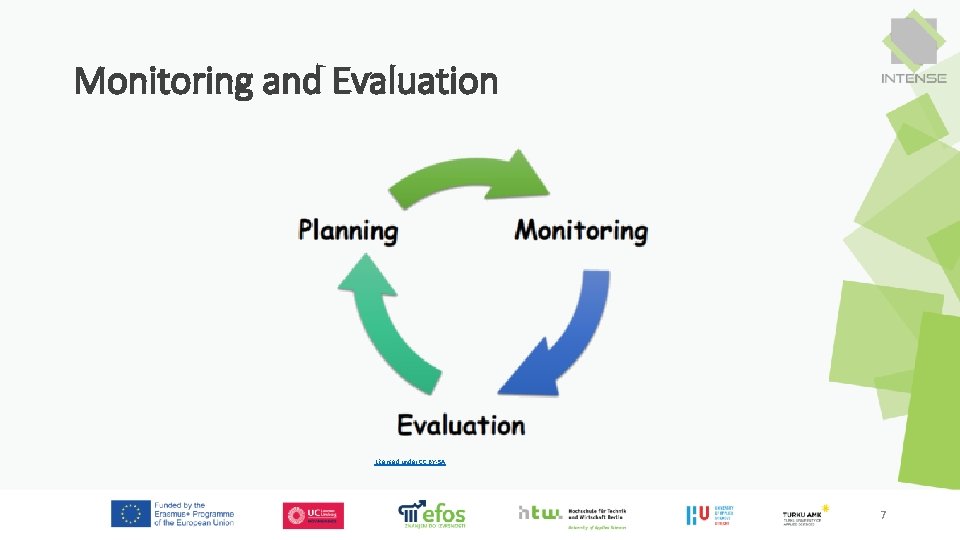
Monitoring and Evaluation Licensed under CC BY-SA 7
Learning Objectives After completing this chapter, you should be able to: • Recognise the strengths and weaknesses of common project evaluation and control methods • Understand the difference between monitoring and evaluation • Understand how monitoring can assist project tracking and evaluation 8
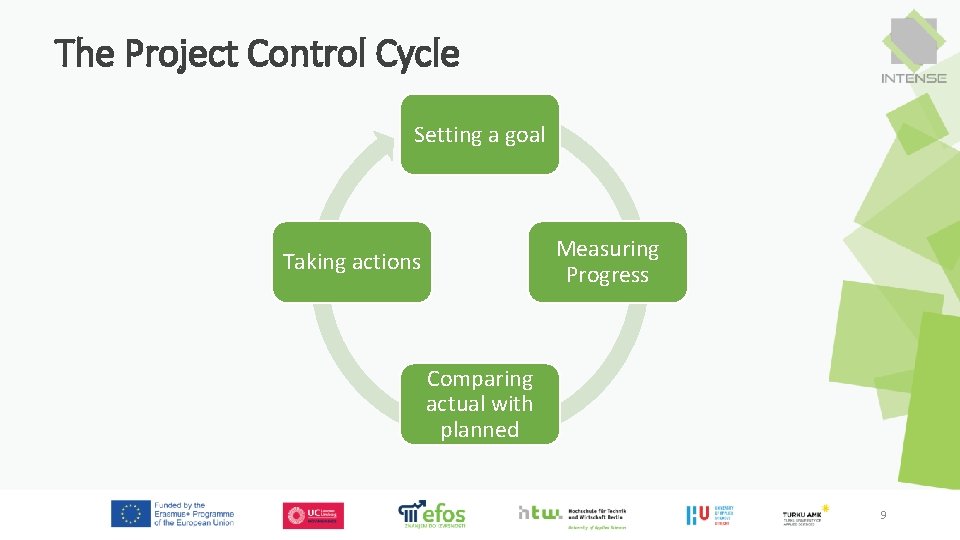
The Project Control Cycle Setting a goal Measuring Progress Taking actions Comparing actual with planned 9
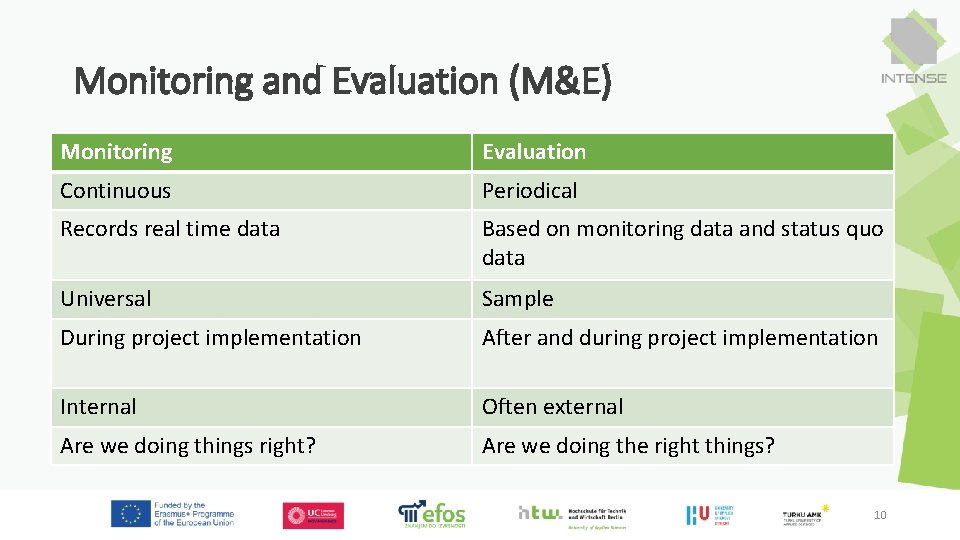
Monitoring and Evaluation (M&E) Monitoring Evaluation Continuous Periodical Records real time data Based on monitoring data and status quo data Universal Sample During project implementation After and during project implementation Internal Often external Are we doing things right? Are we doing the right things? 10
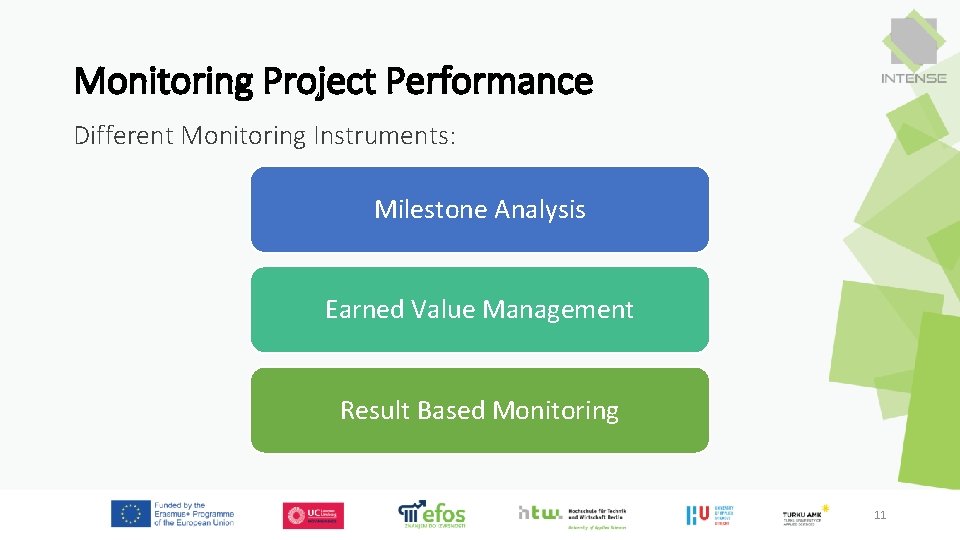
Monitoring Project Performance Different Monitoring Instruments: Milestone Analysis Earned Value Management Result Based Monitoring 11
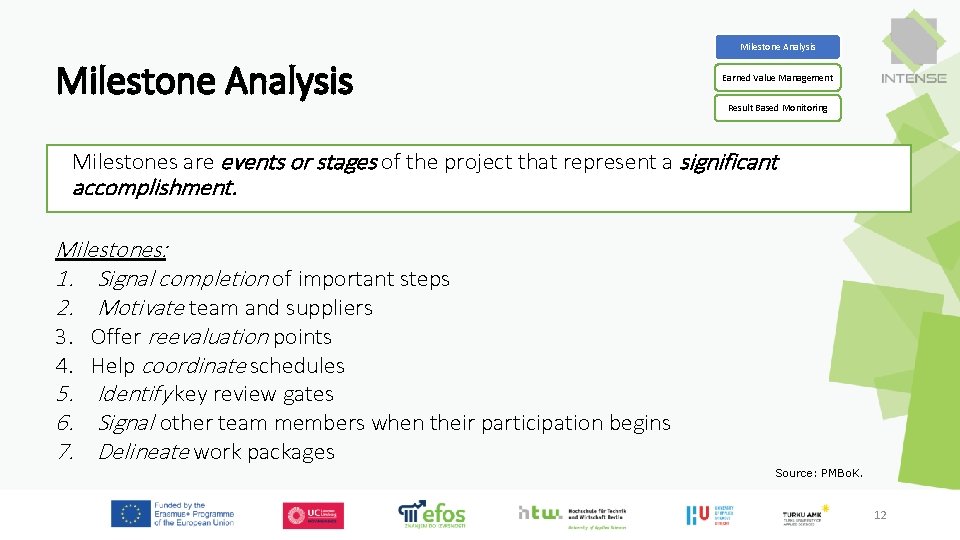
Milestone Analysis Earned Value Management Result Based Monitoring Milestones are events or stages of the project that represent a significant accomplishment. Milestones: 1. Signal completion of important steps 2. Motivate team and suppliers 3. Offer reevaluation points 4. Help coordinate schedules 5. Identify key review gates 6. Signal other team members when their participation begins 7. Delineate work packages Source: PMBo. K. 12
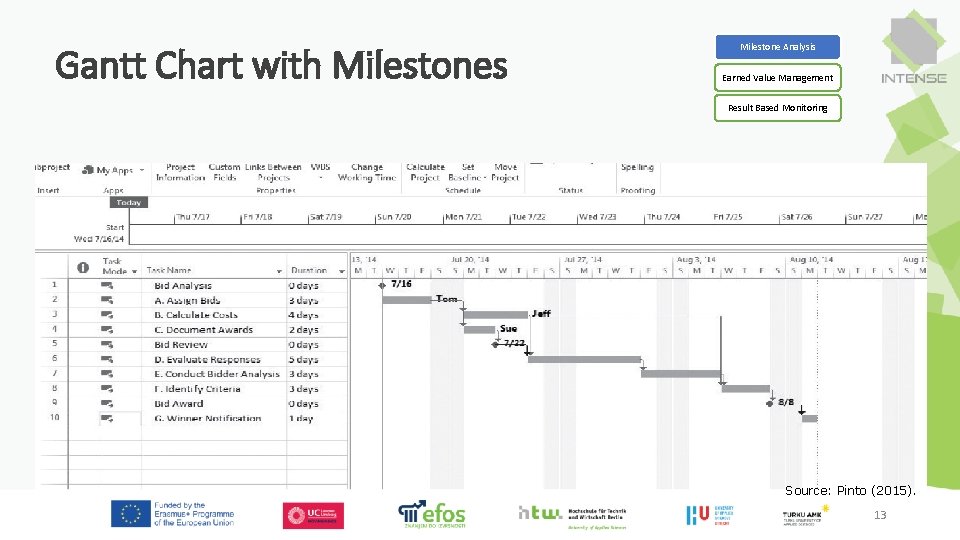
Gantt Chart with Milestones Milestone Analysis Earned Value Management Result Based Monitoring Source: Pinto (2015). 13
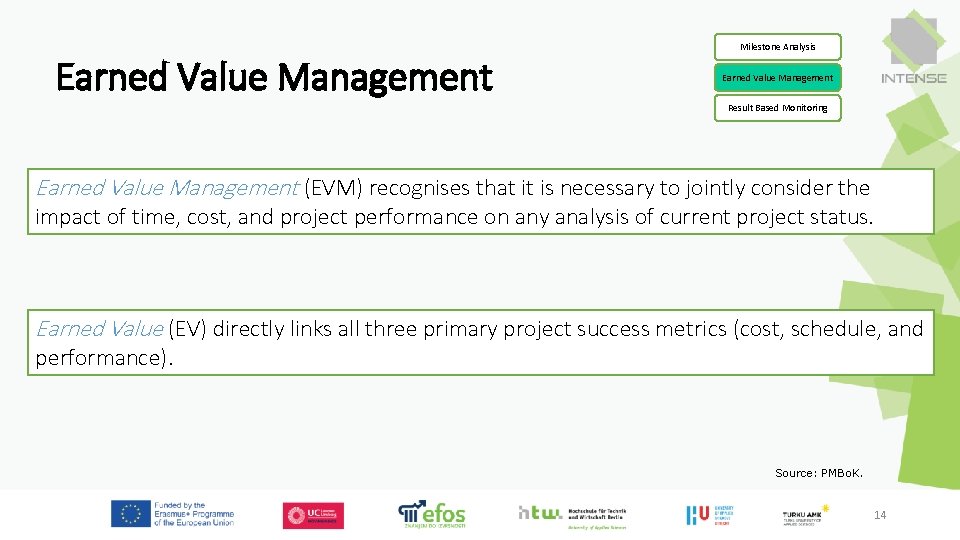
Earned Value Management Milestone Analysis Earned Value Management Result Based Monitoring Earned Value Management (EVM) recognises that it is necessary to jointly consider the impact of time, cost, and project performance on any analysis of current project status. Earned Value (EV) directly links all three primary project success metrics (cost, schedule, and performance). Source: PMBo. K. 14
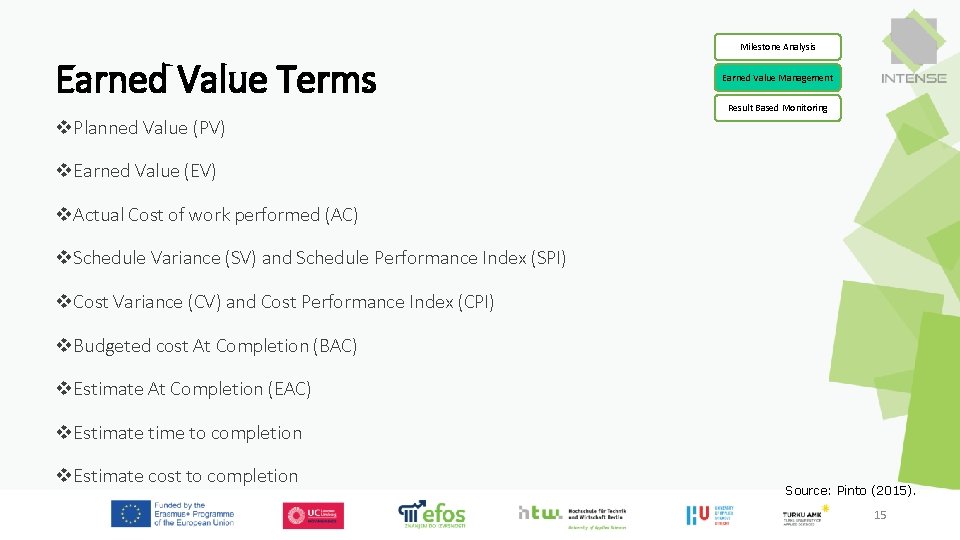
Milestone Analysis Earned Value Terms Earned Value Management Result Based Monitoring v. Planned Value (PV) v. Earned Value (EV) v. Actual Cost of work performed (AC) v. Schedule Variance (SV) and Schedule Performance Index (SPI) v. Cost Variance (CV) and Cost Performance Index (CPI) v. Budgeted cost At Completion (BAC) v. Estimate At Completion (EAC) v. Estimate time to completion v. Estimate cost to completion Source: Pinto (2015). 15
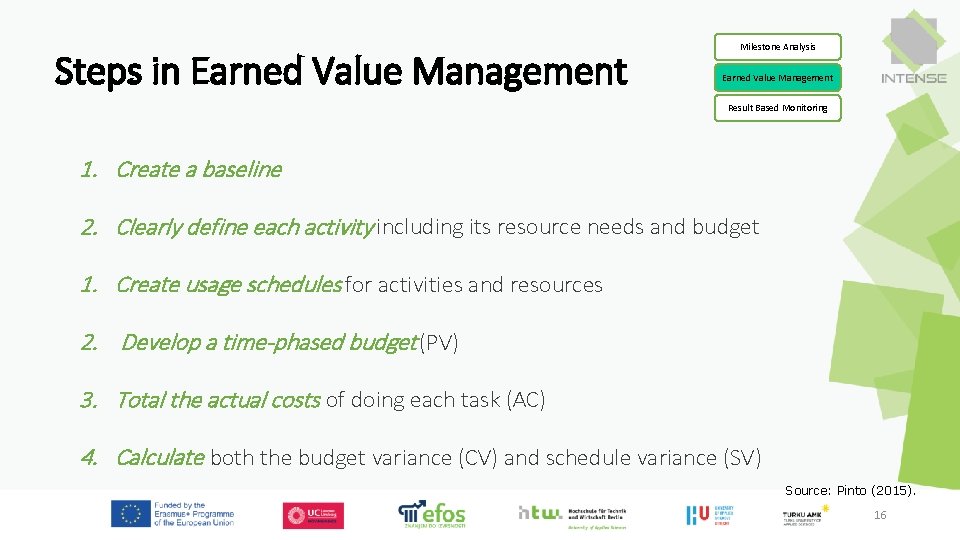
Steps in Earned Value Management Milestone Analysis Earned Value Management Result Based Monitoring 1. Create a baseline 2. Clearly define each activity including its resource needs and budget 1. Create usage schedules for activities and resources 2. Develop a time-phased budget (PV) 3. Total the actual costs of doing each task (AC) 4. Calculate both the budget variance (CV) and schedule variance (SV) Source: Pinto (2015). 16
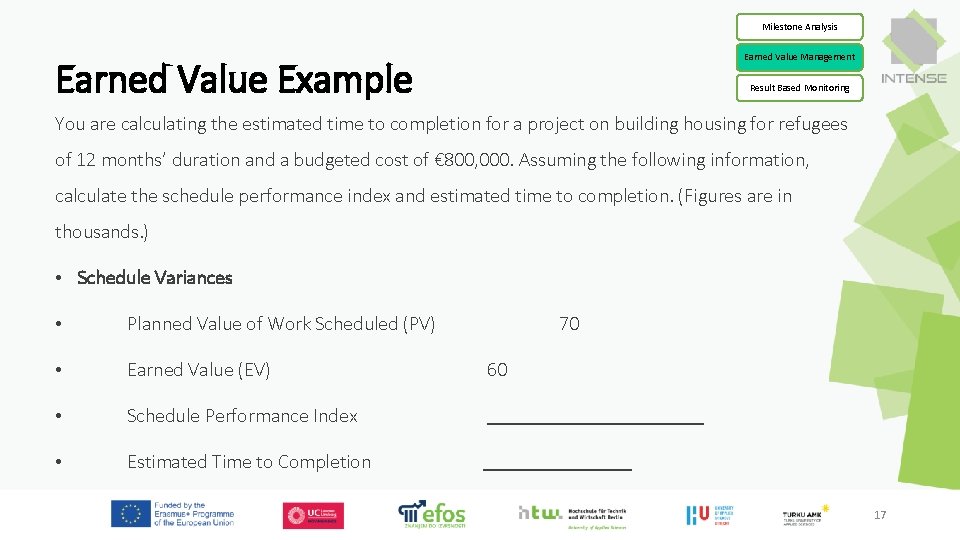
Milestone Analysis Earned Value Management Earned Value Example Result Based Monitoring You are calculating the estimated time to completion for a project on building housing for refugees of 12 months’ duration and a budgeted cost of € 800, 000. Assuming the following information, calculate the schedule performance index and estimated time to completion. (Figures are in thousands. ) • Schedule Variances • Planned Value of Work Scheduled (PV) • Earned Value (EV) • Schedule Performance Index • Estimated Time to Completion 70 60 17
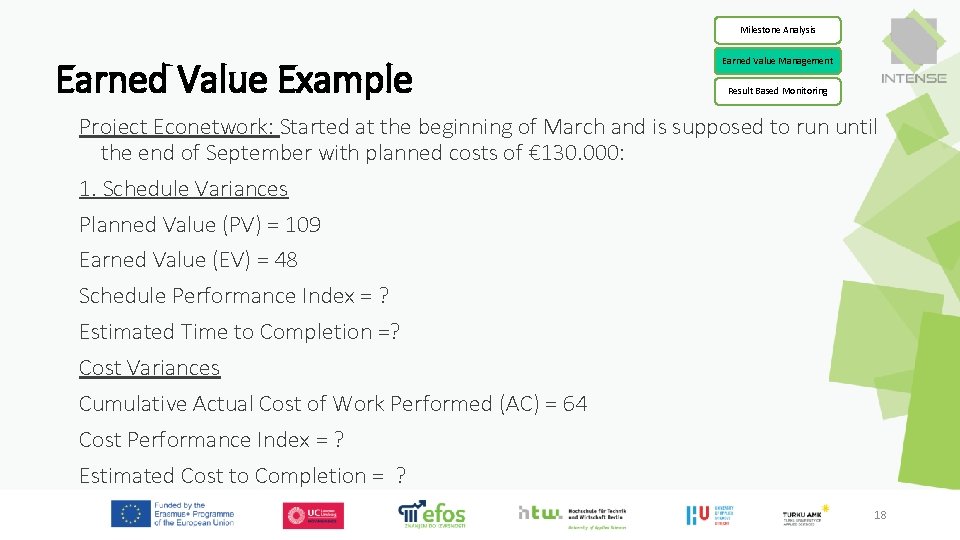
Milestone Analysis Earned Value Example Earned Value Management Result Based Monitoring Project Econetwork: Started at the beginning of March and is supposed to run until the end of September with planned costs of € 130. 000: 1. Schedule Variances Planned Value (PV) = 109 Earned Value (EV) = 48 Schedule Performance Index = ? Estimated Time to Completion =? Cost Variances Cumulative Actual Cost of Work Performed (AC) = 64 Cost Performance Index = ? Estimated Cost to Completion = ? 18
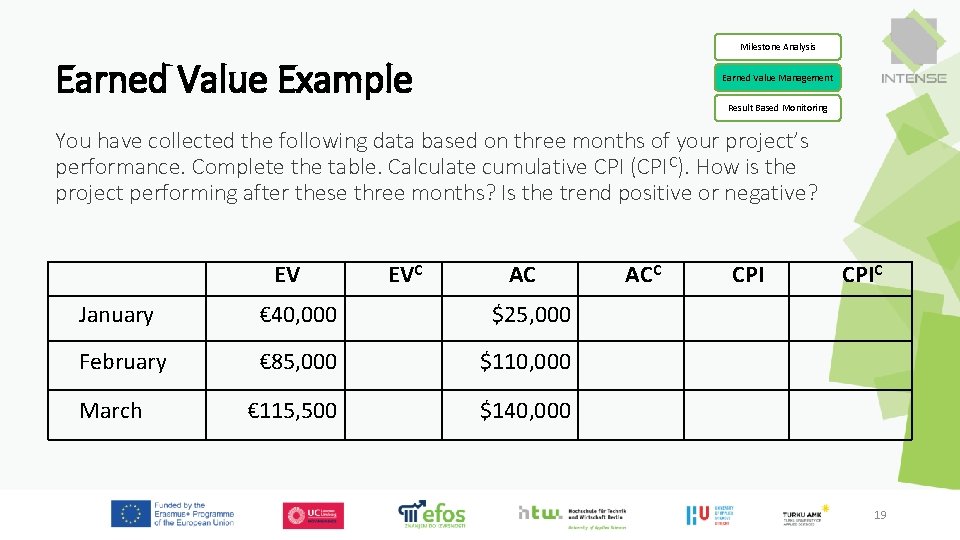
Milestone Analysis Earned Value Example Earned Value Management Result Based Monitoring You have collected the following data based on three months of your project’s performance. Complete the table. Calculate cumulative CPI (CPIC). How is the project performing after these three months? Is the trend positive or negative? EV January € 40, 000 February € 85, 000 € 115, 500 March EVC AC ACC CPIC $25, 000 $110, 000 $140, 000 19
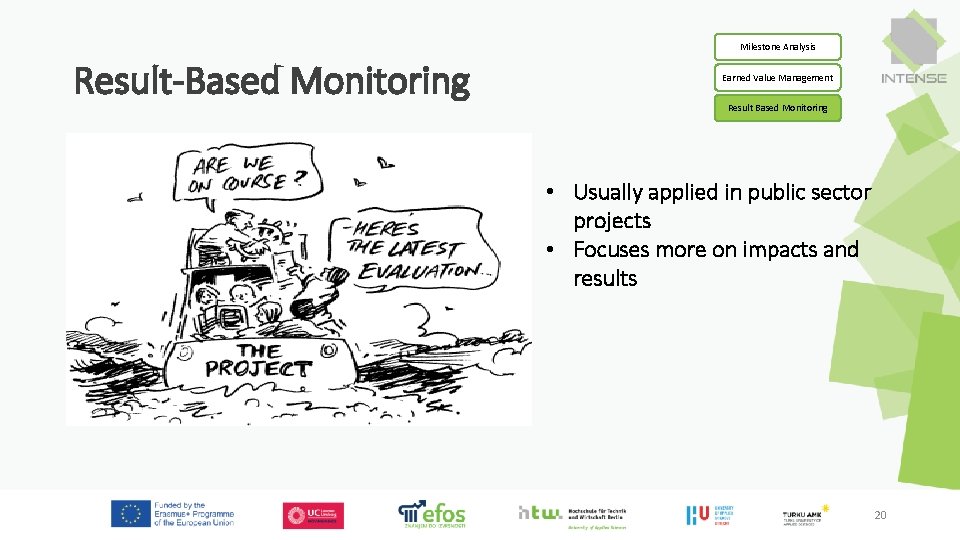
Milestone Analysis Result-Based Monitoring Earned Value Management Result Based Monitoring • Usually applied in public sector projects • Focuses more on impacts and results 20
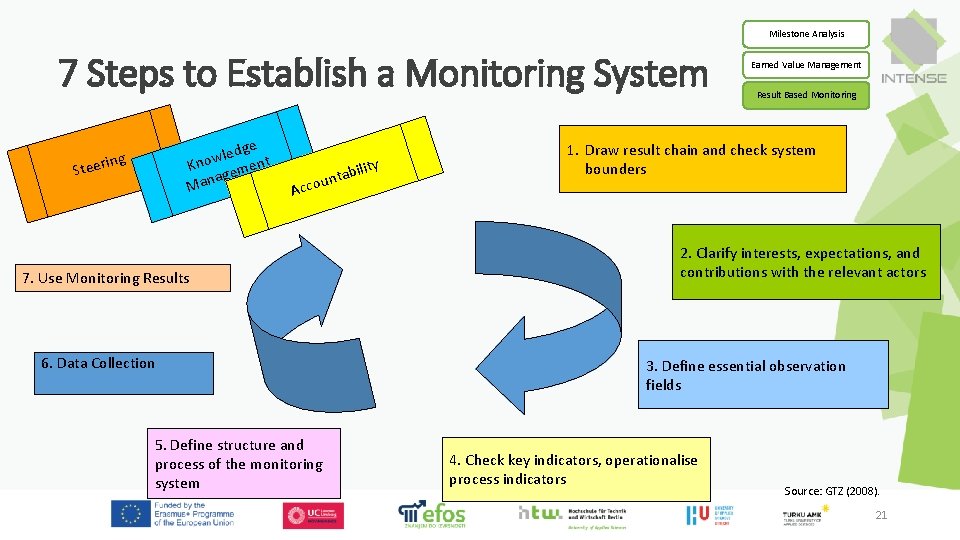
Milestone Analysis 7 Steps to Establish a Monitoring System dge e l w Kno ement ag Man ng teeri S un Acco 7. Use Monitoring Results 6. Data Collection 5. Define structure and process of the monitoring system tab ility Earned Value Management Result Based Monitoring 1. Draw result chain and check system bounders 2. Clarify interests, expectations, and contributions with the relevant actors 3. Define essential observation fields 4. Check key indicators, operationalise process indicators Source: GTZ (2008). 21
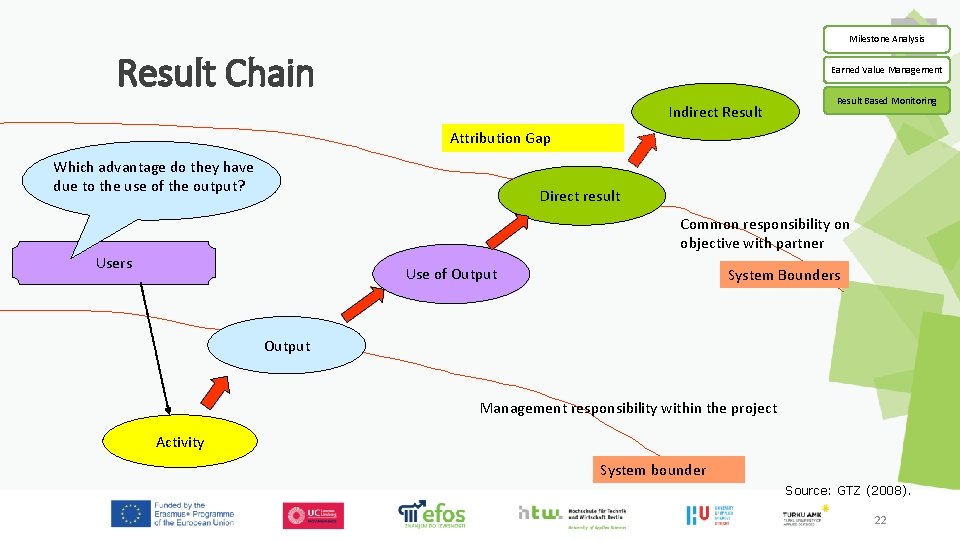
Milestone Analysis Result Chain Earned Value Management Indirect Result Based Monitoring Attribution Gap Which advantage do they have due to the use of the output? Direct result Common responsibility on objective with partner Users Use of Output System Bounders Output Management responsibility within the project Activity System bounder Source: GTZ (2008). 22
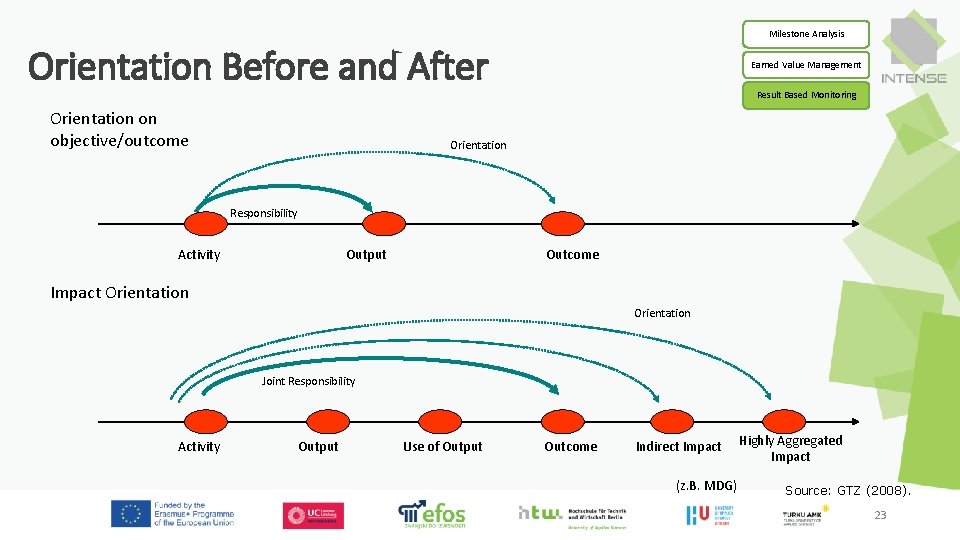
Milestone Analysis Orientation Before and After Orientation on objective/outcome Earned Value Management Result Based Monitoring Orientation Responsibility Activity Output Outcome Impact Orientation Joint Responsibility Activity Output Use of Output Outcome Indirect Impact (z. B. MDG) Highly Aggregated Impact Source: GTZ (2008). 23
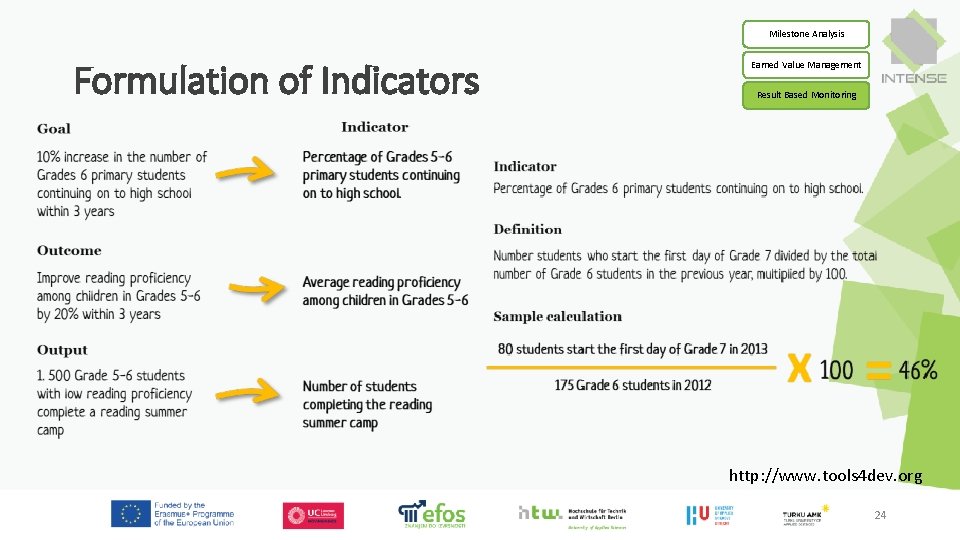
Milestone Analysis Formulation of Indicators Earned Value Management Result Based Monitoring http: //www. tools 4 dev. org 24
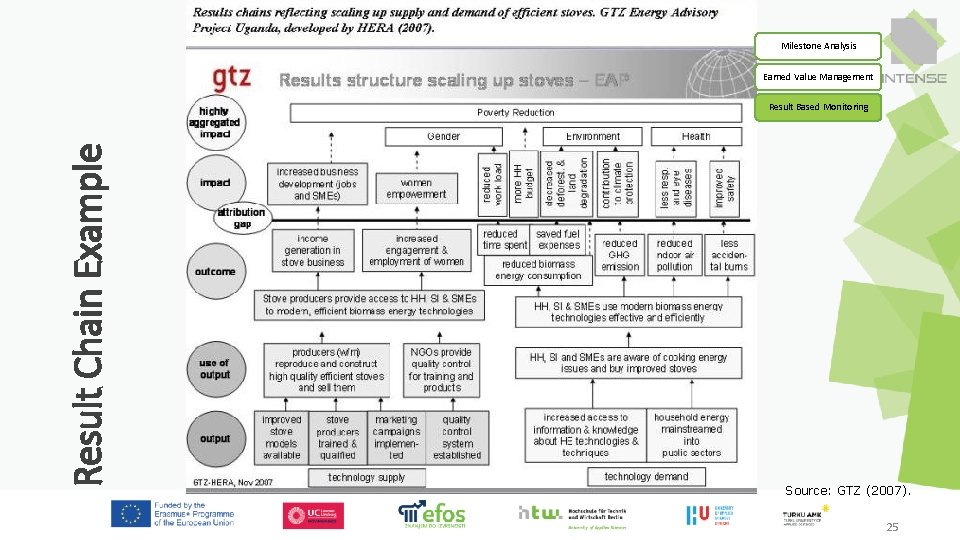
Milestone Analysis Earned Value Management Result Chain Example Result Based Monitoring Source: GTZ (2007). 25
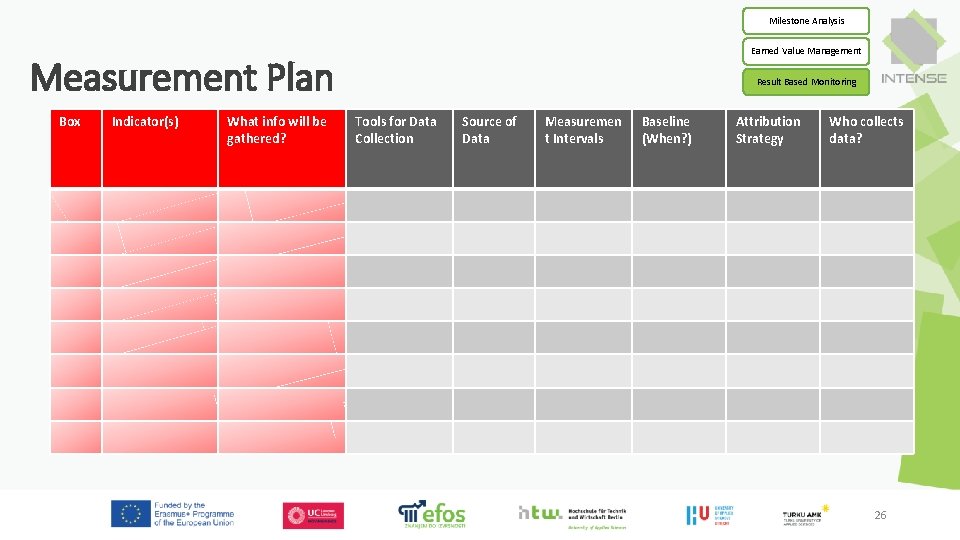
Milestone Analysis Earned Value Management Measurement Plan Box Indicator(s) What info will be gathered? Result Based Monitoring Tools for Data Collection Source of Data Measuremen t Intervals Baseline (When? ) Attribution Strategy Who collects data? 26
Example Result Chain • Volunteer? • What’s your objective? • What are the main activities you plan so far? • Homework: • Develop a result chain (tool nr. 6) for you project • Feedback until (INSERT DATE) 27
Human Factors in Project Evaluation & Control v. Project coordination and relations among stakeholders v. Adequacy of project structure and control v. Project uniqueness, importance, and public exposure v. Success criteria salience and consensus v. Lack of budgetary pressure v. Avoidance of initial over optimism and conceptual difficulties Source: Pinto (2015). 28 28
Learning Objectives After completing this chapter, you should be able to: • Recognise the strengths and weaknesses of common project evaluation and control methods • Understand the difference between monitoring and evaluation • Understand how monitoring can assist project tracking and evaluation 29
5. Monitoring and Project Closure 1. Monitoring and Evaluation 2. Project Closure 30 30
Project Termination
Learning Objectives After completing this chapter, you should be able to: • Apply the necessary processes when terminating your project naturally • Recognise when you have to terminate your project early • Handle common project termination issues 32
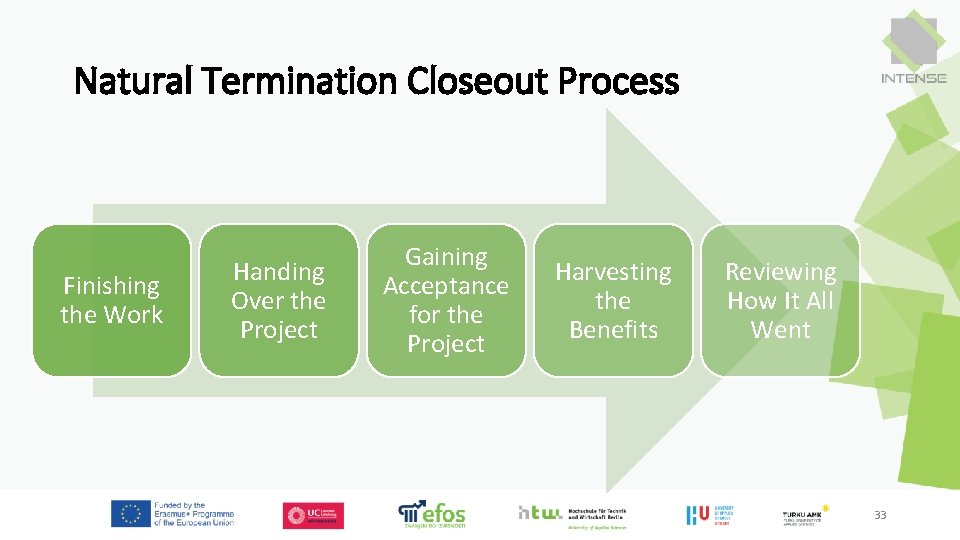
Natural Termination Closeout Process Finishing the Work Handing Over the Project Gaining Acceptance for the Project Harvesting the Benefits Reviewing How It All Went 33
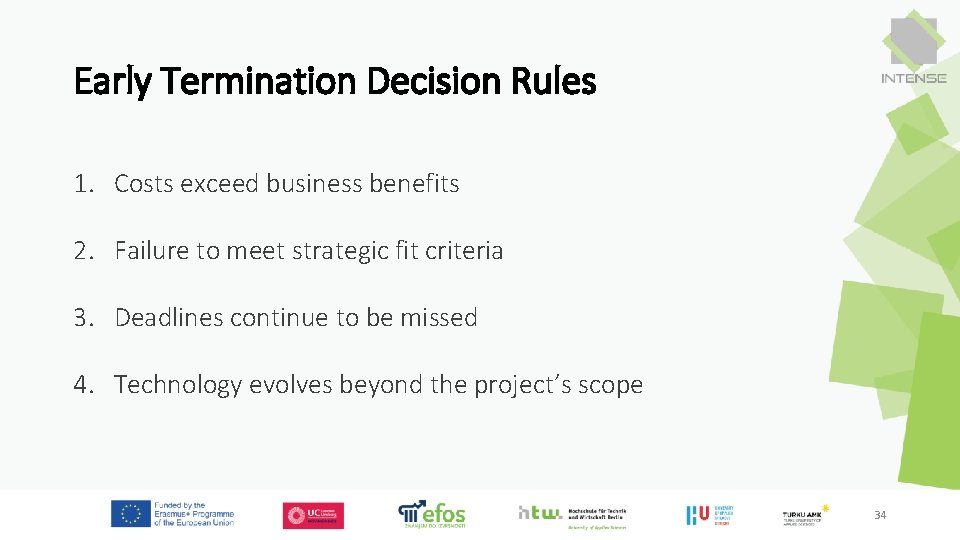
Early Termination Decision Rules 1. Costs exceed business benefits 2. Failure to meet strategic fit criteria 3. Deadlines continue to be missed 4. Technology evolves beyond the project’s scope 34
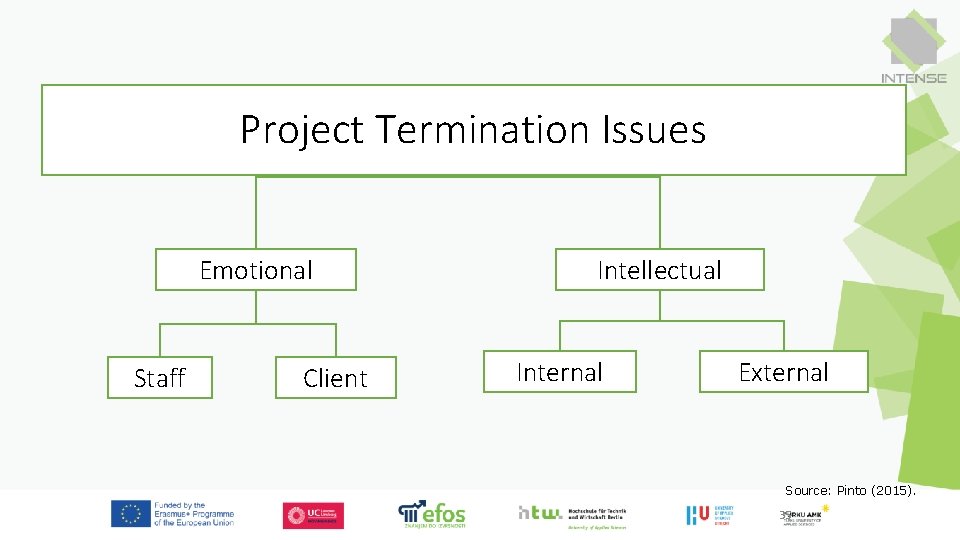
Project Termination Issues Emotional Staff Client Intellectual Internal External Source: Pinto (2015). 35
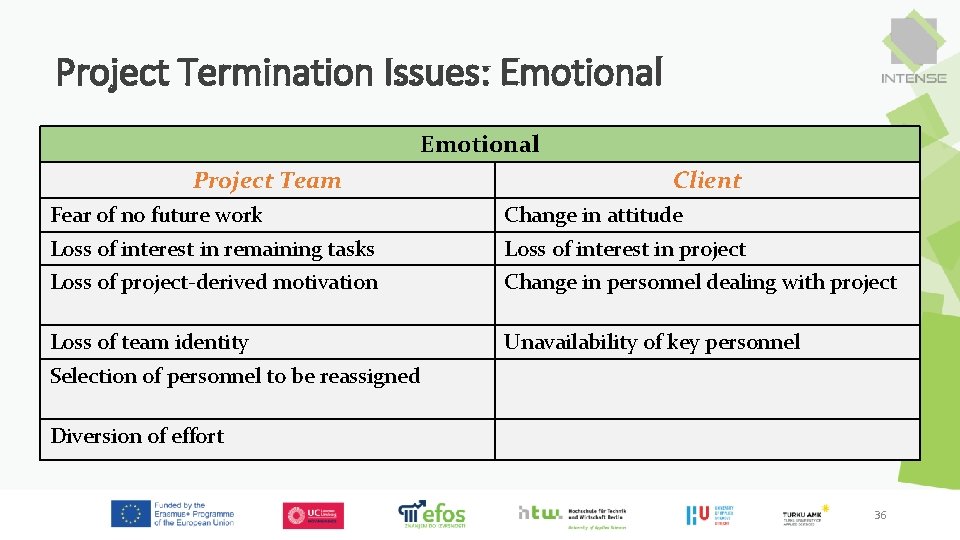
Project Termination Issues: Emotional Project Team Client Fear of no future work Change in attitude Loss of interest in remaining tasks Loss of interest in project Loss of project-derived motivation Change in personnel dealing with project Loss of team identity Unavailability of key personnel Selection of personnel to be reassigned Diversion of effort 36 36
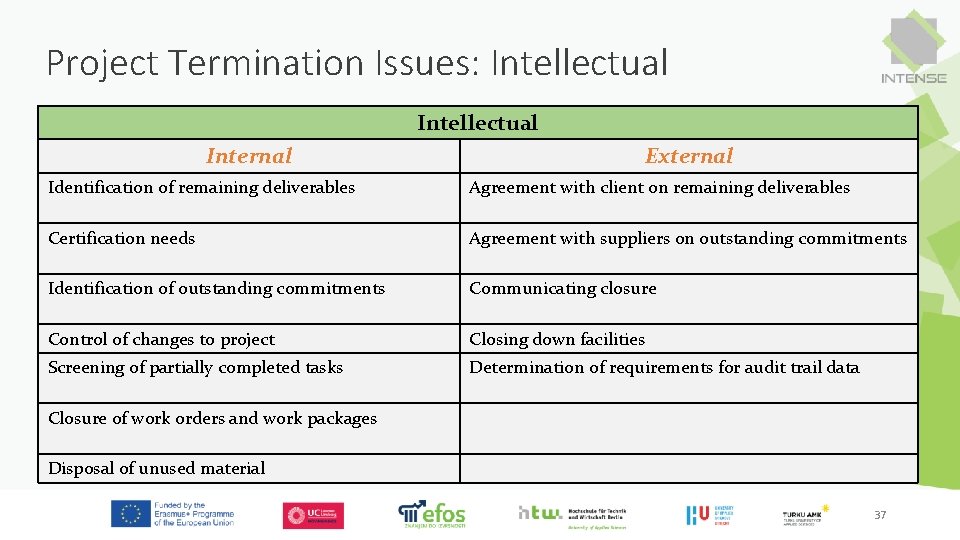
Project Termination Issues: Intellectual Internal External Identification of remaining deliverables Agreement with client on remaining deliverables Certification needs Agreement with suppliers on outstanding commitments Identification of outstanding commitments Communicating closure Control of changes to project Closing down facilities Screening of partially completed tasks Determination of requirements for audit trail data Closure of work orders and work packages Disposal of unused material 37 37
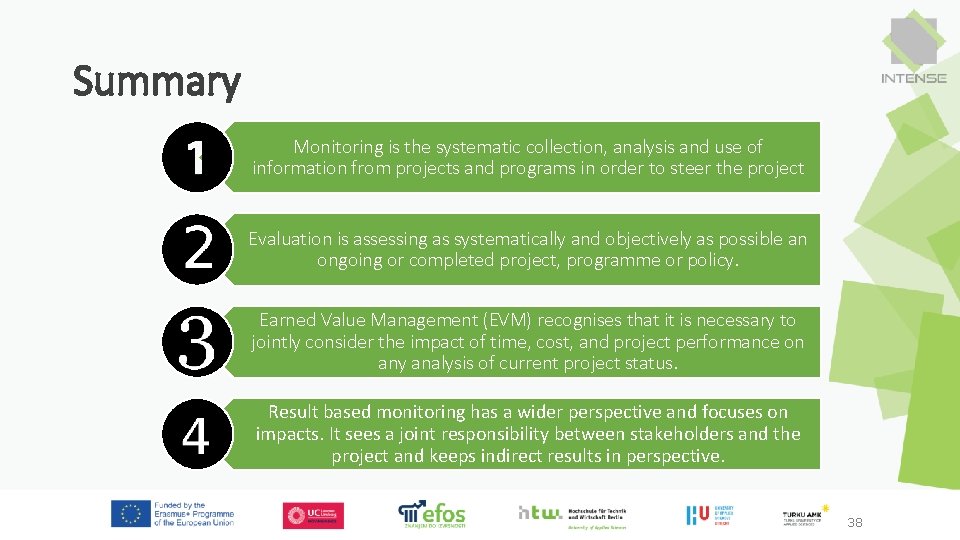
Summary Monitoring is the systematic collection, analysis and use of information from projects and programs in order to steer the project Evaluation is assessing as systematically and objectively as possible an ongoing or completed project, programme or policy. Earned Value Management (EVM) recognises that it is necessary to jointly consider the impact of time, cost, and project performance on any analysis of current project status. Result based monitoring has a wider perspective and focuses on impacts. It sees a joint responsibility between stakeholders and the project and keeps indirect results in perspective. 38 38
Learning Objectives After completing this chapter, you should be able to: • Apply the necessary processes when terminating your project naturally • Recognise when you have to terminate your project early • Handle common project termination issues 39
References • GTZ (2007): GTZ HERA Cooking Energy Compendium – A practical guidebook for implementers of cooking energy interventions. Deutsche Gesellschaft für Internationale Zusammenarbeit (GIZ) Gmb. H. Eschborn Germany. • GTZ (2008): Results-based Monitoring: Guidelines for Technical Cooperation. Deutsche Gesellschaft für Internationale Zusammenarbeit (GIZ) Gmb. H. Eschborn Germany. • Horine, Greg (2013): Absolute Beginner’s Guide to Project Management, Que Sams/Pearson Education, 3 rd ed. • Pinto, J. K. (2015): Project management. Achieving competitive advantage, Pearson Education, Harlow, Essex, 4 th ed. • Project Management Institute (2013): A Guide to the Project Management Body of Knowledge: PMBOK(R) Guide, Project Management Institute; 5 th ed. 40