
Project Management 1 2 Project Team and Management
- Slides: 21
Project Management 1
2. Project Team and Management 2. 2 Team Management - Roles and Responsibilities of Team Members Team Development Team Roles Teams in Transition 2 2
Learning Objectives 1. Be aware of characteristics of effective teams and team development stages 2. Students can explain the functions, strengths, and weaknesses of different team roles and are able to evaluate their own 3. Students reflect their own behaviour in teams 3 3
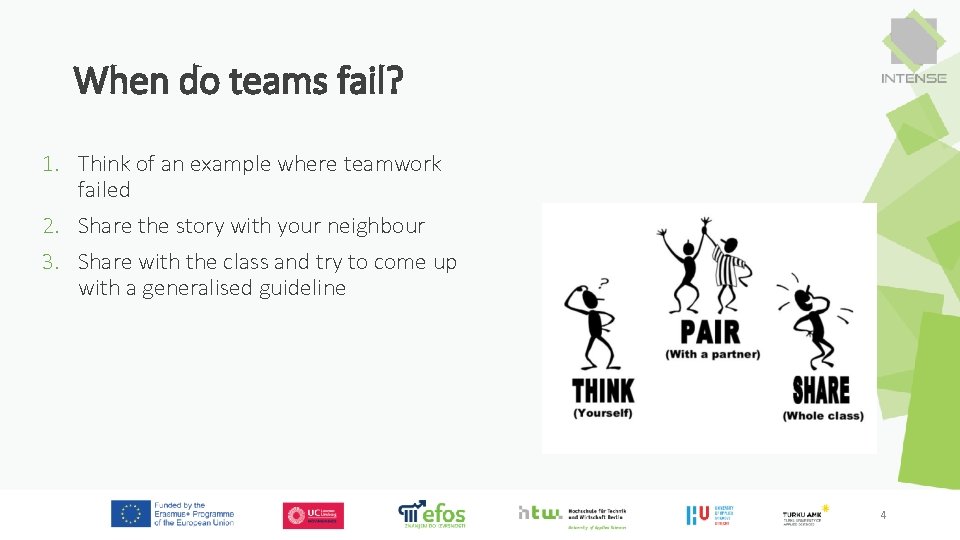
When do teams fail? 1. Think of an example where teamwork failed 2. Share the story with your neighbour 3. Share with the class and try to come up with a generalised guideline 4
Roles and Responsibilities in Teams Video 5
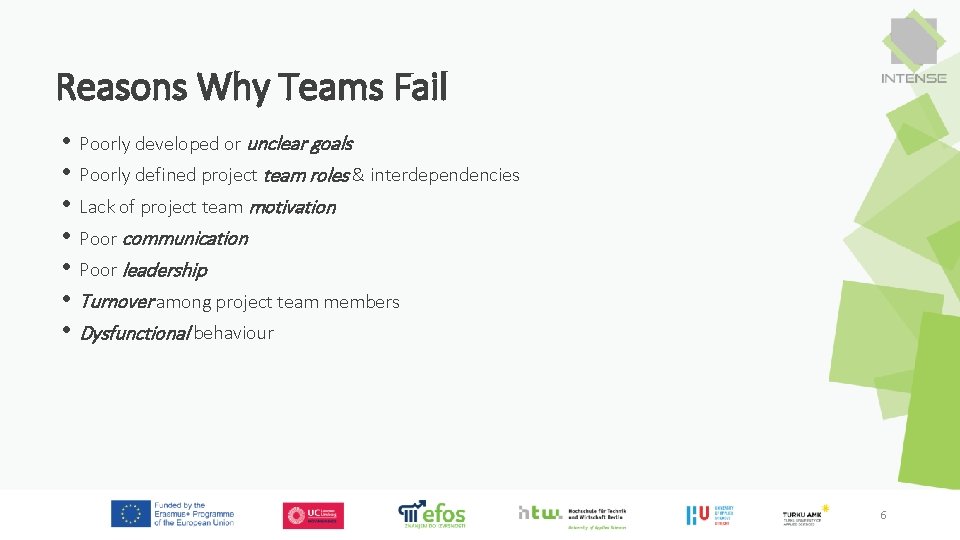
Reasons Why Teams Fail • Poorly developed or unclear goals • Poorly defined project team roles & interdependencies • Lack of project team motivation • Poor communication • Poor leadership • Turnover among project team members • Dysfunctional behaviour 6
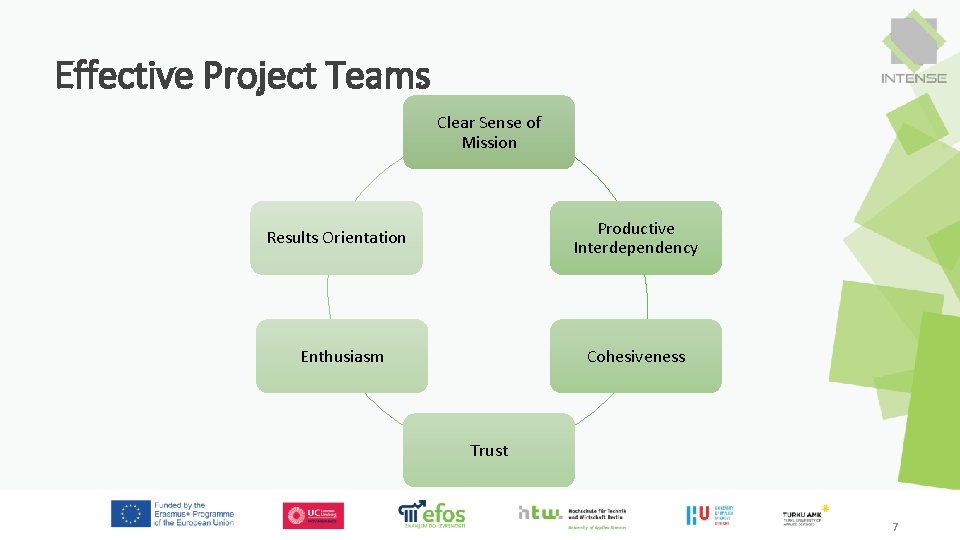
Effective Project Teams Clear Sense of Mission Productive Interdependency Results Orientation Enthusiasm Cohesiveness Trust 7
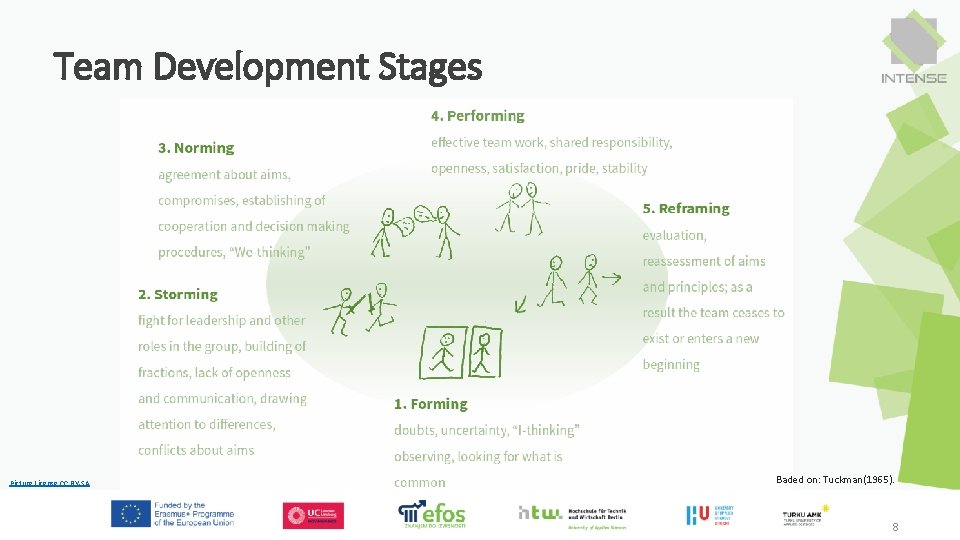
Team Development Stages Picture License CC BY-SA Baded on: Tuckman(1965). 8
What is your role in a team? Assessing Your Team Roles: • Now, enter the scores and add up the points to find out your own team role and the team role of your partner • Discuss with your partner a) whether the results of the test were what you expected and b) the issue of self- and outside perception. 9
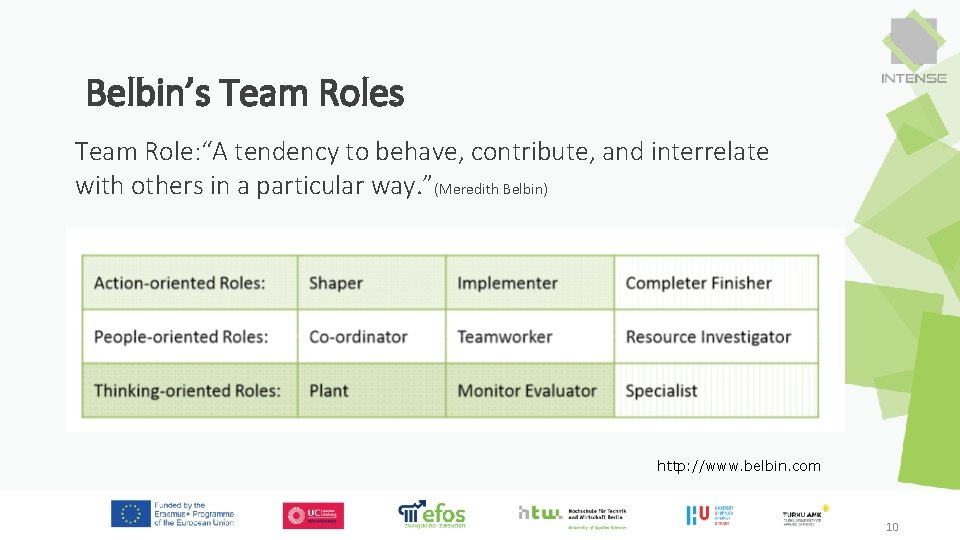
Belbin’s Team Role: “A tendency to behave, contribute, and interrelate with others in a particular way. ”(Meredith Belbin) http: //www. belbin. com 10
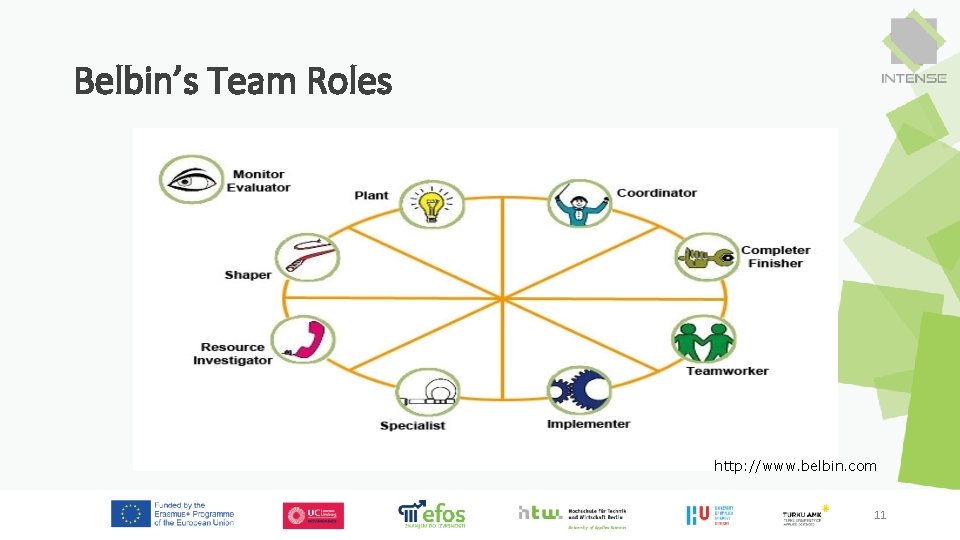
Belbin’s Team Roles http: //www. belbin. com 11
What is your role in a team? Part 2 Assessing Your Team Roles: • Find a partner • Fill out the test for assessing team roles (pp. 1 -4) for you and for your partner 12
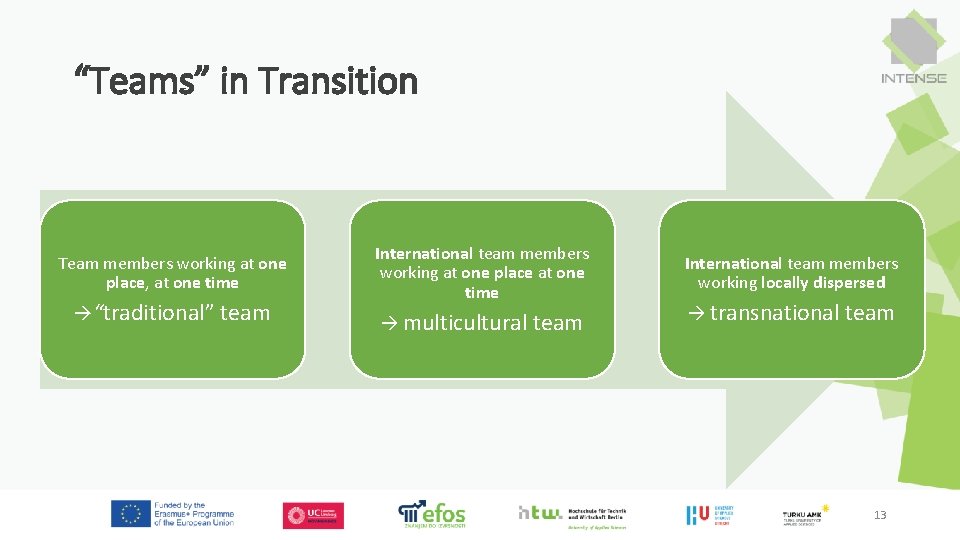
“Teams” in Transition Team members working at one place, at one time “traditional” team International team members working at one place at one time multicultural team International team members working locally dispersed transnational team 13
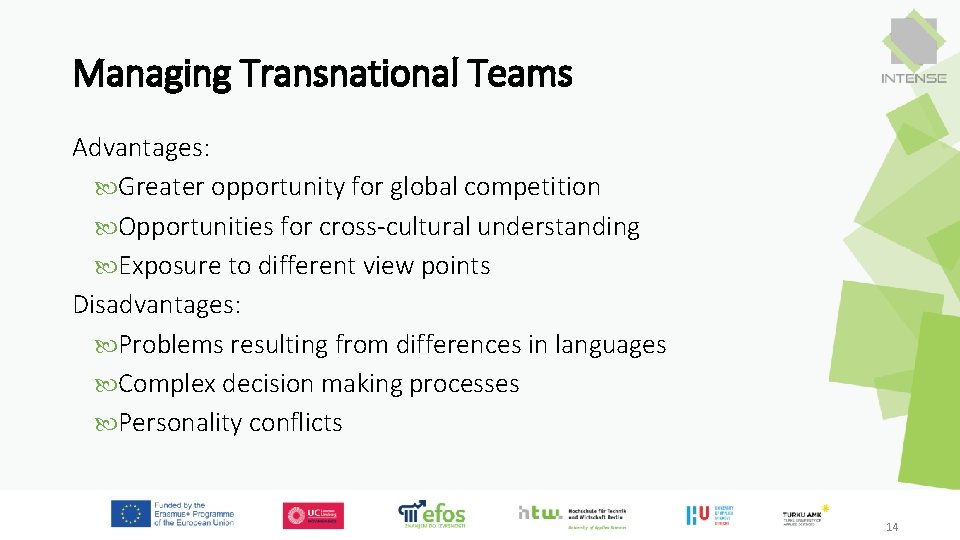
Managing Transnational Teams Advantages: Greater opportunity for global competition Opportunities for cross-cultural understanding Exposure to different view points Disadvantages: Problems resulting from differences in languages Complex decision making processes Personality conflicts 14
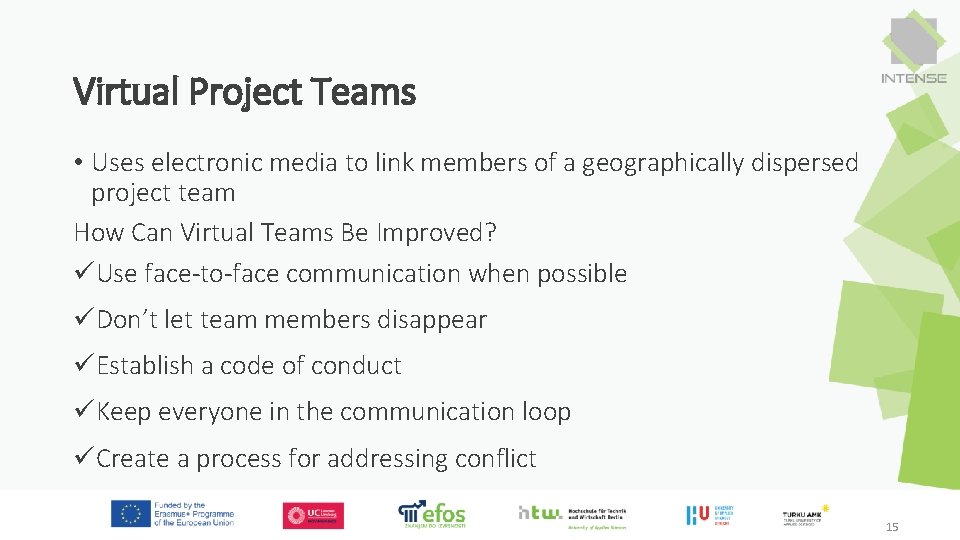
Virtual Project Teams • Uses electronic media to link members of a geographically dispersed project team How Can Virtual Teams Be Improved? üUse face-to-face communication when possible üDon’t let team members disappear üEstablish a code of conduct üKeep everyone in the communication loop üCreate a process for addressing conflict 15
Review Intercultural Management • Which cultural differences have you encountered in student or working groups? • Which cultural dimension will influence your team structure? • Which cultural dimensions will influence project processes? 16
Quiz - Review 1. Virtual teams are often slowed down by difficulty establishing: A) Superordinate goals B) Task outcomes C) Trust D) Psychosocial outcomes 2. According to Belbin a “plant” is: A) A highly creative person B) A perfectionist C) An extrovert and good communicator D) A self-controlled and disciplined person
Review Chapter 1 and 2 1. What is a project? 2. What is the difference between a process and a project? 3. What are the stages of a project life cycle? 4. Why is project management leader intensive? 5. Which stages is the team undergoing? Remember, a project plan is part of your exam. So, consider starting to assemble your project team now 18
Summary Understand the steps involved in project team building and Know the characteristics of effective project teams and why teams fail Know the stages in the development of groups Understand reflect your own role on a project team 19 19
Learning Objectives 1. Be aware of characteristics of effective teams and team development stages 2. Students can explain the functions, strengths, and weaknesses of different team roles and are able to evaluate their own 3. Students reflect their own behaviour in teams 20 20
References • Belbin, R. M. (2012). Team roles at work. Routledge. • Dulewicz, V. (1995). A validation of Belbin's team roles from 16 PF and OPQ using bosses' ratings of competence. Journal of Occupational and Organizational Psychology, 68(2), 81 -99. • Pinto, J. K. (2015): Project management. Achieving competitive advantage, Pearson Education, Harlow, Essex, 4 th ed. • Swailes, S. , & Mc. Intyre-Bhatty, T. (2002). The “Belbin” team role inventory: reinterpreting reliability estimates. Journal of Managerial Psychology, 17(6), 529 -536. • Tuckman, Bruce W (1965): Developmental sequence in small groups. Psychological Bulletin. 63 (6): 384– 399. • Tuckman, Bruce (Spring 2001). Developmental Sequence in Small Groups. Group Facilitation: A Research and Applications Journal: 71– 72. 21