
Project Ghana Emergency Medicine Collaborative Document Title Ear
Project: Ghana Emergency Medicine Collaborative Document Title: Ear and Sinus Emergencies Author(s): Rodney Smith (St. Joseph Mercy Hospital Ann Arbor), MD 2012 License: Unless otherwise noted, this material is made available under the terms of the Creative Commons Attribution Share Alike-3. 0 License: http: //creativecommons. org/licenses/by-sa/3. 0/ We have reviewed this material in accordance with U. S. Copyright Law and have tried to maximize your ability to use, share, and adapt it. These lectures have been modified in the process of making a publicly shareable version. The citation key on the following slide provides information about how you may share and adapt this material. Copyright holders of content included in this material should contact open. michigan@umich. edu with any questions, corrections, or clarification regarding the use of content. For more information about how to cite these materials visit http: //open. umich. edu/privacy-and-terms-use. Any medical information in this material is intended to inform and educate and is not a tool for self-diagnosis or a replacement for medical evaluation, advice, diagnosis or treatment by a healthcare professional. Please speak to your physician if you have questions about your medical condition. Viewer discretion is advised: Some medical content is graphic and may not be suitable for all viewers. 1
Attribution Key for more information see: http: //open. umich. edu/wiki/Attribution. Policy Use + Share + Adapt { Content the copyright holder, author, or law permits you to use, share and adapt. } Public Domain – Government: Works that are produced by the U. S. Government. (17 USC § 105) Public Domain – Expired: Works that are no longer protected due to an expired copyright term. Public Domain – Self Dedicated: Works that a copyright holder has dedicated to the public domain. Creative Commons – Zero Waiver Creative Commons – Attribution License Creative Commons – Attribution Share Alike License Creative Commons – Attribution Noncommercial Share Alike License GNU – Free Documentation License Make Your Own Assessment { Content Open. Michigan believes can be used, shared, and adapted because it is ineligible for copyright. } Public Domain – Ineligible: Works that are ineligible for copyright protection in the U. S. (17 USC § 102(b)) *laws in your jurisdiction may differ { Content Open. Michigan has used under a Fair Use determination. } Fair Use: Use of works that is determined to be Fair consistent with the U. S. Copyright Act. (17 USC § 107) *laws in your jurisdiction may differ Our determination DOES NOT mean that all uses of this 3 rd-party content are Fair Uses and we DO NOT guarantee that your use of the content is Fair. To use this content you should do your own independent analysis to determine whether or not your use will be Fair. 2
Ear and Sinus Emergencies • Objectives – Describe the evaluation and treatment of ear disorders – Describe the evaluation and treatment of sinus disorders 3
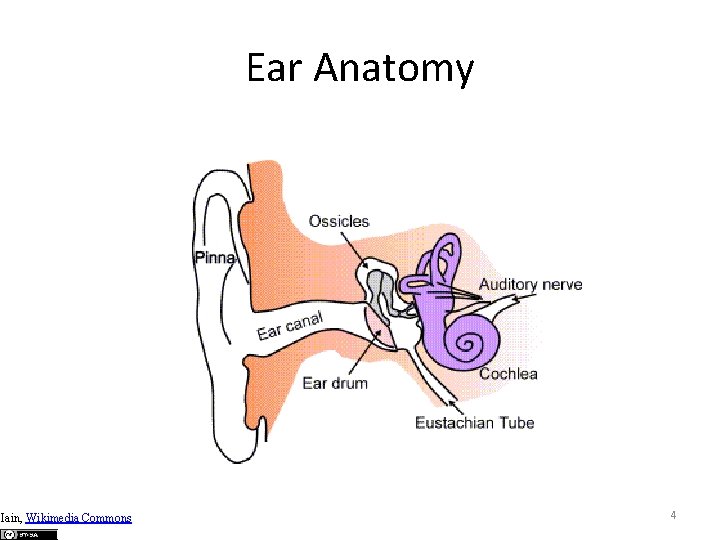
Ear Anatomy Iain, Wikimedia Commons 4

External Ear Cerumen Impaction Ear Anatomy • Cerumen – Cerumen glands – Sebaceous glands – Desquamated epidermis • Normal clearing – Hair follicles – Epidermal migration – Chewing Iain, Wikimedia Commons 5
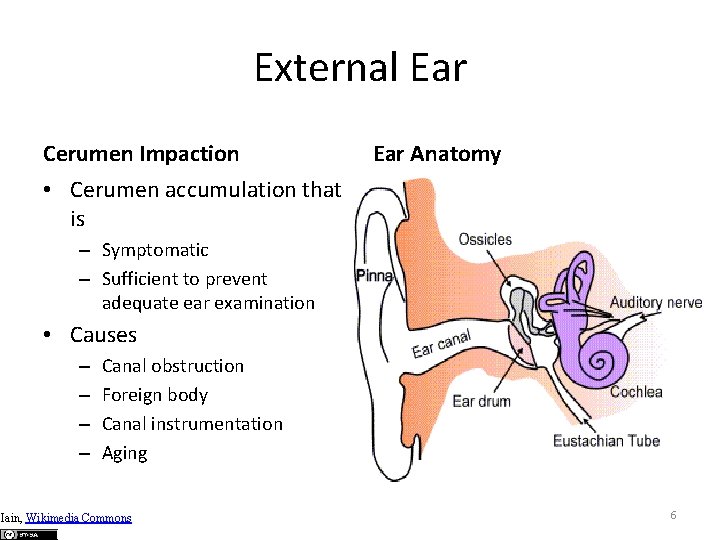
External Ear Cerumen Impaction Ear Anatomy • Cerumen accumulation that is – Symptomatic – Sufficient to prevent adequate ear examination • Causes – – Canal obstruction Foreign body Canal instrumentation Aging Iain, Wikimedia Commons 6
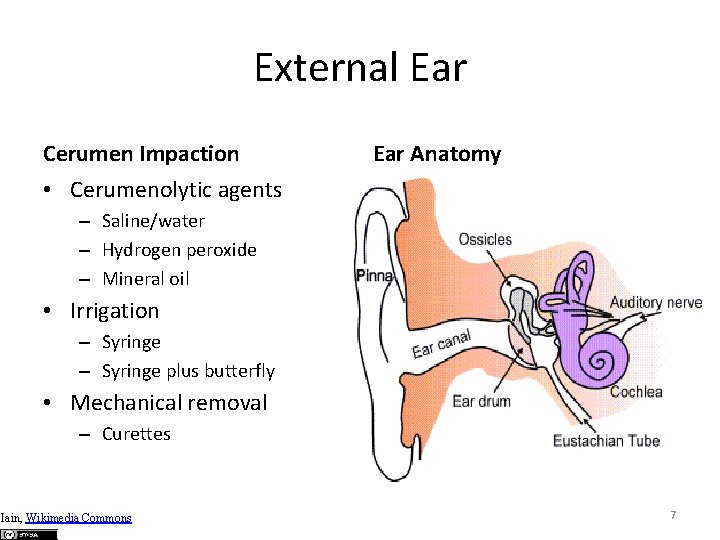
External Ear Cerumen Impaction Ear Anatomy • Cerumenolytic agents – Saline/water – Hydrogen peroxide – Mineral oil • Irrigation – Syringe plus butterfly • Mechanical removal – Curettes Iain, Wikimedia Commons 7
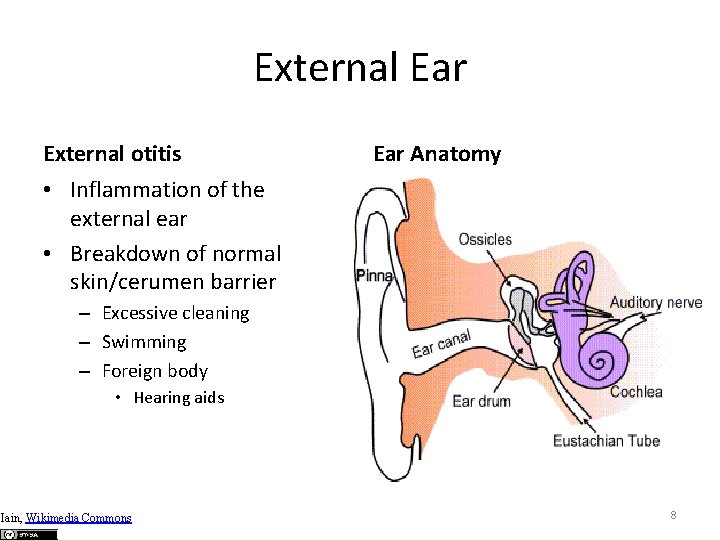
External Ear External otitis Ear Anatomy • Inflammation of the external ear • Breakdown of normal skin/cerumen barrier – Excessive cleaning – Swimming – Foreign body • Hearing aids Iain, Wikimedia Commons 8
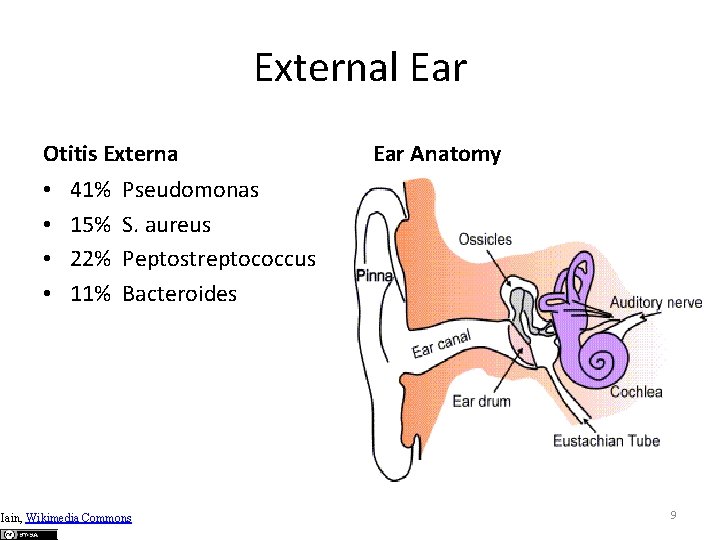
External Ear Otitis Externa • • 41% 15% 22% 11% Ear Anatomy Pseudomonas S. aureus Peptostreptococcus Bacteroides Iain, Wikimedia Commons 9
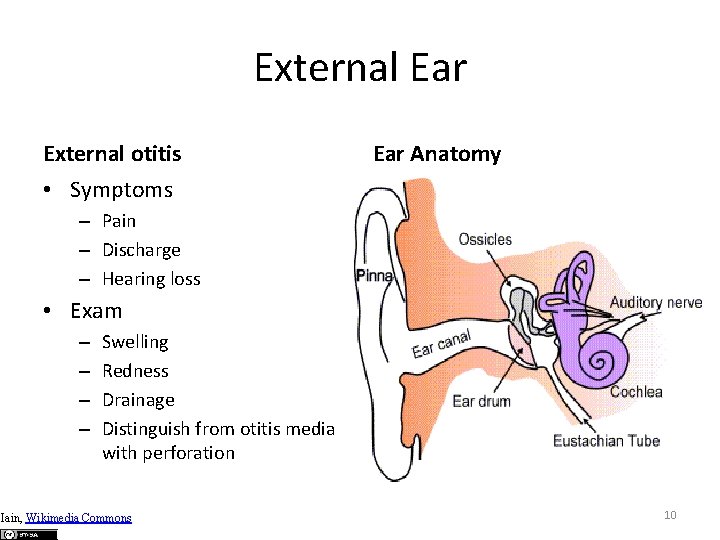
External Ear External otitis Ear Anatomy • Symptoms – Pain – Discharge – Hearing loss • Exam – – Swelling Redness Drainage Distinguish from otitis media with perforation Iain, Wikimedia Commons 10
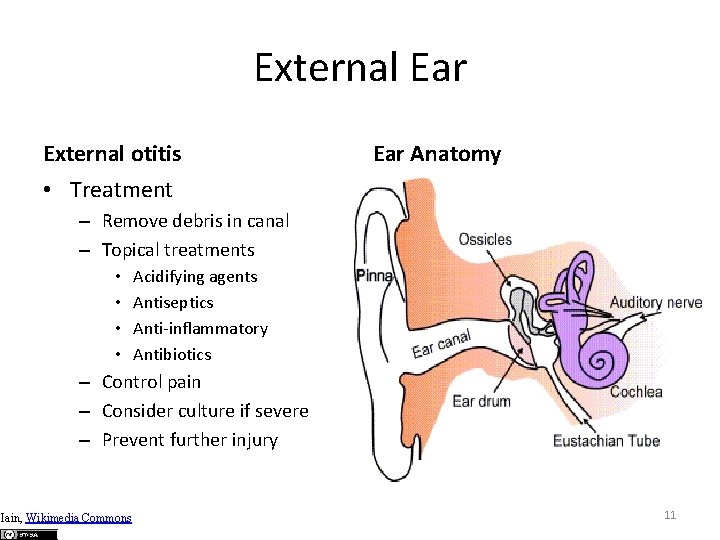
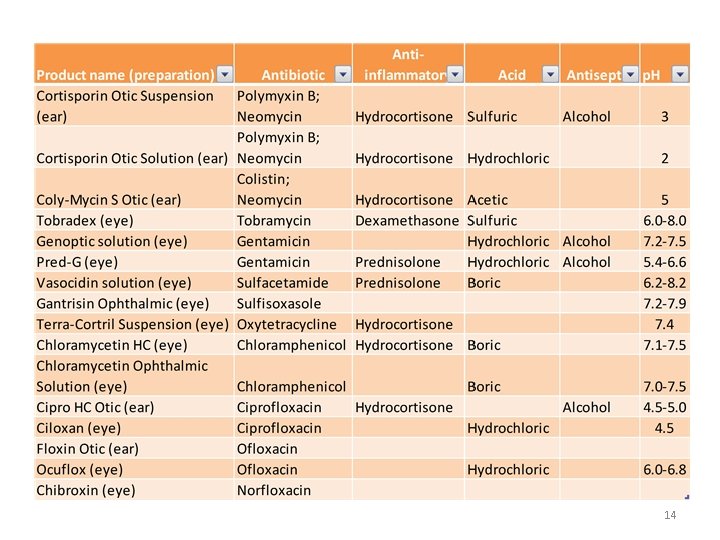
External Ear External otitis Ear Anatomy • Treatment – Remove debris in canal – Topical treatments • • Acidifying agents Antiseptics Anti-inflammatory Antibiotics – Control pain – Consider culture if severe – Prevent further injury Iain, Wikimedia Commons 11
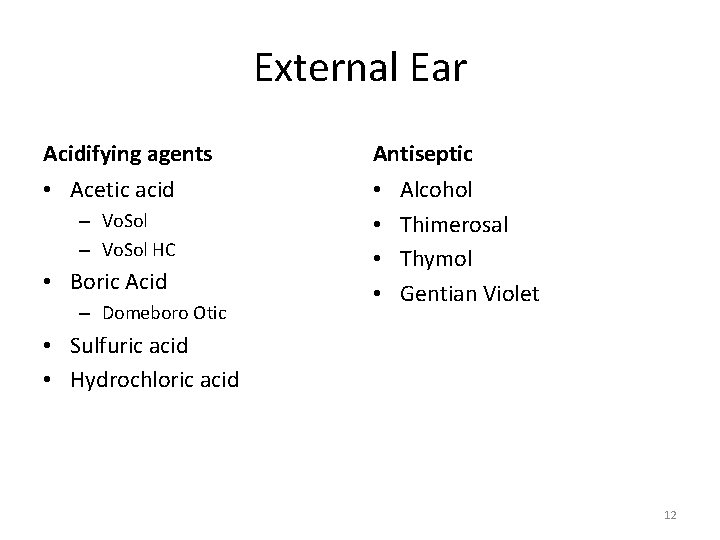
External Ear Acidifying agents Antiseptic • Acetic acid • • – Vo. Sol HC • Boric Acid – Domeboro Otic Alcohol Thimerosal Thymol Gentian Violet • Sulfuric acid • Hydrochloric acid 12
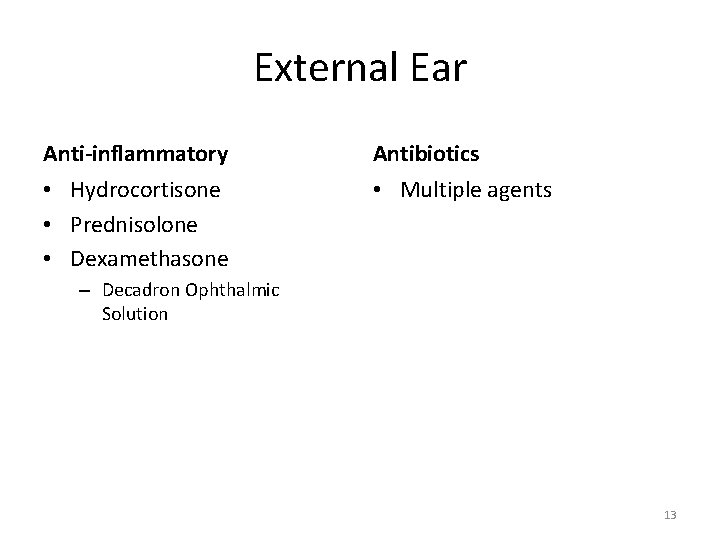
External Ear Anti-inflammatory Antibiotics • Hydrocortisone • Prednisolone • Dexamethasone • Multiple agents – Decadron Ophthalmic Solution 13
14
External Ear • • Cochrane Database Systematic Review 2010 19 RCT with 3382 patients Trials were of low quality Conclusions – Topical antimicrobials + steroids vs. Placebo • OR 11 (2. 0 – 60. 57) – In general, no difference in cure rate related to topical agent – Acetic acid less effective than antibiotics/steroids OR 0. 29 (0. 13 – 0. 62) at 2 weeks – Antibiotics + steroids quicker symptomatic relief 15
External Ear • External Otitis – Mild disease • • Topical drops 20 minute dwell time 7 day course, continue additional 7 days as needed Treat pain – Severe disease • Consider wick • Consider systemic antibiotics • Consider alternate diagnoses 16
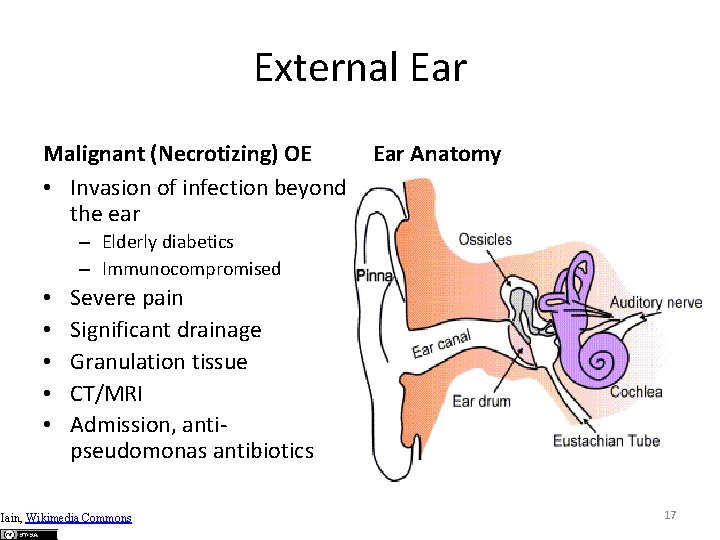
External Ear Malignant (Necrotizing) OE • Invasion of infection beyond the ear Ear Anatomy – Elderly diabetics – Immunocompromised • • • Severe pain Significant drainage Granulation tissue CT/MRI Admission, antipseudomonas antibiotics Iain, Wikimedia Commons 17
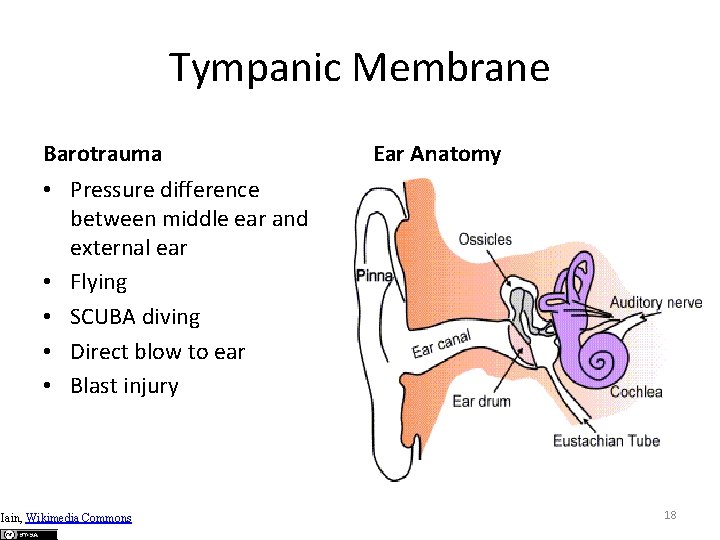
Tympanic Membrane Barotrauma Ear Anatomy • Pressure difference between middle ear and external ear • Flying • SCUBA diving • Direct blow to ear • Blast injury Iain, Wikimedia Commons 18
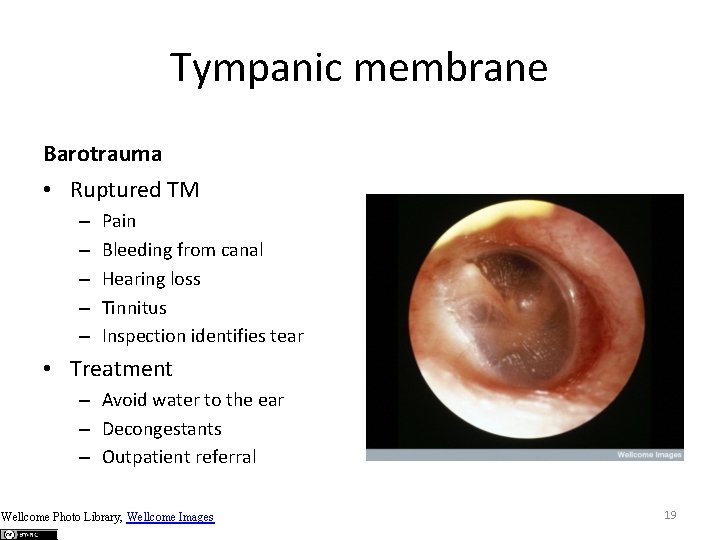
Tympanic membrane Barotrauma • Ruptured TM – – – Pain Bleeding from canal Hearing loss Tinnitus Inspection identifies tear • Treatment – Avoid water to the ear – Decongestants – Outpatient referral Wellcome Photo Library, Wellcome Images 19
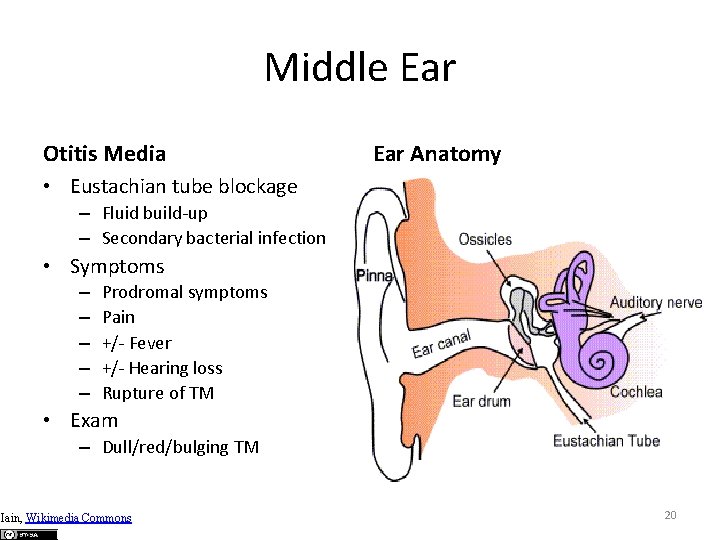
Middle Ear Otitis Media Ear Anatomy • Eustachian tube blockage – Fluid build-up – Secondary bacterial infection • Symptoms – – – Prodromal symptoms Pain +/- Fever +/- Hearing loss Rupture of TM • Exam – Dull/red/bulging TM Iain, Wikimedia Commons 20
Middle Ear • Otitis Media – Treatment • Antibiotics – Amoxicillin 500 mg BID – Amoxicillin 875 mg BID • If penicillin allergy – Cephalosporins – 2 nd generation – Azithromycin • Treatment failure – Augmentin – Cephalosporins – 2 nd generation 21
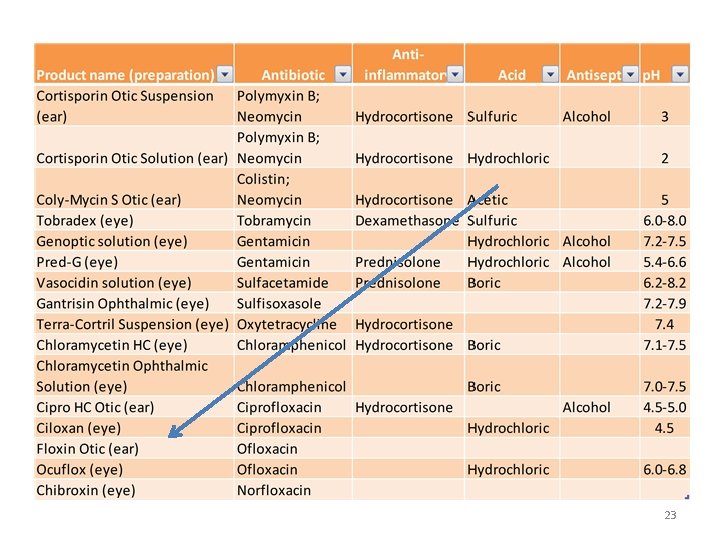
Middle Ear • Otitis Media with TM rupture – Add topical antibiotic • Avoid – Alcohol – Aminoglycoside – Avoid water in the ear until healed 22
23
Middle Ear • Otitis Media with Effusion – Fluid in middle ear without infection – Oral decongestants – Most resolve • Mastoiditis – Pre-antibiotic complication of AOM in 20% – Modern era incidence of 0. 5% – CT scan for diagnosis – Admission and IV antibiotics 24
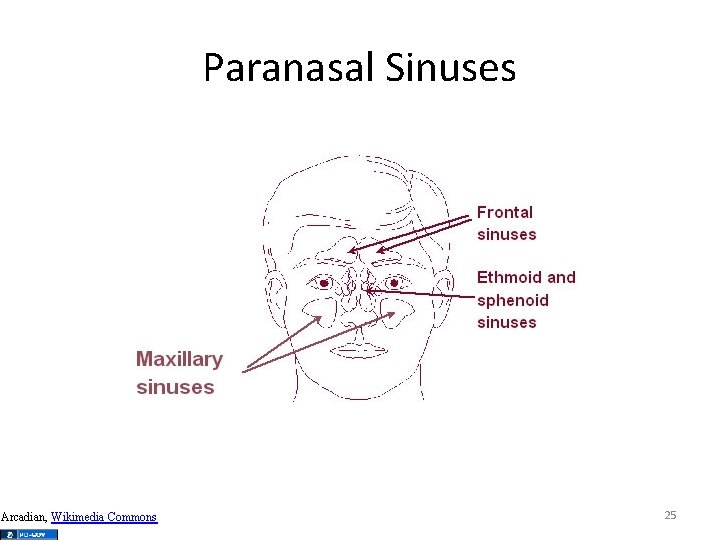
Paranasal Sinuses Arcadian, Wikimedia Commons 25
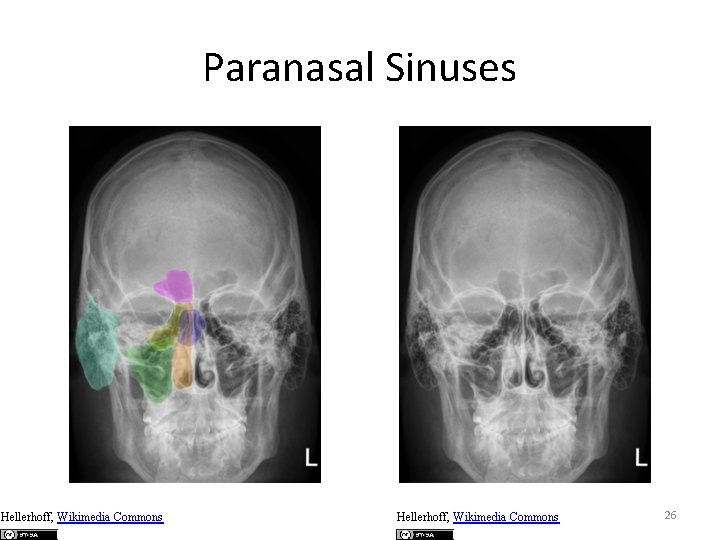
Paranasal Sinuses Hellerhoff, Wikimedia Commons 26
Sinusitis • Acute inflammation of the para-nasal sinuses • Rhinosinusitis – Acute rhinosinusitis – Acute viral rhinosinusitis • Rhinovirus, Influenza, Parainfluenza • Acute bacterial rhinosinusitis as complication in 0. 5% to 2% of cases • 85% to 98% of patients prescribed antibiotics (2001) 27
Acute Rhinosinusitis • Symptoms of ARS – Nasal congestion and obstruction – Purulent nasal discharge – Maxillary tooth discomfort – Facial pain or pressure, worse when bending forward – Fever – Fatigue – Cough – Hyposmia or anosmia – Ear pressure or fullness – Headache 28
Acute Rhinosinusitis • Hickner JM, et al. Ann Intern Med. 2001; 134(6): 498 -505 – – – American Academy of Family Physicians American College of Physicians American Society of Internal Medicine, Centers for Disease Control, Infectious Diseases Society of America • Diagnosis of ABRS with – >= 7 days of symptoms – maxillary pain or tenderness in the face or teeth (especially when unilateral) – purulent nasal secretions • Observation for ARS and mild ABRS • Antibiotic therapy – moderately severe symptoms – clinical diagnosis of ABRS – severe rhinosinusitis symptoms regardless of duration 29
Acute Rhinosinusitis • Rosenfeld RM, et al. Otolaryngol Head Neck Surg. 2007; 137(3 Suppl): S 1 -31. • American Academy of Otolaryngology – Diagnosis of ABRS with presence of symptoms for 10 days or less than 10 days with worsening of symptoms after initial improvement – Symptomatic treatment for AVRS – May treat ABRS symptomatically for mild disease: • Mild pain, temperature < 38. 3 (101) – No imaging required – First line treatment is amoxicillin; macrolide if allergic – Reassess if worse or no improvement at 7 days 30
Acute Rhinosinusitis • Treatment – Analgesics/NSAIDs – Mechanical irrigation of sinuses – Topical corticosteroids – Decongestants • Topical • Oral – Antihistamines – Mucolytics – Zinc preparations 31
Acute Rhinosinusitis Wellcome Photo Library, Wellcome Images 32
Acute Rhinosinusitis • Treatment – Analgesics/NSAIDs – Mechanical irrigation of sinuses – *Topical corticosteroids – *Decongestants • * Topical • (*) Oral – Antihistamines – Mucolytics – (-) Zinc preparations 33
Acute Rhinosinusitis • Complications of ABRS – Rare – Local extension • Meningitis • Peri-orbital cellulitis • Orbital cellulitis 34
Rhinosinusitis • • Acute Rhinosinusitis Subacute Rhinosinusitis 4 -12 weeks Chronic Rhinosinusitis >12 weeks Recurrent ARS 4+ episodes in one year 35
- Slides: 35