
Project Ghana Emergency Medicine Collaborative Document Title Diabetic
Project: Ghana Emergency Medicine Collaborative Document Title: Diabetic Ketoacidosis and Hyperosmolar Hyperglycemic State (2012) Author(s): Jennifer N. Thompson, M. D. , Project Hope License: Unless otherwise noted, this material is made available under the terms of the Creative Commons Attribution Share Alike-3. 0 License: http: //creativecommons. org/licenses/by-sa/3. 0/ We have reviewed this material in accordance with U. S. Copyright Law and have tried to maximize your ability to use, share, and adapt it. These lectures have been modified in the process of making a publicly shareable version. The citation key on the following slide provides information about how you may share and adapt this material. Copyright holders of content included in this material should contact open. michigan@umich. edu with any questions, corrections, or clarification regarding the use of content. For more information about how to cite these materials visit http: //open. umich. edu/privacy-and-terms-use. Any medical information in this material is intended to inform and educate and is not a tool for self-diagnosis or a replacement for medical evaluation, advice, diagnosis or treatment by a healthcare professional. Please speak to your physician if you have questions about your medical condition. Viewer discretion is advised: Some medical content is graphic and may not be suitable for all viewers. 1
Attribution Key for more information see: http: //open. umich. edu/wiki/Attribution. Policy Use + Share + Adapt { Content the copyright holder, author, or law permits you to use, share and adapt. } Public Domain – Government: Works that are produced by the U. S. Government. (17 USC § 105) Public Domain – Expired: Works that are no longer protected due to an expired copyright term. Public Domain – Self Dedicated: Works that a copyright holder has dedicated to the public domain. Creative Commons – Zero Waiver Creative Commons – Attribution License Creative Commons – Attribution Share Alike License Creative Commons – Attribution Noncommercial Share Alike License GNU – Free Documentation License Make Your Own Assessment { Content Open. Michigan believes can be used, shared, and adapted because it is ineligible for copyright. } Public Domain – Ineligible: Works that are ineligible for copyright protection in the U. S. (17 USC § 102(b)) *laws in your jurisdiction may differ { Content Open. Michigan has used under a Fair Use determination. } Fair Use: Use of works that is determined to be Fair consistent with the U. S. Copyright Act. (17 USC § 107) *laws in your jurisdiction may differ Our determination DOES NOT mean that all uses of this 3 rd-party content are Fair Uses and we DO NOT guarantee that your use of the content is Fair. To use this content you should do your own independent analysis to determine whether or not your use will be Fair. 2
Diabetic Ketoacidosis and Hyperosmolar Hyperglycemic State Jennifer N. Thompson, MD Project Hope 3

Objectives DKA: Diabetic Ketoacidosis HHS: Hyperosmolar Hyperglycemic State (HONKC – hyperosmolar nonketotic coma) What is the difference between DKA and HHS? How do I manage DKA and HHS? What complications should I look out for? What does the data say about cerebral edema? 4
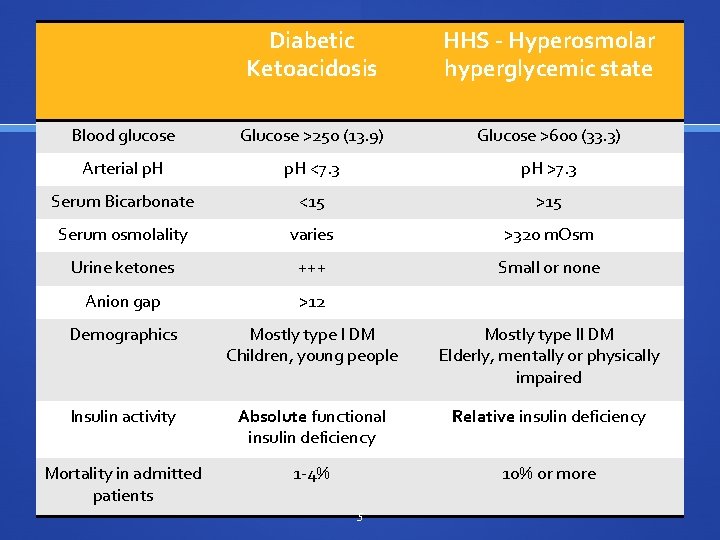
Diabetic Ketoacidosis HHS - Hyperosmolar hyperglycemic state Blood glucose Glucose >250 (13. 9) Glucose >600 (33. 3) Arterial p. H <7. 3 p. H >7. 3 Serum Bicarbonate <15 >15 Serum osmolality varies >320 m. Osm Urine ketones +++ Small or none Anion gap >12 Demographics Mostly type I DM Children, young people Mostly type II DM Elderly, mentally or physically impaired Insulin activity Absolute functional insulin deficiency Relative insulin deficiency Mortality in admitted patients 1 -4% 10% or more Definitions 5
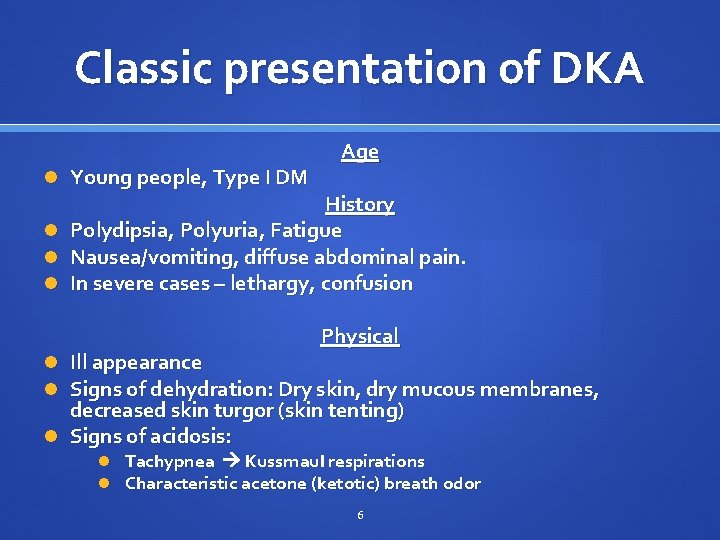
Classic presentation of DKA Young people, Type I DM Age History Polydipsia, Polyuria, Fatigue Nausea/vomiting, diffuse abdominal pain. In severe cases – lethargy, confusion Physical Ill appearance Signs of dehydration: Dry skin, dry mucous membranes, decreased skin turgor (skin tenting) Signs of acidosis: Tachypnea Kussmaul respirations Characteristic acetone (ketotic) breath odor 6
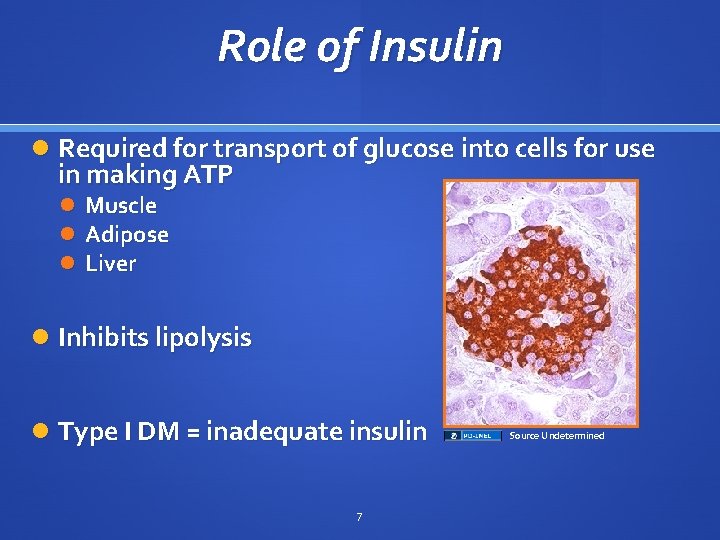
Role of Insulin Required for transport of glucose into cells for use in making ATP Muscle Adipose Liver Inhibits lipolysis Type I DM = inadequate insulin 7 Source Undetermined
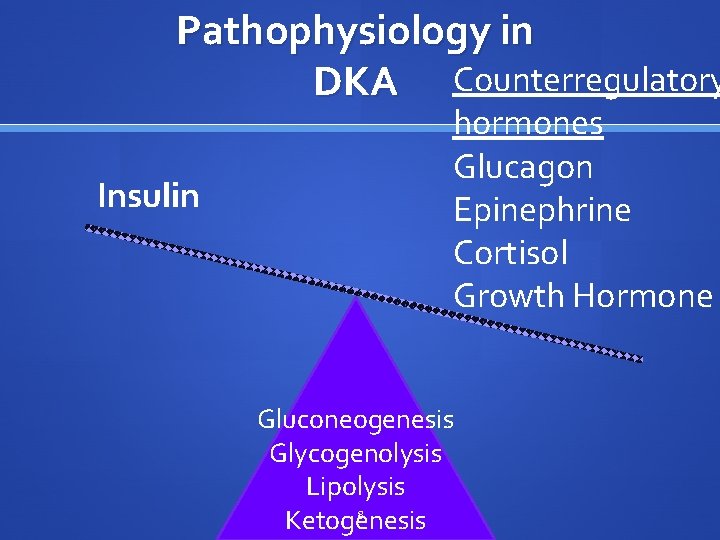
Pathophysiology in DKA Counterregulatory Insulin hormones Glucagon Epinephrine Cortisol Growth Hormone Gluconeogenesis Glycogenolysis Lipolysis 8 Ketogenesis
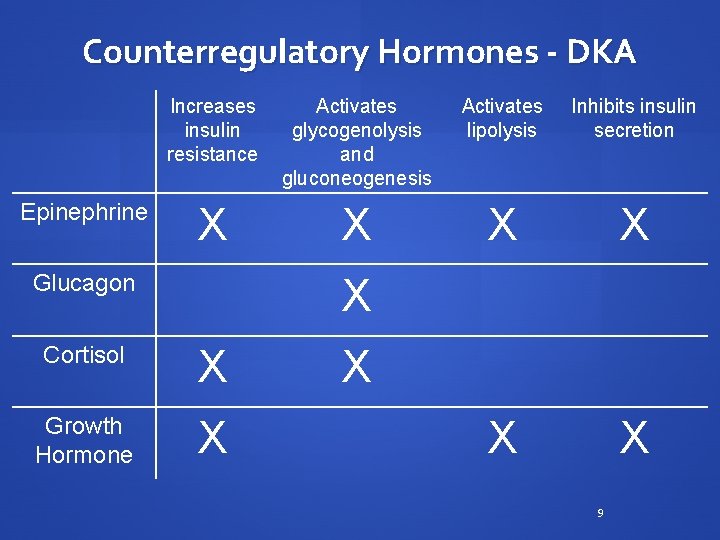
Counterregulatory Hormones - DKA Epinephrine Increases insulin resistance Activates glycogenolysis and gluconeogenesis Activates lipolysis Inhibits insulin secretion X X X Glucagon X Cortisol X Growth Hormone X X 9
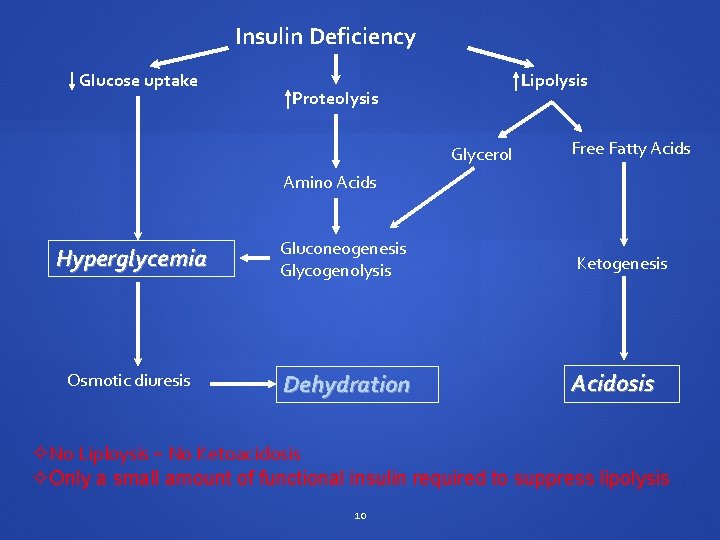
Insulin Deficiency Glucose uptake Lipolysis Proteolysis Glycerol Free Fatty Acids Amino Acids Hyperglycemia Gluconeogenesis Glycogenolysis Ketogenesis Osmotic diuresis Dehydration Acidosis ²No Liploysis = No Ketoacidosis ²Only a small amount of functional insulin required to suppress lipolysis 10
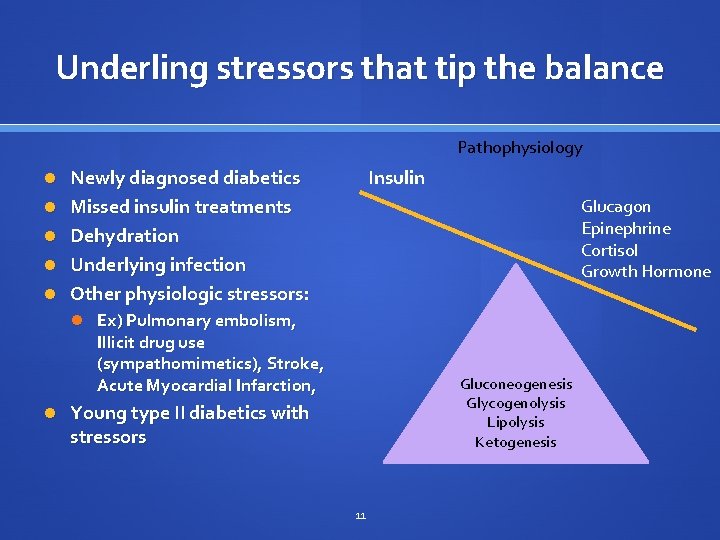
Underling stressors that tip the balance Pathophysiology Newly diagnosed diabetics Insulin Missed insulin treatments Glucagon Epinephrine Cortisol Growth Hormone Dehydration Underlying infection Other physiologic stressors: Ex) Pulmonary embolism, Illicit drug use (sympathomimetics), Stroke, Acute Myocardial Infarction, Young type II diabetics with Gluconeogenesis Glycogenolysis Lipolysis Ketogenesis stressors 11
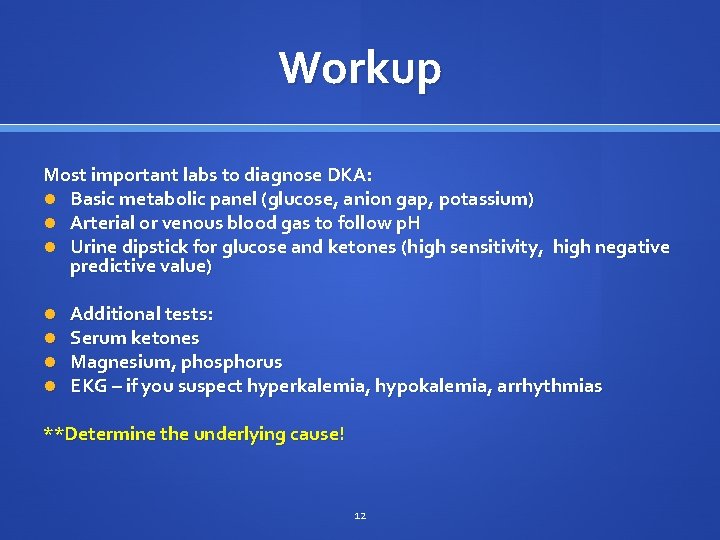
Workup Most important labs to diagnose DKA: Basic metabolic panel (glucose, anion gap, potassium) Arterial or venous blood gas to follow p. H Urine dipstick for glucose and ketones (high sensitivity, high negative predictive value) Additional tests: Serum ketones Magnesium, phosphorus EKG – if you suspect hyperkalemia, hypokalemia, arrhythmias **Determine the underlying cause! 12
Management Fluids Insulin Electrolyte repletion Find and treat any underlying cause! 13
Fluids Increases intravascular volume Reverses dehydration Restores perfusion to kidneys GFR urinate out excess glucose Restores perfusion to periphery uptake and use of glucose (when insulin present) Take home message: Fluids hydrate patient AND reverse hyperglycemia 14
Fluids Pediatrics Hypotension: treat with 20 cc/kg NS boluses If no hypotension: 10 -20 cc/kg NS bolus then 1. 5 – 2 x maintenance OR Assume 10% dehydration and calculate fluid deficit plus maintenance Replete deficit (plus maintenance) over 48 -72 hrs. 15
Insulin Allows glucose to enter and be used by cells Stops proteolysis and lipolysis Ø Stops Ketogenesis Stops Acidosis Allows potassium to enter cells Insulin goal: Treat the anion gap acidosis (not the hyperglycemia) Never stop the insulin before the anion gap is closed. 16
Insulin Dosing: 0. 05 units/kg bolus then. 05 units/kg/hr insulin drip. (Previously 0. 1 units/kg/hr) Goal: Decrease glucose by <100 (5. 5) per hour Avoids sudden fluid shifts that may lead to cerebral edema Reason for IV insulin Not affected by decreased peripheral circulation as with subcutaneous insulin Smooth decline of glucose Short half-life allows for more precise control of serum insulin concentration 17
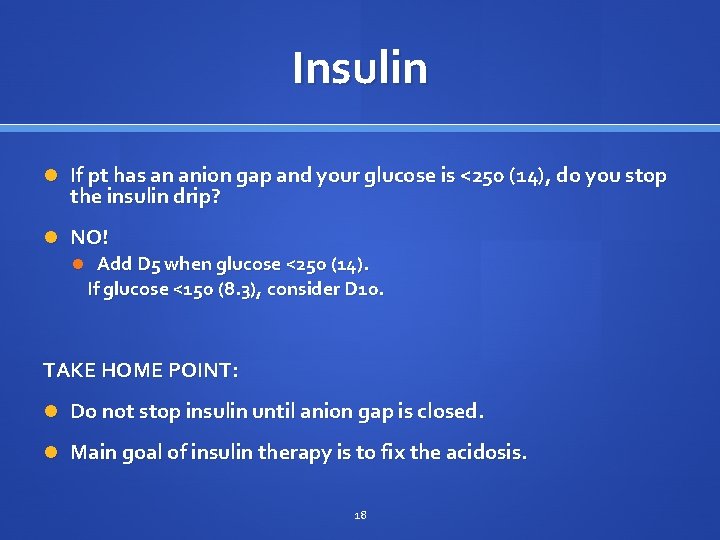
Insulin If pt has an anion gap and your glucose is <250 (14), do you stop the insulin drip? NO! Add D 5 when glucose <250 (14). If glucose <150 (8. 3), consider D 10. TAKE HOME POINT: Do not stop insulin until anion gap is closed. Main goal of insulin therapy is to fix the acidosis. 18
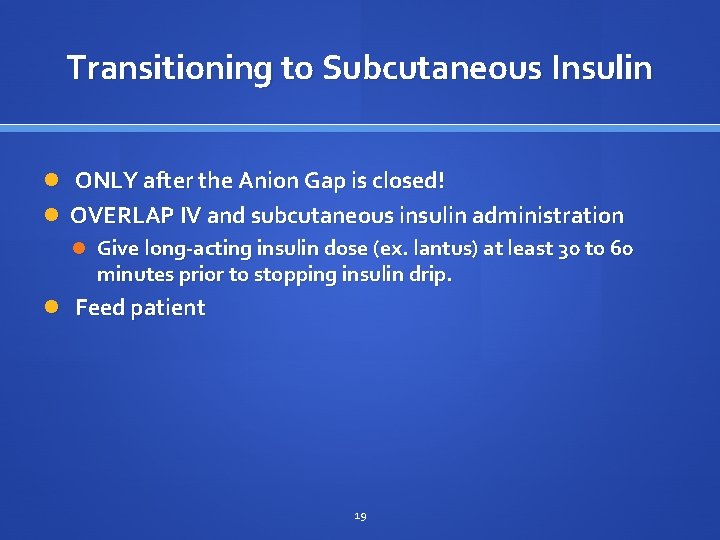
Transitioning to Subcutaneous Insulin ONLY after the Anion Gap is closed! OVERLAP IV and subcutaneous insulin administration Give long-acting insulin dose (ex. lantus) at least 30 to 60 minutes prior to stopping insulin drip. Feed patient 19
Managing electrolytes Potassium Sodium Phosphorus Glucose 20
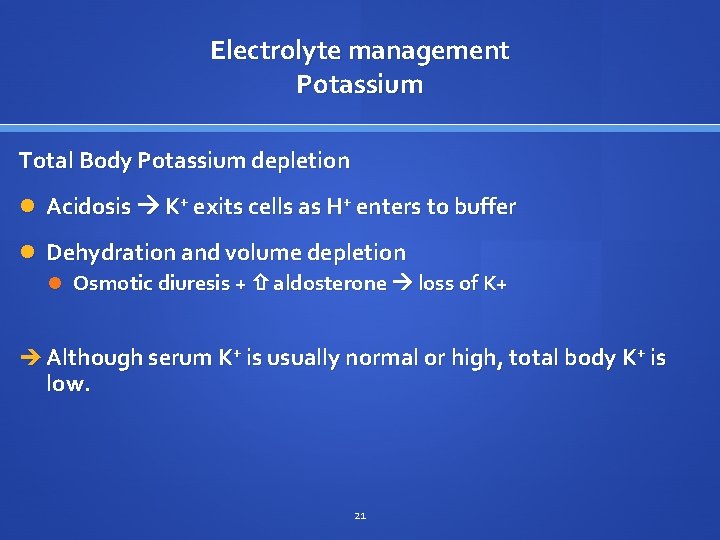
Electrolyte management Potassium Total Body Potassium depletion Acidosis K+ exits cells as H+ enters to buffer Dehydration and volume depletion Osmotic diuresis + aldosterone loss of K+ è Although serum K+ is usually normal or high, total body K+ is low. 21
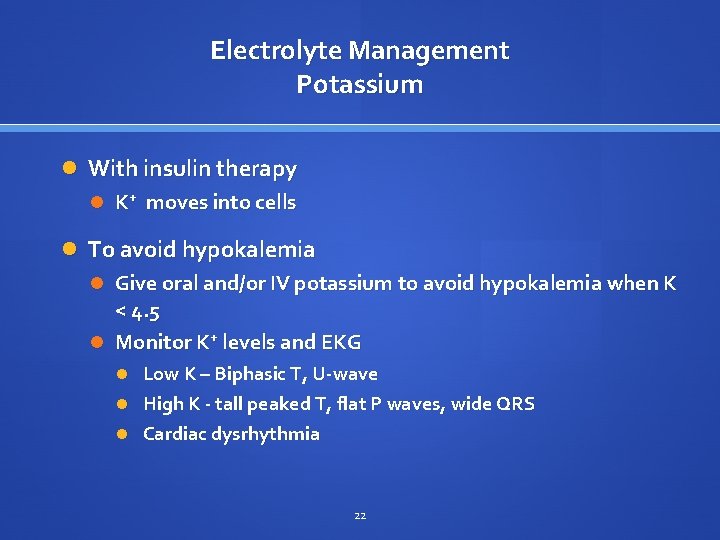
Electrolyte Management Potassium With insulin therapy K+ moves into cells To avoid hypokalemia Give oral and/or IV potassium to avoid hypokalemia when K < 4. 5 Monitor K+ levels and EKG Low K – Biphasic T, U-wave High K - tall peaked T, flat P waves, wide QRS Cardiac dysrhythmia 22
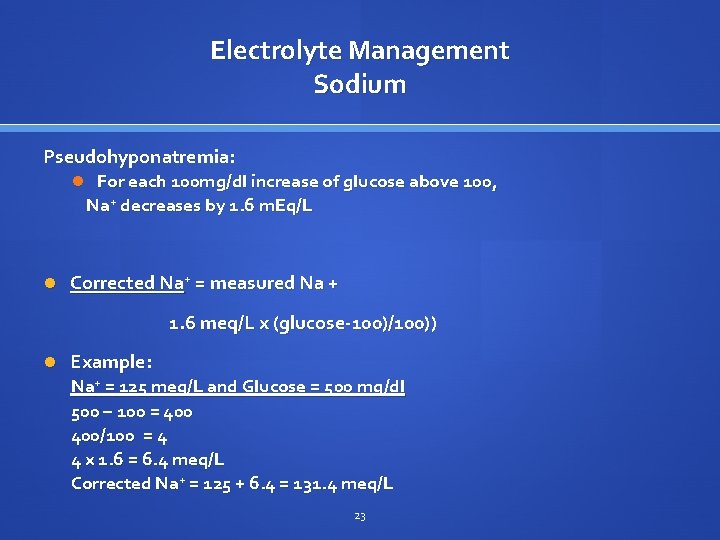
Electrolyte Management Sodium Pseudohyponatremia: For each 100 mg/dl increase of glucose above 100, Na+ decreases by 1. 6 m. Eq/L Corrected Na+ = measured Na + 1. 6 meq/L x (glucose-100)/100)) Example: Na+ = 125 meq/L and Glucose = 500 mg/dl 500 – 100 = 400/100 = 4 4 x 1. 6 = 6. 4 meq/L Corrected Na+ = 125 + 6. 4 = 131. 4 meq/L 23
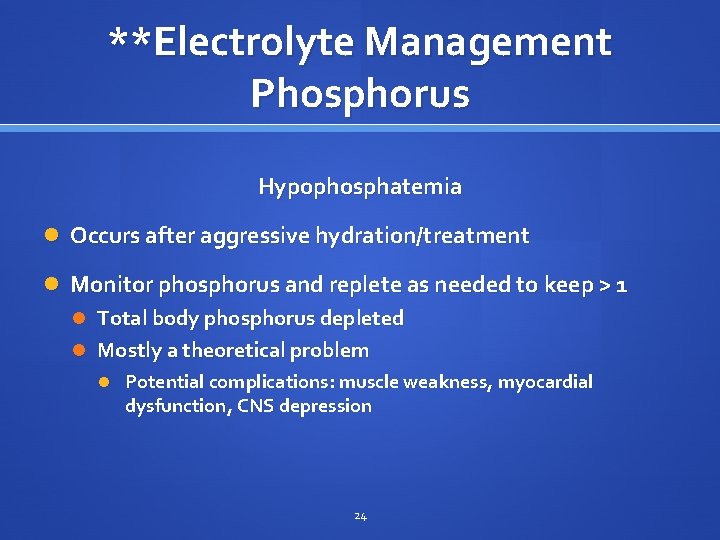
**Electrolyte Management Phosphorus Hypophosphatemia Occurs after aggressive hydration/treatment Monitor phosphorus and replete as needed to keep > 1 Total body phosphorus depleted Mostly a theoretical problem Potential complications: muscle weakness, myocardial dysfunction, CNS depression 24
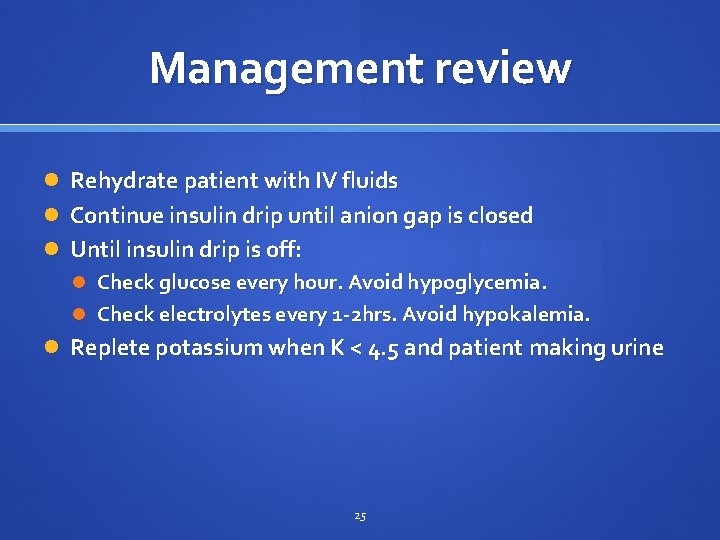
Management review Rehydrate patient with IV fluids Continue insulin drip until anion gap is closed Until insulin drip is off: Check glucose every hour. Avoid hypoglycemia. Check electrolytes every 1 -2 hrs. Avoid hypokalemia. Replete potassium when K < 4. 5 and patient making urine 25
ICU Monitoring Careful nursing monitoring of the following: I/Os (input and urine output. ) Urine dipstick with every void resolution of ketonuria may lag behind clinical improvement Monitor for any signs of cerebral edema: Change in mental status, severe headache Sudden drop in heart rate Neurologic deficits 26
DKA Complications Dehydration, shock, hypotension Hypokalemia/ hyperkalemia Hypoglycemia Aspiration pneumonia Sepsis Acute tubular necrosis Myocardial infarction Stroke Cerebral edema * Death rate in U. S when managed in hospital setting = 1 -4% 27
DKA Complications Cerebral edema Clinical manifestations: Altered mental status Headache Persistent vomiting Sudden and persistent drop in heart rate Seizure Unequal or fixed, dilated pupils Mostly children High mortality rate 1% of DKA pts, > 25% mortality rate High morbidity rate High rate of neurologic complications 28
DKA Complications Cerebral edema Risk Factors Age < 5 years More often seen in your sickest patients (high BUN, low bicarb <15) Fall in serum Na or lack of increase during treatment Rapid correction of hyperglycemia Goal: decrease glucose <100 mg/dl (5. 5) per hour Sodium bicarbonate administration Excessive fluids 29
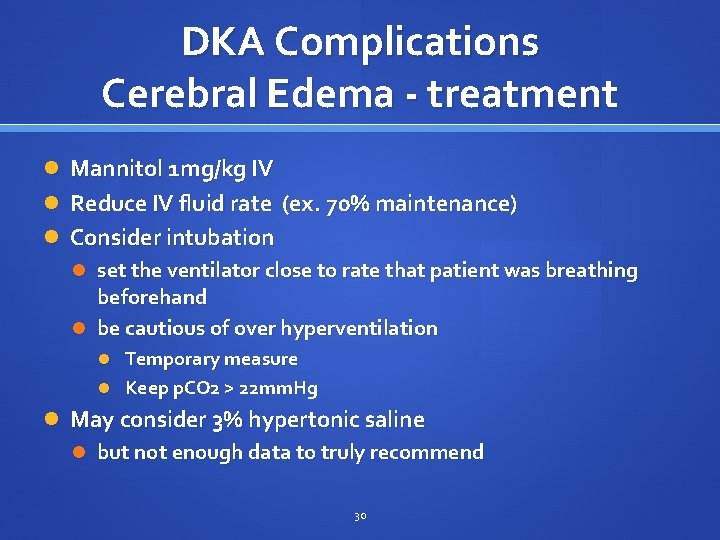
DKA Complications Cerebral Edema - treatment Mannitol 1 mg/kg IV Reduce IV fluid rate (ex. 70% maintenance) Consider intubation set the ventilator close to rate that patient was breathing beforehand be cautious of over hyperventilation Temporary measure Keep p. CO 2 > 22 mm. Hg May consider 3% hypertonic saline but not enough data to truly recommend 30
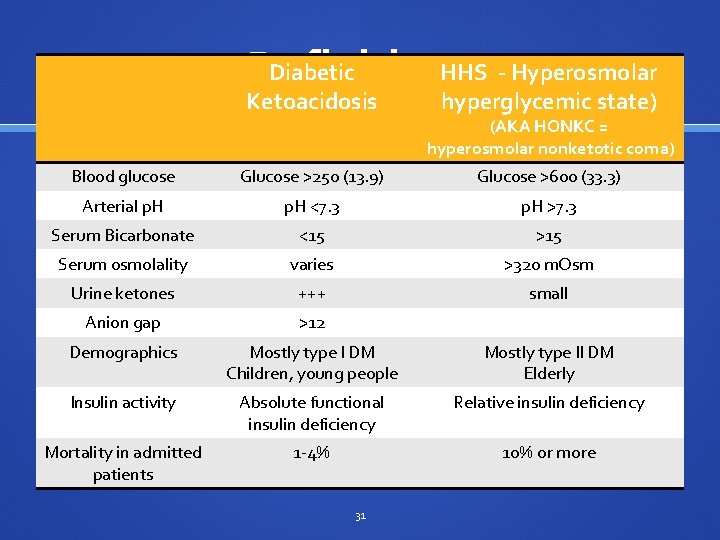
Diabetic HHS - Hyperosmolar Definitions Ketoacidosis hyperglycemic state) (AKA HONKC = hyperosmolar nonketotic coma) Blood glucose Glucose >250 (13. 9) Glucose >600 (33. 3) Arterial p. H <7. 3 p. H >7. 3 Serum Bicarbonate <15 >15 Serum osmolality varies >320 m. Osm Urine ketones +++ small Anion gap >12 Demographics Mostly type I DM Children, young people Mostly type II DM Elderly Insulin activity Absolute functional insulin deficiency Relative insulin deficiency Mortality in admitted patients 1 -4% 10% or more 31
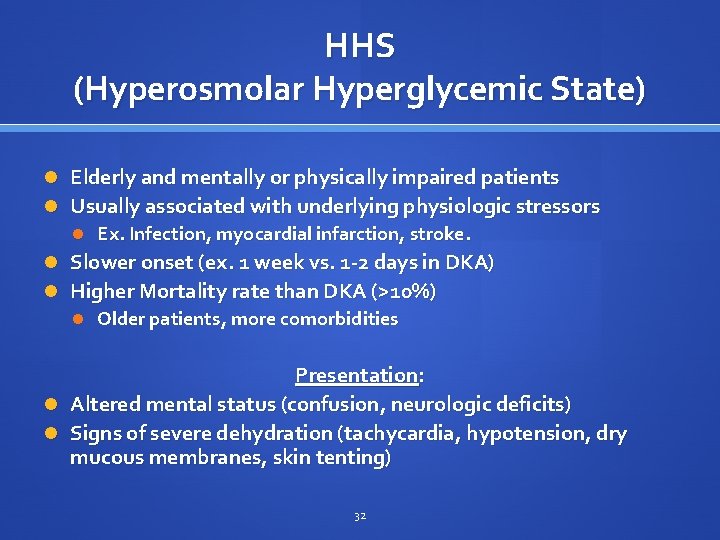
HHS (Hyperosmolar Hyperglycemic State) Elderly and mentally or physically impaired patients Usually associated with underlying physiologic stressors Ex. Infection, myocardial infarction, stroke. Slower onset (ex. 1 week vs. 1 -2 days in DKA) Higher Mortality rate than DKA (>10%) Older patients, more comorbidities Presentation: Altered mental status (confusion, neurologic deficits) Signs of severe dehydration (tachycardia, hypotension, dry mucous membranes, skin tenting) 32
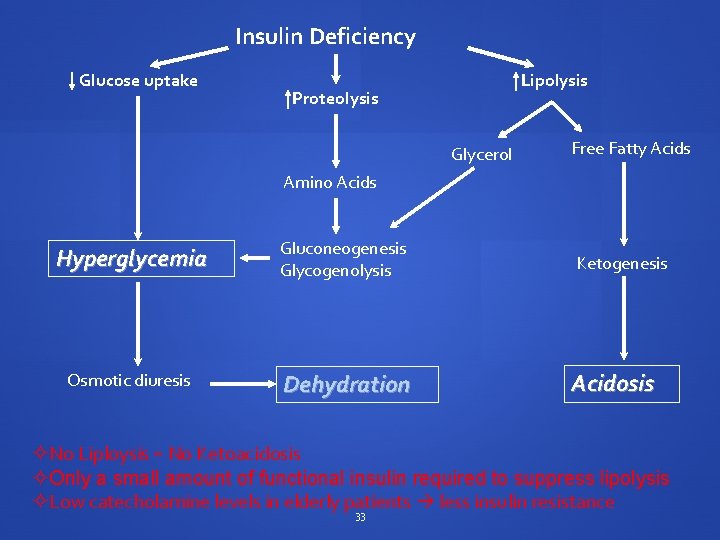
Insulin Deficiency Glucose uptake Lipolysis Proteolysis Glycerol Free Fatty Acids Amino Acids Hyperglycemia Gluconeogenesis Glycogenolysis Ketogenesis Osmotic diuresis Dehydration Acidosis ²No Liploysis = No Ketoacidosis ²Only a small amount of functional insulin required to suppress lipolysis ²Low catecholamine levels in elderly patients less insulin resistance 33
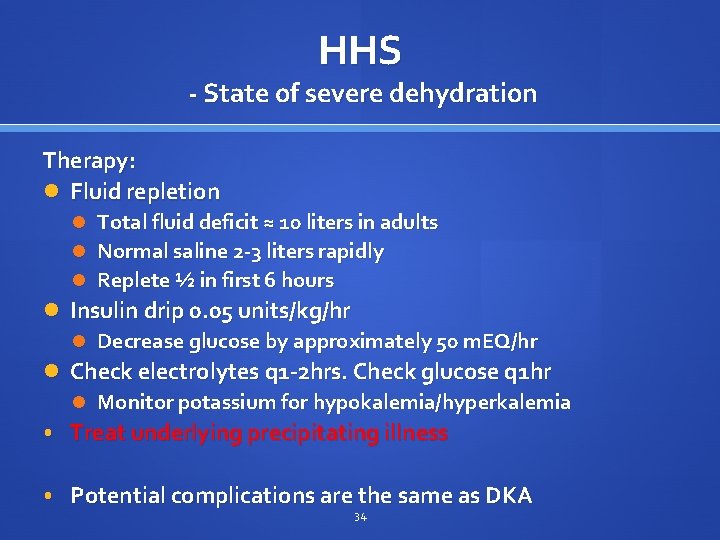
HHS - State of severe dehydration Therapy: Fluid repletion Total fluid deficit ≈ 10 liters in adults Normal saline 2 -3 liters rapidly Replete ½ in first 6 hours Insulin drip 0. 05 units/kg/hr Decrease glucose by approximately 50 m. EQ/hr Check electrolytes q 1 -2 hrs. Check glucose q 1 hr Monitor potassium for hypokalemia/hyperkalemia • Treat underlying precipitating illness • Potential complications are the same as DKA 34
Summary Pathophysiologic difference between DKA and HHS DKA is a state of absolute functional insulin deficiency Only in DKA : Lipolysis ketogenesis acidosis You are never specifically treating the glucose In DKA – you are treating the underlying acidosis/ketogenesis (reflected by the anion gap) In HHS – you are treating the underlying shock caused by poor tissue perfusion/severe dehydration 35
Summary (continued) Being too aggressive in management may cause more harm than good If you don’t pay attention to details, you will cause an iatrogenic death Monitor electrolytes (especially potassium) Beware cerebral edema. Therapy for DKA and HHS is similar. 36
Thank you diabetees. spreadshirt. com 37
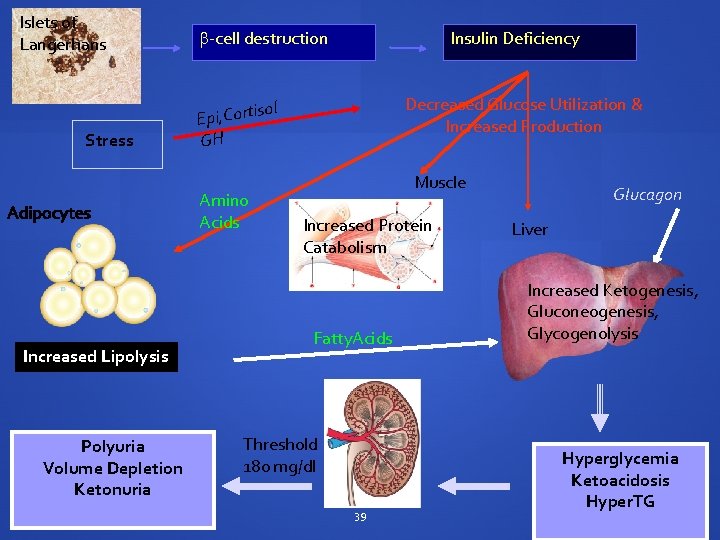
Islets of Langerhans b-cell destruction Insulin Deficiency Decreased Glucose Utilization & Increased Production ol Stress Adipocytes Increased Lipolysis Polyuria Volume Depletion Ketonuria is Epi, Cort GH Amino Acids Muscle Increased Protein Catabolism Fatty. Acids Threshold 180 mg/dl 39 Glucagon Liver Increased Ketogenesis, Gluconeogenesis, Glycogenolysis Hyperglycemia Ketoacidosis Hyper. TG
Additional Information Attributions for Slide 39: Islets of Langerhans: Afferent (Wikimedia. Commons) Adipocytes: DBCLS (Wikimedia. Commons) Muscle: Jeremy Kemp (Wikimedia. Commons) Liver: Mikael Haggstrom (Wikimedia. Commons) Kidney: Holly Fischer (Wikimedia. Commons) 40
- Slides: 39