
Project Ghana Emergency Medicine Collaborative Document Title Dental
Project: Ghana Emergency Medicine Collaborative Document Title: Dental Emergencies and Common Dental Blocks Author(s): Joe Lex, MD (Temple University School of Medicine) License: Unless otherwise noted, this material is made available under the terms of the Creative Commons Attribution Share Alike-3. 0 License: http: //creativecommons. org/licenses/by-sa/3. 0/ We have reviewed this material in accordance with U. S. Copyright Law and have tried to maximize your ability to use, share, and adapt it. These lectures have been modified in the process of making a publicly shareable version. The citation key on the following slide provides information about how you may share and adapt this material. Copyright holders of content included in this material should contact open. michigan@umich. edu with any questions, corrections, or clarification regarding the use of content. For more information about how to cite these materials visit http: //open. umich. edu/privacy-and-terms-use. Any medical information in this material is intended to inform and educate and is not a tool for self-diagnosis or a replacement for medical evaluation, advice, diagnosis or treatment by a healthcare professional. Please speak to your physician if you have questions about your medical condition. Viewer discretion is advised: Some medical content is graphic and may not be suitable for all viewers. 1
Attribution Key for more information see: http: //open. umich. edu/wiki/Attribution. Policy Use + Share + Adapt { Content the copyright holder, author, or law permits you to use, share and adapt. } Public Domain – Government: Works that are produced by the U. S. Government. (17 USC § 105) Public Domain – Expired: Works that are no longer protected due to an expired copyright term. Public Domain – Self Dedicated: Works that a copyright holder has dedicated to the public domain. Creative Commons – Zero Waiver Creative Commons – Attribution License Creative Commons – Attribution Share Alike License Creative Commons – Attribution Noncommercial Share Alike License GNU – Free Documentation License Make Your Own Assessment { Content Open. Michigan believes can be used, shared, and adapted because it is ineligible for copyright. } Public Domain – Ineligible: Works that are ineligible for copyright protection in the U. S. (17 USC § 102(b)) *laws in your jurisdiction may differ { Content Open. Michigan has used under a Fair Use determination. } Fair Use: Use of works that is determined to be Fair consistent with the U. S. Copyright Act. (17 USC § 107) *laws in your jurisdiction may differ Our determination DOES NOT mean that all uses of this 3 rd-party content are Fair Uses and we DO NOT guarantee that your use of the content is Fair. 2 To use this content you should do your own independent analysis to determine whether or not your use will be Fair.
Dental Emergencies and Common Dental Blocks Joe Lex, MD, FACEP, MAAEM Associate Professor, Department of Emergency Medicine Temple University School of Medicine Philadelphia, PA 3
Disclosure No conflicts of interest 4
Objectives 1. Understand that teething does not cause fever 2. Define, recognize, and treat pericoronitis, periapical abscess, and alveolar osteitis 3. Describe treatment for ANUG 4. State three ways to treat bleeding gums 5
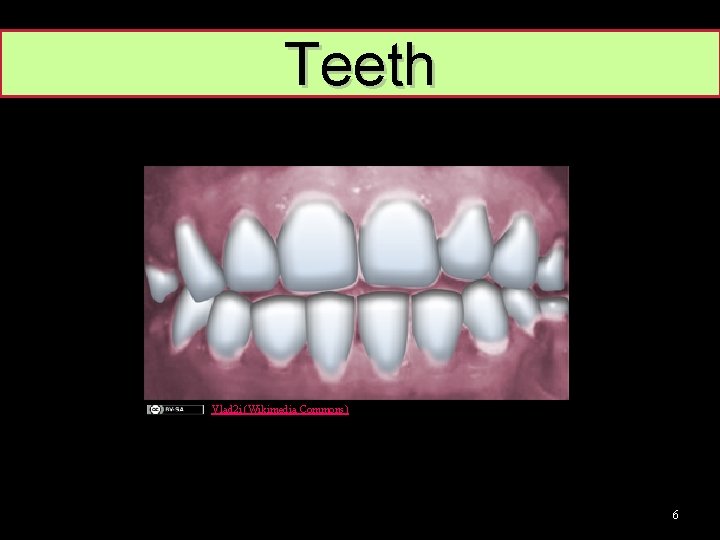
Teeth Vlad 2 i (Wikimedia Commons) 6
How Many Teeth? 32 permanent • 8 incisors • 4 canines (cuspids) • 8 premolars (bicuspids) • 12 molars (tricuspids) 20 primary or deciduous • 8 incisors • 4 canines • 8 molars 7
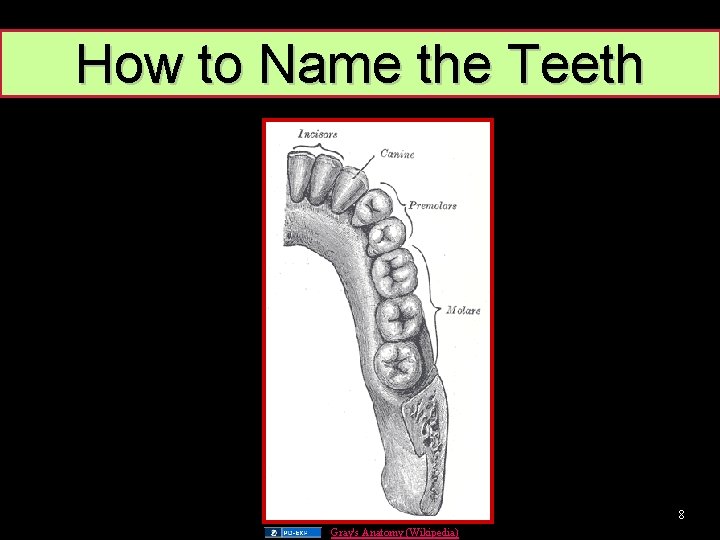
How to Name the Teeth 8 Gray's Anatomy (Wikipedia)
How to Number the Teeth 9
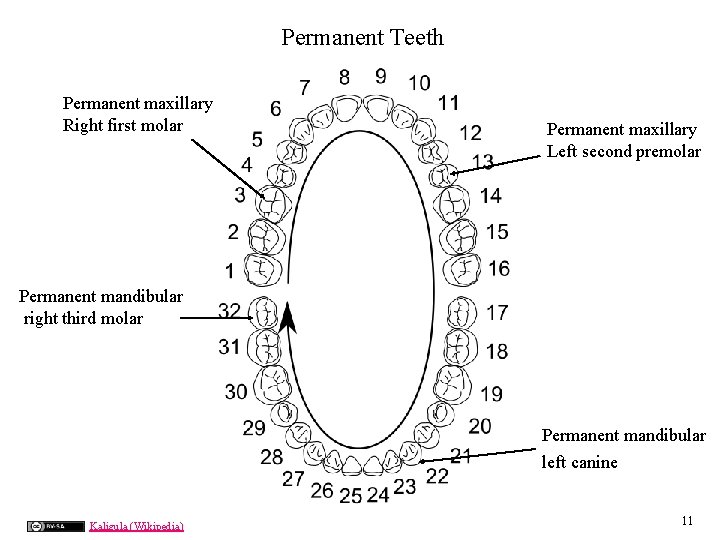
Permanent Teeth Permanent maxillary Right first molar Permanent maxillary Left second premolar Permanent mandibular right third molar Permanent mandibular left canine Kaligula (Wikipedia) 11
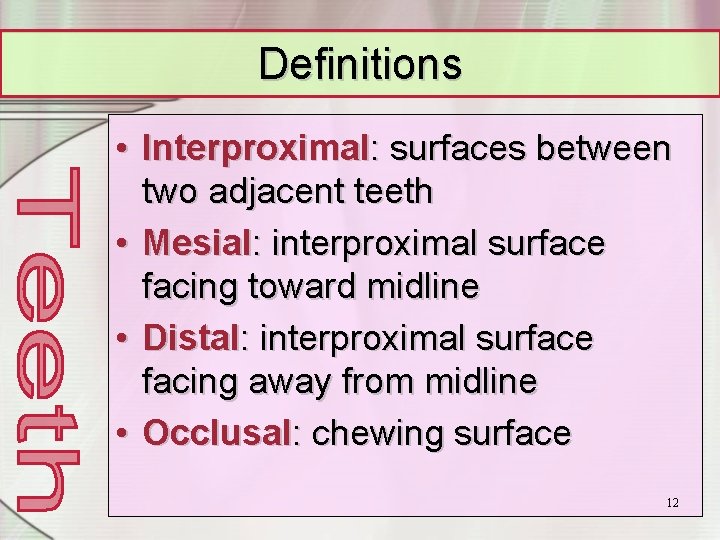
Definitions • Interproximal: surfaces between two adjacent teeth • Mesial: interproximal surface facing toward midline • Distal: interproximal surface facing away from midline • Occlusal: chewing surface 12
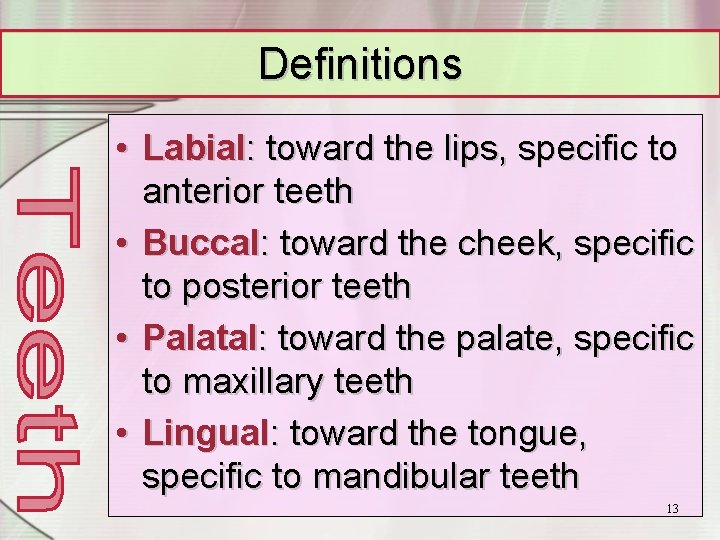
Definitions • Labial: toward the lips, specific to anterior teeth • Buccal: toward the cheek, specific to posterior teeth • Palatal: toward the palate, specific to maxillary teeth • Lingual: toward the tongue, specific to mandibular teeth 13
Definitions • Apical: toward the tip of the root of the tooth • Radicular: associated with the root, especially the apical region • Coronal: toward the crown of the tooth • Incisal: toward the biting edge of incisors 14
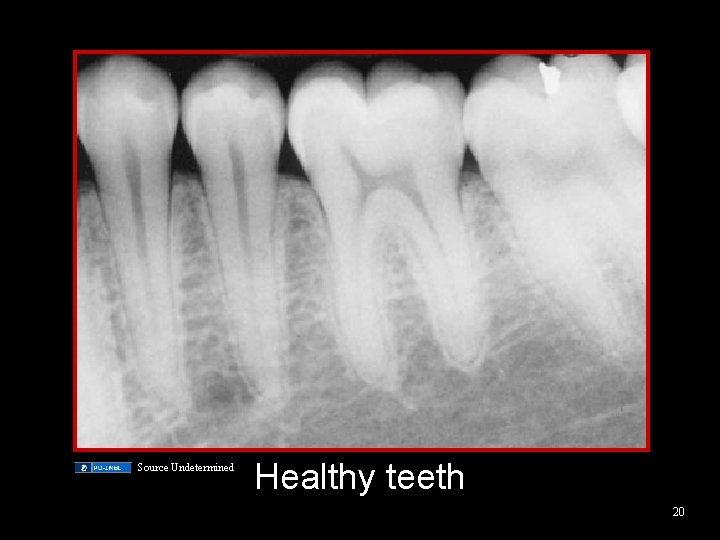
Basic Anatomy • Dentin surrounds pulp, which is neurovascular supply • Crown: enamel on dentin, visible portion of tooth • Root: cementum on dentin, extends into the alveolar bone 15
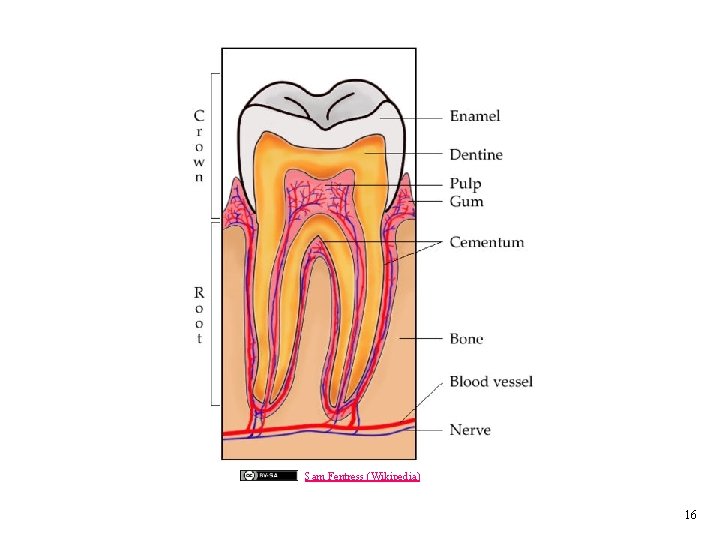
Sam Fentress (Wikipedia) 16
Basic Anatomy • Periodontium = attachment apparatus • Periodontal ligament = collagen fibers that extend from alveolar bone to root of tooth • Gingivitis and periodontal disease destroy peridontium tooth mobility and loss 17
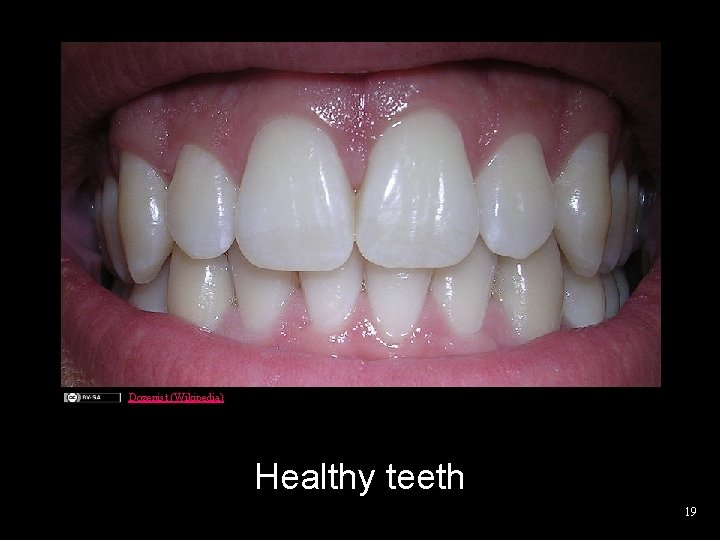
Basic Anatomy • Gingiva = keratinized stratified squamous epithelium – Free gingiva: 2 - to 3 - mm-deep gingival sulcus in disease-free state – Attached gingiva: adheres to alveolar bone and extends to oral vestibule, floor of mouth • Nonkeratinized alveolar mucosa covers cheeks, lips, floor of mouth 18
Dozenist (Wikipedia) Healthy teeth 19
Source Undetermined Healthy teeth 20
Teething ratterrell (Flickr) Mathowie (Flickr) 21
Thomas Phayre – 1530 The Boke of Children, London About ye seveth moneth, sometime more, sometime lesse, after ye byrth, it is natural for a child to breed teeth, in which time many one is sore vexed with sondry diseases and pains, as swelling of ye gummes and jaws, unquiet crying fevers, cramps, palsies, fluxes, reumes and other infirmities, specially when it is long or ye teeth come forth, for the sooner they appear the better and the more ease it is to the childe. 22
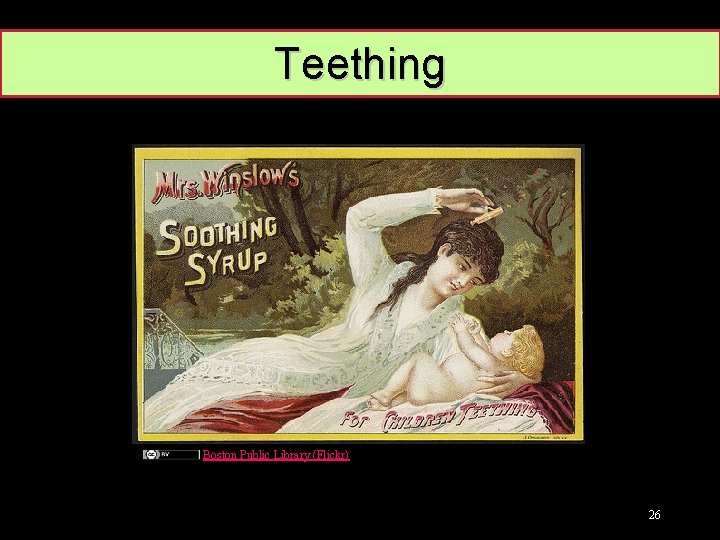
Death by Teething!! • Common “Cause of Death” in Middle Ages • Usually weaned at same time • Frequently lance erupting tooth • Malnutrition from watered-down milk • Typhus from infected milk 23
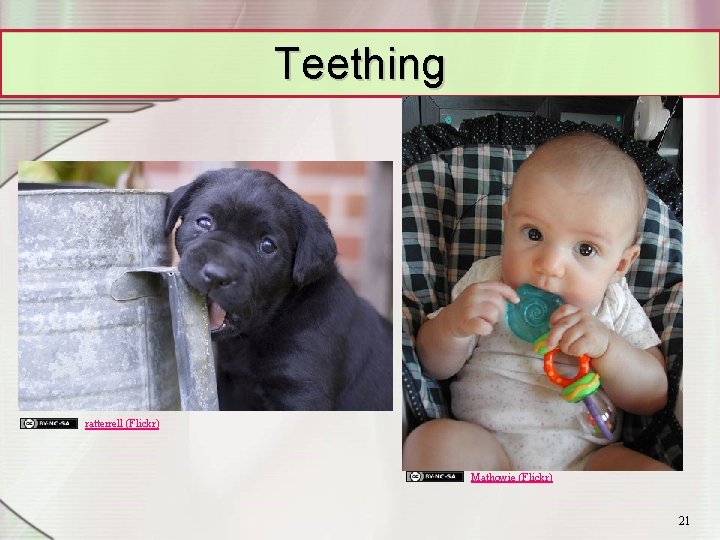
Teething • No data support association of teething, fever, and diarrhea • Possible mild dehydration from excessive salivary production or decreased intake • Must seek other source for fever, diarrhea 24
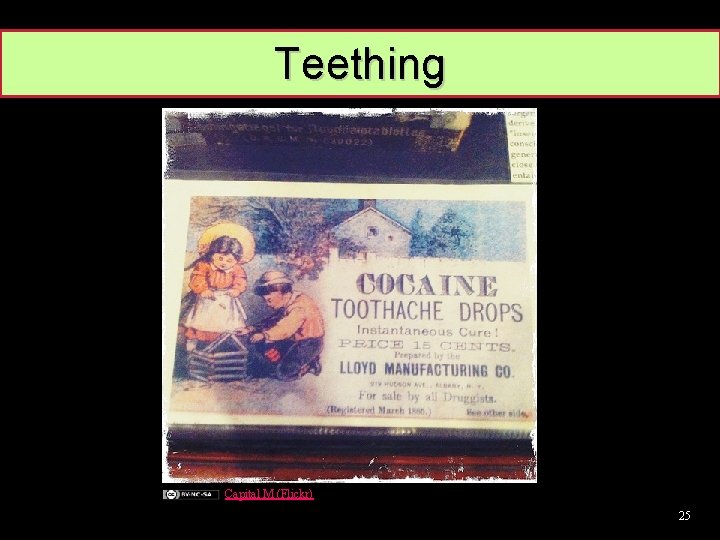
Teething Capital M (Flickr) 25
Teething Boston Public Library (Flickr) 26
Toothache 27
Impacted Wisdom Teeth Source Undetermined 28
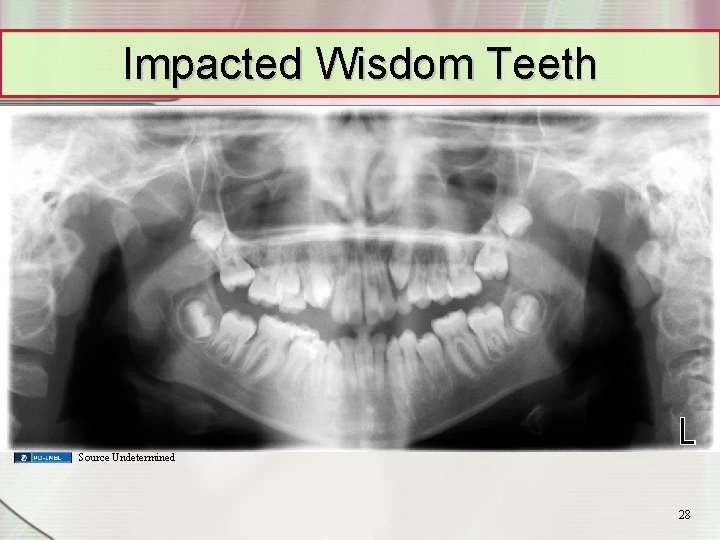
Wisdom Teeth • • Vestigial third molars Used to help grind down plants Diets changed smaller jaw Agenesis ranges from practically zero in Tasmanian Aborigines to ~100% in indigenous Mexicans • Related to PAX 9 gene 29
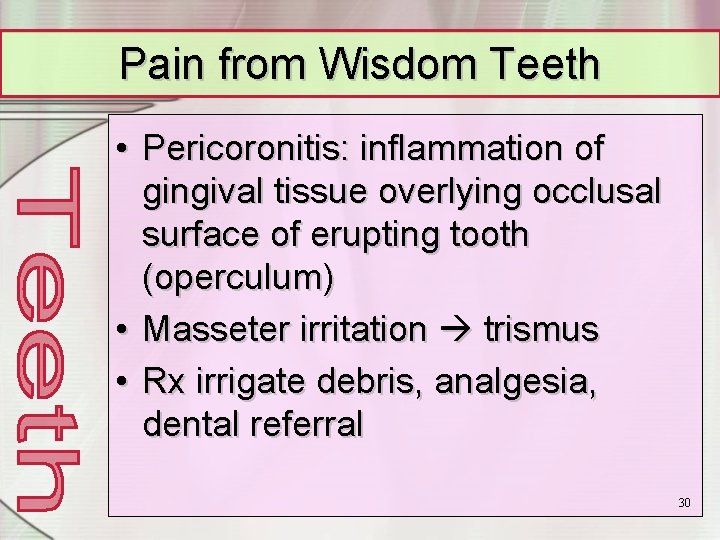
Pain from Wisdom Teeth • Pericoronitis: inflammation of gingival tissue overlying occlusal surface of erupting tooth (operculum) • Masseter irritation trismus • Rx irrigate debris, analgesia, dental referral 30
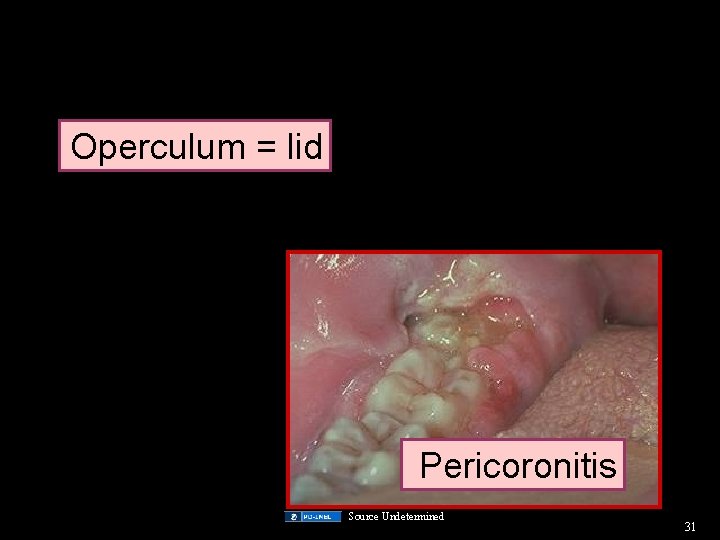
Operculum = lid Pericoronitis Source Undetermined 31
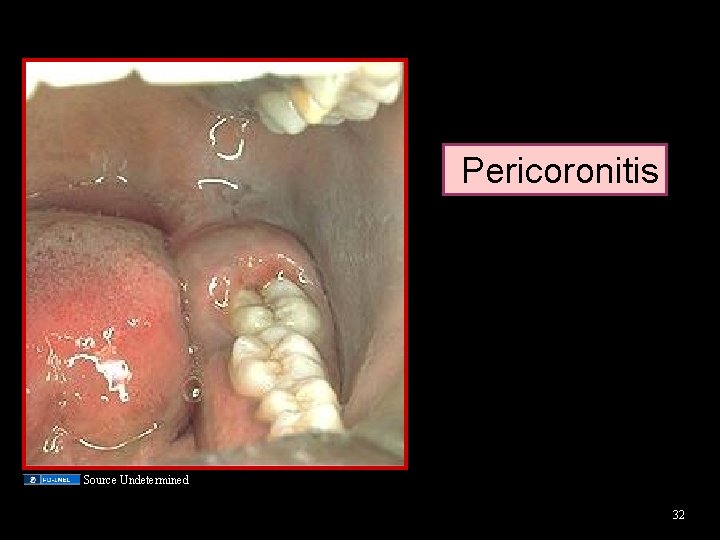
Pericoronitis Source Undetermined 32
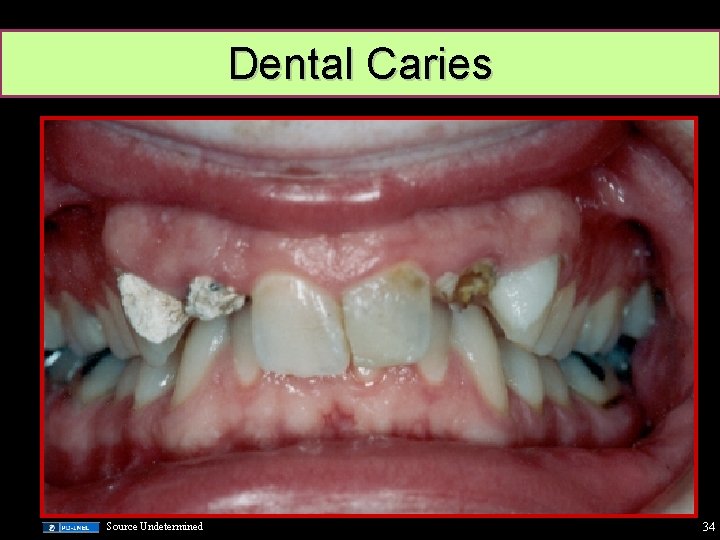
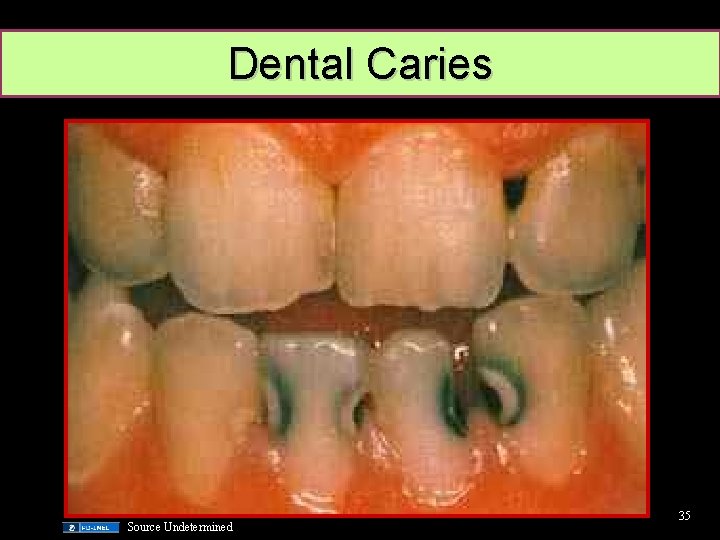
Dental Caries • Loss of tooth enamel integrity due to exposure to acidic metabolic byproducts of plaque bacteria • Early: sensitive to cold or sweet • Later: direct communication with dental pulp “pulpitis” • Irreversible pulpitis: protracted pain 33
Dental Caries Source Undetermined 34
Dental Caries Source Undetermined 35
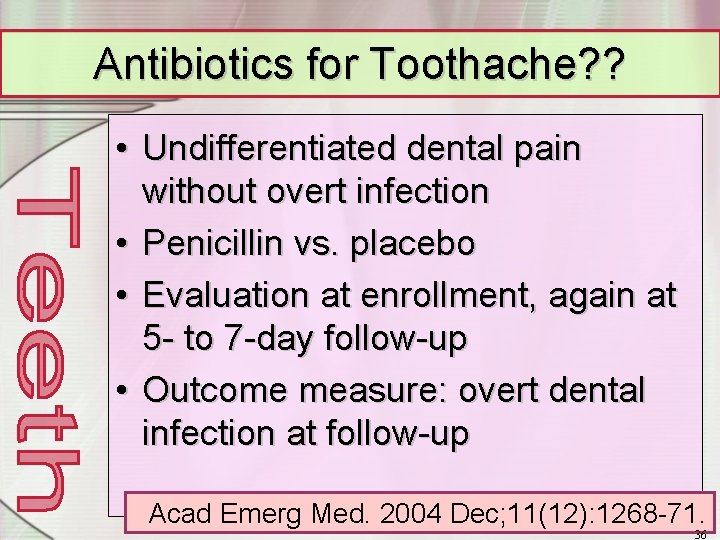
Antibiotics for Toothache? ? • Undifferentiated dental pain without overt infection • Penicillin vs. placebo • Evaluation at enrollment, again at 5 - to 7 -day follow-up • Outcome measure: overt dental infection at follow-up Acad Emerg Med. 2004 Dec; 11(12): 1268 -71. 36
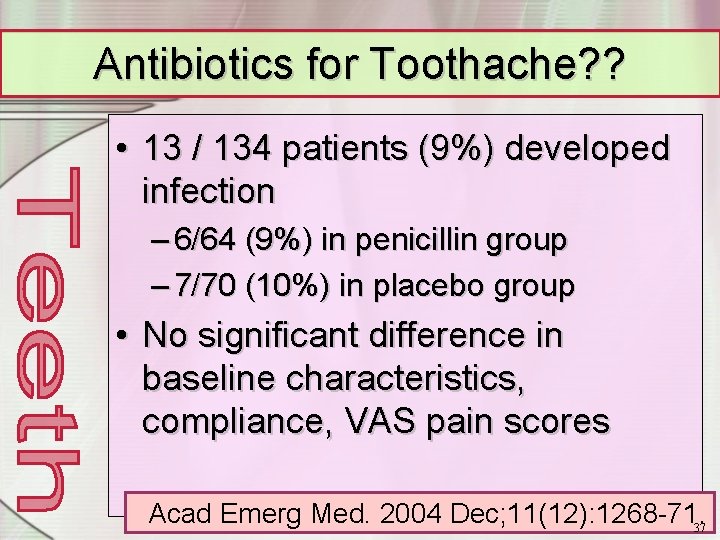
Antibiotics for Toothache? ? • 13 / 134 patients (9%) developed infection – 6/64 (9%) in penicillin group – 7/70 (10%) in placebo group • No significant difference in baseline characteristics, compliance, VAS pain scores Acad Emerg Med. 2004 Dec; 11(12): 1268 -71. 37
Antibiotics for Toothache? ? • CONCLUSIONS: “These data support the hypothesis that penicillin is neither necessary nor beneficial in the treatment of undifferentiated dental pain in the absence of overt infection. ” Acad Emerg Med. 2004 Dec; 11(12): 1268 -71. 38
Periapical Abscess • Most common source of severe odontogenic pain: periapical • Most common lesion: periapical granuloma = periradicular periodontitis, results from pulpitis • X-ray widened periodontal ligament space (radiolucent stripe) 39
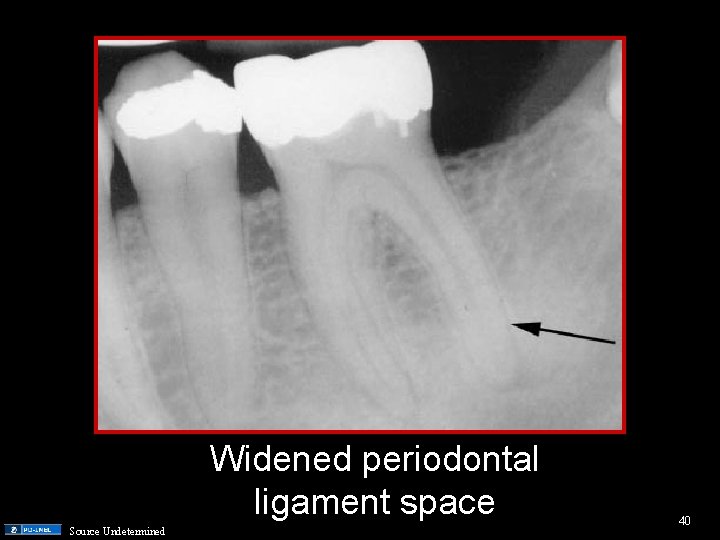
Widened periodontal ligament space Source Undetermined 40
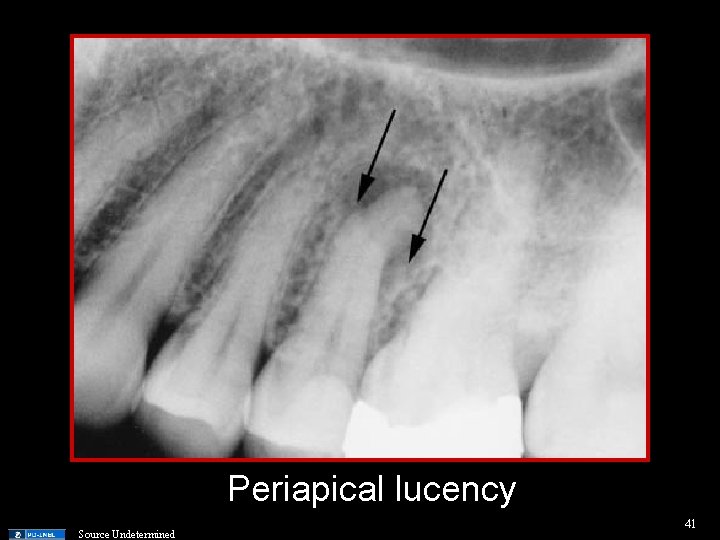
Periapical lucency Source Undetermined 41
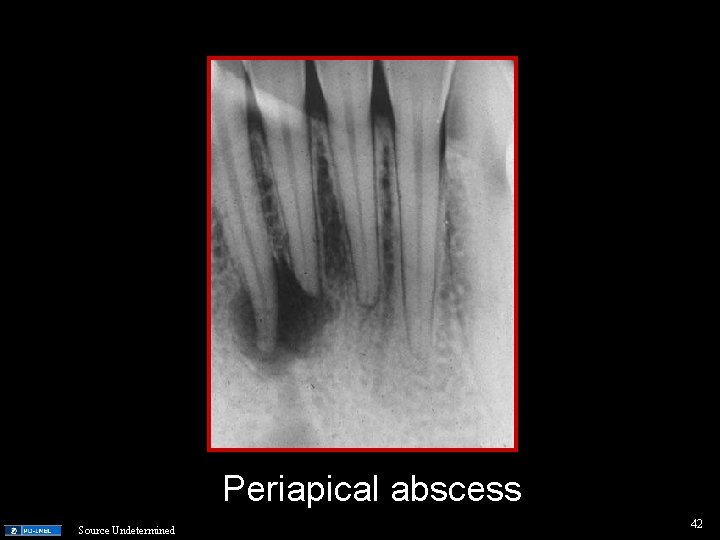
Periapical abscess Source Undetermined 42
Periapical Abscess • • Exquisite pain with percussion Suppurative periodontitis = parulis X-rays rarely indicated Rx antibiotic (penicillin still best), analgesia, referral • Definitive treatment: extraction or root canal 43
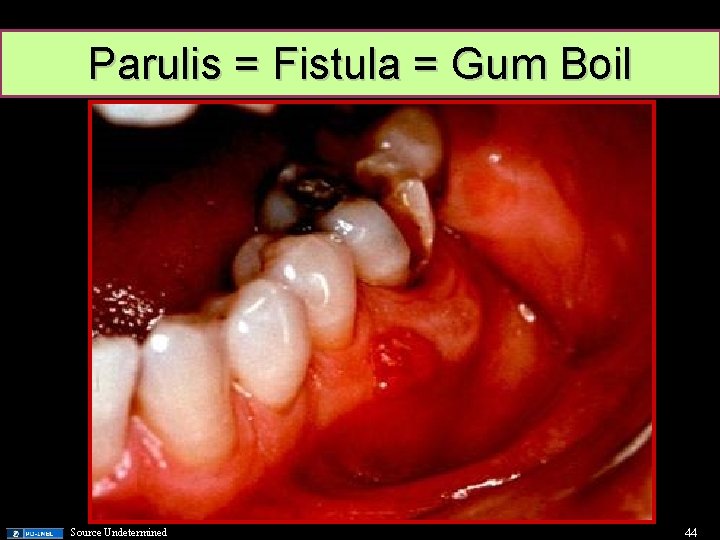
Parulis = Fistula = Gum Boil Source Undetermined 44
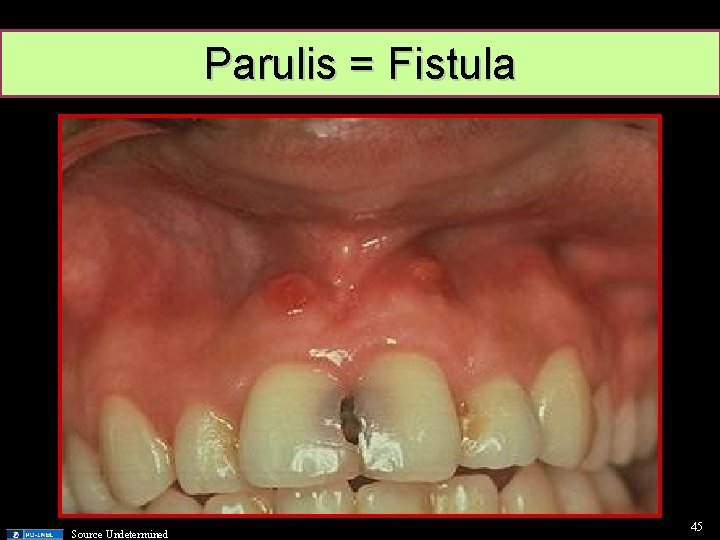
Parulis = Fistula Source Undetermined 45
Postextraction Pain • Periosteitis: 24 to 48 hours, common, easily treated • Alveolar osteitis = dry socket: second or third post-op day exquisite oral pain due to bone exposed to oral environment 46
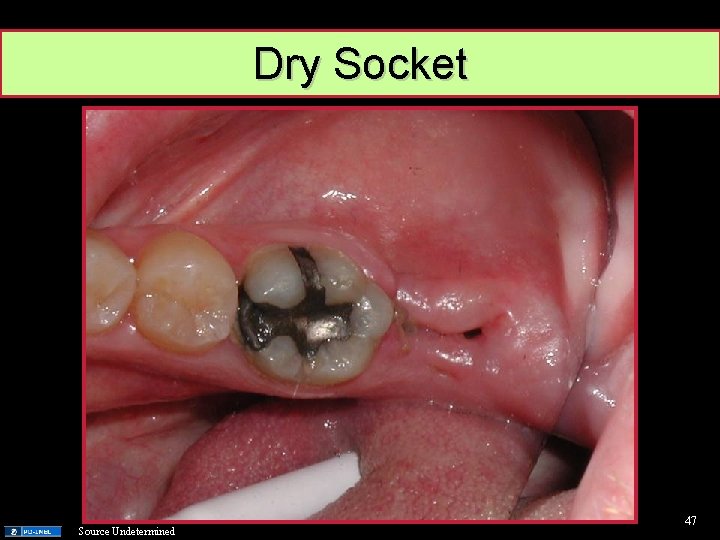
Dry Socket Source Undetermined 47
Dry Socket • Up to 35% after impacted 3 rd molar removal • X-ray for retained root tip • Irrigate socket with sterile saline • Pack socket with gauze soaked in oil of cloves or eugenol • Relief is immediate • Antibiotic if severe 48
www. nysora. com/techniques/oral_maxilla/ 49
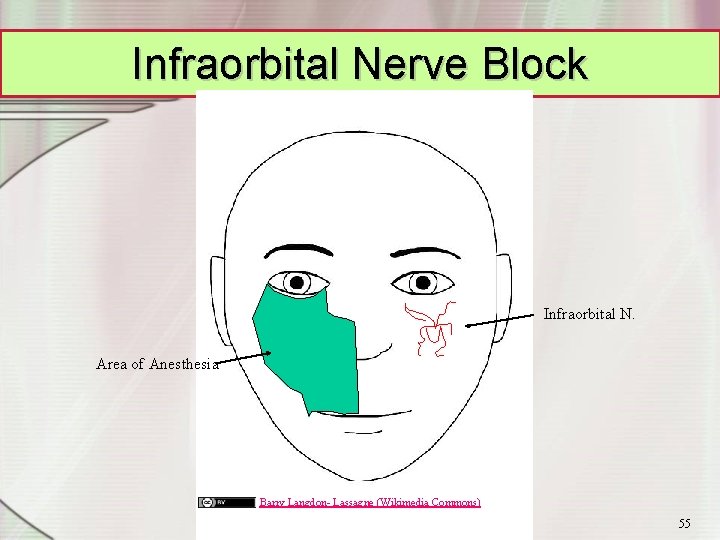
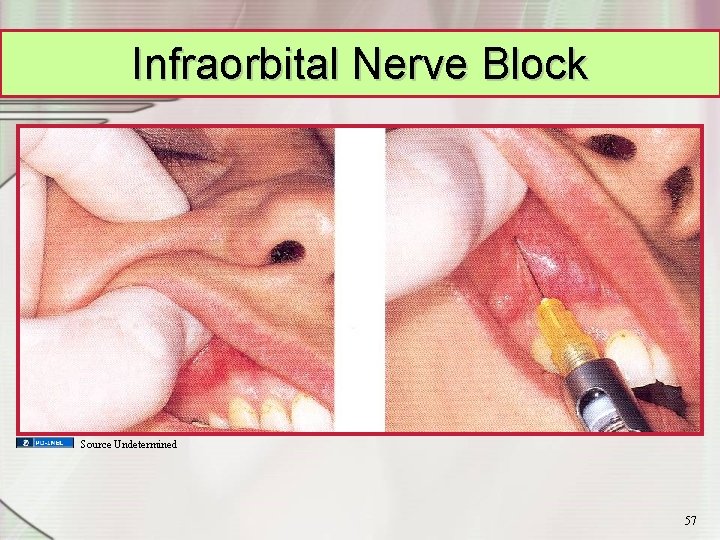
Upper Incisors & Canines • Innervated by superior alveolar nn, branches of infraorbital n. • Anastamose over midline • Nasopalatine innervates palatal gingiva, mucosa, periosteum • Maxillary bone has porous lamina 50
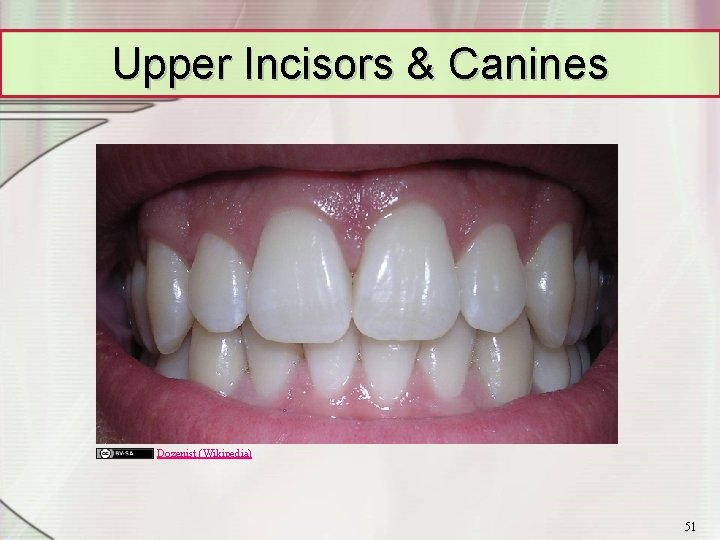
Upper Incisors & Canines Dozenist (Wikipedia) 51
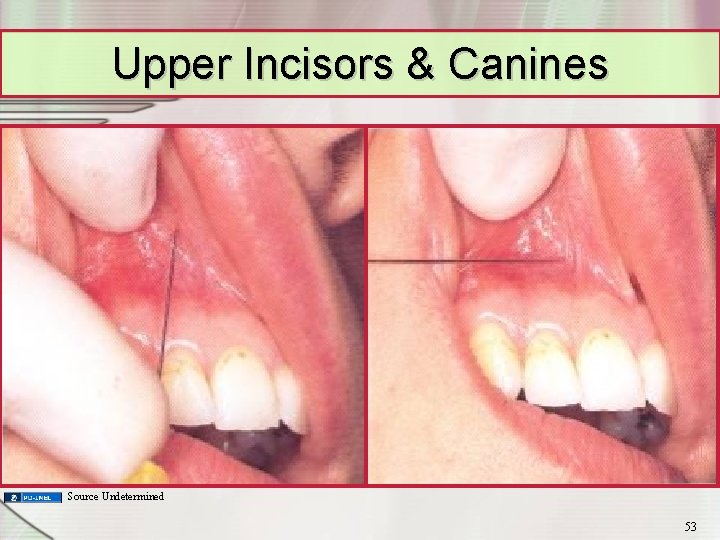
Upper Incisors & Canines • Anesthetized by buccal fold infiltration • Introduce near bone, inject adjacent to tooth • Slow injection 1 – 2 ml solution • Central incisors: avoid nasal spine 52
Upper Incisors & Canines Source Undetermined 53
Infraorbital Nerve Block Infraorbital N. Area of Anesthesia Barry Langdon- Lassagne (Wikimedia Commons) 55
Infraorbital Nerve Block Source Undetermined 57
Upper Premolars • Convergent branches of superior, posterior, and anterior alveolar nerves superior dental plexus • Greater palatine nerve palate • Both irregular, may vary from person to person 59
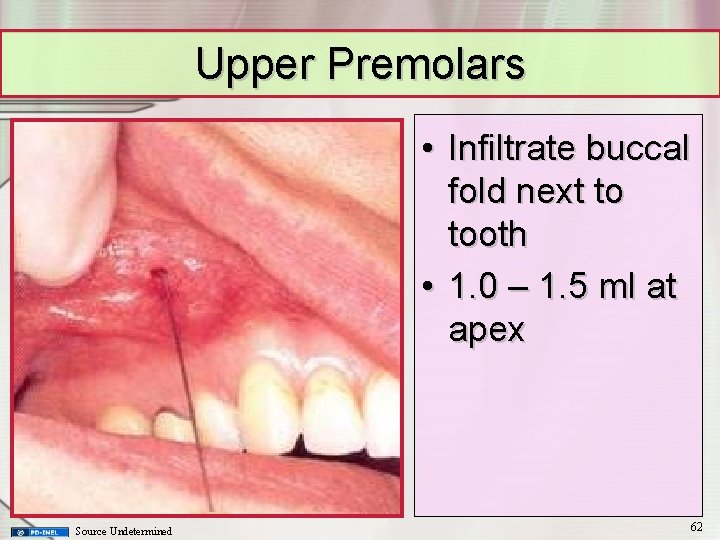
Upper Premolars • Infiltrate buccal fold next to tooth • 1. 0 – 1. 5 ml at apex Source Undetermined 62
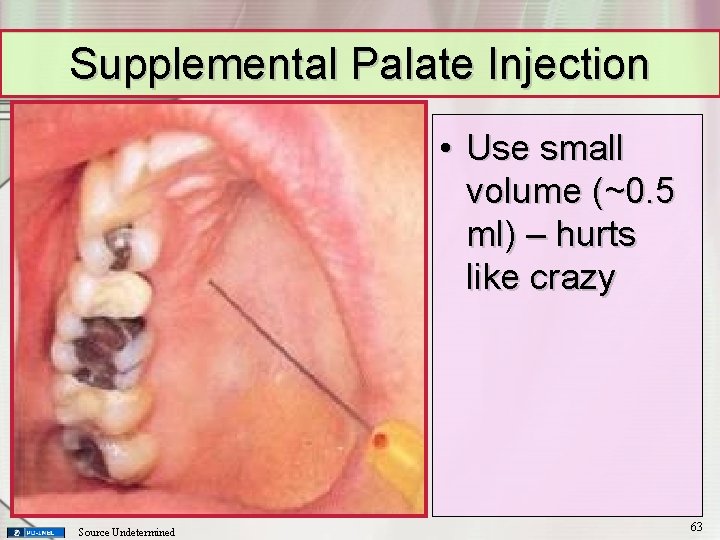
Supplemental Palate Injection • Use small volume (~0. 5 ml) – hurts like crazy Source Undetermined 63
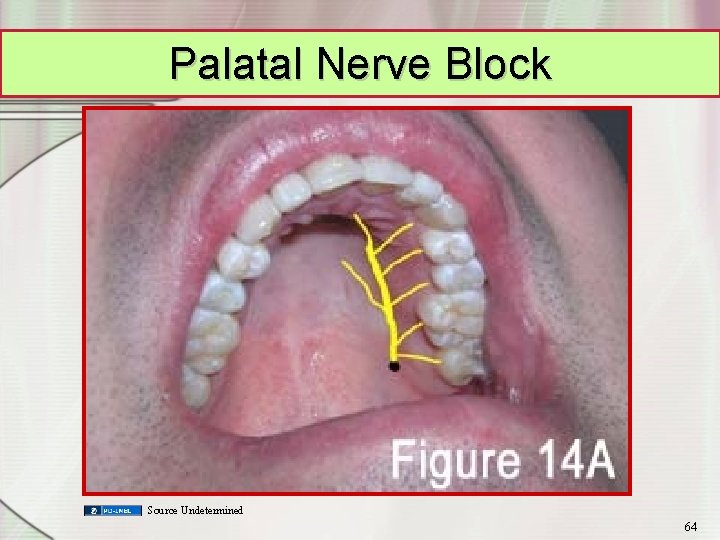
Palatal Nerve Block Source Undetermined 64
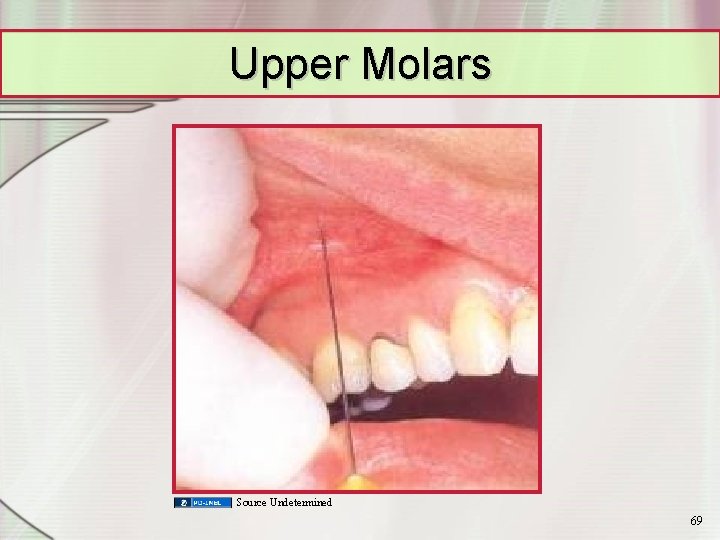
Upper Molars Source Undetermined 69
Upper Molars • Buccal infiltration: puncture mesial fold close to tooth • Advance upward and backward until bone felt • Inject 1 – 2 ml solution 70
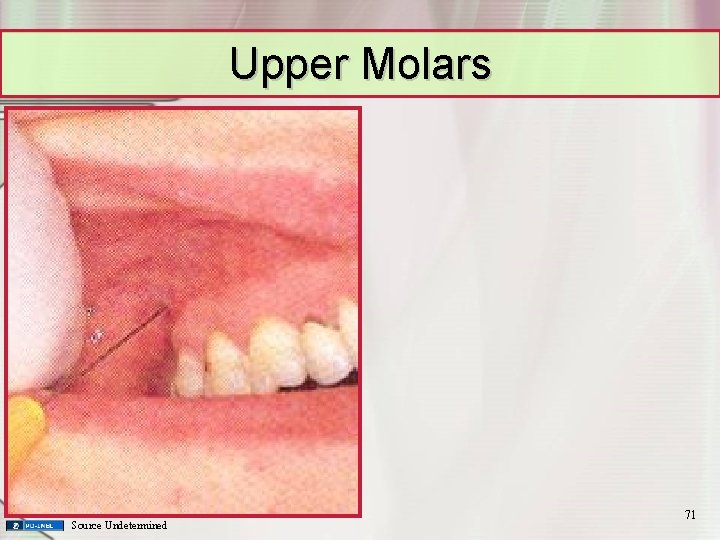
Upper Molars Source Undetermined 71
So for most upper teeth… Local infiltration is sufficient 73
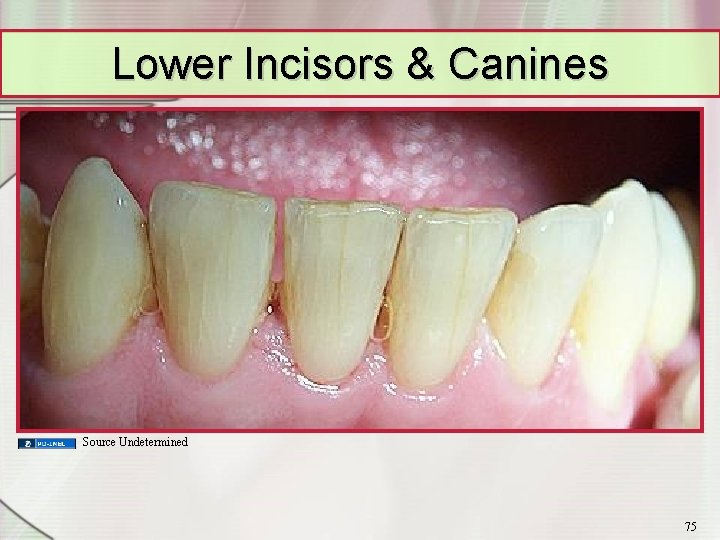
Lower Incisors & Canines Source Undetermined 75
Lower Incisors & Canines • • Innervated by incisive nerve Lies within bone, but can be anesthetized by diffusion through thin, porous mandibular bone lamina • Tip of needle must contact bone in lower front 77
Lower Incisors & Canines • Buccal soft tissue: mental nerve • Lingual gingiva & periosteum: sublingual nerve 78
Lower Incisor Block • • Patient supine Inject through buccal fold near tooth 79
Lower Premolars • • • Local blocks don’t work Primarily inferior alveolar nerve Premolar buccal gingiva buccal nerve • Lingual gingiva sublingual nerve • Mental foramen: below and between premolar apices 81
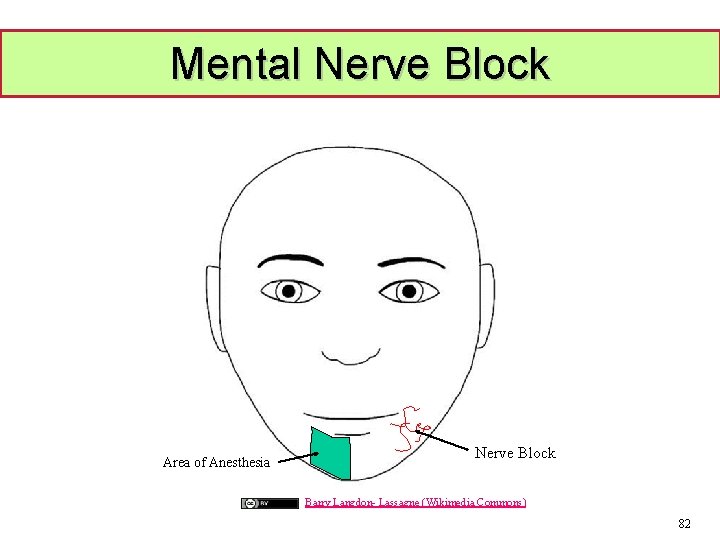
Mental Nerve Block Area of Anesthesia Nerve Block Barry Langdon- Lassagne (Wikimedia Commons) 82
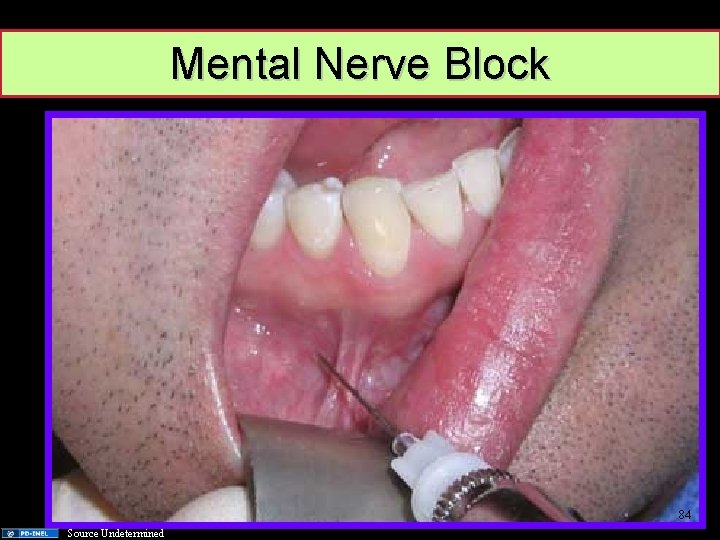
Mental Nerve Block 84 Source Undetermined
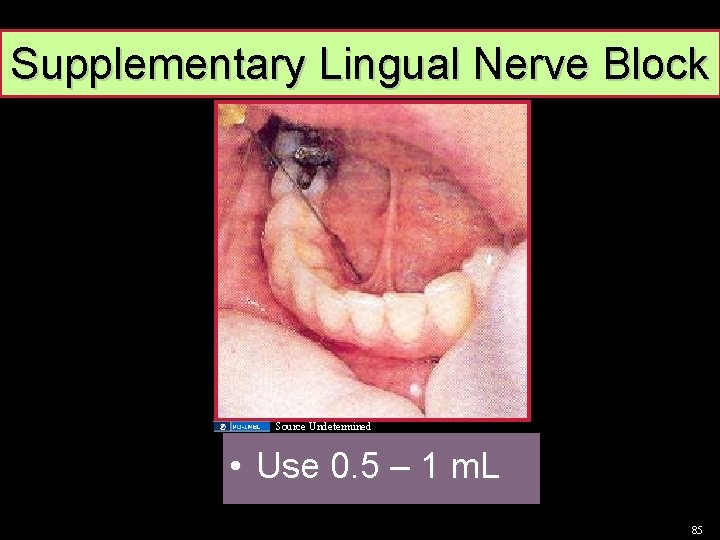
Supplementary Lingual Nerve Block Source Undetermined • Use 0. 5 – 1 m. L 85
Lower Molars • Apices embedded in thick compact bone • Local blocks don't work • Inferior alveolar nerve 87
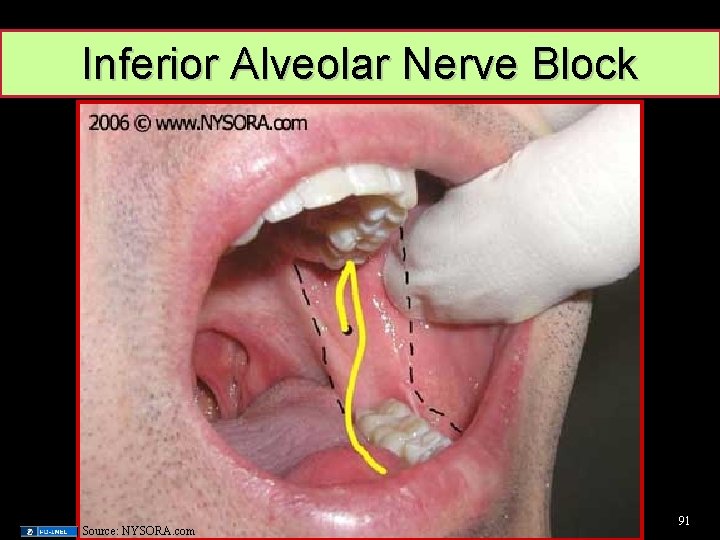
Inferior Alveolar Nerve Block Source: NYSORA. com 91
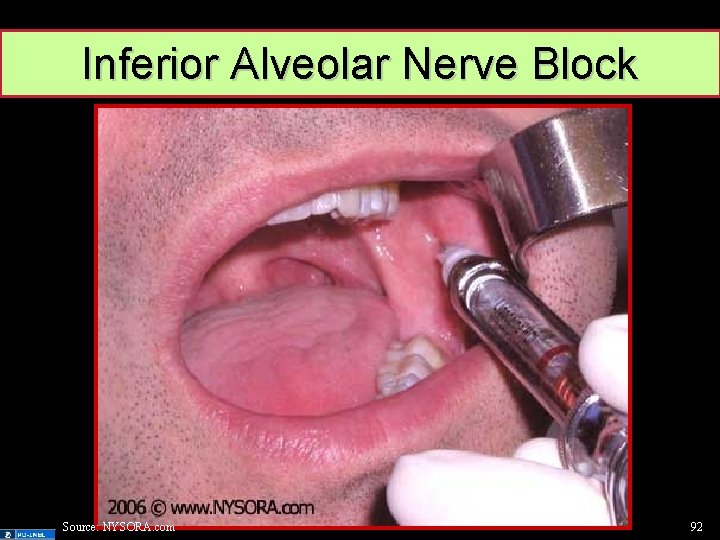
Inferior Alveolar Nerve Block Source: NYSORA. com 92
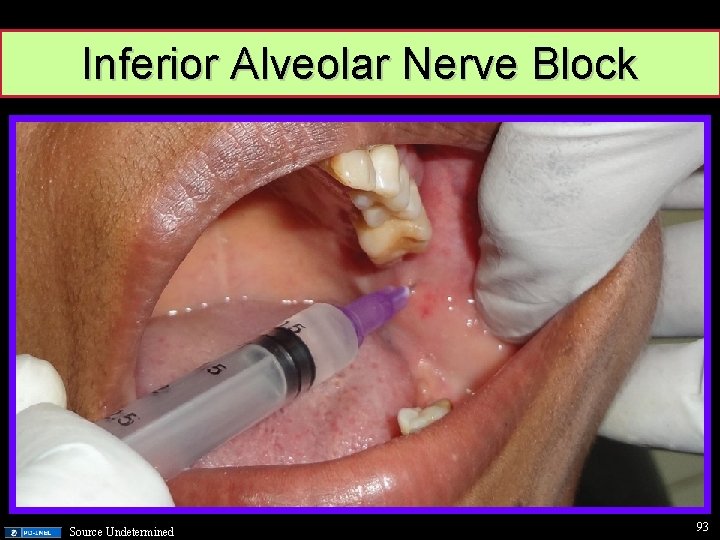
Inferior Alveolar Nerve Block Source Undetermined 93
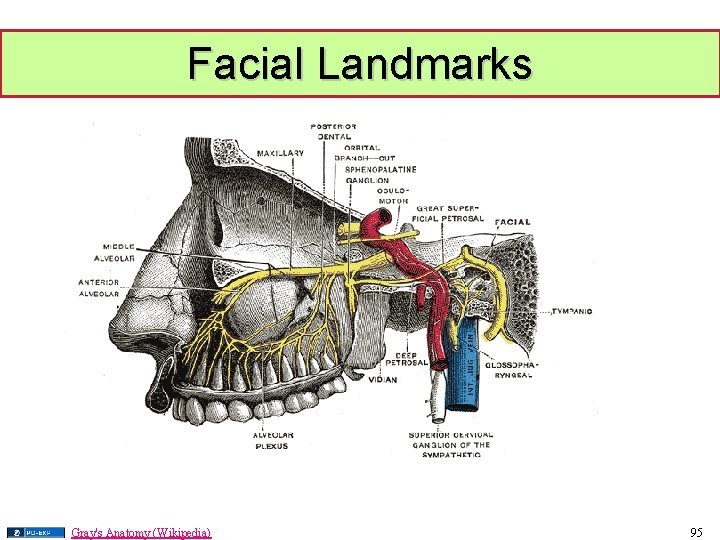
Facial Landmarks Gray's Anatomy (Wikipedia) 95
www. nysora. com/techniques/oral_maxilla/ 96
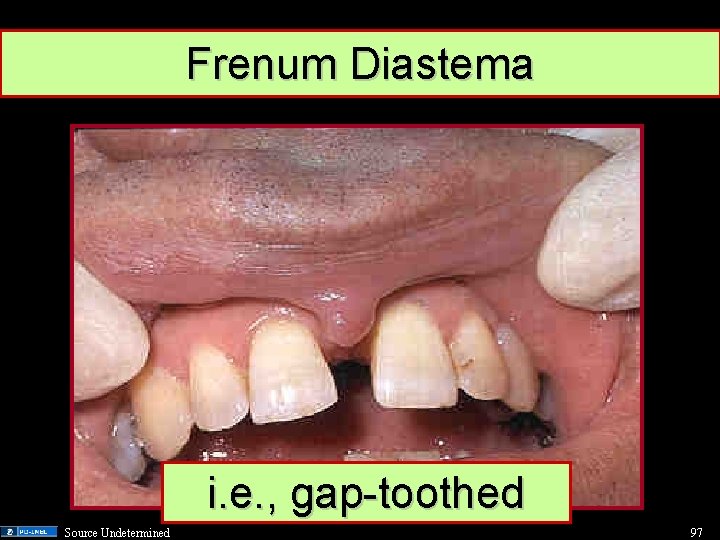
Frenum Diastema i. e. , gap-toothed Source Undetermined 97
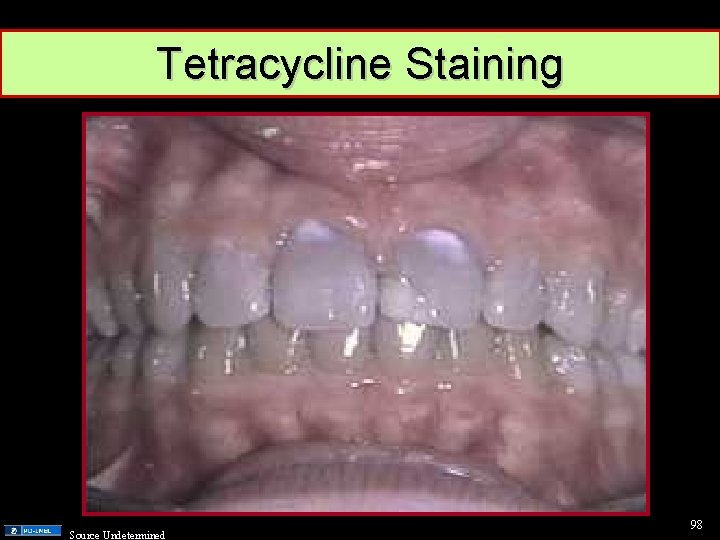
Tetracycline Staining Source Undetermined 98
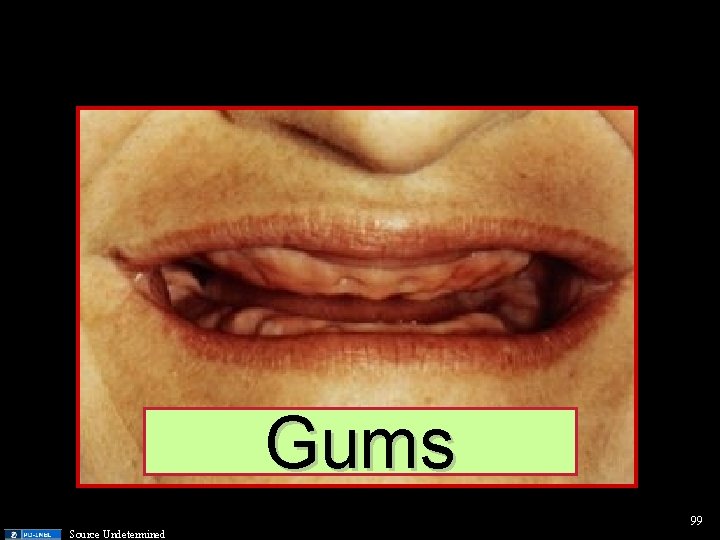
Gums 99 Source Undetermined
Periodontal Disease • Gingivitis: accumulation of plaque along gum margins • Causes: bad hygiene, hormonal variations (puberty, pregnancy), medications (phenytoin), etc. • Sulcus deepens pockets periodontitis mineralization bone loss tooth loss 100
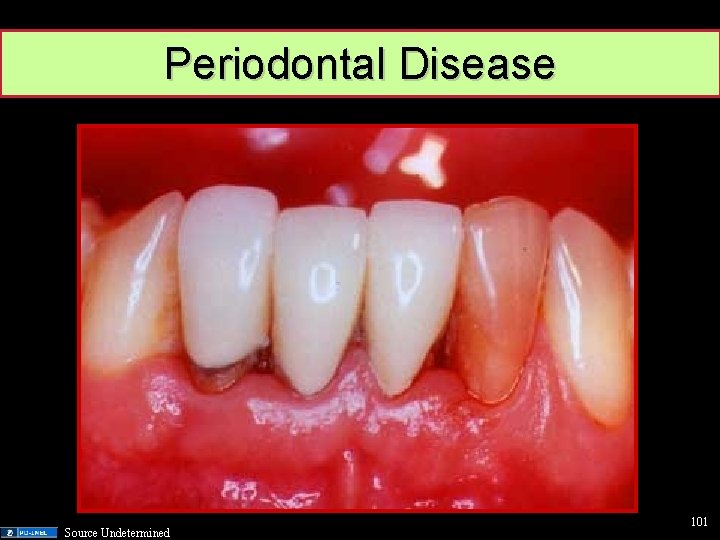
Periodontal Disease Source Undetermined 101
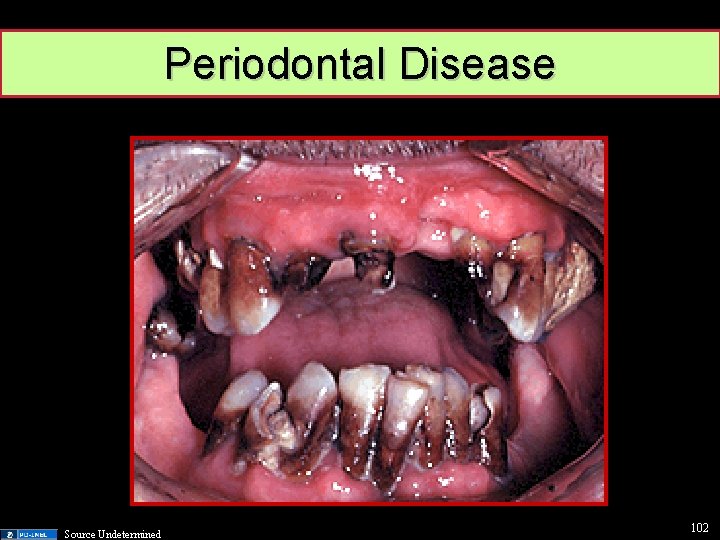
Periodontal Disease Source Undetermined 102
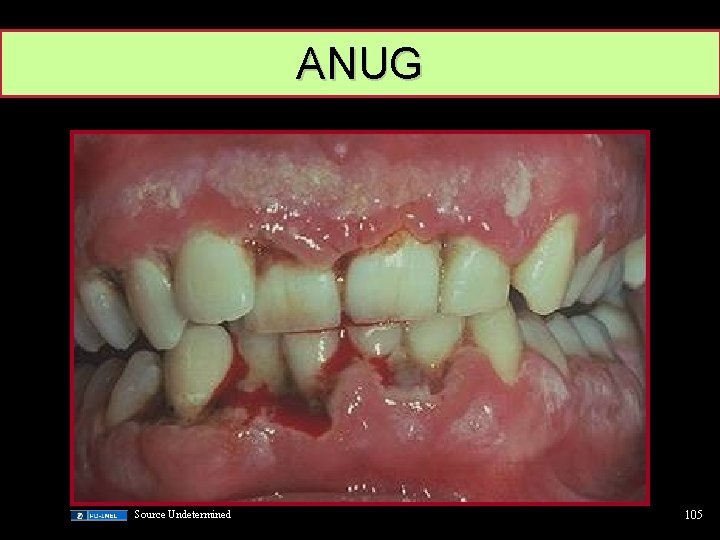
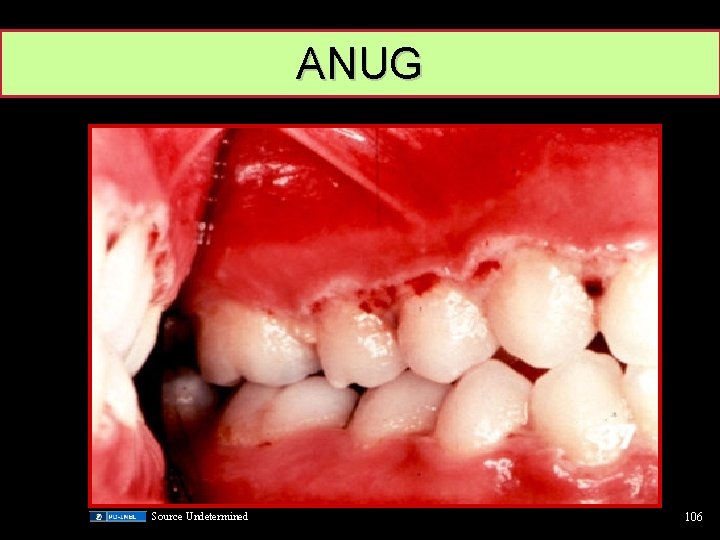
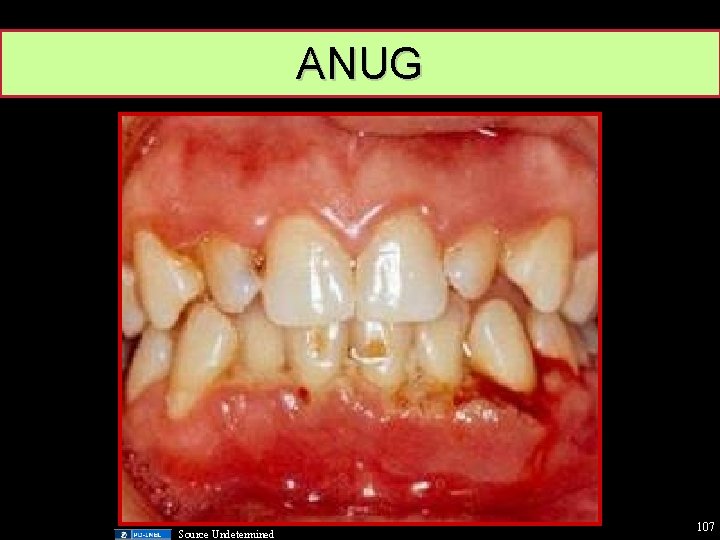
ANUG • Acute Necrotizing Ulcerative Gingivitis = Vincent ´s disease = trench mouth • Diagnostic triad: pain + ulcerated or “punched out” interdental papillae + gingival bleeding • Etiology unclear, but opportunistic • Anaerobes always present 103
ANUG • • Invades otherwise healthy tissue Treatment: – Identify, treat predisposing factors – Chlorhexidine oral rinses twice daily – Debridement and scaling by dentist – Metronidazole 250 mg tid – Supportive therapy: soft diet rich in protein and vitamins 104
ANUG Source Undetermined 105
ANUG Source Undetermined 106
ANUG Source Undetermined 107
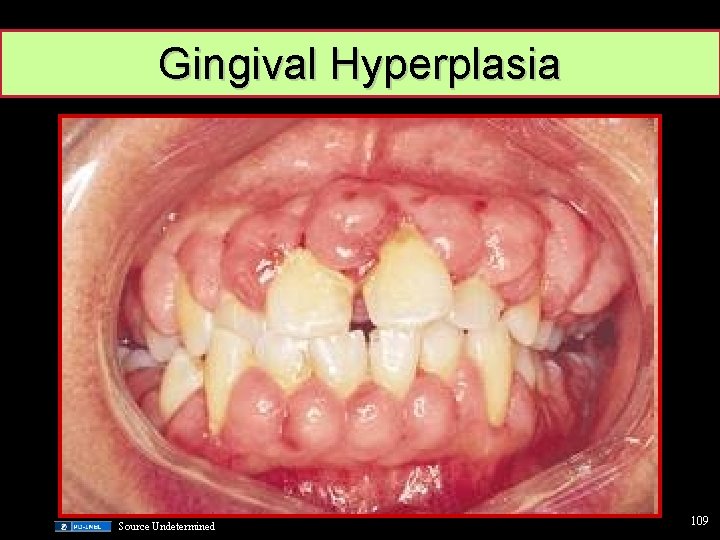
Gingival Hyperplasia • Associated with many commonly used medications • 50% of patients on chronic phenytoin • Also calcium channel blockers (especially nifedipine) and cyclosporine. • Treatment: fastidious oral hygiene 108
Gingival Hyperplasia Source Undetermined 109
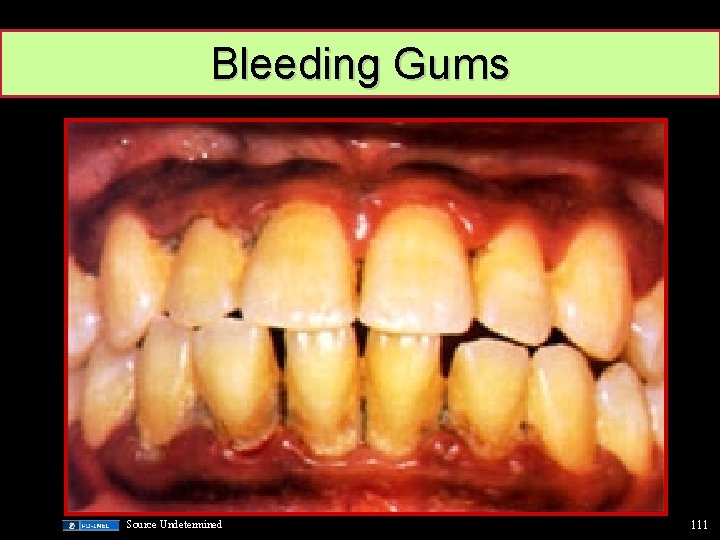
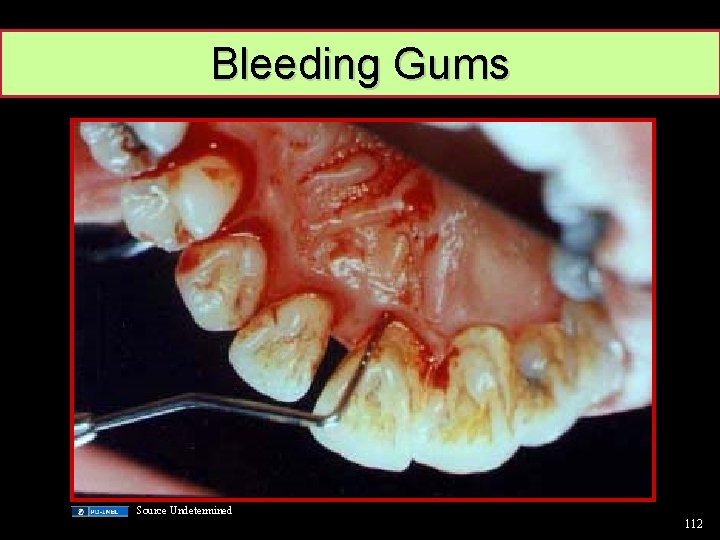
Bleeding Gums • Hemorrhage after scaling easily controlled with peroxide mouth rinses or direct gingival pressure • Clotting factor deficiencies, leukemia, and end- stage liver disease may first present as spontaneous gingival hemorrhage • Treatment: based on cause 110
Bleeding Gums Source Undetermined 111
Bleeding Gums Source Undetermined 112
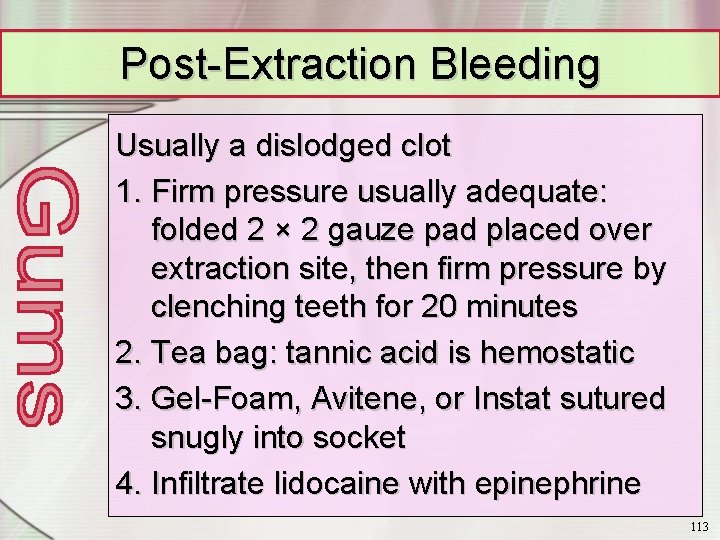
Post-Extraction Bleeding Usually a dislodged clot 1. Firm pressure usually adequate: folded 2 × 2 gauze pad placed over extraction site, then firm pressure by clenching teeth for 20 minutes 2. Tea bag: tannic acid is hemostatic 3. Gel-Foam, Avitene, or Instat sutured snugly into socket 4. Infiltrate lidocaine with epinephrine 113
Pyogenic Granuloma • • • “Pregnancy tumor” Benign proliferation of connective tissue, primarily on gingiva Not pyogenic, not a granuloma Usually recurs if removed during pregnancy If not regressed 2 to 3 months postpartum, definitive removal 114
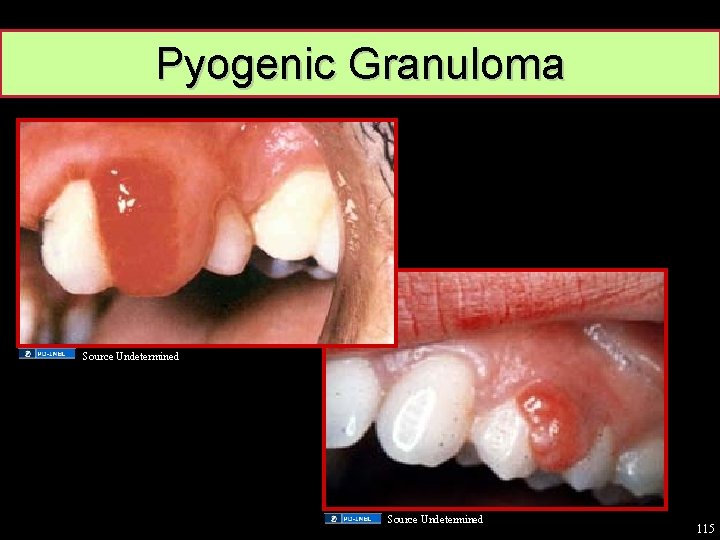
Pyogenic Granuloma Source Undetermined 115
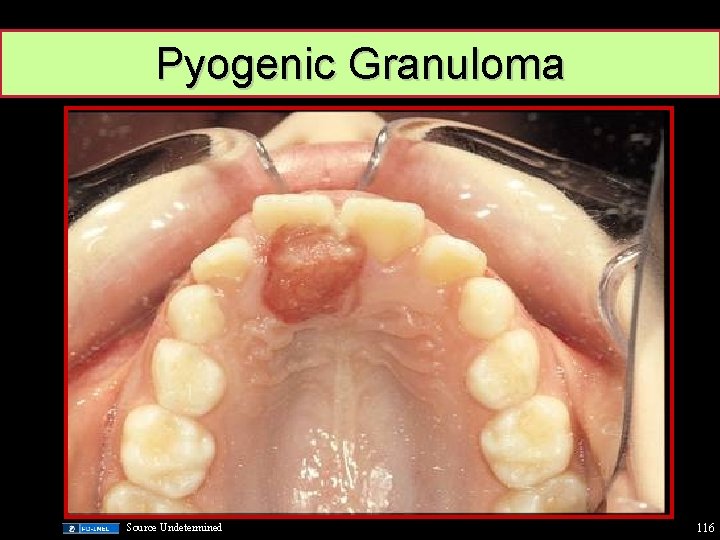
Pyogenic Granuloma Source Undetermined 116
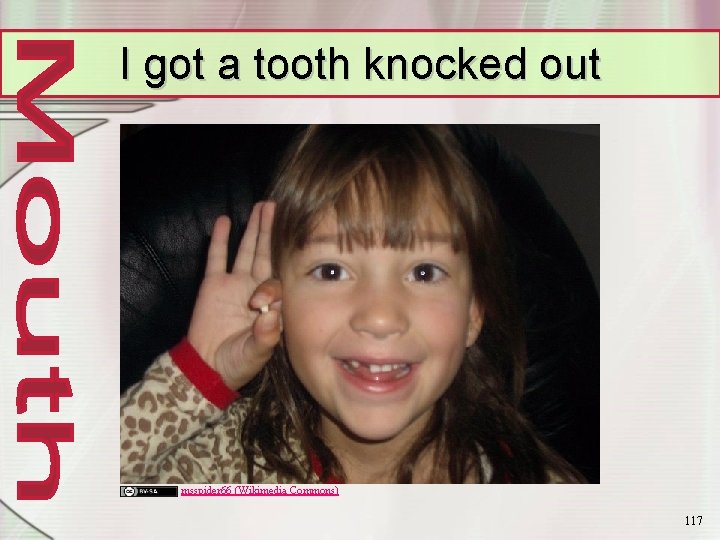
I got a tooth knocked out msspider 66 (Wikimedia Commons) 117
I got a tooth knocked out • • • Rinse with water; do not scrub Hold gently by crown, not root In cooperative adult, gently put back in socket • Transport tooth to doctor or dentist in saline, milk, or saliva – Dry tooth will damage in minutes 118
I got a tooth knocked out • Child, uncooperative adult: "tooth saver" solution • Loosened, pushed in, broken teeth: avoid eating or drinking • Tooth broken in pieces: retrieve parts and transport in suggested solutions as above 119
I got a tooth knocked out • 90% of replantations performed within 30 minutes are successful • If wait 2 hours, falls to 5% • Insert slowly into socket, hold pressure for 10 to 15 minutes – If forced abruptly, will be extruded • Consult dentist Lind GL. Anesth Analg 61(5): 469, May 1982 120
I got a tooth knocked out • Stabilization with arch bars and wires for two weeks • If primary (baby) tooth, no longterm problems anticipated – Primary tooth: blue-white – Permanent tooth: yellow-white – No reimplantation if primary 121
I got smacked in the mouth • Remove debris, especially tooth or denture fragments • Irrigate copiously • Avoid radical debridement • Can close up to 24 o after injury • Penicillin (or erythromycin) for through and through, but no studies Potter BC. Amer Fam Phys 18(5): 96, 1978 122
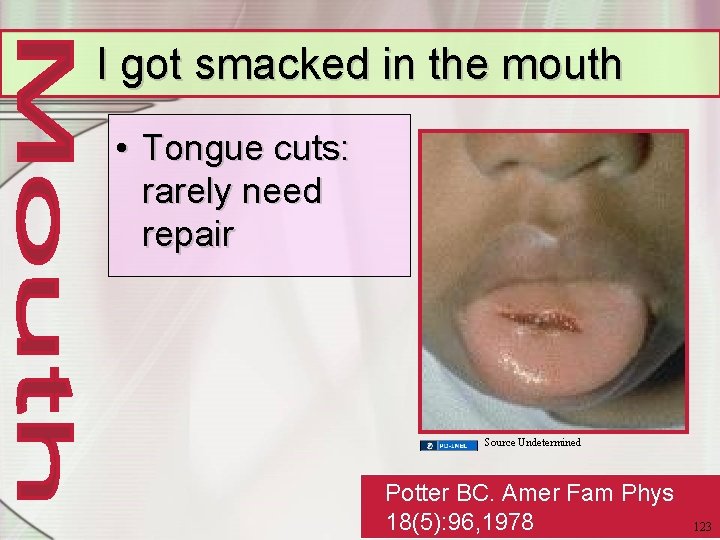
I got smacked in the mouth • Tongue cuts: rarely need repair Source Undetermined Potter BC. Amer Fam Phys 18(5): 96, 1978 123
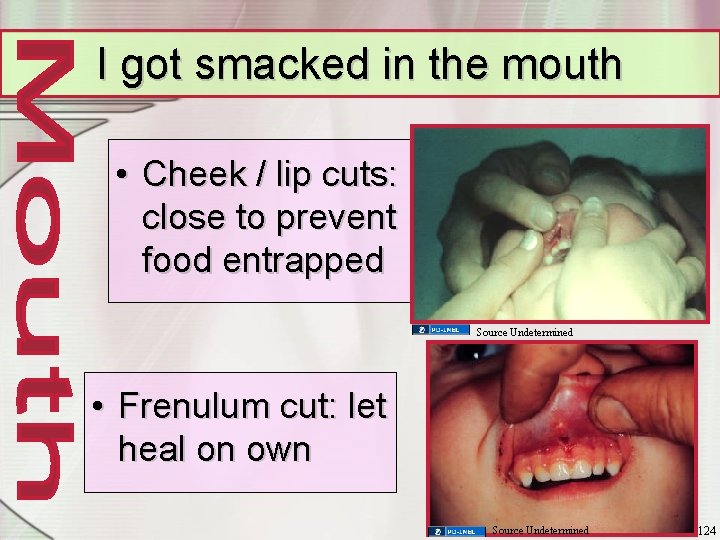
I got smacked in the mouth • Cheek / lip cuts: close to prevent food entrapped Source Undetermined • Frenulum cut: let heal on own Source Undetermined 124
And finally… Two Flossing Haiku Intentional pain And the taste of gums bleeding Prevent toothlessness Morsels sit between my teeth Minty, waxy nylon thread Saves my smile 125
- Slides: 105