
Project Expectations for New Sites Project 10 CONNECT
- Slides: 31
Project Expectations for New Sites Project 10 CONNECT Interagency Councils New Site Training This training was developed by the Project 10: Transition Education Network, a special project funded by the Florida Department of Education, Division of Public Schools, Bureau of Exceptional Education and Student Services, through federal assistance under the Individuals with Disabilities Education Act (IDEA), Part B.
Objectives After this presentation, participants will be able to: § Describe expectations for new Project 10 CONNECT interagency council sites § Delineate methods for determining current status and needs in secondary transition § Identify basic components of action planning § List ways to disseminate information to stakeholders 2
Project Expectations 3
Project Expectations § Form or revitalize an interagency council for transition § Consider how the team will involve individuals with disabilities and their families as an integral part of the team § Conduct focus groups to identify barriers to transition • Interim report on focus group due within first year • Final report on focus group results by end of year one § Use focus group results to guide development of action plan 4
Project Expectations § Develop an action plan within first year • Submitted with application § Develop an interagency agreement within first two years § Expand implementation of effective transition practices and range of services § Attend project meetings § Submit reports to the project • End of year report • End of year budget report/summary • Oral reports at Project 10 Regional Institutes 5
Current Status and Needs 6
Determine Current Status and Needs in Secondary Transition § It is essential that the team § This information must come collect detailed information from stakeholders, including and data about the current • Students status of secondary • Families transition in the local area • Educators and the needs that are present. • Service providers • Data-driven decision • Community members making that is based on needs 7
Data Collection Sample sources of data include: § Current school districts or agency data § Focus groups § Questionnaires § Team developed plans, records or reports It is important to remember that data collection is an ongoing process, continues throughout the life of the interagency council, and provides a basis for evaluating progress. 8
Data Collected from School Districts or Agencies § Information reported to Florida Department of Education § Florida Education Training and Placement Information Program (FETPIP) § Agency information such as • Number of referrals • Number of students eligible and receiving services • Number employed or trained 9
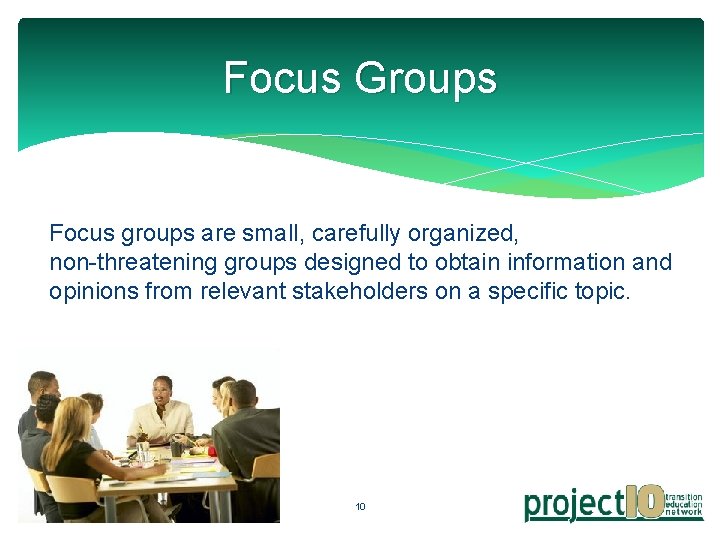
Focus Groups Focus groups are small, carefully organized, non-threatening groups designed to obtain information and opinions from relevant stakeholders on a specific topic. 10
Focus Group Characteristics § § § Small (6– 10 people) Moderator Recorder Specific timelines Predetermined questions Relaxed, non-threatening 11
Focus Group Data Analysis and Reporting The data is: § Gathered through focus group § Analyzed by small team § Organized by theme § Summarized in report § Disseminated to all team members 12
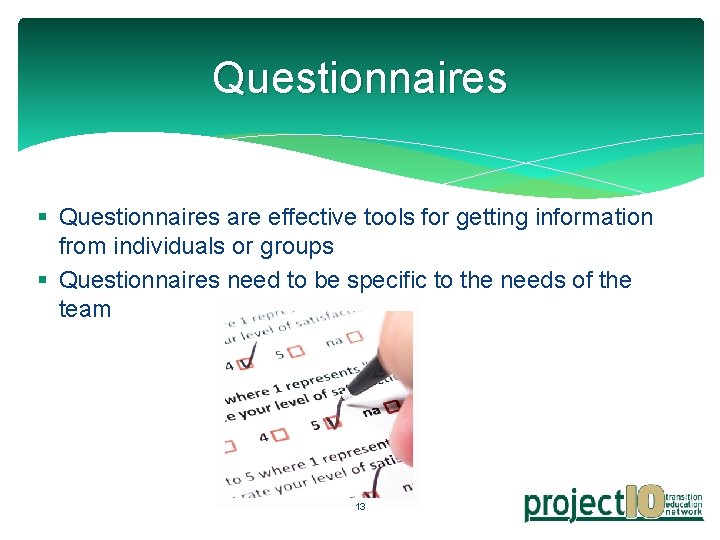
Questionnaires § Questionnaires are effective tools for getting information from individuals or groups § Questionnaires need to be specific to the needs of the team 13
Action Planning 14
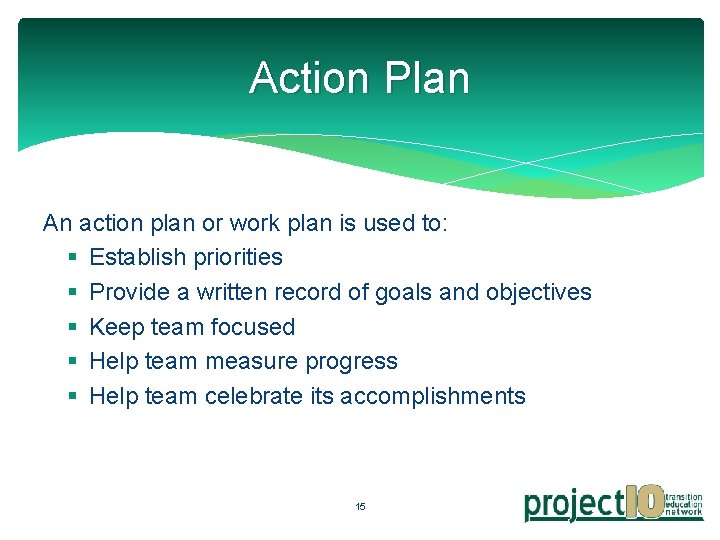
Action Plan An action plan or work plan is used to: § Establish priorities § Provide a written record of goals and objectives § Keep team focused § Help team measure progress § Help team celebrate its accomplishments 15
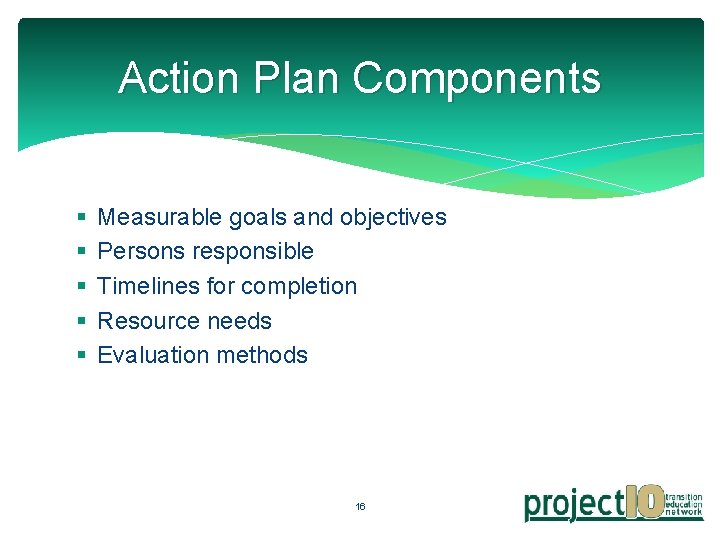
Action Plan Components § § § Measurable goals and objectives Persons responsible Timelines for completion Resource needs Evaluation methods 16
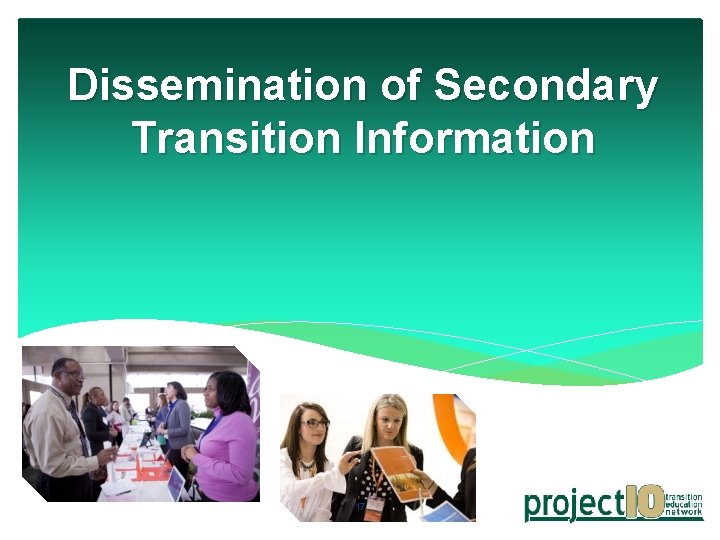
Dissemination of Secondary Transition Information 17
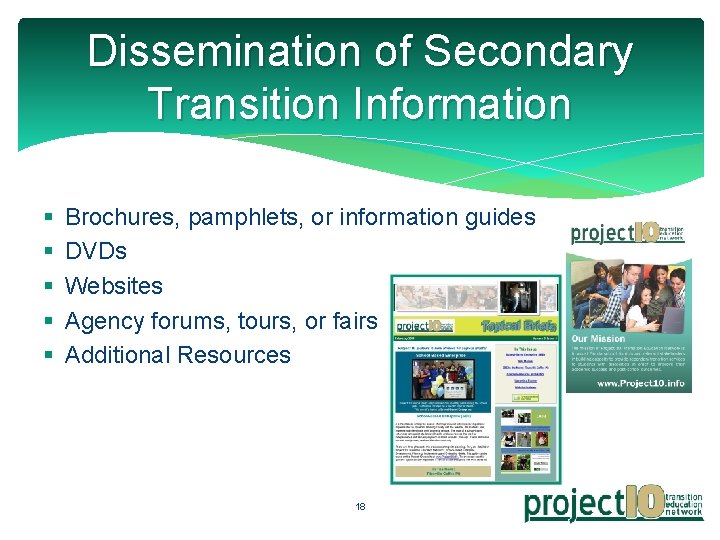
Dissemination of Secondary Transition Information § § § Brochures, pamphlets, or information guides DVDs Websites Agency forums, tours, or fairs Additional Resources 18
Brochures, Pamphlets, Informational Guides § A well developed brochure, pamphlet, or informational guide can be very helpful to a parent who is trying to learn more about agency services or transition in general. § Remember to keep your audience in mind when developing these items. Keep them simple and to the point. 19
Video/DVDs § Developing a video/DVD requires time and a lot of effort due to the development, editing, graphic design, sound and/or close captioning that must be done. § Private companies, community colleges, or high school production labs are some ideal groups to help you with the production of any videos. 20
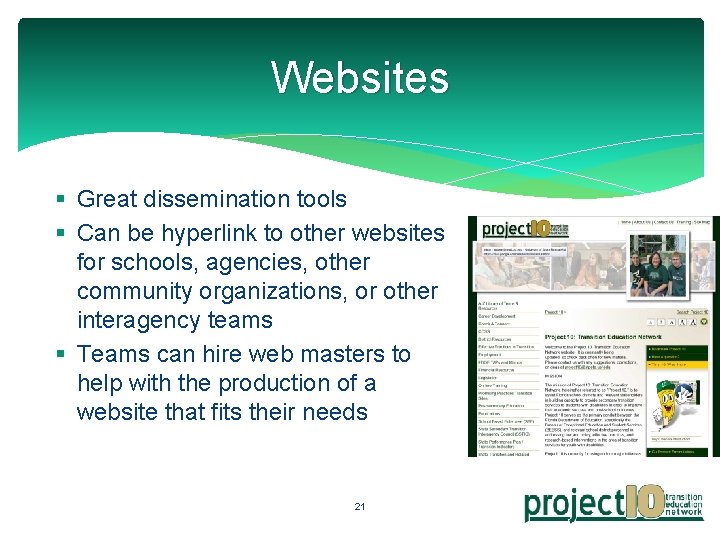
Websites § Great dissemination tools § Can be hyperlink to other websites for schools, agencies, other community organizations, or other interagency teams § Teams can hire web masters to help with the production of a website that fits their needs 21
Transition Events § Examples include interagency, career and transition fairs § Showcasing agency services is effective in providing information about the agencies to variety of audiences. § Be aware of the time and date of any showcase to maximize attendance. 22
Additional Methods of Dissemination Additional methods for sharing information include: § Local newspapers § Radio or television stations § School newsletters § Social networking § Sign boards at local schools, agencies or businesses § Plaques or framed certificates of membership or of recognition 23
Reaching Your Stakeholders include: § Students with disabilities, parents, and families § Educators § Agencies and service providers § Local businesses and community organizations § Postsecondary education 24
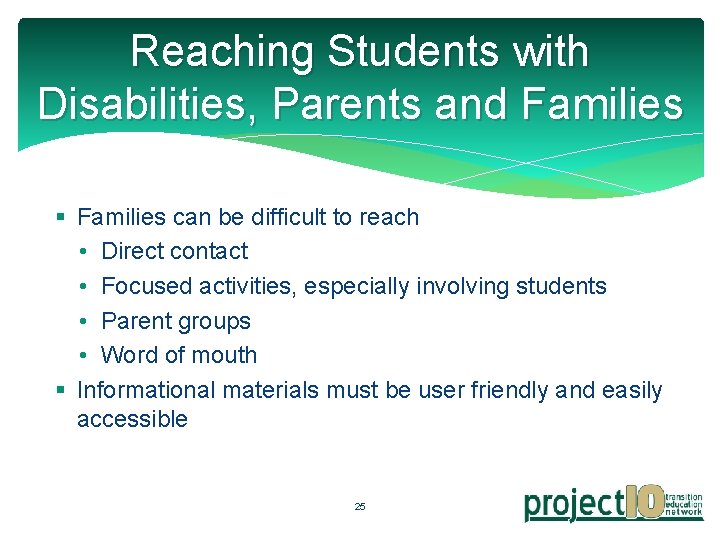
Reaching Students with Disabilities, Parents and Families § Families can be difficult to reach • Direct contact • Focused activities, especially involving students • Parent groups • Word of mouth § Informational materials must be user friendly and easily accessible 25
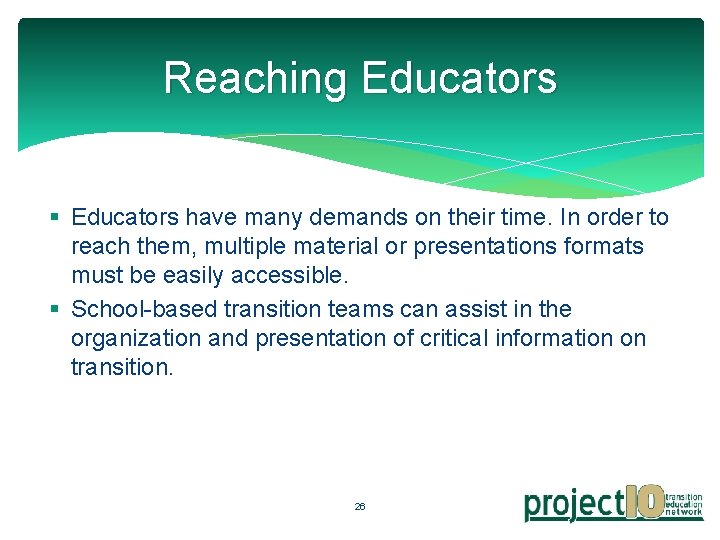
Reaching Educators § Educators have many demands on their time. In order to reach them, multiple material or presentations formats must be easily accessible. § School-based transition teams can assist in the organization and presentation of critical information on transition. 26
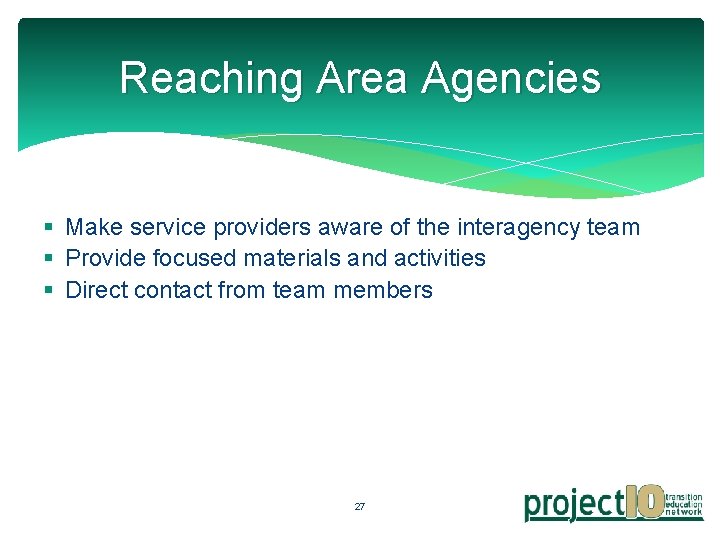
Reaching Area Agencies § Make service providers aware of the interagency team § Provide focused materials and activities § Direct contact from team members 27
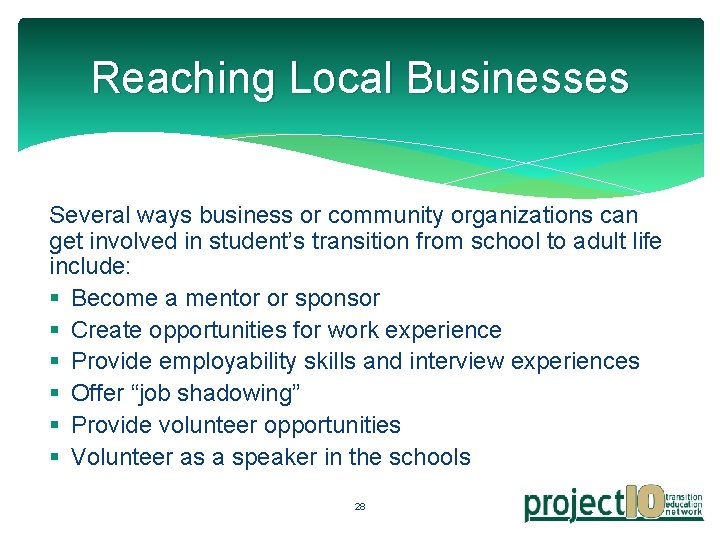
Reaching Local Businesses Several ways business or community organizations can get involved in student’s transition from school to adult life include: § Become a mentor or sponsor § Create opportunities for work experience § Provide employability skills and interview experiences § Offer “job shadowing” § Provide volunteer opportunities § Volunteer as a speaker in the schools 28
Summary § New Project 10 CONNECT interagency council site expectations § Methods for determining current status and needs in secondary transition § Begin action planning § Provide information to stakeholders Your Project 10 Regional Transition Representative will provide training, technical assistance and resources throughout the process of developing a Project 10 CONNECT Interagency Transition Team. 29
Questions and Thank You! Questions, concerns, or recommendations? Thank you for your attendance and input today! 30
Presenter Contact Information (RTR Name) Project 10: Transition Education Network Region ( ) Transition Representative Email: Office: 31 Updated May 2014