
Project CORE Coordinating Optimal Referral Experiences Improving Care


- Slides: 33
Project CORE: Coordinating Optimal Referral Experiences Improving Care at the Interface of Primary and Specialty Care Scott Shipman, MD, MPH Director of Clinical Innovation & Primary Care Affairs, AAMC March 7, 2019 © 2019 AAMC. May not be reproduced without permission.
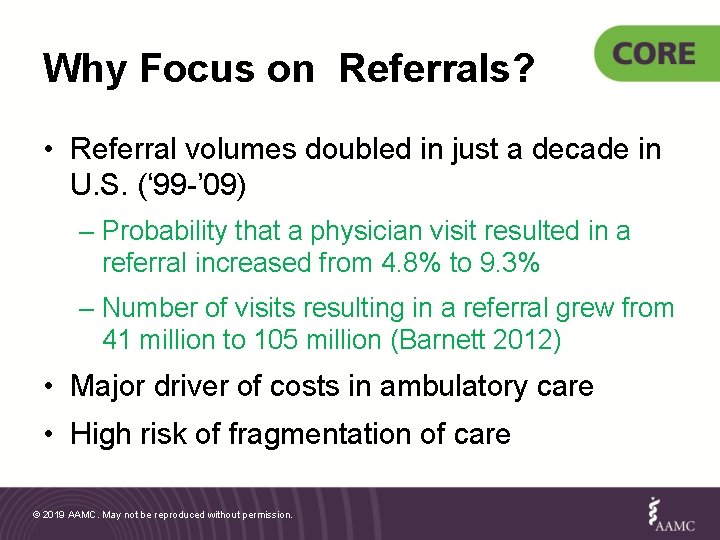
Why Focus on Referrals? • Referral volumes doubled in just a decade in U. S. (‘ 99 -’ 09) – Probability that a physician visit resulted in a referral increased from 4. 8% to 9. 3% – Number of visits resulting in a referral grew from 41 million to 105 million (Barnett 2012) • Major driver of costs in ambulatory care • High risk of fragmentation of care © 2019 AAMC. May not be reproduced without permission.
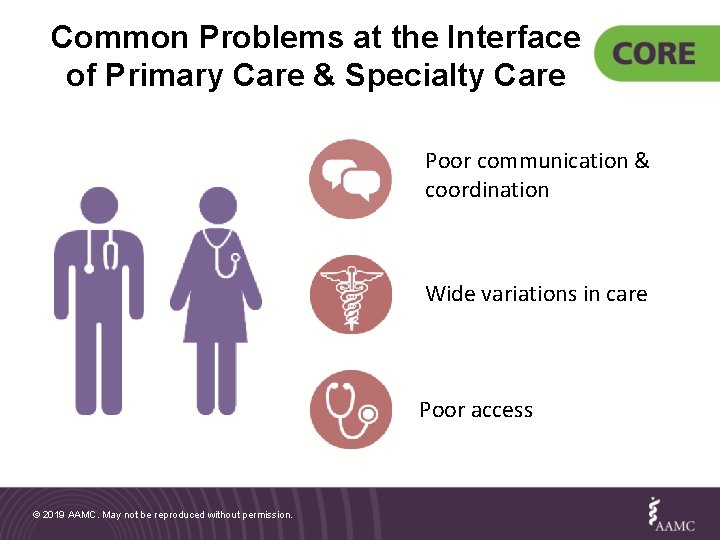
Common Problems at the Interface of Primary Care & Specialty Care Poor communication & coordination Wide variations in care Poor access © 2019 AAMC. May not be reproduced without permission.
Poor Communication & Coordination Referral Quality… What is Missing? • A clear clinical question . . . referrals have become an administrative task • Alignment of primary care evaluation with specialist needs . . . leading to risk of wasted initial visit with specialist • Longitudinal co-management agreement . . . who does what over time? © 2019 AAMC. May not be reproduced without permission.
Project CORE Goals By improving communication, coordination and culture between primary care providers and specialists, the CORE model aims to: • Improve timely access to specialty care • Improve quality and experience for patients and providers • Enhance primary care comprehensiveness • Control costs of care © 2019 AAMC. May not be reproduced without permission.
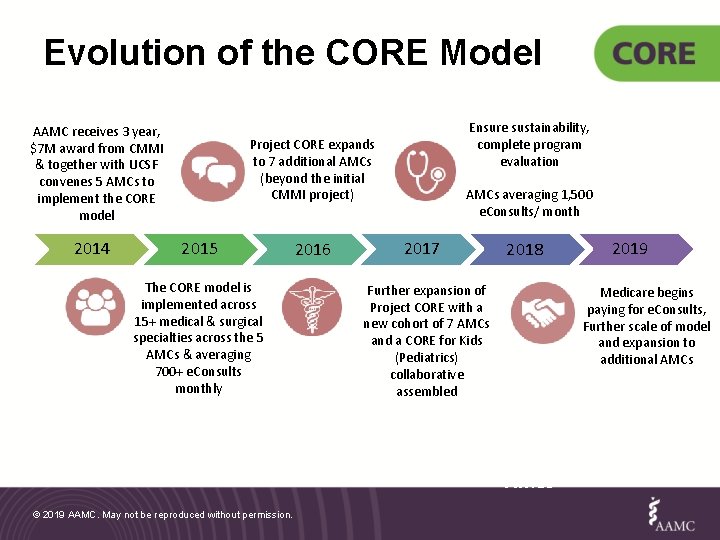
Evolution of the CORE Model AAMC receives 3 year, $7 M award from CMMI & together with UCSF convenes 5 AMCs to implement the CORE model 2014 Ensure sustainability, complete program evaluation Project CORE expands to 7 additional AMCs (beyond the initial CMMI project) 2015 The CORE model is implemented across 15+ medical & surgical specialties across the 5 AMCs & averaging 700+ e. Consults monthly > 2 Million Primary Care Patients © 2019 AAMC. May not be reproduced without permission. 2016 AMCs averaging 1, 500 e. Consults/ month 2017 Further expansion of Project CORE with a new cohort of 7 AMCs and a CORE for Kids (Pediatrics) collaborative assembled 2018 2019 Medicare begins paying for e. Consults, Further scale of model and expansion to additional AMCs > 1, 500 e. Consults completed/month across AMCs
The CORE Model © 2019 AAMC. May not be reproduced without permission.
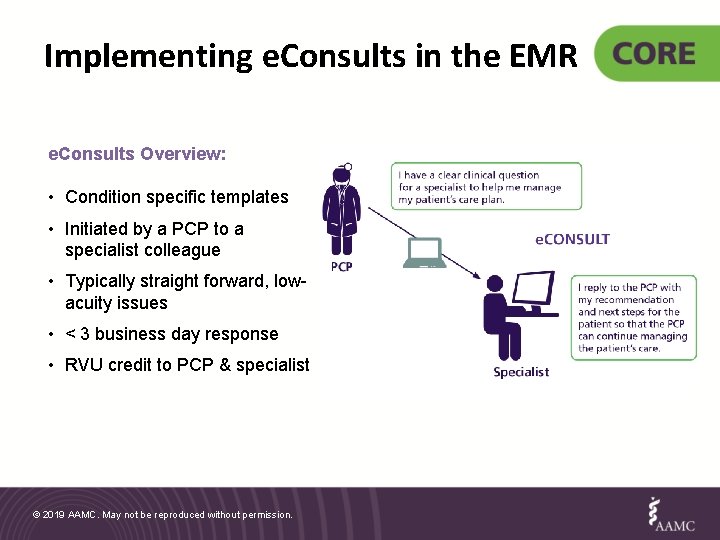
Implementing e. Consults in the EMR e. Consults Overview: • Condition specific templates • Initiated by a PCP to a specialist colleague • Typically straight forward, lowacuity issues • < 3 business day response • RVU credit to PCP & specialist © 2019 AAMC. May not be reproduced without permission.
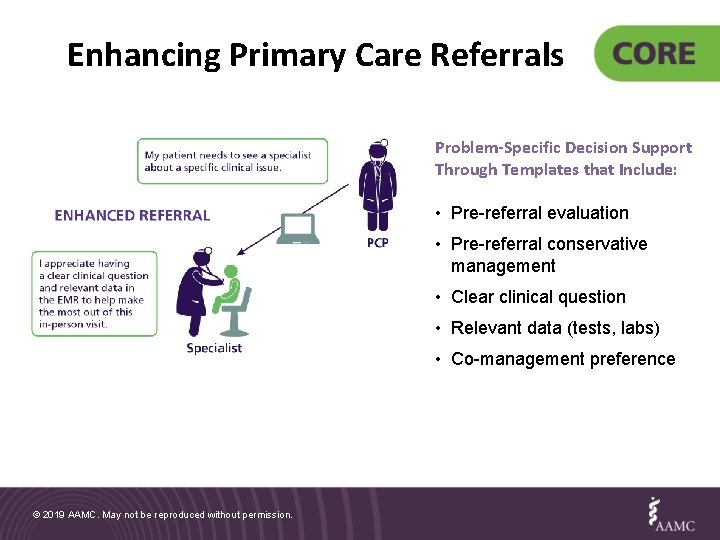
Enhancing Primary Care Referrals Problem-Specific Decision Support Through Templates that Include: • Pre-referral evaluation • Pre-referral conservative management • Clear clinical question • Relevant data (tests, labs) • Co-management preference © 2019 AAMC. May not be reproduced without permission.
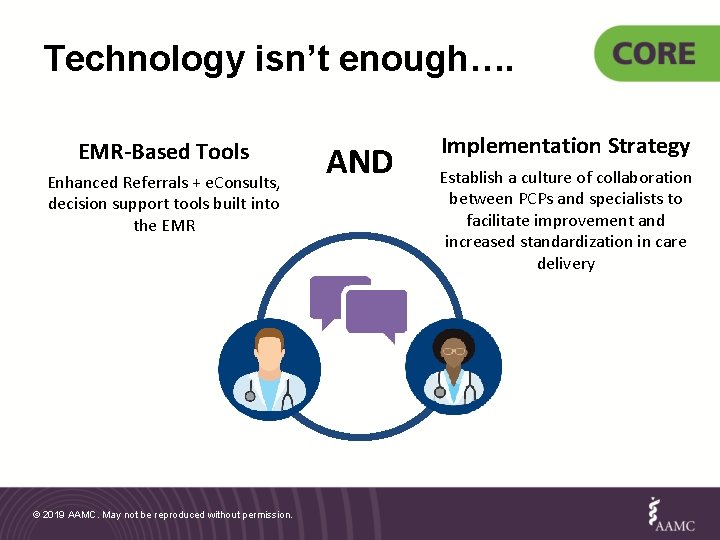
Technology isn’t enough…. EMR-Based Tools Enhanced Referrals + e. Consults, decision support tools built into the EMR © 2019 AAMC. May not be reproduced without permission. AND Implementation Strategy Establish a culture of collaboration between PCPs and specialists to facilitate improvement and increased standardization in care delivery
The CORE Network © 2019 AAMC. May not be reproduced without permission.
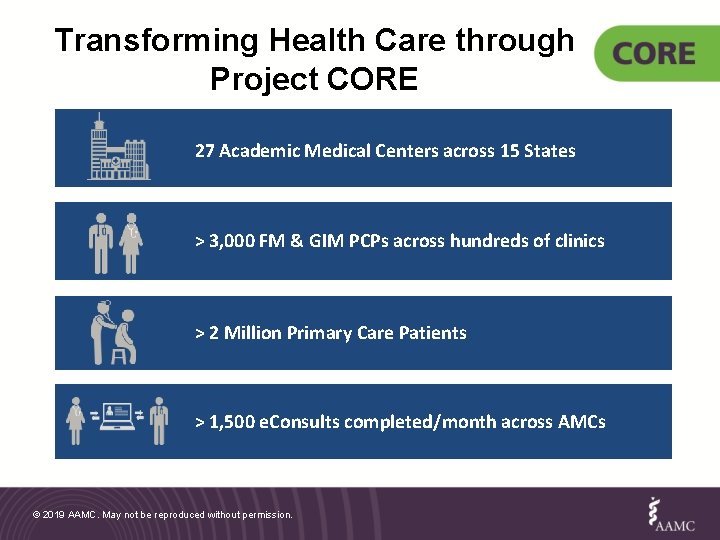
Transforming Health Care through Project CORE 27 Academic Medical Centers across 15 States > 3, 000 FM & GIM PCPs across hundreds of clinics > 2 Million Primary Care Patients > 1, 500 e. Consults completed/month across AMCs © 2019 AAMC. May not be reproduced without permission.
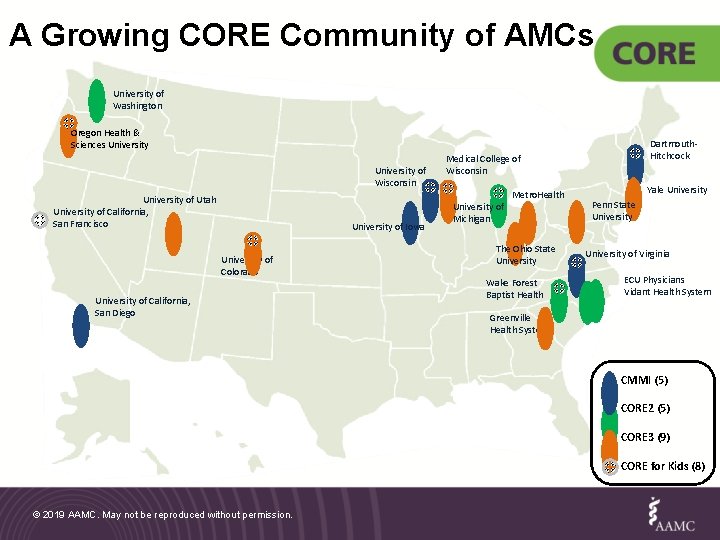
A Growing CORE Community of AMCs University of Washington Oregon Health & Sciences University of Wisconsin University of Utah University of California, San Francisco University of Iowa University of Colorado University of California, San Diego Dartmouth. Hitchcock Medical College of Wisconsin University of Michigan Metro. Health The Ohio State University Wake Forest Baptist Health Yale University Penn State University of Virginia ECU Physicians Vidant Health System Greenville Health System CMMI (5) CORE 2 (5) CORE 3 (9) CORE for Kids (8) © 2019 AAMC. May not be reproduced without permission.
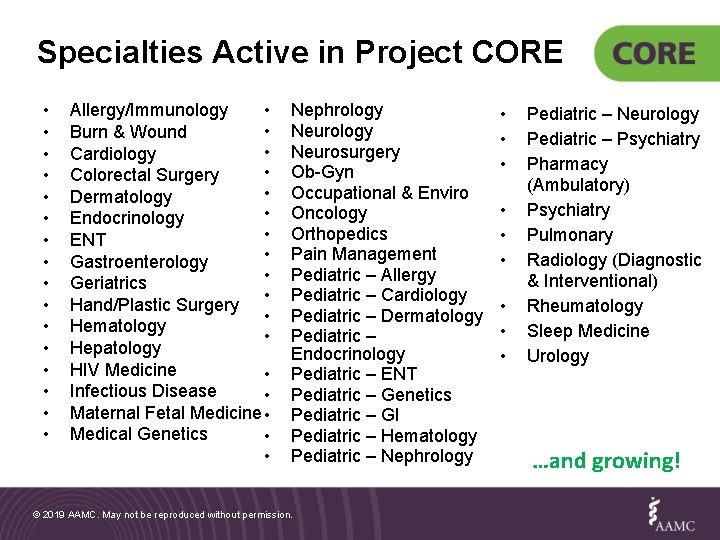
Specialties Active in Project CORE • • • • Allergy/Immunology • • Burn & Wound • Cardiology • Colorectal Surgery • Dermatology • Endocrinology • ENT • Gastroenterology • Geriatrics • Hand/Plastic Surgery • Hematology • Hepatology HIV Medicine • Infectious Disease • Maternal Fetal Medicine • Medical Genetics • • Nephrology Neurosurgery Ob-Gyn Occupational & Enviro Oncology Orthopedics Pain Management Pediatric – Allergy Pediatric – Cardiology Pediatric – Dermatology Pediatric – Endocrinology Pediatric – ENT Pediatric – Genetics Pediatric – GI Pediatric – Hematology Pediatric – Nephrology © 2019 AAMC. May not be reproduced without permission. • • • Pediatric – Neurology Pediatric – Psychiatry Pharmacy (Ambulatory) Psychiatry Pulmonary Radiology (Diagnostic & Interventional) Rheumatology Sleep Medicine Urology …and growing!
Assessing the Impact of Project CORE: Experience across 5 AMCs in CMMI-funded Pilot (2014 -2017) © 2019 AAMC. May not be reproduced without permission.
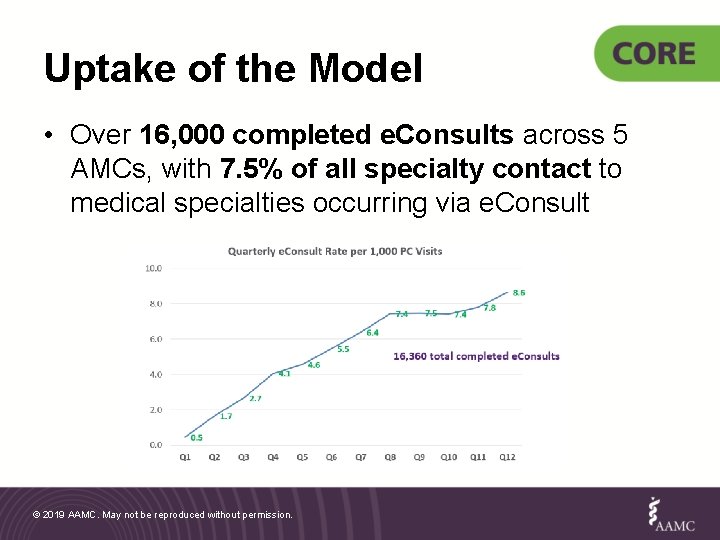
Uptake of the Model • Over 16, 000 completed e. Consults across 5 AMCs, with 7. 5% of all specialty contact to medical specialties occurring via e. Consult © 2019 AAMC. May not be reproduced without permission.
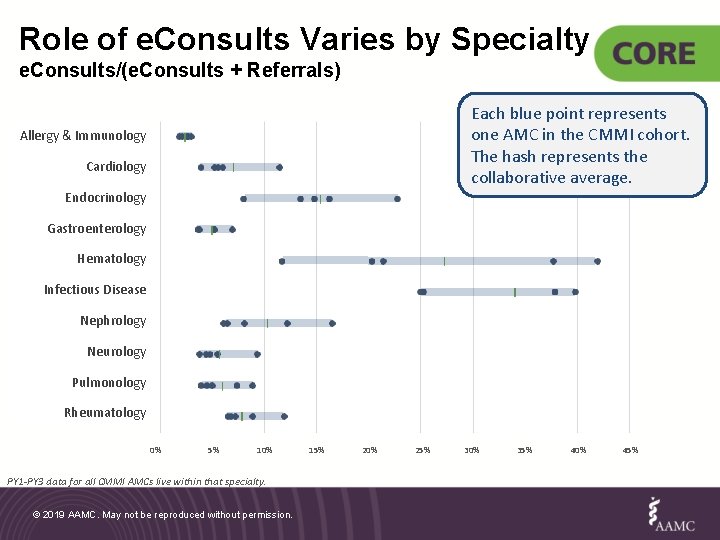
Role of e. Consults Varies by Specialty e. Consults/(e. Consults + Referrals) Each blue point represents one AMC in the CMMI cohort. The hash represents the collaborative average. Allergy & Immunology Cardiology Endocrinology Gastroenterology Hematology Infectious Disease Nephrology Neurology Pulmonology Rheumatology 0% 5% 10% PY 1 -PY 3 data for all CMMI AMCs live within that specialty. © 2019 AAMC. May not be reproduced without permission. 15% 20% 25% 30% 35% 40% 45%
Assessing Impact Tied to CORE Goals • Improve timely access to specialty care • Improve quality and experience for patients and providers • Enhance primary care comprehensiveness • Control costs of care © 2019 AAMC. May not be reproduced without permission.
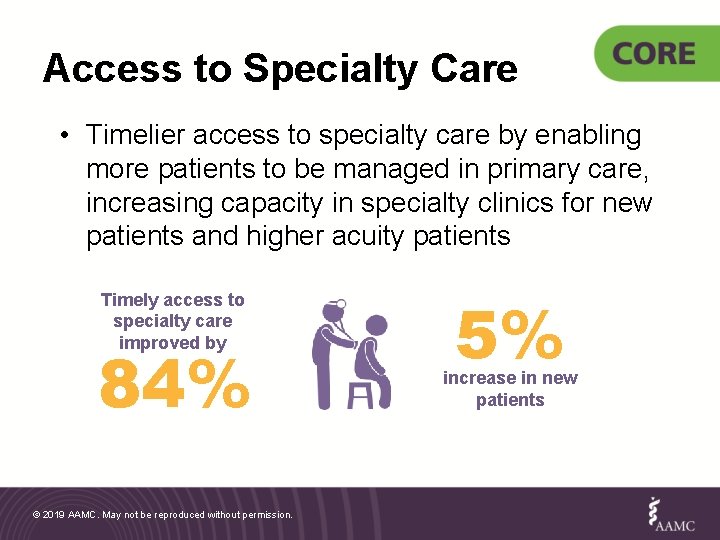
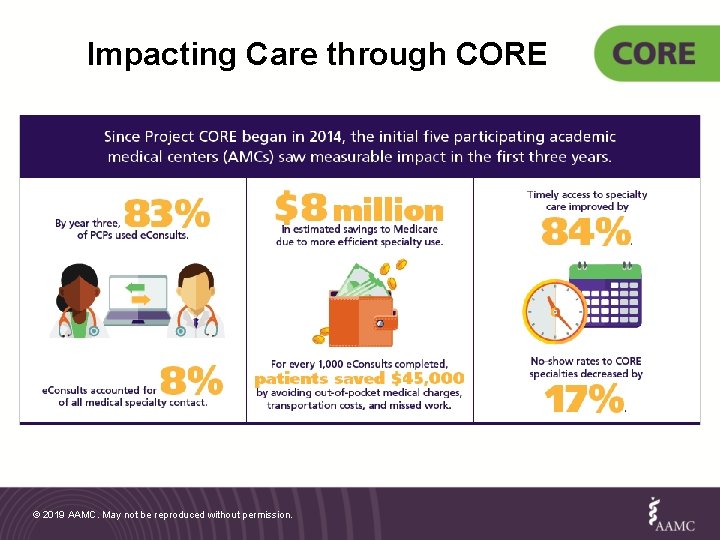
Access to Specialty Care • Timelier access to specialty care by enabling more patients to be managed in primary care, increasing capacity in specialty clinics for new patients and higher acuity patients Timely access to specialty care improved by 84% © 2019 AAMC. May not be reproduced without permission. 5% increase in new patients
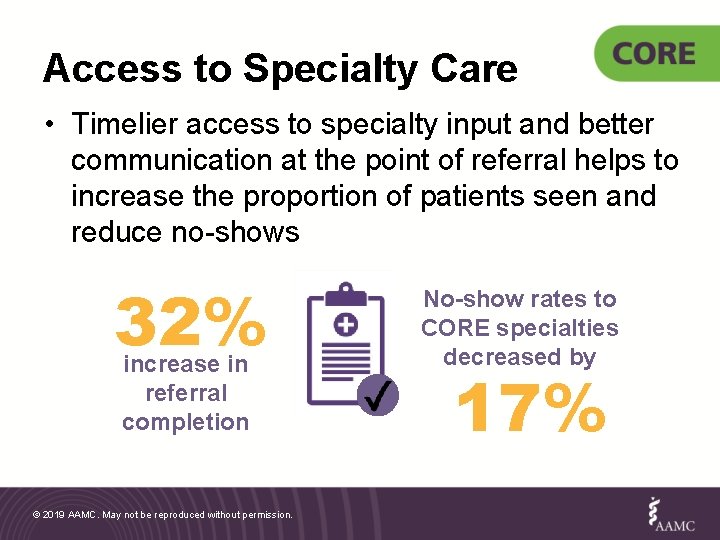
Access to Specialty Care • Timelier access to specialty input and better communication at the point of referral helps to increase the proportion of patients seen and reduce no-shows 32% increase in referral completion © 2019 AAMC. May not be reproduced without permission. No-show rates to CORE specialties decreased by 17%
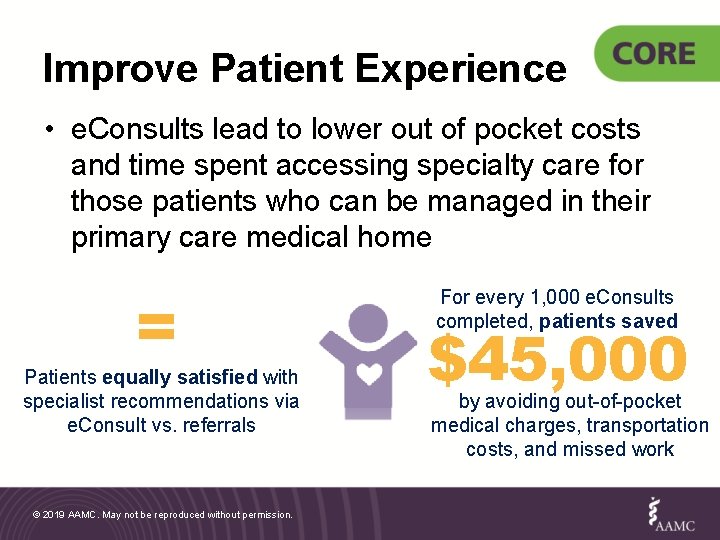
Improve Patient Experience • e. Consults lead to lower out of pocket costs and time spent accessing specialty care for those patients who can be managed in their primary care medical home = Patients equally satisfied with specialist recommendations via e. Consult vs. referrals © 2019 AAMC. May not be reproduced without permission. For every 1, 000 e. Consults completed, patients saved $45, 000 by avoiding out-of-pocket medical charges, transportation costs, and missed work
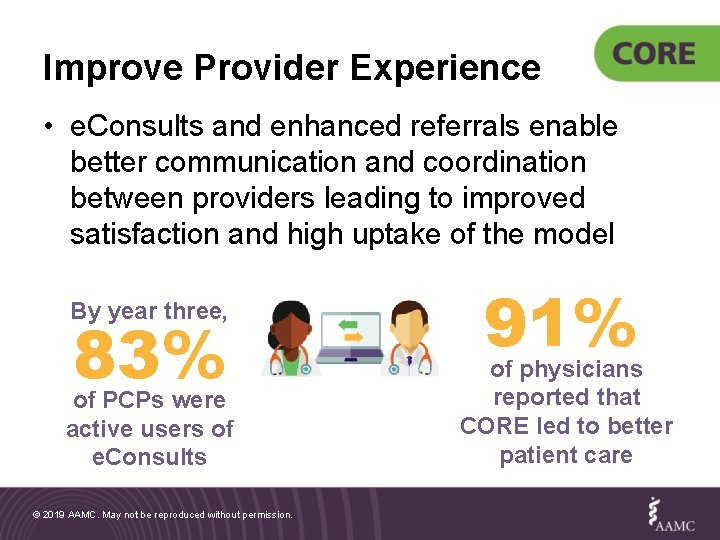
Improve Provider Experience • e. Consults and enhanced referrals enable better communication and coordination between providers leading to improved satisfaction and high uptake of the model By year three, 83% of PCPs were active users of e. Consults © 2019 AAMC. May not be reproduced without permission. 91% of physicians reported that CORE led to better patient care
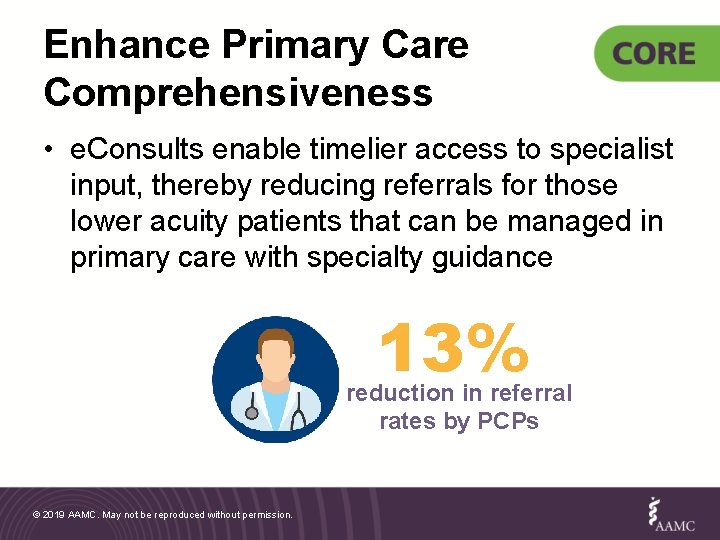
Enhance Primary Care Comprehensiveness • e. Consults enable timelier access to specialist input, thereby reducing referrals for those lower acuity patients that can be managed in primary care with specialty guidance 13% reduction in referral rates by PCPs © 2019 AAMC. May not be reproduced without permission.
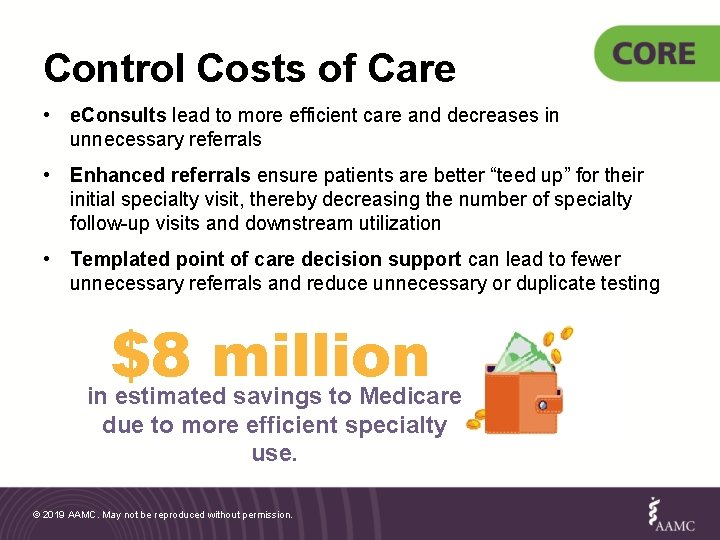
Control Costs of Care • e. Consults lead to more efficient care and decreases in unnecessary referrals • Enhanced referrals ensure patients are better “teed up” for their initial specialty visit, thereby decreasing the number of specialty follow-up visits and downstream utilization • Templated point of care decision support can lead to fewer unnecessary referrals and reduce unnecessary or duplicate testing $8 million in estimated savings to Medicare due to more efficient specialty use. © 2019 AAMC. May not be reproduced without permission.
“ e. Consults have lessened patient wait times, reduced unnecessary referrals, and improved collaborative efforts amongst providers. Hope to see all specialties utilizing e. Consults in the future. - AMC PCP participating in Project CORE © 2019 AAMC. May not be reproduced without permission. ”
“ “I was in the process of referring [the patient] to Orthopedic clinic, however, with the Enhanced Referral, it recommended x-rays and an e. Consult, which I did. This worked very well and helped prevent an unnecessary referral visit. ” ” - AMC PCP experience with enhanced referrals © 2019 AAMC. May not be reproduced without permission.
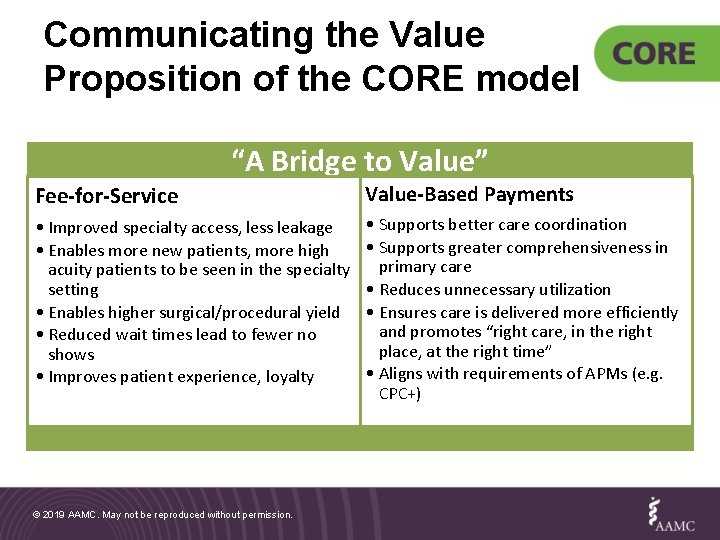
Communicating the Value Proposition of the CORE model “A Bridge to Value” Fee-for-Service Value-Based Payments • Improved specialty access, less leakage • Enables more new patients, more high acuity patients to be seen in the specialty setting • Enables higher surgical/procedural yield • Reduced wait times lead to fewer no shows • Improves patient experience, loyalty • Supports better care coordination • Supports greater comprehensiveness in primary care • Reduces unnecessary utilization • Ensures care is delivered more efficiently and promotes “right care, in the right place, at the right time” • Aligns with requirements of APMs (e. g. CPC+) © 2019 AAMC. May not be reproduced without permission.
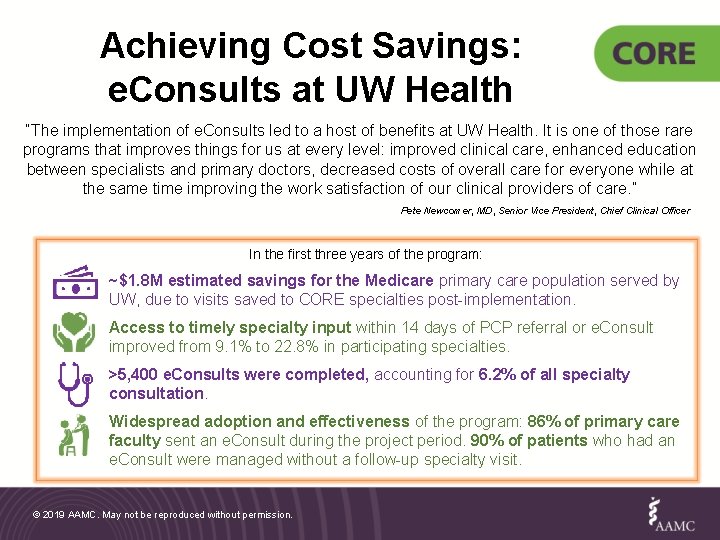
Achieving Cost Savings: e. Consults at UW Health “The implementation of e. Consults led to a host of benefits at UW Health. It is one of those rare programs that improves things for us at every level: improved clinical care, enhanced education between specialists and primary doctors, decreased costs of overall care for everyone while at the same time improving the work satisfaction of our clinical providers of care. ” Pete Newcomer, MD, Senior Vice President, Chief Clinical Officer In the first three years of the program: ~$1. 8 M estimated savings for the Medicare primary care population served by UW, due to visits saved to CORE specialties post-implementation. Access to timely specialty input within 14 days of PCP referral or e. Consult improved from 9. 1% to 22. 8% in participating specialties. >5, 400 e. Consults were completed, accounting for 6. 2% of all specialty consultation. Widespread adoption and effectiveness of the program: 86% of primary care faculty sent an e. Consult during the project period. 90% of patients who had an e. Consult were managed without a follow-up specialty visit. © 2019 AAMC. May not be reproduced without permission.
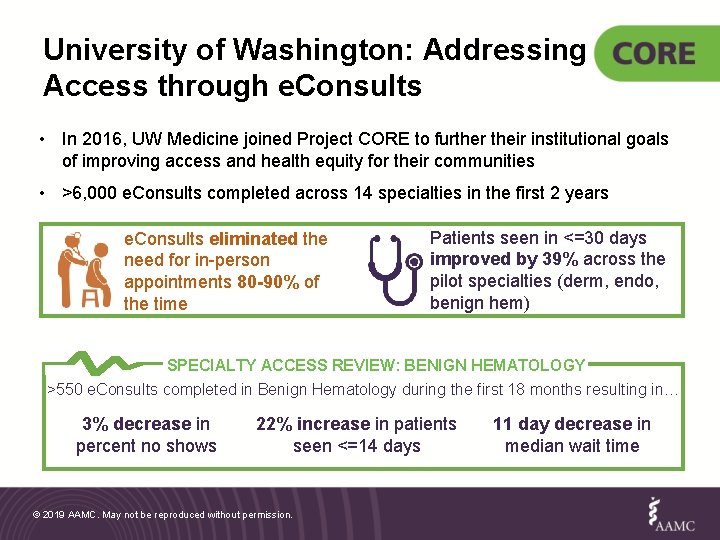
University of Washington: Addressing Access through e. Consults • In 2016, UW Medicine joined Project CORE to further their institutional goals of improving access and health equity for their communities • >6, 000 e. Consults completed across 14 specialties in the first 2 years e. Consults eliminated the need for in-person appointments 80 -90% of the time Patients seen in <=30 days improved by 39% across the pilot specialties (derm, endo, benign hem) SPECIALTY ACCESS REVIEW: BENIGN HEMATOLOGY >550 e. Consults completed in Benign Hematology during the first 18 months resulting in… 3% decrease in percent no shows 22% increase in patients seen <=14 days © 2019 AAMC. May not be reproduced without permission. 11 day decrease in median wait time
Participation in the CORE Collaborative © 2019 AAMC. May not be reproduced without permission.
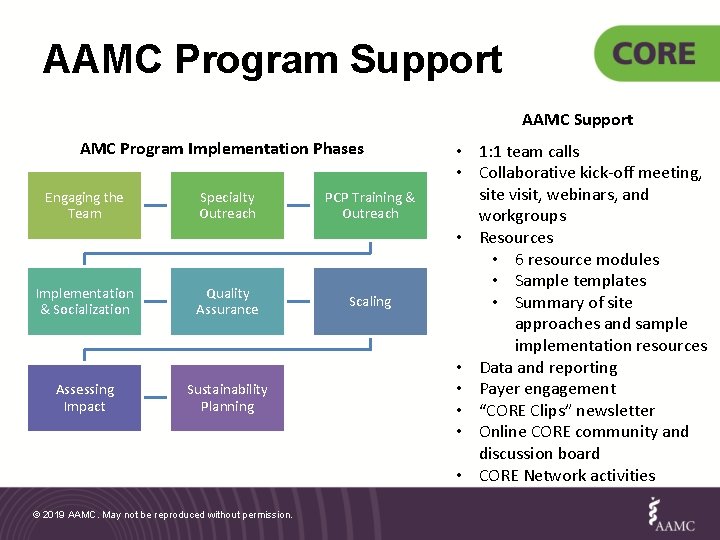
AAMC Program Support AAMC Support AMC Program Implementation Phases Engaging the Team Specialty Outreach PCP Training & Outreach Implementation & Socialization Quality Assurance Scaling Assessing Impact Sustainability Planning © 2019 AAMC. May not be reproduced without permission. • 1: 1 team calls • Collaborative kick-off meeting, site visit, webinars, and workgroups • Resources • 6 resource modules • Sample templates • Summary of site approaches and sample implementation resources • Data and reporting • Payer engagement • “CORE Clips” newsletter • Online CORE community and discussion board • CORE Network activities
Q & A THANK YOU! To learn more or to request additional information, visit www. aamc. org/projectcore or email projectcore@aamc. org Scott Shipman, MD, MPH sshipman@aamc. org Meaghan Quinn, MHSA mquinn@aamc. org © 2019 AAMC. May not be reproduced without permission.
Impacting Care through CORE © 2019 AAMC. May not be reproduced without permission.