
Project Choice Supporting those affected by honour based
Project Choice Supporting those affected by honour based violence and abuse across Greater Manchester
Project Choice • Providing practical and emotional support for those affected by all forms of Honour Based Violence and Abuse and forced marriage • We work with all victims regardless of age, gender and sexual orientation • We work across Greater Manchester and all our services are FREE of charge • The project is a two year pilot project funded by the Manchester Mayor’s Office • The project provides specialist, locally based, one-to-one, culturally appropriate services.
What can Project Choice offer you? Work in a multi-agency approach; with social services, IDVAs, police, etc. • Assess risk, threat and harm for all individuals involved in cases. • One to one support for victims. • Advocacy and advice for victims. • Telephone and email advice for professionals. • Attend strategy meetings providing specialist overview and recommendations. • Attend Legal Planning meetings. • Attend MARAC meetings when appropriate. • In-depth training to professionals free of charge through Greater Manchester (healthcare, police, Immigration, local authority)

So-called Honour Based Violence and Abuse • “Honour Based Abuse and Violence. Embraces a variety of crimes of violence (mainly but not exclusively against women), including assault, imprisonment and murder where the person is being punished by their family of their community. They are being punished for actually, or allegedly, undermining what the family or community believe to be the correct code of conduct. ” The Right to Choose: Multi-Agency Statutory Guidance for dealing with Forced Marriage ( 2014) • Honour based abuse and violence does not discriminate on race, religion, or culture. These hidden crimes can affect people from all communities. • Honour can be known by many names – Izzat, Abaroo, Sharaf, Sharam, Maryada • Dishonourable actions can include: inappropriate clothes, drugs and alcohol, being in a relationship, pregnancy outside of wedlock and homosexuality

Honour Killings Shafilea Ahmed (2003): Murdered by parents for being too ‘westernized’ Laura Wilson (2010): Murdered by boyfriend for revealing their relationship to his parents Banaz Mahmod (2006): Raped and murdered for walking out of a forced marriage Samia Shahid (2016): Murdered by father and exhusband for getting a divorce.
Forced Marriage • “a forced marriage is when one or both of the spouses do not consent to the marriage and duress is involved. Duress includes physical, emotional and psychological pressure. ” UK Government • In 2017 the FMU dealt with 1, 196 cases • FM may take place to control unwanted behaviour and sexuality, financial gain, providing care for a vulnerable adult and immigration. • Legislation against FM has existed since 2007, however it was made a criminal offence in 2014. • FM Protection Orders exist to protect victims and these can be obtained by third parties.
Coercive and Controlling Behaviour • “Controlling or coercive behaviour does not relate to a single incident, it is a purposeful patter of behaviour which takes place over time in order for one individual to exert power, control or coercion over another” Home Office – Statutory Guidance • Challenges around understandings of ‘consent’ and ‘choice’ • Consent must be informed • Some vulnerable adults lack the capacity to consent • How does someone get supported to be able to recognize their experiences and say no • Honour based violence cases have coercive control elements – which the victim or the perpetrators might not recognize • It’s important to look past a specific action and consider both the motivation behind the action and how the person involved feels
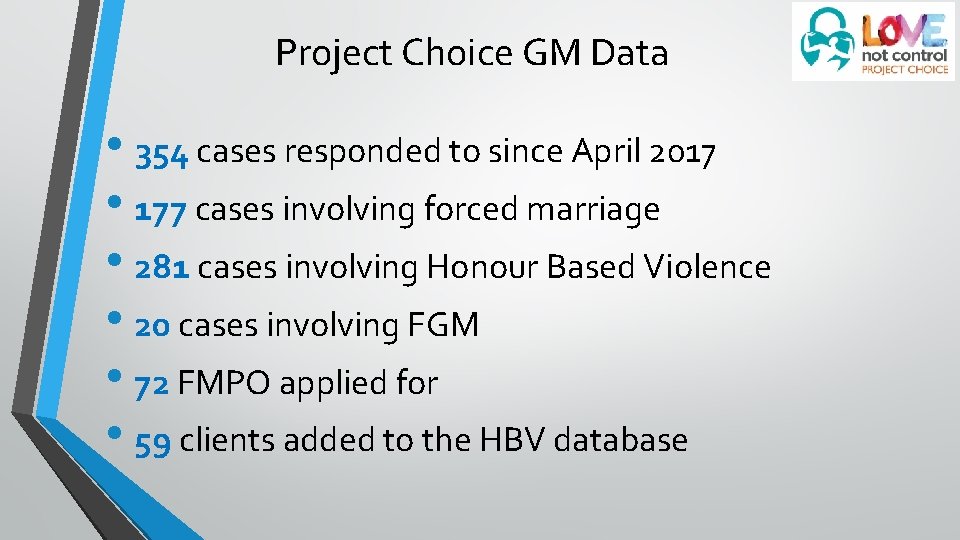
Project Choice GM Data • 354 cases responded to since April 2017 • 177 cases involving forced marriage • 281 cases involving Honour Based Violence • 20 cases involving FGM • 72 FMPO applied for • 59 clients added to the HBV database
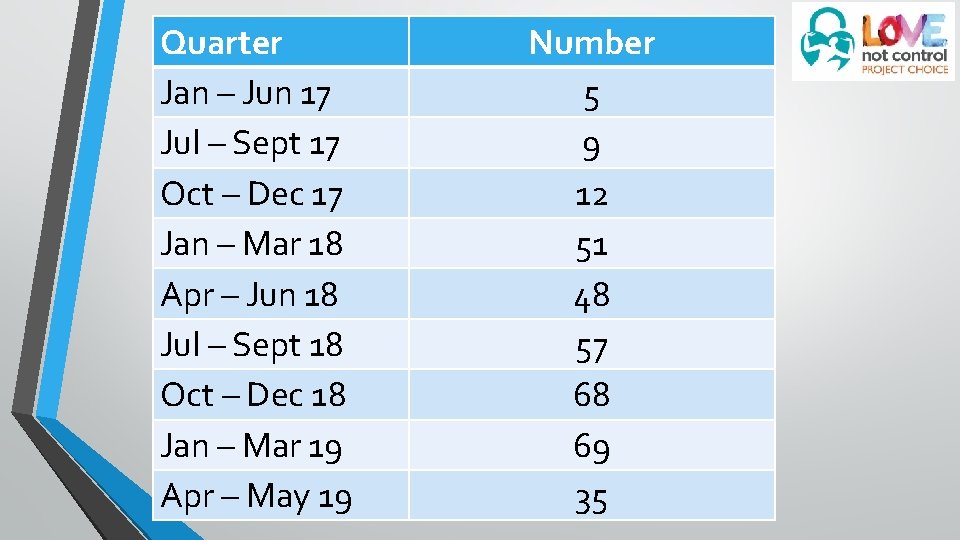
Quarter Jan – Jun 17 Jul – Sept 17 Oct – Dec 17 Jan – Mar 18 Apr – Jun 18 Jul – Sept 18 Oct – Dec 18 Jan – Mar 19 Apr – May 19 Number 5 9 12 51 48 57 68 69 35
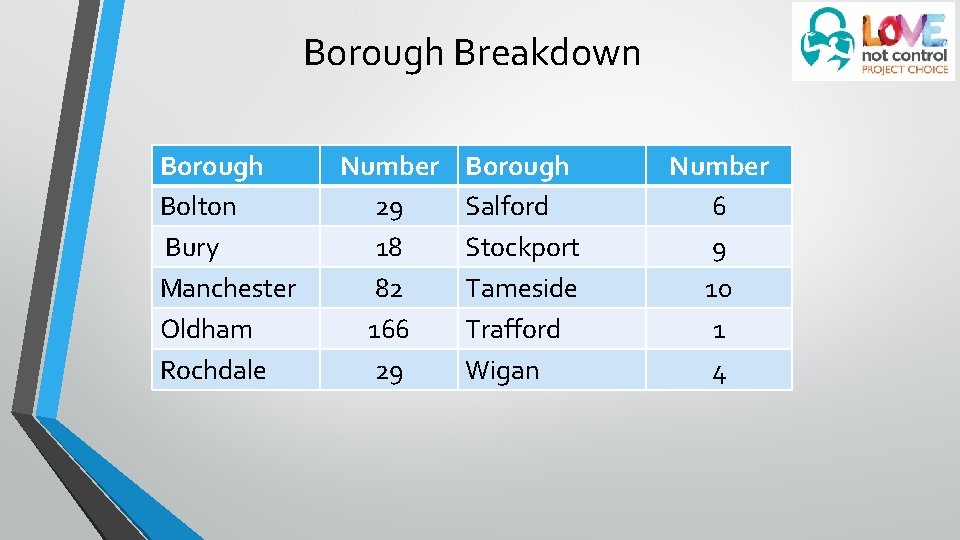
Borough Breakdown Borough Bolton Bury Manchester Oldham Rochdale Number 29 18 82 166 29 Borough Salford Stockport Tameside Trafford Wigan Number 6 9 10 1 4
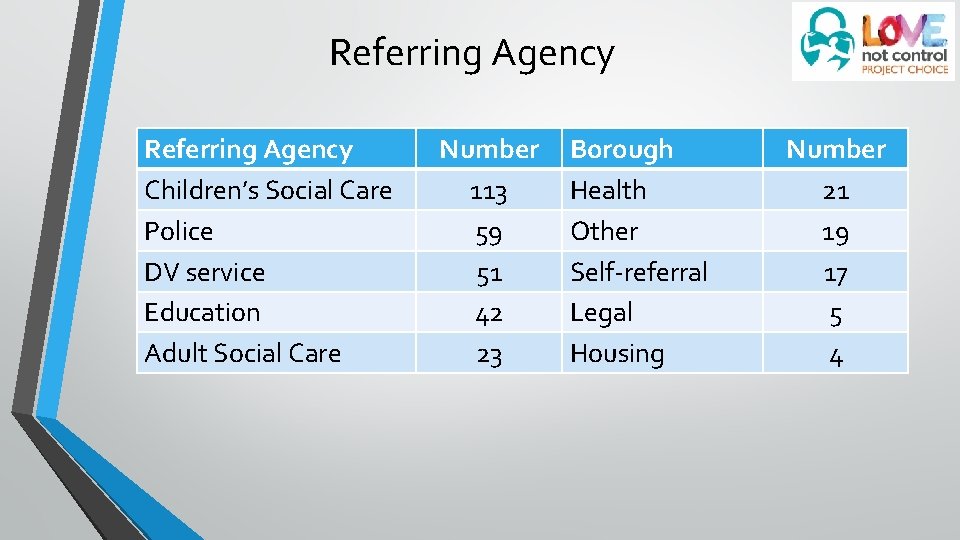
Referring Agency Children’s Social Care Police DV service Education Adult Social Care Number 113 59 51 42 23 Borough Health Other Self-referral Legal Housing Number 21 19 17 5 4
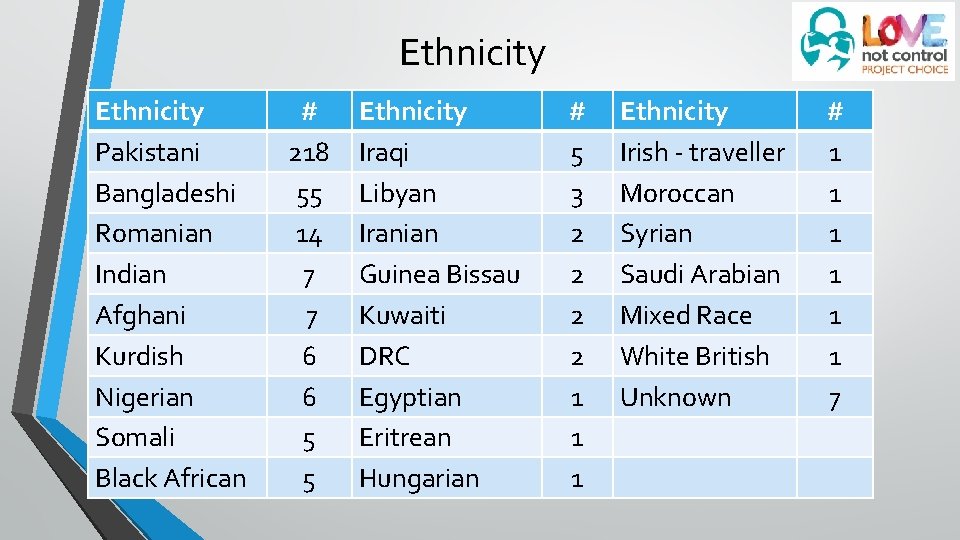
Ethnicity Pakistani Bangladeshi Romanian Indian Afghani Kurdish Nigerian Somali Black African # 218 55 14 7 7 6 6 5 5 Ethnicity Iraqi Libyan Iranian Guinea Bissau Kuwaiti DRC Egyptian Eritrean Hungarian # 5 3 2 2 1 1 1 Ethnicity Irish - traveller Moroccan Syrian Saudi Arabian Mixed Race White British Unknown # 1 1 1 7
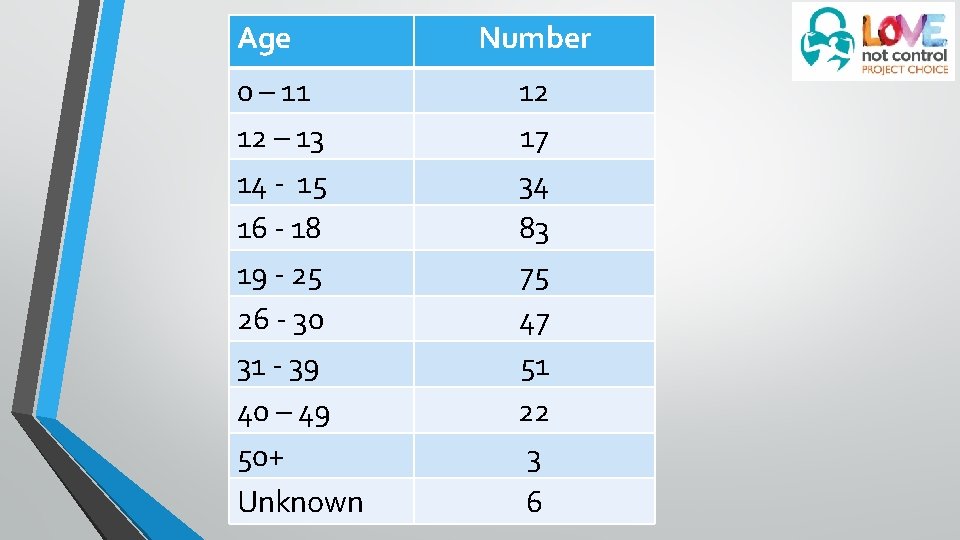
Age 0 – 11 12 – 13 14 - 15 16 - 18 19 - 25 26 - 30 31 - 39 40 – 49 50+ Unknown Number 12 17 34 83 75 47 51 22 3 6
Project Choice GM data • 53 (15%) clients were asylum seekers, refugees or NRPF • 18 (5%) clients were male • 6 (2%) LGBT client • 28 (8%) of the clients stated that they had a disability • 75 (21%) clients also identified as having mental health issues or seeking support for their mental health • 13 (4%) clients also had substance misuse issues
Rochdale and HBVA • 29 cases responded to since Nov • 2017 Referring Agency: • 1 male client • 4 clients NRPF • 7 clients were pregnant; 5 of which • 10: Children’s Social Care were concealed • 6: Police • 10 clients also identified as having • 3: Self-referral, Health, DV Service mental health issues • 2: Other • 4 clients had substance misuse • 1 each from Education and Adult issues Social Care • Ethnicity: • • 24: Pakistani 3: Bangladeshi • 3 FMPOs obtained • 3 clients supported with housing or • homeless prevention 4 clients added to HBV database
One Chance Rule “You may only have the one chance to save a person’s life so get as much information as you can in the one chance you may ever have” Manchester Safeguarding Board’s: One Chance Rule Manchester’s Forced Marriage and ‘so called’ Honour Based Violence and Abuse Protocol 2018
Key Points on HBV/A • One Chance Rule should always be used when working with victims of HBV and FM (condensed version – refer to GMP Intranet for full details) • • See victims on their own – this should be done immediately and in secure and private place Reassure the victim about confidentiality Accept what is being said to you; Explain to the victim options and possible outcomes. Respect their wishes Obtain full details of the victim and provide them with contact details for support Agree a safe way to make contact Refer the case to the relevant person/agency Consider the need for immediate police involvement, protection and placement away from family • It is important to never mediate between victims of HBV/FM and their family
How to refer into Project Choice Email: projectchoice@oldham. gov. uk Phone: 0161 770 2999 Website: www. oldham. gov. uk/projectchoice • Referrals taken from all statutory agencies, third sector and self referrals
- Slides: 19