
Project Background Project background Chemistry in museums The
Project Background

Project background Chemistry in museums The National Academies of Science published a report and a guide about effective chemistry communication in 2016. The report noted that chemistry is one of the least represented disciplines in science museums
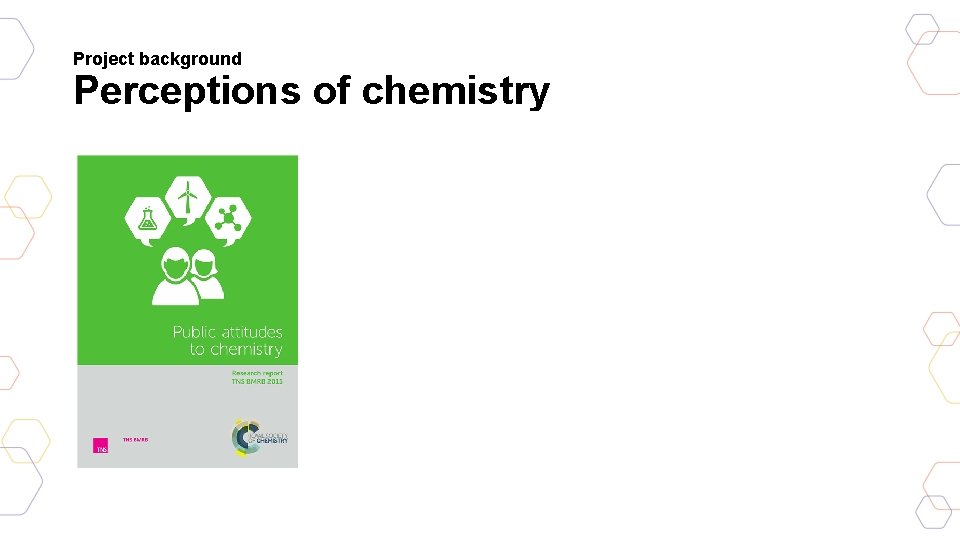
Project background Perceptions of chemistry
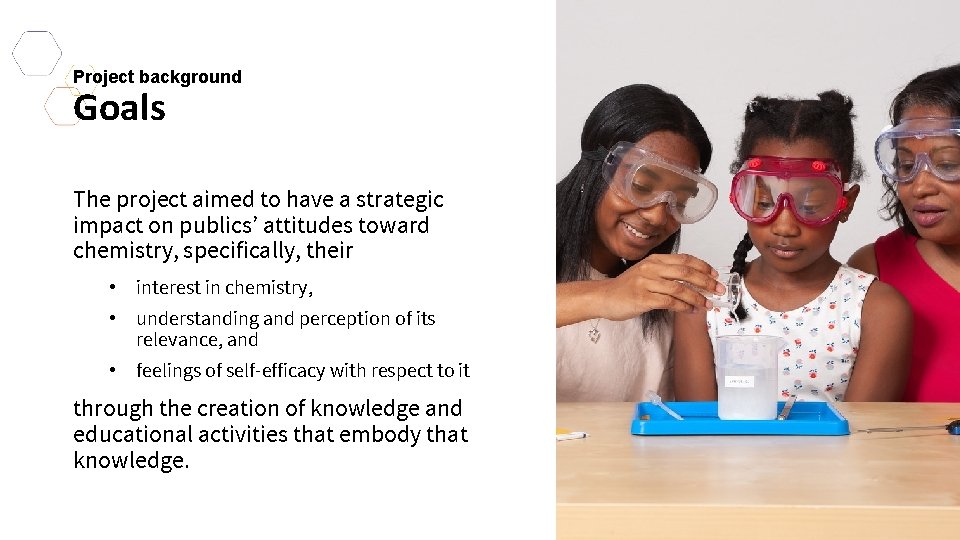
Project background Goals The project aimed to have a strategic impact on publics’ attitudes toward chemistry, specifically, their • interest in chemistry, • understanding and perception of its relevance, and • feelings of self-efficacy with respect to it through the creation of knowledge and educational activities that embody that knowledge.
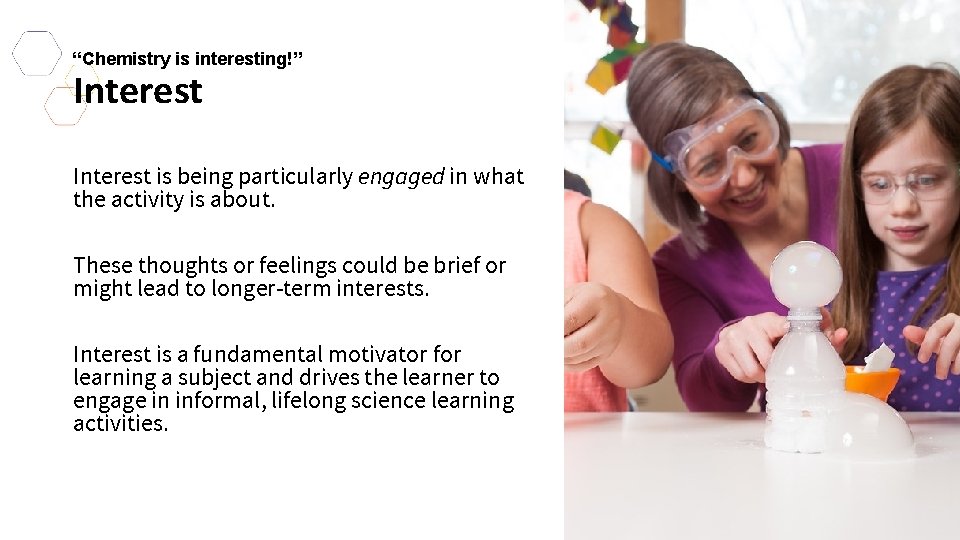
“Chemistry is interesting!” Interest is being particularly engaged in what the activity is about. These thoughts or feelings could be brief or might lead to longer-term interests. Interest is a fundamental motivator for learning a subject and drives the learner to engage in informal, lifelong science learning activities.
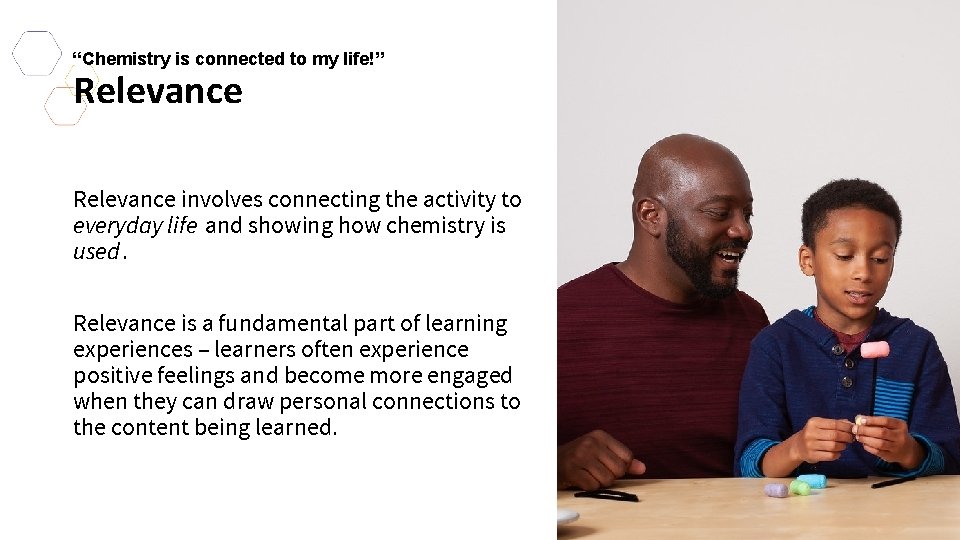
“Chemistry is connected to my life!” Relevance involves connecting the activity to everyday life and showing how chemistry is used. Relevance is a fundamental part of learning experiences – learners often experience positive feelings and become more engaged when they can draw personal connections to the content being learned.
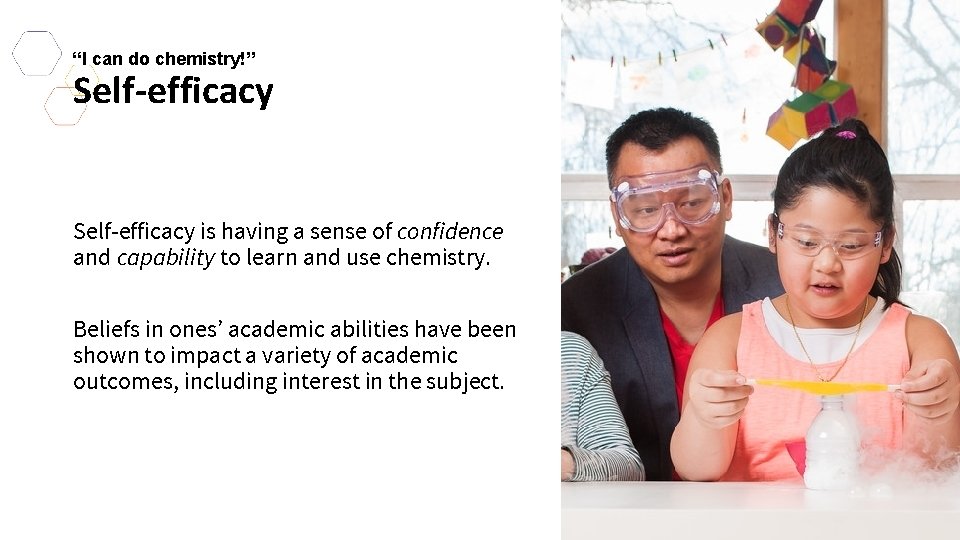
“I can do chemistry!” Self-efficacy is having a sense of confidence and capability to learn and use chemistry. Beliefs in ones’ academic abilities have been shown to impact a variety of academic outcomes, including interest in the subject.
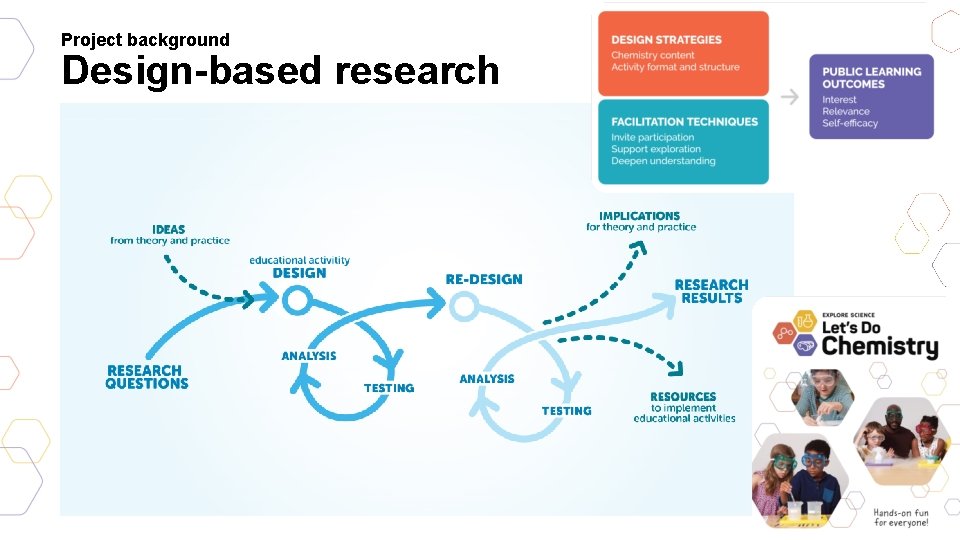
Project background Design-based research
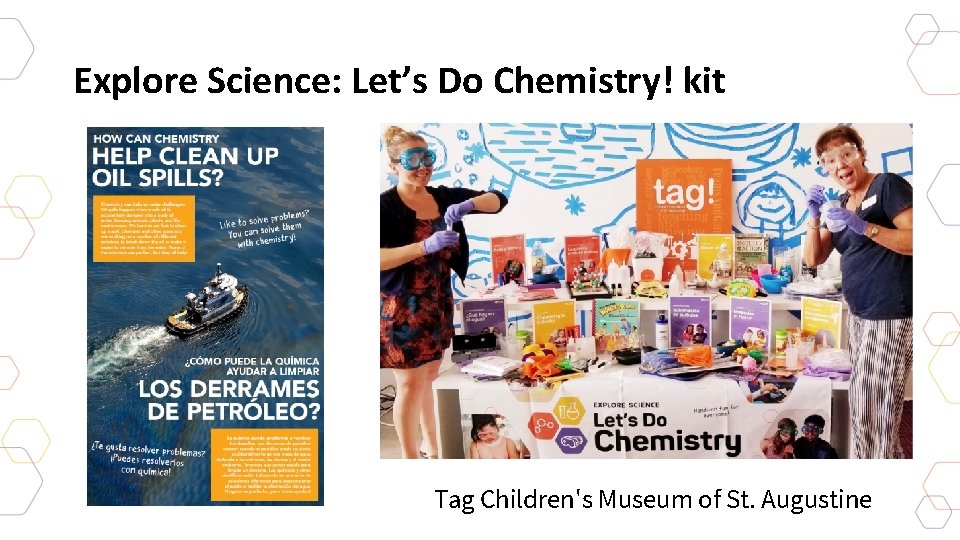
Explore Science: Let’s Do Chemistry! kit Tag Children's Museum of St. Augustine
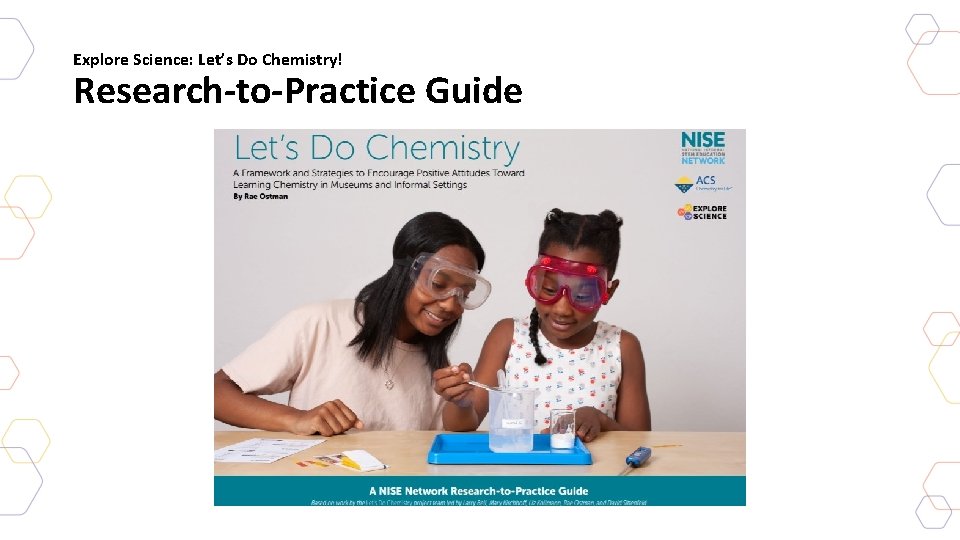
Explore Science: Let’s Do Chemistry! Research-to-Practice Guide
Research Overview
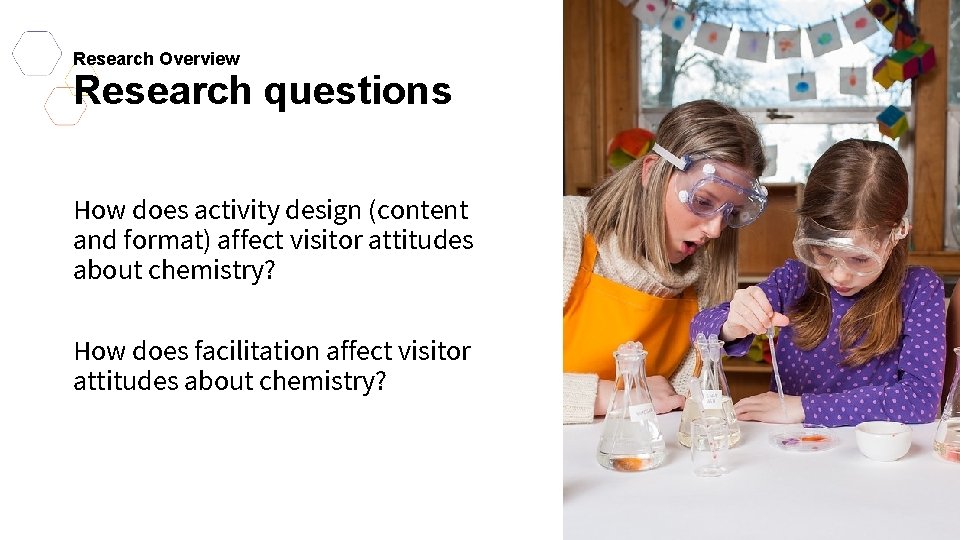
Research Overview Research questions How does activity design (content and format) affect visitor attitudes about chemistry? How does facilitation affect visitor attitudes about chemistry?
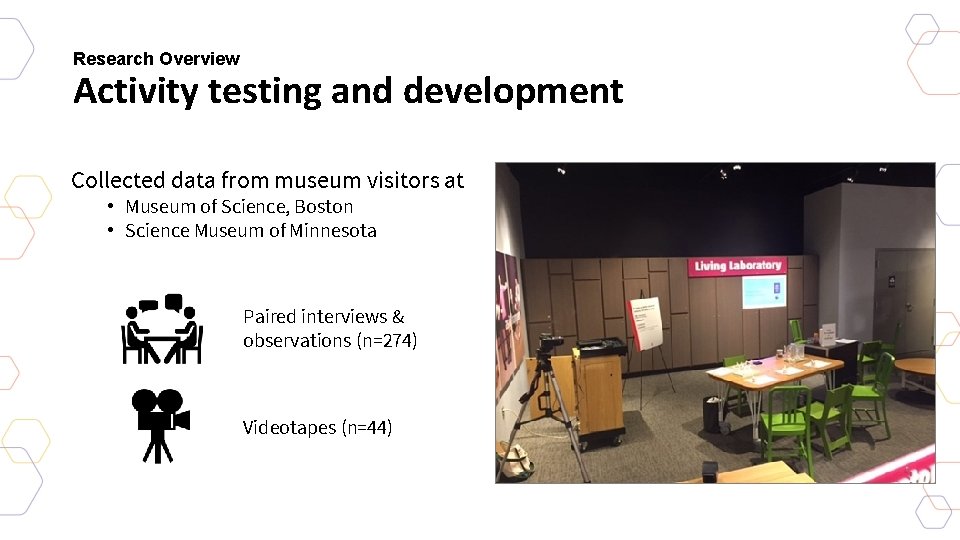
Research Overview Activity testing and development Collected data from museum visitors at • Museum of Science, Boston • Science Museum of Minnesota Paired interviews & observations (n=274) Videotapes (n=44)
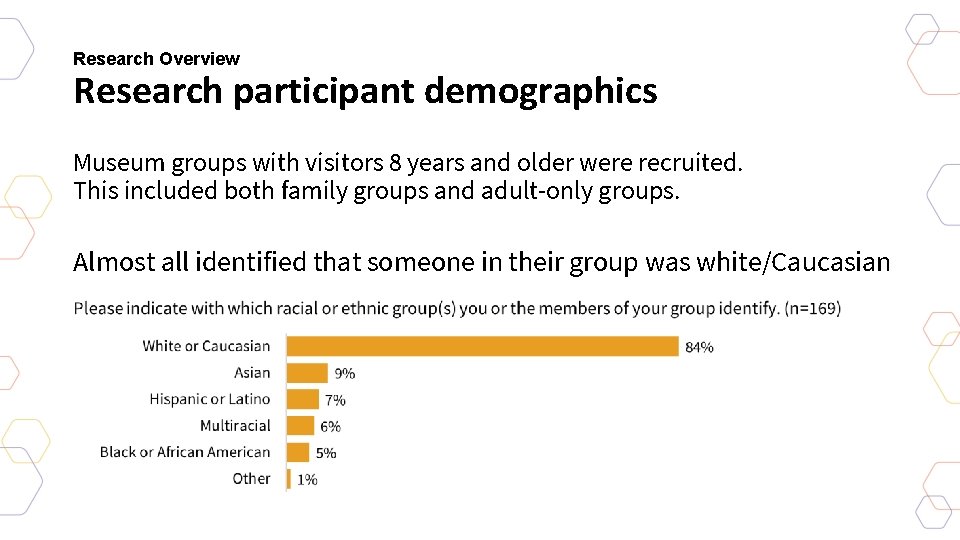
Research Overview Research participant demographics Museum groups with visitors 8 years and older were recruited. This included both family groups and adult-only groups. Almost all identified that someone in their group was white/Caucasian
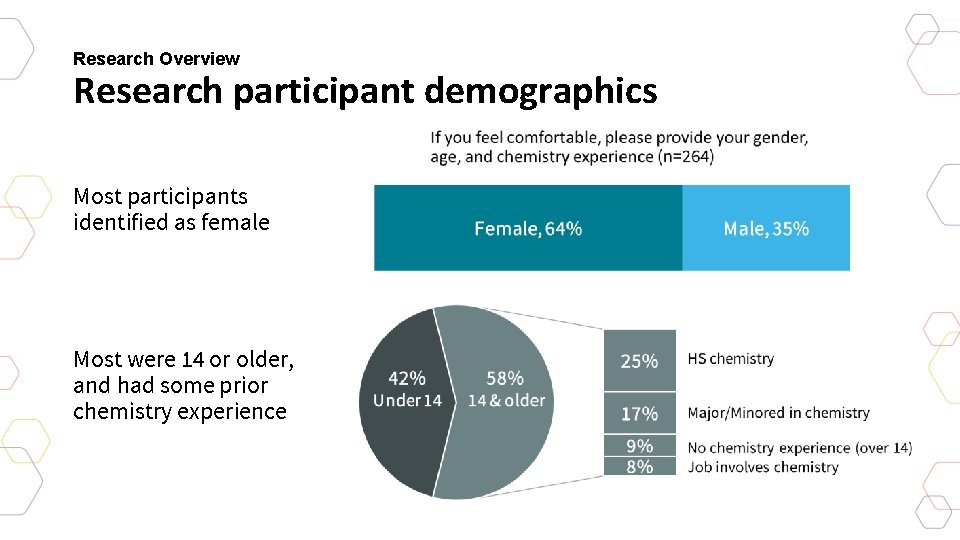
Research Overview Research participant demographics Most participants identified as female Most were 14 or older, and had some prior chemistry experience

Workshop Overview
Workshop Overview Goals and Expectations In this workshop you will: • Learn how to adapt a hands-on chemistry activity to support the IRS framework by completing the given activity exercises • Learn how to train others in supporting increased IRS for hands-on activity participants • Participate in all aspects of the workshop to the best of your ability • Complete pre-online session preparatory work • Attend five online sessions • Complete post-online session written exercises
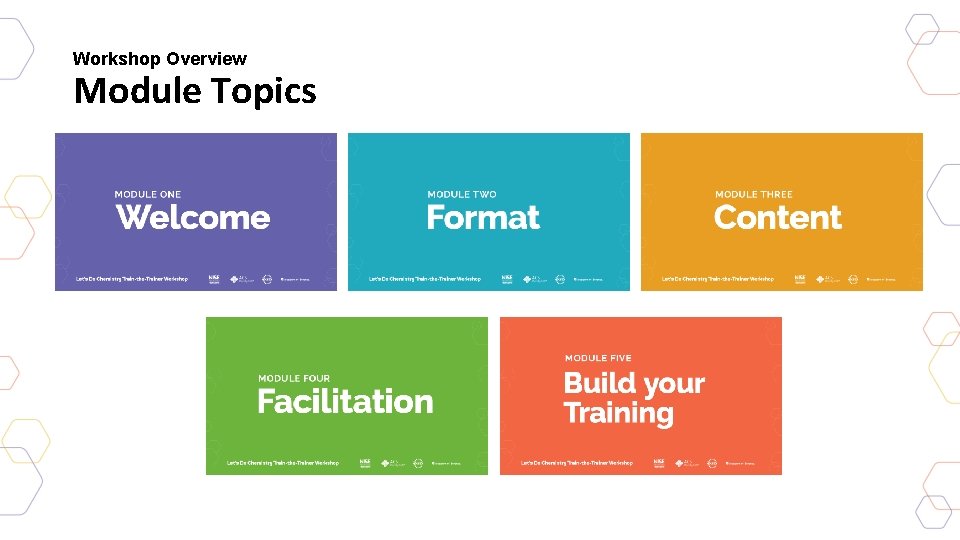
Workshop Overview Module Topics
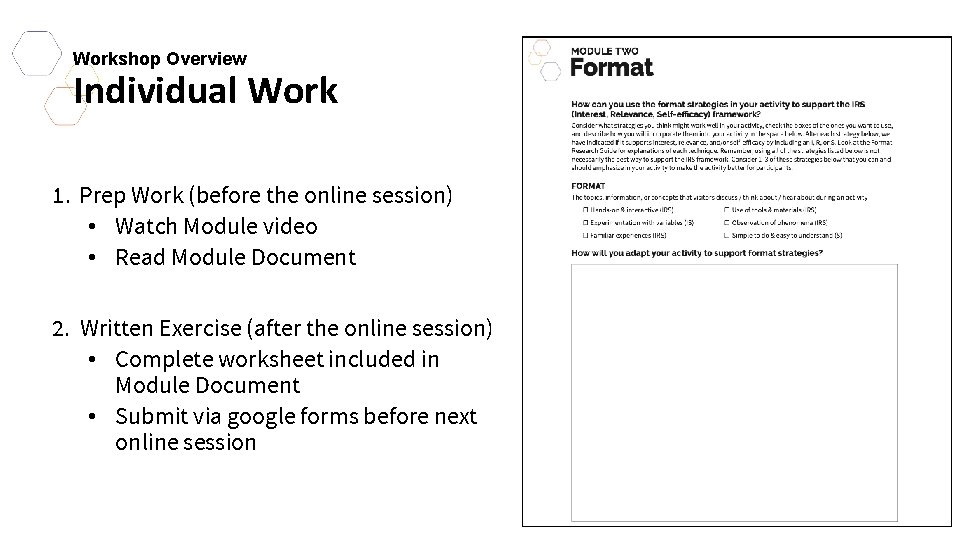
Workshop Overview Individual Work 1. Prep Work (before the online session) • Watch Module video • Read Module Document 2. Written Exercise (after the online session) • Complete worksheet included in Module Document • Submit via google forms before next online session
Workshop Overview Online Session • Review summary of findings • Small group discussions to workshop activity adaptation ideas • Discuss changes with large group
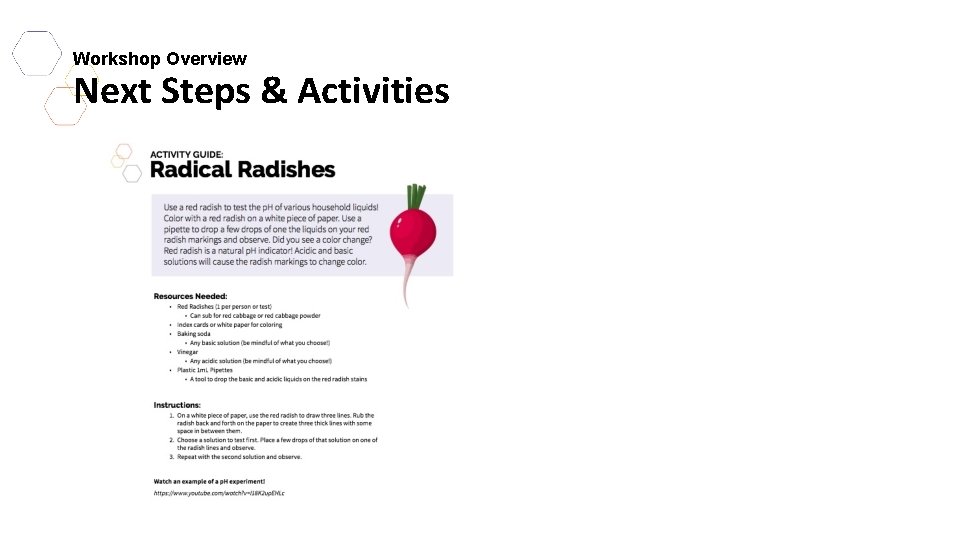
Workshop Overview Next Steps & Activities
Workshop Overview Participant Stories
Welcome Module Credits National Academies of Sciences, Engineering, and Medicine. (2016). Effective chemistry communication in informal environments. The National Academies Press: Washington, D. C. https: //www. nap. edu/catalog/21790/effective-chemistry-communication-in-informalenvironments TNS BMRB, F. M. (2015). Public Attitudes to Chemistry (Research Report). Retrieved from Royal Society of Chemistry website: https: //www. rsc. org/globalassets/04 -campaigningoutreach/campaigning/public-attitudes-to-chemistry-researchreport. pdf Collins, A. , Joseph, D. , & Bielaczyc, K. (2004). Design research: Theoretical and methodological issues. The Journal of the Learning Sciences, 13 (1), 15 -42.
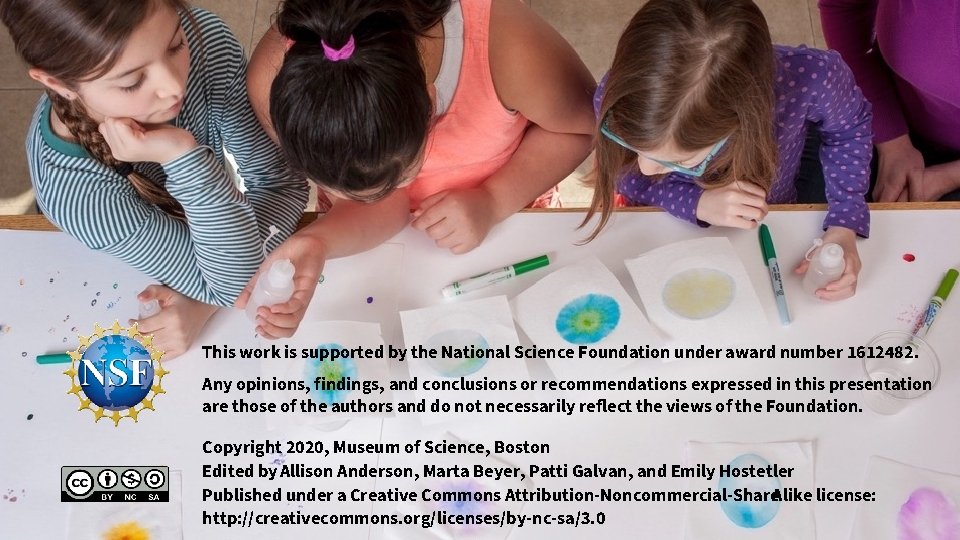
This work is supported by the National Science Foundation under award number 1612482. Any opinions, findings, and conclusions or recommendations expressed in this presentation are those of the authors and do not necessarily reflect the views of the Foundation. Copyright 2020, Museum of Science, Boston Edited by Allison Anderson, Marta Beyer, Patti Galvan, and Emily Hostetler Published under a Creative Commons Attribution‑Noncommercial‑Share. Alike license: http: //creativecommons. org/licenses/by‑nc‑sa/3. 0
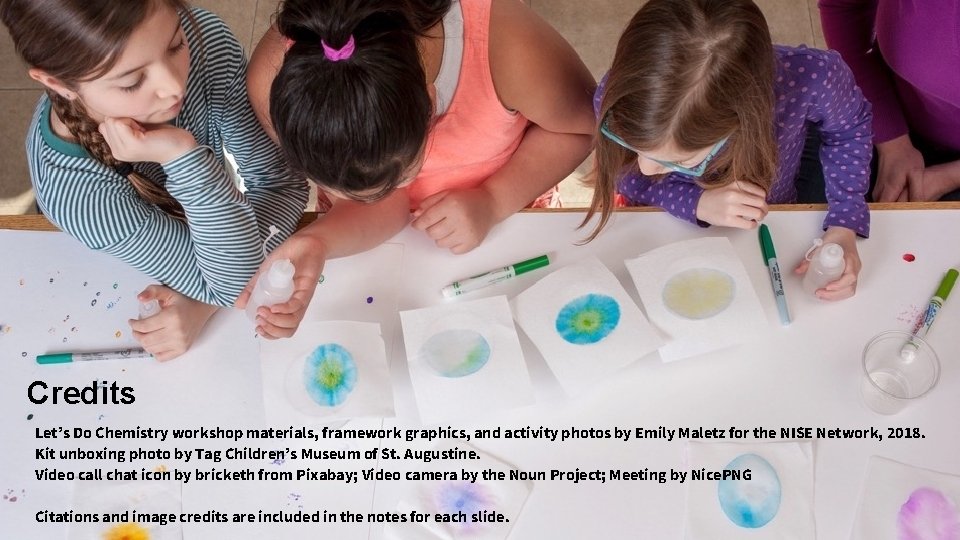
Credits Let’s Do Chemistry workshop materials, framework graphics, and activity photos by Emily Maletz for the NISE Network, 2018. Kit unboxing photo by Tag Children’s Museum of St. Augustine. Video call chat icon by bricketh from Pixabay; Video camera by the Noun Project; Meeting by Nice. PNG Citations and image credits are included in the notes for each slide.
Section Header Slide Title • Text
Section Header Slide Title • Text
- Slides: 30