
Project Appraisal Cashflow Corporate Finance 5 Project appraisal

- Slides: 12
Project Appraisal: Cashflow Corporate Finance 5
Project appraisal: cash flow • Identify and apply relevant and incremental cash flows in net present value calculations • Recognize and deal with: – Sunk costs – Incidental costs – Allocated overheads
Quality of information • Information varies greatly in its reliability, which often depends upon its source • The financial manager or analyst is often dependent on the knowledge and experience of other specialists – – – – Relevance Completeness Consistency Accuracy Reliability Timeliness Low cost of collection compared with benefit to be gained by gathering more detail
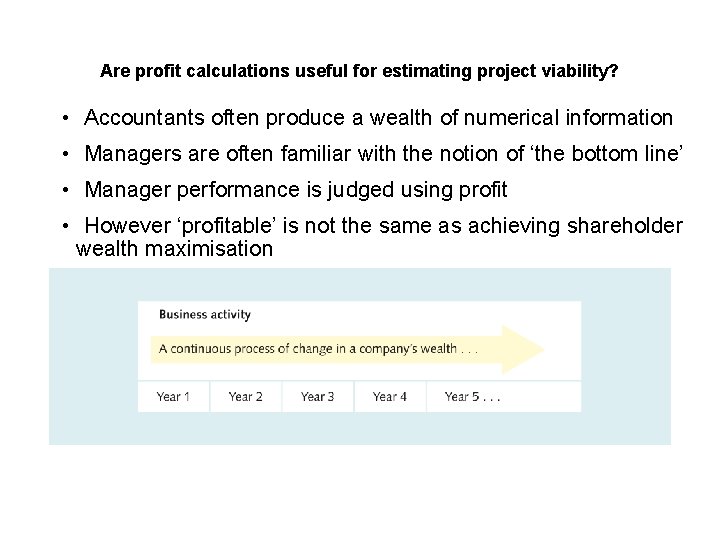
Are profit calculations useful for estimating project viability? • Accountants often produce a wealth of numerical information • Managers are often familiar with the notion of ‘the bottom line’ • Manager performance is judged using profit • However ‘profitable’ is not the same as achieving shareholder wealth maximisation
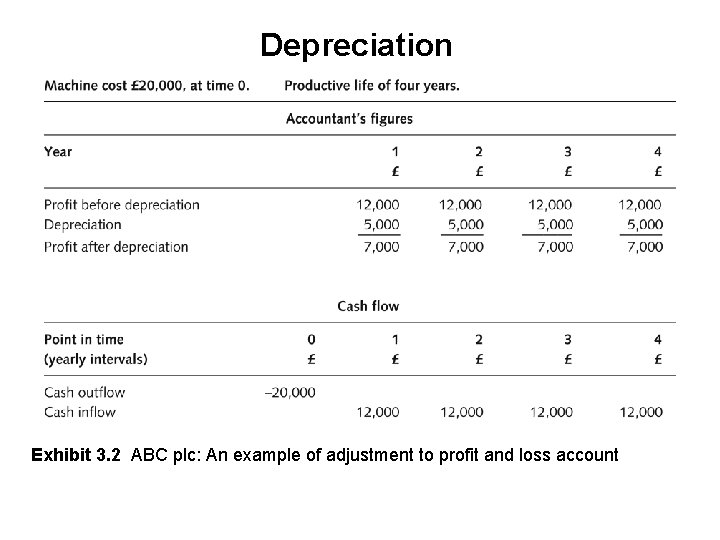
Depreciation Exhibit 3. 2 ABC plc: An example of adjustment to profit and loss account
Working capital
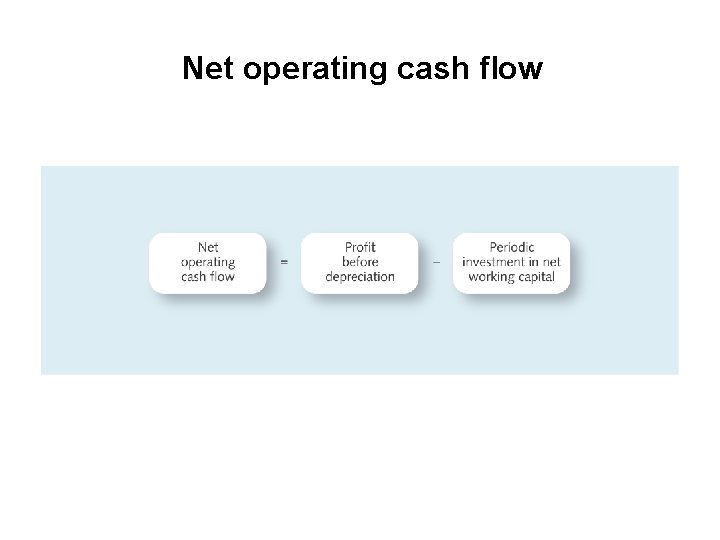
Net operating cash flow
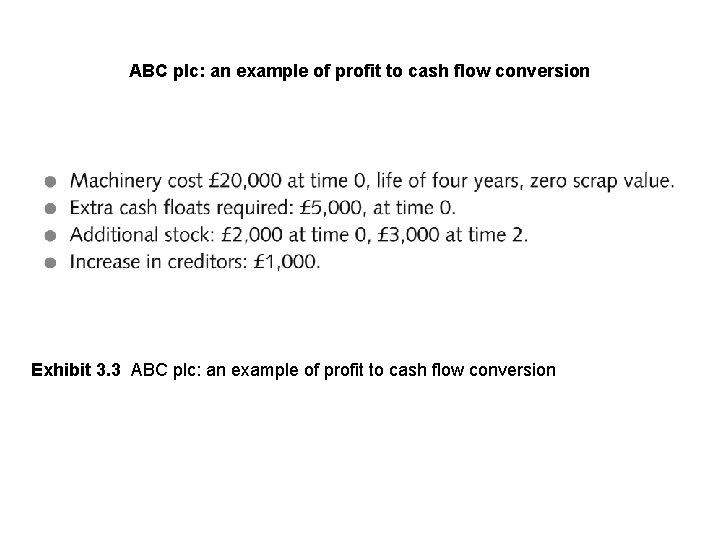
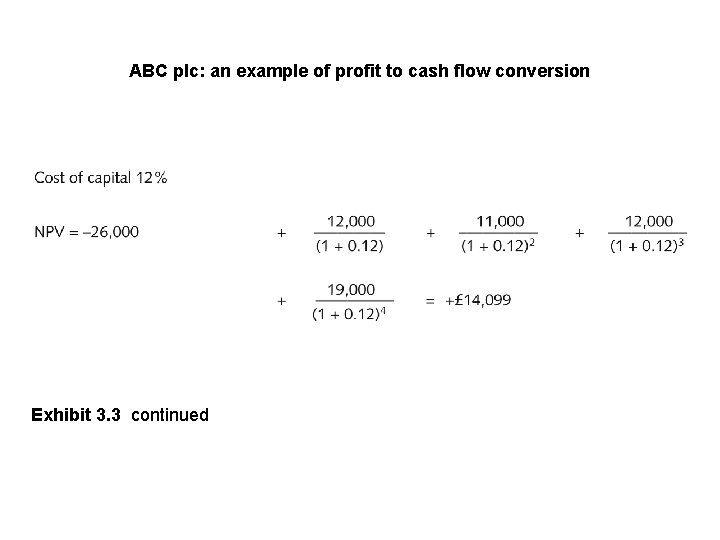
ABC plc: an example of profit to cash flow conversion Exhibit 3. 3 ABC plc: an example of profit to cash flow conversion
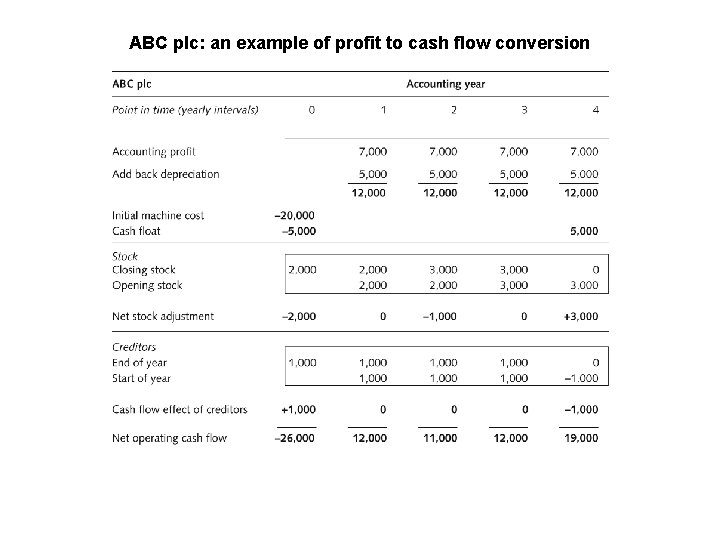
ABC plc: an example of profit to cash flow conversion
ABC plc: an example of profit to cash flow conversion Exhibit 3. 3 continued
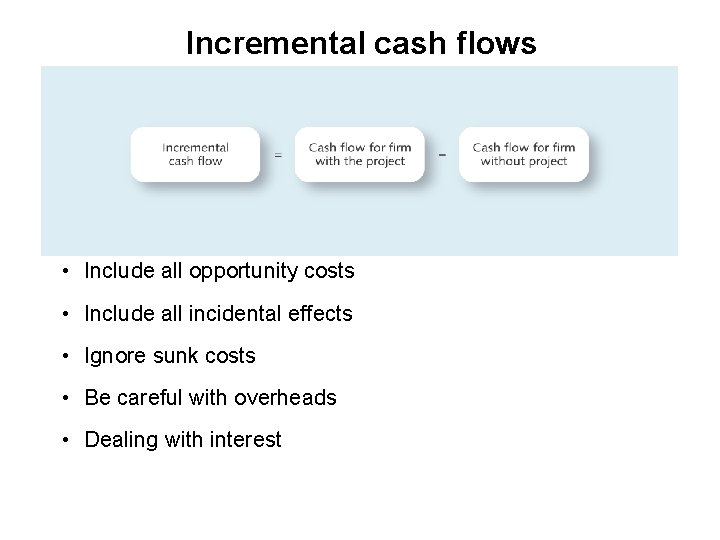
Incremental cash flows • Include all opportunity costs • Include all incidental effects • Ignore sunk costs • Be careful with overheads • Dealing with interest
Lecture review • Raw data have to be checked for accuracy, reliability, timeliness, expense of collection, etc. • Depreciation is not a cash flow and should be excluded. • Profit is a poor substitute for cash flow. • Analyse on the basis of incremental cash flows. – Opportunity costs – Incidental effects – Sunk costs – Allocated overhead – Interest