
Project 4 Simulation and Experimental Testing of Allocation


- Slides: 43
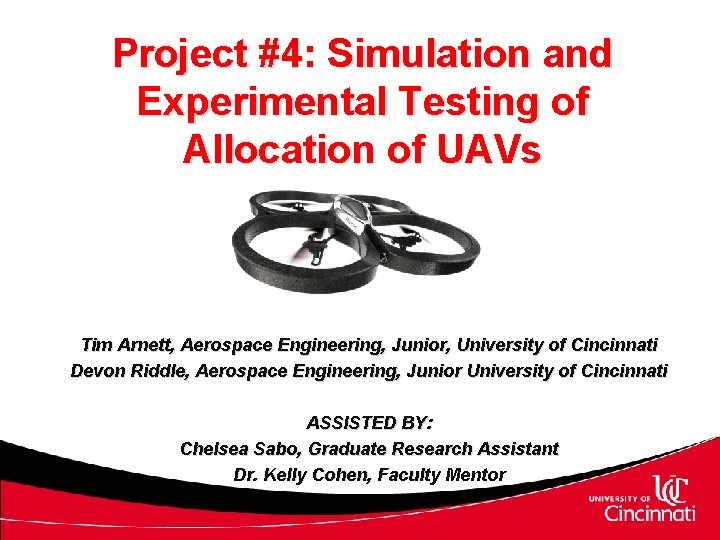
Project #4: Simulation and Experimental Testing of Allocation of UAVs Tim Arnett, Aerospace Engineering, Junior, University of Cincinnati Devon Riddle, Aerospace Engineering, Junior University of Cincinnati ASSISTED BY: Chelsea Sabo, Graduate Research Assistant Dr. Kelly Cohen, Faculty Mentor
2 Outline • • • Applications of UAVs Challenges Project Goals and Objectives Vehicle Routing Problems Experimental Testing – Experimental Setup – Waypoint Navigation Algorithm • AMASE – Why use AMASE? – Overview – Features • Results & Analysis • Acknowledgements • Questions
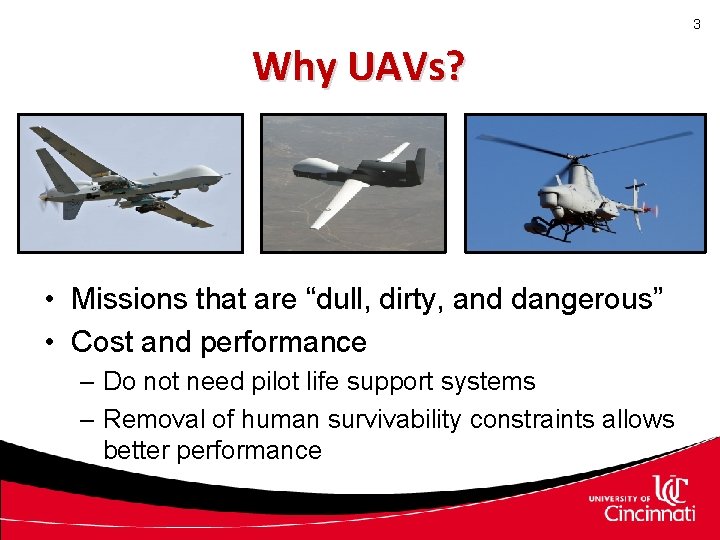
3 Why UAVs? • Missions that are “dull, dirty, and dangerous” • Cost and performance – Do not need pilot life support systems – Removal of human survivability constraints allows better performance
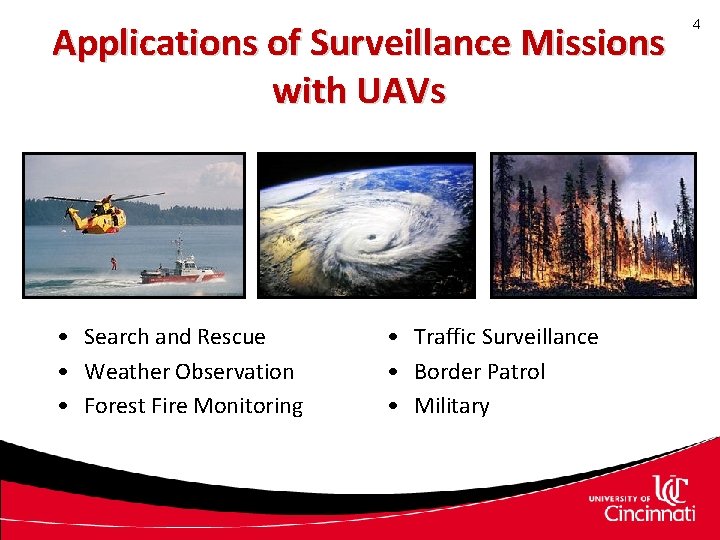
Applications of Surveillance Missions with UAVs • Search and Rescue • Weather Observation • Forest Fire Monitoring • Traffic Surveillance • Border Patrol • Military 4
5 Challenges • Obtaining software and equipment suitable for tests – Systems difficult to obtain and usually expensive • Verifying solutions on proven systems – Systems not always well-documented or fully supported
6 Project Goals • Learn to interface equipment for UAV controller development • Compare two routing solutions for common performance metrics
7 Objectives • Objective 1: Interface with cooperative control development systems – Interface and run algorithms on AR Drones – Interface and run algorithms on AMASE • Objective 2: Validate task allocation algorithm both in simulation and experimentally • Objective 3: Test and compare cooperative control strategies for UAVs – Distance travelled – Delivery time for time critical targets
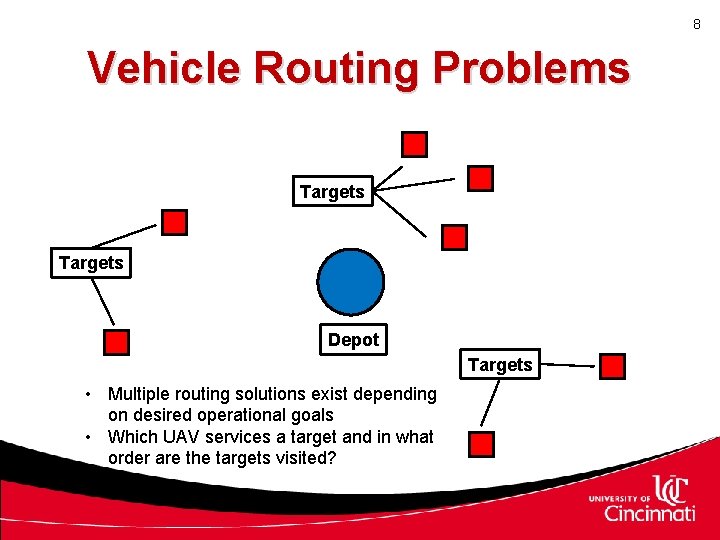
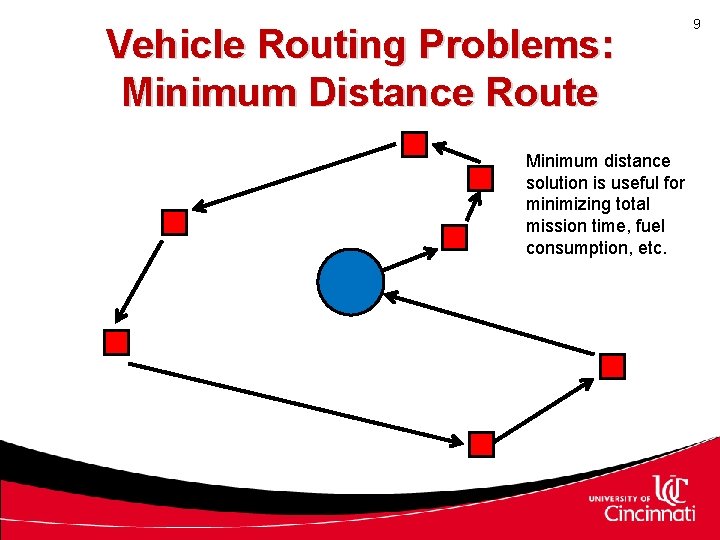
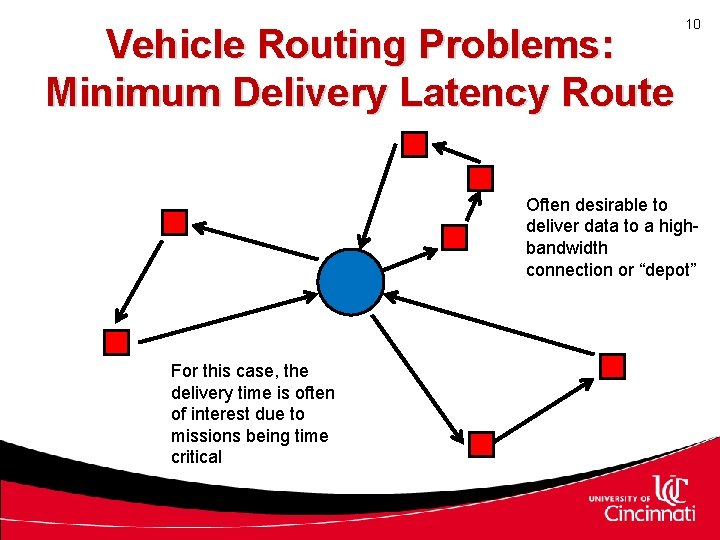
8 Vehicle Routing Problems Targets Depot Targets • Multiple routing solutions exist depending on desired operational goals • Which UAV services a target and in what order are the targets visited?
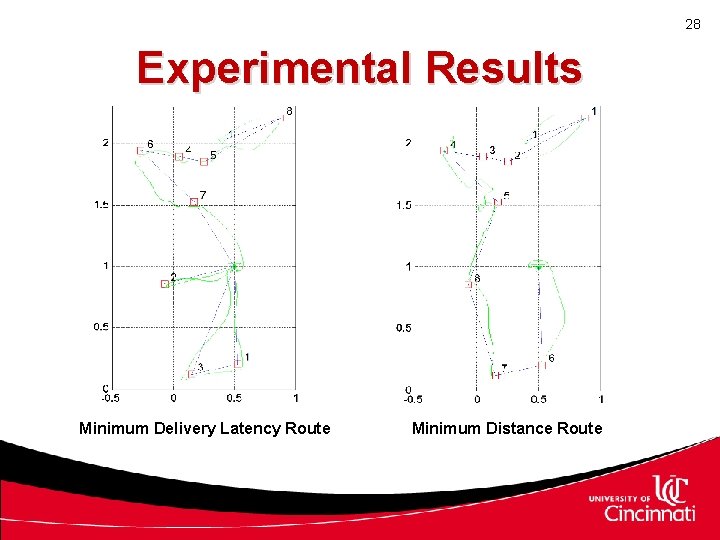
Vehicle Routing Problems: Minimum Distance Route Minimum distance solution is useful for minimizing total mission time, fuel consumption, etc. 9
Vehicle Routing Problems: Minimum Delivery Latency Route 10 Often desirable to deliver data to a highbandwidth connection or “depot” For this case, the delivery time is often of interest due to missions being time critical
11 Test Cases • 3 different tests performed – Differing difficulty and number of targets – Both Minimum Distance and Minimum Delivery Latency solutions implemented for each test • Tests done both experimentally and in simulation – Experiments done in IMAGE Lab with AR Drone UAVs – Simulations created in AMASE – an Air Force flight simulation environment • Compared distance travelled and delivery time for each test
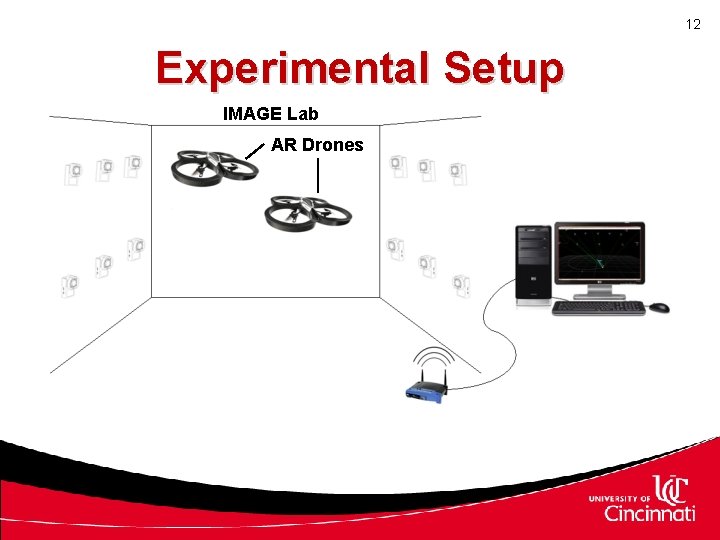
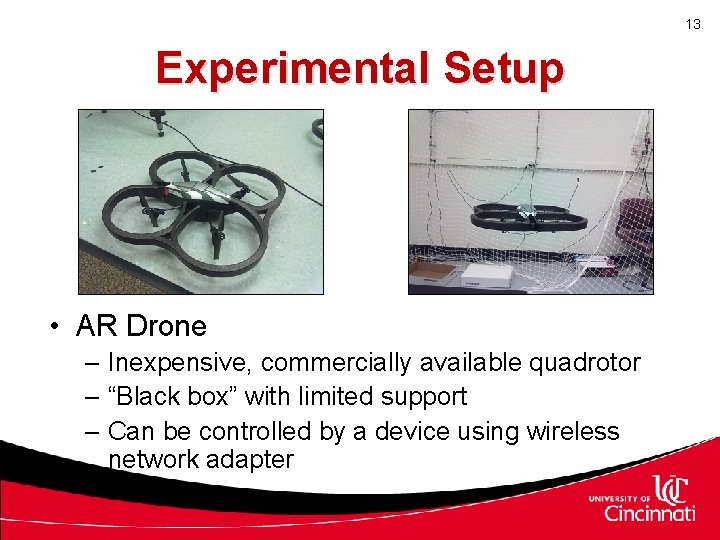
12 Experimental Setup IMAGE Lab AR Drones
13 Experimental Setup • AR Drone – Inexpensive, commercially available quadrotor – “Black box” with limited support – Can be controlled by a device using wireless network adapter
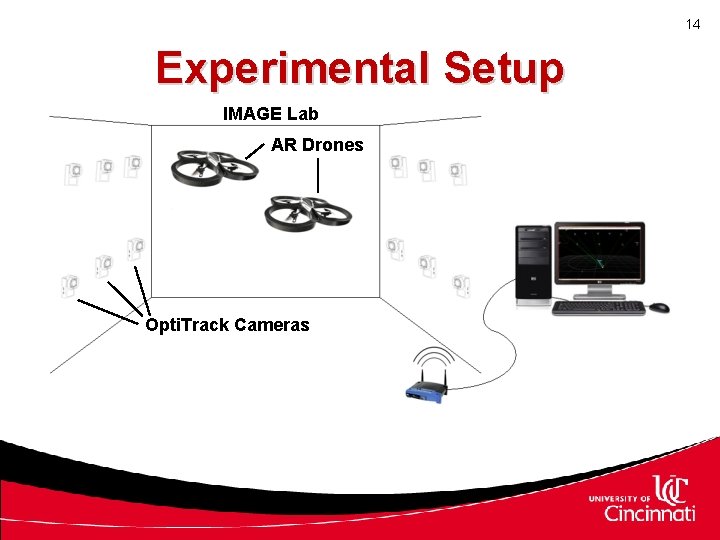
14 Experimental Setup IMAGE Lab AR Drones Opti. Track Cameras
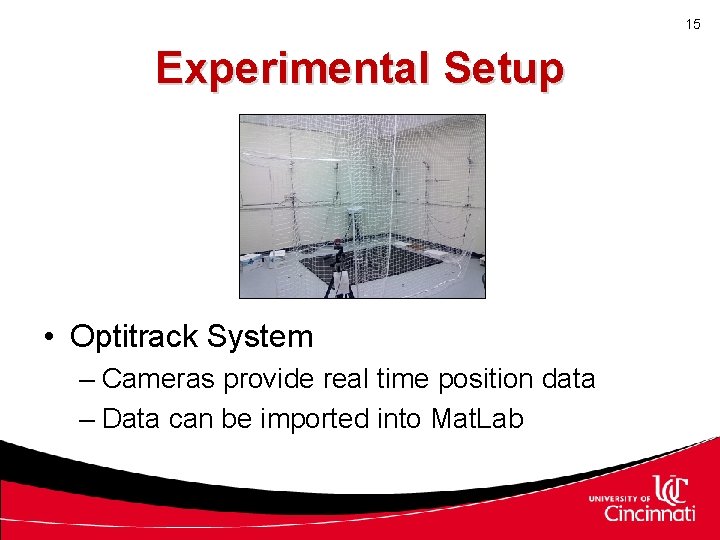
15 Experimental Setup • Optitrack System – Cameras provide real time position data – Data can be imported into Mat. Lab
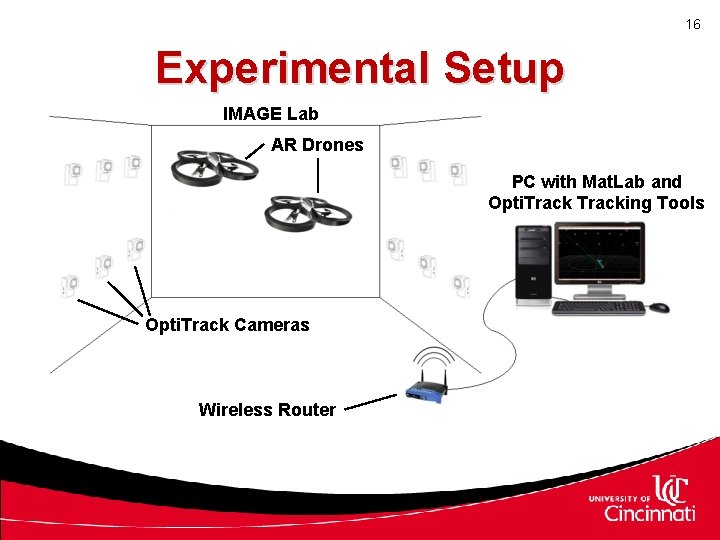
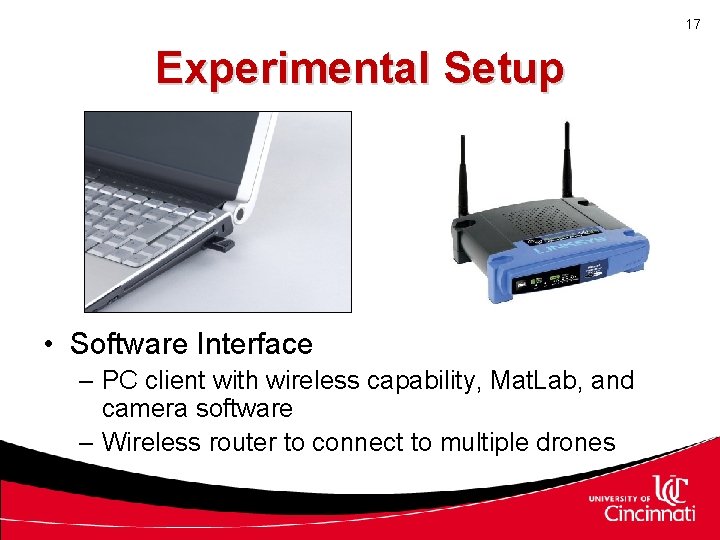
16 Experimental Setup IMAGE Lab AR Drones PC with Mat. Lab and Opti. Tracking Tools Opti. Track Cameras Wireless Router
17 Experimental Setup • Software Interface – PC client with wireless capability, Mat. Lab, and camera software – Wireless router to connect to multiple drones
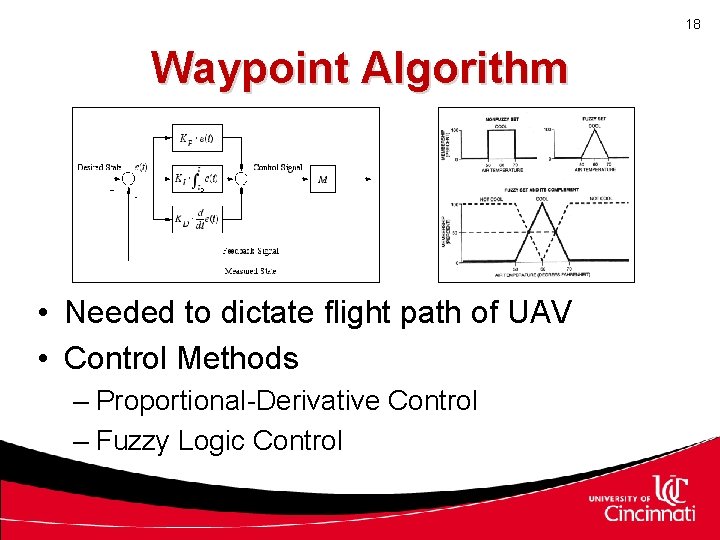
18 Waypoint Algorithm • Needed to dictate flight path of UAV • Control Methods – Proportional-Derivative Control – Fuzzy Logic Control
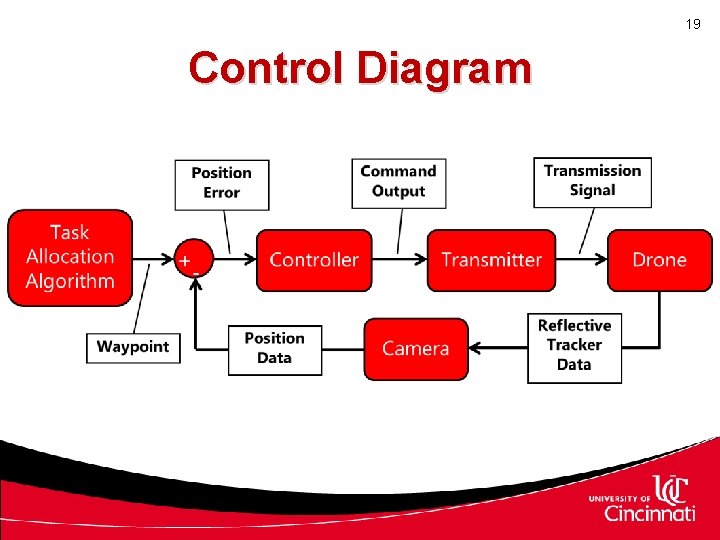
19 Control Diagram
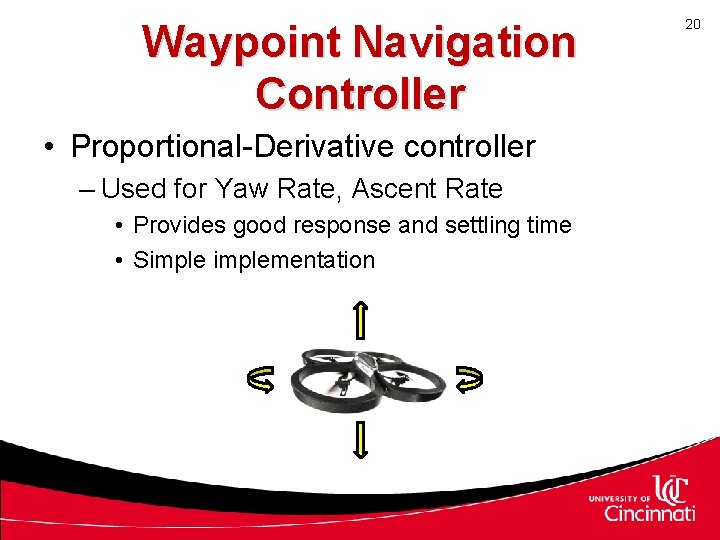
Waypoint Navigation Controller • Proportional-Derivative controller – Used for Yaw Rate, Ascent Rate • Provides good response and settling time • Simplementation 20
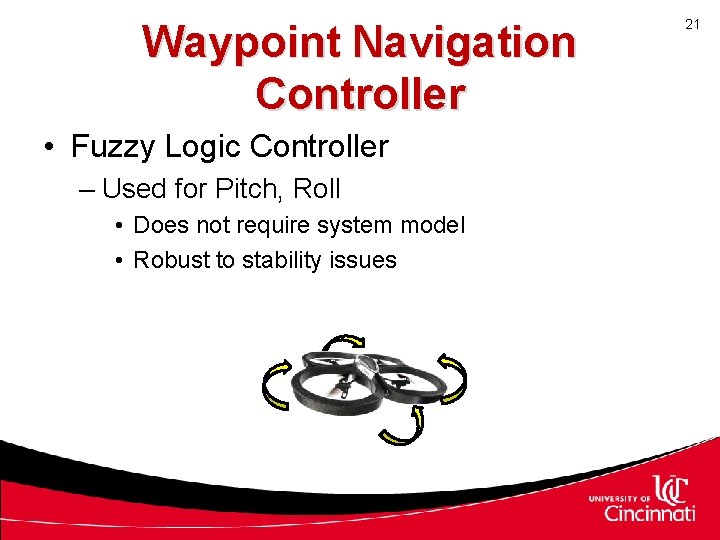
Waypoint Navigation Controller • Fuzzy Logic Controller – Used for Pitch, Roll • Does not require system model • Robust to stability issues 21
AMASE Automatic Test System Modeling and System Environment
23 History of AMASE • AFRL – Air Force Research Laboratory (Wright Patterson) • Desktop simulation environment developed for UAV cooperative control studies • Used to develop and optimize multiple- UAV engagement approaches • Self contained simulation environment that accelerates iterative development/analysis
Why AMASE? • Control algorithms can be assessed and compared effectively • Free for University research • An environment that provides a formal simulation of the algorithm as a precursor to large scale flight tests. • Proven as a legitimate way to set up realistic flight simulations. • Provides good visual description of what’s happening Challenge: No technical support… Learned through trial and error. 24
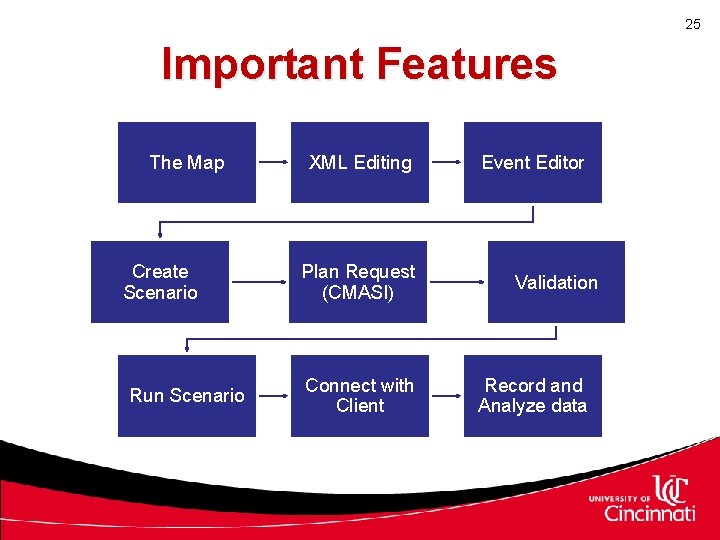
25 Important Features The Map Create Scenario Run Scenario XML Editing Plan Request (CMASI) Connect with Client Event Editor Validation Record and Analyze data
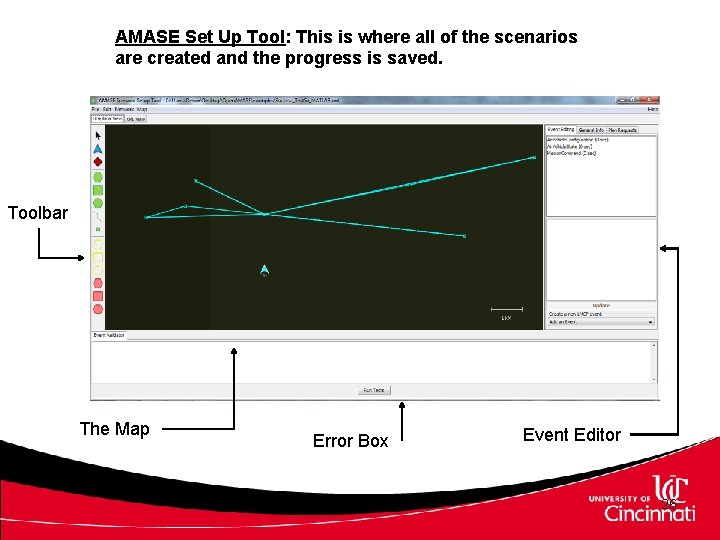
AMASE Set Up Tool: This is where all of the scenarios are created and the progress is saved. Toolbar The Map Error Box Event Editor 26
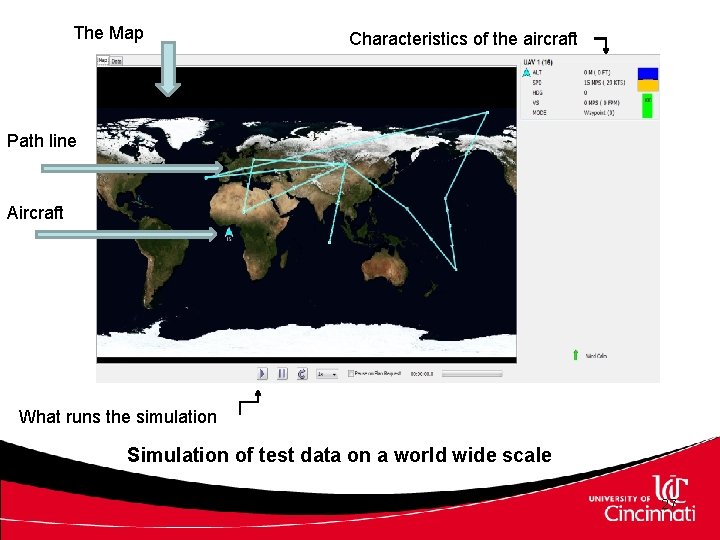
The Map Characteristics of the aircraft Path line Aircraft What runs the simulation Simulation of test data on a world wide scale 27
28 Experimental Results Minimum Delivery Latency Route Minimum Distance Route
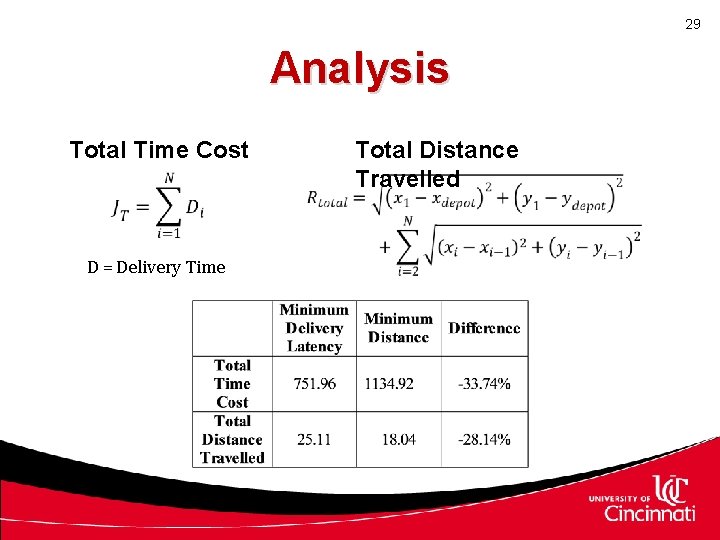
29 Analysis Total Time Cost D = Delivery Time Total Distance Travelled
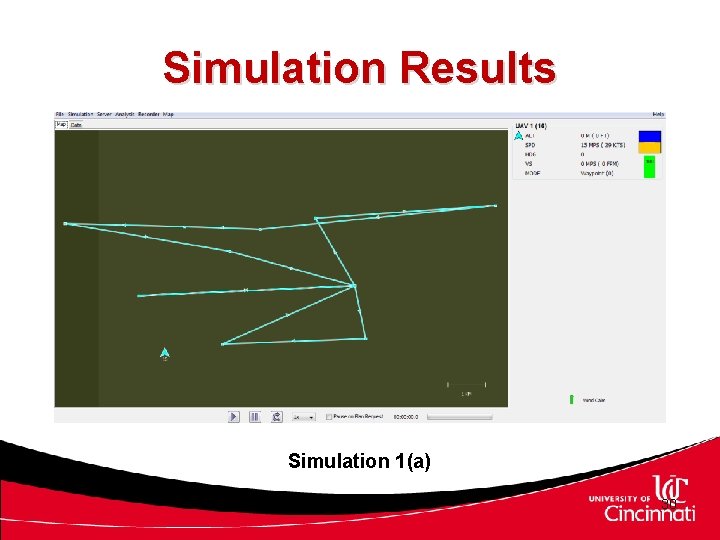
Simulation Results Simulation 1(a) 30
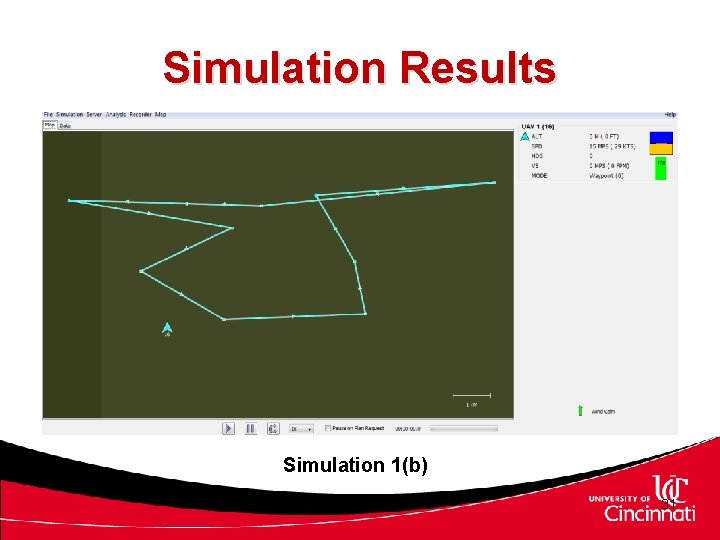
Simulation Results Simulation 1(b) 31
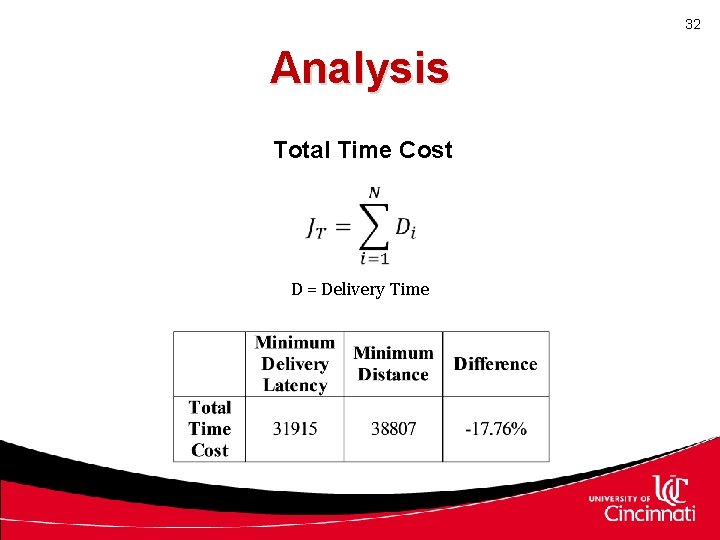
32 Analysis Total Time Cost D = Delivery Time
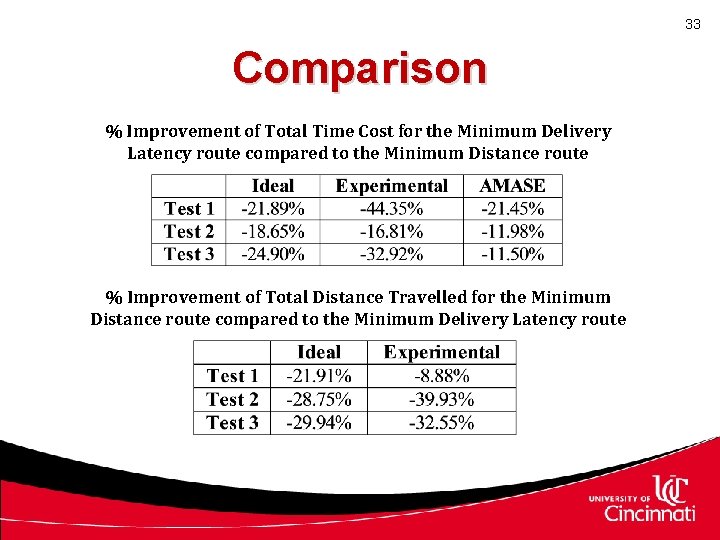
33 Comparison % Improvement of Total Time Cost for the Minimum Delivery Latency route compared to the Minimum Distance route % Improvement of Total Distance Travelled for the Minimum Distance route compared to the Minimum Delivery Latency route
34 Acknowledgements • NSF Grant # DUE-0756921 for Type 1 Science, Technology, Engineering, and Mathematics Talent Expansion Program (STEP) Project • • • Kelly Cohen, Ph. D, Faculty Mentor, University of Cincinnati, OH Chelsea Sabo, Ph. D, GRA, University of Cincinnati, OH Stephanie Lee, AFRL, Wright-Patterson Air Force Base, Dayton, OH Manish Kumar, Ph. D, University of Toledo, OH Balaji Sharma, MS, University of Toledo, OH Ruoyu Tan, MS, University of Toledo, OH • Task Allocation Algorithm sourced from work done by Dr. Chelsea Sabo
35 Questions?
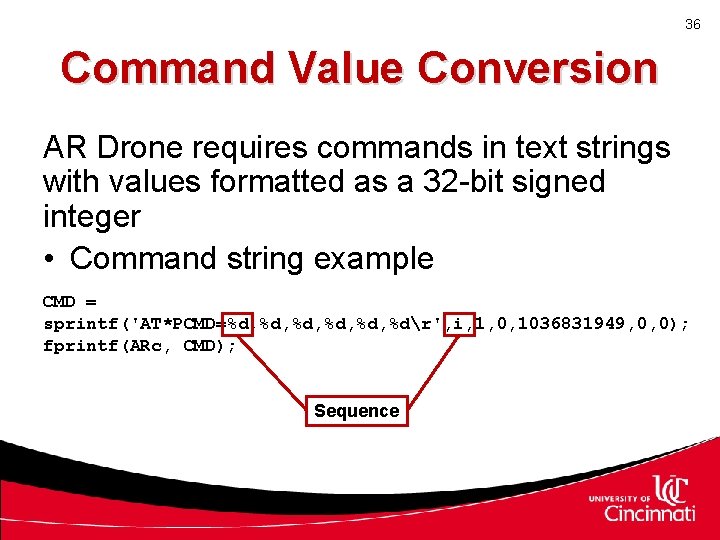
36 Command Value Conversion AR Drone requires commands in text strings with values formatted as a 32 -bit signed integer • Command string example CMD = sprintf('AT*PCMD=%d, %d, %d, %dr', i, 1, 0, 1036831949, 0, 0); fprintf(ARc, CMD); Sequence
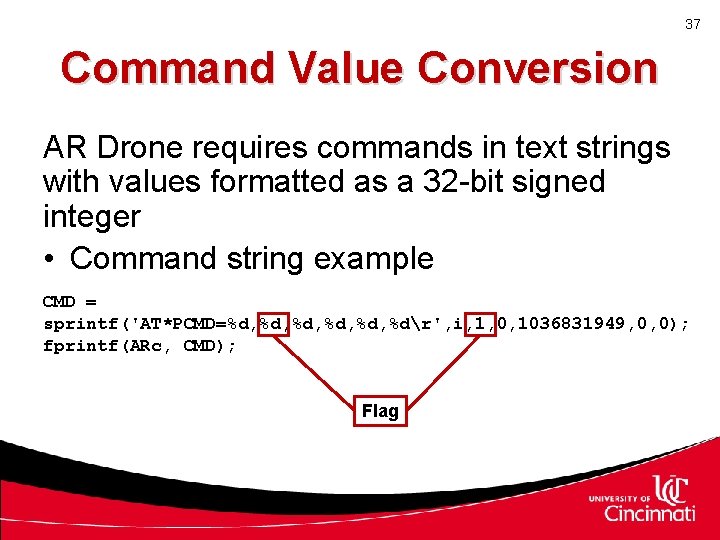
37 Command Value Conversion AR Drone requires commands in text strings with values formatted as a 32 -bit signed integer • Command string example CMD = sprintf('AT*PCMD=%d, %d, %d, %dr', i, 1, 0, 1036831949, 0, 0); fprintf(ARc, CMD); Flag
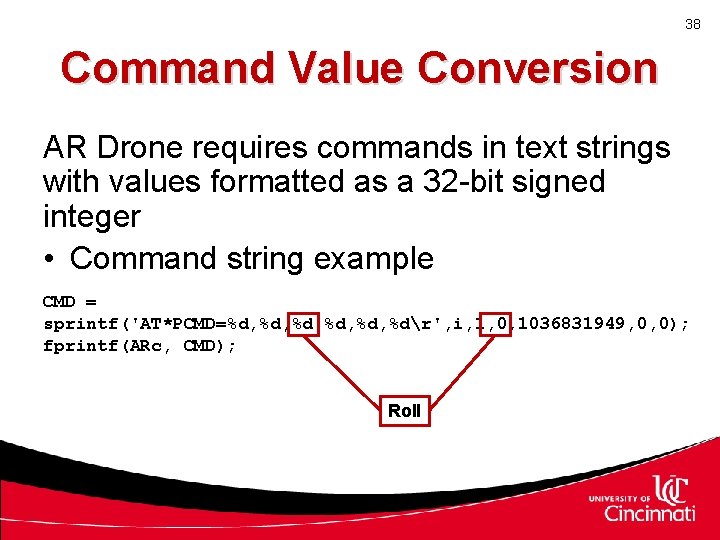
38 Command Value Conversion AR Drone requires commands in text strings with values formatted as a 32 -bit signed integer • Command string example CMD = sprintf('AT*PCMD=%d, %d, %d, %dr', i, 1, 0, 1036831949, 0, 0); fprintf(ARc, CMD); Roll
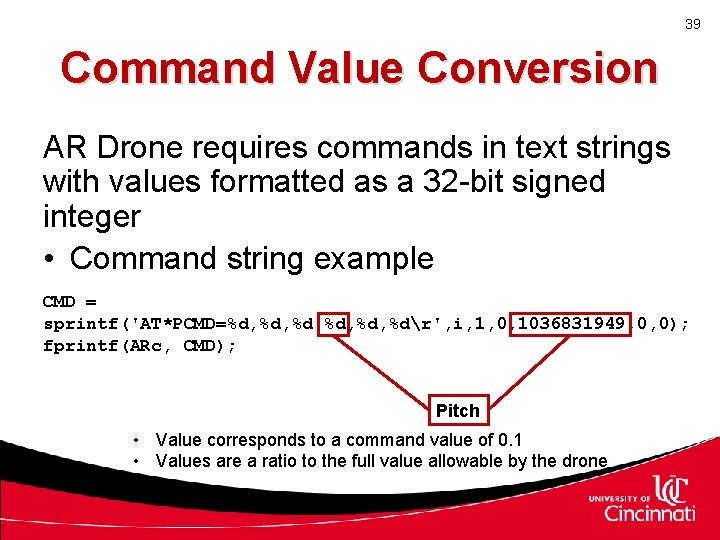
39 Command Value Conversion AR Drone requires commands in text strings with values formatted as a 32 -bit signed integer • Command string example CMD = sprintf('AT*PCMD=%d, %d, %d, %dr', i, 1, 0, 1036831949, 0, 0); fprintf(ARc, CMD); Pitch • Value corresponds to a command value of 0. 1 • Values are a ratio to the full value allowable by the drone
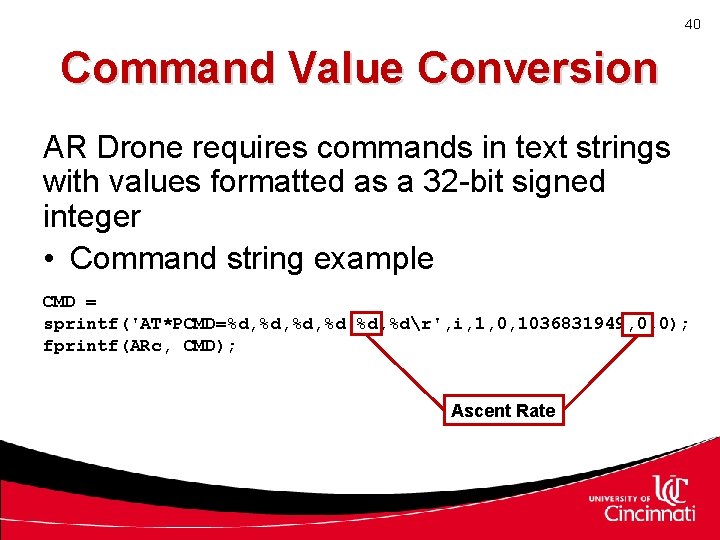
40 Command Value Conversion AR Drone requires commands in text strings with values formatted as a 32 -bit signed integer • Command string example CMD = sprintf('AT*PCMD=%d, %d, %d, %dr', i, 1, 0, 1036831949, 0, 0); fprintf(ARc, CMD); Ascent Rate
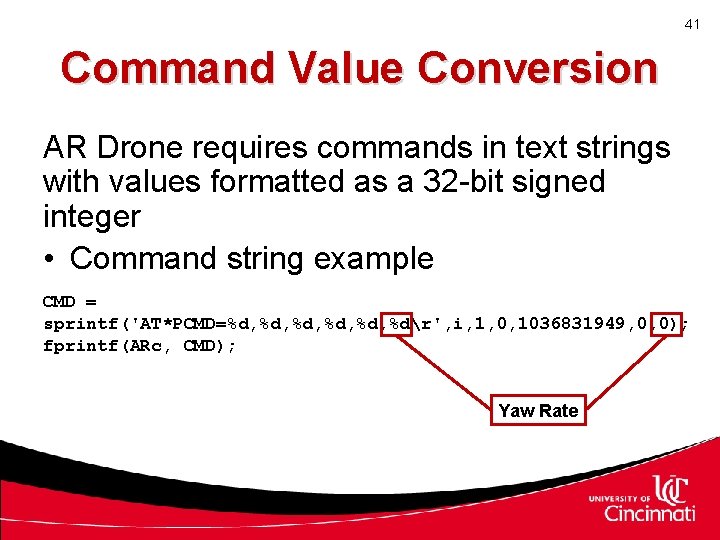
41 Command Value Conversion AR Drone requires commands in text strings with values formatted as a 32 -bit signed integer • Command string example CMD = sprintf('AT*PCMD=%d, %d, %d, %dr', i, 1, 0, 1036831949, 0, 0); fprintf(ARc, CMD); Yaw Rate
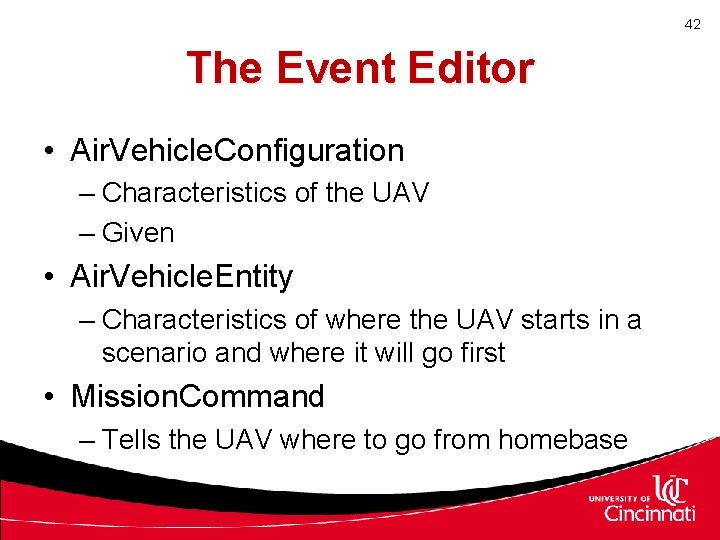
42 The Event Editor • Air. Vehicle. Configuration – Characteristics of the UAV – Given • Air. Vehicle. Entity – Characteristics of where the UAV starts in a scenario and where it will go first • Mission. Command – Tells the UAV where to go from homebase
43 CMASI • Common Mission Automation Services Interface – A system of interactive objects that pertain to the command control of a UAV system. – Where the Mission. Command is used. – Example of two scenarios to show why CMASI is important.