
Project 3 Last week 3 A 3 B
Project 3 • Last week: 3 A / 3 B • Now: 3 C
Structs
Data types • • • float double int char unsigned char All of these are simple data types
Structs: a complex data type • Structs: mechanism provided by C programming language to define a group of variables – Variables must be grouped together in contiguous memory • Also makes accessing variables easier … they are all part of the same grouping (the struct)
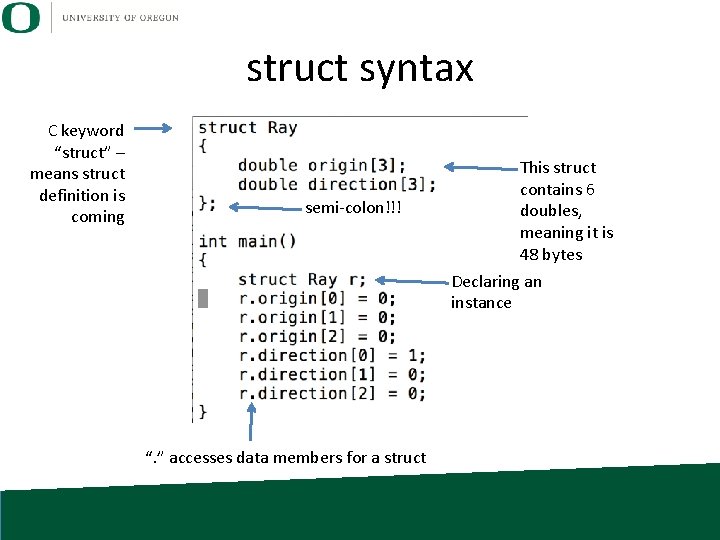
struct syntax C keyword “struct” – means struct definition is coming semi-colon!!! This struct contains 6 doubles, meaning it is 48 bytes Declaring an instance “. ” accesses data members for a struct
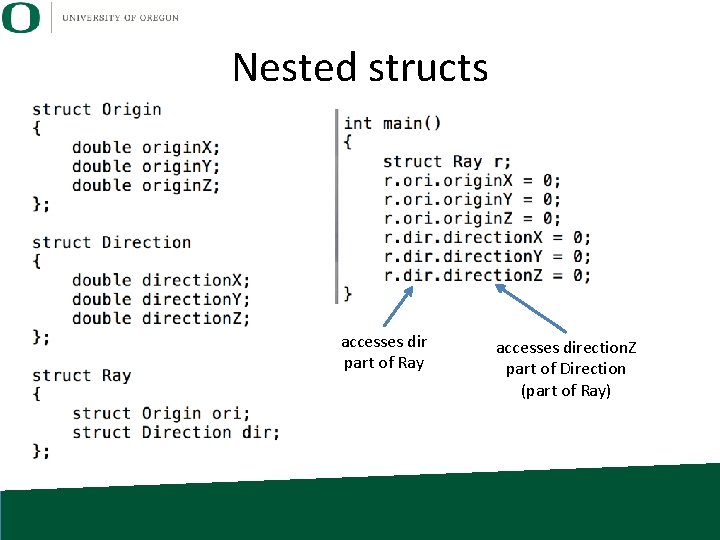
Nested structs accesses dir part of Ray accesses direction. Z part of Direction (part of Ray)
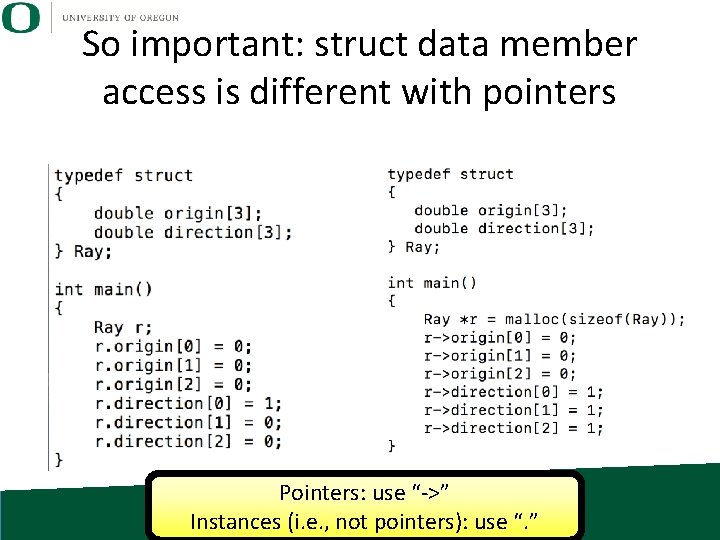
So important: struct data member access is different with pointers Pointers: use “->” Instances (i. e. , not pointers): use “. ”

Building Large Projects
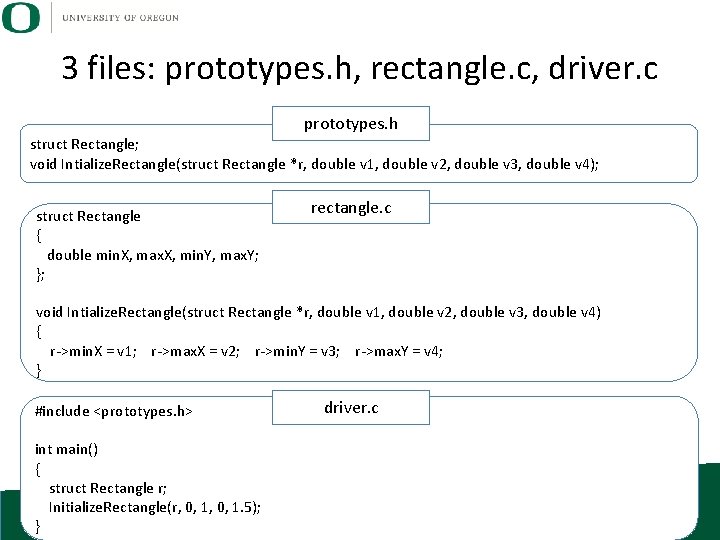
3 files: prototypes. h, rectangle. c, driver. c prototypes. h struct Rectangle; void Intialize. Rectangle(struct Rectangle *r, double v 1, double v 2, double v 3, double v 4); struct Rectangle { double min. X, max. X, min. Y, max. Y; }; rectangle. c void Intialize. Rectangle(struct Rectangle *r, double v 1, double v 2, double v 3, double v 4) { r->min. X = v 1; r->max. X = v 2; r->min. Y = v 3; r->max. Y = v 4; } #include <prototypes. h> int main() { struct Rectangle r; Initialize. Rectangle(r, 0, 1. 5); } driver. c
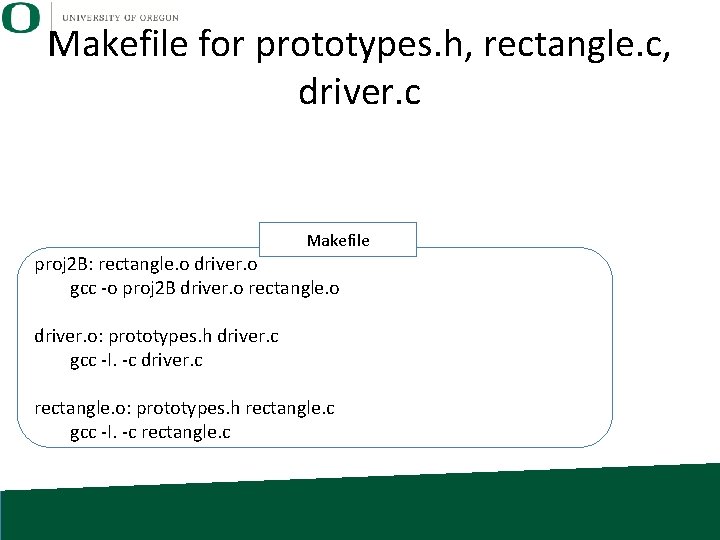
Makefile for prototypes. h, rectangle. c, driver. c Makefile proj 2 B: rectangle. o driver. o gcc -o proj 2 B driver. o rectangle. o driver. o: prototypes. h driver. c gcc -I. -c driver. c rectangle. o: prototypes. h rectangle. c gcc -I. -c rectangle. c
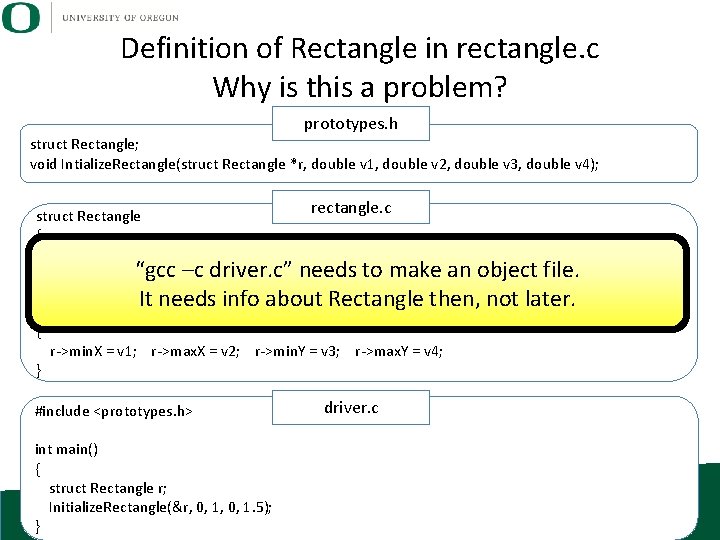
Definition of Rectangle in rectangle. c Why is this a problem? prototypes. h struct Rectangle; void Intialize. Rectangle(struct Rectangle *r, double v 1, double v 2, double v 3, double v 4); struct Rectangle { double min. X, max. X, min. Y, max. Y; “gcc –c driver. c” }; rectangle. c needs to make an object file. It needs info about Rectangle then, not later. void Intialize. Rectangle(struct Rectangle *r, double v 1, double v 2, double v 3, double v 4) { } r->min. X = v 1; r->max. X = v 2; r->min. Y = v 3; r->max. Y = v 4; #include <prototypes. h> int main() { struct Rectangle r; Initialize. Rectangle(&r, 0, 1. 5); } driver. c
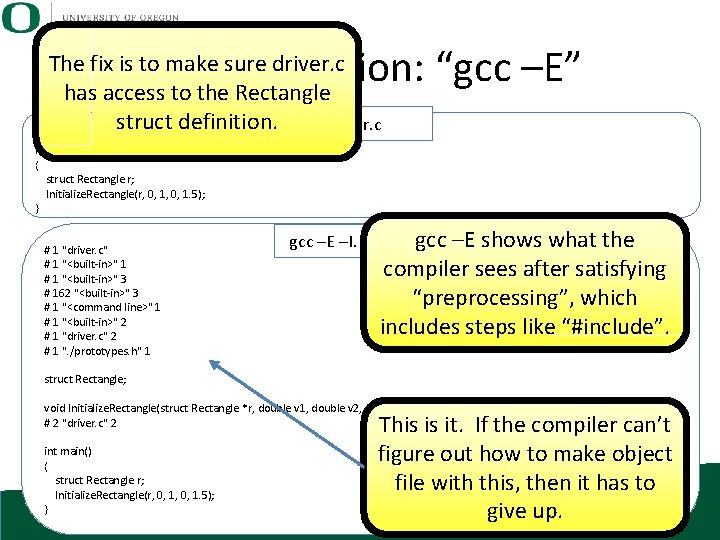
New gcc option: “gcc –E” The fix is to make sure driver. c has access to the Rectangle #include <prototypes. h> struct definition. driver. c int main() { struct Rectangle r; Initialize. Rectangle(r, 0, 1. 5); } # 1 "driver. c" # 1 "<built-in>" 1 # 1 "<built-in>" 3 # 162 "<built-in>" 3 # 1 "<command line>" 1 # 1 "<built-in>" 2 # 1 "driver. c" 2 # 1 ". /prototypes. h" 1 gcc –E –I. driver. cgcc –E shows what the compiler sees after satisfying “preprocessing”, which includes steps like “#include”. struct Rectangle; void Initialize. Rectangle(struct Rectangle *r, double v 1, double v 2, double v 3, double v 4); # 2 "driver. c" 2 int main() { struct Rectangle r; Initialize. Rectangle(r, 0, 1. 5); } This is it. If the compiler can’t figure out how to make object file with this, then it has to give up.
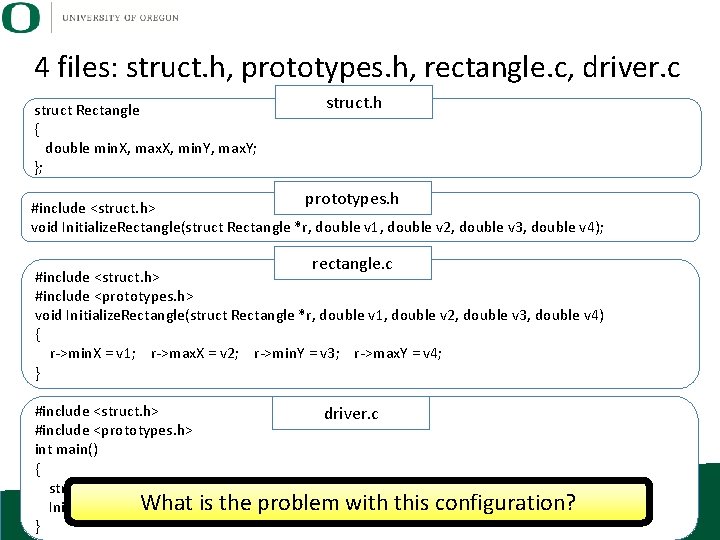
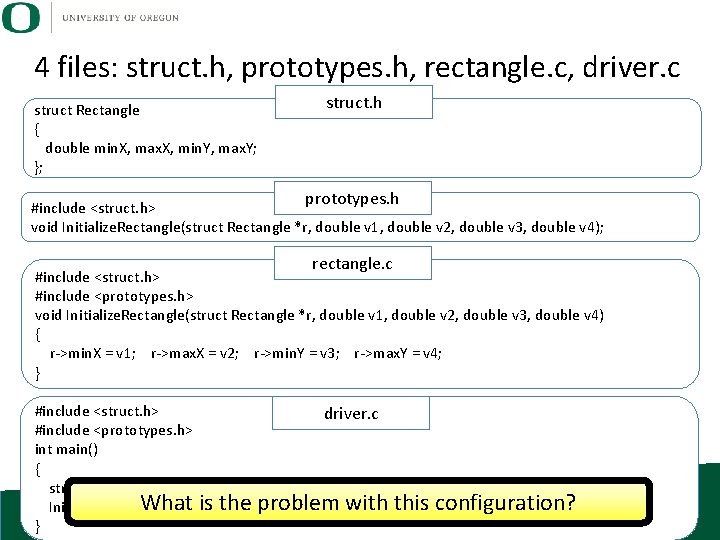
4 files: struct. h, prototypes. h, rectangle. c, driver. c struct Rectangle { double min. X, max. X, min. Y, max. Y; }; struct. h prototypes. h #include <struct. h> void Initialize. Rectangle(struct Rectangle *r, double v 1, double v 2, double v 3, double v 4); rectangle. c #include <struct. h> #include <prototypes. h> void Initialize. Rectangle(struct Rectangle *r, double v 1, double v 2, double v 3, double v 4) { r->min. X = v 1; r->max. X = v 2; r->min. Y = v 3; r->max. Y = v 4; } #include <struct. h> driver. c #include <prototypes. h> int main() { struct Rectangle r; What 0, is 1, the problem with Initialize. Rectangle(&r, 0, 1. 5); } this configuration?
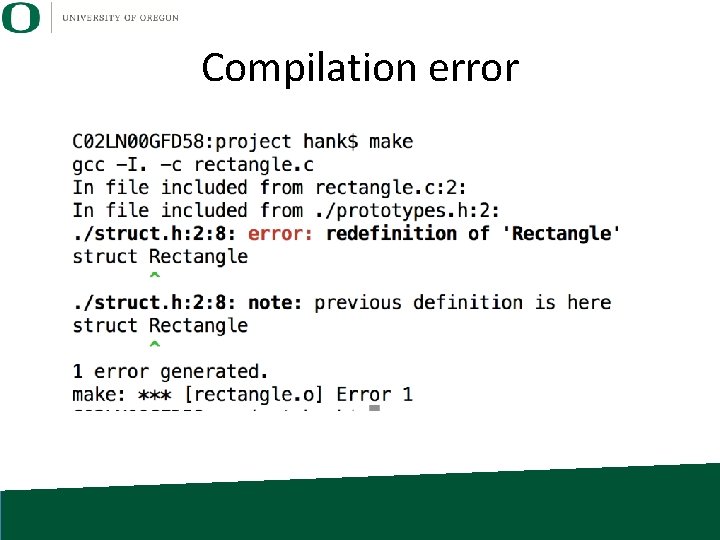
Compilation error
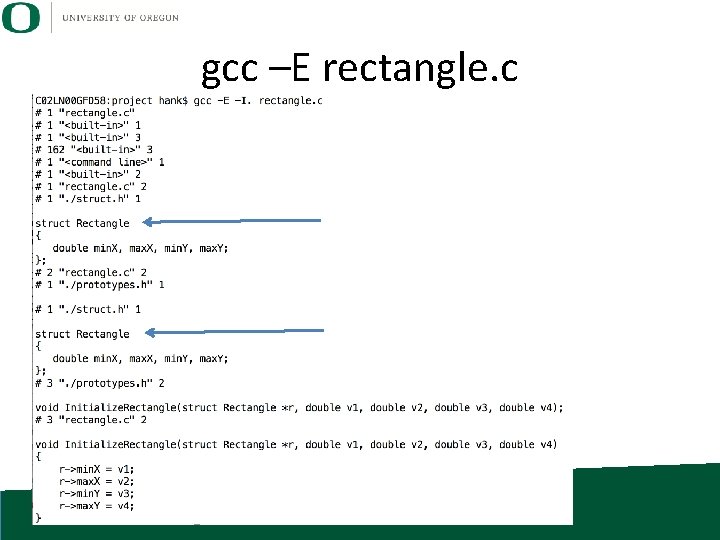
gcc –E rectangle. c
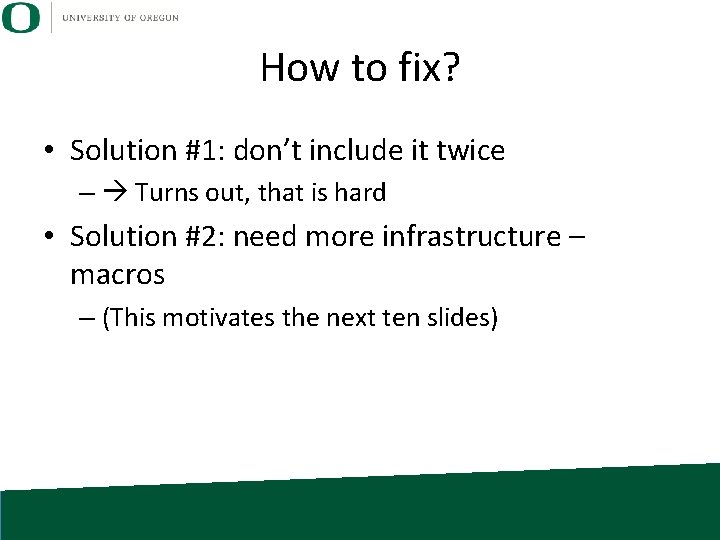
How to fix? • Solution #1: don’t include it twice – Turns out, that is hard • Solution #2: need more infrastructure – macros – (This motivates the next ten slides)
Preprocessor • Preprocessor: – takes an input program – produces another program (which is then compiled) • C has a separate language for preprocessing – Different syntax than C – Uses macros (“#”) macro (“macroinstruction”): rule for replacing input characters with output characters
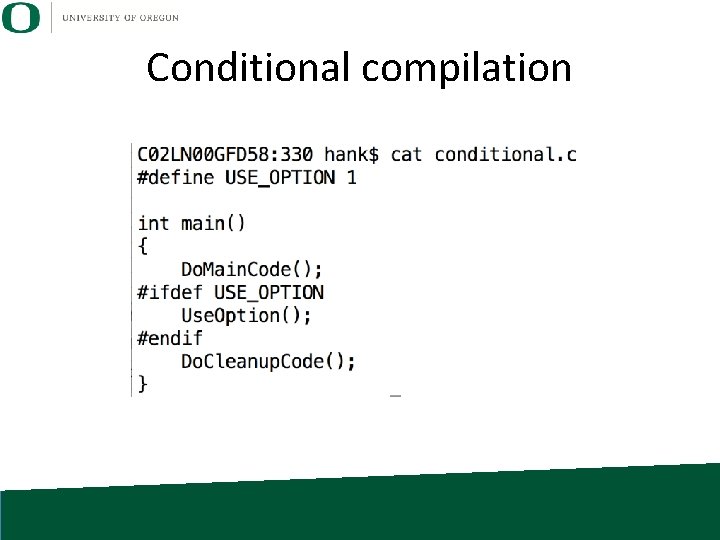
Preprocessor Phases • Resolve #includes – (we understand #include phase) • Conditional compilation (#ifdef) • Macro replacement • Special macros
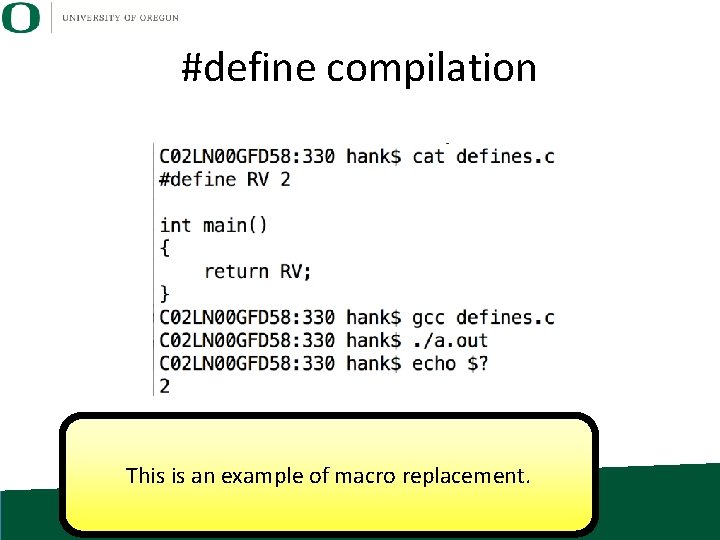
#define compilation This is an example of macro replacement.
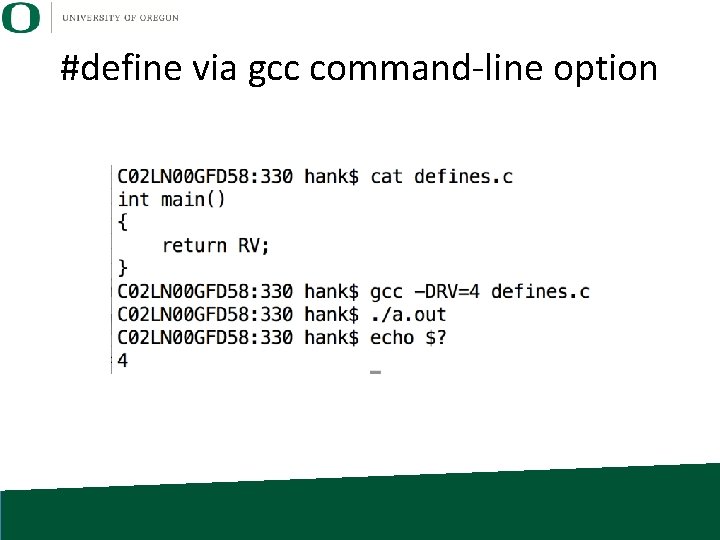
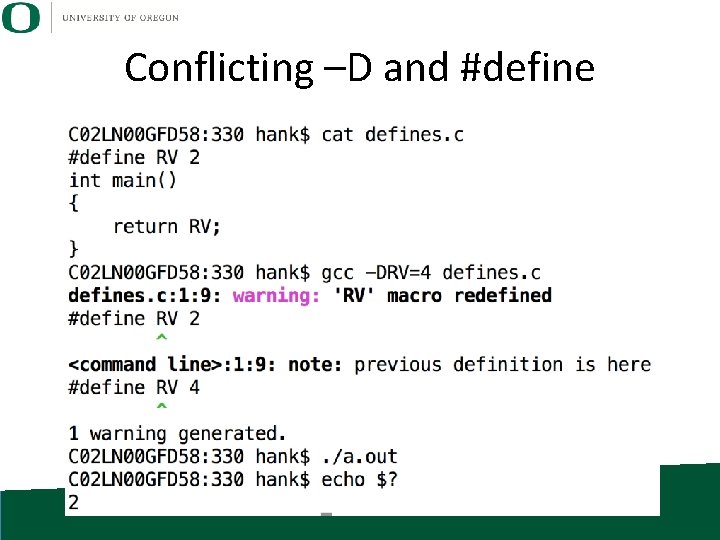
#define via gcc command-line option
Conflicting –D and #define
Conditional compilation
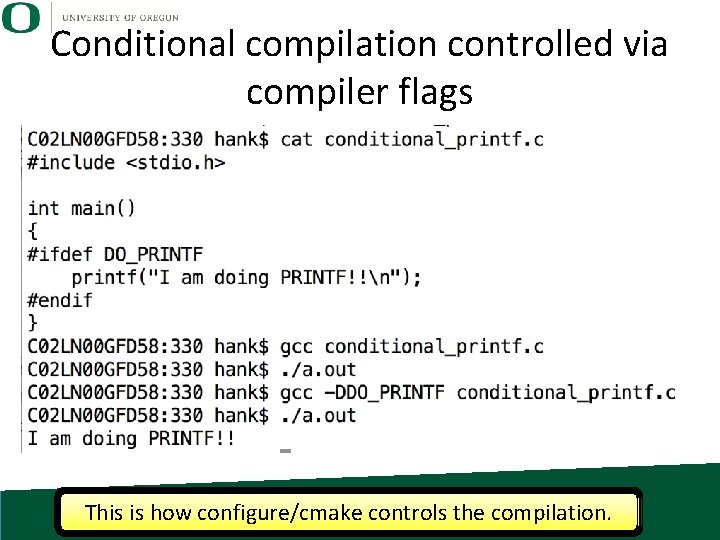
Conditional compilation controlled via compiler flags This is how configure/cmake controls the compilation.
4 files: struct. h, prototypes. h, rectangle. c, driver. c struct Rectangle { double min. X, max. X, min. Y, max. Y; }; struct. h prototypes. h #include <struct. h> void Initialize. Rectangle(struct Rectangle *r, double v 1, double v 2, double v 3, double v 4); rectangle. c #include <struct. h> #include <prototypes. h> void Initialize. Rectangle(struct Rectangle *r, double v 1, double v 2, double v 3, double v 4) { r->min. X = v 1; r->max. X = v 2; r->min. Y = v 3; r->max. Y = v 4; } #include <struct. h> driver. c #include <prototypes. h> int main() { struct Rectangle r; What 0, is 1, the problem with Initialize. Rectangle(&r, 0, 1. 5); } this configuration?
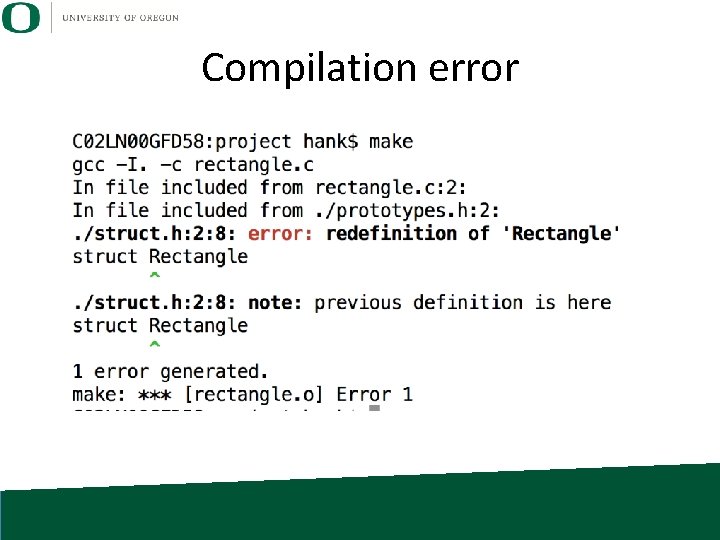
Compilation error
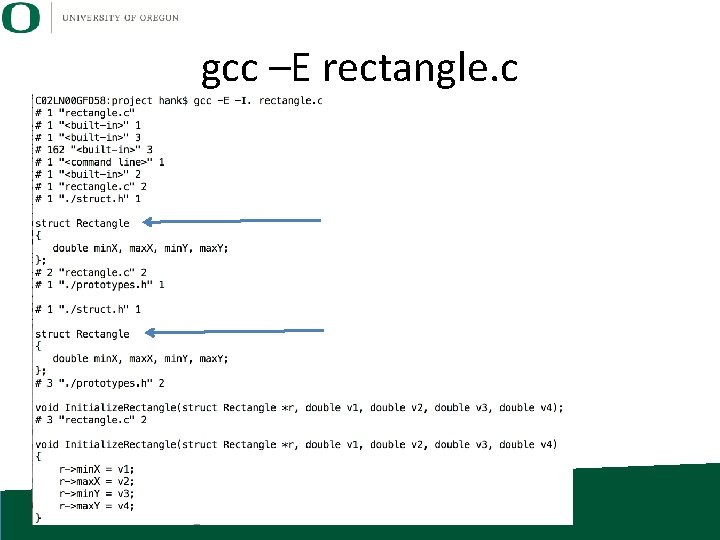
gcc –E rectangle. c
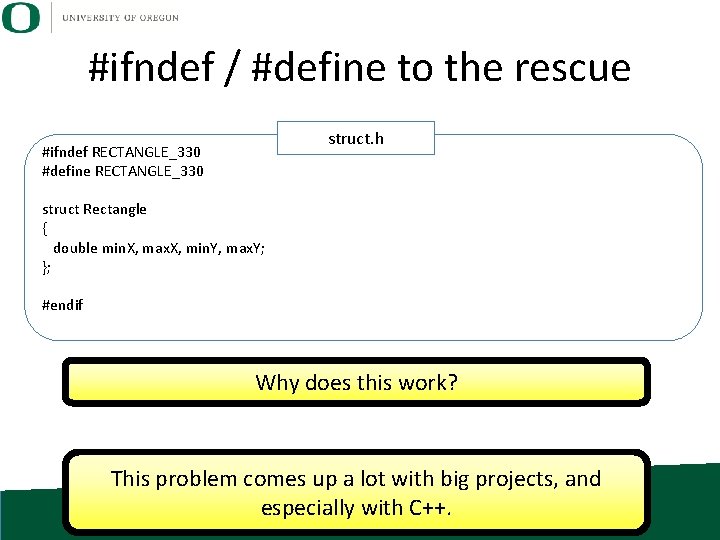
#ifndef / #define to the rescue struct. h #ifndef RECTANGLE_330 #define RECTANGLE_330 struct Rectangle { double min. X, max. X, min. Y, max. Y; }; #endif Why does this work? This problem comes up a lot with big projects, and especially with C++.
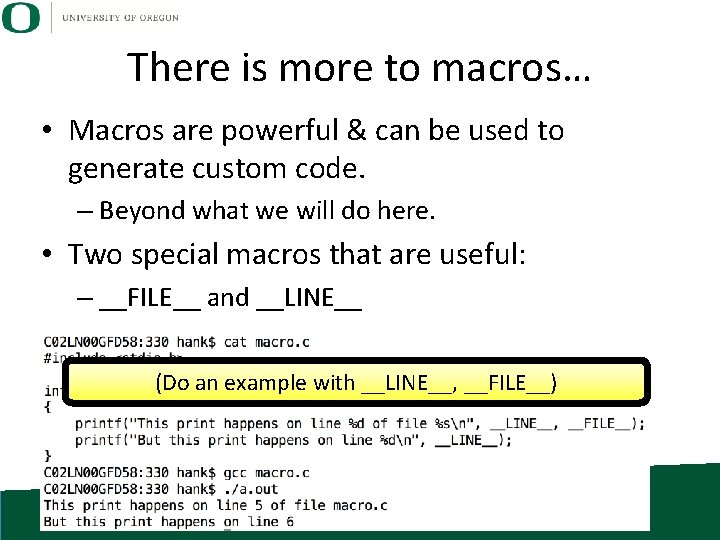
There is more to macros… • Macros are powerful & can be used to generate custom code. – Beyond what we will do here. • Two special macros that are useful: – __FILE__ and __LINE__ (Do an example with __LINE__, __FILE__)
Beginning C++
Relationship between C and C++ • C++ adds new features to C – Increment operator! • For the most part, C++ is a superset of C – A few invalid C++ programs that are valid C programs • Early C++ “compilers” just converted programs to C
A new compiler: g++ • g++ is the GNU C++ compiler – Flags are the same – Compiles C programs as well • (except those that aren’t valid C++ programs)
. c vs. C • Unix is case sensitive – (So are C and C++) • Conventions: –. c: C file –. C: C++ file –. cxx: C++ file –. cpp: C++ file (this is pretty rare) Gnu compiler will sometimes assume the language based on the extension … CLANG won’t.
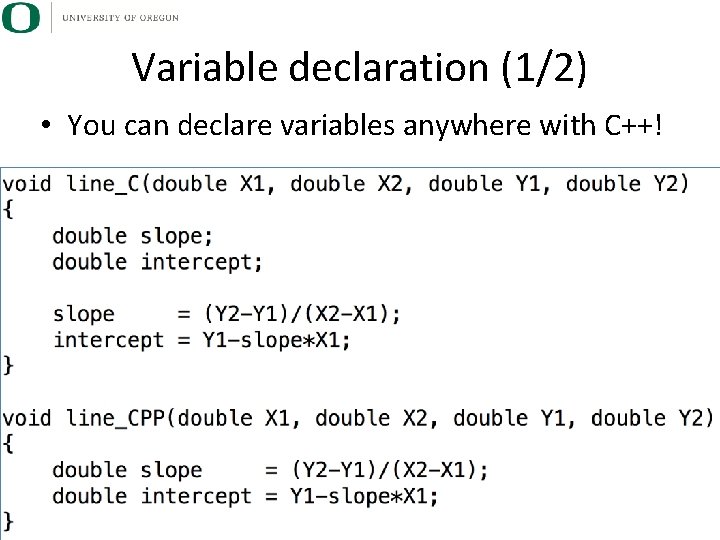
Variable declaration (1/2) • You can declare variables anywhere with C++!
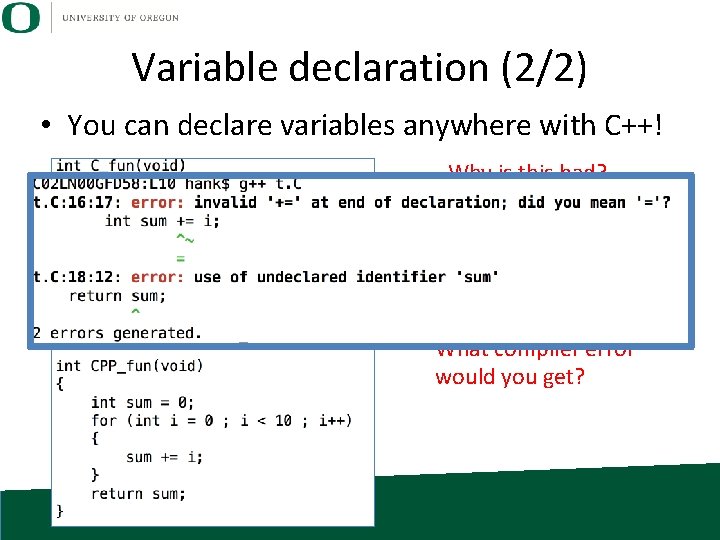
Variable declaration (2/2) • You can declare variables anywhere with C++! Why is this bad? What compiler error would you get?
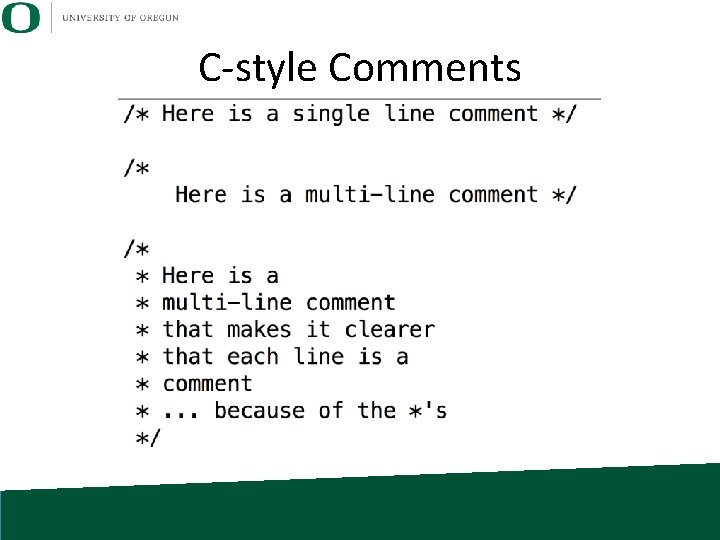
C-style Comments
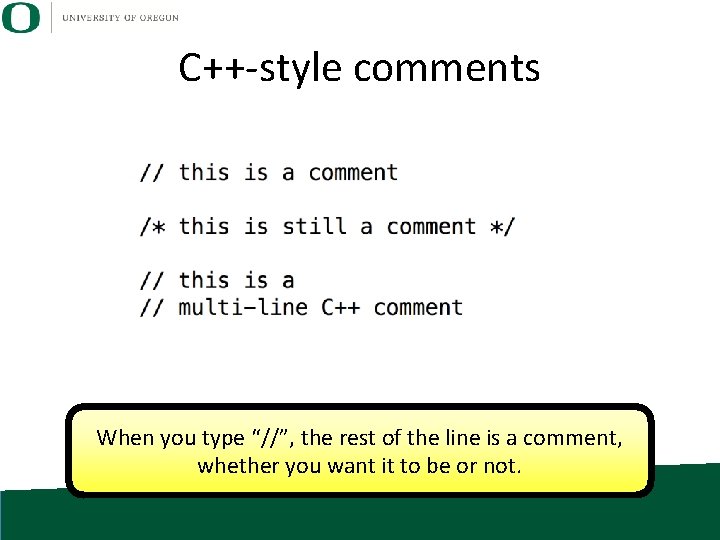
C++-style comments When you type “//”, the rest of the line is a comment, whether you want it to be or not.
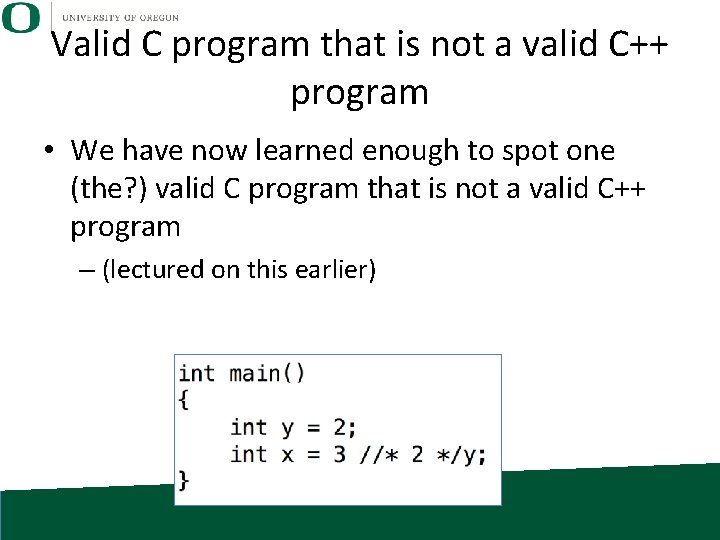
Valid C program that is not a valid C++ program • We have now learned enough to spot one (the? ) valid C program that is not a valid C++ program – (lectured on this earlier)
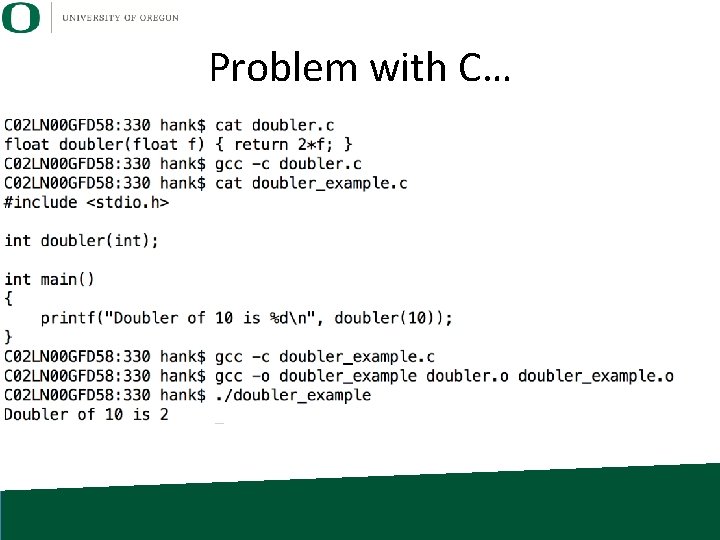
Problem with C…
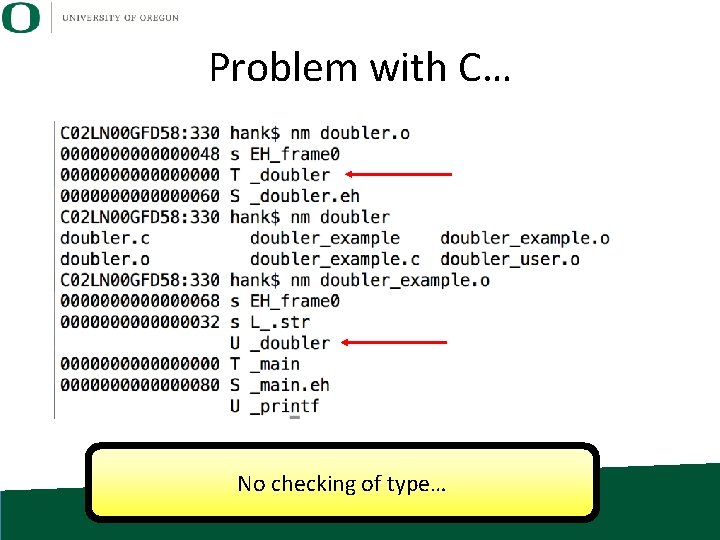
Problem with C… No checking of type…
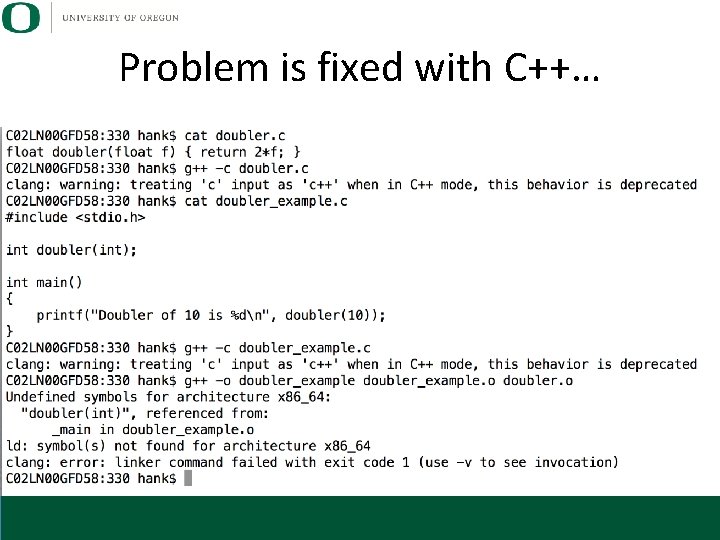
Problem is fixed with C++…
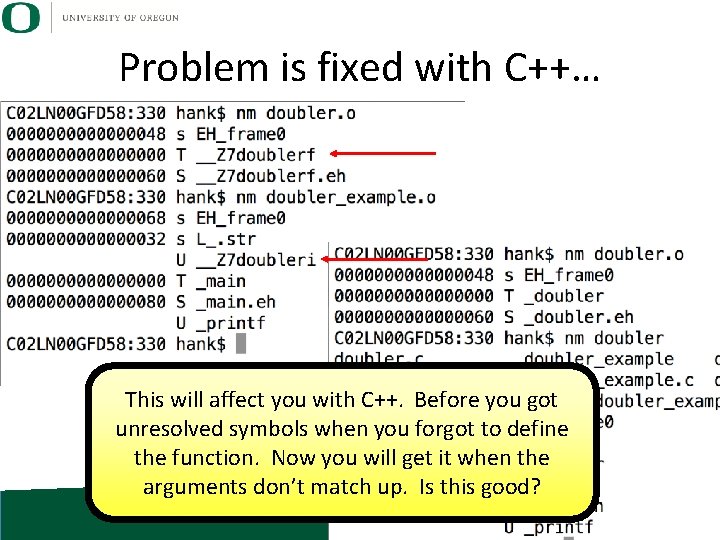
Problem is fixed with C++… This will affect you with C++. Before you got unresolved symbols when you forgot to define the function. Now you will get it when the arguments don’t match up. Is this good?
Mangling • Mangling refers to combining information about arguments and “mangling” it with function name. – Way of ensuring that you don’t mix up functions. – Return type not mangled, though • Causes problems with compiler mismatches – C++ compilers haven’t standardized. – Can’t take library from icpc and combine it with g++.
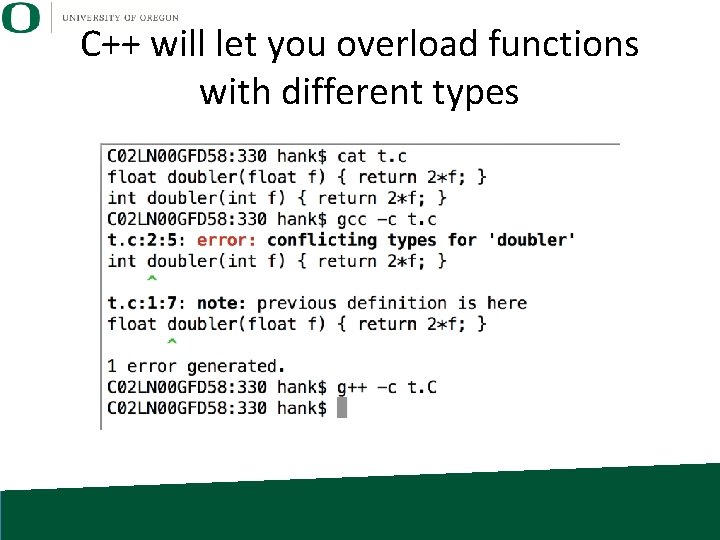
C++ will let you overload functions with different types
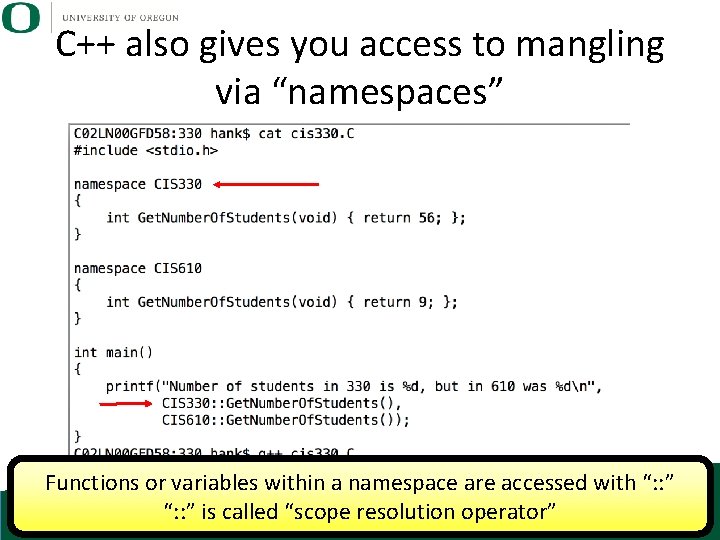
C++ also gives you access to mangling via “namespaces” Functions or variables within a namespace are accessed with “: : ” is called “scope resolution operator”
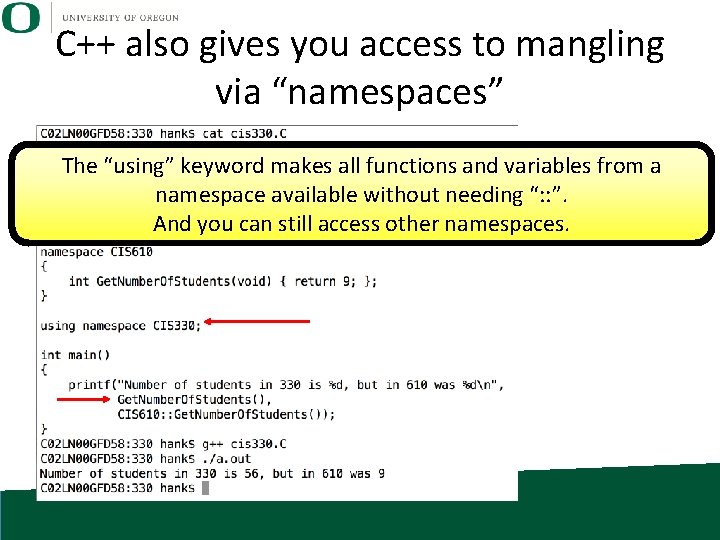
C++ also gives you access to mangling via “namespaces” The “using” keyword makes all functions and variables from a namespace available without needing “: : ”. And you can still access other namespaces.
References • A reference is a simplified version of a pointer. • Key differences: – You cannot do pointer manipulations – A reference is always valid • a pointer is not always valid • Accomplished with & (ampersand) – &: address of variable (C-style, still valid) – &: reference to a variable (C++-style, also now valid) You have to figure out how ‘&’ is being used based on context.
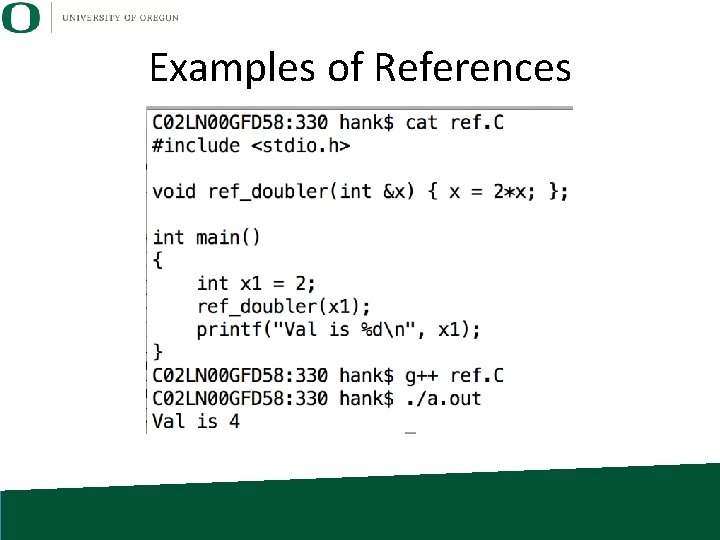
Examples of References
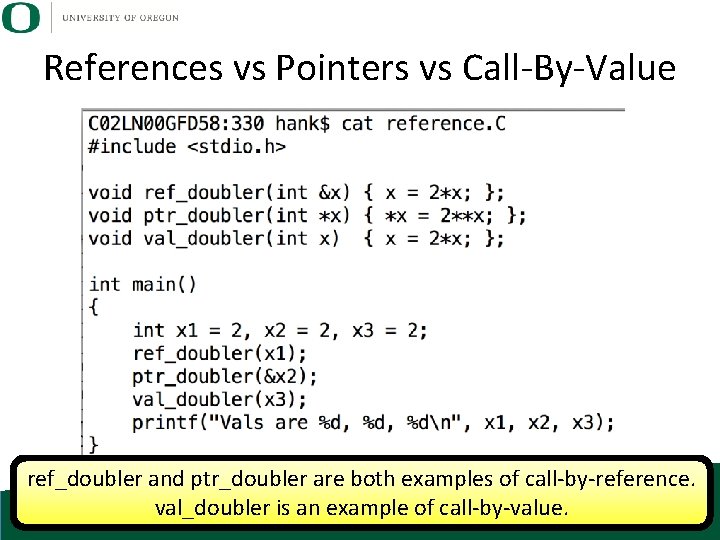
References vs Pointers vs Call-By-Value ref_doubler and ptr_doubler are both examples of call-by-reference. val_doubler is an example of call-by-value.
References • Simplified version of a pointer. • Key differences: – You cannot manipulate it • Meaning: you are given a reference to exactly one instance … you can’t do pointer arithmetic to skip forward in an array to find another object – A reference is always valid • No equivalent of a NULL pointer … must be a valid instance
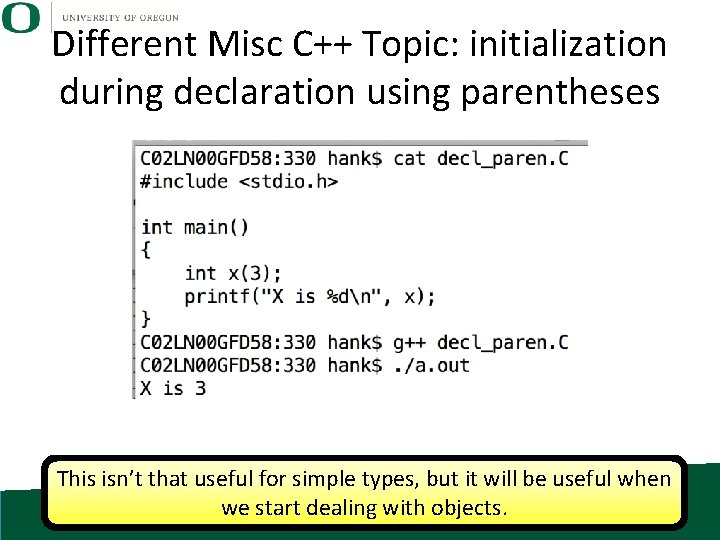
Different Misc C++ Topic: initialization during declaration using parentheses This isn’t that useful for simple types, but it will be useful when we start dealing with objects.
C++ & Structs
Learning classes via structs • structs and classes are closely related in C++ • I will lecture today on changes on how “structs in C++” are different than “structs in C” – … when I am done with that topic, I will describe how classes and structs in C++ differ.
3 Big changes to structs in C++ 1) You can associate “methods” (functions) with structs
Methods vs Functions • Methods and Functions are both regions of code that are called by name (“routines”) • With functions: – the data it operates on (i. e. , arguments) are explicitly passed – the data it generates (i. e. , return value) is explicitly passed – stand-alone / no association with an object • With methods: – associated with an object & can work on object’s data – still opportunity for explicit arguments and return value
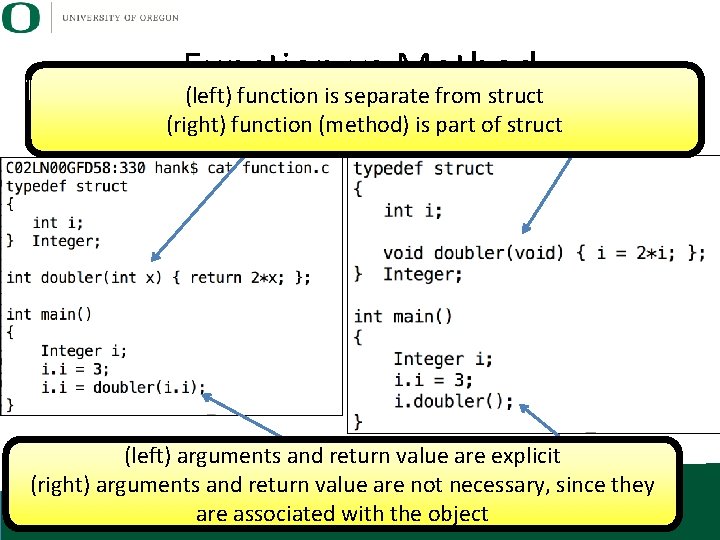
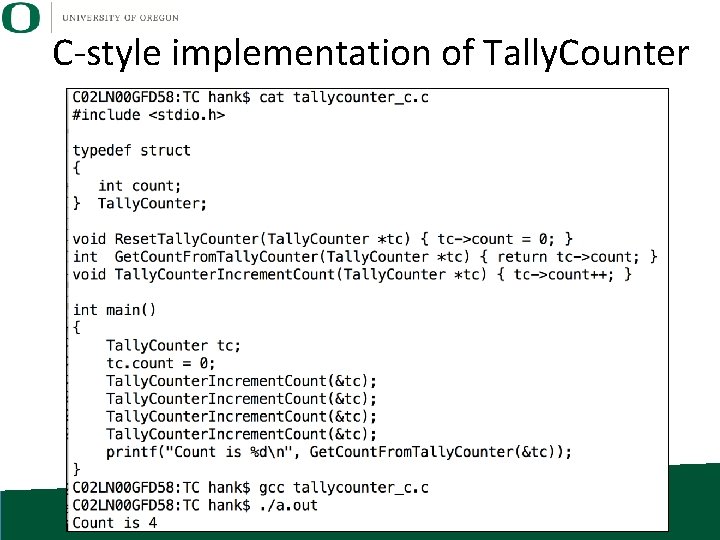
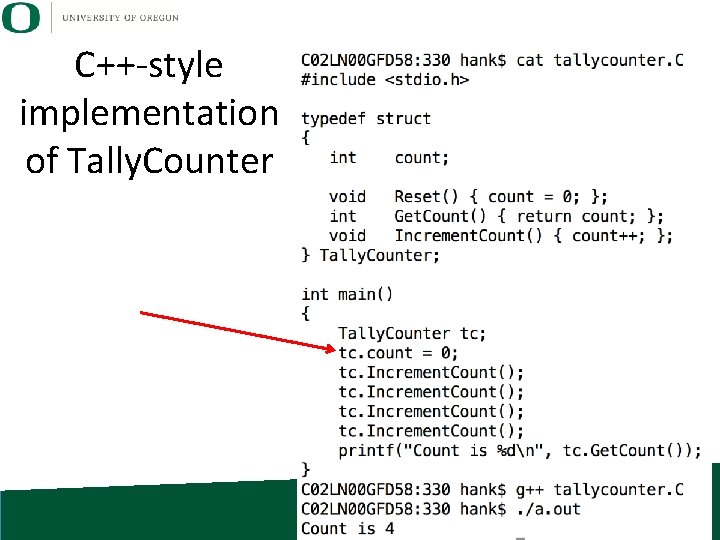
Function vs Method (left) function is separate from struct (right) function (method) is part of struct (left) arguments and return value are explicit (right) arguments and return value are not necessary, since they are associated with the object
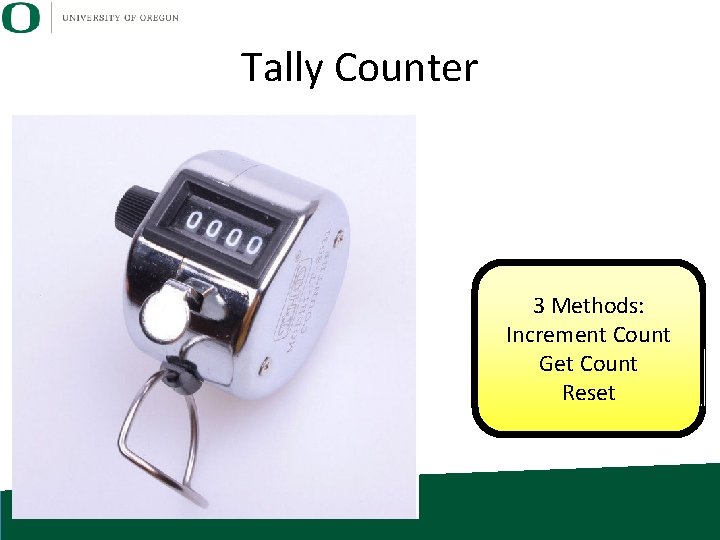
Tally Counter 3 Methods: Increment Count Get Count Reset
Methods & Tally Counter • Methods and Functions are both regions of code that are called by name (“routines”) • With functions: – the data it operates on (i. e. , arguments) are explicitly passed – the data it generates (i. e. , return value) is explicitly passed – stand-alone / no association with an object • With methods: – associated with an object & can work on object’s data – still opportunity for explicit arguments and return value
C-style implementation of Tally. Counter
C++-style implementation of Tally. Counter
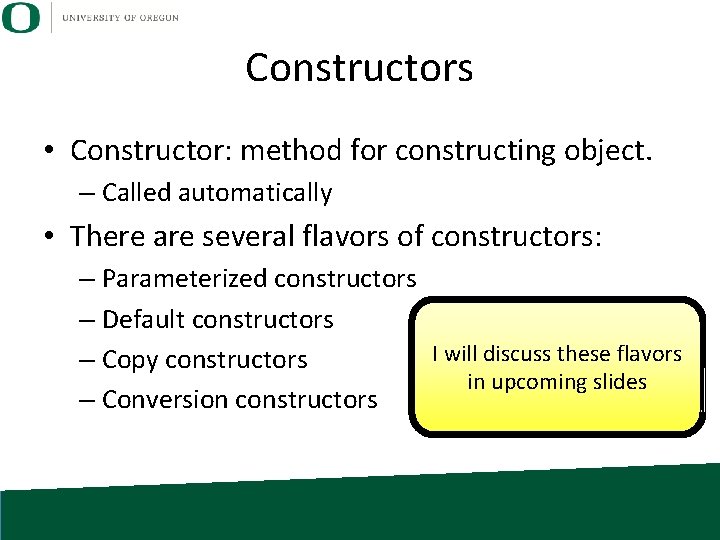
Constructors • Constructor: method for constructing object. – Called automatically • There are several flavors of constructors: – Parameterized constructors – Default constructors I will discuss these flavors – Copy constructors in upcoming slides – Conversion constructors
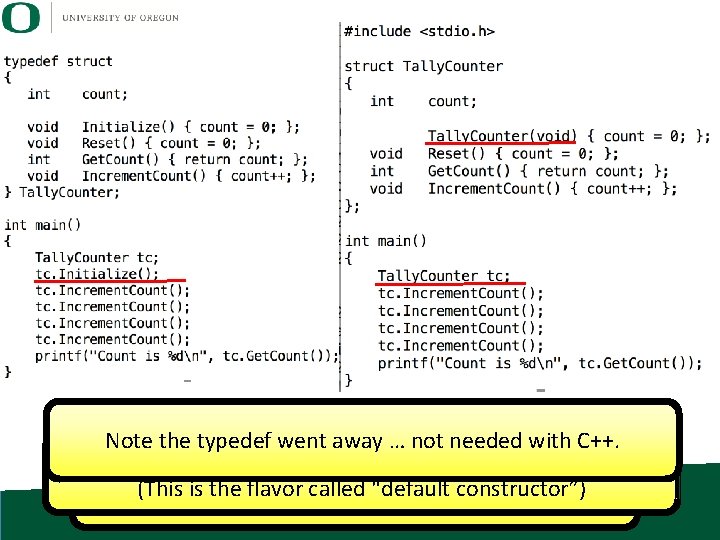
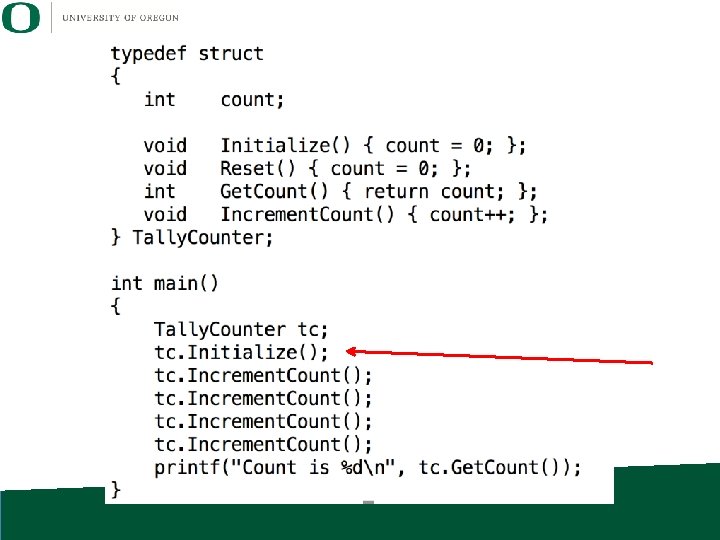
Note the typedef went away … not needed with C++. Constructor is called automatically when object is instantiated (This isfor theconstructor flavor called “default constructor”) Method has same name as struct
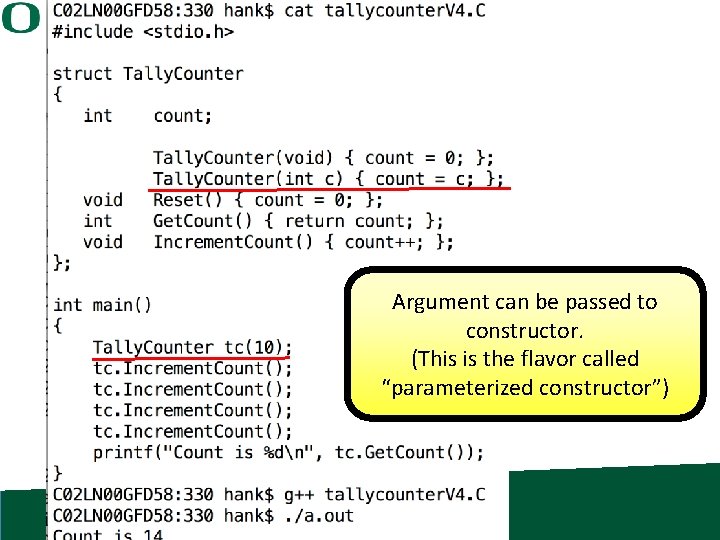
Argument can be passed to constructor. (This is the flavor called “parameterized constructor”)
More traditional file organization • struct definition is in. h file – #ifndef / #define • method definitions in. C file • driver file includes headers for all structs it needs
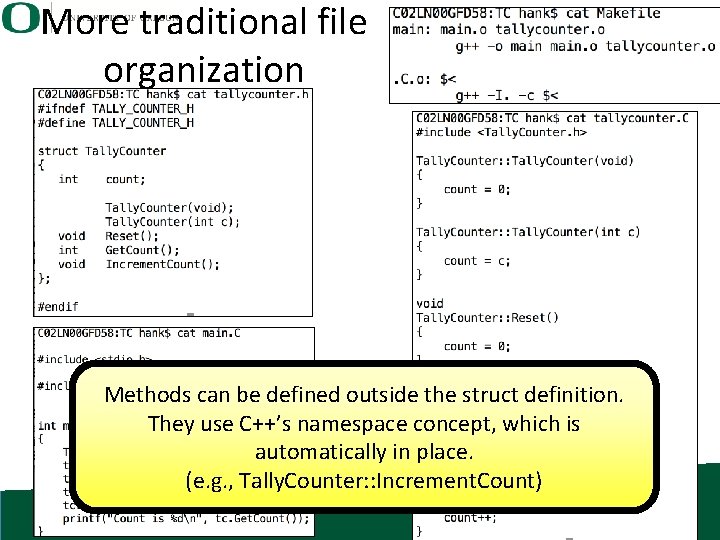
More traditional file organization Methods can be defined outside the struct definition. They use C++’s namespace concept, which is automatically in place. (e. g. , Tally. Counter: : Increment. Count)
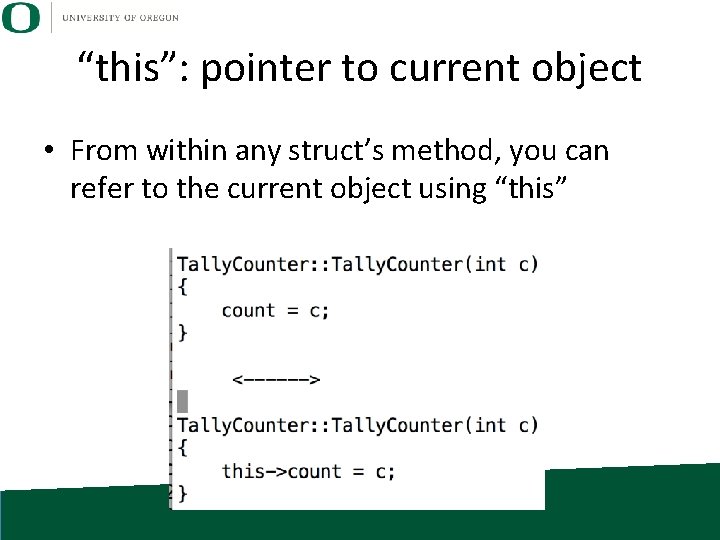
“this”: pointer to current object • From within any struct’s method, you can refer to the current object using “this”
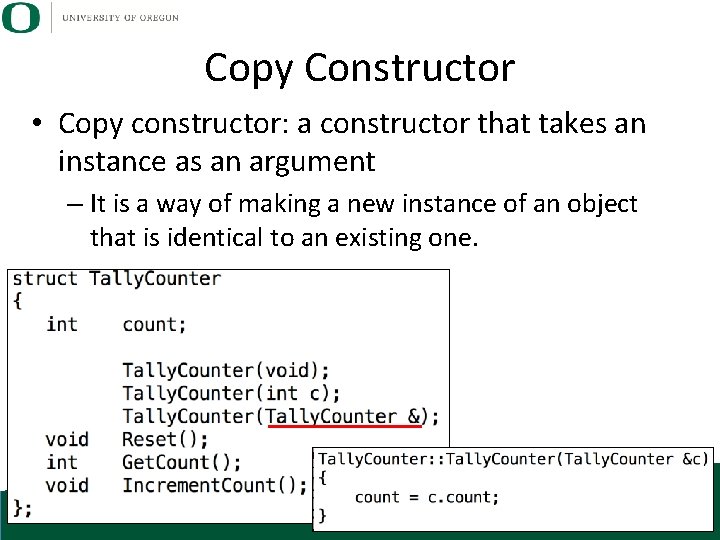
Copy Constructor • Copy constructor: a constructor that takes an instance as an argument – It is a way of making a new instance of an object that is identical to an existing one.
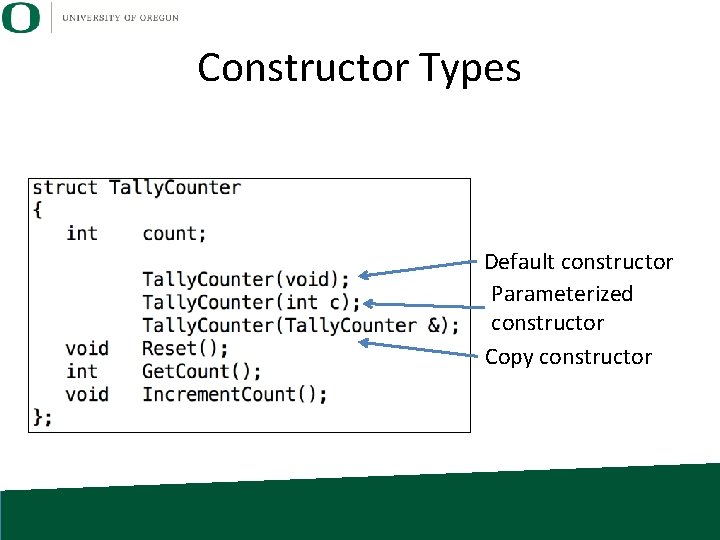
Constructor Types Default constructor Parameterized constructor Copy constructor
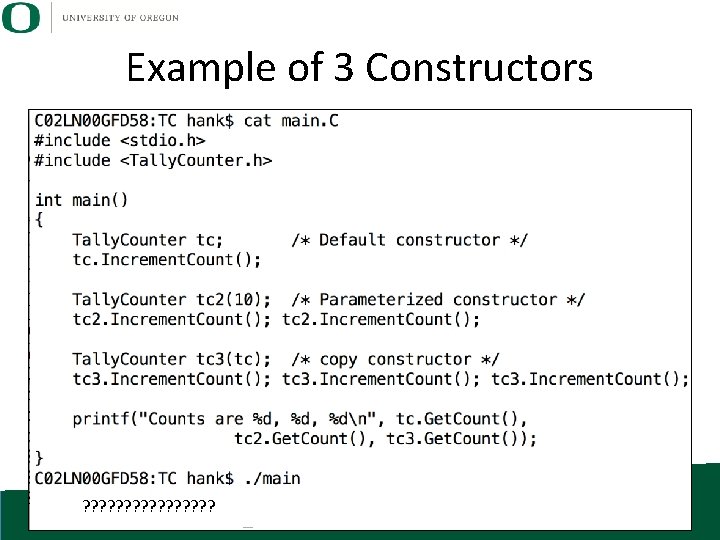
Example of 3 Constructors ? ? ? ?
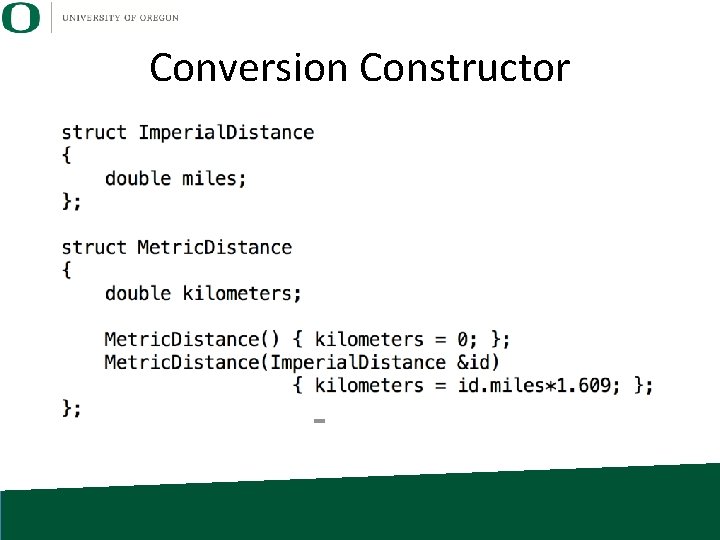
Conversion Constructor
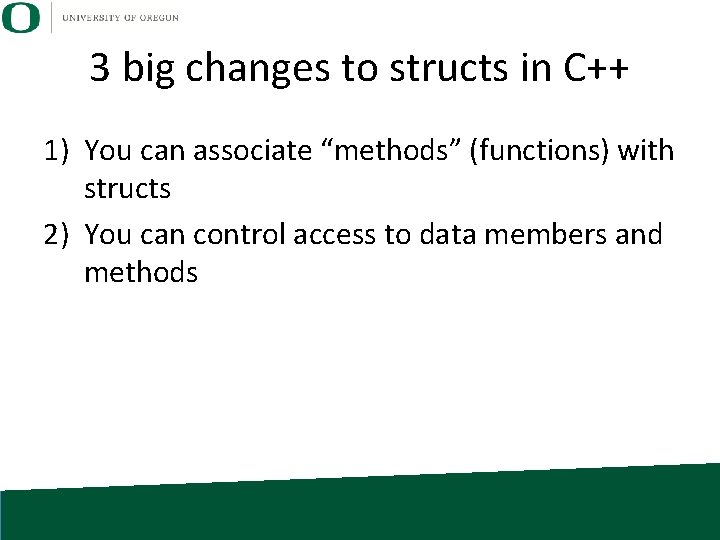
3 big changes to structs in C++ 1) You can associate “methods” (functions) with structs 2) You can control access to data members and methods
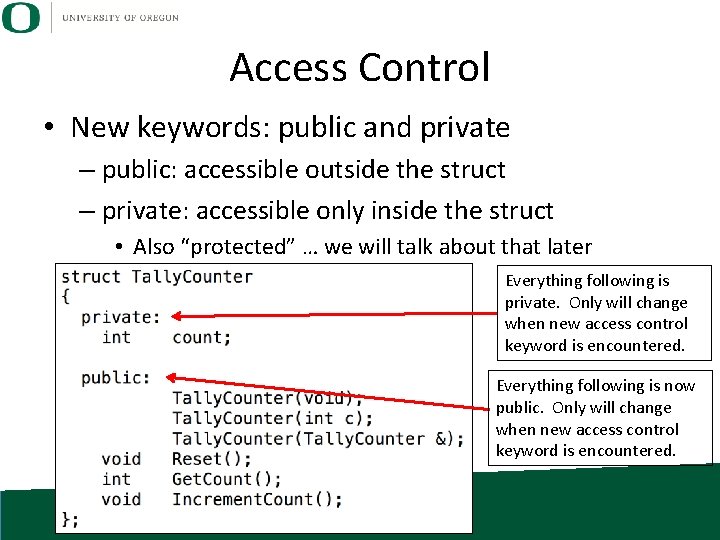
Access Control • New keywords: public and private – public: accessible outside the struct – private: accessible only inside the struct • Also “protected” … we will talk about that later Everything following is private. Only will change when new access control keyword is encountered. Everything following is now public. Only will change when new access control keyword is encountered.
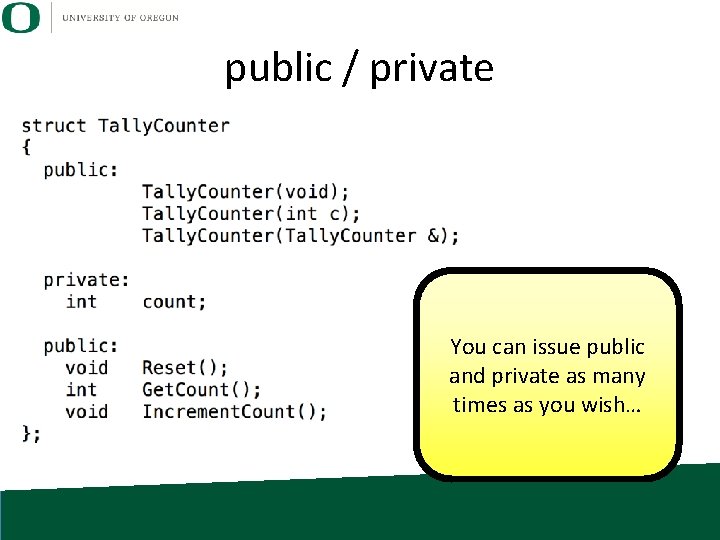
public / private You can issue public and private as many times as you wish…
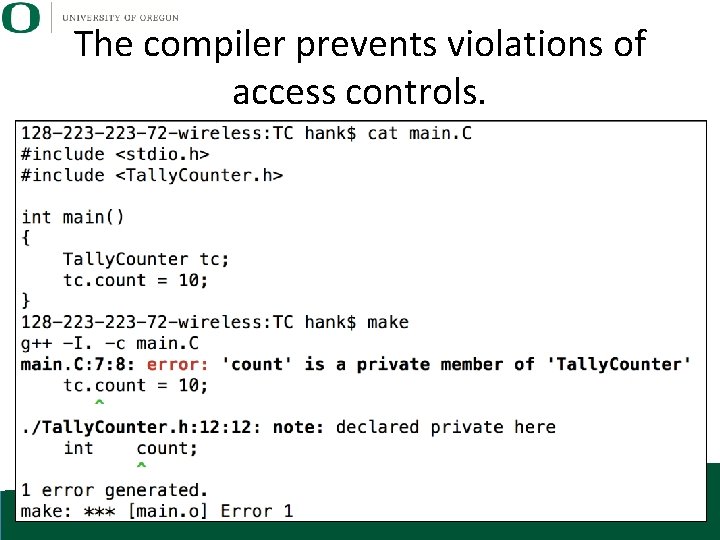
The compiler prevents violations of access controls.
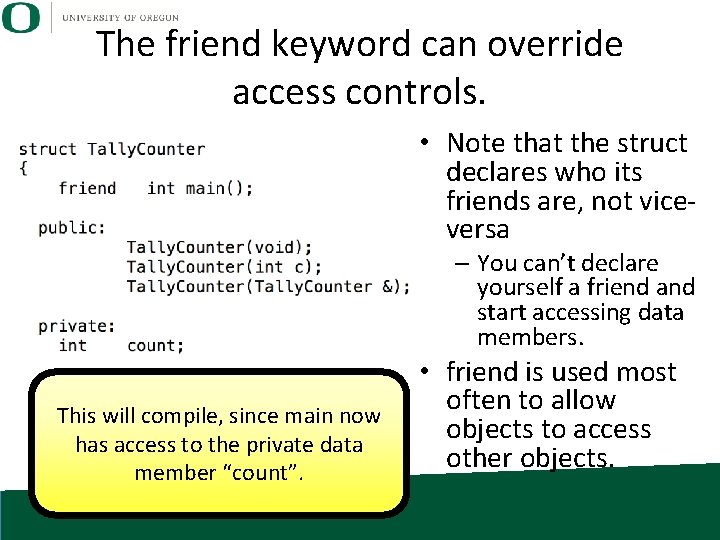
The friend keyword can override access controls. • Note that the struct declares who its friends are, not viceversa – You can’t declare yourself a friend and start accessing data members. This will compile, since main now has access to the private data member “count”. • friend is used most often to allow objects to access other objects.
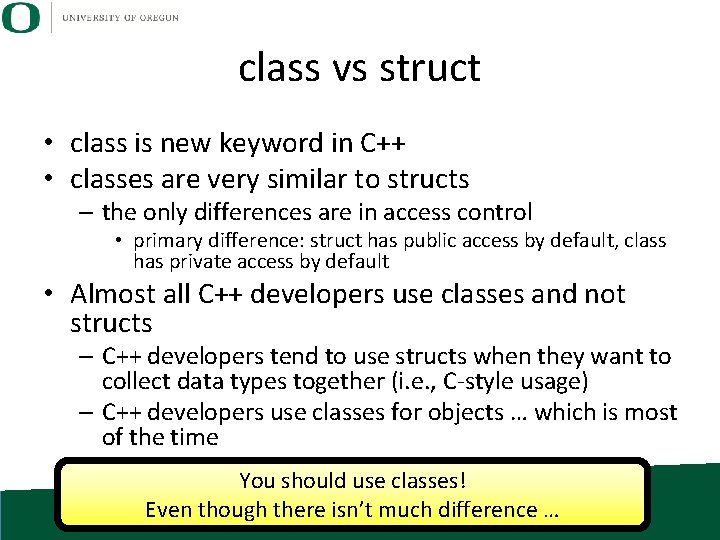
class vs struct • class is new keyword in C++ • classes are very similar to structs – the only differences are in access control • primary difference: struct has public access by default, class has private access by default • Almost all C++ developers use classes and not structs – C++ developers tend to use structs when they want to collect data types together (i. e. , C-style usage) – C++ developers use classes for objects … which is most of the time You should use classes! Even though there isn’t much difference …
3 big changes to structs in C++ 1) You can associate “methods” (functions) with structs 2) You can control access to data members and methods 3) Inheritance
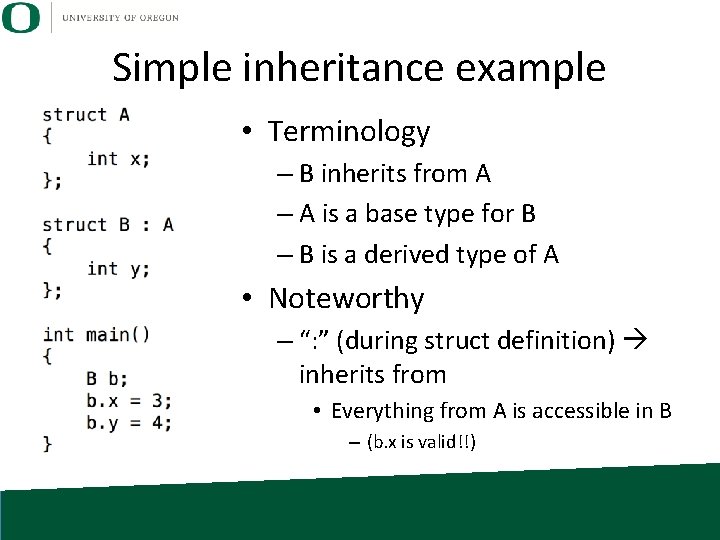
Simple inheritance example • Terminology – B inherits from A – A is a base type for B – B is a derived type of A • Noteworthy – “: ” (during struct definition) inherits from • Everything from A is accessible in B – (b. x is valid!!)
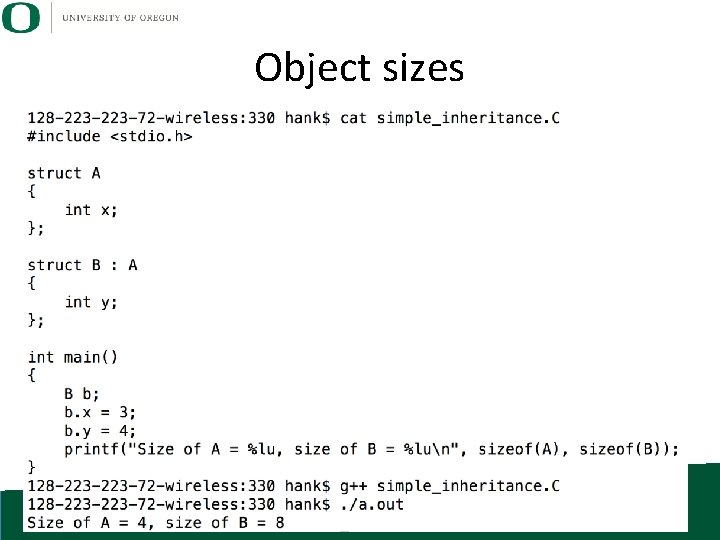
Object sizes
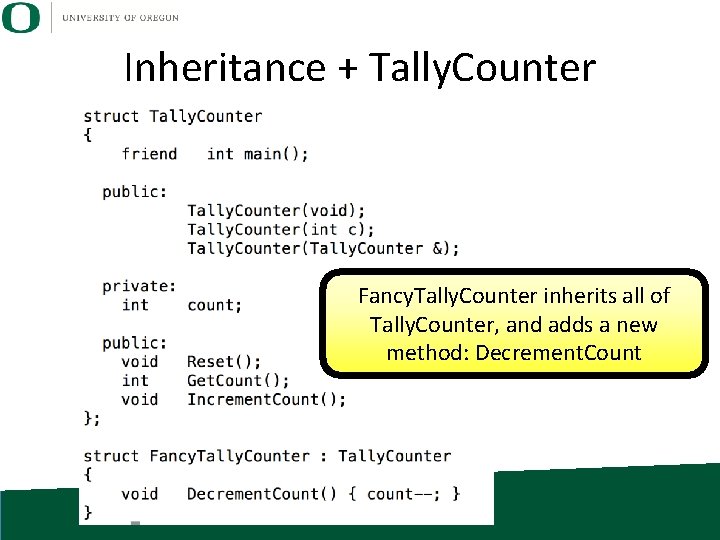
Inheritance + Tally. Counter Fancy. Tally. Counter inherits all of Tally. Counter, and adds a new method: Decrement. Count
Virtual functions • Virtual function: function defined in the base type, but can be re-defined in derived type. • When you call a virtual function, you get the version defined by the derived type
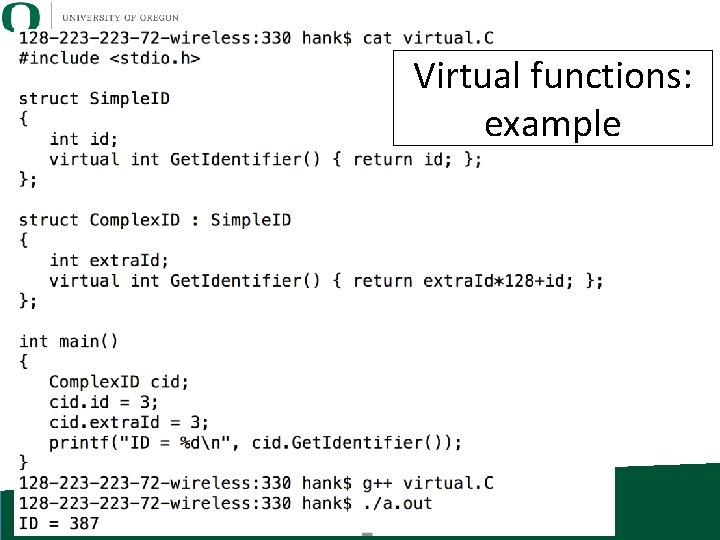
Virtual functions: example
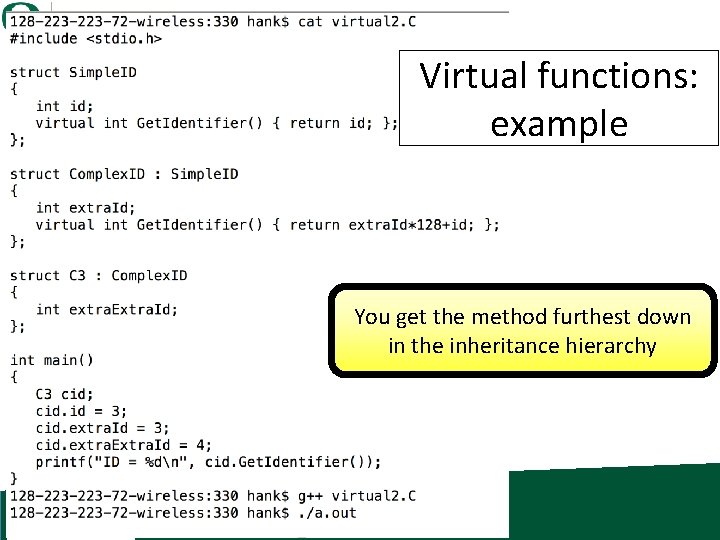
Virtual functions: example You get the method furthest down in the inheritance hierarchy
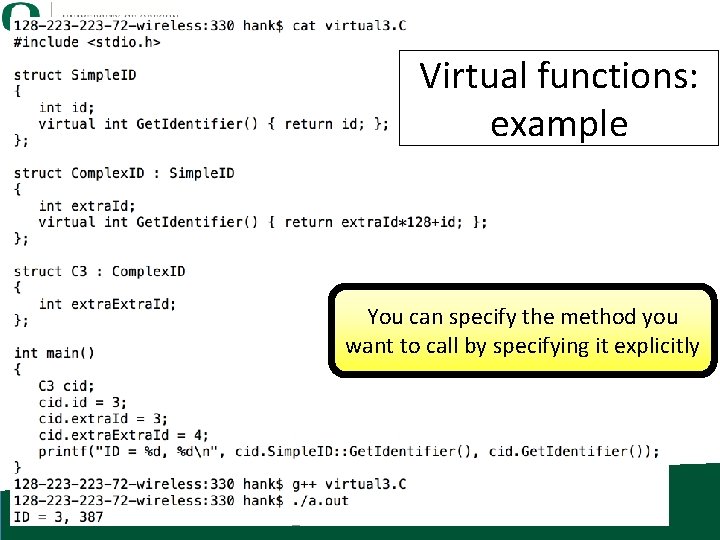
Virtual functions: example You can specify the method you want to call by specifying it explicitly
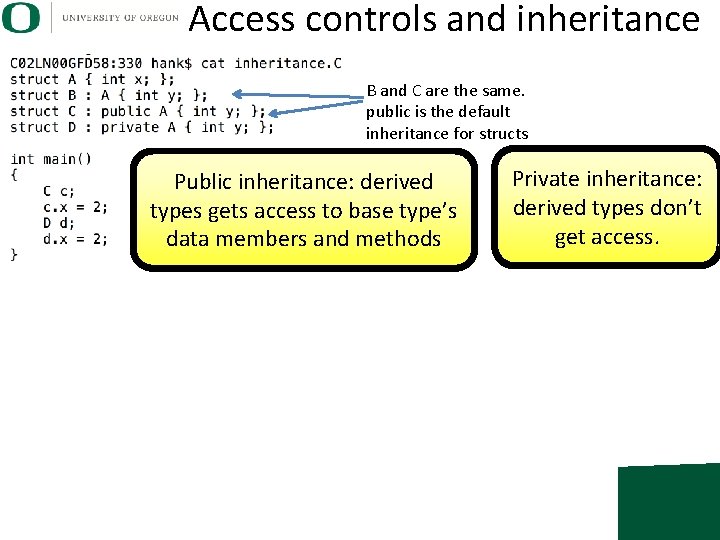
Access controls and inheritance B and C are the same. public is the default inheritance for structs Public inheritance: derived types gets access to base type’s data members and methods Private inheritance: derived types don’t get access.
One more access control word: protected • Protected means: – It cannot be accessed outside the object • Modulo “friend” – But it can be accessed by derived types • (assuming public inheritance)
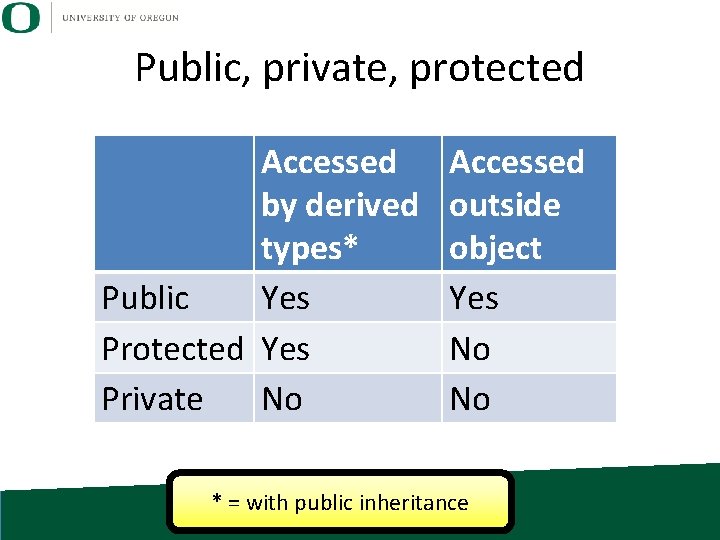
Public, private, protected Accessed by derived types* Public Yes Protected Yes Private No Accessed outside object Yes No No * = with public inheritance
More on virtual functions upcoming • • “Is A” Multiple inheritance Virtual function table Examples – (Shape)
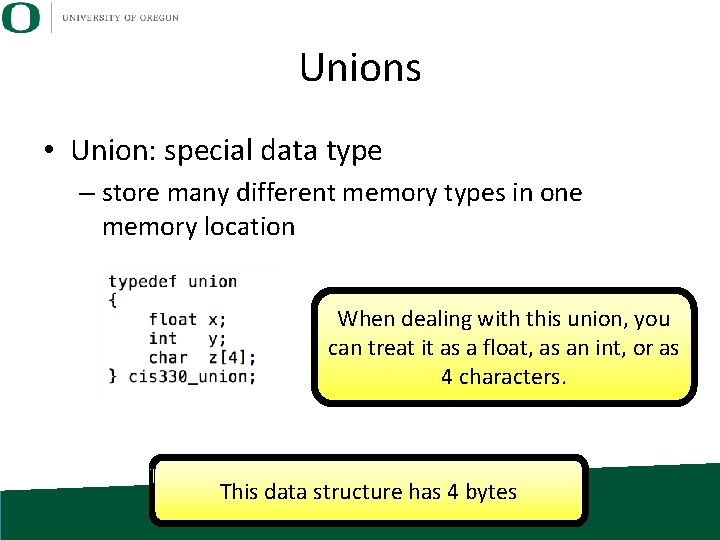
Unions • Union: special data type – store many different memory types in one memory location When dealing with this union, you can treat it as a float, as an int, or as 4 characters. This data structure has 4 bytes
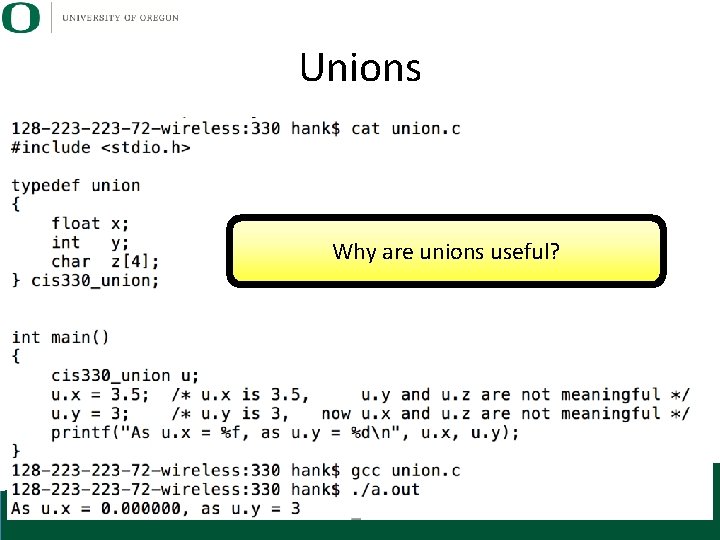
Unions Why are unions useful?
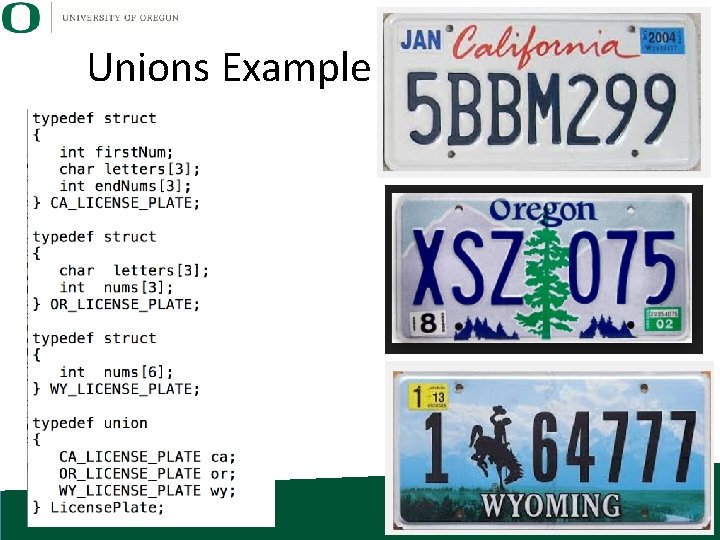
Unions Example
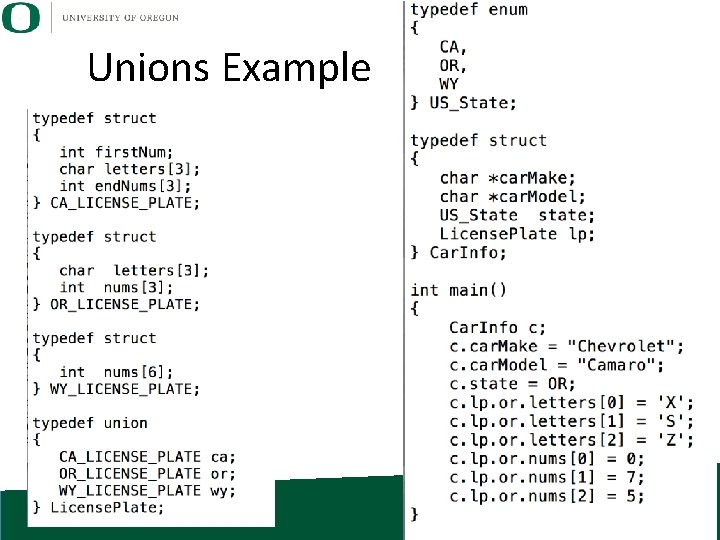
Unions Example
Function Pointers
Function Pointers • Idea: – You have a pointer to a function – This pointer can change based on circumstance – When you call the function pointer, it is like calling a known function
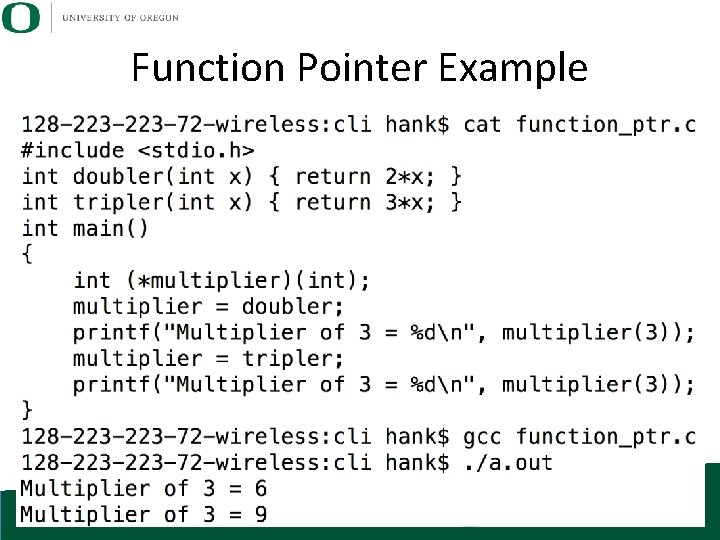
Function Pointer Example
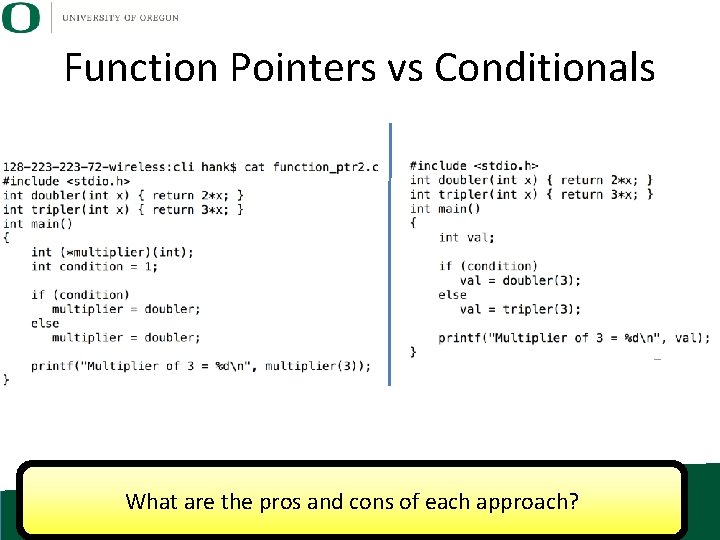
Function Pointers vs Conditionals What are the pros and cons of each approach?
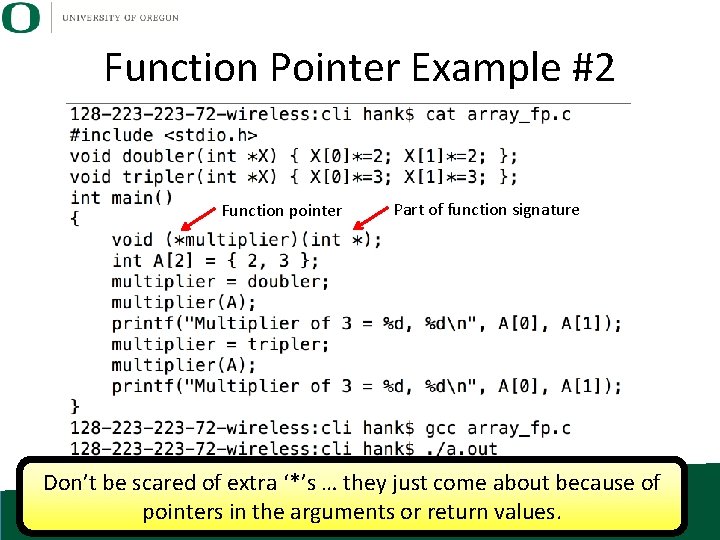
Function Pointer Example #2 Function pointer Part of function signature Don’t be scared of extra ‘*’s … they just come about because of pointers in the arguments or return values.
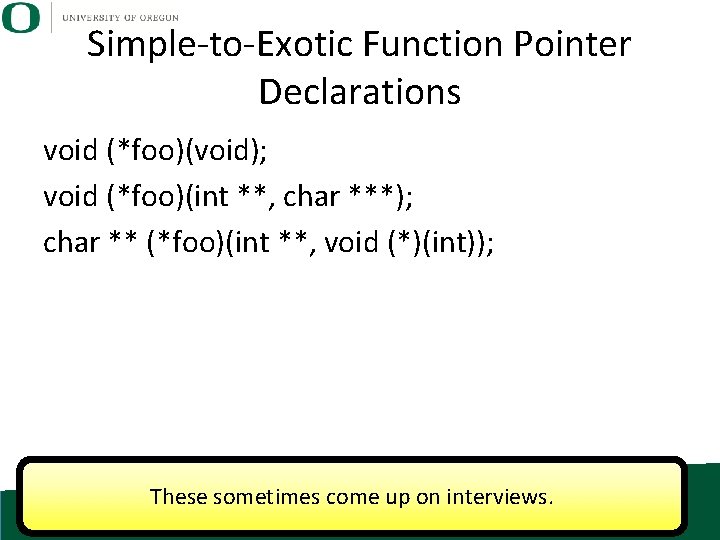
Simple-to-Exotic Function Pointer Declarations void (*foo)(void); void (*foo)(int **, char ***); char ** (*foo)(int **, void (*)(int)); These sometimes come up on interviews.
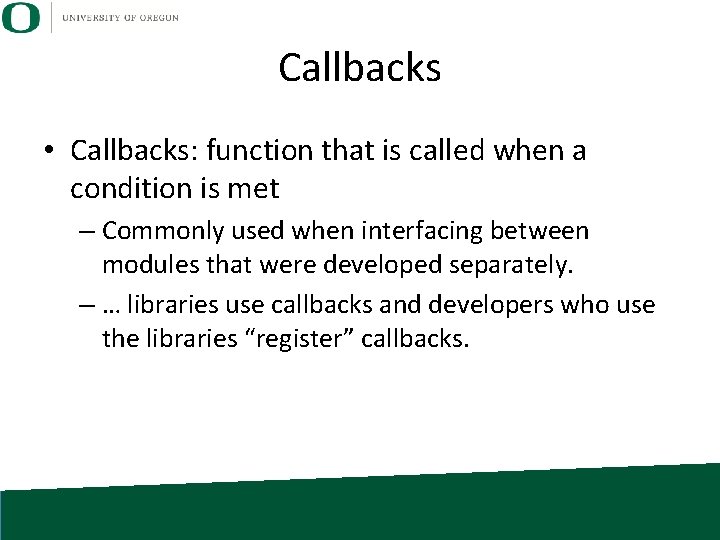
Callbacks • Callbacks: function that is called when a condition is met – Commonly used when interfacing between modules that were developed separately. – … libraries use callbacks and developers who use the libraries “register” callbacks.
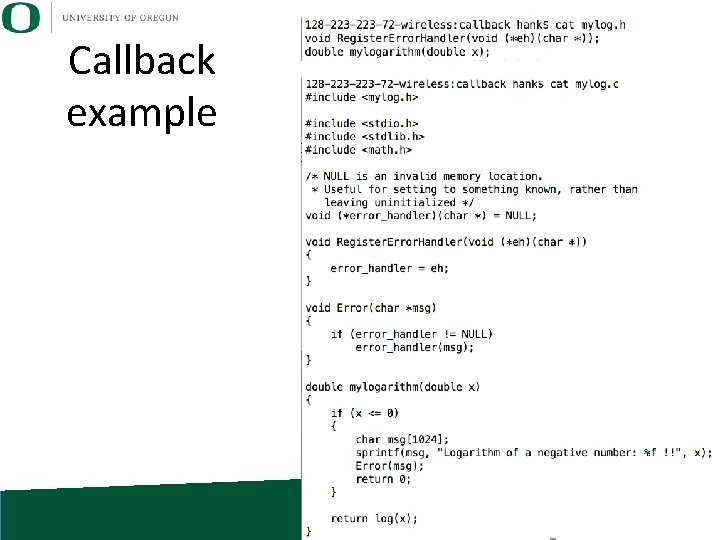
Callback example
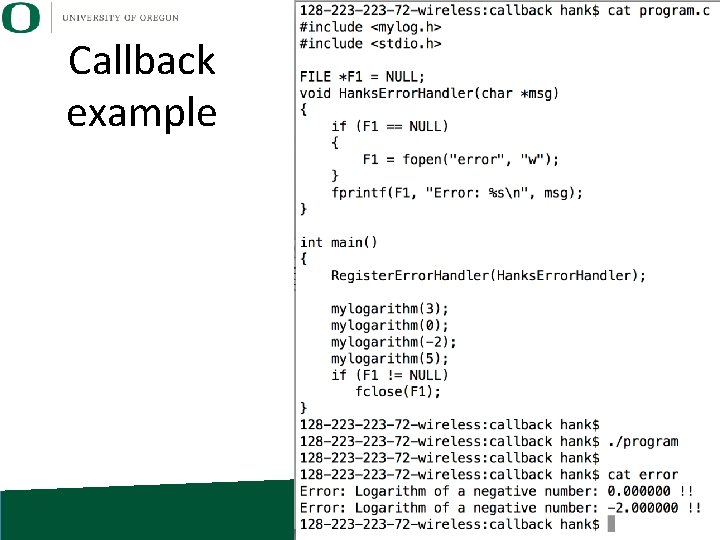
Callback example
Function Pointers • We are going to use function pointers to accomplish “sub-typing” in Project 2 D.
- Slides: 103