
Project 1 closure report Guide Capacity requirements for



- Slides: 11
Project 1 closure report Guide: Capacity requirements for conducting IT audits in a SAI WGITA (2017 -19 work plan)
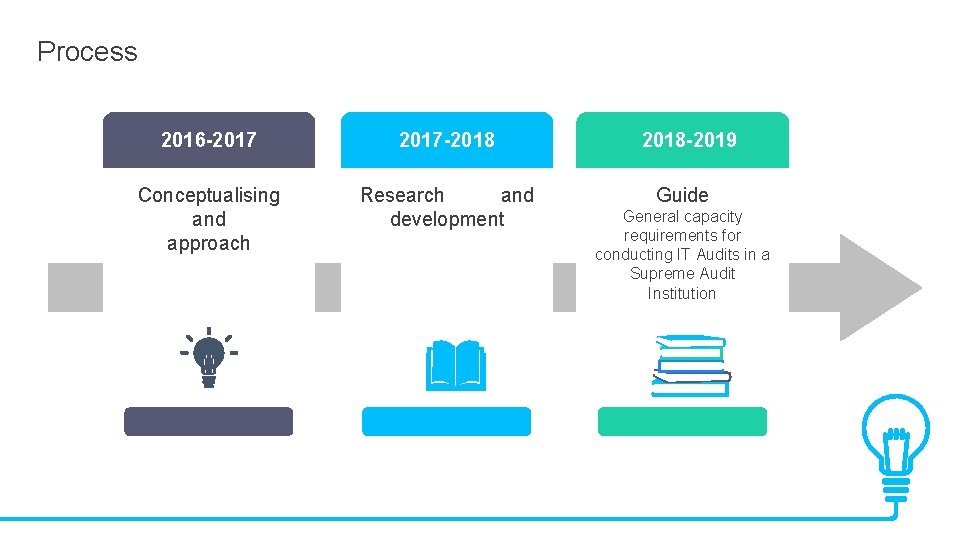
Process 2016 -2017 Conceptualising and approach 2017 -18 2017 -2018 Research and development 2018 -2019 2018 Guide General capacity requirements for conducting IT Audits in a Supreme Audit Institution
Capacity building / development terms and their application Capability Competence Ability Capacity Delivery
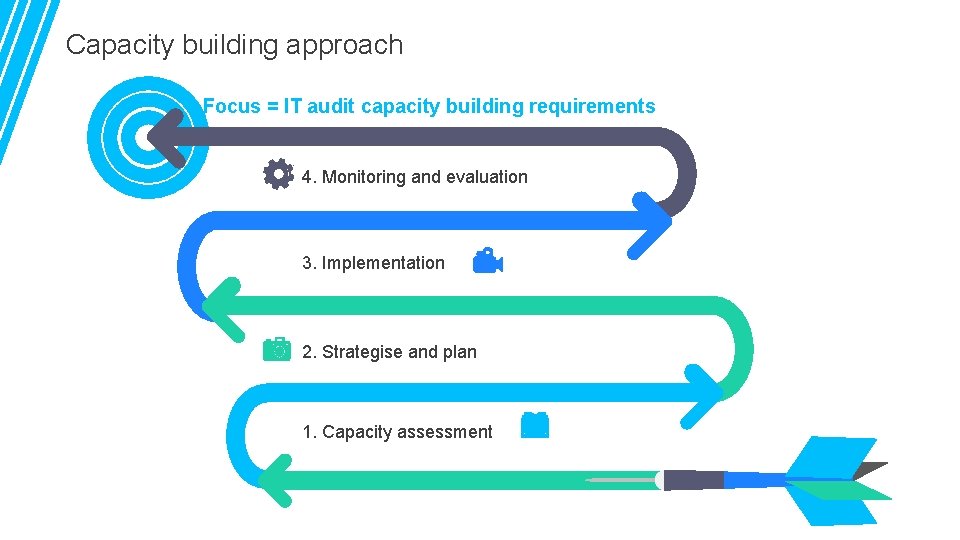
Capacity building approach Focus = IT audit capacity building requirements 4. Monitoring and evaluation 3. Implementation 2. Strategise and plan 1. Capacity assessment
About the guide FOREWORD Chapter 2 Chapter 3 Chapter 4 Chapter 5 Chapter 6 Chapter 1 Evolution of Public Administration Capacity building in a Supreme Audit Institution IT Audit capacity building and sustainability strategies Information Communication Technology and the audit process IT Audit capacity requirements Overview of the survey results (real life view) Introduction
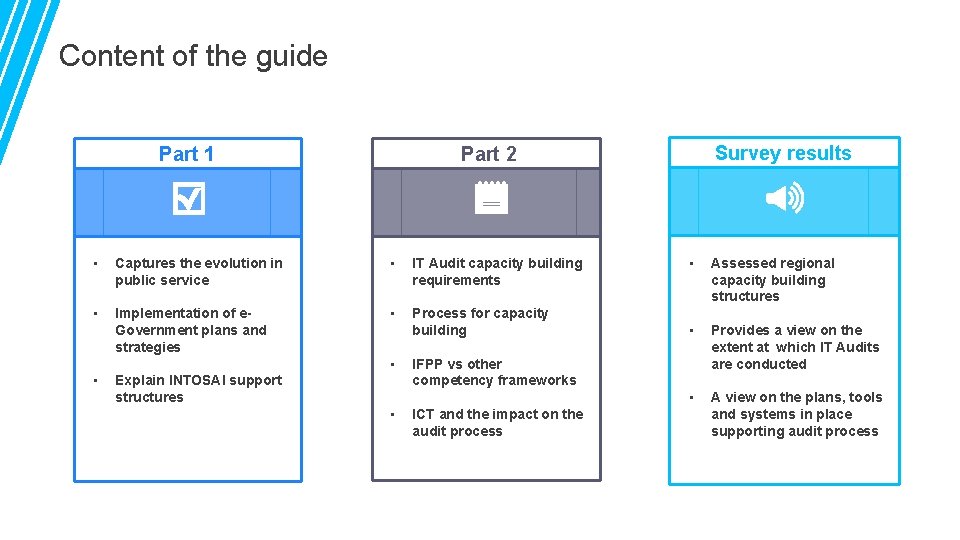
Content of the guide • Captures the evolution in public service • IT Audit capacity building requirements • Implementation of e. Government plans and strategies • Process for capacity building • • Survey results Part 2 Part 1 Explain INTOSAI support structures • • Assessed regional capacity building structures • Provides a view on the extent at which IT Audits are conducted • A view on the plans, tools and systems in place supporting audit process IFPP vs other competency frameworks ICT and the impact on the audit process
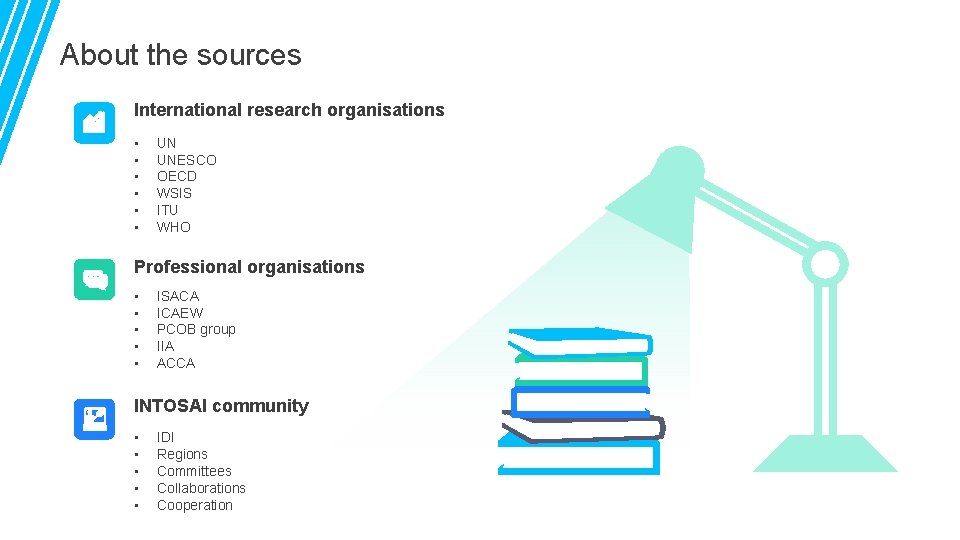
About the sources International research organisations • • • UN UNESCO OECD WSIS ITU WHO Professional organisations • • • ISACA ICAEW PCOB group IIA ACCA INTOSAI community • • • IDI Regions Committees Collaborations Cooperation
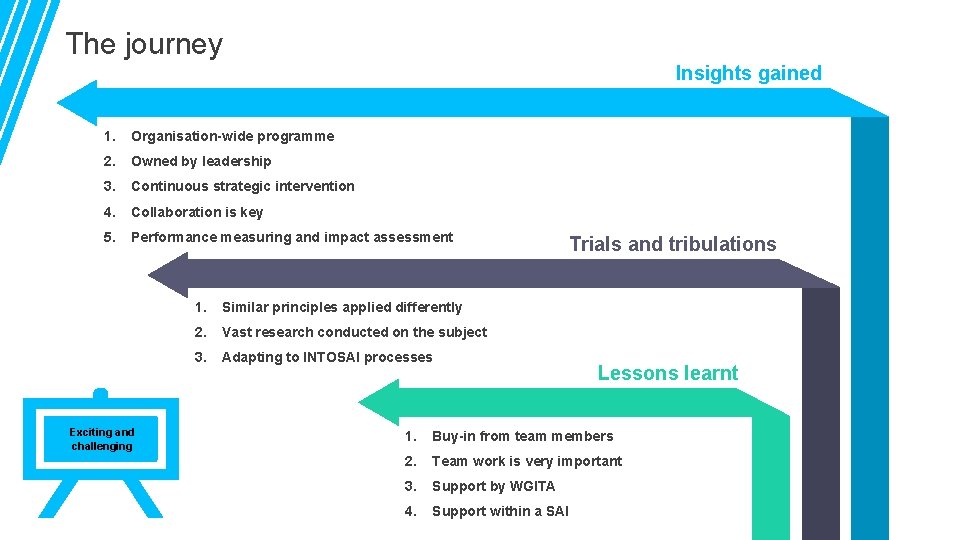
The journey Insights gained 1. Organisation-wide programme 2. Owned by leadership 3. Continuous strategic intervention 4. Collaboration is key 5. Performance measuring and impact assessment Exciting and challenging 1. Similar principles applied differently 2. Vast research conducted on the subject 3. Adapting to INTOSAI processes Trials and tribulations Lessons learnt 1. Buy-in from team members 2. Team work is very important 3. Support by WGITA 4. Support within a SAI
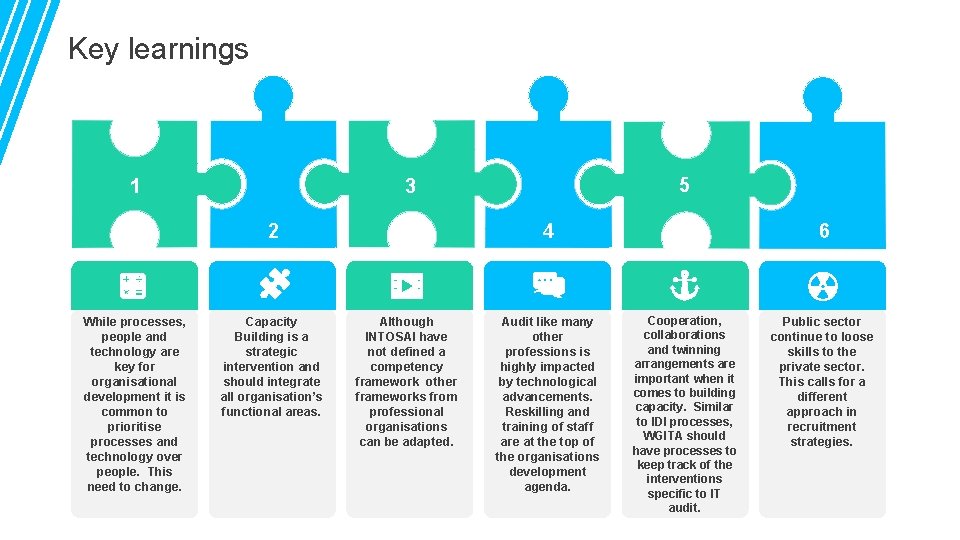
Key learnings 1 2 While processes, people and technology are key for organisational development it is common to prioritise processes and technology over people. This need to change. 5 3 Capacity Building is a strategic intervention and should integrate all organisation’s functional areas. 4 Although INTOSAI have not defined a competency framework other frameworks from professional organisations can be adapted. Audit like many other professions is highly impacted by technological advancements. Reskilling and training of staff are at the top of the organisations development agenda. 6 Cooperation, collaborations and twinning arrangements are important when it comes to building capacity. Similar to IDI processes, WGITA should have processes to keep track of the interventions specific to IT audit. Public sector continue to loose skills to the private sector. This calls for a different approach in recruitment strategies.
• Infographic Style Acknowledgements AFROSAI-E Iraq Bangladesh Korea India Mexico Iran Poland
The end 01 02 03 Text Here Easy to change colors.