
Progressivism Why are seals bears reindeer fish wild
Progressivism “Why are seals, bears, reindeer, fish, wild game in national parks, buffalo and migratory birds all found suitable for federal protection, but not children” – Florence Kelly
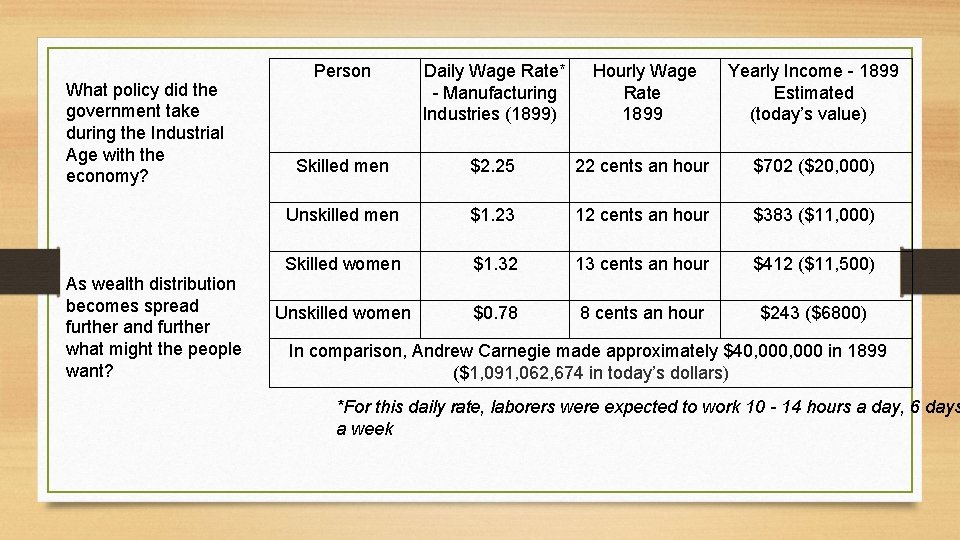
What policy did the government take during the Industrial Age with the economy? As wealth distribution becomes spread further and further what might the people want? Person Daily Wage Rate* - Manufacturing Industries (1899) Hourly Wage Rate 1899 Yearly Income - 1899 Estimated (today’s value) Skilled men $2. 25 22 cents an hour $702 ($20, 000) Unskilled men $1. 23 12 cents an hour $383 ($11, 000) Skilled women $1. 32 13 cents an hour $412 ($11, 500) Unskilled women $0. 78 8 cents an hour $243 ($6800) In comparison, Andrew Carnegie made approximately $40, 000 in 1899 ($1, 091, 062, 674 in today’s dollars) *For this daily rate, laborers were expected to work 10 - 14 hours a day, 6 days a week
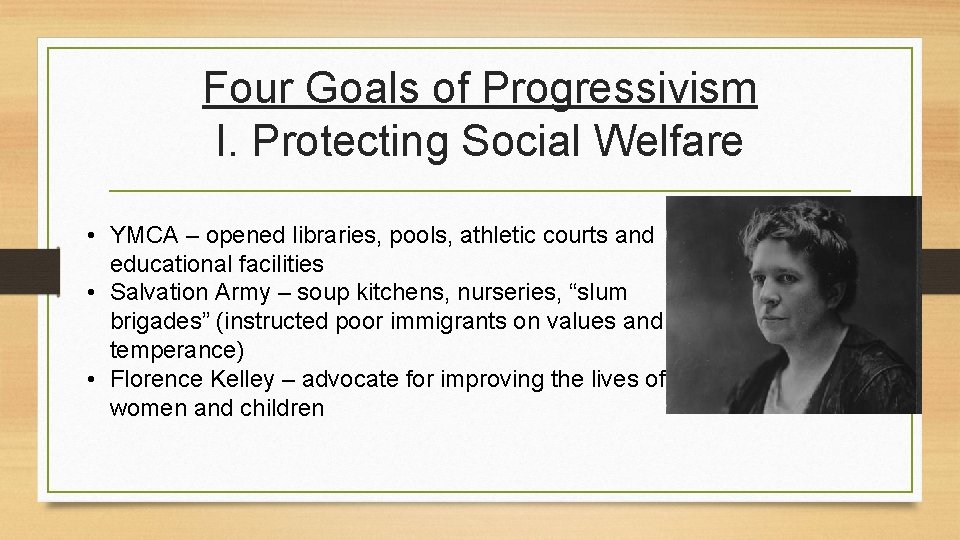
Four Goals of Progressivism I. Protecting Social Welfare • YMCA – opened libraries, pools, athletic courts and educational facilities • Salvation Army – soup kitchens, nurseries, “slum brigades” (instructed poor immigrants on values and temperance) • Florence Kelley – advocate for improving the lives of women and children
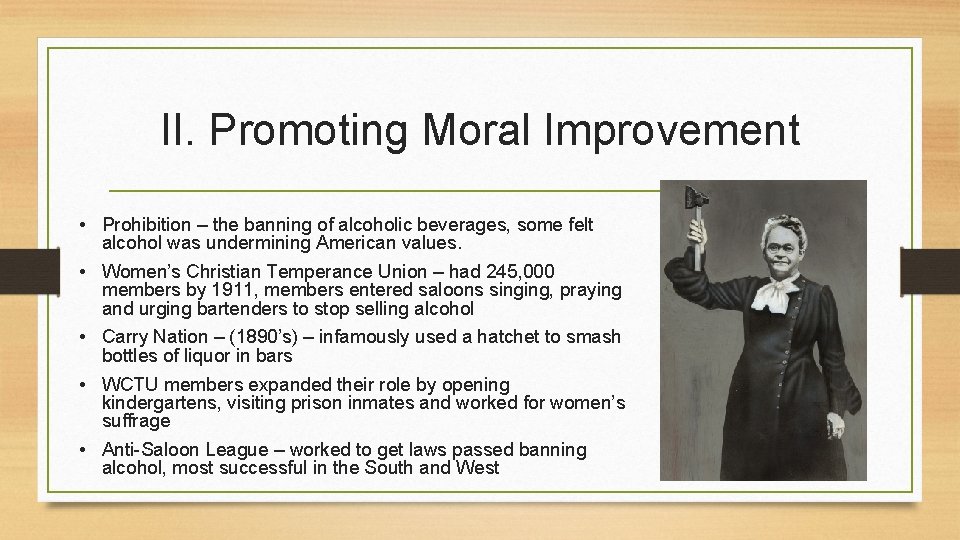
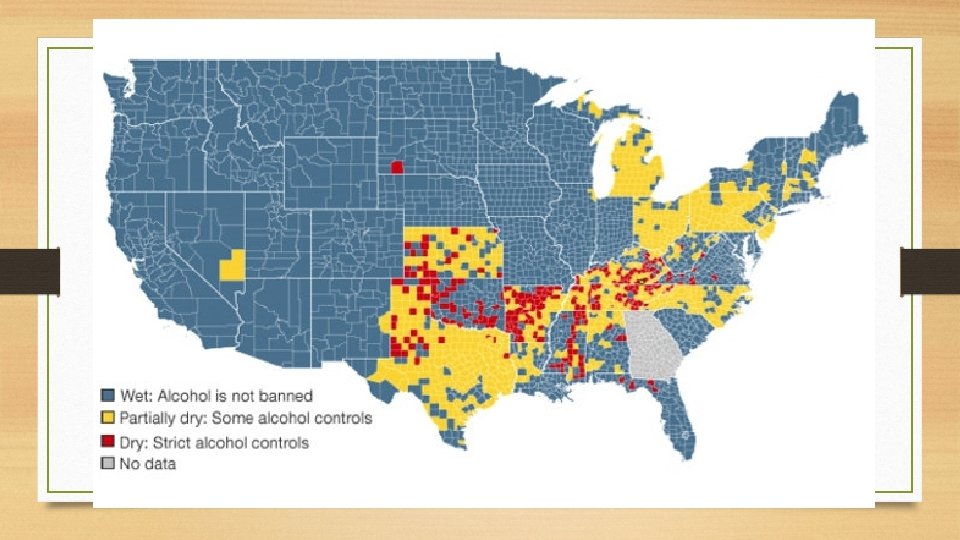
II. Promoting Moral Improvement • Prohibition – the banning of alcoholic beverages, some felt alcohol was undermining American values. • Women’s Christian Temperance Union – had 245, 000 members by 1911, members entered saloons singing, praying and urging bartenders to stop selling alcohol • Carry Nation – (1890’s) – infamously used a hatchet to smash bottles of liquor in bars • WCTU members expanded their role by opening kindergartens, visiting prison inmates and worked for women’s suffrage • Anti-Saloon League – worked to get laws passed banning alcohol, most successful in the South and West
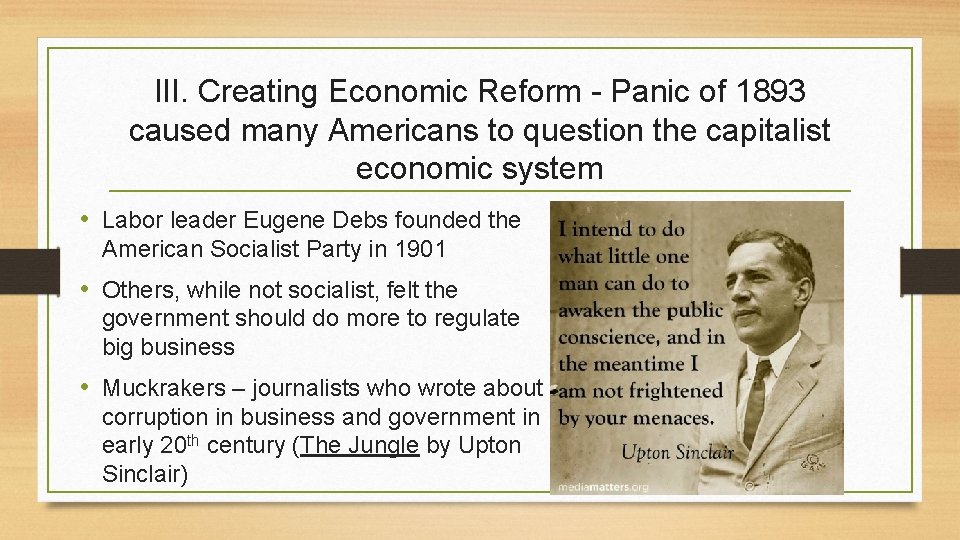
III. Creating Economic Reform - Panic of 1893 caused many Americans to question the capitalist economic system • Labor leader Eugene Debs founded the American Socialist Party in 1901 • Others, while not socialist, felt the government should do more to regulate big business • Muckrakers – journalists who wrote about corruption in business and government in early 20 th century (The Jungle by Upton Sinclair)

Excerpts from the Jungle • https: //www. youtube. com/watch? v=ny. H 7 D 9 DF 0 Mc
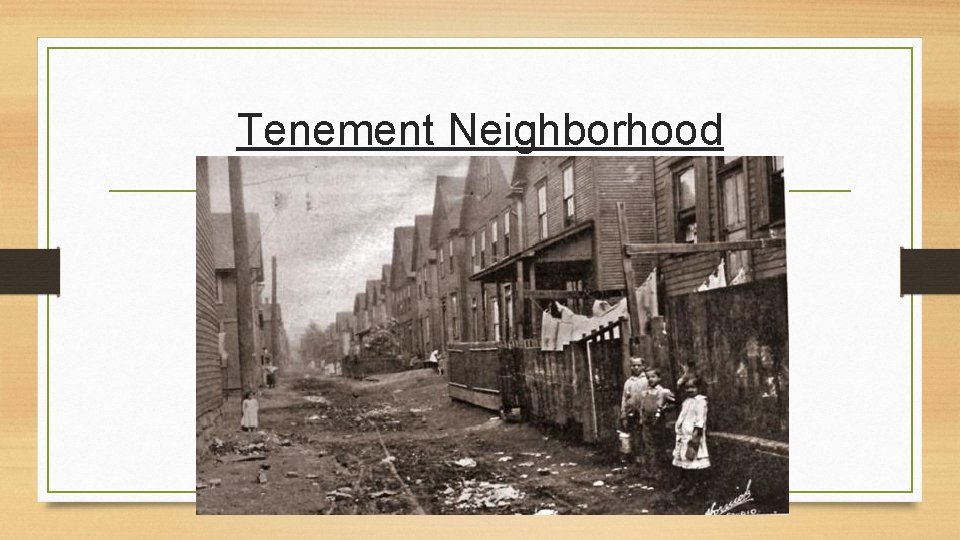
Tenement Neighborhood
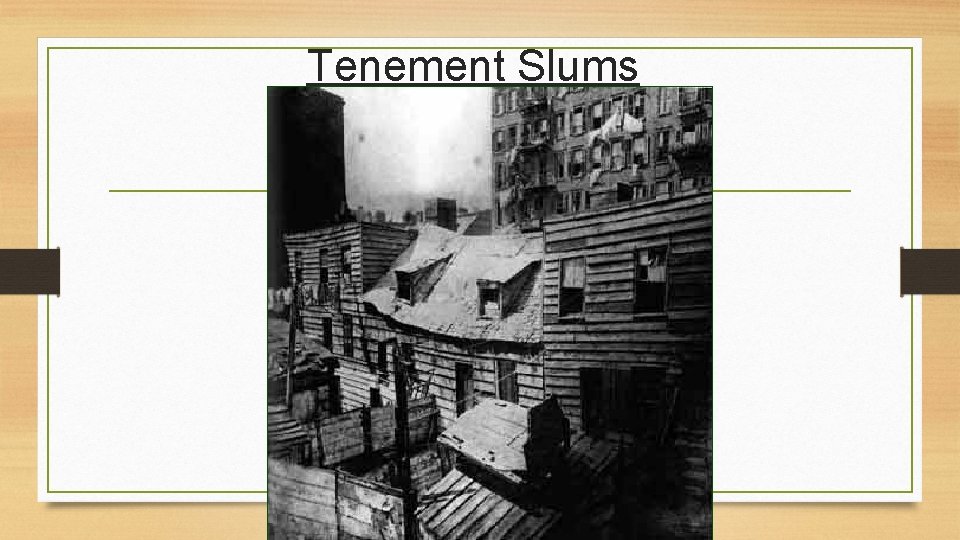
Tenement Slums
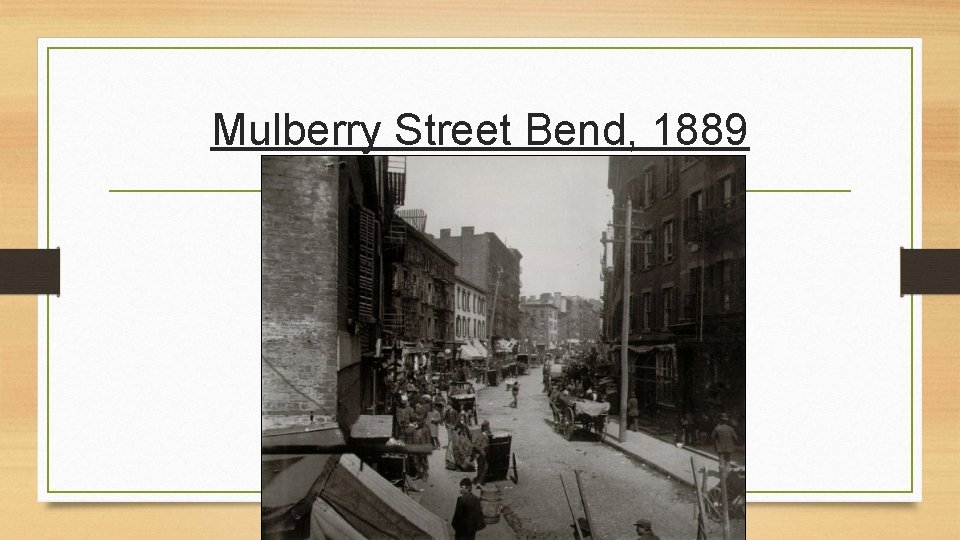
Mulberry Street Bend, 1889
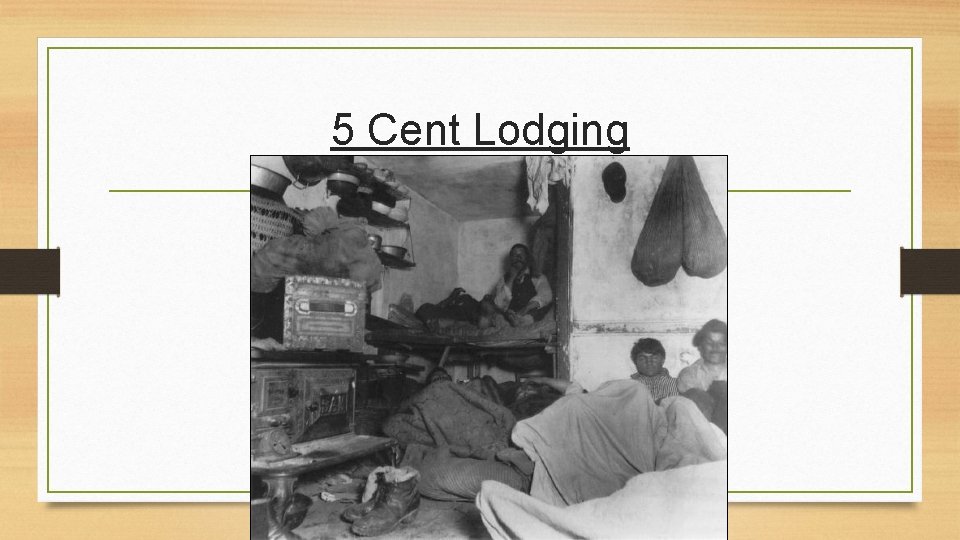
5 Cent Lodging
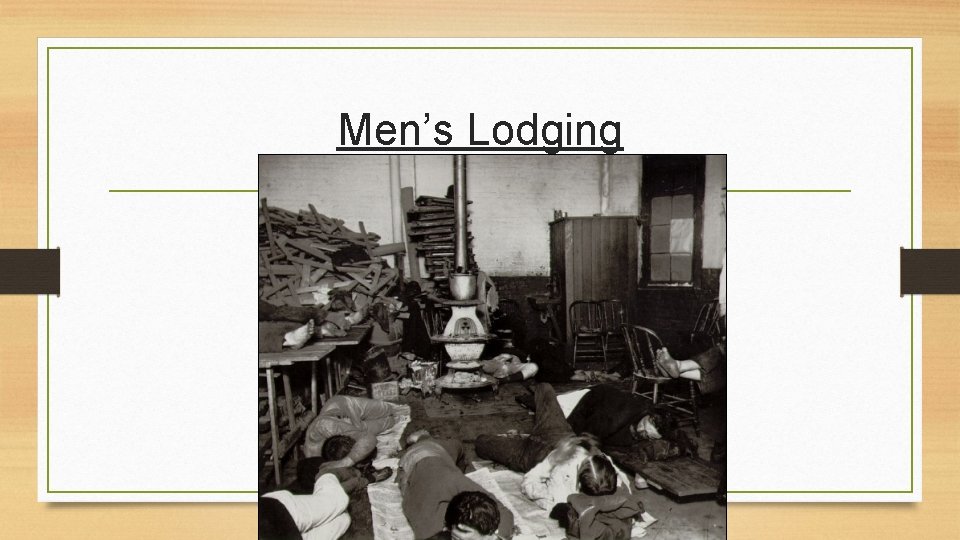
Men’s Lodging
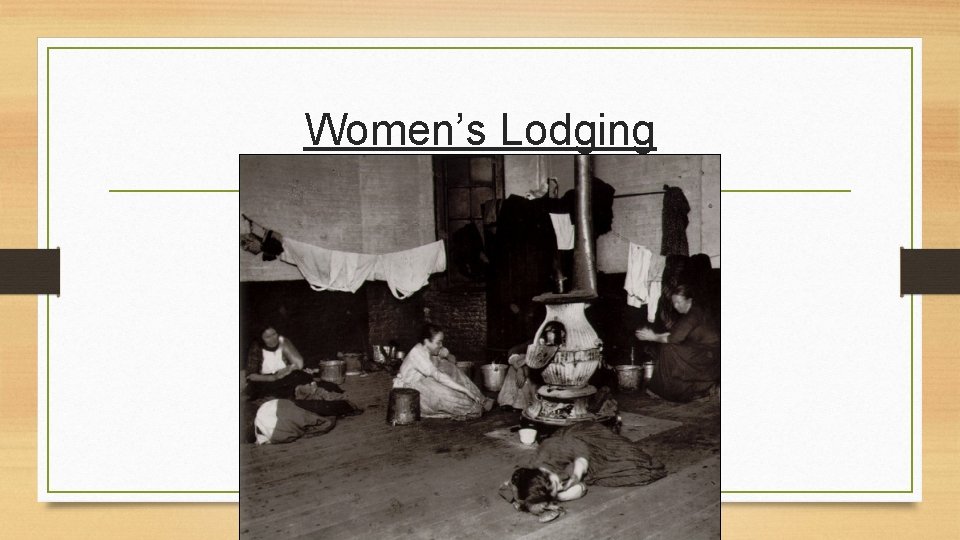
Women’s Lodging
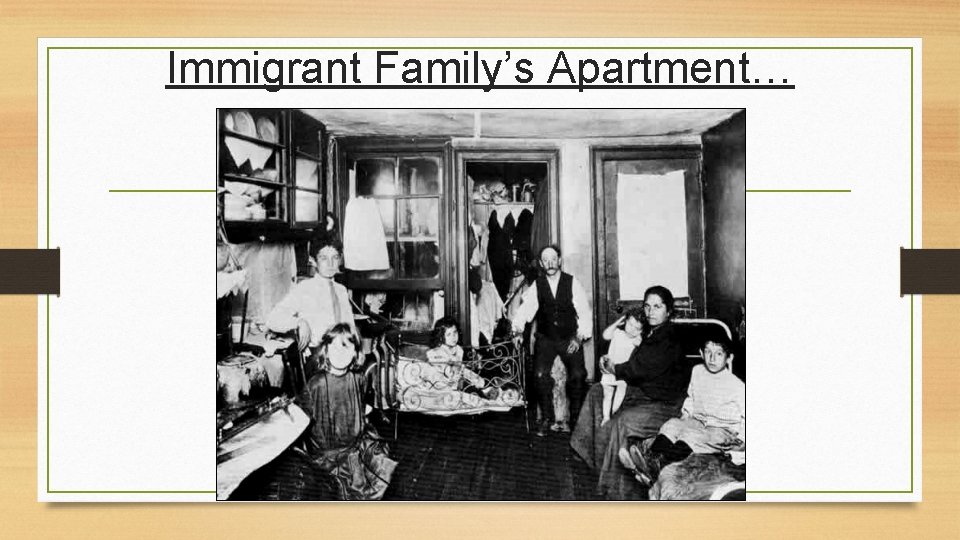
Immigrant Family’s Apartment…
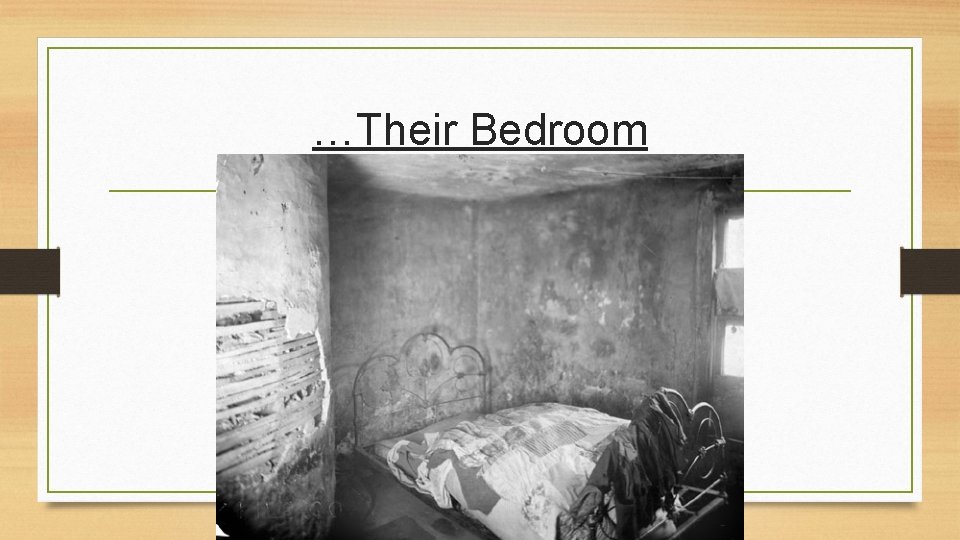
…Their Bedroom
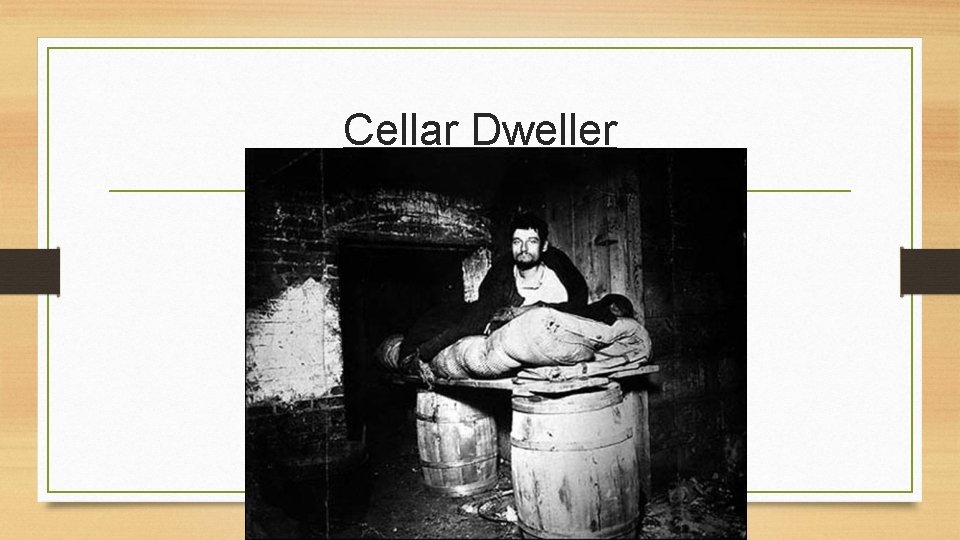
Cellar Dweller
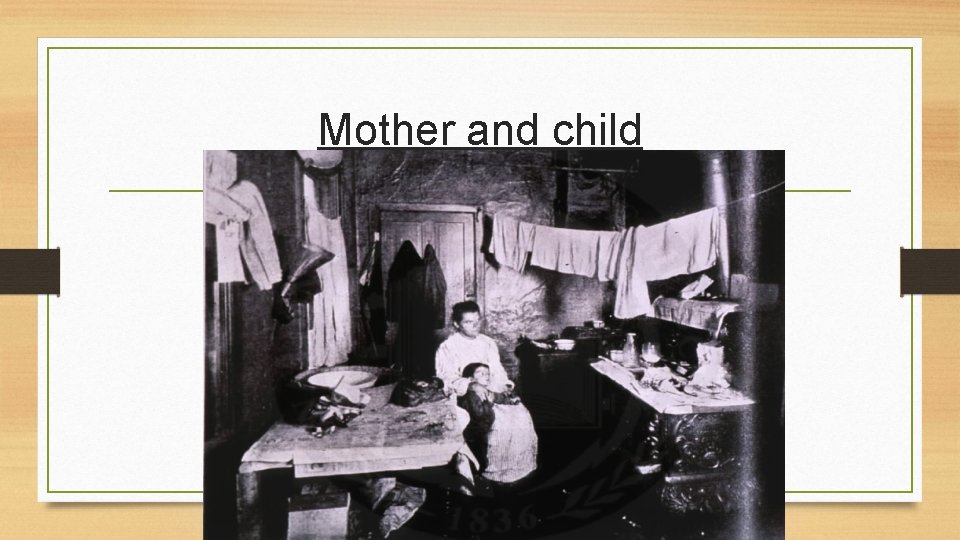
Mother and child
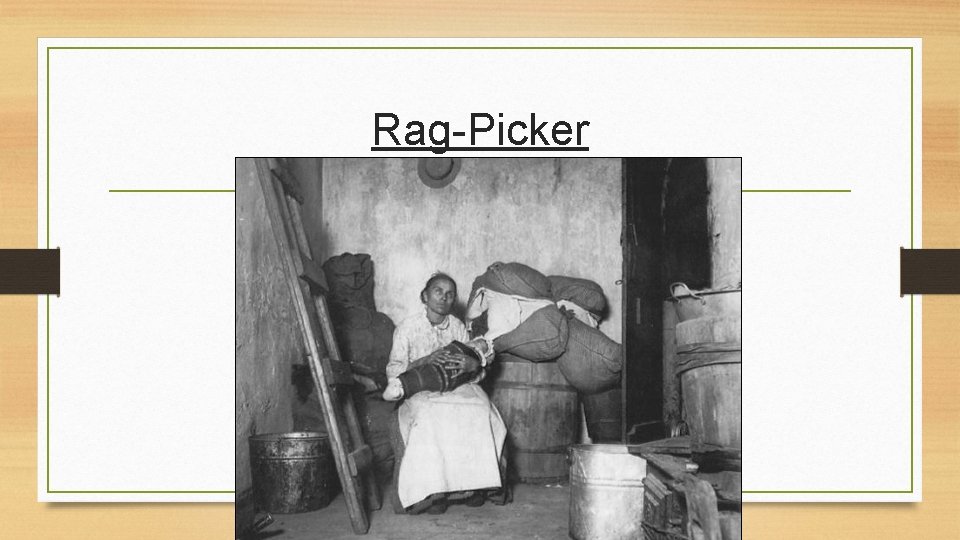
Rag-Picker
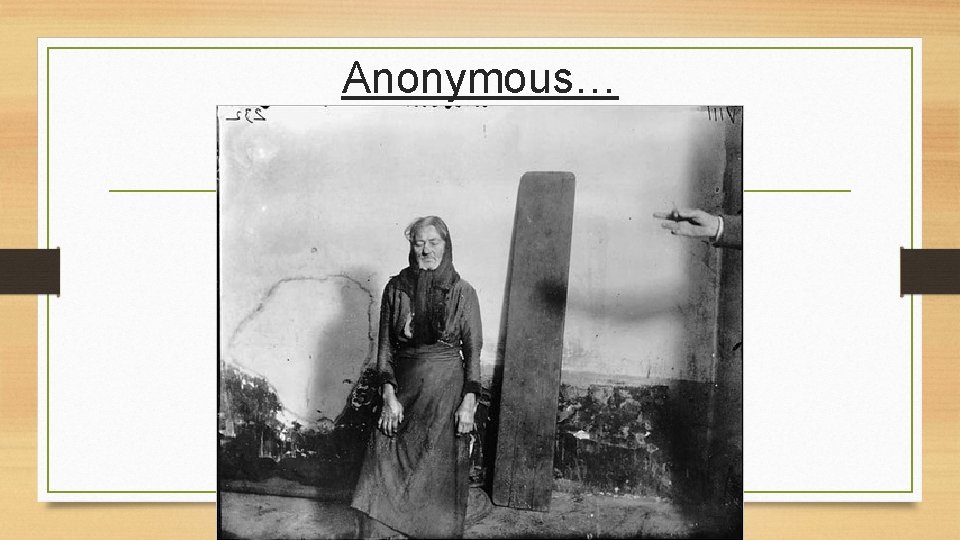
Anonymous…
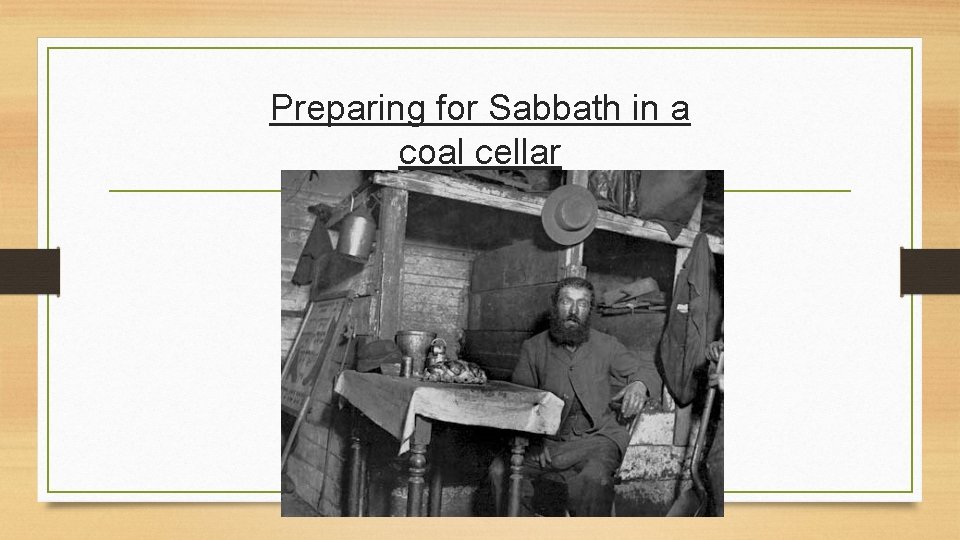
Preparing for Sabbath in a coal cellar
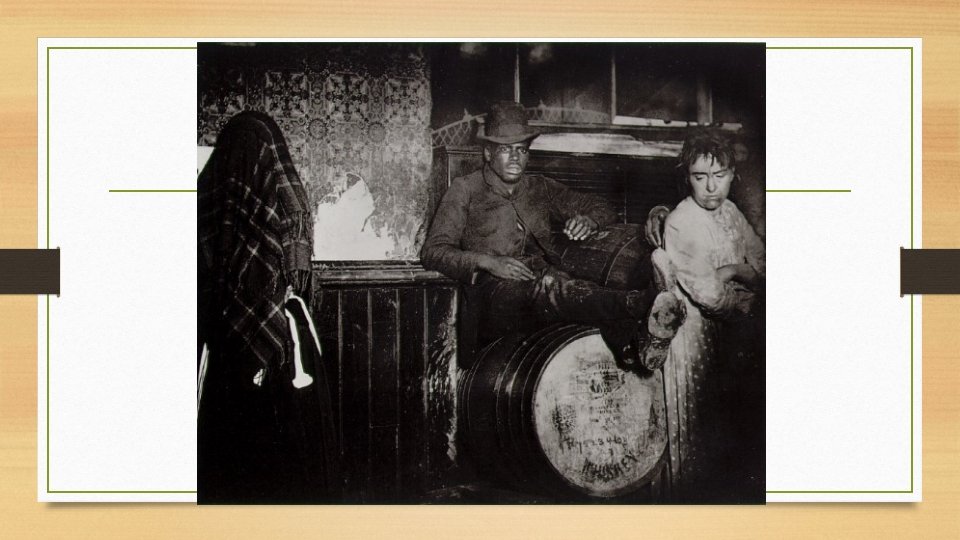
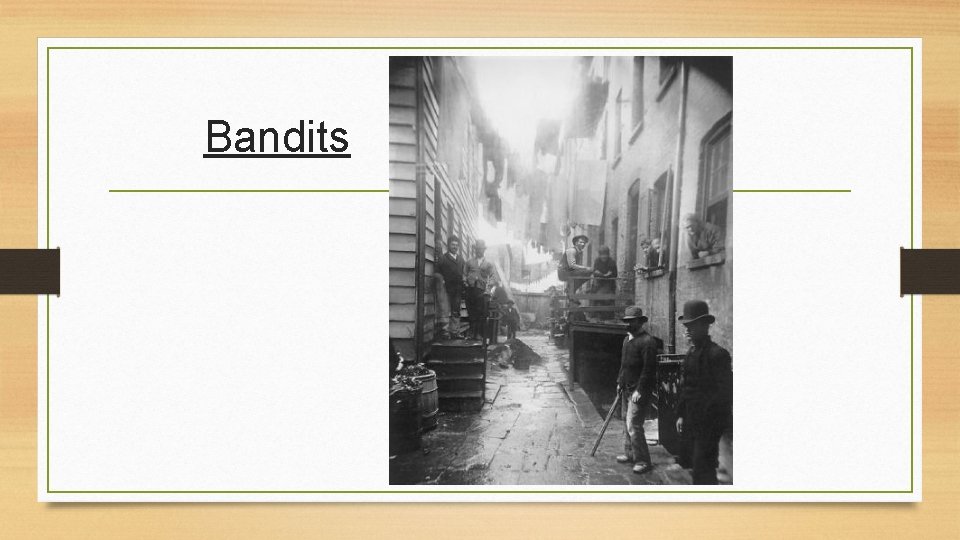
Bandits
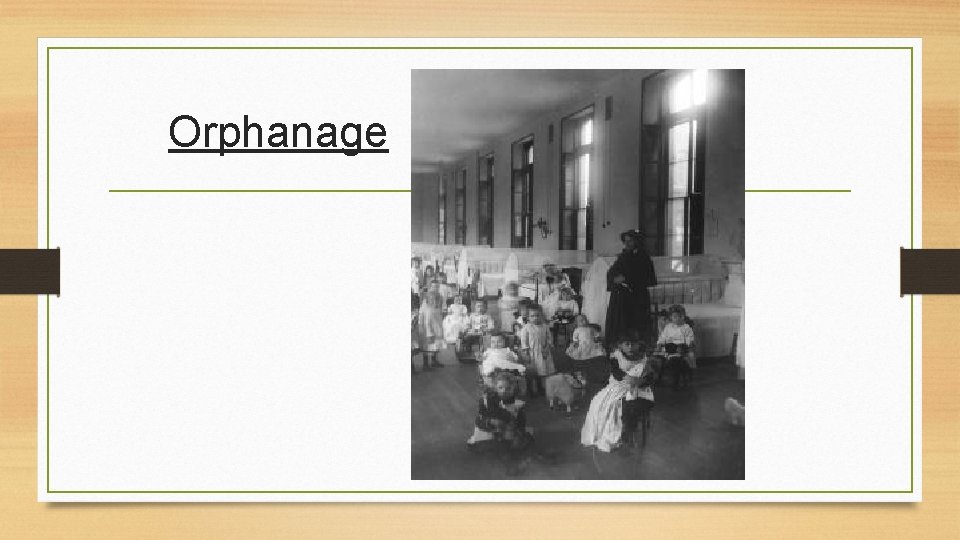
Orphanage
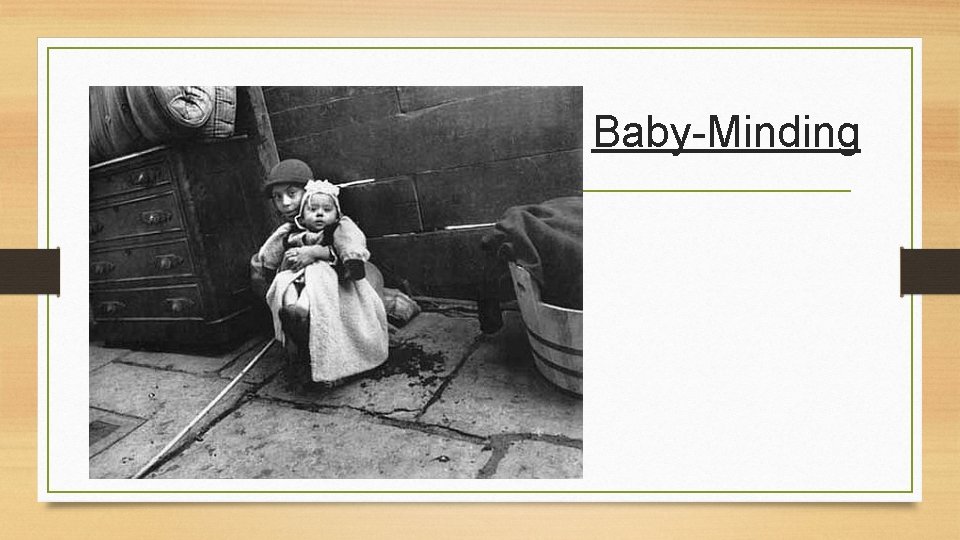
Baby-Minding
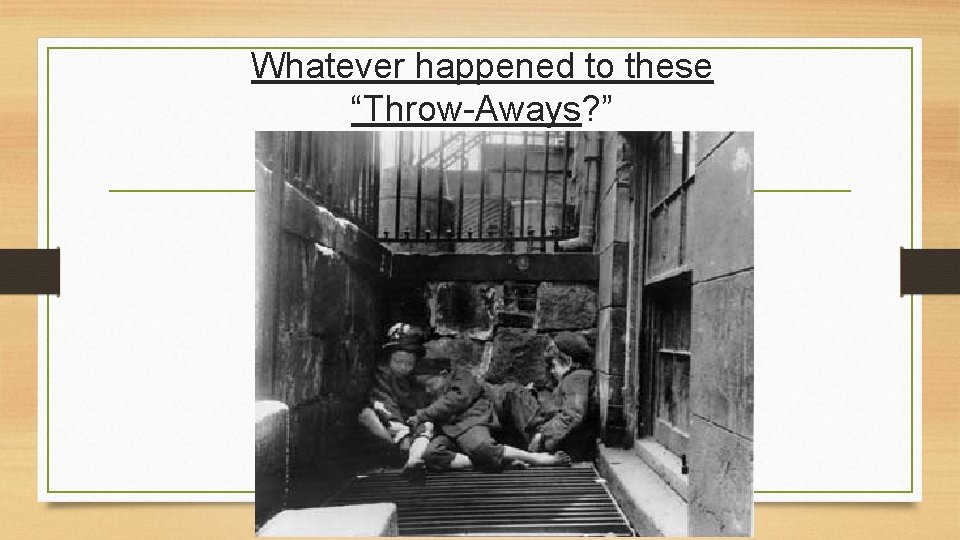
Whatever happened to these “Throw-Aways? ”
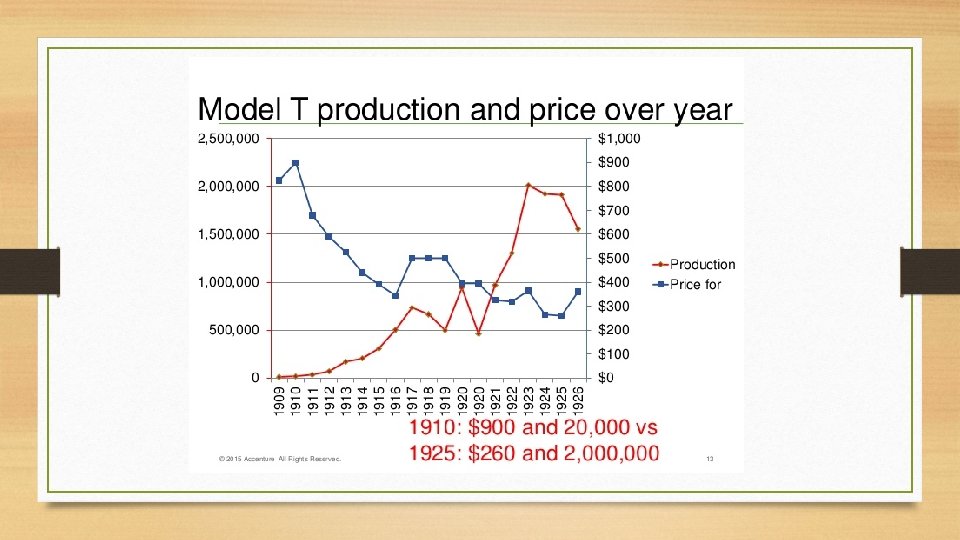
IV. Fostering Efficiency • Scientific Management – “Taylorism” – broke manufacturing tasks into simple individual tasks, assembly line • “Brandeis belief” – used scientific data to suggest that there were high costs to society when workers rights were not protected, became the legal basis for reform litigation
Cleaning Up Government Local Government • common council/city manager model • reform mayors – challenged corrupt business practices State Government • Robert La Follette – governor of Wisconsin – sought to drive businesses out of politics • Successful child labor laws were passed in most states in the early 20 th century • Many states passed workers’ compensation acts in the early 1900’s
Reform in the Cities • http: //montage. pcsd. monroe. edu/SAFARI/montage/play. php? keyind ex=66372&location=local&chapterskeyindex=96886&play=1
Teddy Roosevelt’s Square Deals
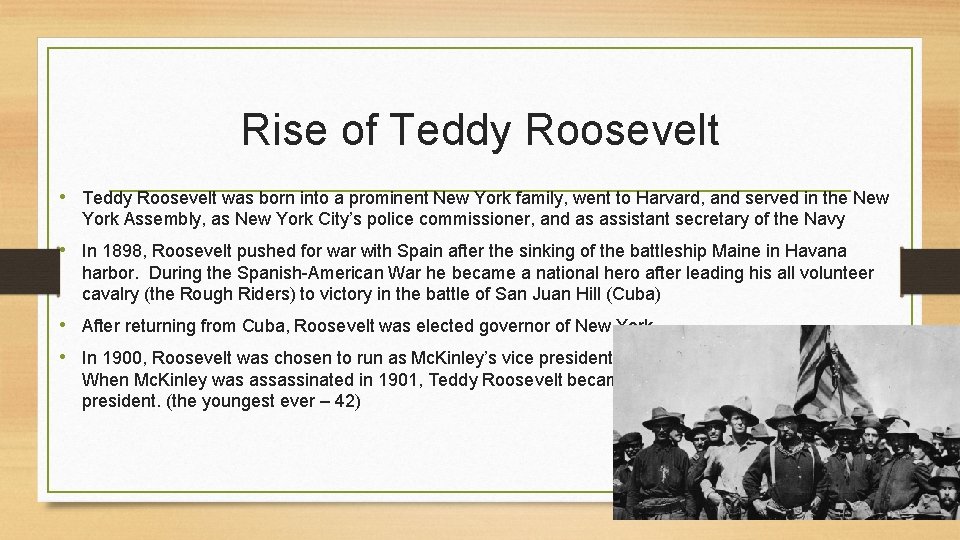
Rise of Teddy Roosevelt • Teddy Roosevelt was born into a prominent New York family, went to Harvard, and served in the New York Assembly, as New York City’s police commissioner, and as assistant secretary of the Navy • In 1898, Roosevelt pushed for war with Spain after the sinking of the battleship Maine in Havana harbor. During the Spanish-American War he became a national hero after leading his all volunteer cavalry (the Rough Riders) to victory in the battle of San Juan Hill (Cuba) • After returning from Cuba, Roosevelt was elected governor of New York • In 1900, Roosevelt was chosen to run as Mc. Kinley’s vice president in 1900. When Mc. Kinley was assassinated in 1901, Teddy Roosevelt became president. (the youngest ever – 42)
The Modern Presidency • Roosevelt used bold acts to increase his popularity (boxing, horseback riding) • “Bully Pulpit” – Roosevelt used his popularity to influence the media and lawmakers • Square Deal – term used to describe progressive reforms sponsored by Roosevelt • 3 C’s • conservation of natural resources • control of corporations • consumer protection
Controlling Corporations • Trust Busting (Trusts operated like monopolies) • The Sherman Anti Trust Act (1890) had been ineffective at limiting Trusts • In 1902, Roosevelt ordered the Justice Department to sue the Northern Securities Company (railroad trust). In 1904, the Supreme Court dissolved the company. • During Roosevelt’s presidency, 44 anti trust suits were filed, earning Roosevelt the reputation of a trust buster

Trust Buster • https: //www. youtube. com/watch? v=Tv. ZP 93 Xqy. Tw
Controlling Corporations • Strike Breaking – In 1902 a five month old strike of Pennsylvania coal miners threatened the nation’s coal stock. Roosevelt intervened and set up an arbitrator to negotiate a settlement • Railroad Regulation • "Above all else, we must strive to keep the highways of commerce open to all on equal terms; and to do this it is necessary to put a complete stop to all rebates. “ • Interstate Commerce Commission now could • set maximum railroad rates • stop the practice of giving out free passes to friends of the railway interests • could examine the railroads' financial records • Hepburn Act- Interstate Commerce Commission's authority was extended to bridges, terminals, ferries, sleeping cars, express companies and oil pipelines. The main beneficiaries of the antitrust measures were merchants who received lower shipping rates
IV. Consumer Protection • Meat Inspection Act (1906) – After reading Sinclair’s The Jungle, Roosevelt appointed a commission to study the meat packing industry. After the commission supported Sinclair’s findings, Roosevelt pushed for the Meat Inspection Act. The Act resulted in the government inspection of meat packing facilities • Pure Food and Drug Act (1906) • restricted additives to food and drugs • required truthful labeling
Conservation of Natural Resources • influenced by naturalist and author John Muir, Roosevelt used federal power on conservation • 148 million acres of forest reserves • 1. 5 million acres of water power sites • 80 million acres to be surveyed by geologists for mineral and water resources • 50 wildlife sanctuaries • several national parks
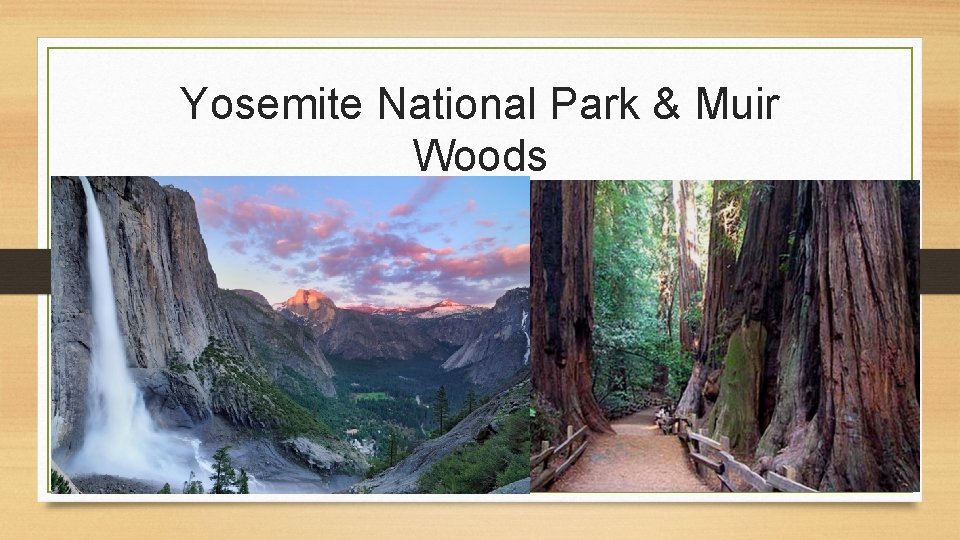
Yosemite National Park & Muir Woods

National Parks • https: //www. youtube. com/watch? v=w. Jp. Dat 6 b. KLk
V. Roosevelt and Civil Rights • Like many progressives, Roosevelt did little to promote civil rights for African Americans • Although he was the first president to invite an African-American to have dinner in The White House (Booker T. Washington) this received so much negative attention he backed off any further major civil rights attempts • Roosevelt opposed school segregation, having ended the practice in New York State during his governorship
Teddy Roosevelt • https: //www. youtube. com/watch? v=s. Bpfih 7 w 4 B 8
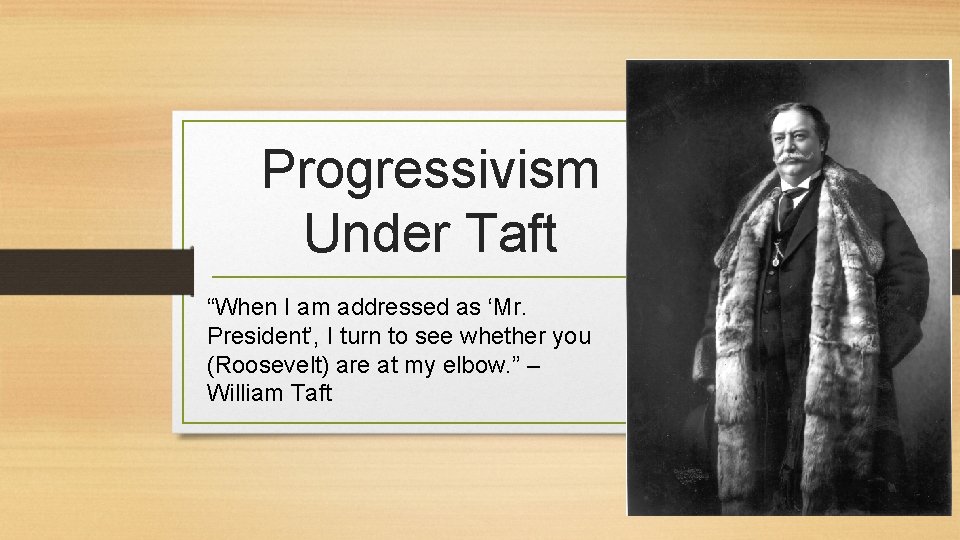
Progressivism Under Taft “When I am addressed as ‘Mr. President’, I turn to see whether you (Roosevelt) are at my elbow. ” – William Taft
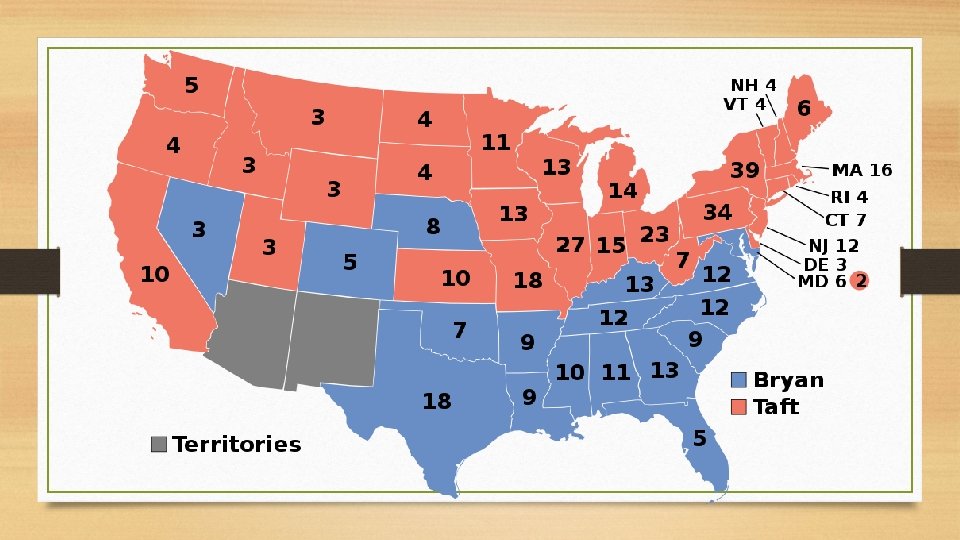
Election of 1908 • William Howard Taft followed Teddy Roosevelt as president of the US. He had been hand picked by Roosevelt as his successor. • Roosevelt had pledged not to seek a third term. • Taft had been Roosevelt’s Secretary of War
William Howard Taft • Taft Stumbles – Although Taft busted 90 trusts, he never gained the popular support Roosevelt enjoyed. • Taft’s support and signing of the Payne-Aldrich Tariff brought criticism from progressives who wanted tariffs lowered or eliminated. • Taft appointed Richard Ballinger as Secretary of the Interior. • Ballinger disapproved of conservationist controls of western lands and removed one million acres from federal protection. • Gifford Pinchot (head of the US Forest Service, appt. by Roosevelt) claimed Ballinger was letting commercial interests exploit the nation’s resources. • Taft sided with Ballinger and fired Pinchot. Progressives were outraged
William Taft • https: //www. youtube. com/watch? v=MNn 48 EFgyb. M
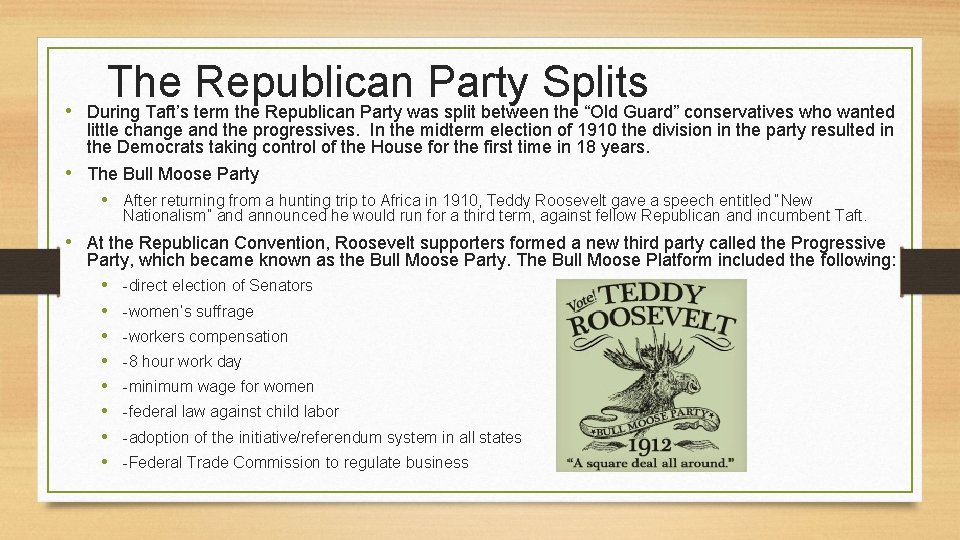
• The Republican Party Splits During Taft’s term the Republican Party was split between the “Old Guard” conservatives who wanted little change and the progressives. In the midterm election of 1910 the division in the party resulted in the Democrats taking control of the House for the first time in 18 years. • The Bull Moose Party • After returning from a hunting trip to Africa in 1910, Teddy Roosevelt gave a speech entitled “New Nationalism” and announced he would run for a third term, against fellow Republican and incumbent Taft. • At the Republican Convention, Roosevelt supporters formed a new third party called the Progressive Party, which became known as the Bull Moose Party. The Bull Moose Platform included the following: • -direct election of Senators • -women’s suffrage • -workers compensation • -8 hour work day • -minimum wage for women • -federal law against child labor • -adoption of the initiative/referendum system in all states • -Federal Trade Commission to regulate business
Reforming Elections • Initiative: citizens, rather than the legislature, can petition and create a bill • Referendum: popular vote on initiative or bill • Recall: voters can remove politicians from office by forcing them to face another election before their term is over (this is how Arnold became “Governator” of California)
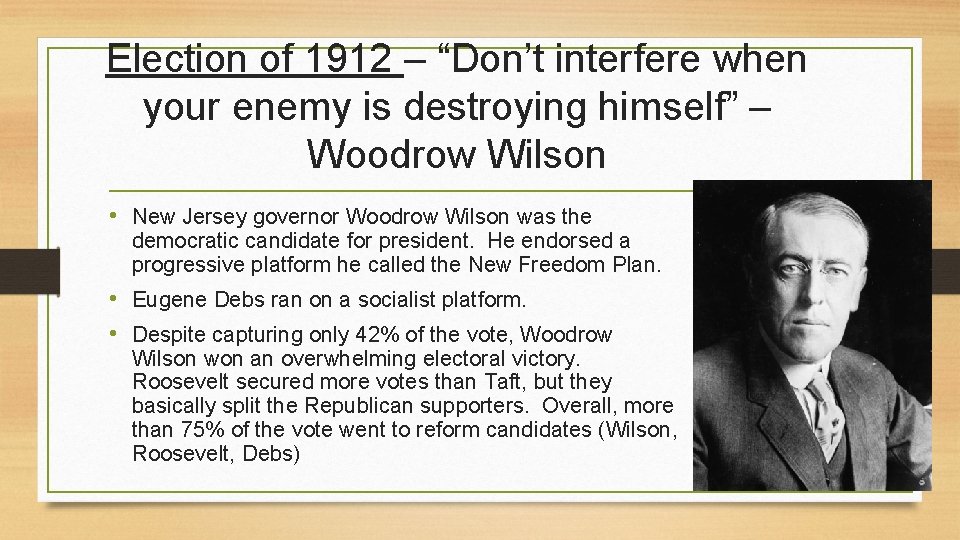
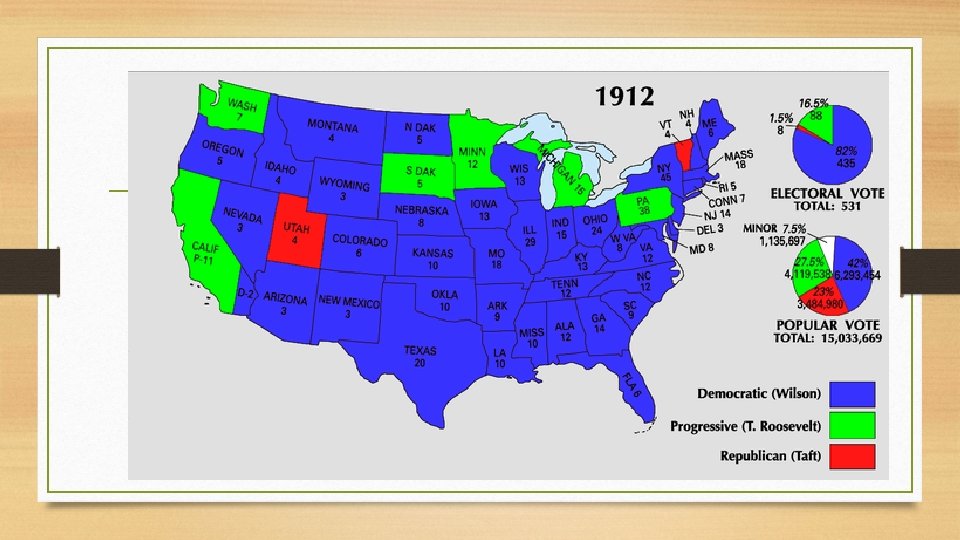
Election of 1912 – “Don’t interfere when your enemy is destroying himself” – Woodrow Wilson • New Jersey governor Woodrow Wilson was the democratic candidate for president. He endorsed a progressive platform he called the New Freedom Plan. • Eugene Debs ran on a socialist platform. • Despite capturing only 42% of the vote, Woodrow Wilson won an overwhelming electoral victory. Roosevelt secured more votes than Taft, but they basically split the Republican supporters. Overall, more than 75% of the vote went to reform candidates (Wilson, Roosevelt, Debs)
Progressive Amendments(Not in notes) • 16 th Amendment (1913) • Income Tax • 17 th Amendment (1913) • People vote directly for their senators (rather than state legislatures) • 18 th Amendment (1919) • Prohibition of Alcohol
Woodrow Wilson’s Progressivism
Woodrow Wilson and “The New Freedom” • Woodrow Wilson ran as a progressive Democrat and created a platform of reform goals he sought to achieve as president. • He named the goals he wished to achieve “The New Freedom” and mainly focused on three areas 1. Tariff Reform 2. Business Reform 3. Banking Reform
1. Tariff Reform “The New Freedom” • Underwood Tariff Act of 1913 - Wanted to lower the tariff because they saw it as a tax on the people and wanted to shift government revenue (money to run the government) from a tariff to an income tax (originally only affected the wealthy) 2. Business Reform • Federal Trade Commission Act of 1914 - Established the Federal Trade Commission which investigated businesses to prevent monopolies and other unfair/illegal business practices • Clayton Anti-Trust Act- Stricter Anti-trust laws to break up anti-competitive trusts/businesses 3. Banking Reform • The Federal Reserve Act of 1913 - Established the Federal Reserve which put allowed the government to regulate the money supply to help alleviate financial crises (like recessions and depressions)
Progressive Presidents • https: //www. youtube. com/watch? v=F 7 fl. SW 1 PGs. A
The Turn of the Century
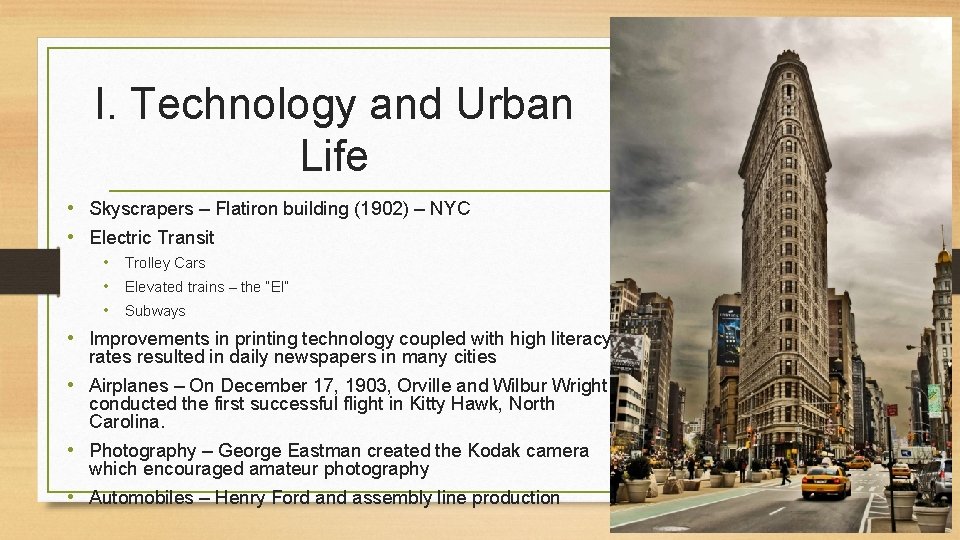
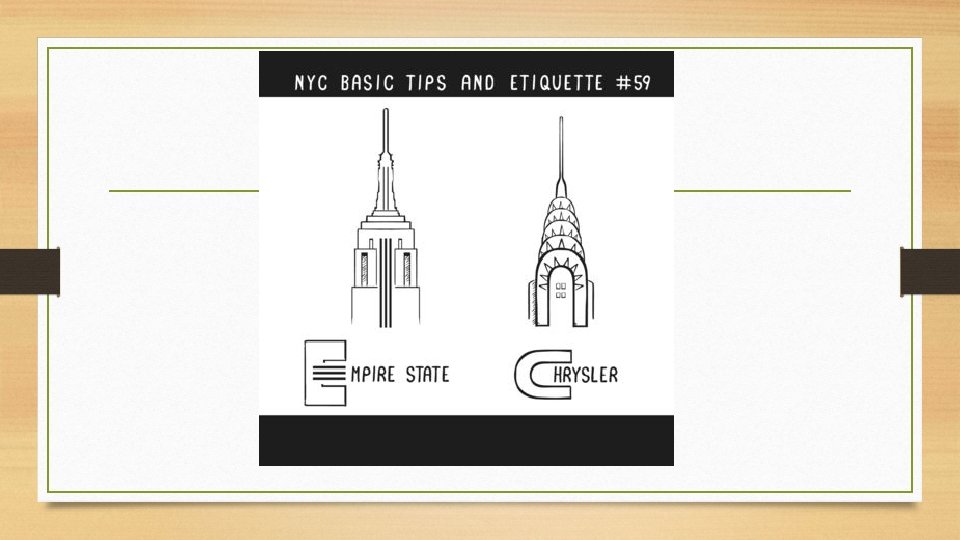
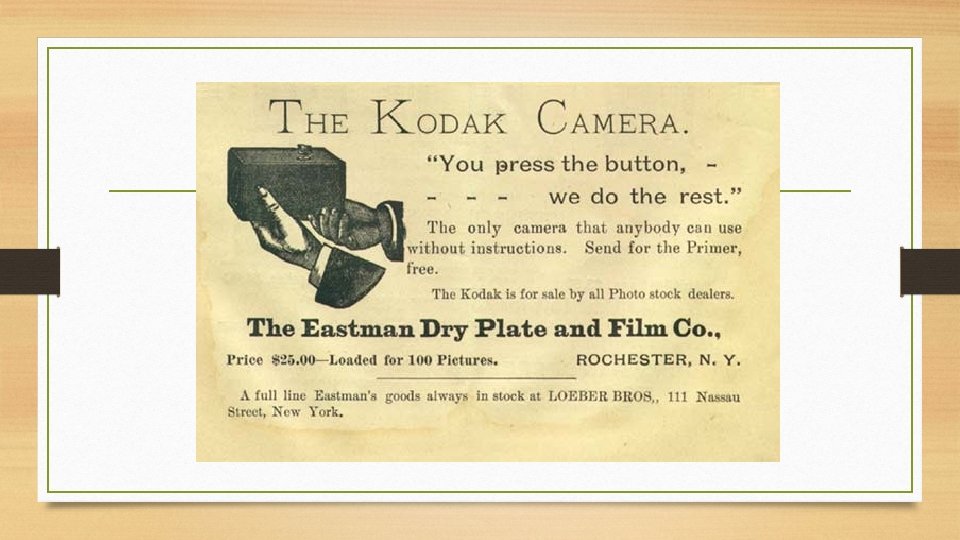
I. Technology and Urban Life • Skyscrapers – Flatiron building (1902) – NYC • Electric Transit • Trolley Cars • Elevated trains – the “El” • Subways • Improvements in printing technology coupled with high literacy rates resulted in daily newspapers in many cities • Airplanes – On December 17, 1903, Orville and Wilbur Wright conducted the first successful flight in Kitty Hawk, North Carolina. • Photography – George Eastman created the Kodak camera which encouraged amateur photography • Automobiles – Henry Ford and assembly line production
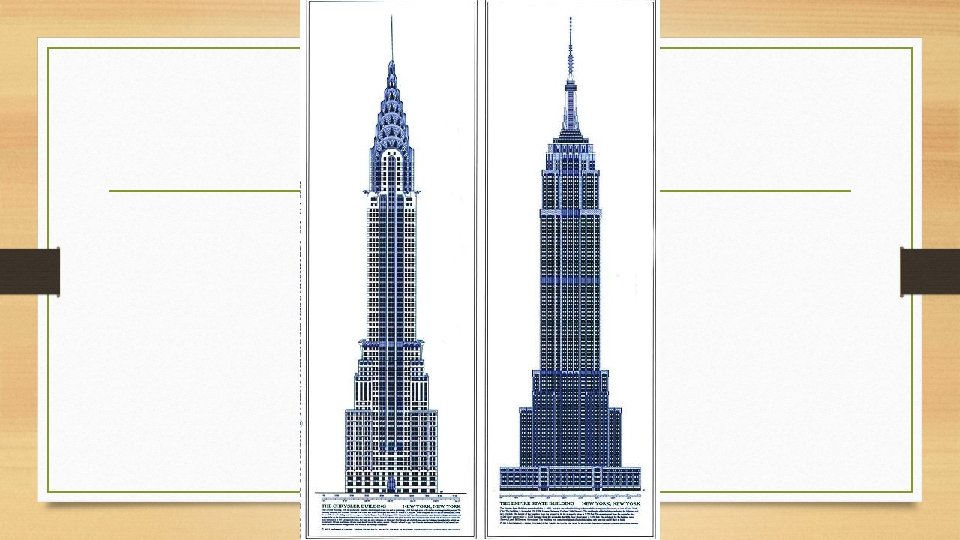
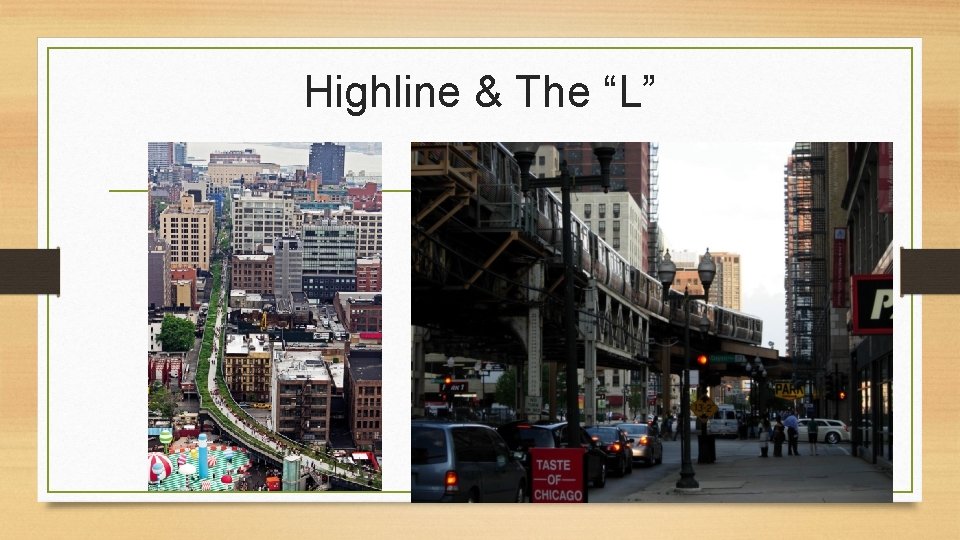
Highline & The “L”
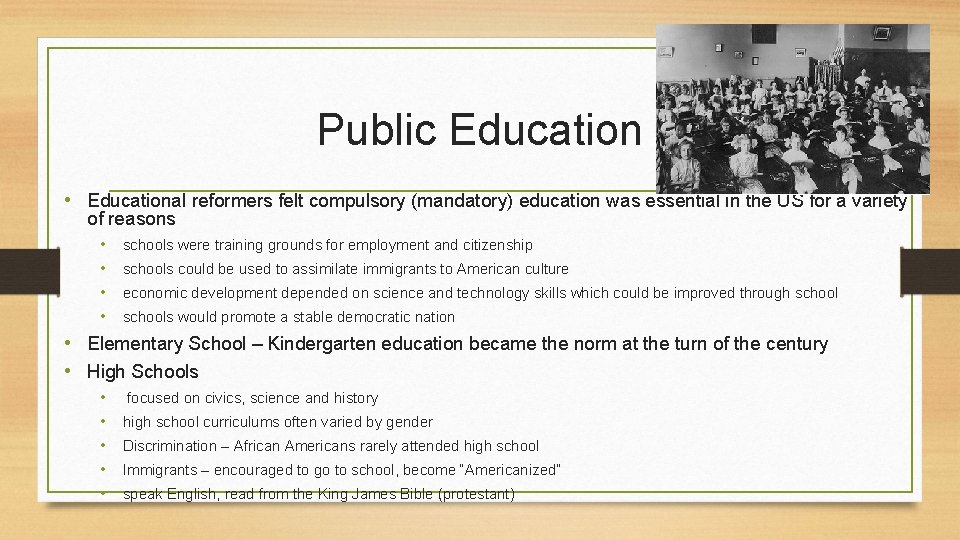
Public Education • Educational reformers felt compulsory (mandatory) education was essential in the US for a variety of reasons • • schools were training grounds for employment and citizenship schools could be used to assimilate immigrants to American culture economic development depended on science and technology skills which could be improved through schools would promote a stable democratic nation • Elementary School – Kindergarten education became the norm at the turn of the century • High Schools • • • focused on civics, science and history high school curriculums often varied by gender Discrimination – African Americans rarely attended high school Immigrants – encouraged to go to school, become “Americanized” speak English, read from the King James Bible (protestant)
Higher Education (College) • emergence of research universities and professional schools (law and medicine) • African American colleges, such as Howard, were founded in the late 1800’s
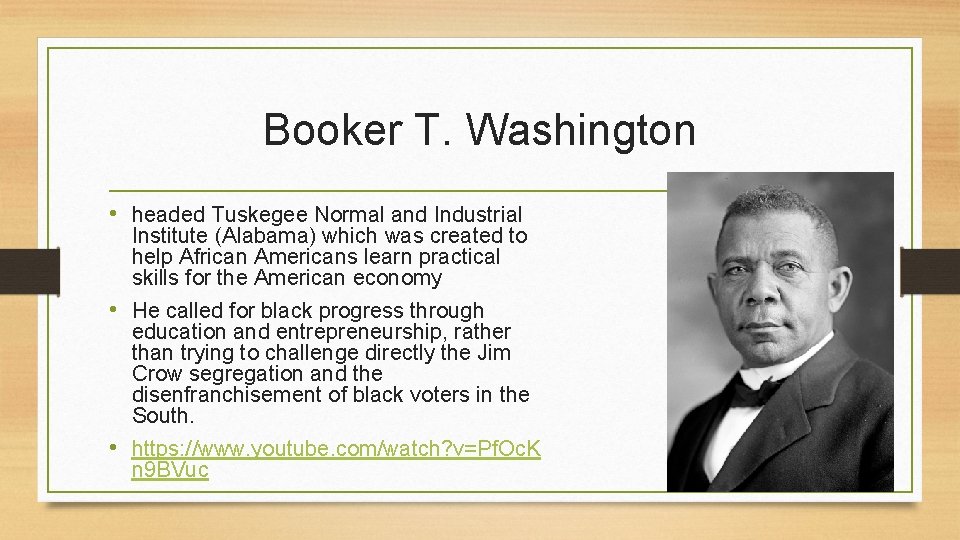
Booker T. Washington • headed Tuskegee Normal and Industrial Institute (Alabama) which was created to help African Americans learn practical skills for the American economy • He called for black progress through education and entrepreneurship, rather than trying to challenge directly the Jim Crow segregation and the disenfranchisement of black voters in the South. • https: //www. youtube. com/watch? v=Pf. Oc. K n 9 BVuc
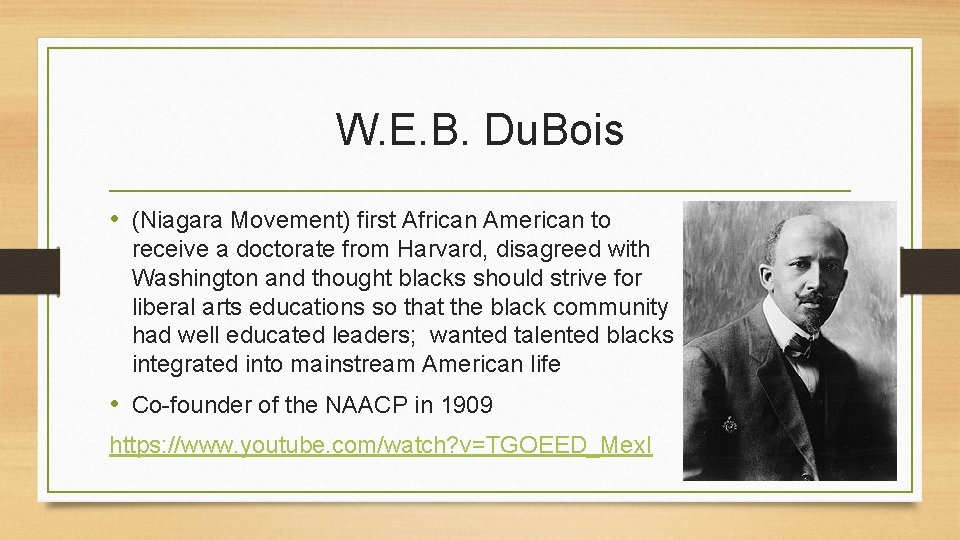
W. E. B. Du. Bois • (Niagara Movement) first African American to receive a doctorate from Harvard, disagreed with Washington and thought blacks should strive for liberal arts educations so that the black community had well educated leaders; wanted talented blacks integrated into mainstream American life • Co-founder of the NAACP in 1909 https: //www. youtube. com/watch? v=TGOEED_Mex. I
Progressive Amendments • 16 th Amendment (1913) • Income Tax • 17 th Amendment (1913) • People vote directly for their senators (rather than state legislatures) • 18 th Amendment (1919) • Prohibition of Alcohol
Women in the Progressive Era • As a result of social, political, and economic changes, many women entered public life as workers and reformers • Prior to the Civil War, married middle-class women were expected to care for their home and families, but by the late 19 th century and early 20 th century, only upper-class women could afford this
Changing Roles of Women? • Women on Farms • Little changed - women still had to help in the house and do farm chores • Women in Industry • Women could not join male labor unions • Women held jobs as garment workers, stenographers, telephone operators, and teachers • Domestic Workers • Uneducated women worked as cooks, maids, etc.
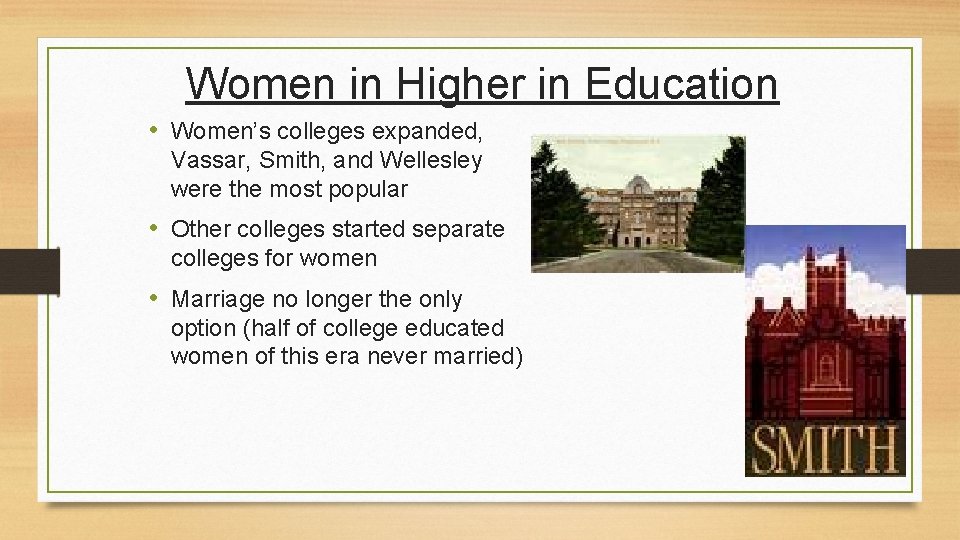
Women in Higher in Education • Women’s colleges expanded, Vassar, Smith, and Wellesley were the most popular • Other colleges started separate colleges for women • Marriage no longer the only option (half of college educated women of this era never married)
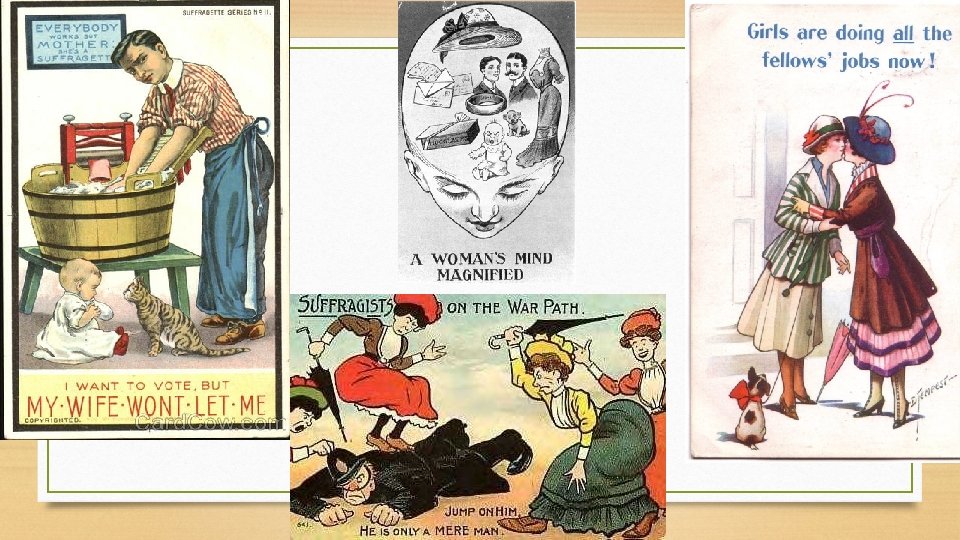
Women and Reform • Women’s reform targeted the workplace, housing, education, and food/drug laws • National Association of Colored Women (NACW) worked on education and child care • Women also sought the right to vote or suffrage which was led by the National American Women’s Suffrage Association (NAWSA) • Liquor industry opposed this as did textile industry • Many men feared the change in power…
Alice Paul • https: //www. youtube. com/watch? v=Gj. Ytacfcg. PU • Elizabeth Cady Stanton dies in 1902 • Susan B. Anthony dies in 1906 • Who will take up the cause and continue the fight for Women’s suffrage?
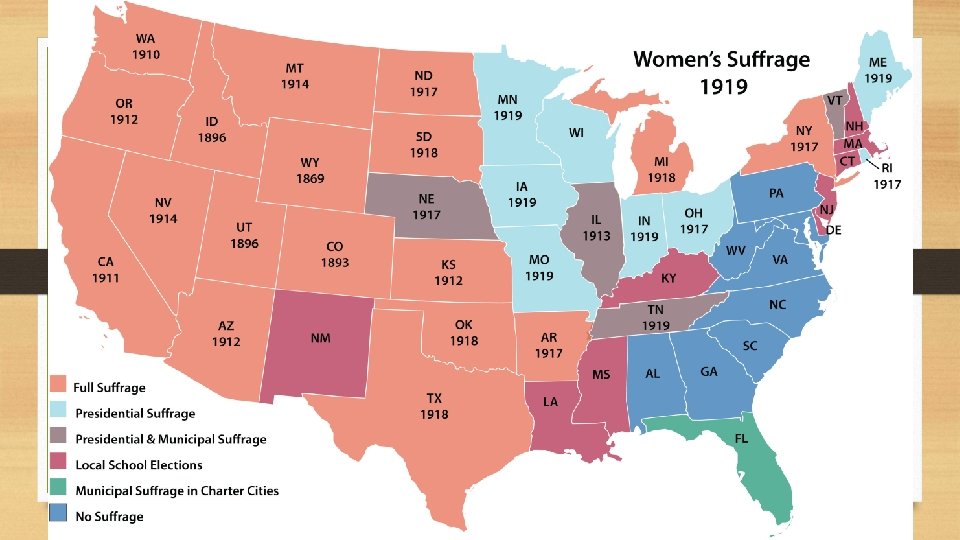
Winning Strategy for Suffrage • Three part strategy: • State • Courts • Amendment • First, tried to convince state governments to let women vote • Second, pushed the issue through court cases • Susan B. Anthony voted or attempted to 150 times • Third, women pushed for an amendment granting the right to vote • Finally in 1920 the 19 th Amendment was passed granting women the right to vote, nationwide https: //www. youtube. com/watch? v=_Kh. YRqoz. TDE
Suffering ‘till Suffrage- Schoolhouse Rock • https: //www. youtube. com/watch? v=p. FOie. RHRzh 8
What were people trying to accomplish during the progressive era?
• • Control corporations Help the poor and needy Fight for Civil Rights Get Women the right to vote (suffrage) Temperance Public Education More Direct Democracy (Senate direct elections, initiative, referendum, recall)
- Slides: 78