
Progressivism and the Age of Reform This political

- Slides: 10
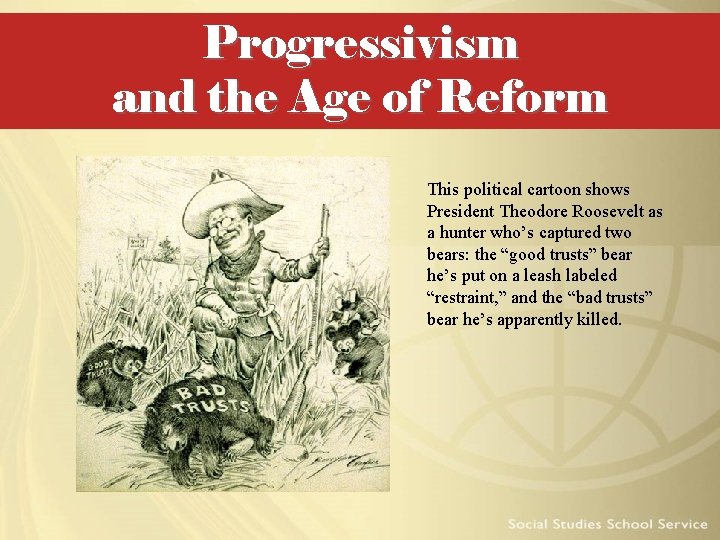
Progressivism and the Age of Reform This political cartoon shows President Theodore Roosevelt as a hunter who’s captured two bears: the “good trusts” bear he’s put on a leash labeled “restraint, ” and the “bad trusts” bear he’s apparently killed.
Essential Questions • Why did the Progressive Era begin? What social, economic, and political factors contributed to the movement toward Progressive reform? • How did the issues prominent during the Progressive Era, and the changes that occurred then, affect the lives of immigrants, African Americans, and women? • How did the social and moral values of white middle- and upper-class citizens influence Progressive Era reform agendas? • In what ways did Progressive reforms depend on the work of individual activists? In what ways did they depend on the participation of larger groups of people? • What impact did political leadership have on shaping Progressive reforms?
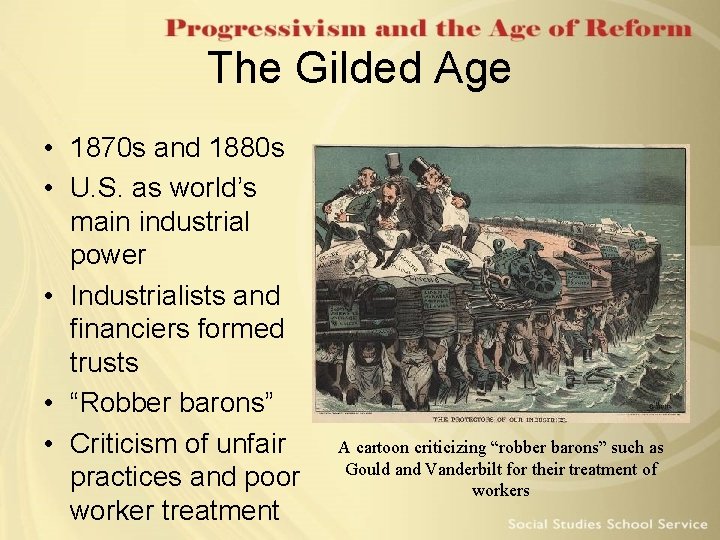
The Gilded Age • 1870 s and 1880 s • U. S. as world’s main industrial power • Industrialists and financiers formed trusts • “Robber barons” • Criticism of unfair practices and poor worker treatment A cartoon criticizing “robber barons” such as Gould and Vanderbilt for their treatment of workers
Standard Oil and Trusts John D. Rockefeller • Founded by John D. Rockefeller in 1867 • Controlled 90 percent of U. S. oil-refining and soon almost the entire petroleum industry • Other industries followed his model • Sherman Antitrust Act (1890) had little impact for a decade after its passage
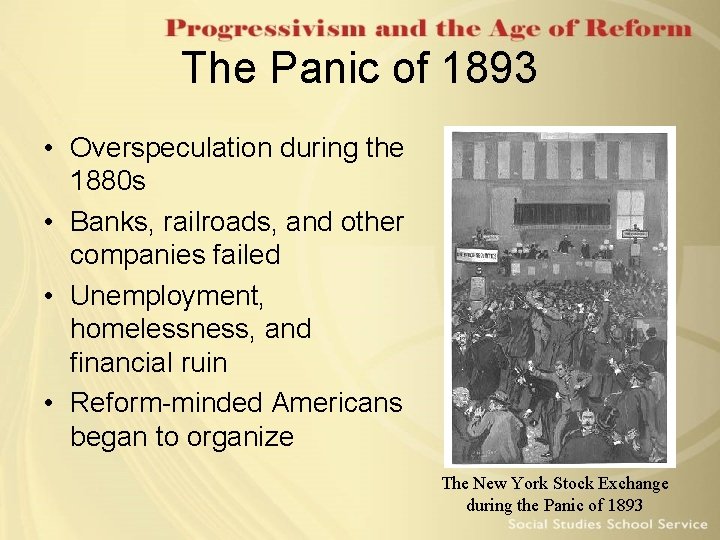
The Panic of 1893 • Overspeculation during the 1880 s • Banks, railroads, and other companies failed • Unemployment, homelessness, and financial ruin • Reform-minded Americans began to organize The New York Stock Exchange during the Panic of 1893
Progressivism: An Overview • “Making progress” • A variety of organizations and interests • Not a cohesive movement • Three broad categories: social, economic, and political reform
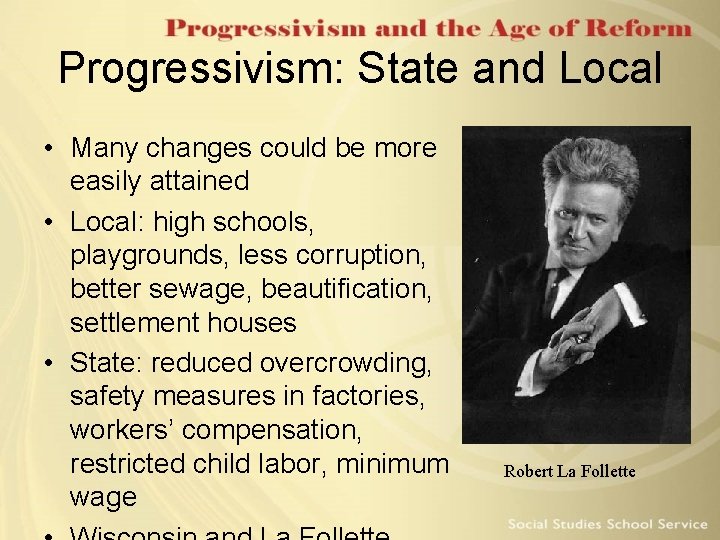
Progressivism: State and Local • Many changes could be more easily attained • Local: high schools, playgrounds, less corruption, better sewage, beautification, settlement houses • State: reduced overcrowding, safety measures in factories, workers’ compensation, restricted child labor, minimum wage Robert La Follette
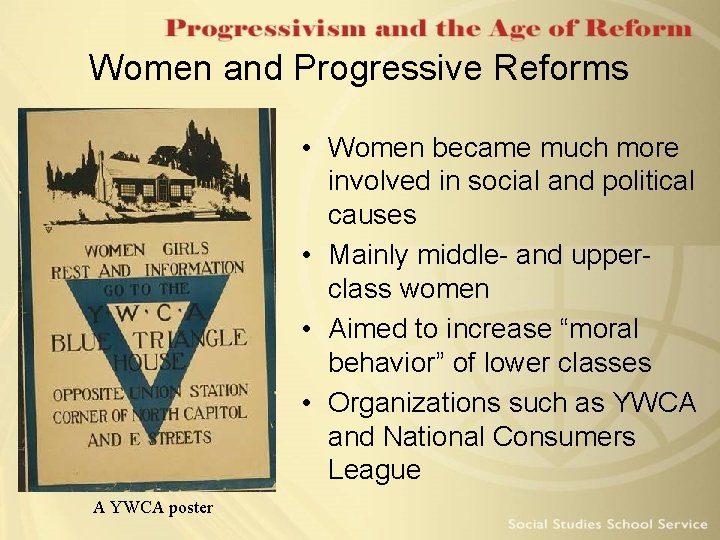
Women and Progressive Reforms • Women became much more involved in social and political causes • Mainly middle- and upperclass women • Aimed to increase “moral behavior” of lower classes • Organizations such as YWCA and National Consumers League A YWCA poster
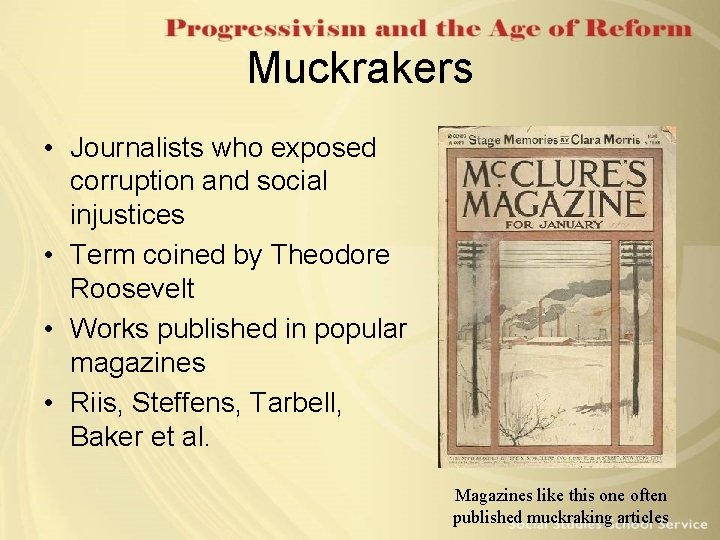
Muckrakers • Journalists who exposed corruption and social injustices • Term coined by Theodore Roosevelt • Works published in popular magazines • Riis, Steffens, Tarbell, Baker et al. Magazines like this one often published muckraking articles
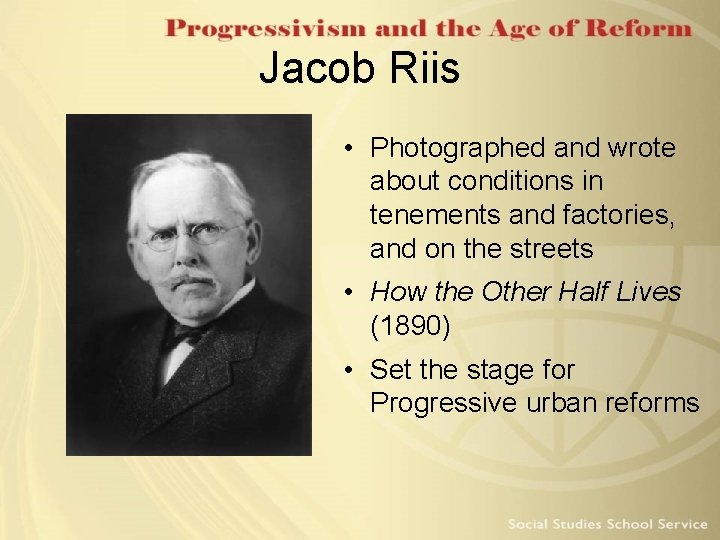
Jacob Riis • Photographed and wrote about conditions in tenements and factories, and on the streets • How the Other Half Lives (1890) • Set the stage for Progressive urban reforms