
Progressive Presidents Roosevelt Taft Wilson Assassination of President
- Slides: 35
Progressive Presidents Roosevelt, Taft, Wilson
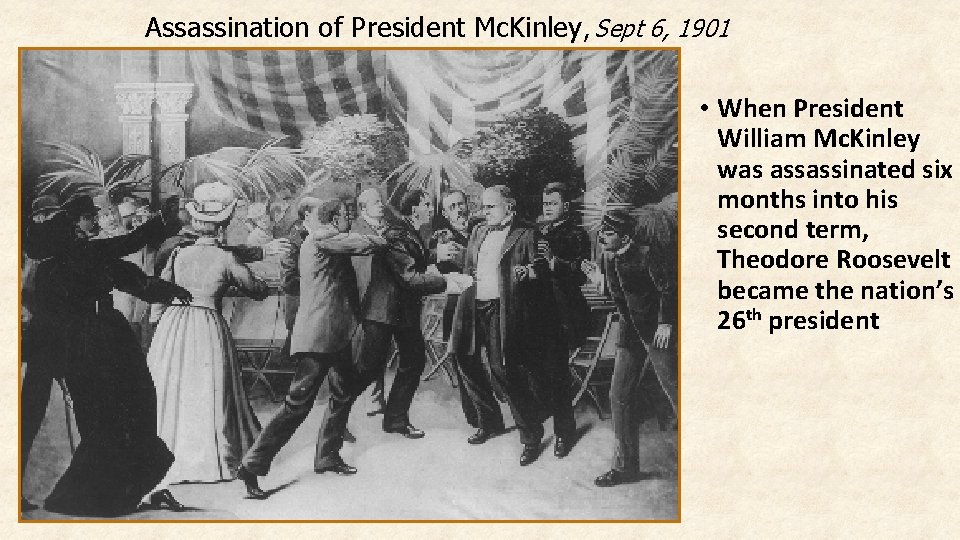
Assassination of President Mc. Kinley, Sept 6, 1901 • When President William Mc. Kinley was assassinated six months into his second term, Theodore Roosevelt became the nation’s 26 th president
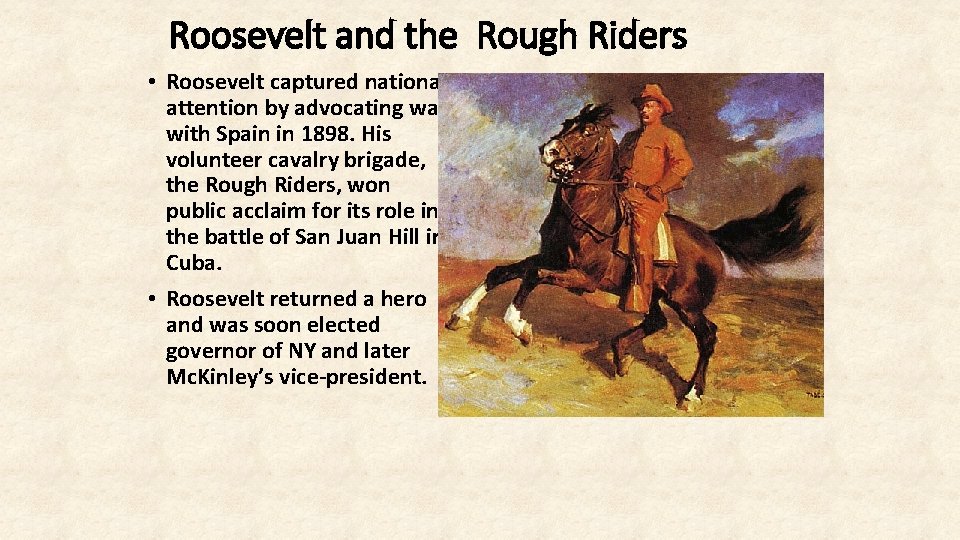
Roosevelt and the Rough Riders • Roosevelt captured national attention by advocating war with Spain in 1898. His volunteer cavalry brigade, the Rough Riders, won public acclaim for its role in the battle of San Juan Hill in Cuba. • Roosevelt returned a hero and was soon elected governor of NY and later Mc. Kinley’s vice-president.
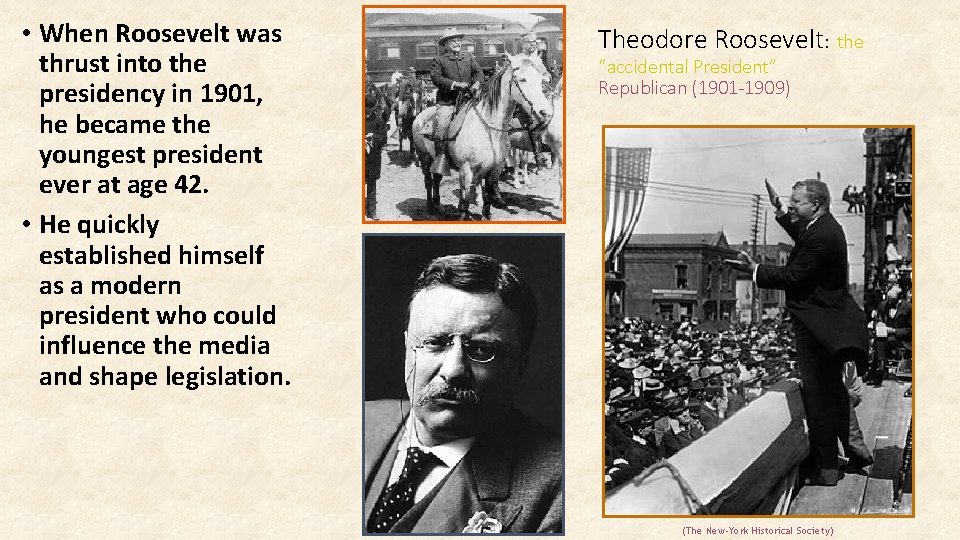
• When Roosevelt was thrust into the presidency in 1901, he became the youngest president ever at age 42. • He quickly established himself as a modern president who could influence the media and shape legislation. Theodore Roosevelt: the “accidental President” Republican (1901 -1909) (The New-York Historical Society)
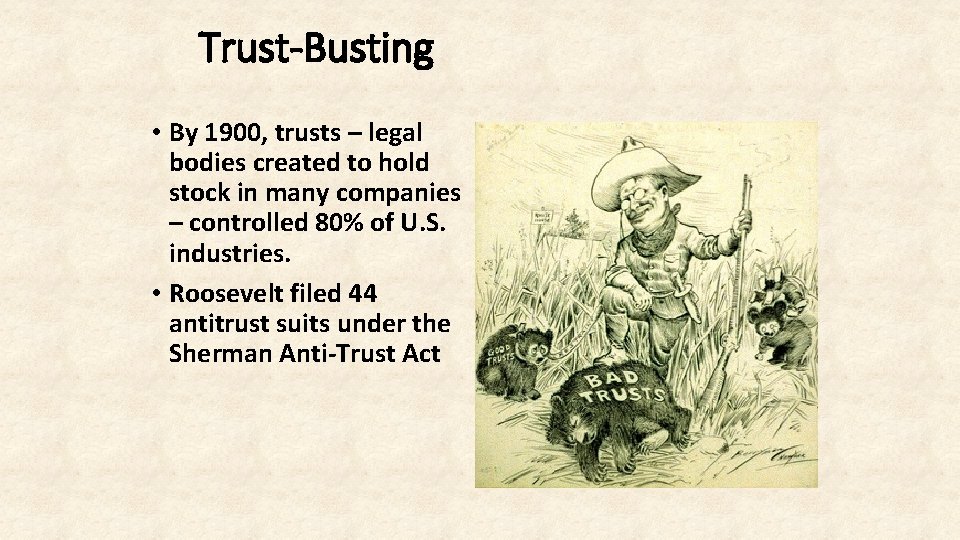
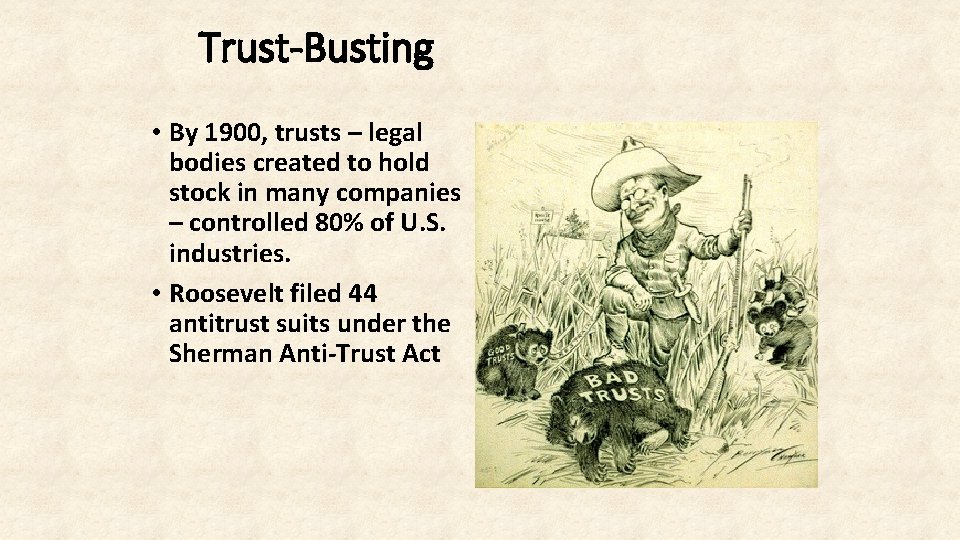
Trust-Busting • By 1900, trusts – legal bodies created to hold stock in many companies – controlled 80% of U. S. industries. • Roosevelt filed 44 antitrust suits under the Sherman Anti-Trust Act
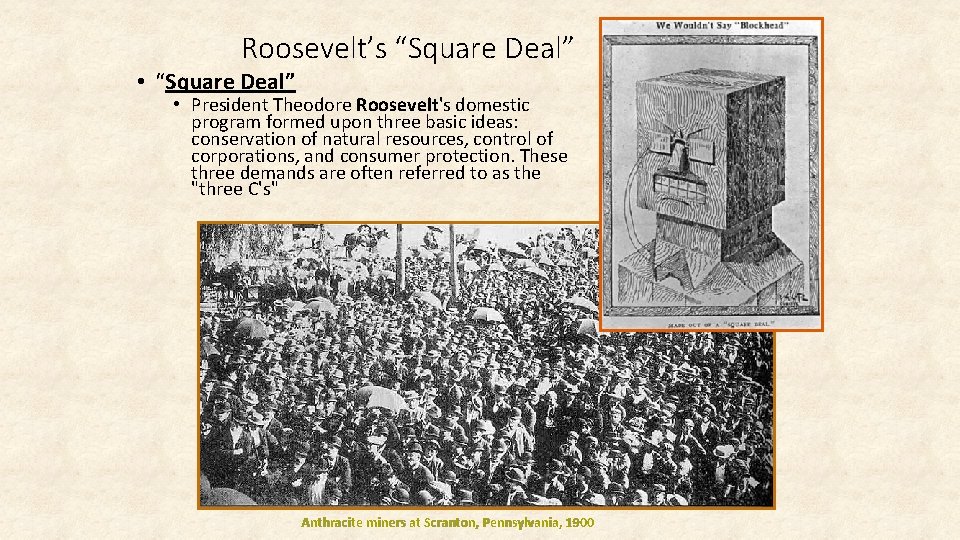
Roosevelt’s “Square Deal” • President Theodore Roosevelt's domestic program formed upon three basic ideas: conservation of natural resources, control of corporations, and consumer protection. These three demands are often referred to as the "three C's" Anthracite miners at Scranton, Pennsylvania, 1900
Trust-Busting • By 1900, trusts – legal bodies created to hold stock in many companies – controlled 80% of U. S. industries. • Roosevelt filed 44 antitrust suits under the Sherman Anti-Trust Act
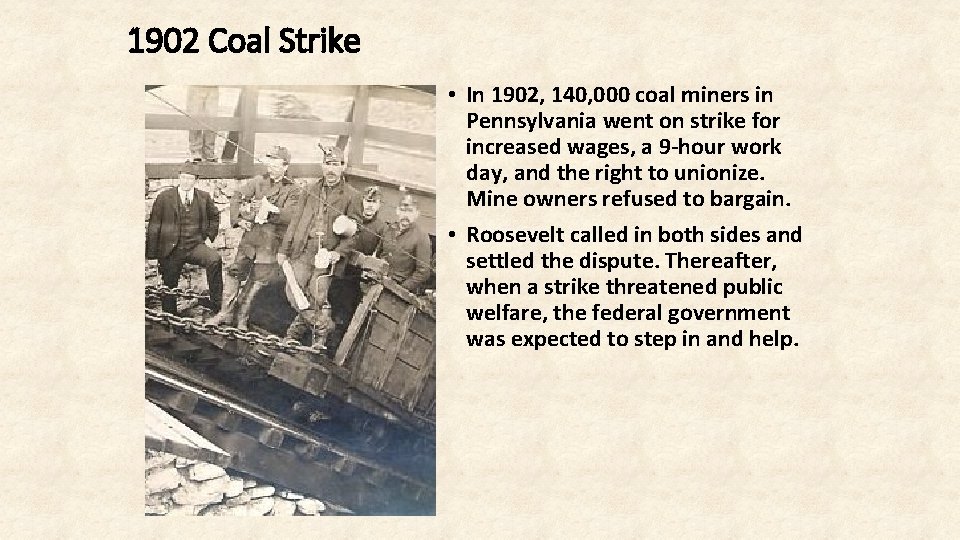
1902 Coal Strike • In 1902, 140, 000 coal miners in Pennsylvania went on strike for increased wages, a 9 -hour work day, and the right to unionize. Mine owners refused to bargain. • Roosevelt called in both sides and settled the dispute. Thereafter, when a strike threatened public welfare, the federal government was expected to step in and help.
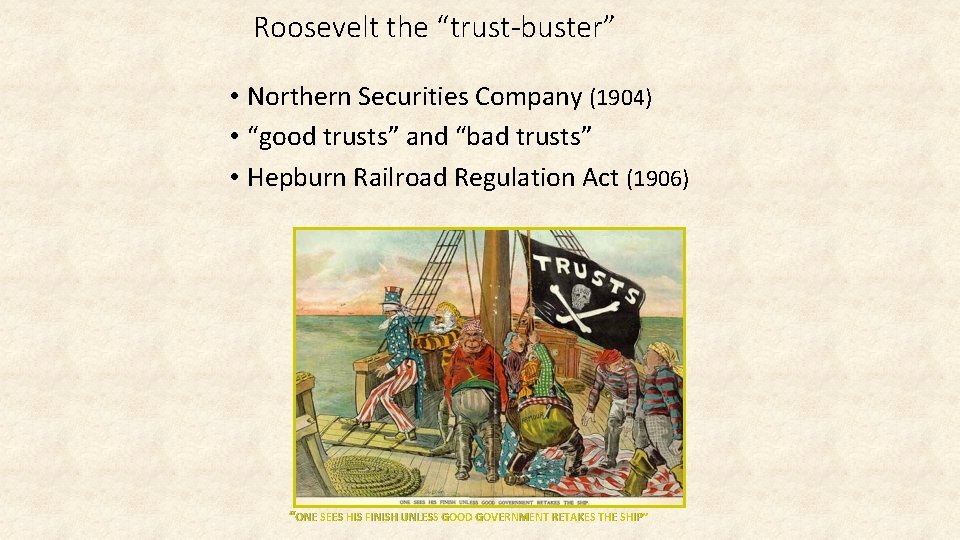
Roosevelt the “trust-buster” • Northern Securities Company (1904) • “good trusts” and “bad trusts” • Hepburn Railroad Regulation Act (1906) “ONE SEES HIS FINISH UNLESS GOOD GOVERNMENT RETAKES THE SHIP”
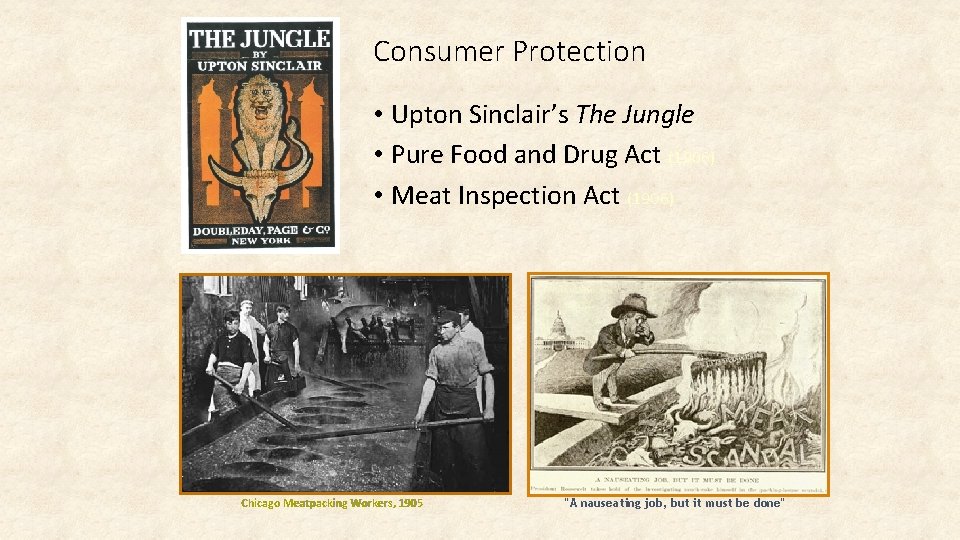
Consumer Protection • Upton Sinclair’s The Jungle • Pure Food and Drug Act (1906) • Meat Inspection Act (1906) Chicago Meatpacking Workers, 1905 "A nauseating job, but it must be done"
“The Jungle” Leads to Food Regulation • After reading The Jungle by Upton Sinclair, Roosevelt pushed for passage of the Meat Inspection Act of 1906. • The act mandated cleaner conditions for meatpacking plants.
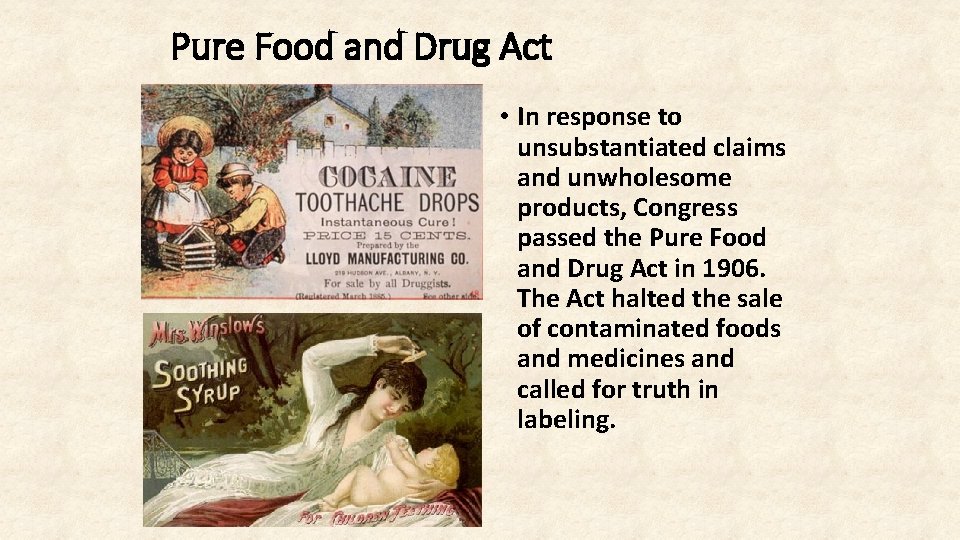
Pure Food and Drug Act • In response to unsubstantiated claims and unwholesome products, Congress passed the Pure Food and Drug Act in 1906. The Act halted the sale of contaminated foods and medicines and called for truth in labeling.
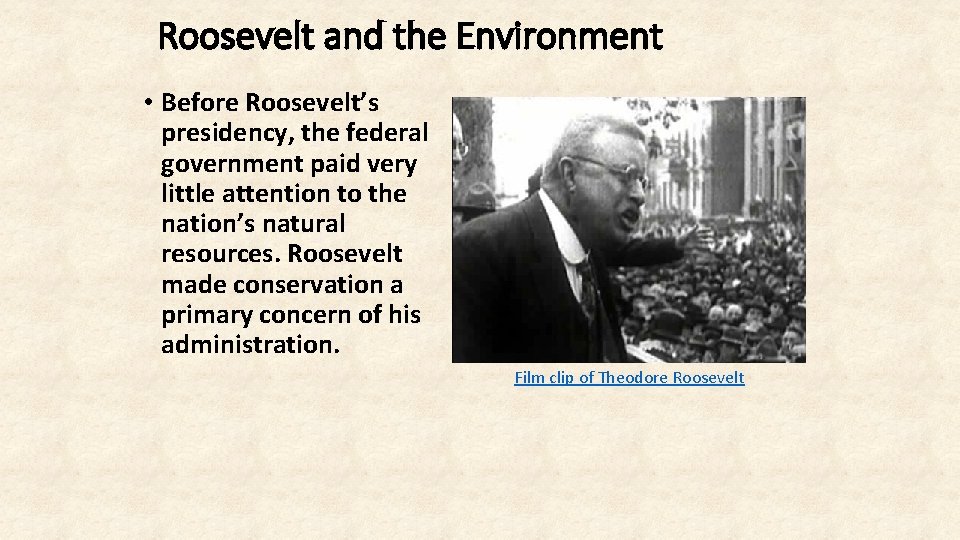
Roosevelt and the Environment • Before Roosevelt’s presidency, the federal government paid very little attention to the nation’s natural resources. Roosevelt made conservation a primary concern of his administration. Film clip of Theodore Roosevelt
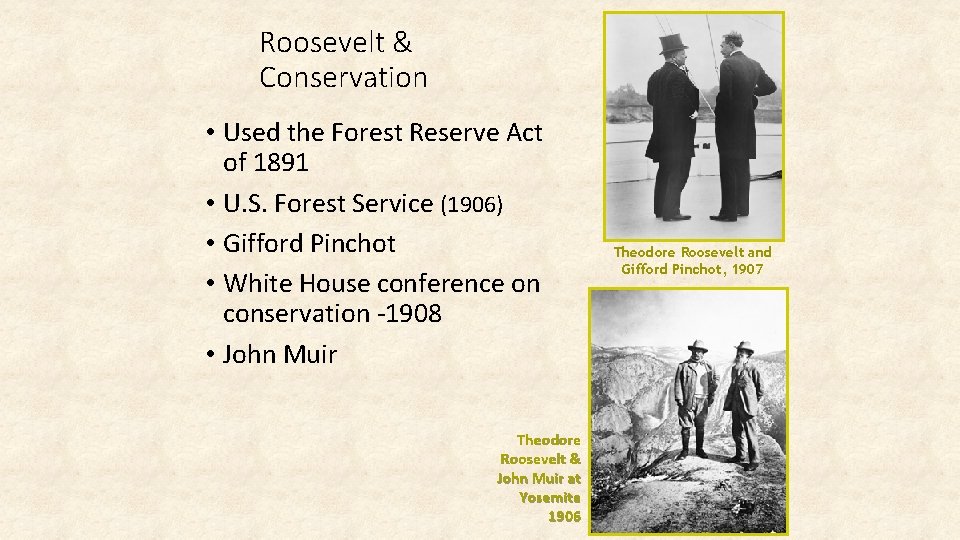
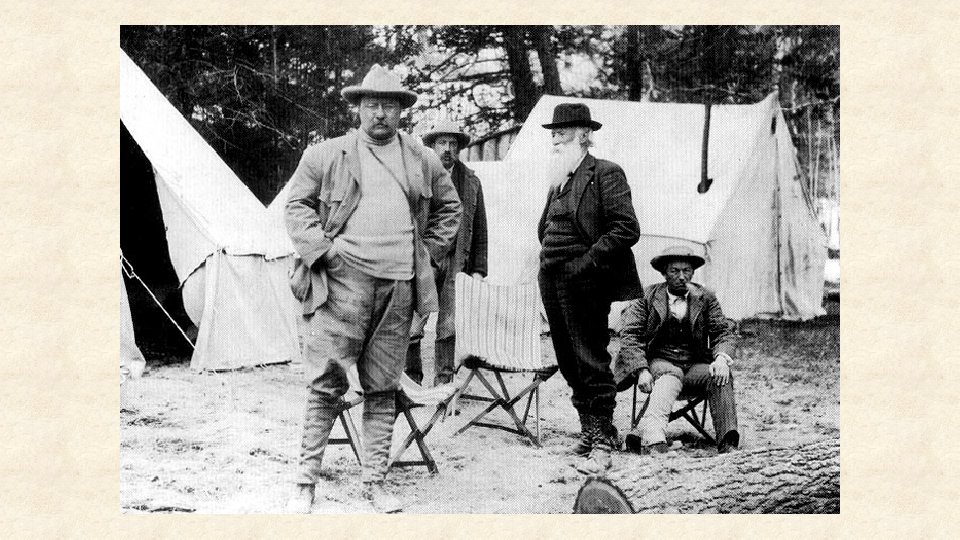
Roosevelt & Conservation • Used the Forest Reserve Act of 1891 • U. S. Forest Service (1906) • Gifford Pinchot • White House conference on conservation -1908 • John Muir Theodore Roosevelt & John Muir at Yosemite 1906 Theodore Roosevelt and Gifford Pinchot, 1907
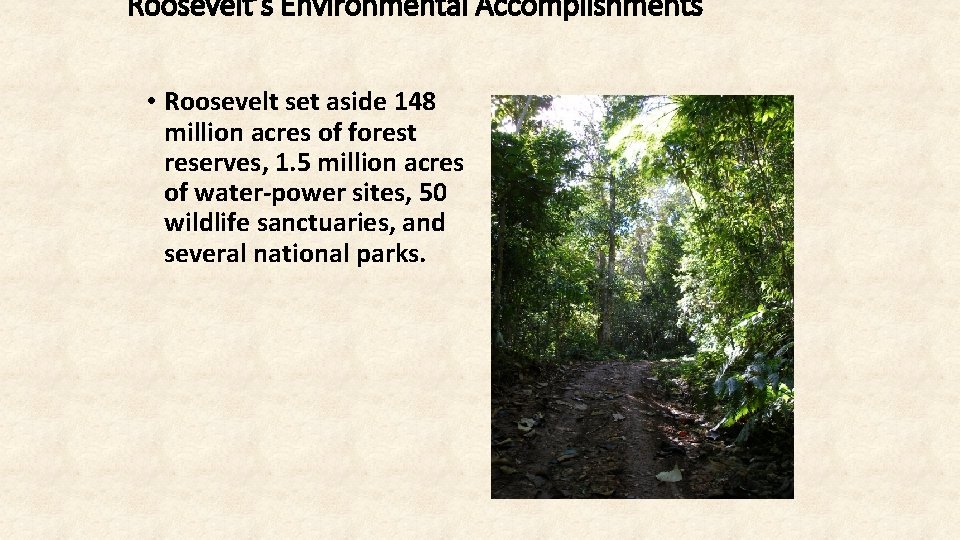
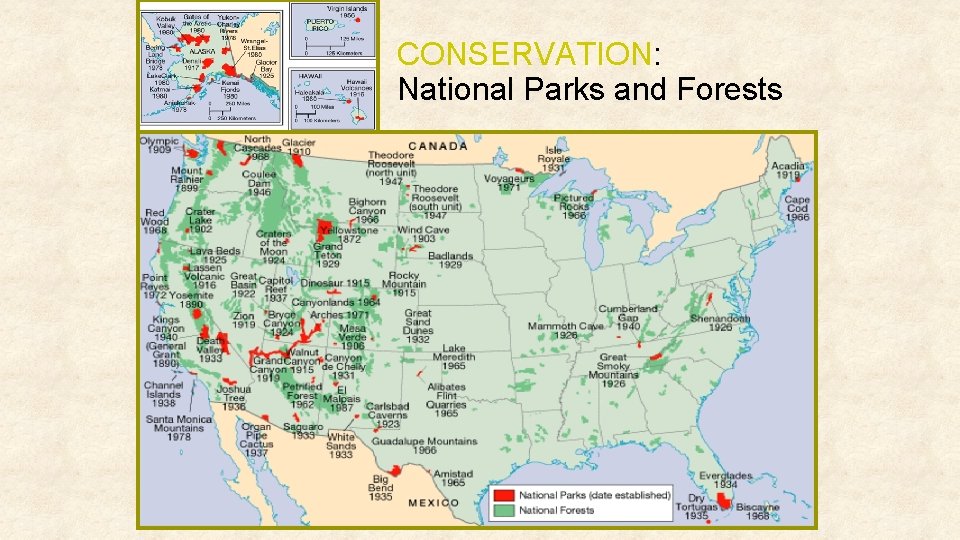
Roosevelt’s Environmental Accomplishments • Roosevelt set aside 148 million acres of forest reserves, 1. 5 million acres of water-power sites, 50 wildlife sanctuaries, and several national parks.
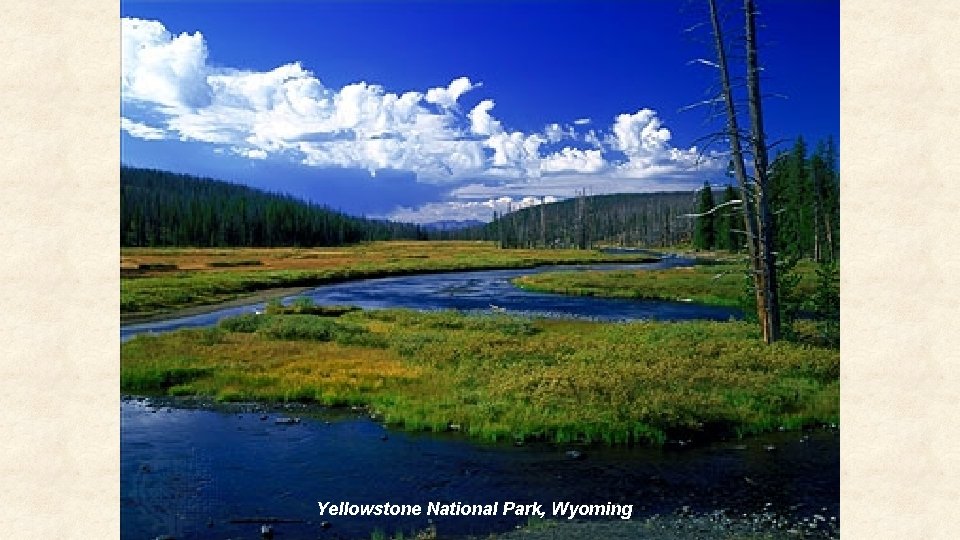
Yellowstone National Park, Wyoming
CONSERVATION: National Parks and Forests
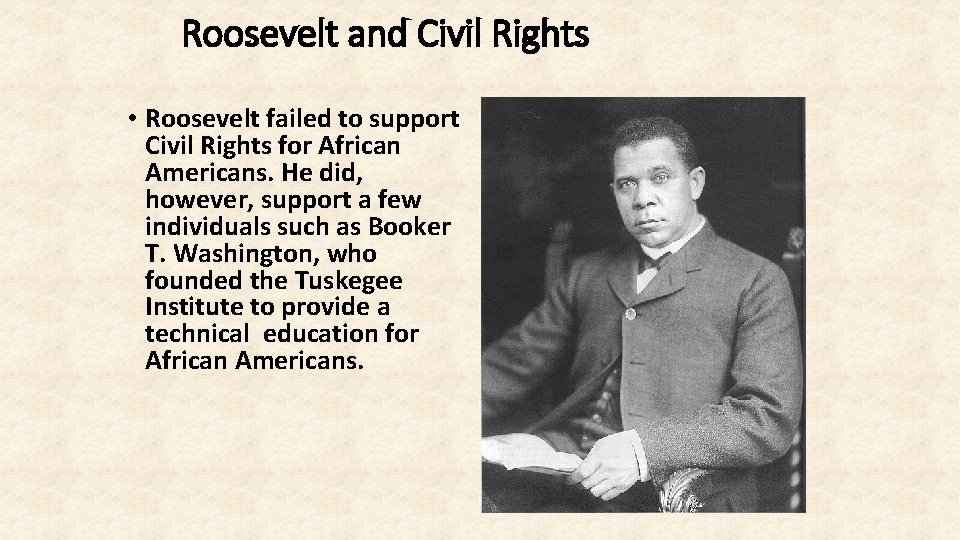
Roosevelt and Civil Rights • Roosevelt failed to support Civil Rights for African Americans. He did, however, support a few individuals such as Booker T. Washington, who founded the Tuskegee Institute to provide a technical education for African Americans.
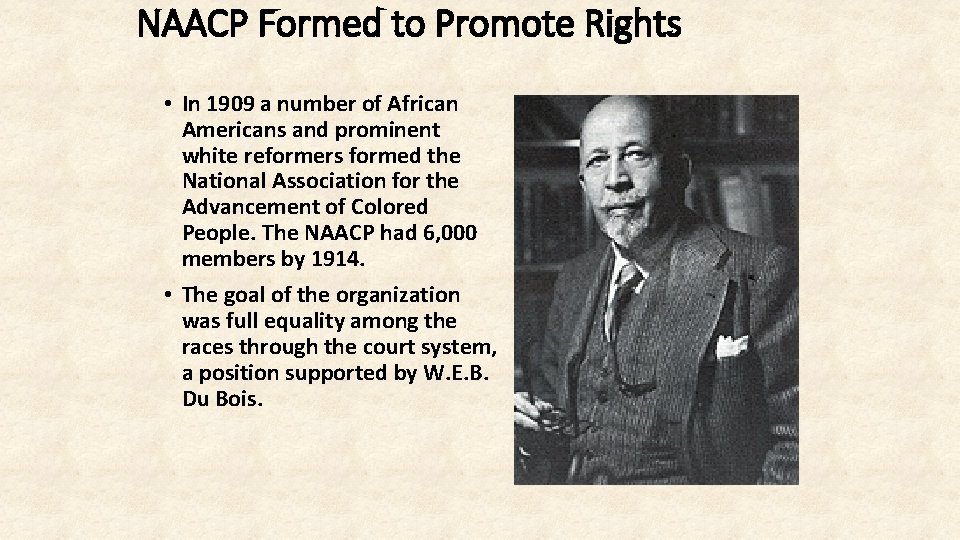
NAACP Formed to Promote Rights • In 1909 a number of African Americans and prominent white reformers formed the National Association for the Advancement of Colored People. The NAACP had 6, 000 members by 1914. • The goal of the organization was full equality among the races through the court system, a position supported by W. E. B. Du Bois.
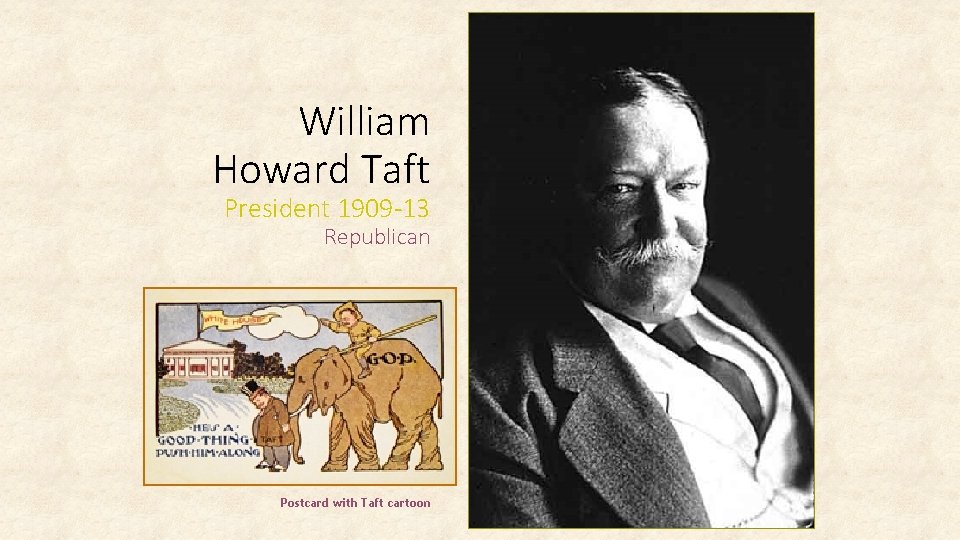
William Howard Taft President 1909 -13 Republican Postcard with Taft cartoon
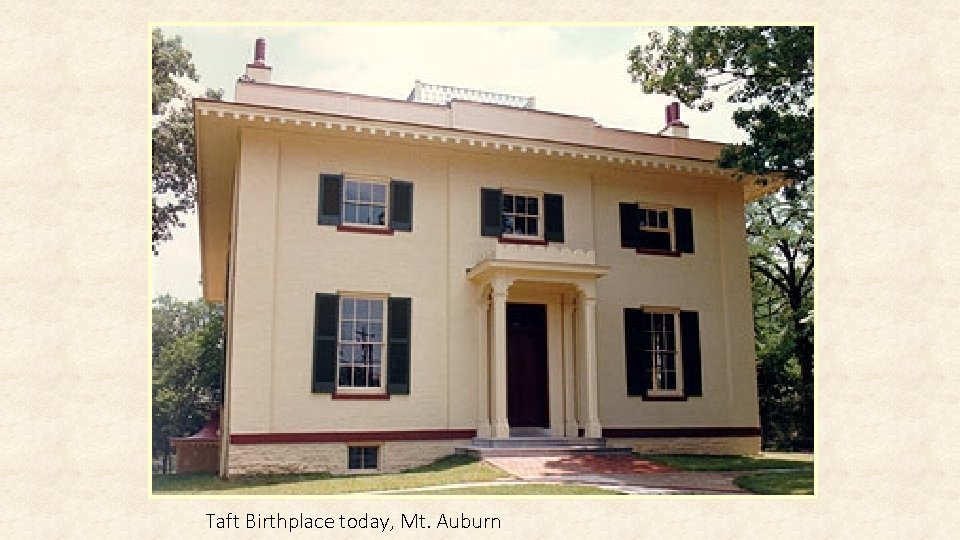
Taft Birthplace today, Mt. Auburn
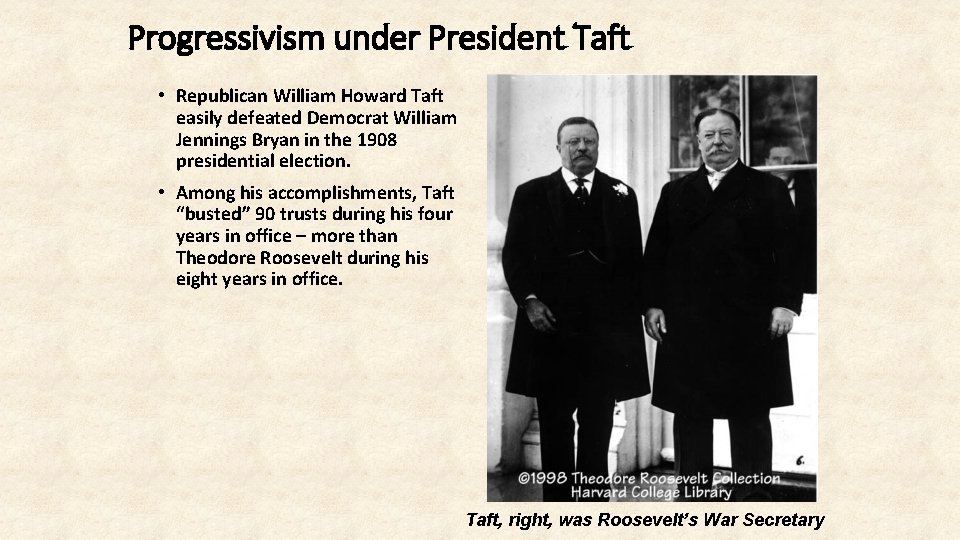
Progressivism under President Taft • Republican William Howard Taft easily defeated Democrat William Jennings Bryan in the 1908 presidential election. • Among his accomplishments, Taft “busted” 90 trusts during his four years in office – more than Theodore Roosevelt during his eight years in office. Taft, right, was Roosevelt’s War Secretary
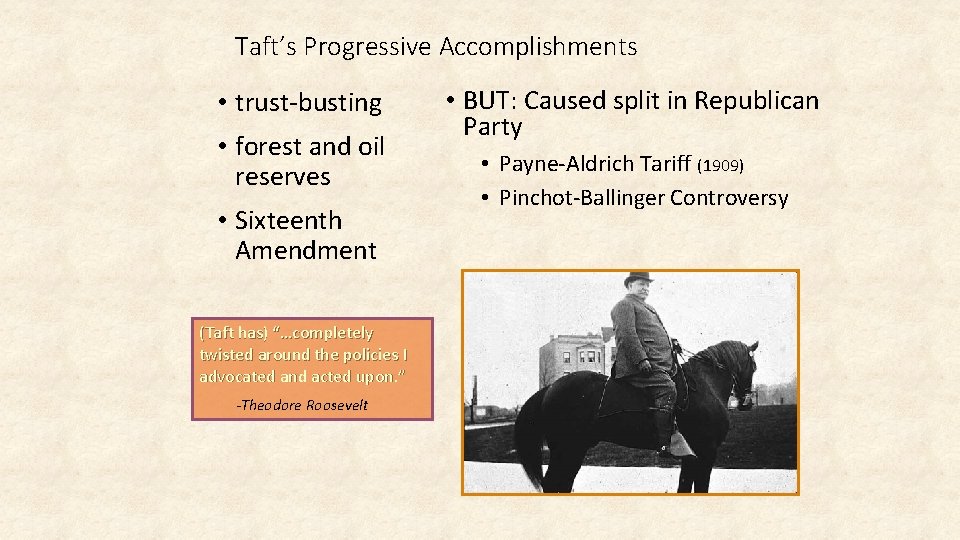
Taft’s Progressive Accomplishments • trust-busting • forest and oil reserves • Sixteenth Amendment (Taft has) “…completely twisted around the policies I advocated and acted upon. ” -Theodore Roosevelt • BUT: Caused split in Republican Party • Payne-Aldrich Tariff (1909) • Pinchot-Ballinger Controversy
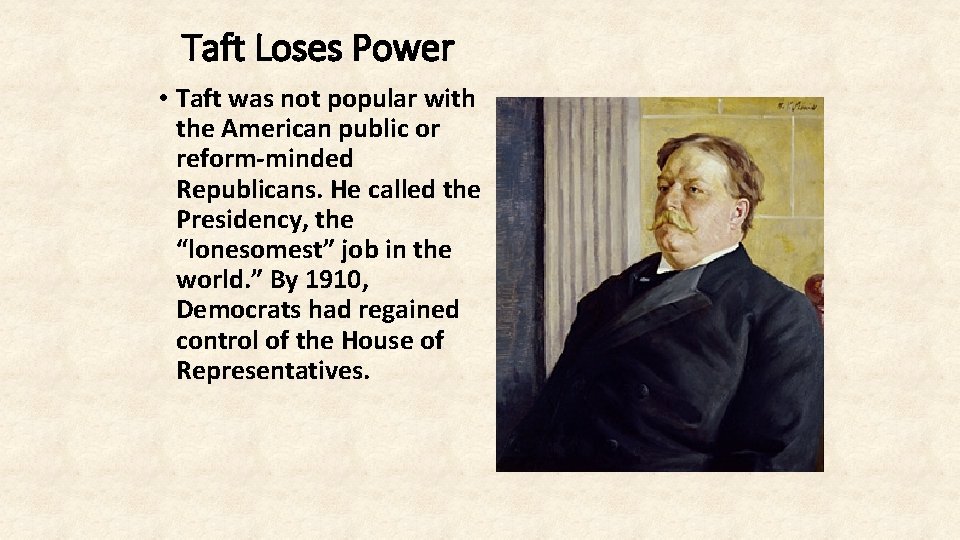
Taft Loses Power • Taft was not popular with the American public or reform-minded Republicans. He called the Presidency, the “lonesomest” job in the world. ” By 1910, Democrats had regained control of the House of Representatives.
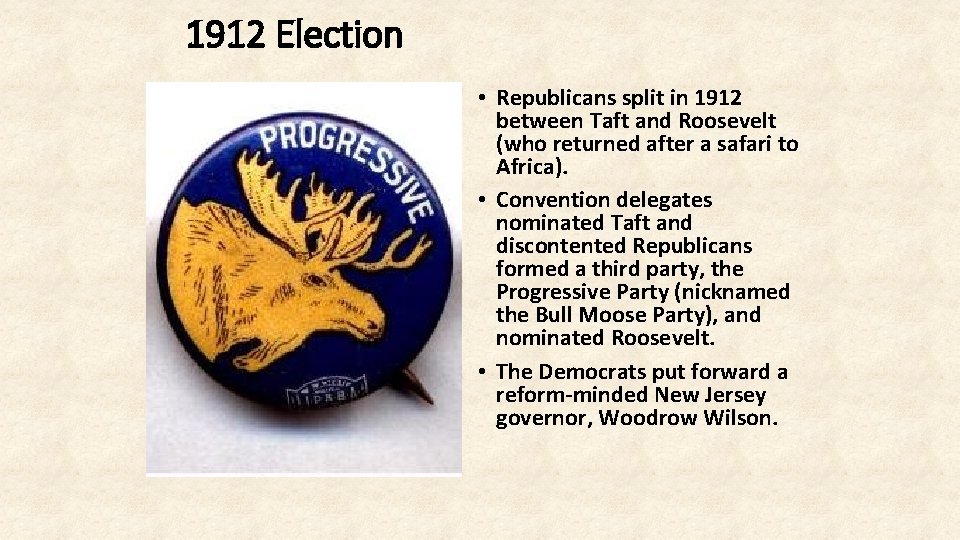
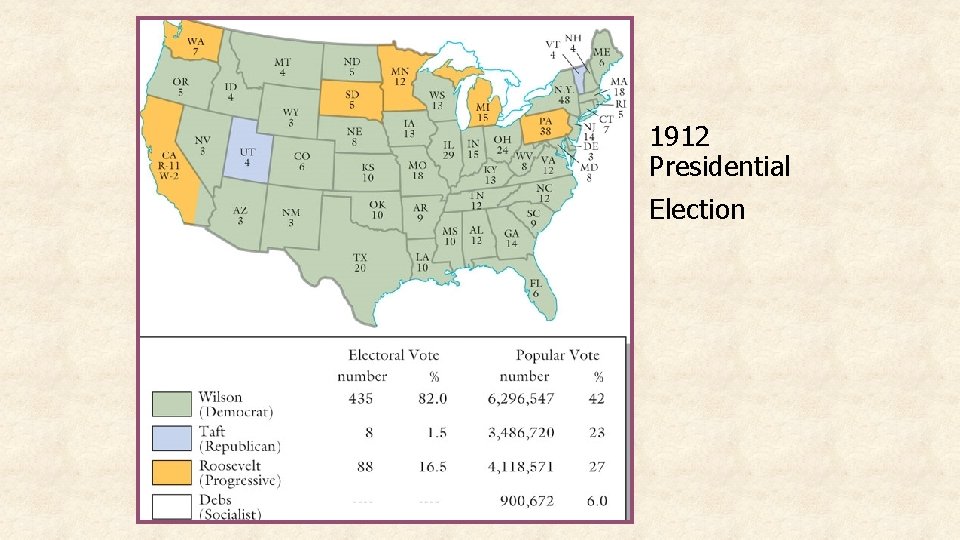
1912 Election • Republicans split in 1912 between Taft and Roosevelt (who returned after a safari to Africa). • Convention delegates nominated Taft and discontented Republicans formed a third party, the Progressive Party (nicknamed the Bull Moose Party), and nominated Roosevelt. • The Democrats put forward a reform-minded New Jersey governor, Woodrow Wilson.
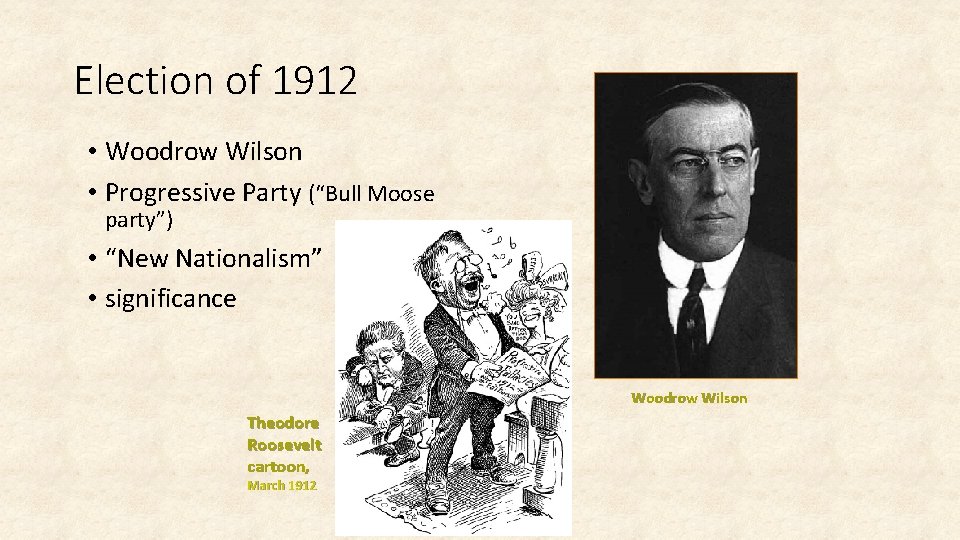
Election of 1912 • Woodrow Wilson • Progressive Party (“Bull Moose party”) • “New Nationalism” • significance Woodrow Wilson Theodore Roosevelt cartoon, March 1912
1912 Presidential Election
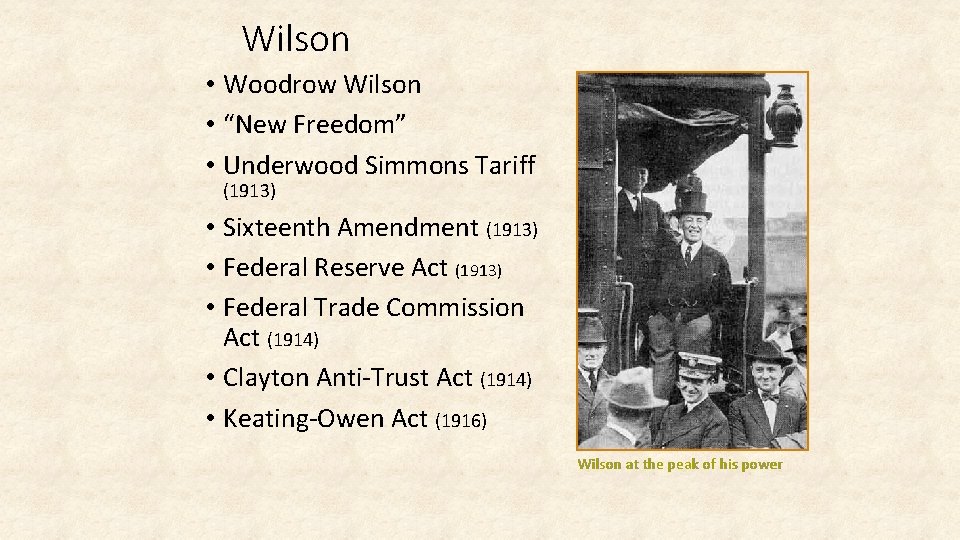
Wilson • Woodrow Wilson • “New Freedom” • Underwood Simmons Tariff (1913) • Sixteenth Amendment (1913) • Federal Reserve Act (1913) • Federal Trade Commission Act (1914) • Clayton Anti-Trust Act (1914) • Keating-Owen Act (1916) Wilson at the peak of his power
Clayton Anti-Trust Act • In 1914 Congress enacted the Clayton Anti -Trust Act that strengthened the Sherman Act. • It had an anti-trust provision that prevented companies from acquiring stock from another company and supported workers’ unions.
Federal Trade Commission Formed • The FTC was formed in 1914 to serve as a “watchdog” agency to end unfair business practices. The FTC protects consumers from business fraud.
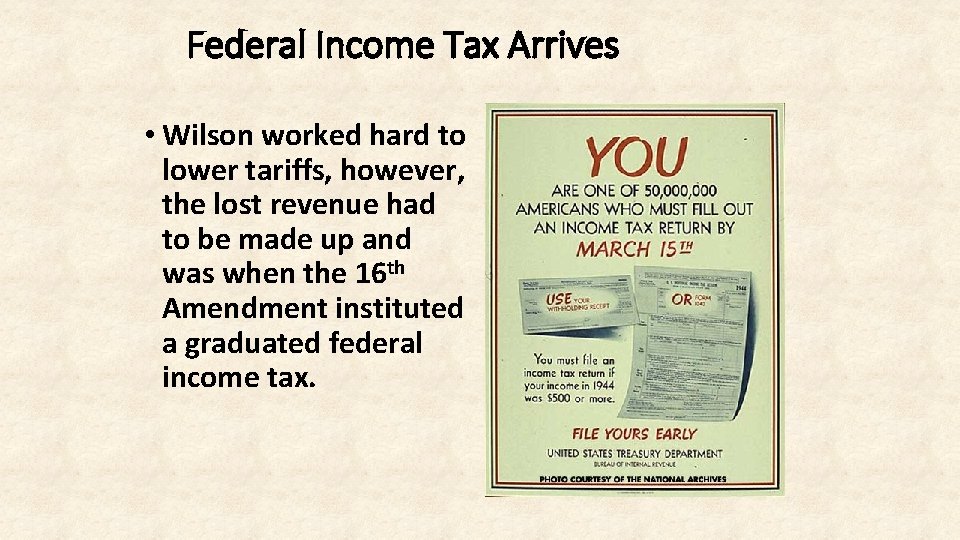
Federal Income Tax Arrives • Wilson worked hard to lower tariffs, however, the lost revenue had to be made up and was when the 16 th Amendment instituted a graduated federal income tax.
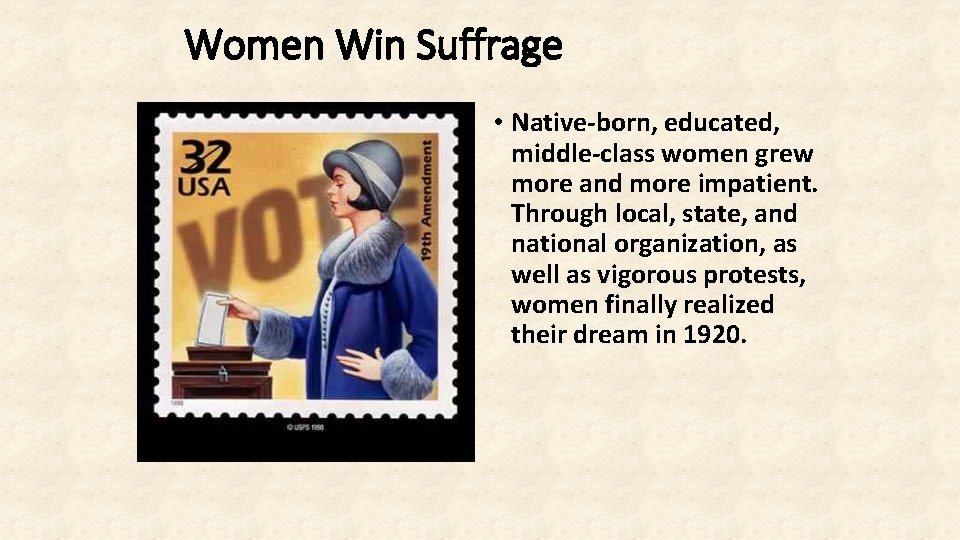
Women Win Suffrage • Native-born, educated, middle-class women grew more and more impatient. Through local, state, and national organization, as well as vigorous protests, women finally realized their dream in 1920.
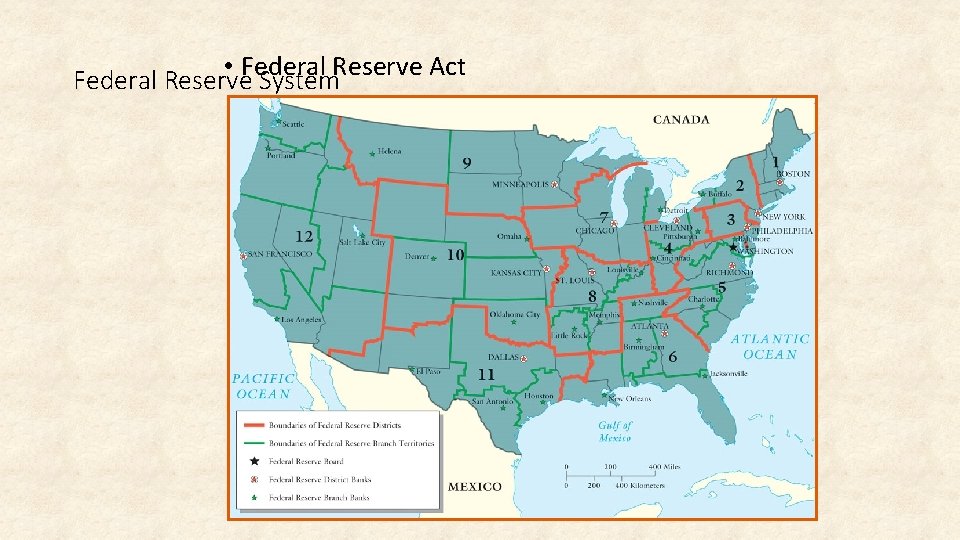
• Federal Reserve Act Federal Reserve System
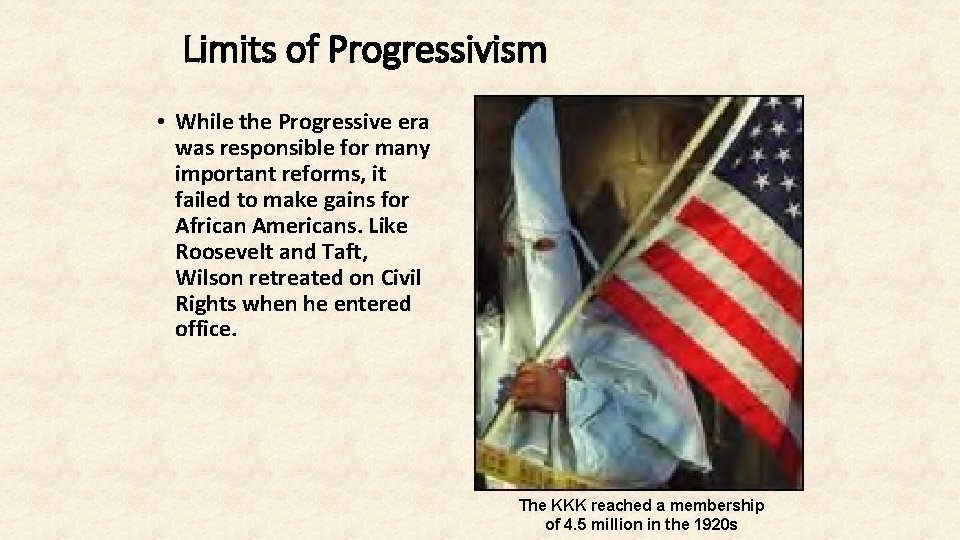
Limits of Progressivism • While the Progressive era was responsible for many important reforms, it failed to make gains for African Americans. Like Roosevelt and Taft, Wilson retreated on Civil Rights when he entered office. The KKK reached a membership of 4. 5 million in the 1920 s