
Progression of Arrays In kindergarten when students first
- Slides: 31
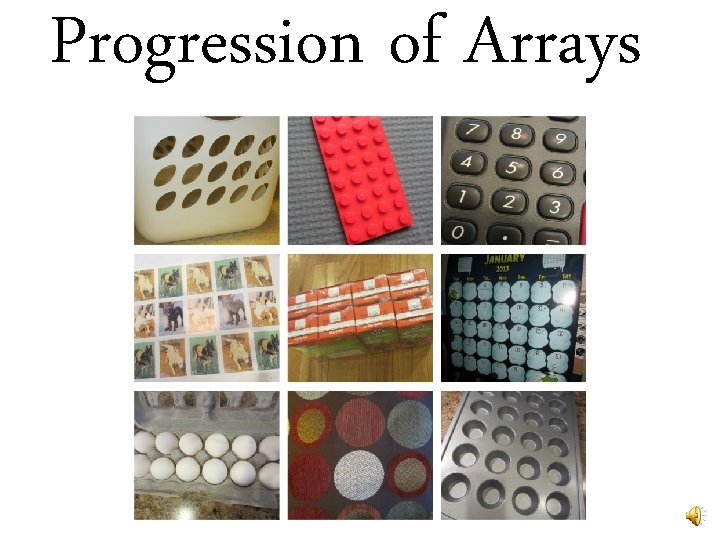
Progression of Arrays
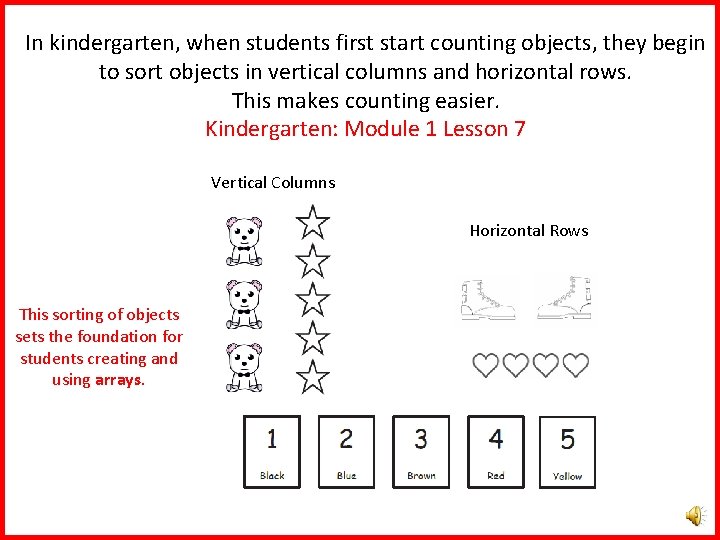
In kindergarten, when students first start counting objects, they begin to sort objects in vertical columns and horizontal rows. This makes counting easier. Kindergarten: Module 1 Lesson 7 Vertical Columns Horizontal Rows This sorting of objects sets the foundation for students creating and using arrays.
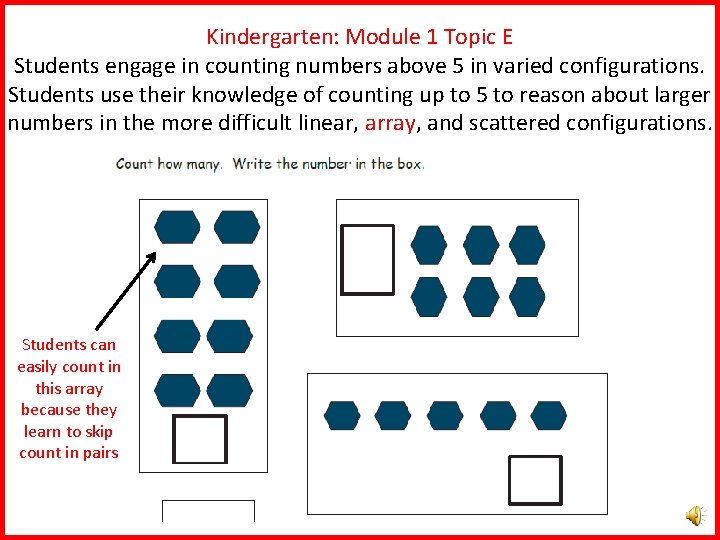
Kindergarten: Module 1 Topic E Students engage in counting numbers above 5 in varied configurations. Students use their knowledge of counting up to 5 to reason about larger numbers in the more difficult linear, array, and scattered configurations. Students can easily count in this array because they learn to skip count in pairs
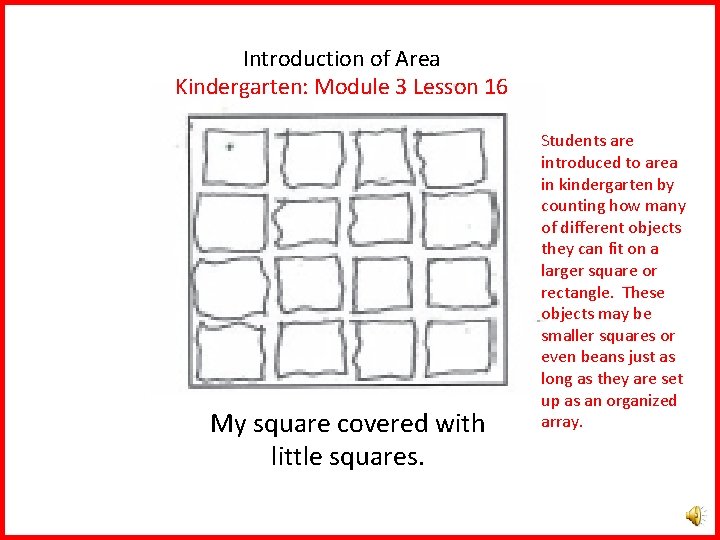
Introduction of Area Kindergarten: Module 3 Lesson 16 My square covered with little squares. Students are introduced to area in kindergarten by counting how many of different objects they can fit on a larger square or rectangle. These objects may be smaller squares or even beans just as long as they are set up as an organized array.
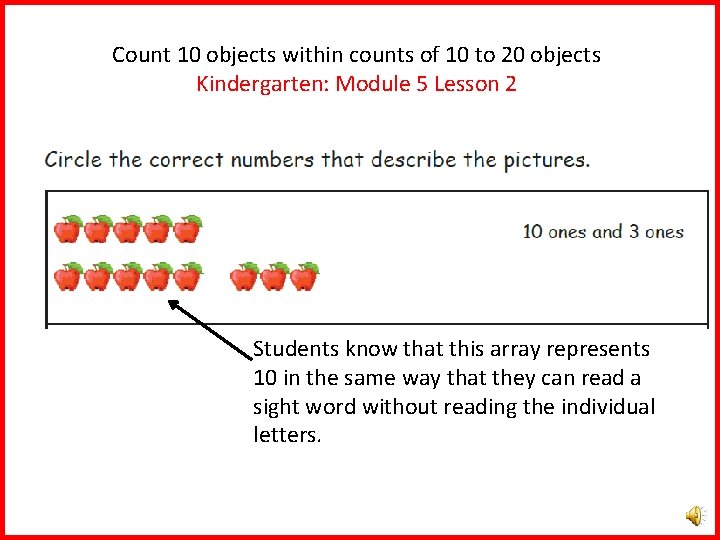
Count 10 objects within counts of 10 to 20 objects Kindergarten: Module 5 Lesson 2 Students know that this array represents 10 in the same way that they can read a sight word without reading the individual letters.
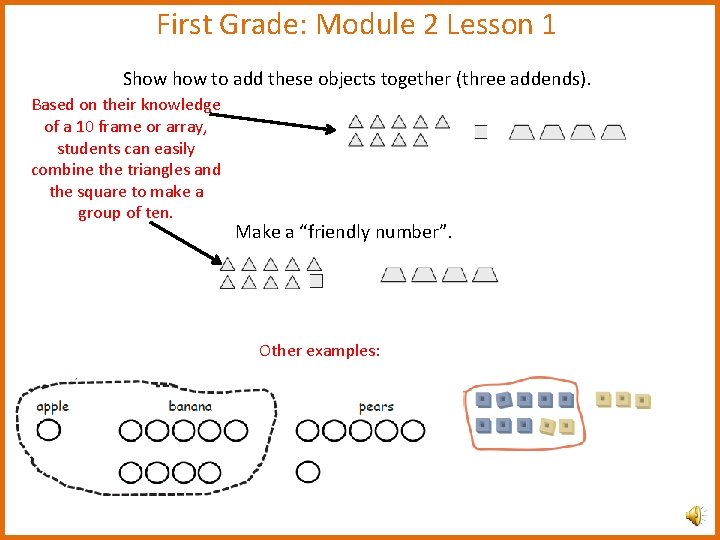
First Grade: Module 2 Lesson 1 Show to add these objects together (three addends). Based on their knowledge of a 10 frame or array, students can easily combine the triangles and the square to make a group of ten. Make a “friendly number”. Other examples:
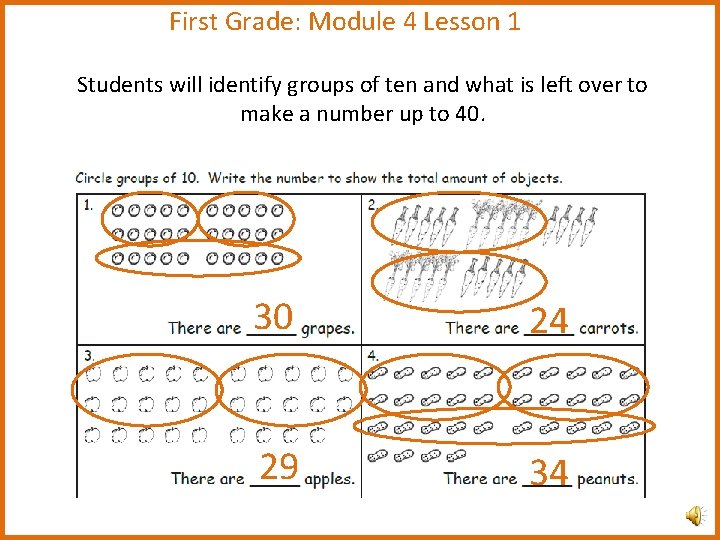
First Grade: Module 4 Lesson 1 Students will identify groups of ten and what is left over to make a number up to 40. 30 24 29 34
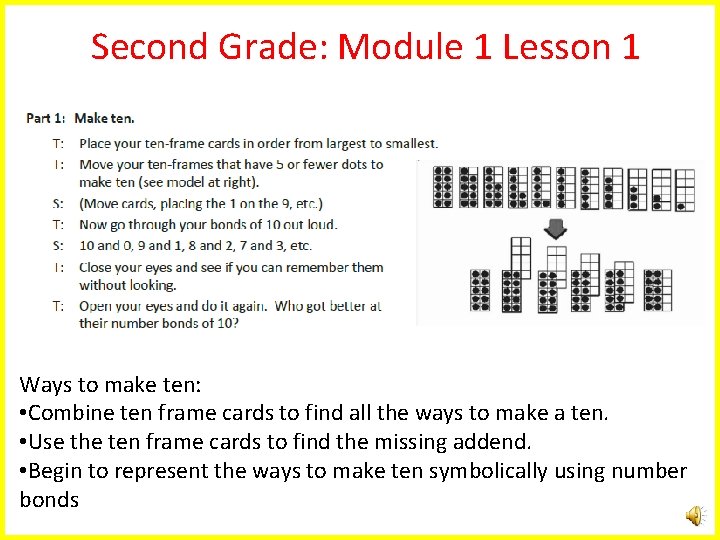
Second Grade: Module 1 Lesson 1 Ways to make ten: • Combine ten frame cards to find all the ways to make a ten. • Use the ten frame cards to find the missing addend. • Begin to represent the ways to make ten symbolically using number bonds
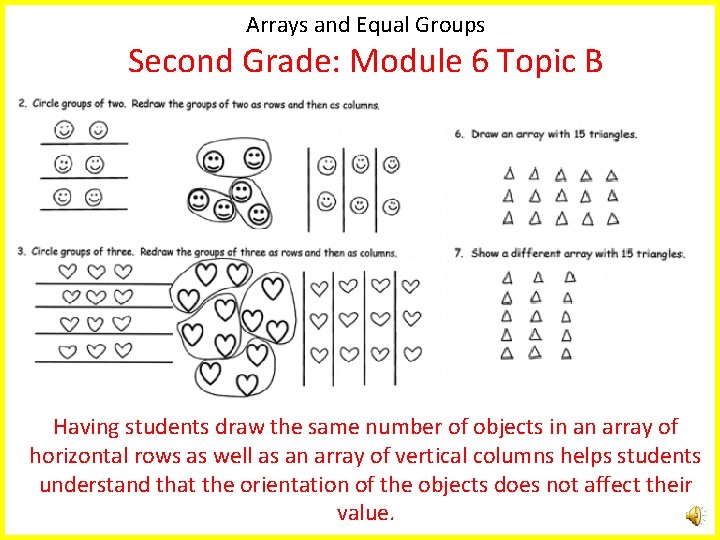
Arrays and Equal Groups Second Grade: Module 6 Topic B Having students draw the same number of objects in an array of horizontal rows as well as an array of vertical columns helps students understand that the orientation of the objects does not affect their value.
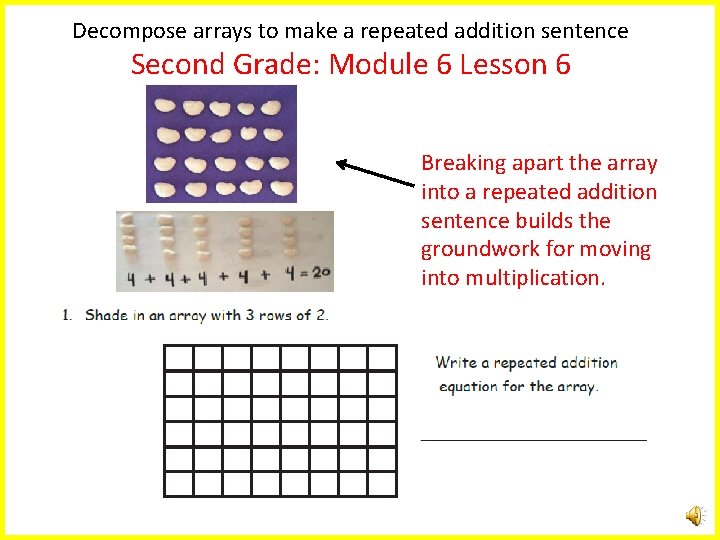
Decompose arrays to make a repeated addition sentence Second Grade: Module 6 Lesson 6 Breaking apart the array into a repeated addition sentence builds the groundwork for moving into multiplication.
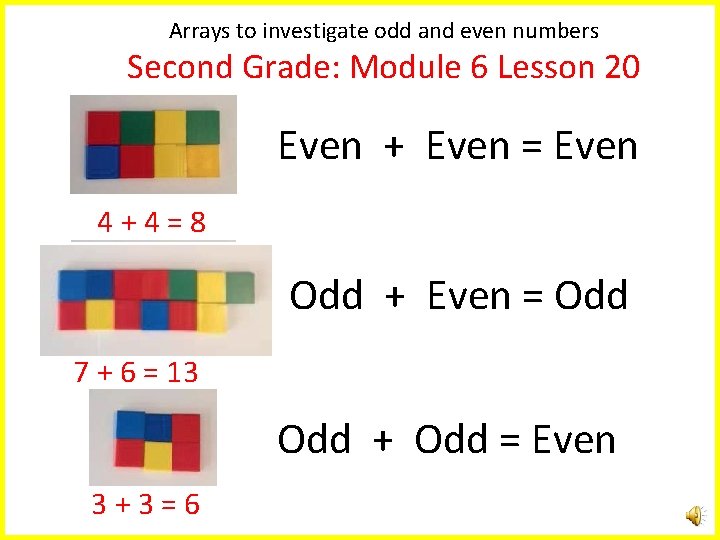
Arrays to investigate odd and even numbers Second Grade: Module 6 Lesson 20 Even + Even = Even 4+4=8 Odd + Even = Odd 7 + 6 = 13 Odd + Odd = Even 3+3=6
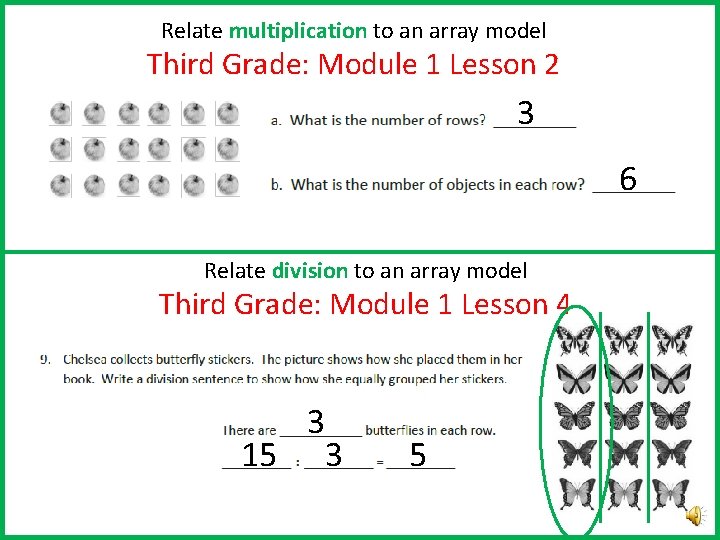
Relate multiplication to an array model Third Grade: Module 1 Lesson 2 3 6 Relate division to an array model Third Grade: Module 1 Lesson 4 3 15 3 5
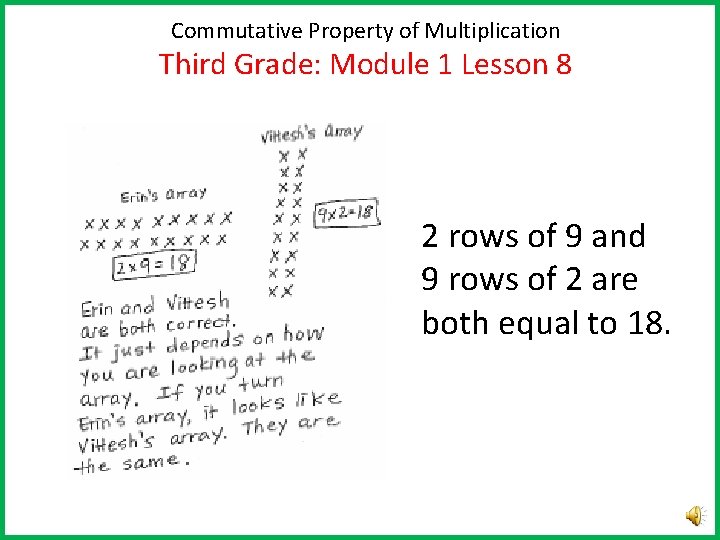
Commutative Property of Multiplication Third Grade: Module 1 Lesson 8 2 rows of 9 and 9 rows of 2 are both equal to 18.
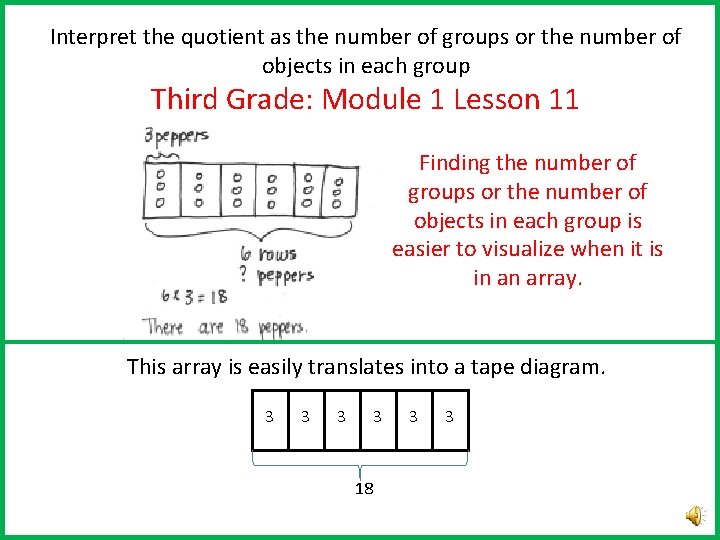
Interpret the quotient as the number of groups or the number of objects in each group Third Grade: Module 1 Lesson 11 Finding the number of groups or the number of objects in each group is easier to visualize when it is in an array. This array is easily translates into a tape diagram. 3 3 18 3 3
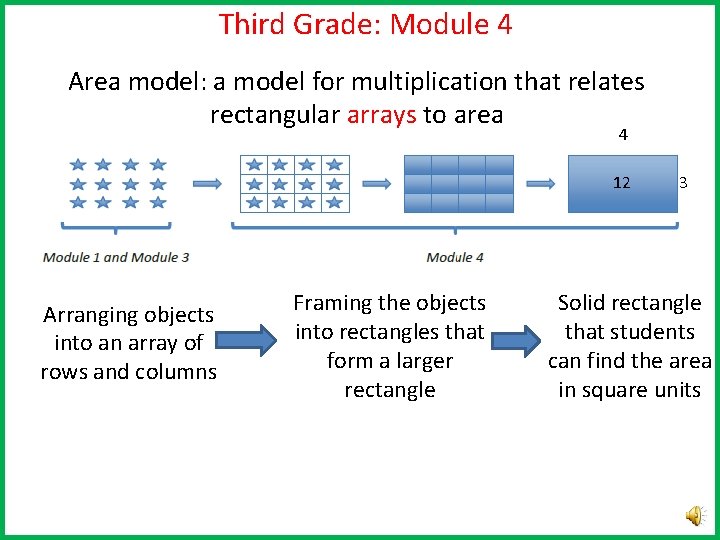
Third Grade: Module 4 Area model: a model for multiplication that relates rectangular arrays to area 4 12 Arranging objects into an array of rows and columns Framing the objects into rectangles that form a larger rectangle 3 Solid rectangle that students can find the area in square units
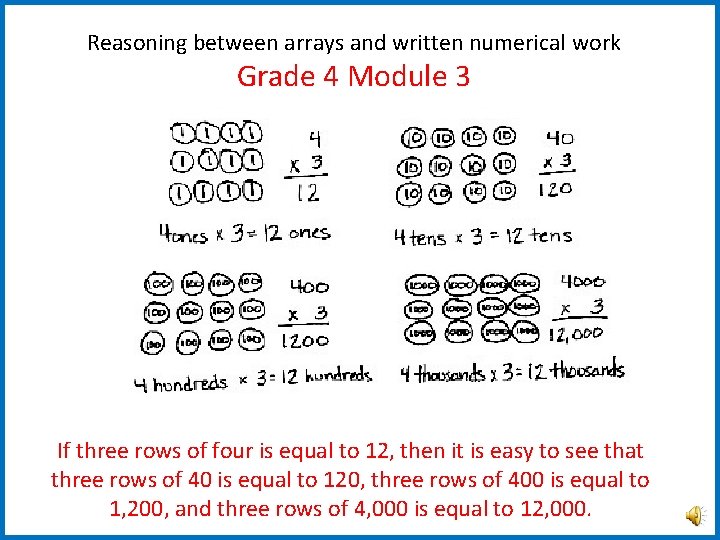
Reasoning between arrays and written numerical work Grade 4 Module 3 If three rows of four is equal to 12, then it is easy to see that three rows of 40 is equal to 120, three rows of 400 is equal to 1, 200, and three rows of 4, 000 is equal to 12, 000.
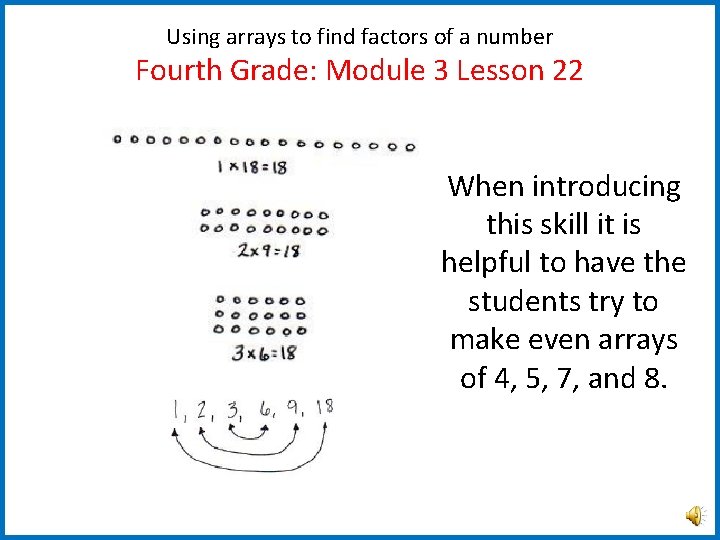
Using arrays to find factors of a number Fourth Grade: Module 3 Lesson 22 When introducing this skill it is helpful to have the students try to make even arrays of 4, 5, 7, and 8.
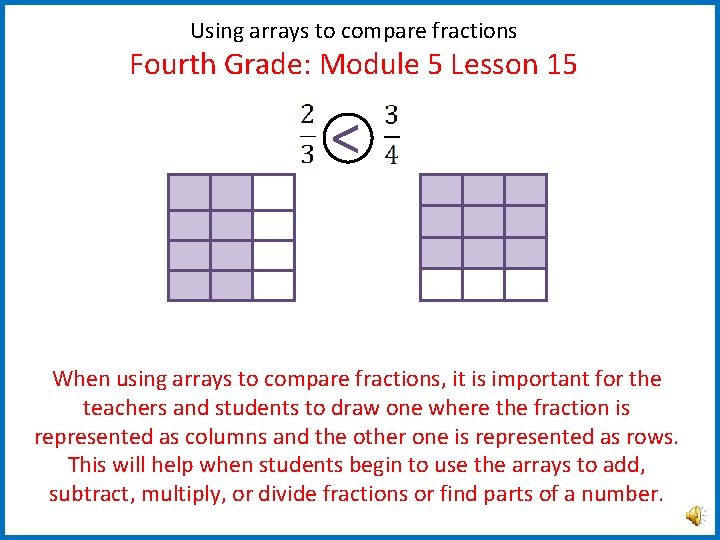
Using arrays to compare fractions Fourth Grade: Module 5 Lesson 15 < When using arrays to compare fractions, it is important for the teachers and students to draw one where the fraction is represented as columns and the other one is represented as rows. This will help when students begin to use the arrays to add, subtract, multiply, or divide fractions or find parts of a number.
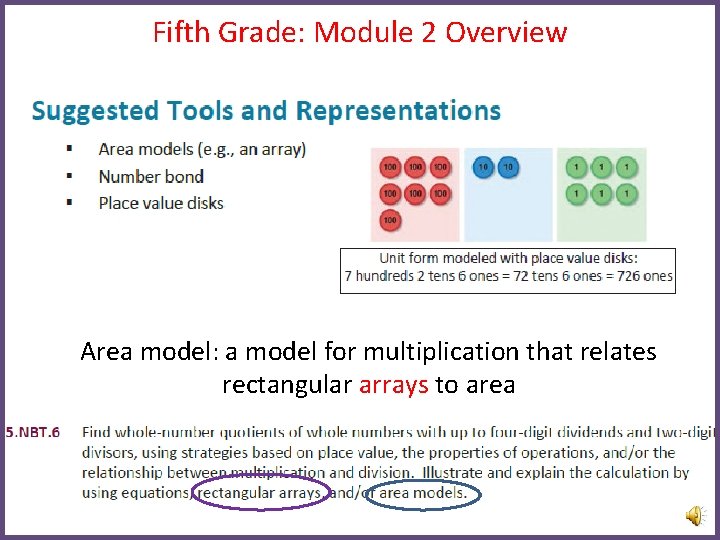
Fifth Grade: Module 2 Overview Area model: a model for multiplication that relates rectangular arrays to area
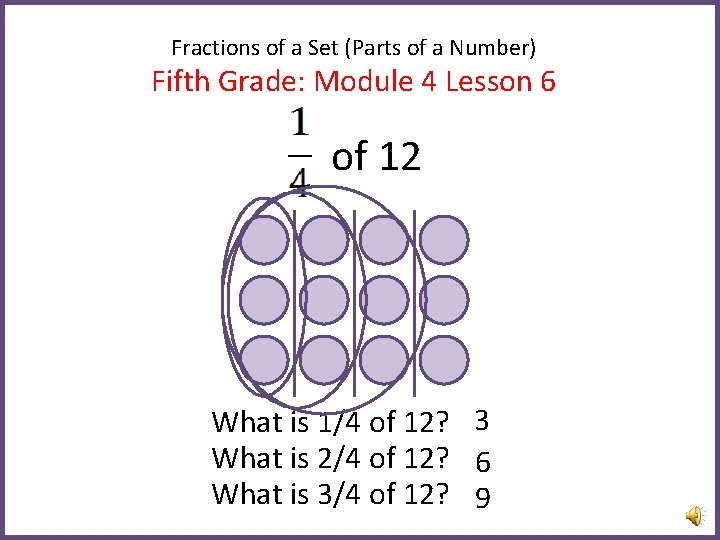
Fractions of a Set (Parts of a Number) Fifth Grade: Module 4 Lesson 6 of 12 What is 1/4 of 12? 3 What is 2/4 of 12? 6 What is 3/4 of 12? 9
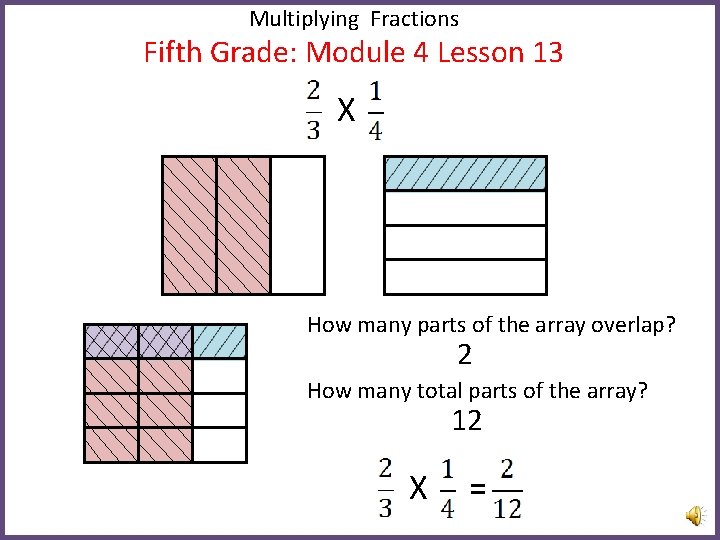
Multiplying Fractions Fifth Grade: Module 4 Lesson 13 X How many parts of the array overlap? 2 How many total parts of the array? 12 X =
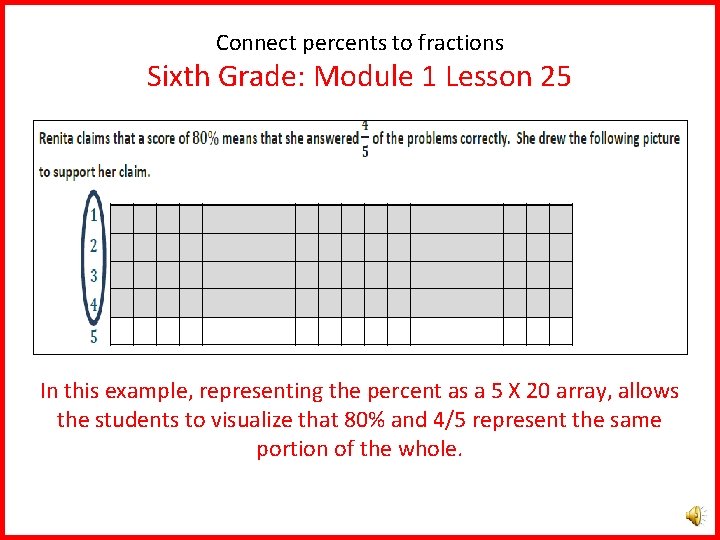
Connect percents to fractions Sixth Grade: Module 1 Lesson 25 In this example, representing the percent as a 5 X 20 array, allows the students to visualize that 80% and 4/5 represent the same portion of the whole.
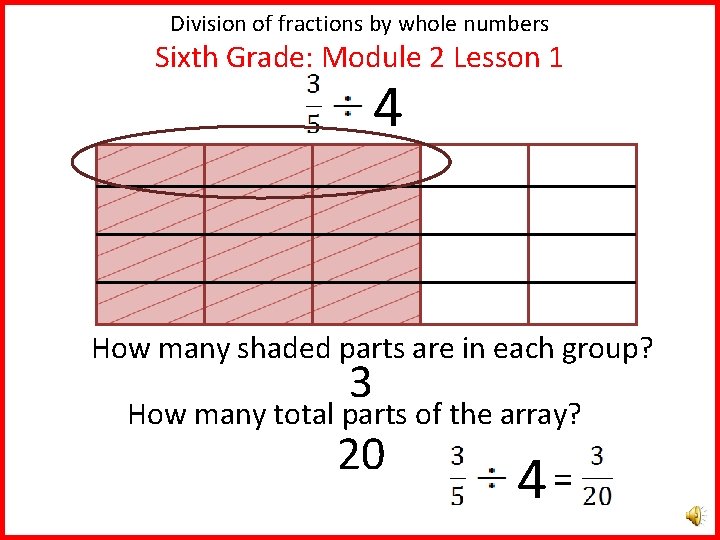
Division of fractions by whole numbers Sixth Grade: Module 2 Lesson 1 4 How many shaded parts are in each group? 3 How many total parts of the array? 20 = 4
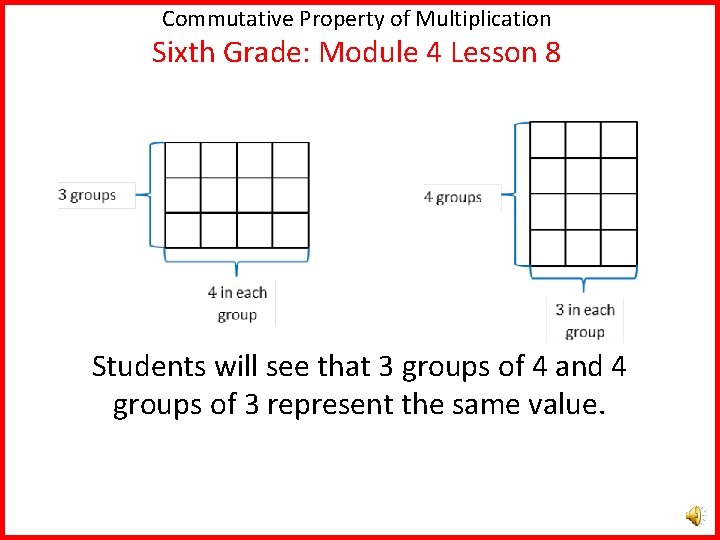
Commutative Property of Multiplication Sixth Grade: Module 4 Lesson 8 Students will see that 3 groups of 4 and 4 groups of 3 represent the same value.
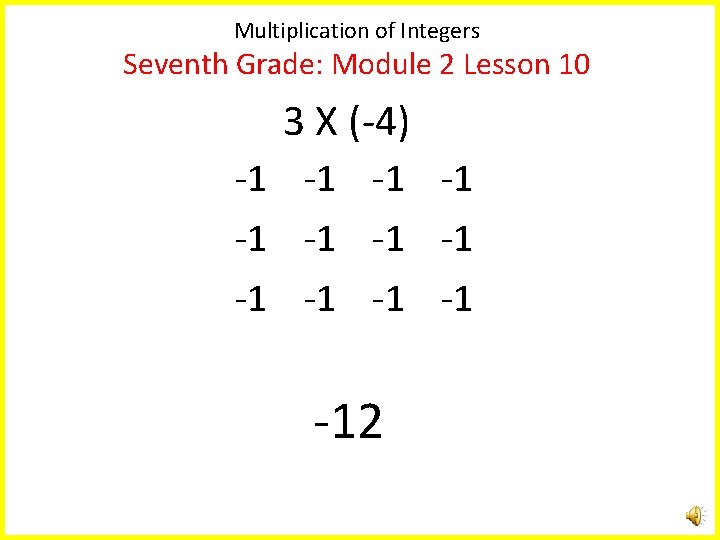
Multiplication of Integers Seventh Grade: Module 2 Lesson 10 3 X (-4) -1 -1 -1 -12
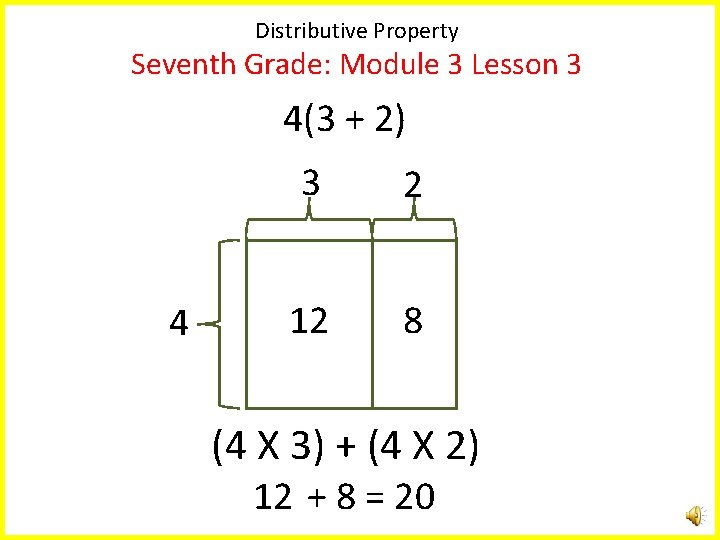
Distributive Property Seventh Grade: Module 3 Lesson 3 4(3 + 2) 4 3 2 12 8 (4 X 3) + (4 X 2) 12 + 8 = 20
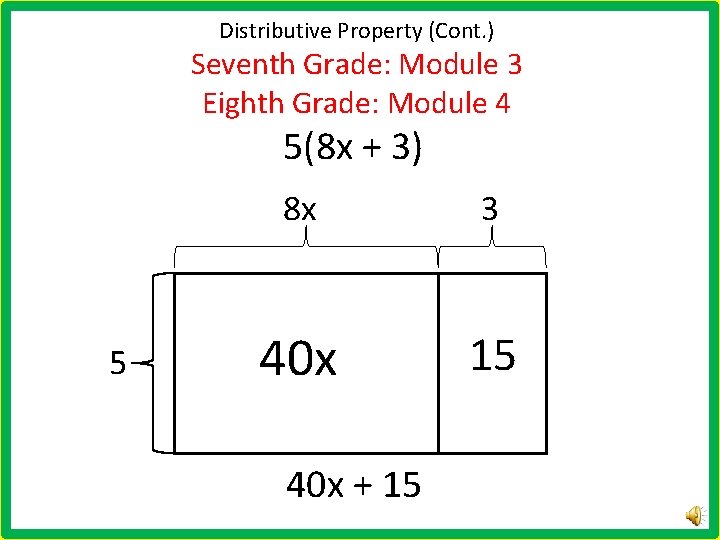
Distributive Property (Cont. ) Seventh Grade: Module 3 Eighth Grade: Module 4 5(8 x + 3) 8 x 5 x x x x x 40 x x x 3 x x x x x 40 x + 15 15
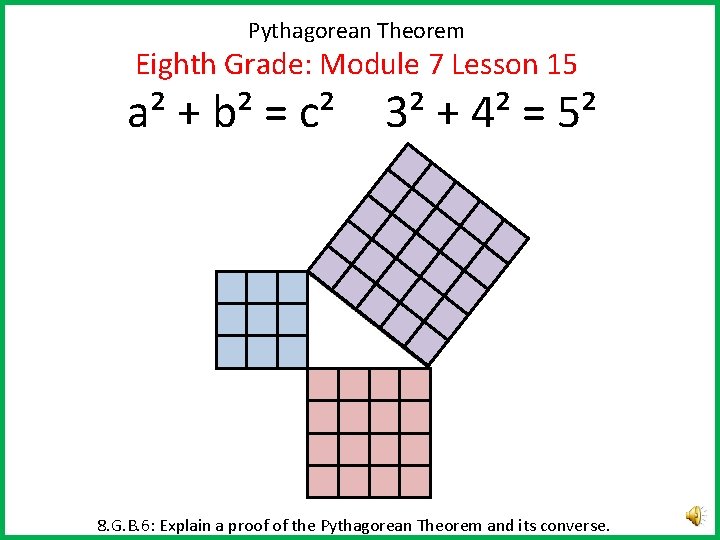
Pythagorean Theorem Eighth Grade: Module 7 Lesson 15 a² + b² = c² 3² + 4² = 5² 8. G. B. 6: Explain a proof of the Pythagorean Theorem and its converse.
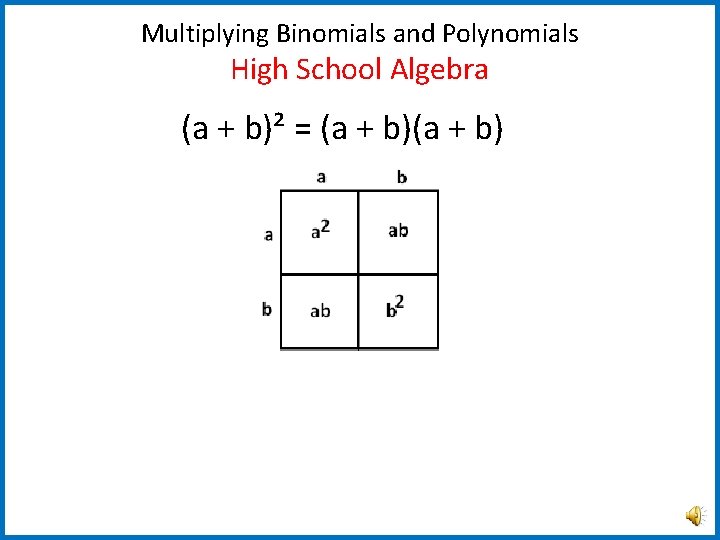
Multiplying Binomials and Polynomials High School Algebra (a + b)² = (a + b)
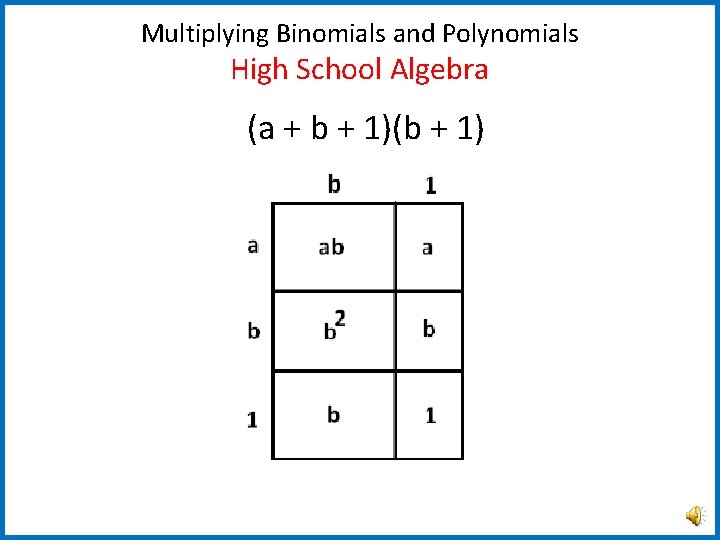
Multiplying Binomials and Polynomials High School Algebra (a + b + 1)(b + 1)
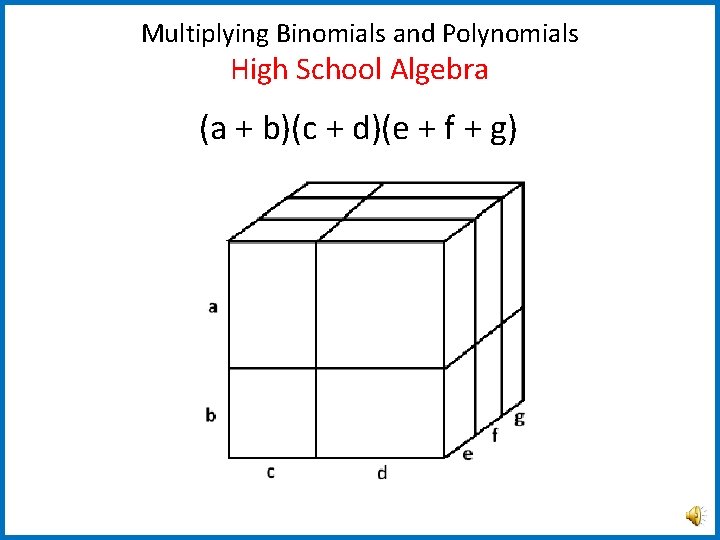
Multiplying Binomials and Polynomials High School Algebra (a + b)(c + d)(e + f + g)