
Progression in Mastery Year 6 Classification of Living
- Slides: 11
Progression in Mastery Year 6 Classification of Living Things by Scientists Let’s learn how famous scientists classify! ©Deepening Understanding LTD 2020
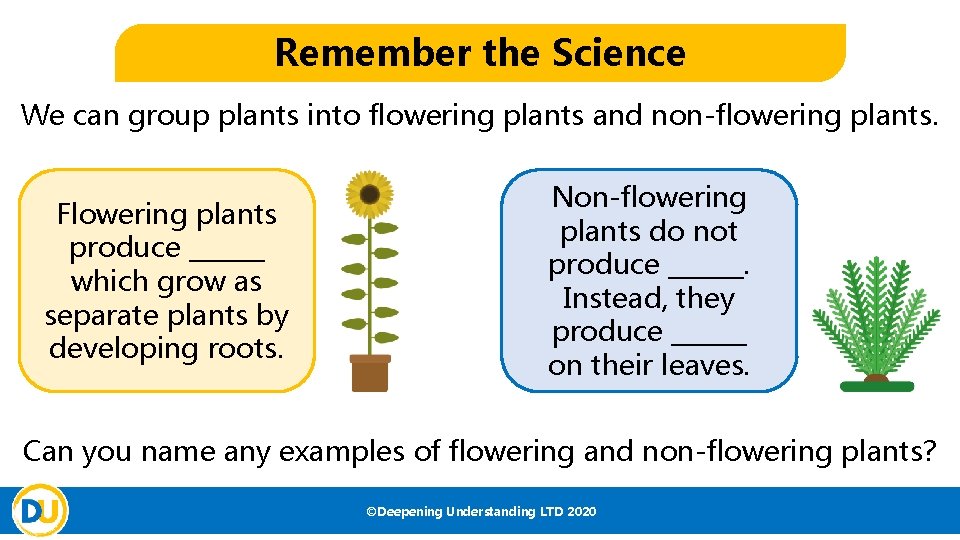
Remember the Science We can group plants into flowering plants and non-flowering plants. Flowering plants produce ______ which grow as separate plants by developing roots. Non-flowering plants do not produce ______. Instead, they produce ______ on their leaves. Can you name any examples of flowering and non-flowering plants? ©Deepening Understanding LTD 2020
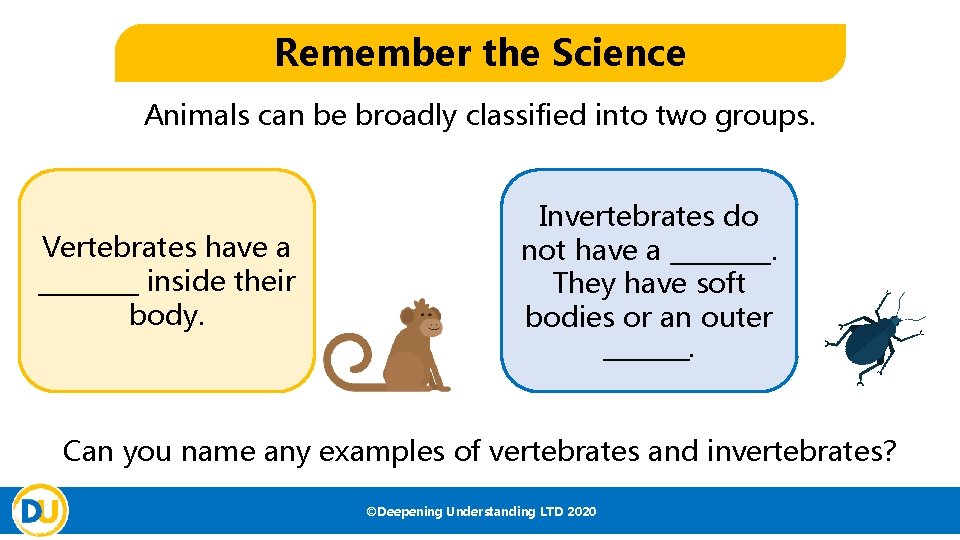
Remember the Science Animals can be broadly classified into two groups. Vertebrates have a ____ inside their body. Invertebrates do not have a ____. They have soft bodies or an outer ____. Can you name any examples of vertebrates and invertebrates? ©Deepening Understanding LTD 2020
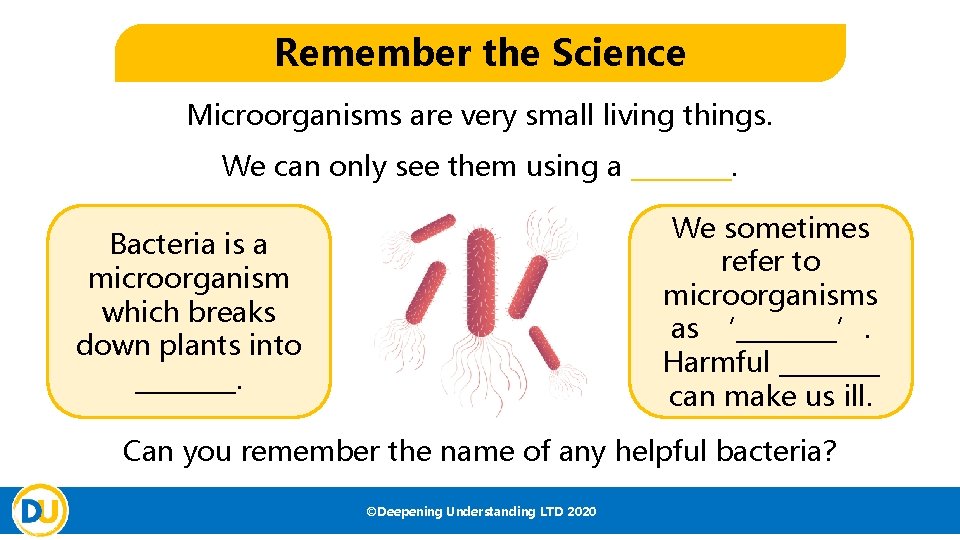
Remember the Science Microorganisms are very small living things. We can only see them using a ____. We sometimes refer to microorganisms as ‘____’. Harmful ____ can make us ill. Bacteria is a microorganism which breaks down plants into ____. Can you remember the name of any helpful bacteria? ©Deepening Understanding LTD 2020
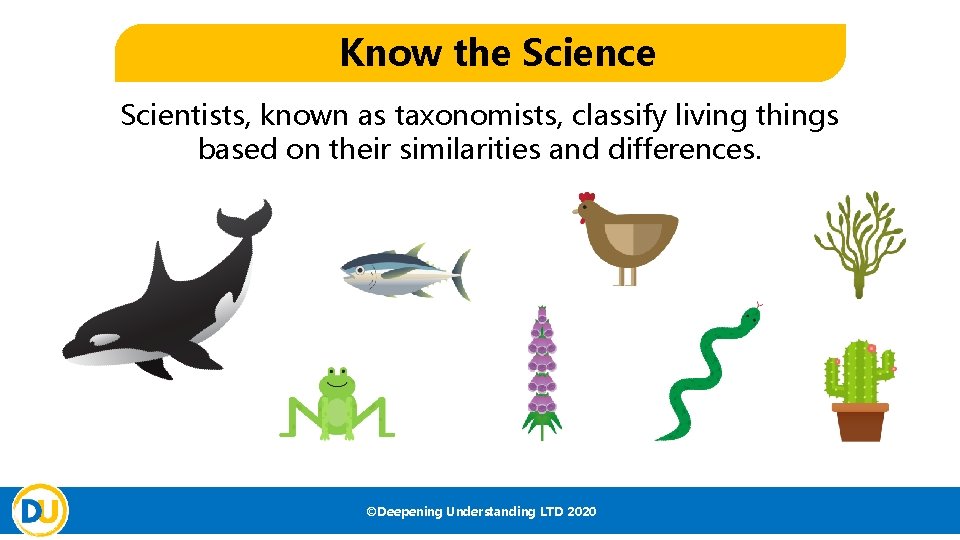
Know the Science Scientists, known as taxonomists, classify living things based on their similarities and differences. ©Deepening Understanding LTD 2020
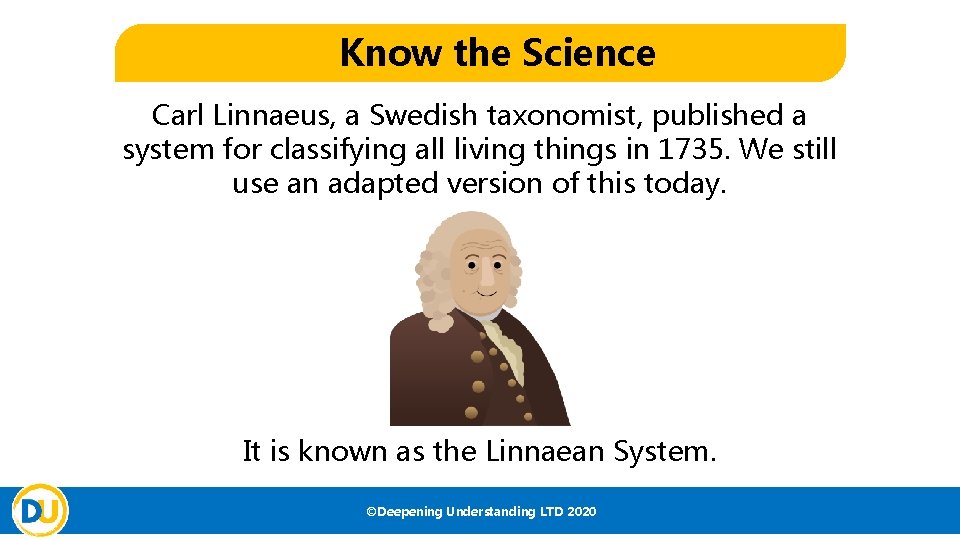
Know the Science Carl Linnaeus, a Swedish taxonomist, published a system for classifying all living things in 1735. We still use an adapted version of this today. It is known as the Linnaean System. ©Deepening Understanding LTD 2020
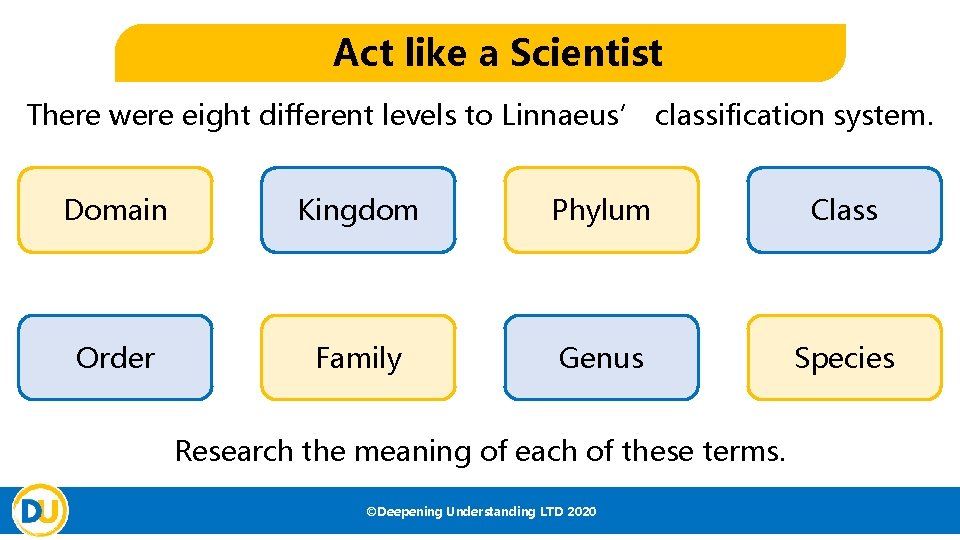
Act like a Scientist There were eight different levels to Linnaeus’ classification system. Domain Kingdom Phylum Class Order Family Genus Species Research the meaning of each of these terms. ©Deepening Understanding LTD 2020
Talk like a Scientist Discuss Jane’s question with your partner… Can you name all of the kingdoms used in classification? ©Deepening Understanding LTD 2020
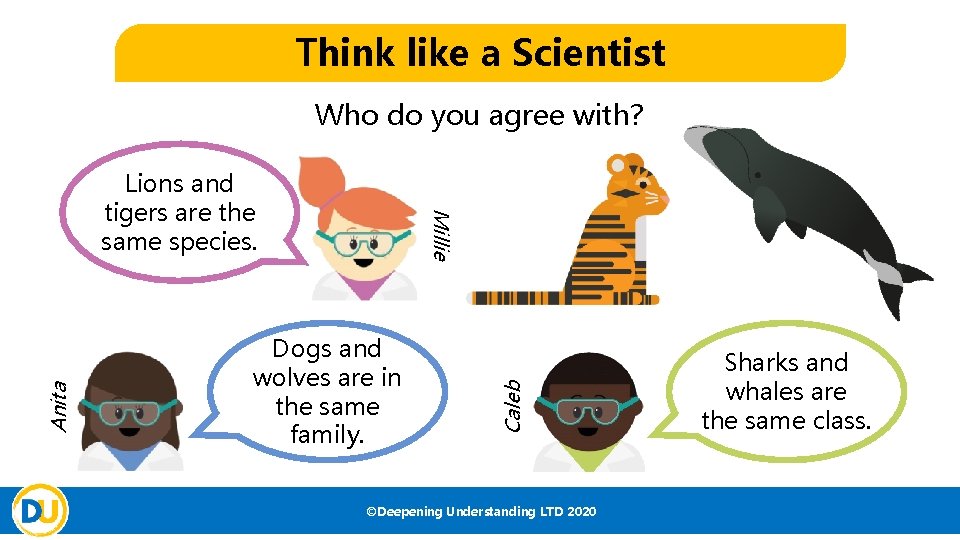
Think like a Scientist Who do you agree with? Dogs and wolves are in the same family. Caleb Anita Millie Lions and tigers are the same species. ©Deepening Understanding LTD 2020 Sharks and whales are the same class.
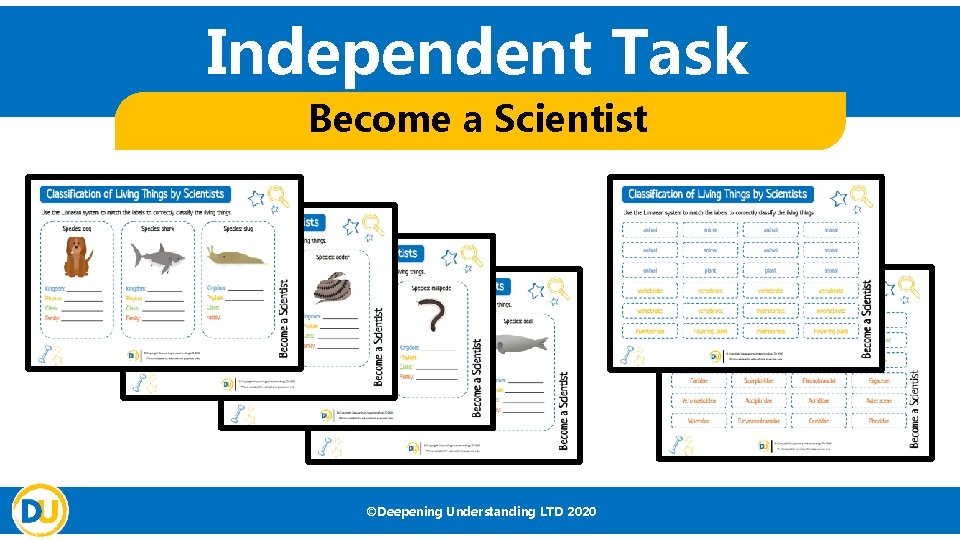
Independent Task Become a Scientist ©Deepening Understanding LTD 2020
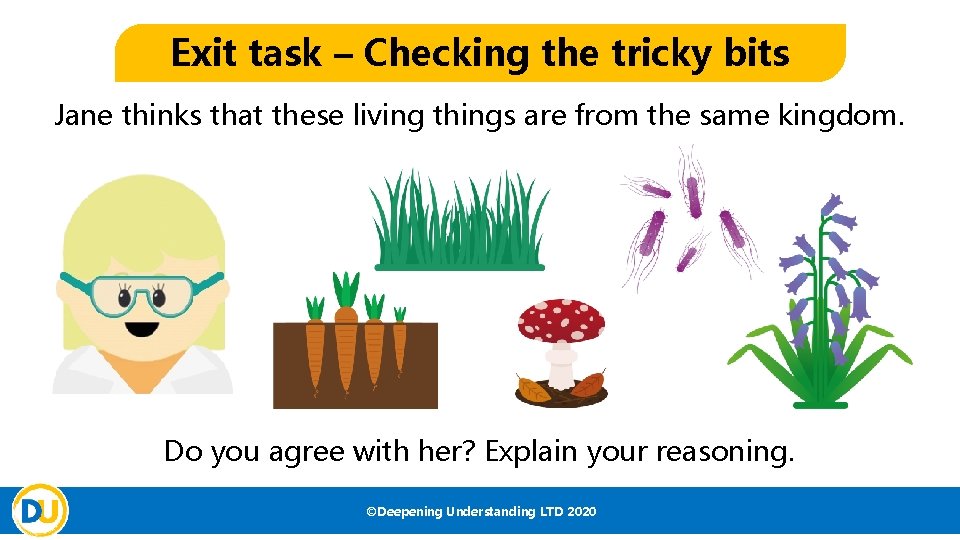
Exit task – Checking the tricky bits Jane thinks that these living things are from the same kingdom. Do you agree with her? Explain your reasoning. ©Deepening Understanding LTD 2020