
Progress Review Webinar Family Planning and Maternal Infant
Progress Review Webinar: Family Planning and Maternal, Infant, and Child Health October 25, 2017
Healthy People 2020 Progress Review: Optimizing Birth Outcomes Through Preconception and Interconception Health Vanila Singh, MD, MACM Chief Medical Officer U. S. Department of Health and Human Services
Agenda and Presenters Chair • Vanila Singh, MD, MACM, Chief Medical Officer, U. S. Department of Health and Human Services Presentations • Charles Rothwell, MBA, MS, Director, National Center for Health Statistics • Teresa Manning, MA, JD, Deputy Assistant Secretary for Population Affairs, U. S. Department of Health and Human Services • Wanda Barfield, MD, MPH, RADM USPHS, Director, Division of Reproductive Health, CDC • Michael Kogan, Ph. D, Director, Office of Epidemiology and Research, Maternal and Child Health Bureau, HRSA Community Highlight • Faye Johnson, Chief Executive Officer, Northeast Florida Healthy Start Coalition, Magnolia Project, Jacksonville, Florida 3
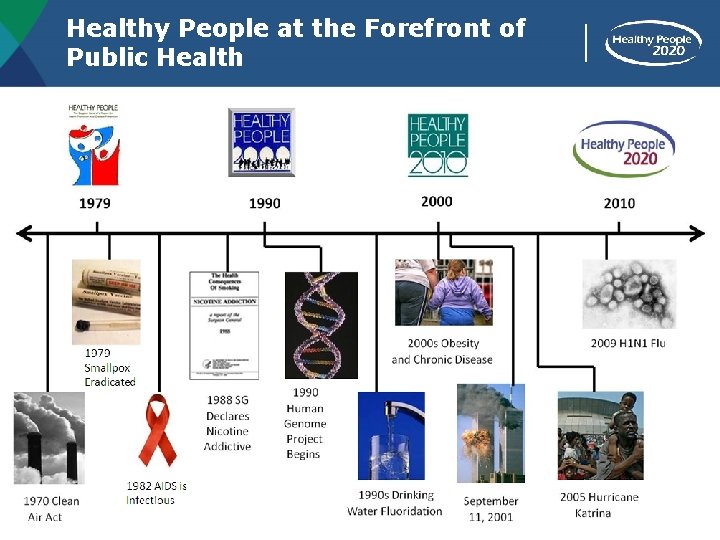
Healthy People at the Forefront of Public Health 4
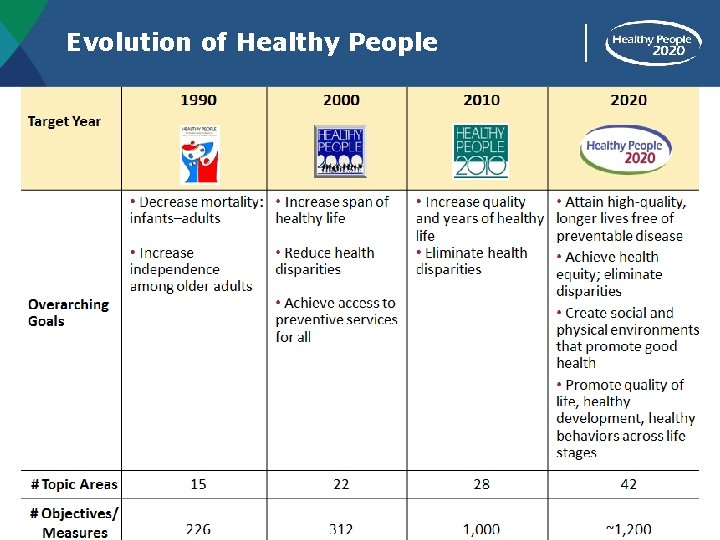
Evolution of Healthy People 5
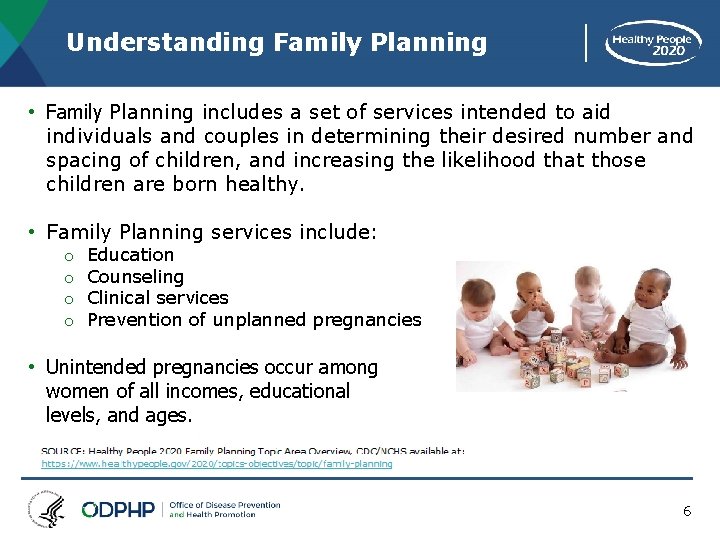
Understanding Family Planning • Family Planning includes a set of services intended to aid individuals and couples in determining their desired number and spacing of children, and increasing the likelihood that those children are born healthy. • Family Planning services include: o o Education Counseling Clinical services Prevention of unplanned pregnancies • Unintended pregnancies occur among women of all incomes, educational levels, and ages. 6
Understanding Family Planning Continued • Unintended pregnancies can be associate with negative health and economic consequences, such as: o o Delays in initiating prenatal care Reduced likelihood of breastfeeding Increased risk of maternal depression Increased risk of physical violence during pregnancy • Almost half of all pregnancies in the United States are unintended • Each year, publicly funded family planning services prevent 1. 9 million unintended pregnancies, including 440, 000 teen pregnancies • $7 in medical expenditure is saved for pregnancy-related care for every $1 spent 7
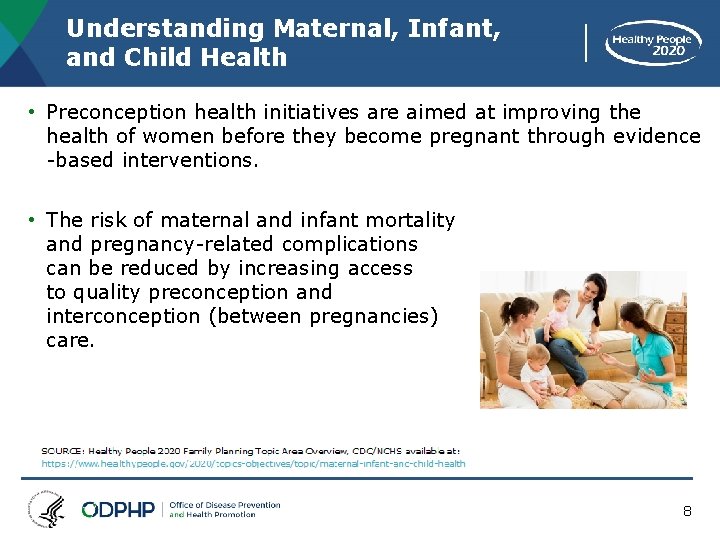
Understanding Maternal, Infant, and Child Health • Preconception health initiatives are aimed at improving the health of women before they become pregnant through evidence -based interventions. • The risk of maternal and infant mortality and pregnancy-related complications can be reduced by increasing access to quality preconception and interconception (between pregnancies) care. 8
Understanding Maternal, Infant, and Child Health Continued • Pregnancy can provide an opportunity to identify existing health risks in women, such as: o o o o Hypertension and heart disease Diabetes Depression Genetic conditions Intimate Partner violence Tobacco, alcohol, and substance use Inadequate nutrition Healthy weight • Cognitive and physical development of infants and children is influenced by the health, nutrition, and behaviors of their mothers during pregnancy and early childhood 9
Charles Rothwell, MBA, MS Director, National Center for Health Statistics Centers for Disease Control and Prevention
Presentation Overview § Tracking the Nation’s Progress § Family Planning (FP) § Maternal, Infant, and Child Health (MICH) 11
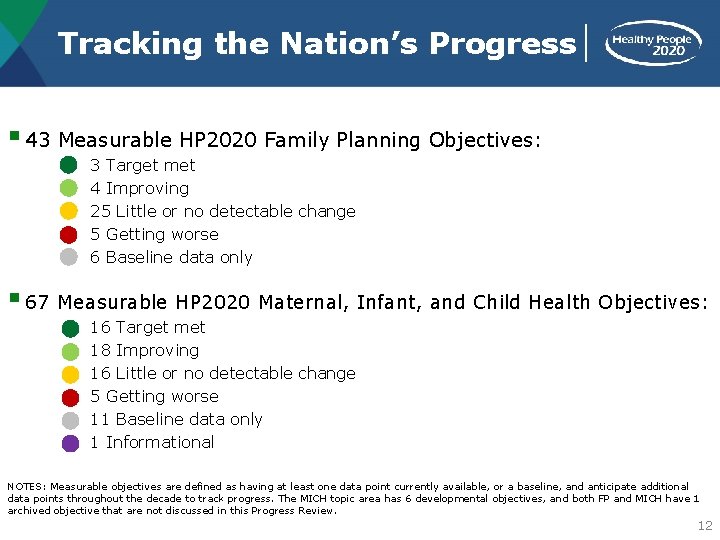
Tracking the Nation’s Progress § 43 Measurable HP 2020 Family Planning Objectives: 3 Target met 4 Improving 25 Little or no detectable change 5 Getting worse 6 Baseline data only § 67 Measurable HP 2020 Maternal, Infant, and Child Health Objectives: 16 Target met 18 Improving 16 Little or no detectable change 5 Getting worse 11 Baseline data only 1 Informational NOTES: Measurable objectives are defined as having at least one data point currently available, or a baseline, and anticipate additional data points throughout the decade to track progress. The MICH topic area has 6 developmental objectives, and both FP and MICH have 1 archived objective that are not discussed in this Progress Review. 12
Presentation Overview § § § Tracking the Nation’s Progress Family Planning § Intended Pregnancies § Pregnancies Conceived Within 18 Months of a Previous Birth § Sexually Experienced Females and Males who Received Reproductive Health Services in the Past 12 Months § Use of the Most/Moderately Effective Contraception Maternal, Infant, and Child Health 13
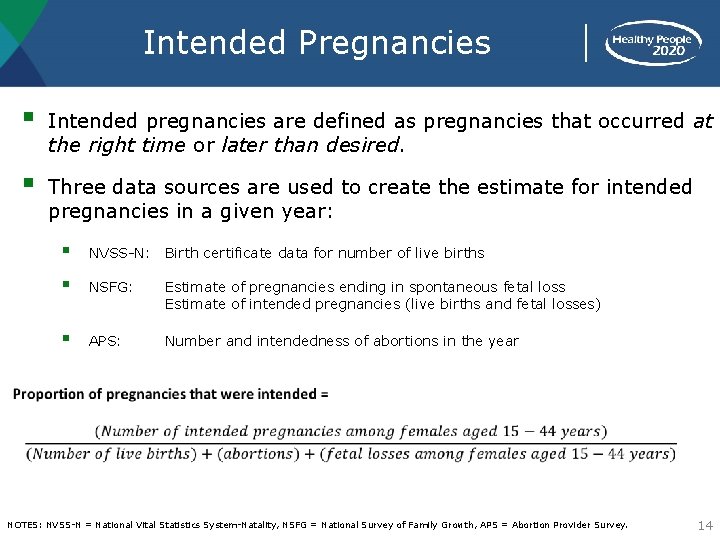
Intended Pregnancies § Intended pregnancies are defined as pregnancies that occurred at the right time or later than desired. § Three data sources are used to create the estimate for intended pregnancies in a given year: § NVSS-N: Birth certificate data for number of live births § NSFG: Estimate of pregnancies ending in spontaneous fetal loss Estimate of intended pregnancies (live births and fetal losses) § APS: Number and intendedness of abortions in the year NOTES: NVSS-N = National Vital Statistics System-Natality, NSFG = National Survey of Family Growth, APS = Abortion Provider Survey. 14
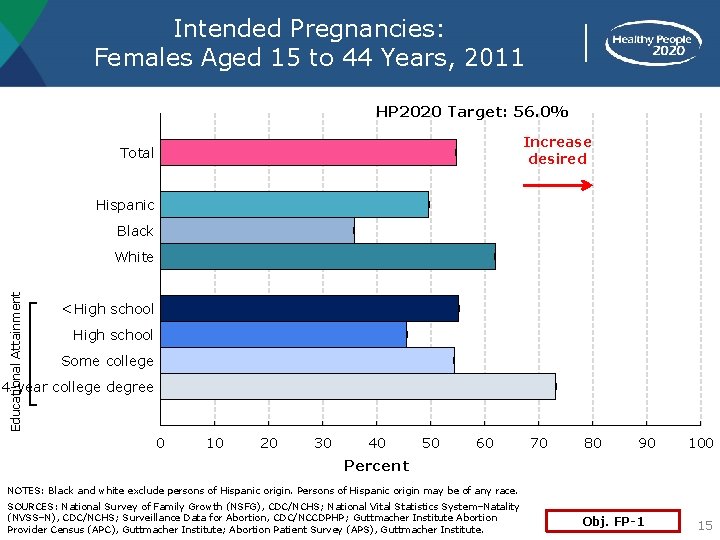
Intended Pregnancies: Females Aged 15 to 44 Years, 2011 HP 2020 Target: 56. 0% Increase desired Total Hispanic Black Educational Attainment White <High school Some college 4 -year college degree 0 10 20 30 40 50 60 70 80 90 100 Percent NOTES: Black and white exclude persons of Hispanic origin. Persons of Hispanic origin may be of any race. SOURCES: National Survey of Family Growth (NSFG), CDC/NCHS; National Vital Statistics System–Natality (NVSS–N), CDC/NCHS; Surveillance Data for Abortion, CDC/NCCDPHP ; Guttmacher Institute Abortion Provider Census (APC), Guttmacher Institute; Abortion Patient Survey (APS), Guttmacher Institute. Obj. FP-1 15
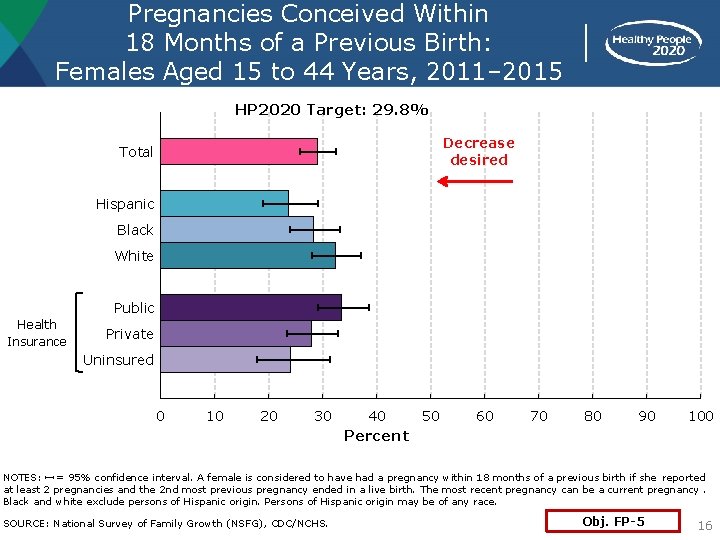
Pregnancies Conceived Within 18 Months of a Previous Birth: Females Aged 15 to 44 Years, 2011– 2015 HP 2020 Target: 29. 8% Decrease desired Total Hispanic Black White Health Insurance Public Private Uninsured 0 10 20 30 40 50 60 70 80 90 100 Percent I NOTES: = 95% confidence interval. A female is considered to have had a pregnancy within 18 months of a previous birth if she reported at least 2 pregnancies and the 2 nd most previous pregnancy ended in a live birth. The most recent pregnancy can be a current pregnancy. Black and white exclude persons of Hispanic origin. Persons of Hispanic origin may be of any race. SOURCE: National Survey of Family Growth (NSFG), CDC/NCHS. Obj. FP-5 16
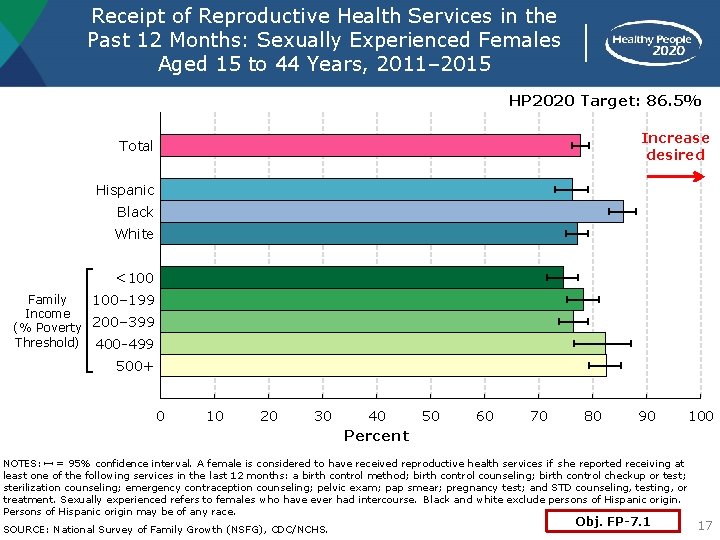
Receipt of Reproductive Health Services in the Past 12 Months: Sexually Experienced Females Aged 15 to 44 Years, 2011– 2015 HP 2020 Target: 86. 5% Increase desired Total Hispanic Black White <100 Family 100– 199 Income (% Poverty 200– 399 Threshold) 400 -499 500+ 0 10 20 30 40 50 60 70 80 90 100 Percent I NOTES: = 95% confidence interval. A female is considered to have received reproductive health services if she reported receiving at least one of the following services in the last 12 months: a birth control method; birth control counseling; birth control checkup or test; sterilization counseling; emergency contraception counseling; pelvic exam; pap smear; pregnancy test; and STD counseling, testing, or treatment. Sexually experienced refers to females who have ever had intercourse. Black and white exclude persons of Hispanic origin. Persons of Hispanic origin may be of any race. SOURCE: National Survey of Family Growth (NSFG), CDC/NCHS. Obj. FP-7. 1 17
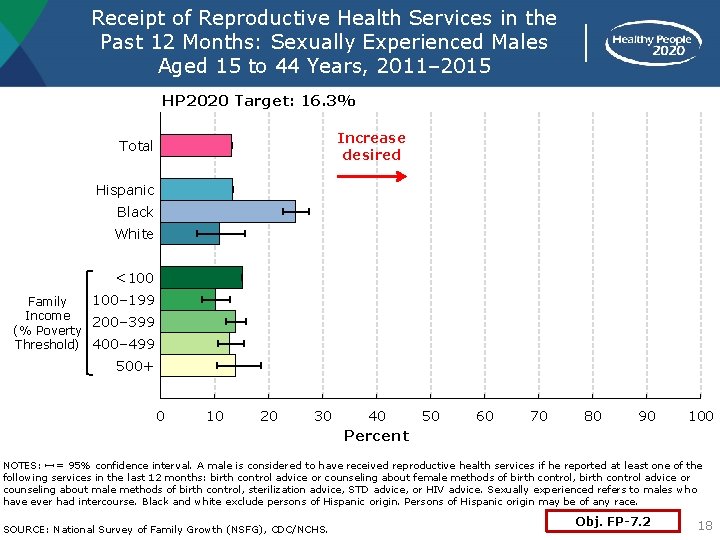
Receipt of Reproductive Health Services in the Past 12 Months: Sexually Experienced Males Aged 15 to 44 Years, 2011– 2015 HP 2020 Target: 16. 3% Increase desired Total Hispanic Black White <100 Family 100– 199 Income 200– 399 (% Poverty Threshold) 400– 499 500+ 0 10 20 30 40 50 60 70 80 90 100 Percent I NOTES: = 95% confidence interval. A male is considered to have received reproductive health services if he reported at least one of the following services in the last 12 months: birth control advice or counseling about female methods of birth control, birth control advice or counseling about male methods of birth control, sterilization advice, STD advice, or HIV advice. Sexually experienced refers to males who have ever had intercourse. Black and white exclude persons of Hispanic origin. Persons of Hispanic origin may be of any race. SOURCE: National Survey of Family Growth (NSFG), CDC/NCHS. Obj. FP-7. 2 18
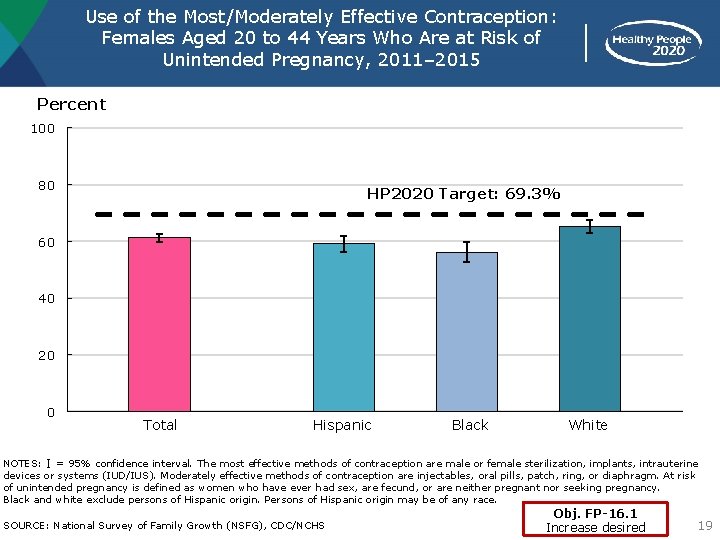
Use of the Most/Moderately Effective Contraception: Females Aged 20 to 44 Years Who Are at Risk of Unintended Pregnancy, 2011– 2015 Percent 100 80 HP 2020 Target: 69. 3% 60 40 20 0 Total Hispanic Black White NOTES: = 95% confidence interval. The most effective methods of contraception are male or female sterilization, implants, intrauterine I devices or systems (IUD/IUS). Moderately effective methods of contraception are injectables, oral pills, patch, ring, or diaphragm. At risk of unintended pregnancy is defined as women who have ever had sex, are fecund, or are neither pregnant nor seeking pregnancy. Black and white exclude persons of Hispanic origin. Persons of Hispanic origin may be of any race. SOURCE: National Survey of Family Growth (NSFG), CDC/NCHS Obj. FP-16. 1 Increase desired 19
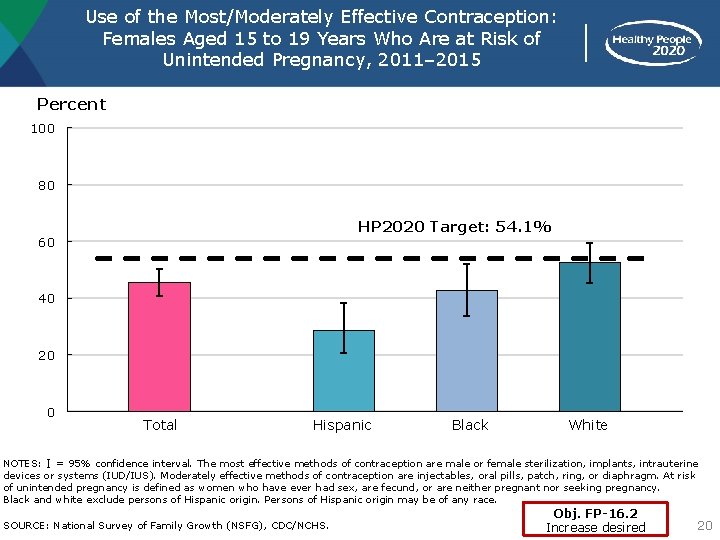
Use of the Most/Moderately Effective Contraception: Females Aged 15 to 19 Years Who Are at Risk of Unintended Pregnancy, 2011– 2015 Percent 100 80 HP 2020 Target: 54. 1% 60 40 20 0 Total Hispanic Black White NOTES: = 95% confidence interval. The most effective methods of contraception are male or female sterilization, implants, intrauterine I devices or systems (IUD/IUS). Moderately effective methods of contraception are injectables, oral pills, patch, ring, or diaphragm. At risk of unintended pregnancy is defined as women who have ever had sex, are fecund, or are neither pregnant nor seeking pregnancy. Black and white exclude persons of Hispanic origin. Persons of Hispanic origin may be of any race. SOURCE: National Survey of Family Growth (NSFG), CDC/NCHS. Obj. FP-16. 2 Increase desired 20
Presentation Overview § § § Tracking the Nation’s Progress Family Planning Maternal, Infant, and Child Health § Healthy Pregnancies - Healthy Infants § Preconception / Interconception Health and Behaviors 21
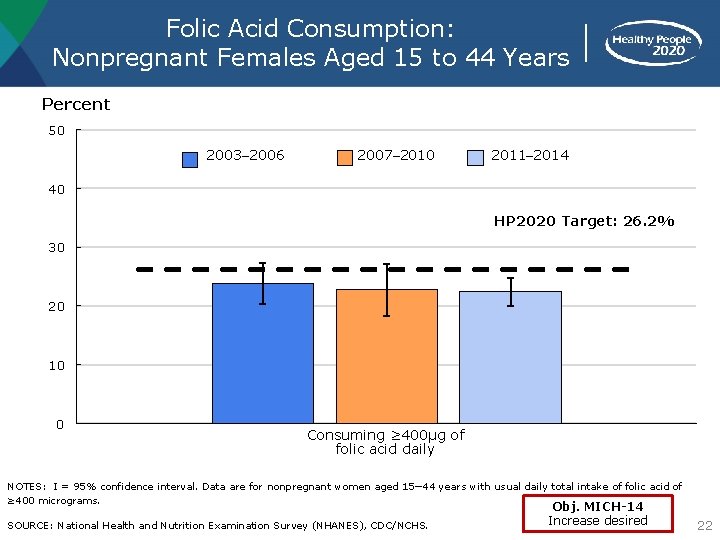
Folic Acid Consumption: Nonpregnant Females Aged 15 to 44 Years Percent 50 2003– 2006 2007– 2010 2011– 2014 40 HP 2020 Target: 26. 2% 30 20 10 0 Consuming ≥ 400µg of folic acid daily NOTES: I = 95% confidence interval. Data are for nonpregnant women aged 15 – 44 years with usual daily total intake of folic acid of ≥ 400 micrograms. SOURCE: National Health and Nutrition Examination Survey (NHANES), CDC/NCHS. Obj. MICH-14 Increase desired 22
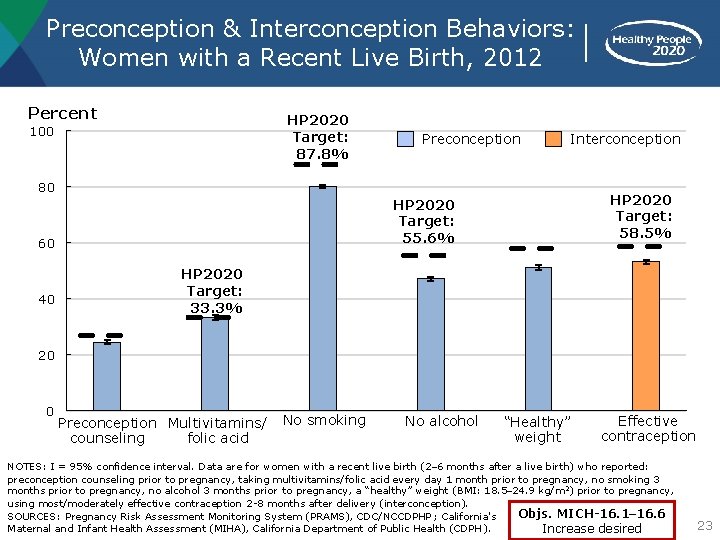
Preconception & Interconception Behaviors: Women with a Recent Live Birth, 2012 Percent HP 2020 Target: 87. 8% 100 Preconception Interconception 80 60 40 HP 2020 Target: 58. 5% HP 2020 Target: 55. 6% HP 2020 Target: 33. 3% 20 0 Preconception Multivitamins/ counseling folic acid No smoking No alcohol “Healthy” weight Effective contraception NOTES: I = 95% confidence interval. Data are for women with a recent live birth (2– 6 months after a live birth) who reported: preconception counseling prior to pregnancy, taking multivitamins/folic acid every day 1 month prior to pregnancy, no smoking 3 months prior to pregnancy, no alcohol 3 months prior to pregnancy, a “healthy” weight (BMI: 18. 5– 24. 9 kg/m 2) prior to pregnancy, using most/moderately effective contraception 2 -8 months after delivery (interconception). Objs. MICH-16. 1– 16. 6 SOURCES: Pregnancy Risk Assessment Monitoring System (PRAMS), CDC/NCCDPHP ; California's Maternal and Infant Health Assessment (MIHA), California Department of Public Health (CDPH ). Increase desired 23
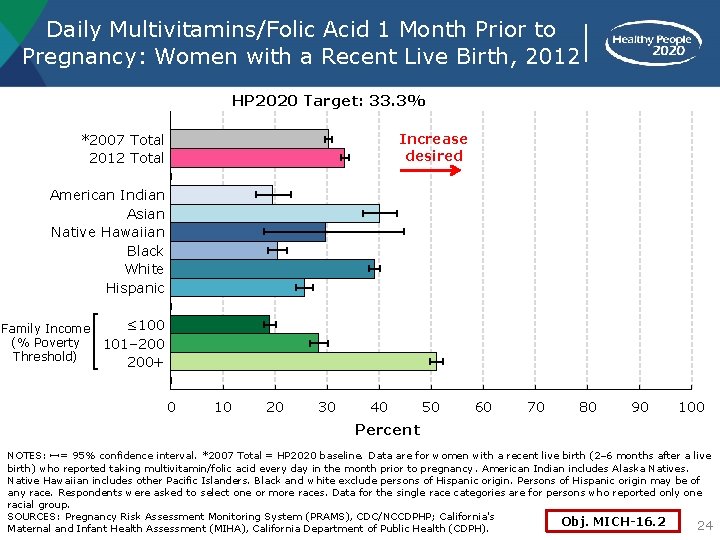
Daily Multivitamins/Folic Acid 1 Month Prior to Pregnancy: Women with a Recent Live Birth, 2012 HP 2020 Target: 33. 3% Increase desired *2007 Total 2012 Total American Indian Asian Native Hawaiian Black White Hispanic Family Income (% Poverty Threshold) ≤ 100 101– 200+ 0 10 20 30 40 50 60 70 80 90 100 Percent I NOTES: = 95% confidence interval. *2007 Total = HP 2020 baseline. Data are for women with a recent live birth (2– 6 months after a live birth) who reported taking multivitamin/folic acid every day in the month prior to pregnancy. American Indian includes Alaska Natives. Native Hawaiian includes other Pacific Islanders. Black and white exclude persons of Hispanic origin. Persons of Hispanic origin may be of any race. Respondents were asked to select one or more races. Data for the single race categories are for persons who reported only one racial group. SOURCES: Pregnancy Risk Assessment Monitoring System (PRAMS), CDC/NCCDPHP; California's Obj. MICH-16. 2 24 Maternal and Infant Health Assessment (MIHA), California Department of Public Health (CDPH).
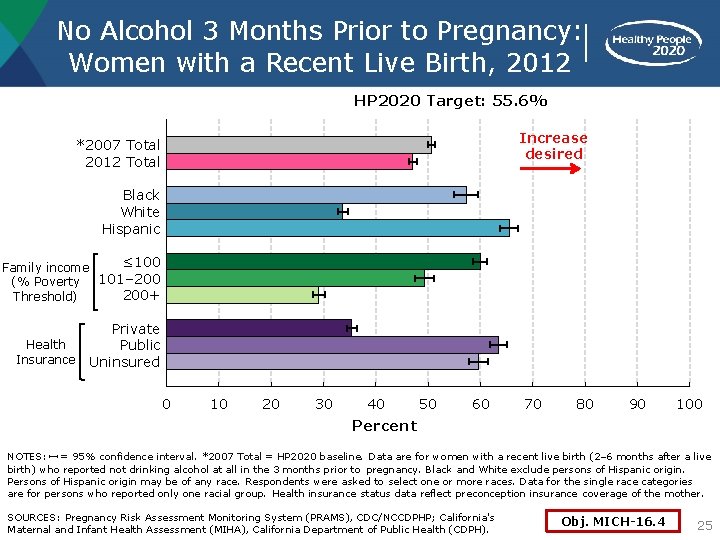
No Alcohol 3 Months Prior to Pregnancy: Women with a Recent Live Birth, 2012 HP 2020 Target: 55. 6% Increase desired *2007 Total 2012 Total Black White Hispanic ≤ 100 Family income 101– 200 (% Poverty 200+ Threshold) Private Health Public Insurance Uninsured 0 10 20 30 40 50 60 70 80 90 100 Percent I NOTES: = 95% confidence interval. *2007 Total = HP 2020 baseline. Data are for women with a recent live birth (2– 6 months after a live birth) who reported not drinking alcohol at all in the 3 months prior to pregnancy. Black and White exclude persons of Hispanic origin. Persons of Hispanic origin may be of any race. Respondents were asked to select one or more races. Data for the single race categories are for persons who reported only one racial group. Health insurance status data reflect preconception insurance coverage of the mother. SOURCES: Pregnancy Risk Assessment Monitoring System (PRAMS), CDC/NCCDPHP; California's Maternal and Infant Health Assessment (MIHA), California Department of Public Health (CDPH). Obj. MICH-16. 4 25
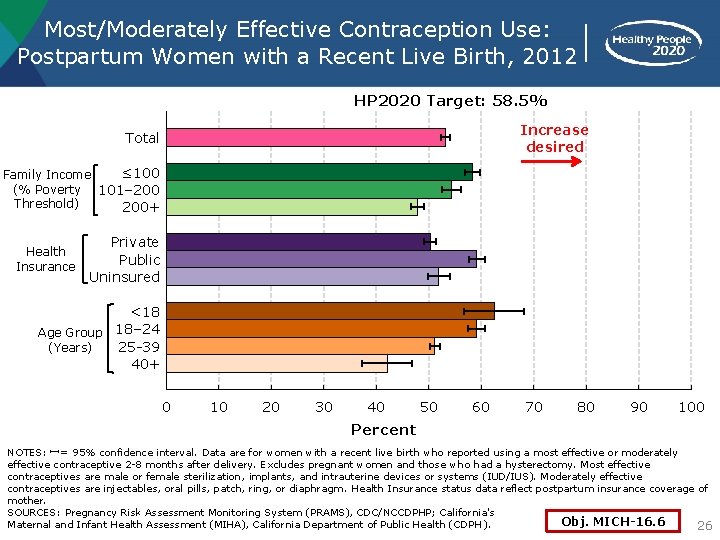
Most/Moderately Effective Contraception Use: Postpartum Women with a Recent Live Birth, 2012 HP 2020 Target: 58. 5% Increase desired Total ≤ 100 Family Income (% Poverty 101– 200 Threshold) 200+ Health Insurance Private Public Uninsured <18 Age Group 18– 24 25 -39 (Years) 40+ 0 10 20 30 40 50 60 70 80 90 100 Percent I NOTES: = 95% confidence interval. Data are for women with a recent live birth who reported using a most effective or moderately effective contraceptive 2 -8 months after delivery. Excludes pregnant women and those who had a hysterectomy. Most effective contraceptives are male or female sterilization, implants, and intrauterine devices or systems (IUD/IUS). Moderately effective contraceptives are injectables, oral pills, patch, ring, or diaphragm. Health Insurance status data reflect postpartum insurance coverage of mother. SOURCES: Pregnancy Risk Assessment Monitoring System (PRAMS), CDC/NCCDPHP; California's Obj. MICH-16. 6 Maternal and Infant Health Assessment (MIHA), California Department of Public Health (CDPH ). 26
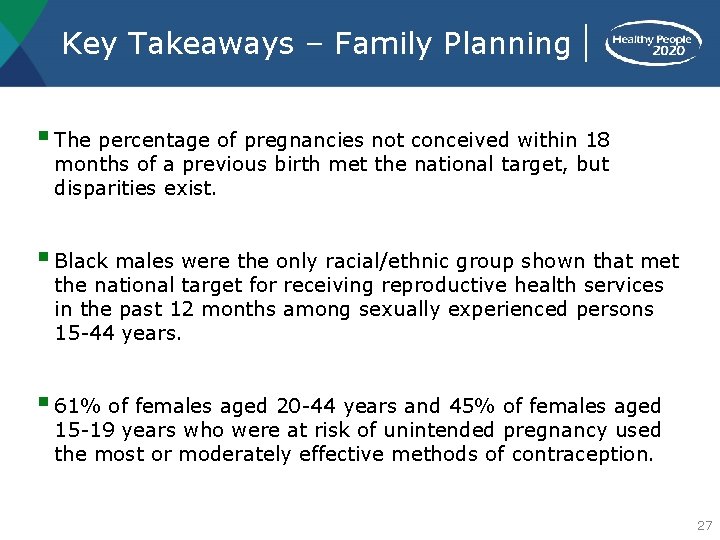
Key Takeaways – Family Planning § The percentage of pregnancies not conceived within 18 months of a previous birth met the national target, but disparities exist. § Black males were the only racial/ethnic group shown that met the national target for receiving reproductive health services in the past 12 months among sexually experienced persons 15 -44 years. § 61% of females aged 20 -44 years and 45% of females aged 15 -19 years who were at risk of unintended pregnancy used the most or moderately effective methods of contraception. 27
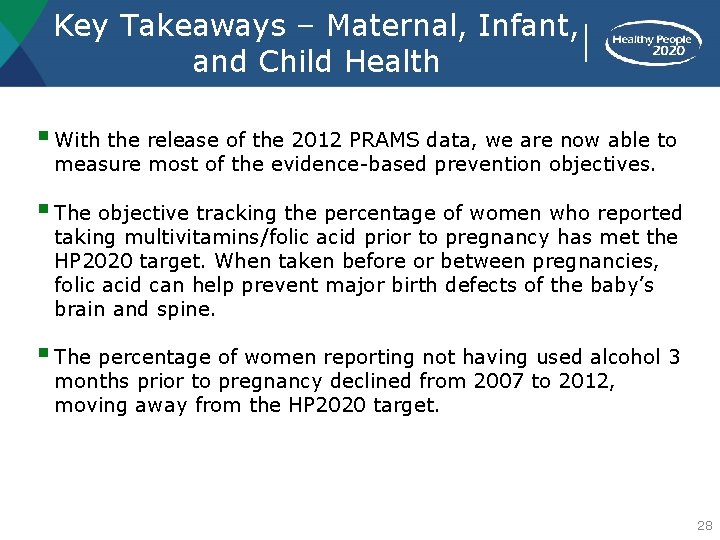
Key Takeaways – Maternal, Infant, and Child Health § With the release of the 2012 PRAMS data, we are now able to measure most of the evidence-based prevention objectives. § The objective tracking the percentage of women who reported taking multivitamins/folic acid prior to pregnancy has met the HP 2020 target. When taken before or between pregnancies, folic acid can help prevent major birth defects of the baby’s brain and spine. § The percentage of women reporting not having used alcohol 3 months prior to pregnancy declined from 2007 to 2012, moving away from the HP 2020 target. 28
Connecting Family Planning and Maternal, Infant and Child Health Teresa R. Manning, JD, MA Deputy Assistant Secretary for Population Affairs Office of Population Affairs
OPA strives to improve the health of mothers, fathers, infants, children, and the entire family through evidencebased clinical family planning services and related research and evaluation addressing the clinical, educational and counseling needs of our clients. 30
Office of Population Affairs – Title X • Title X statute authorized in 1970 • Amended the Public Health Service Act to provide for special project grants for the provision of family planning services, and related research, training, and technical assistance -cited as “Family Planning Amendments of 1970” • Priority is for services for those from low-income families • Authority under five main provisions of the Act to award grants and/or contracts o o o Section 1001 – Services (42 CFR § Subpart A) Section 1003 – Training (42 CFR § Subpart C) Section 1004 – Research Section 1005 – Information and Education Section 1008 – Prohibition of Abortion 31
Office of Population Affairs – Title X • Title X family planning services “offer a broad range of acceptable and effective family planning methods and services (including natural family planning methods, infertility services, and services for adolescents). To the extent practicable, entities which receive grants or contracts under this subsection shall encourage family participation in projects assisted under this subsection. ” • These projects provide educational, comprehensive medical, and social services necessary to aid individuals to determine freely the number and spacing of their children (42 CFR § 59. 1). 32
Office of Population Affairs – Title X • The Family Planning Annual Report (FPAR) is an annual (CY) data collection instrument which provides data and information about the Title X grant program. • 2016 Network Profile o o Grantees – 91 Service sites – 3, 898 Unduplicated clients – 4, 007, 552 (89% female/11% male) Proportion of clients under 100% FPL – 64% 33
Office of Population Affairs – Title X • The Title X Program is guided by statute & regulations and also program priorities, which include: • Assuring activities that promote positive family relationships for the purpose of increasing family participation in family planning and healthy decision -making; • Education and counseling that prioritize optimal health and life outcomes for every individual and couple; and other related health services. 34
Family Planning Services Family planning includes services for both men and women as they plan their families. • Such services include postponing, preventing, achieving, or facilitating the spacing of pregnancy. It also includes infertility services, health screenings and exams, lab tests and related health services which are important to family planning and to male and female reproductive health, improving the likelihood of a healthy pregnancy and birth, should conception occur. • They may also include information, education, and counseling related to family planning; and referral services as indicated. 35
Office of Population Affairs – Title X • Title X Family Planning Program o Importance of counseling and education: § Fertility awareness § Pre-conception counseling and care § Pregnancy counseling o Importance of high-quality family planning services § Client, couple and family-centered approach § Provider competency § System capacity 36
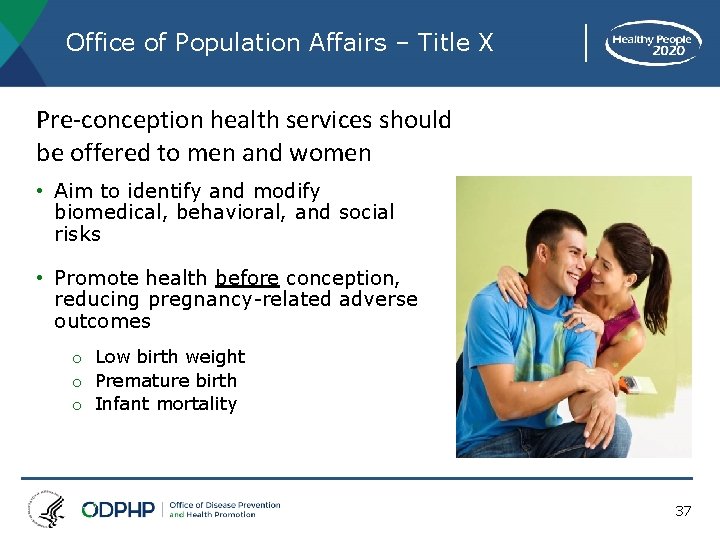
Office of Population Affairs – Title X Pre-conception health services should be offered to men and women • Aim to identify and modify biomedical, behavioral, and social risks • Promote health before conception, reducing pregnancy-related adverse outcomes o Low birth weight o Premature birth o Infant mortality 37
Office of Population Affairs – Title X • Title X Performance Measurements o OPA, as part of its annual budget justification and performance reporting process, collects data on annual performance measures. o These measures are intended to provide benchmarks for our services, training, education and publications and include increasing the number of unduplicated clients we serve and increasing client and couple satisfaction. 38
Office of Population Affairs – Title X Healthy People 2020 Progress Review Measures: o Title X seeks to provide a diversity of options for clients with the intention of improving overall service provision, increasing the numbers of those served, and expanding the breadth of services available in the states and regions. Family planning services include services for both men and women as they plan their families. 39
Office of Population Affairs – Title X • Title X Family Planning Program o Overall, OPA is continuing to concentrate on improving the quality of family planning and health services to all who want and need them, with priority for services to low-income individuals. o As the program moves forward, OPA will continue to focus on the needs of the family and client-and couple-centered care, encouraging family participation where practicable, providing preconception counseling and services, education and counseling that will lead to healthy pregnancies. 40
Thank You Teresa R. Manning, JD, MA Deputy Assistant Secretary for Population Affairs 41
CDC’s Division of Reproductive Health (DRH) RADM Wanda D. Barfield, MD, MPH, FAAP Assistant Surgeon General, US Public Health Service Director, Division of Reproductive Health National Center for Chronic Disease Prevention and Health Promotion
Our Mission To promote optimal and equitable health in women and infants through public health surveillance, research, leadership, and partnership to move science to practice. 43
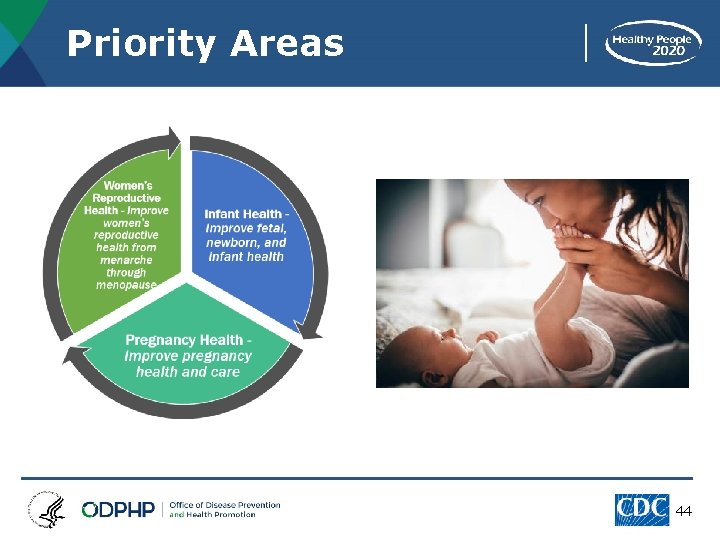
Priority Areas 44
Preconception Health Recommendations - 2006 • Convened the Preconception Care Work Group and Select Panel on Preconception Care • Developed 10 recommendations with 40 action steps • Formed the Preconception Health and Health Care (PCHHC) initiative – a public/private partnership to guide implementation of the recommendations and action steps 45
Preconception Health State Core Indicators – 2014 • Presented data on 39 of 45 of preconception health indicators selected by the Public Health Workgroup • Align with Healthy People 2020 Family Planning (FP) and Maternal, Infant, and Child Health (MICH) objectives o FP-1 o MICH-16. 2, 16. 3, 16. 4, 16. 5, 16. 6 46
MMWR Surveillance Summaries In Progress • Trends in Healthy Prepregnancy Weight — United States 20112015 (MICH-16. 5) • Receipt of Selected Preventive Services for Women and Men of Reproductive Age — United States, 2011– 2013 (FP-7. 1 and FP -7. 2) • Disparities in Preconception Health Indicators— Behavioral Risk Factor Surveillance System (2013 -2015) and Pregnancy Risk Assessment Monitoring System (2013 -2014) (FP-1, FP-16. 1, MICH-14, MICH-16. 5, MICH-16. 6) 47
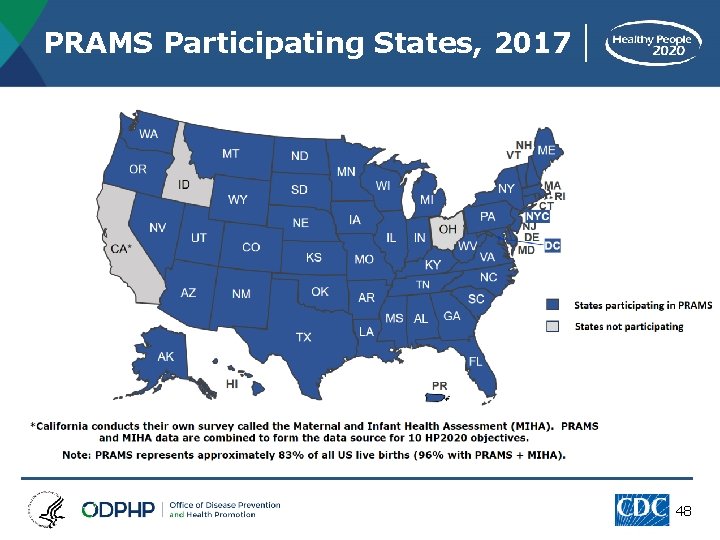
PRAMS Participating States, 2017 48
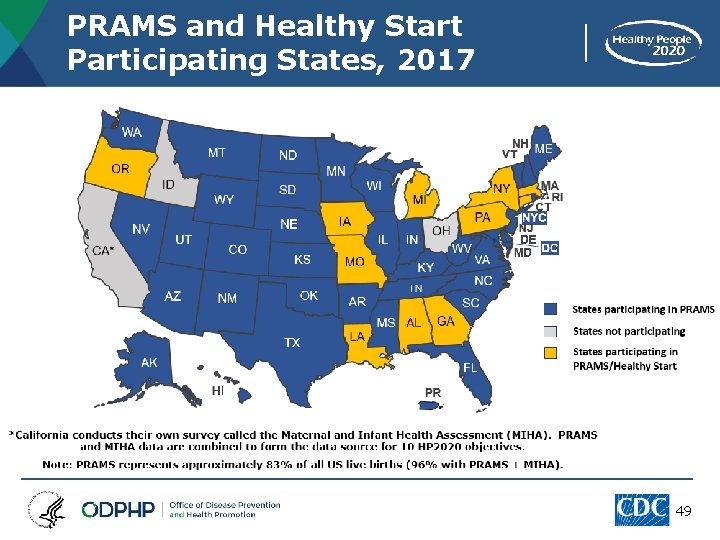
PRAMS and Healthy Start Participating States, 2017 49
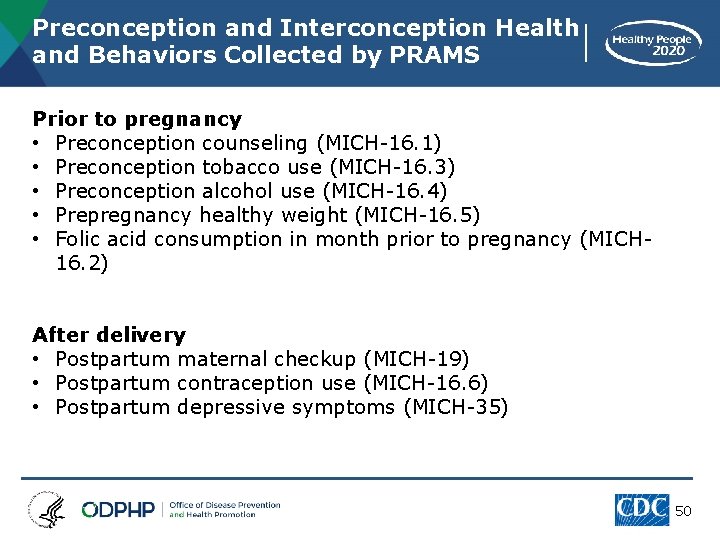
Preconception and Interconception Health and Behaviors Collected by PRAMS Prior to pregnancy • Preconception counseling (MICH-16. 1) • Preconception tobacco use (MICH-16. 3) • Preconception alcohol use (MICH-16. 4) • Prepregnancy healthy weight (MICH-16. 5) • Folic acid consumption in month prior to pregnancy (MICH 16. 2) After delivery • Postpartum maternal checkup (MICH-19) • Postpartum contraception use (MICH-16. 6) • Postpartum depressive symptoms (MICH-35) 50
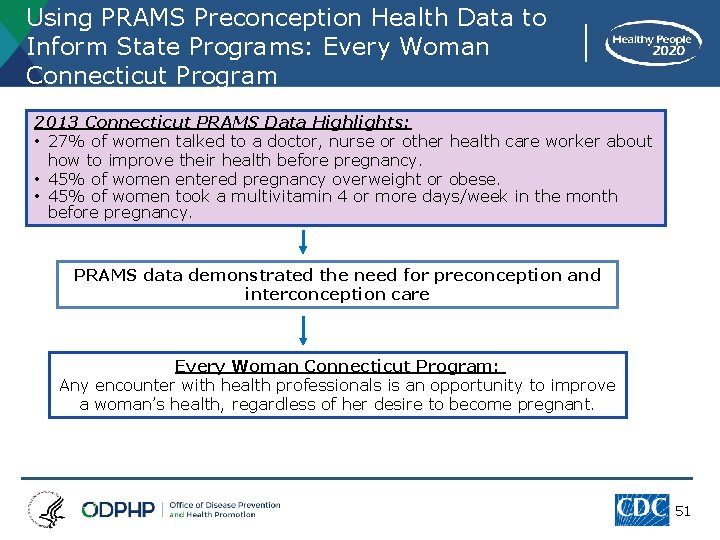
Using PRAMS Preconception Health Data to Inform State Programs: Every Woman Connecticut Program 2013 Connecticut PRAMS Data Highlights: • 27% of women talked to a doctor, nurse or other health care worker about how to improve their health before pregnancy. • 45% of women entered pregnancy overweight or obese. • 45% of women took a multivitamin 4 or more days/week in the month before pregnancy. PRAMS data demonstrated the need for preconception and interconception care Every Woman Connecticut Program: Any encounter with health professionals is an opportunity to improve a woman’s health, regardless of her desire to become pregnant. 51
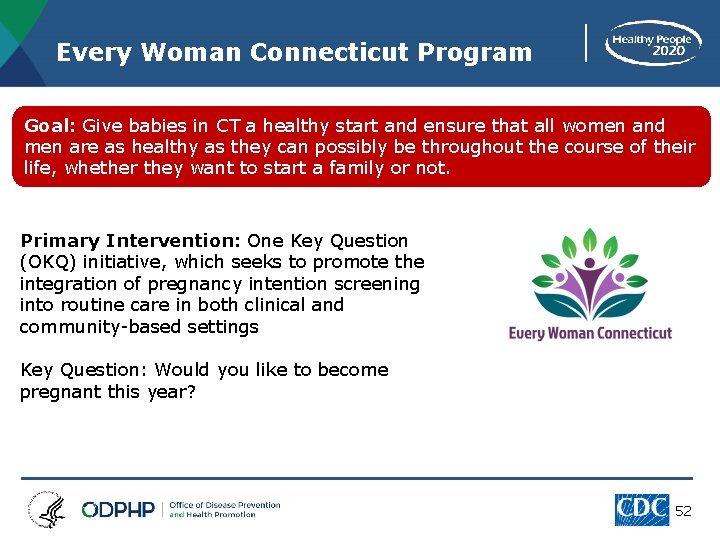
Every Woman Connecticut Program Goal: Give babies in CT a healthy start and ensure that all women and men are as healthy as they can possibly be throughout the course of their life, whether they want to start a family or not. Primary Intervention: One Key Question (OKQ) initiative, which seeks to promote the integration of pregnancy intention screening into routine care in both clinical and community-based settings Key Question: Would you like to become pregnant this year? 52
Preconception Health – Select Research and Programmatic Efforts Balance After Baby – web-based lifestyle intervention program in the first year postpartum to prevent diabetes in women diagnosed with gestational diabetes Program in Support of Moms (PRISM) – program to integrate depression screening and treatment into obstetric practices to address perinatal depression ASTHO Learning Collaborative – program focused on improving access to contraception and improving birth spacing 53
Tools and Resources q DRH Programs § https: //www. cdc. gov/reproductivehealth q PRAMS § https: //www. cdc. gov/prams/ q Every Woman Connecticut § https: //www. everywomanct. org/ q Preconception Health and Health Care Initiative Website § https: //beforeandbeyond. org/ q Preconception Health MMWRs § https: //www. cdc. gov/mmwr/pdf/rr/rr 5506. pdf § https: //www. cdc. gov/mmwr/pdf/ss/ss 6303. pdf 54
Thank you For more information, please contact: Centers for Disease Control and Prevention Telephone: 1 -800 -CDC-INFO (232 -4636)/TTY: 1 -888 -232 -6348 E-mail: cdcinfo@cdc. gov Web: http: //www. cdc. gov The findings and conclusions in this report are those of the authors and do not necessarily represent the official position of the Centers for Disease Control and Prevention. 55
HRSA’s Role in Preconception and Interconception Health Michael D. Kogan, Ph. D Director, Office of Epidemiology and Research Maternal and Child Health Bureau (MCHB) Health Resources and Services Administration (HRSA)
Health Resources and Services Administration (HRSA) • Every year, HRSA programs serve tens of millions of people, including women, mothers and their families, and those otherwise unable to access quality health care. 57
HRSA’s Programs • Various programs throughout HRSA touch on Maternal and Child Health, such as: o Bureau of Primary Health Care (BPHC) – Health Center Data collects data on women’s health, prenatal and perinatal care o HIV/AIDS Bureau (HAB) – Part D Family Centered primary care for women, infants, children and youth living with HIV • For the purposes of this presentation we will be focusing on the Maternal and Child Health Bureau programs that address preconception and interconception Health. 58
Maternal and Child Health Bureau (MCHB) Mission and Vision • At the Maternal and Child Health Bureau (MCHB), our mission is to improve the health of America’s mothers, children, children with special health care needs and families. We envision an America where all children and families are healthy and thriving. • Our Vision aligns with the broader goals of HRSA: o Improve access to quality health care and services o Strengthen the health workforce o Build healthy communities o Improve health equity o Strengthen program operations 59
MCHB Women’s Health Goals • We focus our efforts on three key strategic priorities: o Improving women’s health before, during, and beyond pregnancy and across their life course; o Improving the quality and safety of maternity care; o Improving systems of maternity care including both clinical and public health systems 60
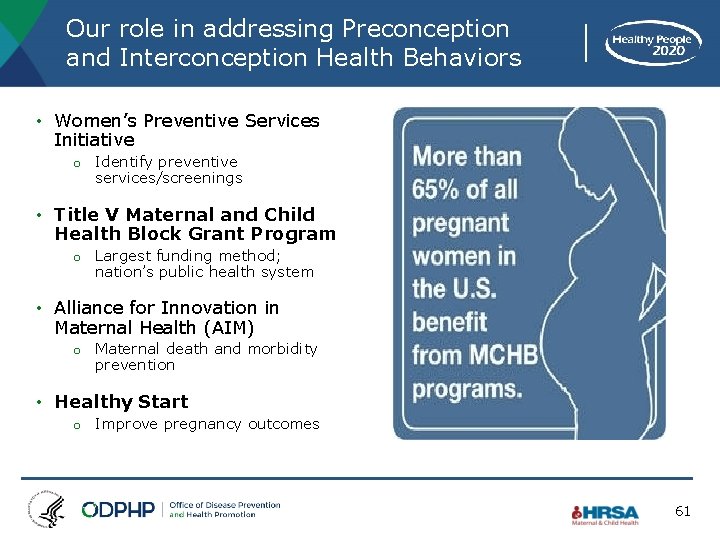
Our role in addressing Preconception and Interconception Health Behaviors • Women’s Preventive Services Initiative o Identify preventive services/screenings • Title V Maternal and Child Health Block Grant Program o Largest funding method; nation’s public health system • Alliance for Innovation in Maternal Health (AIM) o Maternal death and morbidity prevention • Healthy Start o Improve pregnancy outcomes 61
Title V Program Highlights • The Maternal and Child Health Block Grant works to improve the health of America’s children and families in all 50 states, District of Columbia (D. C. ), and the territories • The Block Grant serves more than 57 million women and children annually, including: o More than ½ of all pregnant women o 1/2 of all children, (including 97% infants) o 4 million children with special healthcare needs 62
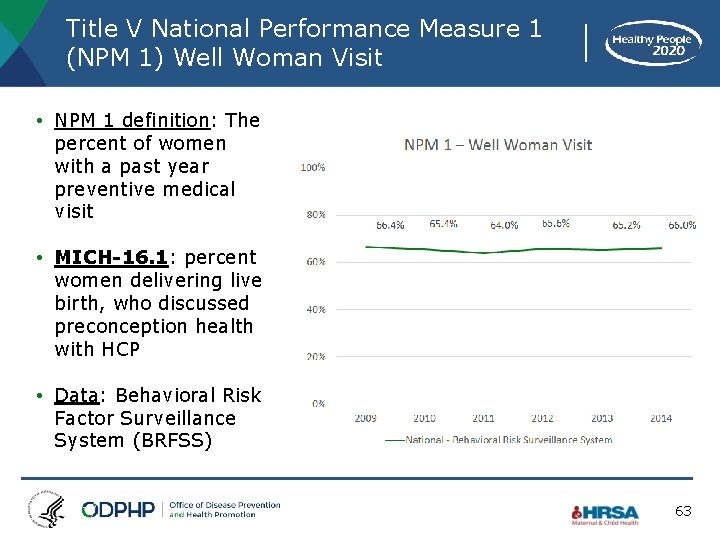
Title V National Performance Measure 1 (NPM 1) Well Woman Visit • NPM 1 definition: The percent of women with a past year preventive medical visit • MICH-16. 1: percent women delivering live birth, who discussed preconception health with HCP • Data: Behavioral Risk Factor Surveillance System (BRFSS) 63
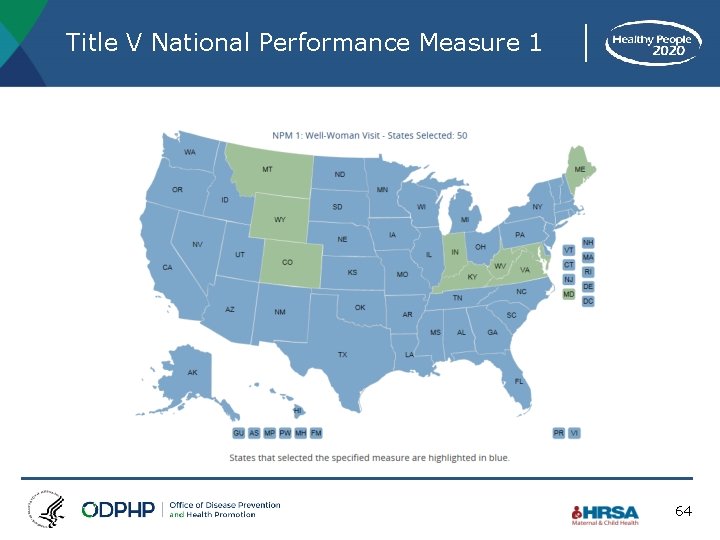
Title V National Performance Measure 1 64
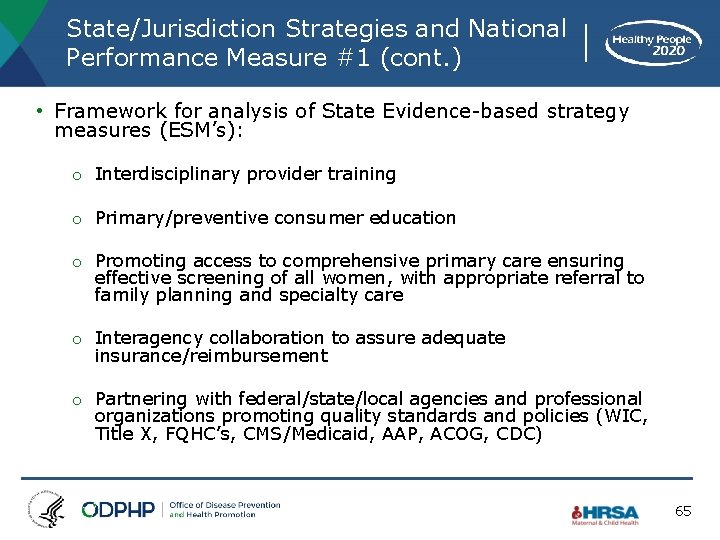
State/Jurisdiction Strategies and National Performance Measure #1 (cont. ) • Framework for analysis of State Evidence-based strategy measures (ESM’s): o Interdisciplinary provider training o Primary/preventive consumer education o Promoting access to comprehensive primary care ensuring effective screening of all women, with appropriate referral to family planning and specialty care o Interagency collaboration to assure adequate insurance/reimbursement o Partnering with federal/state/local agencies and professional organizations promoting quality standards and policies (WIC, Title X, FQHC’s, CMS/Medicaid, AAP, ACOG, CDC) 65
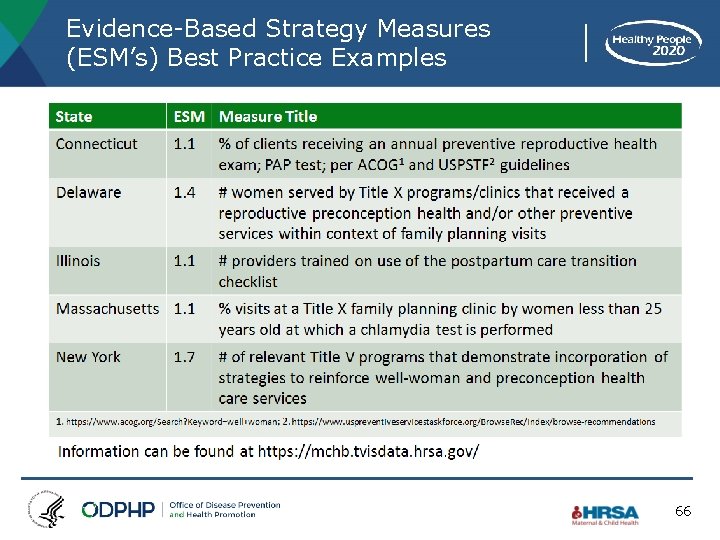
Evidence-Based Strategy Measures (ESM’s) Best Practice Examples 66
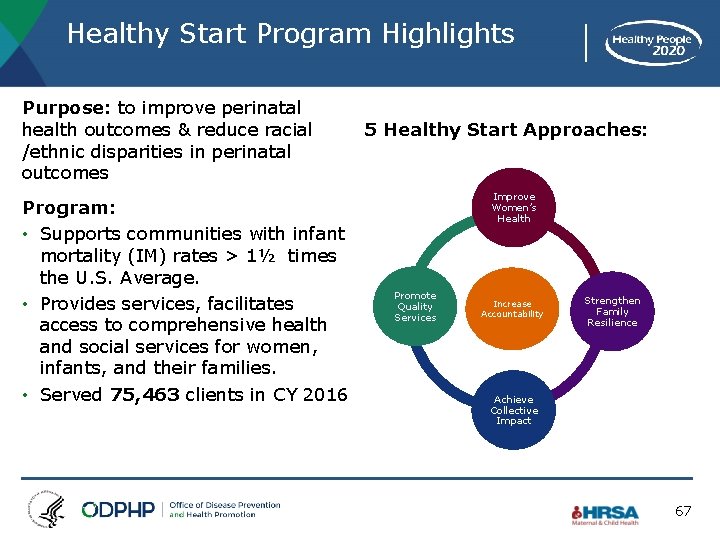
Healthy Start Program Highlights Purpose: to improve perinatal health outcomes & reduce racial /ethnic disparities in perinatal outcomes Program: • Supports communities with infant mortality (IM) rates > 1½ times the U. S. Average. • Provides services, facilitates access to comprehensive health and social services for women, infants, and their families. • Served 75, 463 clients in CY 2016 5 Healthy Start Approaches: Improve Women’s Health Promote Quality Services Increase Accountability Strengthen Family Resilience Achieve Collective Impact 1 67
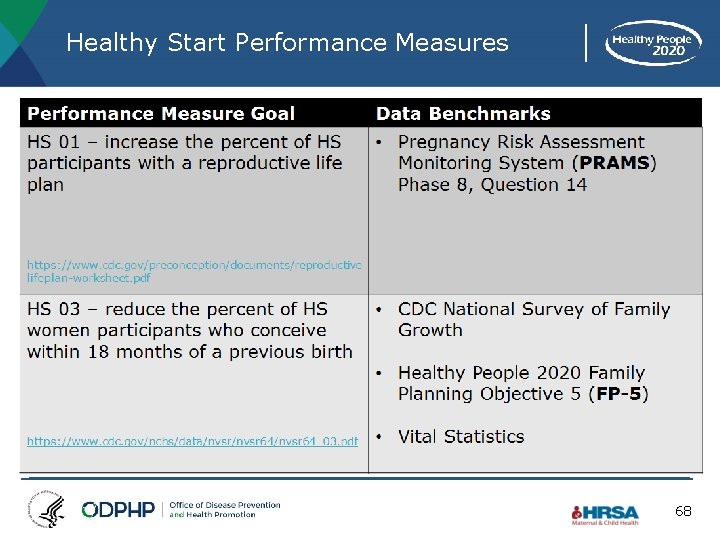
Healthy Start Performance Measures 68
Healthy Start Evaluation • Goal: To determine the impact of Healthy Start on changes in participant-level characteristics (e. g. , health services utilization, preventive behaviors, and health outcomes) • Process evaluation (data sources) o Applications and Progress Reports of Funded Grantees o National Healthy Start Program Survey (NHSPS) • Outcome evaluation (data sources) o Healthy Start Information System (Screening Forms) o Vital Records (linking infant birth and death records) o Pregnancy Risk Assessment Monitoring System (comparing HS program participants vs. non-participants) • Data analysis and reports 69
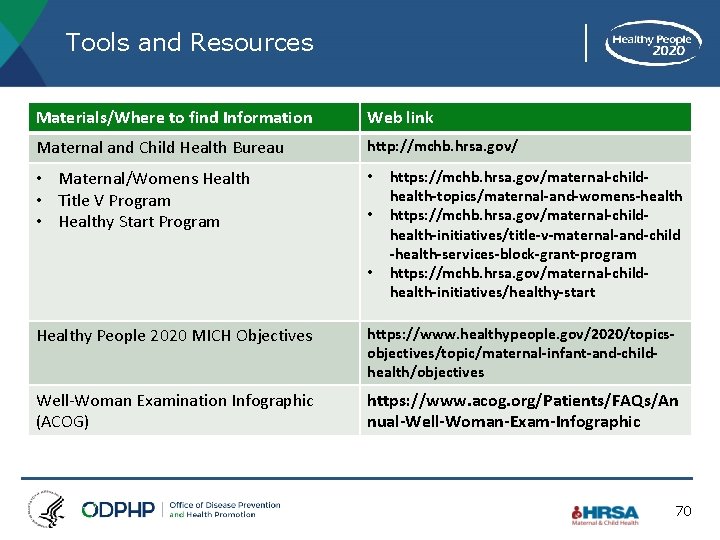
Tools and Resources Materials/Where to find Information Web link Maternal and Child Health Bureau http: //mchb. hrsa. gov/ • Maternal/Womens Health • Title V Program • Healthy Start Program • • • https: //mchb. hrsa. gov/maternal-childhealth-topics/maternal-and-womens-health https: //mchb. hrsa. gov/maternal-childhealth-initiatives/title-v-maternal-and-child -health-services-block-grant-program https: //mchb. hrsa. gov/maternal-childhealth-initiatives/healthy-start Healthy People 2020 MICH Objectives https: //www. healthypeople. gov/2020/topicsobjectives/topic/maternal-infant-and-childhealth/objectives Well-Woman Examination Infographic (ACOG) https: //www. acog. org/Patients/FAQs/An nual-Well-Woman-Exam-Infographic 70
Thank You 71
The Magnolia Project Empowering Women’s Health & Wellness Federal Healthy Start Funded by: HRSA #H 49 MC 00051 Healthy People 2020: Oct. 25, 2017
The Magnolia Project • Northeast Florida Healthy Start Coalition and federal Healthy Start program • • • Launched in Duval county, Jacksonville Florida in 1999 Address the biggest contributing factor in infant deaths – women’s health prior to pregnancy Preconception, prenatal and interconception initiative aimed at reducing racial disparities in infant mortality by providing: • • • Targeted outreach Screening Case management and risk reduction Health education Prenatal and well-woman care Primary care
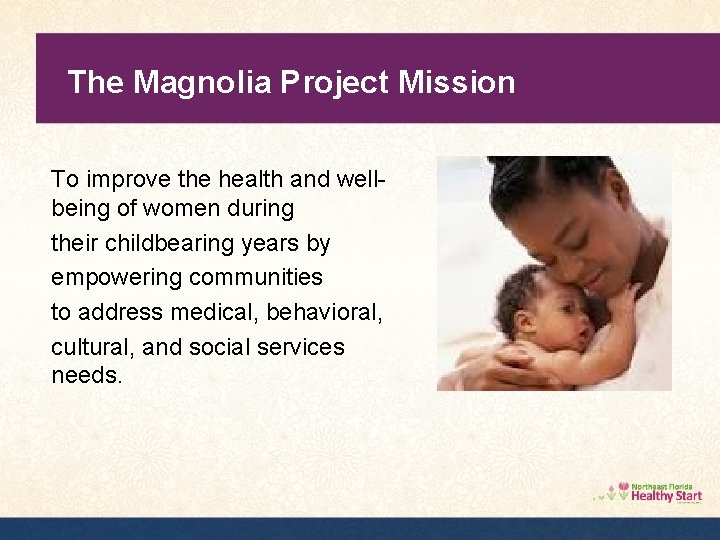
The Magnolia Project Mission To improve the health and wellbeing of women during their childbearing years by empowering communities to address medical, behavioral, cultural, and social services needs.
The Magnolia Project’s Approach • Respond to an analysis of Perinatal Periods of Risk (PPOR) that shows the health of women before pregnancy is a primary factor contributing to poor outcomes, particularly among African-Americans. • Utilize a life-course approach to impact poor birth outcomes and disparities that addresses health and development over the mothers’/families’ life course. • Broaden the focus of maternal and child health to include social equity.
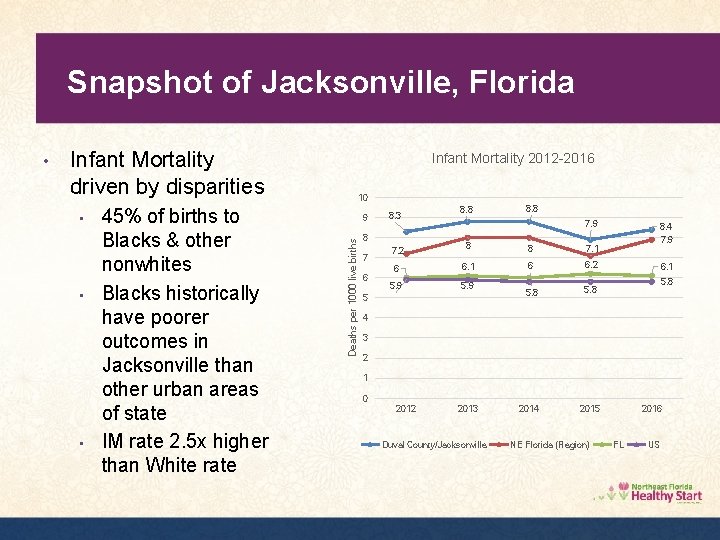
Snapshot of Jacksonville, Florida Infant Mortality driven by disparities • • • 45% of births to Blacks & other nonwhites Blacks historically have poorer outcomes in Jacksonville than other urban areas of state IM rate 2. 5 x higher than White rate Infant Mortality 2012 -2016 10 9 Deaths per 1000 live births • 8. 3 8 7 6 8. 8 7. 9 8 8 7. 1 6 6. 2 5. 9 5. 8 7. 2 5 8. 4 7. 9 6. 1 5. 8 4 3 2 1 0 2012 2013 Duval County/Jacksonville 2014 2015 NE Florida (Region) 2016 FL US
Magnolia Health Zone 1 Population • Health Zone 1 is disproportionately impacted by economic, health, and social disparities. It has the largest proportion of non-white residents, the lowest median income, highest rates of total and childhood poverty and lowest educational attainment of the 6 Health Zones. • The population is 78. 1% African-American • There are 21, 632 women of childbearing age; nearly one-fourth of families live below the federal poverty level. • There was an average of 1, 706 births annually in the project area during 2014 -2016, accounting for about 13 percent of the births in Jacksonville.
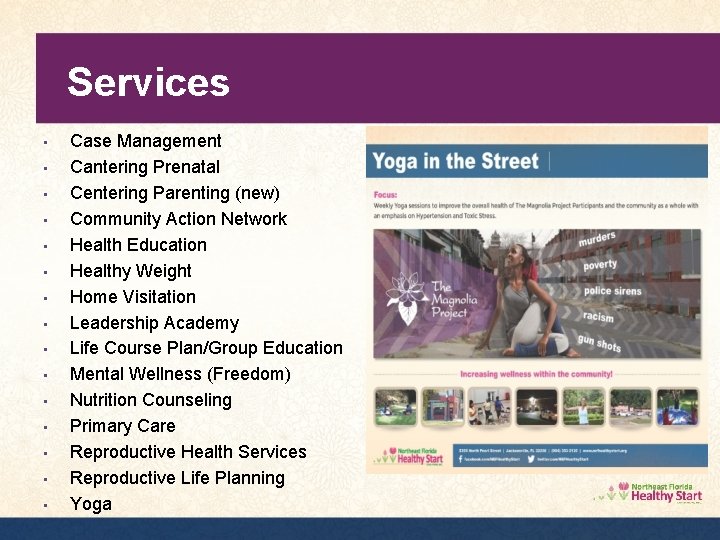
Services • • • • Case Management Cantering Prenatal Centering Parenting (new) Community Action Network Health Education Healthy Weight Home Visitation Leadership Academy Life Course Plan/Group Education Mental Wellness (Freedom) Nutrition Counseling Primary Care Reproductive Health Services Reproductive Life Planning Yoga
Life Course Plan • Life Course Plan domains: • Access to preventive health care and related risk reduction services • • Family and Community support • • • Basic reproductive health services GYN care and family planning Chronic diseases like diabetes, hypertension and obesity care Healthy relationships Connectedness with communities through civic engagement and participation. Reduction of poverty and social inequities • • • Education completion and job skills Confronting discrimination and racism Financial literacy. Adopted from the Contra Costa Health Services: 12 point plan
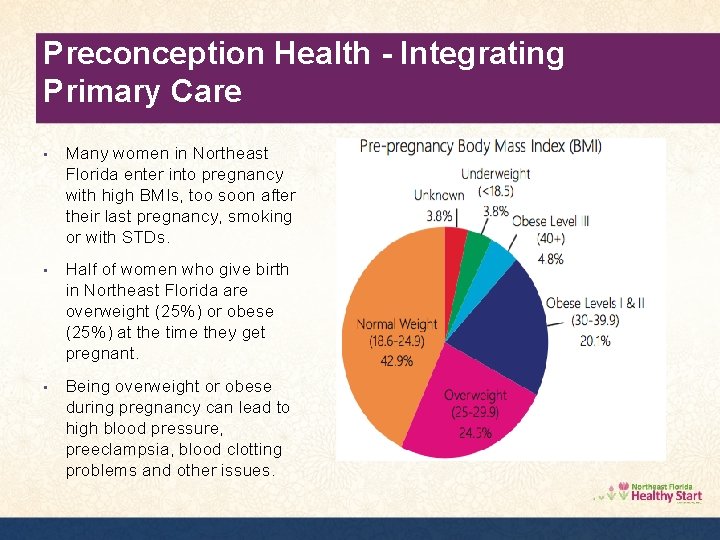
Preconception Health - Integrating Primary Care • Many women in Northeast Florida enter into pregnancy with high BMIs, too soon after their last pregnancy, smoking or with STDs. • Half of women who give birth in Northeast Florida are overweight (25%) or obese (25%) at the time they get pregnant. • Being overweight or obese during pregnancy can lead to high blood pressure, preeclampsia, blood clotting problems and other issues.
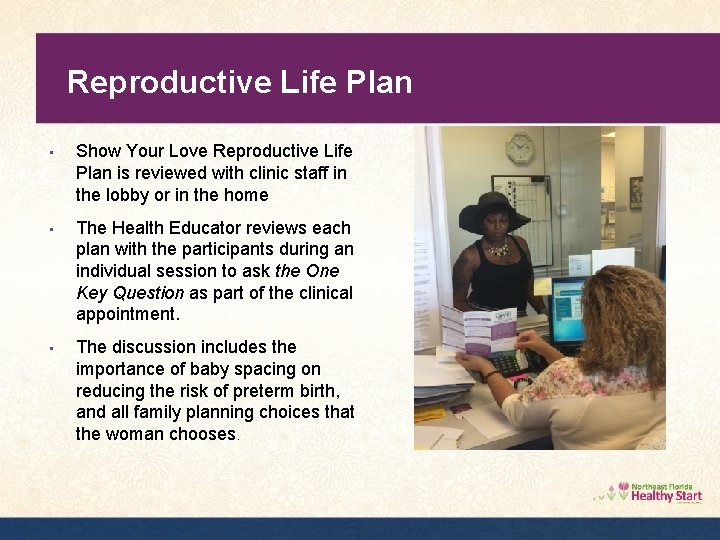
Reproductive Life Plan • Show Your Love Reproductive Life Plan is reviewed with clinic staff in the lobby or in the home • The Health Educator reviews each plan with the participants during an individual session to ask the One Key Question as part of the clinical appointment. • The discussion includes the importance of baby spacing on reducing the risk of preterm birth, and all family planning choices that the woman chooses.
HRSA MCH – Five Strategic Approaches 1. 2. 3. 4. 5. Improve Women’s Health Promote Quality Services Strengthen Family Resilience Achieve Collective Impact Increase Accountability, Quality
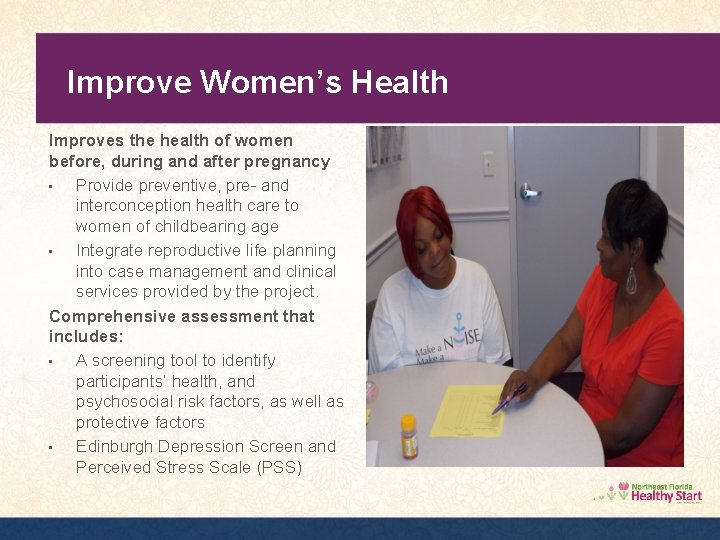
Improve Women’s Health Improves the health of women before, during and after pregnancy • Provide preventive, pre- and interconception health care to women of childbearing age • Integrate reproductive life planning into case management and clinical services provided by the project. Comprehensive assessment that includes: • A screening tool to identify participants’ health, and psychosocial risk factors, as well as protective factors • Edinburgh Depression Screen and Perceived Stress Scale (PSS)
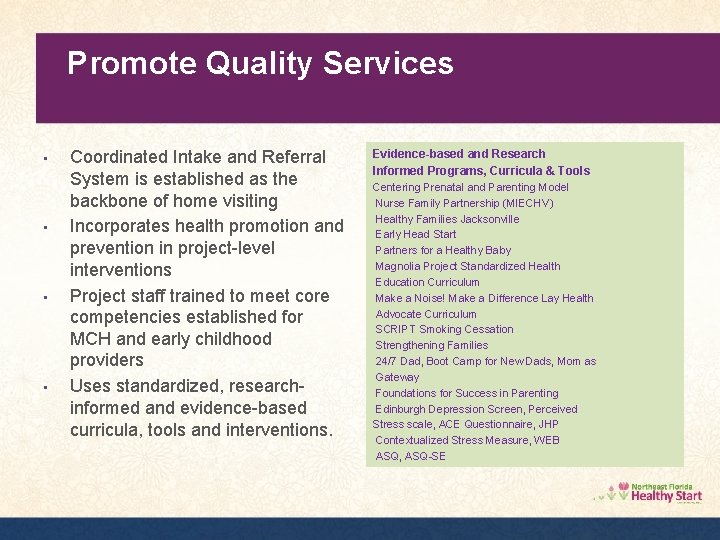
Promote Quality Services • • Coordinated Intake and Referral System is established as the backbone of home visiting Incorporates health promotion and prevention in project-level interventions Project staff trained to meet core competencies established for MCH and early childhood providers Uses standardized, researchinformed and evidence-based curricula, tools and interventions. Evidence-based and Research Informed Programs, Curricula & Tools Centering Prenatal and Parenting Model Nurse Family Partnership (MIECHV) Healthy Families Jacksonville Early Head Start Partners for a Healthy Baby Magnolia Project Standardized Health Education Curriculum Make a Noise! Make a Difference Lay Health Advocate Curriculum SCRIPT Smoking Cessation Strengthening Families 24/7 Dad, Boot Camp for New Dads, Mom as Gateway Foundations for Success in Parenting Edinburgh Depression Screen, Perceived Stress scale, ACE Questionnaire, JHP Contextualized Stress Measure, WEB ASQ, ASQ-SE
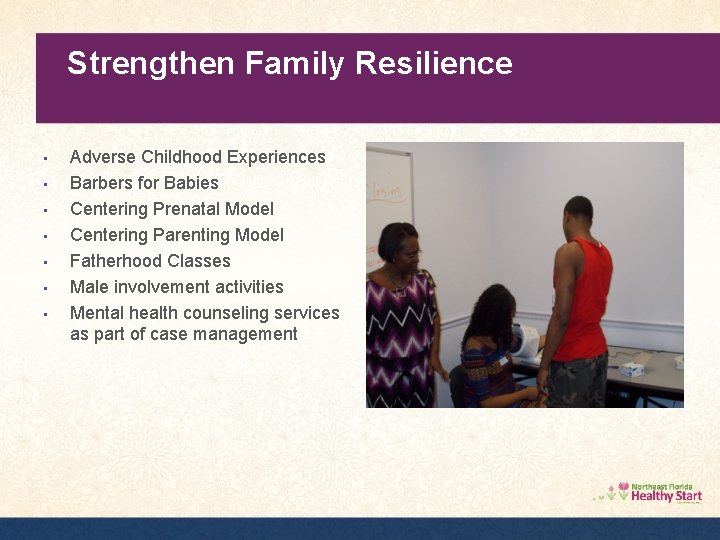
Strengthen Family Resilience • • Adverse Childhood Experiences Barbers for Babies Centering Prenatal Model Centering Parenting Model Fatherhood Classes Male involvement activities Mental health counseling services as part of case management
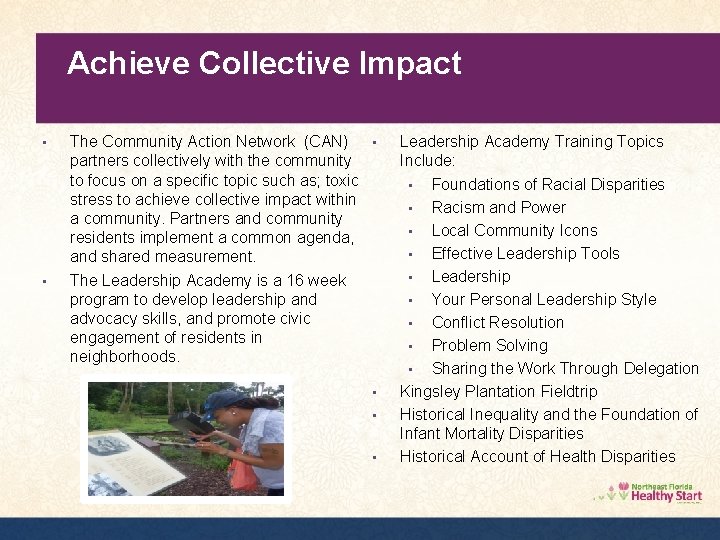
Achieve Collective Impact • • The Community Action Network (CAN) partners collectively with the community to focus on a specific topic such as; toxic stress to achieve collective impact within a community. Partners and community residents implement a common agenda, and shared measurement. The Leadership Academy is a 16 week program to develop leadership and advocacy skills, and promote civic engagement of residents in neighborhoods. • • Leadership Academy Training Topics Include: • Foundations of Racial Disparities • Racism and Power • Local Community Icons • Effective Leadership Tools • Leadership • Your Personal Leadership Style • Conflict Resolution • Problem Solving • Sharing the Work Through Delegation Kingsley Plantation Fieldtrip Historical Inequality and the Foundation of Infant Mortality Disparities Historical Account of Health Disparities
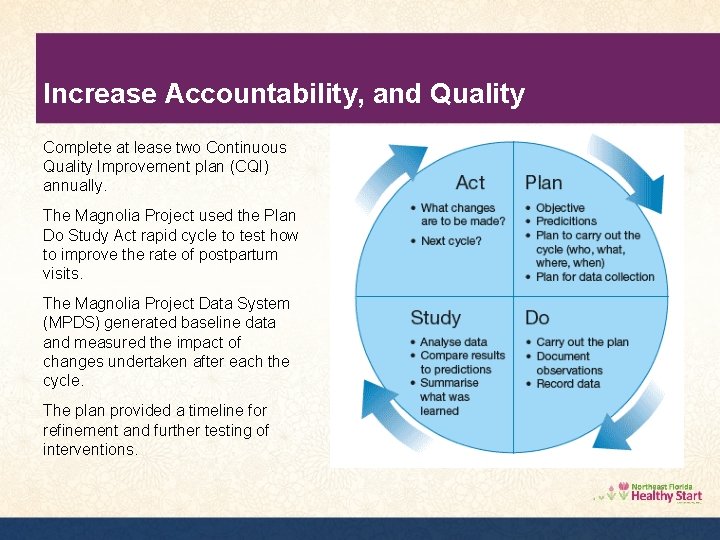
Increase Accountability, and Quality Complete at lease two Continuous Quality Improvement plan (CQI) annually. The Magnolia Project used the Plan Do Study Act rapid cycle to test how to improve the rate of postpartum visits. The Magnolia Project Data System (MPDS) generated baseline data and measured the impact of changes undertaken after each the cycle. The plan provided a timeline for refinement and further testing of interventions.
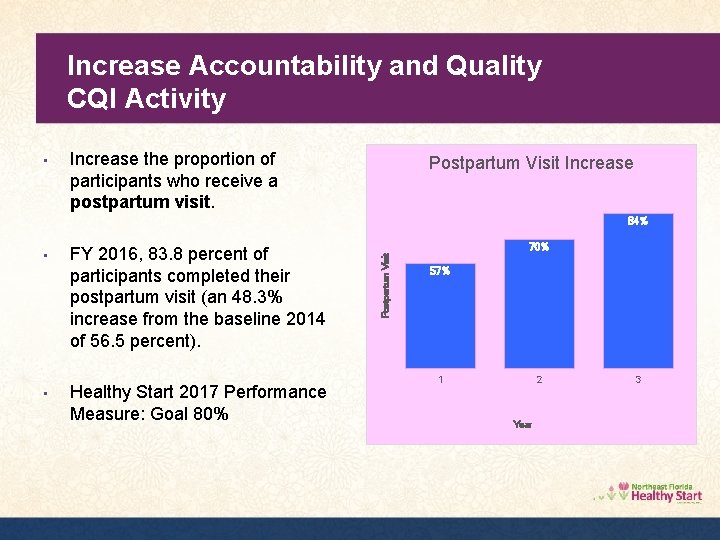
Increase Accountability and Quality CQI Activity • Increase the proportion of participants who receive a postpartum visit. Postpartum Visit Increase 84% • FY 2016, 83. 8 percent of participants completed their postpartum visit (an 48. 3% increase from the baseline 2014 of 56. 5 percent). Healthy Start 2017 Performance Measure: Goal 80% 70% Postpartum Visit • 57% 1 2 Year 3
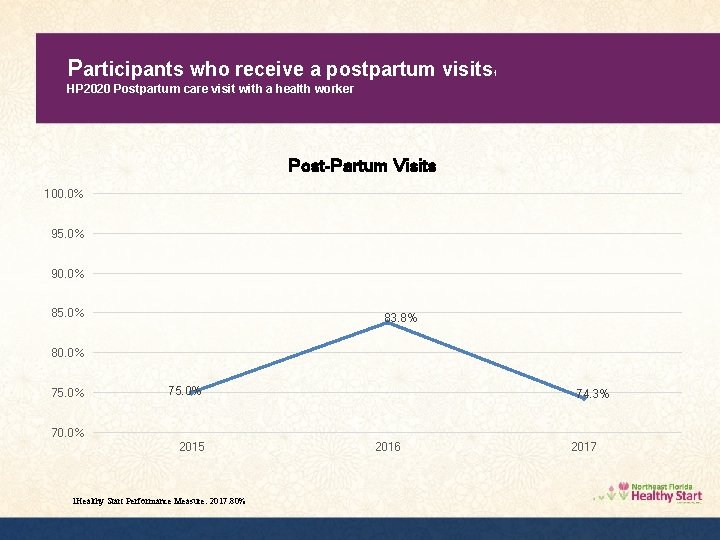
Participants who receive a postpartum visits 1 HP 2020 Postpartum care visit with a health worker Post-Partum Visits 100. 0% 95. 0% 90. 0% 85. 0% 83. 8% 80. 0% 75. 0% 74. 3% 70. 0% 2015 1 Healthy Start Performance Measure: 2017: 80% 2016 2017
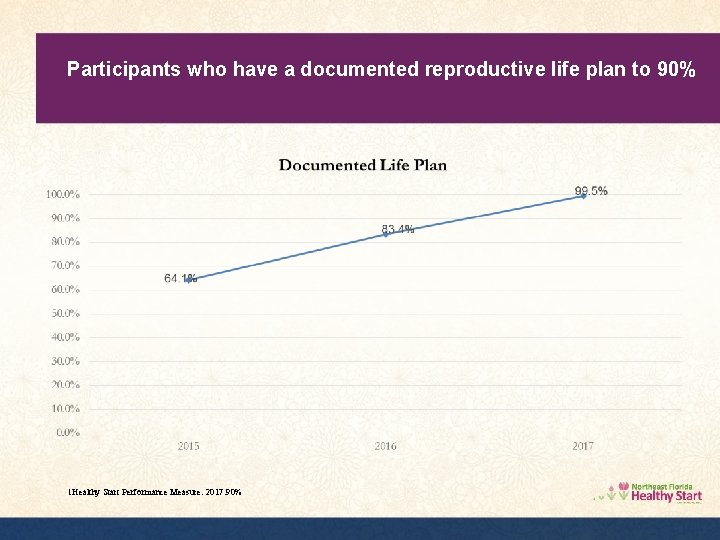
Participants who have a documented reproductive life plan to 90% 1 Healthy Start Performance Measure: 2017: 90%
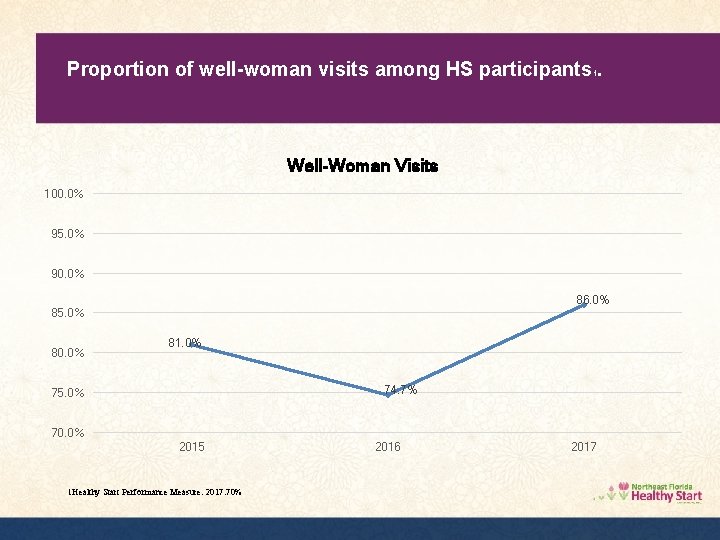
Proportion of well-woman visits among HS participants. 1 Well-Woman Visits 100. 0% 95. 0% 90. 0% 86. 0% 85. 0% 80. 0% 81. 0% 74. 7% 75. 0% 70. 0% 2015 1 Healthy Start Performance Measure: 2017: 70% 2016 2017
Healthy People 2020 Objectives § § MICH-14 Increase the proportion of women of childbearing potential with intake of at least 400 µg of folic acid daily from fortified foods or dietary supplements. MICH-16. 3 Increase the proportion of women delivering a live birth who did not smoke prior to pregnancy § Screening and health education conducted on the risk factors of smoking § Refer to smoking resources for assistance § SCRIPT – The Smoking Cessation and Reduction in Pregnancy Treatment Program MICH-16. 4 Increase the proportion of women delivering a live birth who did not drink alcohol prior to pregnancy § Screening and health education conducted on the risk factors of alcohol and drug use § Refer to drug treatment resources for assistance MICH-16. 5 Increase the proportion of women delivering a live birth who had a healthy weight prior to pregnancy § Health educator tracks BMI of clinic participants and provide health education and exercise, and nutrition resources.
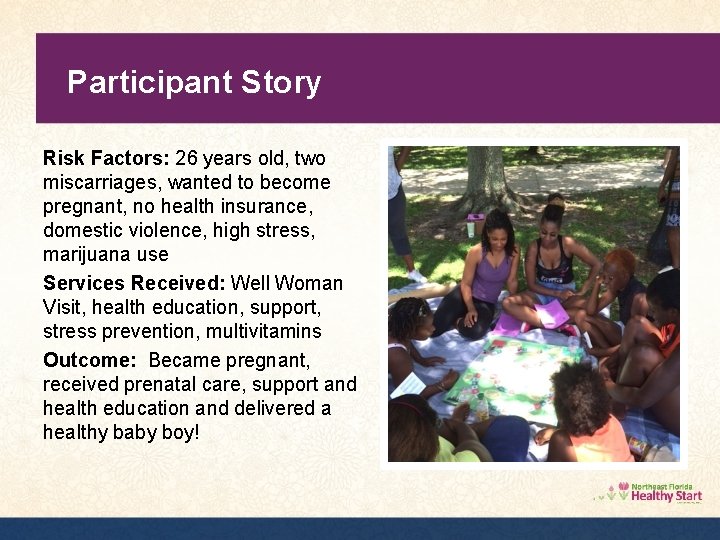
Participant Story Risk Factors: 26 years old, two miscarriages, wanted to become pregnant, no health insurance, domestic violence, high stress, marijuana use Services Received: Well Woman Visit, health education, support, stress prevention, multivitamins Outcome: Became pregnant, received prenatal care, support and health education and delivered a healthy baby boy!
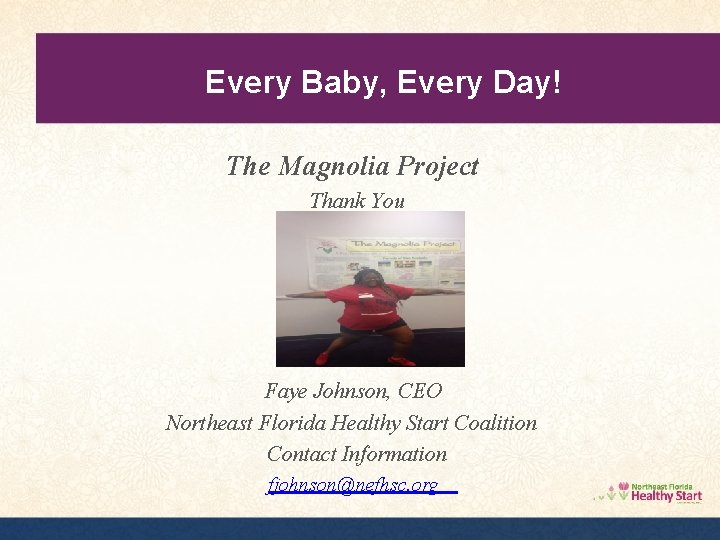
Every Baby, Every Day! The Magnolia Project Thank You Faye Johnson, CEO Northeast Florida Healthy Start Coalition Contact Information fjohnson@nefhsc. org
Roundtable Discussion Carter Blakey Deputy Director Office of Disease Prevention and Health Promotion U. S. Department of Health and Human Services
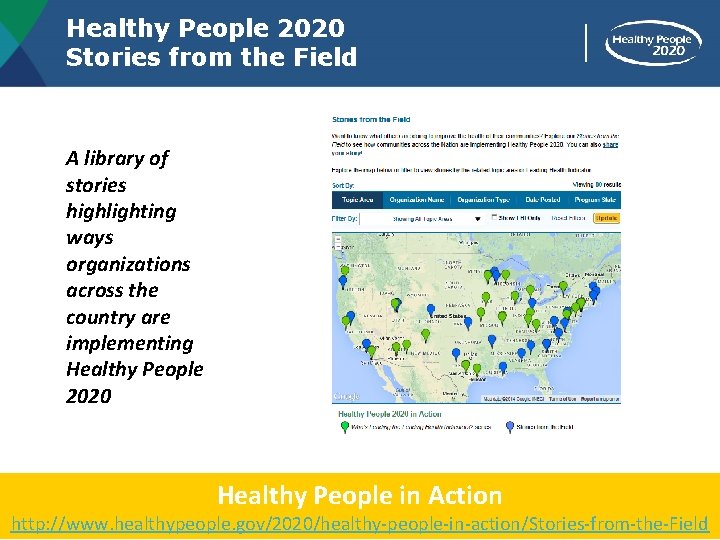
Healthy People 2020 Stories from the Field A library of stories highlighting ways organizations across the country are implementing Healthy People 2020 Healthy People in Action 96 http: //www. healthypeople. gov/2020/healthy-people-in-action/Stories-from-the-Field
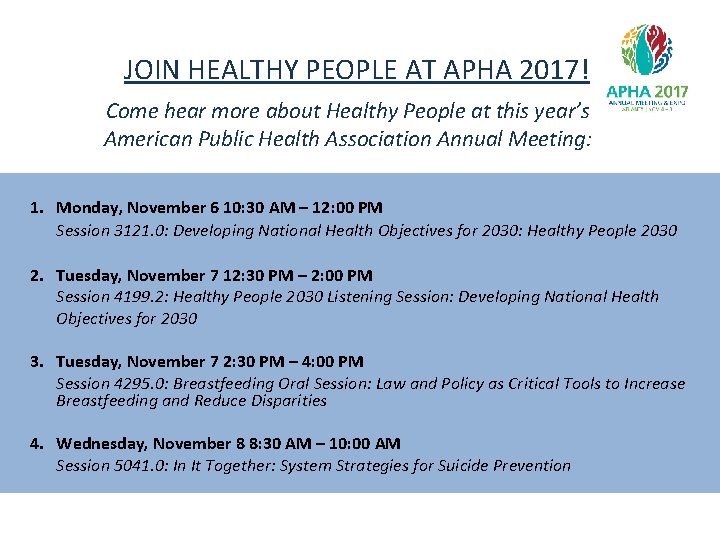
JOIN HEALTHY PEOPLE AT APHA 2017! Come hear more about Healthy People at this year’s American Public Health Association Annual Meeting: 1. Monday, November 6 10: 30 AM – 12: 00 PM Session 3121. 0: Developing National Health Objectives for 2030: Healthy People 2030 2. Tuesday, November 7 12: 30 PM – 2: 00 PM Session 4199. 2: Healthy People 2030 Listening Session: Developing National Health Objectives for 2030 3. Tuesday, November 7 2: 30 PM – 4: 00 PM Session 4295. 0: Breastfeeding Oral Session: Law and Policy as Critical Tools to Increase Breastfeeding and Reduce Disparities 4. Wednesday, November 8 8: 30 AM – 10: 00 AM Session 5041. 0: In It Together: System Strategies for Suicide Prevention
Who’s Leading the Leading Health Indicators? Webinar Please join us on Thursday, November 16, 2017 from 12: 00 to 1: 00 pm ET for a Healthy People 2020 Who’s Leading the Leading Health Indicators? webinar on Nutrition, Physical Activity, and Obesity. Registration on Healthy. People. gov available soon 98
Progress Review Planning Group • Susan Moskosky (HHS/OASH) • David Huang (CDC/NCHS) • David Johnson (HHS/OASH) • Leda Gurley (CDC/NCHS) • Elizabeth Jackson • Holly Shulman (CDC/NCCDPHP) (CDC/NCHS) • Mark Montgomery • Sheree Boulet (CDC/NCCDPHP) (CDC/NCHS) • Cheryl Broussard • Cheryl Rose (CDC/NCHS) (CDC/NCBDDD) • Carter Blakey (HHS/ODPHP) • Reem Ghandour (HRSA) • Theresa Devine (HHS/ODPHP) • Jessica Minnaert (HRSA) • Tiffani Kigenyi (HHS/ODPHP) • Gladys Martinez (CDC/NCHS) • Ayanna Johnson • Stan Lehman (CDC/OD) (HHS/ODPHP) • Emily De. Coster (HRSA) • Yen Lin (HHS/ODPHP) • Irma Arispe (CDC/NCHS) 99
Stay Connected JOIN THE HEALTHY PEOPLE LISTSERV & CONSORTIUM WEB healthypeople. gov EMAIL healthypeople@hhs. gov TWITTER @gohealthypeople YOUTUBE ODPHP (search “healthy people”) 100
Appendix
Office of Population Affairs – Title X Appendix Slide • 2016 Title X Network Profile o Grantees – 91; Service sites – 3, 898 o Unduplicated clients – 4, 007, 552 § Clients: 3. 553 M (89%) Females and 454 K Males (11%) § Clients under the age of 25 : 1. 75 M (43. 7% of total) o Proportion of clients under 100% FPL – 64% o Title X family planning services are provided in : § All 50 states and Washington, DC § Puerto Rico and the Virgin Islands § American Samoa, Guam, the Commonwealth of the Northern Mariana Islands, Republic of Palau, Republic of the Marshall Islands and the Federated States of Micronesia 102
Appendix: Every Woman Connecticut Program One Key Question: “Would you like to become pregnant this year? ” • Customized technical assistance, implementation toolkit, and materials on implementing pre-/inter-conception health interventions • Patient/Client materials to support providers on topics related to contraceptive options, birth spacing, and preconception health • Integration into home visitation programs, adolescent well visits, routine OB/GYN visits, well child visits, mental health and addiction services, oral health visits, and community health programs 103
- Slides: 103