
Progress in Sensor Development Marvin Stone OSU Sensor
- Slides: 22
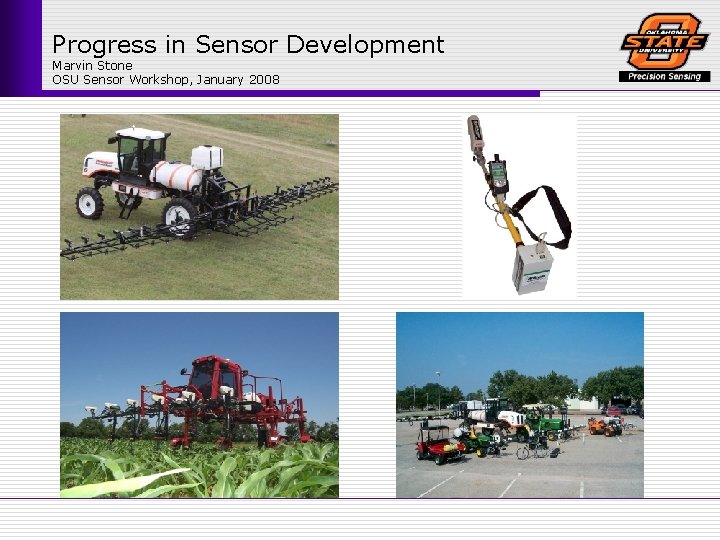
Progress in Sensor Development Marvin Stone OSU Sensor Workshop, January 2008
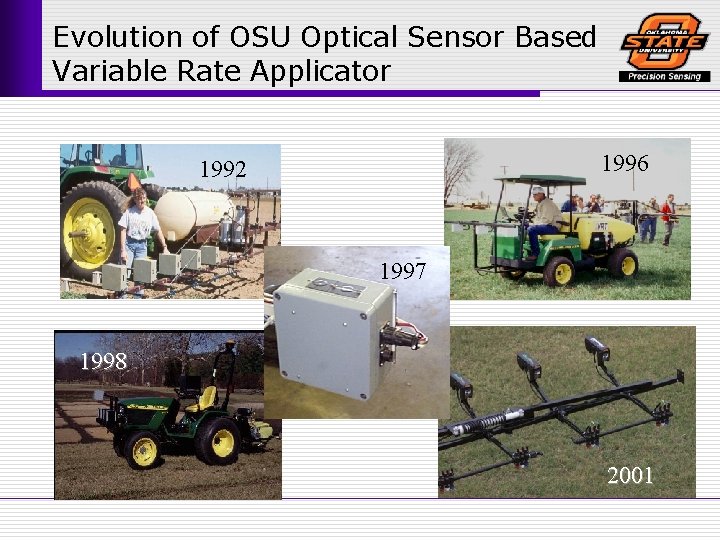
Evolution of OSU Optical Sensor Based Variable Rate Applicator 1996 1992 1997 1998 2001
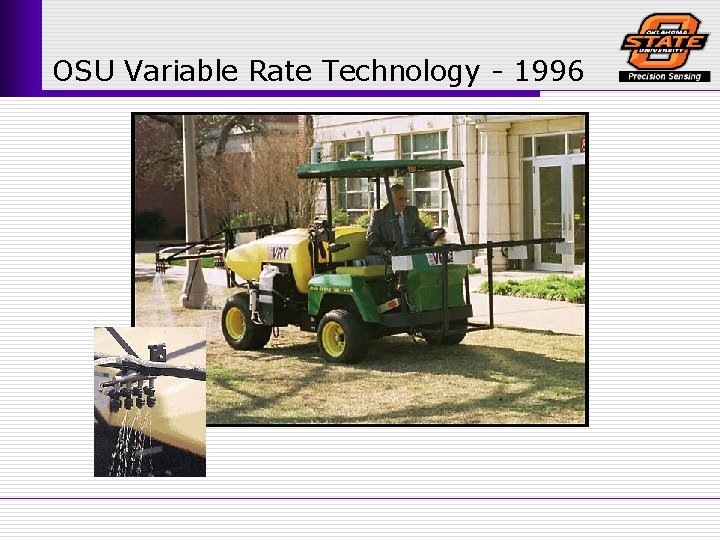
OSU Variable Rate Technology - 1996
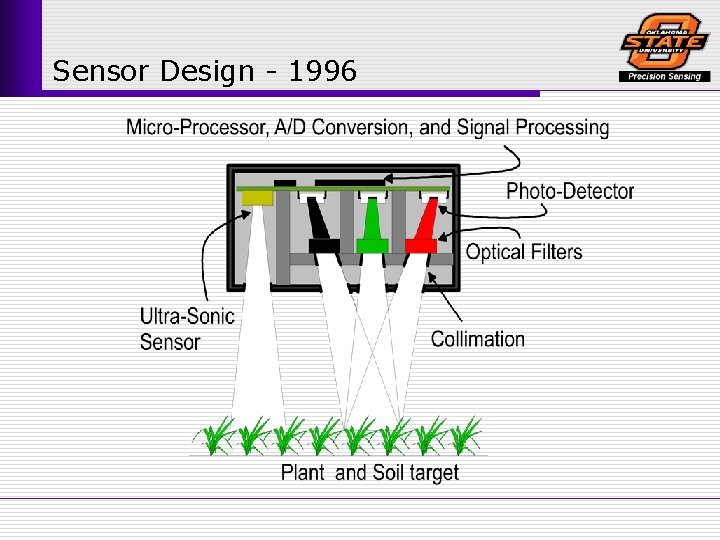
Sensor Design - 1996
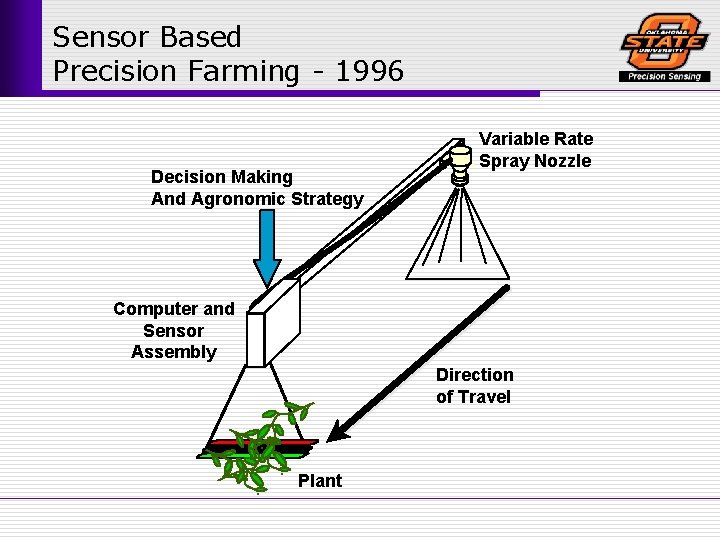
Sensor Based Precision Farming - 1996 Decision Making And Agronomic Strategy Variable Rate Spray Nozzle Computer and Sensor Assembly Direction of Travel Plant
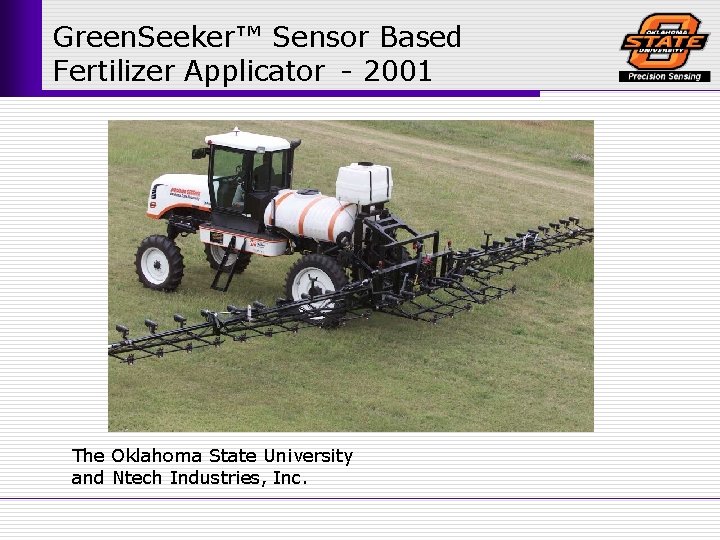
Green. Seeker™ Sensor Based Fertilizer Applicator - 2001 The Oklahoma State University and Ntech Industries, Inc.
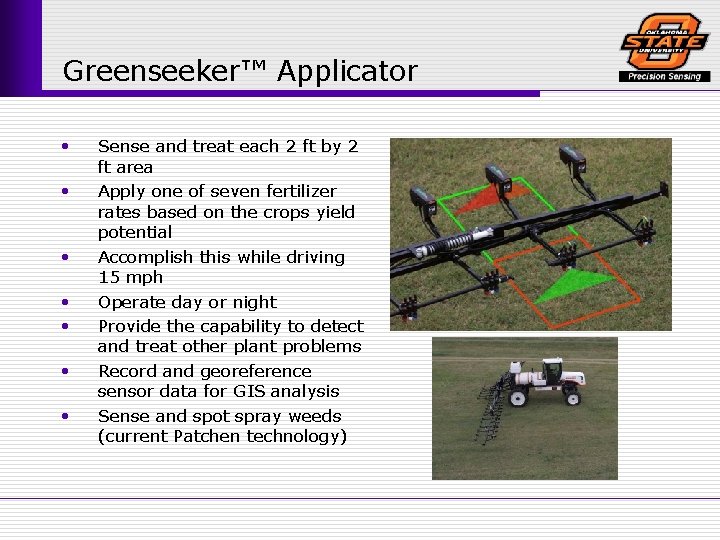
Greenseeker™ Applicator • • Sense and treat each 2 ft by 2 ft area Apply one of seven fertilizer rates based on the crops yield potential Accomplish this while driving 15 mph Operate day or night Provide the capability to detect and treat other plant problems Record and georeference sensor data for GIS analysis Sense and spot spray weeds (current Patchen technology)
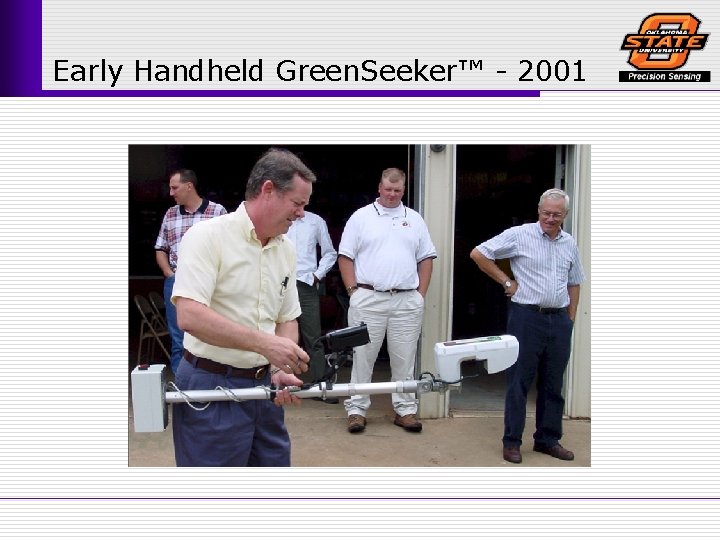
Early Handheld Green. Seeker™ - 2001
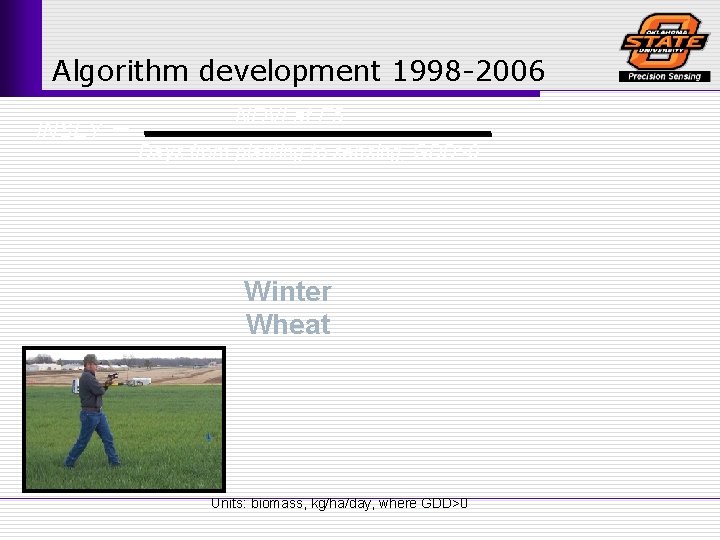
Algorithm development 1998 -2006 INSEY = NDVI at F 5 Days from planting to sensing, GDD>0 Winter Wheat Units: biomass, kg/ha/day, where GDD>0
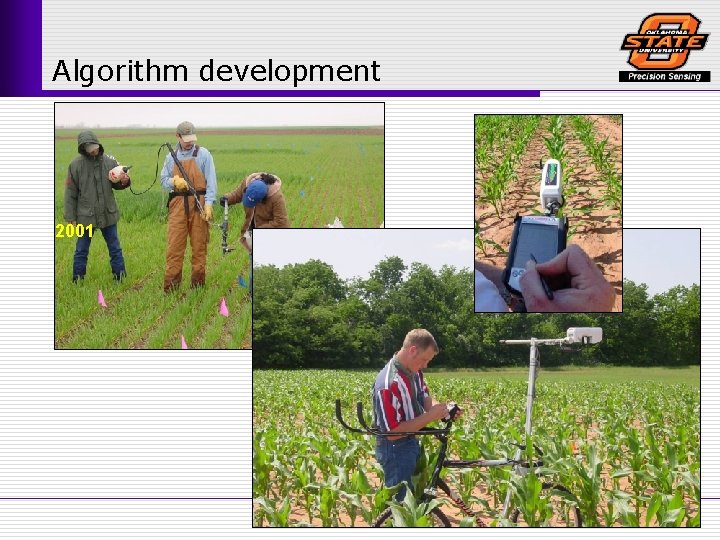
Algorithm development 2001
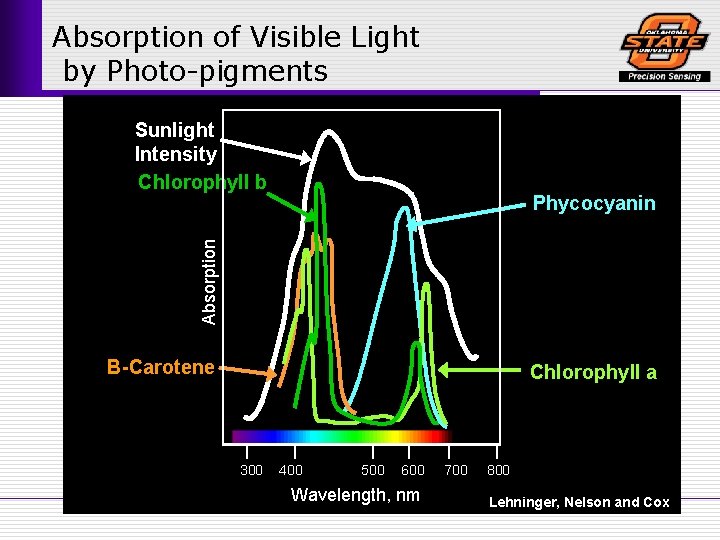
Absorption of Visible Light by Photo-pigments Sunlight Intensity Chlorophyll b Absorption Phycocyanin B-Carotene Chlorophyll a 300 400 500 600 Wavelength, nm 700 800 Lehninger, Nelson and Cox
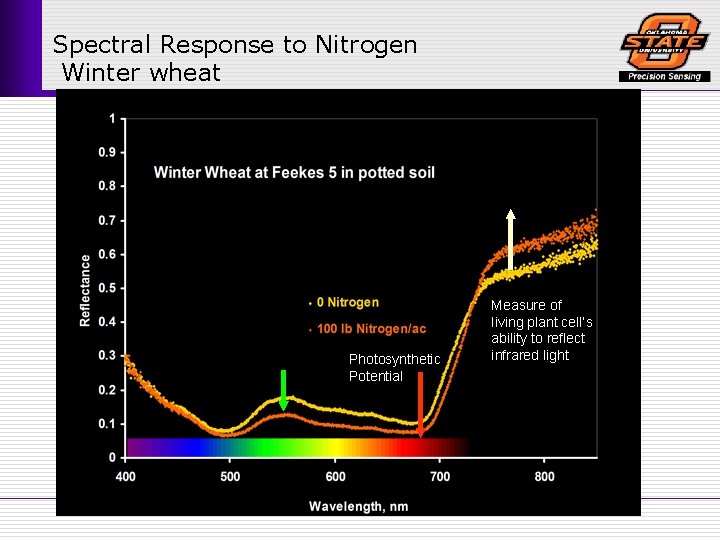
Spectral Response to Nitrogen Winter wheat Photosynthetic Potential Measure of living plant cell’s ability to reflect infrared light
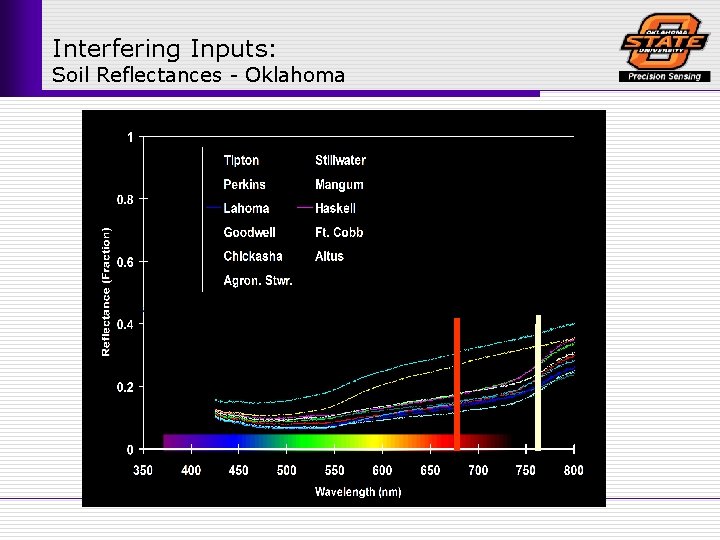
Interfering Inputs: Soil Reflectances - Oklahoma
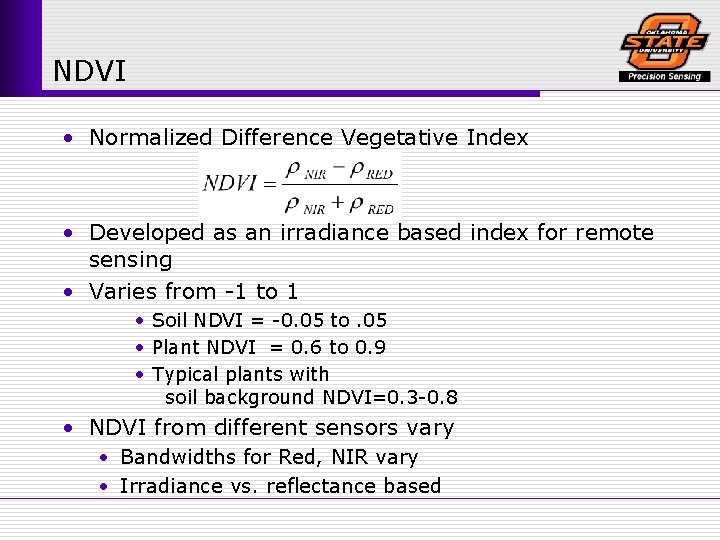
NDVI • Normalized Difference Vegetative Index • Developed as an irradiance based index for remote sensing • Varies from -1 to 1 • Soil NDVI = -0. 05 to. 05 • Plant NDVI = 0. 6 to 0. 9 • Typical plants with soil background NDVI=0. 3 -0. 8 • NDVI from different sensors vary • Bandwidths for Red, NIR vary • Irradiance vs. reflectance based
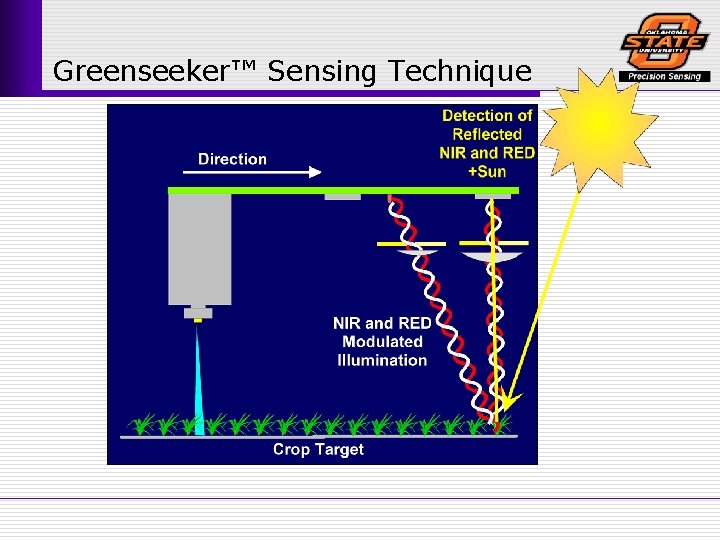
Greenseeker™ Sensing Technique
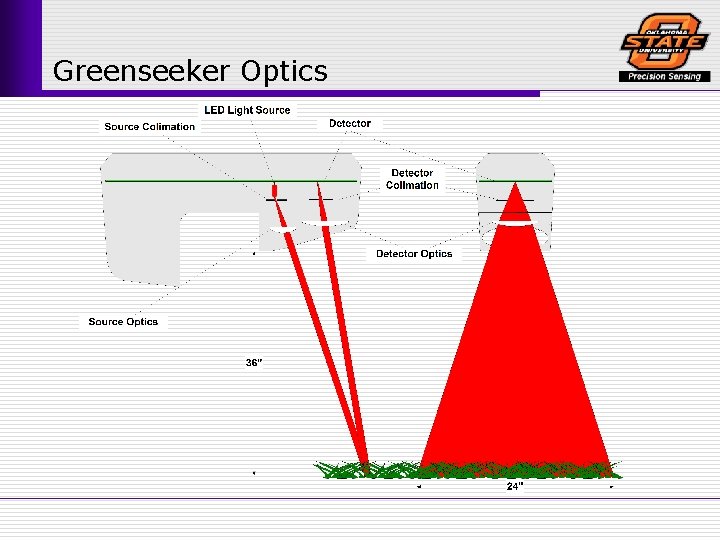
Greenseeker Optics
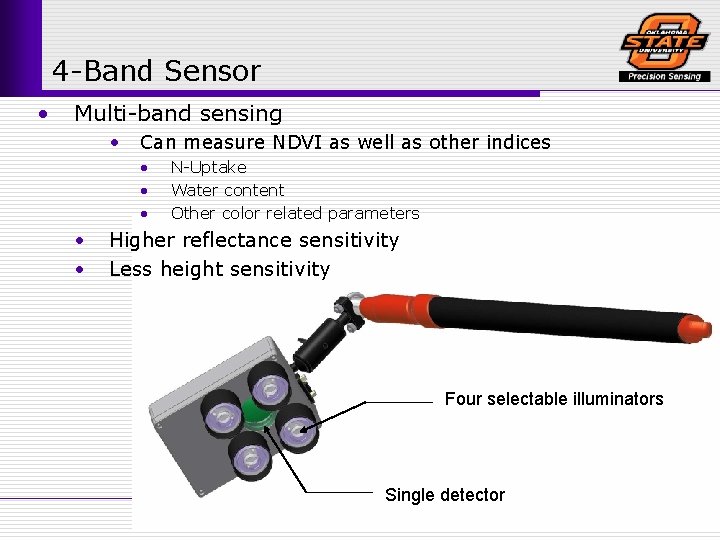
4 -Band Sensor • Multi-band sensing • Can measure NDVI as well as other indices • • • N-Uptake Water content Other color related parameters Higher reflectance sensitivity Less height sensitivity Four selectable illuminators Single detector
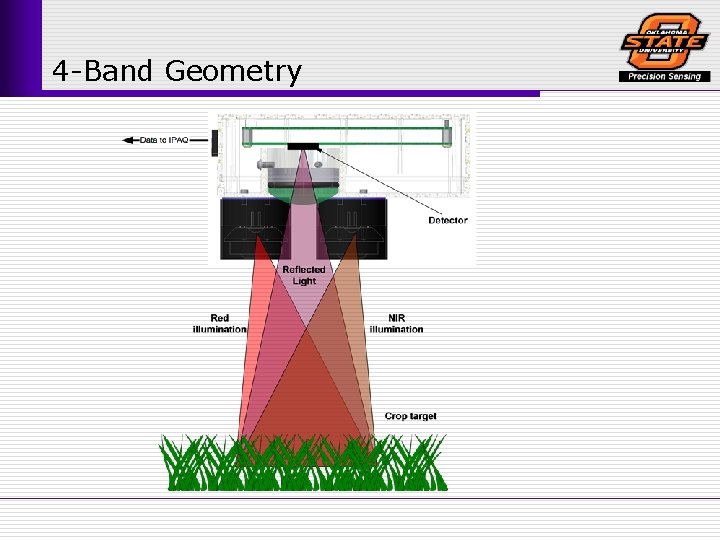
4 -Band Geometry
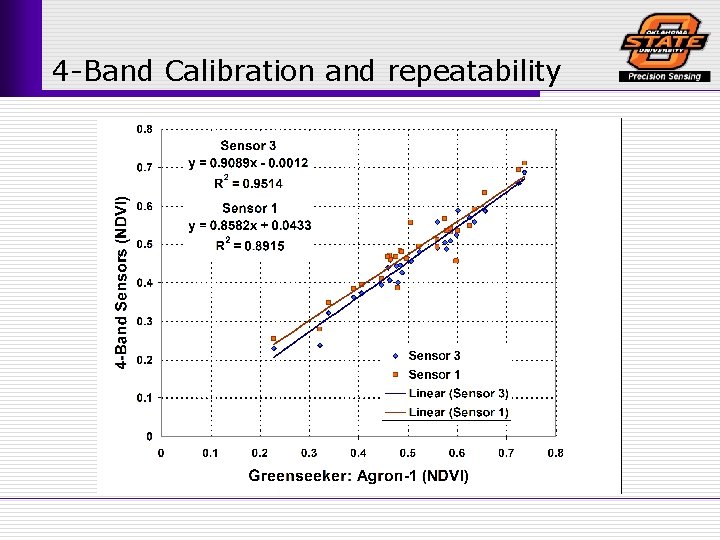
4 -Band Calibration and repeatability
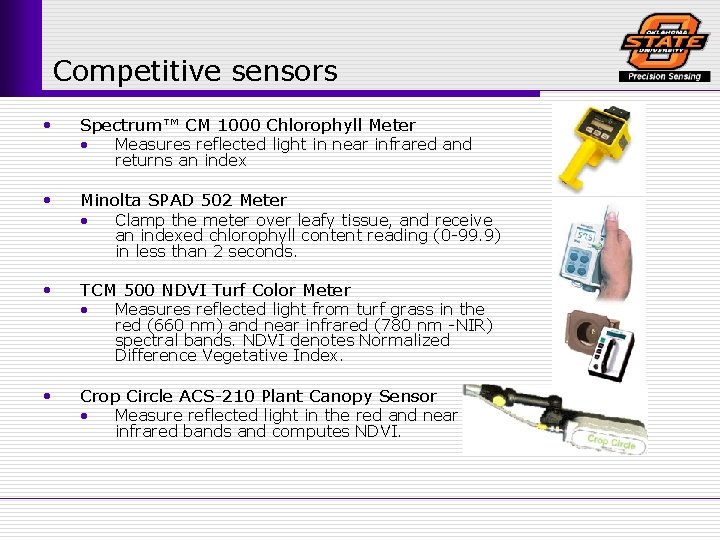
Competitive sensors • Spectrum™ CM 1000 Chlorophyll Meter • Measures reflected light in near infrared and returns an index • Minolta SPAD 502 Meter • Clamp the meter over leafy tissue, and receive an indexed chlorophyll content reading (0 -99. 9) in less than 2 seconds. • TCM 500 NDVI Turf Color Meter • Measures reflected light from turf grass in the red (660 nm) and near infrared (780 nm -NIR) spectral bands. NDVI denotes Normalized Difference Vegetative Index. • Crop Circle ACS-210 Plant Canopy Sensor • Measure reflected light in the red and near infrared bands and computes NDVI.
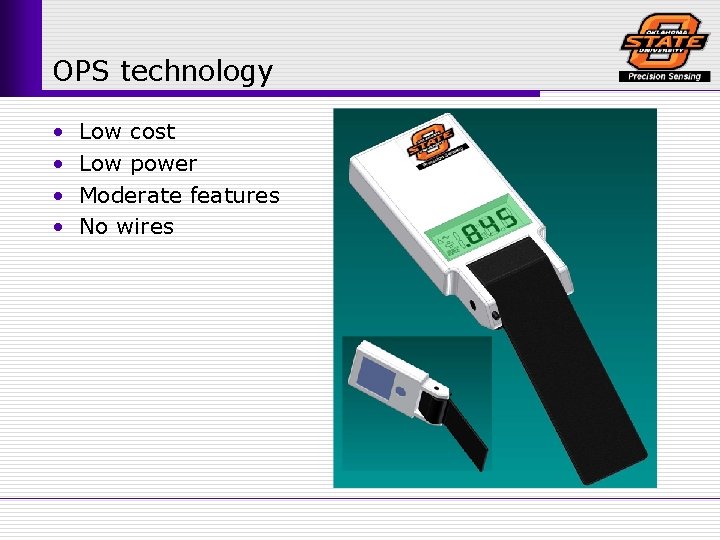
OPS technology • • Low cost Low power Moderate features No wires
Discussion