
PROGRAMMED LEARNING www ednonline info Self Instructional Technique
- Slides: 19
PROGRAMMED LEARNING www. ednonline. info
Self Instructional Technique Individualized Instruction Logically Sequenced (Small Segments) www. ednonline. info
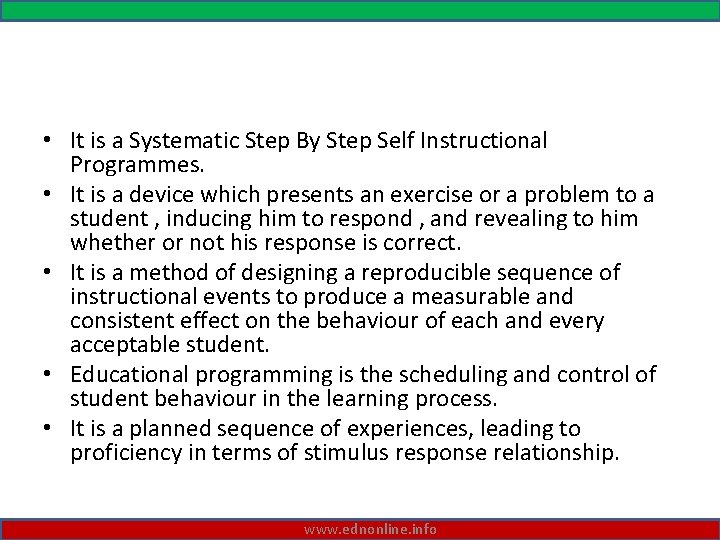
• It is a Systematic Step By Step Self Instructional Programmes. • It is a device which presents an exercise or a problem to a student , inducing him to respond , and revealing to him whether or not his response is correct. • It is a method of designing a reproducible sequence of instructional events to produce a measurable and consistent effect on the behaviour of each and every acceptable student. • Educational programming is the scheduling and control of student behaviour in the learning process. • It is a planned sequence of experiences, leading to proficiency in terms of stimulus response relationship. www. ednonline. info
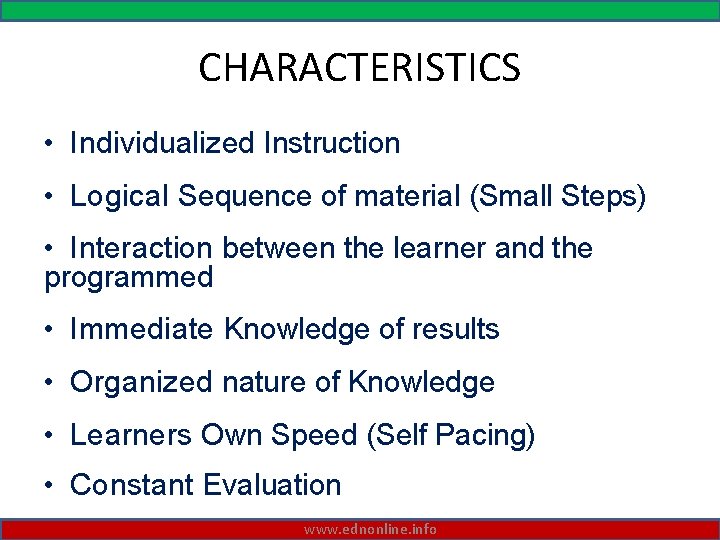
CHARACTERISTICS • Individualized Instruction • Logical Sequence of material (Small Steps) • Interaction between the learner and the programmed • Immediate Knowledge of results • Organized nature of Knowledge • Learners Own Speed (Self Pacing) • Constant Evaluation www. ednonline. info
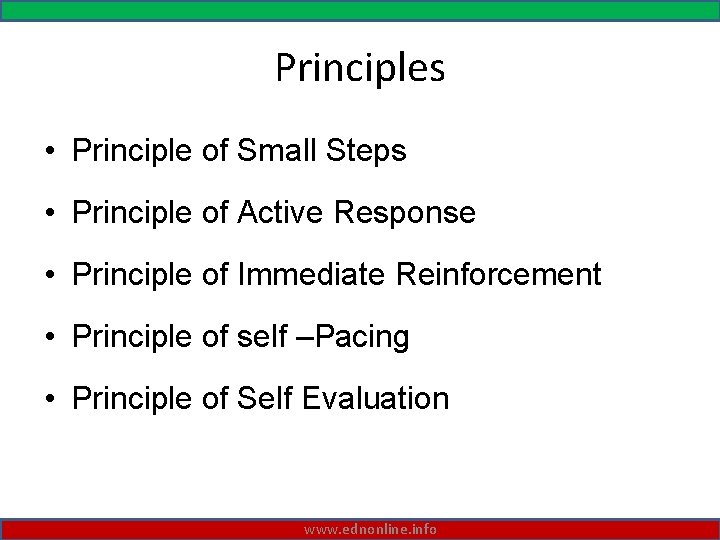
Principles • Principle of Small Steps • Principle of Active Response • Principle of Immediate Reinforcement • Principle of self –Pacing • Principle of Self Evaluation www. ednonline. info
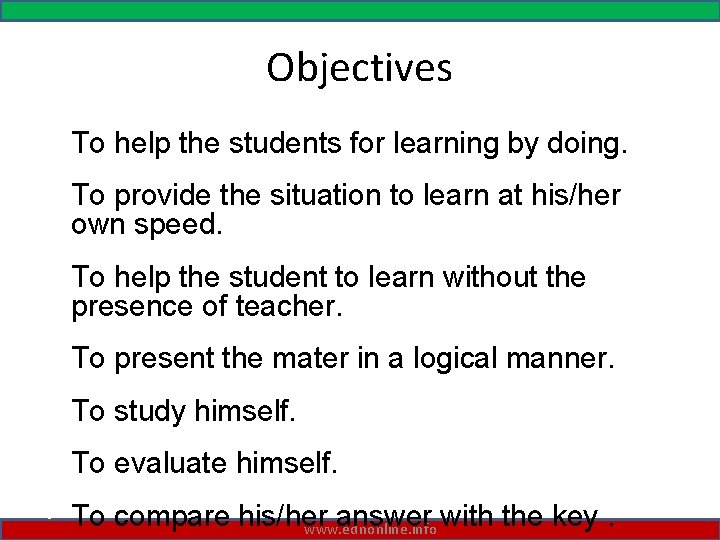
Objectives • To help the students for learning by doing. • To provide the situation to learn at his/her own speed. • To help the student to learn without the presence of teacher. • To present the mater in a logical manner. • To study himself. • To evaluate himself. • To compare his/her answer with the key. www. ednonline. info
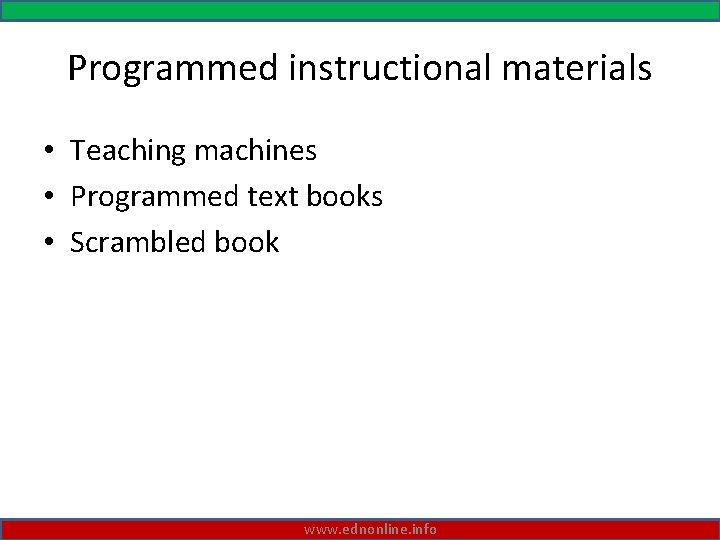
Programmed instructional materials • Teaching machines • Programmed text books • Scrambled book www. ednonline. info
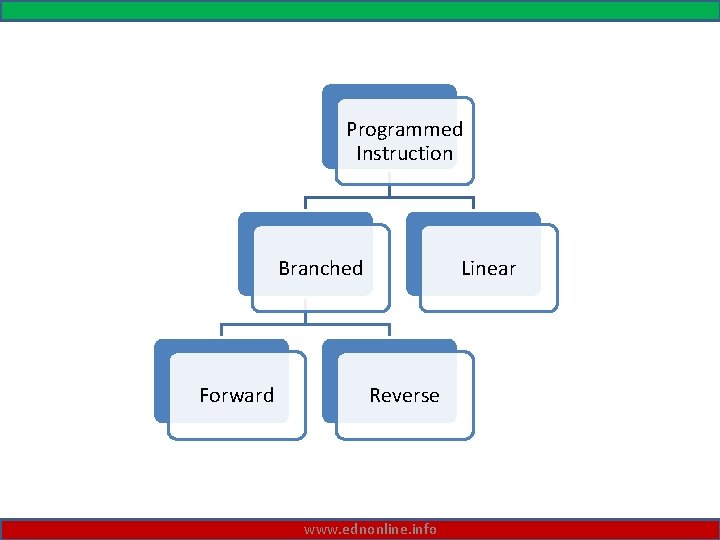
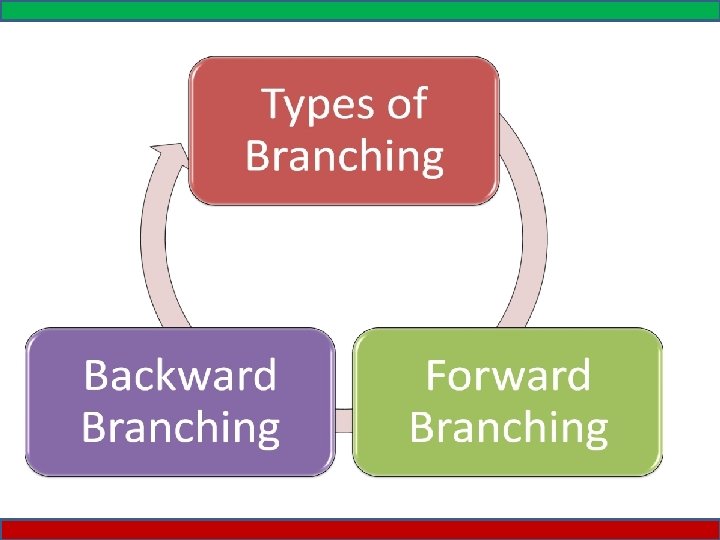
Programmed Instruction Branched Forward Linear Reverse www. ednonline. info
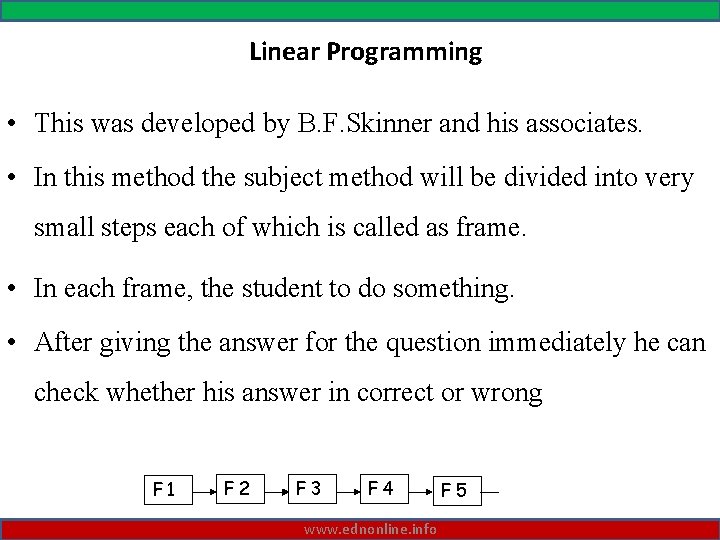
Linear Programming • This was developed by B. F. Skinner and his associates. • In this method the subject method will be divided into very small steps each of which is called as frame. • In each frame, the student to do something. • After giving the answer for the question immediately he can check whether his answer in correct or wrong F 1 F 2 F 3 F 4 www. ednonline. info F 5
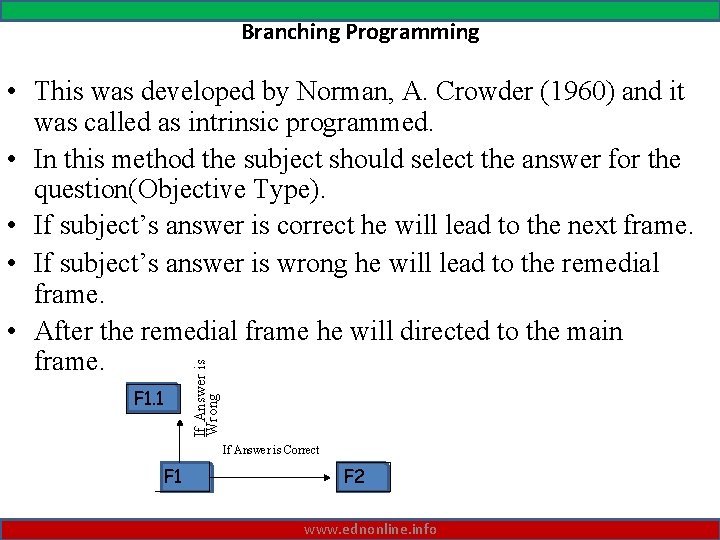
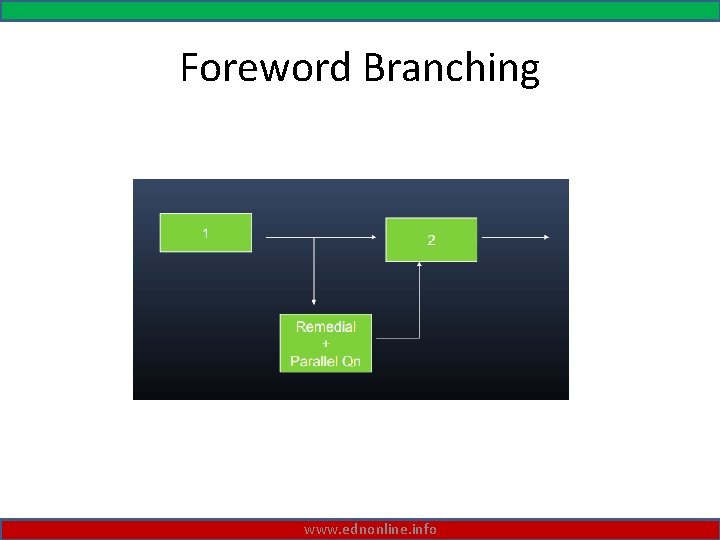
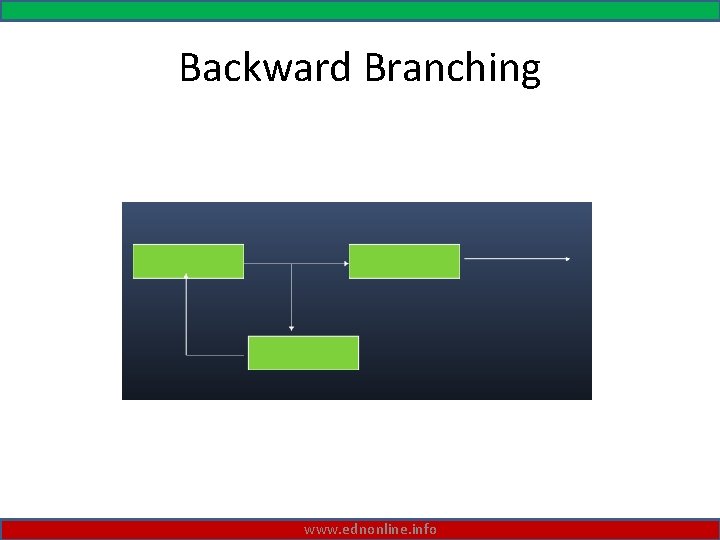
Branching Programming F 1. 1 If Answer is Wrong • This was developed by Norman, A. Crowder (1960) and it was called as intrinsic programmed. • In this method the subject should select the answer for the question(Objective Type). • If subject’s answer is correct he will lead to the next frame. • If subject’s answer is wrong he will lead to the remedial frame. • After the remedial frame he will directed to the main frame. If Answer is Correct F 1 F 2 www. ednonline. info
Features of Linear Programming • • • Linear Arrangement Small Steps Controlled Responses Active Responding Immediate Feedback Prompting Self- Pacing Simple Mechanism Minimum error www. ednonline. info
Limitation of Linear Programming • • • Lack of Motivation No Freedom of choice No development of discriminative power No student centered No specific role of teacher Difficulty in finding background www. ednonline. info
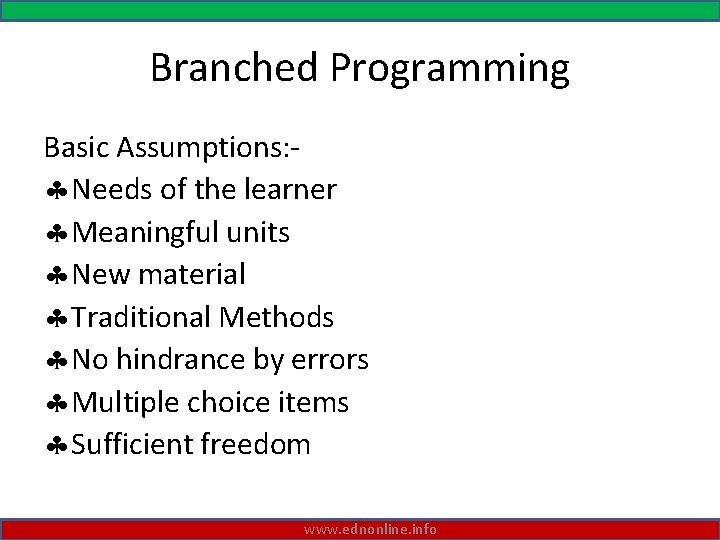
Branched Programming Basic Assumptions: Needs of the learner Meaningful units New material Traditional Methods No hindrance by errors Multiple choice items Sufficient freedom www. ednonline. info
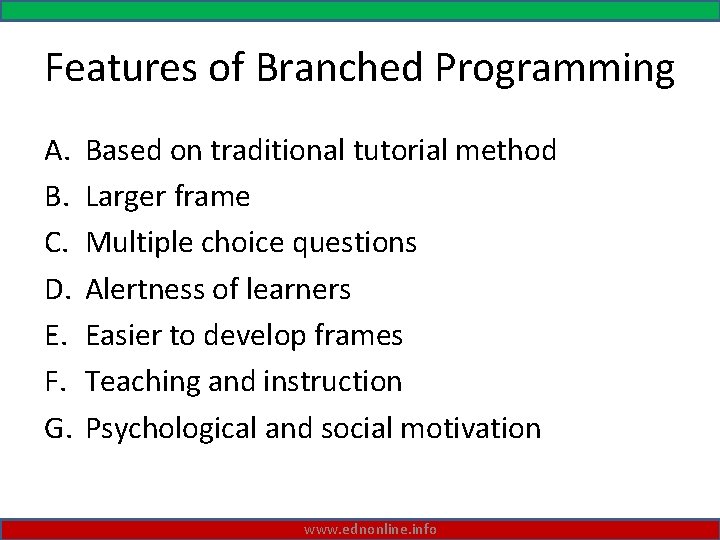
Features of Branched Programming A. B. C. D. E. F. G. Based on traditional tutorial method Larger frame Multiple choice questions Alertness of learners Easier to develop frames Teaching and instruction Psychological and social motivation www. ednonline. info
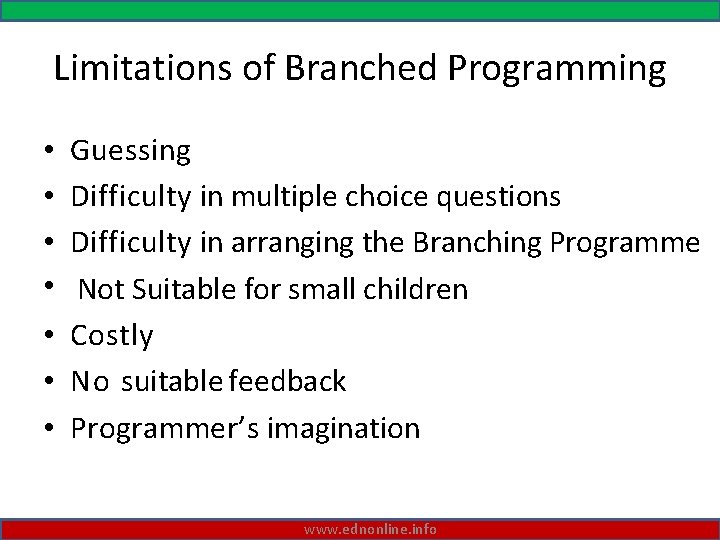
Limitations of Branched Programming Guessing Difficulty in multiple choice questions Difficulty in arranging the Branching Programme Not Suitable for small children • Costly • No suitable feedback • Programmer’s imagination • • www. ednonline. info
Foreword Branching www. ednonline. info
Backward Branching www. ednonline. info
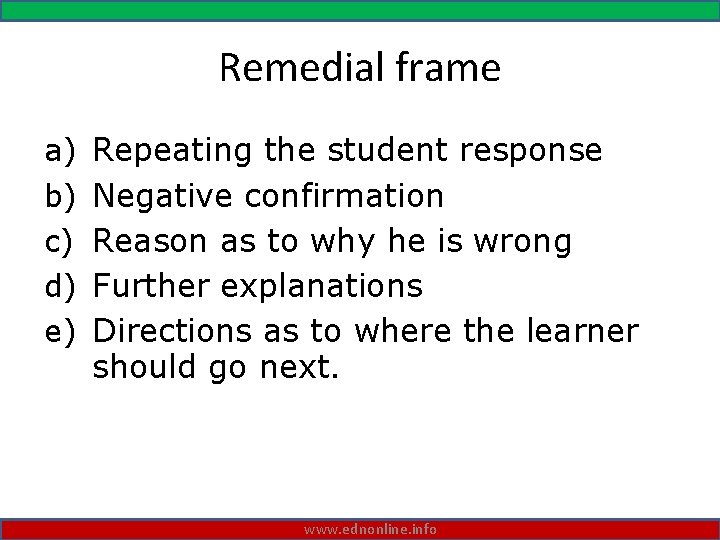
Remedial frame a) b) c) d) e) Repeating the student response Negative confirmation Reason as to why he is wrong Further explanations Directions as to where the learner should go next. www. ednonline. info