
Programmed Cell Death Signaling Pathways What are the
- Slides: 25
Programmed Cell Death Signaling Pathways
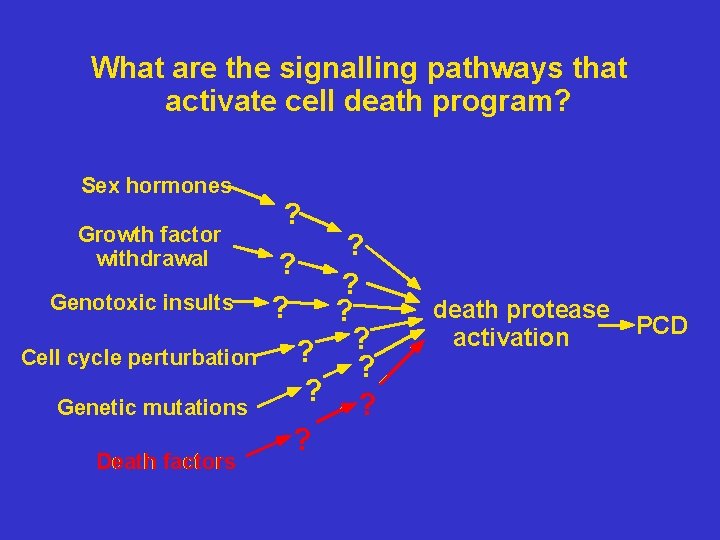
What are the signalling pathways that activate cell death program? Sex hormones Growth factor withdrawal Genotoxic insults Cell cycle perturbation Genetic mutations Death factors ? ? ? ? death protease activation PCD
TNF/FASL • TNF (tumor necrosis factor) is a protein toxin which is secreted by activated macrophages and monocytes • Laster et al. , using time-laspe video microscopy observed that TNF can cause target cells to adapt morphology typical of apoptosis. (1988) • A Japanese group purified a cell-killing m. Ab to a surface antigen called FAS that causes cytotoxic activity very similar to that caused by TNF (1989). • FAS likely has an in vivo ligand (FASL) that induces apoptosis like TNF
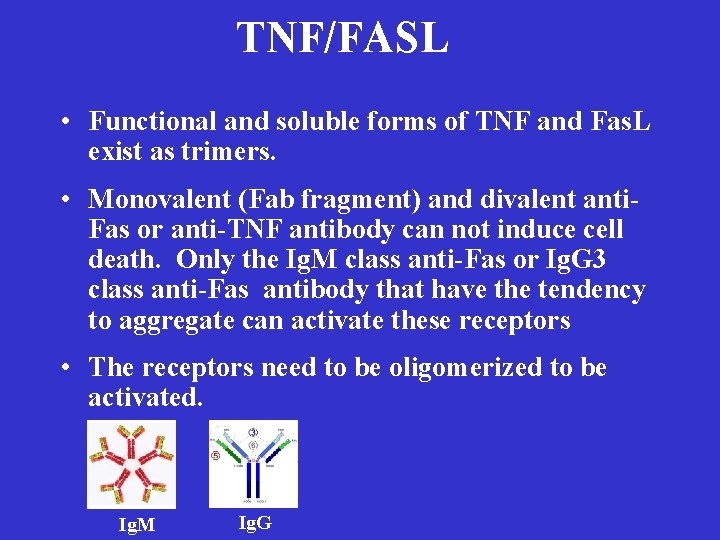
TNF/FASL • Functional and soluble forms of TNF and Fas. L exist as trimers. • Monovalent (Fab fragment) and divalent anti. Fas or anti-TNF antibody can not induce cell death. Only the Ig. M class anti-Fas or Ig. G 3 class anti-Fas antibody that have the tendency to aggregate can activate these receptors • The receptors need to be oligomerized to be activated. Ig. M Ig. G
TNFR/FAS • In 1990, many groups simultaneously cloned two TNF receptors (TNFR 1 and TNFR 2). • In 1991, by expression cloning, Shige Nagata’s group cloned FAS and found that it is a surface protein with a single transmembrane domain and shares homology with TNF receptors. • An eighty amino acid domain in the cytoplasmic region of Fas and TNFR are found to be important for inducing apoptosis by mutational and deletion analysis. This domain is called “death domain”.
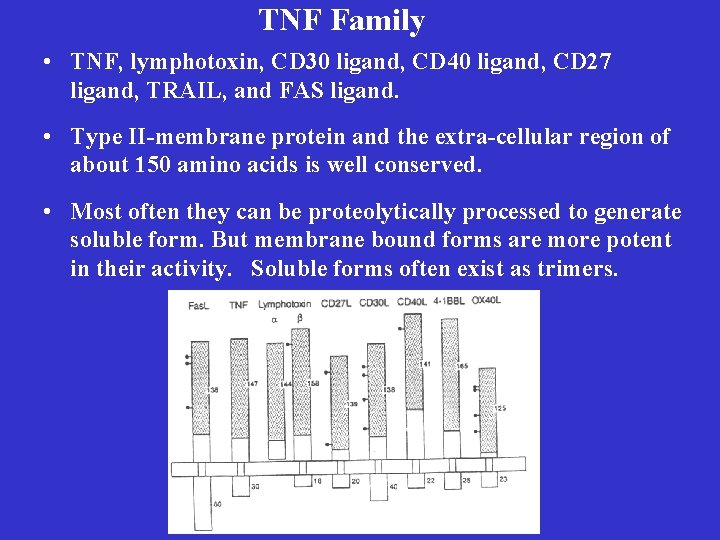
TNF Family • TNF, lymphotoxin, CD 30 ligand, CD 40 ligand, CD 27 ligand, TRAIL, and FAS ligand. • Type II-membrane protein and the extra-cellular region of about 150 amino acids is well conserved. • Most often they can be proteolytically processed to generate soluble form. But membrane bound forms are more potent in their activity. Soluble forms often exist as trimers.
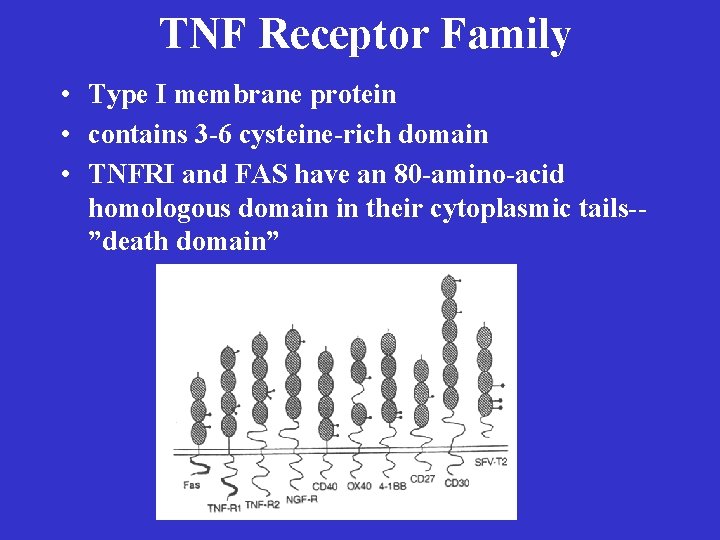
TNF Receptor Family • Type I membrane protein • contains 3 -6 cysteine-rich domain • TNFRI and FAS have an 80 -amino-acid homologous domain in their cytoplasmic tails-”death domain”
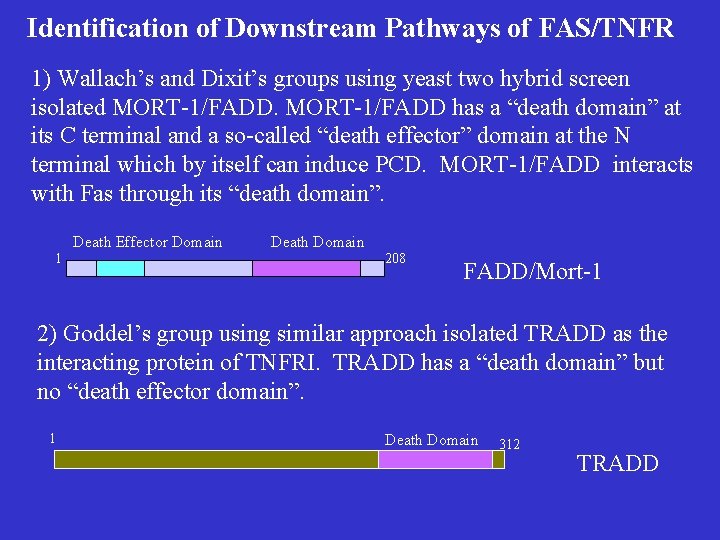
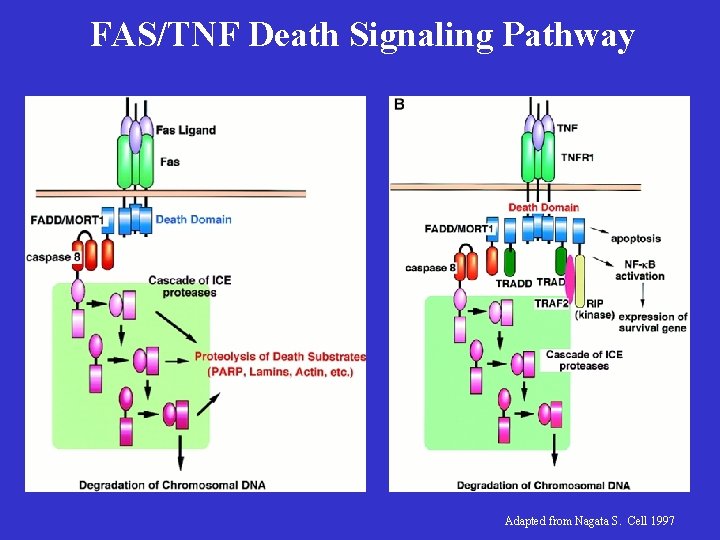
Identification of Downstream Pathways of FAS/TNFR 1) Wallach’s and Dixit’s groups using yeast two hybrid screen isolated MORT-1/FADD has a “death domain” at its C terminal and a so-called “death effector” domain at the N terminal which by itself can induce PCD. MORT-1/FADD interacts with Fas through its “death domain”. Death Effector Domain 1 Death Domain 208 FADD/Mort-1 2) Goddel’s group using similar approach isolated TRADD as the interacting protein of TNFRI. TRADD has a “death domain” but no “death effector domain”. 1 Death Domain 312 TRADD
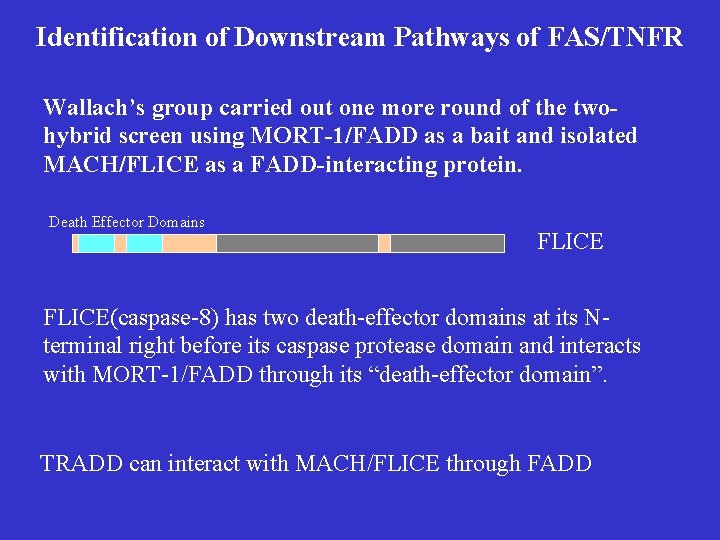
Identification of Downstream Pathways of FAS/TNFR Wallach’s group carried out one more round of the twohybrid screen using MORT-1/FADD as a bait and isolated MACH/FLICE as a FADD-interacting protein. Death Effector Domains FLICE(caspase-8) has two death-effector domains at its Nterminal right before its caspase protease domain and interacts with MORT-1/FADD through its “death-effector domain”. TRADD can interact with MACH/FLICE through FADD
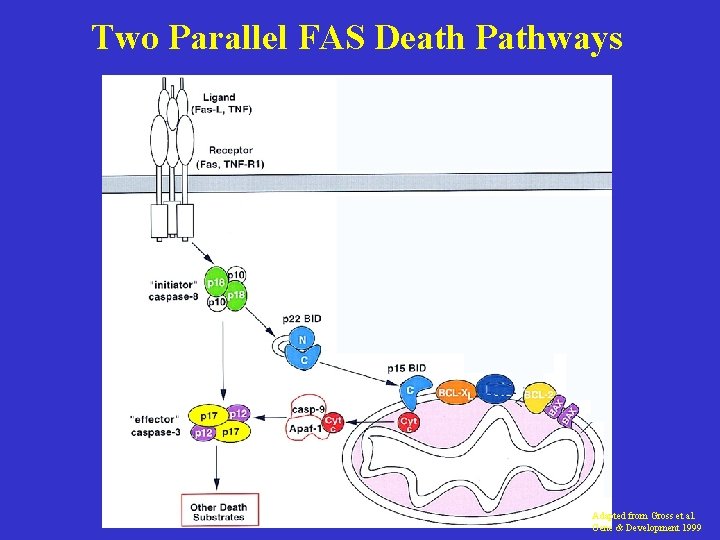
FAS/TNF Death Signaling Pathway Adapted from Nagata S. Cell 1997
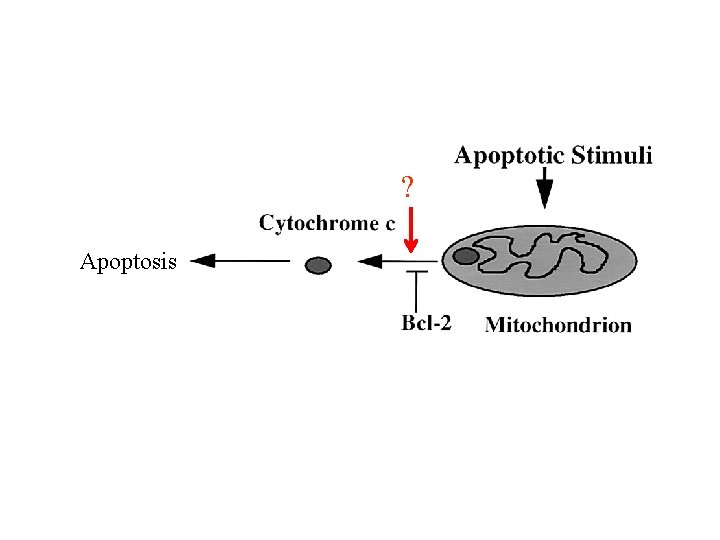
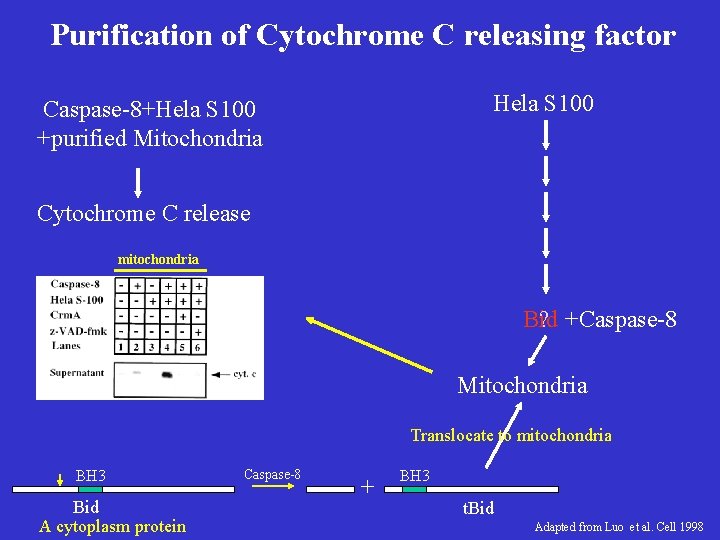
Extra Twist on the FAS Death Signaling • Peter Krammer’s group at Germany carried out a careful time-course study of Fas-induced cell death in many different cell types. They observed two different kinds of responses. In type I cells, caspase-3 activation is within 30 mins of receptor engagement, while in type II cells, caspase 3 activation was delayed for 60 mins. Fas-induced cell death in type II but not type I cells can be blocked by Bcl-2 or Bcl-XL. • Activation of FAS leads to release of Cytochrome C, which can be blocked by z-VAD-fmk, a broad range caspase inhibitor, or Bcl-2 and Bcl-x. L. • Active caspase-8 can induce Cytochrome C release from mitochondria in a cell-free system in Xenopus.
? Apoptosis
Purification of Cytochrome C releasing factor Hela S 100 Caspase-8+Hela S 100 +purified Mitochondria Cytochrome C release mitochondria Bid ? +Caspase-8 Mitochondria Translocate to mitochondria BH 3 Bid A cytoplasm protein Caspase-8 + BH 3 t. Bid Adapted from Luo et al. Cell 1998
Two Parallel FAS Death Pathways Adapted from Gross et al. Gene & Development 1999
Is Cytochrome c release sufficient to induce apoptosis? Microinjection of Cytochrome C can not induce apoptosis in certain cell types
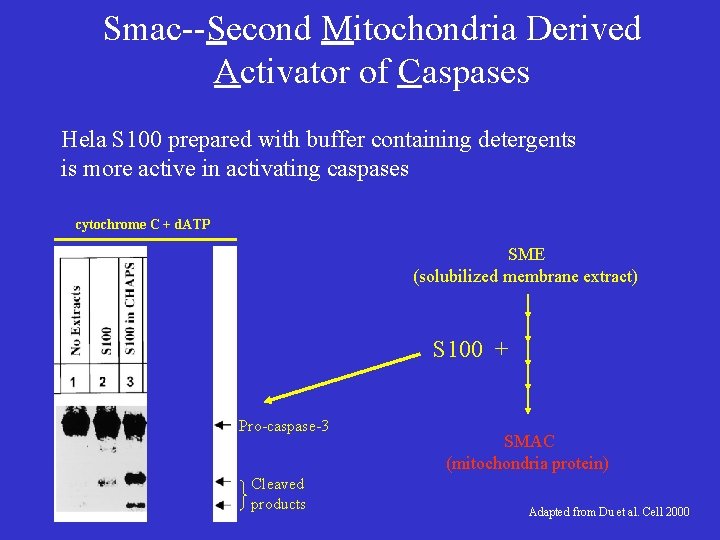
Smac--Second Mitochondria Derived Activator of Caspases Hela S 100 prepared with buffer containing detergents is more active in activating caspases cytochrome C + d. ATP SME (solubilized membrane extract) S 100 + Pro-caspase-3 Cleaved products SMAC (mitochondria protein) Adapted from Du et al. Cell 2000
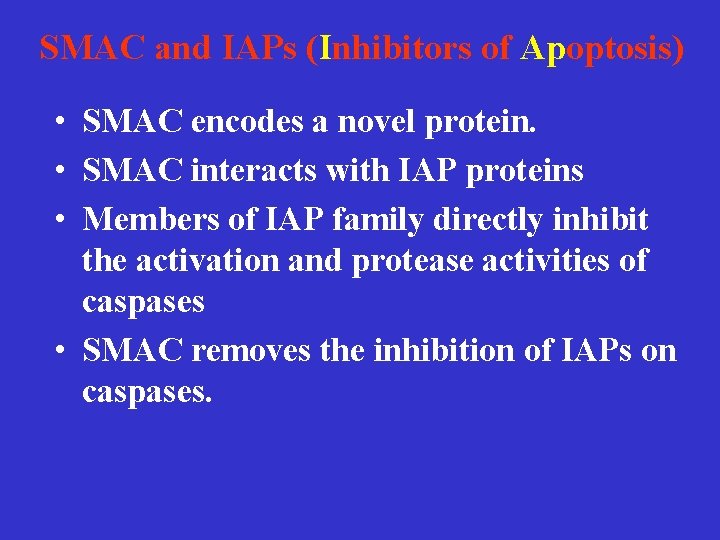
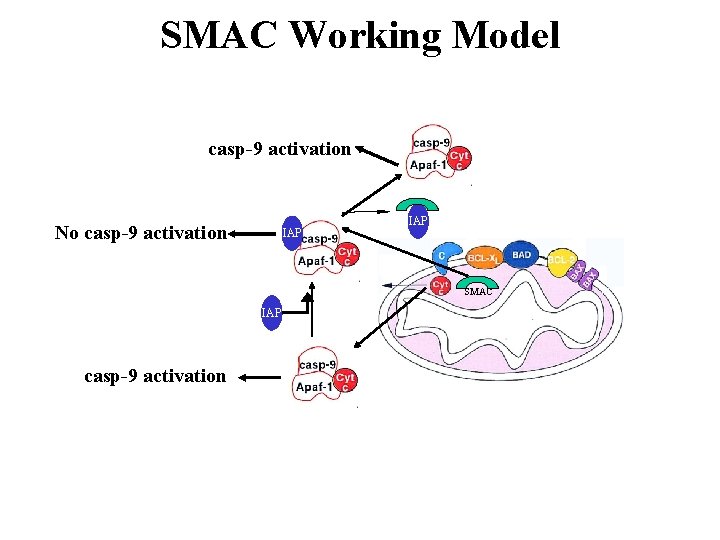
SMAC and IAPs (Inhibitors of Apoptosis) • SMAC encodes a novel protein. • SMAC interacts with IAP proteins • Members of IAP family directly inhibit the activation and protease activities of caspases • SMAC removes the inhibition of IAPs on caspases.
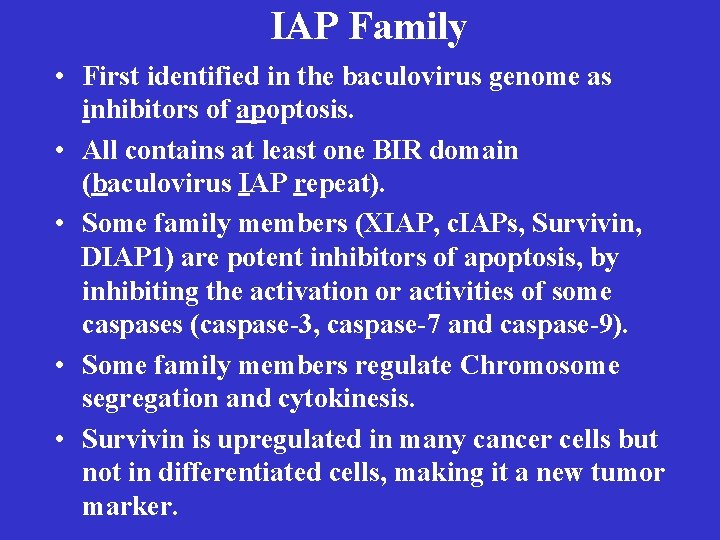
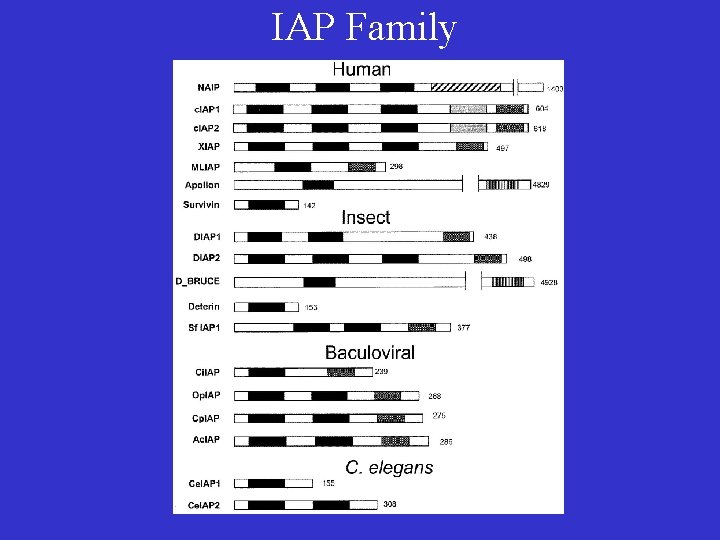
IAP Family • First identified in the baculovirus genome as inhibitors of apoptosis. • All contains at least one BIR domain (baculovirus IAP repeat). • Some family members (XIAP, c. IAPs, Survivin, DIAP 1) are potent inhibitors of apoptosis, by inhibiting the activation or activities of some caspases (caspase-3, caspase-7 and caspase-9). • Some family members regulate Chromosome segregation and cytokinesis. • Survivin is upregulated in many cancer cells but not in differentiated cells, making it a new tumor marker.
IAP Family
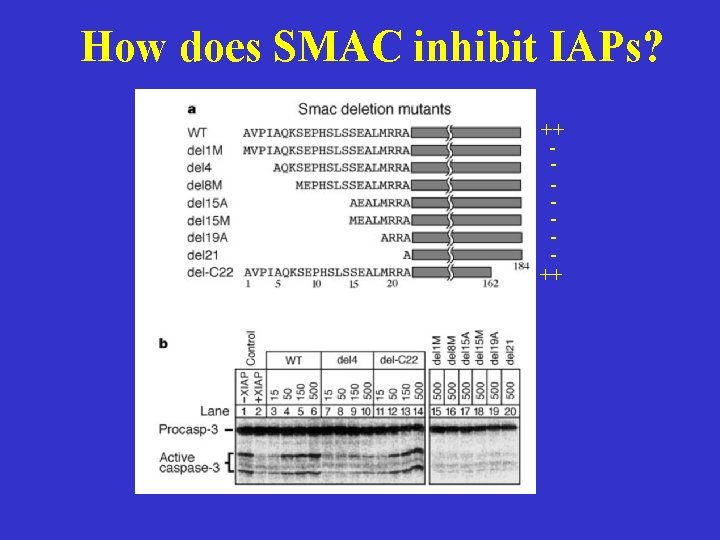
How does SMAC inhibit IAPs? ++ ++
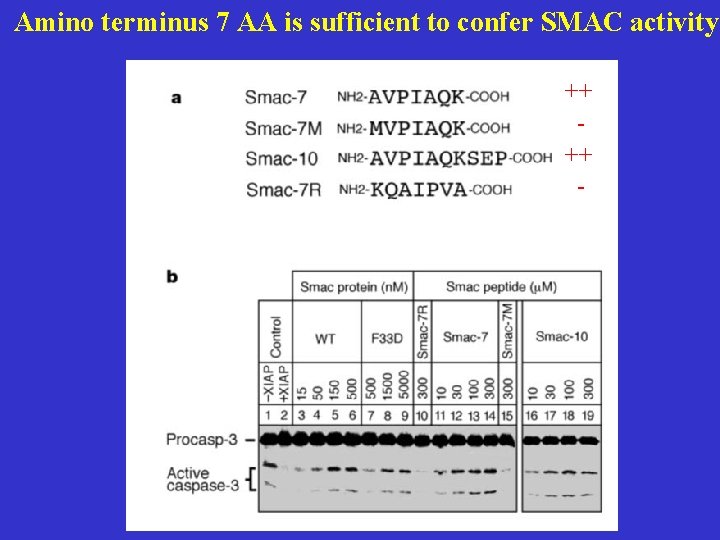
Amino terminus 7 AA is sufficient to confer SMAC activity ++ ++ -
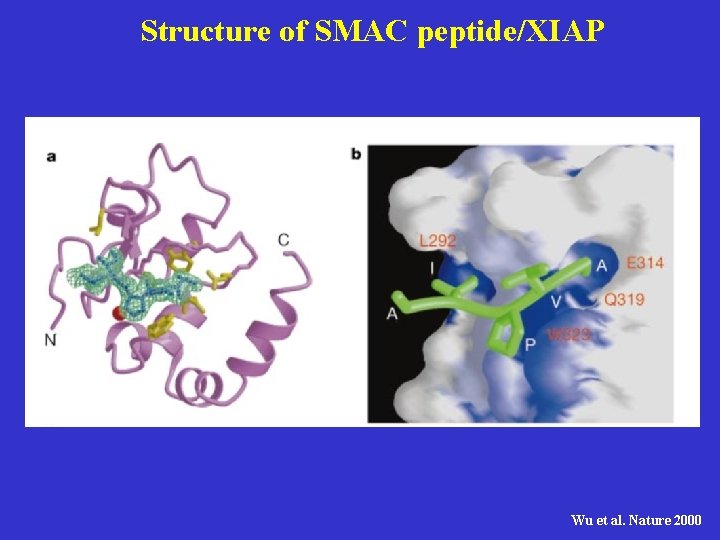
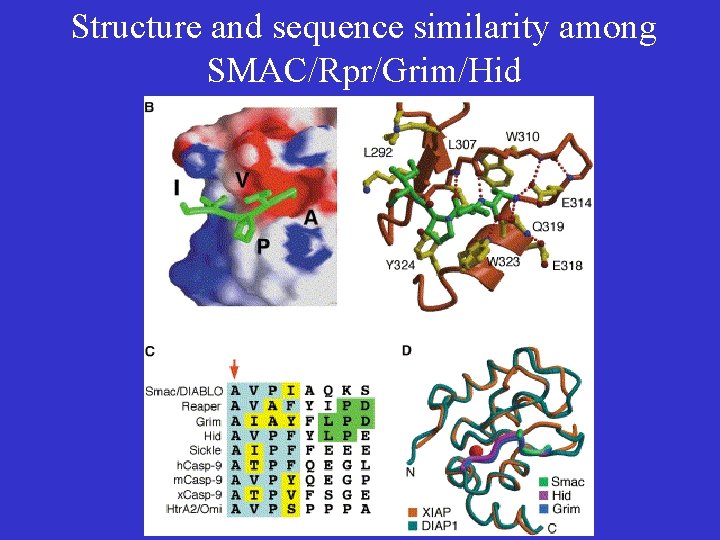
Structure of SMAC peptide/XIAP Wu et al. Nature 2000
SMAC Working Model casp-9 activation No casp-9 activation IAP SMAC IAP casp-9 activation
SMAC/Rpr/Grim/Hid Define a New Family of Cell Death Activators • Play partially redundant roles in mediating apoptosis in Drosophila. • Have no sequence similarity among one another except N-terminal 14 amino acid sequences • The N-terminal 14 amino acid peptide is sufficient to induce cell death. • Interact directly with fly DIAP proteins to activate fly caspases.
Structure and sequence similarity among SMAC/Rpr/Grim/Hid