
Program Planning Begin with the end in mind
Program Planning Begin with the end in mind. What OUTCOMES would you expect to see; like to see? --Behavioral --Social --Economic --Environmental
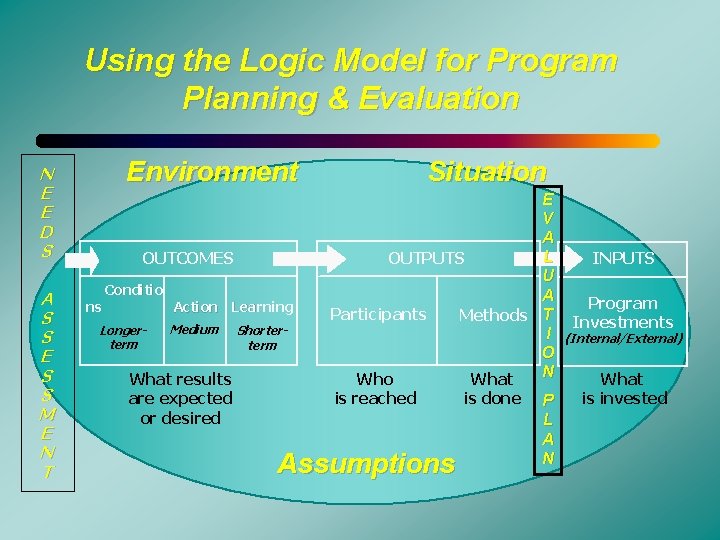
Using the Logic Model for Program Planning & Evaluation Environment N E E D S A S S E S S M E N T OUTCOMES ns Conditio Longerterm Action Learning Medium What results are expected or desired Shorterterm Situation E V A L OUTPUTS U A Participants Methods T I O N Who What is reached is done P L A N Assumptions INPUTS Program Investments (Internal/External) What is invested
Examples of Inputs Faculty, Staff Money Time Volunteers Partners Equipment Curricula Program Plans
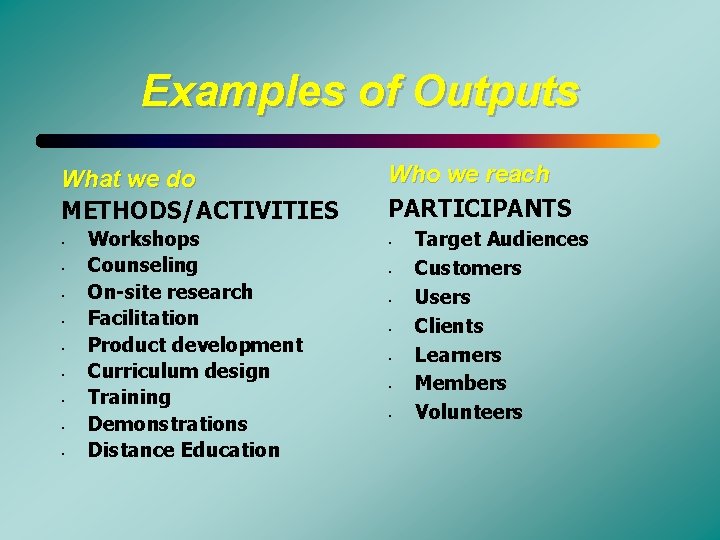
Examples of Outputs What we do METHODS/ACTIVITIES • • • Workshops Counseling On-site research Facilitation Product development Curriculum design Training Demonstrations Distance Education Who we reach PARTICIPANTS • • Target Audiences Customers Users Clients Learners Members Volunteers
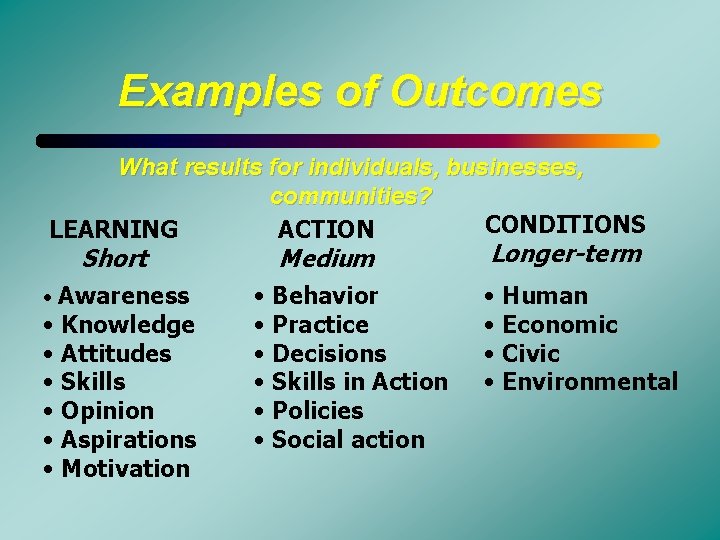
Examples of Outcomes What results for individuals, businesses, communities? CONDITIONS LEARNING ACTION Short • Awareness • Knowledge • Attitudes • Skills • Opinion • Aspirations • Motivation Medium • Behavior • Practice • Decisions • Skills in Action • Policies • Social action Longer-term • Human • Economic • Civic • Environmental
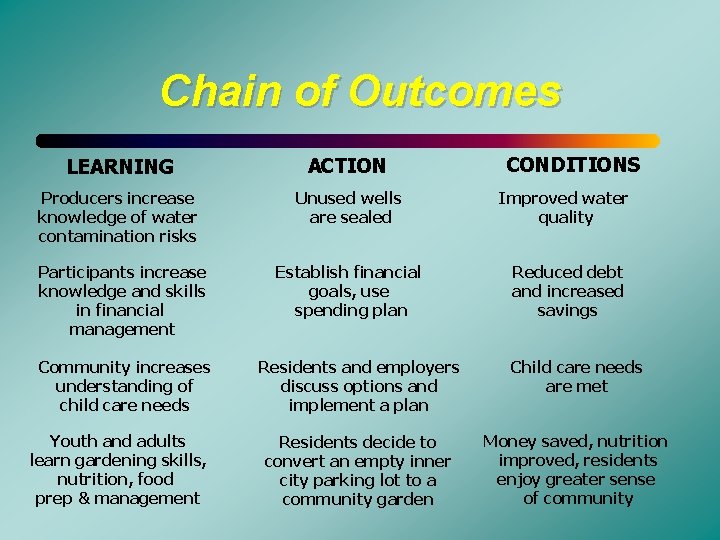
Chain of Outcomes CONDITIONS LEARNING ACTION Producers increase knowledge of water contamination risks Unused wells are sealed Improved water quality Participants increase knowledge and skills in financial management Establish financial goals, use spending plan Reduced debt and increased savings Community increases understanding of child care needs Youth and adults learn gardening skills, nutrition, food prep & management Residents and employers discuss options and implement a plan Child care needs are met Residents decide to convert an empty inner city parking lot to a community garden Money saved, nutrition improved, residents enjoy greater sense of community
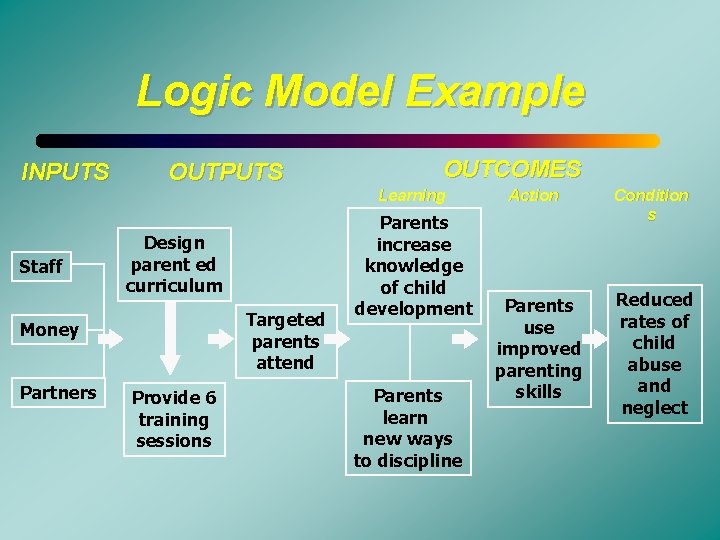
Logic Model Example INPUTS OUTCOMES Learning Staff Design parent ed curriculum Targeted parents attend Money Partners Provide 6 training sessions Parents increase knowledge of child development Parents learn new ways to discipline Action Parents use improved parenting skills Condition s Reduced rates of child abuse and neglect
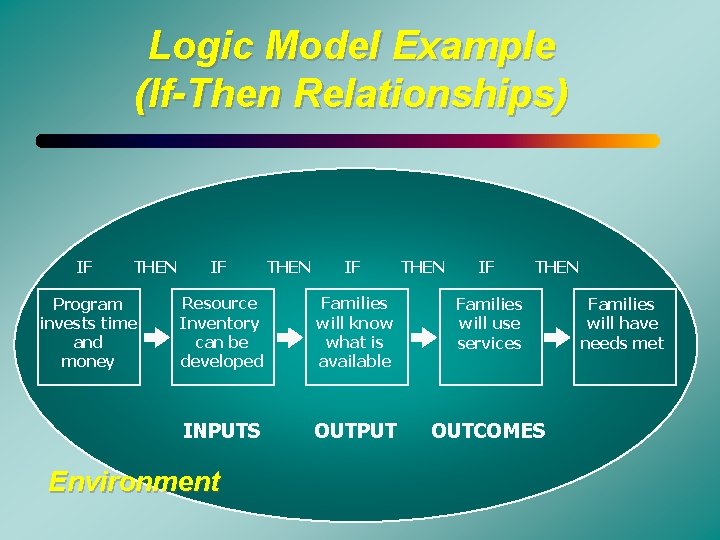
Logic Model Example (If-Then Relationships) IF THEN Program invests time and money IF THEN Resource Inventory can be developed Families will know what is available Families will use services INPUTS OUTPUT OUTCOMES Environment Families will have needs met
Logic Model Example u Business Counseling – Extension invests time and resources – A variety of educational activities are provided to business owners who participate – These owners gain knowledge and change practices resulting in… – improved business performance
Why We Evaluate u u u If you measure results, you can tell success from failure. If you can see success, you can reward it. If you reward success, you’re probably not rewarding failure.
Why We Evaluate (cont. ) u u u If you can see success, you can learn from it. If you can recognize failure, you can correct it. If you can demonstrate results, you can win public support.
Primary Uses of Evaluation Findings u Improve Programs – Identify strengths and weaknesses – Be a learning organization – Adapt a model locally – Manage more effectively – Encourage continuous improvement
Primary Uses of Evaluation Findings (cont. ) u Generate Knowledge – Generalize about effectiveness – Extrapolate principles about what works – Synthesize patterns across programs – Theory building – Scholarly publishing – Policy making
Primary Uses of Evaluation Findings (cont. ) u Judge Merit or Worth – Show results – Provide accountability to stakeholders – Help with continued funding/audits – Improve quality control – Document cost-benefit decisions – Decide a program’s future – Support accreditation/licensing

Expectations for Exemplary Evaluation u u u Key Programs are designed with the intent of long-term outcomes, higher level condition changes, and major program impacts Evaluation efforts use a variety of appropriate techniques Evaluation plan reveals learning, action and (eventually) condition or system outcomes Program is improved as a result Impact reports are created for key audiences
- Slides: 15