
Program Mapping and Meta Majors Exploring the Issues




- Slides: 56
Program Mapping and “Meta. Majors”: Exploring the Issues Julie Bruno, Guided Pathways Lead Coordination, ASCCC Past President, Sierra College Janet Fulks, Guided Pathways Lead for Capacity Building, Bakersfield College Virginia May, ASCCC Treasurer, 2018 -19 Curriculum Chair, Sacramento City College Friday September 14 1: 00 -2: 15 PM
What are the intended outcomes? Outcome #1 Using the worksheet, identify key needs for your college and plan discussions Outcome #2 Analyze how to facilitate discussions about the role and benefits of metamajors • Providing the ability to message and support students at critical points • Linking degree results with both employment and transfer • Analyzing data relevant to students by programs • Clarity
Overview • Why? • What are Meta Majors? • Strategies for Developing Meta Majors • Examples • Digging in… • Discussion…
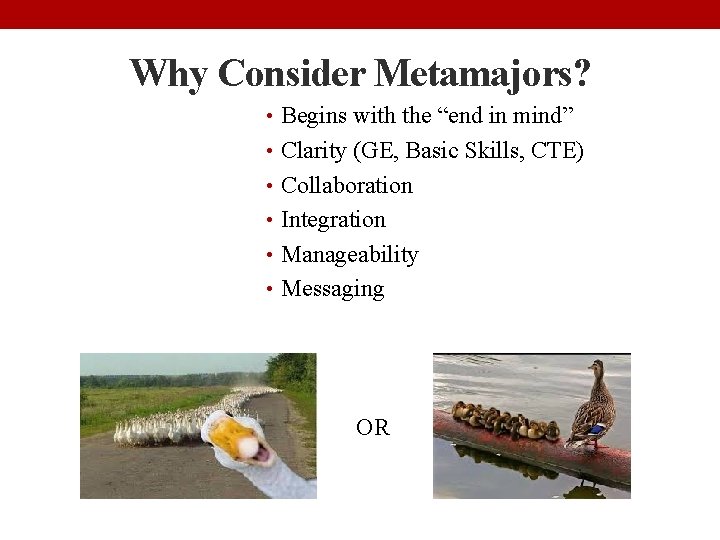
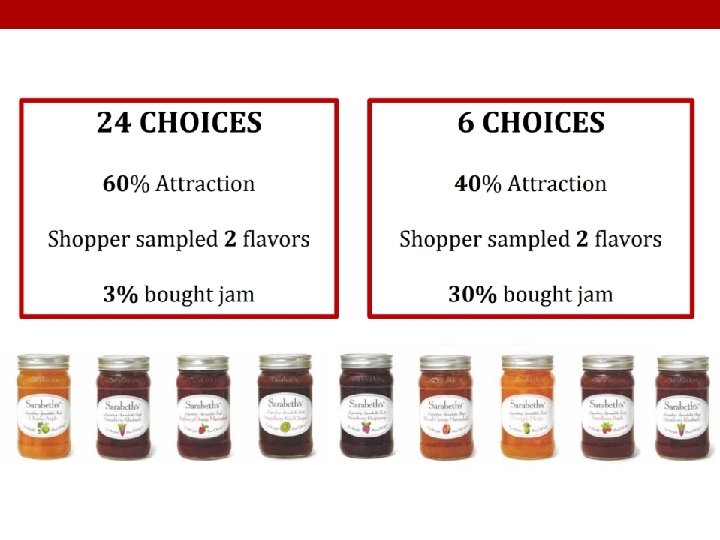
Why Consider Metamajors? • Begins with the “end in mind” • Clarity (GE, Basic Skills, CTE) • Collaboration • Integration • Manageability • Messaging OR
Beginning with the End in Mind
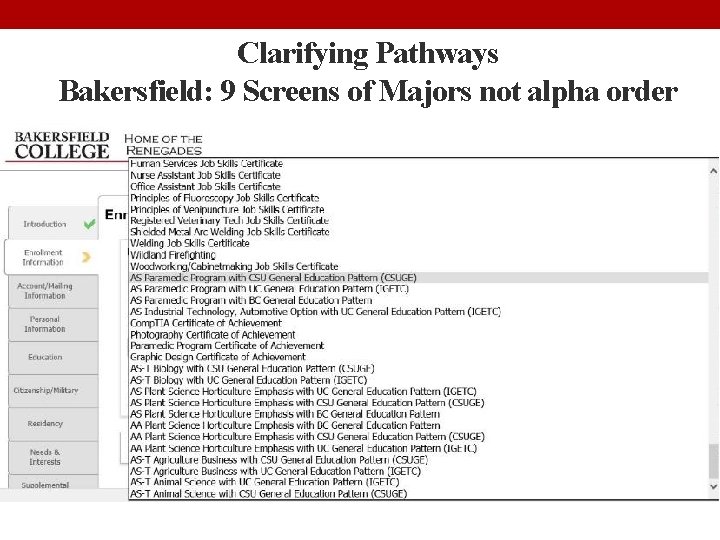
Clarifying Pathways Bakersfield: 9 Screens of Majors not alpha order
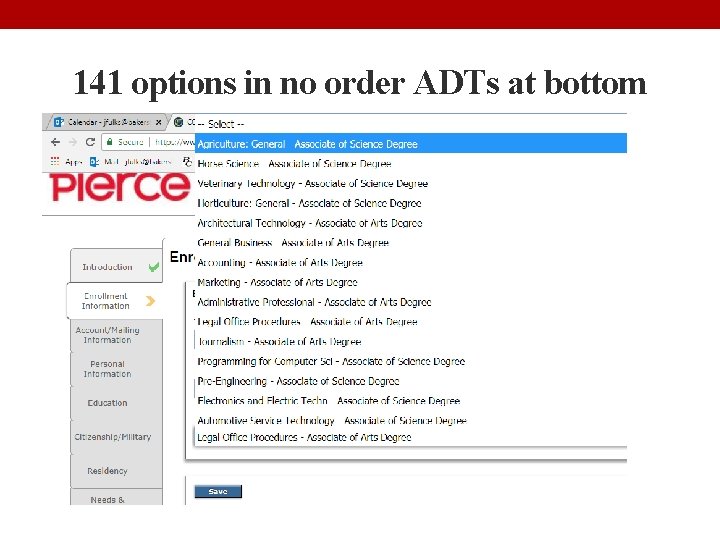
141 options in no order ADTs at bottom
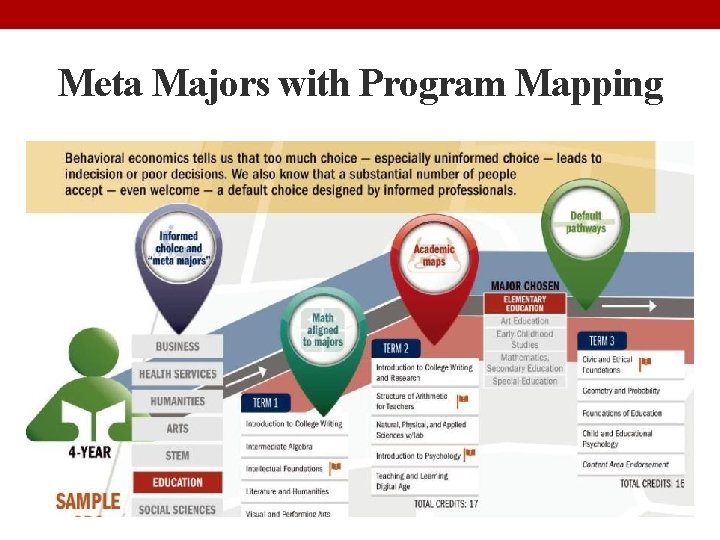
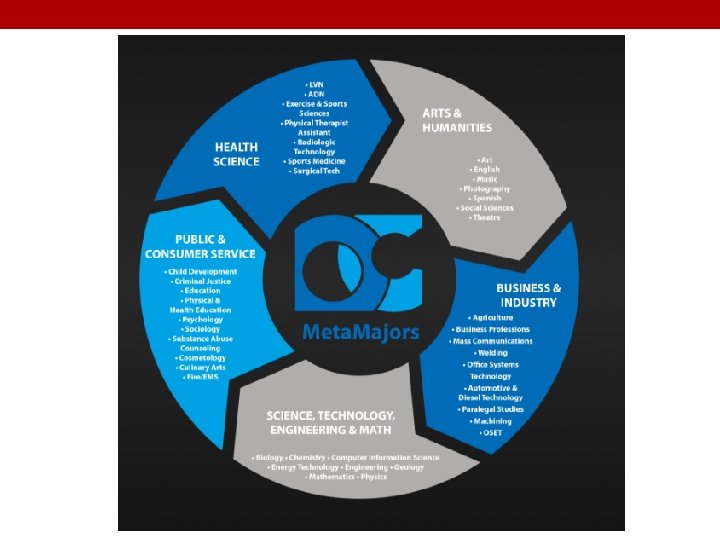
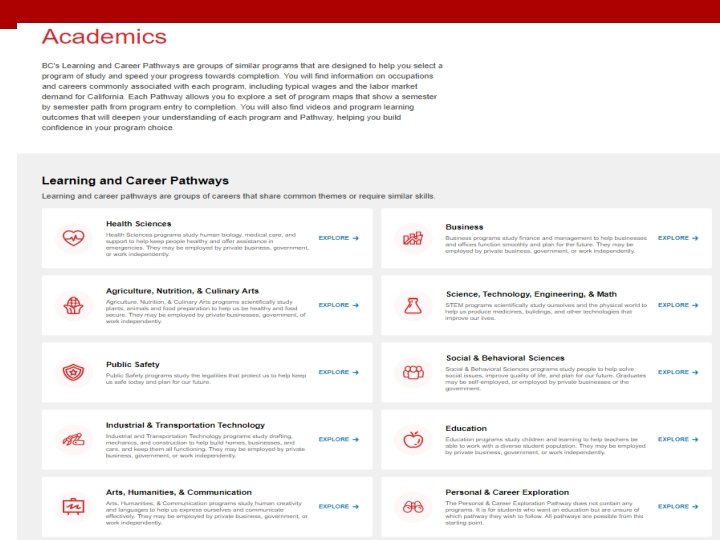
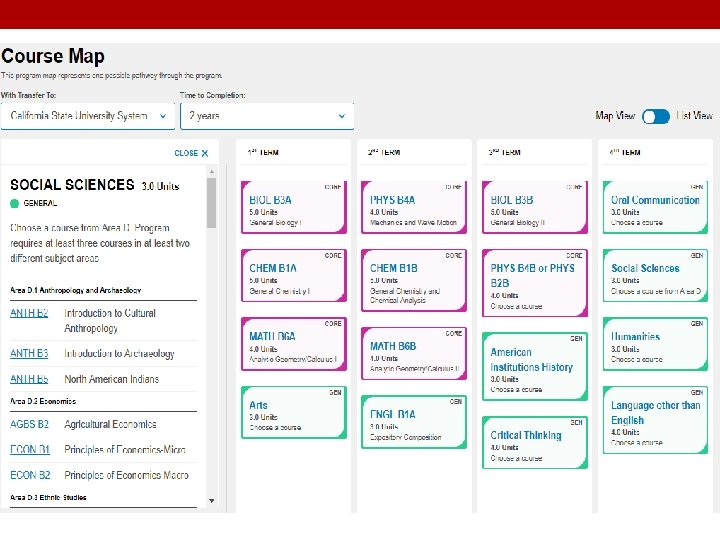
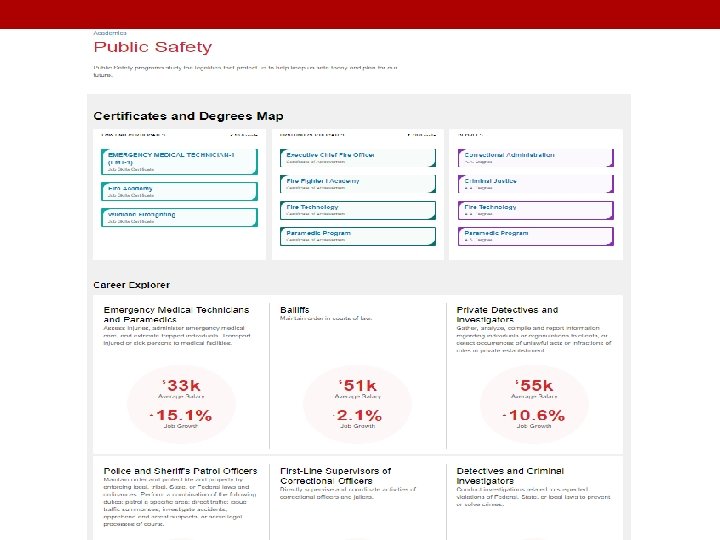
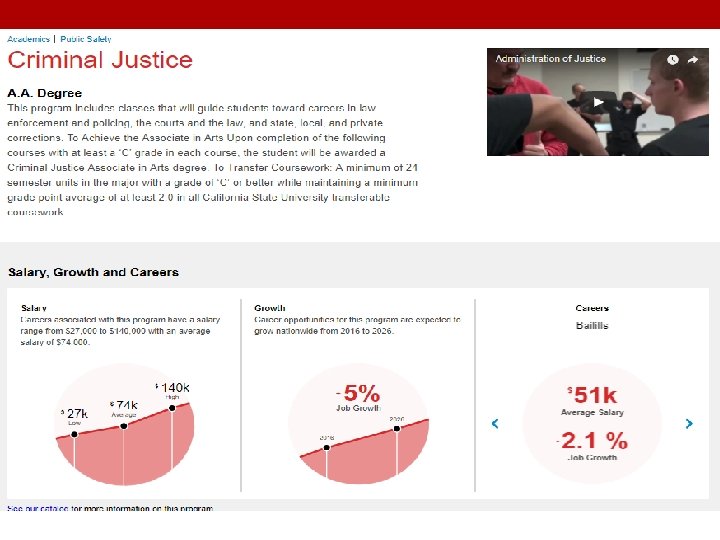
Meta Majors with Program Mapping
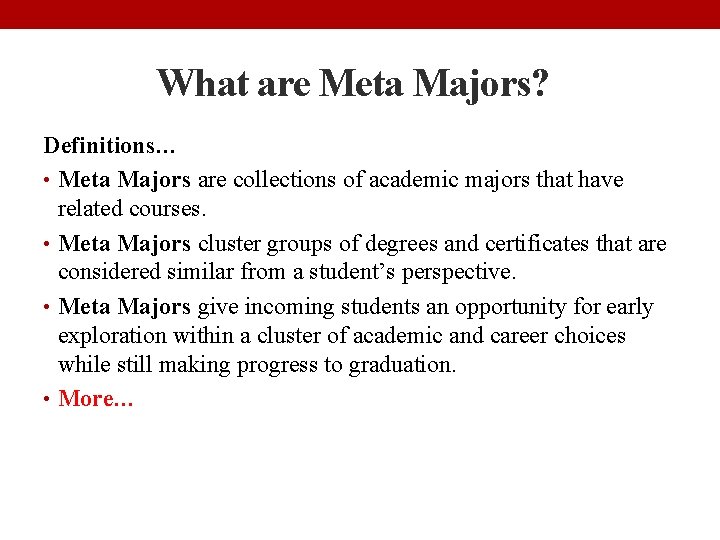
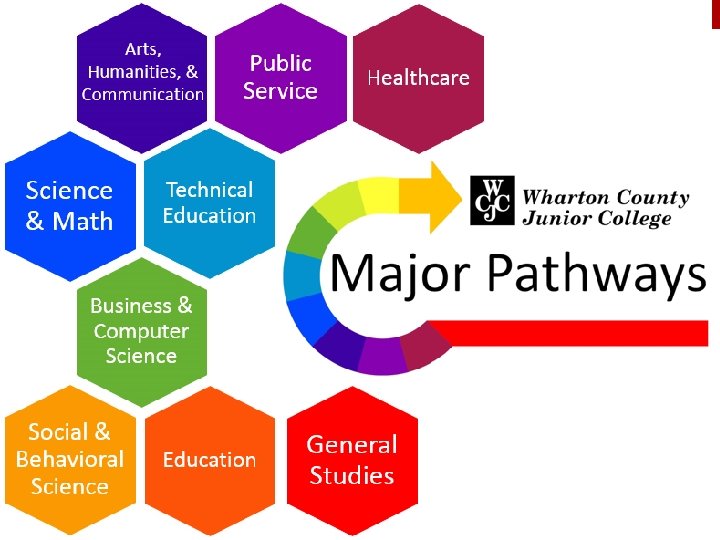
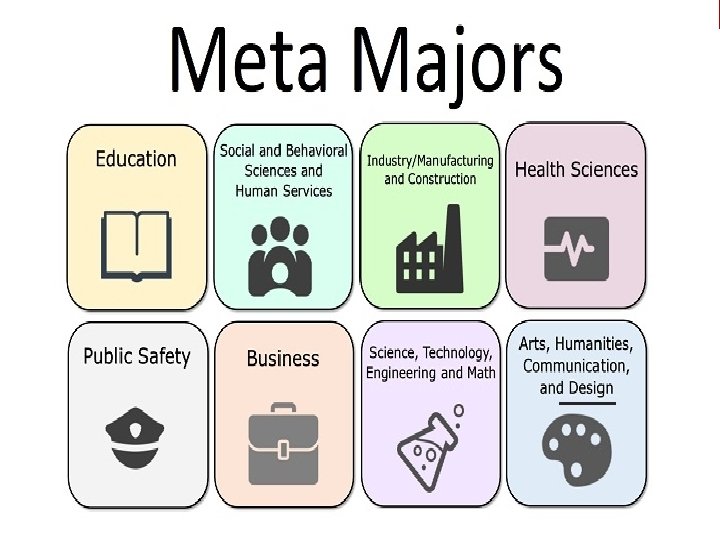
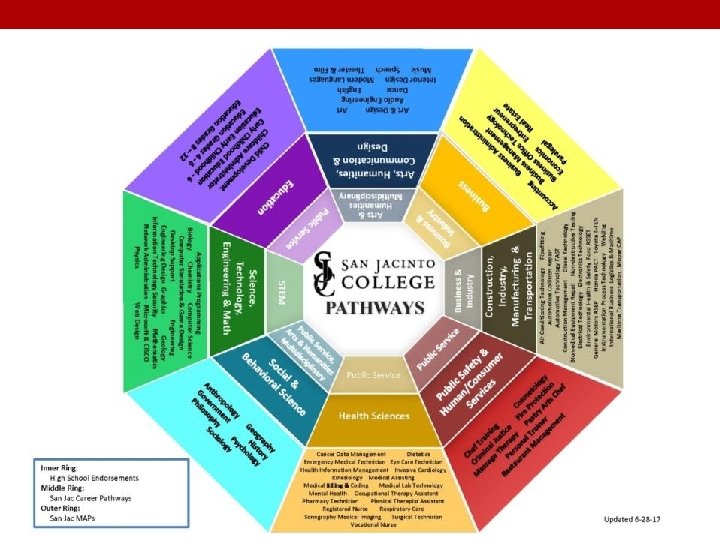
What are Meta Majors? Definitions… • Meta Majors are collections of academic majors that have related courses. • Meta Majors cluster groups of degrees and certificates that are considered similar from a student’s perspective. • Meta Majors give incoming students an opportunity for early exploration within a cluster of academic and career choices while still making progress to graduation. • More…
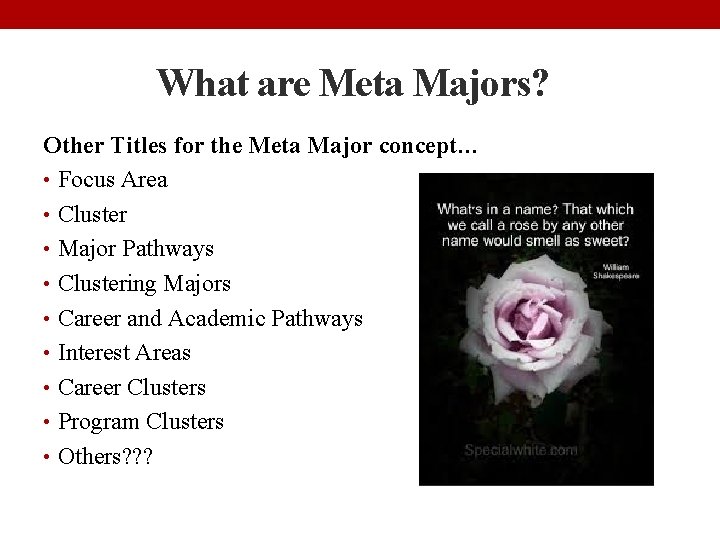
What are Meta Majors? Other Titles for the Meta Major concept… • Focus Area • Cluster • Major Pathways • Clustering Majors • Career and Academic Pathways • Interest Areas • Career Clusters • Program Clusters • Others? ? ?
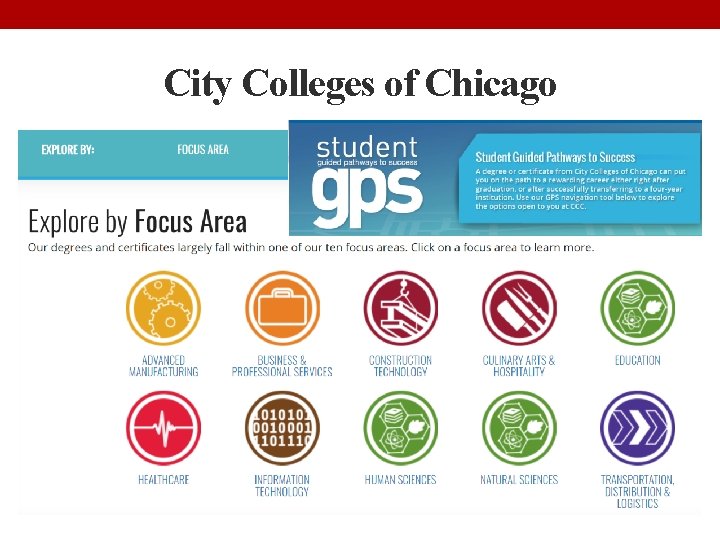
City Colleges of Chicago
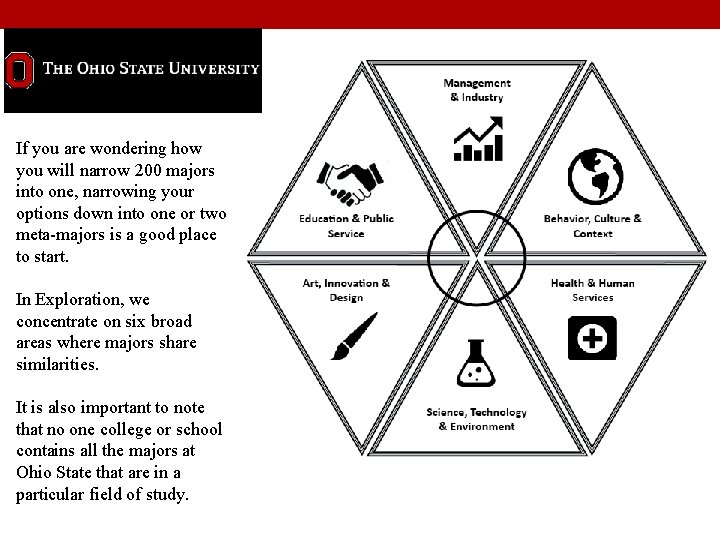
If you are wondering how you will narrow 200 majors into one, narrowing your options down into one or two meta-majors is a good place to start. In Exploration, we concentrate on six broad areas where majors share similarities. It is also important to note that no one college or school contains all the majors at Ohio State that are in a particular field of study.
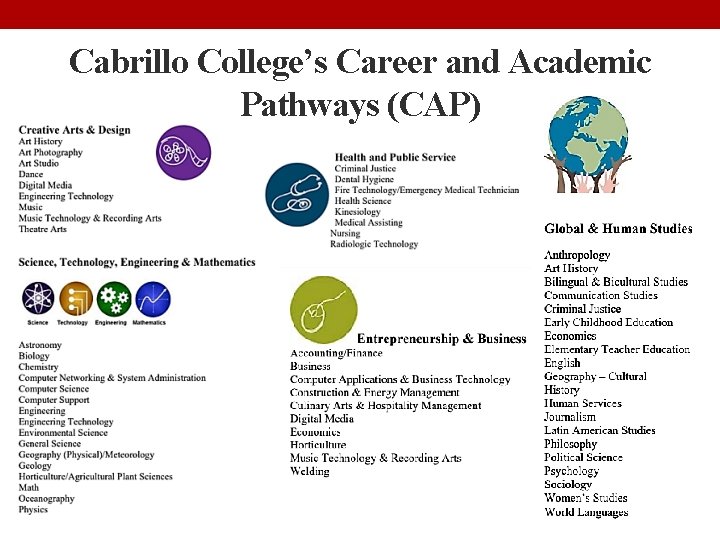
Cabrillo College’s Career and Academic Pathways (CAP)
General Education…
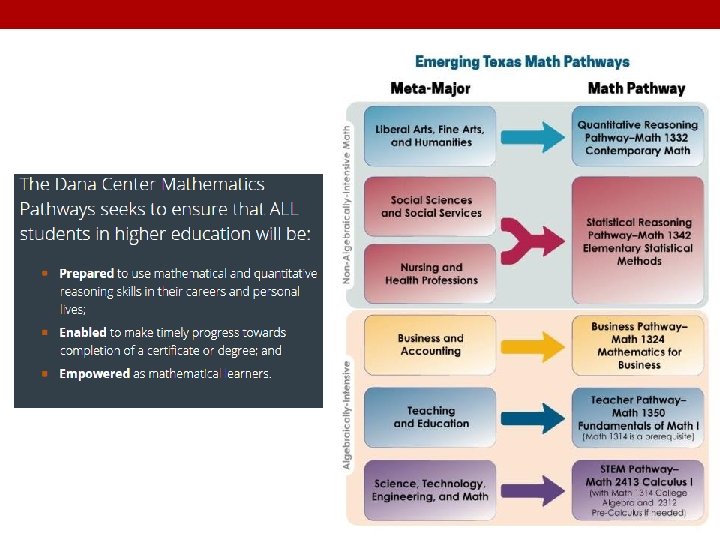
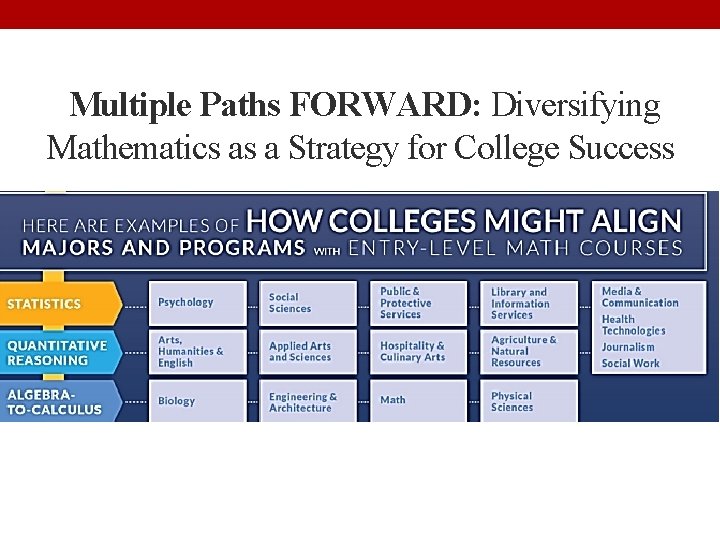
Multiple Paths FORWARD: Diversifying Mathematics as a Strategy for College Success
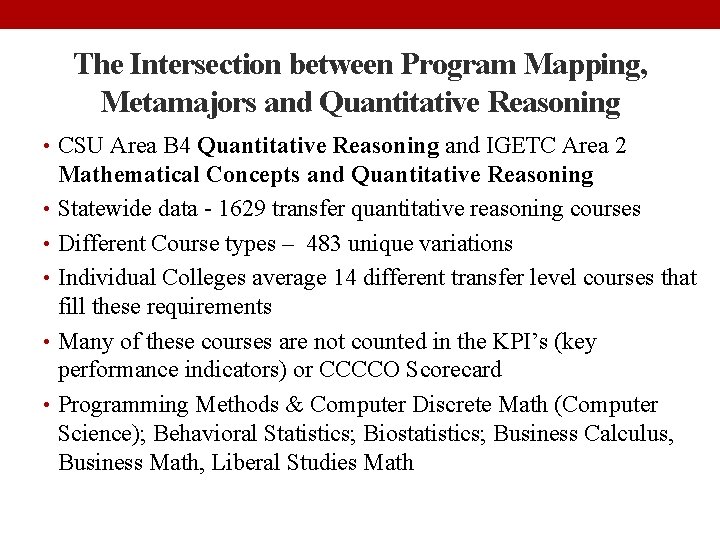
The Intersection between Program Mapping, Metamajors and Quantitative Reasoning • CSU Area B 4 Quantitative Reasoning and IGETC Area 2 Mathematical Concepts and Quantitative Reasoning • Statewide data - 1629 transfer quantitative reasoning courses • Different Course types – 483 unique variations • Individual Colleges average 14 different transfer level courses that fill these requirements • Many of these courses are not counted in the KPI’s (key performance indicators) or CCCCO Scorecard • Programming Methods & Computer Discrete Math (Computer Science); Behavioral Statistics; Biostatistics; Business Calculus, Business Math, Liberal Studies Math
Considerations for Guidelines to Construct Metamajors or Program Maps • Check conversations about meta-majors at participant colleges • Share any problems or solutions Potential solution: consider guidelines before creation • See handout • Discuss usefulness of guidelines • Did any of them consider these? • Would they suggest others
Analysis to Support Creating Meta Majors and Program Mapping • What is the full scope of programmatic offerings at the college? • Do the college’s programs align to the local labor market and/or university transfer partner? • Which general education courses align best to each Meta Major? • What are the common courses across all programs? • What is the required core within this Meta Major that allows students to branch off into various majors without losing any credits? • Which courses will introduce students to relevant faculty and career information early in their academic careers? • Which courses might not be included, and who needs to be involved in that decision?
Developing Meta Majors • Effective practices ("reverse engineering" from program outcomes) • Curricular considerations (overlap) • Facilitating the conversation between faculty from different disciplines and services • Student voice! • What about program mapping—which should be done first?
Program Mapping • DO we need them? • What are they? • Guidelines for program mapping…
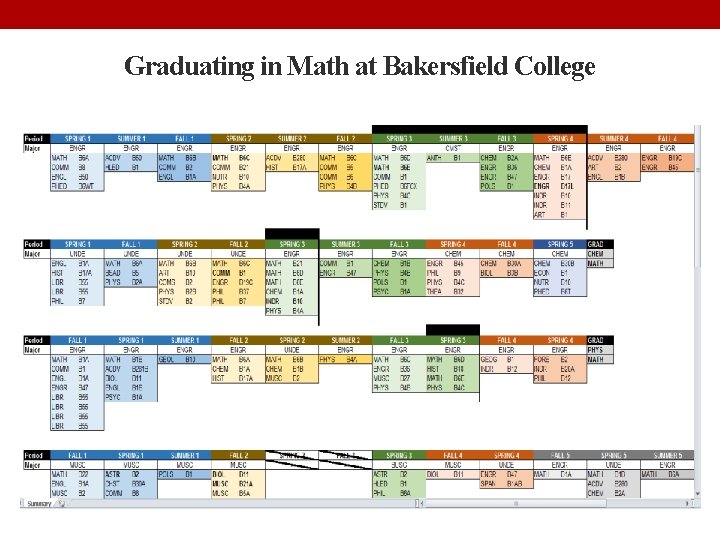
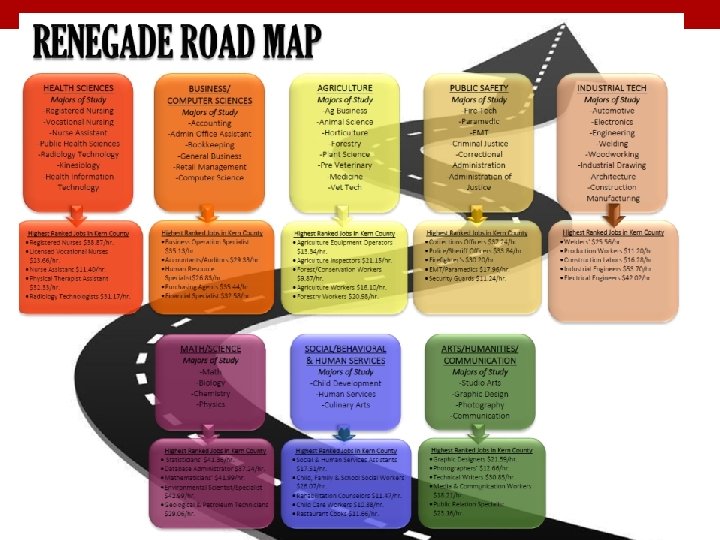
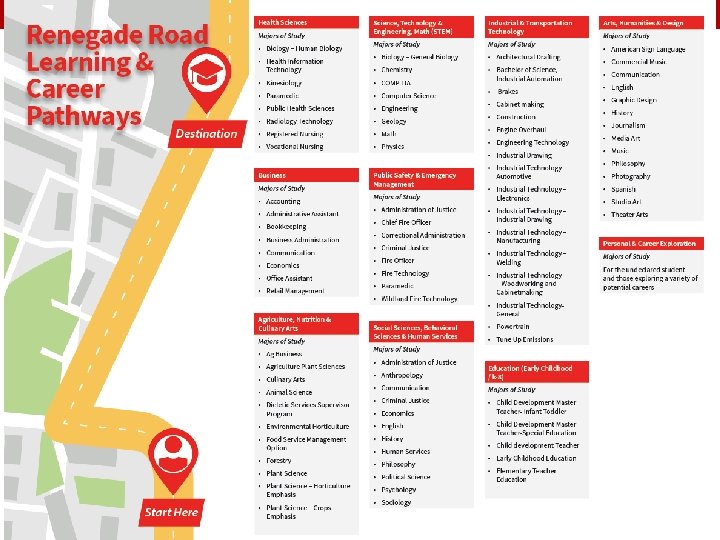
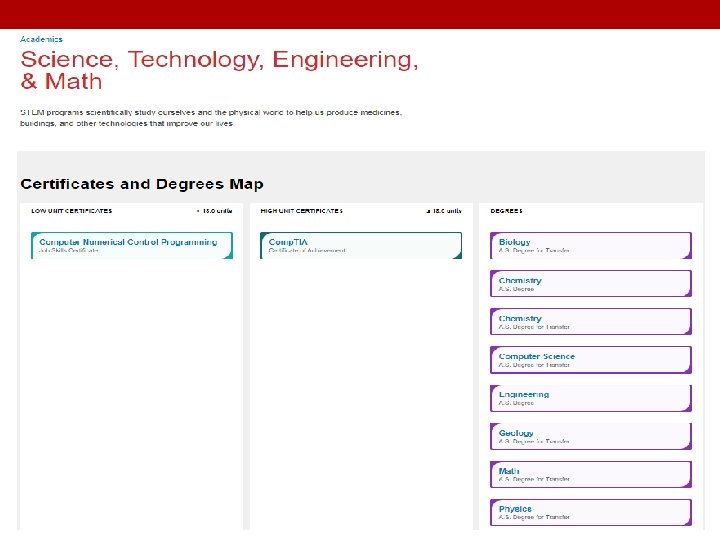
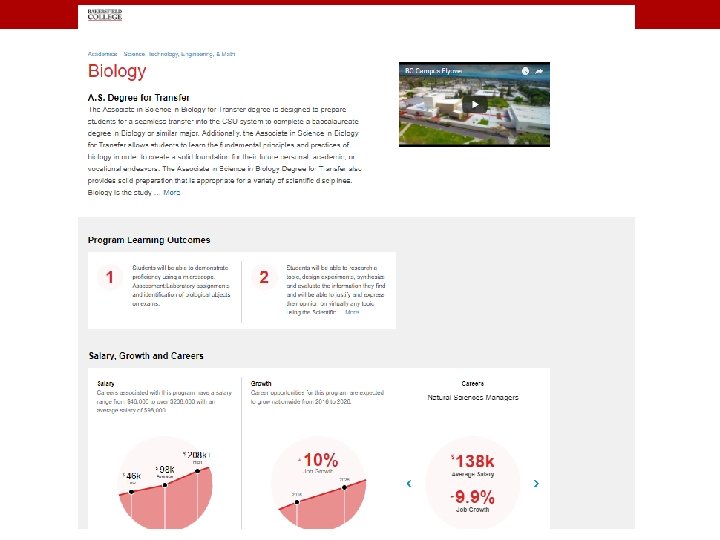
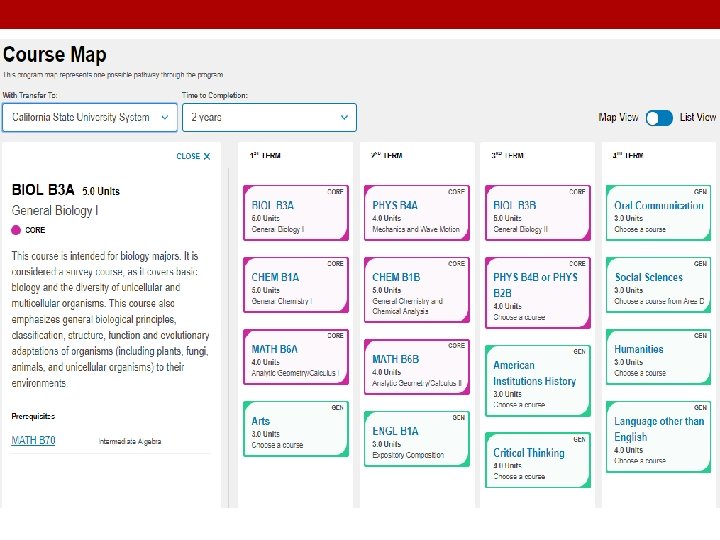
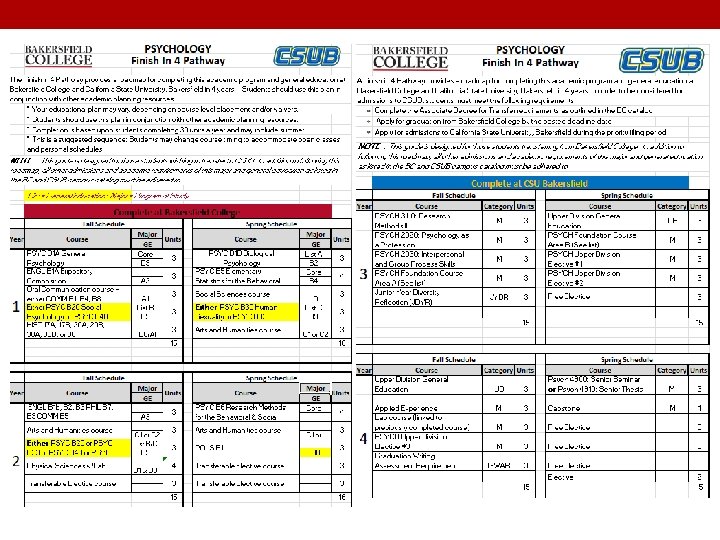
Graduating in Math at Bakersfield College • Sample Pathways at BC
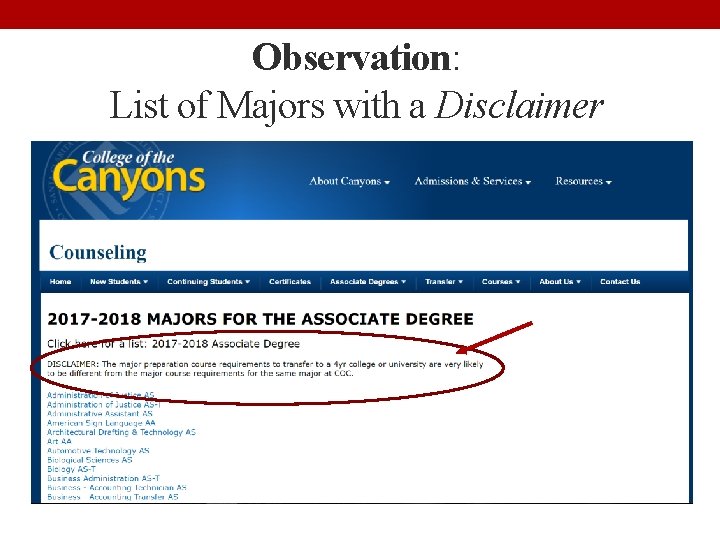
Observation: List of Majors with a Disclaimer
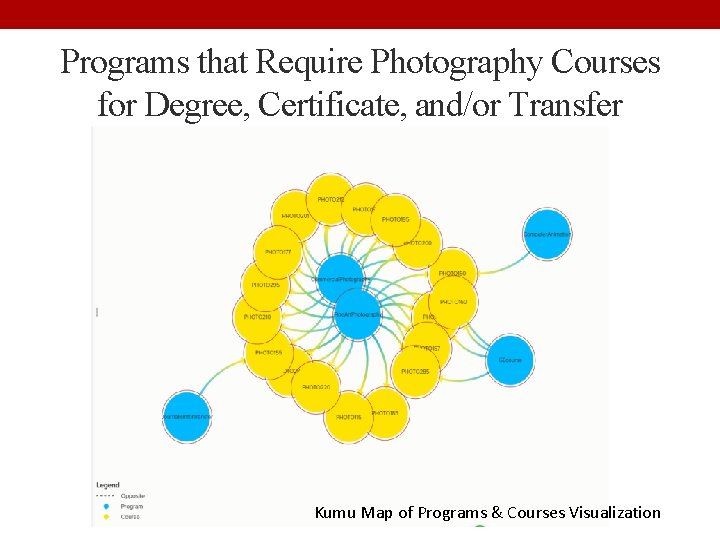
Programs that Require Photography Courses for Degree, Certificate, and/or Transfer Kumu Map of Programs & Courses Visualization
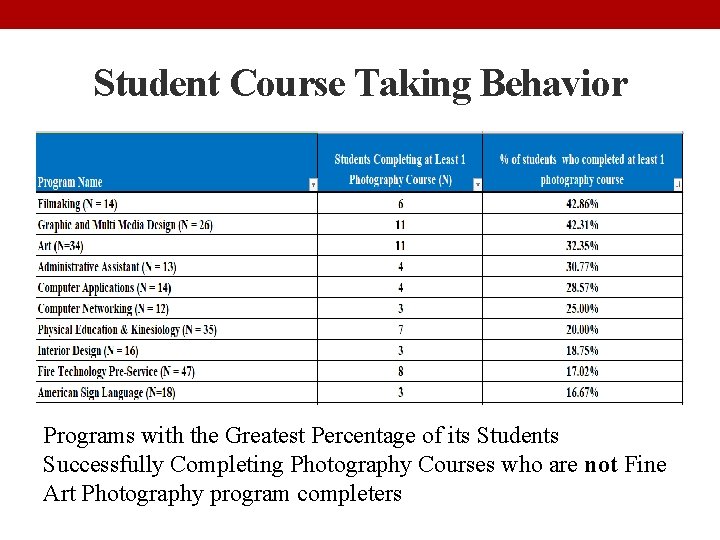
Student Course Taking Behavior Programs with the Greatest Percentage of its Students Successfully Completing Photography Courses who are not Fine Art Photography program completers
Iterative – Back to Meta Majors
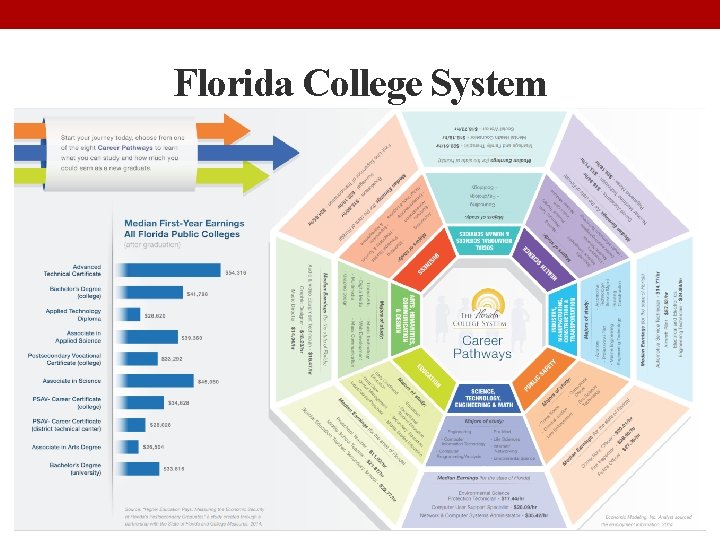
Florida College System
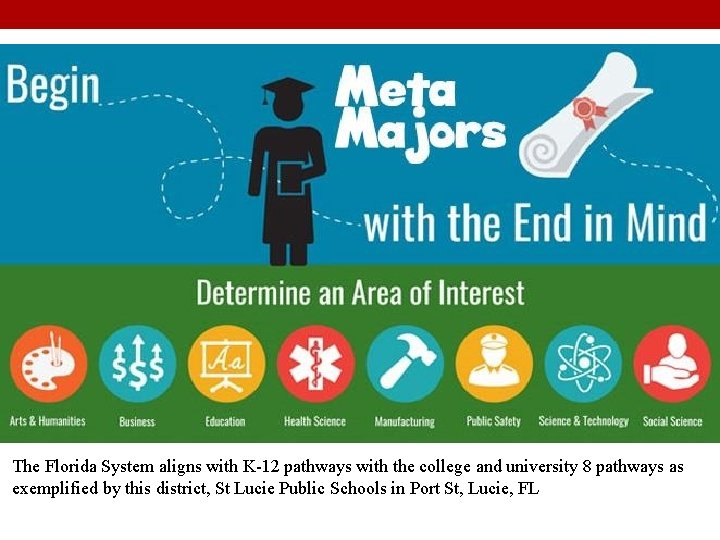
The Florida System aligns with K-12 pathways with the college and university 8 pathways as exemplified by this district, St Lucie Public Schools in Port St, Lucie, FL
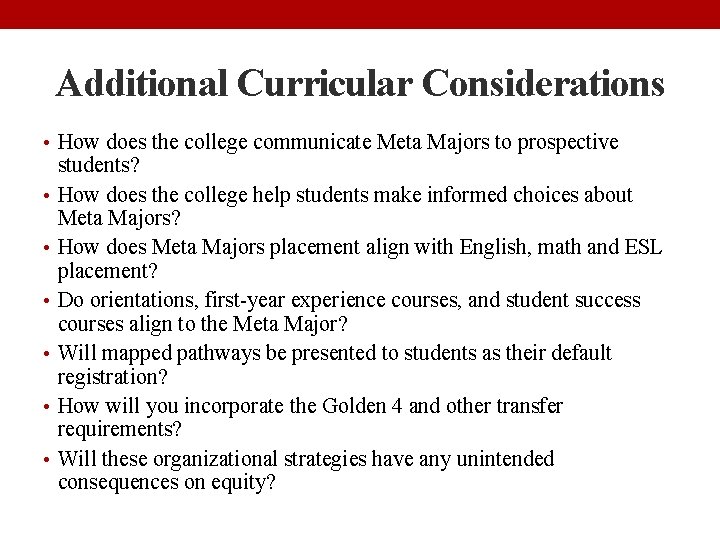
Additional Curricular Considerations • How does the college communicate Meta Majors to prospective • • • students? How does the college help students make informed choices about Meta Majors? How does Meta Majors placement align with English, math and ESL placement? Do orientations, first-year experience courses, and student success courses align to the Meta Major? Will mapped pathways be presented to students as their default registration? How will you incorporate the Golden 4 and other transfer requirements? Will these organizational strategies have any unintended consequences on equity?
Part Two
Program Mapping and “Meta. Majors”: Exploring the Issues Julie Bruno, Guided Pathways Lead Coordination, ASCCC Past President, Sierra College Janet Fulks, Guided Pathways Lead for Capacity Building, Bakersfield College Virginia May, ASCCC Treasurer, 2018 -19 Curriculum Chair, Sacramento City College Friday September 14 2: 30 -3: 45 PM
What are the intended outcomes? Outcome #1 Using the worksheet, identify key needs for your college and plan discussions Outcome #2 Analyze how metamajors can facilitate positive effects for your college and students by • Providing the ability to message and support students at critical points • Linking degree results with both employment and transfer • Analyzing data relevant to students by programs • Clarity
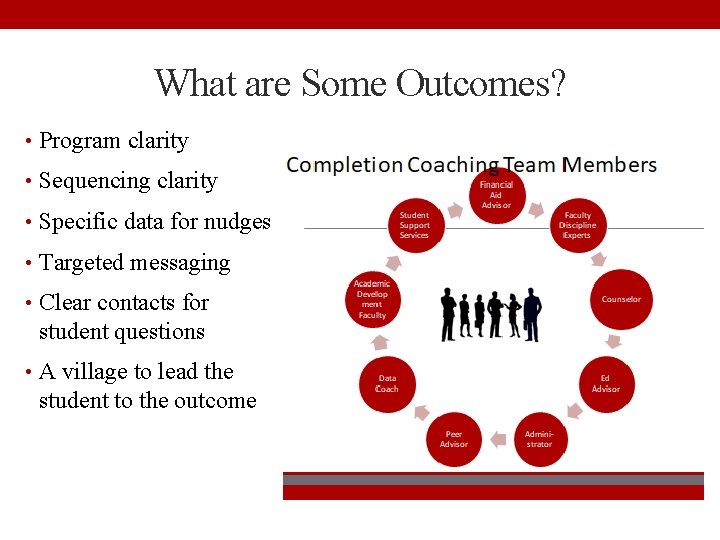
What are Some Outcomes? • Program clarity • Sequencing clarity • Specific data for nudges • Targeted messaging • Clear contacts for student questions • A village to lead the student to the outcome
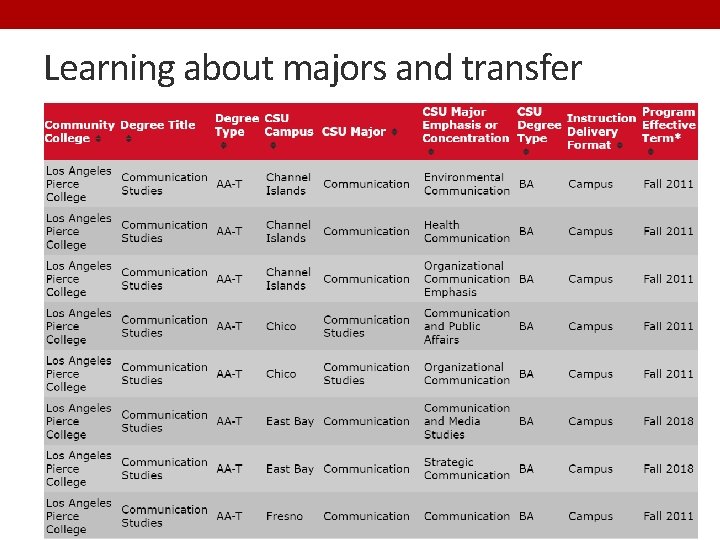
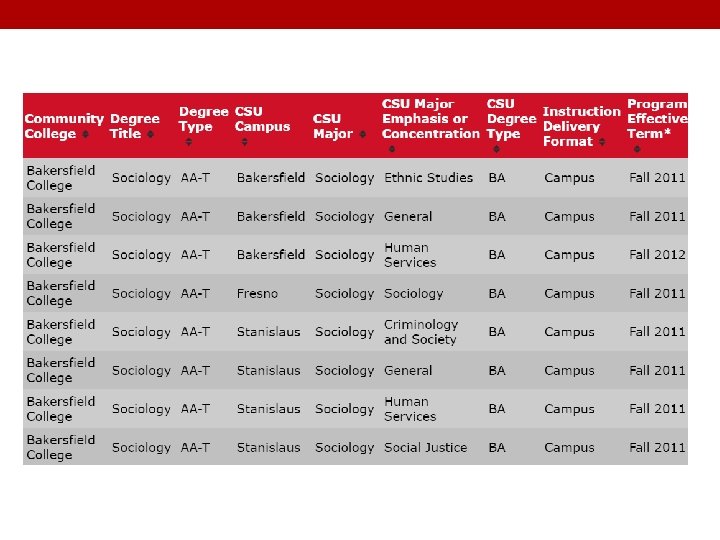
Learning about majors and transfer
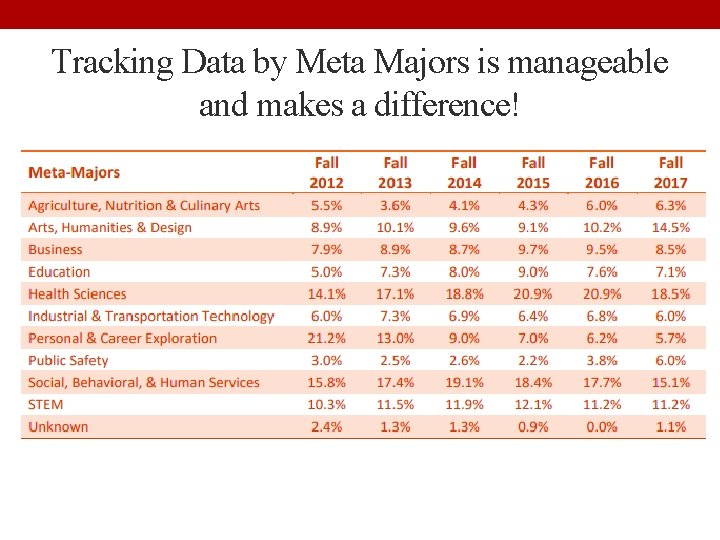
Tracking Data by Meta Majors is manageable and makes a difference!
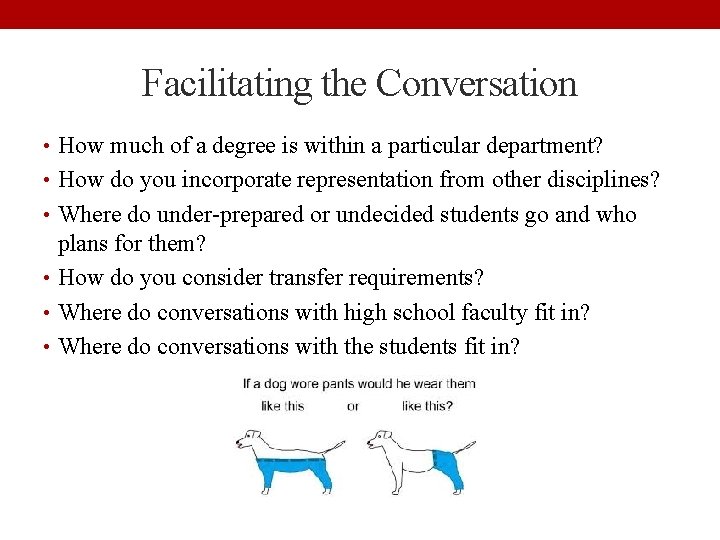
Facilitating the Conversation • How much of a degree is within a particular department? • How do you incorporate representation from other disciplines? • Where do under-prepared or undecided students go and who plans for them? • How do you consider transfer requirements? • Where do conversations with high school faculty fit in? • Where do conversations with the students fit in?
Let’s give it a try! • See scenarios… • ASCCC also has an exercise for colleges to try and use that looks at programs and potential metamajors NOT at their college
Follow-up Discussion and Q&A • What aspect of Meta Major development do you think will work best at your college? • What aspect will be the most challenging? • For those that have already begun Meta Major development, what worked well, and what didn’t?
Additional Resources Meta-Majors: An Essential First Step on the Path to College Completion (JFF) http: //www. jff. org/publications/meta-majors-essential-first-step-path-college-completion How meta-majors guide students toward on-time graduation (EAB) https: //www. eab. com/daily-briefing/2016/07/26/how-meta-majors-guide-students-toward-ontime-graduation • Key Meta-Major Questions to Consider https: //jfforg-prod-prime. s 3. amazonaws. com/media/documents/Meta-Majors-Key-Questions 071816. pdf • Multiple Paths FORWARD: Diversifying Mathematics as a Strategy for College Success https: //www. wested. org/wp-content/uploads/2018/05/Multiple-Paths-Forward-Booth. pdf • Quantitative Reasoning the Next “Across the Curriculum” Movement by (AACU) Susan Elrod, 2014 https: //www. aacu. org/peerreview/2014/summer/elrod • The Dana Center Mathematics Pathways: The Right Math for the Right Student at the Right Time https: //dcmathpathways. org/dcmp-model