
Program Fidelity The Key to Intervention Success Dr
- Slides: 26
Program Fidelity: The Key to Intervention Success Dr. Alan Edmunds & Monica Caldeira Western University, London, ON
What is program fidelity? Can you give examples of program fidelity (good or bad) in studies/interventions?
Program Fidelity: the strict adherence by educators to follow an intervention exactly as it was intended
For example: A researcher requests a user to run the intervention 10 times a day, every day, at 30 minute intervals and using the exact script provided to them
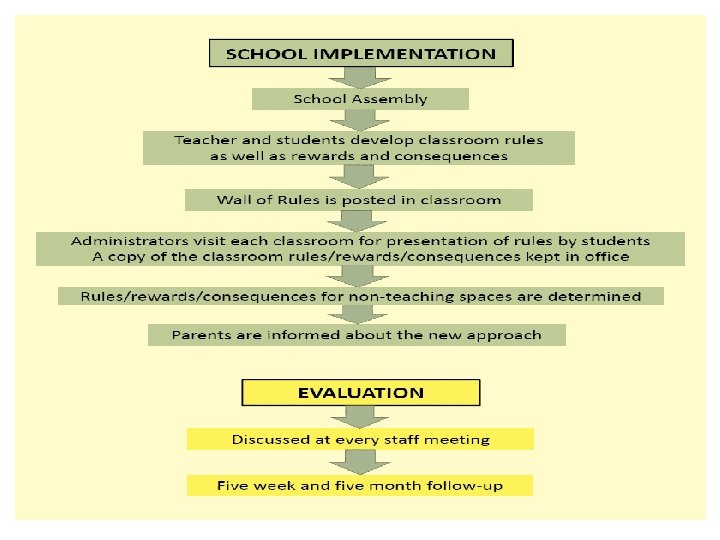
For example: Dynamic Classroom Management (DCM) requires: • All adults in the building have a very important role in the program. • Program implementation will begin with an assembly attended by all adults and students. • The trainer will be present in the school for the first few days of program implementation. • Administrators will visit all classrooms to hear students’ presentation of class rules. A copy of each set of classroom rules will be kept in the office. • Rules for non‐teaching spaces will be established and communicated to students. • The DCM Program will be an item on the agenda of every staff meeting.
Why program fidelity matters: • Improvements for students • Improvements for the classroom • Improvements for the school
Current state of program fidelity in research: • Program fidelity is often overlooked • 14% ‐ 25% of studies • No specific guidelines
Suggested requirements for program fidelity: • Staff buy‐in • Sense of support • Definitions/examples provided • Orientation provided at beginning of school year • Researchers should be checking in • Everyone should know what is expected • Regular data collection
Dynamic Classroom Management
Why is DCM needed? • Misbehaviour is one of the most serious problems facing schools • Misbehaviour undermines student learning and achievement • Classroom management problems are the major cause of teacher burn out
Dynamic Classroom Management: • Sets the stage to purposefully elicit good behaviours • Stresses prevention by systematic management design • Stops problematic behaviours • Facilitates long‐term change
Theoretical basis: • Positive Behavioural Interventions and Supports (PBIS) • Examines what causes and sustains behaviour • Most important feature is instructional and educational emphasis
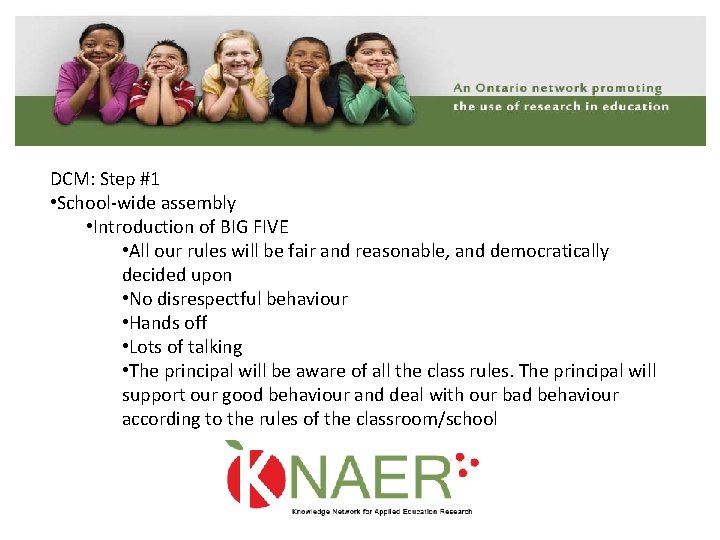
DCM: Step #1 • School‐wide assembly • Introduction of BIG FIVE • All our rules will be fair and reasonable, and democratically decided upon • No disrespectful behaviour • Hands off • Lots of talking • The principal will be aware of all the class rules. The principal will support our good behaviour and deal with our bad behaviour according to the rules of the classroom/school
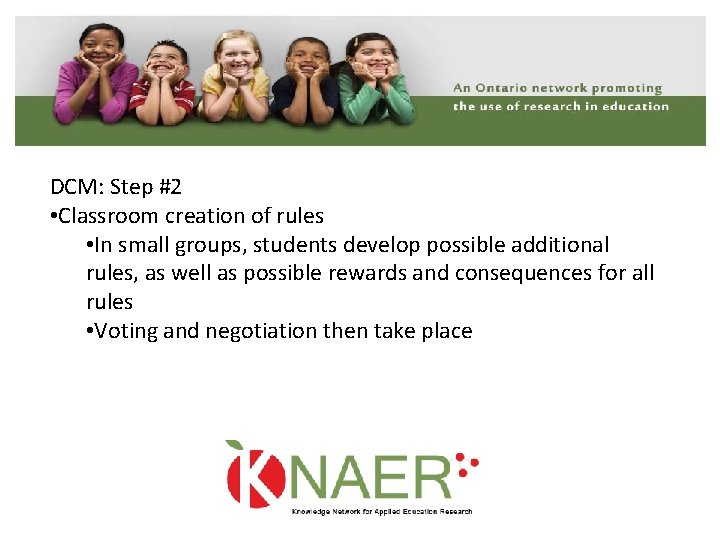
DCM: Step #2 • Classroom creation of rules • In small groups, students develop possible additional rules, as well as possible rewards and consequences for all rules • Voting and negotiation then take place
DCM: Step #3 • Wall of rules is posted in classroom
DCM: Step #4 • Administrators visit the classroom
DCM: Step #5 • Rules, rewards and consequences are determined for non‐teaching spaces
DCM: Step #6 • Parents are informed of DCM plan
DCM: Step #7 • Must be on agenda every staff meeting
DCM: Step #8 • Interventionist follows up
DCM has resulted in: • Demonstrable improvements in student behaviours • Demonstrable reductions in referrals to the principal’s office • Heightened student engagement in developing and following school rules • Overall enhancement of the tone of classrooms and schools
DCM teaches students: • Rules are logical and necessary • Their feelings are valid and honoured • They can assertively stand up for their own rights • With rights comes responsibility • Their behaviour is under their control • The whole class is under their control • Problem‐solving defuses confrontation
DCM meets the suggested requirements for program fidelity: • Staff buy‐in • Sense of support • Definitions/examples provided • Orientation provided at beginning of school year • Researchers should be checking in • Everyone should know what is expected • Regular data collection
For more information about DCM and program fidelity: http: //www. edu. uwo. ca/dynamic‐classroom‐ management/index. asp
Questions?