
Program Development Implementation and Evaluation Kingsley Agho School
- Slides: 17
Program Development, Implementation and Evaluation Kingsley Agho School of Science and Health
Research grant writing Infant and young child feeding (IYCF) education and its impact on infant mortality in rural Nepal
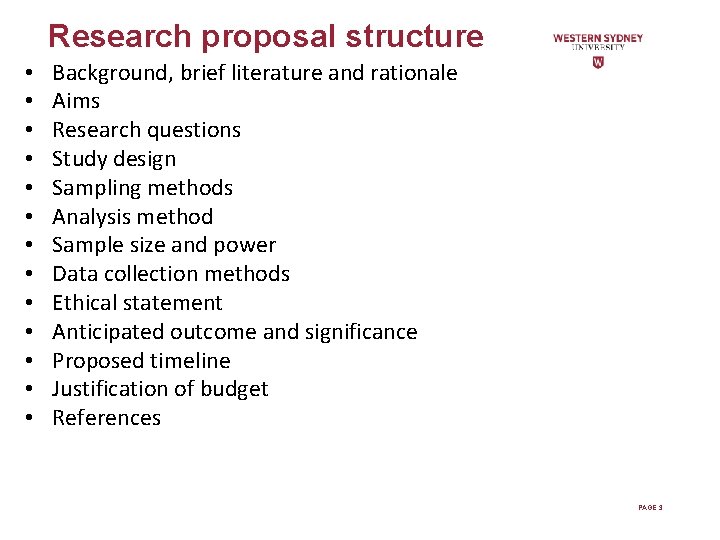
Research proposal structure • • • • Background, brief literature and rationale Aims Research questions Study design Sampling methods Analysis method Sample size and power Data collection methods Ethical statement Anticipated outcome and significance Proposed timeline Justification of budget References PAGE 3
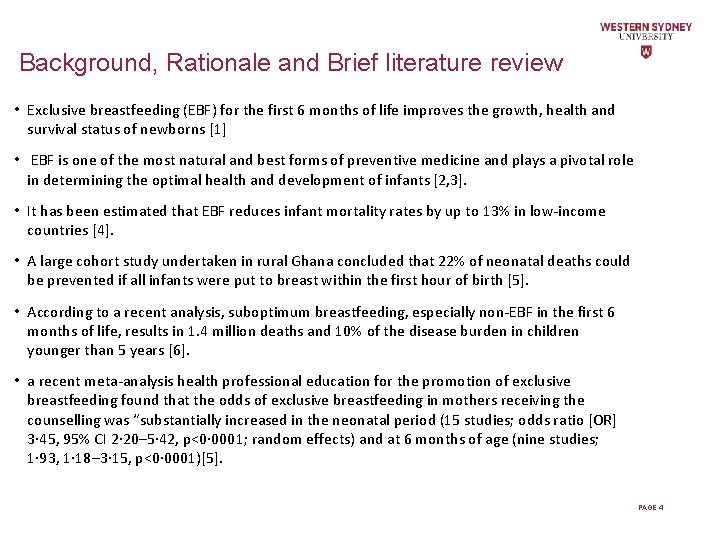
Background, Rationale and Brief literature review • Exclusive breastfeeding (EBF) for the first 6 months of life improves the growth, health and survival status of newborns [1] • EBF is one of the most natural and best forms of preventive medicine and plays a pivotal role in determining the optimal health and development of infants [2, 3]. • It has been estimated that EBF reduces infant mortality rates by up to 13% in low-income countries [4]. • A large cohort study undertaken in rural Ghana concluded that 22% of neonatal deaths could be prevented if all infants were put to breast within the first hour of birth [5]. • According to a recent analysis, suboptimum breastfeeding, especially non-EBF in the first 6 months of life, results in 1. 4 million deaths and 10% of the disease burden in children younger than 5 years [6]. • a recent meta-analysis health professional education for the promotion of exclusive breastfeeding found that the odds of exclusive breastfeeding in mothers receiving the counselling was “substantially increased in the neonatal period (15 studies; odds ratio [OR] 3· 45, 95% CI 2· 20– 5· 42, p<0· 0001; random effects) and at 6 months of age (nine studies; 1· 93, 1· 18– 3· 15, p<0· 0001)[5]. PAGE 4
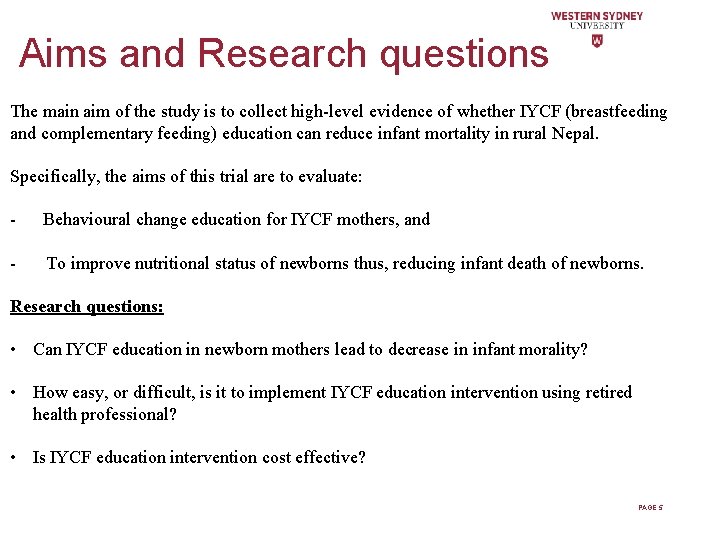
Aims and Research questions The main aim of the study is to collect high-level evidence of whether IYCF (breastfeeding and complementary feeding) education can reduce infant mortality in rural Nepal. Specifically, the aims of this trial are to evaluate: - Behavioural change education for IYCF mothers, and - To improve nutritional status of newborns thus, reducing infant death of newborns. Research questions: • Can IYCF education in newborn mothers lead to decrease in infant morality? • How easy, or difficult, is it to implement IYCF education intervention using retired health professional? • Is IYCF education intervention cost effective? PAGE 5
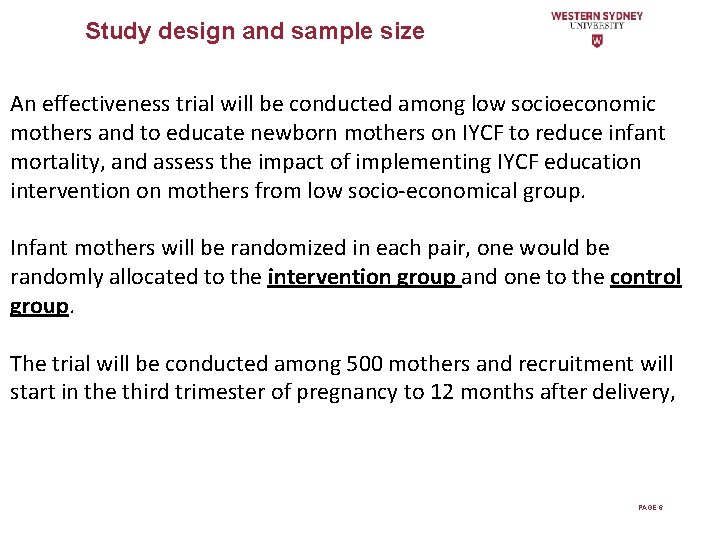
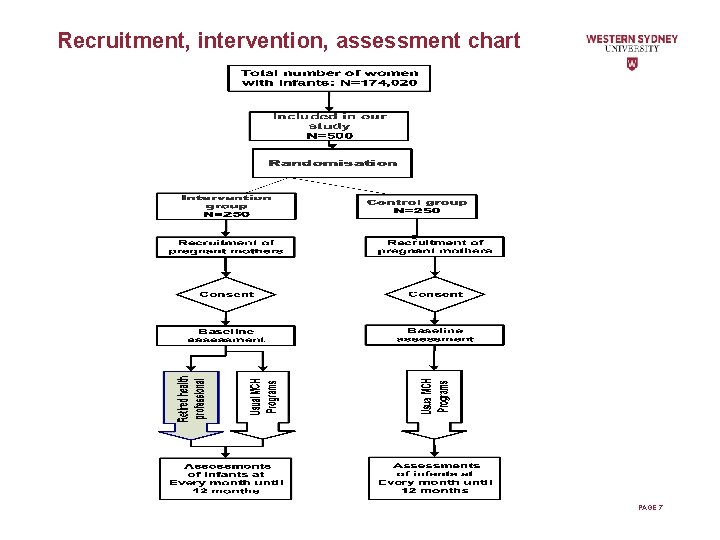
Study design and sample size An effectiveness trial will be conducted among low socioeconomic mothers and to educate newborn mothers on IYCF to reduce infant mortality, and assess the impact of implementing IYCF education intervention on mothers from low socio-economical group. Infant mothers will be randomized in each pair, one would be randomly allocated to the intervention group and one to the control group. The trial will be conducted among 500 mothers and recruitment will start in the third trimester of pregnancy to 12 months after delivery, PAGE 6
Recruitment, intervention, assessment chart PAGE 7
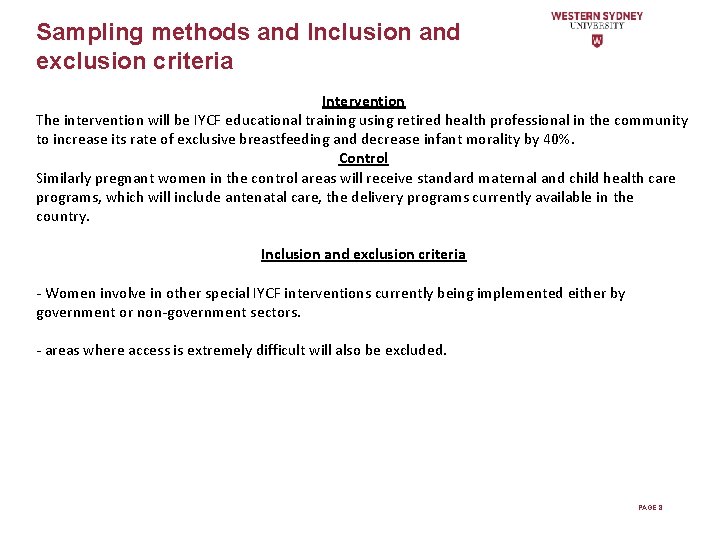
Sampling methods and Inclusion and exclusion criteria Intervention The intervention will be IYCF educational training using retired health professional in the community to increase its rate of exclusive breastfeeding and decrease infant morality by 40%. Control Similarly pregnant women in the control areas will receive standard maternal and child health care programs, which will include antenatal care, the delivery programs currently available in the country. Inclusion and exclusion criteria - Women involve in other special IYCF interventions currently being implemented either by government or non-government sectors. - areas where access is extremely difficult will also be excluded. PAGE 8
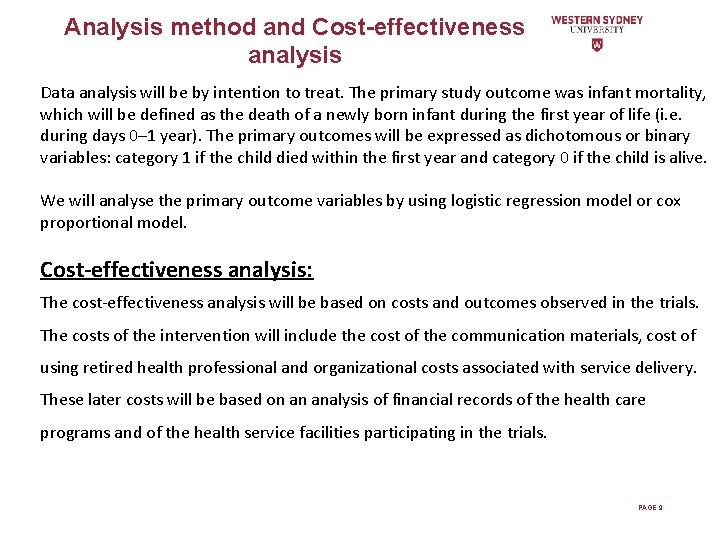
Analysis method and Cost-effectiveness analysis Data analysis will be by intention to treat. The primary study outcome was infant mortality, which will be defined as the death of a newly born infant during the first year of life (i. e. during days 0– 1 year). The primary outcomes will be expressed as dichotomous or binary variables: category 1 if the child died within the first year and category 0 if the child is alive. We will analyse the primary outcome variables by using logistic regression model or cox proportional model. Cost-effectiveness analysis: The cost-effectiveness analysis will be based on costs and outcomes observed in the trials. The costs of the intervention will include the cost of the communication materials, cost of using retired health professional and organizational costs associated with service delivery. These later costs will be based on an analysis of financial records of the health care programs and of the health service facilities participating in the trials. PAGE 9
Measurements Based on literature search, the factors listed below are potential risk factors on infant mortality. - SOCIOECONOMIC DETERMINANTS - PROXIMATE DETERMINANTS - ANTHROPOMETRY VARIABLES: Trained research assistants will collect anthropometric measurements (weight and height) using established methods and will record these measurements on both the research instruments and an infant growth chart for the mother to hold. PAGE 10
Data collection methods Data correction methods are as followings: Paper based questionnaires Tablets - Open Data Kit system System of field data editing Web based data entry using open source software (called openclinica). The openclinica data entry software is available for free on: http: //www. openclinica. org • Data entry screening checks • System of error reporting • • PAGE 11
Ethical Issues This research does not contain any new intervention or drugs. Mother of infants and infants in need of health care will be referred to the nearest medical care centre or hospitals. The study will be conducted according to the Declaration of Helsinki, and we shall get ethical clearance from the Ethical Review Board of the Regional Health Bureau in Nepal. All study records will be maintained in a secured location. PAGE 12
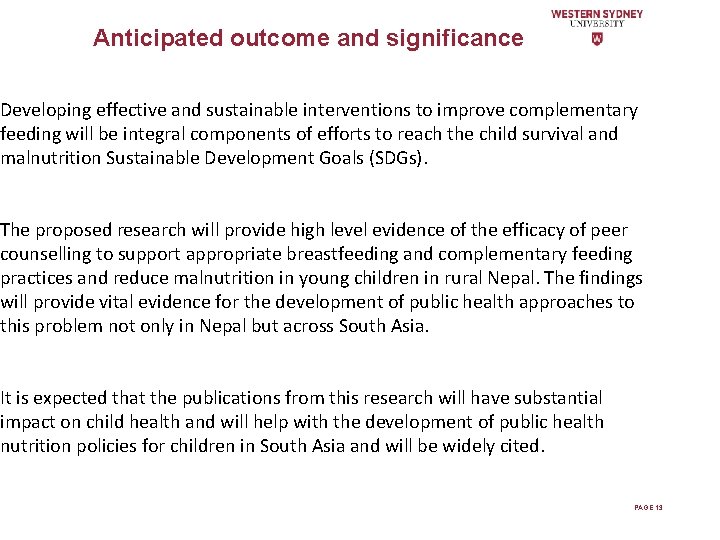
Anticipated outcome and significance Developing effective and sustainable interventions to improve complementary feeding will be integral components of efforts to reach the child survival and malnutrition Sustainable Development Goals (SDGs). The proposed research will provide high level evidence of the efficacy of peer counselling to support appropriate breastfeeding and complementary feeding practices and reduce malnutrition in young children in rural Nepal. The findings will provide vital evidence for the development of public health approaches to this problem not only in Nepal but across South Asia. It is expected that the publications from this research will have substantial impact on child health and will help with the development of public health nutrition policies for children in South Asia and will be widely cited. PAGE 13
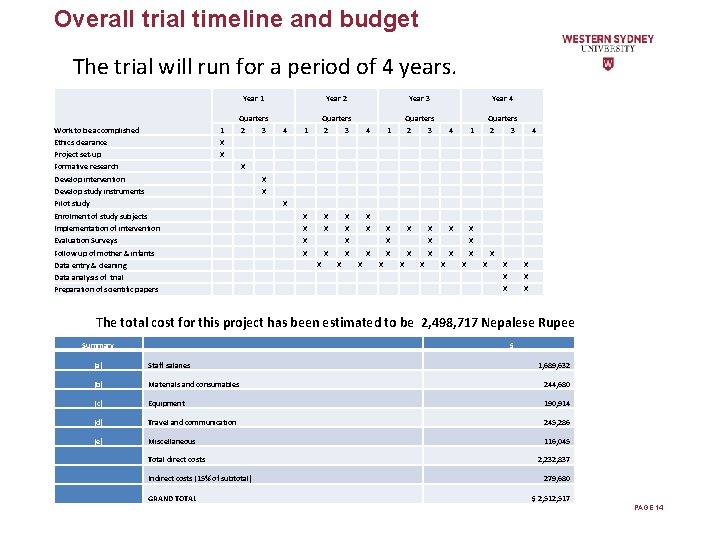
Overall trial timeline and budget The trial will run for a period of 4 years. Year 1 Year 2 Quarters Work to be accomplished Ethics clearance 1 X Project set-up Formative research Year 3 Quarters Year 4 Quarters 2 3 4 1 2 3 4 X Develop intervention X Develop study instruments X Pilot study X Enrolment of study subjects X X Implementation of intervention X X X X X Evaluation Surveys X X X Follow up of mother & infants X X X X X Data entry & cleaning Data analysis of trial Preparation of scientific papers X X X X X The total cost for this project has been estimated to be 2, 498, 717 Nepalese Rupee Summary $ (a) Staff salaries (b) Materials and consumables 244, 680 (c) Equipment 190, 914 (d) Travel and communication 245, 286 (e) Miscellaneous 116, 045 Total direct costs Indirect costs (15% of subtotal) GRAND TOTAL 1, 689, 632 2, 232, 837 279, 680 $ 2, 517 PAGE 14
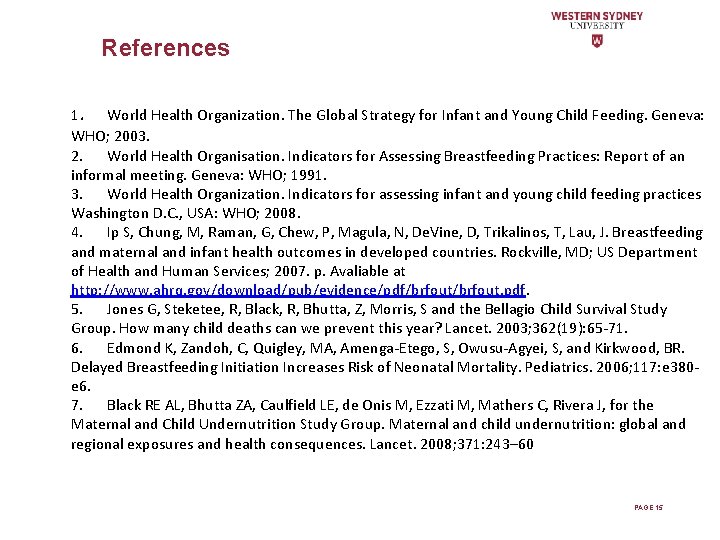
References 1. World Health Organization. The Global Strategy for Infant and Young Child Feeding. Geneva: WHO; 2003. 2. World Health Organisation. Indicators for Assessing Breastfeeding Practices: Report of an informal meeting. Geneva: WHO; 1991. 3. World Health Organization. Indicators for assessing infant and young child feeding practices Washington D. C. , USA: WHO; 2008. 4. Ip S, Chung, M, Raman, G, Chew, P, Magula, N, De. Vine, D, Trikalinos, T, Lau, J. Breastfeeding and maternal and infant health outcomes in developed countries. Rockville, MD; US Department of Health and Human Services; 2007. p. Avaliable at http: //www. ahrq. gov/download/pub/evidence/pdf/brfout. pdf. 5. Jones G, Steketee, R, Black, R, Bhutta, Z, Morris, S and the Bellagio Child Survival Study Group. How many child deaths can we prevent this year? Lancet. 2003; 362(19): 65 -71. 6. Edmond K, Zandoh, C, Quigley, MA, Amenga-Etego, S, Owusu-Agyei, S, and Kirkwood, BR. Delayed Breastfeeding Initiation Increases Risk of Neonatal Mortality. Pediatrics. 2006; 117: e 380 e 6. 7. Black RE AL, Bhutta ZA, Caulfield LE, de Onis M, Ezzati M, Mathers C, Rivera J, for the Maternal and Child Undernutrition Study Group. Maternal and child undernutrition: global and regional exposures and health consequences. Lancet. 2008; 371: 243– 60 PAGE 15
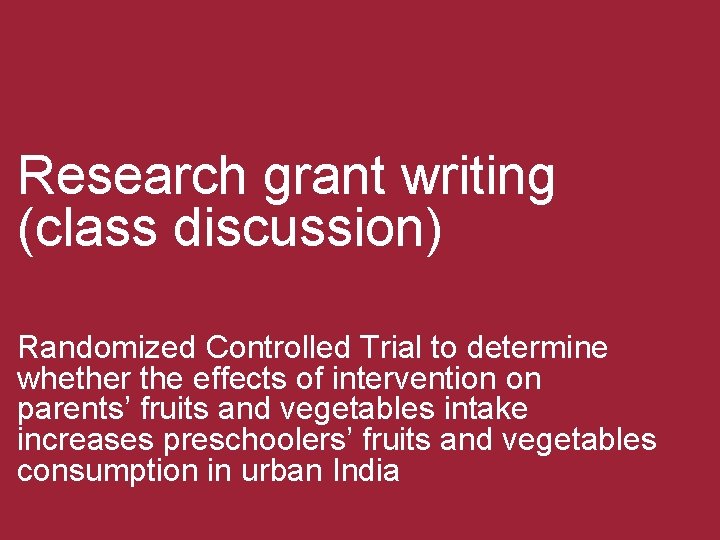
Research grant writing (class discussion) Randomized Controlled Trial to determine whether the effects of intervention on parents’ fruits and vegetables intake increases preschoolers’ fruits and vegetables consumption in urban India
Aims and Research questions determine whether intervention on parent intake of fruits and vegetables increases preschoolers’ fruits and vegetables consumptions. We hypothesized in this study that intervention on parents’ intake of fruits and vegetables increases preschoolers’ fruits and vegetables consumption after 2 - and 6 -months in urban India. PAGE 17