
PROGERIA By Monica Cruz Progeria is a genetic

PROGERIA By: Monica Cruz
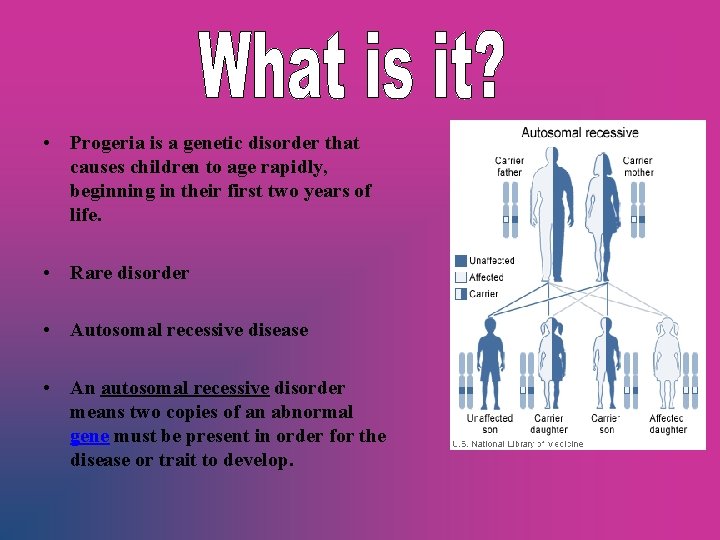
• Progeria is a genetic disorder that causes children to age rapidly, beginning in their first two years of life. • Rare disorder • Autosomal recessive disease • An autosomal recessive disorder means two copies of an abnormal gene must be present in order for the disease or trait to develop.
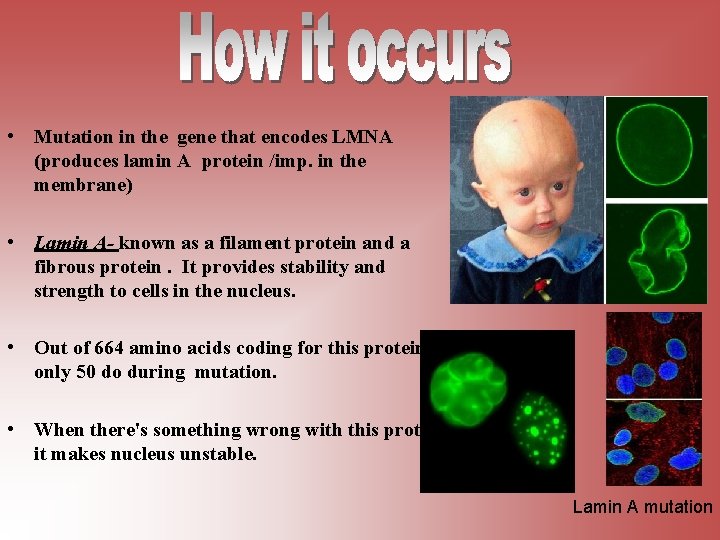
• Mutation in the gene that encodes LMNA (produces lamin A protein /imp. in the membrane) • Lamin A- known as a filament protein and a fibrous protein. It provides stability and strength to cells in the nucleus. • Out of 664 amino acids coding for this protein only 50 do during mutation. • When there's something wrong with this protein it makes nucleus unstable. Lamin A mutation
• Known as Hutchinson-Gilford Progeria Syndrome (HGPS) • The name is Greek and means “prematurely old. “ • live only up to 13 years • It effects 1 in 8 million newborns worldwide • If you are born to parents who both carry an autosomal recessive change (mutation), you have a 1 in 4 chance of getting the malfunctioning genes from both parents and developing the disease.
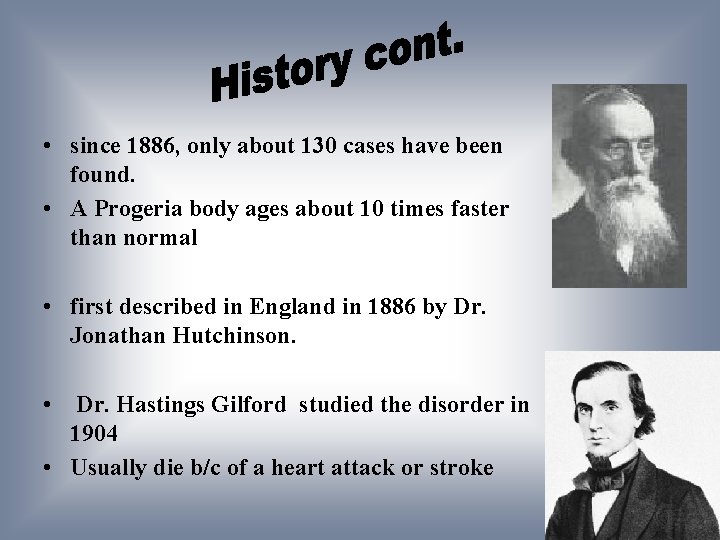
• since 1886, only about 130 cases have been found. • A Progeria body ages about 10 times faster than normal • first described in England in 1886 by Dr. Jonathan Hutchinson. • Dr. Hastings Gilford studied the disorder in 1904 • Usually die b/c of a heart attack or stroke
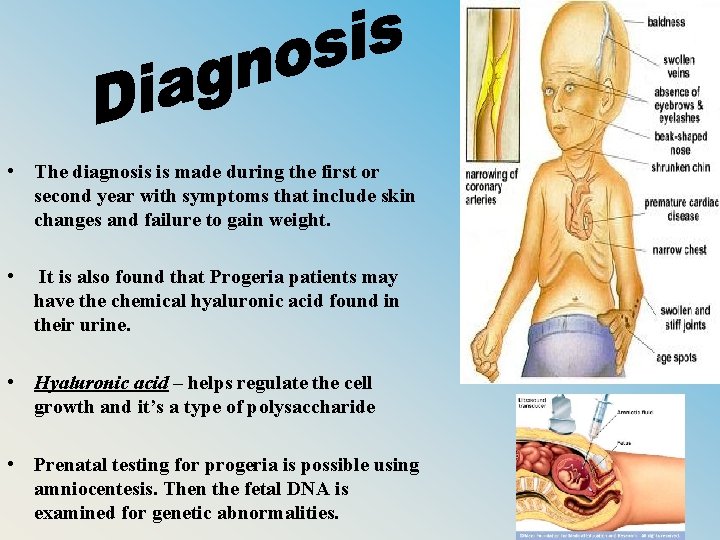
• The diagnosis is made during the first or second year with symptoms that include skin changes and failure to gain weight. • It is also found that Progeria patients may have the chemical hyaluronic acid found in their urine. • Hyaluronic acid – helps regulate the cell growth and it’s a type of polysaccharide • Prenatal testing for progeria is possible using amniocentesis. Then the fetal DNA is examined for genetic abnormalities.
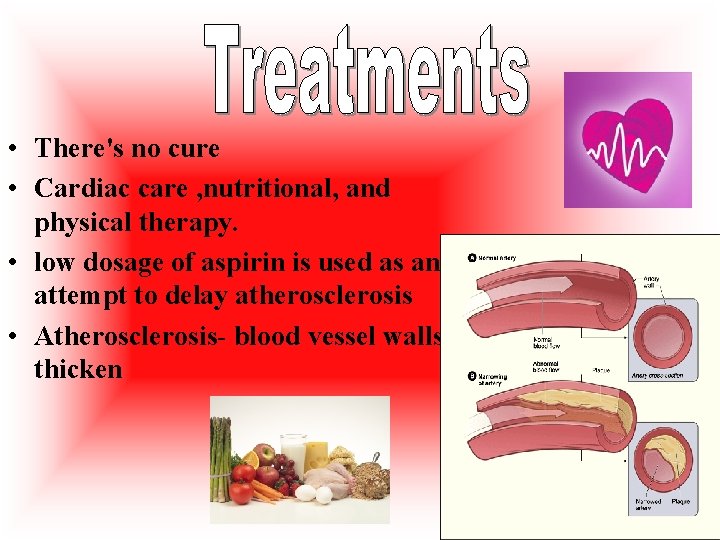
• There's no cure • Cardiac care , nutritional, and physical therapy. • low dosage of aspirin is used as an attempt to delay atherosclerosis • Atherosclerosis- blood vessel walls thicken
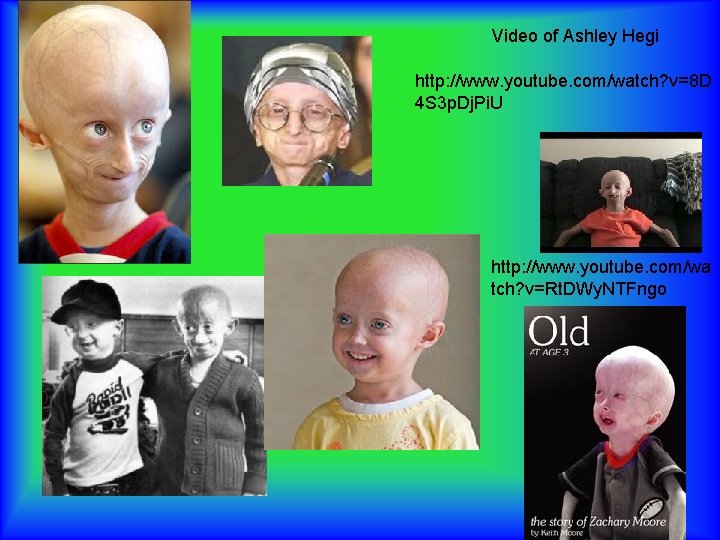
Video of Ashley Hegi http: //www. youtube. com/watch? v=8 D 4 S 3 p. Dj. Pi. U http: //www. youtube. com/wa tch? v=Rt. DWy. NTFngo

• www. progeriaresearch. org • www. medicalnewstoday. com/articles/ • www. mayoclinic. com/health/progeria/ • www. rareglobaldiseases. com/progeria_history. php • www. medterms. com/script/main/art. asp? articlekey= 4396 w
- Slides: 9