
Profitability Livelihoods and Value Chains Structural Transformation in
Profitability, Livelihoods and Value Chains: Structural Transformation in Agrarian Economies Chris Barrett Dyson School, Cornell University Guest Lecture to IARD/PLSCI 4140: Global Cropping Systems September 22, 2020
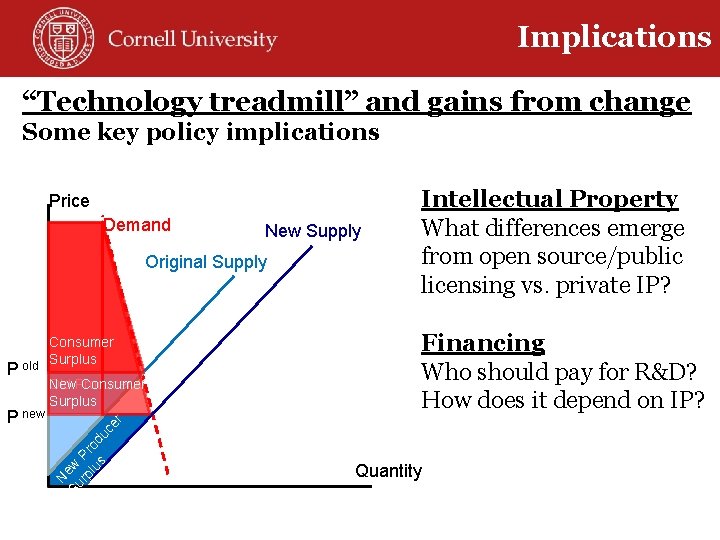
Implications “Technology treadmill” and gains from change Some key policy implications Price Demand New Supply Original Supply N Su ew rp Pr lu od s uc P new Financing Who should pay for R&D? How does it depend on IP? er Consumer Surplus P old Old New. Producer Consumer Surplus Intellectual Property What differences emerge from open source/public licensing vs. private IP? Quantity
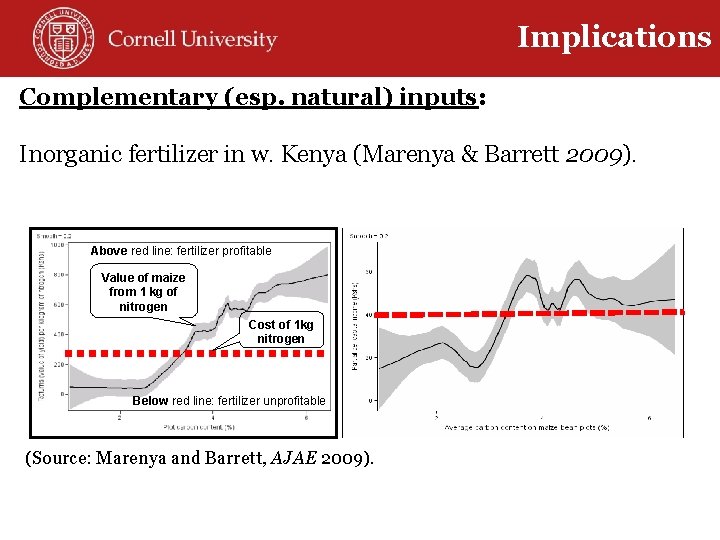
Implications Complementary (esp. natural) inputs: Inorganic fertilizer in w. Kenya (Marenya & Barrett 2009). Above red line: fertilizer profitable Value of maize from 1 kg of nitrogen Cost of 1 kg nitrogen Below red line: fertilizer unprofitable (Source: Marenya and Barrett, AJAE 2009).
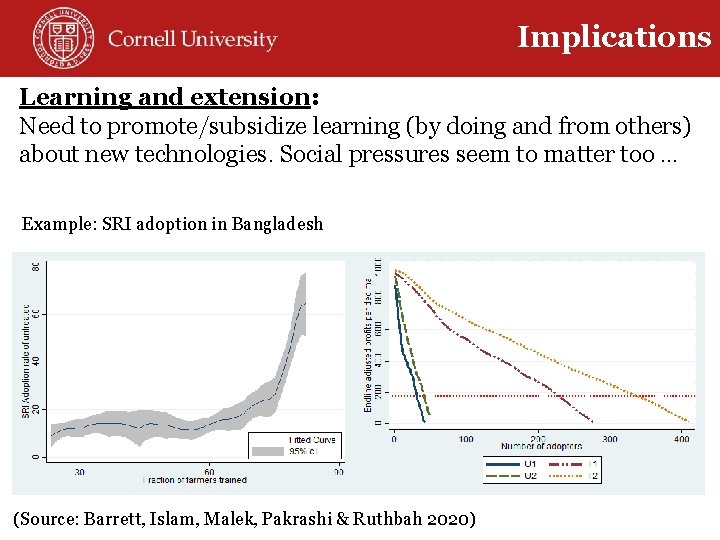
Implications Learning and extension: Need to promote/subsidize learning (by doing and from others) about new technologies. Social pressures seem to matter too … Example: SRI adoption in Bangladesh (Source: Barrett, Islam, Malek, Pakrashi & Ruthbah 2020)
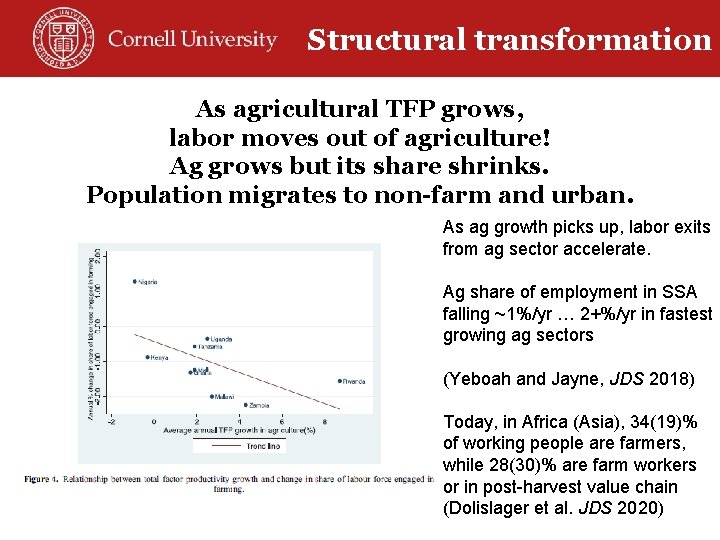
Structural transformation As agricultural TFP grows, labor moves out of agriculture! Ag grows but its share shrinks. Population migrates to non-farm and urban. As ag growth picks up, labor exits from ag sector accelerate. Ag share of employment in SSA falling ~1%/yr … 2+%/yr in fastest growing ag sectors (Yeboah and Jayne, JDS 2018) Today, in Africa (Asia), 34(19)% of working people are farmers, while 28(30)% are farm workers or in post-harvest value chain (Dolislager et al. JDS 2020)
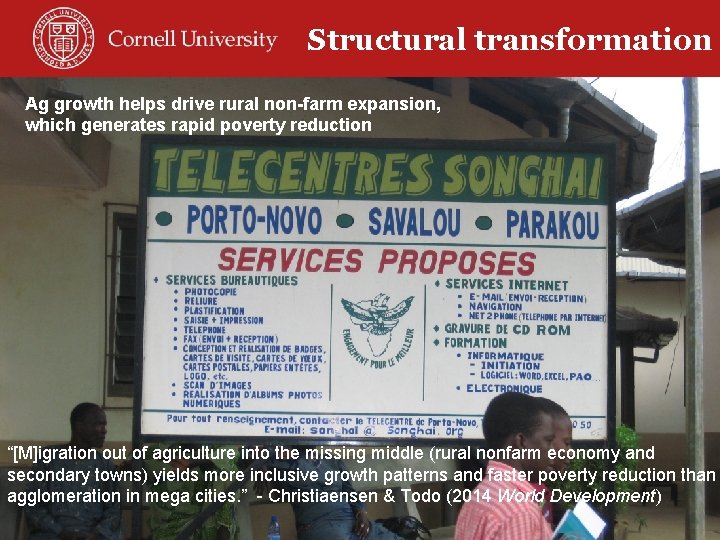
Rural non-farm Structural economy transformation Ag growth helps drive rural non-farm expansion, which generates rapid poverty reduction “[M]igration out of agriculture into the missing middle (rural nonfarm economy and secondary towns) yields more inclusive growth patterns and faster poverty reduction than agglomeration in mega cities. ” - Christiaensen & Todo (2014 World Development)
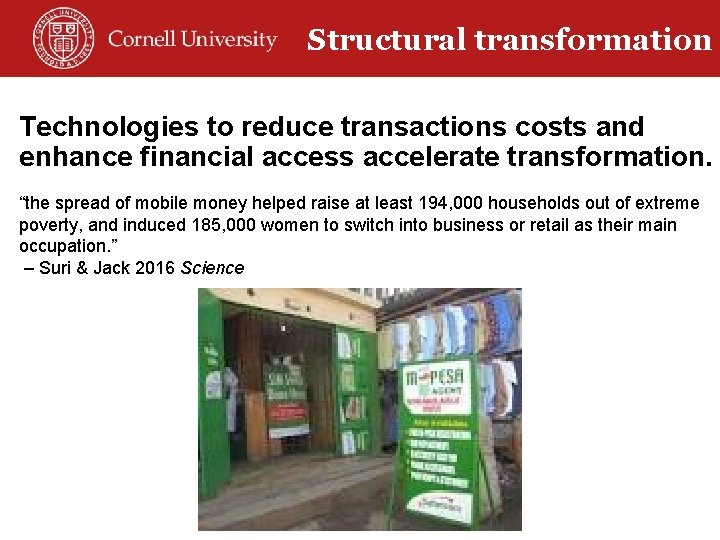
Rural non-farm Structural transformation economy Technologies to reduce transactions costs and enhance financial access accelerate transformation. “the spread of mobile money helped raise at least 194, 000 households out of extreme poverty, and induced 185, 000 women to switch into business or retail as their main occupation. ” – Suri & Jack 2016 Science
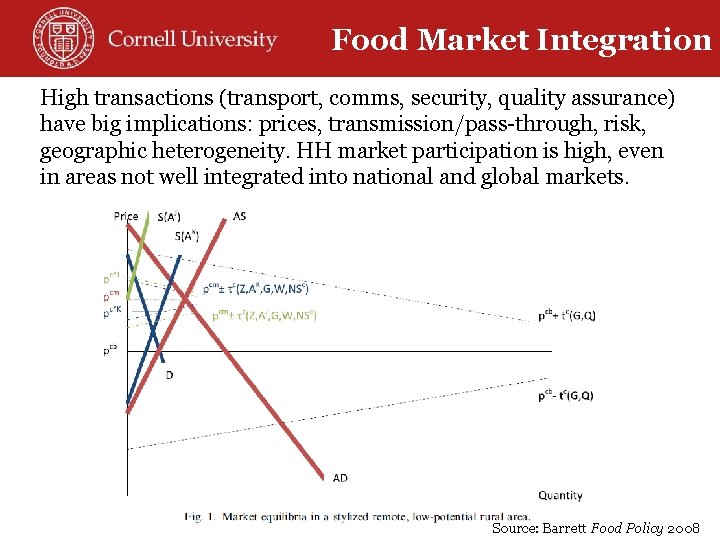
Food Market Integration High transactions (transport, comms, security, quality assurance) have big implications: prices, transmission/pass-through, risk, geographic heterogeneity. HH market participation is high, even in areas not well integrated into national and global markets. Source: Barrett Food Policy 2008
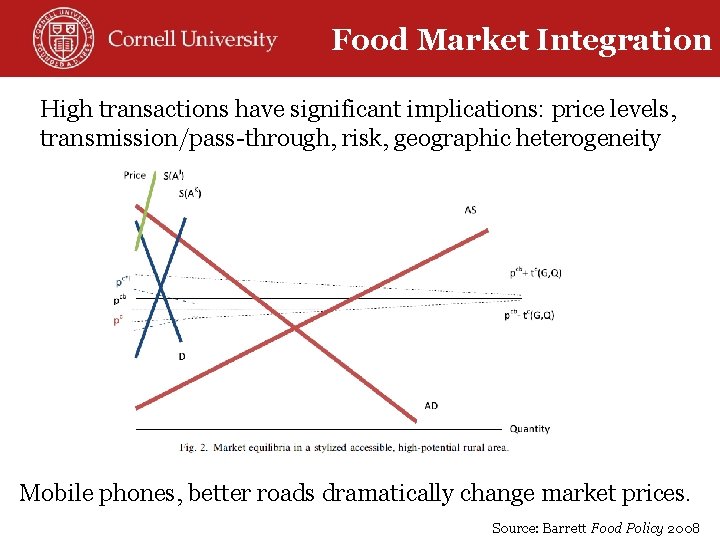
Food Market Integration High transactions have significant implications: price levels, transmission/pass-through, risk, geographic heterogeneity Mobile phones, better roads dramatically change market prices. Source: Barrett Food Policy 2008
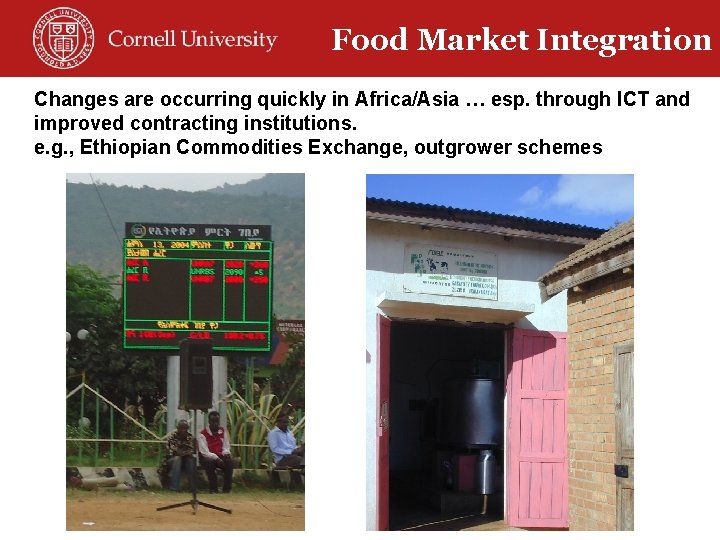
Ag output markets Food Market Integration Changes are occurring quickly in Africa/Asia … esp. through ICT and improved contracting institutions. e. g. , Ethiopian Commodities Exchange, outgrower schemes
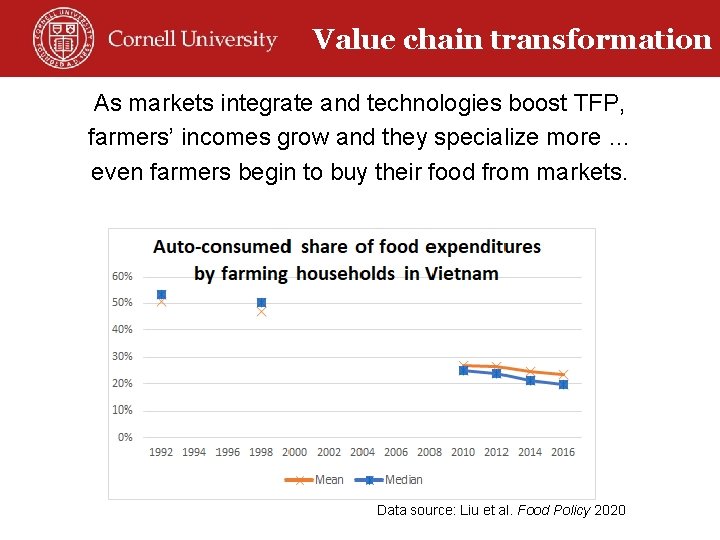
Value chain transformation As markets integrate and technologies boost TFP, farmers’ incomes grow and they specialize more … even farmers begin to buy their food from markets. Data source: Liu et al. Food Policy 2020
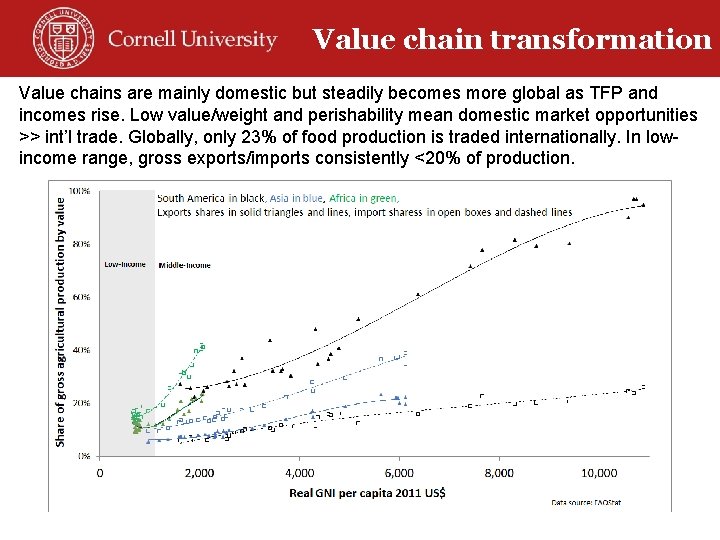
African ag tech change Value chain transformation Value chains are mainly domestic but steadily becomes more global as TFP and incomes rise. Low value/weight and perishability mean domestic market opportunities >> int’l trade. Globally, only 23% of food production is traded internationally. In lowincome range, gross exports/imports consistently <20% of production.
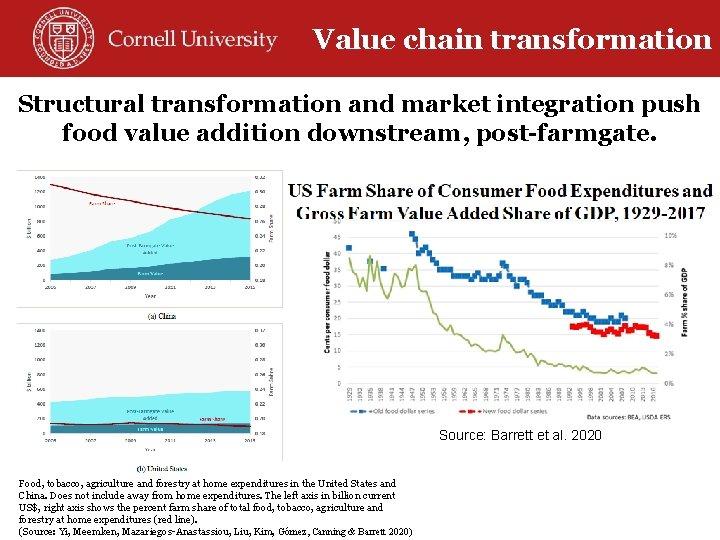
Value chain transformation Structural transformation and market integration push food value addition downstream, post-farmgate. Source: Barrett et al. 2020 Food, tobacco, agriculture and forestry at home expenditures in the United States and China. Does not include away from home expenditures. The left axis in billion current US$, right axis shows the percent farm share of total food, tobacco, agriculture and forestry at home expenditures (red line). (Source: Yi, Meemken, Mazariegos-Anastassiou, Liu, Kim, Gómez, Canning & Barrett 2020)
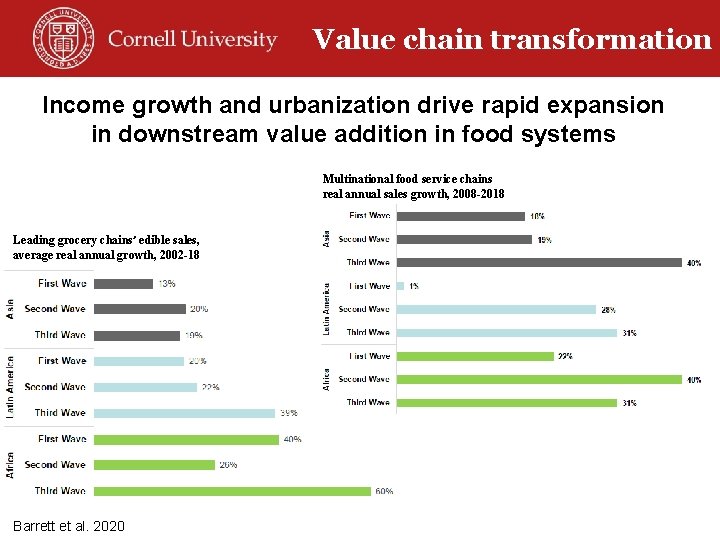
Value chain transformation Income growth and urbanization drive rapid expansion in downstream value addition in food systems Multinational food service chains real annual sales growth, 2008 -2018 Leading grocery chains’ edible sales, average real annual growth, 2002 -18 Barrett et al. 2020

Questions?
- Slides: 15