
Profile Analysis of Cascade Impactor Data An Alternative




- Slides: 16
Profile Analysis of Cascade Impactor Data: An Alternative View Andrew R Clark, Ph. D. Orally Inhaled and Nasal Drug Products Subcommittee of the Advisory Committee for Pharmaceutical Science April 26, 2000
Comparing impactor distributions - Why and how • Batch release – Is the current batch equivalent to those used in pivotal trials ? • Bioequivalence – Is a “new” product equivalent to the innovator ? • Marker or label validation – Does the marker or label match well enough to represent the active drug ? Simple statistical “distance” or a measure with physical significance ?
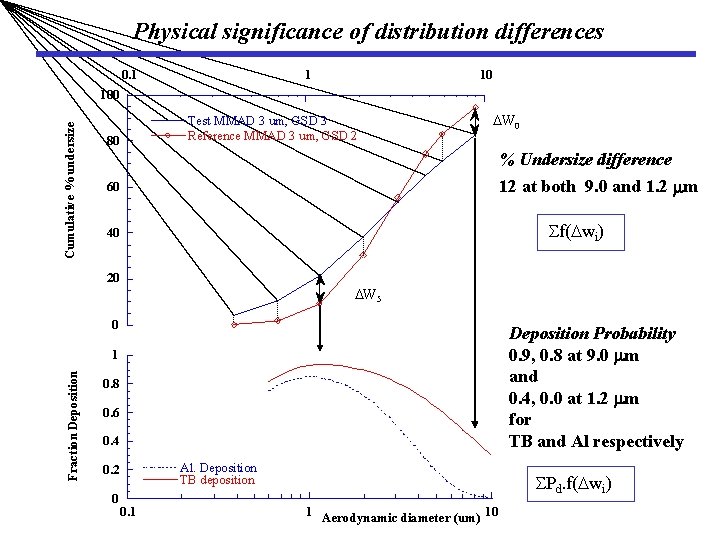
Physical significance of distribution differences 0. 1 1 10 Cumulative % undersize 100 Test MMAD 3 um, GSD 3 Reference MMAD 3 um, GSD 2 80 DW 0 % Undersize difference 12 at both 9. 0 and 1. 2 m 60 Sf(Dwi) 40 20 DW 5 0 Deposition Probability 0. 9, 0. 8 at 9. 0 m and 0. 4, 0. 0 at 1. 2 m for TB and Al respectively Fraction Deposition 1 0. 8 0. 6 0. 4 Al. Deposition TB deposition 0. 2 0 0. 1 SPd. f(Dwi) 1 Aerodynamic diameter (um) 10
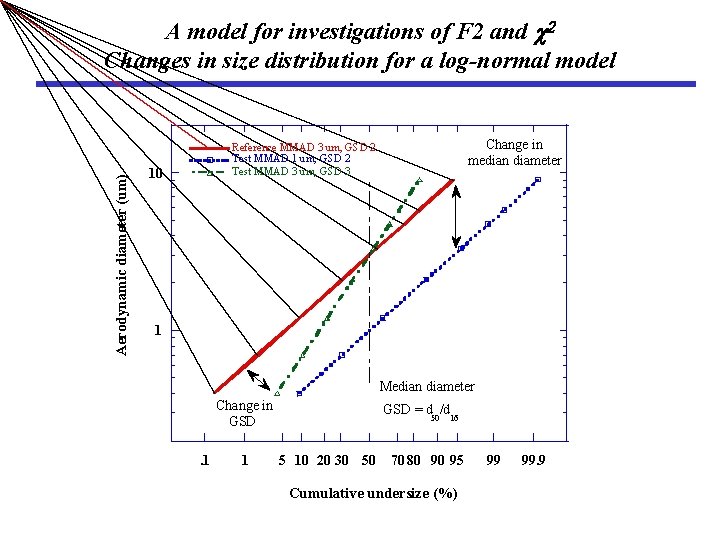
Aerodynamic diameter (um) A model for investigations of F 2 and c 2 Changes in size distribution for a log-normal model Change in median diameter Reference MMAD 3 um, GSD 2 Test MMAD 1 um, GSD 2 Test MMAD 3 um, GSD 3 10 1 Median diameter Change in GSD. 1 1 GSD = d /d 50 5 10 20 30 50 16 70 80 90 95 Cumulative undersize (%) 99 99. 9
F 2 variation as a function of MMAD and GSD relative to a reference distribution for the ACI 100 80 80 60 60 F 2 100 40 40 20 20 Reference ( MMAD = 2. 0, GSD = 2 ) 0 1 1. 5 2 2. 5 MMAD (um) 3 1 1. 5 2 GSD 2. 5 3
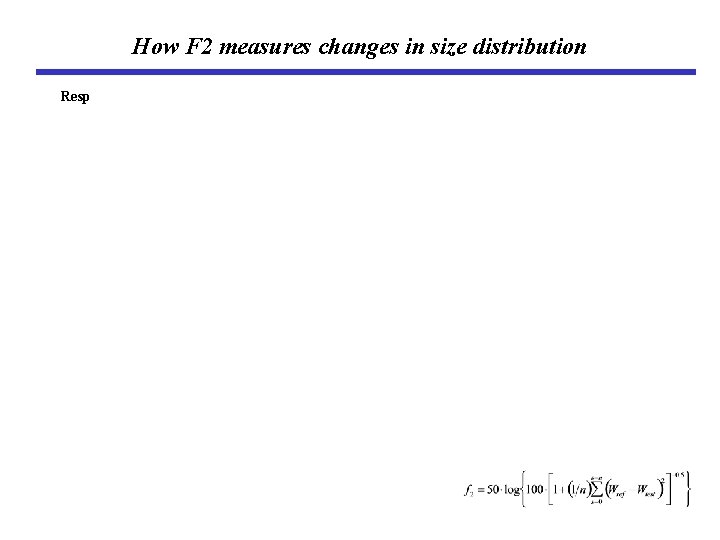
How F 2 measures changes in size distribution Response of F 2 for the ACI to changes in MMAD and GSD relative to a 2 m MMAD, GSD = 2 reference aerosol
F 250 Contours for relative change in MMAD and GSD F 25 o contours for the ACI for reference aerosols ranging of 1 to 8 m MMAD with GSD of 2. (Aerosols with MMAD and GSDs lying within the contours would be judged to be similar, i. e. F 2 = > 50. ) For 1 um reference dmax - dmin ~ 0. 7 mm For 4 um reference dmax - dmin ~ 2. 5 mm
F 250 Contours for relative change in MMAD and GSD F 2 contours for the MLI for reference aerosols ranging of 1 to 8 um MMAD with GSD of 2. 50 with MMAD and GSDs lying within the contours would be judged to be similar, i. e. F 2 = > 50. ) (Aerosols 3 1 um 2 um GSDaerosol / GSDreference 2. 5 4 um 8 um 2 1. 5 For 1 um reference dmax - dmin ~ 0. 5 mm For 4 um reference dmax - dmin ~ 2. 5 mm 1 0. 5 0. 6 0. 8 1 MMAD aerosol 1. 2 / MMAD reference 1. 4
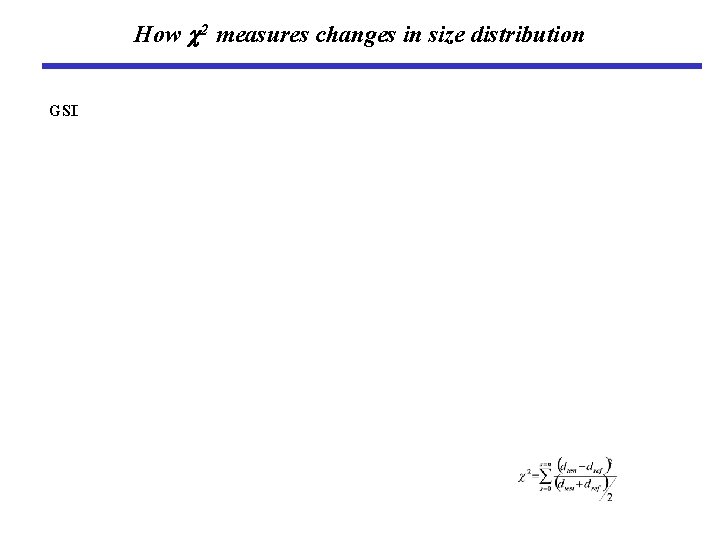
How c 2 measures changes in size distribution Response of 2 for the ACI to changes in MMAD and GSD relative to a 3 m MMAD, GSD = 2 reference aerosol
Theoretical total lung and alveolar deposition for an inhaled aerosol (GSD of 2) with and without a 5 second breath hold Deposition [ %] of inhaled 1 F 2 = 50 Ddp ~ 4 % 0. 8 0. 6 0. 4 F 2 = 50 Ddp ~ 150 % 0. 2 0 0 2 Alveolar deposition with 5 s breathold Alveolar deposition without breathold Total lung deposition with 5 s breathold Total lung deposition without breathold 4 6 MMAD [um] 8 10 12
How changes in size distribution affect deposited dose Change in deposition as a function of MMAD and GSD relative to a reference aerosol with an MMAD of 2 m and a GSD of 2 (Note. All deposition changes have been shown as negative to facilitate comparison with Figure 3. )
Comparison of F 250 and 10% deposition contours Comparison of F 250 contours for the MLI with “ 10% change in lung deposition” contours derived from a lung deposition model
An alternative : Theoretical Deposition Fraction & weighted distributions Deposition weights (Pd) determined from lung deposition model Weighted distribution = Wtstage * Pd Normalize and apply “distance” statistic ?
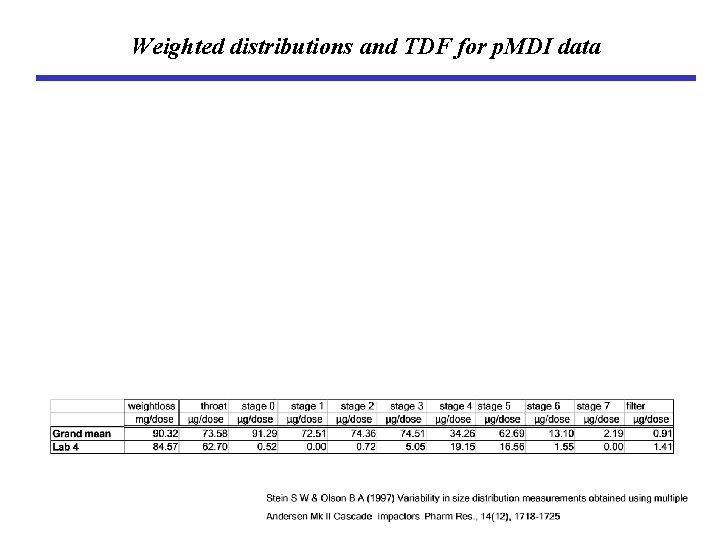
Weighted distributions and TDF for p. MDI data
Weighting technique applied to label validation data
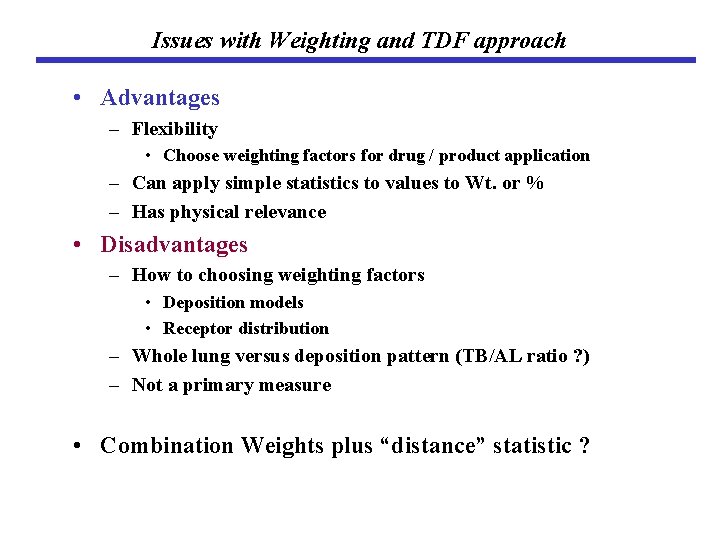
Issues with Weighting and TDF approach • Advantages – Flexibility • Choose weighting factors for drug / product application – Can apply simple statistics to values to Wt. or % – Has physical relevance • Disadvantages – How to choosing weighting factors • Deposition models • Receptor distribution – Whole lung versus deposition pattern (TB/AL ratio ? ) – Not a primary measure • Combination Weights plus “distance” statistic ?