
Profile Analysis Definition Let X 1 X 2


- Slides: 41
Profile Analysis
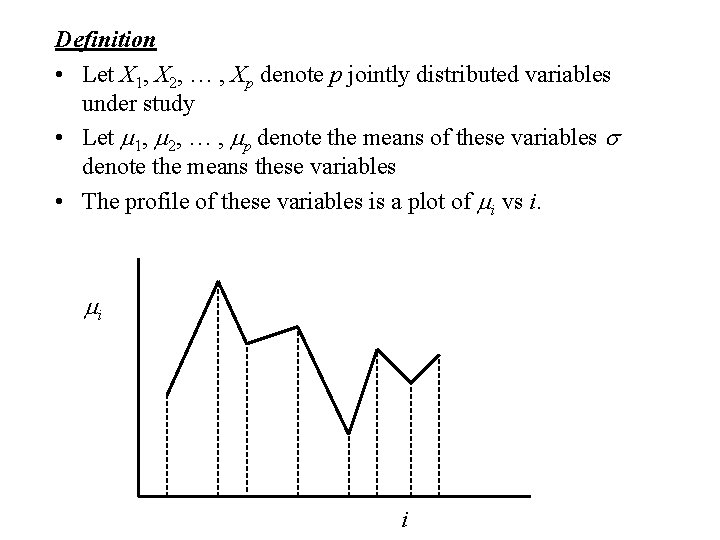
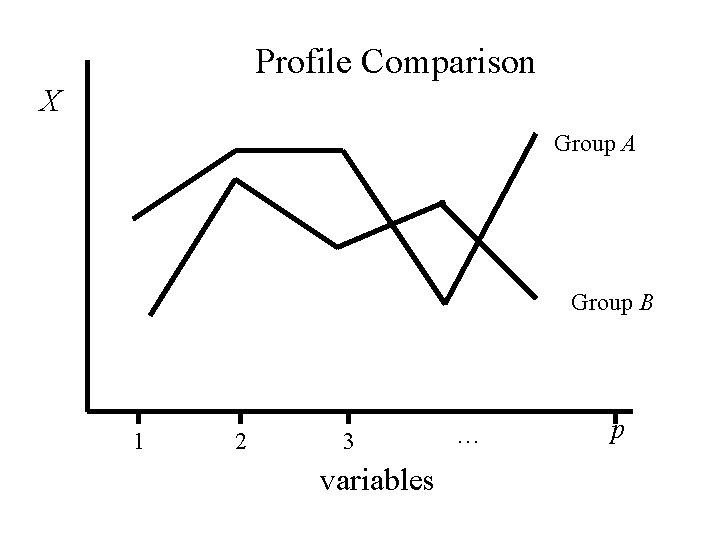
Definition • Let X 1, X 2, … , Xp denote p jointly distributed variables under study • Let m 1, m 2, … , mp denote the means of these variables s denote the means these variables • The profile of these variables is a plot of mi vs i. mi i
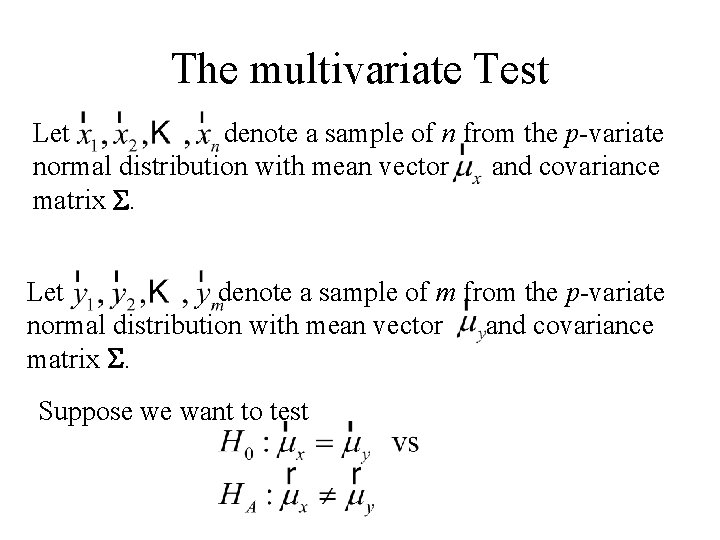
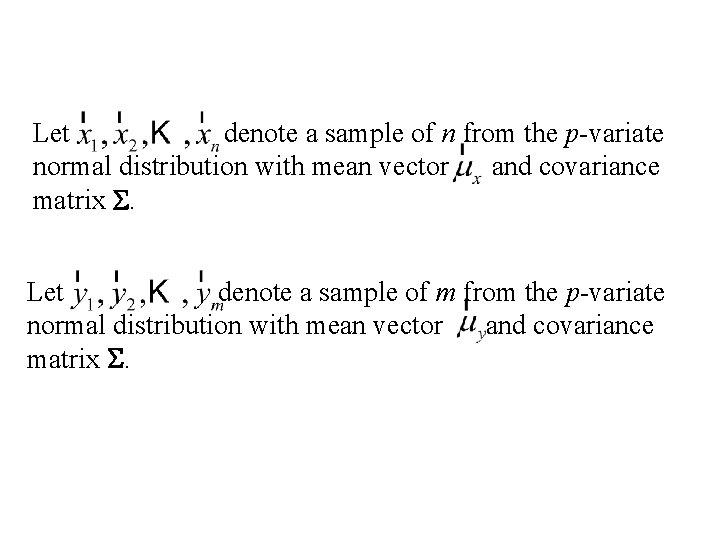
The multivariate Test Let denote a sample of n from the p-variate normal distribution with mean vector and covariance matrix S. Let denote a sample of m from the p-variate normal distribution with mean vector and covariance matrix S. Suppose we want to test
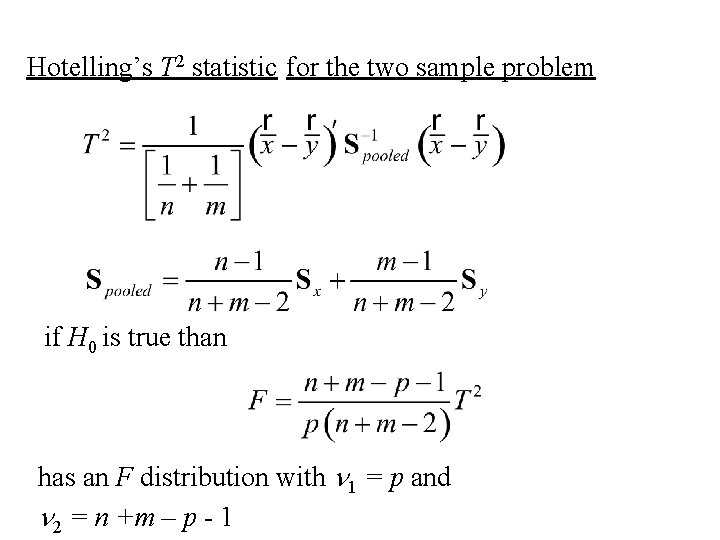
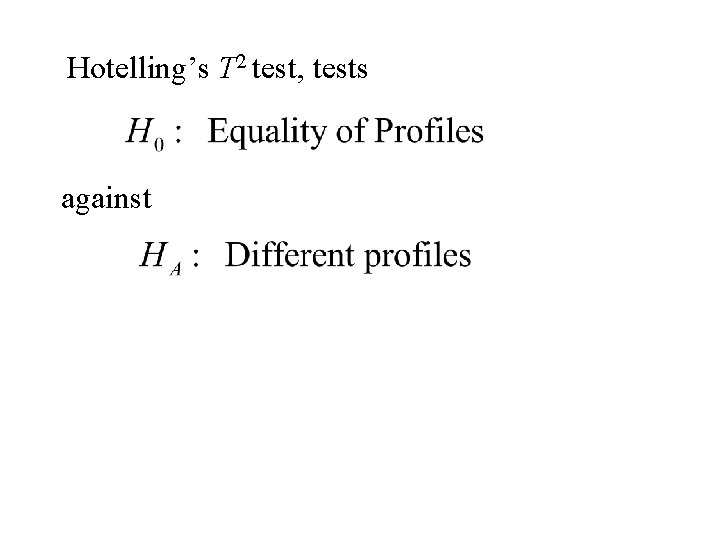
Hotelling’s T 2 statistic for the two sample problem if H 0 is true than has an F distribution with n 1 = p and n 2 = n +m – p - 1
Profile Comparison X Group A Group B 1 2 3 variables … p
Hotelling’s T 2 test, tests against
Profile Analysis
Parallelism
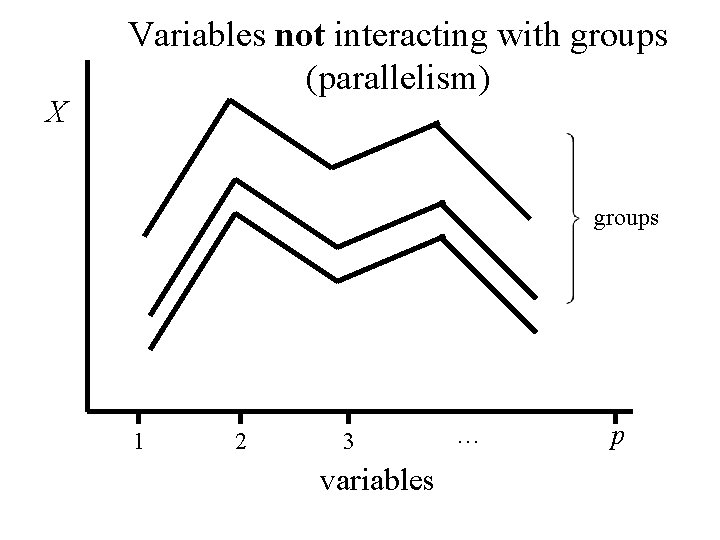
X Variables not interacting with groups (parallelism) groups 1 2 3 variables … p
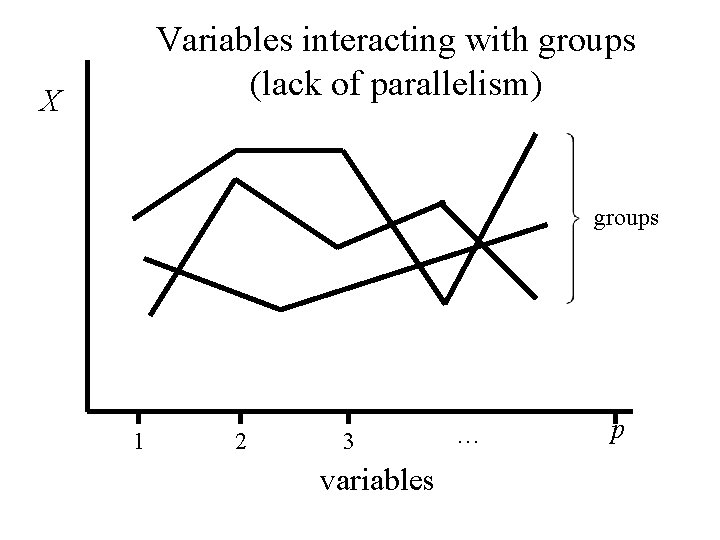
Variables interacting with groups (lack of parallelism) X groups 1 2 3 variables … p
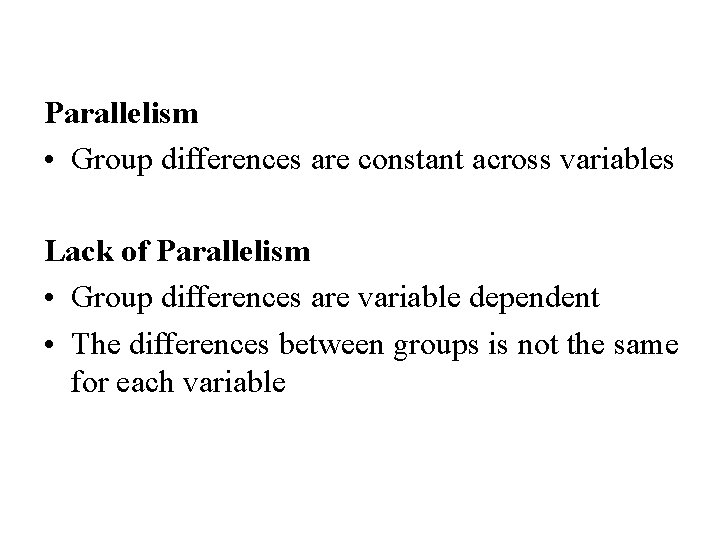
Parallelism • Group differences are constant across variables Lack of Parallelism • Group differences are variable dependent • The differences between groups is not the same for each variable
Test for parallelism
Let denote a sample of n from the p-variate normal distribution with mean vector and covariance matrix S. Let denote a sample of m from the p-variate normal distribution with mean vector and covariance matrix S.
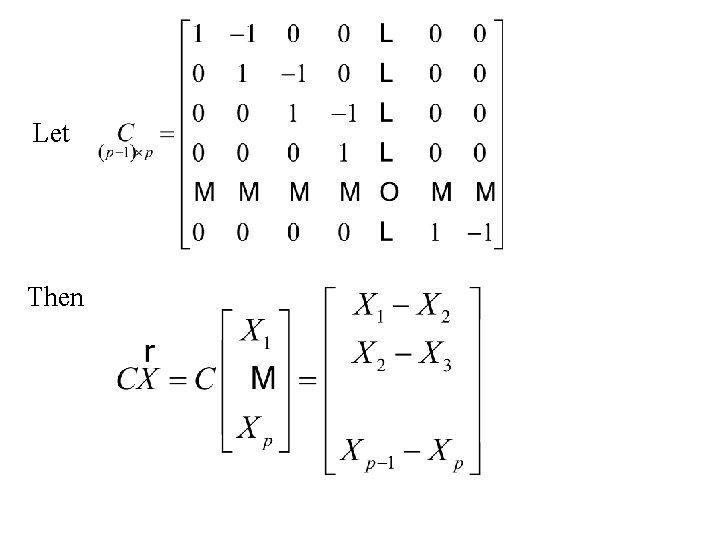
Let Then
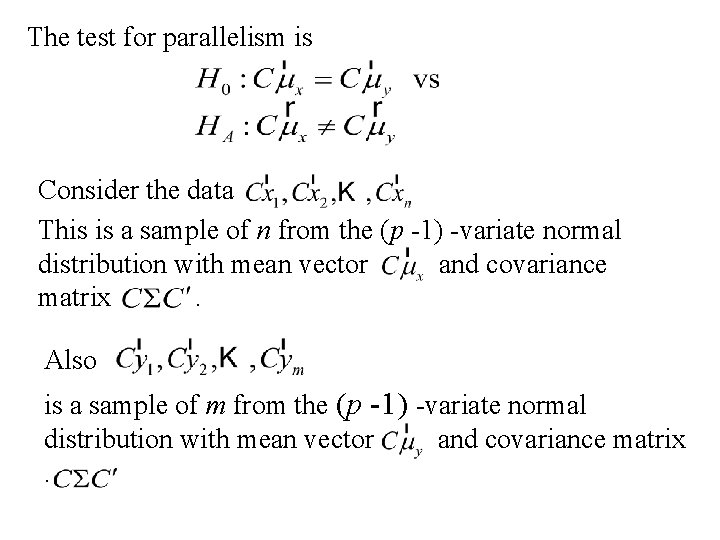
The test for parallelism is Consider the data This is a sample of n from the (p -1) -variate normal distribution with mean vector and covariance matrix. Also is a sample of m from the (p -1) -variate normal distribution with mean vector and covariance matrix.
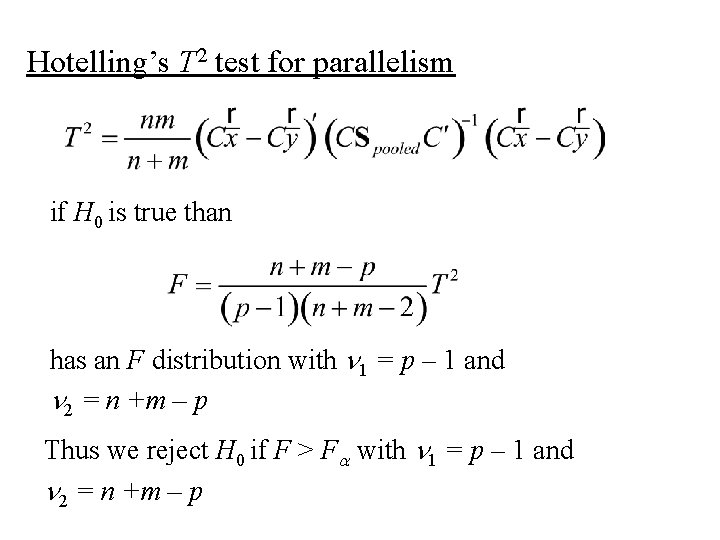
Hotelling’s T 2 test for parallelism if H 0 is true than has an F distribution with n 1 = p – 1 and n 2 = n +m – p Thus we reject H 0 if F > Fa with n 1 = p – 1 and n 2 = n +m – p
To perform the test for parallelism, compute differences of successive variables for each case in each group and perform the two-sample Hotelling’s T 2 test.
Test for Equality of Groups (Parallelism assumed)
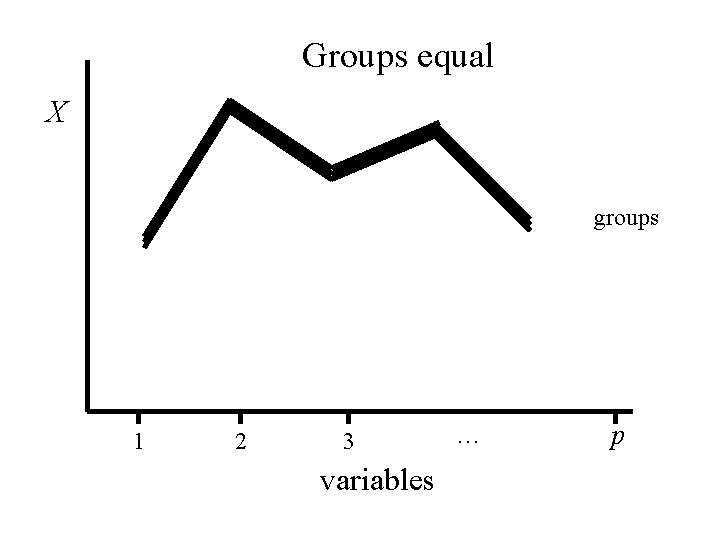
Groups equal X groups 1 2 3 variables … p
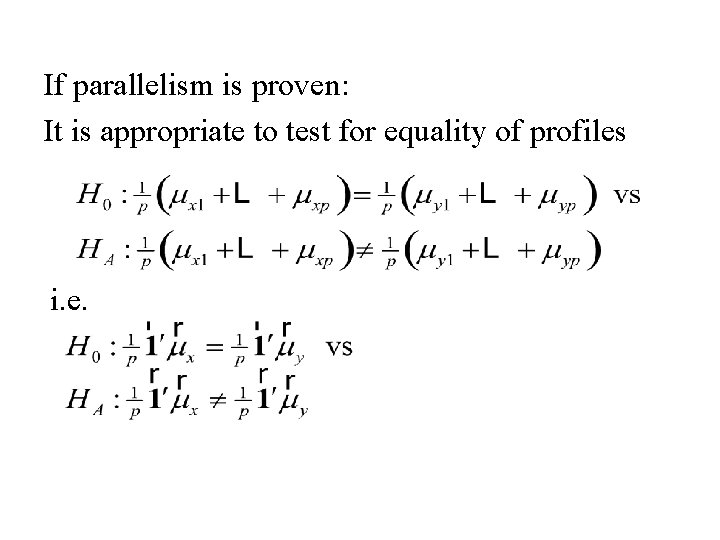
If parallelism is proven: It is appropriate to test for equality of profiles i. e.
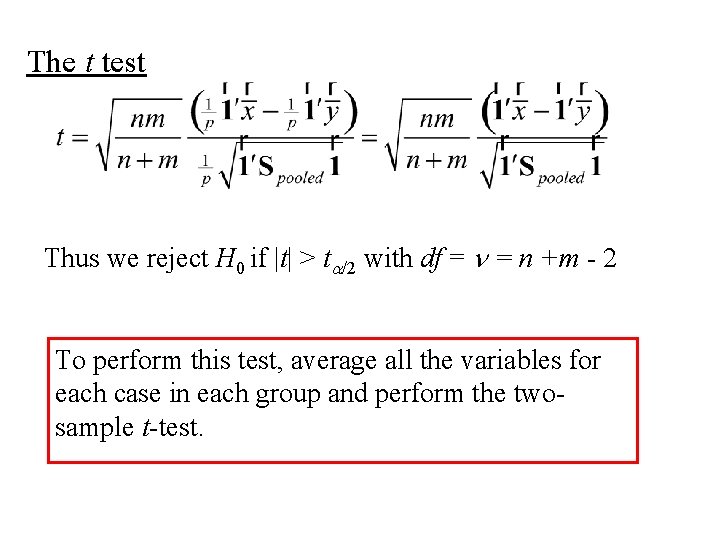
The t test Thus we reject H 0 if |t| > ta/2 with df = n +m - 2 To perform this test, average all the variables for each case in each group and perform the twosample t-test.
Test for equality of variables (Parallelism Assumed)
Variables equal X groups 1 2 3 variables … i
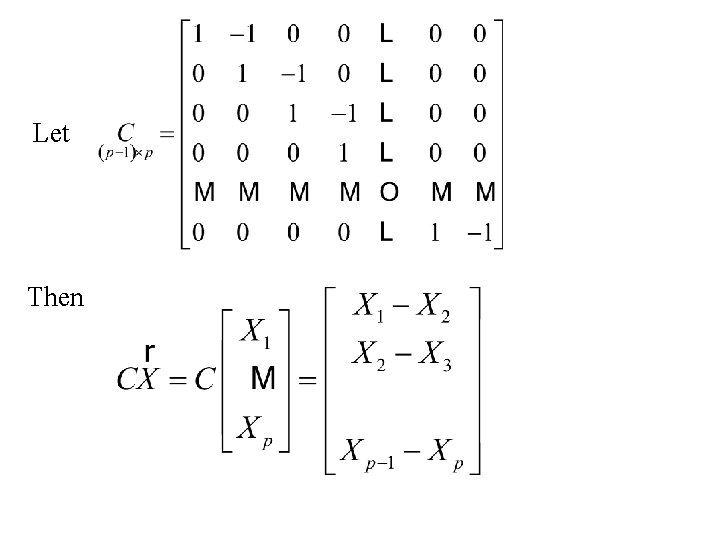
Let Then
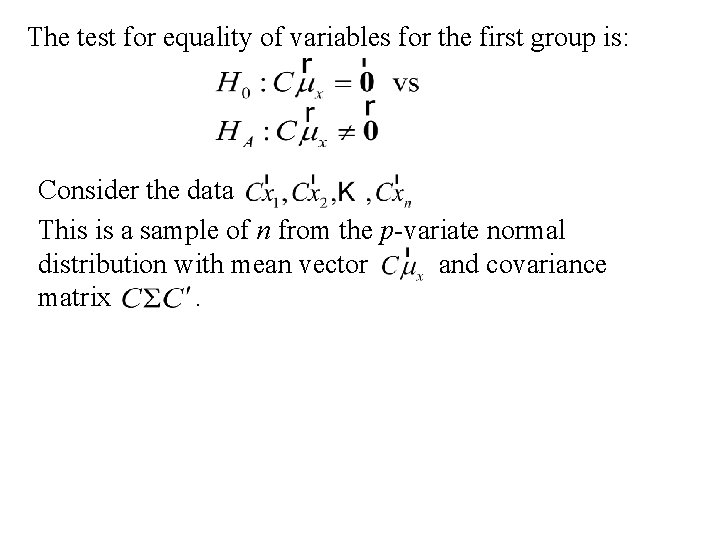
The test for equality of variables for the first group is: Consider the data This is a sample of n from the p-variate normal distribution with mean vector and covariance matrix.
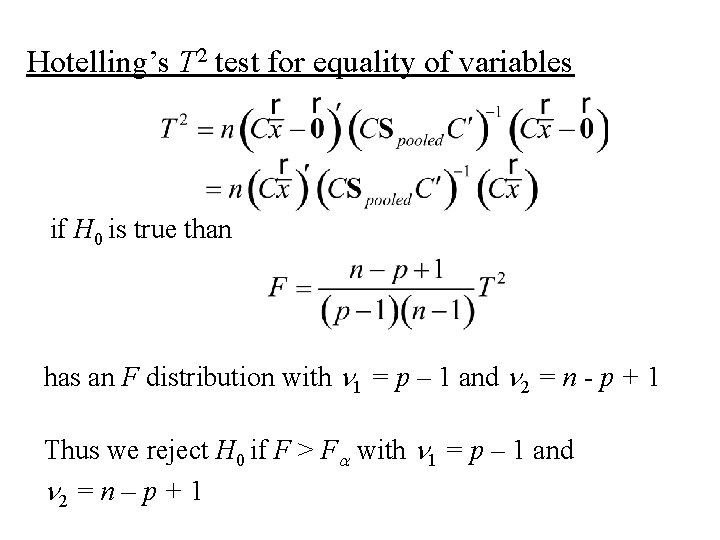
Hotelling’s T 2 test for equality of variables if H 0 is true than has an F distribution with n 1 = p – 1 and n 2 = n - p + 1 Thus we reject H 0 if F > Fa with n 1 = p – 1 and n 2 = n – p + 1
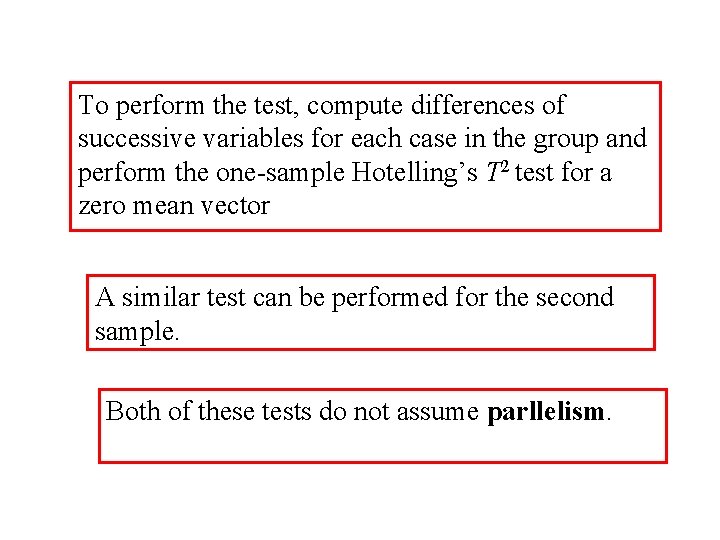
To perform the test, compute differences of successive variables for each case in the group and perform the one-sample Hotelling’s T 2 test for a zero mean vector A similar test can be performed for the second sample. Both of these tests do not assume parllelism.
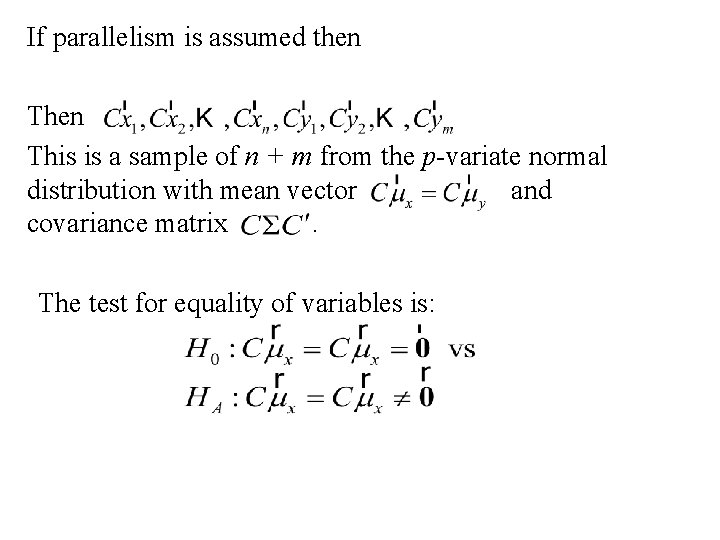
If parallelism is assumed then This is a sample of n + m from the p-variate normal distribution with mean vector and covariance matrix. The test for equality of variables is:
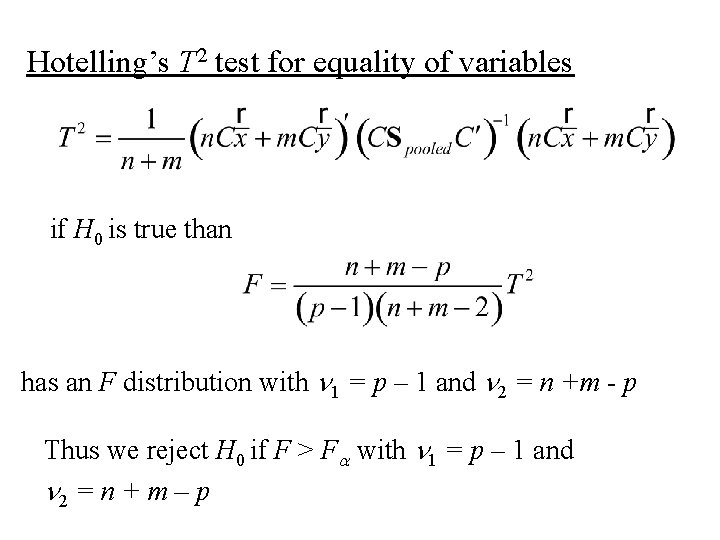
Hotelling’s T 2 test for equality of variables if H 0 is true than has an F distribution with n 1 = p – 1 and n 2 = n +m - p Thus we reject H 0 if F > Fa with n 1 = p – 1 and n 2 = n + m – p
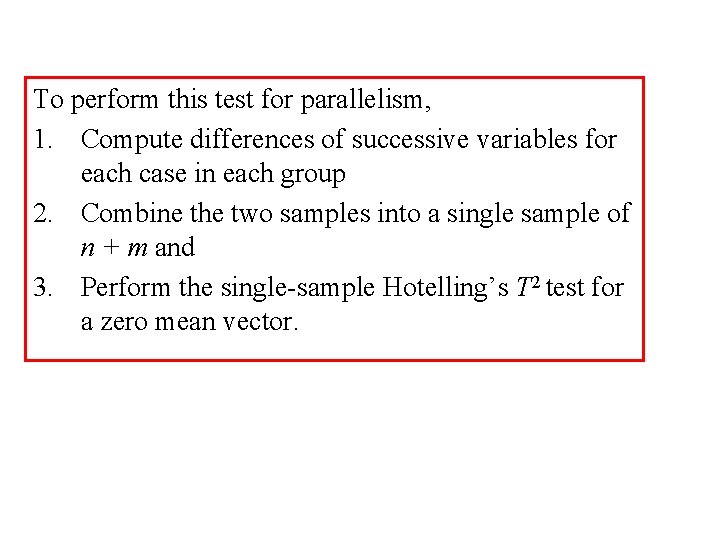
To perform this test for parallelism, 1. Compute differences of successive variables for each case in each group 2. Combine the two samples into a single sample of n + m and 3. Perform the single-sample Hotelling’s T 2 test for a zero mean vector.
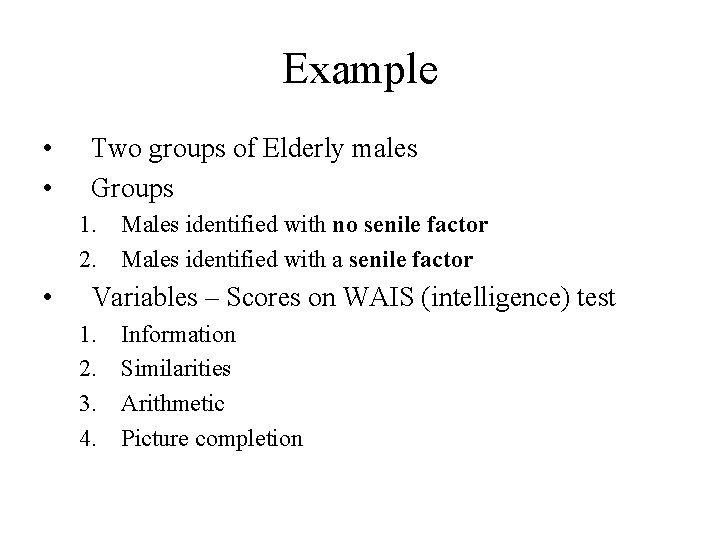
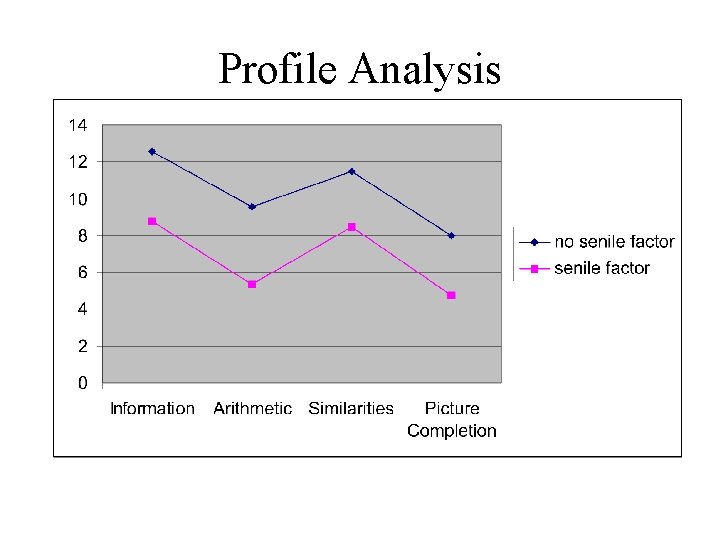
Example • • Two groups of Elderly males Groups 1. Males identified with no senile factor 2. Males identified with a senile factor • Variables – Scores on WAIS (intelligence) test 1. 2. 3. 4. Information Similarities Arithmetic Picture completion
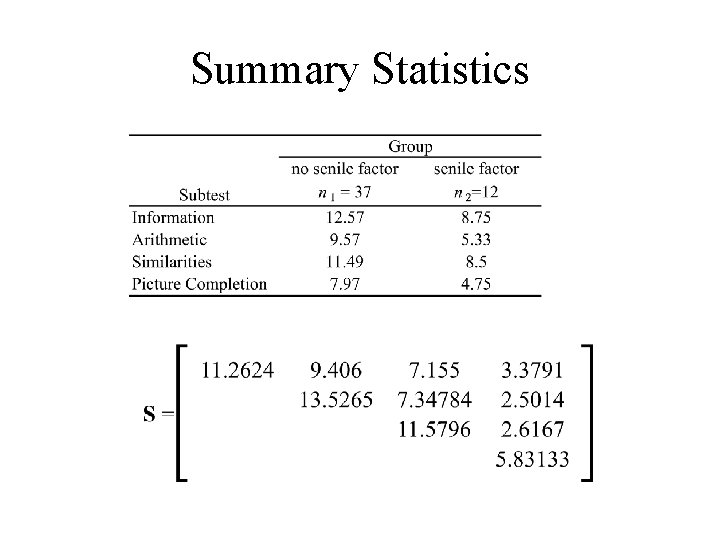
Summary Statistics
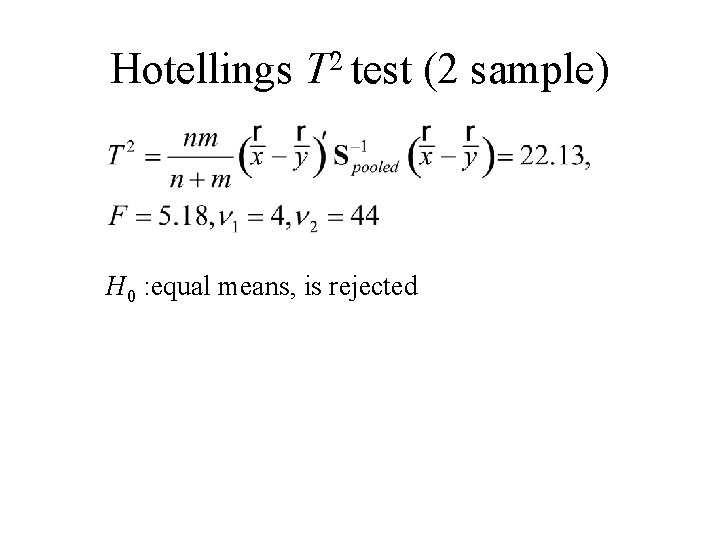
Hotellings T 2 test (2 sample) H 0 : equal means, is rejected
Profile Analysis
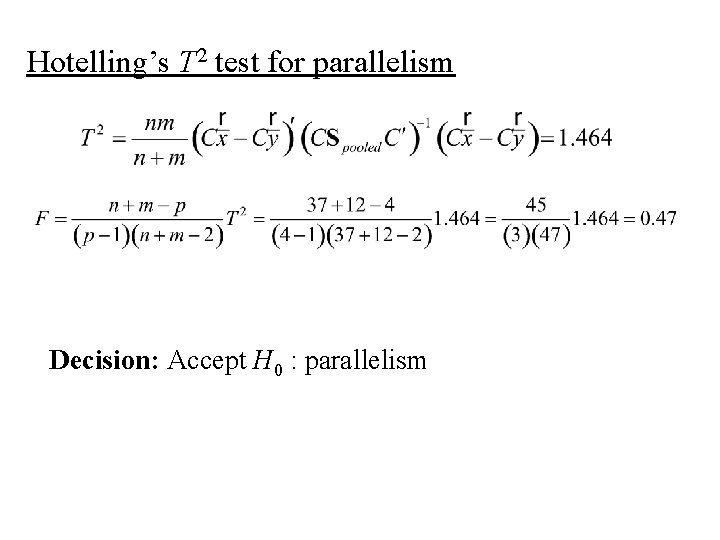
Hotelling’s T 2 test for parallelism Decision: Accept H 0 : parallelism
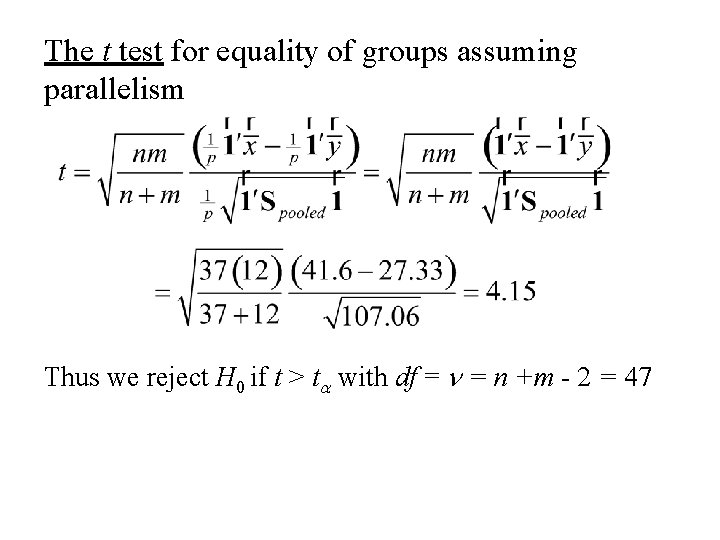
The t test for equality of groups assuming parallelism Thus we reject H 0 if t > ta with df = n +m - 2 = 47
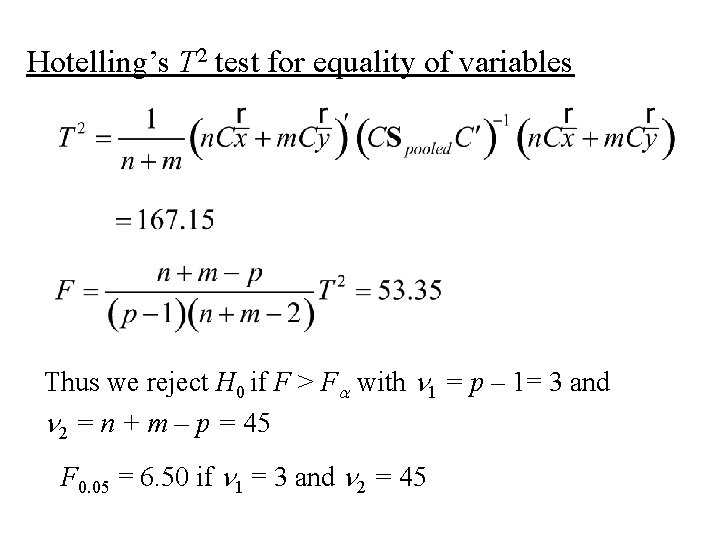
Hotelling’s T 2 test for equality of variables Thus we reject H 0 if F > Fa with n 1 = p – 1= 3 and n 2 = n + m – p = 45 F 0. 05 = 6. 50 if n 1 = 3 and n 2 = 45
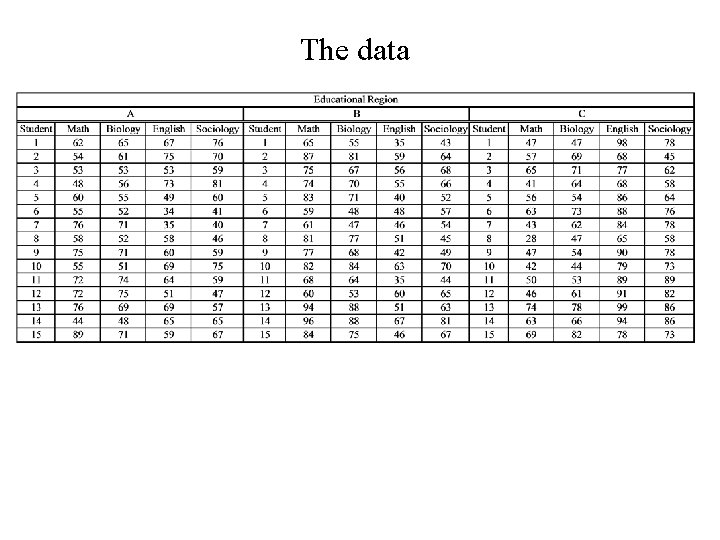
Example 2: Profile Analysis for Manova In the following study, n = 15 first year university students from three different School regions (A, B and C) who were each taking the following four courses (Math, biology, English and Sociology) were observed: The marks on these courses is tabulated on the following slide:
The data
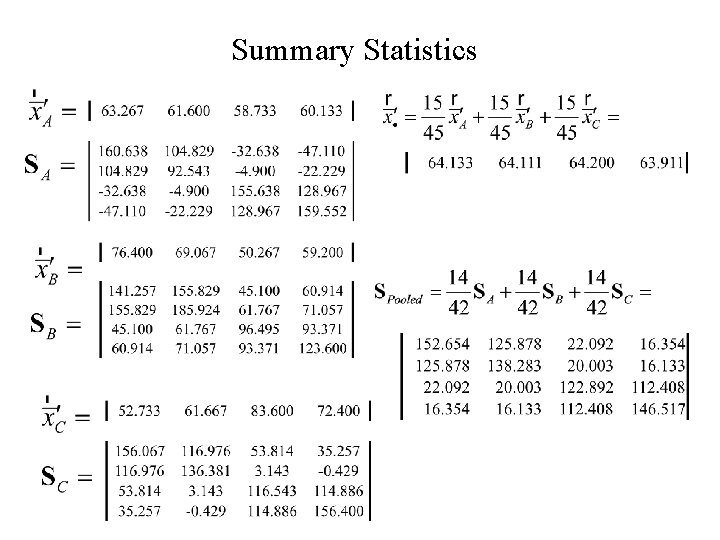
Summary Statistics
Repeated Measures