
Professional Standards For School Nutrition Professionals Objective Understand
Professional Standards For School Nutrition Professionals
Objective Understand the key requirements Who must complete professional standards Hiring standards and food safety certification for new directors Annual training standards Tracking training Learn about resources
Professional Standards in the School Nutrition Programs Establishes minimum requirements: Hiring standards for new directors Annual training standards for ALL employees Professional Standards applies to ALL Sponsors
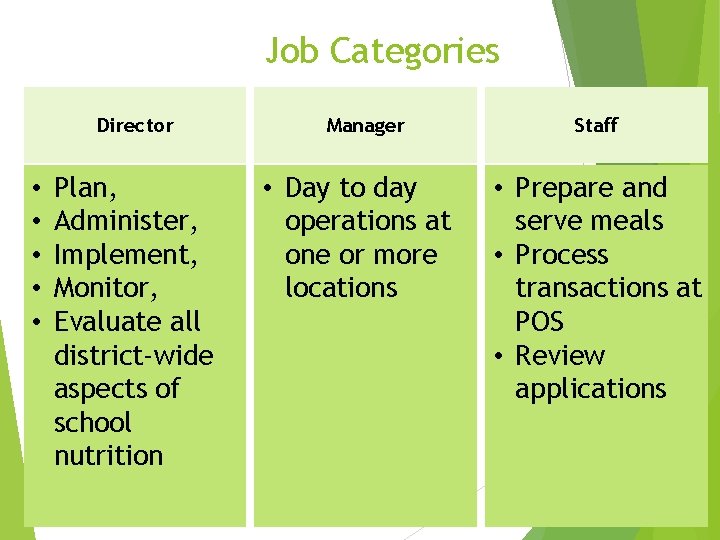
Job Categories Director • • • Plan, Administer, Implement, Monitor, Evaluate all district-wide aspects of school nutrition Manager • Day to day operations at one or more locations Staff • Prepare and serve meals • Process transactions at POS • Review applications
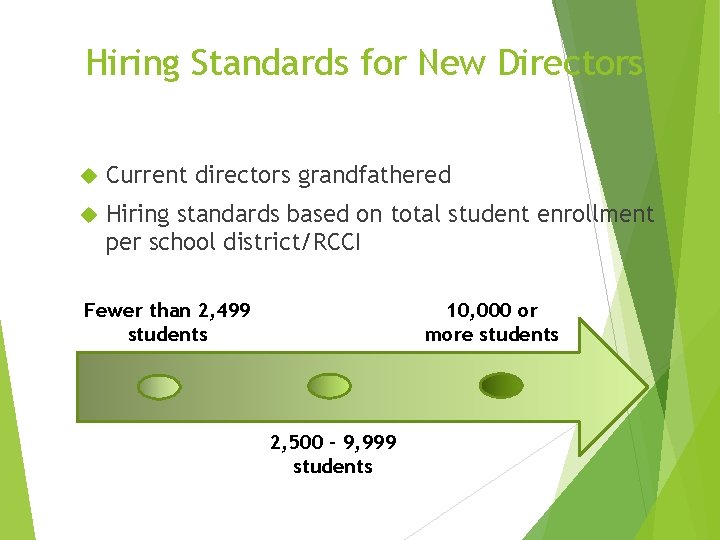
Hiring Standards for New Directors Current directors grandfathered Hiring standards based on total student enrollment per school district/RCCI Fewer than 2, 499 students 10, 000 or more students 2, 500 – 9, 999 students
Food Safety Certification For new Directors in ALL districts and schools: At least 8 hours of food safety training within 5 years prior to the starting date, or completed within 30 days of the stating date.
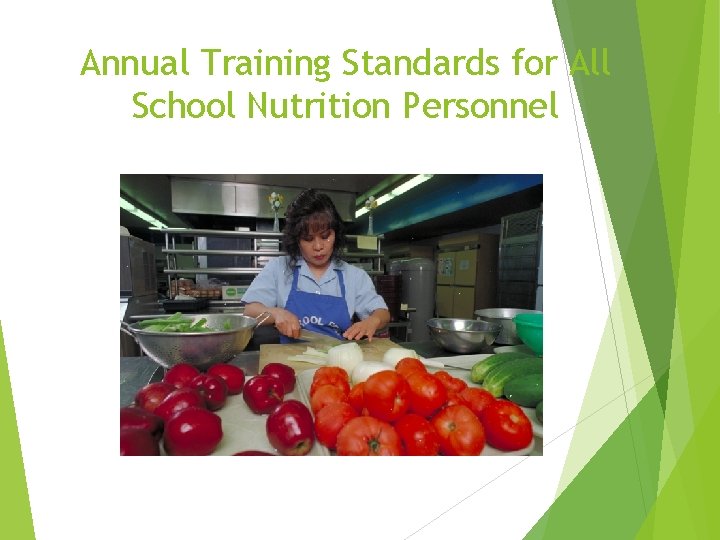
Annual Training Standards for All School Nutrition Personnel
Annual Training Standards Rule identifies specific training topics Training topics apply based on an individual’s job
Annual Training Standards Providing training to school nutrition personnel is an allowable use of the nonprofit food service account funds Paying for costs incurred by an individual to meet the hiring standards are not an allowable use of funds
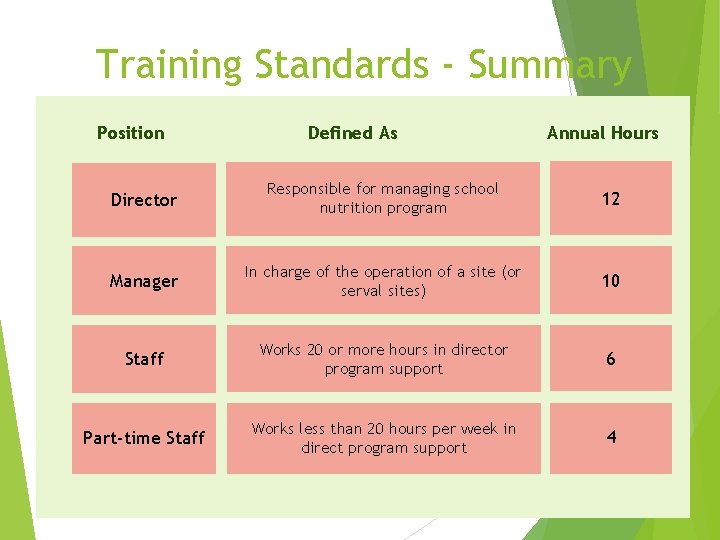
Training Standards - Summary Position Defined As Annual Hours Director Responsible for managing school nutrition program 12 Manager In charge of the operation of a site (or serval sites) 10 Staff Works 20 or more hours in director program support 6 Part-time Staff Works less than 20 hours per week in direct program support 4
Training Standards - Flexibilities An employee hired January 1 st or later must complete half of the required training hours Training is allowed in a variety of formats and from different sources: State See: Agency, In-house, ICN, SNA, etc. http: //professionalstandards. nal. usda. gov
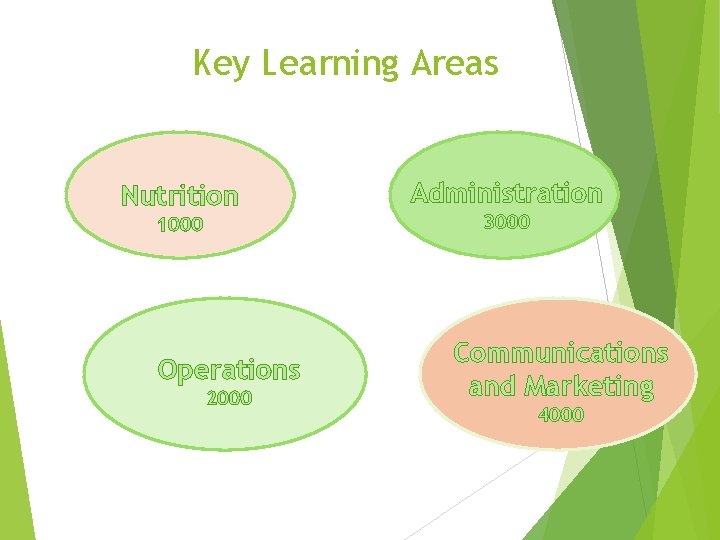
Key Learning Areas Nutrition 1000 Operations 2000 Administration 3000 Communications and Marketing 4000
What qualifies as Training? Online courses Structured, on-the-job training In-service training Local school nutrition organization educational events State agency-sponsored training Training you conduct for staff Meetings sponsored by foodservice partners College courses with job-specific content
Oversight Document compliance with the hiring and training standards for director, manager and staff Documentation must be available for administrative review
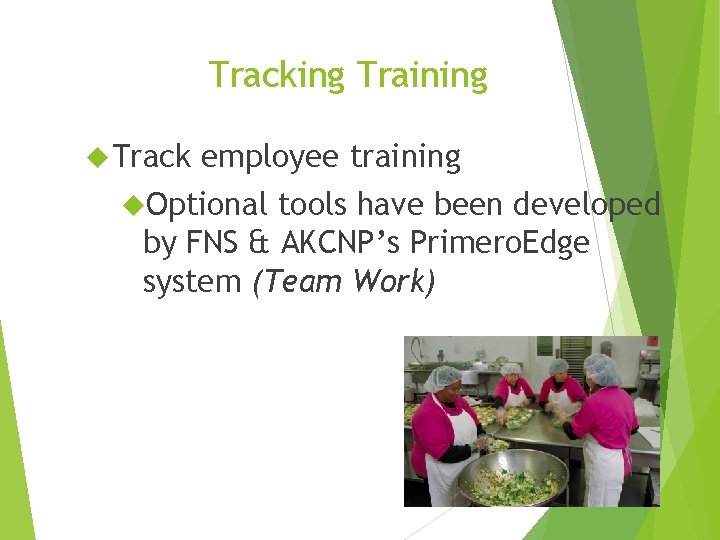
Tracking Training Track employee training Optional tools have been developed by FNS & AKCNP’s Primero. Edge system (Team Work)

USDA’s Tracking Tool
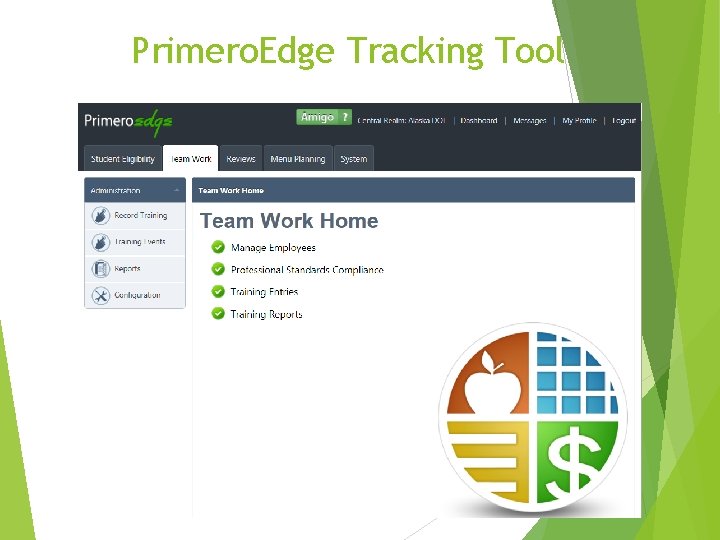
Primero. Edge Tracking Tool
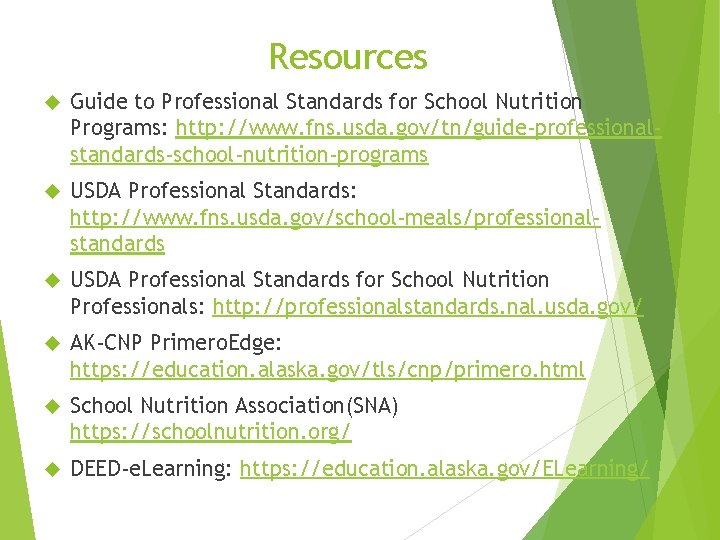
Resources Guide to Professional Standards for School Nutrition Programs: http: //www. fns. usda. gov/tn/guide-professionalstandards-school-nutrition-programs USDA Professional Standards: http: //www. fns. usda. gov/school-meals/professionalstandards USDA Professional Standards for School Nutrition Professionals: http: //professionalstandards. nal. usda. gov/ AK-CNP Primero. Edge: https: //education. alaska. gov/tls/cnp/primero. html School Nutrition Association(SNA) https: //schoolnutrition. org/ DEED-e. Learning: https: //education. alaska. gov/ELearning/

Questions?
In accordance with Federal civil rights law and U. S. Department of Agriculture (USDA) civil rights regulations and policies, the USDA, its Agencies, offices, and employees, and institutions participating in or administering USDA programs are prohibited from discriminating based on race, color, national origin, sex, disability, age, or reprisal or retaliation for prior civil rights activity in any program or activity conducted or funded by USDA. Persons with disabilities who require alternative means of communication for program information (e. g. Braille, large print, audiotape, American Sign Language, etc. ), should contact the Agency (State or local) where they applied for benefits. Individuals who are deaf, hard of hearing or have speech disabilities may contact USDA through the Federal Relay Service at (800) 877 -8339. Additionally, program information may be made available in languages other than English. To file a program complaint of discrimination, complete the USDA Program Discrimination Complaint Form, (AD-3027) found online at: http: //www. ascr. usda. gov/complaint_filing_cust. html, and at any USDA office, or write a letter addressed to USDA and provide in the letter all of the information requested in the form. To request a copy of the complaint form, call (866) 632 -9992. Submit your completed form or letter to USDA by: (1) mail: U. S. Department of Agriculture Office of the Assistant Secretary for Civil Rights 1400 Independence Avenue, SW Washington, D. C. 20250 -9410; (2) fax: (202) 690 -7442; or (3) email: program. intake@usda. gov. This institution is an equal opportunity provider.
- Slides: 20