
Professional Skills Tests Literacy Presenter John Keenan Senior


- Slides: 111
Professional Skills Tests Literacy Presenter John Keenan Senior Lecturer Secondary English http: //sta. education. gov. uk/professional-skills-tests/literacy-skills-tests 1
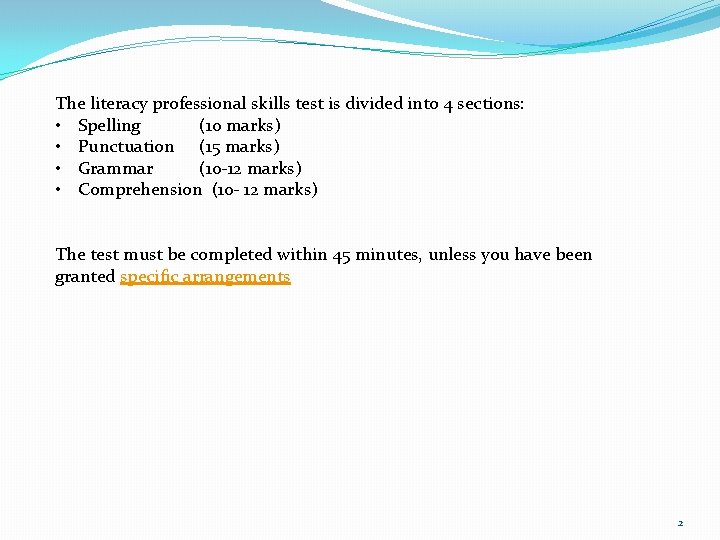
The literacy professional skills test is divided into 4 sections: • Spelling (10 marks) • Punctuation (15 marks) • Grammar (10 -12 marks) • Comprehension (10 - 12 marks) The test must be completed within 45 minutes, unless you have been granted specific arrangements 2
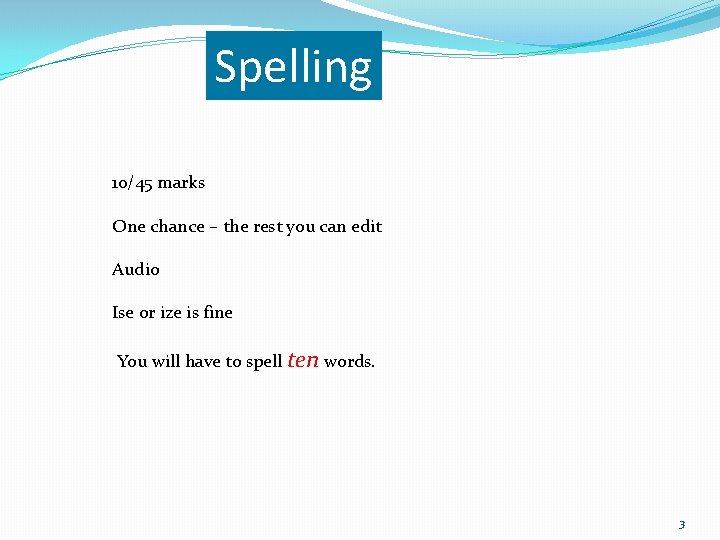
Spelling 10/45 marks One chance – the rest you can edit Audio Ise or ize is fine You will have to spell ten words. 3
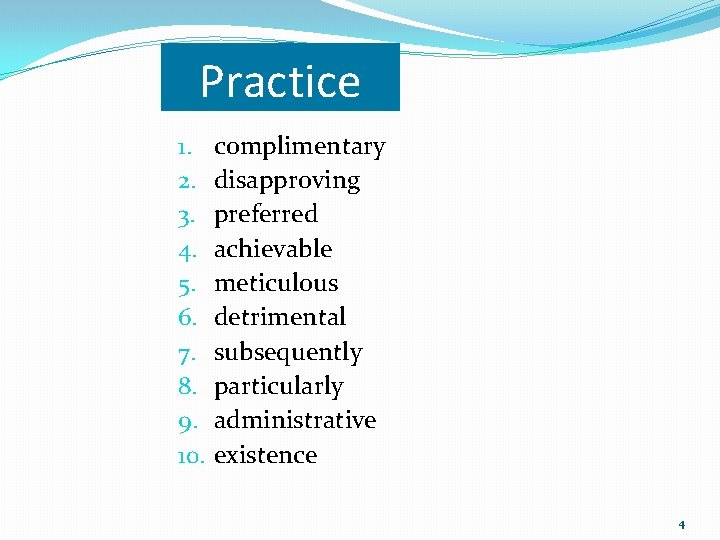
Practice 1. 2. 3. 4. 5. 6. 7. 8. 9. 10. complimentary disapproving preferred achievable meticulous detrimental subsequently particularly administrative existence 4
Very few people are ‘good’ at spelling. • There are well over a million words. • poppadom I take it you already know. Pre and suffix 5
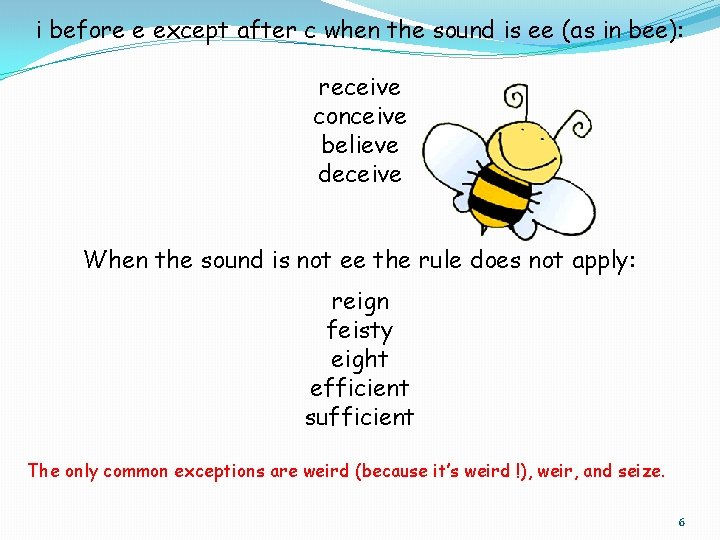
i before e except after c when the sound is ee (as in bee): receive conceive believe deceive When the sound is not ee the rule does not apply: reign feisty eight efficient sufficient The only common exceptions are weird (because it’s weird !), weir, and seize. 6
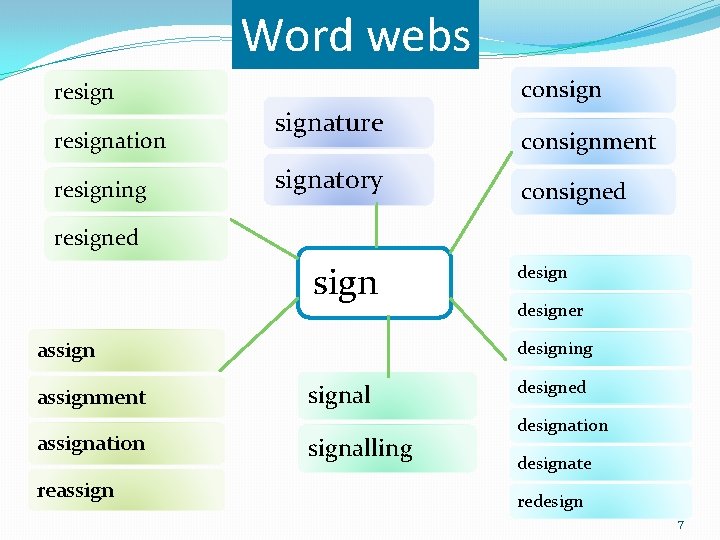
Word webs resignation resigning consignature signatory consignment consigned resigned sign assignment assignation reassign designer designing signalling designed designation designate redesign 7
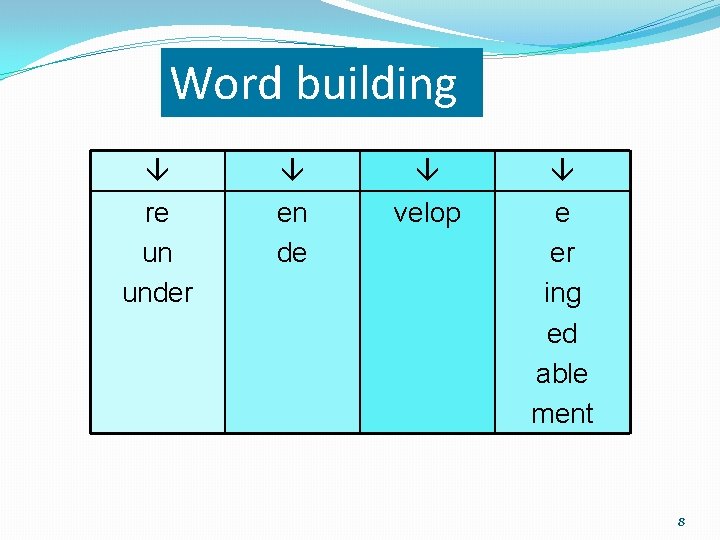
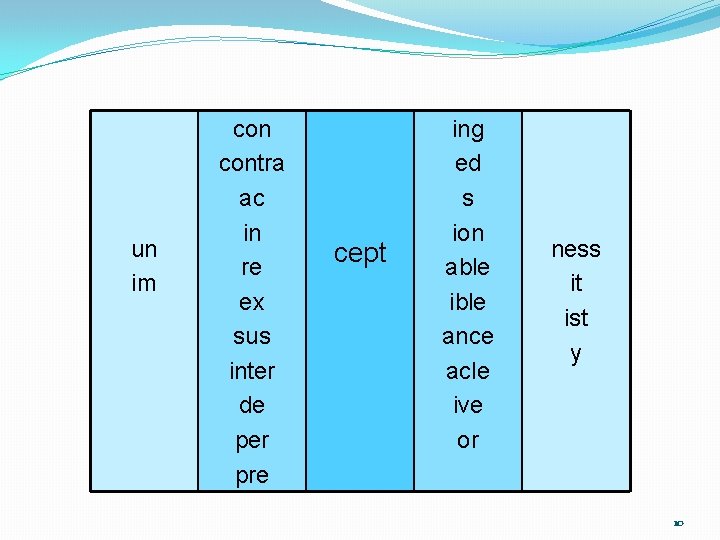
Word building re un under en de velop e er ing ed able ment 8
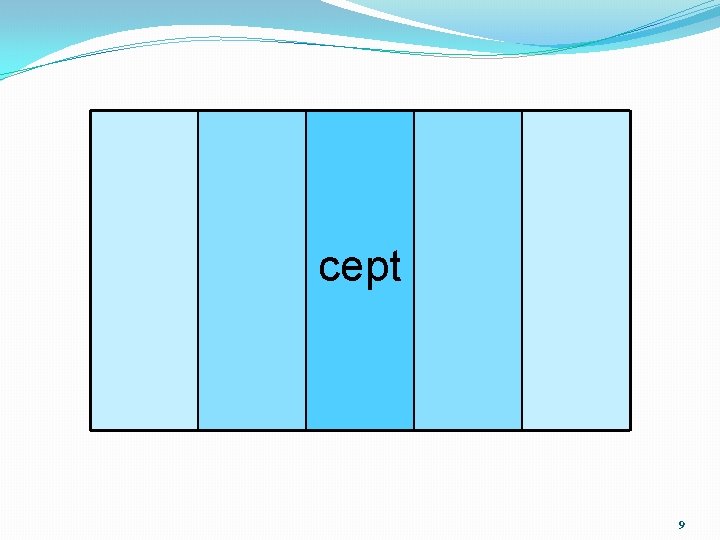
cept 9
un im contra ac in re ex sus inter de per pre cept ing ed s ion able ible ance acle ive or ness it ist y 10
Prefix quiz 11
Common suffixes 12
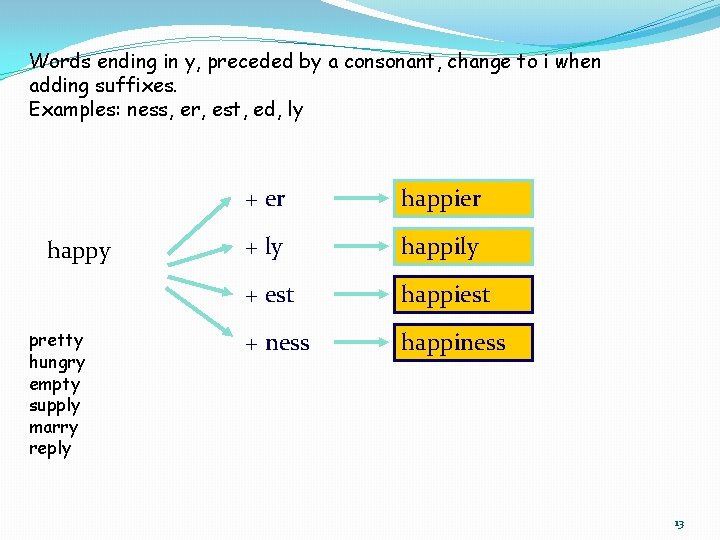
Words ending in y, preceded by a consonant, change to i when adding suffixes. Examples: ness, er, est, ed, ly happy pretty hungry empty supply marry reply + er happier + ly happily + est happiest + ness happiness 13
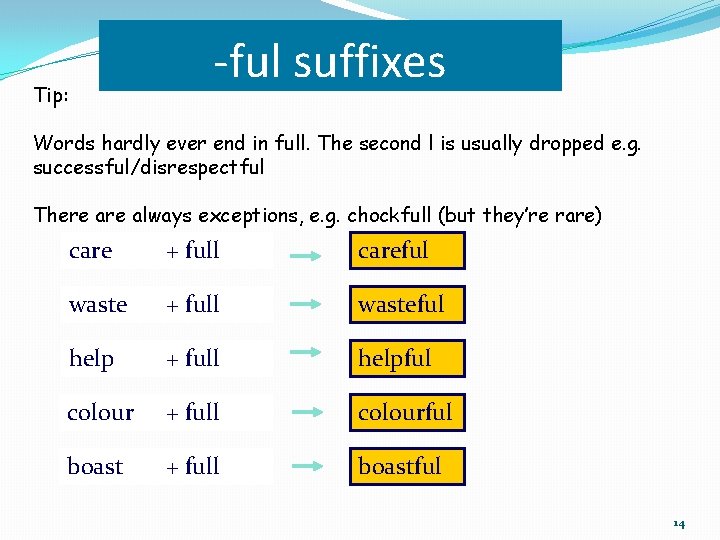
-ful suffixes Tip: Words hardly ever end in full. The second l is usually dropped e. g. successful/disrespectful There always exceptions, e. g. chockfull (but they’re rare) care + full careful waste + full wasteful help + full helpful colour + full colourful boast + full boastful 14
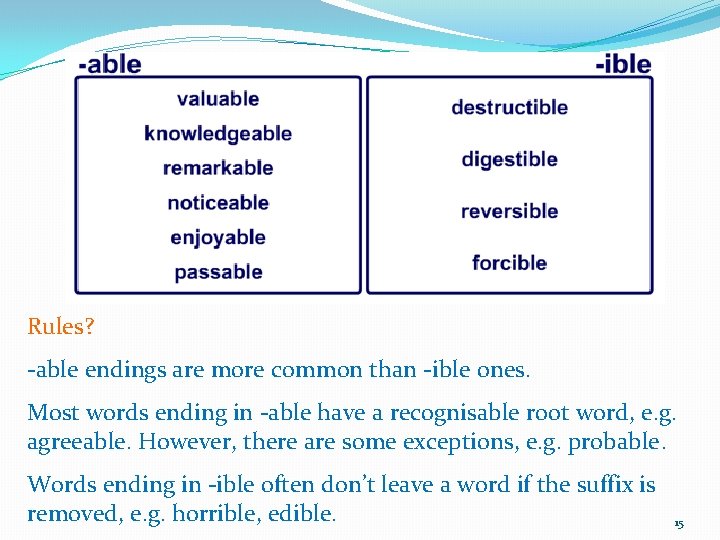
Rules? -able endings are more common than -ible ones. Most words ending in -able have a recognisable root word, e. g. agreeable. However, there are some exceptions, e. g. probable. Words ending in -ible often don’t leave a word if the suffix is removed, e. g. horrible, edible. 15
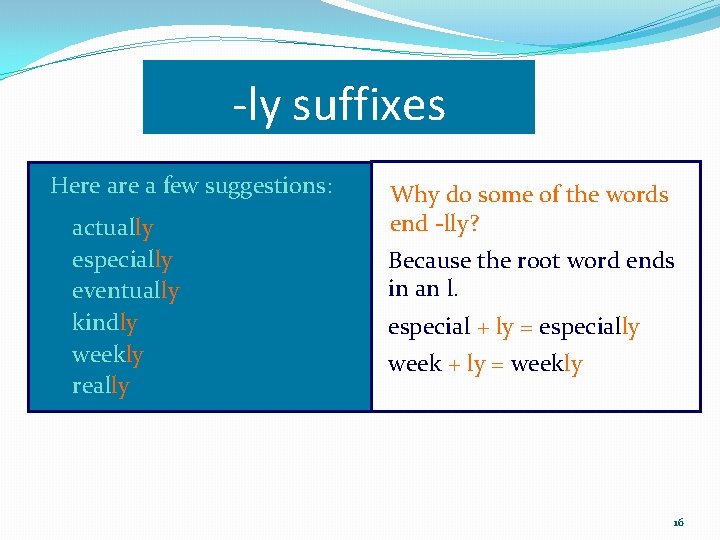
-ly suffixes Here a few suggestions: actually especially eventually kindly weekly really Why do some of the words end -lly? Because the root word ends in an l. especial + ly = especially week + ly = weekly 16
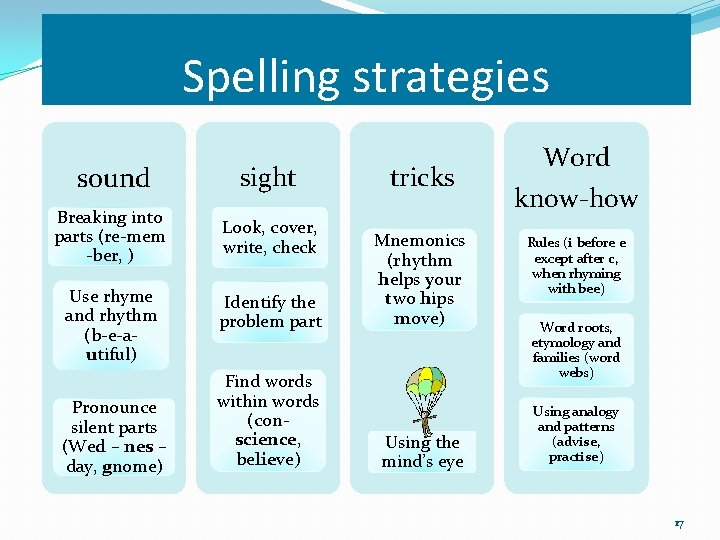
Spelling strategies sound sight Breaking into parts (re-mem -ber, ) Look, cover, write, check Use rhyme and rhythm (b-e-autiful) Pronounce silent parts (Wed – nes – day, gnome) Identify the problem part Find words within words (conscience, believe) tricks Mnemonics (rhythm helps your two hips move) Using the mind’s eye Word know-how Rules (i before e except after c, when rhyming with bee) Word roots, etymology and families (word webs) Using analogy and patterns (advise, practise) 17
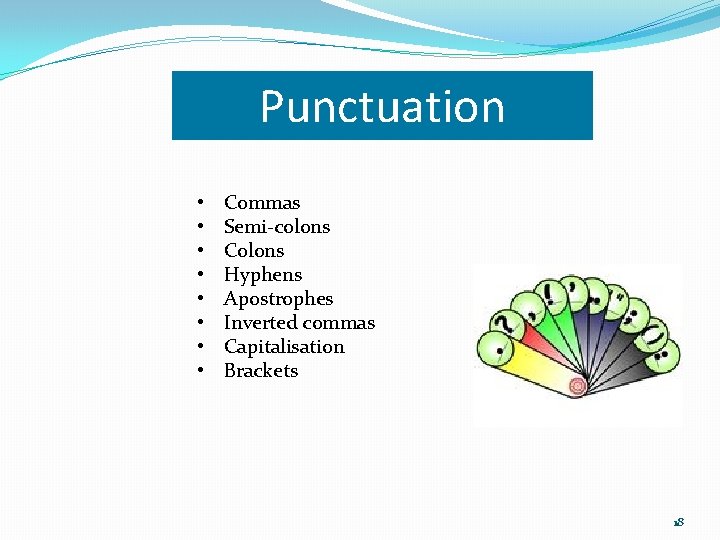
Punctuation • • Commas Semi-colons Colons Hyphens Apostrophes Inverted commas Capitalisation Brackets 18
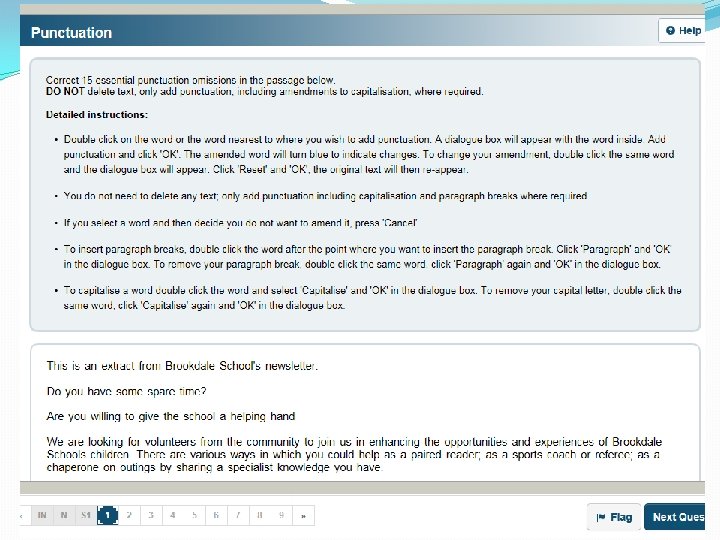
Punctuation Remove or rewrite sections Essential only. 19
20
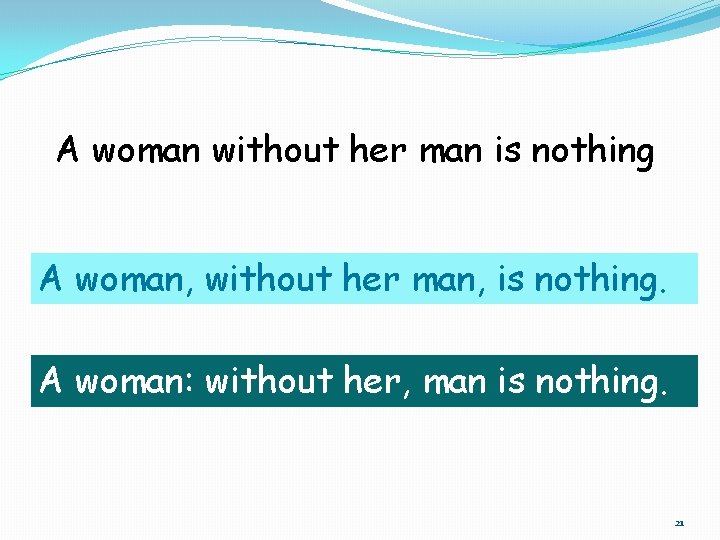
A woman without her man is nothing A woman, without her man, is nothing. A woman: without her, man is nothing. 21
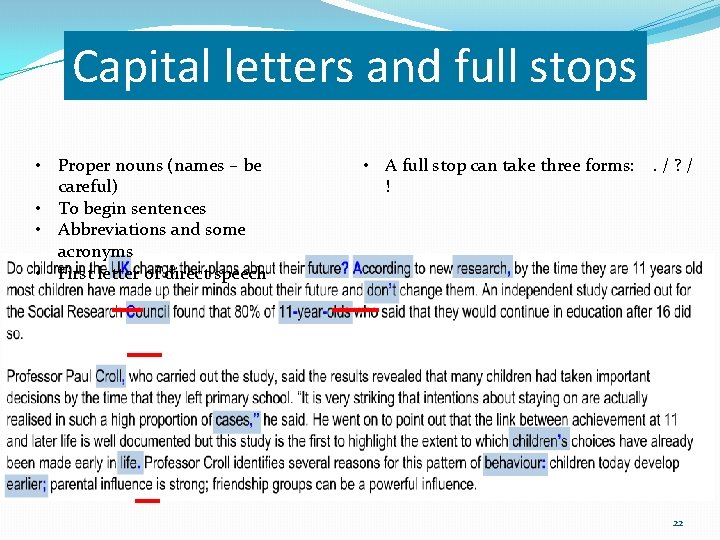
Capital letters and full stops • Proper nouns (names – be careful) • To begin sentences • Abbreviations and some acronyms • First letter of direct speech • A full stop can take three forms: . / ? / ! 22
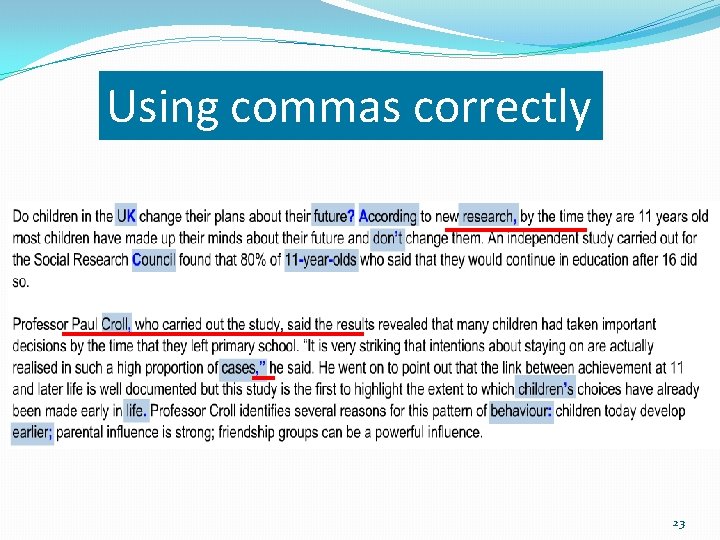
Using commas correctly 23
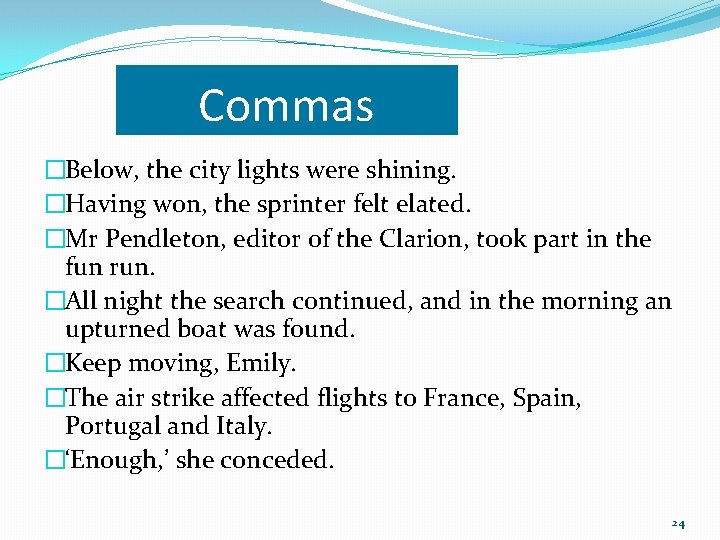
Commas �Below, the city lights were shining. �Having won, the sprinter felt elated. �Mr Pendleton, editor of the Clarion, took part in the fun run. �All night the search continued, and in the morning an upturned boat was found. �Keep moving, Emily. �The air strike affected flights to France, Spain, Portugal and Italy. �‘Enough, ’ she conceded. 24
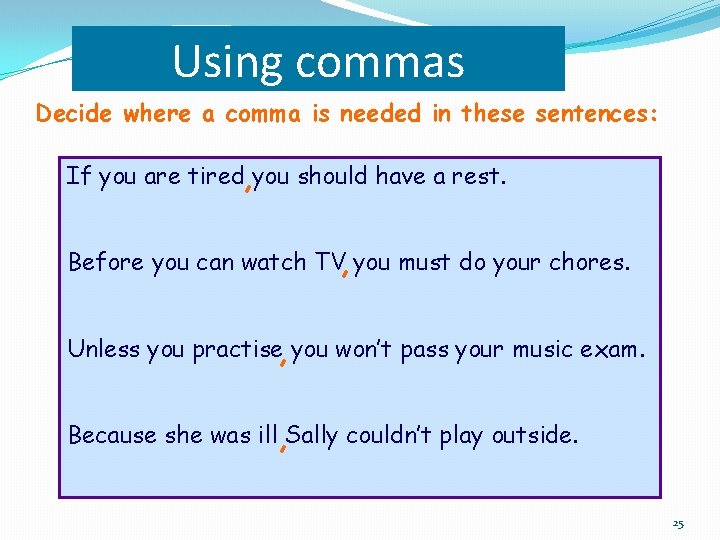
Using commas Decide where a comma is needed in these sentences: If you are tired, you should have a rest. Before you can watch TV, you must do your chores. Unless you practise, you won’t pass your music exam. Because she was ill, Sally couldn’t play outside. 25
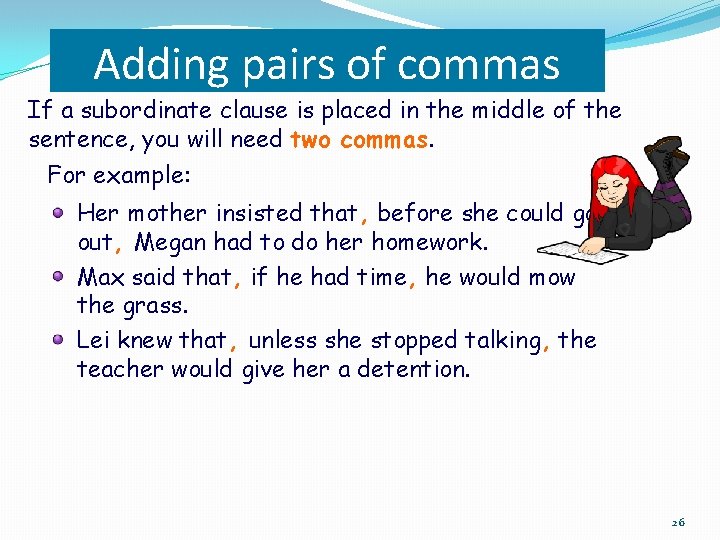
Adding pairs of commas If a subordinate clause is placed in the middle of the sentence, you will need two commas. For example: Her mother insisted that, before she could go out, Megan had to do her homework. Max said that, if he had time, he would mow the grass. Lei knew that, unless she stopped talking, the teacher would give her a detention. 26
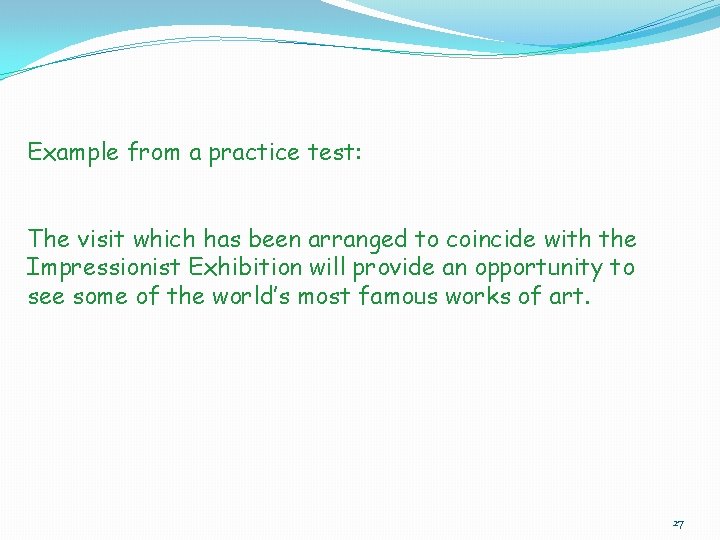
Example from a practice test: The visit which has been arranged to coincide with the Impressionist Exhibition will provide an opportunity to see some of the world’s most famous works of art. 27
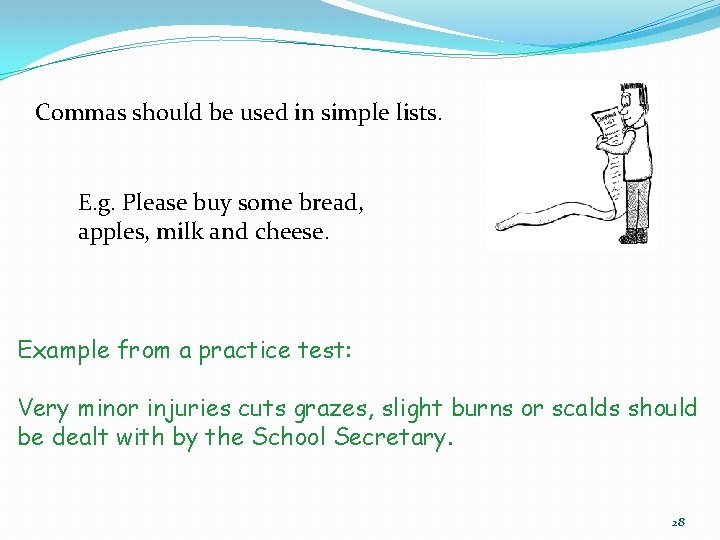
Commas should be used in simple lists. E. g. Please buy some bread, apples, milk and cheese. Example from a practice test: Very minor injuries cuts grazes, slight burns or scalds should be dealt with by the School Secretary. 28
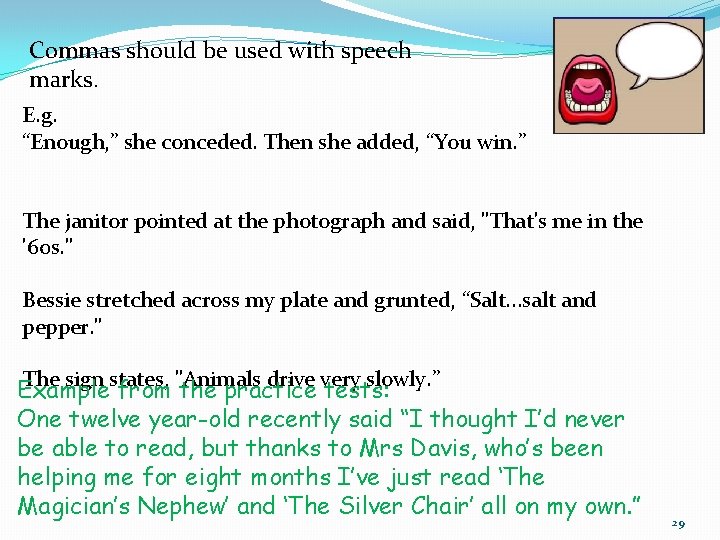
Commas should be used with speech marks. E. g. “Enough, ” she conceded. Then she added, “You win. ” The janitor pointed at the photograph and said, "That's me in the '60 s. " Bessie stretched across my plate and grunted, “Salt. . . salt and pepper. " The sign states, "Animals drive very slowly. ” Example from the practice tests: One twelve year-old recently said “I thought I’d never be able to read, but thanks to Mrs Davis, who’s been helping me for eight months I’ve just read ‘The Magician’s Nephew’ and ‘The Silver Chair’ all on my own. ” 29
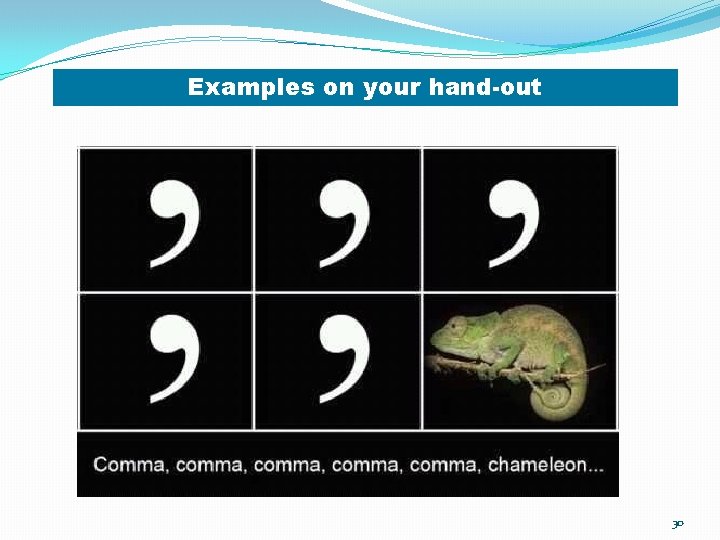
Examples on your hand-out 30
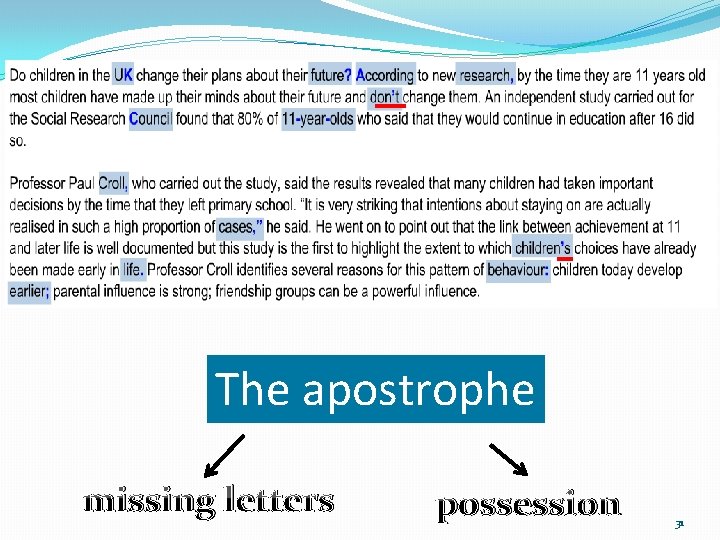
The apostrophe missing letters possession 31
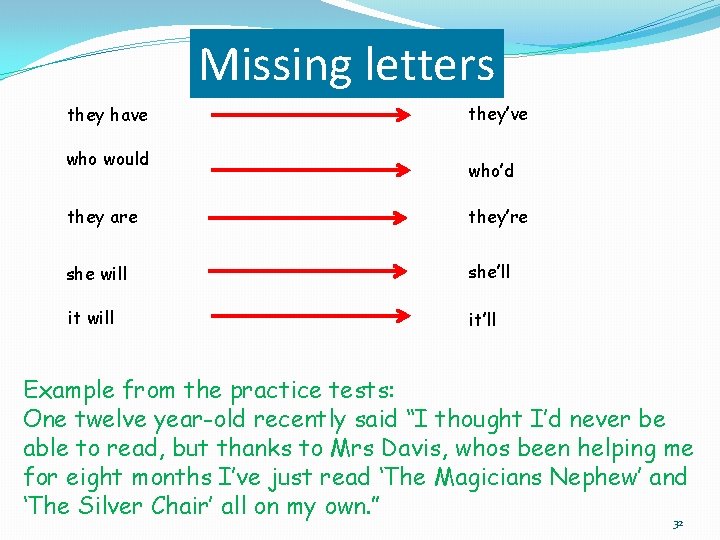
Missing letters they have who would they’ve who’d they are they’re she will she’ll it will it’ll Example from the practice tests: One twelve year-old recently said “I thought I’d never be able to read, but thanks to Mrs Davis, whos been helping me for eight months I’ve just read ‘The Magicians Nephew’ and ‘The Silver Chair’ all on my own. ” 32
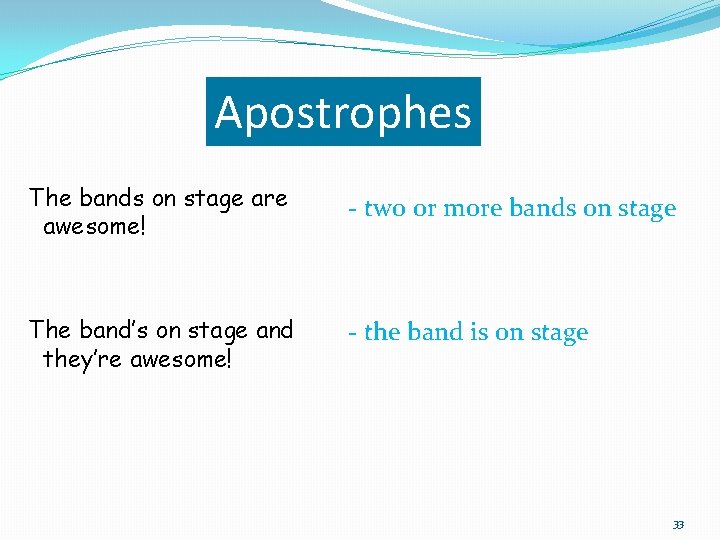
Apostrophes The bands on stage are awesome! - two or more bands on stage The band’s on stage and they’re awesome! - the band is on stage 33
wont didnt havent hed couldnt heres Im 34
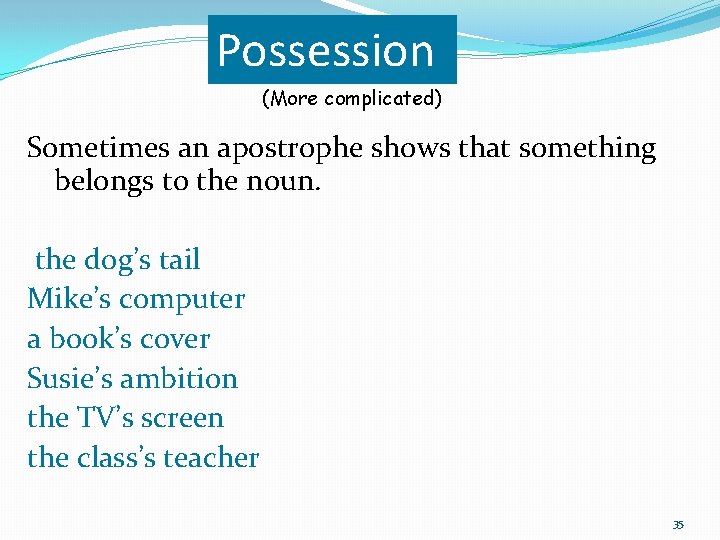
Possession (More complicated) Sometimes an apostrophe shows that something belongs to the noun. the dog’s tail Mike’s computer a book’s cover Susie’s ambition the TV’s screen the class’s teacher 35
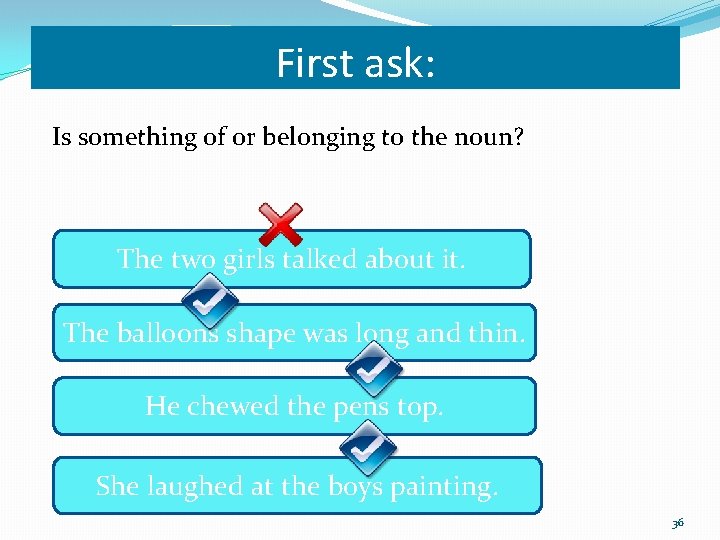
First ask: Is something of or belonging to the noun? The two girls talked about it. The balloons shape was long and thin. He chewed the pens top. She laughed at the boys painting. 36
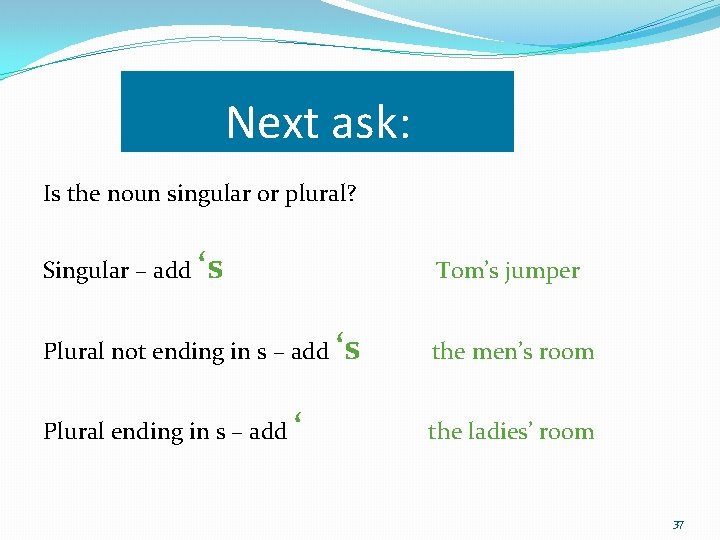
Next ask: Is the noun singular or plural? Singular – add ‘s Tom’s jumper Plural not ending in s – add ‘s the men’s room Plural ending in s – add ‘ the ladies’ room 37
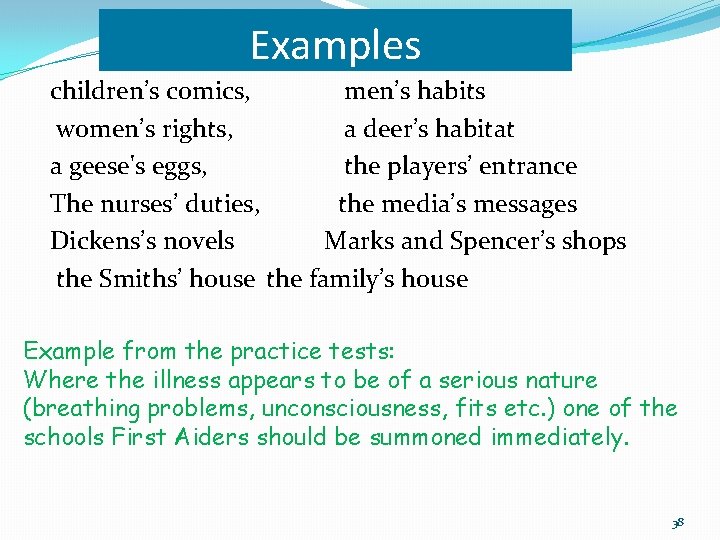
Examples children’s comics, men’s habits women’s rights, a deer’s habitat a geese's eggs, the players’ entrance The nurses’ duties, the media’s messages Dickens’s novels Marks and Spencer’s shops the Smiths’ house the family’s house Example from the practice tests: Where the illness appears to be of a serious nature (breathing problems, unconsciousness, fits etc. ) one of the schools First Aiders should be summoned immediately. 38
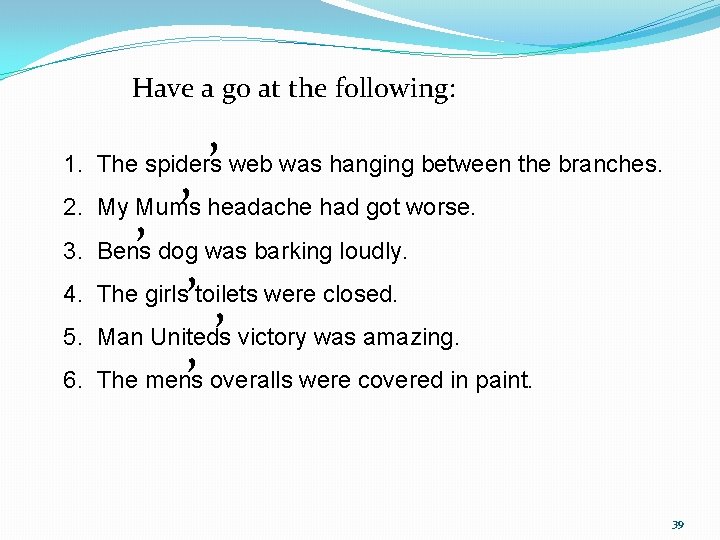
Have a go at the following: ’ 1. The spiders web was hanging between the branches. ’ 2. My Mums headache had got worse. ’ 3. Bens dog was barking loudly. ’ 4. The girls toilets were closed. ’ 5. Man Uniteds victory was amazing. ’ 6. The mens overalls were covered in paint. 39
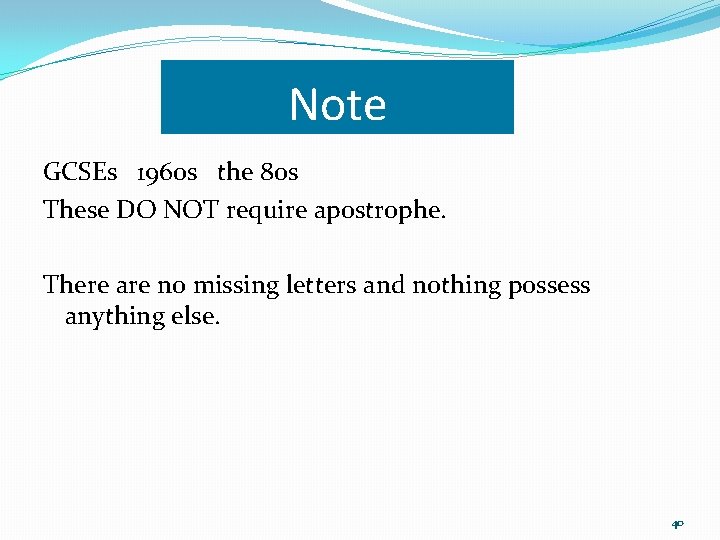
Note GCSEs 1960 s the 80 s These DO NOT require apostrophe. There are no missing letters and nothing possess anything else. 40
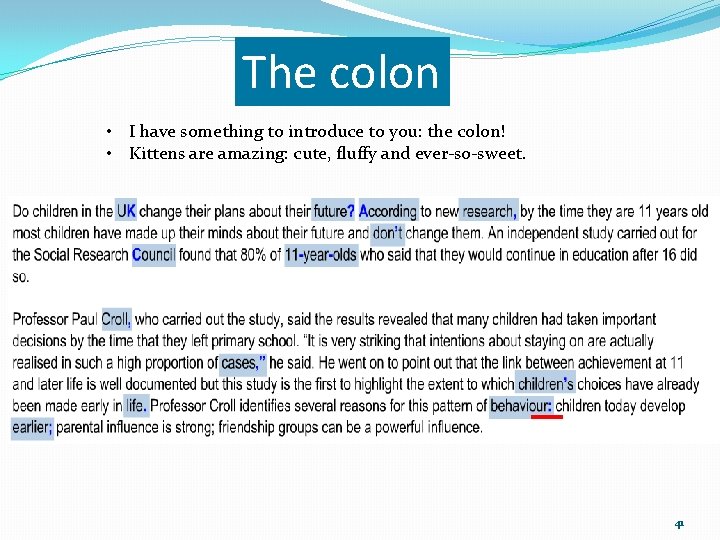
The colon • I have something to introduce to you: the colon! • Kittens are amazing: cute, fluffy and ever-so-sweet. 41
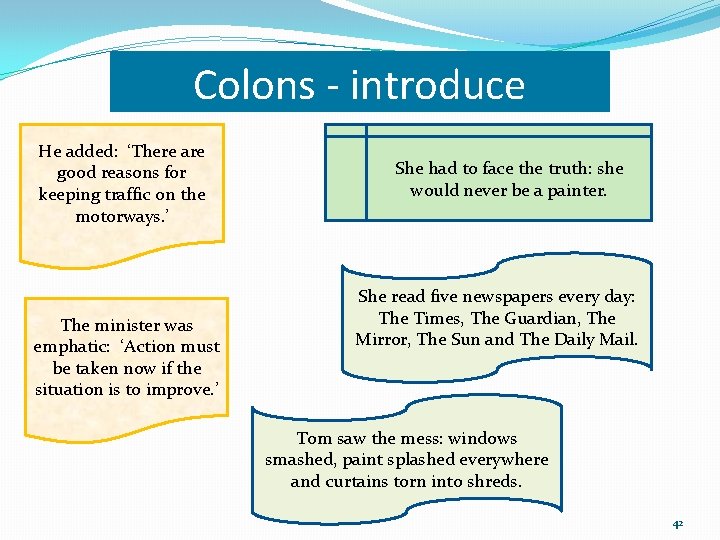
Colons - introduce He added: ‘There are good reasons for keeping traffic on the motorways. ’ The minister was emphatic: ‘Action must be taken now if the situation is to improve. ’ She had to face the truth: she would never be a painter. She read five newspapers every day: The Times, The Guardian, The Mirror, The Sun and The Daily Mail. Tom saw the mess: windows smashed, paint splashed everywhere and curtains torn into shreds. 42
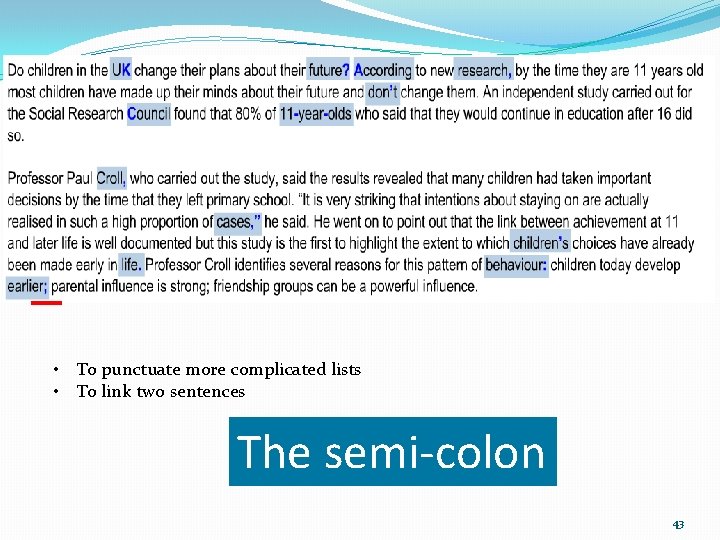
• To punctuate more complicated lists • To link two sentences The semi-colon 43
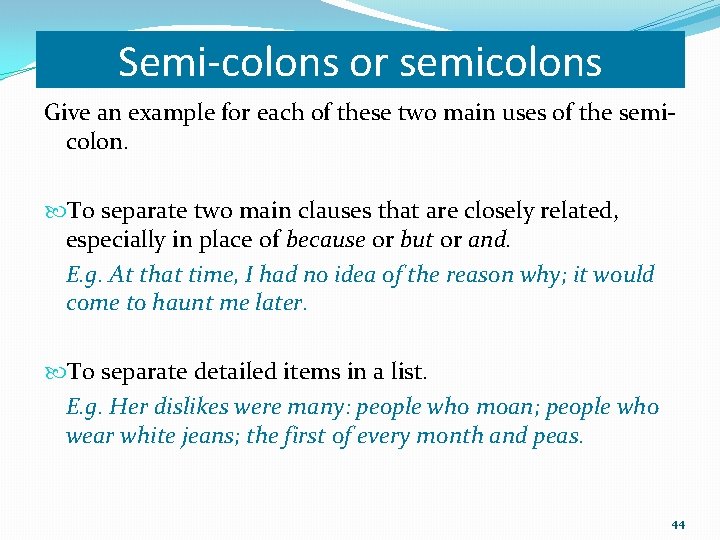
Semi-colons or semicolons Give an example for each of these two main uses of the semicolon. To separate two main clauses that are closely related, especially in place of because or but or and. E. g. At that time, I had no idea of the reason why; it would come to haunt me later. To separate detailed items in a list. E. g. Her dislikes were many: people who moan; people who wear white jeans; the first of every month and peas. 44
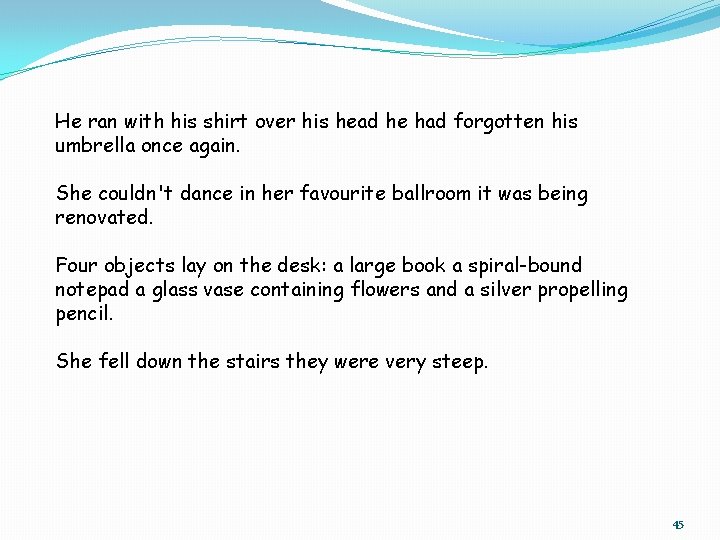
He ran with his shirt over his head he had forgotten his umbrella once again. She couldn't dance in her favourite ballroom it was being renovated. Four objects lay on the desk: a large book a spiral-bound notepad a glass vase containing flowers and a silver propelling pencil. She fell down the stairs they were very steep. 45
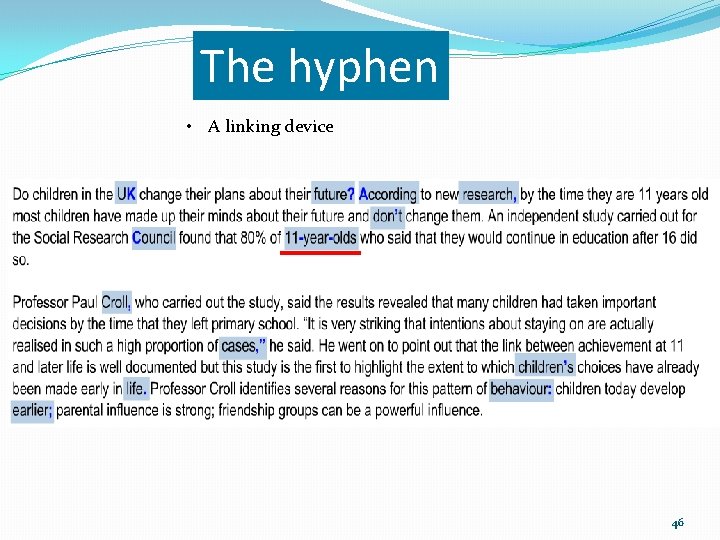
The hyphen • A linking device 46
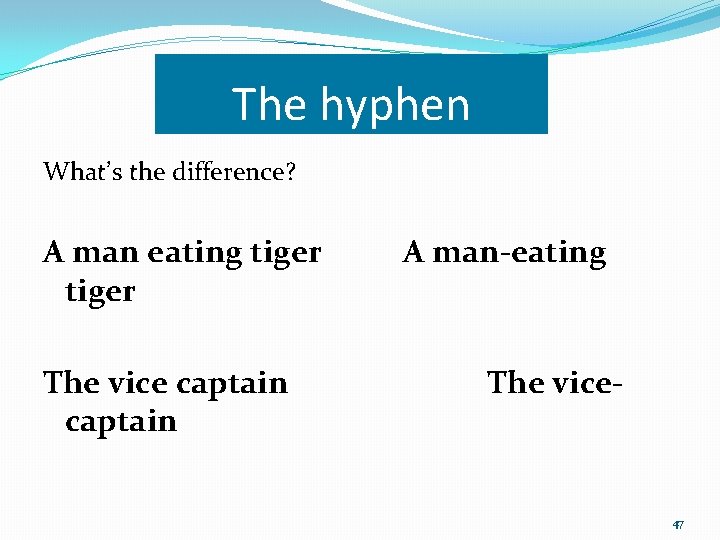
The hyphen What’s the difference? A man eating tiger A man-eating The vice captain The vice- 47
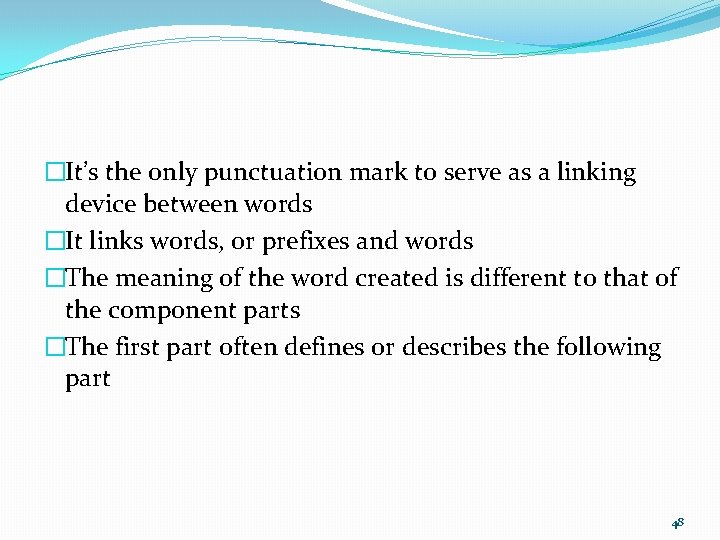
�It’s the only punctuation mark to serve as a linking device between words �It links words, or prefixes and words �The meaning of the word created is different to that of the component parts �The first part often defines or describes the following part 48
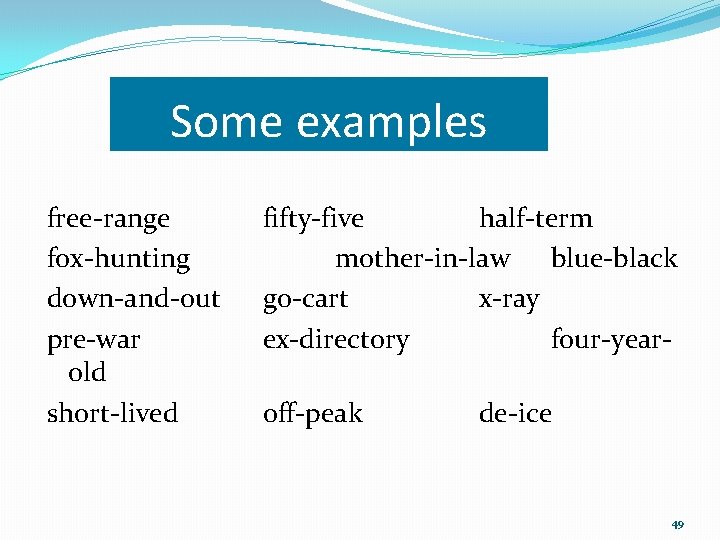
Some examples free-range fox-hunting down-and-out pre-war old short-lived fifty-five half-term mother-in-law blue-black go-cart x-ray ex-directory four-yearoff-peak de-ice 49
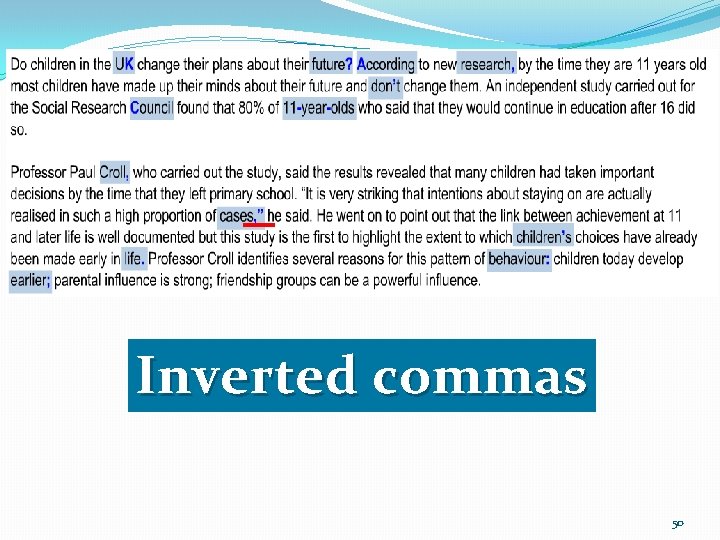
Inverted commas 50
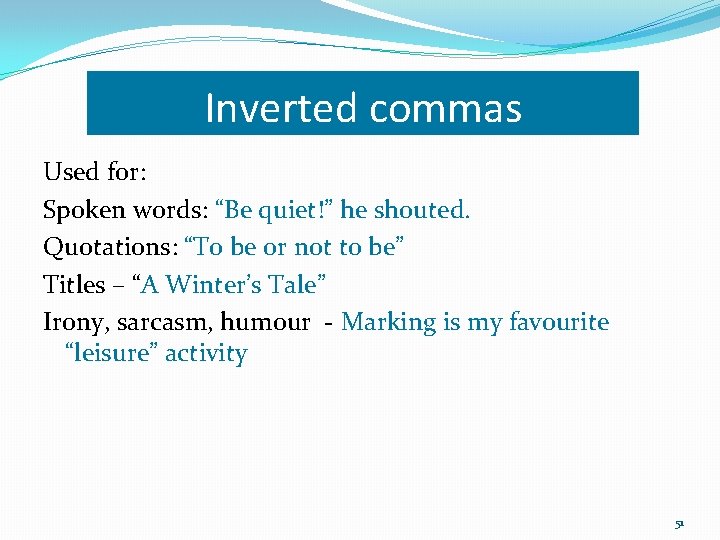
Inverted commas Used for: Spoken words: “Be quiet!” he shouted. Quotations: “To be or not to be” Titles – “A Winter’s Tale” Irony, sarcasm, humour - Marking is my favourite “leisure” activity 51
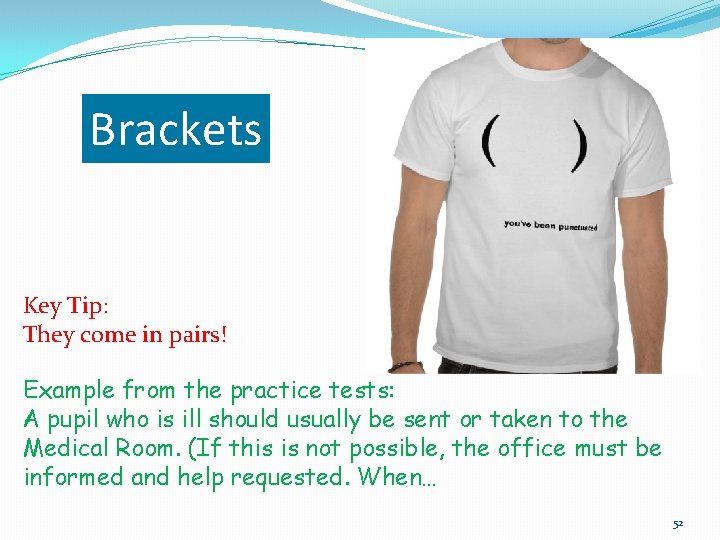
Brackets Key Tip: They come in pairs! Example from the practice tests: A pupil who is ill should usually be sent or taken to the Medical Room. (If this is not possible, the office must be informed and help requested. When… 52
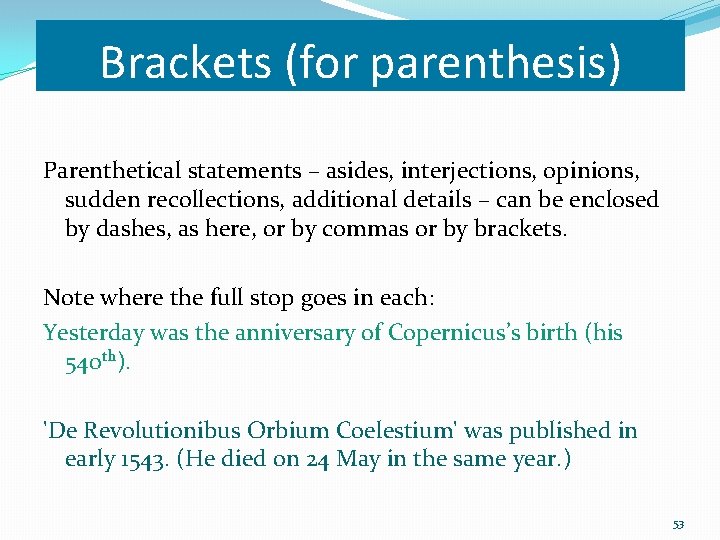
Brackets (for parenthesis) Parenthetical statements – asides, interjections, opinions, sudden recollections, additional details – can be enclosed by dashes, as here, or by commas or by brackets. Note where the full stop goes in each: Yesterday was the anniversary of Copernicus’s birth (his 540 th). 'De Revolutionibus Orbium Coelestium' was published in early 1543. (He died on 24 May in the same year. ) 53
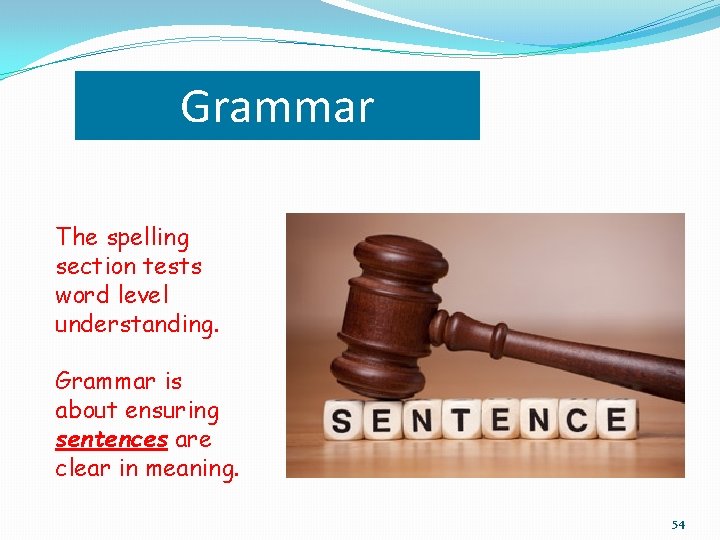
Grammar The spelling section tests word level understanding. Grammar is about ensuring sentences are clear in meaning. 54
Grammar This section tests your ability to identify text that doesn’t conform to good grammatical practice. You will be expected to distinguish between text that makes sense and clearly conveys its intended meaning and text that does not. You will not be tested on your knowledge of grammatical terms, but on your knowledge of how to use grammar correctly. The grammar section requires you to construct a short, continuous prose passage. At 4 or more points in the text you will be asked to select the most appropriate choice for insertion to complete the passage. 55
General advice These questions will test your ability to recognise where writing fails to conform to the conventions of written Standard English. In these grammar tasks you are required to complete a passage of text. You are asked to do this by selecting the best of the given alternatives at the points where there are blank lines. You will need to be sure that you have made the best overall set of choices. In each case your answer should: • Be grammatically acceptable according to the rules of written Standard English; • Make good sense within the context, i. e. it should connect coherently and logically with the surrounding text; • Be consistent with the style and the tone used in the text as a whole; • Express meaning clearly and concisely in line with the writer’s purpose and intended audience. 56
Look out for : �Agreement �Ambiguity �Common errors 57
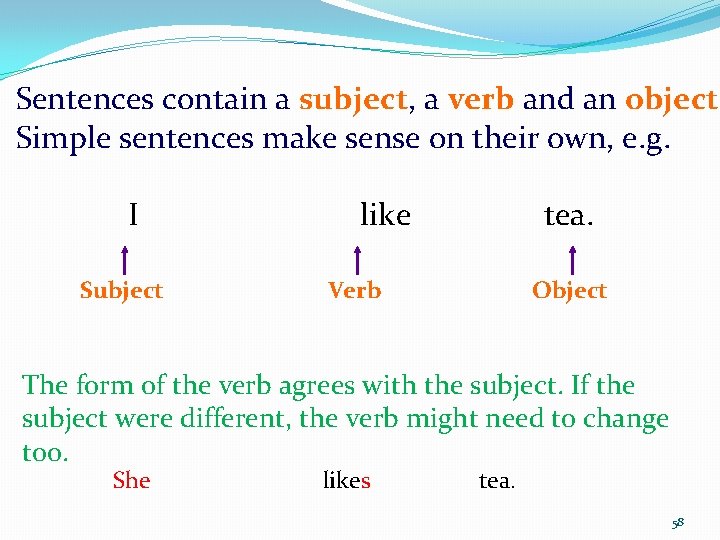
Sentences contain a subject, a verb and an object. Simple sentences make sense on their own, e. g. I like Subject tea. Verb Object The form of the verb agrees with the subject. If the subject were different, the verb might need to change too. She likes tea. 58
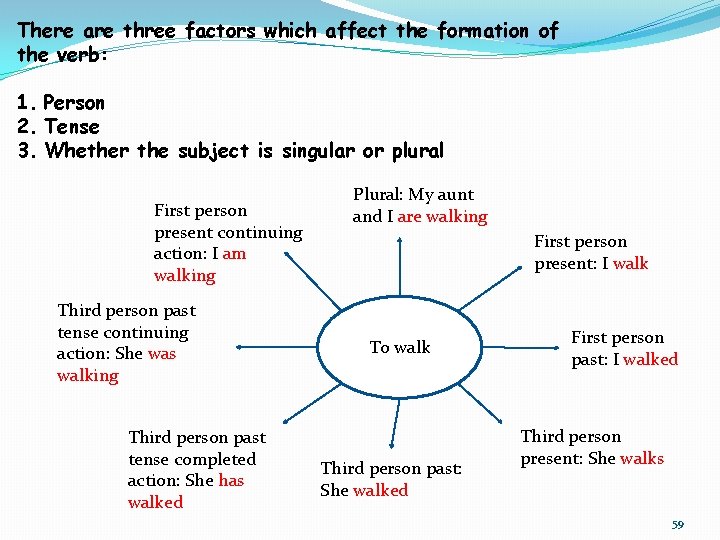
There are three factors which affect the formation of the verb: 1. Person 2. Tense 3. Whether the subject is singular or plural First person present continuing action: I am walking Third person past tense continuing action: She was walking Third person past tense completed action: She has walked Plural: My aunt and I are walking First person present: I walk To walk Third person past: She walked First person past: I walked Third person present: She walks 59
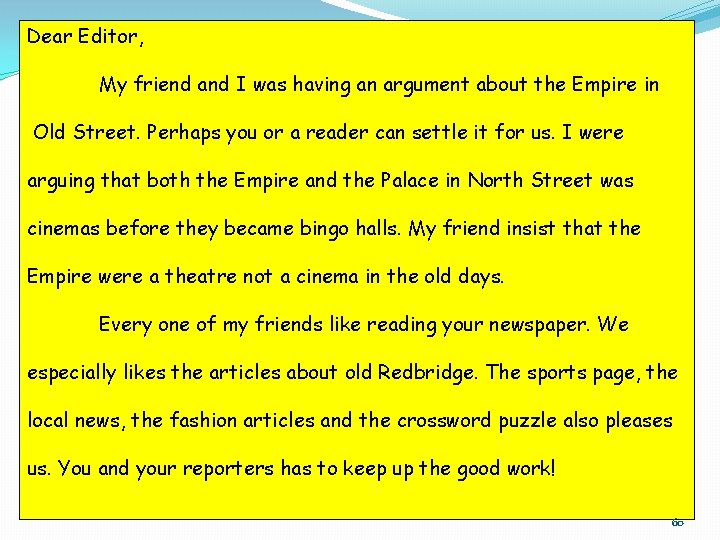
Dear Editor, My friend and I was having an argument about the Empire in Old Street. Perhaps you or a reader can settle it for us. I were arguing that both the Empire and the Palace in North Street was cinemas before they became bingo halls. My friend insist that the Empire were a theatre not a cinema in the old days. Every one of my friends like reading your newspaper. We especially likes the articles about old Redbridge. The sports page, the local news, the fashion articles and the crossword puzzle also pleases us. You and your reporters has to keep up the good work! 60
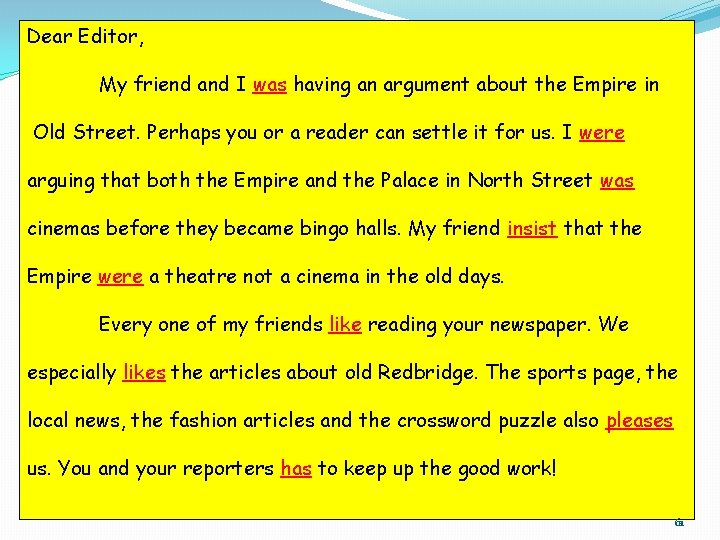
Dear Editor, My friend and I was having an argument about the Empire in Old Street. Perhaps you or a reader can settle it for us. I were arguing that both the Empire and the Palace in North Street was cinemas before they became bingo halls. My friend insist that the Empire were a theatre not a cinema in the old days. Every one of my friends like reading your newspaper. We especially likes the articles about old Redbridge. The sports page, the local news, the fashion articles and the crossword puzzle also pleases us. You and your reporters has to keep up the good work! 61
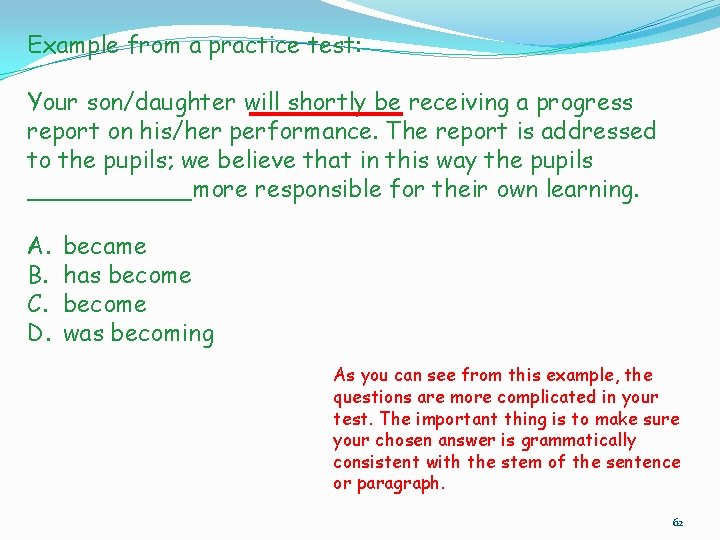
Example from a practice test: Your son/daughter will shortly be receiving a progress report on his/her performance. The report is addressed to the pupils; we believe that in this way the pupils ______more responsible for their own learning. A. B. C. D. became has become was becoming As you can see from this example, the questions are more complicated in your test. The important thing is to make sure your chosen answer is grammatically consistent with the stem of the sentence or paragraph. 62
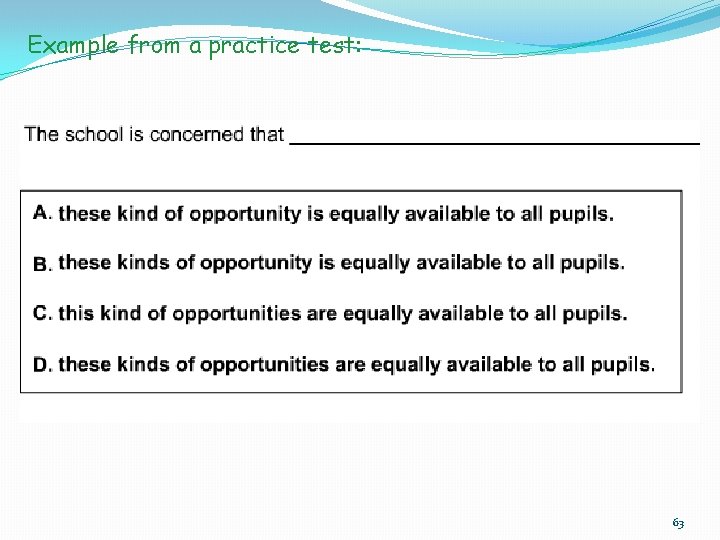
Example from a practice test: 63
Some rules you just need to learn: • Effect vs Affect • Practise vs Practice • Should have vs Should of 64
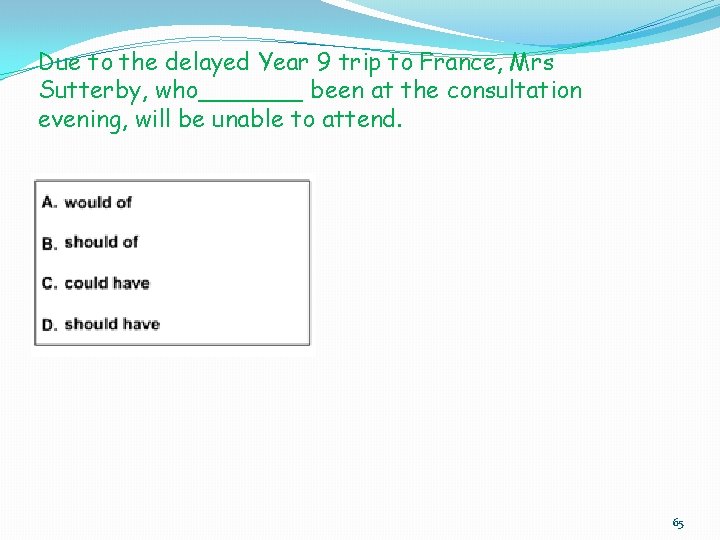
Due to the delayed Year 9 trip to France, Mrs Sutterby, who_______ been at the consultation evening, will be unable to attend. 65
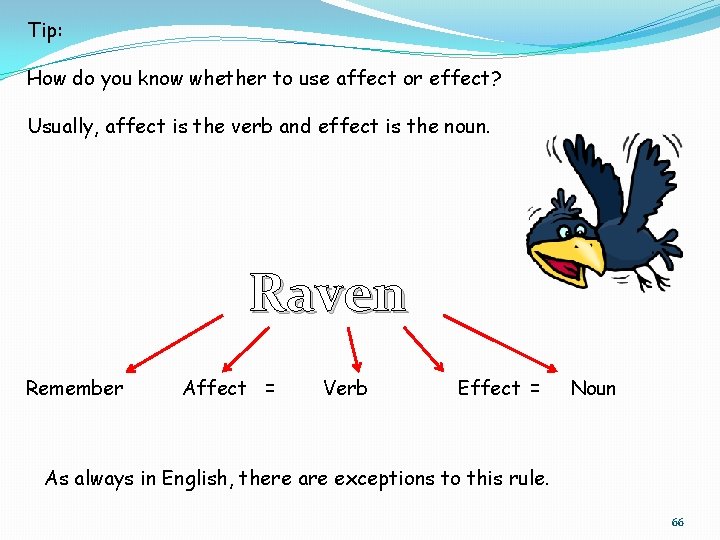
Tip: How do you know whether to use affect or effect? Usually, affect is the verb and effect is the noun. Raven Remember Affect = Verb Effect = Noun As always in English, there are exceptions to this rule. 66
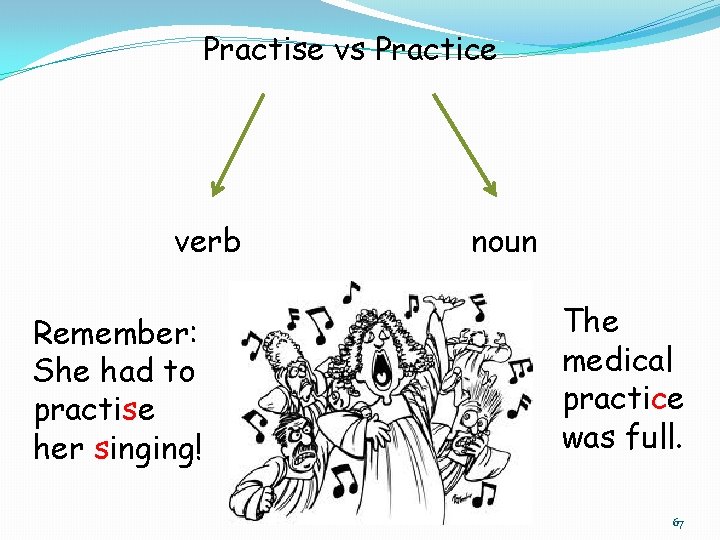
Practise vs Practice verb Remember: She had to practise her singing! noun The medical practice was full. 67
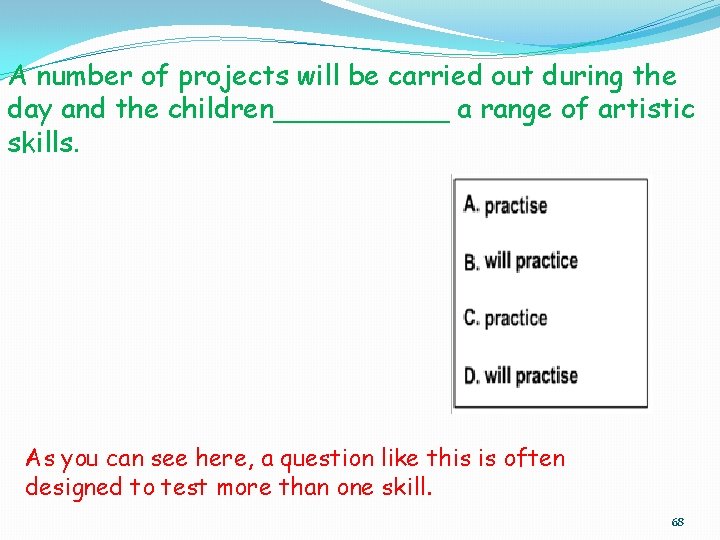
A number of projects will be carried out during the day and the children_____ a range of artistic skills. As you can see here, a question like this is often designed to test more than one skill. 68
What is ambiguity? 69
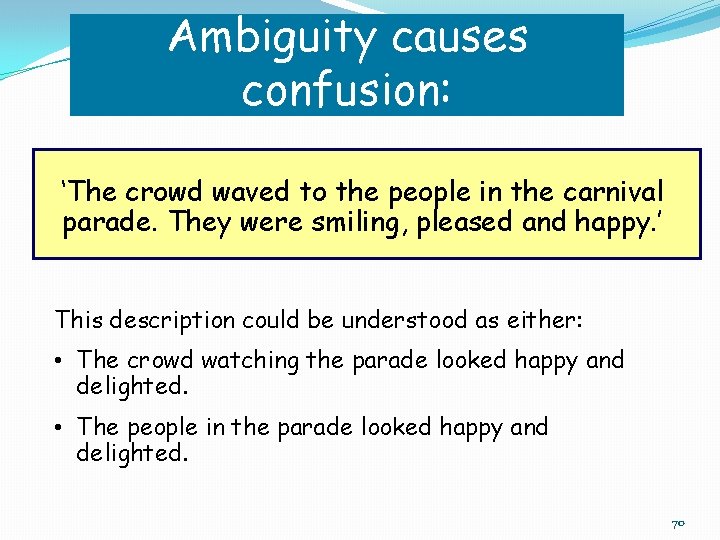
Ambiguity causes confusion: ‘The crowd waved to the people in the carnival parade. They were smiling, pleased and happy. ’ This description could be understood as either: • The crowd watching the parade looked happy and delighted. • The people in the parade looked happy and delighted. 70
Spotting ambiguity 71
Who Wants To Be A Millionaire? 72
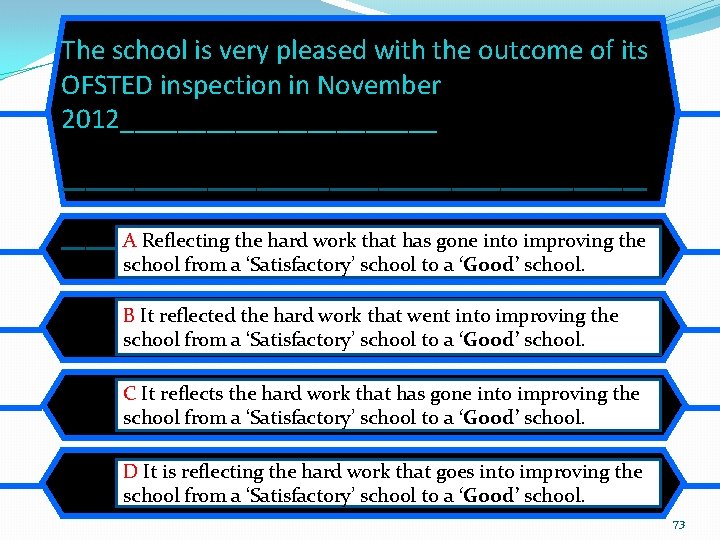
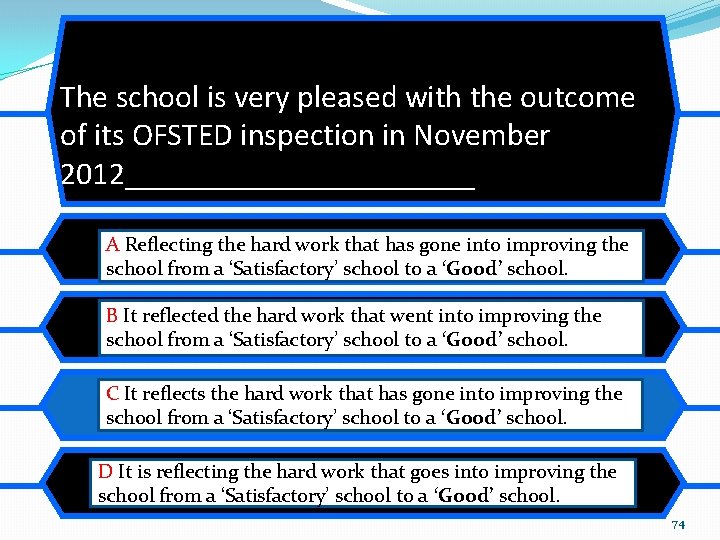
The school is very pleased with the outcome of its OFSTED inspection in November 2012______________________ A Reflecting the hard work that has gone into improving the school from a ‘Satisfactory’ school to a ‘Good’ school. B It reflected the hard work that went into improving the school from a ‘Satisfactory’ school to a ‘Good’ school. C It reflects the hard work that has gone into improving the school from a ‘Satisfactory’ school to a ‘Good’ school. D It is reflecting the hard work that goes into improving the school from a ‘Satisfactory’ school to a ‘Good’ school. 73
The school is very pleased with the outcome of its OFSTED inspection in November 2012___________ A Reflecting the hard work that has gone into improving the school from a ‘Satisfactory’ school to a ‘Good’ school. B C D B It reflected the hard work that went into improving the school from a ‘Satisfactory’ school to a ‘Good’ school. C It reflects the hard work that has gone into improving the school from a ‘Satisfactory’ school to a ‘Good’ school. D It is reflecting the hard work that goes into improving the school from a ‘Satisfactory’ school to a ‘Good’ school. 74
£ 100 75
Question 2 76
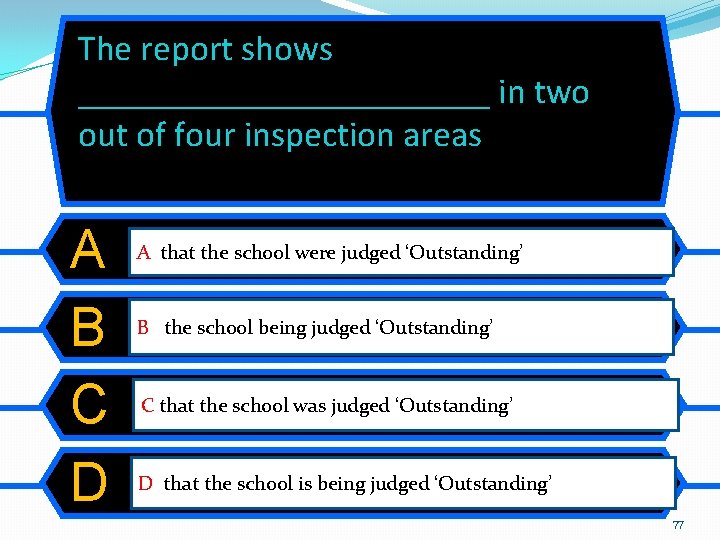
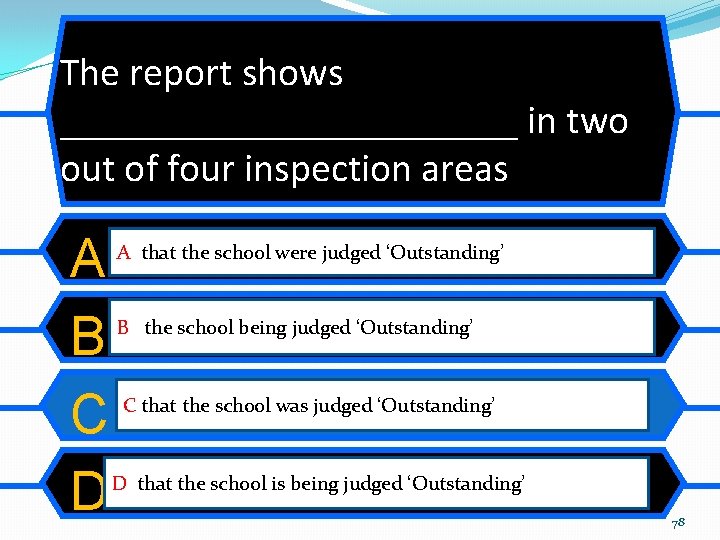
The report shows ____________ in two out of four inspection areas A B C D A that the school were judged ‘Outstanding’ B the school being judged ‘Outstanding’ C that the school was judged ‘Outstanding’ D that the school is being judged ‘Outstanding’ 77
The report shows ____________ in two out of four inspection areas A B C D A that the school were judged ‘Outstanding’ B the school being judged ‘Outstanding’ C that the school was judged ‘Outstanding’ D that the school is being judged ‘Outstanding’ 78
£ 200 79
Question 3 80
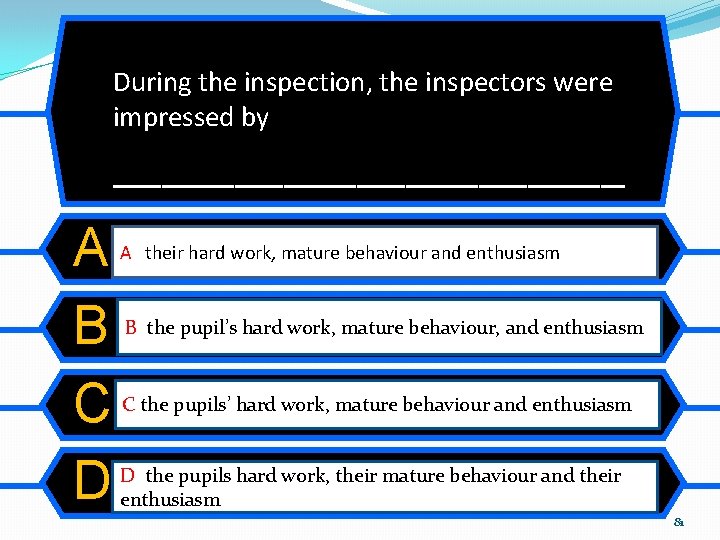
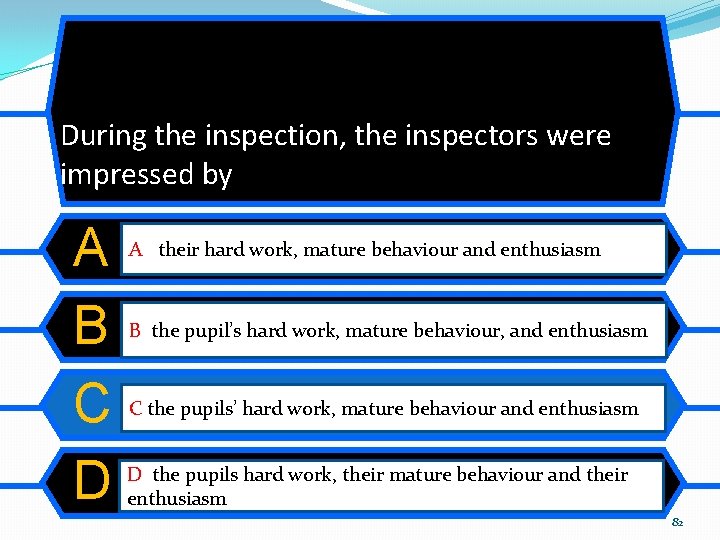
During the inspection, the inspectors were impressed by ___________ A B C D A their hard work, mature behaviour and enthusiasm B the pupil’s hard work, mature behaviour, and enthusiasm C the pupils’ hard work, mature behaviour and enthusiasm D the pupils hard work, their mature behaviour and their enthusiasm 81
During the inspection, the inspectors were impressed by A B C D A their hard work, mature behaviour and enthusiasm B the pupil’s hard work, mature behaviour, and enthusiasm C the pupils’ hard work, mature behaviour and enthusiasm D the pupils hard work, their mature behaviour and their enthusiasm 82
£ 300 83
Question 4 84
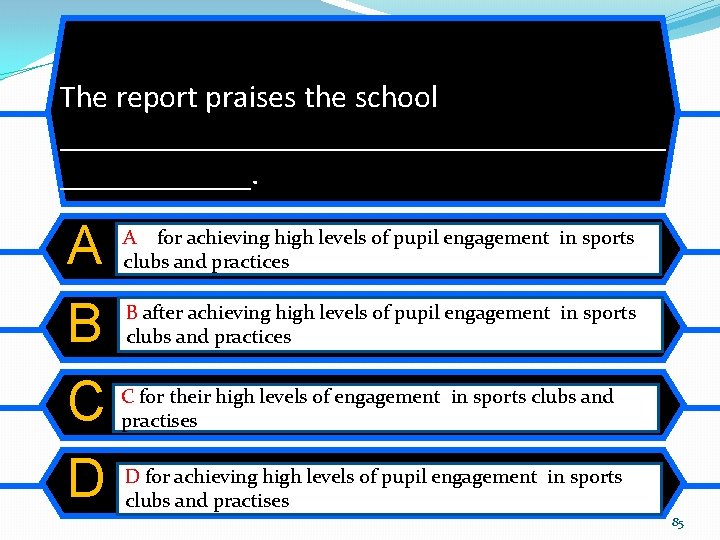
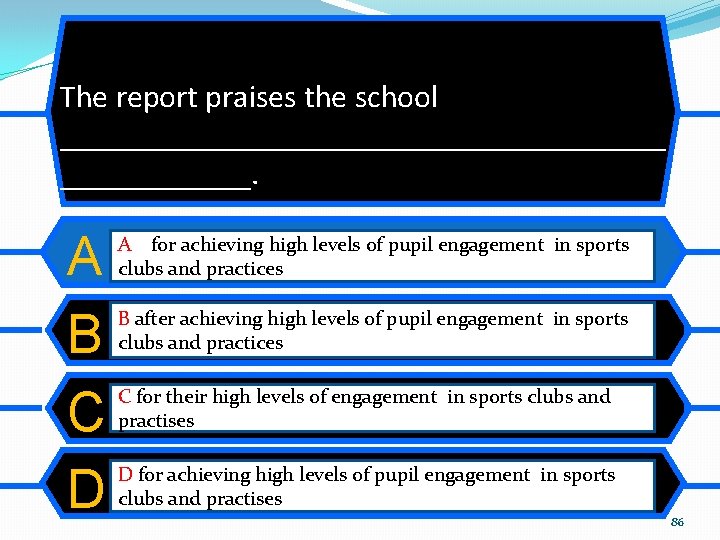
The report praises the school ___________________. A B C D A for achieving high levels of pupil engagement in sports clubs and practices B after achieving high levels of pupil engagement in sports clubs and practices C for their high levels of engagement in sports clubs and practises D for achieving high levels of pupil engagement in sports clubs and practises 85
The report praises the school ___________________. A B C D A for achieving high levels of pupil engagement in sports clubs and practices B after achieving high levels of pupil engagement in sports clubs and practices C for their high levels of engagement in sports clubs and practises D for achieving high levels of pupil engagement in sports clubs and practises 86
£ 500 87
Question 5 88
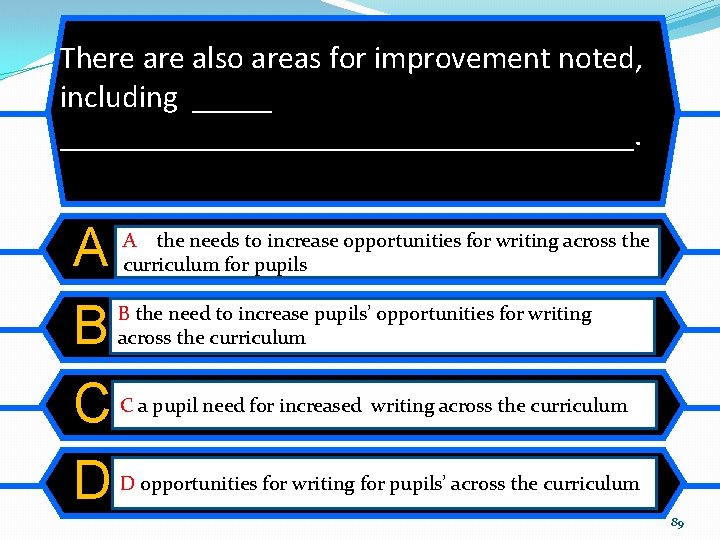
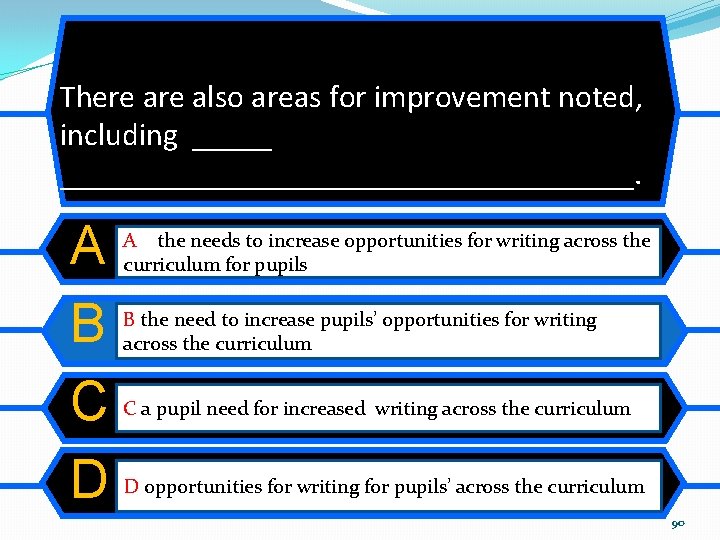
There also areas for improvement noted, including _____________________. A B C D A the needs to increase opportunities for writing across the curriculum for pupils B the need to increase pupils’ opportunities for writing across the curriculum C a pupil need for increased writing across the curriculum D opportunities for writing for pupils’ across the curriculum 89
There also areas for improvement noted, including _____________________. A B C D A the needs to increase opportunities for writing across the curriculum for pupils B the need to increase pupils’ opportunities for writing across the curriculum C a pupil need for increased writing across the curriculum D opportunities for writing for pupils’ across the curriculum 90
£ 1, 000 91
Question 6 92
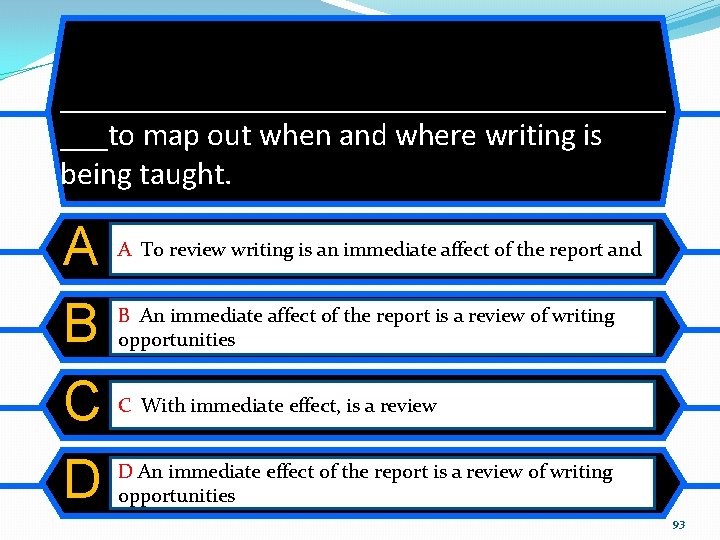
___________________ ___to map out when and where writing is being taught. A B C D A To review writing is an immediate affect of the report and B An immediate affect of the report is a review of writing opportunities C With immediate effect, is a review D An immediate effect of the report is a review of writing opportunities 93
___________________ ___to map out when and where writing is being taught. A B C D A To review writing is an immediate affect of the report and B An immediate affect of the report is a review of writing opportunities C With immediate effect, is a review D An immediate effect of the report is a review of writing opportunities 94
£ 2, 000 95
Question 7 96
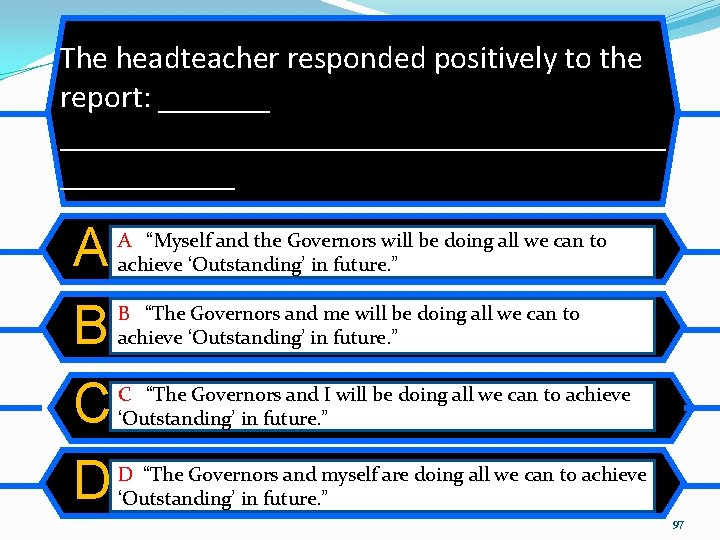
The headteacher responded positively to the report: _______________________ A B C D A “Myself and the Governors will be doing all we can to achieve ‘Outstanding’ in future. ” B “The Governors and me will be doing all we can to achieve ‘Outstanding’ in future. ” C “The Governors and I will be doing all we can to achieve ‘Outstanding’ in future. ” D “The Governors and myself are doing all we can to achieve ‘Outstanding’ in future. ” 97
The headteacher responded positively to the report: _______________________ A B C D A “Myself and the Governors will be doing all we can to achieve ‘Outstanding’ in future. ” B “The Governors and me will be doing all we can to achieve ‘Outstanding’ in future. ” C “The Governors and I will be doing all we can to achieve ‘Outstanding’ in future. ” D “The Governors and myself are doing all we can to achieve ‘Outstanding’ in future. ” 98
£ 4, 000 99
Question 8 100
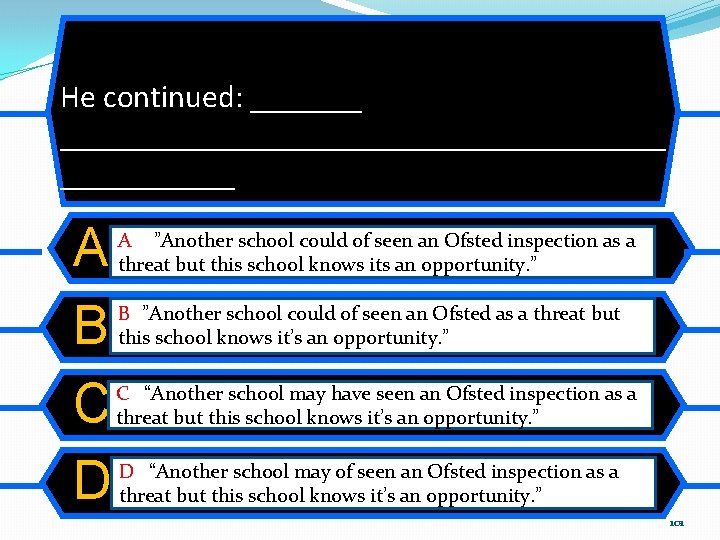
He continued: _______________________ A B C D A “”Another school could of seen an Ofsted inspection as a threat but this school knows its an opportunity. ” B “”Another school could of seen an Ofsted as a threat but this school knows it’s an opportunity. ” C “Another school may have seen an Ofsted inspection as a threat but this school knows it’s an opportunity. ” D “Another school may of seen an Ofsted inspection as a threat but this school knows it’s an opportunity. ” 101
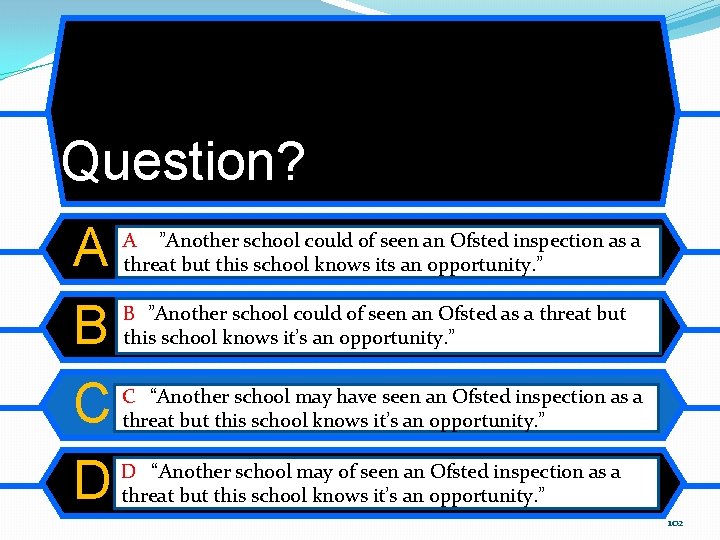
Question? A B C D A “”Another school could of seen an Ofsted inspection as a threat but this school knows its an opportunity. ” B “”Another school could of seen an Ofsted as a threat but this school knows it’s an opportunity. ” C “Another school may have seen an Ofsted inspection as a threat but this school knows it’s an opportunity. ” D “Another school may of seen an Ofsted inspection as a threat but this school knows it’s an opportunity. ” 102
£ 8, 000 103
Comprehension 104
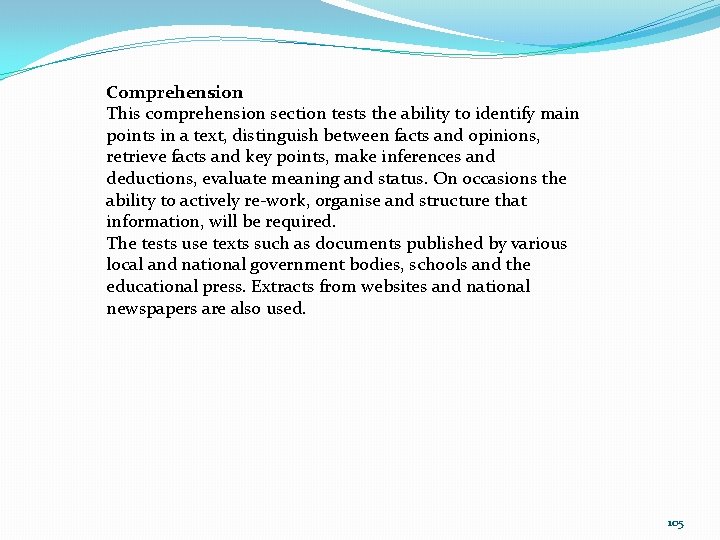
Comprehension This comprehension section tests the ability to identify main points in a text, distinguish between facts and opinions, retrieve facts and key points, make inferences and deductions, evaluate meaning and status. On occasions the ability to actively re-work, organise and structure that information, will be required. The tests use texts such as documents published by various local and national government bodies, schools and the educational press. Extracts from websites and national newspapers are also used. 105
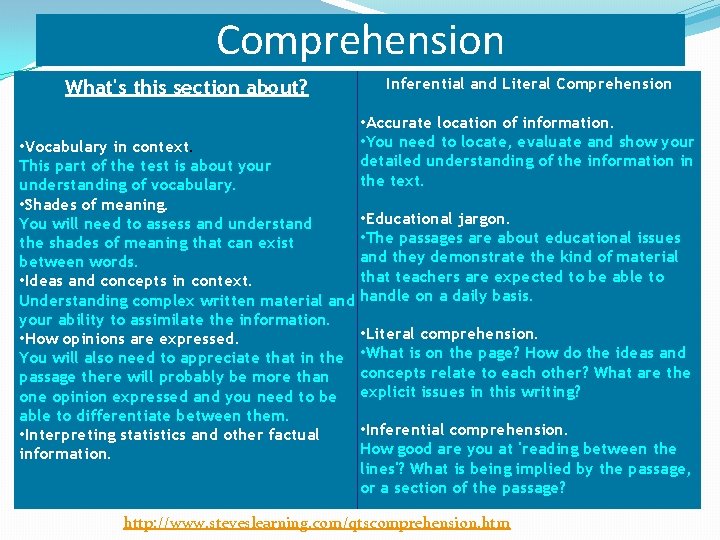
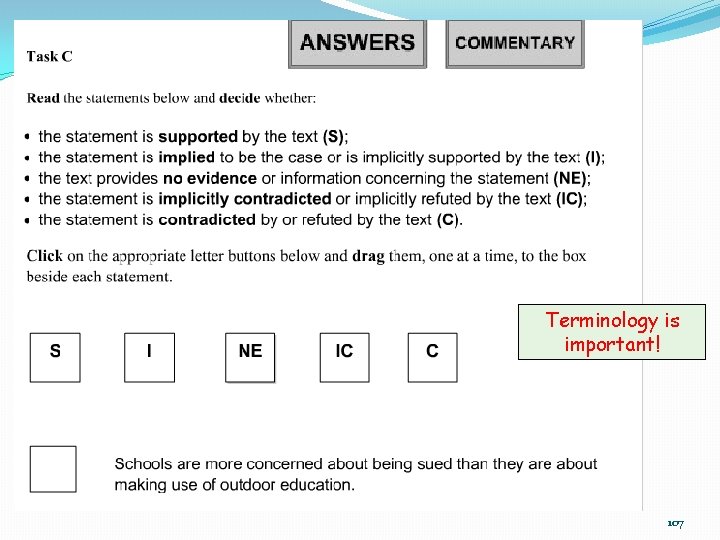
Comprehension What's this section about? • Vocabulary in context. This part of the test is about your understanding of vocabulary. • Shades of meaning. You will need to assess and understand the shades of meaning that can exist between words. • Ideas and concepts in context. Understanding complex written material and your ability to assimilate the information. • How opinions are expressed. You will also need to appreciate that in the passage there will probably be more than one opinion expressed and you need to be able to differentiate between them. • Interpreting statistics and other factual information. Inferential and Literal Comprehension • Accurate location of information. • You need to locate, evaluate and show your detailed understanding of the information in the text. • Educational jargon. • The passages are about educational issues and they demonstrate the kind of material that teachers are expected to be able to handle on a daily basis. • Literal comprehension. • What is on the page? How do the ideas and concepts relate to each other? What are the explicit issues in this writing? • Inferential comprehension. How good are you at 'reading between the lines'? What is being implied by the passage, or a section of the passage? http: //www. steveslearning. com/qtscomprehension. htm
Terminology is important! 107
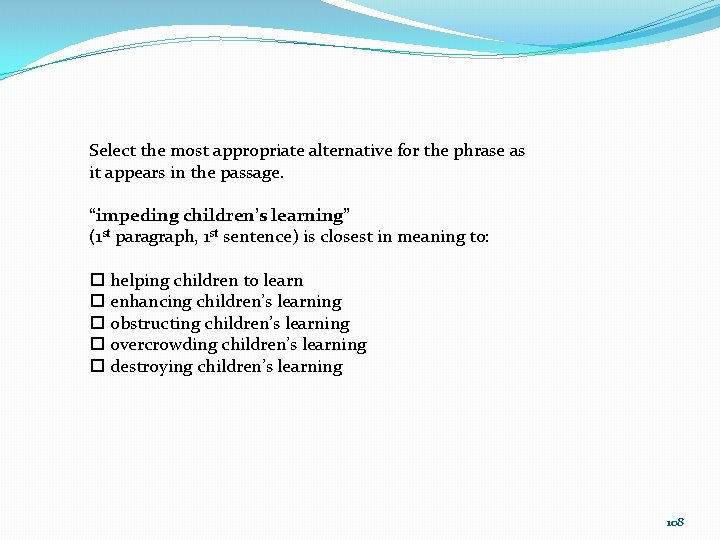
Select the most appropriate alternative for the phrase as it appears in the passage. “impeding children’s learning” (1 st paragraph, 1 st sentence) is closest in meaning to: helping children to learn enhancing children’s learning obstructing children’s learning overcrowding children’s learning destroying children’s learning 108
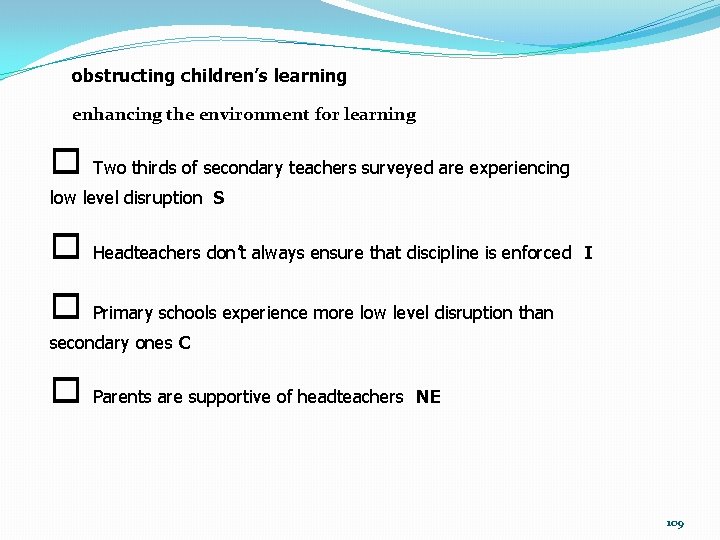
obstructing children’s learning enhancing the environment for learning Two thirds of secondary teachers surveyed are experiencing low level disruption S Headteachers don’t always ensure that discipline is enforced I Primary schools experience more low level disruption than secondary ones C Parents are supportive of headteachers NE 109
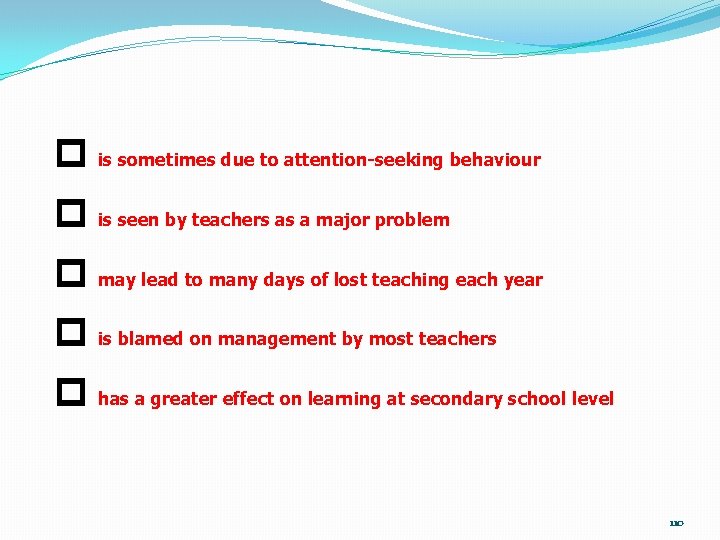
is sometimes due to attention-seeking behaviour is seen by teachers as a major problem may lead to many days of lost teaching each year is blamed on management by most teachers has a greater effect on learning at secondary school level 110
Good luck! Evaluations Queries john. keenan@newman. ac. uk 111