
Professional Learning Communities PLC Adapted from Power Point

- Slides: 11
Professional Learning Communities (PLC) Adapted from Power. Point on Professional Learning Communities Original work by Du. Four, Du. Four and Eaker Eliana Castillo and Diana Díaz California State University, Northridge
What is a Professional Learning Community? (PLC) § It is a group of educators that meets regularly, shares expertise, and works collaboratively to improve teaching skills and the academic performance of students. The key to improved learning for students is continuous. (The Glossary of Education Reform, 2014)
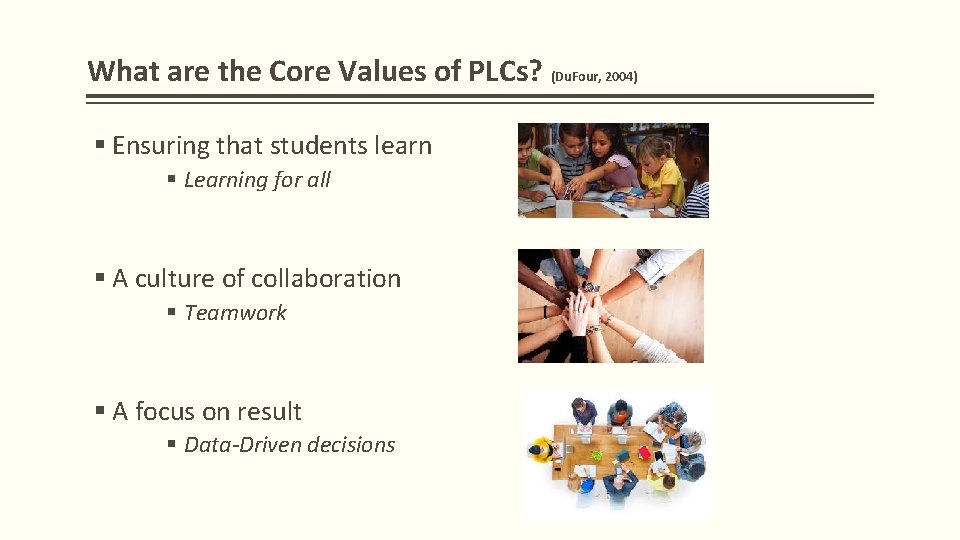
What are the Core Values of PLCs? (Du. Four, 2004) § Ensuring that students learn § Learning for all § A culture of collaboration § Teamwork § A focus on result § Data-Driven decisions
Ensuring that students learn Learning for all Questions to drive PLCs: 1. What do we want each student to learn? 2. How will we know when each student has learned it? 3. How will we respond when a student experiences difficulty in learning? 4. How will we respond when they already know it?
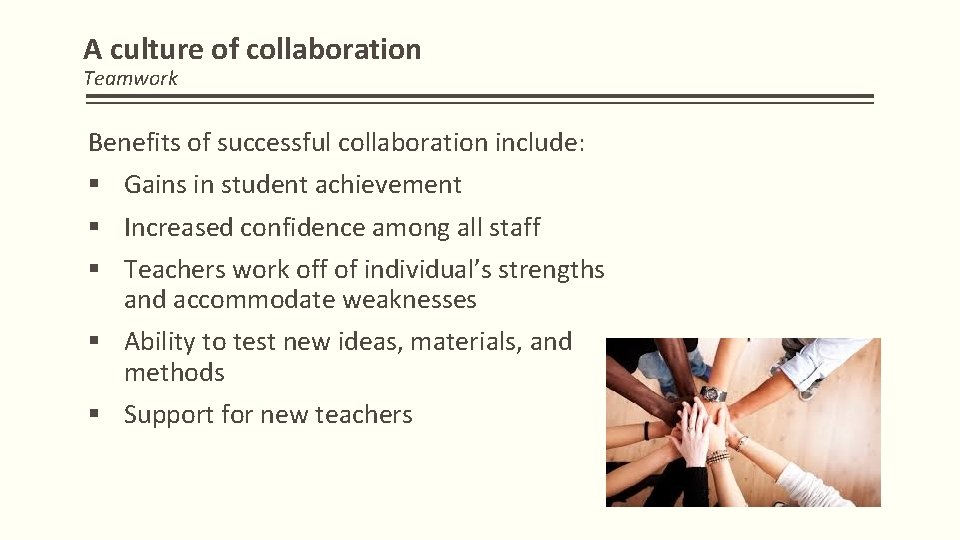
A culture of collaboration Teamwork Benefits of successful collaboration include: § Gains in student achievement § Increased confidence among all staff § Teachers work off of individual’s strengths and accommodate weaknesses § Ability to test new ideas, materials, and methods § Support for new teachers
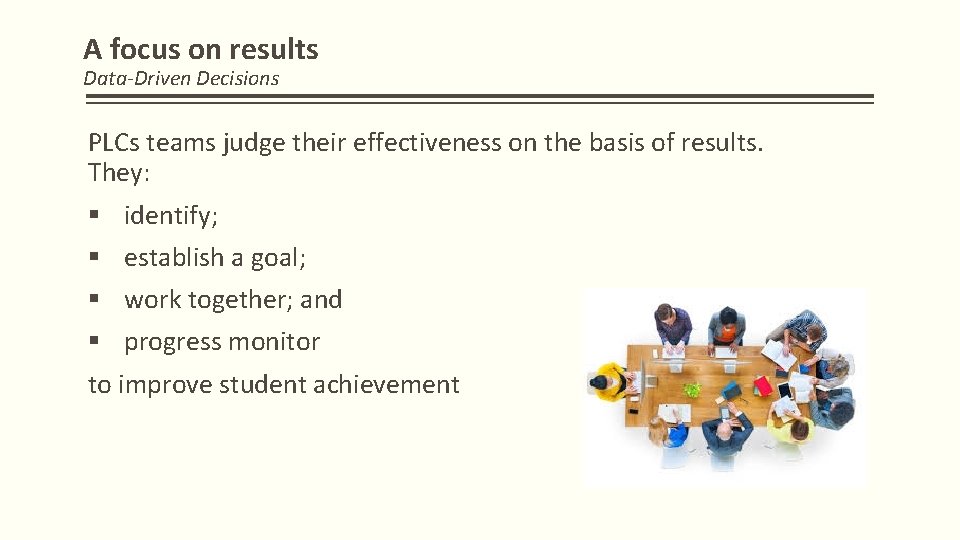
A focus on results Data-Driven Decisions PLCs teams judge their effectiveness on the basis of results. They: § identify; § establish a goal; § work together; and § progress monitor to improve student achievement
How can you get PLCs started at your school? Keys to Collaboration Establish team norms Schedule time for collaboration in the school day and calendar Ensure collaboration time has a focus on learning Teams should focus on critical questions Products of collaboration should be documented and shared Set specific and measurable team performance goals
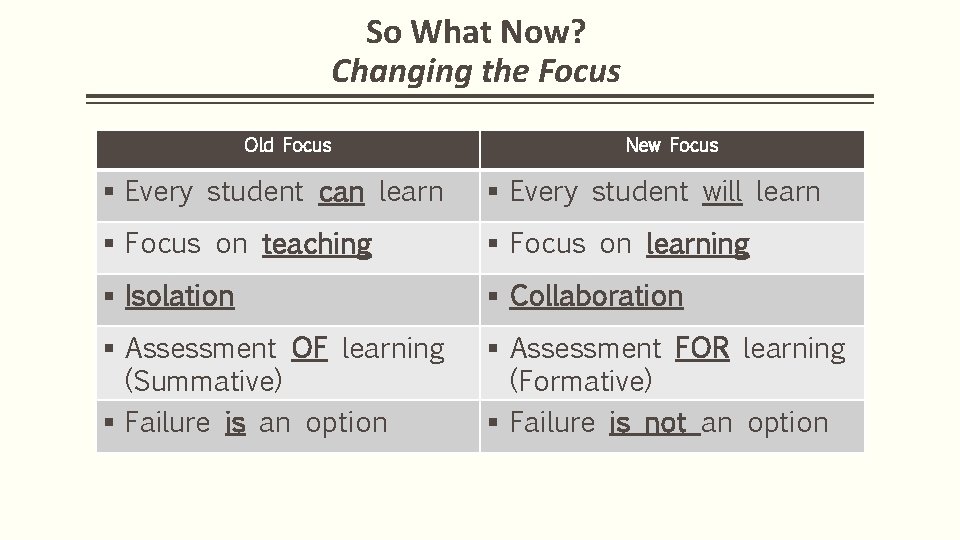
So What Now? Changing the Focus Old Focus New Focus § Every student can learn § Every student will learn § Focus on teaching § Focus on learning § Isolation § Collaboration § Assessment OF learning (Summative) § Failure is an option § Assessment FOR learning (Formative) § Failure is not an option
Conclusion PLCs are highly effective because it honors the knowledge and experience of teachers through collaborative inquiry. Teachers share new ideas, current practice, and evidence of student learning in a safe, professional learning environment. https: //www. youtube. com/watch? v=r 2 UCLZDWdy. A&ab_channel=Pearson. North. America
Questions?
References Du. Four, R. (2004). What Is a professional Learning Community? Educational Leadership. Dufour, R. , & Eaker, B. (n. d. ). New Insights into Professional Learning Communities at Work. The Challenge of Change: Start School Improvement Now!, 87 -104. doi: 10. 4135/9781452218991. n 8 Hord, S. M. (2009). Professional learning communities. National Staff Development Council, 30(1). Retrieved from www. NSDC. ORG. Vescio, V. , Ross, D. , & Adams, A. (2008). A review of research on the impact of professional learning communities on teaching practice and student learning. Teaching and Teacher Education, 24(1), 80 -91. doi: 10. 1016/j. tate. 2007. 01. 004