
PROFESSIONAL DEVELOPMENT PROGRAMME FOR ADVANCED PRACTITIONERS 2020 21


- Slides: 23
PROFESSIONAL DEVELOPMENT PROGRAMME FOR ADVANCED PRACTITIONERS 2020 -21 DEVELOPMENTAL OBSERVATIONS MODULE 2 DEVELOPMENTAL OBSERVATIONS – ADVANCED PRACTICE 6 TH NOVEMBER 2020
SESSION INTRODUCTION GETTING TO KNOW OUR GROUP JOANNE MILES AND PROF MATT O’LEARY
WAYS OF WORKING TOGETHER TODAY 1. Recorded main room – please mute during presentations 2. Breakout discussions – non-recorded 3. Plenary slots for group discussion – cameras on please! 4. Breaks and off-camera reflection slots to reduce strain
MODULE OBJECTIVES AND PERSONAL PRIORITIES 1 You will have the knowledge and confidence to: • Identify core characteristics of research-based developmental approaches to lesson observation • Develop an awareness of several cutting edge models of developmental lesson observation and reflect on their applications in your context
MODULE OBJECTIVES AND PERSONAL PRIORITIES 2 You will have the knowledge and confidence to: • Identify and practise core coaching and reflection skills to support developmental observation • Create, implement and evaluate a developmental approach to observation in your workplace
BREAKOUT DISCUSSION As a group introduce yourselves and discuss two personal priorities for this module. • What are you hoping to gain? • How are you hoping to develop through this module? Decide who will feed back a few points that you had in common in our plenary
WHAT ARE DEVELOPMENTAL MODELS OF OBSERVATION AND WHAT DO THEY LOOK LIKE IN PRACTICE? PROFESSOR MATT O’LEARY BIRMINGHAM CITY UNIVERSITY MORNING SESSION – 6 TH NOVEMBER 2020
OVERVIEW OF MORNING SESSION • Part 1 – understanding the core principles and characteristics of developmental observations • Part 2 – exploring situated case studies of developmental observation in practice EDUCATION & TRAINING FOUNDATION 8
PRINCIPLES & CHARACTERISTICS OF DEVELOPMENTAL OBSERVATIONS WHAT ARE THE CORE ELEMENTS OF DEVELOPMENTAL MODELS OF OBSERVATION?
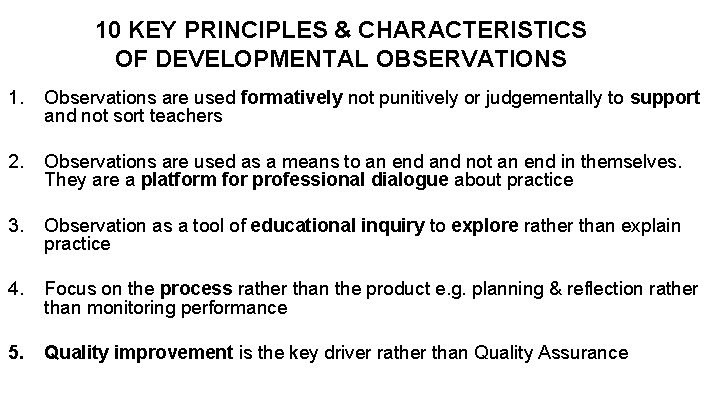
10 KEY PRINCIPLES & CHARACTERISTICS OF DEVELOPMENTAL OBSERVATIONS 1. Observations are used formatively not punitively or judgementally to support and not sort teachers 2. Observations are used as a means to an end and not an end in themselves. They are a platform for professional dialogue about practice 3. Observation as a tool of educational inquiry to explore rather than explain practice 4. Focus on the process rather than the product e. g. planning & reflection rather than monitoring performance 5. Quality improvement is the key driver rather than Quality Assurance
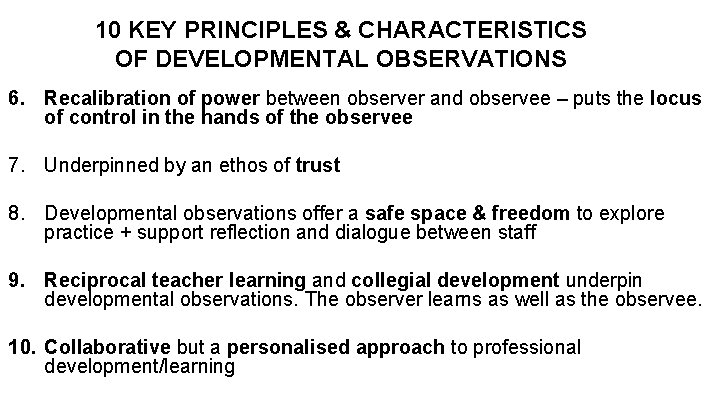
10 KEY PRINCIPLES & CHARACTERISTICS OF DEVELOPMENTAL OBSERVATIONS 6. Recalibration of power between observer and observee – puts the locus of control in the hands of the observee 7. Underpinned by an ethos of trust 8. Developmental observations offer a safe space & freedom to explore practice + support reflection and dialogue between staff 9. Reciprocal teacher learning and collegial development underpin developmental observations. The observer learns as well as the observee. 10. Collaborative but a personalised approach to professional development/learning
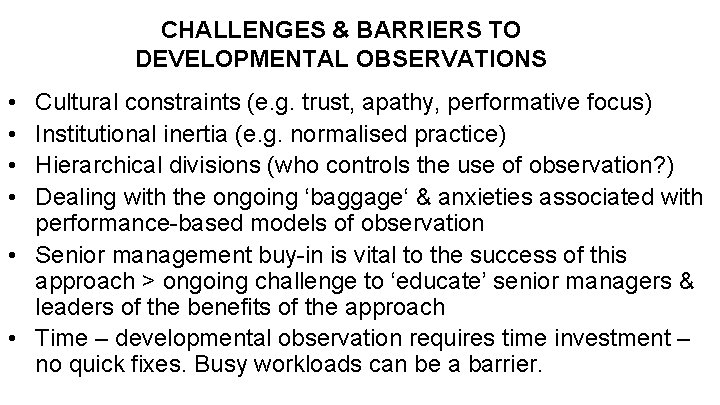
CHALLENGES & BARRIERS TO DEVELOPMENTAL OBSERVATIONS • • Cultural constraints (e. g. trust, apathy, performative focus) Institutional inertia (e. g. normalised practice) Hierarchical divisions (who controls the use of observation? ) Dealing with the ongoing ‘baggage‘ & anxieties associated with performance-based models of observation • Senior management buy-in is vital to the success of this approach > ongoing challenge to ‘educate’ senior managers & leaders of the benefits of the approach • Time – developmental observation requires time investment – no quick fixes. Busy workloads can be a barrier.
BREAKOUT DISCUSSION PREPARATION As a group discuss the questions on the next slide. Decide who will feed back a few points that arose in your discussion. Spend a few minutes now noting down the questions and gathering your thoughts with cameras off.
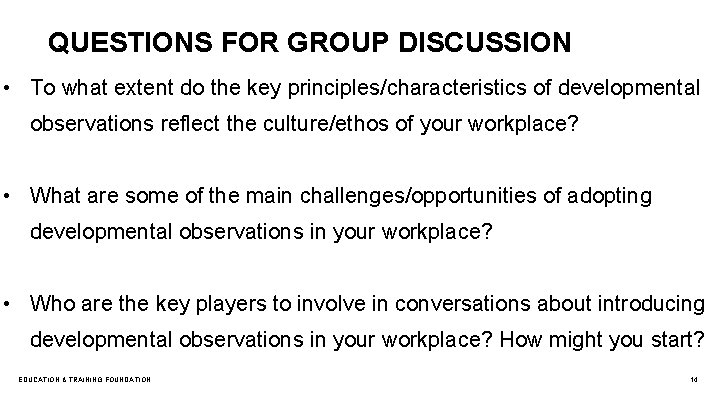
QUESTIONS FOR GROUP DISCUSSION • To what extent do the key principles/characteristics of developmental observations reflect the culture/ethos of your workplace? • What are some of the main challenges/opportunities of adopting developmental observations in your workplace? • Who are the key players to involve in conversations about introducing developmental observations in your workplace? How might you start? EDUCATION & TRAINING FOUNDATION 14
BREAKOUT DISCUSSION PLENARY Which key points arose in your discussion? Let’s capture and share those now.
BREAK Take a break now for a drink, a stretch and a walk around. You will need your pre-session task readings and notes to hand for the next session.
SITUATED CASE STUDIES OF DEVELOPMENTAL OBSERVATION IN PRACTICE EXPLORING MODELS OF DEVELOPMENTAL OBSERVATION IN FURTHER AND HIGHER EDUCATION
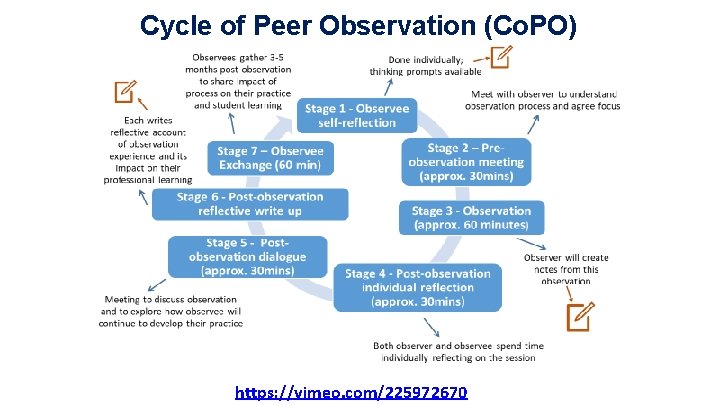
Cycle of Peer Observation (Co. PO) https: //vimeo. com/225972670
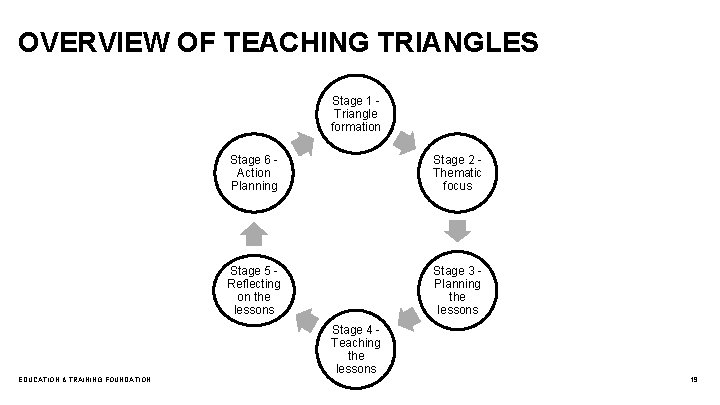
OVERVIEW OF TEACHING TRIANGLES Stage 1 Triangle formation Stage 6 Action Planning Stage 2 Thematic focus Stage 5 Reflecting on the lessons Stage 3 Planning the lessons Stage 4 Teaching the lessons EDUCATION & TRAINING FOUNDATION 19
BREAKOUT DISCUSSION PREPARATION As a group discuss the questions on the next slide. Decide who will feed back a few points that arose in your discussion. Spend a few minutes now noting down the questions and gathering your thoughts with cameras off.
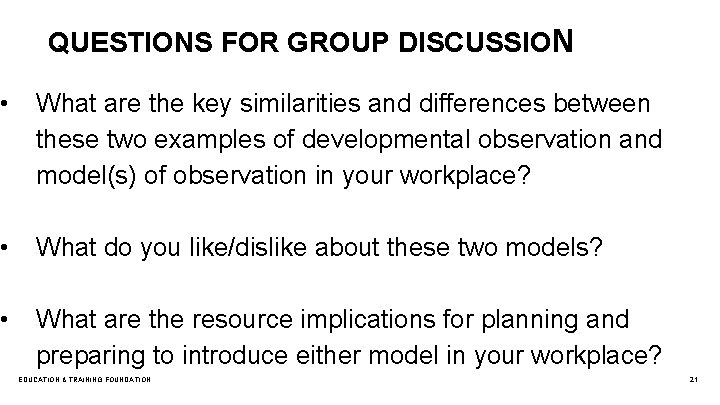
QUESTIONS FOR GROUP DISCUSSION • What are the key similarities and differences between these two examples of developmental observation and model(s) of observation in your workplace? • What do you like/dislike about these two models? • What are the resource implications for planning and preparing to introduce either model in your workplace? EDUCATION & TRAINING FOUNDATION 21
BREAKOUT DISCUSSION PLENARY Which key points arose in your discussion? Let’s capture and share those now.
LUNCH BREAK AND REFLECTION TASKS • Note down in the Chat Box here in Zoom your key learning points from the morning. • Watch Joanne’s clip about coaching and reflection skills and take some notes. • Come back together here in the main Zoom room for our afternoon session.