
Professional Development for Practitioners in Early Childhood Settings

- Slides: 35
Professional Development for Practitioners in Early Childhood Settings What Works (and What Doesn’t) If you had been invited to present on this topic, what one thing have you learned that works? 1
Child Care plus+ The Center on Inclusion in Early Childhood The University of Montana Rural Institute on Disabilities Sandra Morris Susan Harper-Whalen 2
• Introductions • The Journey – 1988 to 2005 • A Menu of Options 3
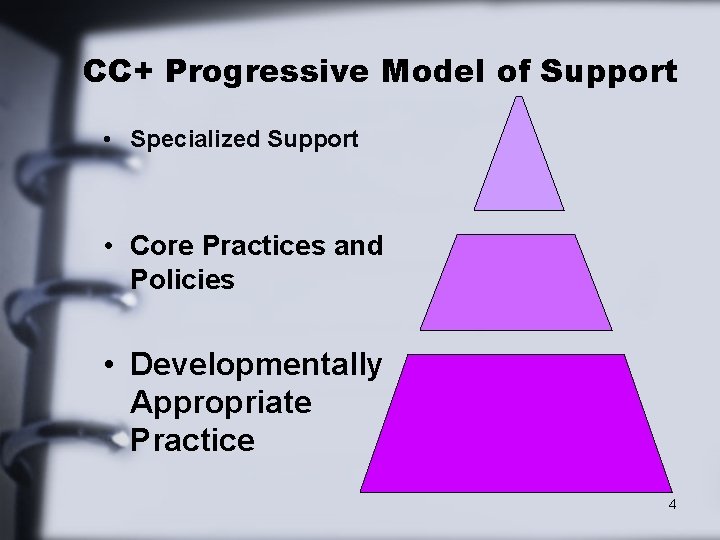
CC+ Progressive Model of Support • Specialized Support • Core Practices and Policies • Developmentally Appropriate Practice 4
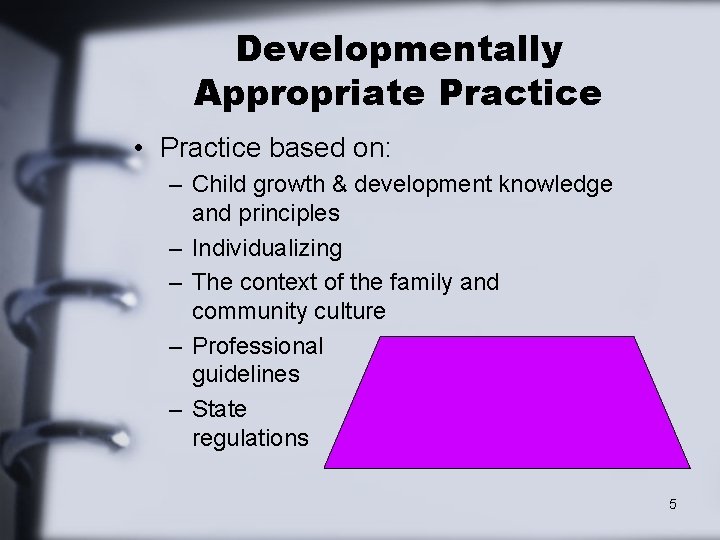
Developmentally Appropriate Practice • Practice based on: – Child growth & development knowledge and principles – Individualizing – The context of the family and community culture – Professional guidelines – State regulations 5
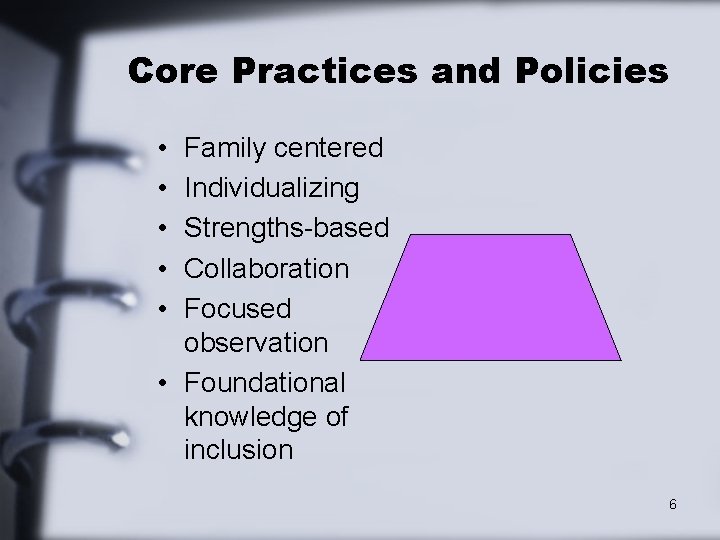
Core Practices and Policies • • • Family centered Individualizing Strengths-based Collaboration Focused observation • Foundational knowledge of inclusion 6
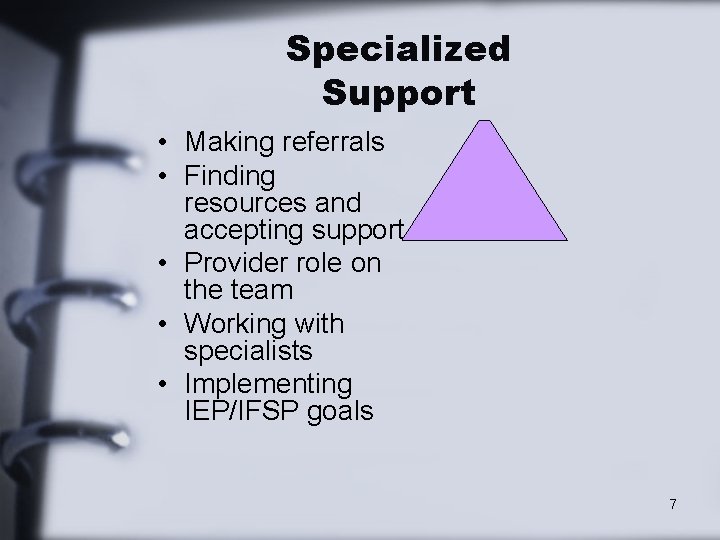
Specialized Support • Making referrals • Finding resources and accepting support • Provider role on the team • Working with specialists • Implementing IEP/IFSP goals 7
CC+ Guiding Principles: Lessons Learned 1. Family-centered practices. Child care professionals need strategies to see and use families as a resource. 8
2. Inclusion Is a Natural Component of High Quality, Developmentally Appropriate Programs -What’s in it for me? -Limited connection between behavior and the environment or teacher behaviors -Universal precautions, observation, and maintaining developmental information perceived as difficult -BASICS must be established first 9
3. Individualizing to Meet the Strengths, Interests, and Needs of Each Child • Link inclusion supports with practices already used in the program “Now I understand – inclusion is for everyone. ” 10
4. Inclusion Supports and Services Are Naturally Blended in Day-to-day Early Childhood Routines and Activities • Provider’s need help to see their role in assisting with the development of the IEP/IFSP 11
5. Professional Development to Support Inclusion Must Be Designed to Promote Self. Efficacy • Providers enjoy reviewing data (engagement, frequency counts) • Self-assessment promotes buy-in and supports change • Trainers have a tendency to see lack of change as lack of provider interest and/or ability • It is difficult to ask for help 12
Reaching Your Goals 13
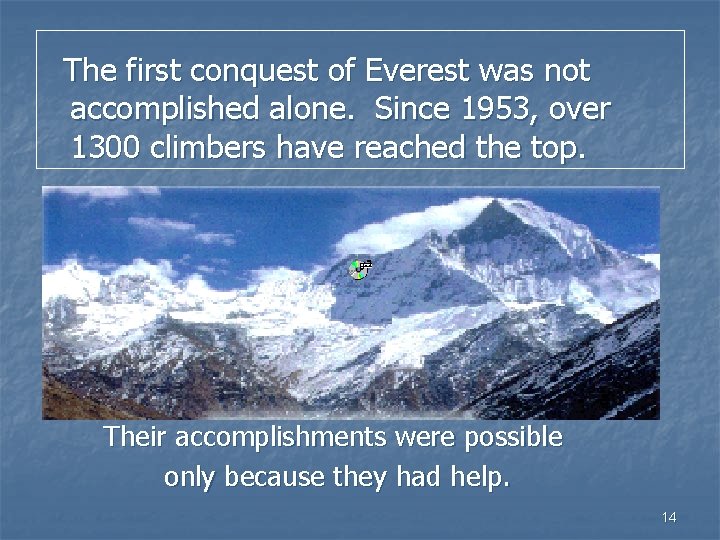
The first conquest of Everest was not accomplished alone. Since 1953, over 1300 climbers have reached the top. Their accomplishments were possible only because they had help. 14
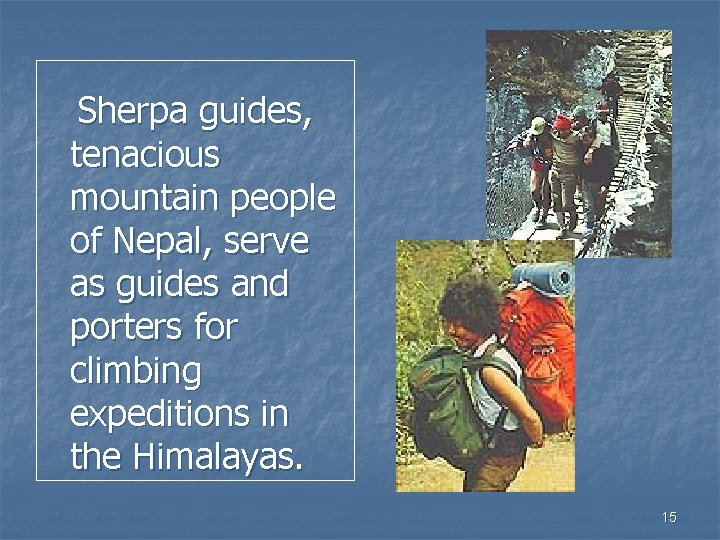
Sherpa guides, tenacious mountain people of Nepal, serve as guides and porters for climbing expeditions in the Himalayas. 15
The climbers seek the summit with the assistance of the Sherpa Guides. They form an interdependent connection. 16
The Guides provide n information n expertise n guidance n cautions interpretations n support n encouragement n 17
The Sherpa do not climb the mountain unless the climbers ask for assistance They are not trying to set records or make history 18
The climbers know what they want to accomplish ~ the Sherpa simply provide the support and guidance to reach the goal. 19
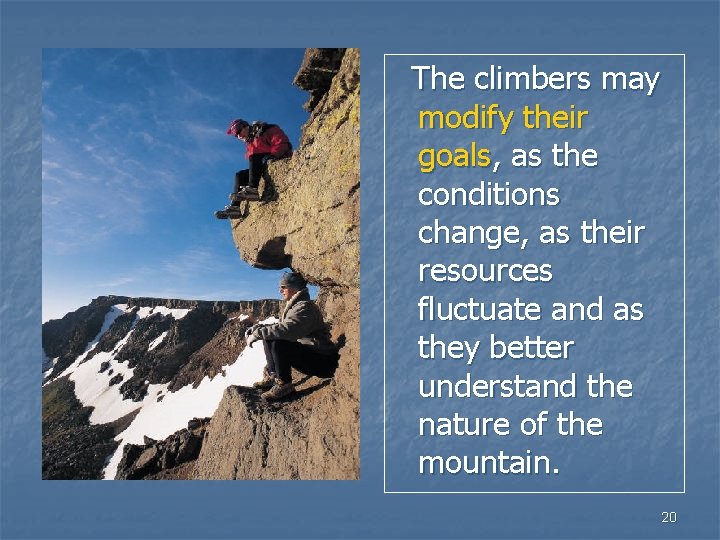
The climbers may modify their goals, as the conditions change, as their resources fluctuate and as they better understand the nature of the mountain. 20
Guides help climbers face hardships and cope with set backs. They facilitate progress and build motivation by helping the climbers notice and document progress. 21
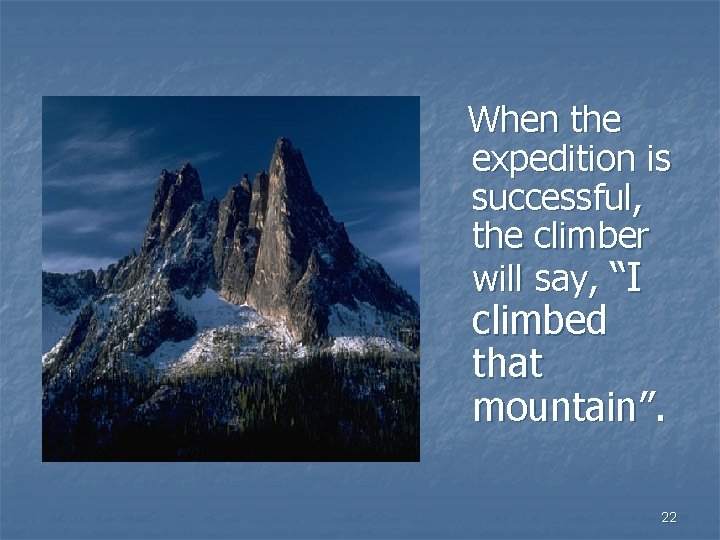
When the expedition is successful, the climber will say, “I climbed that mountain”. 22
Trainers, mentors, and specialists are like Sherpa Guides for early care and education professionals. You call on them when you have a goal to reach. 23
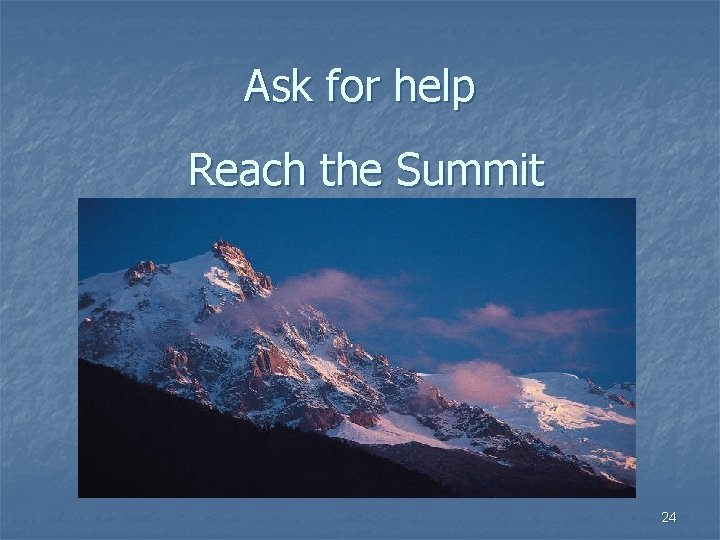
Ask for help Reach the Summit 24
6. A Collaborative, Problem. Solving Approach Is Essential • Collaboration requires teaching skills and providing repeated practice 25
7. Address “One Child at a Time” and Respond to the Context of the Early Childhood Setting • Frame inclusion as “one child at a time” and within context of a progressive model to make inclusion feel more doable • Know how to identify each child’s strengths, interests, and needs and to modify experiences accordingly to build practical competence 26
8. Professional Development Models Are Most Cogent When They Can Be Shaped to Meet Unique Community Needs and State Training Systems • Offer everything for “credit” • “Ready” training materials are valued/customizing is a 2 nd step • Promote the embedding of inclusion principles, knowledge, and practices 27
9. Assess Learning Needs, Use Effective Adult Learning Practices, Promote Lifelong Learning, and Provide Follow-up Assistance • ADA and person first language training is still needed • USE training feedback to enhance training practice • Providers know about many community resources but feel these resources are not easy to access 28
• Inclusion brings up many emotional responses for providers – multiple and private opportunities to reflect may enhance attitude shifts • Family stories are powerful in promoting positive attitudes • Quotes and ongoing reflection also support attitude change 29
10. Model Processes, Strategies, and Techniques That Students/participants Are Expected to Use in Their Practice. • Relationship is everything • Mistakes are part of the learning process • Value each participant as being somewhere on the inclusion continuum 30
Thank you For our Lessons learned 31
If every family had a child with disabilities, there would be no controversy surrounding inclusion. 32
An accommodation may not be considered major, but it may make a major difference. 33
To know my own fears in regards to accepting a child with a disability cannot begin to measure up to the fear a parent has wondering whether their child will be accepted or not. 34
Sandra Morris sandra. morris@ruralinstitute. umt. edu Susan Harper-Whalen susan. harper-whalen@ruralinstitute. umt. edu 634 Eddy Avenue The University of Montana, Child Care plus+ Missoula, MT 59812 -6696 1 -800 -235 -4122 www. ccplus. org 35