
Prof Simon Smail CBE FRCP FRCGP FRSPH Public
Prof Simon Smail, CBE, FRCP, FRCGP, FRSPH Public Health Wales NHS Trust Acting Vice-Chairman.
* Can we understand work more constructively in the interface between Health Improvement and Politics? * Examples of current approaches from food policy; * How are we doing in Wales on health policy, and what seems to be working better? Examples of new legislation for health improvement. * How can advocacy be used for new policy positions?
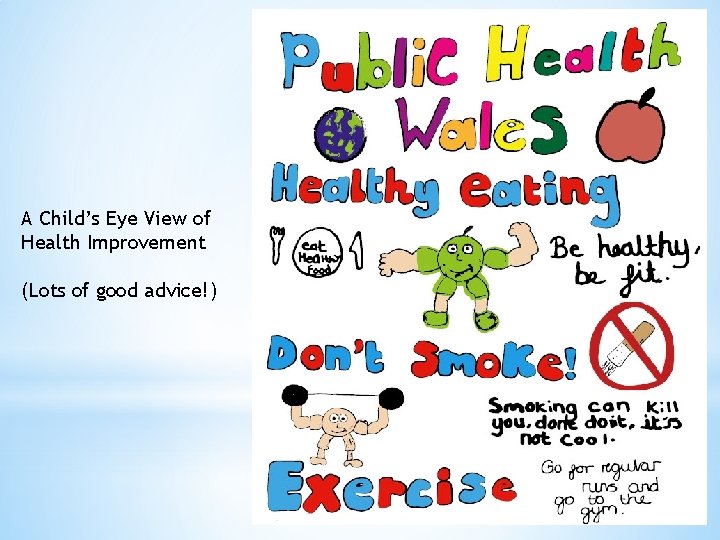
A Child’s Eye View of Health Improvement (Lots of good advice!)
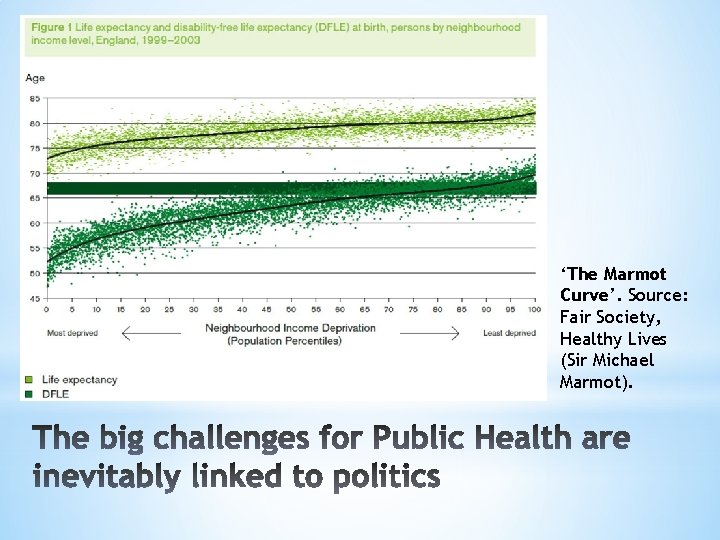
‘The Marmot Curve’. Source: Fair Society, Healthy Lives (Sir Michael Marmot).
* Politics – defined classically as who gets what, when and how - affects the origins, formulation, and implementation of public policy in the health sector. * Politics dictates. . . who is entitled to services, which are the priority areas, who will provide services, who will be subsidized, and how the budget ought to be allocated and spent. * Because vested interests are usually affected by reforms (for example, health-care workers unions) and beneficiaries are dispersed and unorganized (for example, the poor and sick), there are inherent political difficulties associated with the definition and negotiation of the costs and benefits of reforms. Glassman & Buse (2008) International Encyclopedia of Public Health, First Edition (2008), vol. 5, pp. 163 -170
* Needs of the public as a whole Utilitarianism * ‘Greatest good for the greatest number’ * Ability of the individual to control the direction of their own life Libertarianism * People free to do what they like so long as they respect the freedom of others to do the same
“The Food Standards Agency has a statutory objective to protect public health and consumers' other interests in relation to food and drink. However, we are aware that: excessive or unclear regulations can place a burden on business, the public sector and civil society groups (such voluntary groups, charities and not for profit organisations) and so hinder effective delivery of the intended benefits. ” See more at: https: //www. food. gov. uk/enforcement/regulation#sthash. H 2 ntw. Gn. T. dpuf
*“The (SACN) advises Public Health England other government agencies and departments on nutrition and related health issues. ” *Iodine and Health, 2014: “This scoping paper highlights that the issue of iodine intakes is of considerable public health significance, although the Committee is cautious in drawing conclusions on current evidence due to the limitations of the available data ……The Committee will keep a watching brief on the arising evidence to inform future research”
*An Executive Agency, sponsored by the Department of Health. *Functions include: * Supporting people to change their behaviour through social marketing campaigns * Providing Government, Local Government, the NHS, Parliament and MPs… & the public with evidence-based professional and scientific and delivery expertise and advice * Supporting local government and CCGs in their legal duty to improve the public’s health (Source: Remit letter to Public Health England)
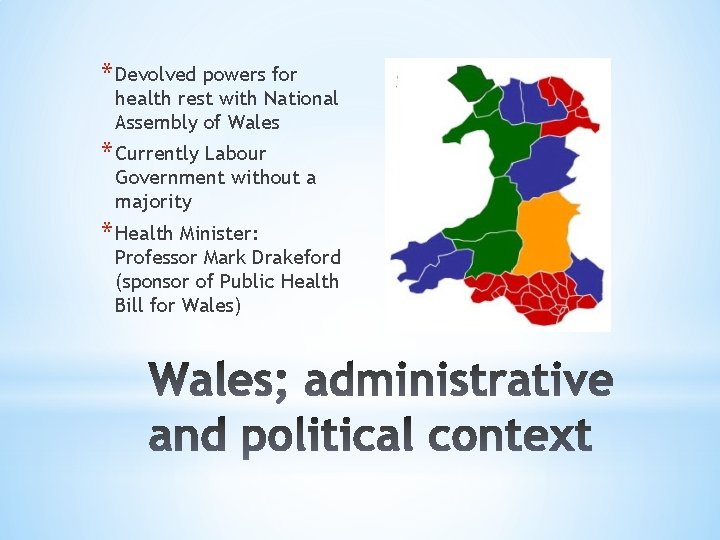
* Devolved powers for health rest with National Assembly of Wales * Currently Labour Government without a majority * Health Minister: Professor Mark Drakeford (sponsor of Public Health Bill for Wales)
* A Wales-wide NHS Trust: around 1. 3% of NHS Wales budget * Aim: A happier, healthier and fairer Wales. * “We exist to protect and improve health and wellbeing and reduce health inequalities for people in Wales. We work locally, nationally and internationally, with our partners and communities” * We provide * Health Improvement services: Providing information, advice and taking action, across sectors, to promote health, prevent disease and reduce health inequalities * Microbiology services for Wales; Health Protection services * Screening Services for Wales * NHS Quality Improvement services
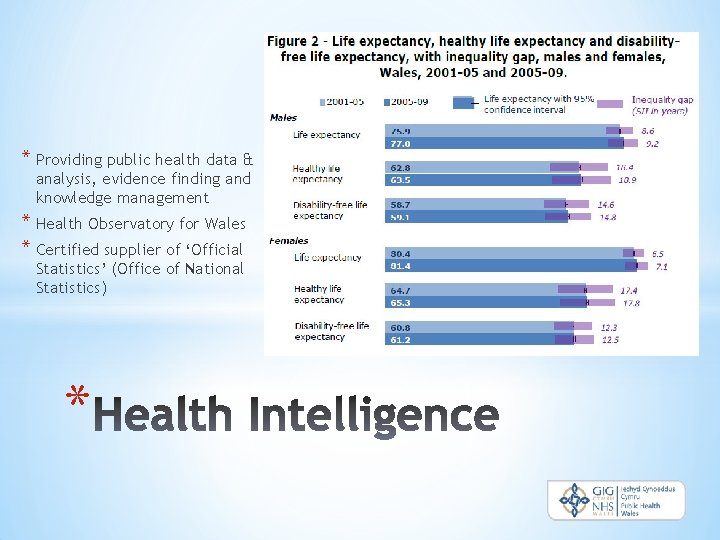
* Providing public health data & analysis, evidence finding and knowledge management * Health Observatory for Wales * Certified supplier of ‘Official Statistics’ (Office of National Statistics) *
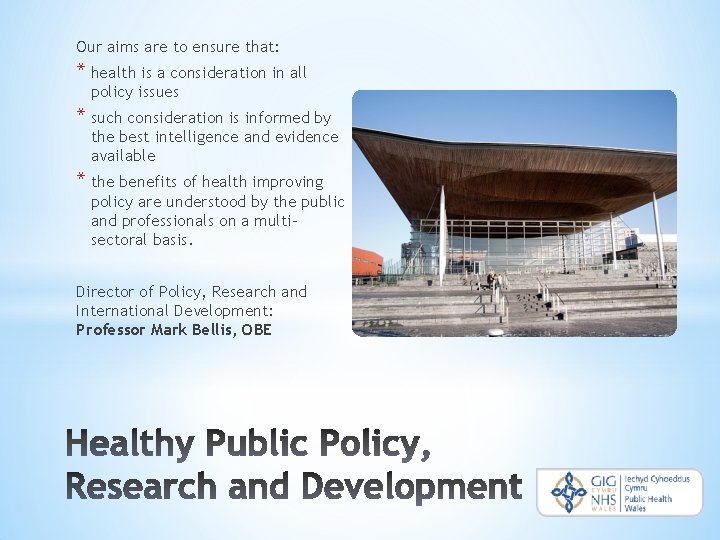
Our aims are to ensure that: * health is a consideration in all policy issues * such consideration is informed by the best intelligence and evidence available * the benefits of health improving policy are understood by the public and professionals on a multisectoral basis. Director of Policy, Research and International Development: Professor Mark Bellis, OBE
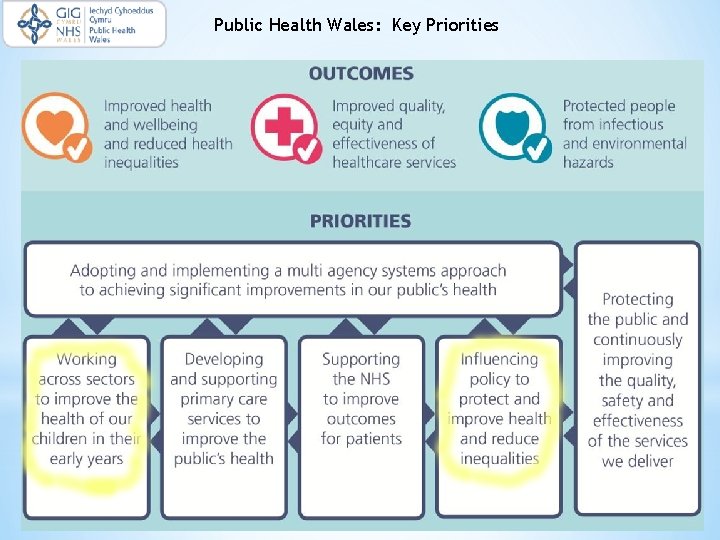
Public Health Wales: Key Priorities
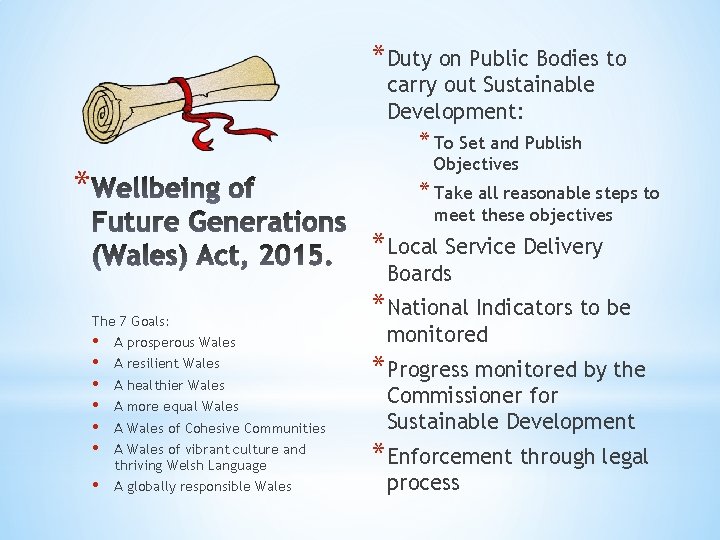
*Duty on Public Bodies to carry out Sustainable Development: * To Set and Publish Objectives * * Take all reasonable steps to meet these objectives *Local Service Delivery Boards The 7 Goals: • • • A prosperous Wales • A globally responsible Wales A resilient Wales A healthier Wales A more equal Wales A Wales of Cohesive Communities A Wales of vibrant culture and thriving Welsh Language *National Indicators to be monitored *Progress monitored by the Commissioner for Sustainable Development *Enforcement through legal process
*Tobacco and nicotine products * Restricting the use of nicotine inhaling devices such as electronic cigarettes in enclosed and substantially enclosed public and work places, *Special procedures * Creating a mandatory licensing scheme for practitioners and businesses carrying out ’special procedures’, namely acupuncture, body piercing, electrolysis and tattooing; banning intimate piercing of people under 16 years old. *Pharmaceutical services * Requiring Health Boards to assess pharmaceutical need of populations in their areas in determining plans for pharmaceutical provision. *Provision of toilets * Requiring local authorities to prepare local toilets strategies for the provision of toilets for public use.
*What are your public Health objectives? (evidence for change must be robust) *Can a win-win outcome be engineered with decision-makers? *Who do the key decision-makers answer to, and can they be influenced? *What are the strengths and weaknesses of your position (and that of your opponents)? *What are your media advocacy objectives?
*How will you frame what issue? *What Symbols or word pictures can you use? *What sound-bites? (For press/broadcast etc. ) *Can the issue be personalised? (e. g. Celebrity endorsement) *How can large numbers of people be quickly organised to express their concerns? (e. g. Use of Social Media)
*Policy Development is imperative to achieve lasting health improvement *Lobbying & advocacy for legislative action is effective when organised properly *Don’t give up the struggle when politics gets difficult – many health activist/groups have survived major reversals when the political climate changes or gets in the way
- Slides: 20