
Prof Myrna Monllor English 124 copyright Myrna Monllor
- Slides: 58
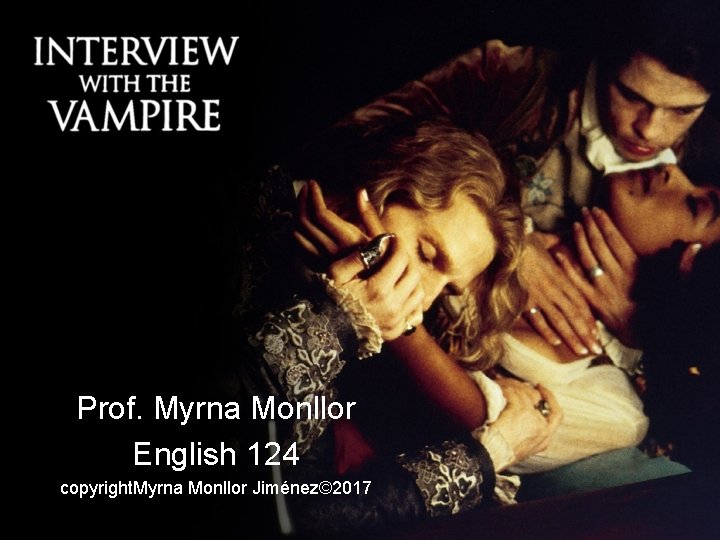
Prof. Myrna Monllor English 124 copyright. Myrna Monllor Jiménez© 2017
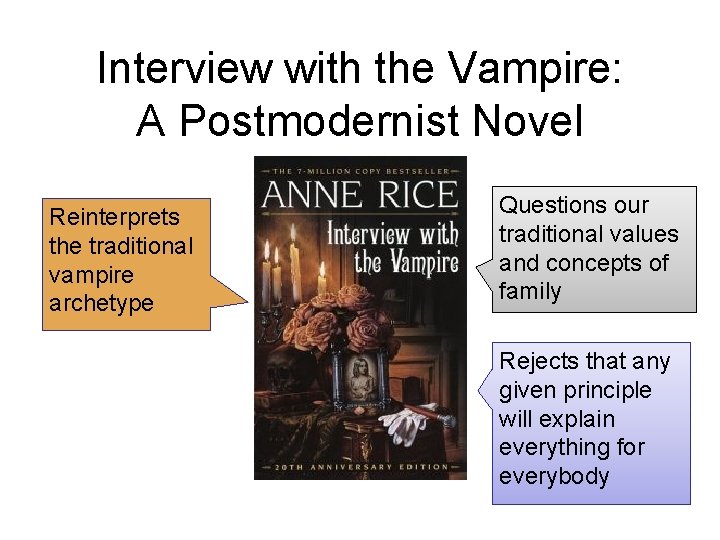
Interview with the Vampire: A Postmodernist Novel Reinterprets the traditional vampire archetype Questions our traditional values and concepts of family Rejects that any given principle will explain everything for everybody
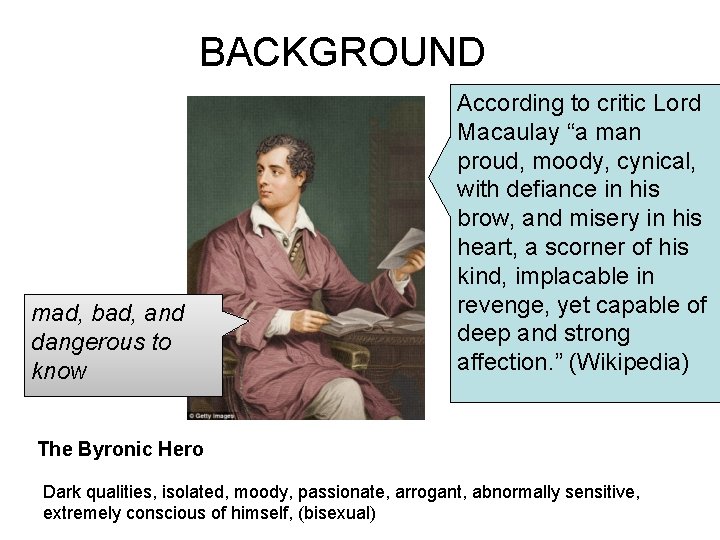
BACKGROUND mad, bad, and dangerous to know According to critic Lord Macaulay “a man proud, moody, cynical, with defiance in his brow, and misery in his heart, a scorner of his kind, implacable in revenge, yet capable of deep and strong affection. ” (Wikipedia) The Byronic Hero Dark qualities, isolated, moody, passionate, arrogant, abnormally sensitive, extremely conscious of himself, (bisexual)
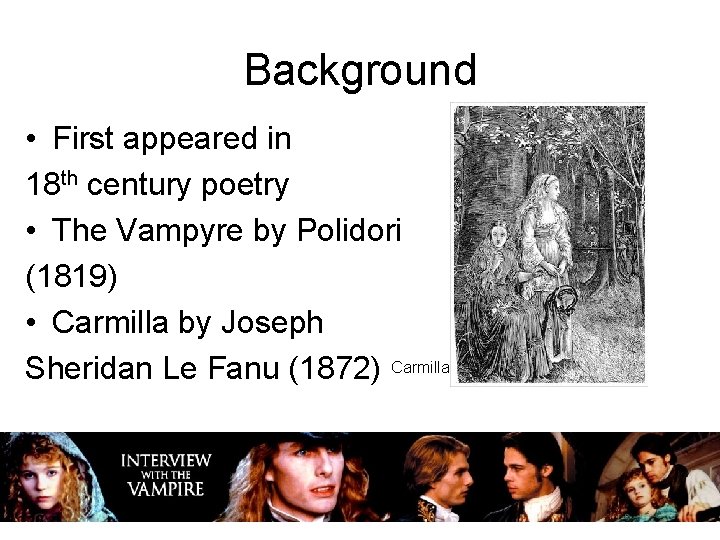
Background • First appeared in 18 th century poetry • The Vampyre by Polidori (1819) • Carmilla by Joseph Sheridan Le Fanu (1872) Carmilla
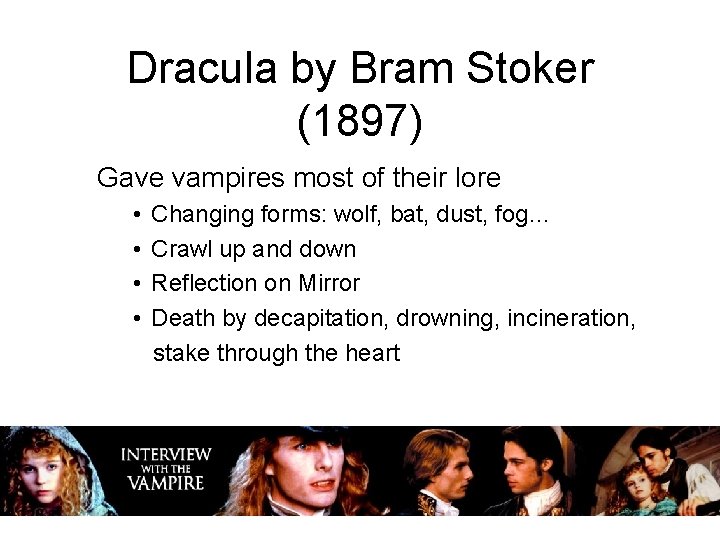
Dracula by Bram Stoker (1897) Gave vampires most of their lore • • Changing forms: wolf, bat, dust, fog… Crawl up and down Reflection on Mirror Death by decapitation, drowning, incineration, stake through the heart
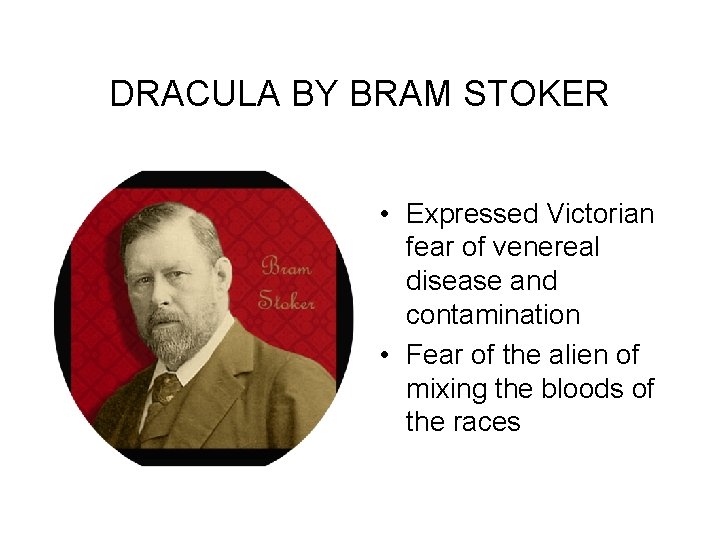
DRACULA BY BRAM STOKER • Expressed Victorian fear of venereal disease and contamination • Fear of the alien of mixing the bloods of the races
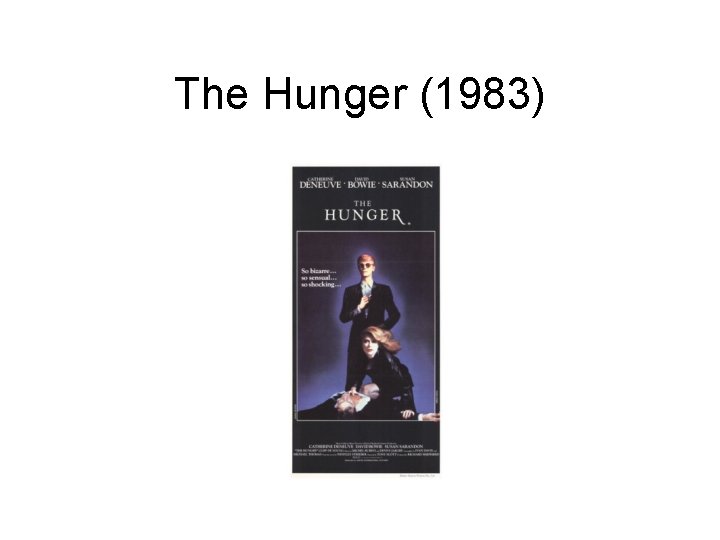
The Hunger (1983)
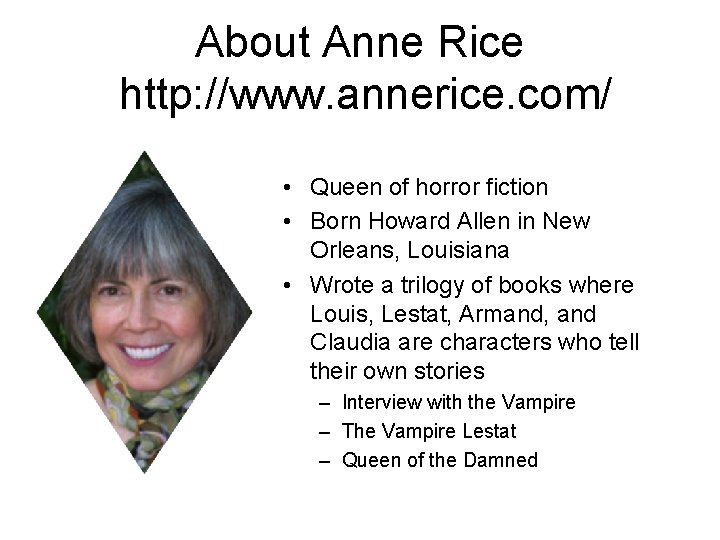
About Anne Rice http: //www. annerice. com/ • Queen of horror fiction • Born Howard Allen in New Orleans, Louisiana • Wrote a trilogy of books where Louis, Lestat, Armand, and Claudia are characters who tell their own stories – Interview with the Vampire – The Vampire Lestat – Queen of the Damned
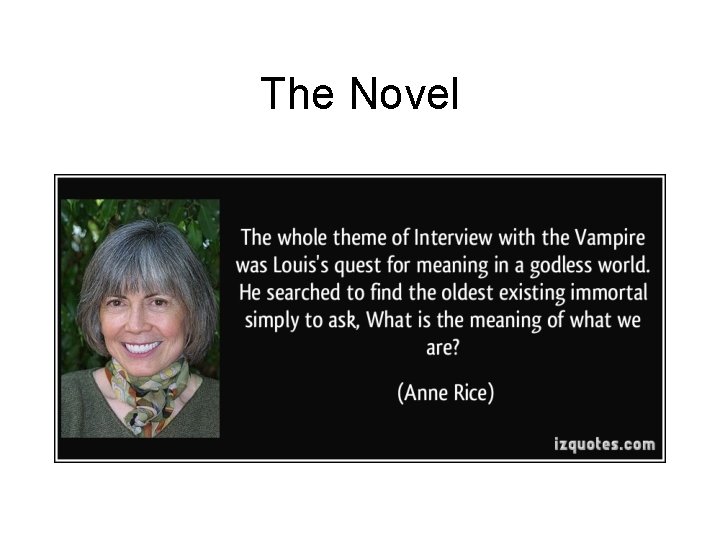
The Novel
About Anne Rice • Lestat is based on Rice’s husband even given his same birth date: November 7 • Louis is based on Rice and she gave him her birth date: October 4 • Claudia is based on Rice’s own daughter who died at an early age • Stated that bisexuality was what she was looking for in her characters; a love beyond gender
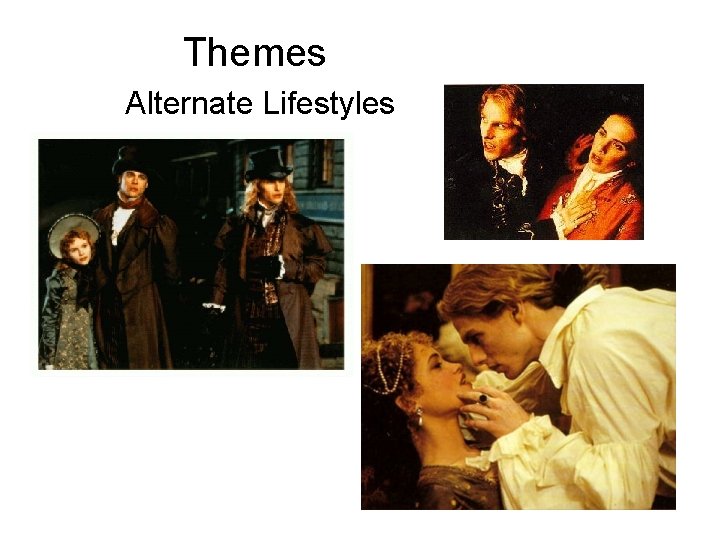
How Anne Rice Changed the Genre • Made the reader empathize with the vampire • Mirrored contemporary alternative lifestyles through Louis’ and Lestat’s family • Established contemporary relationship issues – Homosexuality, bisexuality, abusive relationships, concept of family • Introduced a vampire with human issues
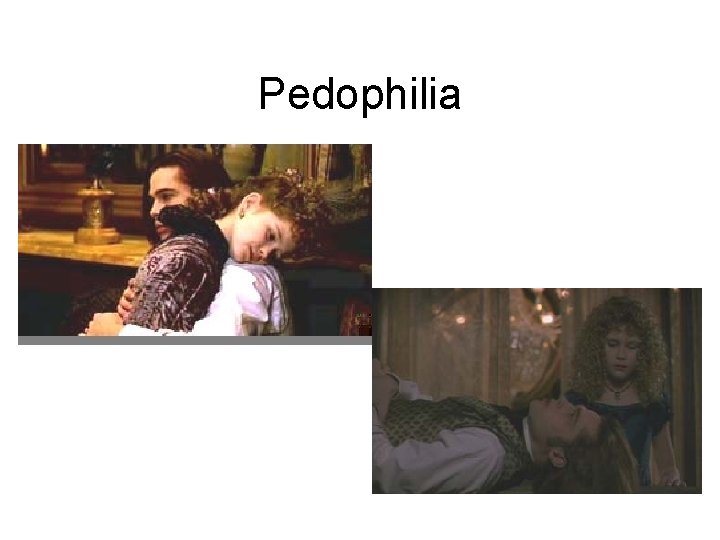
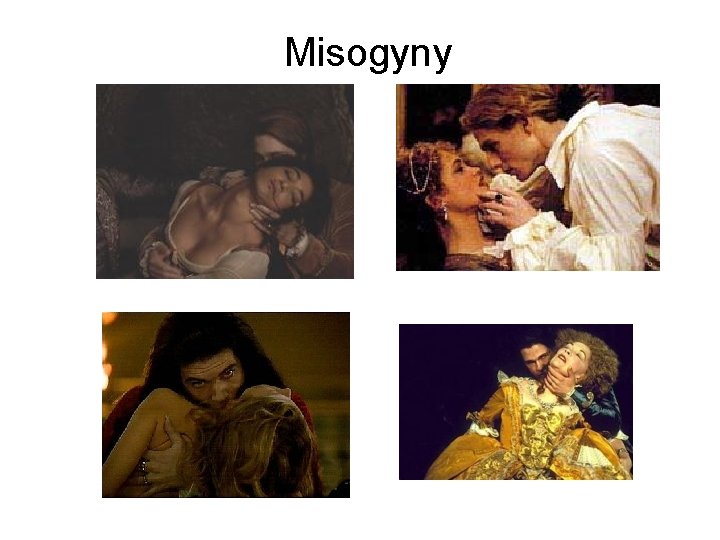
Themes Novel/Film Existential issues questioning • the existence of God • conventional values and traditions • eternal life after death • what makes us human Bisexuality Pedophilia Electra complex Patricide Misogyny
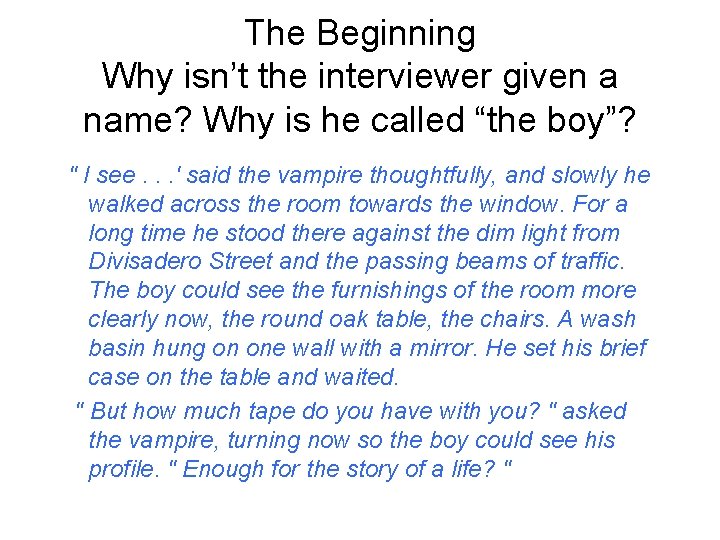
The Beginning Why isn’t the interviewer given a name? Why is he called “the boy”? " I see. . . ' said the vampire thoughtfully, and slowly he walked across the room towards the window. For a long time he stood there against the dim light from Divisadero Street and the passing beams of traffic. The boy could see the furnishings of the room more clearly now, the round oak table, the chairs. A wash basin hung on one wall with a mirror. He set his brief case on the table and waited. " But how much tape do you have with you? " asked the vampire, turning now so the boy could see his profile. " Enough for the story of a life? "
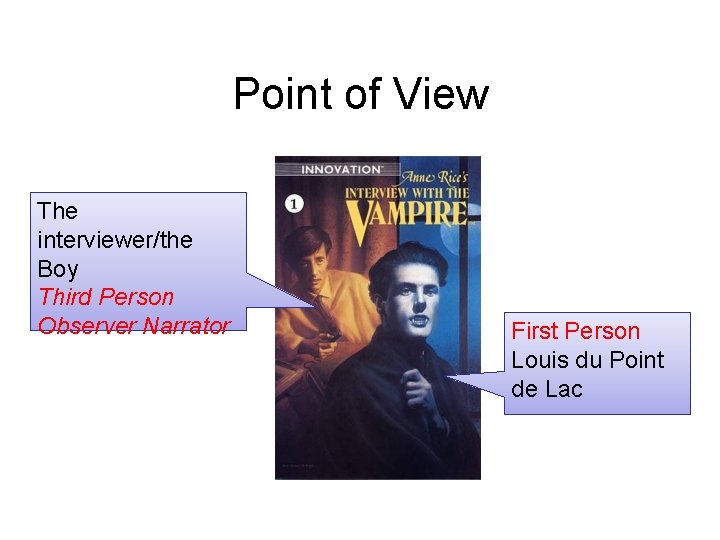
Point of View The interviewer/the Boy Third Person Observer Narrator First Person Louis du Point de Lac
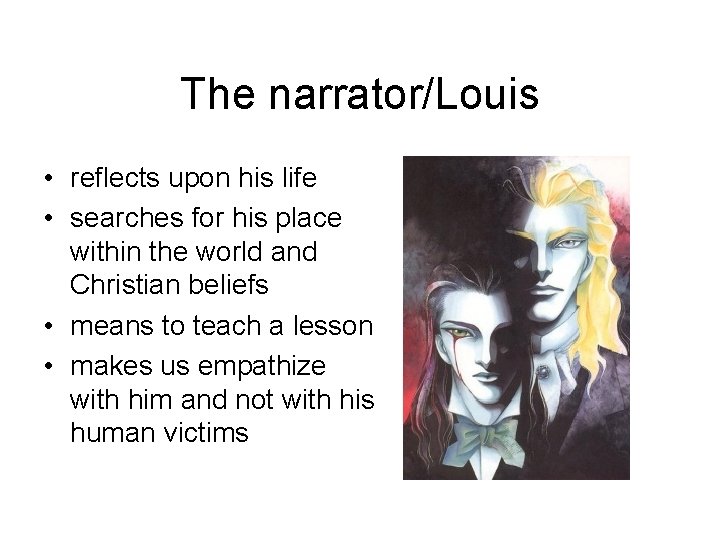
The narrator/Louis • reflects upon his life • searches for his place within the world and Christian beliefs • means to teach a lesson • makes us empathize with him and not with his human victims
Louis’ Story " I was a twenty-five year-old man when I became a vampire, and the year was seventeen ninety-one. ” Why is age important? ” There was a tragedy. . . " the vampire started. " It was my younger brother. . He died. “ What theme does this tragedy introduce?
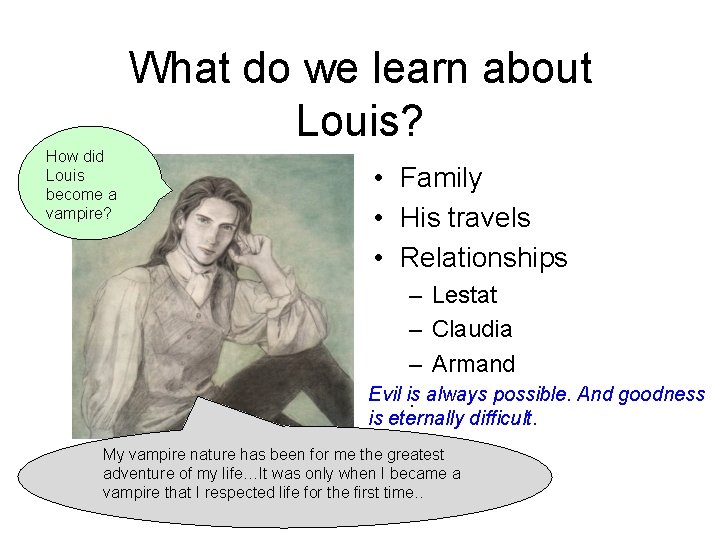
What do we learn about Louis? How did Louis become a vampire? • Family • His travels • Relationships – Lestat – Claudia – Armand Evil is. always possible. And goodness is eternally difficult. My vampire nature has been for me the greatest adventure of my life…It was only when I became a vampire that I respected life for the first time. .
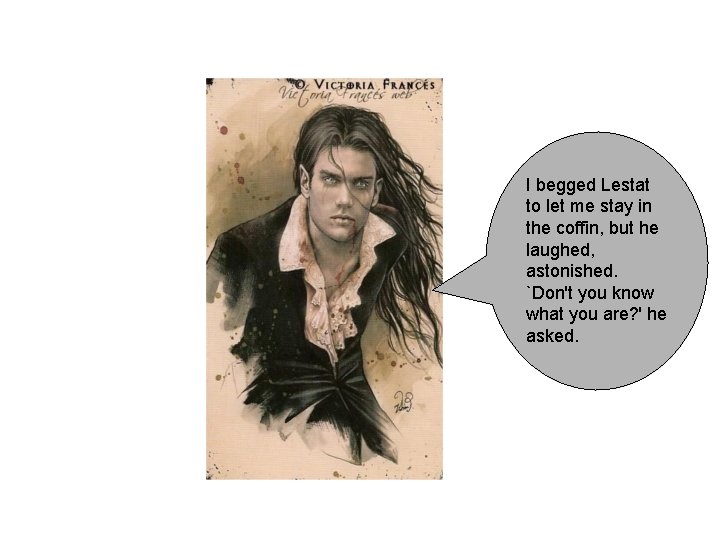
I begged Lestat to let me stay in the coffin, but he laughed, astonished. `Don't you know what you are? ' he asked.
• Louis: “I’m not the spirit of any age. I’m at odds with everything and always have been! I have never belonged anywhere with anyone at any time!” Armand: “This is the very spirit of your age. . . You reflect its broken heart. ” • For vampires, physical love culminates and is satisfied in one thing, the kill. I speak of another kind of love which drew me to him completely as the teacher which Lestat had never been .
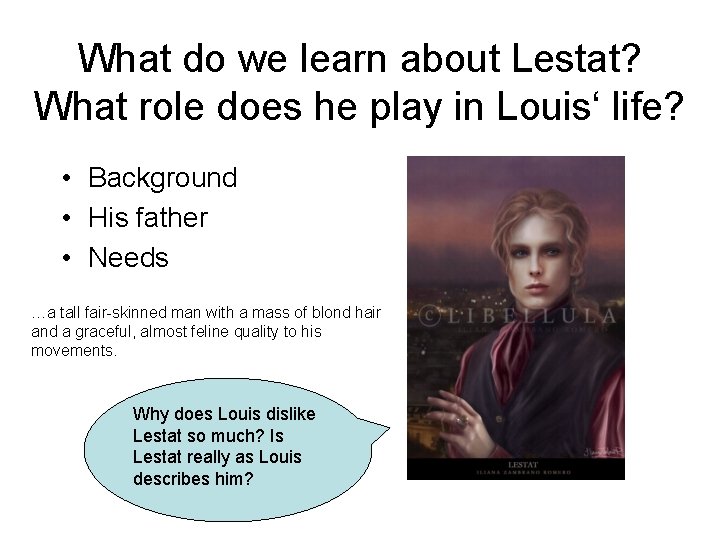
What do we learn about Lestat? What role does he play in Louis‘ life? • Background • His father • Needs …a tall fair-skinned man with a mass of blond hair and a graceful, almost feline quality to his movements. Why does Louis dislike Lestat so much? Is Lestat really as Louis describes him?
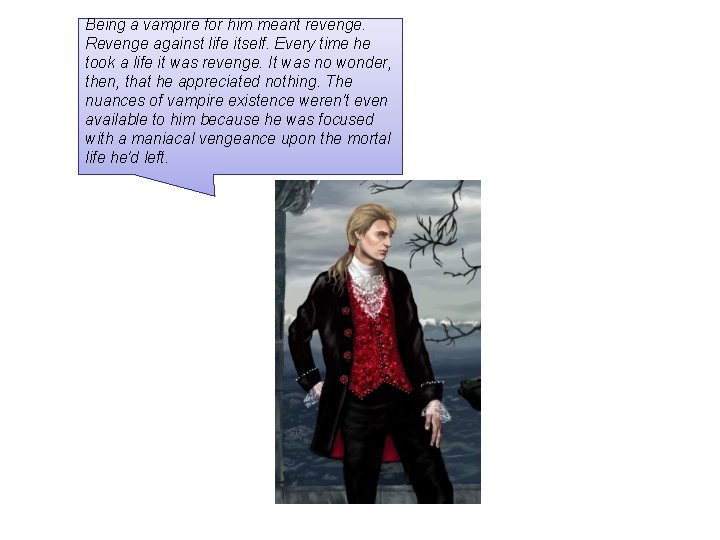
Being a vampire for him meant revenge. Revenge against life itself. Every time he took a life it was revenge. It was no wonder, then, that he appreciated nothing. The nuances of vampire existence weren't even available to him because he was focused with a maniacal vengeance upon the mortal life he'd left.
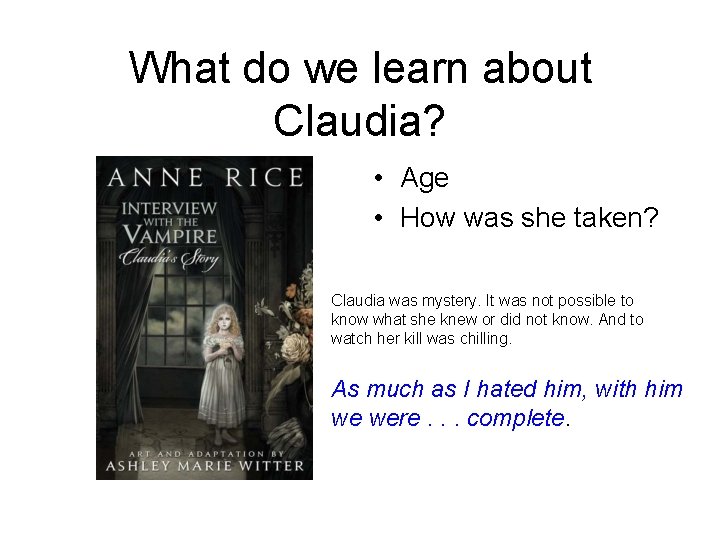
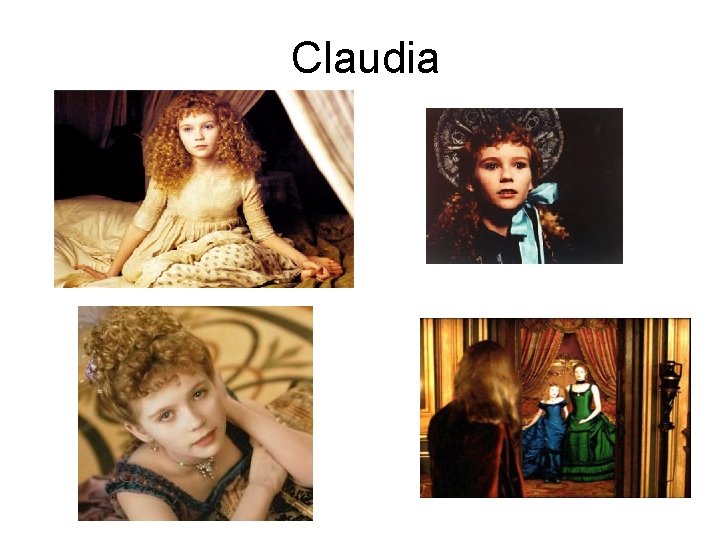
What do we learn about Claudia? • Age • How was she taken? Claudia was mystery. It was not possible to know what she knew or did not know. And to watch her kill was chilling. As much as I hated him, with him we were. . . complete.
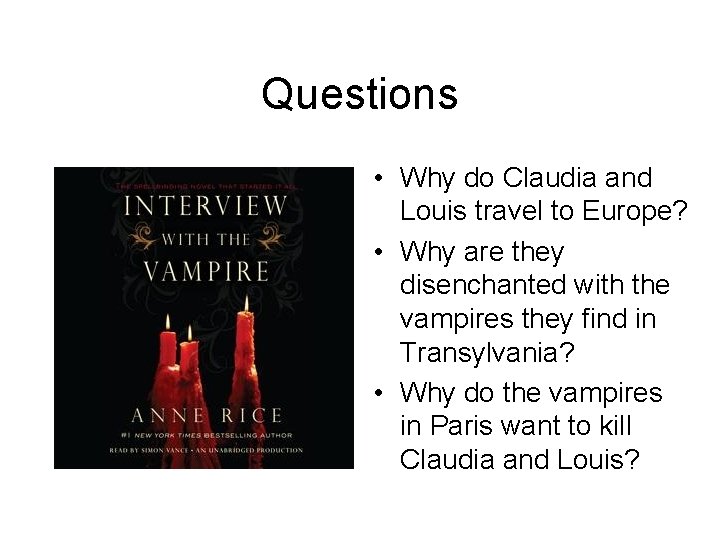
Questions • Why do Claudia and Louis travel to Europe? • Why are they disenchanted with the vampires they find in Transylvania? • Why do the vampires in Paris want to kill Claudia and Louis?
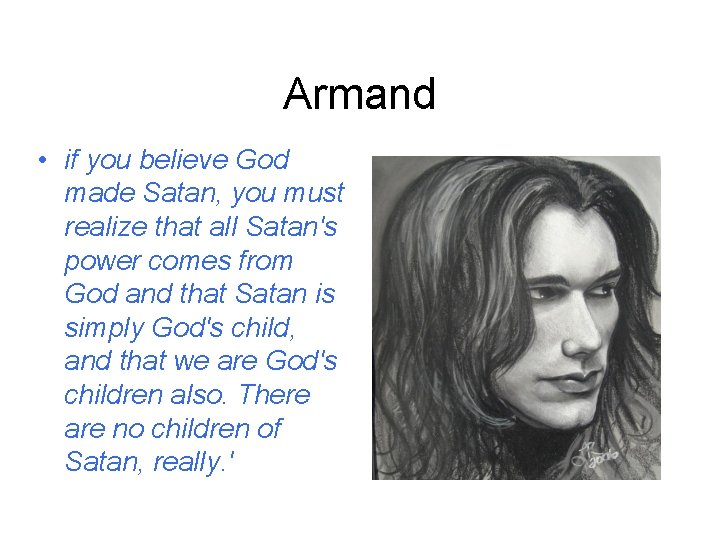
Armand • if you believe God made Satan, you must realize that all Satan's power comes from God and that Satan is simply God's child, and that we are God's children also. There are no children of Satan, really. '
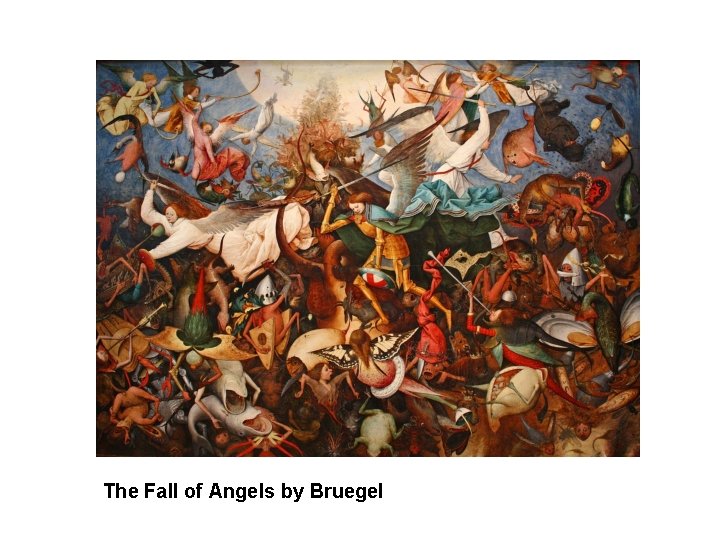
The Fall of Angels by Bruegel
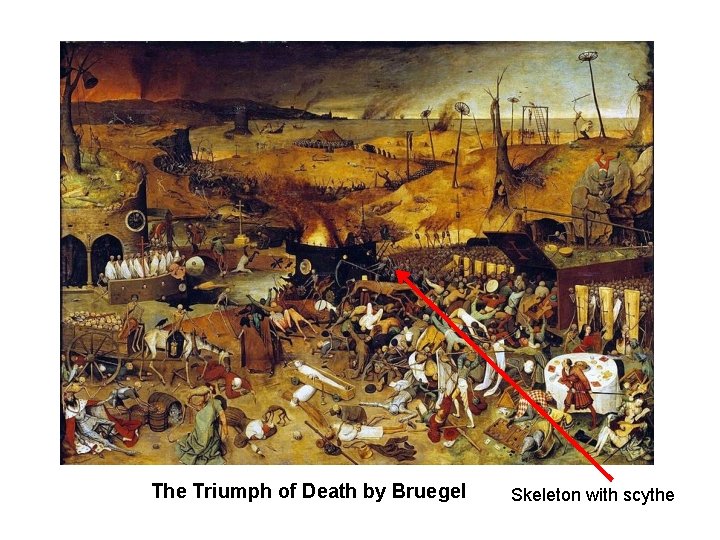
The Triumph of Death by Bruegel Skeleton with scythe
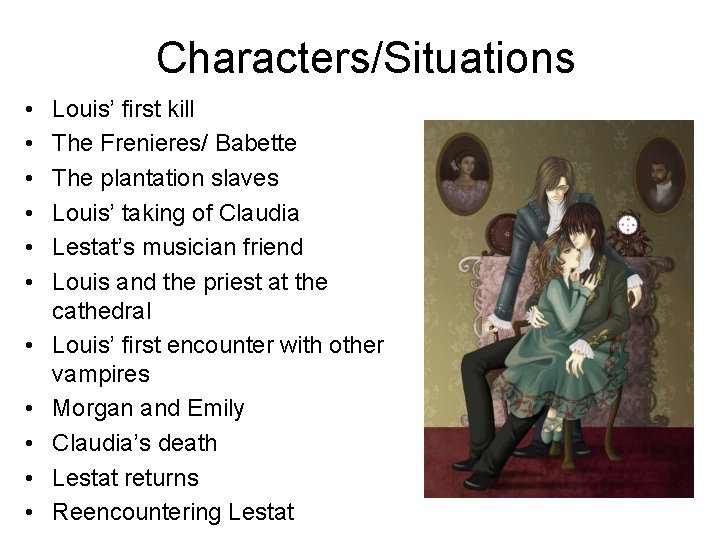
Characters/Situations • • • Louis’ first kill The Frenieres/ Babette The plantation slaves Louis’ taking of Claudia Lestat’s musician friend Louis and the priest at the cathedral Louis’ first encounter with other vampires Morgan and Emily Claudia’s death Lestat returns Reencountering Lestat
Plot Development • Part 1 Interview Begins – Louis’ existential problem – Lestat makes him a vampire – Lestat, Louis, Claudia • Part 2 Louis’ and Claudia’s travels • Part 3 Paris and the Coven of Vampires – Louis meets Armand – Louis gives life to a vampire – Claudia dies – Lestat reappears • Part 4 Interview Ends – Louis leaves Armand – The interviewer is seduced
What are some of the main differences between the novel and the film?
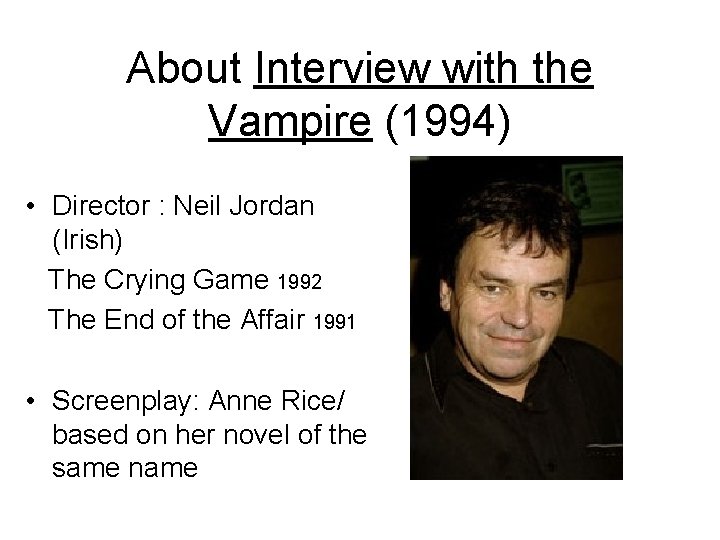
About Interview with the Vampire (1994) • Director : Neil Jordan (Irish) The Crying Game 1992 The End of the Affair 1991 • Screenplay: Anne Rice/ based on her novel of the same name
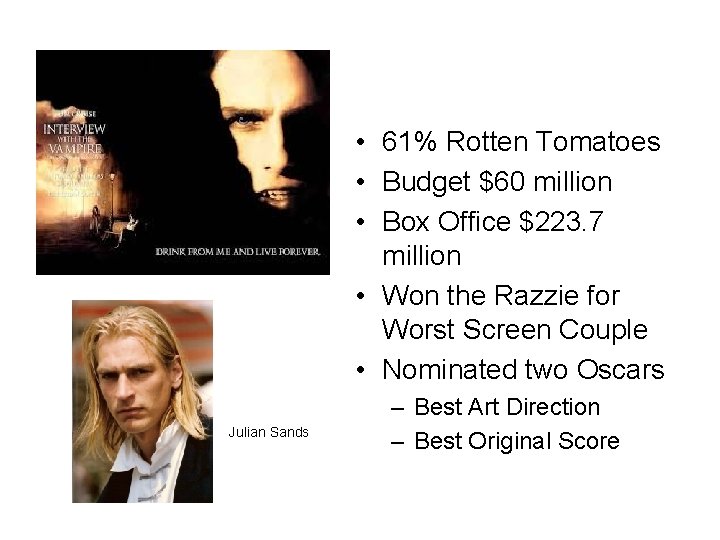
• 61% Rotten Tomatoes • Budget $60 million • Box Office $223. 7 million • Won the Razzie for Worst Screen Couple • Nominated two Oscars Julian Sands – Best Art Direction – Best Original Score
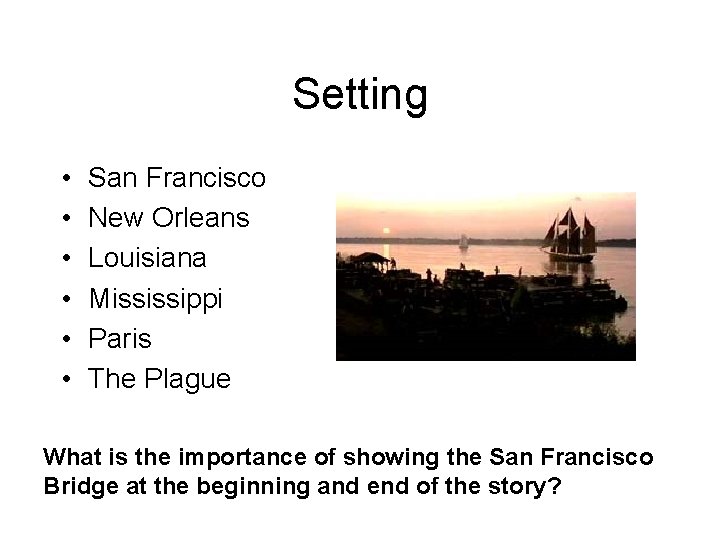
Setting • • • San Francisco New Orleans Louisiana Mississippi Paris The Plague What is the importance of showing the San Francisco Bridge at the beginning and end of the story?
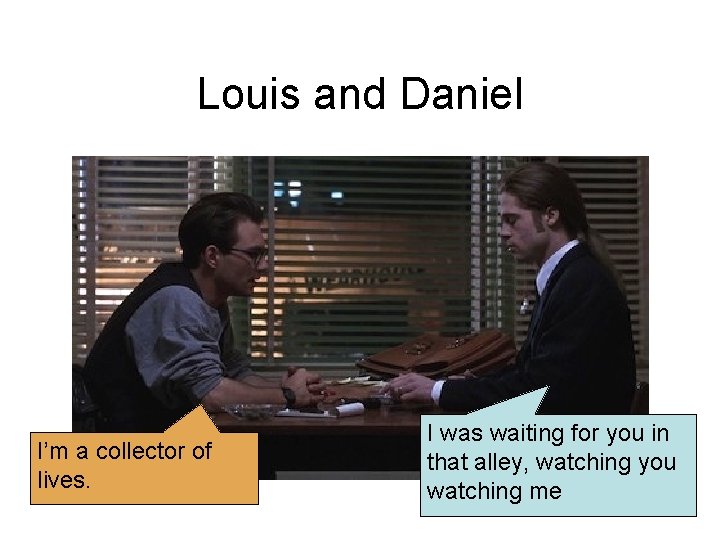
Louis and Daniel I’m a collector of lives. I was waiting for you in that alley, watching you watching me
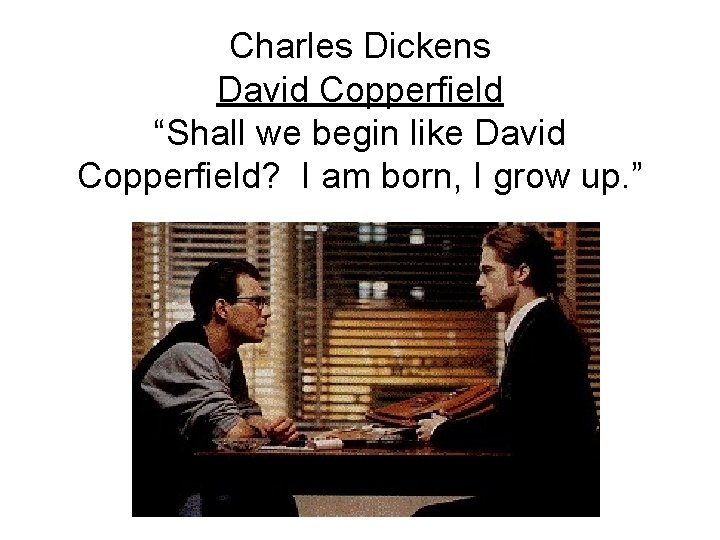
Charles Dickens David Copperfield “Shall we begin like David Copperfield? I am born, I grow up. ”
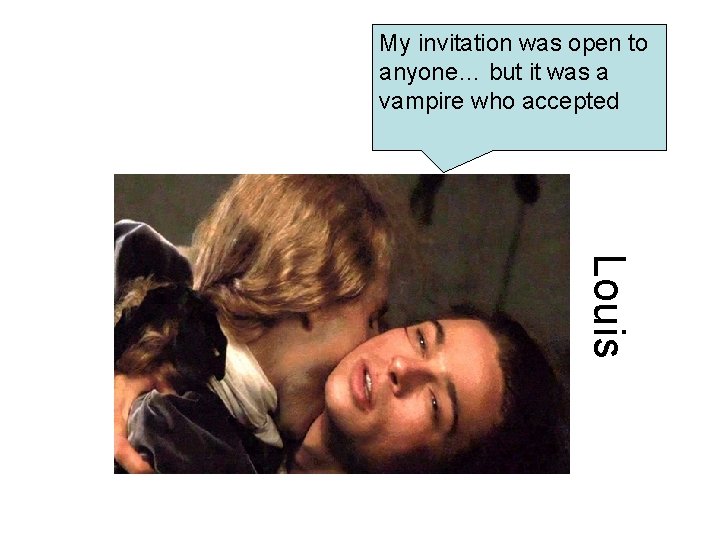
• “ My invitation was open to anyone… but it was a vampire who accepted Louis
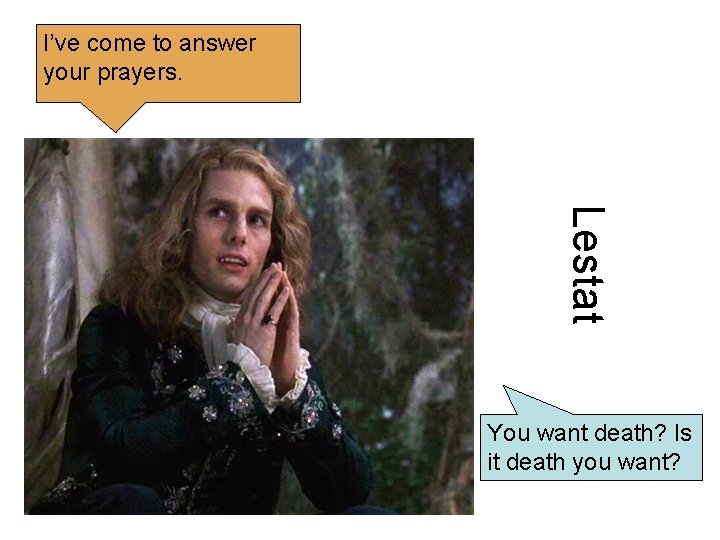
I’ve come to answer your prayers. Lestat You want death? Is it death you want?
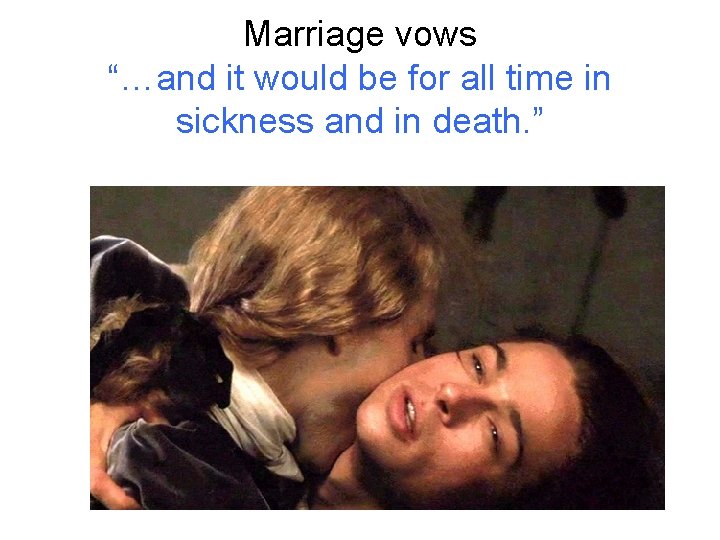
Marriage vows “…and it would be for all time in sickness and in death. ”
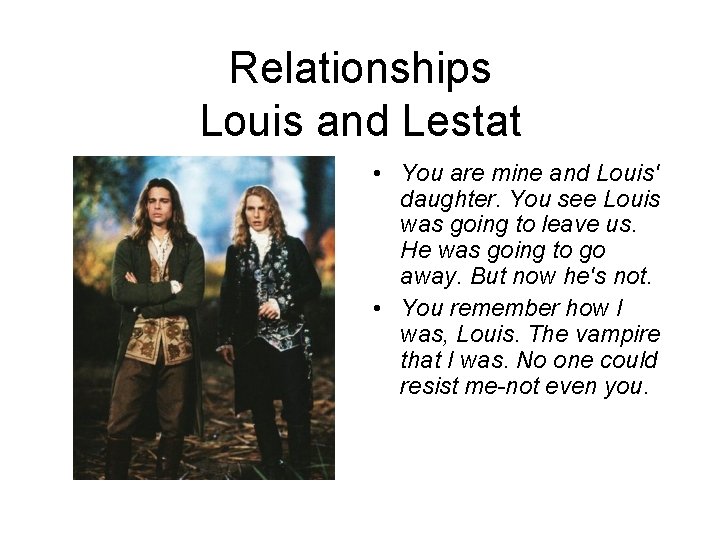
Relationships Louis and Lestat • You are mine and Louis' daughter. You see Louis was going to leave us. He was going to go away. But now he's not. • You remember how I was, Louis. The vampire that I was. No one could resist me-not even you.
Claudia
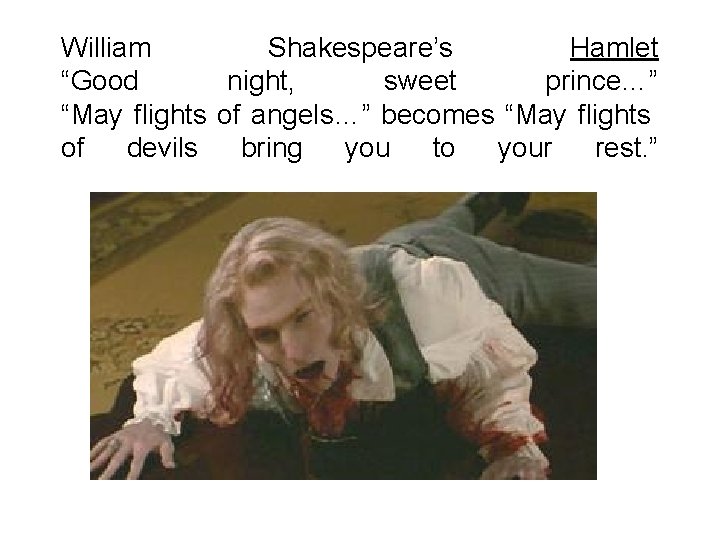
William Shakespeare’s Hamlet “Good night, sweet prince…” “May flights of angels…” becomes “May flights of devils bring you to your rest. ”
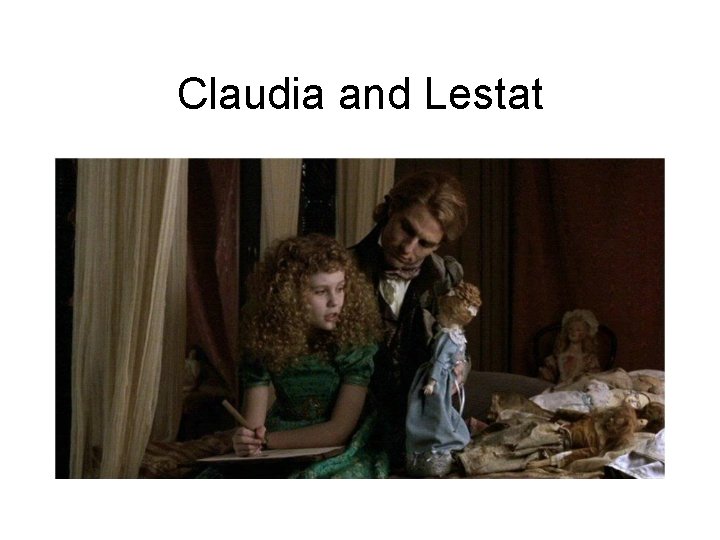
Claudia and Lestat
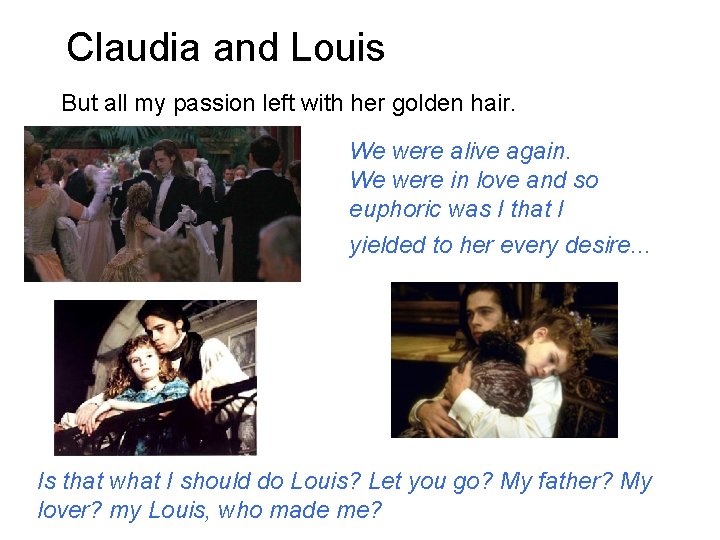
Claudia and Louis But all my passion left with her golden hair. We were alive again. We were in love and so euphoric was I that I yielded to her every desire. . . Is that what I should do Louis? Let you go? My father? My lover? my Louis, who made me?
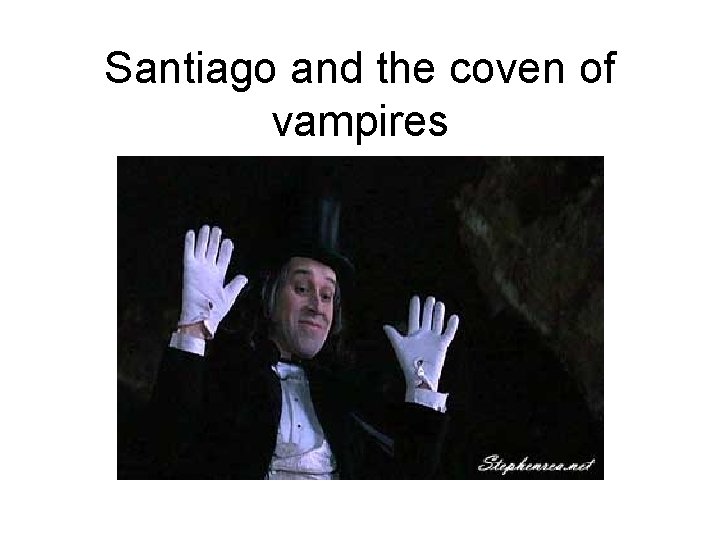
Santiago and the coven of vampires
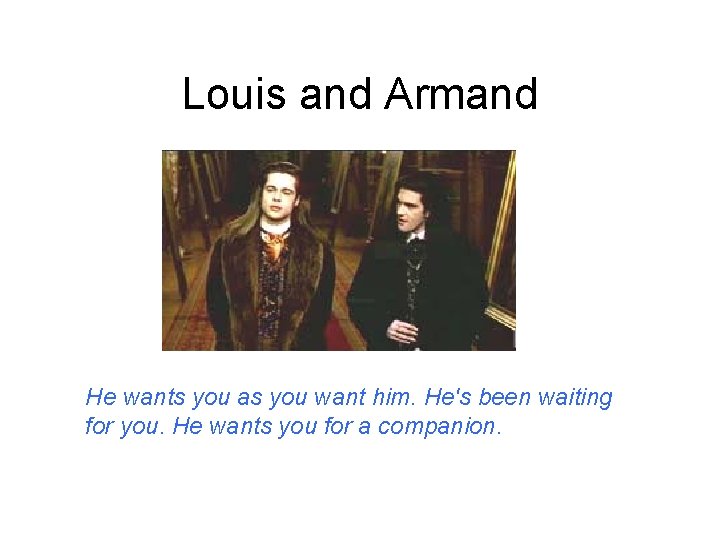
Louis and Armand He wants you as you want him. He's been waiting for you. He wants you for a companion.
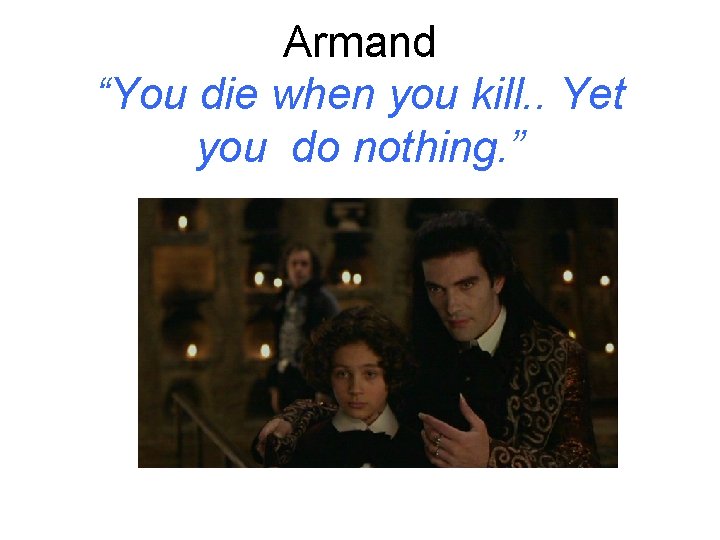
Armand “You die when you kill. . Yet you do nothing. ”
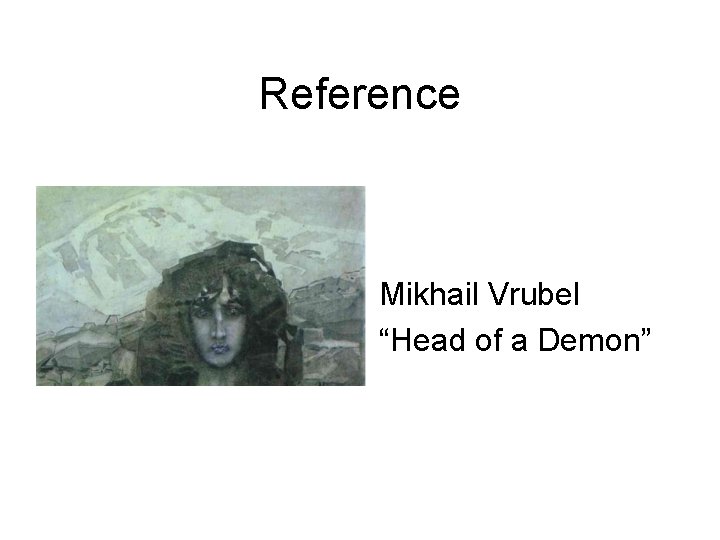
Reference Mikhail Vrubel “Head of a Demon”
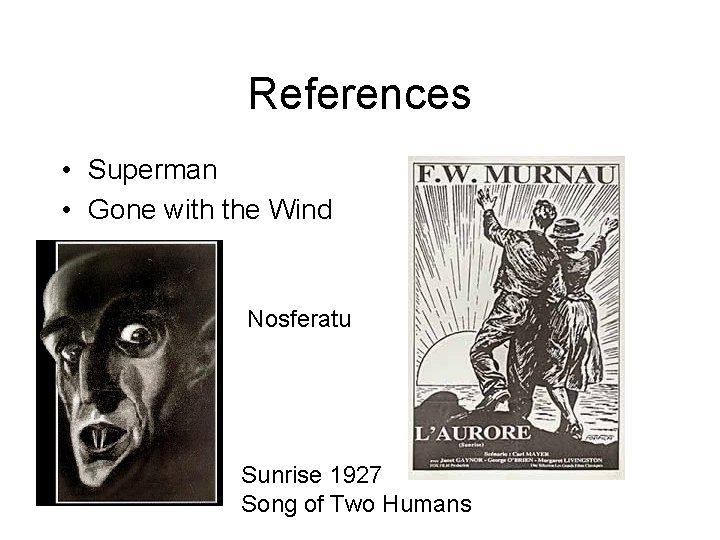
References • Superman • Gone with the Wind Nosferatu Sunrise 1927 Song of Two Humans
Themes Alternate Lifestyles
Pedophilia
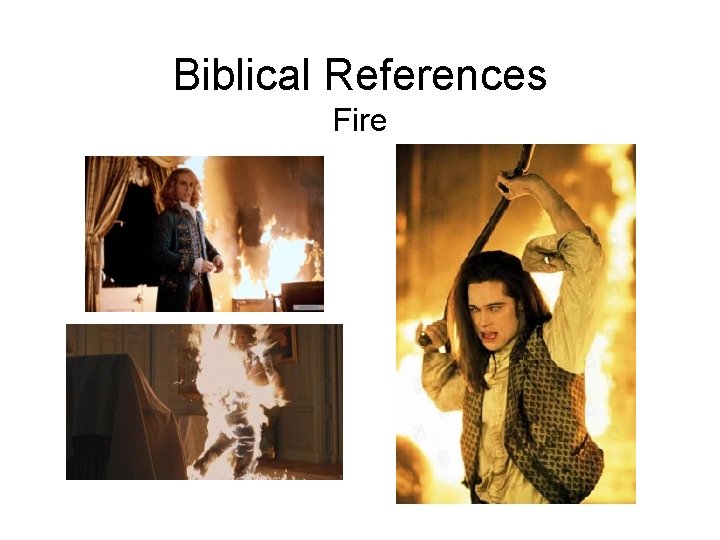
Biblical References Fire
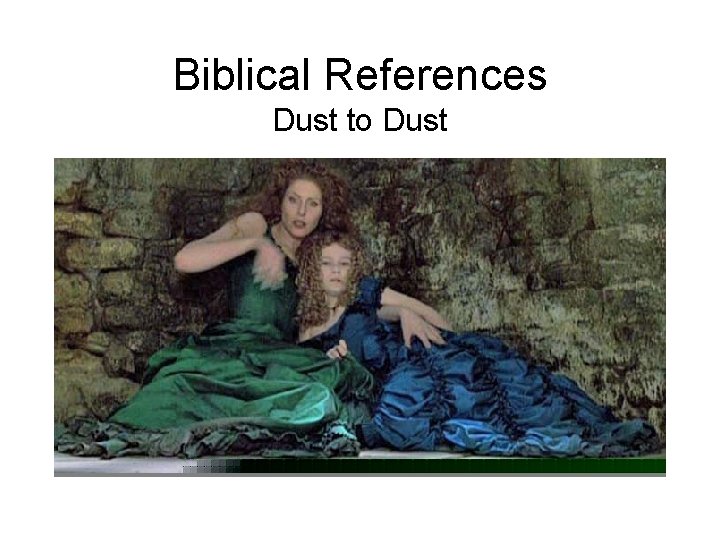
Biblical References Dust to Dust
Misogyny
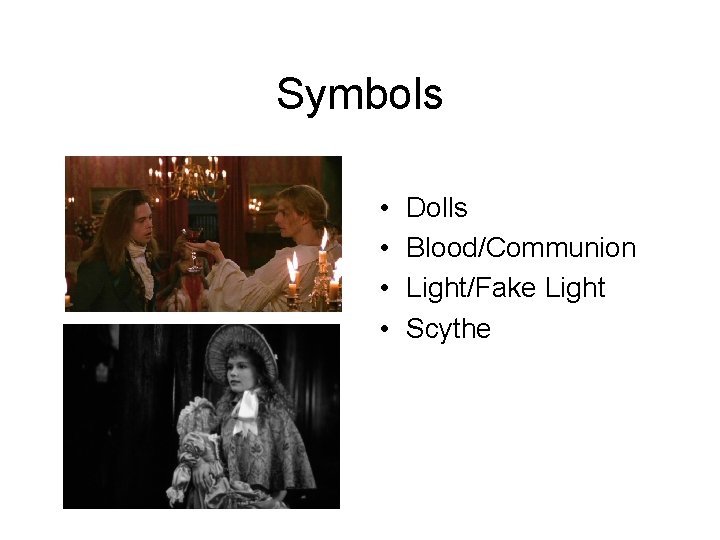
Symbols • • Dolls Blood/Communion Light/Fake Light Scythe
Black Humor • Lestat squeezing blood from the rat • Claudia’s killing of a lady who thinks the child is alone • Claudia’s killing of her piano teacher and the seamstress • The killing of Widow St. Clair’s dogs
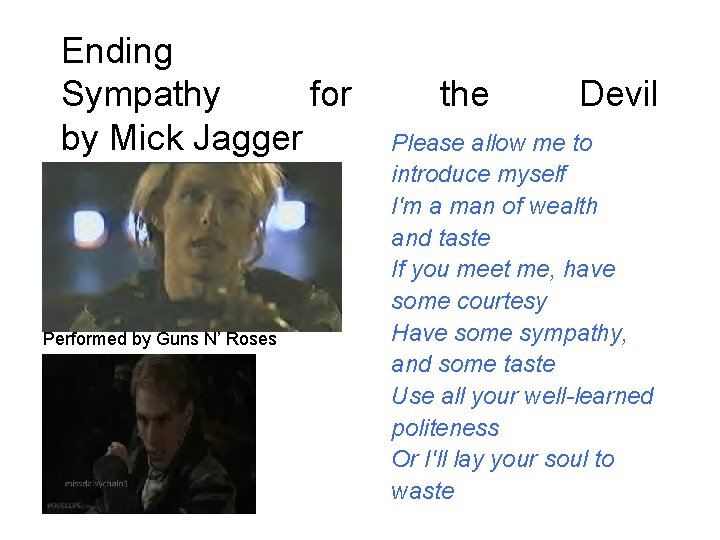
Ending Sympathy for by Mick Jagger Performed by Guns N’ Roses the Devil Please allow me to introduce myself I'm a man of wealth and taste If you meet me, have some courtesy Have some sympathy, and some taste Use all your well-learned politeness Or I'll lay your soul to waste
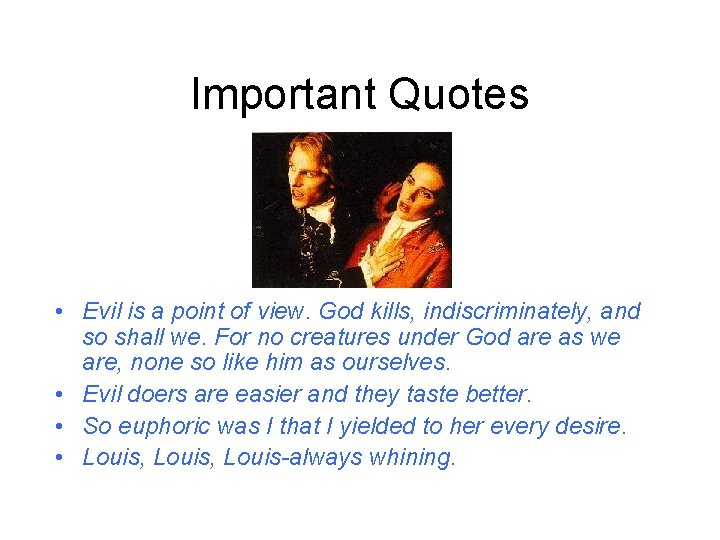
Important Quotes • Evil is a point of view. God kills, indiscriminately, and so shall we. For no creatures under God are as we are, none so like him as ourselves. • Evil doers are easier and they taste better. • So euphoric was I that I yielded to her every desire. • Louis, Louis-always whining.
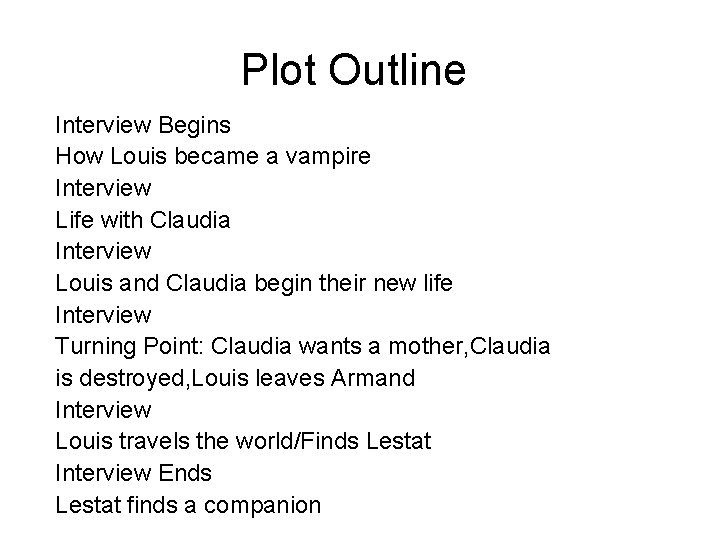
Plot Outline Interview Begins How Louis became a vampire Interview Life with Claudia Interview Louis and Claudia begin their new life Interview Turning Point: Claudia wants a mother, Claudia is destroyed, Louis leaves Armand Interview Louis travels the world/Finds Lestat Interview Ends Lestat finds a companion
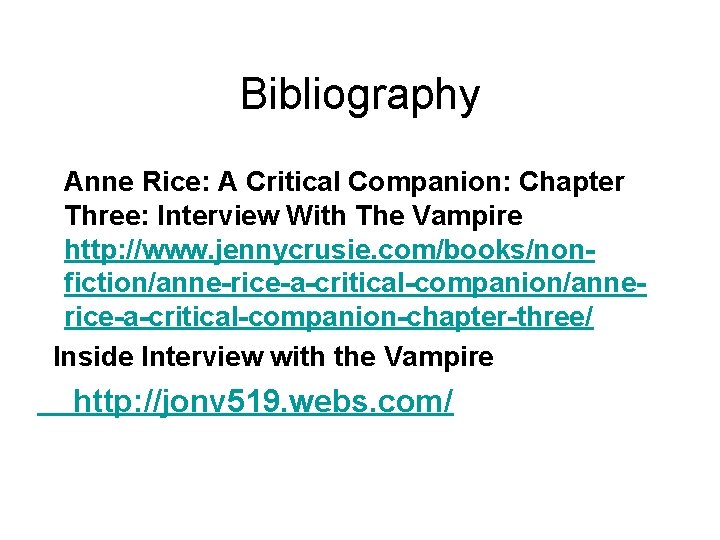
Bibliography Anne Rice: A Critical Companion: Chapter Three: Interview With The Vampire http: //www. jennycrusie. com/books/nonfiction/anne-rice-a-critical-companion/annerice-a-critical-companion-chapter-three/ Inside Interview with the Vampire http: //jonv 519. webs. com/