
Prof Karen Goodlad HMGT 2402 Spring 2013 WINES
- Slides: 23
Prof. Karen Goodlad HMGT 2402 Spring 2013 WINES OF GERMANY
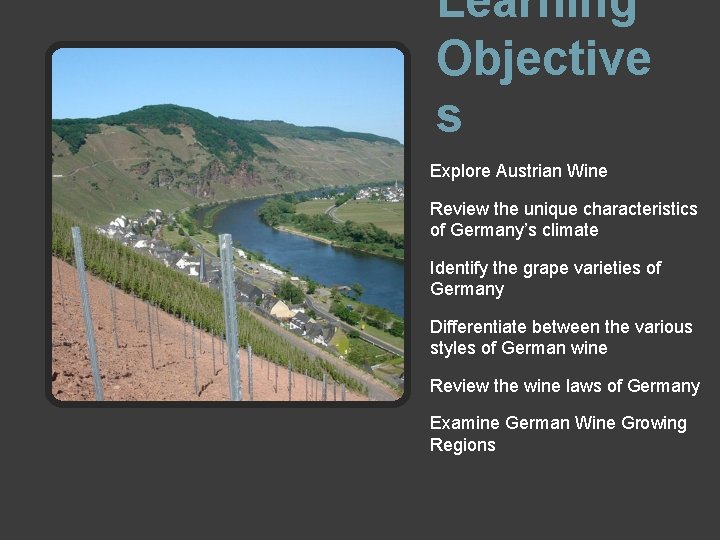
Learning Objective s Explore Austrian Wine Review the unique characteristics of Germany’s climate Identify the grape varieties of Germany Differentiate between the various styles of German wine Review the wine laws of Germany Examine German Wine Growing Regions
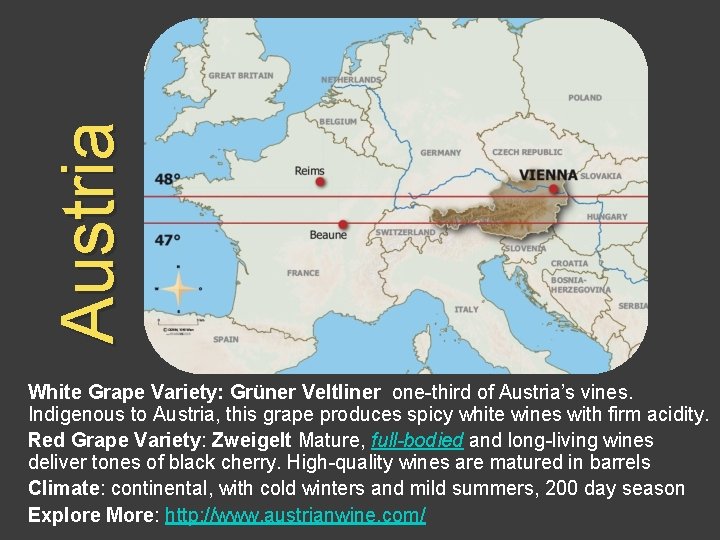
Austria White Grape Variety: Grüner Veltliner one-third of Austria’s vines. Indigenous to Austria, this grape produces spicy white wines with firm acidity. Red Grape Variety: Zweigelt Mature, full-bodied and long-living wines deliver tones of black cherry. High-quality wines are matured in barrels Climate: continental, with cold winters and mild summers, 200 day season Explore More: http: //www. austrianwine. com/
Unique Characteristics of Germany’s Climate � One of the coolest wine producing regions in the world � High latitudes �long daylight hours in summer � Selective vineyard sites: �Near rivers, reflect sun, moderate temperatures �Steep riverbanks offer elevated growing areas to capture more sun light
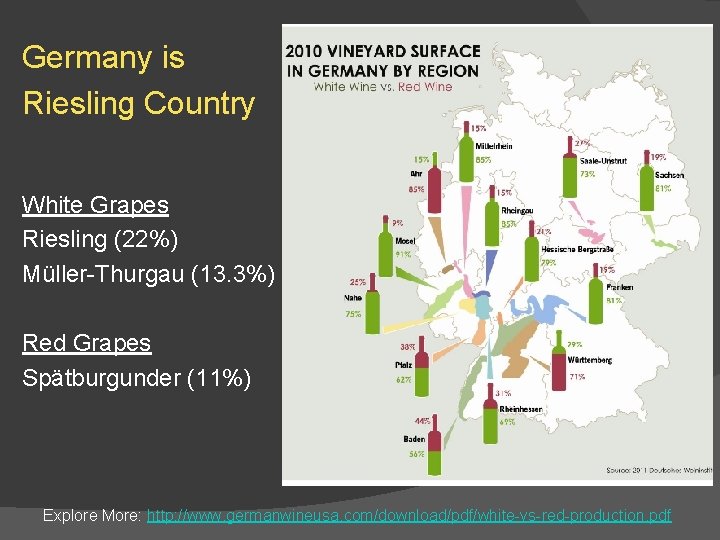
Germany is Riesling Country White Grapes Riesling (22%) Müller-Thurgau (13. 3%) Red Grapes Spätburgunder (11%) Explore More: http: //www. germanwineusa. com/download/pdf/white-vs-red-production. pdf
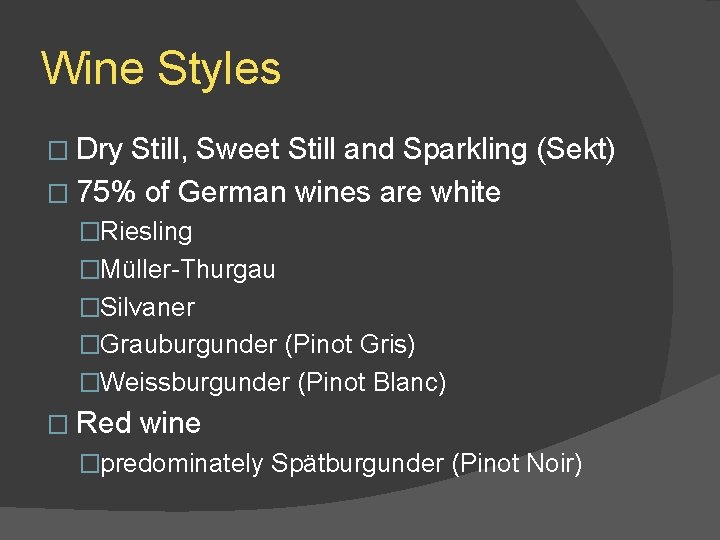
Wine Styles � Dry Still, Sweet Still and Sparkling (Sekt) � 75% of German wines are white �Riesling �Müller-Thurgau �Silvaner �Grauburgunder (Pinot Gris) �Weissburgunder (Pinot Blanc) � Red wine �predominately Spätburgunder (Pinot Noir)
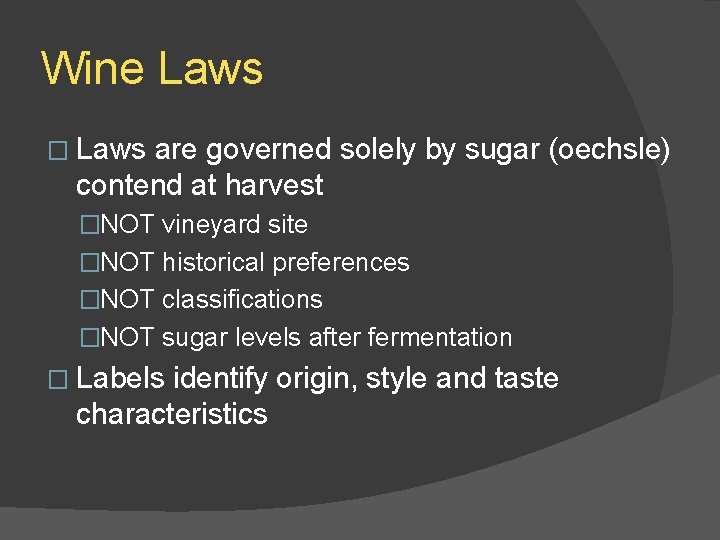
Wine Laws � Laws are governed solely by sugar (oechsle) contend at harvest �NOT vineyard site �NOT historical preferences �NOT classifications �NOT sugar levels after fermentation � Labels identify origin, style and taste characteristics
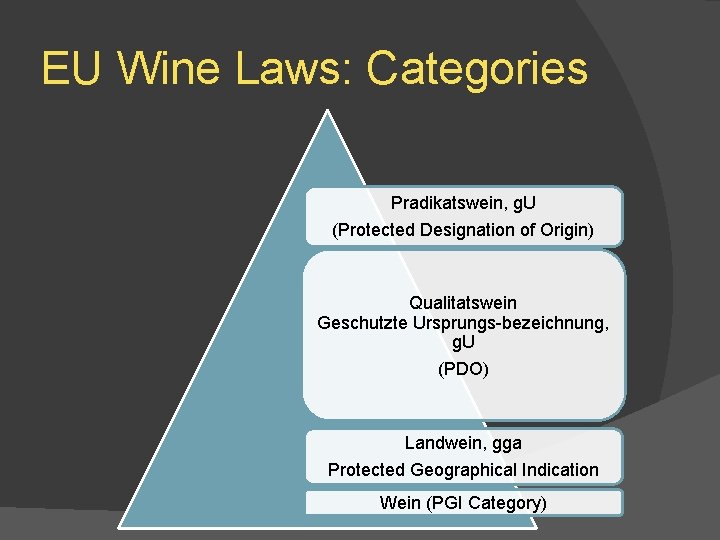
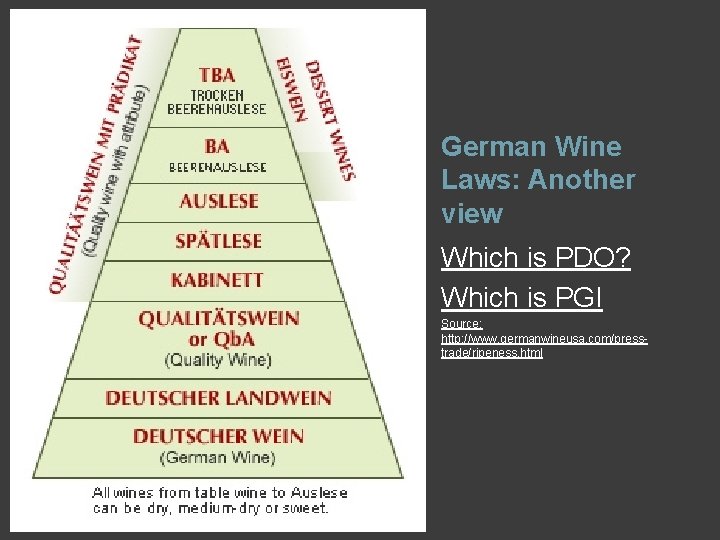
EU Wine Laws: Categories Pradikatswein, g. U (Protected Designation of Origin) Qualitatswein Geschutzte Ursprungs-bezeichnung, g. U (PDO) Landwein, gga Protected Geographical Indication Wein (PGI Category)
Wine Laws: Qualitätswein � Approved Grape Varieties � Reflect natural flavor characteristics of grape and region � Can be Chaptilized � Can use Süssreserve � Grown in one of 13 Anbaugebiete
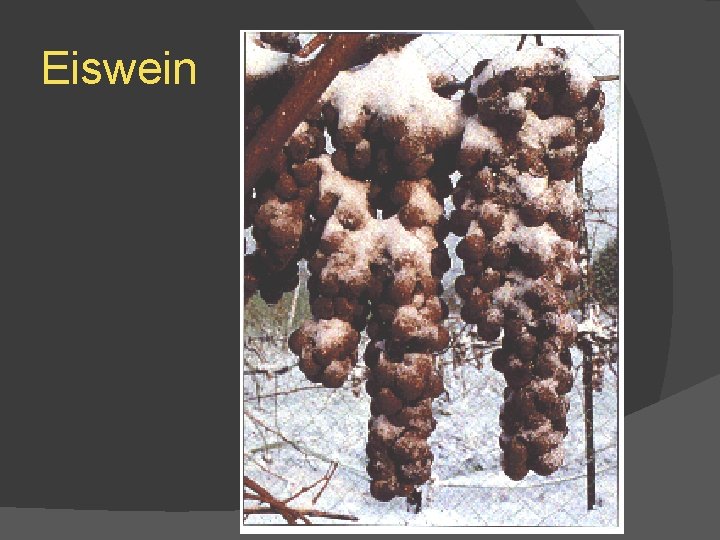
Wine Laws: Prädiskatswein or Qm. P Categories Kabinett: fine light wines, high acidity � Spatlese: “late picked”, fuller flavors than kabinett, higher sugar levels � Auslese: “selected” harvested in clusters with signs of botrytis � Beerenauslese: “berries out picked” wines are rich and luscious, $$$ � Trockenbeerenauslese: selected raisins, very rare $$$$$ � Eiswein: “icewine” rare, pressed frozen to concentrate grape characteristics $$$$ � For more information about German wine categories visit: http: //www. winepage. de/
German Wine Laws: Another view Which is PDO? Which is PGI Source: http: //www. germanwineusa. com/presstrade/ripeness. html
Eiswein
Sweetness After Fermentation � Trocken Dry � Halbtrocken Half-Dry
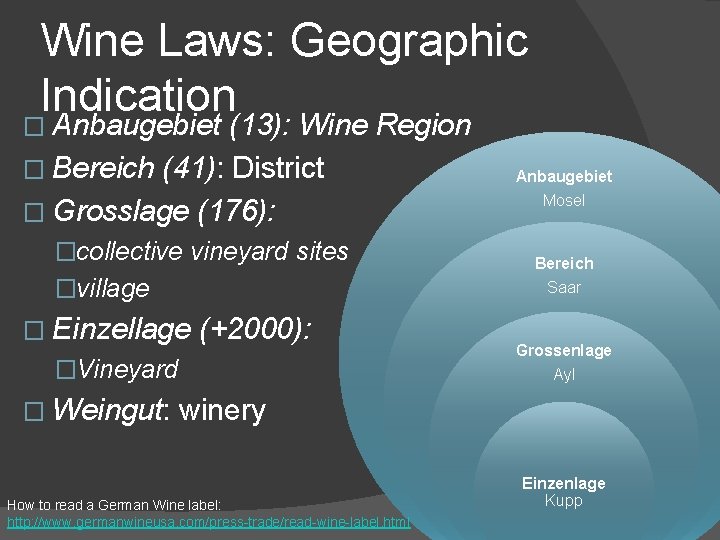
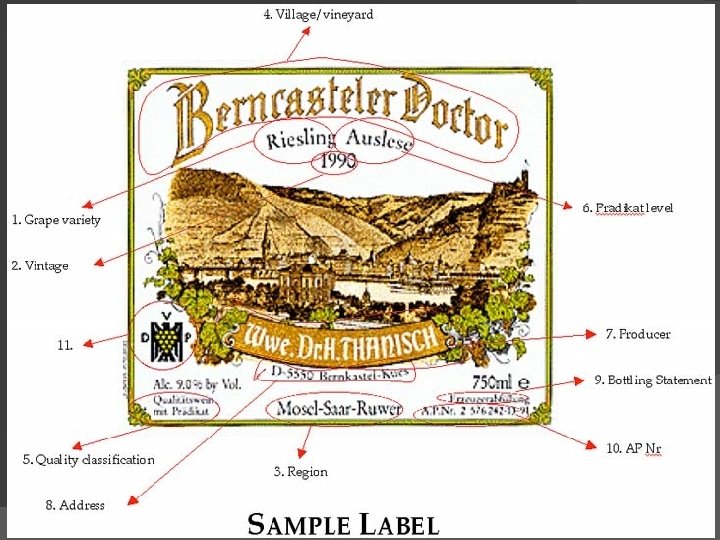
Wine Laws: Geographic Indication � Anbaugebiet (13): Wine Region � Bereich (41): District � Grosslage (176): �collective vineyard sites �village � Einzellage (+2000): �Vineyard � Weingut: Anbaugebiet Mosel Bereich Saar Grossenlage Ayl winery How to read a German Wine label: http: //www. germanwineusa. com/press-trade/read-wine-label. html Einzenlage Kupp
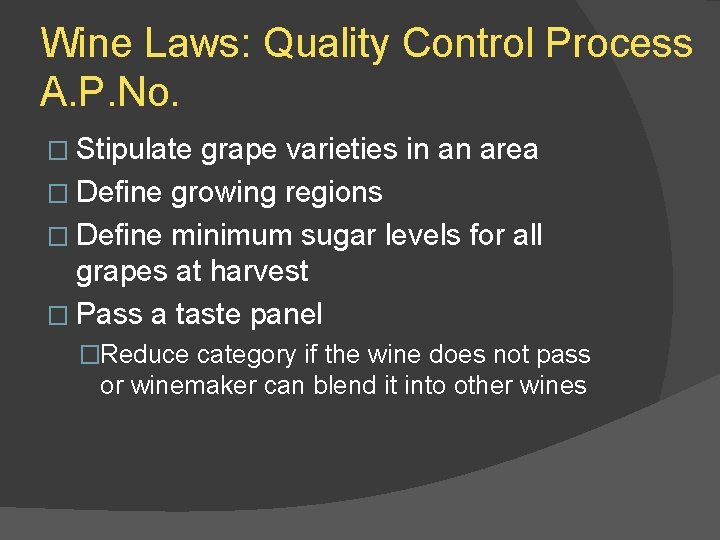
Wine Laws: Quality Control Process A. P. No. � Stipulate grape varieties in an area � Define growing regions � Define minimum sugar levels for all grapes at harvest � Pass a taste panel �Reduce category if the wine does not pass or winemaker can blend it into other wines
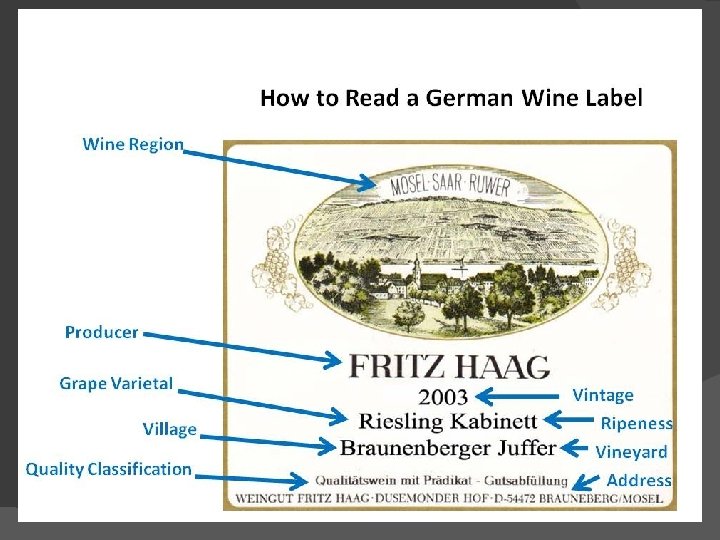
German Wine Labels �
German Wine Labels
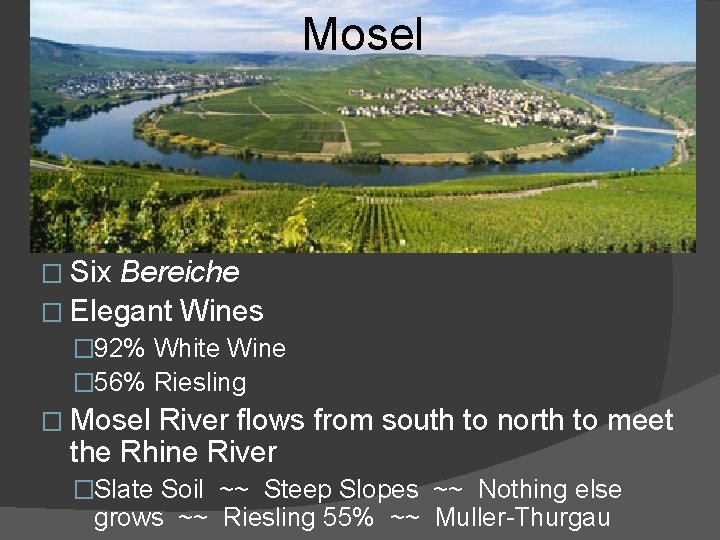
Mosel � Six Bereiche � Elegant Wines � 92% White Wine � 56% Riesling � Mosel River flows from south to north to meet the Rhine River �Slate Soil ~~ Steep Slopes ~~ Nothing else grows ~~ Riesling 55% ~~ Muller-Thurgau
Rheingau � World Class White Wines �Fuller in body than Mosel �Slopes create lovely acidity �Flat areas more full bodied � Johannisberg, � 80% Famous and only Bereich Riesling � Rhine River runs through it
Pfalz � 2 nd largest region � 62% white wine � 20% Riesling and Müller-Thurgau and others make up the reminder � “sturdy wines”, higher in alcohol than other German Wines � Soil: sandstone, gravel and granite �Forest protects it from cold and rain
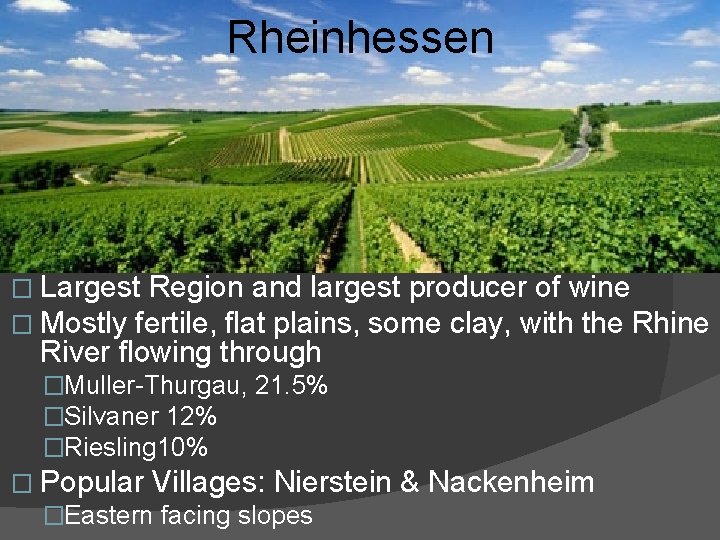
Rheinhessen � Largest Region and largest producer of wine � Mostly fertile, flat plains, some clay, with the Rhine River flowing through �Muller-Thurgau, 21. 5% �Silvaner 12% �Riesling 10% � Popular Villages: Nierstein �Eastern facing slopes & Nackenheim
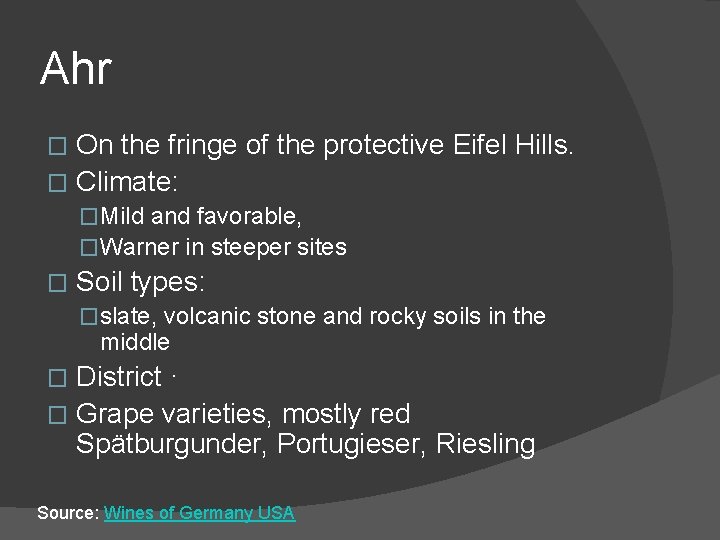
Ahr On the fringe of the protective Eifel Hills. � Climate: � �Mild and favorable, �Warner in steeper sites � Soil types: �slate, volcanic stone and rocky soils in the middle District · � Grape varieties, mostly red Spätburgunder, Portugieser, Riesling � Source: Wines of Germany USA
Terms To Know � Bereich � Auslese � Einzellage � Beerenauslese � Eiswein � Trockenbeerenauslese � Grosslage � Kabinett � Halbtrocken � Spatlese � Trocken � Tafelwein � Landwein � Qb. A � Qm. P