
Prof dr A Achterberg Astronomical Dept IMAPP Radboud
Prof. dr. A. Achterberg, Astronomical Dept. , IMAPP, Radboud Universiteit Gas Dynamics, Lecture 4 (Bernoulli & Compressible steady flows) see: www. astro. ru. nl/~achterb/
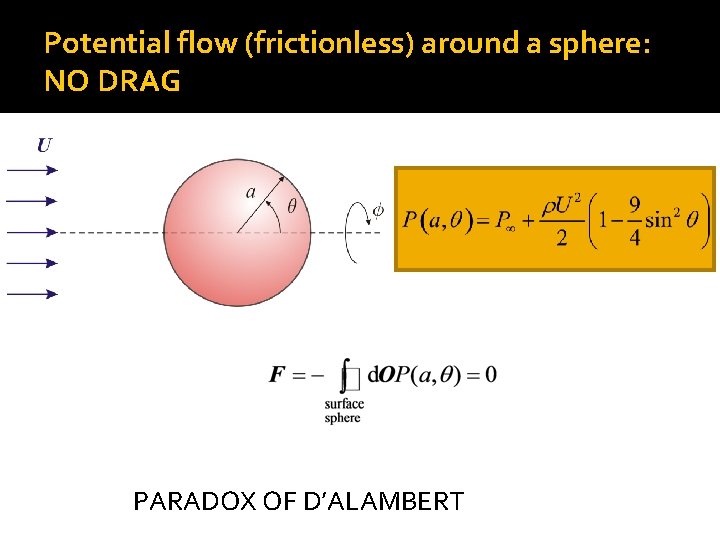
Potential flow (frictionless) around a sphere: NO DRAG PARADOX OF D’ALAMBERT
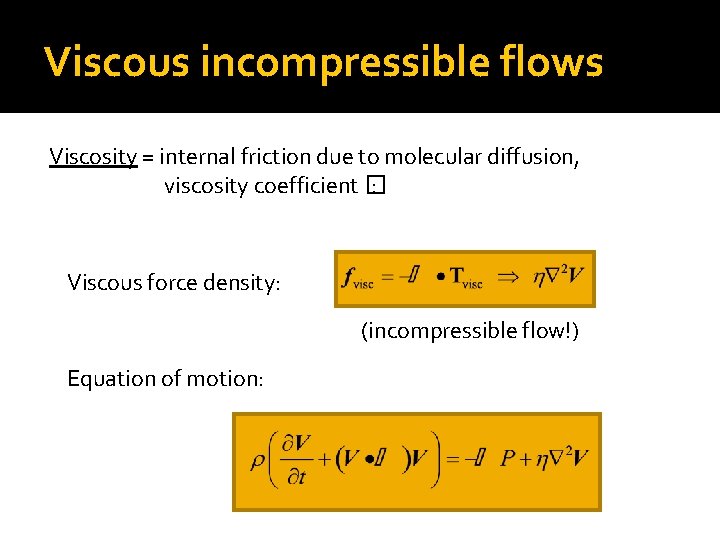
Viscous incompressible flows Viscosity = internal friction due to molecular diffusion, viscosity coefficient � : Viscous force density: (incompressible flow!) Equation of motion:
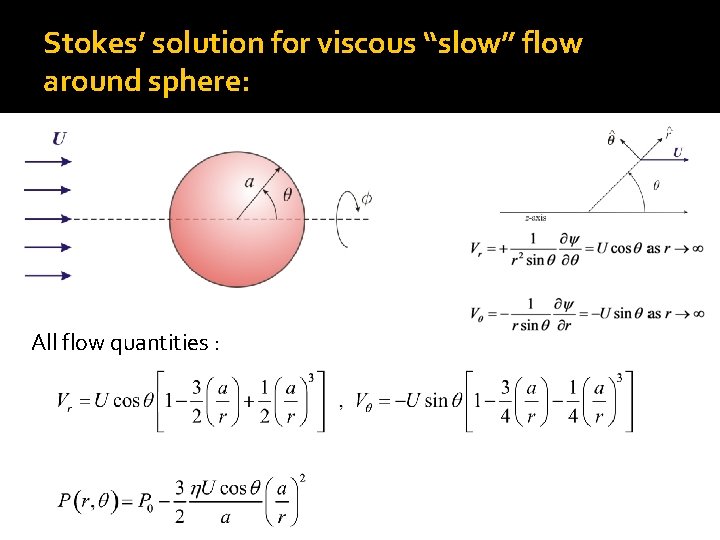
Stokes’ solution for viscous “slow” flow around sphere: All flow quantities :
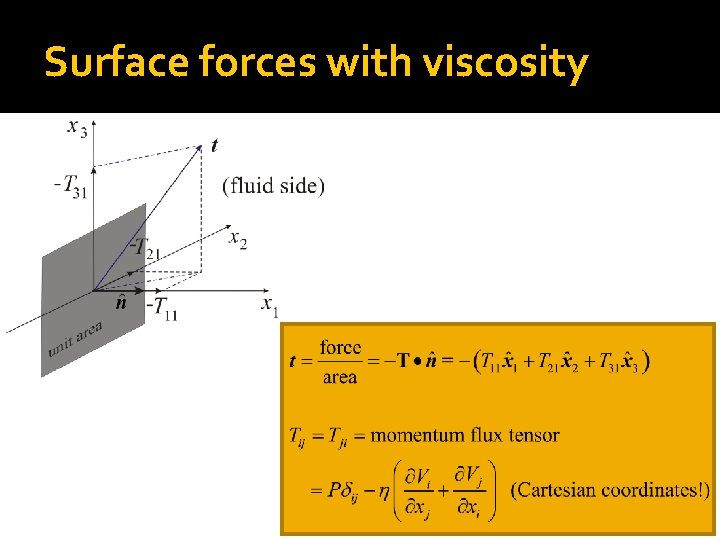
Surface forces with viscosity
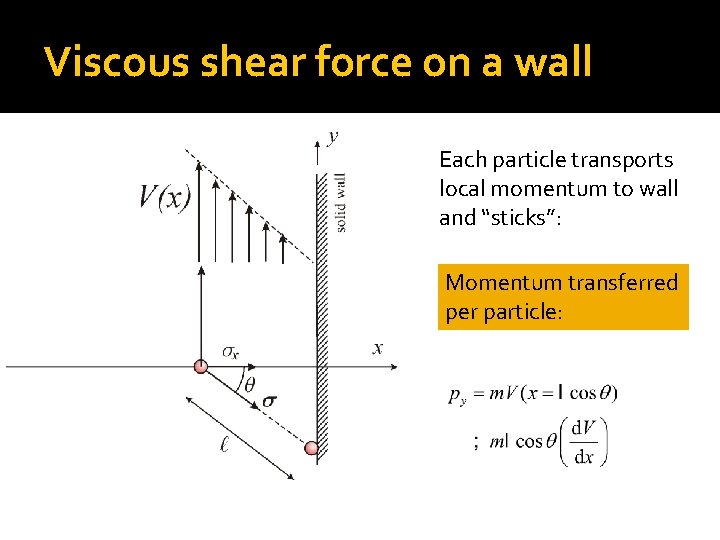
Viscous shear force on a wall Each particle transports local momentum to wall and “sticks”: Momentum transferred per particle:
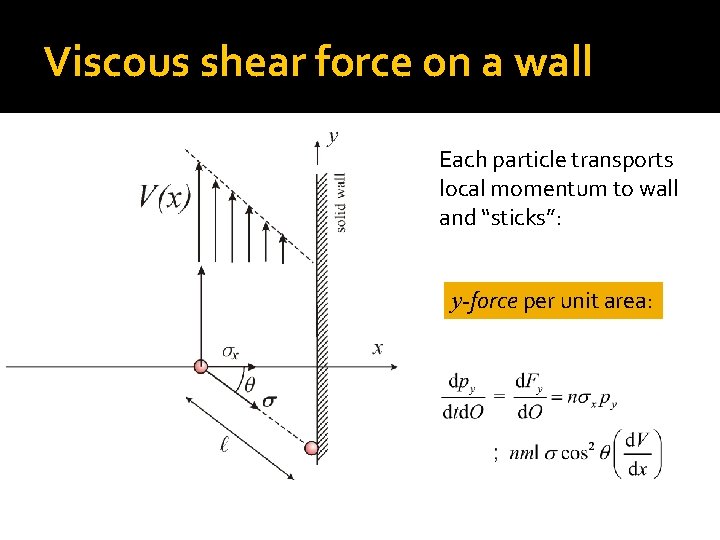
Viscous shear force on a wall Each particle transports local momentum to wall and “sticks”: y-force per unit area:
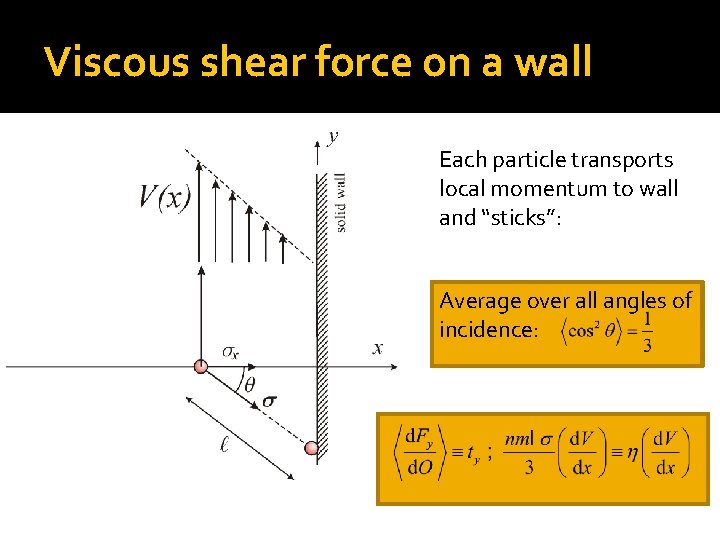
Viscous shear force on a wall Each particle transports local momentum to wall and “sticks”: Average over all angles of incidence:

Drag force on sphere
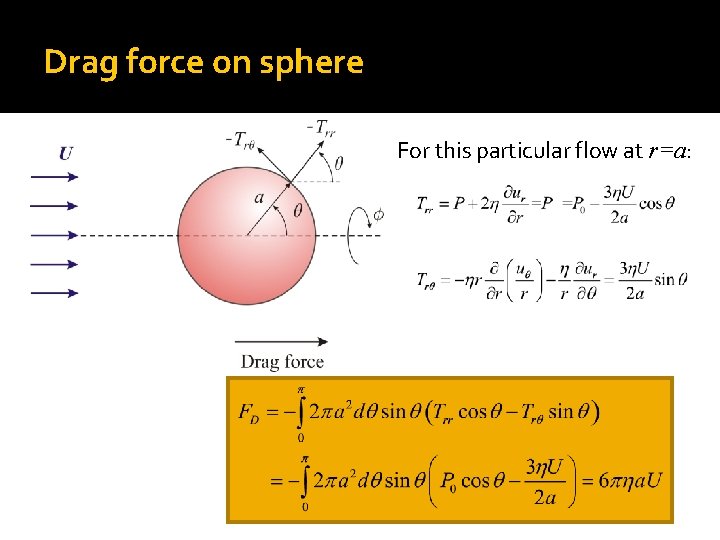
Drag force on sphere For this particular flow at r=a:
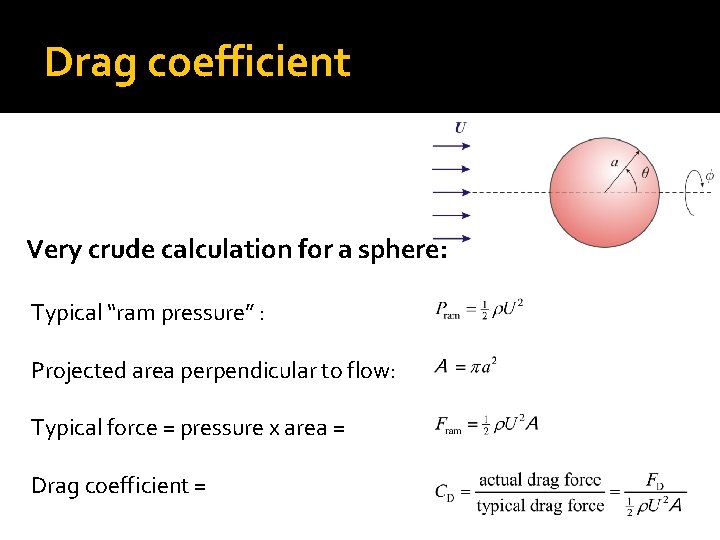
Drag coefficient Very crude calculation for a sphere: Typical “ram pressure” : Projected area perpendicular to flow: Typical force = pressure x area = Drag coefficient =
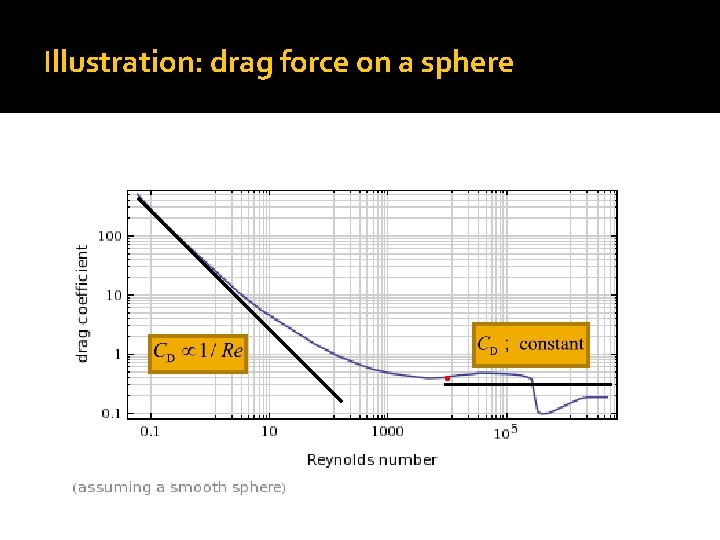
Illustration: drag force on a sphere
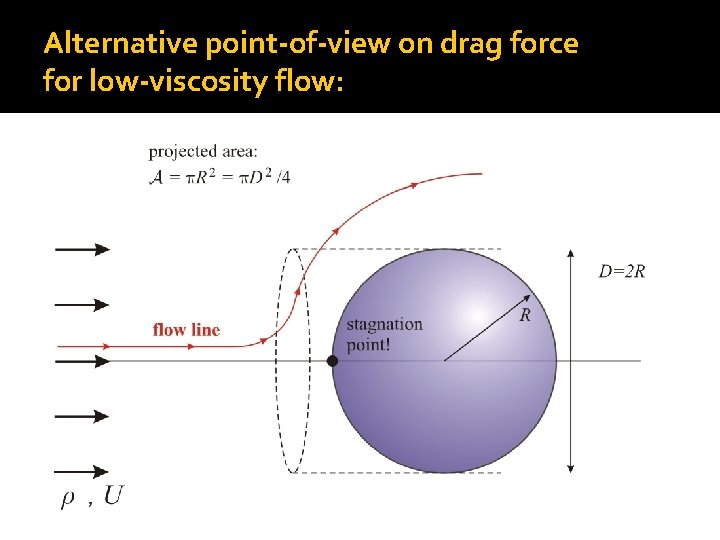
Alternative point-of-view on drag force for low-viscosity flow:
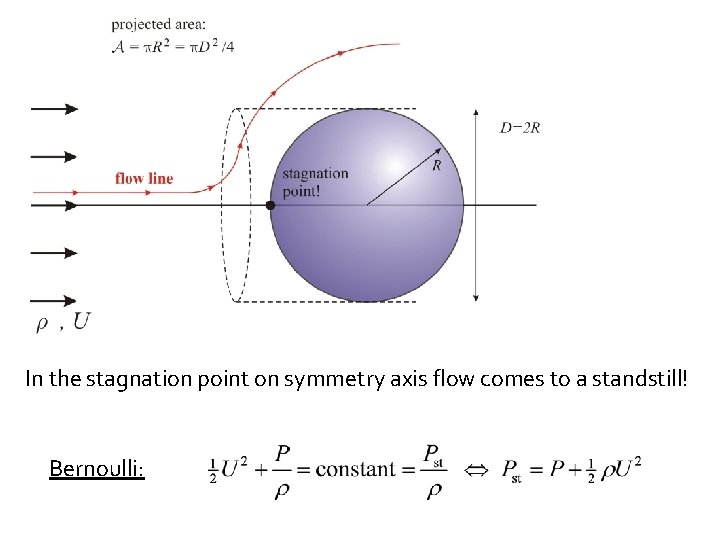
In the stagnation point on symmetry axis flow comes to a standstill! Bernoulli:
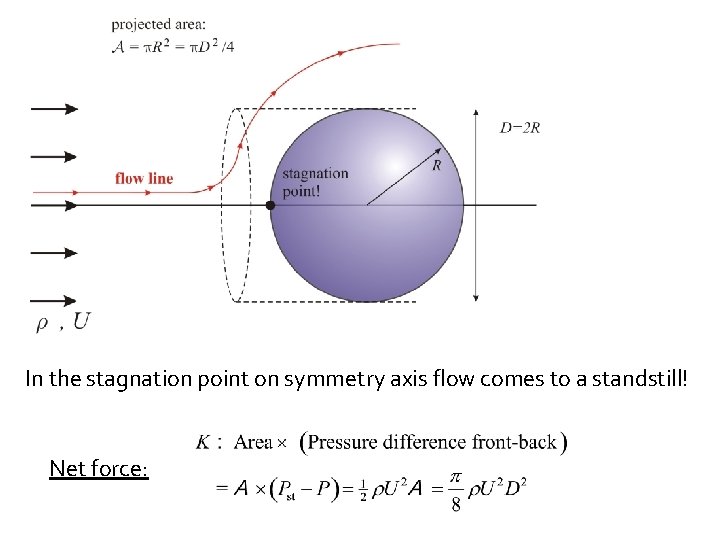
In the stagnation point on symmetry axis flow comes to a standstill! Net force:
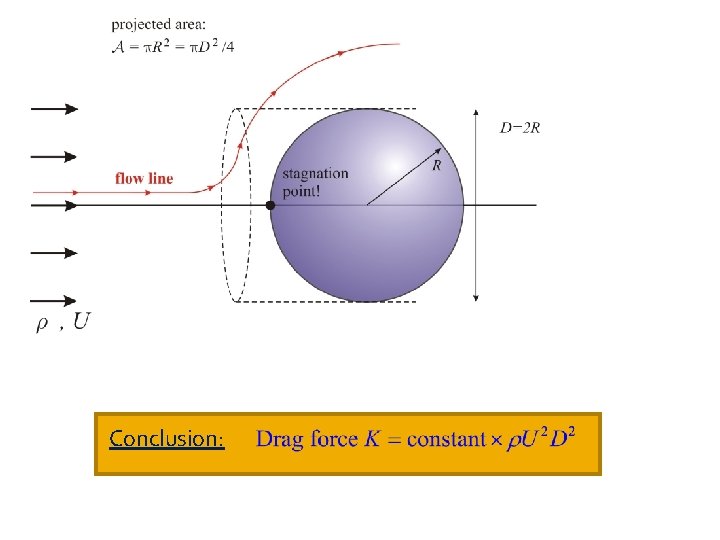
Conclusion:
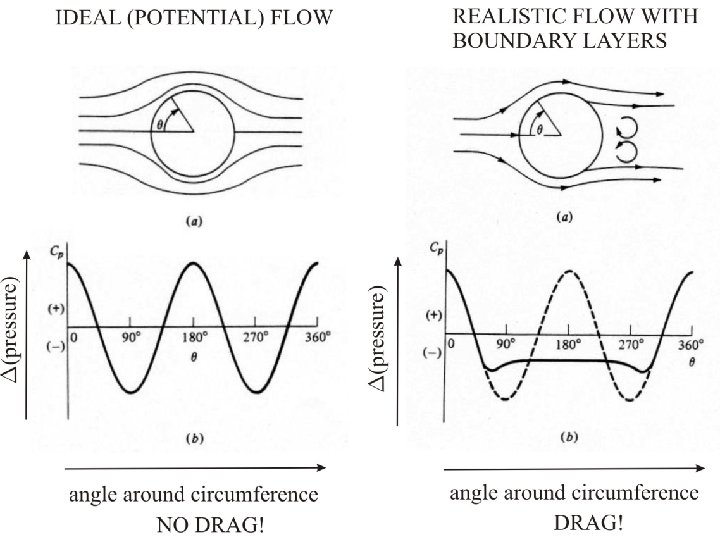
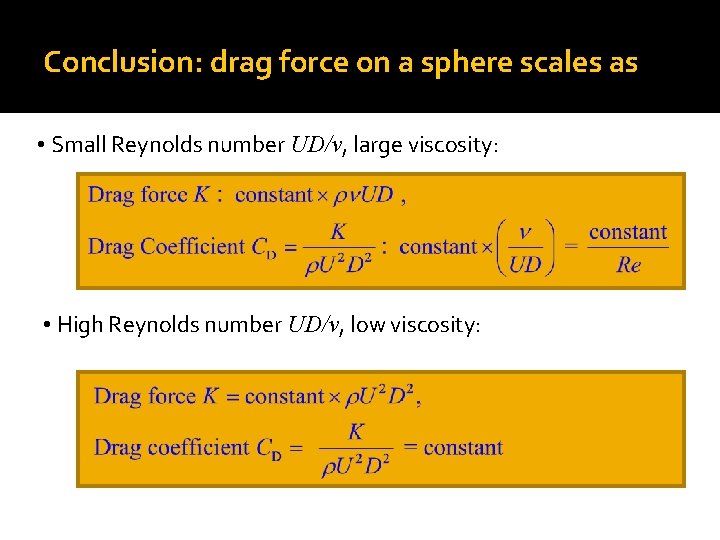
Conclusion: drag force on a sphere scales as • Small Reynolds number UD/ν, large viscosity: • High Reynolds number UD/ν, low viscosity:
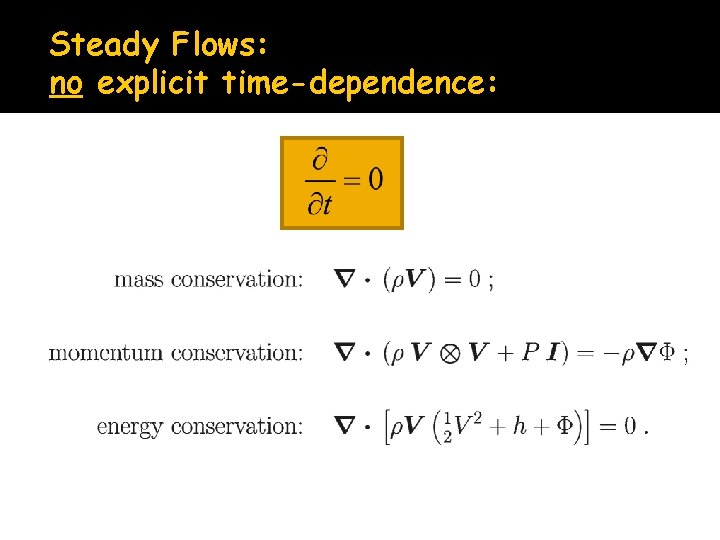
Steady Flows: no explicit time-dependence:
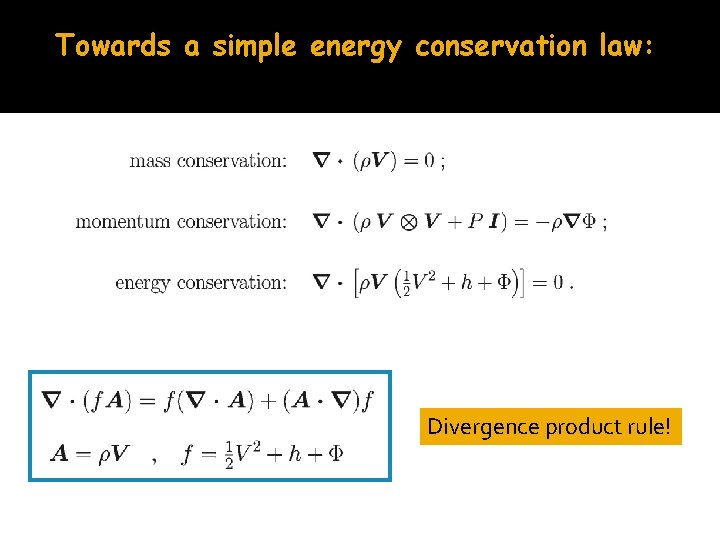
Towards a simple energy conservation law: Divergence product rule!
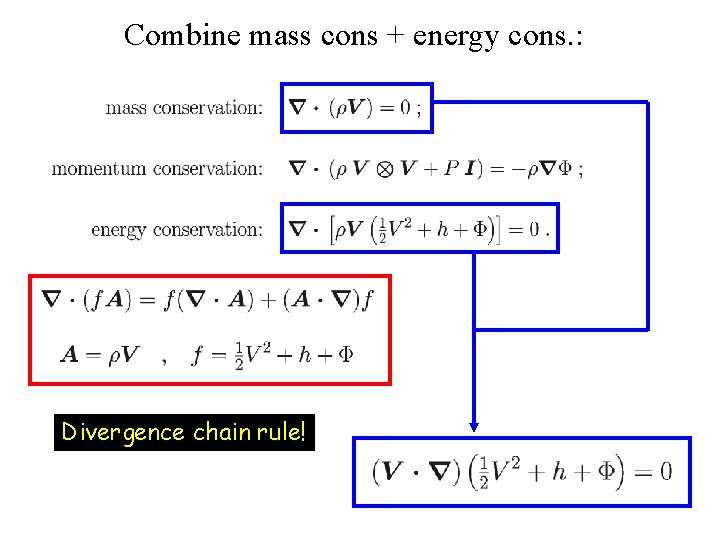
Combine mass cons + energy cons. : Divergence chain rule!
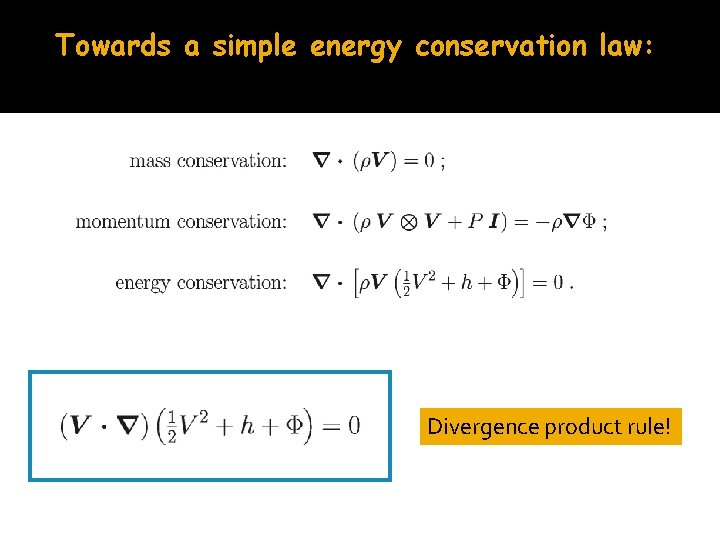
Towards a simple energy conservation law: Divergence product rule!
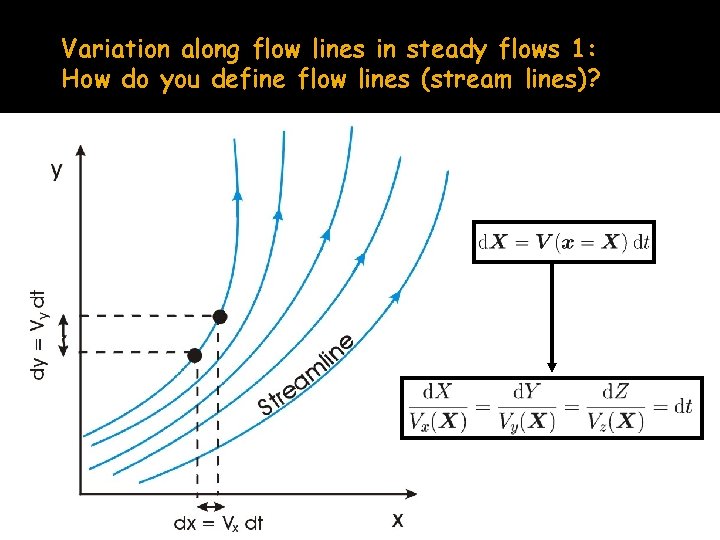
Variation along flow lines in steady flows 1: How do you define flow lines (stream lines)?
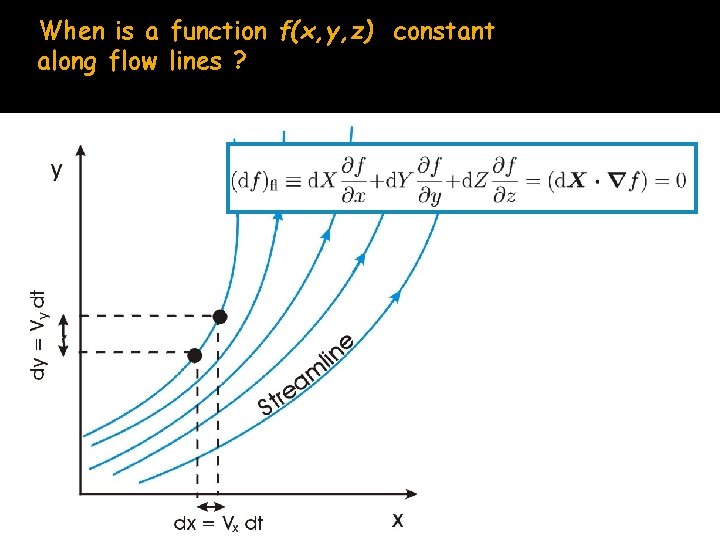
When is a function f(x, y, z) constant along flow lines ?
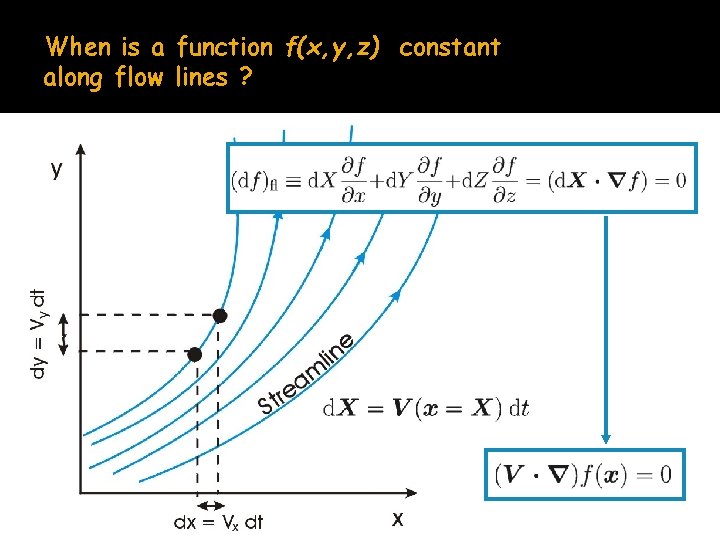
When is a function f(x, y, z) constant along flow lines ?
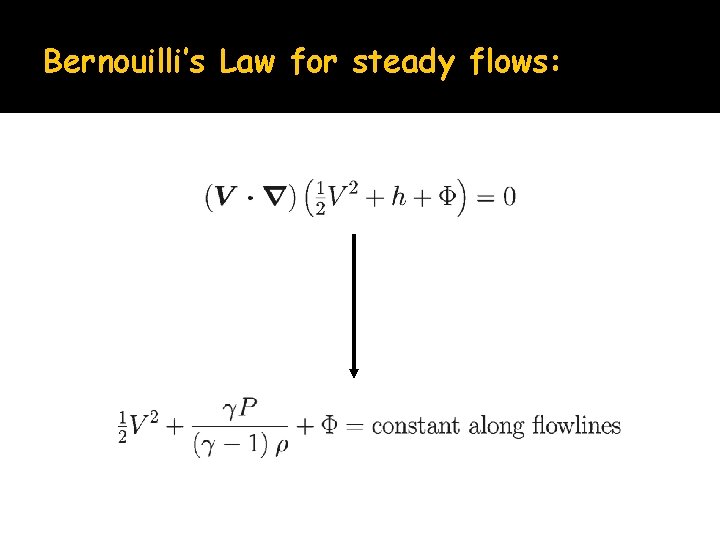
Bernouilli’s Law for steady flows:
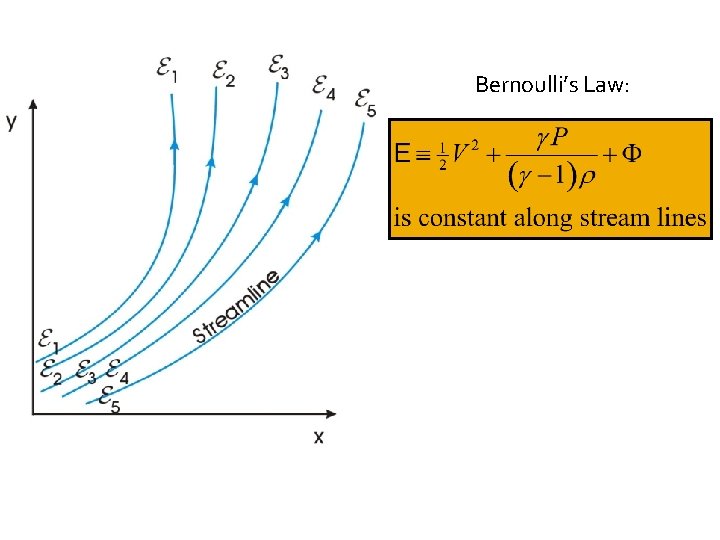
Bernoulli’s Law:
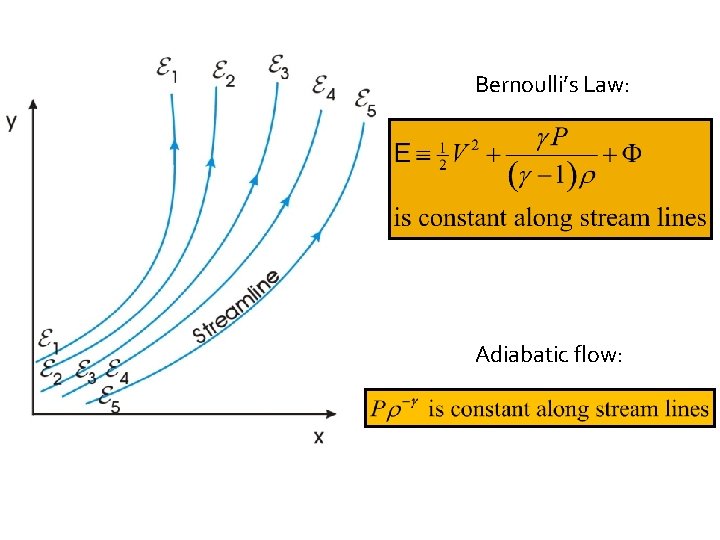
Bernoulli’s Law: Adiabatic flow:
Astrophysical Application: Stellar and Solar Winds
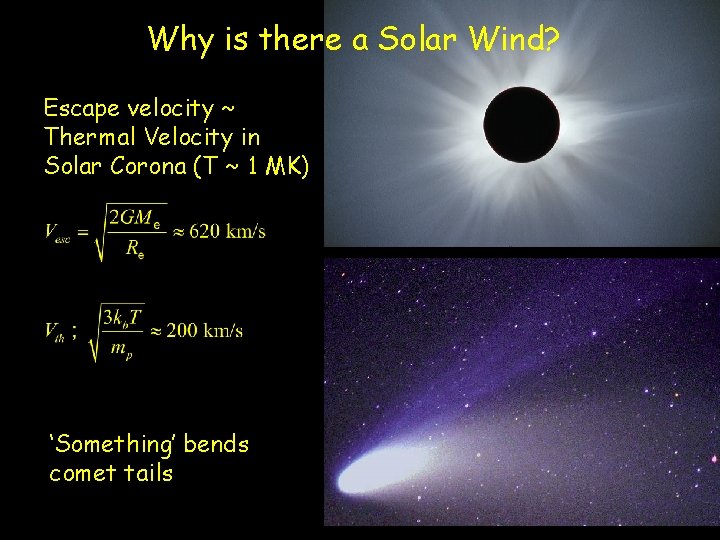
Why is there a Solar Wind? Escape velocity ~ Thermal Velocity in Solar Corona (T ~ 1 MK) ‘Something’ bends comet tails
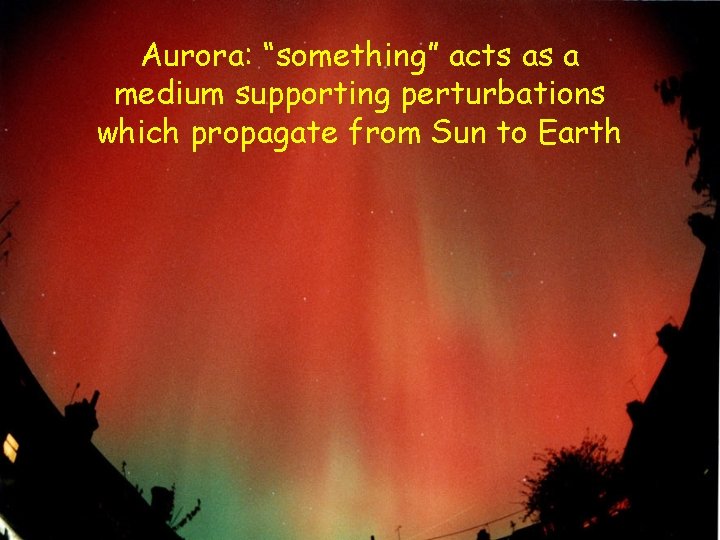
Aurora: “something” acts as a medium supporting perturbations which propagate from Sun to Earth
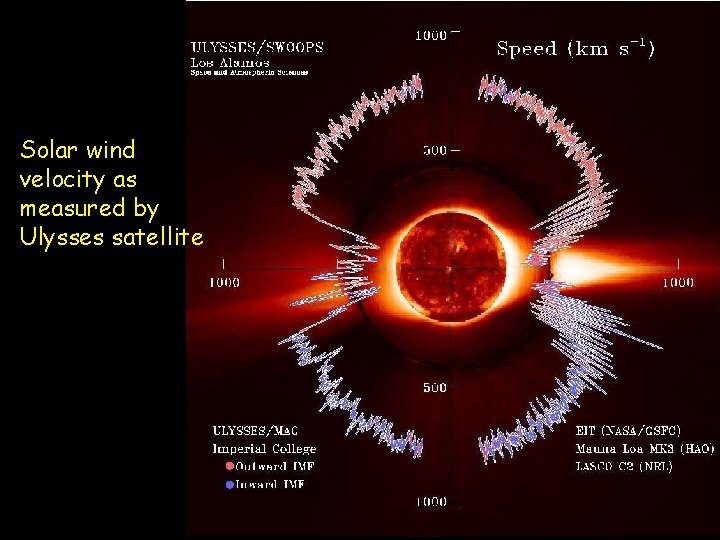
Solar wind velocity as measured by Ulysses satellite
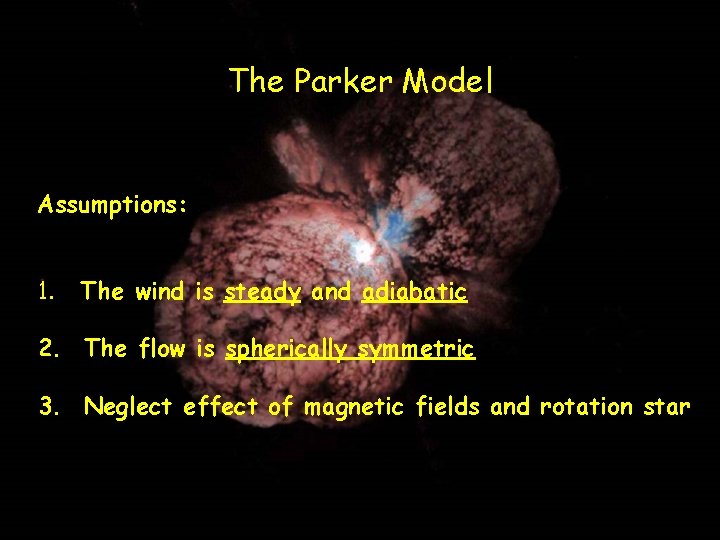
The Parker Model Assumptions: 1. The wind is steady and adiabatic 2. The flow is spherically symmetric 3. Neglect effect of magnetic fields and rotation star
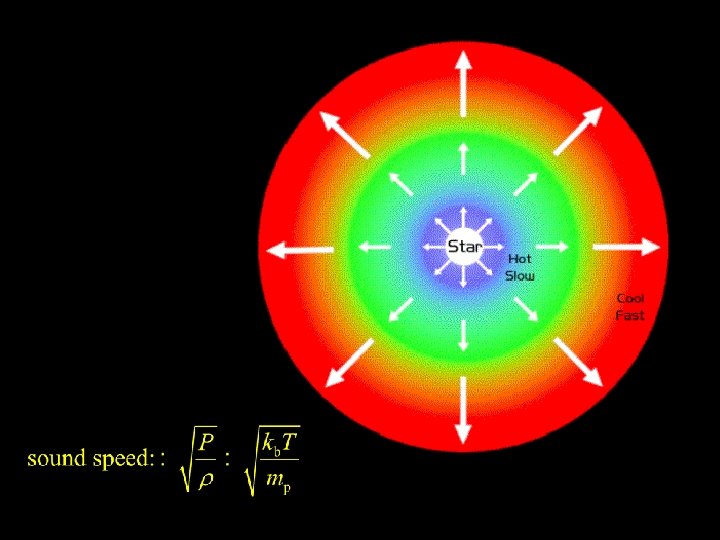
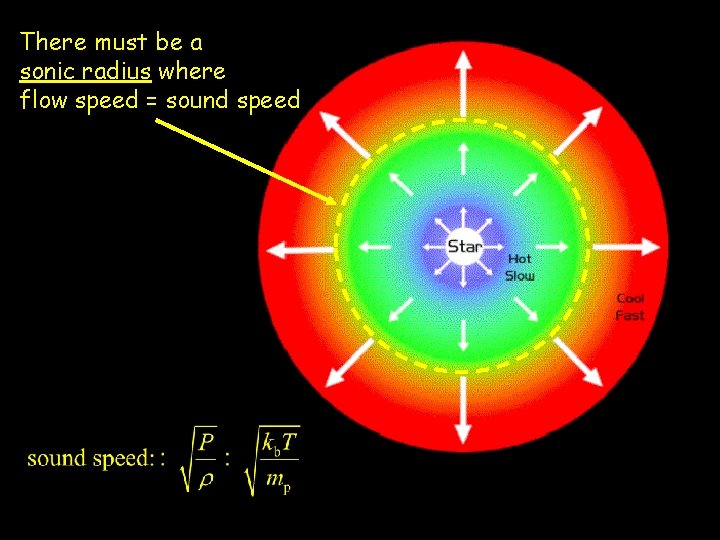
There must be a sonic radius where flow speed = sound speed
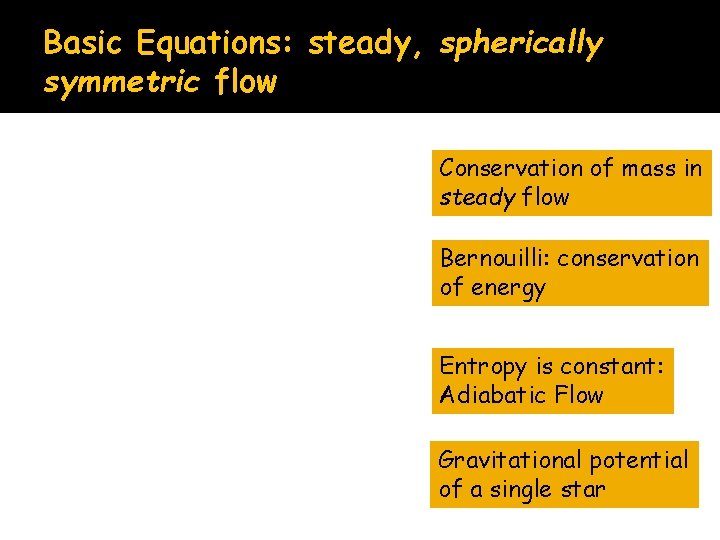
Basic Equations: steady, spherically symmetric flow Conservation of mass in steady flow Bernouilli: conservation of energy Entropy is constant: Adiabatic Flow Gravitational potential of a single star
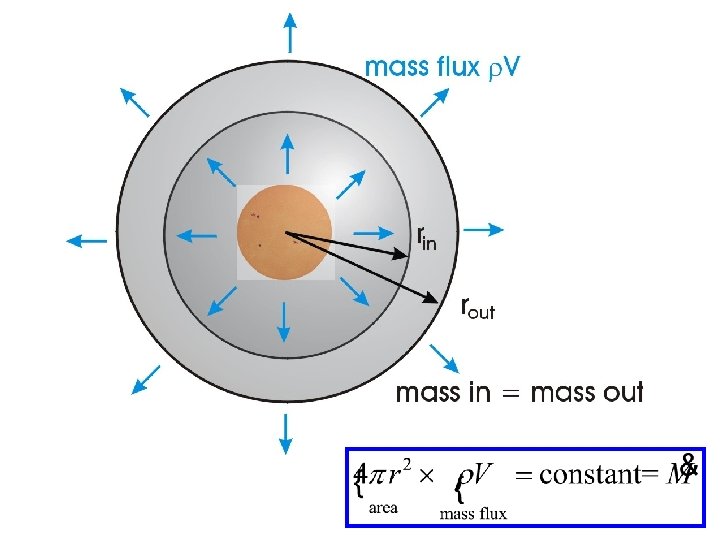
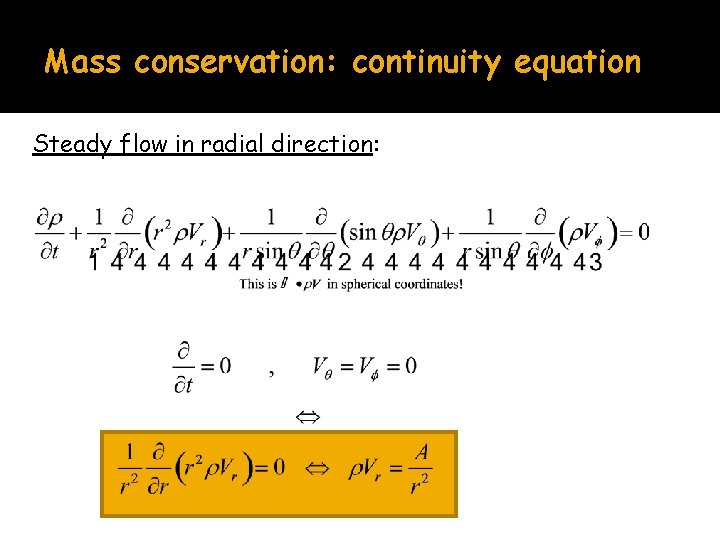
Mass conservation: continuity equation Steady flow in radial direction:
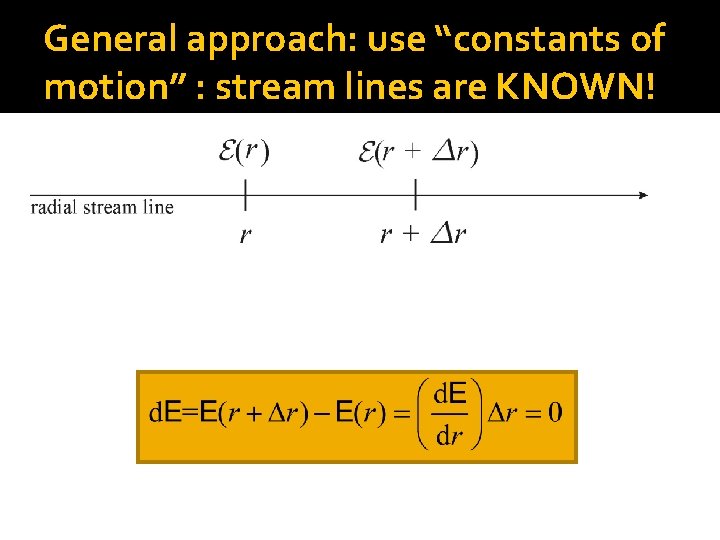
General approach: use “constants of motion” : stream lines are KNOWN!
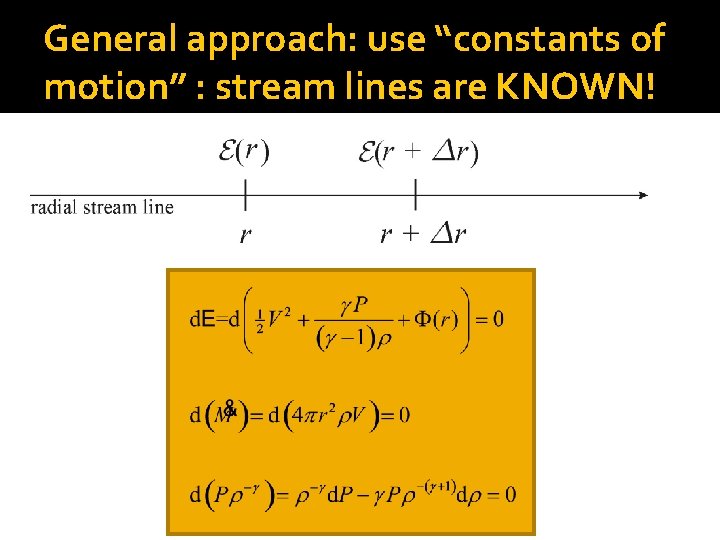
General approach: use “constants of motion” : stream lines are KNOWN!
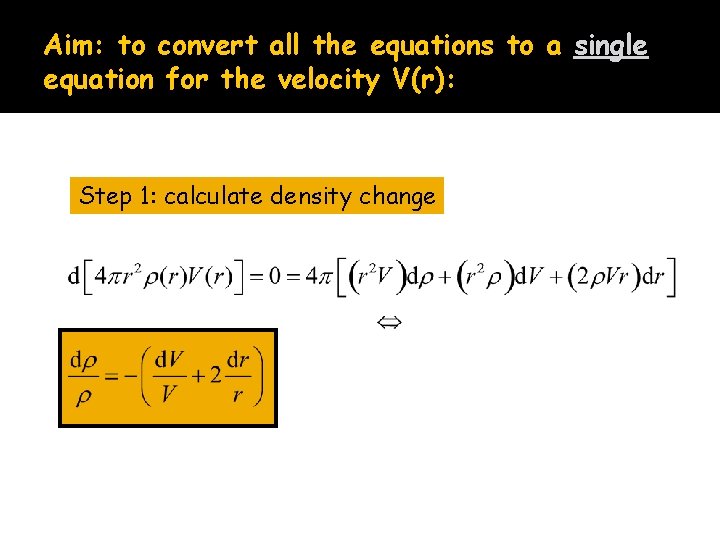
Aim: to convert all the equations to a single equation for the velocity V(r): Step 1: calculate density change
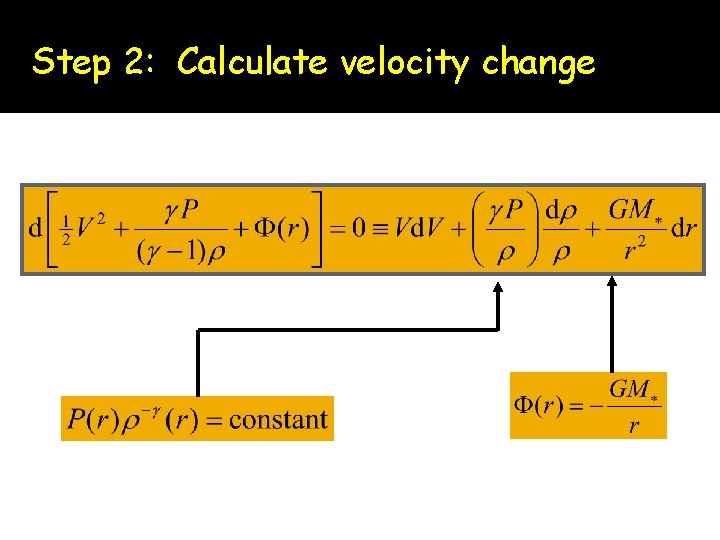
Step 2: Calculate velocity change
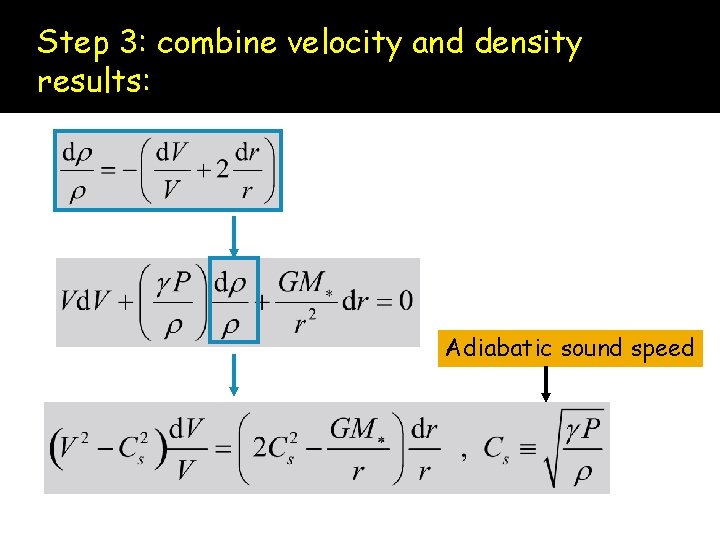
Step 3: combine velocity and density results: Adiabatic sound speed
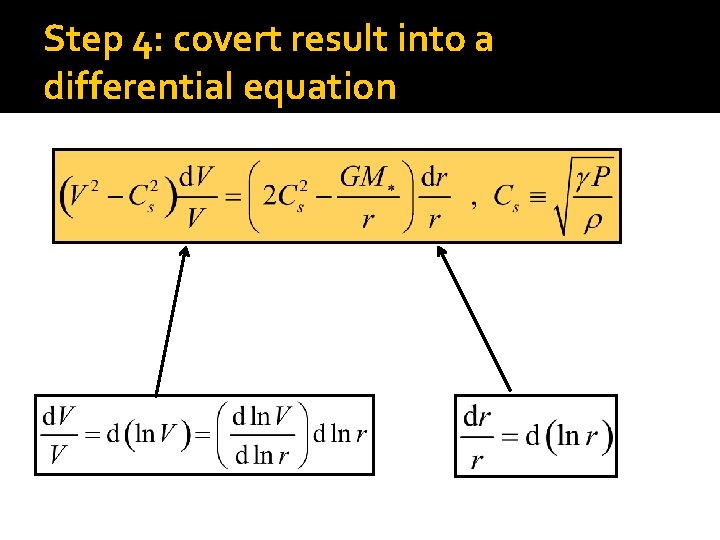
Step 4: covert result into a differential equation
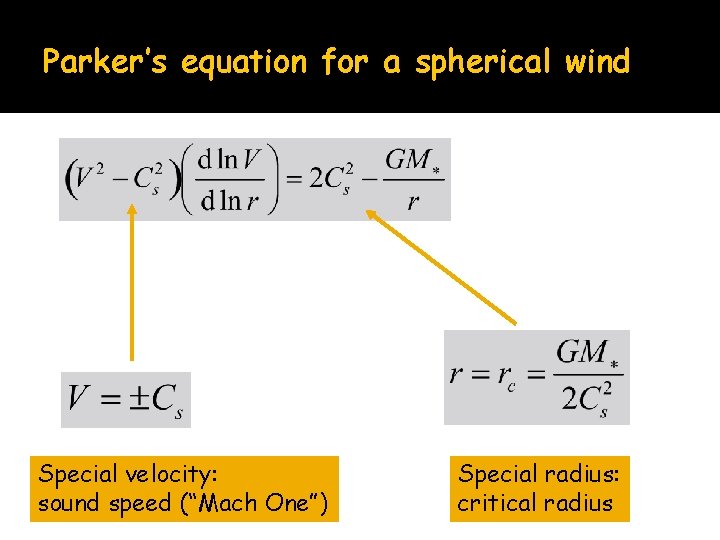
Parker’s equation for a spherical wind Special velocity: sound speed (“Mach One”) Special radius: critical radius
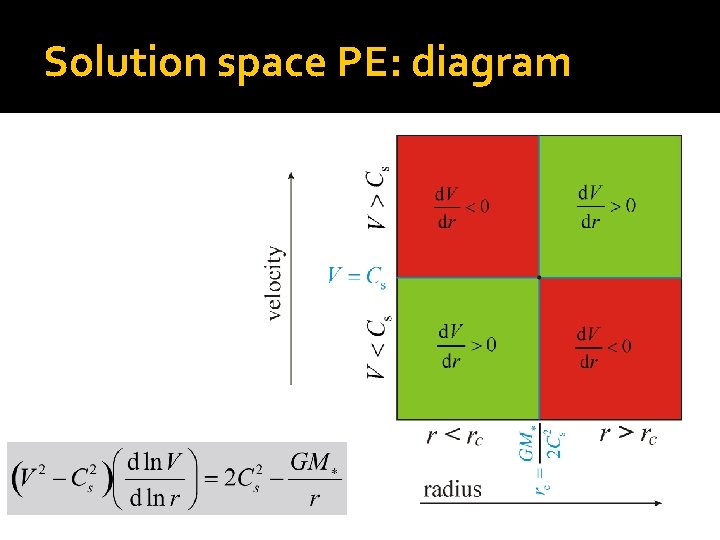
Solution space PE: diagram
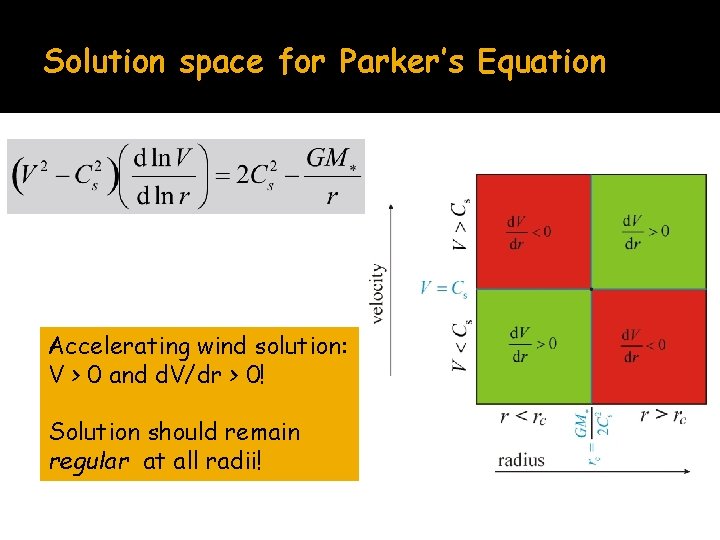
Solution space for Parker’s Equation Accelerating wind solution: V > 0 and d. V/dr > 0! Solution should remain regular at all radii!
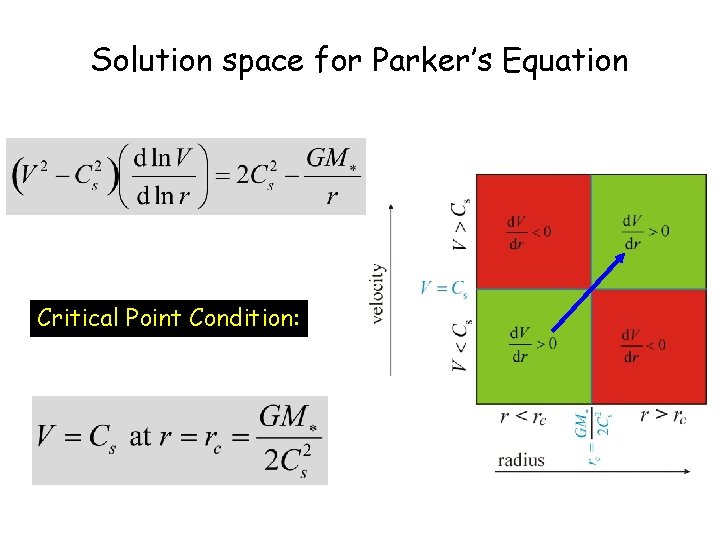
Solution space for Parker’s Equation Critical Point Condition:
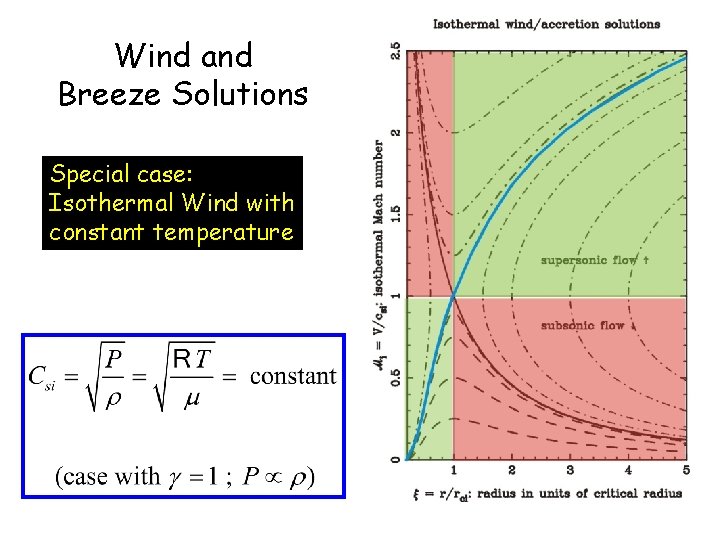
Wind and Breeze Solutions Special case: Isothermal Wind with constant temperature
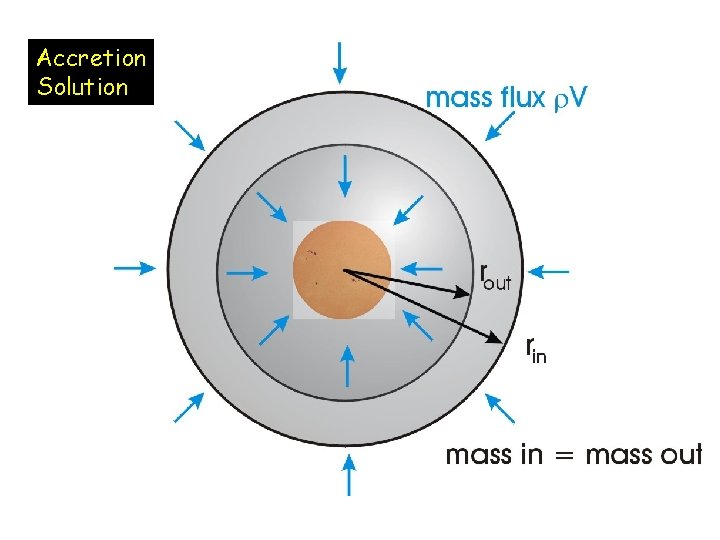
Accretion Solution
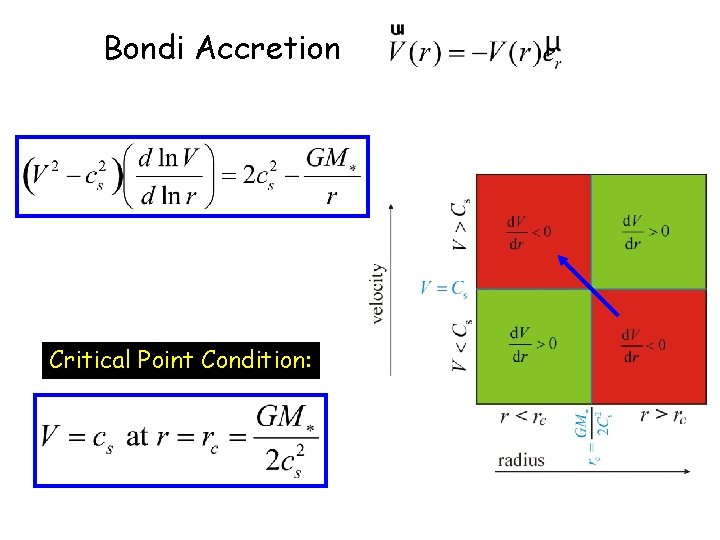
Bondi Accretion Critical Point Condition:
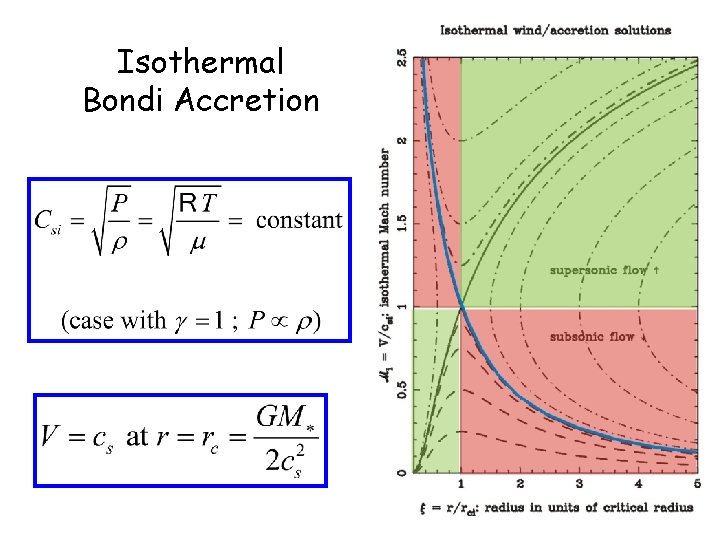
Isothermal Bondi Accretion
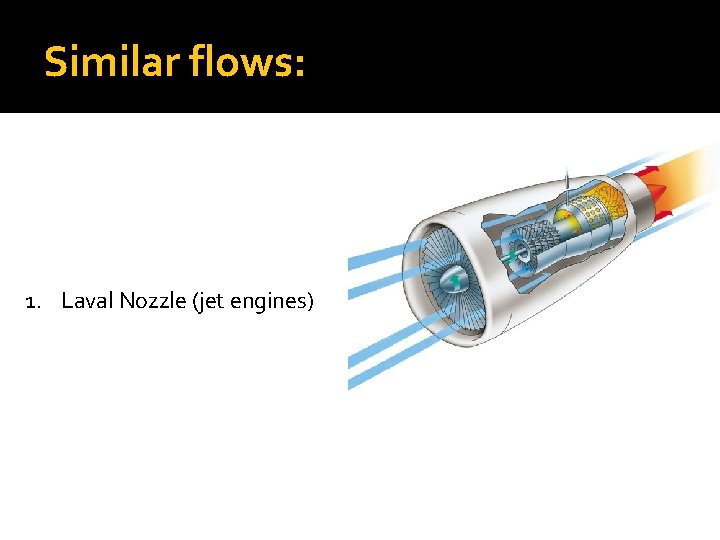
Similar flows: 1. Laval Nozzle (jet engines)
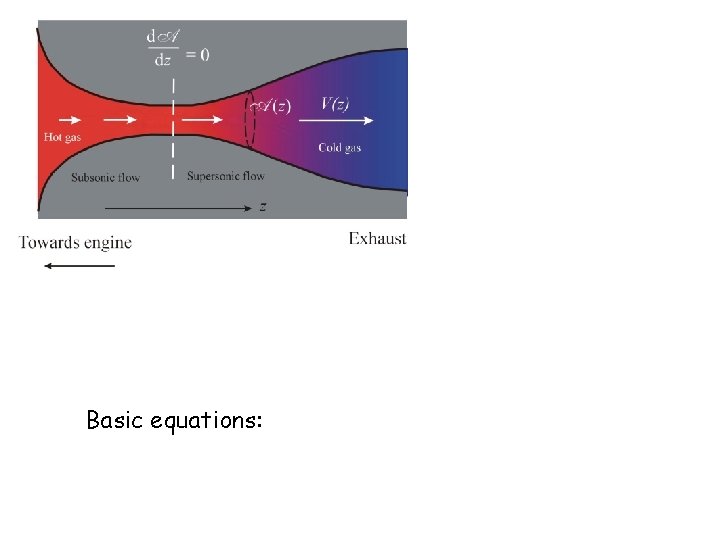
Basic equations:
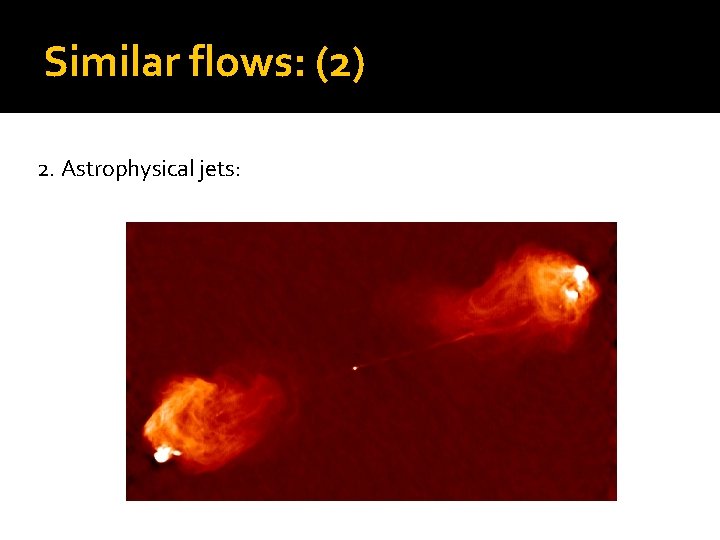
Similar flows: (2) 2. Astrophysical jets:
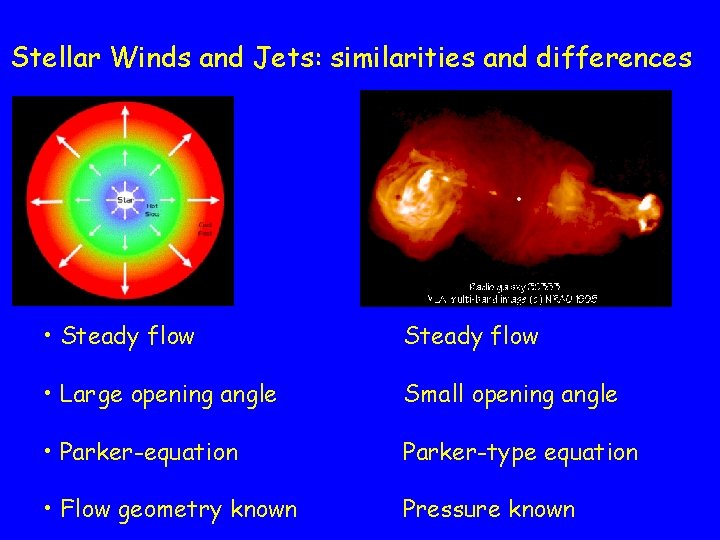
Stellar Winds and Jets: similarities and differences • Steady flow • Large opening angle Small opening angle • Parker-equation Parker-type equation • Flow geometry known Pressure known
- Slides: 56