
Prof Dominic Power Uppsala University dominic powerkultgeog uu
- Slides: 21
Prof. Dominic Power Uppsala University dominic. power@kultgeog. uu. se Technology – forces behind globalization Ekonomisk geografi
Next 3 lectures based on Dicken part 2 1. Technology – an inevitable force underpinning globalization? 2. TNCs – the firms that drive globalization and internationalization? 3. The state and governance –is politics and society reacting to globalization or in fact laying the groundwork for it?
CH. 3. Technological Change: ‘Gales of Creative Destruction’ • The evolutionary perspective on technological change and economic development • Distance shrinking technology • New products, new production processes • The geography of innovation
An evolutionary perspective? • Many people see technological change and economic development as tied together in an evolutionary relationship • Marx and the technological base • But we should not forget that evolution is always contingent and is far from inevitable • Technological development is far from isolated from the rest of the world (and thus we should be careful to give it causal primacy and think it is the base) – ‘War is the locomotive of history’ Trotsky – Necessity is the mother of invention
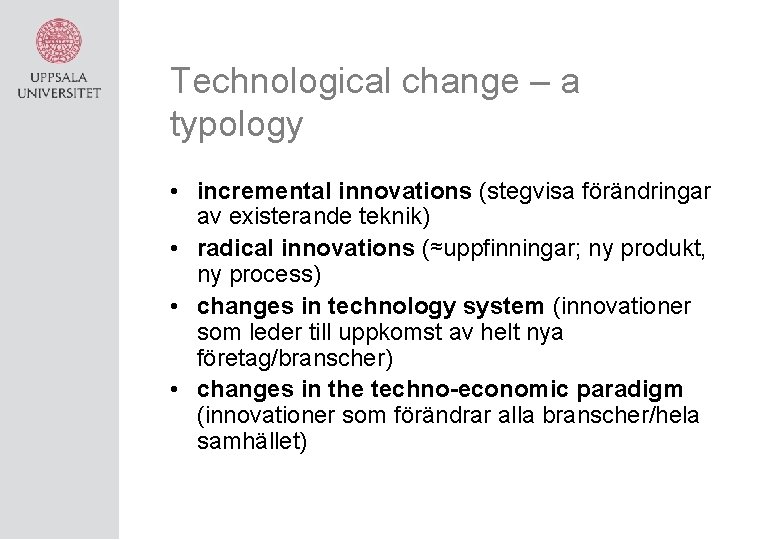
Technological change – a typology • incremental innovations (stegvisa förändringar av existerande teknik) • radical innovations (≈uppfinningar; ny produkt, ny process) • changes in technology system (innovationer som leder till uppkomst av helt nya företag/branscher) • changes in the techno-economic paradigm (innovationer som förändrar alla branscher/hela samhället)
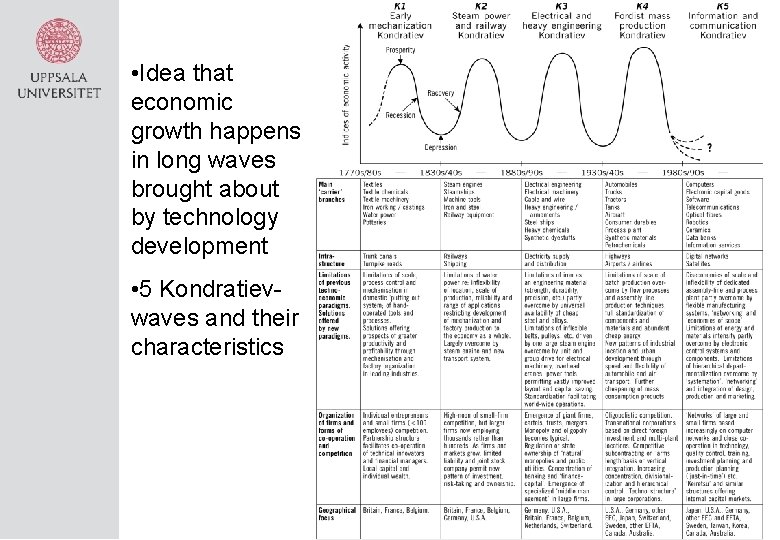
• Idea that economic growth happens in long waves brought about by technology development • 5 Kondratievwaves and their characteristics
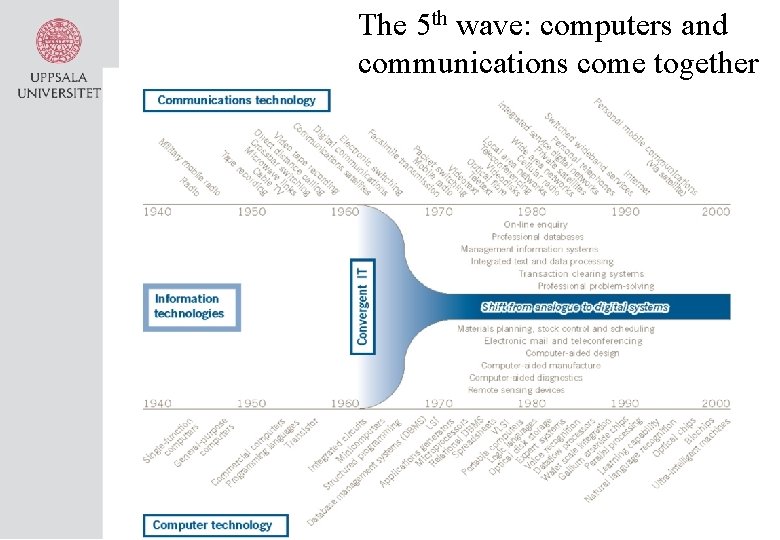
The 5 th wave: computers and communications come together
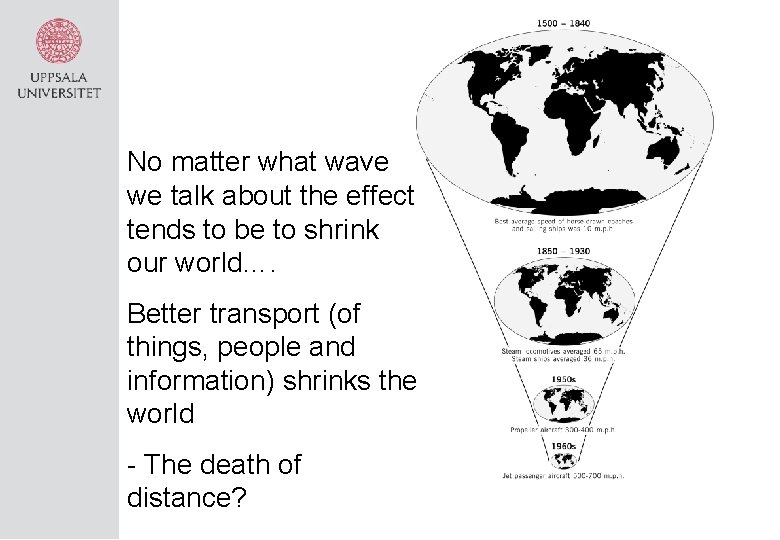
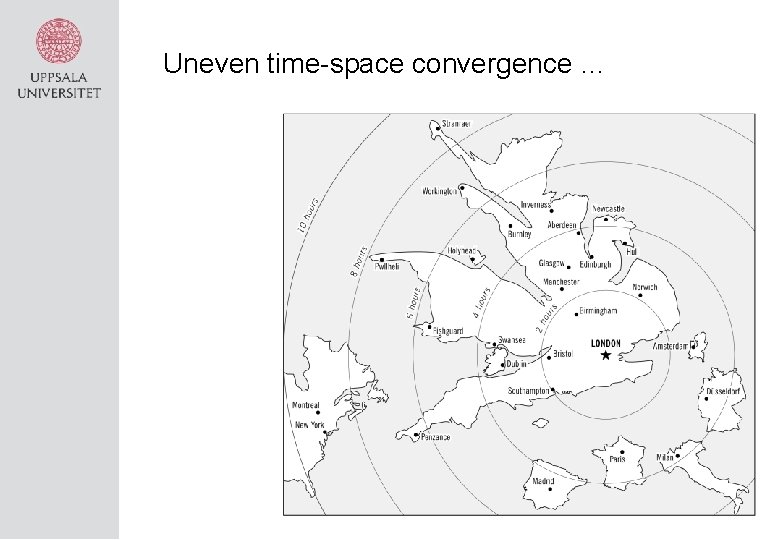
No matter what wave we talk about the effect tends to be to shrink our world…. Better transport (of things, people and information) shrinks the world - The death of distance?
Uneven time-space convergence …
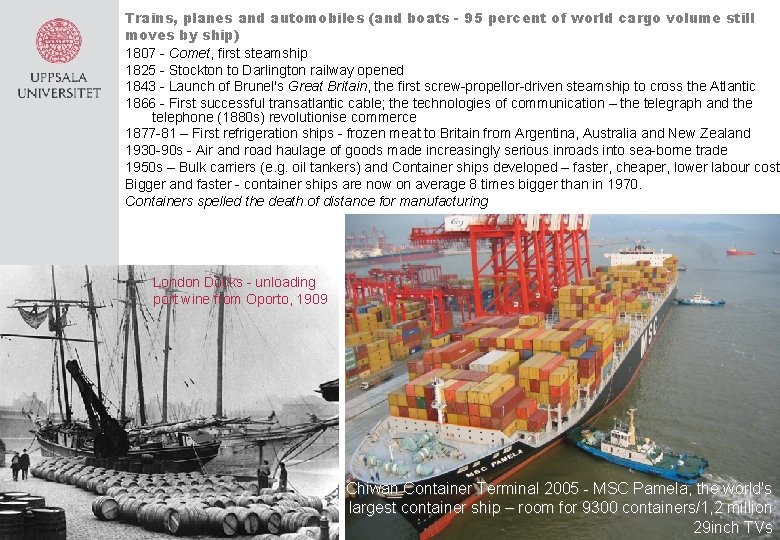
Trains, planes and automobiles (and boats - 95 percent of world cargo volume still moves by ship) 1807 - Comet, first steamship 1825 - Stockton to Darlington railway opened 1843 - Launch of Brunel's Great Britain, the first screw-propellor-driven steamship to cross the Atlantic 1866 - First successful transatlantic cable; the technologies of communication – the telegraph and the telephone (1880 s) revolutionise commerce 1877 -81 – First refrigeration ships - frozen meat to Britain from Argentina, Australia and New Zealand 1930 -90 s - Air and road haulage of goods made increasingly serious inroads into sea-borne trade 1950 s – Bulk carriers (e. g. oil tankers) and Container ships developed – faster, cheaper, lower labour costs Bigger and faster - container ships are now on average 8 times bigger than in 1970. Containers spelled the death of distance for manufacturing London Docks - unloading port wine from Oporto, 1909 Chiwan Container Terminal 2005 - MSC Pamela, the world's largest container ship – room for 9300 containers/1, 2 million 29 inch TVs
Some places are more connected than others • Even information is shipped along certain lines. . . Lines that make some people more in the know than others. . . Essential if your competitive advantage is knowledge and information • E. g. Finance markets. . .
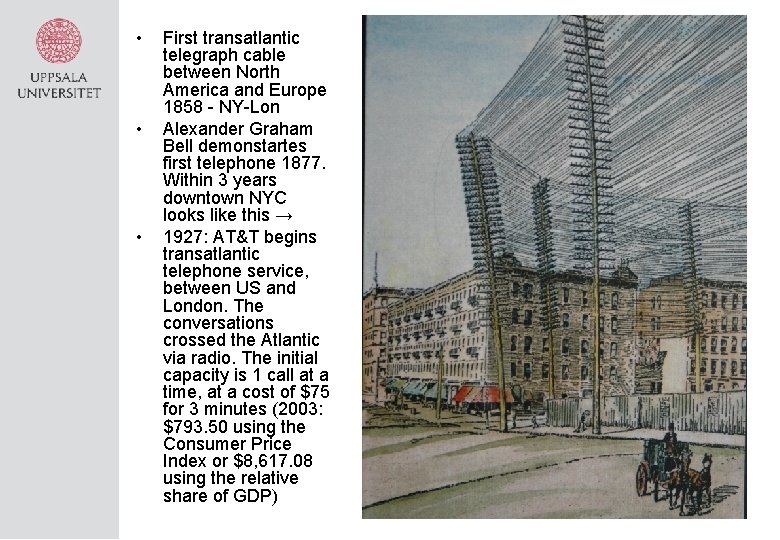
• • • First transatlantic telegraph cable between North America and Europe 1858 - NY-Lon Alexander Graham Bell demonstartes first telephone 1877. Within 3 years downtown NYC looks like this → 1927: AT&T begins transatlantic telephone service, between US and London. The conversations crossed the Atlantic via radio. The initial capacity is 1 call at a time, at a cost of $75 for 3 minutes (2003: $793. 50 using the Consumer Price Index or $8, 617. 08 using the relative share of GDP)
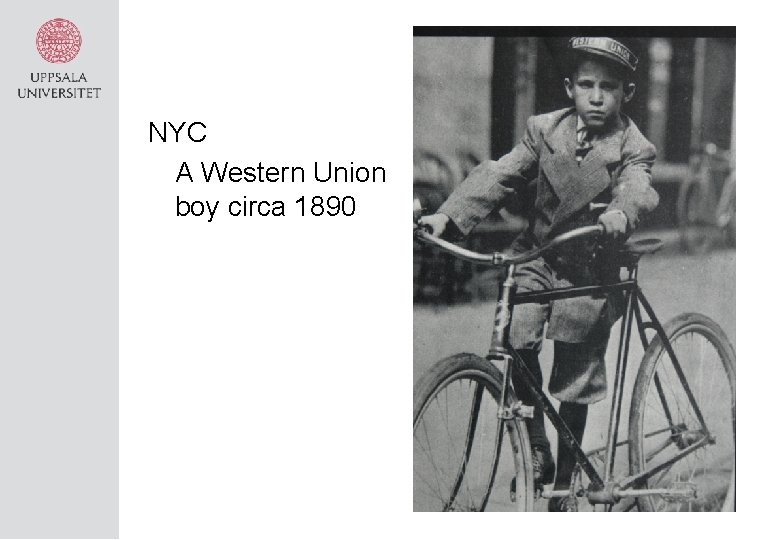
NYC A Western Union boy circa 1890
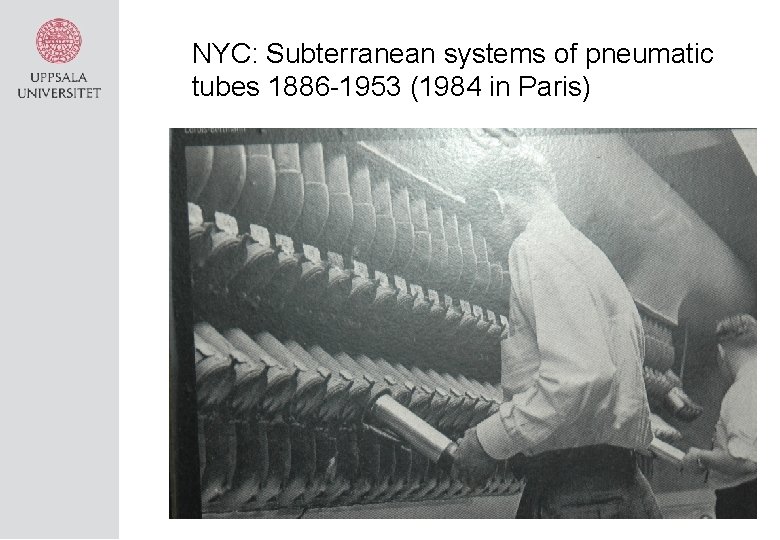
NYC: Subterranean systems of pneumatic tubes 1886 -1953 (1984 in Paris)
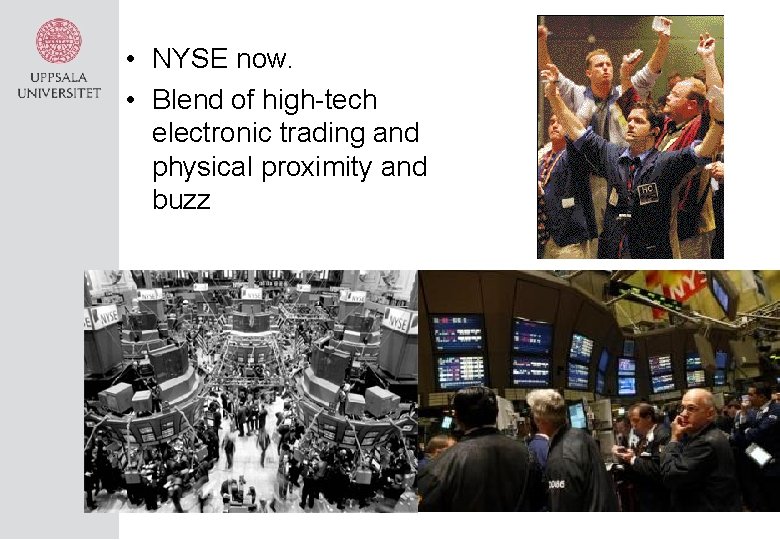
• NYSE now. • Blend of high-tech electronic trading and physical proximity and buzz
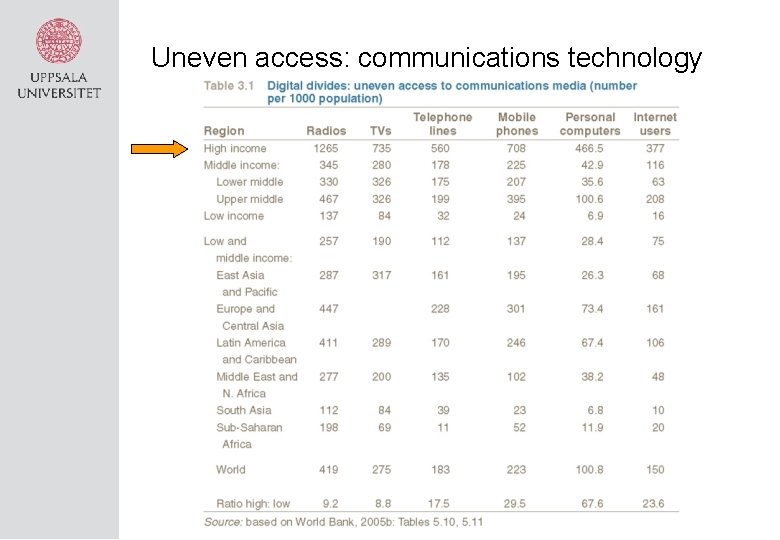
Uneven access: communications technology
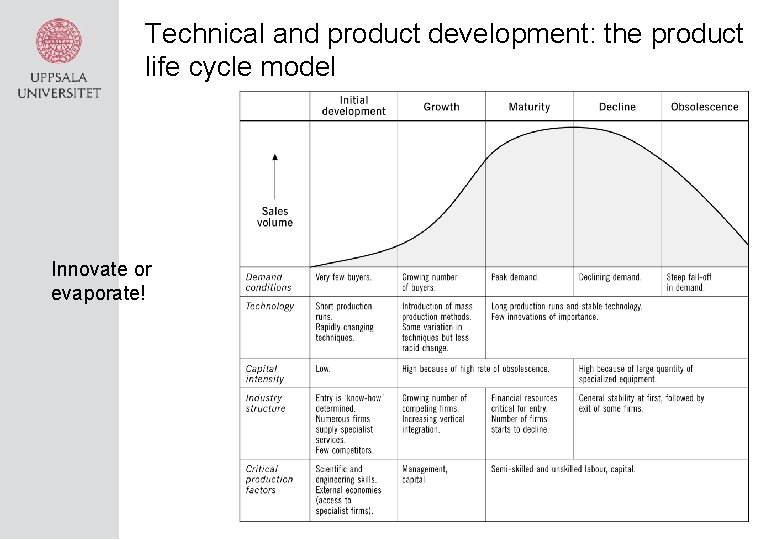
Technical and product development: the product life cycle model Innovate or evaporate!
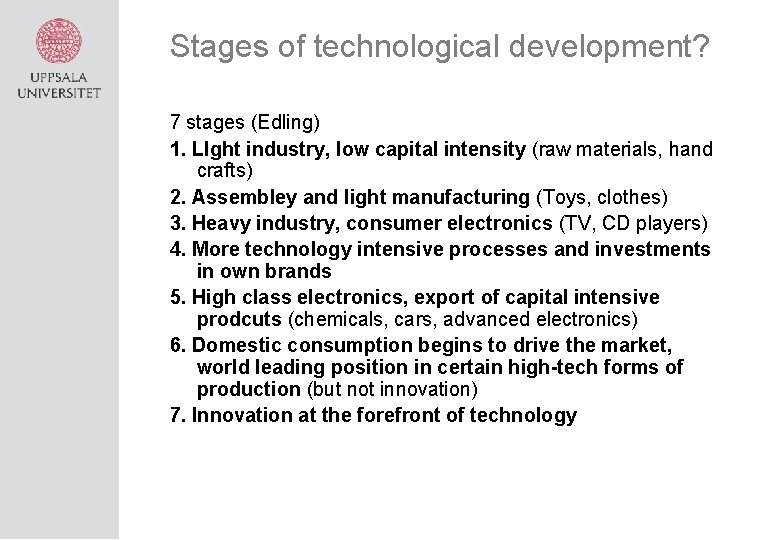
Stages of technological development? 7 stages (Edling) 1. LIght industry, low capital intensity (raw materials, hand crafts) 2. Assembley and light manufacturing (Toys, clothes) 3. Heavy industry, consumer electronics (TV, CD players) 4. More technology intensive processes and investments in own brands 5. High class electronics, export of capital intensive prodcuts (chemicals, cars, advanced electronics) 6. Domestic consumption begins to drive the market, world leading position in certain high-tech forms of production (but not innovation) 7. Innovation at the forefront of technology
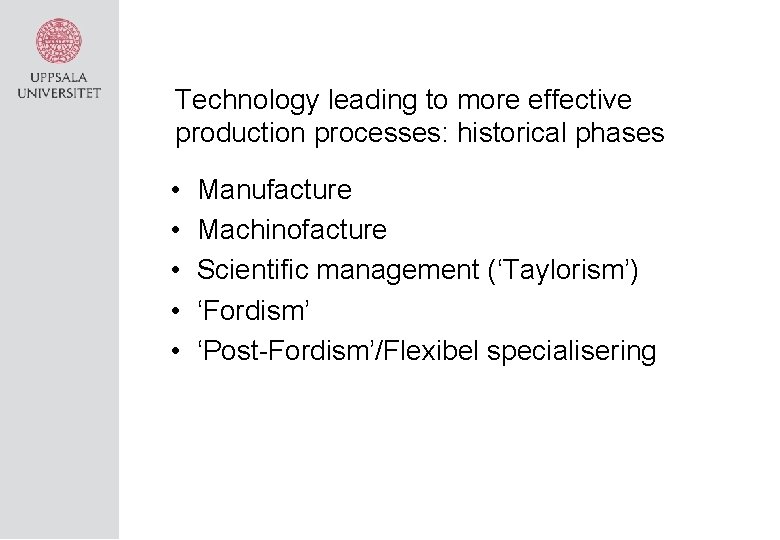
Technology leading to more effective production processes: historical phases • • • Manufacture Machinofacture Scientific management (‘Taylorism’) ‘Fordism’ ‘Post-Fordism’/Flexibel specialisering
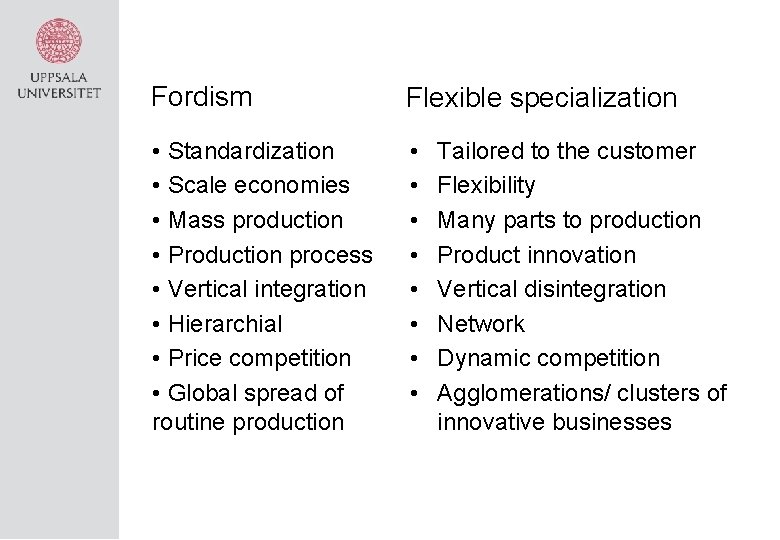
Fordism Flexible specialization • Standardization • Scale economies • Mass production • Production process • Vertical integration • Hierarchial • Price competition • Global spread of routine production • • Tailored to the customer Flexibility Many parts to production Product innovation Vertical disintegration Network Dynamic competition Agglomerations/ clusters of innovative businesses
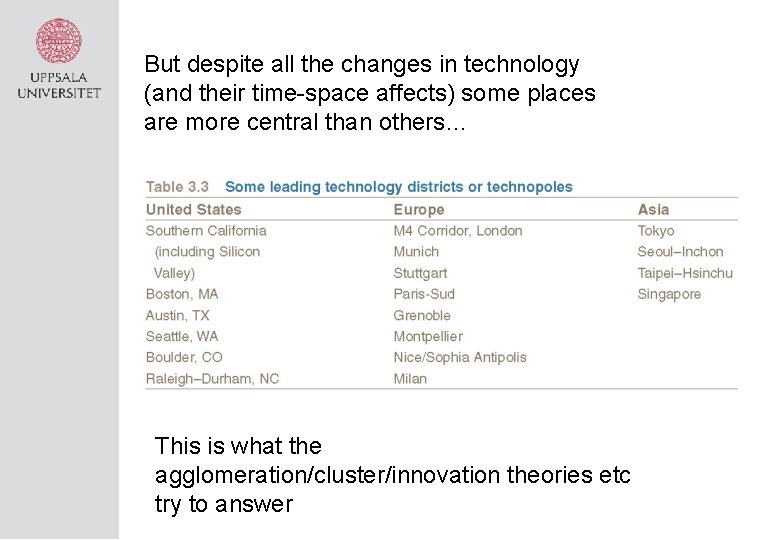
But despite all the changes in technology (and their time-space affects) some places are more central than others… This is what the agglomeration/cluster/innovation theories etc try to answer