
Prof David Baud MD Ph D Switzerland Uterine
Prof David Baud, MD Ph. D Switzerland Uterine artery embolization for PPH





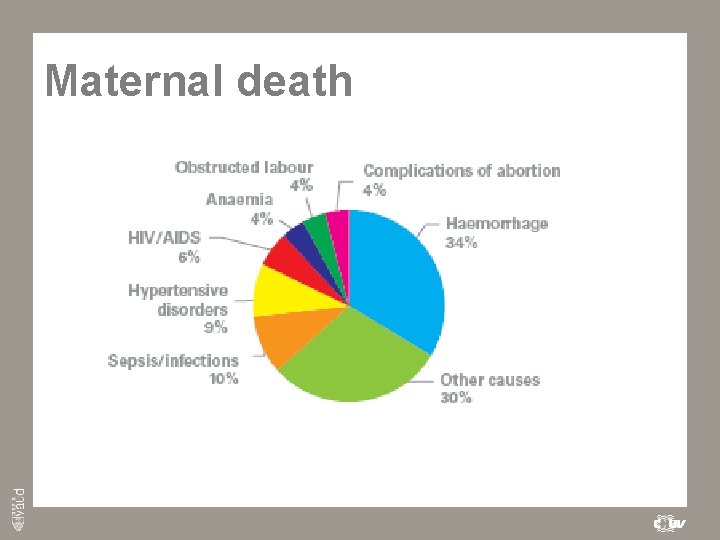
Maternal death
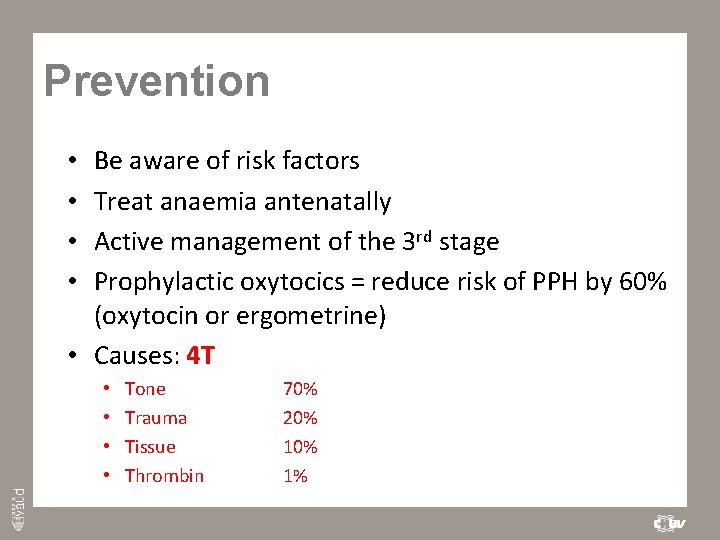
Prevention Be aware of risk factors Treat anaemia antenatally Active management of the 3 rd stage Prophylactic oxytocics = reduce risk of PPH by 60% (oxytocin or ergometrine) • Causes: 4 T • • Tone Trauma Tissue Thrombin 70% 20% 1%
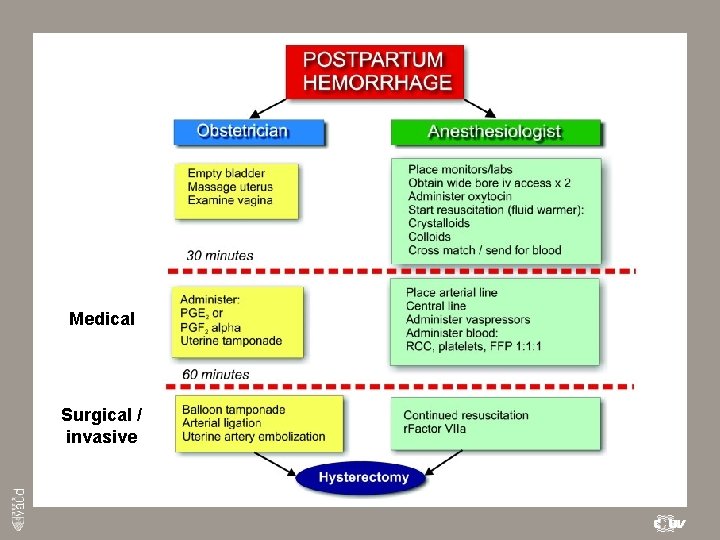
Medical Surgical / invasive
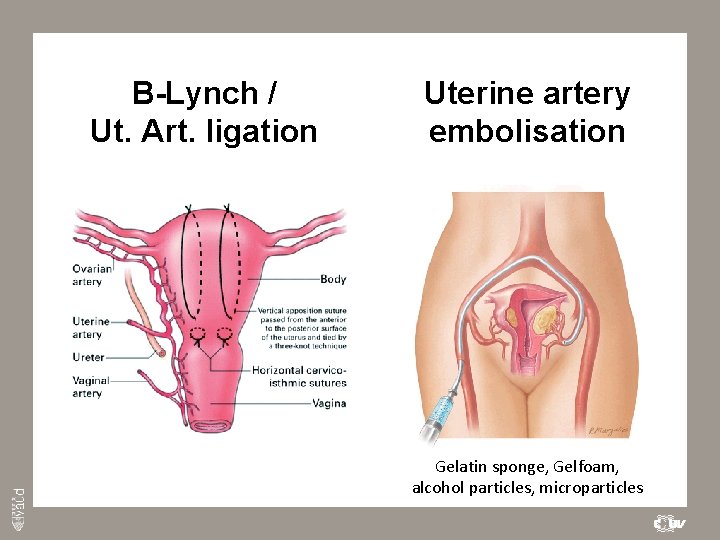
B-Lynch / Ut. Art. ligation Uterine artery embolisation Gelatin sponge, Gelfoam, alcohol particles, microparticles
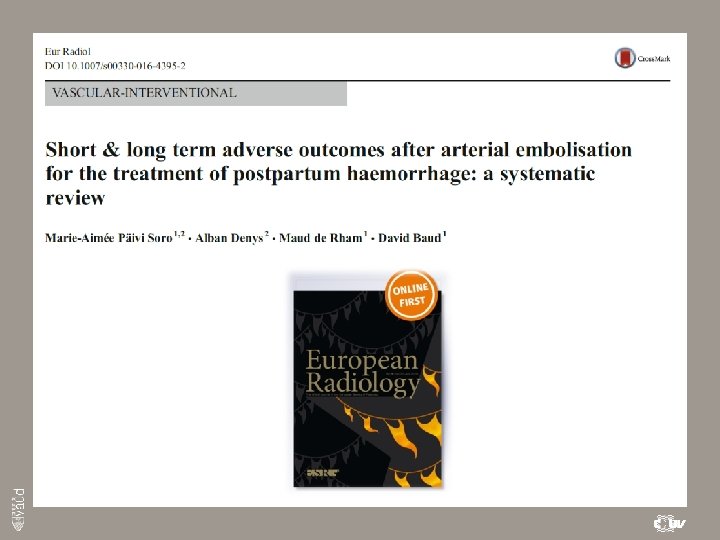
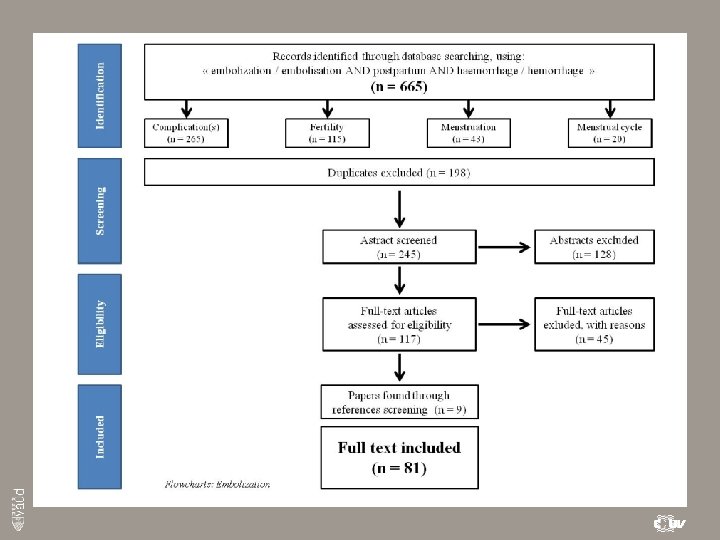
Short term complications after UAE for PPH
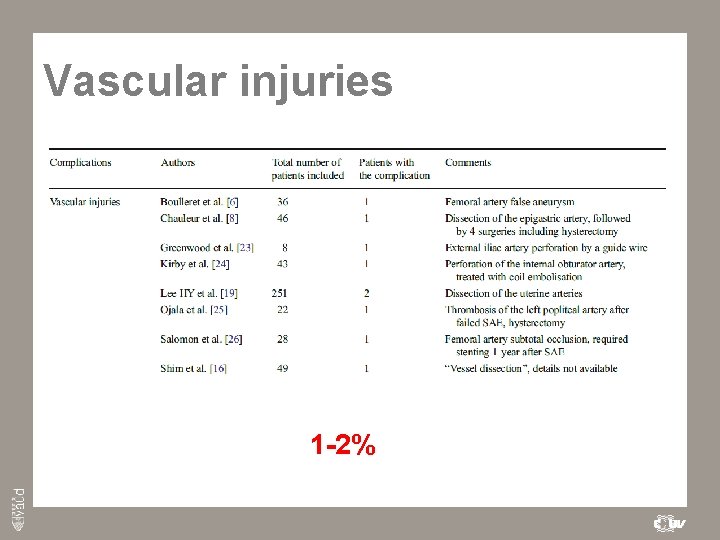
Vascular injuries 1 -2%
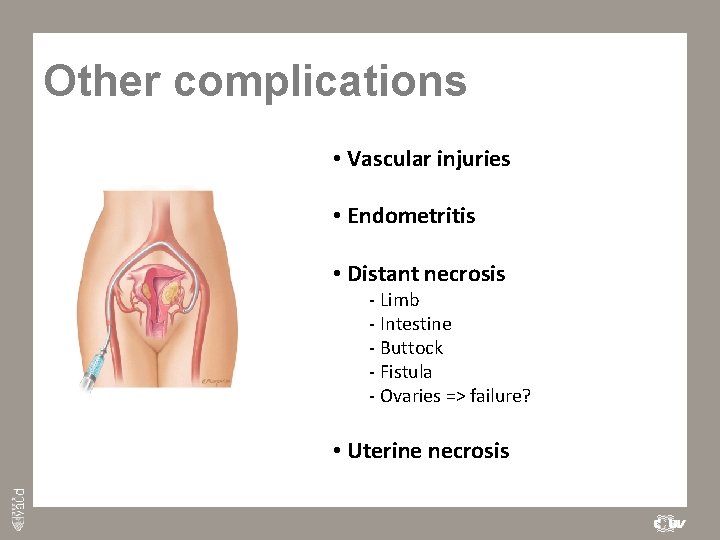
Other complications • Vascular injuries • Endometritis • Distant necrosis - Limb - Intestine - Buttock - Fistula - Ovaries => failure? • Uterine necrosis
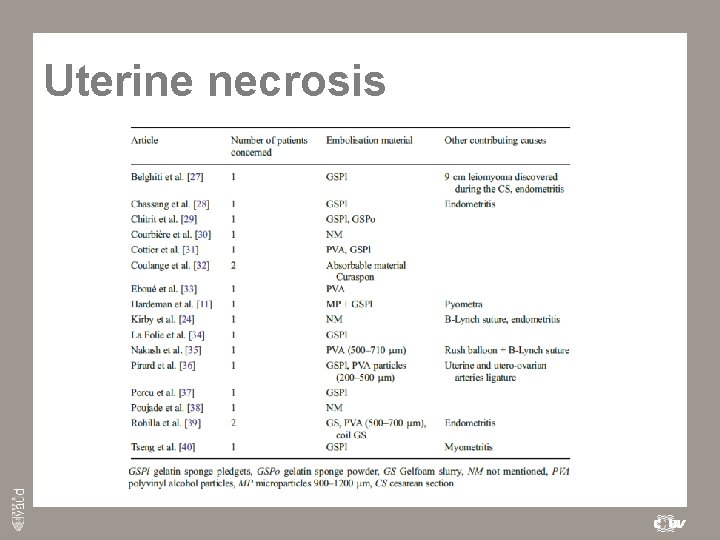
Uterine necrosis
Long term complications after UAE for PPH
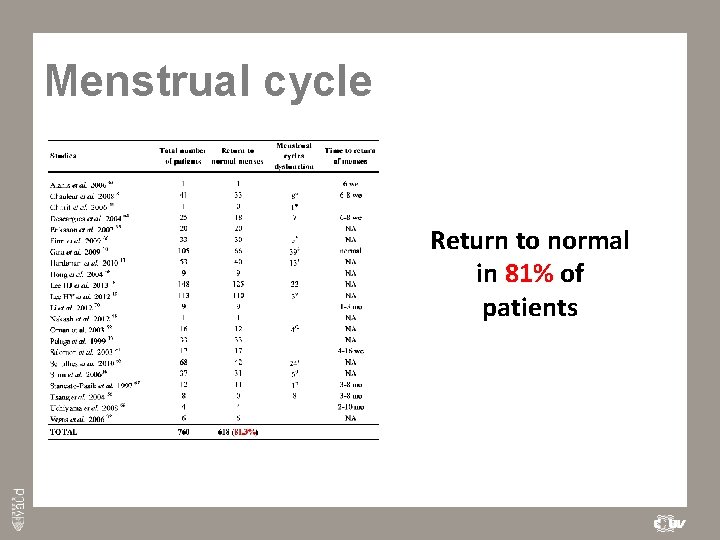
Menstrual cycle Return to normal in 81% of patients
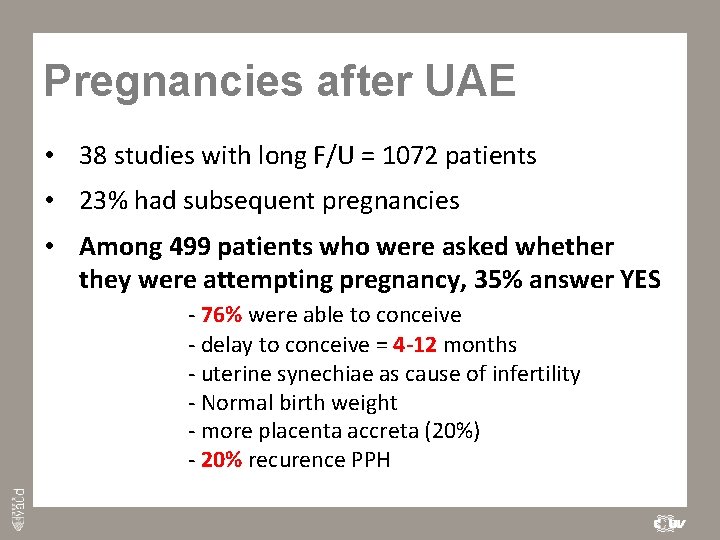
Pregnancies after UAE • 38 studies with long F/U = 1072 patients • 23% had subsequent pregnancies • Among 499 patients who were asked whether they were attempting pregnancy, 35% answer YES - 76% were able to conceive - delay to conceive = 4 -12 months - uterine synechiae as cause of infertility - Normal birth weight - more placenta accreta (20%) - 20% recurence PPH
Our own study
Method • Retrospective study • All patients treated with embolization for PPH • 2003 – 2013 • Outcomes: – – Gynaecological symptoms Future fertility Obstetrical outcomes Psychological impact
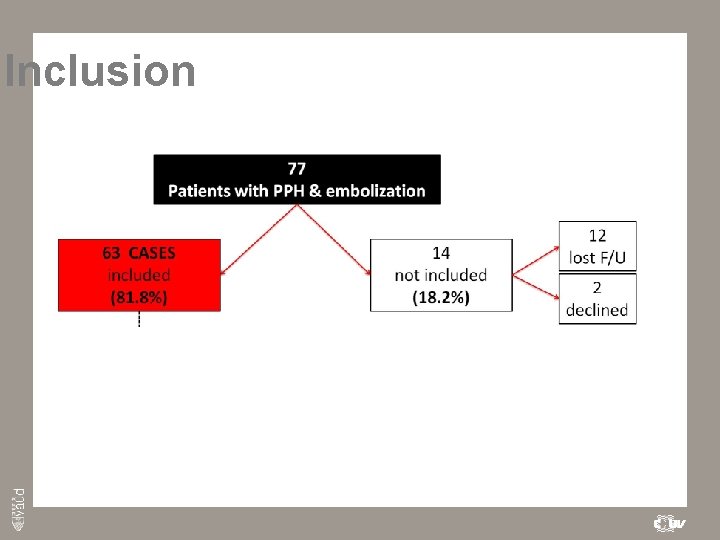
Inclusion
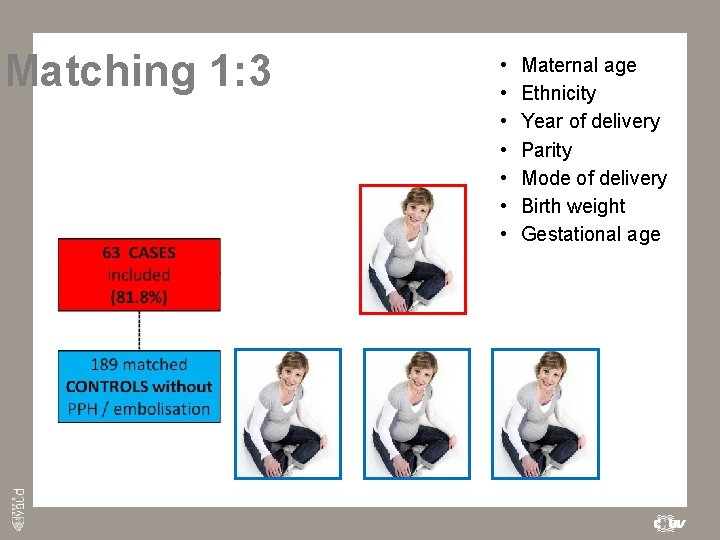
Matching 1: 3 • • Maternal age Ethnicity Year of delivery Parity Mode of delivery Birth weight Gestational age
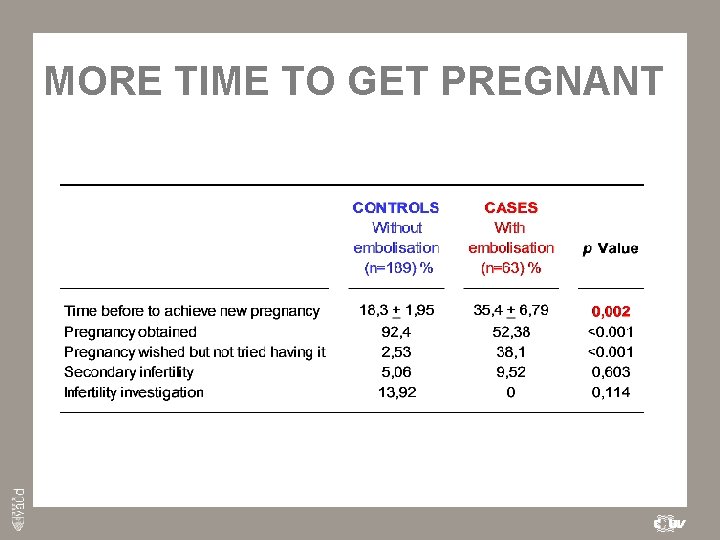
MORE TIME TO GET PREGNANT
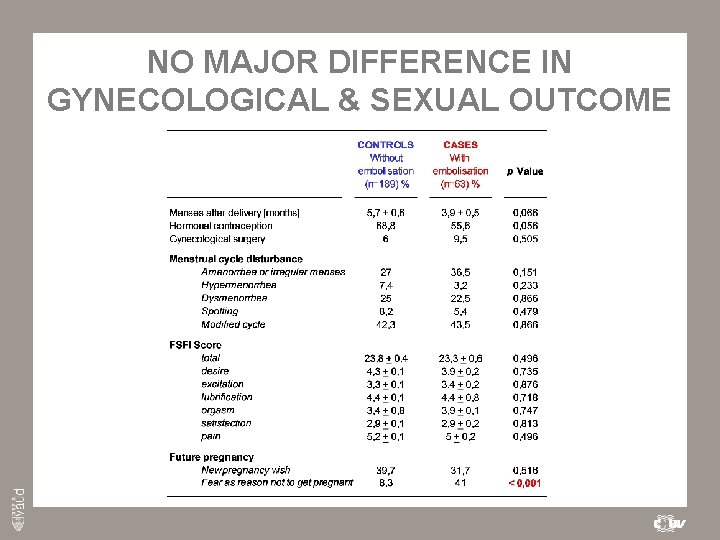
NO MAJOR DIFFERENCE IN GYNECOLOGICAL & SEXUAL OUTCOME
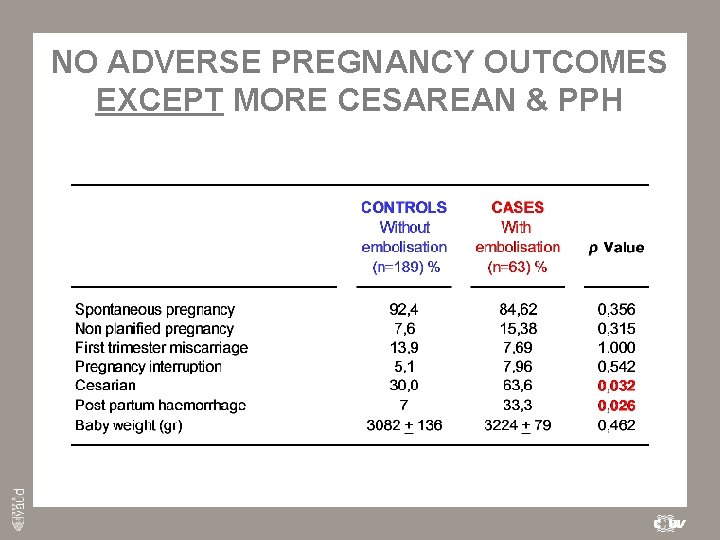
NO ADVERSE PREGNANCY OUTCOMES EXCEPT MORE CESAREAN & PPH
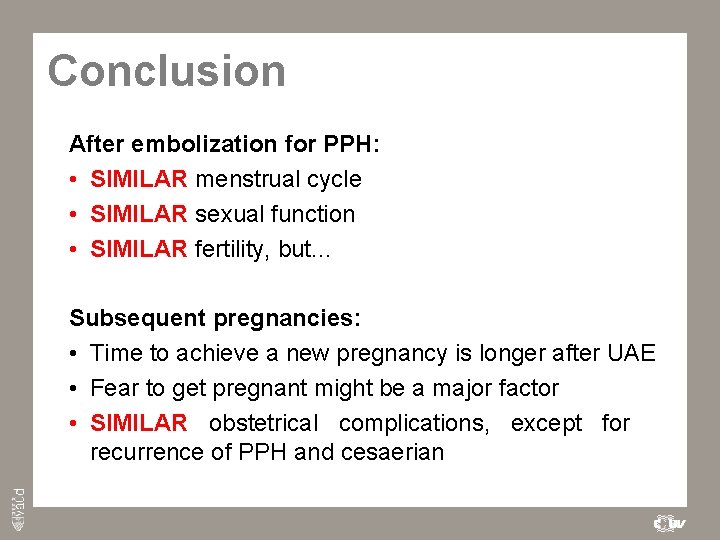
Conclusion After embolization for PPH: • SIMILAR menstrual cycle • SIMILAR sexual function • SIMILAR fertility, but. . . Subsequent pregnancies: • Time to achieve a new pregnancy is longer after UAE • Fear to get pregnant might be a major factor • SIMILAR obstetrical complications, except for recurrence of PPH and cesaerian
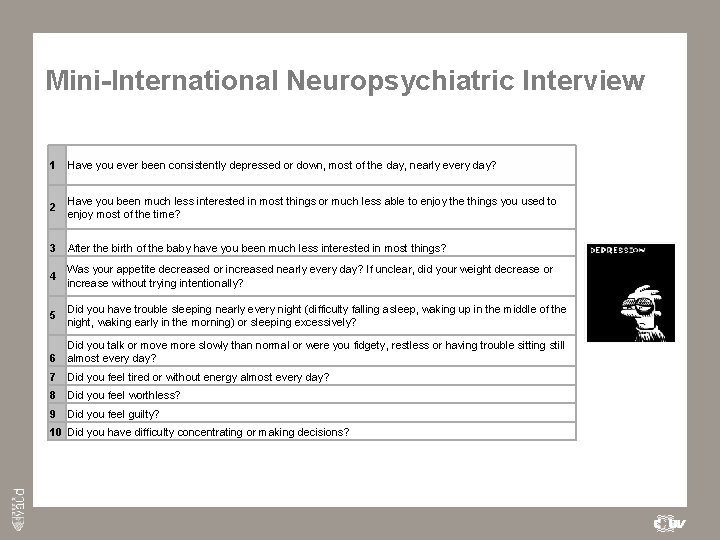
Mini-International Neuropsychiatric Interview 1 Have you ever been consistently depressed or down, most of the day, nearly every day? 2 Have you been much less interested in most things or much less able to enjoy the things you used to enjoy most of the time? 3 After the birth of the baby have you been much less interested in most things? 4 Was your appetite decreased or increased nearly every day? If unclear, did your weight decrease or increase without trying intentionally? 5 Did you have trouble sleeping nearly every night (difficulty falling asleep, waking up in the middle of the night, waking early in the morning) or sleeping excessively? 6 Did you talk or move more slowly than normal or were you fidgety, restless or having trouble sitting still almost every day? 7 Did you feel tired or without energy almost every day? 8 Did you feel worthless? 9 Did you feel guilty? 10 Did you have difficulty concentrating or making decisions?
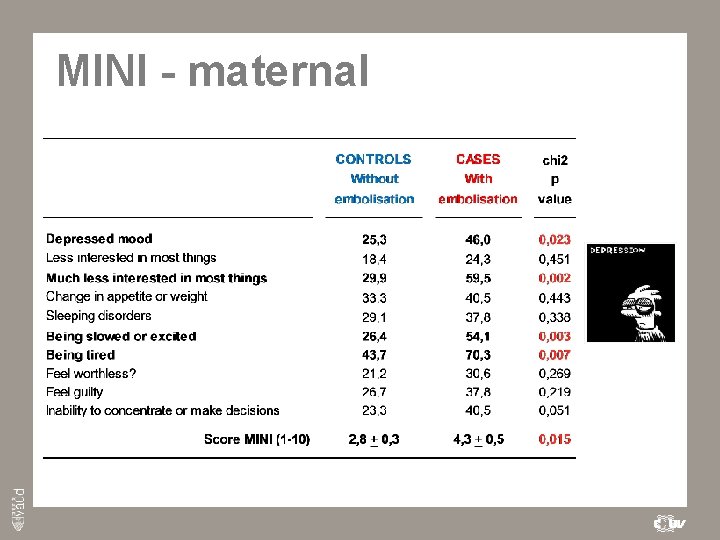
MINI - maternal
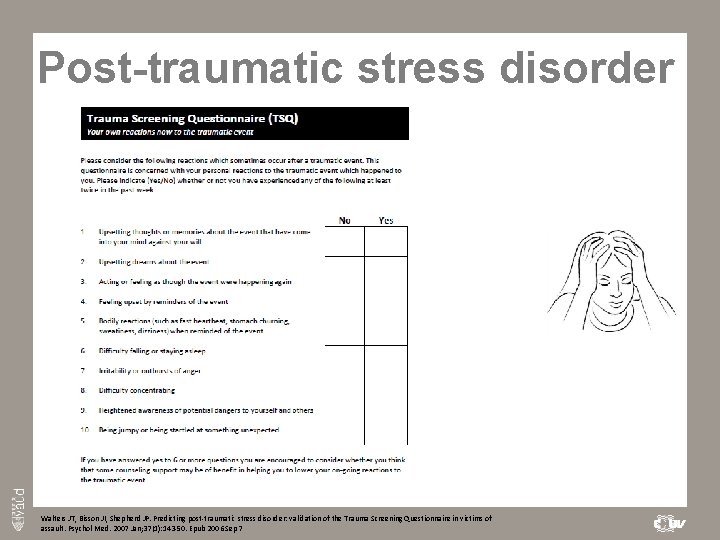
Post-traumatic stress disorder Walters JT, Bisson JI, Shepherd JP. Predicting post-traumatic stress disorder: validation of the Trauma Screening Questionnaire in victims of assault. Psychol Med. 2007 Jan; 37(1): 143 -50. Epub 2006 Sep 7
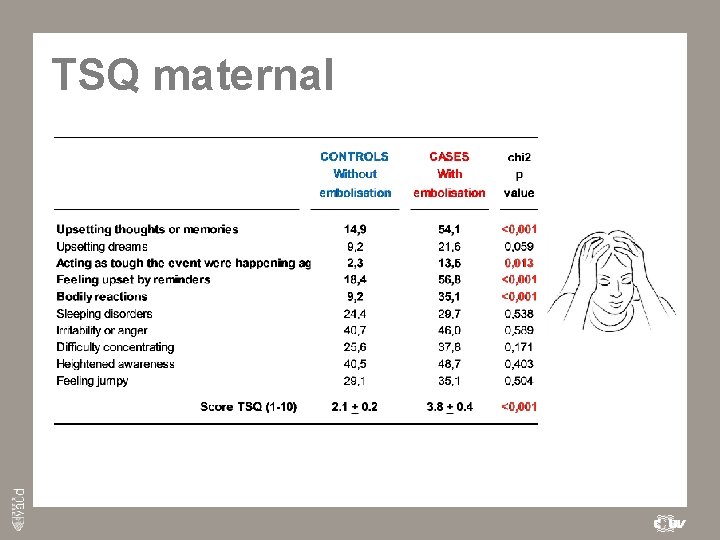
TSQ maternal
TSQ Paternal ? ?
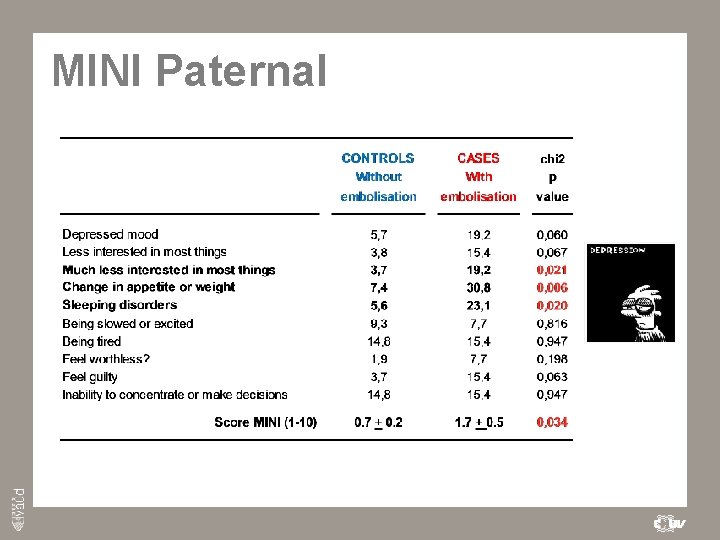
MINI Paternal
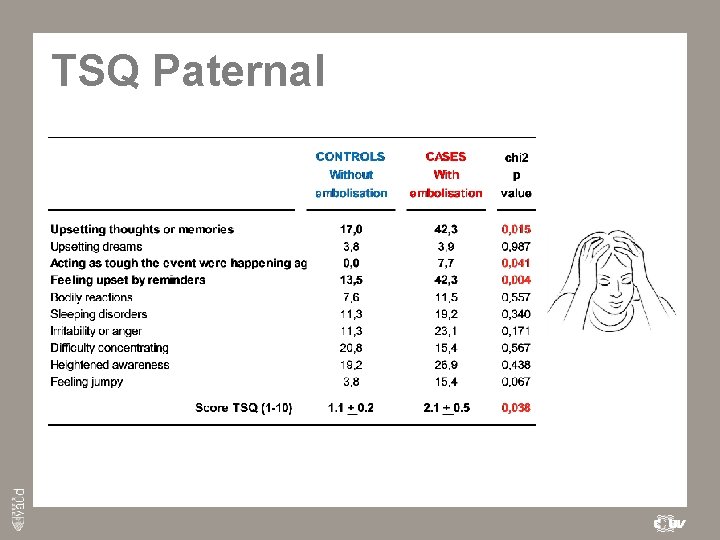
TSQ Paternal
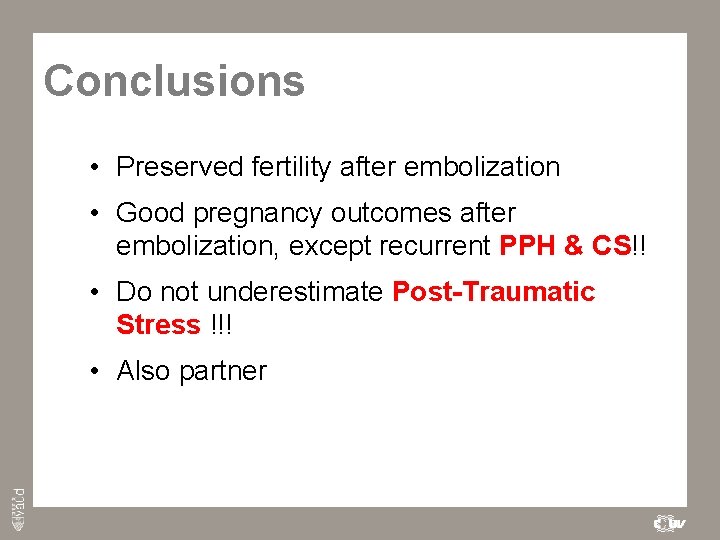
Conclusions • Preserved fertility after embolization • Good pregnancy outcomes after embolization, except recurrent PPH & CS!! • Do not underestimate Post-Traumatic Stress !!! • Also partner

THANKS Francoise Damnon Karine Lepigeon Dominique Bertaud Mathilde Morisod Maude Bernasconi
- Slides: 37