
Prof Coe How can teachers learn to be
@Prof. Coe How can teachers learn to be better teachers? Robert Coe, Durham University Telegraph Festival of Education, Wellington College, June 2017
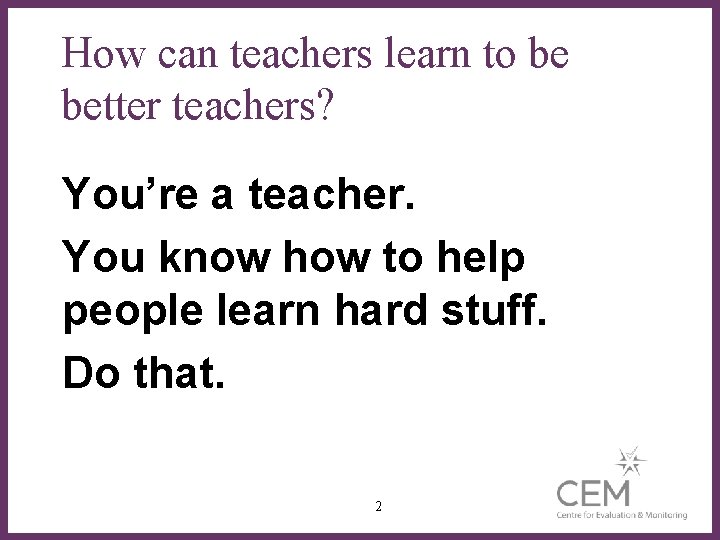
How can teachers learn to be better teachers? You’re a teacher. You know how∂ to help people learn hard stuff. Do that. 2

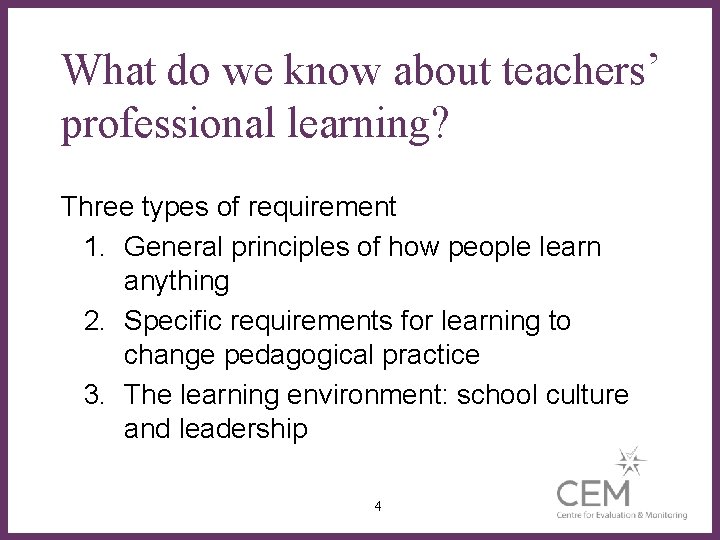
What do we know about teachers’ professional learning? Three types of requirement 1. General principles of how people learn ∂ anything 2. Specific requirements for learning to change pedagogical practice 3. The learning environment: school culture and leadership 4
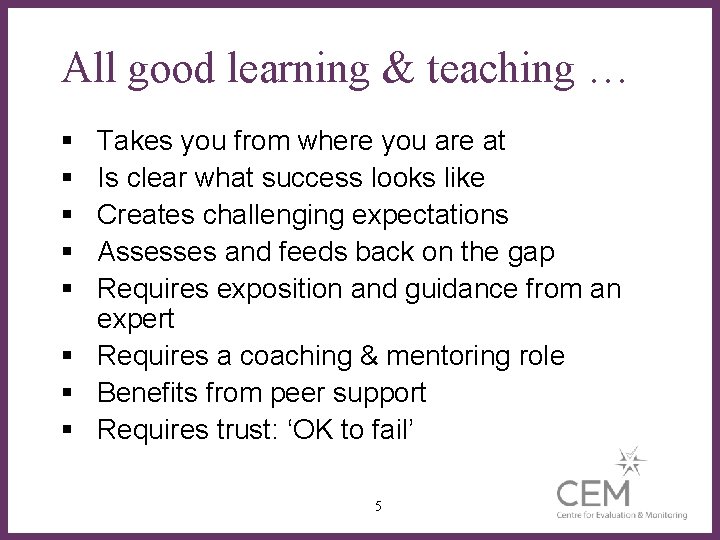
All good learning & teaching … § § § Takes you from where you are at Is clear what success looks like Creates challenging expectations Assesses and feeds back on the gap ∂ Requires exposition and guidance from an expert § Requires a coaching & mentoring role § Benefits from peer support § Requires trust: ‘OK to fail’ 5
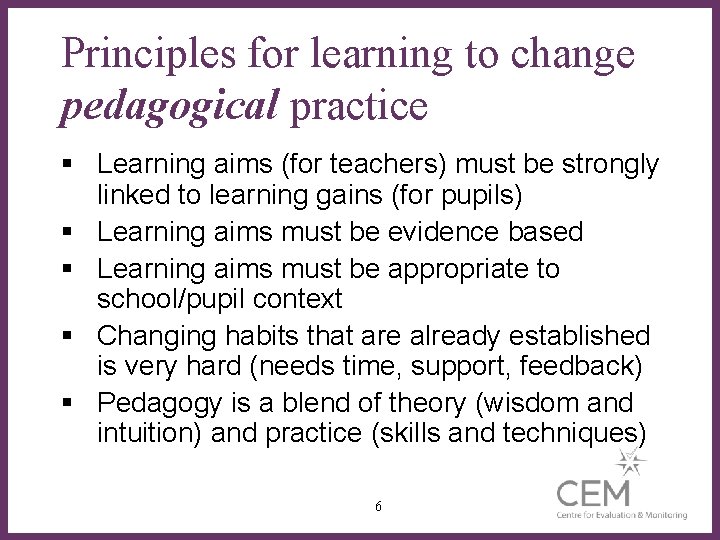
Principles for learning to change pedagogical practice § Learning aims (for teachers) must be strongly linked to learning gains (for pupils) § Learning aims must be evidence based § Learning aims must be ∂ appropriate to school/pupil context § Changing habits that are already established is very hard (needs time, support, feedback) § Pedagogy is a blend of theory (wisdom and intuition) and practice (skills and techniques) 6
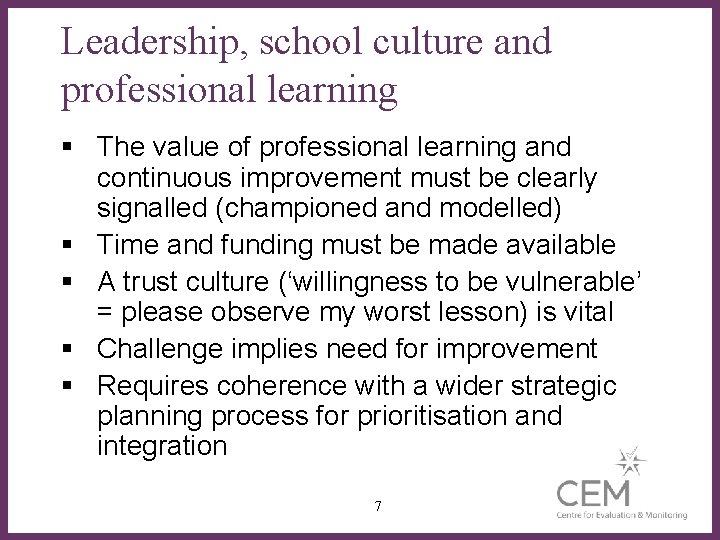
Leadership, school culture and professional learning § The value of professional learning and continuous improvement must be clearly signalled (championed and modelled) § Time and funding must be made available ∂ § A trust culture (‘willingness to be vulnerable’ = please observe my worst lesson) is vital § Challenge implies need for improvement § Requires coherence with a wider strategic planning process for prioritisation and integration 7
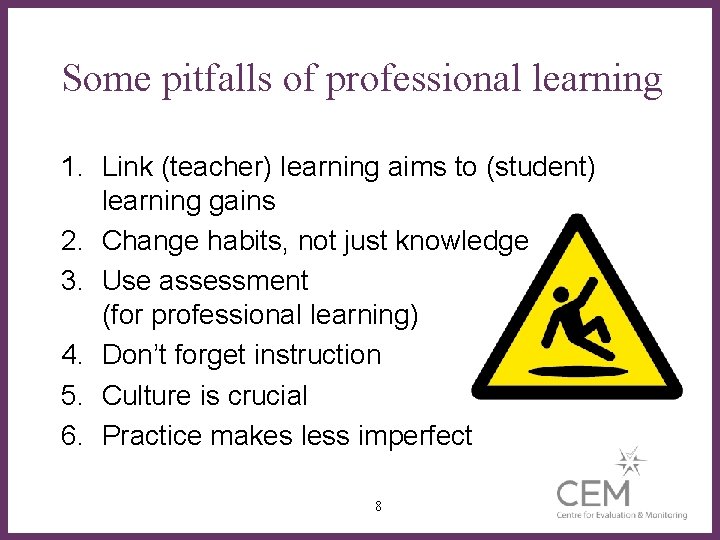
Some pitfalls of professional learning 1. Link (teacher) learning aims to (student) learning gains 2. Change habits, not just knowledge ∂ 3. Use assessment (for professional learning) 4. Don’t forget instruction 5. Culture is crucial 6. Practice makes less imperfect 8
Some pitfalls of professional learning: 1. Link (teacher) learning aims to (student) learning gains
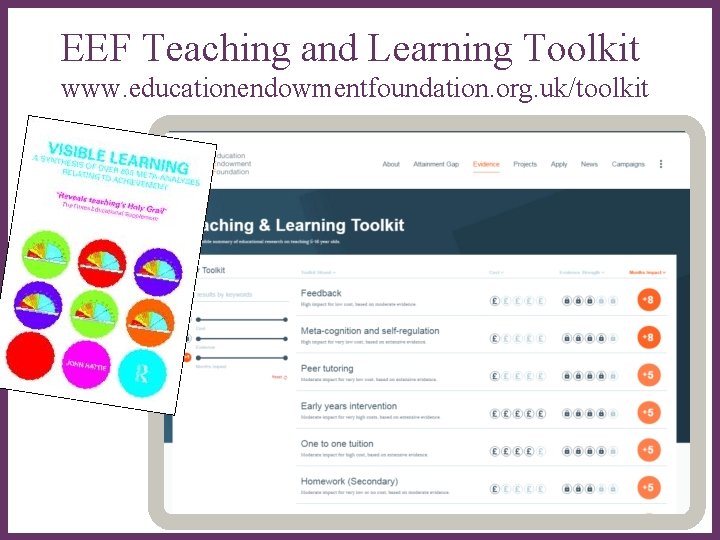
EEF Teaching and Learning Toolkit www. educationendowmentfoundation. org. uk/toolkit ∂ 10
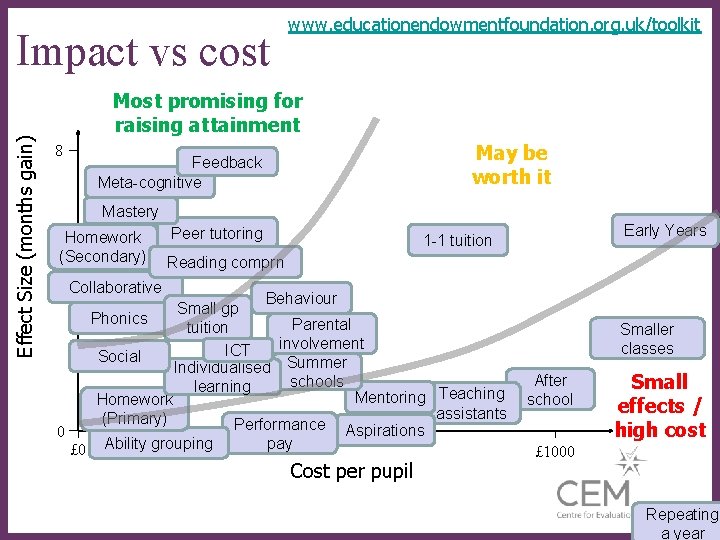
Effect Size (months gain) Impact vs cost www. educationendowmentfoundation. org. uk/toolkit Most promising for raising attainment 8 May be worth it Feedback Meta-cognitive Mastery Homework (Secondary) Collaborative Peer tutoring Reading comprn Early Years 1 -1 tuition ∂ Behaviour Small gp Phonics Parental tuition involvement ICT Social Individualised Summer schools learning Mentoring Teaching Homework assistants (Primary) Performance Aspirations 0 Ability grouping pay £ 0 Cost per pupil Smaller classes After school Small effects / high cost £ 1000 Repeating a year
1. We do that already (don’t we? ) § § § § § Reviewing previous learning Setting high expectations Using higher-order questions Giving feedback to learners ∂ Having deep subject knowledge Understanding student misconceptions Managing time and resources Building relationships of trust and challenge Dealing with disruption 13
2. Do we always do that? § § § § Challenging students to identify the reason why an activity is taking place in the lesson Asking a large number of questions and checking the responses of all students Raising different types of questions (i. e. , process and product) at appropriate ∂ difficulty level Giving time for students to respond to questions Spacing-out study or practice on a given topic, with gaps in between forgetting Making students take tests or generate answers, even before they have been taught the material Engaging students in weekly and monthly review 14
3. We don’t do that (hopefully) § § § § Use praise lavishly Allow learners to discover key ideas for themselves Group learners by ability Encourage re-reading and highlighting to memorise ∂ key ideas Address issues of confidence and low aspirations before you try to teach content Present information to learners in their preferred learning style Ensure learners are always active, rather than listening passively, if you want them to remember 15
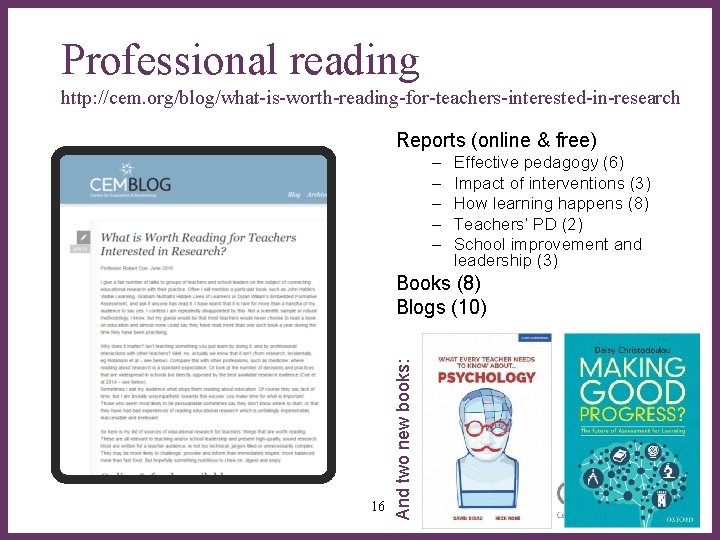
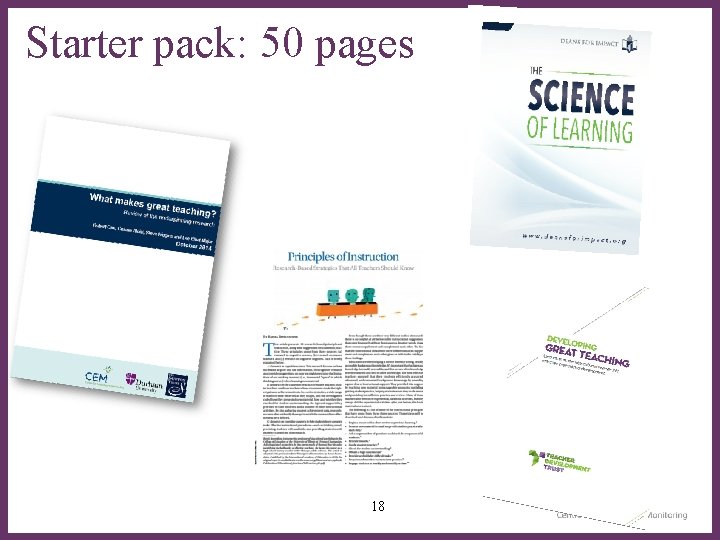
Professional reading http: //cem. org/blog/what-is-worth-reading-for-teachers-interested-in-research Reports (online & free) – – – ∂ Effective pedagogy (6) Impact of interventions (3) How learning happens (8) Teachers’ PD (2) School improvement and leadership (3) 16 And two new books: Books (8) Blogs (10)
Further reading lists § Tom Sherrington (@Teacherhead) – https: //teacherhead. com/2017/06/03/teaching-and-learningresearch-summaries-a-collection-for-easy-access/ § Harry Fletcher-Wood (@HFletcher. Wood) – https: //improvingteaching. co. uk/2017/06/04/a-reading-list∂ learning-teaching-professional-development/ § Nick Rose (@Nick_J_Rose) – https: //www. tes. com/news/tes-magazine/arethese-7 -pillars-classroom-practice? amp § Paul Kirschner (@P_A_Kirschner) – https: //3 starlearningexperiences. wordpress. com/2017/02/28/ seminal-papers-in-educational-psychology/ 17
Starter pack: 50 pages ∂ 18
Some pitfalls of professional learning: 2. Change habits, not just knowledge
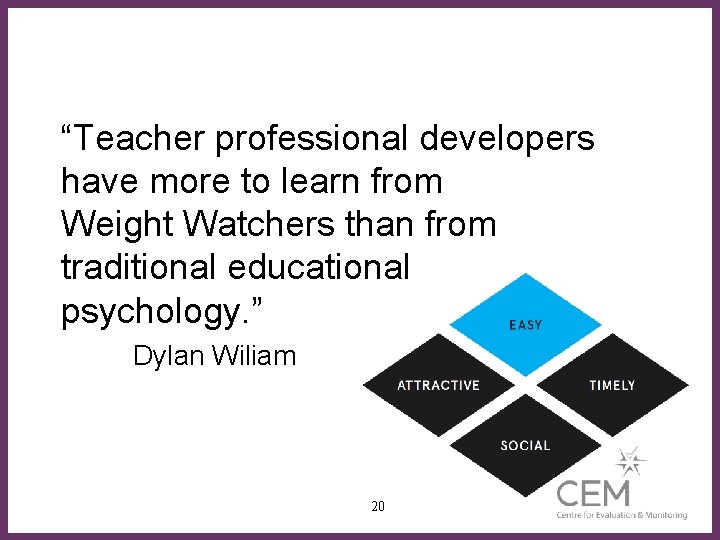
“Teacher professional developers have more to learn from Weight Watchers than from ∂ traditional educational psychology. ” Dylan Wiliam 20
Some pitfalls of professional learning: 3. Use assessment (for professional learning)
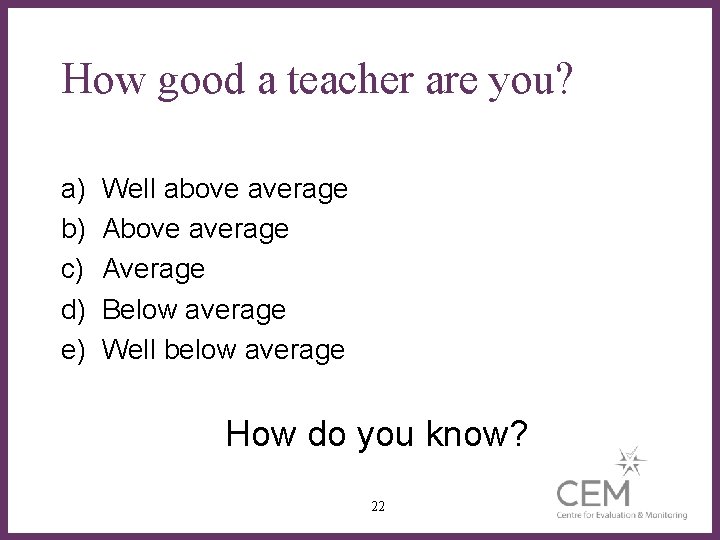
How good a teacher are you? a) b) c) d) e) Well above average Average ∂ Below average Well below average How do you know? 22
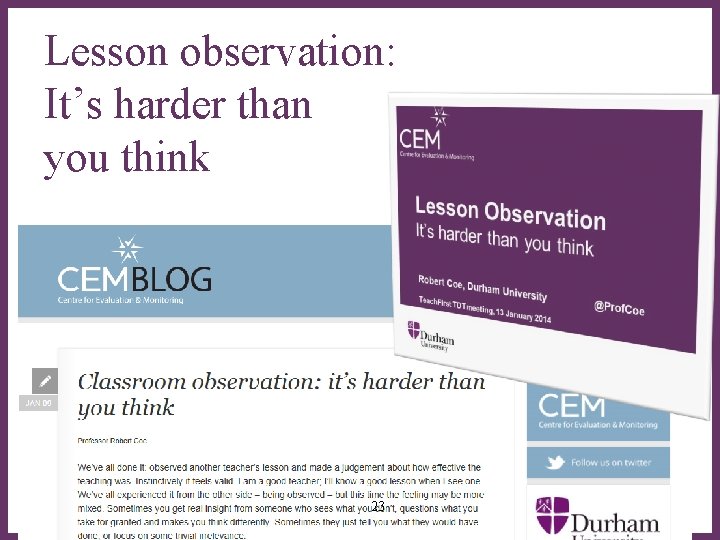
Lesson observation: It’s harder than you think ∂ 23
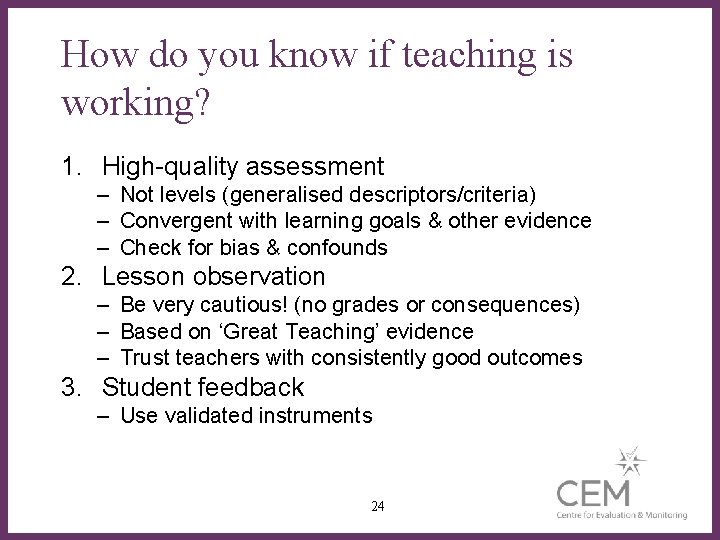
How do you know if teaching is working? 1. High-quality assessment – Not levels (generalised descriptors/criteria) – Convergent with learning goals & other evidence – Check for bias & confounds 2. Lesson observation ∂ – Be very cautious! (no grades or consequences) – Based on ‘Great Teaching’ evidence – Trust teachers with consistently good outcomes 3. Student feedback – Use validated instruments 24
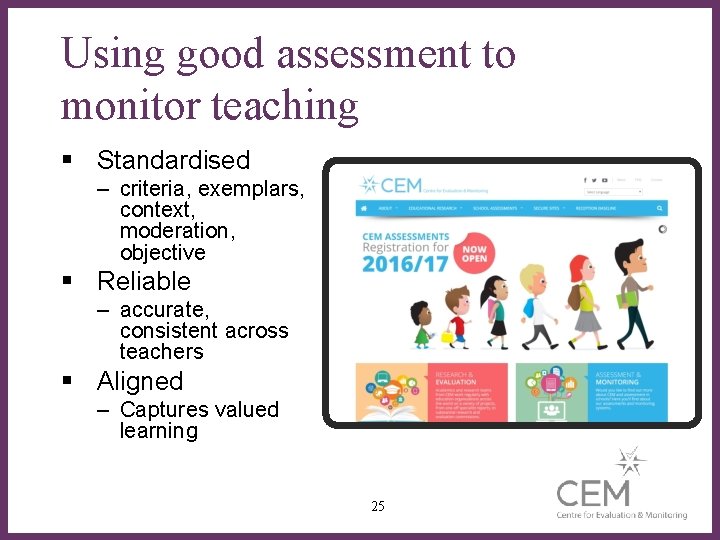
Using good assessment to monitor teaching § Standardised – criteria, exemplars, context, moderation, objective § Reliable ∂ – accurate, consistent across teachers § Aligned – Captures valued learning 25
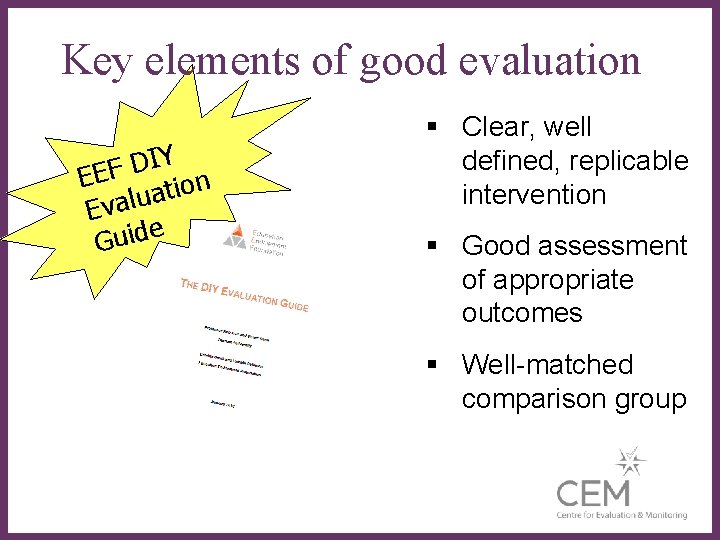
Key elements of good evaluation Y I D EEF n o i t a u Eval e d i u G § Clear, well defined, replicable intervention ∂ § Good assessment of appropriate outcomes § Well-matched comparison group
Some pitfalls of professional learning: 4. Don’t forget instruction
If you want your students to learn something hard, would you a) Get them into groups to work it out for themselves ∂ b) Provide explicit instruction in the ideas/techniques and actively manage their learning (as an expert in both the subject matter and in pedagogy) 28
All good learning & teaching … 1. 2. 3. 4. 5. Takes you from where you are at Is clear what success looks like Creates challenging expectations Assesses and feeds back on the gap ∂ Requires exposition and guidance from an expert 6. Requires a coaching & mentoring role 7. Benefits from peer support 8. Requires trust: ‘OK to fail’ 29
Some pitfalls of professional learning: 5. Culture is crucial
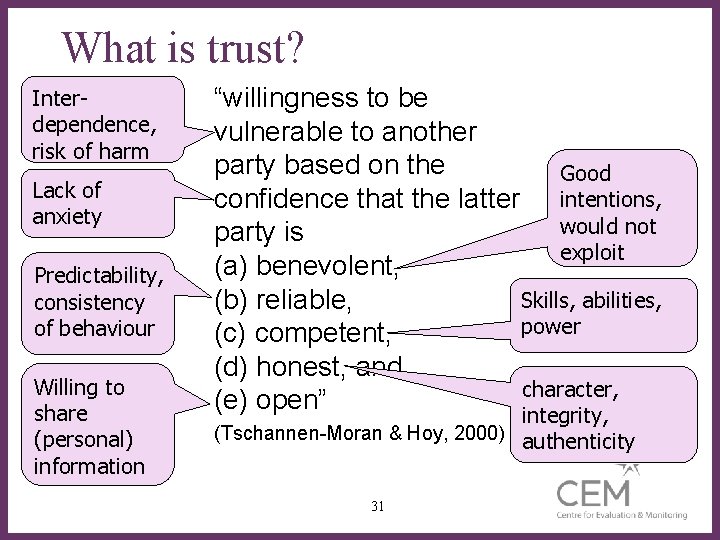
What is trust? Interdependence, risk of harm Lack of anxiety Predictability, consistency of behaviour Willing to share (personal) information “willingness to be vulnerable to another party based on the Good confidence that the latter intentions, would not party is exploit (a) benevolent, ∂ Skills, abilities, (b) reliable, power (c) competent, (d) honest, and character, (e) open” integrity, (Tschannen-Moran & Hoy, 2000) authenticity 31
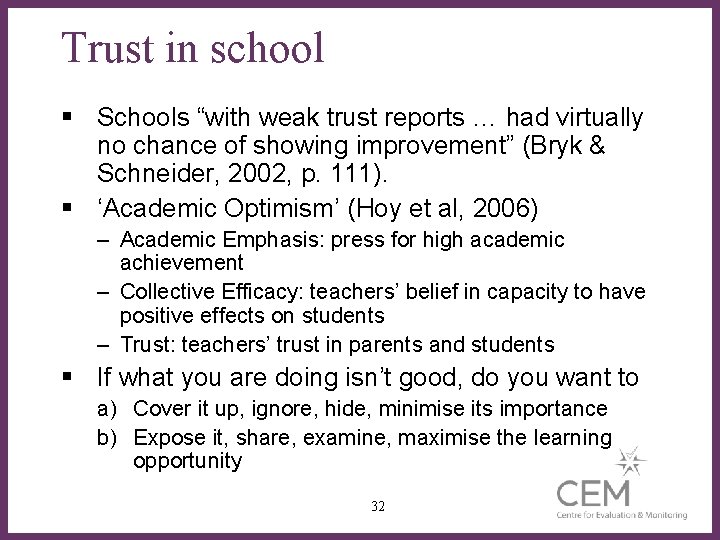
Trust in school § Schools “with weak trust reports … had virtually no chance of showing improvement” (Bryk & Schneider, 2002, p. 111). § ‘Academic Optimism’ (Hoy et al, 2006) – Academic Emphasis: press for high academic achievement ∂ – Collective Efficacy: teachers’ belief in capacity to have positive effects on students – Trust: teachers’ trust in parents and students § If what you are doing isn’t good, do you want to a) Cover it up, ignore, hide, minimise its importance b) Expose it, share, examine, maximise the learning opportunity 32
Some pitfalls of professional learning: 6. Practice makes less imperfect
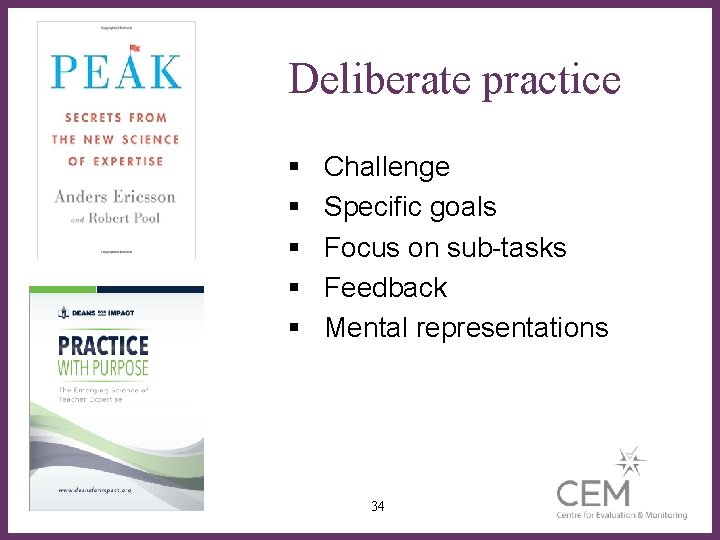
Deliberate practice § § § Challenge Specific goals Focus on sub-tasks ∂ Feedback Mental representations 34
@Prof. Coe How can teachers learn to be better teachers?
How can teachers learn to be better teachers? You’re a teacher. You know how to help ∂ people learn hard stuff. Do that. 36
- Slides: 36