
Productivity Improvements From Economic Concept to an Engineering



- Slides: 31
Productivity Improvements: From Economic Concept to an Engineering Tool Kazem Oraee, Navid Hosseini
What is Productivity ? A measure of effectiveness? Profitability? Output per manshift / man year, etc. ? OR All Outputs All Inputs
Productivity ? Talk abut the concept exceeds level of effectiveness. Talking abut productivity is easy and frequent. Measurement and analysis are very difficult. The ratio provided is a simple formula. Measurement of the components are difficult – especially All Inputs.
Productivity ? In theory it is impossible to accurately calculate all Inputs: Output = f (x 1, x 2, x 3, …, xn) These input can be tangible or intangible. Hence some are very difficult to measure: Degree of personal commitment. Feeling of responsibility. Level of pleasure or otherwise gained. Notional pride etc. Simplify? We need to assume most these inputs constant over time.
Productivity ? Measuring all outputs is also difficult. There may be more then one product. There may be some minor products. There is difficult always some by-products. Even damage to the environment is a product (by-product). How to measure all these? Again simplification
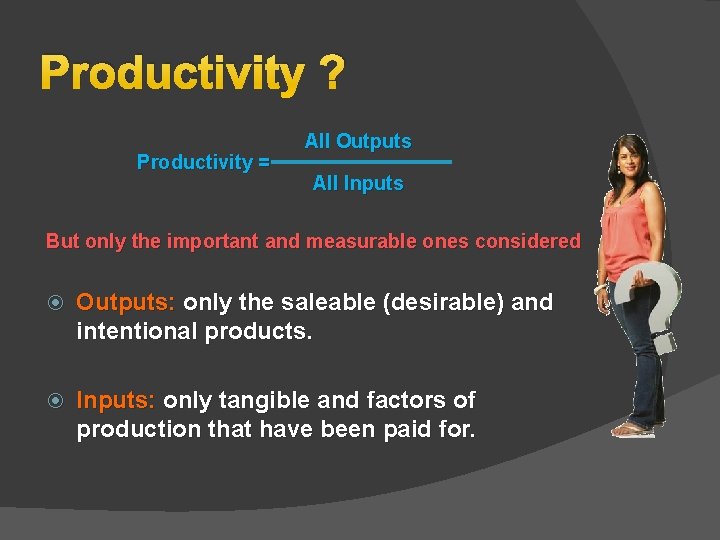
Productivity ? Productivity = All Outputs All Inputs But only the important and measurable ones considered Outputs: only the saleable (desirable) and intentional products. Inputs: only tangible and factors of production that have been paid for.
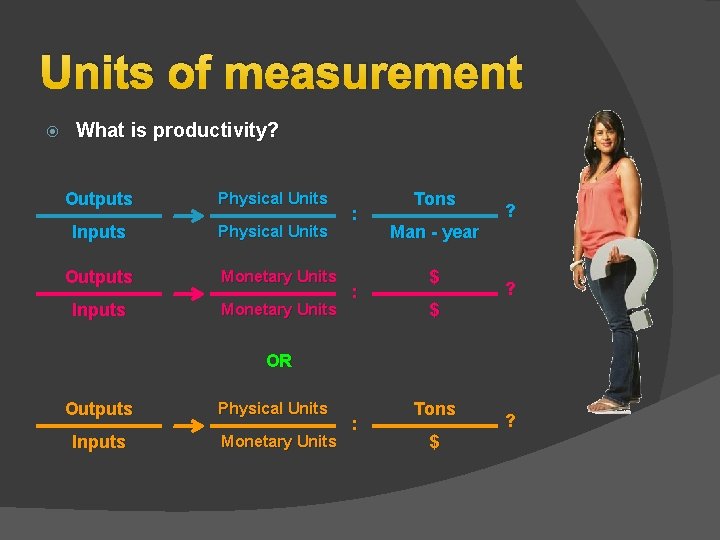
Units of measurement What is productivity? Outputs Physical Units Inputs Physical Units Outputs Monetary Units Inputs Monetary Units : : Tons ? Man - year $ ? $ OR Outputs Inputs Physical Units Monetary Units : Tons $ ?
Productivity ? Since the components of both outputs and inputs are different in every situation: For every individual situation, a formula must be devised. This formula considerers 2 points: The important components are different. The reason for measurement is different.
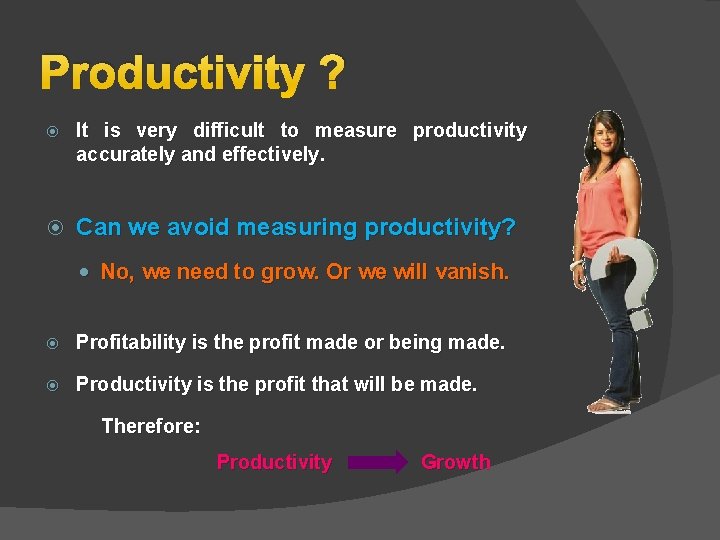
Productivity ? It is very difficult to measure productivity accurately and effectively. Can we avoid measuring productivity? No, we need to grow. Or we will vanish. Profitability is the profit made or being made. Productivity is the profit that will be made. Therefore: Productivity Growth
Productivity Total Productivity Partial Productivity
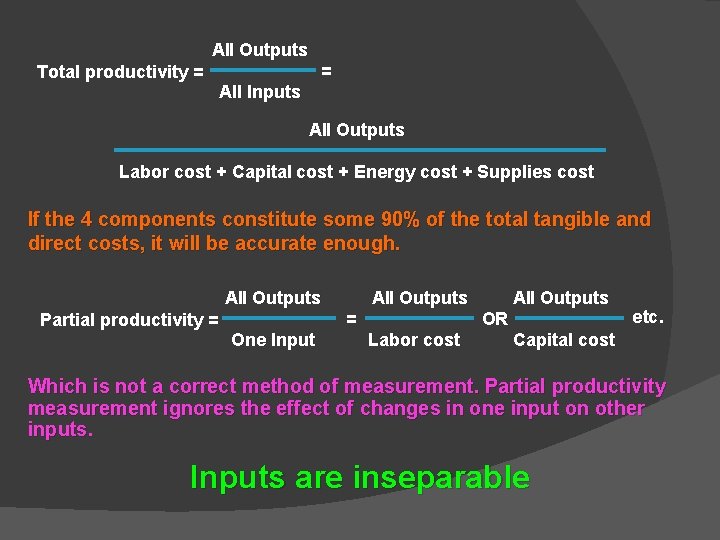
All Outputs Total productivity = = All Inputs All Outputs Labor cost + Capital cost + Energy cost + Supplies cost If the 4 components constitute some 90% of the total tangible and direct costs, it will be accurate enough. All Outputs Partial productivity = All Outputs = One Input All Outputs OR Labor cost etc. Capital cost Which is not a correct method of measurement. Partial productivity measurement ignores the effect of changes in one input on other inputs. Inputs are inseparable
Some goals of productivity calculation: Strategic: In a competitive market, survival or improvement. Technical: For verifying performance of various divisions. Planning: To appraise profit/loss and take necessary decisions. Management: For development , modification or change some activities.
Eastern Alborz Coal Mines (EACM)
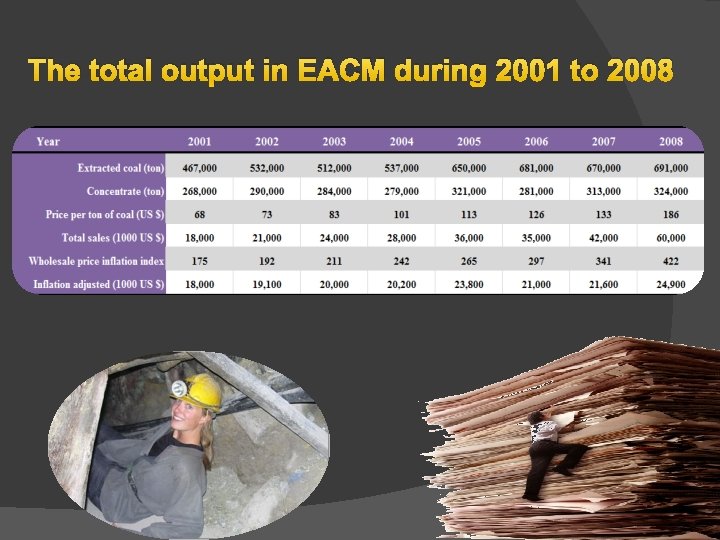
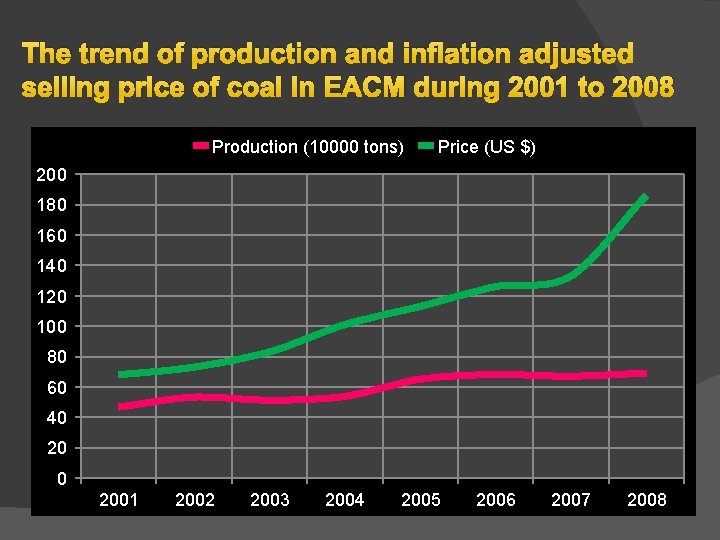
The total output in EACM during 2001 to 2008
The trend of production and inflation adjusted selling price of coal in EACM during 2001 to 2008 Production (10000 tons) Price (US $) 200 180 160 140 120 100 80 60 40 2001 2002 2003 2004 2005 2006 2007 2008
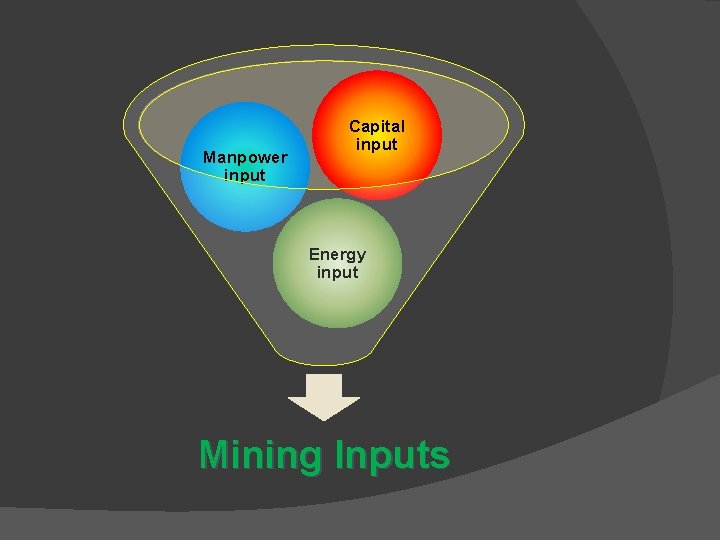
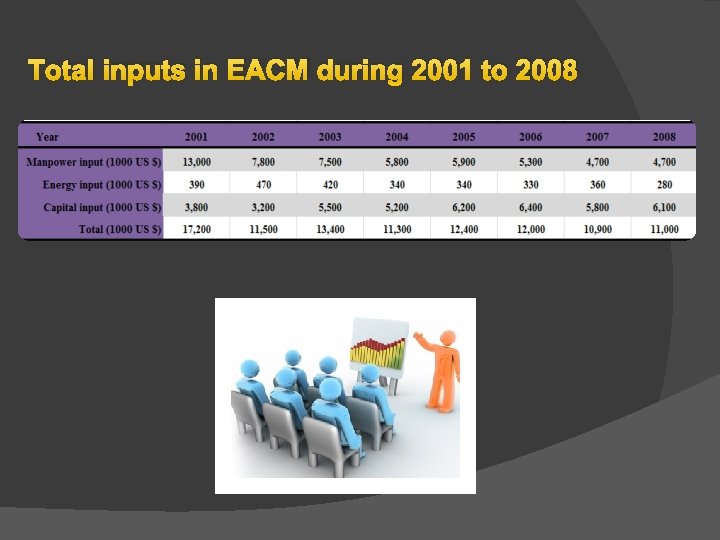
Manpower input Capital input Energy input Mining Inputs
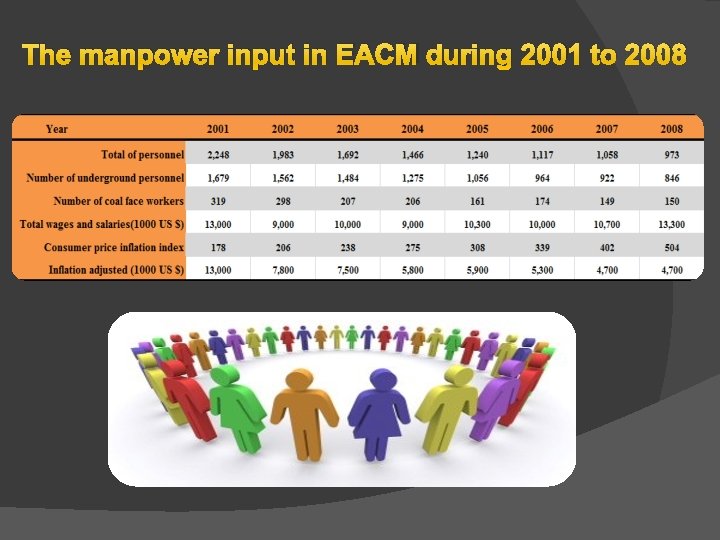
The manpower input in EACM during 2001 to 2008
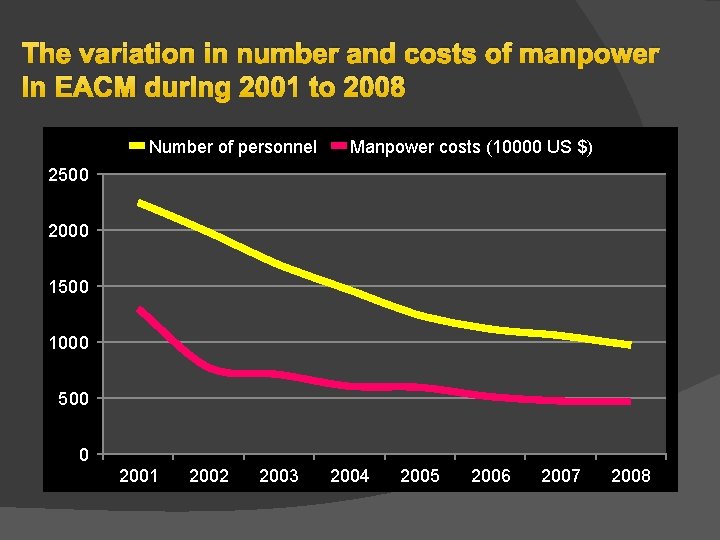
The variation in number and costs of manpower in EACM during 2001 to 2008 Number of personnel Manpower costs (10000 US $) 2500 2000 1500 1000 500 0 2001 2002 2003 2004 2005 2006 2007 2008
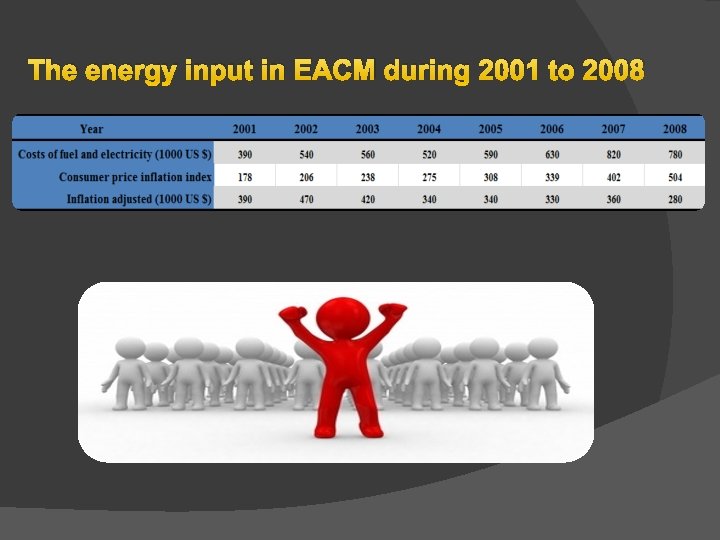
The energy input in EACM during 2001 to 2008
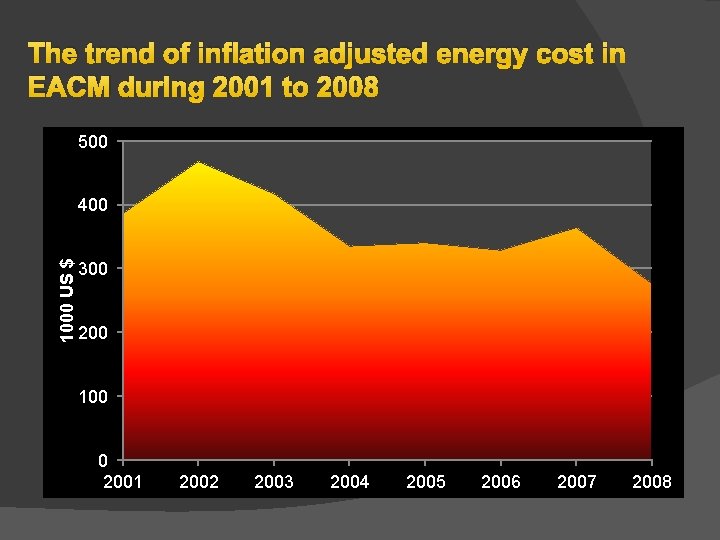
The trend of inflation adjusted energy cost in EACM during 2001 to 2008 500 1000 US $ 400 300 200 100 0 2001 2002 2003 2004 2005 2006 2007 2008
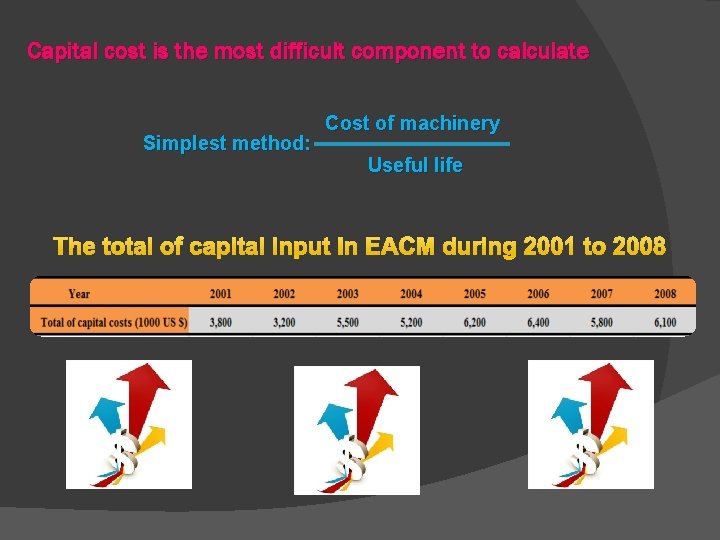
Capital cost is the most difficult component to calculate Simplest method: Cost of machinery Useful life The total of capital input in EACM during 2001 to 2008
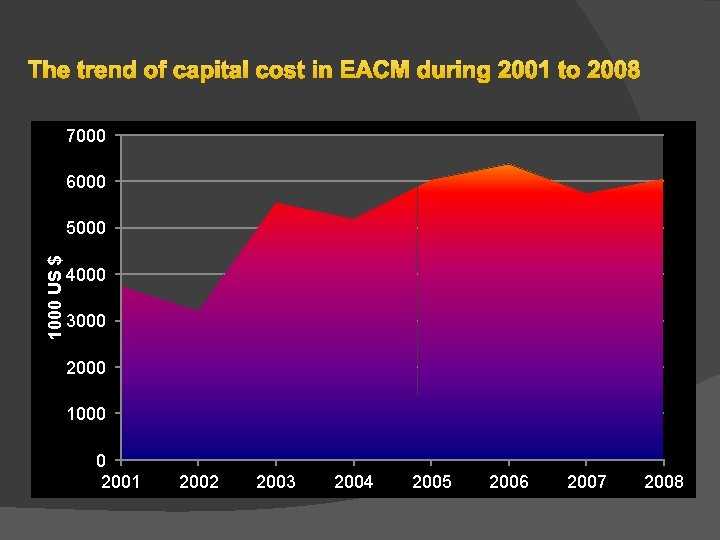
The trend of capital cost in EACM during 2001 to 2008 7000 6000 1000 US $ 5000 4000 3000 2000 1000 0 2001 2002 2003 2004 2005 2006 2007 2008
Total inputs in EACM during 2001 to 2008
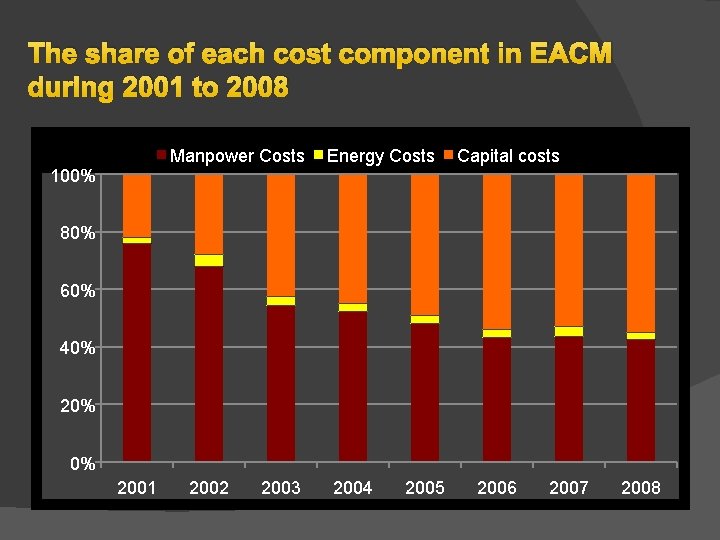
The share of each cost component in EACM during 2001 to 2008 Manpower Costs 100% Energy Costs Capital costs 80% 60% 40% 20% 0% 2001 2002 2003 2004 2005 2006 2007 2008
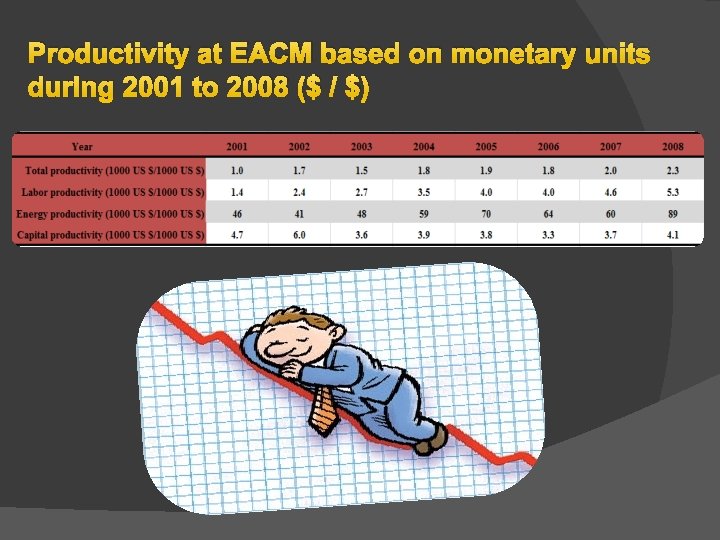
Productivity at EACM based on monetary units during 2001 to 2008 ($ / $)
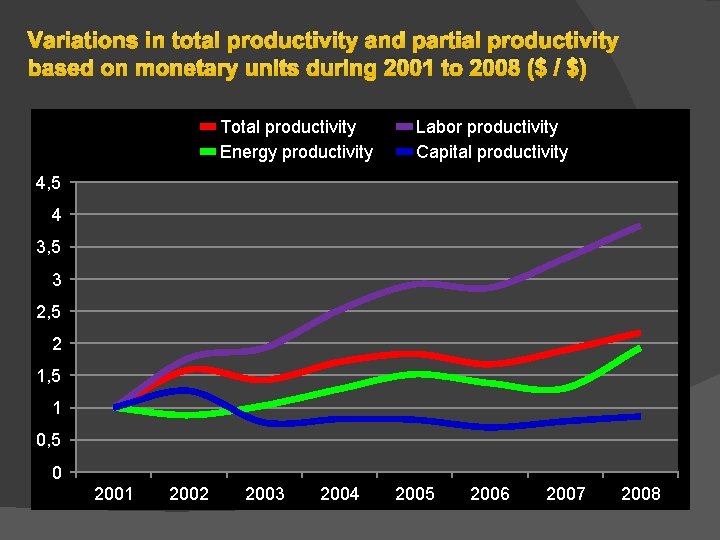
Variations in total productivity and partial productivity based on monetary units during 2001 to 2008 ($ / $) Total productivity Energy productivity Labor productivity Capital productivity 4, 5 4 3, 5 3 2, 5 2 1, 5 1 0, 5 0 2001 2002 2003 2004 2005 2006 2007 2008
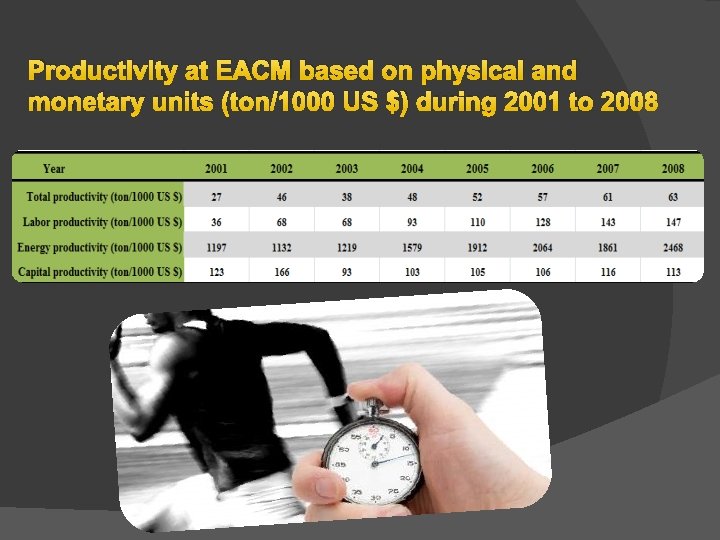
Productivity at EACM based on physical and monetary units (ton/1000 US $) during 2001 to 2008
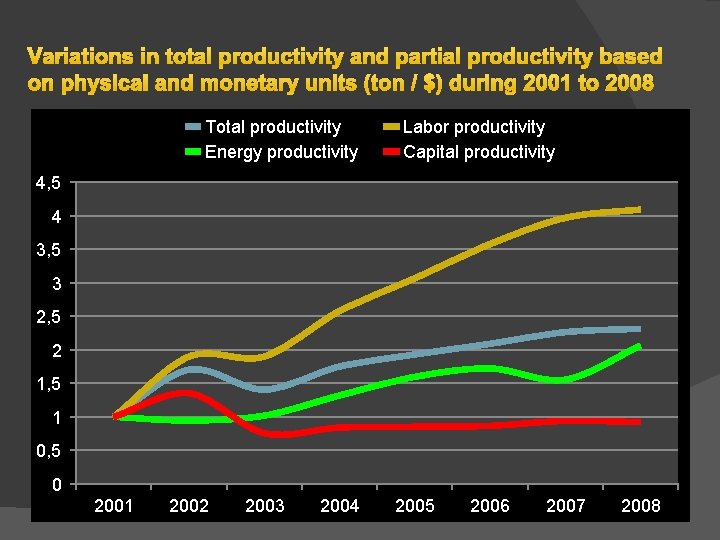
Variations in total productivity and partial productivity based on physical and monetary units (ton / $) during 2001 to 2008 Total productivity Energy productivity Labor productivity Capital productivity 4, 5 4 3, 5 3 2, 5 2 1, 5 1 0, 5 0 2001 2002 2003 2004 2005 2006 2007 2008
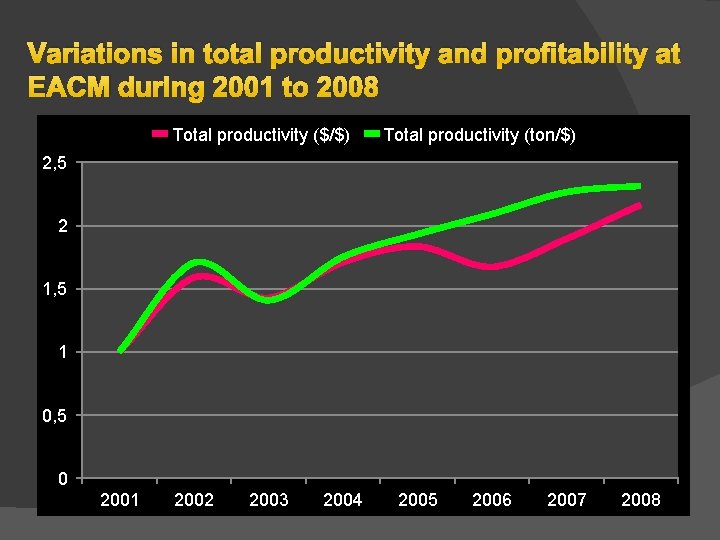
Variations in total productivity and profitability at EACM during 2001 to 2008 Total productivity ($/$) Total productivity (ton/$) 2, 5 2 1, 5 1 0, 5 0 2001 2002 2003 2004 2005 2006 2007 2008
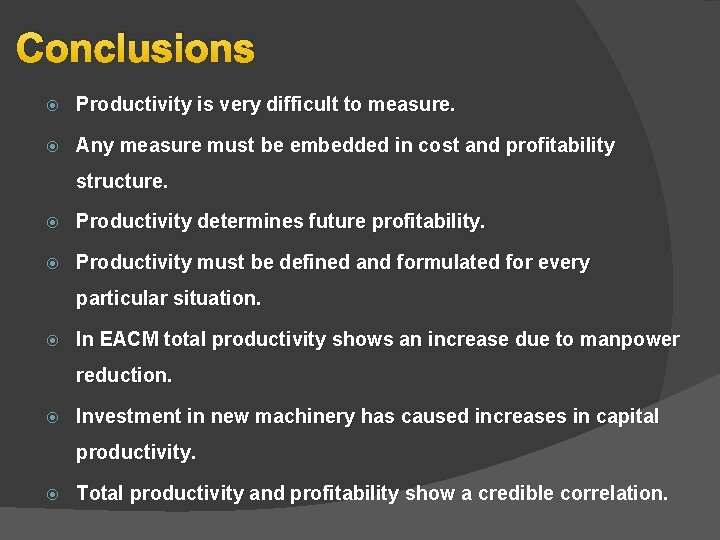
Conclusions Productivity is very difficult to measure. Any measure must be embedded in cost and profitability structure. Productivity determines future profitability. Productivity must be defined and formulated for every particular situation. In EACM total productivity shows an increase due to manpower reduction. Investment in new machinery has caused increases in capital productivity. Total productivity and profitability show a credible correlation.
Thank You For Your Kind Attention