
Production Records Hawaii Child Nutrition Programs NSLP Training


- Slides: 34
Production Records Hawaii Child Nutrition Programs NSLP Training SY 2016 -17 1
Objectives �Upon completing this presentation, you will be able to: Recognize a production record (PR) Understand how the PR is a helpful management and communication tool Demonstrate how to use the Food Buying Guide Calculator Recognize all data required to be on a PR Exhibit the ability to complete a PR 2
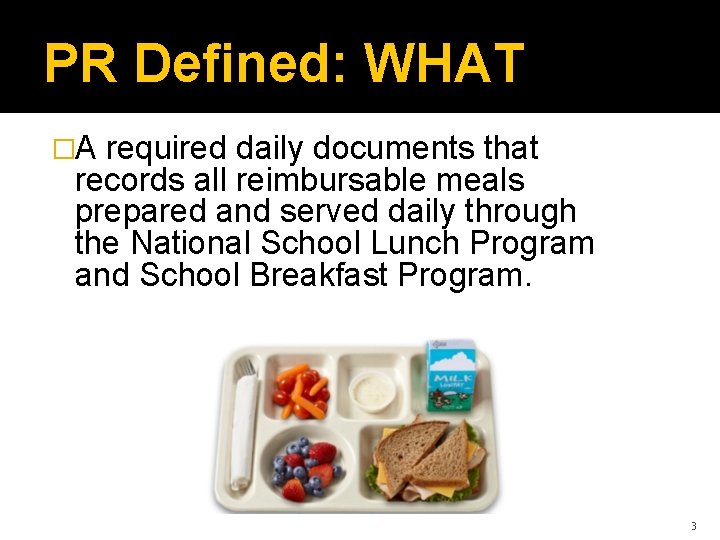
PR Defined: WHAT �A required daily documents that records all reimbursable meals prepared and served daily through the National School Lunch Program and School Breakfast Program. 3
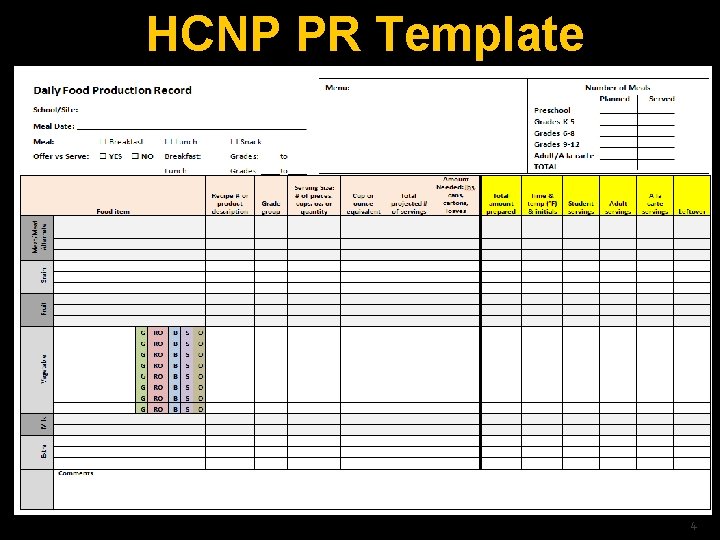
HCNP PR Template 4
PR Defined: WHO �Menu Planner �Kitchen Manager �Production Staff 5
PR Defined: WHY � To support meal claims submitted for reimbursement � To help manage the food service operation and communicate information necessary to produce compliant meals � To demonstrate compliance with the meal pattern requirements for each age/grade group � Records are reviewed by the State Agency during an Administrative Review Records must be kept for 3 years plus the current school year 6
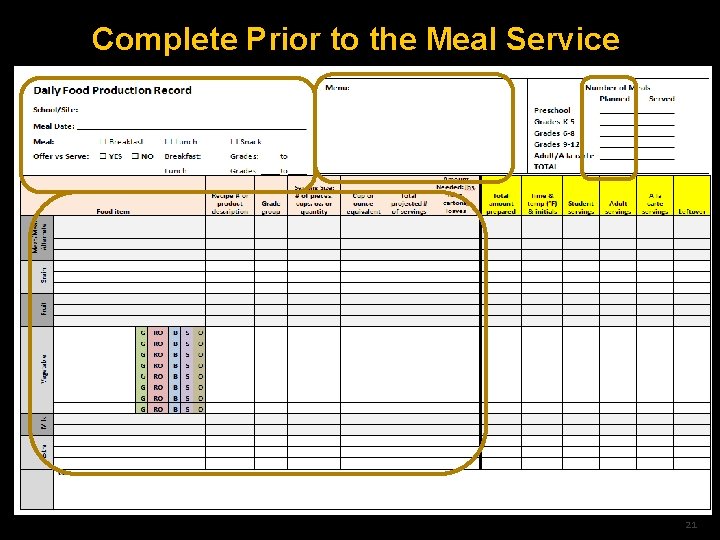
PR Defined: WHEN �Information is recorded on the PR at three different times: 1. Prior to production 2. At the time of meal production 3. Immediately after the meal service 7
Important to Know No Production Records = Fiscal Action!! 8
Production Records act as a communication tool. What useful information can be communicated between the menu planner and kitchen staff? 9
Functions of a PR �PRs contain historical and future information about the meals planned, prepared, and served �You can use PRs as a management tool to: 1. Evaluate acceptability of meals 2. Plan future meals (forecasting) 3. Order supplies 10
1. Evaluate Acceptability � What: Identify menu items with high or low customer acceptance. Identify food items that are increasing or decreasing in popularity over time. � Why: Improve customer satisfaction and increase participation in the program; reduce waste due to non-acceptance; increase cost savings � How: Use production and service information on past PRs to evaluate how well students accept a menu item. 11
2. Forecasting � What: Predict the number of portions to plan for future meal service � Why: Reduce the likelihood of food shortages or waste due to over-production; increase cost savings; communicate to kitchen staff how much food to prepare and serve � How: Past PRs are a valuable tool to forecast the number of future portions to plan, based on prior preparations of the same or similar menu item. 12
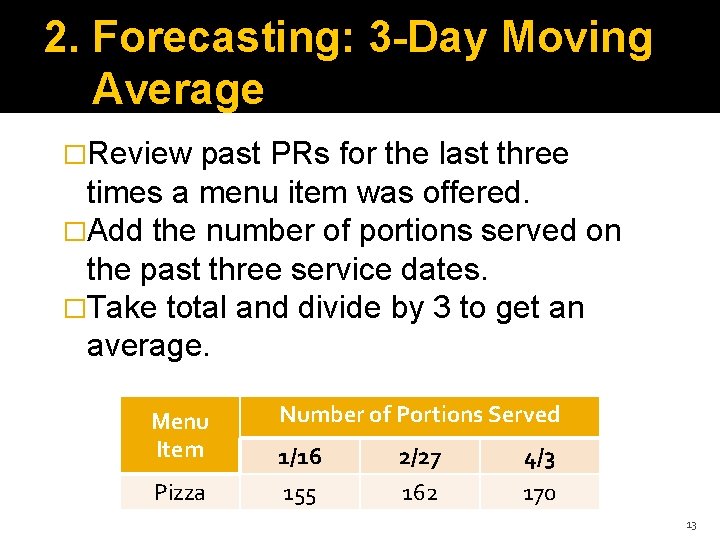
2. Forecasting: 3 -Day Moving Average �Review past PRs for the last three times a menu item was offered. �Add the number of portions served on the past three service dates. �Take total and divide by 3 to get an average. Menu Item Pizza Number of Portions Served 1/16 155 2/27 162 4/3 170 13
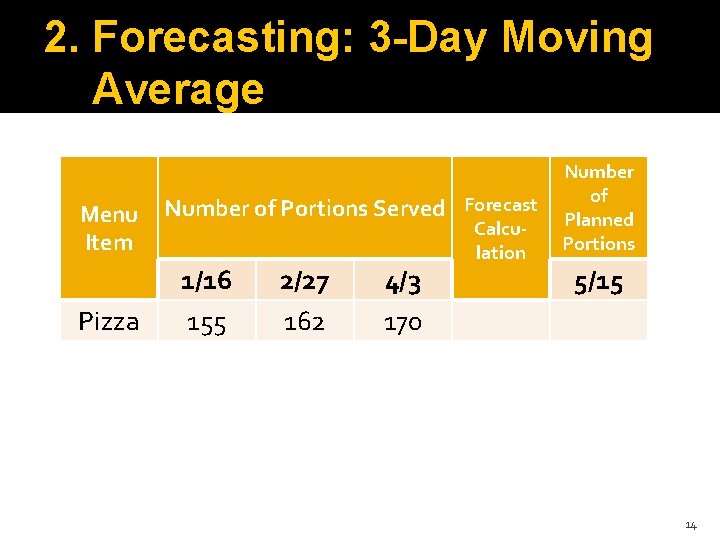
2. Forecasting: 3 -Day Moving Average Menu Item Pizza Number of Portions Served Forecast 1/16 155 2/27 162 4/3 170 Calculation Number of Planned Portions 5/15 14
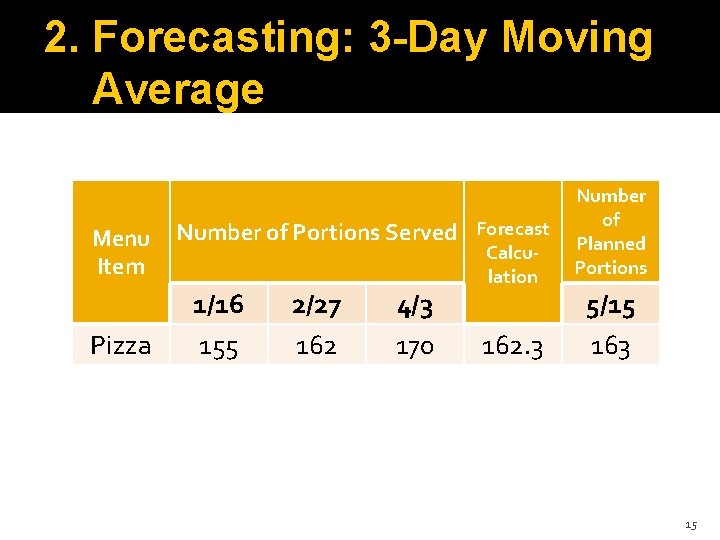
2. Forecasting: 3 -Day Moving Average Menu Item Pizza Number of Portions Served Forecast 1/16 155 2/27 162 4/3 170 Calculation 162. 3 Number of Planned Portions 5/15 163 15
3. Order Supplies �What: Determine amount and type of foods to purchase �Why: Save time; control costs; ensure quality �How: Use recorded information to quickly order or reorder products. 16
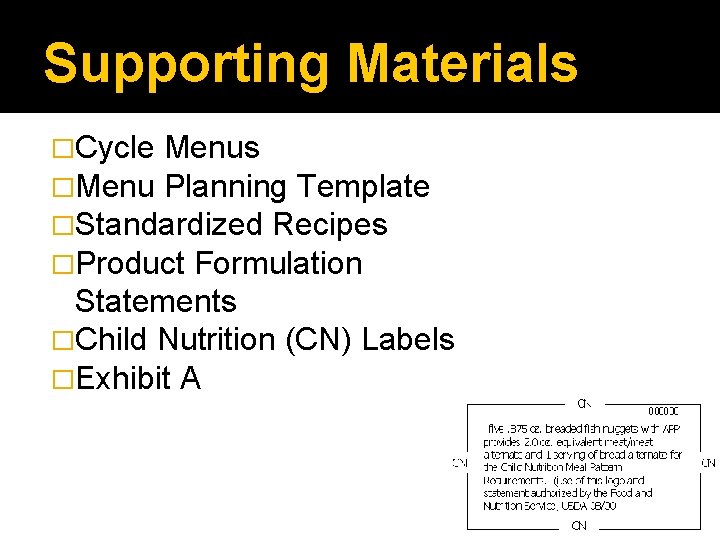
Supporting Materials �Cycle Menus �Menu Planning Template �Standardized Recipes �Product Formulation Statements �Child Nutrition (CN) Labels �Exhibit A 17
Supporting Materials � Food Buying Guide Serves as the principal tool to determine how much food to purchase and prepare. Identifies each food item’s contribution to the meal pattern https: //www. fns. usda. gov/tn/food-buying-guide-for-childnutrition-programs � Food Buying Guide Calculator Individual calculators for each of the 6 food groups outlined in the Food Buying Guide. http: //fbg. nfsmi. org/ 18
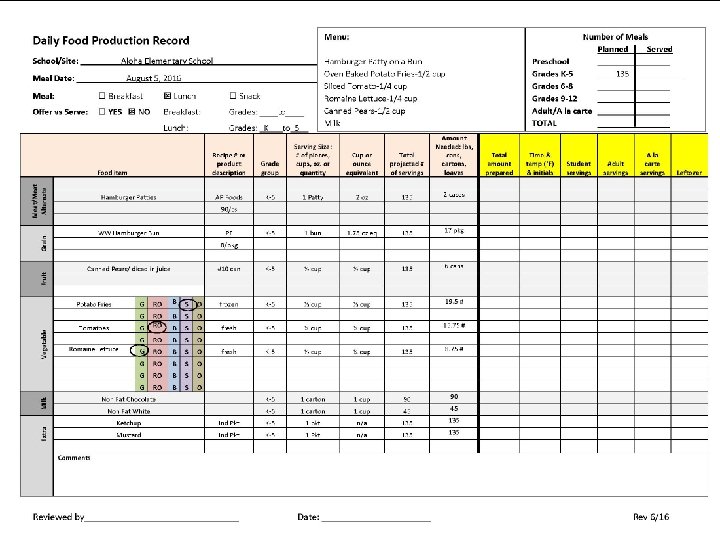
Sample Calculation �Use the following information to calculate how much food to order: Planned Menu Item: romaine lettuce Number of Portions Planned: 135 Portion Size: ½ cup http: //fbg. nfsmi. org/ 19
Remember when to fill out PRs? 1. Prior to production 2. At the time of meal production 3. Immediately after the meal service 20
Complete Prior to the Meal Service 21
22
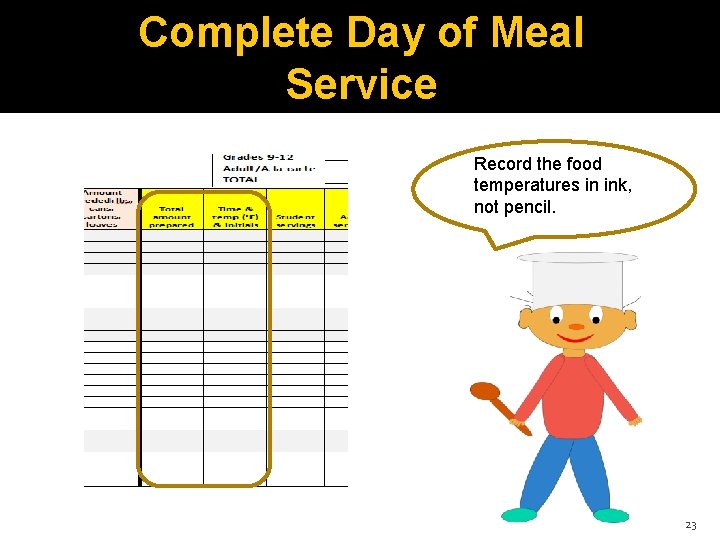
Complete Day of Meal Service Record the food temperatures in ink, not pencil. 23
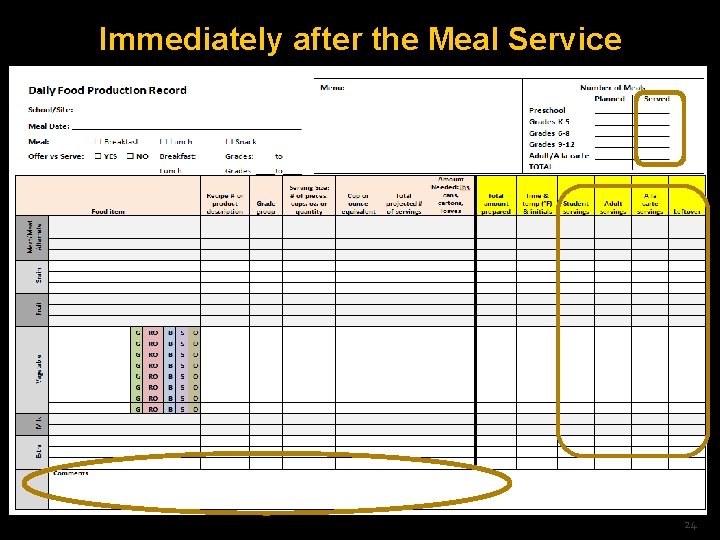
Immediately after the Meal Service 24
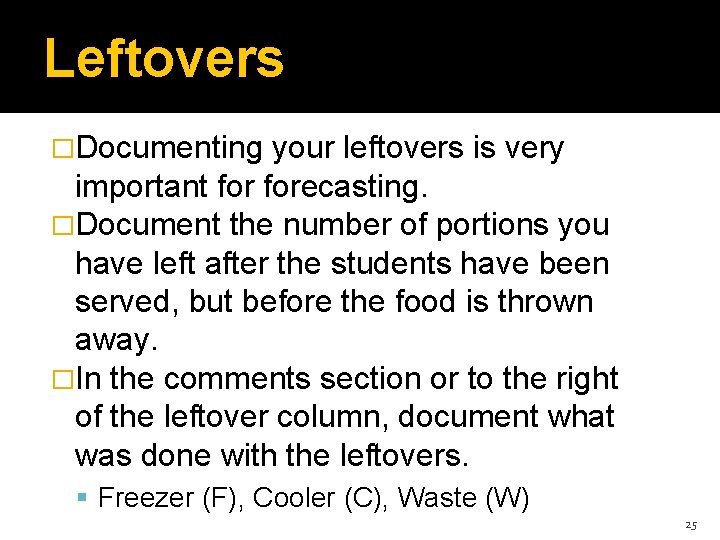
Leftovers �Documenting your leftovers is very important forecasting. �Document the number of portions you have left after the students have been served, but before the food is thrown away. �In the comments section or to the right of the leftover column, document what was done with the leftovers. Freezer (F), Cooler (C), Waste (W) 25
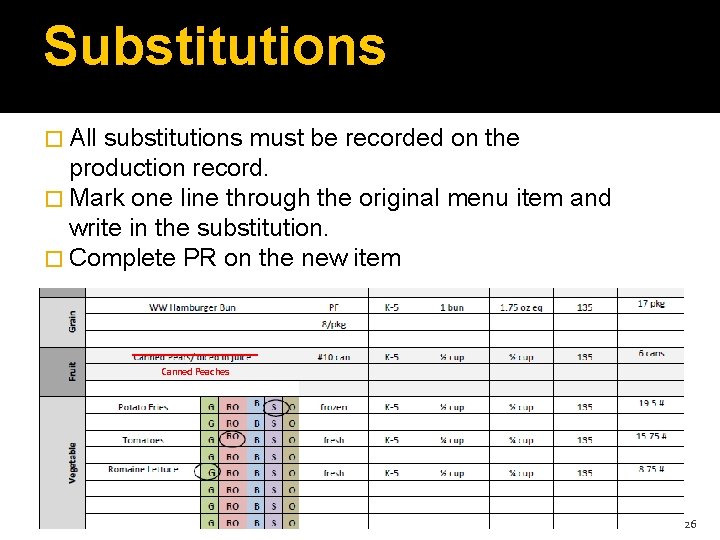
Substitutions � All substitutions must be recorded on the production record. � Mark one line through the original menu item and write in the substitution. � Complete PR on the new item Canned Peaches 26
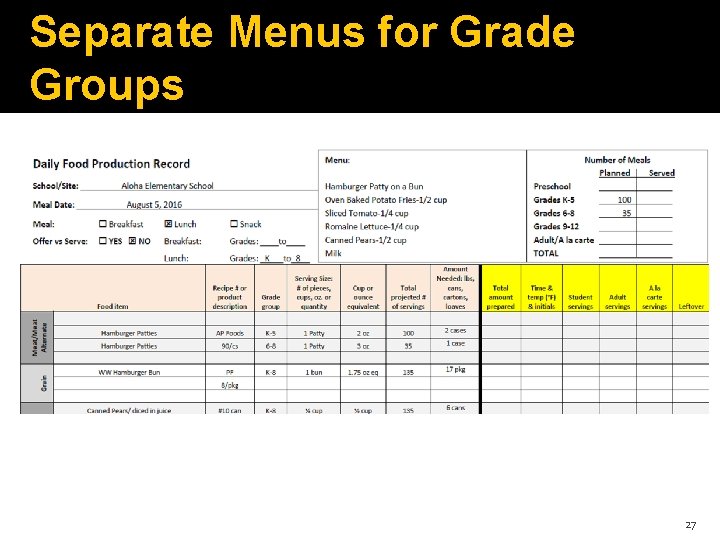
Separate Menus for Grade Groups 27
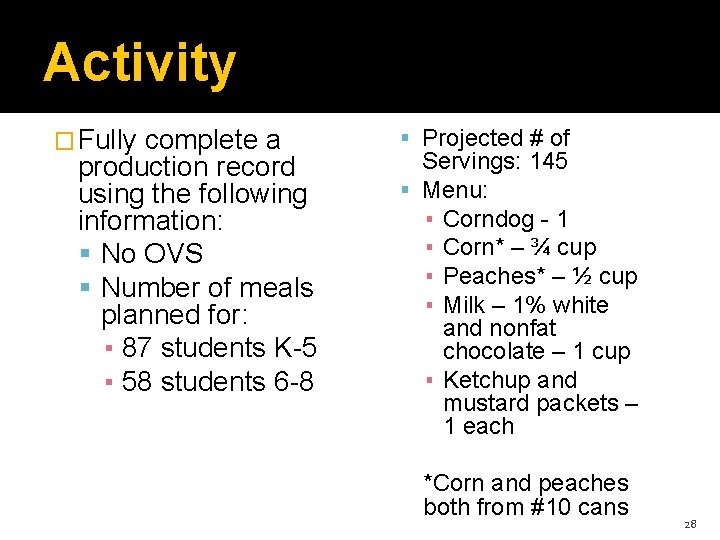
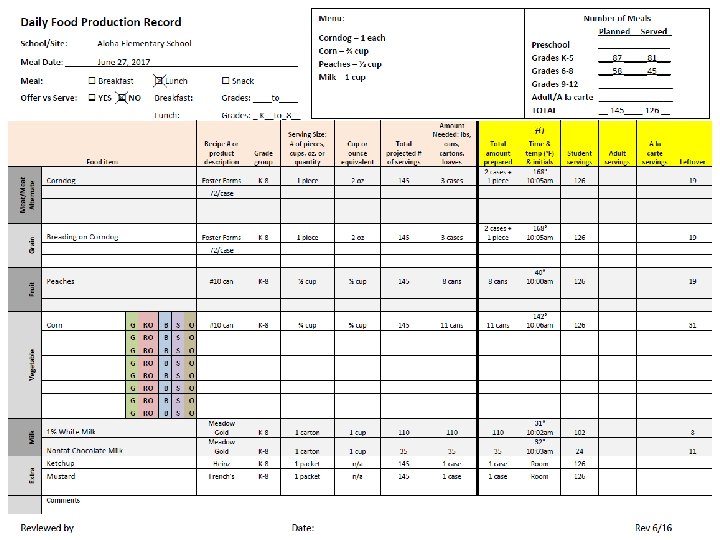
Activity � Fully complete a production record using the following information: No OVS Number of meals planned for: ▪ 87 students K-5 ▪ 58 students 6 -8 Projected # of Servings: 145 Menu: ▪ Corndog - 1 ▪ Corn* – ¾ cup ▪ Peaches* – ½ cup ▪ Milk – 1% white and nonfat chocolate – 1 cup ▪ Ketchup and mustard packets – 1 each *Corn and peaches both from #10 cans 28
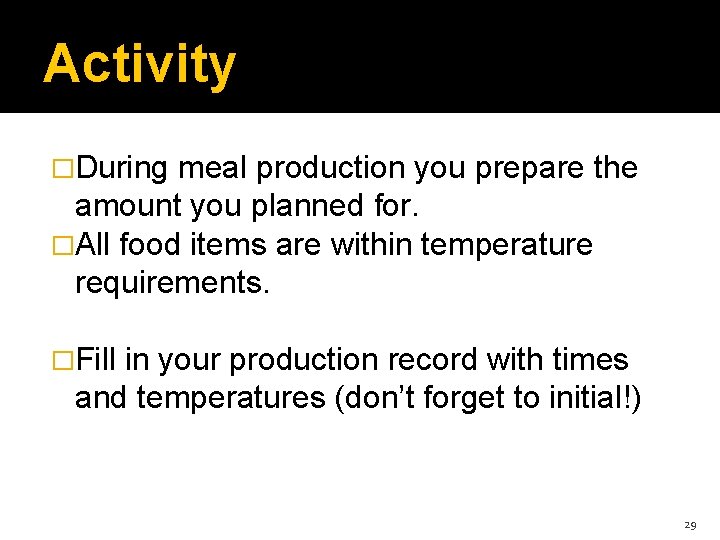
Activity �During meal production you prepare the amount you planned for. �All food items are within temperature requirements. �Fill in your production record with times and temperatures (don’t forget to initial!) 29
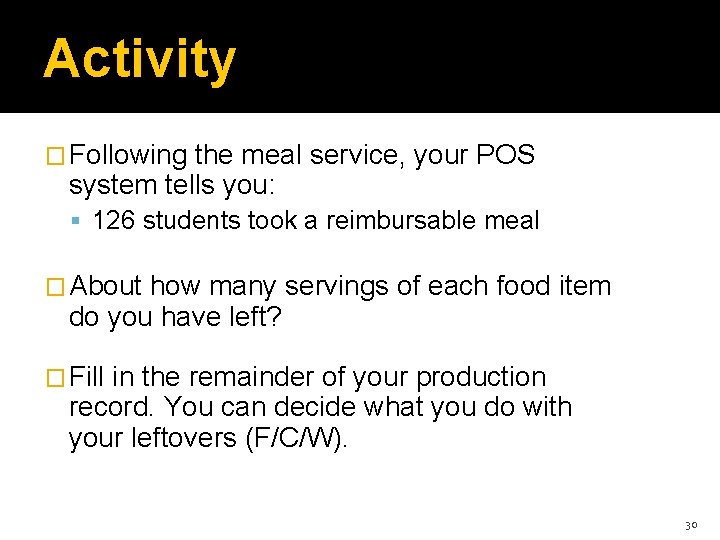
Activity � Following the meal service, your POS system tells you: 126 students took a reimbursable meal � About how many servings of each food item do you have left? � Fill in the remainder of your production record. You can decide what you do with your leftovers (F/C/W). 30
Discussion Share your answers What did you learn? 31
32
33
34