
Production and Process Management Lesson 1 Introduction About
Production and Process Management Lesson 1 Introduction
About the syllabus l l Lecturers (in alphabetical order): • • Ágnes Kotsis, assistant professor András István Kun, assistant professor 2 lecture (Tuesday) and 2 seminar (Thursday) in every week Syllabus will be available on the internet Calculators are needed on the seminars!
About the Requirements l The calculation of the final grade is as follows: • mid-term test • end-term test (exam) 30% 70%
Compulsory reading Selected chapters from: l Stevenson J. William (2009): Operations Management. 10 th edition. Mc. Graw-Hill Irvin, London.
Mid-term test l l Students are required to take the midterm test. There is only one possibility to retake the mid-term test in the study period. Multiple choices + calculations

Roots of operations management I. l l l Industrial revolution (1770’s) Scientific management (1911) • • • Mass production Standardizing (interchangeable parts) Division of labor Human relations (HR) movement (1920 -60) Decision models (1915, 1960 -70’s) Influence of Japanese management
Roots of operations management II. l Production and production management • • l Production: creation of finished goods (and services) using the factors of production: land, labor, capital (+ enterpreneurship, knowledge) Production magagement: Planning, implementation, and control of industrial production processes to ensure smooth and efficient operation (the activites of managers do to help their firms create goods). Ensures that goods (and services) are produced efficiently; that they are of the right quality, quantity, cost; and that they are produced on time. As service sector becomes larger, concepts of (industrial) production management become influenced by it.
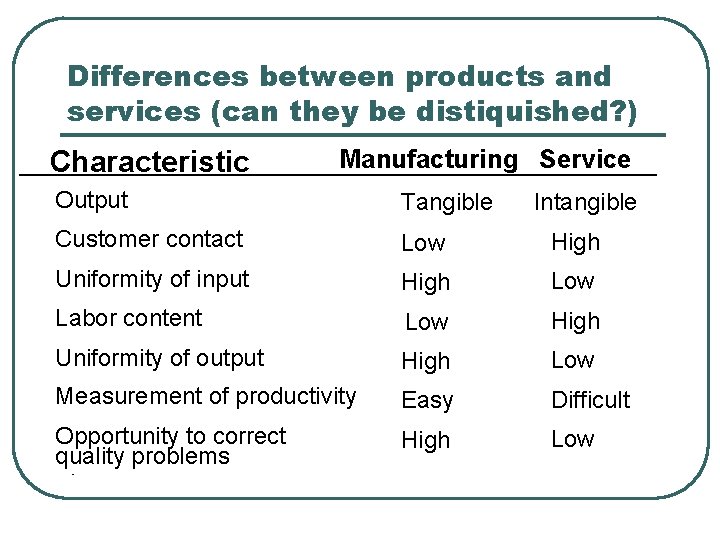
Differences between products and services (can they be distiquished? ) Characteristic Manufacturing Service Output Tangible Customer contact Low High Uniformity of input High Low Labor content Low High Uniformity of output High Low Measurement of productivity Easy Difficult Opportunity to correct quality problems High Low High Intangible
Operations management l l Includes the production of services. The term production has been repleaced by operations. Specialized area in management that converts or transforms resources into goods and services. It managing systems and processes as well.
Process management l Process: actions that transform inputs into outputs • Upper-managment processes • Governance, strategy • Operational processes • Core processes that make up the value stream • Supporting processes • These enhances the core processes
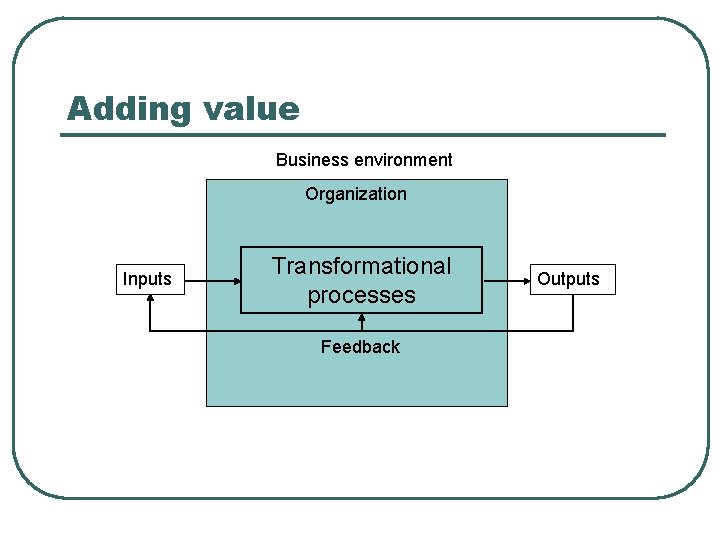
Adding value Business environment Organization Inputs Transformational processes Feedback Outputs
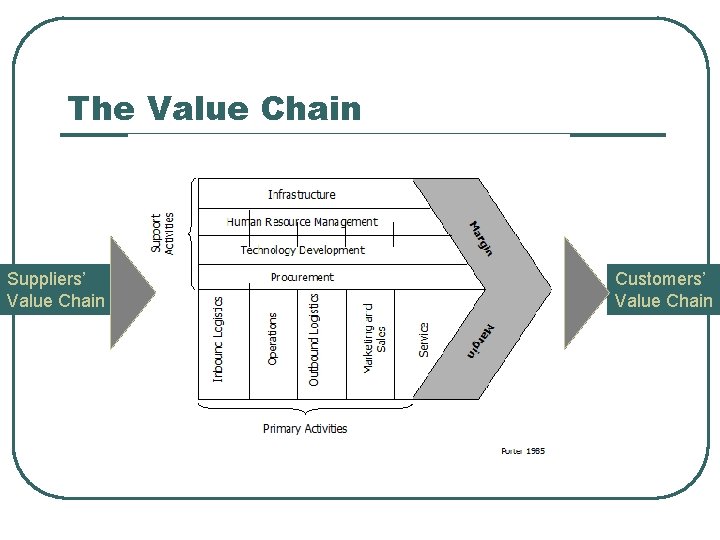
The Value Chain Suppliers’ Value Chain Customers’ Value Chain
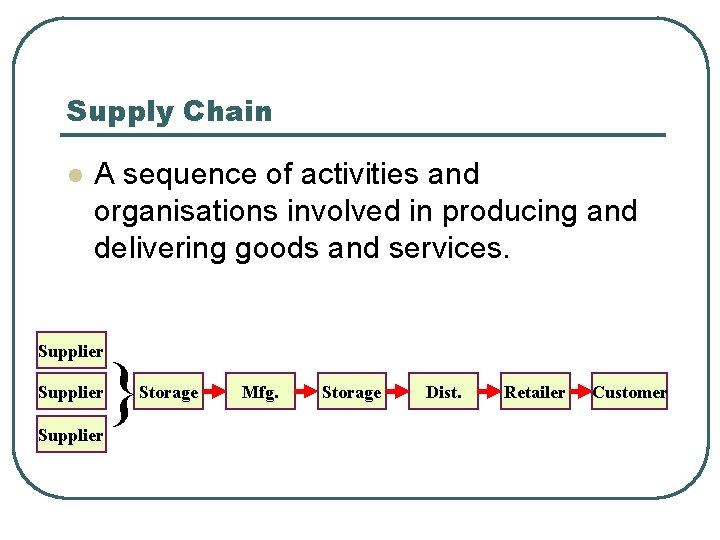
Supply Chain l A sequence of activities and organisations involved in producing and delivering goods and services. Supplier } Storage Mfg. Storage Dist. Retailer Customer
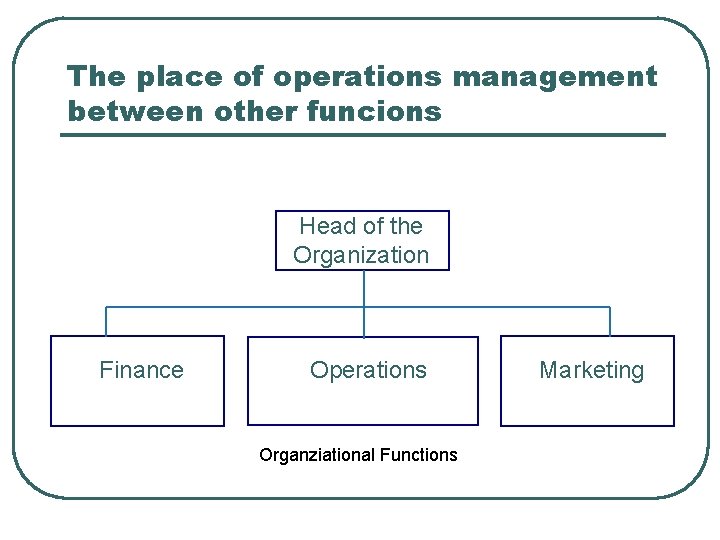
The place of operations management between other funcions Head of the Organization Finance Operations Organziational Functions Marketing
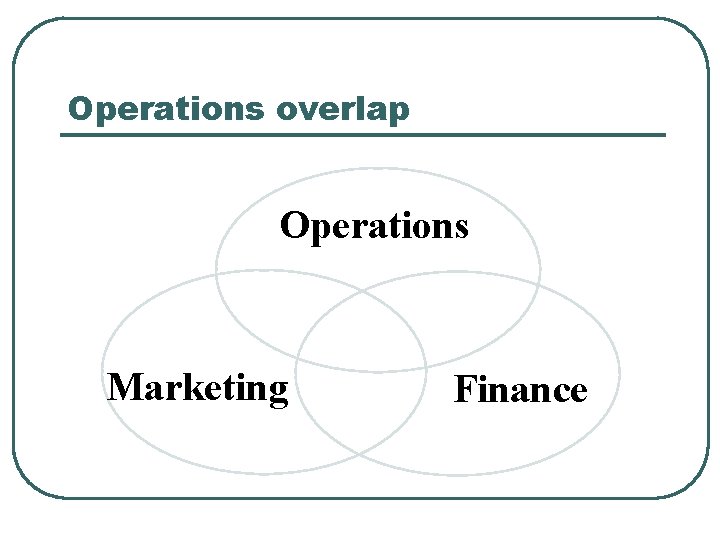
Operations overlap Operations Marketing Finance
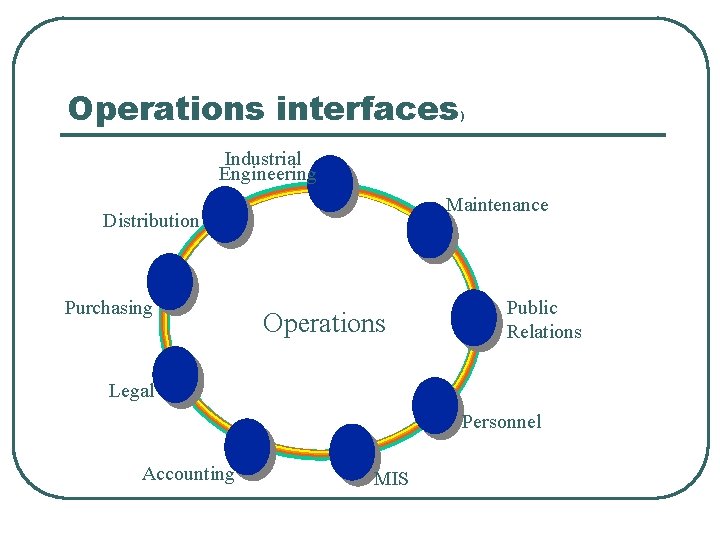
Operations interfaces ) Industrial Engineering Maintenance Distribution Purchasing Operations Public Relations Legal Personnel Accounting MIS
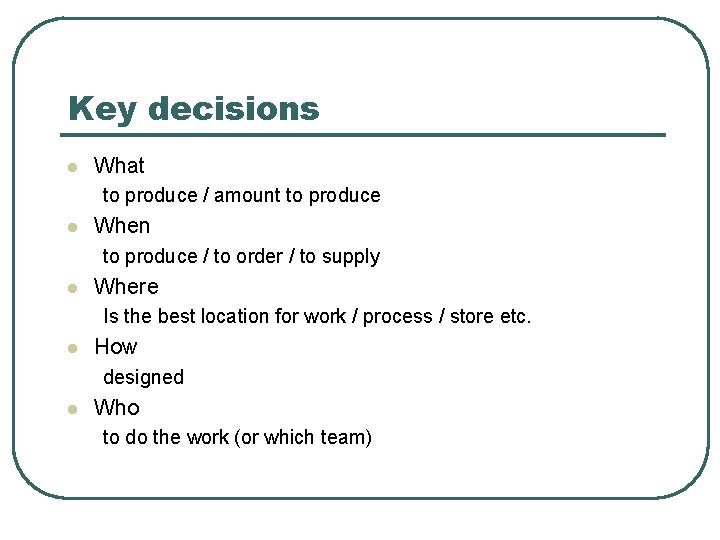
Key decisions l What to produce / amount to produce l When to produce / to order / to supply l Where Is the best location for work / process / store etc. l How designed l Who to do the work (or which team)
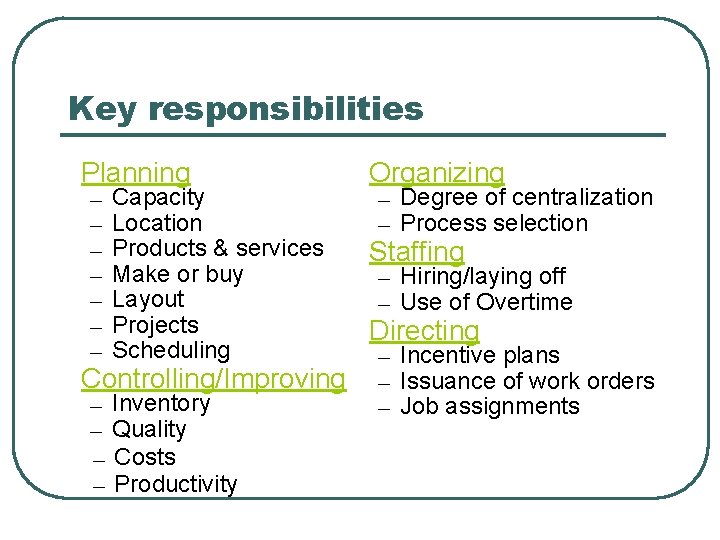
Key responsibilities Planning – – – – Capacity Location Products & services Make or buy Layout Projects Scheduling – – Inventory Quality Costs Productivity Controlling/Improving Organizing – Degree of centralization – Process selection Staffing – Hiring/laying off – Use of Overtime Directing – Incentive plans – Issuance of work orders – Job assignments

Thanks for the attention
- Slides: 19